New published documents have shed fresh light on the CIA’s detention and interrogation program in Afghanistan, describing in alarming detail some of the extreme techniques used by officers that resulted in deaths in captivity.
In a recent legal filing, the lawyers of Abu Zubaydah – the Guantánamo Bay detainee almost tortured to death by the CIA, held without charge by the US for nearly 20 years – urged that their client be released, given Washington’s wars in Afghanistan and with Al-Qaeda are finally over.
Writing to a DC district court, they argued that these developments meant there was no legal justification for keeping him captive, and he must be immediately discharged. What the petition omits to mention, however, is that Zubaydah’s detention was, from day one, intended to be permanent in order to keep the CIA’s criminal maltreatment secret and ensure his abusers were insulated from prosecution in perpetuity.
In July 2002, four months after his capture in Pakistan, the Agency’s team in Afghanistan specifically sought “reasonable assurances” from superiors that he would “remain in isolation and incommunicado for the remainder of his life.” In response, a memo stated that there was “fairly unanimous sentiment” within CIA headquarters that Zubaydah “will never be placed in a situation where [he] has any significant contact with others and/or has the opportunity to be released,” and would “remain incommunicado for the remainder of his life.”
Langley’s desire for total omerta in all matters concerning its torture program is understandable, for a great many people have much to hide.
At the start of December, BuzzFeed published hundreds of declassified papers related to CIA Inspector General investigations into child sexual abuse by Agency staff and contractors. Buried among these was a May 2004 Special Review of the CIA’s detention and interrogation program, launched after Gul Rahman, an Afghan suspected of having militia ties, died at the ‘Salt Pit’ black site in Kabul 18 months prior.
It notes that Rahman was subject to sleep deprivation sessions lasting 48 hours, during which he was denied clothing “to cause cultural humiliation,” and subject to “hard takedowns” – a euphemism for “rough treatment.” Despite this, he remained uncooperative and provided no intelligence, only admitting his identity after several days “in cold conditions with minimal food and sleep.” A psychological assessment in November 2002 noted his “remarkable physical and psychological resilience,” and resultantly recommended “continued environmental deprivations” to get him to talk.
One afternoon that month, when food was delivered to Rahman, he reportedly threw a water bottle and his defecation bucket at guards, warning that he’d seen their faces “and would kill them upon his release.” When Salt Pit’s manager learned of this incident, he authorized ‘short-chaining’ the prisoner – tying his hands and feet to the floor so he could not stand or sit comfortably – naked from the waist down in his cell.
On the morning of November 20, Rahman was found dead. Subsequent investigations by the Inspector General found that Salt Pit staff had employed a number of techniques and “improvised actions” approved by neither the Department of Justice nor CIA headquarters. These included frequent freezing showers, at such icy temperatures they left the suspect unable to speak properly.
A psychologist present at Salt Pit recalled observing Rahman “showing the early stages of hypothermia” after being subjected to one such shower, and ordered guards to give him a blanket. Another contractor declared that these showers were a deliberate “deprivation technique,” deployed when it was perceived he was being uncooperative, and never for “hygienic reasons.”
Nonetheless, when asked by investigators whether cold was used for the purposes of interrogation, a nameless CIA staffer coyly responded, “not per se,” but acknowledged physical and environmental discomfort “was used to encourage the detainees to improve their environment.” They went on to argue that “cold is hard to define,” asking rhetorically “how cold is cold? How cold is life-threatening?’”
While the Senate Intelligence Committee report on the CIA’s detention and interrogation program remains classified today, its 525-page executive summary referred to Rahman over 100 times. Details of his death were largely absent, although it was revealed that not only was no Agency staffer disciplined as a result of it, but Salt Pit’s manager – who was not a trained interrogator, and had a history of behavioral issues – was recommended for a $2,500 cash award for “consistently superior work” four months later.
An Agency Accountability Board eventually decided to take the mild step of suspending the most junior CIA officer involved for 10 days without pay, but even this was overturned by the Agency’s then-Executive Director Kyle Foggo, who wrote to the staffer personally to say, “while not condoning your actions, it is imperative, in my view, that they… be judged within the operational context that existed at the time of Rahman’s detention.” Foggo was subsequently jailed for fraud, having helped friends improperly profit from CIA contracts in Iraq.
The executive summary names Rahman as the only prisoner known to have died in CIA custody – although the Inspector General Review shows this to be untrue. It records how in June 2003, an Afghan citizen allegedly implicated in rocket attacks on a joint US Army and CIA position in the country’s northeast attended Asadabad Base “at the urging of the local Governor,” whereupon he was detained in a facility guarded by US soldiers for four days.
During his brief period in captivity, a CIA contractor “severely [beat] the detainee with a large metal flashlight and kicked him during interrogation sessions,” leading to his death. His body was then turned over to a local cleric and his family, without an autopsy being performed. Neither the contractor nor his Agency supervisor was trained or authorized to conduct interrogations, although he faced no penalty, bar his contract not being renewed.
The review also makes clear that a penchant for extreme violence among CIA staff in Afghanistan, and the impunity with which they committed crimes, wasn’t restricted to its assorted prisons in the country. For example, it records how in July 2003, an officer visited a religious school, to determine if any staff or pupils could offer information related to the detonation of a remote-controlled explosive device that had killed eight border guards a few days earlier.
A teacher reportedly “smiled and laughed inappropriately” while being interviewed by the officer, prompting them to strike the man twice in the torso with their rifle butt, then repeatedly kick him as he lay prostrate on the ground – the incident was said to have been witnessed by 200 students. In response, the CIA simply brought the officer back home, whereupon they were “counseled and given a domestic assignment.”
Still, the review cannot be considered comprehensive, for it merely reflects what incidents were officially recorded. Disturbingly, the document concludes by noting that while documentation of the capture, rendition, detention, and interrogation of “high value detainees” was “comprehensive,” documentation related to detainees of “lesser notoriety” was “far less consistent.”
As the CIA wasn’t compelled to document the capture and detention of all individuals until June 2003, the Inspector General was “unable to determine with any certainty the number or current status of individuals who have been captured and detained.” In other words, the question of how many detainees were actually murdered under the auspices of the CIA torture program remains very much open – which in turn means anyone who could shed light on the matter, such as Zubaydah, can never be at liberty again.
Kit Klarenberg is an investigative journalist exploring the role of intelligence services in shaping politics and perceptions.
No matter how you feel about the Pentagon and the military-industrial complex, you can’t help but be impressed at how they are able to successfully plunder and loot American taxpayers, no matter how much needless death, suffering, and destruction they wreak on people around the world.
Think about it: They just exited Afghanistan after their 20-year failed war against the Taliban, a war that left thousands of American soldiers and countless Afghans dead and the entire country destroyed. On top of all that death and destruction was the total waste of hundreds of billions of dollars in U.S. taxpayer money. It’s also worth mentioning that for those entire 20 years, they intentionally lied to the American people regarding progress in their undeclared forever war.
And what has been the result? They get rewarded! Congress is on the verge of giving them more taxpayer money than ever before! That’s impressive, even if in a negative way!
In other words, they are no longer wasting money in Afghanistan in the form of bombs, bullets, gasoline, oil, medicare care for wounded soldiers, etc. That’s got to mean that a lot of money is now being saved.
So, does Congress reduce the military’s budget by the amount of money that is no longer being wasted in Afghanistan? Are you kidding? Like I say, believe it or not, they are actually upping the amount of U.S. taxpayer money that they are allocating to these people! They are giving them more taxpayer money than when they were in Afghanistan wasting all that taxpayer money!
That is power, sheer power! How can anyone not be impressed by it, even if In a negative way?
The fact is that the Pentagon, the CIA, and the NSA own Congress, lock, stock, and barrel. Not only is Congress filled with national-security state assets, even those members of Congress who maintain the appearance of some degree of independence do not dare to buck the national-security establishment. They know that if they were to buck them, they would soon be targeted with extinction in the next election.
There is another factor that is impressive in a negative way — the ability of the Pentagon and the CIA to engender official enemies to scare Congress into granting the national-security establishment whatever it wants.
Just look how they have succeeded in converting their old Cold War enemies, China and Russia, into new big official enemies of the United States. After milking the “war on terrorism” racket for as much as they could for the past 20 years, they’re now circling back to milk their old Cold War racket against their old Cold War communist enemies.
What’s also fascinating is how they are able to engender these official enemies while convincing people that they are the innocent victims who are forced into defending America and the world from the barbarians at the gate.
Consider how they have done this with Russia. Their strategy has been absolutely brilliant, again in a negative way.
First, they tell Russia that NATO will not expand eastward after Russia called it quits on the Cold War racket. It was a lie. Instead, NATO began gobbling up former members of the Warsaw Pact, moving NATO’s forces and U.S. missiles inexorably closer to Russia’s borders.
When NATO threatened to absorb Ukraine, which would have given the Pentagon and the CIA control over Crimea and also enable the U.S. to station missiles right on Russia’s border, NATO officials and U.S. officials knew precisely that Russia would have to react.
When Russia did react in the predicable way, the U.S. response was brilliant, again in a negative way. Instead of NATO and the U.S. creating the crisis, it was Russia who was presented as the aggressor. NATO, Ukraine, and the U.S. were all seen as the victims of Russian aggression. The only thing that was missing was the threat of “godless communism,” which was the basis of their Cold War racket against Russia and the rest of the Soviet Union.
It’s been pretty much the same with China. While the U.S. government was mired down with its forever wars in the Middle East and Afghanistan, China was prospering and establishing friendly relations with countries all over the world. The U.S. Empire could not tolerate that. That’s when they launched their vicious trade war against China and began doing everything they could to destroy China’s economic prosperity. Among their favorite weapons was economic sanctions, a foreign-policy tool that targets the civilian population of a country as as way to achieve political ends.
Today, China is portrayed by the U.S. mainstream press as a grave threat to U.S. national security, just like it was during the Cold War racket. In one way, the situation with China is even better than with Russia. Given that China is still a communist regime, U.S. officials and their assets in the U.S. mainstream press can still use the “godless communism” angle that they did during the Cold War racket.
Since the Pentagon and the CIA are still killing people in the Middle East, the threat of anti-American terrorism continues to exist. Combine that with the scary notion that the Russians and Chinese Reds are coming to get us, and you have the perfect justification for the continuation and expansion of the U.S. national-security state and its deadly, destructive, and very expensive rackets.
Tales of the American Empire has described the Empire’s involvement in the illegal narcotics trade for two centuries. The end of the Vietnam war was a major blow to the opium trade as the American CIA lost access to opium producers in Laos. In addition, cocaine became very popular in the 1970s and reduced the demand for opium. Most cocaine was grown in Bolivia, Peru, and Columbia while transport and distribution were monopolized by two powerful Colombian cartels. The OSS (now CIA) had established political influence in Latin America during World War II and used this to take control of the profitable cocaine trade. The first step was called “Operation Watchtower” to establish a secret air corridor from southern Columbia to Panama.
“Colonel Edward Cutolo Published an Affidavit Exposing Operation Watchtower about the CIA’s Drug Trafficking”; HistoryHeist; March 11, 1980; https://historyheist.com/colonel-edwa…
I have been following the story regarding the arrest of the sub-source who reportedly provided much of the apparently fabricated “intelligence” that went into the Christopher Steele dossier that was commissioned by Hillary Clinton and the DNC to get the dirt on GOP candidate Donald Trump. The real story is, of course, that the Democrats used their incumbency in the presidency to illegally involve various national security agencies in the process of defaming Trump, but for the time being we have to be content with the detention of Russian born Virginia resident Igor Danchenko for the crime of lying to the FBI.
My problem is that apart from the lying, which might be categorized in a file labeled “Everyone Lies to the Police,” I can’t quite figure out what the poor sod did that was criminal. I have reconstructed the sequence of events as follows: A business intelligence research firm Fusion GPS originally began researching Trump’s possible ties with Russia during the primary elections on behalf of a conservative who wanted to damage Trump’s campaign. After Trump became the Republican nominee, the original funder discontinued the search, but Fusion GPS was hired to keep going by the Perkins Coie law firm, which was working for the Hillary Clinton campaign. Christopher Steele, former MI-6 officer with a good reputation and reported access to information coming from Russia among other places, was sub-contracted by Fusion to assist in the effort by compiling a dossier containing defamatory material on Trump. As he had limited access to the kind of sleaze that was being sought, Steele contacted a known intelligence researcher who appeared to have such access. That was Danchenko, an analyst who specialized in Russia, whom Steele subsequently described as his “primary sub-source.” Danchenko had worked for the Washington DC based and Democratic Party linked Brookings Institution from 2005 until 2010 and was considered reliable.
Steele tasked Danchenko with finding out details about Trump and the Russians, to include possible contacts with the Kremlin’s intelligence services during a trip to Moscow in 2013 where the Trump Organization was hosting the Miss Universe contest. Danchenko did just that to Steele’s satisfaction, which also pleased Steele’s clients. The information collected subsequently was incorporated into what became the notorious Steele Dossier and was used by the FBI among others to make a case against Donald Trump and his associates. Among other initiatives, the Bureau used the file, which it knew to be largely innuendo, as justification to obtain a secret surveillance court order from the Foreign Intelligence Surveillance Act Court (FISA) which authorized a wiretap targeting former Trump adviser Carter Page.
The only problem was that some of the information was fabricated, apparently by Danchenko, though that is by no means clear. The fake material included the notorious anecdote about Trump urinating on a prostitute in the bed that Barak Obama had slept in when he had visited the Russian capital. The assumption was that Trump would have been photographed in flagrante and the Kremlin would have been able to use the material to blackmail him. Other parts of the final dossier were also discovered to be false.
Making something up in a criminal investigation might be wrong, even criminal, but both Steele and Danchenko were private citizens with no legal status at the time. It was up to Steele to validate the information he was receiving. As for Danchenko, he was one of numerous former officials of various governments that have set themselves up profitably as intelligence peddlers. Some of them make a very nice living from it and many of them are quite willing to bend the facts to make a client happy. In my own experience in CIA I have run into many intelligence peddlers in Europe and the Middle East and they all use the same MO, namely mixing confirmable factual information with fabricated information so the former validates the latter. Since leaving government, I have also worked for three private security firms in the US and I would suggest that at least two of them would have been quite willing to slant what they were discovering to fit what the client was seeking to find. Such behavior is not at all unusual in the business since ex-intelligence officers and policemen tend to have a history of operating with little oversight and minimum accountability.
In this case, the charges cited in the indictment derived from statements made by Danchenko describing the sources he claimed to have used in providing sensitive information to Steele’s United Kingdom investigative firm with which he had contracted to prepare what are identified in the indictment as “Company Reports.” The implication would of course be that he had no actual sources and instead used his creative writing skills to come up with some suitable narratives relating to Trump’s behavior. Danchenko, for his part, reportedly claimed to investigators that it was Steele who overstated the information that had been provided from confidential Russian sources which was in the nature of “raw intelligence,” not a finished product. Be that as it may, the final dossier was a concoction of verifiable facts mixed with gossip, rumors and sheer speculation. Danchenko also denied knowing who was paying for the investigation even though it appears that he had had contact with several Clinton associates, most notably one Charles H. Dolan, who may have actually suggested to the investigators what type of “information” was being sought.
The arrest came as part of the special counsel John Durham investigation into Russiagate and related matters, most specifically the claim that Russian intelligence agencies had interfered in the 2016 election. This latest activity comes after Durham’s recent charging of Hillary Clinton’s former campaign lawyer Michael Sussmann in an indictment that alleges that he lied to federal investigators in September 2016, when he gave them information that he falsely claimed showed a connection between the Trump Organization and Alfa Bank in Russia.
So the takeaway from all of this is that there was no collusion between the Trump campaign and the Russians to subvert the 2016 election. On the contrary, it was Hillary Clinton’s campaign that sought the dirt on Trump and used a largely fraudulent dossier to make its case. And, oh yes, President Barack Obama knew exactly what was going on, which led to the completely illegal involvement of the intelligence and law enforcement federal agencies. And you can bet that if Obama knew, so did his Vice President Joe Biden. And the former head of CIA John Brennan and FBI head James Comey, who corruptly engaged their agencies in the conspiracy, are still walking free instead of in jail where they should be. And as for Hillary… I will leave that up to the reader.
Philip M. Giraldi, Ph.D., is Executive Director of the Council for the National Interest, a 501(c)3 tax deductible educational foundation (Federal ID Number #52-1739023) that seeks a more interests-based U.S. foreign policy in the Middle East. Website is councilforthenationalinterest.org, address is P.O. Box 2157, Purcellville VA 20134 and its email is inform@cnionline.org.
The United States Central Intelligence Agency (CIA) has been accused of involvement in drug trafficking. Books and investigations on the subject that have received general notice include works by the historian Alfred McCoy, professor Dale Scott, journalists Gary Webb and Alexander Cockburn, and writer Larry Collins. These claims have led to investigations by the United States government, including hearings and reports by the United States House of Representatives, Senate, Department of Justice, and the CIA’s Office of the Inspector General. U.S. Government Officials said in 1990 the supposed Anti-Drug Unit at the CIA. “accidentally” shipped a ton of cocaine into the US from Venezuela as part of an effort to infiltrate and gather evidence on drug gangs. The cocaine was then sold on the streets of America. As expected, no criminal charges were brought, although CIA officer Mark McFarlin resigned and one officer was disciplined. The CIA issued a statement on the incident saying there was “poor judgment and management on the part of several CIA officers”. We are meant to believe that it all ends there. But this story is much bigger and more wide-ranging than even the issue of drugs on the streets on America and the targeting of black communities with the new deadly drug known as crack.
According to a PBS Frontline investigation, DEA field agent Hector Berrellez said, “I believe that elements working for the CIA were involved in bringing drugs into the country.”
“I know specifically that some of the CIA contract workers, meaning some of the pilots, in fact were bringing drugs into the U.S. and landing some of these drugs in government air bases. And I know so because I was told by some of these pilots that in fact they had done that,” he added.
The impact on poor communities in large cities like Los Angeles, New York, Detroit, Chicago and others was nothing short of devastating.
Interestingly, the CIA’s criminal operation plot also tracks back to Mena Intermountain Municipal Airport where narcotics, weapons, and ammunition were smuggled in both directions – with weapons to the Contras in Nicaragua, and drugs back into the United States. This connects these events directly to Oliver North and former US President Bill Clinton. The recent Hollywood film depiction of some of these events, American Made, is a dramatisation of the story of Barry Seal, a pilot working for both Medellín Cartel and US intelligence, who ran his operations out of Mena, Arkansas.
According to the Kerry Committee report, “it is clear that individuals who provided support for the Contras were involved in drug trafficking, the supply network of the Contras was used by drug trafficking organizations, and elements of the Contras themselves knowingly received financial and material assistance from drug traffickers.”
In 1996, Gary Webb wrote a series of articles which appeared in the San Jose Mercury News, investigating a number of aspects of this illicit trade, including Nicaraguans linked to the CIA-backed Contras who had smuggled cocaine into the U.S. which was then distributed as crack cocaine into Los Angeles and funnelled profits to the Contras. His articles exposed how the CIA helped facilitate cocaine transactions and the large shipments of drugs into the U.S. by the Contra personnel, and how the US intelligence agency directly aided drug dealers to raise funds for the Contras. Webb went on to publish a book based on his article series, Dark Alliance: The CIA, the Contras, and the Crack Cocaine Explosion, which was later made into a film in 2014 called Kill the Messenger. In 1989, the United States invaded Panama as part of Operation Just Cause, which involved 25,000 American troops. General Manuel Noriega, who ruled Panama at the time (and who was later outed as a CIA informant), had been giving military assistance to Contra terrorist groups in Nicaragua – ordered by the US, which, in exchange, allowed him to continue his own drug-trafficking activities and money laundering which US authorities were fully aware of since the 1960s.
The rest, as they say, is history.
The following video montage forms the historic media record on this issue – providing a visual summary of these events including interviews with Gary Webb and other journalists, as well as clips from Congressional and Senate Hearings on the matter, and which clearly shows how and why the Establishment went to such great lengths to cover-up the state-sponsored criminal enterprise.
With President Biden’s order granting the CIA’s request for continued secrecy of its 60-year-old records retailing to the JFK assassination — on grounds of protecting “national security” — the question naturally arises: Why doesn’t the the CIA simply sneak into the National Archives and just destroy its records and be done with it?
By now, it should be obvious to everyone, including the CIA’s assets in the mainstream press, that the CIA’s remaining secret records contain incriminating evidence pointing toward a national-security state regime-change operation against President Kennedy, just as Oliver Stone posited in his movie JFK in 1991. The notion that the release of 60-year-old records will endanger “national security,” no matter what definition is placed on that meaningless, nebulous term, is patently ludicrous on its face.
Mind you, I’m not advocating that the CIA do this, of course. I believe those long-secret records should have been disclosed to the American people six decades ago. I’m just asking a question and wondering why the CIA doesn’t do what it has done in the past to prevent the American people from seeing its dark-side activities.
Yes, I know that doing this would be violating the JFK Records Act of 1992. But we all know that nothing would happen to the CIA if it broke the law and destroyed those records. Nobody would get indicted. No one would even lose his job. No one would even get a slap on the wrist. After all, this is the CIA we are talking about.
When the CIA intentionally destroyed its videotapes of its brutal torture sessions with suspected terrorists, nothing happened to the CIA. When the CIA intentionally destroyed its MKULTRA records of its drug experiments on unsuspecting American citizens, again nothing happened.
Moreover, consider what the Secret Service did after the JFK Records Act was enacted. That sordid story is recounted in Douglas Horne’s watershed 5-volume book Inside the Assassination Records Review Board.
The JFK Records Act mandated that all federal agencies disclose their assassination-related records to the public. To enforce the law, Congress called into existence The Assassination Records Review Board.
After the law was enacted, a letter was sent to the Secret Service and other federal agencies specifically directing them to not destroy any assassination-related records. The Secret Service received the letter and understood the directive.
Nonetheless, the Secret Service intentionally destroyed critically important secret information relating to the assassination.
No one got indicted for what was obviously a knowing, intentional, and deliberate violation of the law. No one got cited for contempt. No one got fired. The Secret Service got away with it. The American people never got to see those secret assassination-related records.
The Secret Service’s intentional destruction of those records looked especially bad in the context of the Secret Service’s actions prior to and immediately after the assassination.
First, it didn’t seal the windows or the roof of the Texas School Book Depository or other high-rise buildings overlooking Dealey Plaza, where President Kennedy was assassinated,
Second, it prevented agents from stationing themselves on the side and back of the presidential limousine during the motorcade.
Third, it ensured that the motorcycle cops stayed behind the limousine rather than on its sides.
Fourth, the custom was to have the official press corps car in front of the presidential limousine so that the professional photographers could easily take pictures and film during the motorcade. This time, the Secret Service placed the press corps car several cars behind the limousine, which ensured that there were few professional photographers capturing the assassination in photographs or film.
Fifth, when the first shot rang out, the Secret Service agent who was driving the presidential limousine — William Greer — failed to floor the accelerator and immediately escape from the area before a second shot could hit the president.
Sixth, the Secret Service agent in the passenger seat — Roy Kellerman — sat there like a bump on the log after the first shot rang out, even though his duty was to immediately jump in the back seat and cover the president with his own body. That’s what Secret Service agent Clint Hill was trying to do when he ran from his car toward the president’s car.
Seventh, as I detail in my book The Kennedy Autopsy, Kellerman was actually the person who first launched the scheme for a fraudulent autopsy that was conducted later that day at the military’s medical facility at Bethesda National Naval Medical Facility. When Dr. Earl Rose, the Dallas County Medical Examiner, announced his intention to conduct an autopsy on the president’s body in accordance with Texas state criminal law, Kellerman, who was carrying a submachine gun, declared that no such autopsy would be permitted. Stating that he was operating on orders. Kellerman and his team of Secret Service agents, who were themselves brandishing their own guns, forced their way out of Parkland with the president’s body in a very heavy ornate casket. Kellerman and his team then delivered the body to new President Lyndon Johnson. Later that day, Johnson delivered the president’s body to the military, which then conducted a top-secret, classified fraudulent autopsy on Kennedy’s body.
Kennedy’s body was secretly sneaked into the Bethesda morgue in a cheap shipping casket at 6:35 p.m., which was almost 1 1/2 hours before the official entry time of 8 p.m.As I also detailed in The Kennedy Autopsy, Secret Service agents Kellerman and Greer participated in the secret reintroduction of Kennedy’s body into the expensive, heavy ornate Dallas casket, which was then brought into the morgue at the official entry time of 8 p.m.
What was in those top-secret Secret Service records that the Secret Service intentionally destroyed after being specifically told not to destroy them?
I don’t know, but my hunch is that there was a good reason why the Secret Service felt the need to destroy them.
There is obviously a good reason why the CIA doesn’t want its 60-year-old records disclosed to the American people, and I have no doubts that it has nothing to do with protecting “national security.” Which causes me to wonder why the CIA doesn’t do what the Secret Service did and just be done with the entire controversy.
The U.S. has declassified thousands of documents relating to its involvement in the ousting of Chile’s socialist President Salvador Allende and the installing of dictator Augusto Pinochet. Australia, on the other hand, continues to guard its classified documents on the pretext of security, drawing a discrepancy between its purported democratic principles and obstructing the public’s right to knowledge. As a country which welcomed Chileans fleeing the horrors of Pinochet’s brutal dictatorship, as well as harbouring Chilean agents – the most notable case being that of Adriana Rivas – Australia’s political and moral obligation should not be played down.
This month, the Australian Administrative Appeals Tribunal ruled that releasing documents relating to the Australian Secret Intelligence Service’s (ASIS) role in Chile would damage Commonwealth relations. “Protecting our ability to keep secrets – and being seen to do that – may require us to continue suppressing documents containing what may appear to be benign or uncontroversial information about events that occurred long ago,” the ruling partly stated.
In September this year, heavily redacted documents were declassified which confirmed ASIS working with the U.S. Central Intelligence Agency (CIA), following petitions signed by a former Australian intelligence officer, Clinton Fernandes, calling upon the government to clarify its role in Cambodia, Indonesia and Chile.
Fernandes had described Australia’s foreign policy complicity with the U.S. as “a profoundly undemocratic, unfriendly act.” Allende, after all, was democratically elected. U.S. interference to bring about the right-wing dictatorship was a strategy to impede other countries from following Chile’s example in democratic revolutionary socialism.
In 1971, ASIS was tasked to open a radio station in Santiago by the CIA through which spy operations were conducted. Australia’s involvement ceased when the newly-elected Labour Prime Minister Gough Whitlam ordered the closing down of operations, fearing that any public disclosure would make things difficult in terms of explaining ASIS’s presence. At the same time, Australia was also concerned that its decision would be interpreted as anti-American.
Australia’s decision is baffling, considering the amount of declassification which the U.S., as the main instigator of violence in Latin America, has undertaken. The Australian Administrative Appeals Tribunal did not make its proceedings public, thus Fernandes and his lawyer could not counter-argue the decision.
To state that not a sufficient passage of time has passed since Australia’s involvement in the coup stands in contrast with how Chile has proceeded since the democratic transition, where the rewriting of a new constitution spells the possibility of a thorough reckoning with the dictatorship legacy. While the Chilean military still holds on to its files and upholds its secret pact which National Intelligence Directorate (DINA) agents are bound to, thus refusing to collaborate with the courts for justice when it comes to locating the disappeared, for example, the Chilean government has been coerced to respond to the people’s call for change, thus ushering in an era where Pinochet’s legacy can be challenged and toppled.
There exists speculation that the Australian government would request permission from the CIA to reveal its role, based upon an agreement between the CIA and ASIS. In the early 90s, Chileans in Australia requested the expulsion of DINA agents living in Australia but were told that the government did not have permission from the CIA to heed the request.
Almost 50 years have passed since Pinochet took power, so what exactly is Australia afraid of? The petition was not calling for a revelation of names, but rather the actions which would shed light on Australia’s role in Chile at the behest of the CIA. Considering the exiled Chileans living in Australia, refusing declassification is a political infringement on their right to memory.
The recent unprecedented surprise two-day visit by the Director of the Central Intelligence Agency (CIA) William Burns to Moscow for talks with his counterparts has triggered considerable discussion within retired spook circles in and around Washington. Even among active CIA employees the preparations for the trip were tightly held with few advisers briefed on the agenda that had been prepared for the meetings, which were clearly initiated at Langley’s request. Burns met with Russian Security Council Secretary Nikolai Patrushev as well as Russian Foreign Intelligence Service Director Sergei Naryshkin last Tuesday. President Vladimir Putin was briefed on the meetings on the following day. Concerning the discussions, a Kremlin spokesman said only that “Of course, dialogue at this level and dialogue on such sensitive issues is extremely important for bilateral relations and for the exchange of views on the problems that we have” elaborating only that various international issues were discussed. A US Embassy press release echoed the Russian comments.
There is a consensus that Burns, a former Ambassador to Russia and a Russian speaker, was on a mission ordered by the president to create a more stable and predictable relationship. The move comes in spite of US issuance of a new wave of sanctions for past presumed Russian offenses in April. Leaks regarding the visit, if verifiable, indicate that Burns was in Moscow to discuss specifically alleged Russian ransomware hacking and even the widely discredited view that Moscow has been continuing its interference in US elections. If all of that is so, the visit would be pointless as the Kremlin has denied any such involvement and dismissed claims that the alleged Russian hackers are in any was associated with the government.
The most popular narrative currently making the rounds among some conspiracy theorists is that the Biden Administration has compiled what might be described as a dossier on the expansion of Chinese influence operations worldwide and is keen to make the case that they threaten everyone, including the Europeans and Russians. Presumably Burns would have been in Moscow to share that information in hopes that the burgeoning de facto alliance between Russia and China can be reversed. Whether Burns was successful in such a task remains to be seen, but it of course would not take into account that views in Beijing and Moscow have been shaped and hardened by confrontational activity that the United States has been engaged in both in the Baltic and South China Sea.
Joe Biden for his part has not helped any rapprochement by his assurances to defend Taiwan and his critical comments about Vladimir Putin at the recent climate change conference in Glasgow. So one must ask why is it that an Administration that is increasingly seen as disconnected and incapable at home has been persisting in provocative policies that could plausibly lead to war against major powers like China and Russia? Particularly given the fact that recent war games and exercises have suggested that the in-disarray US armed forces might well be defeated? Is the trip of William Burns to Moscow something of a wake-up call to the fact that US foreign policy basically makes no sense?
Unfortunately, the Republicans are equally locked into an adversarial mode when it comes to Russia and China. Ex-UN Ambassador Nikki Haley, is now calling for economic war against Beijing. Some might conclude that everything in contemporary Washington comes down to a latter-day opera buffa in which an assortment of comic characters parade for a moment only to be replaced by the next bumbler sporting an equally ridiculous message.
Russia aside, witness the recent wave of China bashing, begun by Barack Obama with his pivot to Asia, continued under Donald Trump with his China virus rants, and endorsed by Joe Biden’s team which persists in labeling Beijing as enemy number one. No one steps back and considers even for a moment that the US is China’s largest market and that the US in turn relies on Chinese manufactured products to fill its Walmarts. If ever two nations had good reasons not to go to war, it would be China and the United States, yet the US desire to confront the “Red Menace” to include defending Taiwan continues to drive policy.
So, it remains to be seen what might come out of the William Burns delegation going to Moscow. But there have been other recent visits by senior American officials. If you really want to consider policy making that is brain dead, the prize would have to go to the recently concluded trip made by State Department Undersecretary of State Victoria Nuland to Moscow. The mainstream media that reported the trip saw it, just like the Burns trip, as a gesture being made by the Biden White House to mend fences with the Vladimir Putin government. But if that were so, the selection of Nuland as the interlocutor was particularly inappropriate. She is a hard-core neoconservative who is married to Robert Kagan. She was in fact on a Russian sanctions list before her trip and had to be removed from it so she could carry out the official travel. Nuland is best known in the media for having said in an intercepted phone call “Fuck the EU” when a colleague suggested that the European Union might have a role to play in the future direction of Ukraine.
Nuland at State Department under Barack Obama was in fact the driving force behind demanding regime change in Ukraine to oust its pro-Russian government. She would drop in on Kiev’s Maidan Square with her buddy Senator John McCain to pass out cookies to demonstrators. After the government was changed to satisfy Washington, it was admitted that the US had spent something like $5 billion to bring about the “revolution.” Moscow and Putin, however, were not amused and promptly moved to take back Crimea and to stir up resistance in the largely ethnic Russian Donbass region.
Nuland met in Moscow with the Deputy Foreign Minister Sergei Ryabkov. What she chose to discuss belies suggestions that she was there to talk nice and mend fences. A major issue was a demand from Washington to greatly reduce the Russian diplomatic presence in the United States. The number that Nuland reportedly presented to Ryabkov was that 300 diplomats would have to go. The demand reportedly came from Congressional pressure to greatly reduce the number of accredited Russians based on the claim that Moscow had interfered in American elections. Nuland had with her two lists of names for removal, and suggested that the first fifty should be returned home by January.
The Russians responded that they were willing to lift all sanctions of US diplomats if Washington would reciprocate by lifting sanctions on Russian diplomatic missions in the US. Nuland said that was not acceptable. Ryabkov countered with his observation that many of the diplomats were accredited to the United Nations and were not accountable to the US approved diplomatic list. Ryabkov elaborated that “If you will insist, we are ready to close down all US missions in Russia, and to lock down our remaining offices at Washington. We can terminate all diplomatic interaction; if you want our relations be based on the number of our nuclear missiles, we are ready. But it’s your choice, not ours.” So the discussion obviously went nowhere.
In fact, the discussion went downhill from that point, including as it did US disapproval of Russian involvement in Mali and in Libya and a sounding out of possible Kremlin response if the Biden Administration pushes forward with plans to bring Ukraine and Georgia into NATO. The Russians also confirmed that they would not permit hosting US intelligence personnel on military bases in former Central Asian Soviet countries “the ‘Stans” to monitor developments in Afghanistan. Crimea was apparently not mentioned.
Ryabkov concluded that “… he and Nuland made no progress on normalizing the work of their diplomatic missions, which has been hampered by multiple rounds of sanctions, adding that the situation could exacerbate even further. The Russian Foreign Ministry reiterated Moscow’s readiness to respond in kind to any unfriendly US action.” The only positive development was thin gruel, coming when Ryabkov floated a suggestion that Putin might be willing to meet with Joe Biden at some undesignated point in the future to discuss mutual concerns.
One has to wonder who exactly selected someone as toxic as Victoria Nuland to go to Russia, but worse was to come after her return to America. Any Putin-Biden summit meeting is now less likely than it was several weeks ago as right after Nuland’s departure for the United States, the bilateral relationship worsened. The NATO headquarters in Brussels declared several Russian diplomats ‘personae non gratae’, and the Russian Foreign Ministry responded to the provocation by sending home all NATO representatives present at diplomatic missions in Russia. In response back in the United States, the media and some Congressmen and Biden Administration officials immediately began to press forward with their plans to bring Ukraine and Georgia into NATO, a vital or even existential issue for Russia that guarantees to scuttle any attempts to actually improve relations. And the White House continues to make a bad situation worse by suggesting that it has an obligation to “defend Ukraine.”
So why was CIA Director William Burns in Moscow and what did he accomplish? God only knows!
Philip M. Giraldi, Ph.D., is Executive Director of the Council for the National Interest, a 501(c)3 tax deductible educational foundation (Federal ID Number #52-1739023) that seeks a more interests-based U.S. foreign policy in the Middle East. Website is councilforthenationalinterest.org, address is P.O. Box 2157, Purcellville VA 20134 and its email is inform@cnionline.org.
Allegations he was secretly a Russian-backed Manchurian candidate haunted former US President Donald Trump’s time in office. Now, though, long after he left the White House, the claims have gone from farce to clear falsification.
The indictment of Igor Danchenko on Thursday is the latest development in the painfully slow unravelling of the conspiracy behind the Russiagate hoax. At the same time, however, it is also a new window into the workings of the so-called ‘deep state’ forces that bought into the lies and wielded them like weapons against Trump’s presidency.
The scandal began, all accounts show, when Democratic contender Hillary Clinton’s campaign hired a private research firm, Fusion GPS, to dig up dirt on its political rival – then-Republican presidential contender Trump. Fusion GPS contracted the work out to former British MI6 agent Christopher Steele.
They didn’t get value for money, it seems. The subsequent Steele Dossier has since been exposed as a complete fraud – and one that wasn’t even well put together. Its damning ‘evidence’ referred to payments from the Russian consulate in Miami, despite there being no Russian consulate in Miami. Stories of secret servers, Trump staffers meeting with Moscow’s agents in Prague, and with Julian Assange in the Ecuadorian Embassy, secret pee-pee tapes: the list was never-ending. All have been proven false.
What’s almost worse is that US intelligence knew it all boiled down to gossip and fraud, with then-CIA Director John Brennan warning President Obama in July 2016 that the Clinton campaign was effectively fabricating a Russia-Trump conspiracy theory.
The Russiagate accusations and investigations didn’t lead anywhere in terms of proving a conspiracy between Trump and the Kremlin. But the smears were successful in terms of delegitimising Trump, casting him as a Russian agent throughout his presidency and preventing any rapprochement between Washington and Moscow. Russiagate undermined key American institutions and intensified confrontation between the world’s two largest nuclear powers.
Probing the conspiracy theorists
The tables appear to be turning against the Russiagate hoaxers and their media enablers as new investigations explore how the greatest scandal in US history – a foreign agent in the White House – turned out to be one big deception.
FBI Director James Comey gave Congressional testimony in December 2018, explaining how he came to give credibility to the obviously fraudulent Steele Dossier. Comey managed to say he “can’t remember,” “can’t recall,” and “doesn’t know” no fewer than 245 times. It has also been revealed that the DNC never gave the FBI access to its servers, allegedly hacked by Russians, and instead outsourced the investigation to the private corporation CrowdStrike.
The president of CrowdStrike, ex-FBI official Shawn Henry, had already admitted in a testimony in December 2017 that there was no evidence of Russian hacking. This testimony was not made public until May 2020, and in the intervening time House Intelligence Committee Chairman Adam Schiff continued to maintain there was evidence of Russian hacking.
The first indictment went out against cybersecurity lawyer Michael Sussmann in September 2021. Sussmann reported to the FBI that be had uncovered a secret server linking the Trump organisation to Russia’s Alfa-Bank, which was treated by the media as a smoking gun. Sussmann was indicted for lying to the FBI because he presented himself as an independent cyber expert when he peddled the false server story, when in reality he was hired by the Clinton campaign.
Danchenko and Brookings Institution
Special Council John Durham has now arrested and indicted Igor Danchenko, an analyst at the Brookings Institution. Danchenko was the primary source behind the infamous Steele Dossier ordered by Hillary Clinton. He has been indicted for lying to the FBI, as he claimed the information later featured in the dodgy dossier came from a phone call and meeting in New York with the Russian-American Chamber of Commerce’s president at the time, Sergey Millian.
Millian insists that no such conversation ever took place, either by phone or in person. The FBI investigation concluded that the phone call was made up, and Danchenko had repeatedly emailed Millian but never received a response. Danchenko’s trip to New York did not involve a meeting with Millian, and Danchenko was actually with his family at Bronx Zoo when the meeting was supposed to have taken place.
Danchenko worked for several years for Fiona Hill, who is a senior fellow at the Brookings Institution, an anti-Russian hawk, and perhaps the most devastating witness against Trump in the impeachment hearings of 2019. Hill assisted in advancing Danchenko’s career and introduced him to Christopher Steele and Democratic Party operative Chuck Dolan. The latter contact is important, as Danchenko is also indicted for lying to the FBI about speaking to him.
The Brookings Institution is one of the oldest and influential think tanks in Washington, of the kind initially envisioned as an intermediary to connect politicians with academics so the decision-maker could make informed decisions. However, this world of influence has since become a billion-dollar industry due to the development of a business model in which policy gets put up for sale. The Brookings Institution is now seemingly involved in the largest political fraud in US history.
The deep state on trial?
The term ‘deep state’ can easily be dismissed as a conspiracy theory of a hidden government, although in reality it merely denotes a bureaucracy that can act autonomously and pursue independent policies. Officials often, out of choice or necessity, operate to some extent independently from the elected officials they are supposed to serve.
For example, NATO’s 30 member states keep co-operating irrespective of the constant cycles of elections that rotate new defence ministers around the table. Some things happen regardless of who is in charge.
The bureaucracy can lean on everything from think tanks, intelligence agencies, and a myriad of institutions who inform the politicians and implement their decision-makers. The undemocratic bureaucracy acting under the democratic institutions can be considered a deep state – a government within a government that ensures continuity of the status quo.
When the status quo is disrupted, the deep state may act independently against the policies of the democratic institutions. Russiagate revealed that the election of Trump, with the stated intention of “getting along with Russia,” triggered the bureaucracy to act independently of democratic institutions. Intelligence agencies laundered gossip and smears by presenting them as credible; investigations were initiated on deeply flawed evidence to undermine the legitimacy of an elected representative; military leaders bragged about withholding information from the president; the media acted as soldiers in an information war by uncritically pushing bizarre narratives; and one of Washington’s major think tanks is now involved in the fabrication of the entire Russiagate scandal.
The status quo of anti-Russian policies and narratives usually enjoys bipartisan consensus and therefore goes on without criticism or fanfare. However, the mistake made by Russiagaters was to turn hysteria over Moscow into a political weapon, which one side had to defend against. Now it is coming undone; the recriminations are likely to go beyond the journalists, politicians, and imaginative analysts who backed it, and shine a light on the darkest recesses of the American state.
Glenn Diesen is a Professor at the University of South-Eastern Norway and an editor at the Russia in Global Affairs journal.
With President Biden succumbing to the CIA’s demand to continue keeping the CIA’s records relating to the Kennedy assassination secret, the question naturally arises: What is the CIA still hiding? (See my blog post of yesterday entitled “Surprise! Biden Continues the CIA’s JFK Assassination Cover-Up.”)
To understand what they are still hiding and why they are still hiding it, it’s necessary to go back to the 1990s during the era of the Assassination Records Review Board — and even further back than that to November 22, 1963 — the day that Kennedy was assassinated.
People often say that if the CIA and the Pentagon had orchestrated the assassination of President Kennedy, someone would have talked by now.
That’s just not true. When it comes to murder, people don’t talk. They know that if they do talk, they run the risk of themselves being murdered, maybe their families too. People who participate in murder schemes know that they had better keep their mouths shut or else.
One example is Mafia figure Jimmy Hoffa. We still don’t know who killed Hoffa. That’s because no one talked. Another example is Johnny Roselli, the liaison in the CIA-Mafia partnership to assassinate Cuban leader Fidel Castro. We still don’t know who murdered Roselli. No one has ever talked.
People who talk also run the risk of being prosecuted because there is no statute of limitations for murder. A good recent example is real-estate heir Robert Durst. He was recently convicted of murdering a person twenty-one years ago.
So, it was always a safe bet that the CIA and the Pentagon would be able to keep their regime-change operation in Dallas sealed in secrecy.
However, not so with respect to the fraudulent autopsy that the Pentagon carried out on President Kennedy’s body on the evening of the assassination. When the ARRB released people who had participated in the autopsy during the 1990s, they talked.
The problem that the plotters had, however, is that in order to carry out this part of the cover-up, they had to enlist the assistance of many people within the vast national-security establishment who played no role in the assassination. Since all those people were innocent and mostly unwitting participants to the cover-up, they didn’t have the same incentive to stay quiet as the people who knowingly participated in the assassination itself.
The military did its best to keep everyone quiet by telling the autopsy participants that what they were doing was classified. Everyone in the military knows what that means — people are expected to take classified secrets to the grave with them. Participants to the autopsy were required to sign written secrecy oaths. They were also threatened with court martial or criminal prosecution if they ever revealed what they had done or seen.
As I pointed out in The Kennedy Autopsy, the scheme for a fraudulent autopsy was actually set into motion at Parkland Hospital in Dallas. Immediately after Kennedy was declared dead, the Dallas County Medical Examiner, Dr. Earl Rose, announced his intent to conduct an autopsy on the president’s body, as Texas law required. That was when a team of armed Secret Service agents, brandishing guns, told Rose in no uncertain terms that they would not permit him to do the autopsy. Forcing their way out of Parkland Hospital, they took the body to Dallas’s Love Field, where new President Lyndon Johnson was waiting for it. Johnson then took the body back with him to Andrews Air Force Base in Maryland, where he delivered it into the hands of the military.
Although the mainstream media always treated all this as normal, given the dominant role that the national-security establishment was playing in Cold War America, it was actually quite bizarre and aberrant. The military never had any jurisdiction or legal authority to conduct the autopsy. At that time, killing a president was not a federal crime. The United States was not at war with any nation state. Kennedy was not killed on the field of battle. His killing was a straight murder case under Texas state law. Any criminal prosecution for the assassination would take place in Dallas. A genuinely honest autopsy would be a critically important part of that criminal prosecution, especially since a sharp team of criminal-defense lawyers would inevitably be defending the accused.
The military was mostly, but not entirely, able to keep its fraudulent autopsy secret for some 30 years, until the ARRB began releasing people who had participated in the autopsy from their vows of secrecy. As the ARRB began forcing the military to release its records relating to the autopsy, the dam of secrecy surrounding the autopsy broke wide open. That’s when the fraud became apparent. That’s why the JFK Records Act was such a nightmare for the Pentagon and the CIA. If it hadn’t been for that law, there is no doubt that the military’s fraudulent autopsy would still be shrouded in secrecy today.
What the Pentagon and the CIA learned from the era of the ARRB is that the community of assassination researchers is composed of some very smart people. By analyzing the evidence that the ARRB was succeeding in getting released, assassination researchers were able to put together the pieces of the puzzle that established a fraudulent autopsy, along with lots of other pieces of circumstantial evidence establishing that what occurred on November 22, 1963, was a highly sophisticated national-security state regime-change operation.
The leading figure in this endeavor was Douglas Horne, who served on the ARRB staff. Anyone who reads Horne’s five-volume book Inside the Assassination Records Review Board will inevitably conclude that the autopsy that the military conducted on the Kennedy’s body a few hours after the assassination was fraudulent to the core.
At the risk of belaboring the obvious, there is no innocent explanation for a fraudulent autopsy being conducted on President Kennedy’s body, especially given that the scheme for a fraudulent autopsy was launched at the moment Kennedy was declared dead.
It stands to reason that if a government agency is being forced to reveal records relating to a regime-change operation, that agency is going to keep the most incriminating evidence secret for as long as possible. We still don’t know what the CIA is still hiding, but we can safely assume that there is a good reason why the CIA does not want to let those super-smart assassination researchers get a hold of it.
That’s why the national-security establishment will fight tooth and nail for permanent secrecy on their remaining JFK assassination-related records. Oh, the Pentagon and the CIA will most likely authorize Biden and the National Archives to release some innocuous records for appearance’s sake. But make no mistake about it: They will make certain that Biden, the National Archives, and all future presidents comply with their demand for permanent secrecy on what they need to hide on a permanent basis.
Before I address President Biden’s decision last Friday to continue the national-security establishment’s cover-up of its November 22, 1963, regime-change operation in Dallas, I wish to make one thing perfectly clear: I am not Nostradamus.
Yes, I fully realize that I repeatedly predicted that Biden would never order the release of those 60-year-old assassination-related records that the CIA has steadfastly been keeping secret from the American people. (See here and here.) But that prediction doesn’t make me Nostradamus.
In fact, any reasonable person who has studied the Kennedy assassination could have easily made the same prediction. There has got to be a good reason why the CIA does not want people to see those 60-year-old secret records. That’s why they didn’t disclose them during the era of the Assassination Records Review Board in the 1990s. That’s why they demanded that President Trump continue keeping them secret in 2017. That’s why they demanded that Biden extend the secrecy.
After all, think about it: If Donald Trump, who the national-security establishment loathed, buckled and surrendered to the CIA’s demand for continued secrecy, it’s a no-brainer that Biden, who is owned lock, stock, and barrel by the national-security establishment, would do the same.
It’s probably worth recalling the candid words of U.S. Senator Charles Schumer: “Let me tell you, you take on the intelligence community, they have six ways from Sunday at getting back at you.” Undoubtedly, Trump, Biden, and the National Archives were all fully aware of the truthfulness of Schumer’s decision in granting the CIA its demand for continued secrecy.
At the risk of belaboring the obvious, those 60-year-old secret records obviously contain incriminating evidence — evidence that consists of more pieces to the puzzle pointing to a regime-change operation in Dallas.
After all, as I have repeatedly pointed out, the notion that the release of 60-year old records could constitute a grave threat to “national security” is nonsensical on its face. Is there anyone who really believes such nonsense?
There can be no doubt that the release of those long-secret records would constitute a grave threat to the CIA, the Pentagon, and the rest of the national-security establishment. But that’s different from constituting a threat to “national security,” whatever meaning one places on that nebulous, meaningless term.
But that’s what Biden stated in his decision last Friday. Biden cited that time-honored term that has become the most important term in the political lexicon of the American people in our time: “national security.”
That’s not all he said. He said that the COVID-19 pandemic had interfered with the National Archives’s ability to coordinate with the CIA, the Pentagon, and other national-security agencies to ascertain whether those records really do constitute a threat to “national security.”
That’s just plain silly. It reminds me of the kid who claimed that his dog ate his homework.
In the 1990s, the CIA and the Pentagon had to set forth the reasons why they wanted another 25 years of secrecy for those records. In 2017, they again had to set forth the specific reasons to Trump as why they were demanding that Trump grant them another five years of secrecy.
Nothing has changed. There are no new reasons for continued secrecy. All that the National Archives needed to do is make a copy of those previously cited reasons and send them to Biden. How in the world could the COVID-19 pandemic have impeded doing that? It couldn’t have. It just another ruse to continue the coverup — and a ridiculous one at that.
Now, let me make something else very clear. I’m not suggesting that those records contain a CIA or Pentagon confession of wrongdoing. From the very start of the CIA, when it began specializing in the dark arts of state-sponsored assassinations and cover-ups, its policy was to never put any of its assassination plots into writing.
What I am saying though is that the records undoubtedly contain incriminating circumstantial evidence that further fills out this particular regime-change mosaic. If I had to predict what that would be, I would say it most likely relates to the operation in Mexico City, where accused assassin Lee Harvey Oswald was supposed to have met with Soviet and Cuban officials.
That part of the regime-change operation clearly went awry, including, for example, producing a photograph of a man who was supposed to be Oswald in Mexico City but who clearly was someone else. Or a tape-recording of a man who was supposed to be Oswald talking to one of those embassies and clearly was the voice of someone else.
In the 1970s, when two young lawyers, Dan Hardway and Ed Lopez, were investigating the Kennedy assassination for the U.S. House Select Committee on Assassinations, they were pressing the CIA for its records relating to Mexico City. In response, the CIA called out of retirement a loyal CIA agent named George Joannides. His job? To block Hardway and Lopez from getting to those records.
That’s not the only place that Joannides pops up in the JFK assassination. Immediately after the assassination, a group called the DRE published a press release advertising Oswald’s communist bona-fides arising out of his time in New Orleans shortly before his trip to Mexico City.
More than 30 years later, it would be discovered that the DRE was a secret CIA front organization that the CIA was secretly funding with very generous amounts of U.S. taxpayer money . And take a wild guess who the CIA agent was who was monitoring and controlling the DRE. That would be the same George Joannides who was called out of retirement in the 1970s to block Hardway and Lopez from accessing those secret Mexico City records. For more on Joannides see FFF’s book Morley v. CIA: My Unfinished JFK Investigation by former Washington Post reporter Jefferson Morley.
Biden extended the time for continued secrecy for those long-secret CIA assassination-related records to December 2022. I strongly advise everyone not to hold your breath. I make the following prediction: When that date rolls around, Biden will decree more secrecy, perhaps because his dog has eaten all the records.
The plot has thickened further in the case of Frances Haugen, with the revelation she is being funded by Pierre Omidyar. Given his history of backing of US-friendly organisations abroad, it’s hard not to question her motives.
It’s been revealed by Politico that Haugen, the Facebook ‘whistleblower’ who has generated such intense mainstream attention in recent weeks, receives “behind the scenes” financial assistance from controversial US billionaire Omidyar.
The backing is extensive. Omidyar’s Luminate is handling all her press and government relations in Europe, her top public relations representative in the US is a former Obama White House spokesperson who runs public affairs for a non-profit funded by Omidyar, and last year the tech guru gifted $150,000 to Whistleblower Aid, another organization supporting Haugen.
Politico asserts that this enormous wellspring offers her “a potentially crucial boost” in her crusade against the social network giant, granting Haugen “an edge that many corporate whistleblowers lack” – but then again, she’s a far from typical whistleblower.
A Silicon Valley veteran, Haugen’s stint at Facebook’s Threat Intelligence put her in extremely close quarters with former high-ranking US intelligence officials, who occupy senior divisions in the unit. An ad for an analyst vacancy in the division, posted just days before Haugen’s well-publicized Senate testimony, cites “5+ years of experience working in intelligence [in] international geopolitical, cybersecurity, or human rights functions” as an absolute “minimum qualification” for anyone wishing to apply.
There’s no indication Haugen herself has such a background, but it’s hard to imagine two-and-a-half-years spent rubbing shoulders with CIA, NSA, and Pentagon journeymen didn’t leave an impression on her.
As such, one needn’t be a cynic to suggest her public claims that the purported exploitation of Facebook by Western state-mandated “enemy” countries, against which her former colleagues have a clear and demonstrable bias, represents a threat to US national security may have been insidiously influenced to some degree. This would, of course, necessitate greater governmental censorship and surveillance powers in respect of social media, which White House and Pentagon officials have demanded for a decade or more.
Whatever the truth of the matter, given Haugen’s public positions, it’s hardly surprising Omidyar has taken such an interest in her. The eBay founder has for many years used his vast personal fortune to sponsor anti-government media operations, activist groups and NGOs in countries targeted for regime change by Washington, often in quiet concert with CIA-front organizations the National Endowment for Democracy and USAID.
Luminate’s ‘Strategic Plan’ for 2018–2022 spells this out in not so many words. It claims that “counter forces to liberalism have gained strength,” due to “Russia’s disruptive tactics” and “China’s state-centric alternative model,” and in response, the organization pledges to “to engage in ‘Countries in Transition’ where a potential inflection point and evidence of reform leads us to believe our support could catalyse significant change in an accelerated timeframe.”
“Our goal for this work is to provide critical support to courageous individuals and organisations seeking democratic gains in settings where civil society has been suppressed and where media has been circumscribed,” it ominously states. “We also work with government reformers post-transition to achieve positive policy outcomes which benefit large populations.”
Just two examples of “critical support” doled out by Omidyar over the past decade include bankrolling groups and news platforms at the forefront of Ukraine’s 2014 Maidan coup, and financing a welter of youth radicalization initiatives in Zimbabwe via the Harare-based Magamba Cultural Activist Network. A 2016 Omidyar Network-funded report on “People-Powered Media Innovation in West Africa” made clear the destabilizing intention behind such initiatives.
In a section discussing the “challenge” of “converting passive readers to active citizens,” the report recommended sponsoring the publication of “politically opportunistic” content “tied to unfulfilled promises” in order to “motivate citizens and government to act in the public interest.” It cited “recent, major successes of citizen and media efforts” in Nigeria that demonstrated “how public energy and conversation can be further harnessed and directed.”
In one case, a local radio station partnered with an NGO to “[develop] a radio program dedicated to education issues,” which “quickly gained popularity, and a highly engaged listenership.” Within a year, the government had “implemented several overdue policy reforms,” and the radio station was said to have since “applied this strategy to other negligent government bodies.”
“With the spectre of potential citizen mobilization looming in politicians’ minds, media outlets also have the potential to elicit government response directly,” the report boasted. “In some cases… government was motivated to act in order to prevent citizen action, instead of in response to it.”
Not coincidentally, Omidyar finances several media organizations in Lagos, including the radical Sahara Reporters, which focuses on corruption in the public sector – its founder allegedly has to sneak in and out of the country as his work has made him an enemy of the state. The Nigerian government evidently has much reason to fear Omidyar, which is perhaps why there has been no high-level opposition to his effective takeover of the country’s tech sector.
Clearly, the man well understands what can be achieved when citizens are stirred to action, and how they can be. In light of this, the help afforded to Haugen by Whistleblower Aid gains a rather sinister resonance. While widely reported that this assistance is strictly legal in nature, the organization’s founder Mark Zaid has made an intriguing disclosure.
“[We] prep clients in order to be focused on how to answer questions properly,” he told Gizmodo on October 6. “We have media experts that we work with to guide folks with something as simple as, you know, where do you look when you’re talking to a camera or a host? How do you best fluidly answer a question to come across in a positive way? Everything that might be connected to ensuring the individual’s image and substance are at their best.”
This direction surely explains why Haugen’s interviews with major media outlets have been so universally slick, and her Senate testimony was so extensively peppered with attention-grabbing quotes seemingly custom-made for repetition in headlines and news reports. At the very least, her involvement with Zaid casts even more doubt on how genuine she is.
Despite his organization’s name and stated aims, Zaid has a history of maligning individuals who have actually spoken out in the public interest, including Julian Assange, Edward Snowden and Reality Winner.
What’s more, he’s been accused in open court by an FBI agent of specifically approaching the CIA and informing it his client Jeffrey Sterling, an Agency operative, had “voiced his concerns about an operation that was nuclear in nature, and he threatened to go to the media.” Sterling was subsequently sentenced to three-and-a-half years in prison for leaking that very information to a journalist.
It can only be considered a shocking indictment of the Western media that the revelation of Omidyar’s secret support for Haugen has not prompted a single mainstream journalist to question whether she is ultimately serving a wider, darker agenda, and what that agenda might be. After all, her public intervention surely represents an “inflection point”, Omidyar’s support of which “could catalyse significant change in an accelerated timeframe.”
Kit Klarenberg is an investigative journalist exploring the role of intelligence services in shaping politics and perceptions.
By Stephen KINZER | Responsible Statecraft | November 17, 2026
The following is an excerpt from Stephen Kinzer’s new book: Boiling Point: How America Brought War to Ukraine (Henry Holt and Company, November 2026)
Huddled beside an airstrip in southern Germany, a handful of anti-Communist warriors prepared to fire the first shots of the Cold War. A CIA officer from the Munich Operations Base was in charge. The Hungarian crewmen he had recruited stood nearby in flight suits. With them were two Ukrainian exiles who had volunteered to parachute into their homeland. They were code-named Apostle 1 and Apostle 2. Each carried forged identity papers, a miniature radio transmitter, a pistol, a machine gun, hand grenades, a purse full of gold coins, and a poison pill to be taken in case of capture. An unmarked C-47 transport plane was waiting.
The CIA officer overseeing this operation, a twenty-six-year-old Yale graduate named Stephen Tanner, watched the plane take off and disappear into the night. It flew over East Germany and Poland, then crossed into Soviet airspace. As it approached the Ukrainian city of Lviv, a cargo bay swung open. The two Ukrainians jumped into the darkness. Their mission was to link up with partisan fighters, seize territory, and establish a clandestine base through which the CIA could send them weapons.
That flight, on September 5, 1949, was the first American act of covert war in Ukraine. … continue
This site is provided as a research and reference tool. Although we make every reasonable effort to ensure that the information and data provided at this site are useful, accurate, and current, we cannot guarantee that the information and data provided here will be error-free. By using this site, you assume all responsibility for and risk arising from your use of and reliance upon the contents of this site.
This site and the information available through it do not, and are not intended to constitute legal advice. Should you require legal advice, you should consult your own attorney.
Nothing within this site or linked to by this site constitutes investment advice or medical advice.
Materials accessible from or added to this site by third parties, such as comments posted, are strictly the responsibility of the third party who added such materials or made them accessible and we neither endorse nor undertake to control, monitor, edit or assume responsibility for any such third-party material.
The posting of stories, commentaries, reports, documents and links (embedded or otherwise) on this site does not in any way, shape or form, implied or otherwise, necessarily express or suggest endorsement or support of any of such posted material or parts therein.
The word “alleged” is deemed to occur before the word “fraud.” Since the rule of law still applies. To peasants, at least.
Fair Use
This site contains copyrighted material the use of which has not always been specifically authorized by the copyright owner. We are making such material available in our efforts to advance understanding of environmental, political, human rights, economic, democracy, scientific, and social justice issues, etc. We believe this constitutes a ‘fair use’ of any such copyrighted material as provided for in section 107 of the US Copyright Law. In accordance with Title 17 U.S.C. Section 107, the material on this site is distributed without profit to those who have expressed a prior interest in receiving the included information for research and educational purposes. For more info go to: http://www.law.cornell.edu/uscode/17/107.shtml. If you wish to use copyrighted material from this site for purposes of your own that go beyond ‘fair use’, you must obtain permission from the copyright owner.
DMCA Contact
This is information for anyone that wishes to challenge our “fair use” of copyrighted material.
If you are a legal copyright holder or a designated agent for such and you believe that content residing on or accessible through our website infringes a copyright and falls outside the boundaries of “Fair Use”, please send a notice of infringement by contacting atheonews@gmail.com.
We will respond and take necessary action immediately.
If notice is given of an alleged copyright violation we will act expeditiously to remove or disable access to the material(s) in question.
All 3rd party material posted on this website is copyright the respective owners / authors. Aletho News makes no claim of copyright on such material.

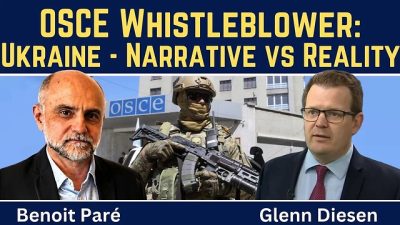
 Aletho News

