Russian Kids Being Bullied and Abused Over Their Nationality
By Paul Joseph Watson | Summit News | March 16, 2022
Human Rights Organization Save the Children reports that Russian children in Danish schools are being bullied and abused because of their nationality.
After being approached by multiple parents complaining about their kids facing harassment merely for being Russian, Save the Children has embarked on an effort to approach schools and institutions in a bid to raise awareness about the issue.
“We can see that it is a big problem. They are afraid of being dropped off at school in the morning and claim to have a stomach ache,” senior adviser at Save the Children Jon Kristian Lange told Danish broadcaster TV2.
The situation bears hallmarks of the early days of the COVID pandemic, when Asian people faced similar abuse, although in that instance the media reported on it, whereas the press is largely silent or even complicit in the current wave of Russophobia.
According to Lola Møldrup Hansen, a teacher at Bankagerskolen in the town of Horsens, Russian kids are being mobbed, taunted and branded ‘Russian spies.’
Supervisor Vibeke Stensgaard said the hate was creating a negative environment for young children who feel they are under threat.
Lange also highlighted the new trend of online abuse targeting Russians.
“One of the things that needs to be focused on is this strange ridicule online of being Russian, such as dancing ugly like a Russian or memes where people look evil like a Russian,” he said.
As we highlighted earlier, deranged but prominent voices in Ukraine are now brazenly calling for the genocide of Russian children.
The legacy media and cultural institutions are entirely responsible for the wave of Russophobia that has swept the world since the start of the war in Ukraine.
[The vitriol has been stoked partly by public officials, such as US Representative Eric Swalwell (D-California), who suggested that all Russian students attending American colleges should be expelled from the country.]
Ordinary Russians who have absolutely nothing to do with the Putin government are being roundly demonized by the very same entities that constantly virtue signal about the need to not blame entire races or religions for the actions of a relative few. Unless those people are white Europeans of course, then it’s open season.
Sanctions hurt everyone, but Russia will prevail: Putin
Samizdat | March 16, 2022
Western sanctions are a blow to Russia, but also hurt the entire global economy, Russian President Vladimir Putin said during a government meeting on Wednesday.
“As their weapons, [Western states] choose economic, financial, trade and other sanctions against Russia. They are now backfiring on the Europeans and Americans through rising prices for gasoline, energy, food, and job losses associated with the Russian market,” Putin said.
He noted that the current situation is a lesson for Russian entrepreneurs, who should learn to choose partners wisely, keeping in mind that “there is nothing more reliable than investments at home.”
“We see the position of those foreign companies that, despite the shameless pressure … continue to work in our country. In the future, they will certainly receive additional opportunities for development. We also know those who cowardly betrayed their partners, forgot about their responsibility to employees and clients in Russia, and hurried to earn illusory dividends by participating in the anti-Russia campaign,” Putin said, pointing out, though, that “unlike Western countries” who were quick to freeze the assets of Russian firms, “We will respect the right to property” of foreign businesses working in Russia and abstain from nationalizing their assets.
The Russian president described the sanctions policy implemented by the US, EU, and allies as a deliberate “blow to our entire domestic economy, to our social humanitarian sphere, to every family, every citizen of Russia.” He emphasized that it’s “a conscious, long-term strategy [to] weaken Russia,” which had been in the works long before Moscow launched its military operation in Ukraine.
However, Putin also said that Russia can stand up to sanctions pressure. Specifying that all national development goals for the country until 2030 must and will be achieved.
“Our economy, the state budget, and private businesses have all the necessary resources to solve long-term tasks. All the strategic national goals that we have set for the period up to 2030 must be achieved. The current challenges and opportunities they open up should only mobilize us,” he stated.
The president also noted, that, obviously, adjustments will have to be made to all the programs amid the current events, “and here the initiatives of business circles, scientists, and public associations are in demand.”
He warned that the new circumstances will require deep structural changes to the Russian economy, which may lead to rising unemployment and inflation, and “our task is to minimize such risks.” The head of state stressed the country needs to not only fulfill all its social obligations, but also to find new effective mechanisms to support citizens. In this regard, he called on the government to expand support for people who have lost jobs, find ways to reduce the level of poverty by the year’s end and solve logistical problems leading to price spikes.
“The current situation is, of course, a test for us all. I am sure that we will pass it with dignity – with hard work, joint work and mutual support, we will overcome all difficulties and become even stronger, as it has always been throughout Russia’s thousand-year history,” Putin emphasized.
“The Russian economy will definitely adapt to new realities. We will strengthen our technological and scientific sovereignty, direct additional resources to support agriculture, the manufacturing industry, and housing construction infrastructure,” the president added.
‘West’s global political and economic dominance ends’ – Russian President
Samizdat | March 16, 2022
Russian President Vladimir Putin has stated that the latest rounds of unprecedented sanctions imposed on Russia by the US and its allies over the Kremlin’s military campaign in Ukraine, mark the end of an era. According to Putin, from now forward the West will be losing its “global dominance” both politically and economically.
On Wednesday, the Russian head of state proclaimed that the “myth of the Western welfare state, of the so-called golden billion, is crumbling.” Moreover, it is the “whole planet that is having to pay the price for the West’s ambitions, and its attempts to retain its vanishing dominance at any cost,” Putin said.
The president predicted food shortages across the world as Western sanctions against Russia adversely affect the entire global economy.
Touching on the decision by several Western powers to freeze Russia’s central bank assets, Putin said that this would only serve to irreparably undermine trust in those nations, and make other countries think twice before placing their reserves in the care of those countries. According to him, nearly half of Moscow’s assets were “simply stolen” by the West.
Addressing people in the West, the Russian leader said the massive sanctions imposed on Russia are already backfiring on the US and Europe themselves, with governments there trying hard to convince their citizens that Russia is to blame.
Putin warned ordinary people in the West that attempts to portray Moscow as the primary source of all their woes were lies, with many of those issues being the direct result of Western governments’ “ambitions” and “political short-sightedness.”
Western elites, according to Putin, have turned their countries into an “empire of lies,” but Russia will keep on presenting its own position to the whole world, no matter what.
Sanctions on Russia damaging EU economy
By Jerome Hughes | Press TV | March 16, 2022
Brussels – As the cost of living in the EU goes through the roof, union members held a demonstration outside a meeting of EU finance ministers in Brussels on Tuesday. They want the bloc’s leaders to provide more support for EU citizens who are being hit hard by the financial ramifications resulting from the conflict in Ukraine.
Finance ministers have signed off on the 4th package of sanctions against Russia. 600 individuals have been targeted and Russian exports too. However, there is a very negative boomerang effect for the EU itself.
Russia, which is now the most sanctioned country in the world, has been removed from the so-called Most-Favoured-Nation clause relating to the World Trade Organization.
Finance ministers say €200bn worth of loans are available to EU nations most impacted by the Ukrainian refugee crisis.
Critics say, if Western leaders had shown more skill and compromise, when listening to Russia’s security concerns, the misery now being piled on Ukrainian citizens and the financial hardship being placed on EU citizens could have been avoided.
Putin’s War
BY GILAD ATZMON | MARCH 13, 2022
Putin is not a military general. He is a modernist leader, a trained spymaster and strategist who understands that war is a continuation of politics by other means (Clausewitz). Accordingly, if we want to grasp Putin’s motives we should refrain from trying to assess Russia’s military campaign in terms of ‘strict military objectives.’ We should instead look at the military campaign as a political instrument that is set to mobilize a global and regional geopolitical shift and on a mammoth scale.
It is clear that Putin’s army is doing its best to avoid civilian casualties. It uses siege tactics as opposed to the barbarian American ‘Shock and Awe’ doctrine. Furthermore, the Russian military works hard not to dismantle the Ukrainian military. Instead it encircles cities and is cutting out the Ukrainian army in the East and South of the country. The Russian military has dismantled Ukraine’s ability to regroup, let alone counter attack. Western military analysts have agreed that clear evidence of the Ukrainian army’s growing disability is that Ukraine’s army didn’t manage to seriously damage the 60 km Russian convoy on its way to Kyiv despite the fact that the convoy stood still for more than 10 days. In the last 24 hours, Russia has made it clear to the West that any Western military supply to Ukraine will be treated as a legitimate military target. In other words, the elite Ukrainian army in the East is now a defunct military force; it can defend the cities, it can mount guerrilla attacks on stretched Russian military logistics but it cannot regroup into a fighting force that can alter the battleground.
Putin’s army, as military experts agree, enjoys massive firepower. It is hardly a secret that Russia’s artillery is a deadly force and there is no force that can match it anywhere in the world. The military rationale for this is plain. The USSR never trusted the quality and the loyalty of its foot soldiers. While it counted on the soldiers’ mass impact, their sheer numbers, it also invented the means, the technology, the tactics and the doctrine to win the battle from afar in preparation for the masses to move in. It was Red artillery that knocked down the 3rd Reich Army. Similarly, flattening enemy cities is something the USSR and modern Russia are famous for. Russia enjoys this power, but it has refrained, so far, from deploying this ability in Ukraine. Russia has displayed this capability rather than deploying it. According to military analysts, Russia hasn’t even begun to utilize its superior air power other than assuring its total air superiority over Ukraine.
The Russian army’s tactic has been to mount pressure on cities’ outskirts, demonstrating Russian military might and then opening corridors for humanitarian convoys. And this is the trick. Russia is creating a flood of refugees to the west. Due to the Ukrainian government ban on men 18-60 leaving the country, we are talking about women and children. So far there are about 2.5 million Ukrainian refugees but this number could increase dramatically. And the question follows: will Germany be happy to accept another million refugees that aren’t a working force? What about France and Britain, the USA, Canada, all those countries that pushed Zalensky and Ukraine into a war but were quick to leave the Ukrainian people to their fate?
Sooner or later, Putin believes, Europe will accept his entire list of demands and will lift the list of sanctions, and may even compensate him for his losses on oil sales all in a desperate attempt to stop the tsunami of Ukrainian refugees. By the time the guns cool down, many Ukrainians may actually prefer to stay in Germany, France, Britain and Poland. This will lead, at least in Putin’s mind, to a demographic shift in the ethnic balance in favor of the Russian ethnic groups in Ukraine. Within the context of such a shift, Putin will be able to dominate the situation in his neighbour state by political and even democratic means.
Putin’s plan is not new. It already succeeded in Syria.
When the West realised that Syria was on foot to Europe, it was very quick to allow Putin to win the battle for Assad at the expense of America’s hegemony in the Middle East. Putin now deploys basically the same tactics. He may be cruel or even barbarian but stupid or irrational he isn’t.
The main question is how is it possible that our Western political and media elite are clueless about Putin and Russia’s moves? How is it possible that not one Western military analyst can connect the dots and see through the fog of this horrid war? The reason is obvious: no gifted people see a potential career in military or public service these days. Gifted people prefer the corporate world, banks, high tech, data and media giants. The result is that Western generals and intelligence experts are not very gifted. The situation of our Western political class is even more depressing. Not only are our politicians those who weren’t gifted enough to join the corporate route, they are also uniquely unethical. They are there to fulfil the most sinister plans of their globalist masters and they do it all at our expense.
I have little doubt that an experienced politician like Angela Merkel wouldn’t have let the Ukraine situation escalate into a global disaster. She, like Putin, was properly trained for her job, understanding the deep distinction between strategy and tactics. She, like Putin, was trained to think five steps ahead. As far as I can tell there is no one in the West who understands Putin, who can read his mind. Instead they attribute to the Russian leader psychotic characteristics in a desperate attempt to hide the depth of the hopeless and tragic situation the West inflicted on itself and on Ukraine in particular.
Meanwhile Putin is taking the most spectacular measures to protect his life and his regime. We in the west find it ‘laughable,’ but Putin knows very well that the only way the West can deal with its own incapacity is to eliminate him and his regime one way or another.
EU bans search engines and social platforms from “reproducing” content from sanctioned Russian media
A wide-sweeping censorship order
By Didi Rankovic | Reclaim The Net | March 11, 2022
They trained for this day for a long time; particularly by quashing online dissent during the two years of Covid hell, and now the big day is here: once considered an aspirational beacon of democracy, the EU is deploying some of the most egregious-to-date acts of censorship and suppression of free speech and access to information – certainly, at least, for a Western democracy.
And once considered an innovative and exciting company that brings knowledge to the people, and along the way “do no evil” – Google – and its ilk – will be there to help make it happen.
What spurred the European Commission to act this way is the war in Ukraine, and the desire to completely silence the Russian side, by preventing citizens living in EU member countries from being able to see or hear any content other than that approved and pushed by Brussels.
The question of why this is necessary – does the EU really fear people across Europe will believe Russia? Or is this being done to set a precedent that could be “useful” in so many situations down the line?
One can only speculate (until that is banned by decree, too), but what is clear is that the EU thought the price to pay by using hard censorship and authoritarian tactics and thus undermining the very tenets of the bloc is somehow the price worth paying.
And this is what the EU has done. After first banning two Russian media outlets, RT and Sputnik, from broadcasting (which RT is challenging in court), the EU has now gone to Google to make sure that any content produced by these media companies is purged from the search engine, while social media posts “reproducing” it must get deleted.
When RT and Sputnik got banned, there was some push-back from speech advocates in Europe, but those behind the decision vigorously defended it – if at times giving away how fully aware they are of the way their actions are perceived – namely, as Orwellian.
EU’s foreign policy chief Josep Borrell (who has been “on fire” these last weeks – he just proposed imposing sanctions on people labeled as spreading misinformation) told members of the European Parliament that the EU in fact “doesn’t have ministers of truth” and dismissed the Russian outlets as not being independent media (as if all media broadcasting in the EU is “independent” and not affiliated with different states.)
He went a step further, accusing them of being “Kremlin’s weapons.” At the same time, another commissioner revealed that the plan is to keep trying to “reach the Russian people and provide them with (EU’s ) information” – effectively saying that the EU hopes to do exactly what it says it is preventing Russia from doing.
There is an email submitted to the Lumen database on March 4, sent by the European Commission and containing a government removal request. Citing a previously adopted regulation to ban RT and Sputnik, the request states that the prohibition the EU intends to impose is to be “very broad and comprehensive.”
The job of internet search services like Google here is to index results with any possible content that the EU has deemed to be “misinformation and propaganda,” as well as websites throughout the world, and delist them.
“It follows from the foregoing that by virtue of the regulation, providers of internet search services must make sure that any link to the internet sites of RT and Sputnik and any content of RT and Sputnik, including short textual descriptions, visual elements, and links to corresponding websites do not appear in the search results delivered to users located in the EU,” the EU notice sent to Google reads.
Social-media-wise, the EU wants posts made by individuals who “reproduce” RT and Sputnik content to be deleted. A reference is made repeatedly to “proportionality” – i.e., between restrictive policies and people’s right to freedom of speech.
“Pursuant to the freedom of speech, media have the right to report objectively on current events and to form their opinions thereon. The freedom of speech also entails that users have the right to receive objective information on current events,” writes the EU, but then adds: “At the same time, the right to free speech can be restricted for legitimate public interests in a proportionate manner.”
At the end of the day, little of this has to do with the current war in the East of Europe. More likely it’s another instance of the authorities using a crisis to slip through dangerous policies that would in normal circumstances receive much more pushback. And once they know they can do it, there is a real danger they will keep doing it any time dissenting voices of various kinds need to be silent.
Russia adjusts to “sanctions from hell”
BY M. K. BHADRAKUMAR | INDIAN PUNCHLINE | MARCH 11, 2022
The Russian President Vladimir Putin’s remarks at his meeting with government ministers on Thursday constituted his first comments on the West’s “sanctions from hell.” They were focused almost entirely on “a set of measures to minimise the consequences of sanctions on the Russian economy and the people of our country.”
Putin’s number one priority is to hold himself accountable to his people. Unlike his American counterpart, Joe Biden, Putin feels no need of grandstanding, given his high approval rating above 70%.
The paradox is, while the western countries who imposed the sanctions are going through paroxysms of angst, gnawing worries and anxiety syndromes, the “victim”, Russia, seems nonchalant and is calmly adjusting to the “new normal.” The contrast couldn’t be sharper.
Without doubt, the Kremlin prepared thoroughly for the western sanctions. Prime Minister Mikhail Mishustin told Putin that a “special headquarters” has swung into action to coordinate the activities of all departments, including at the regional level. He said, “Steps to protect the most vulnerable areas are being worked through sector by sector.” The “core goals” are:
- “protecting the domestic market”;
- ensuring uninterrupted functioning of enterprises by eliminating disruptions in logistics and production chains;
- helping the people and businesses to quickly adapt to the changing circumstances; and,
- maintaining employment.
Over 20 major legislations are in the pipeline, which include specific proposals for stabilising financial markets, support industries, especially for the private sector, as well as for the “return of capital.”
One draft law aims to prevent shutdown of factories by foreign owners through “external management.” There is a vague hint of nationalisation, if push comes to shove. Interestingly, most western owners are announcing “temporary suspension of operations” while paying salaries to employees.
The IT sector, construction industry, transport companies and travel and tourism sector will receive special attention — as also agriculture, which is not only about jobs but also food security. There is an overall relaxation of regulatory measures, debt repayment schedules, bureaucratic procedure, etc.
Mishustin noted: “Maximum freedom of economic activity in the country, minimal regulation and control and, of course, support for the labour market will remain the basis for our economic response. The Government will expand import substitution and help domestic producers replace foreign products in supply chains.”
The highlight of yesterday’s event was the presentation by Finance Minister Anton Siluanov on measures to stabilise the domestic financial market, underscoring how accurately the Kremlin anticipated the West’s agenda to isolate Russia.
Siluanov said, “the Western countries have basically launched a financial and economic war” combining a default on their financial liabilities to Russia with a freeze on Russia’s gold and currency reserves. “They are doing all they can to stop foreign trade and the export,” he added, “trying to create a shortage of imported everyday essentials… (and) compel successful businesses with foreign capital to shut down.”
In these circumstances, the government’s “priority is to stabilise the situation in the financial system and ensure uninterrupted operations.” Siluanov explained that the measures taken in this direction include “precautions to control the outflow of capital abroad” and a special procedure for servicing external debt, including national debt, whereby Russia will pay off its external liabilities in rubles and “carry out the conversion by de-freezing our gold and currency reserves.”
Other measures include mandatory surrender of foreign exchange proceeds by companies, higher ruble interest rates, suspension of taxes on individual interest income for two years, suspended VAT on the purchase of gold and “a large project on capital amnesty.”
The central bank will fully guarantee the liquidity and uninterrupted operations of financial institutions. Siluanov claimed, “These measures have already produced results. The situation on the outflow of deposits is being stabilised and the amount of cash withdrawals has been reduced to almost zero… balance of payments is also improving. Current account receipts are balancing out capital flow.”
To be sure, the big increase in oil and gas revenue will offset any decline in revenue in other sectors, thereby reduce borrowing and public debt, and will provide funds for priority spending.
Most important, Siluanov stressed that the government regards the social commitments as the “top budget priority.” He said, “We will ensure the payment of pensions, benefits, salaries and other payments in a timely manner and in full. Medicines are provided as planned as well, including for children with complex diseases..
“In May, low-income families with children will start receiving new payments. We will earmark additional spending for these purposes in the budget system. The Government has begun to implement anti-crisis measures. Our top priority is to maintain employment and jobs, and to support people who need help under the current circumstances.”
All in all, the prognosis here rubbishes the western predictions of “apocalypse now”. The EU’s rejection of Washington’s proposal for sanctions on Russia’s oil exports virtually ensures that there isn’t going to be any income deficit in Moscow. In 2021, the Kremlin balanced its budget with an oil price expectation of $45 per barrel. The prices currently exceed $130 per barrel!
This conservative fiscal approach by the government largely insulates the economy from the effects of Western economic sanctions. Ironically, the pressure is going to be on European leaders who are concerned about major energy supply disruptions from Russia and have to keep their economies supplied with fuel, while also punishing Russia!
On the contrary, if Putin responds with gas cutoffs, that could spike energy prices further, drive inflation, and undermine Europe’s economic recovery. Simply put, Russia is much larger than the contiguous United States, and has an educated population and far more natural wealth than the West’s Russophobes might expect!
Take Russia’s exclusion from SWIFT. The fact of the matter is that while seven Russian banks were removed from SWIFT, those targeted did not include Sberbank or Gazprombank, two of Russia’s largest banks by assets. Why? Primarily due to Europe’s continued reliance on Russia for energy!
The point is, Russia is intricately connected to the global economy, holds large quantities of critical resources, and has been strategically preparing since 2014 to weather the long-term impacts of sanctions and a removal from SWIFT.
Furthermore, it needs to be understood that while several Russian banks are now cut off from SWIFT, they can still execute international transactions with other banks — except that they must use slower and less-secure methods of interbank communication, such as the outdated telex telegram network or phone calls and email.
By the way, Russia has also developed its own internal financial transaction messaging system, the System for Transfer of Financial Messages that could at a pinch serve as a functional alternative to SWIFT.
Equally, the western sanctions against Russia are bound to cause ripple effects across global markets, including supply chain disruptions and higher prices on energy and agricultural goods. Apart from being a key exporter of oil and gas, Russia is the world’s largest producer of palladium and the second-largest producer of platinum—key commodities used in semiconductor manufacturing—and a major exporter of other critical minerals, mining commodities, and agricultural goods.
Clearly, Russia has no dearth of willing trade partners across Asia, Africa, and the Middle East, as it comes under compulsion to rely primarily on non-Western-aligned nations for trade markets for the foreseeable future.
This has larger implications. Western sanctions could potentially accelerate a global economic divide between the West and Russian-aligned economies that are open to break away from the current US-dominated financial system, thereby accelerating a broad global economic reorientation.
Surely, sanctions will isolate Russia from the US and EU markets, but its large reserve of natural resources and strong ties to China decrease the likelihood that it will become economically isolated.
On the contrary, if Western sanctions persist, economic relations with Russia could help accelerate the growth of a non-Western bloc in the global economy, which would have deleterious impact on the status of the American dollar as the world currency.
Quite obviously, there are already incipient signs that thoughtful minds in Europe, especially France and Germany, feel troubled and are conscious of the need to rebuild bridges with Russia. How they pan out remains to be seen.
The likelihood is that once the dust settles down in Ukraine and Russia has had its way as regards its security guarantees, a process of rapprochement will commence between the major European countries and Russia sooner rather than later.
In fact, at yesterday’s meeting, Putin expressed confidence that he expects a volte face by the US too, just as the Biden administration has done vis-a-vis Venezuela and Iran recently. Putin also signalled that Russia may not resort to tit-for-tat sanctions against Europe, especially in regard of energy exports.
EU tells Google to delist Russian state media websites from search
By Mariella Moon – engadget – March 10, 2022
The European Commission has sent Google a request to remove Russian state media results for searches performed in countries within the EU. As The Washington Post reports, Google has uploaded a letter from EU officials to a database of government requests. In it, the officials explain how the commission’s official order to ban the broadcast of RT and Sputnik in the European Union also applies to search engines and internet companies in general.
If you’ll recall, the commission issued a ban on the state media outlets a few days after Russia’s invasion of Ukraine began. Ursula von der Leyen, President of the European Commission, said back then that by doing so, the outlets “will no longer be able to spread their lies to justify Putin’s war.” While it wasn’t quite clear how the order applies to internet companies, Facebook, Twitter and TikTok promptly restricted access to RT and Sputnik across Europe. Google also announced its own restrictions, but only for the outlets’ YouTube channels.
In the letter Google has uploaded, officials explained that search engines play a major role in disseminating content and that if the company doesn’t delist the outlets, it would facilitate the public’s access to them. Part of the letter reads:
“The activity of search engines plays a decisive role in the overall dissemination of content in that it renders the latter accessible to any internet user making a search on the basis of the content indication or related terms, including to internet users who otherwise would not have found the web page on which that content is published…Consequently, if search engines such as Google did not delist RT and Sputnik, they would facilitate the public’s access to the content of RT and Sputnik, or contribute to such access.
It follows from the foregoing that by virtue of the Regulation, providers of Internet search services must make sure that i) any link to the Internet sites of RT and Sputnik and ii) any content of RT and Sputnik, including short textual descriptions, visual elements and links to the corresponding websites do not appear in the search results delivered to users located in the EU.”
Google didn’t return The Post’s request for comment, but the publication says a search conducted within the EU didn’t bring up links for “Russia Today.” RT links still showed up for us, however, when we conducted searches using Google Austria and France.
The letter also said that the order applies to “posts made by individuals that reproduce the content of RT and Sputnik” — for example, screenshots of articles from those outlets — and that social networks must delete those posts if they get published. That could create a deluge of additional work for social media websites already struggling to moderate content posted by their users. According to The Post, though, the actual sanctions law doesn’t define the order in the way that’s written in the letter, so the officials’ interpretation could be challenged in court.
US Enriches itself at the Expense of the EU Paralized by the Price Shock
By Vladimir Danilov – New Eastern Outlook – 09.03.2022
Europe has been shaken by galloping gas prices in recent months, leading to financial and socio-political instability in the Old World.
There are several reasons for this, one of them being the politics of domestic European speculators, who wanted to get rich quick when, as a result of their blatant Russophobic policies, European officials managed to keep Gazprom and its cheap gas out of the EU internal market. As a result, these speculators sell at a markup of 300, 400 or 500 per cent the cheap gas that Gazprom pumped into their storages back in the summer. In doing so, they squeeze their super-profits out of the European consumer. And until they sell these reserves, they will not let Russian gas into Europe.
In addition to European speculators on Russian gas, the United States has become enormously rich in recent months, profiting from the extraordinarily high prices. Meanwhile, in order to distract public opinion from the true situation on the issue, Joe Biden’s administration officials are trying to falsely accuse Moscow of increasing gas prices, while doing nothing to lower those prices themselves, as their fall is absolutely unprofitable for Washington.
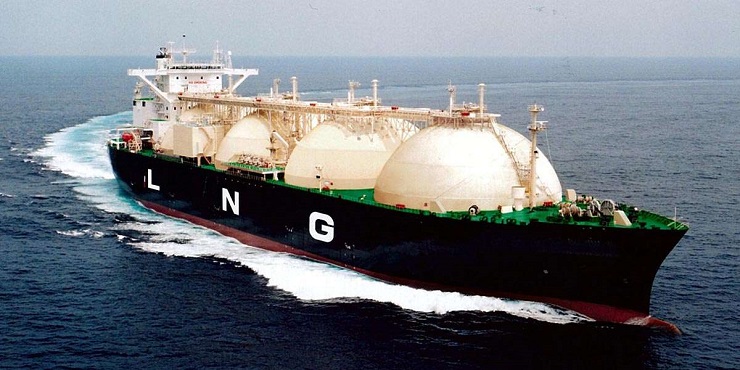
And this is confirmed by data from the Russian Federal Customs Service and the US Bureau of Economic Analysis, which clearly show reports on gas exports to Europe by the US and prove that it is the US that has been making more money than Russia on the super-high gas prices in recent months. Thus, the value of natural gas and LNG exported by Russia in January-August 2021 was $33.197 billion, compared with $42.9 billion worth of LNG exported by the US during the same period!
Most US gas supplies to Europe come under spot contracts (at exchange prices, quick purchase and payment and delivery by a certain date) concluded in December and January, when quotations in Europe were hitting record highs. As a result, traders now supplying American gas to Europe are making super profits. In January, they not only benefited from supplying Europe with gas produced in the US, but they also diverted volumes from the Middle Eastern and even Asian routes as a result of lower gas prices in the Asia-Pacific region (APAC).
As for Gazprom, it delivers, fulfilling its contractual obligations mainly under long-term contracts, i.e. at prices significantly lower than those on the stock exchange.
If LNG supplies result in lower gas prices in Europe, that market will automatically become uninteresting to US exporters, and Europeans themselves will have to go back to buying gas from the traditional suppliers. The panic mood in Europe is therefore now being artificially maintained by allegtions that Russia could cut off gas supplies because of the escalating situation around Ukraine. It is remarkable, however, that all the LNG supplies from the US have never managed to seriously depress gas exchange quotations in Europe, while any news of successful negotiations between Russia and the US or European leaders knocks prices down by $100-150.
As we know, the European gas market is the backyard of the global LNG market, dependent on the conditions in the APAC countries, where the market is physically larger. As soon as prices begin to fall in Asia, they also fall in Europe, and vice versa. In 2021, half of US gas exports went to Asia-Pacific and only a quarter to Europe. However, the diversion of LNG flows from the US to Europe could soon result in higher gas prices in the APAC, with US gas carriers heading back to Asia and European prices again breaking records for the benefit of the same European speculators and US traders, and to the misfortune of Europeans who will pay the price for Washington’s gangster gas policy.
Europe, with its substantial gas consumption and dozens of underutilized LNG import terminals, has long been of great interest to US companies, which have spent a total of $60bn on export infrastructure. There has been a real boom in the construction of LNG terminals in Europe too, under the influence of Washington, and they have even been built in Lithuania and Poland. However, no one can deny that LNG is expensive compared to pipeline gas from Russia. This is why, until recently, Europe was very enthusiastic about buying pipeline gas cheaply from Russia and why 75-80% of Europe’s LNG terminal capacity stood empty. In any case, the main criterion for assessing the prospects of US LNG as a competitor to Gazprom in Europe is price.
However, there have been some significant deteriorations in the gas market in recent weeks. Above all, they followed Russia’s receipt in late February of written confirmation of NATO’s and the United States’ refusal to engage in a dialogue with Moscow on security guarantees. This came against a backdrop where the West had previously blatantly refused to reassure Kiev’s rampant neo-Nazi authorities, who came to power in 2014 through a Washington-inspired coup. But for 8 years, at the instigation of Washington and with the tacit support of the West, the Kiev authorities have consistently pursued a policy of genocide in Donbas, where, according to incomplete information, they have killed more than 13,000 Russian-speaking civilians and pursued a policy of Russophobia. In addition, the Kiev authorities have recently intensified their neo-Nazi activities in the country and have made increasing threats of a potential nuclear weapon capability in Ukraine, in the hope of using which Kiev has already begun to develop far-reaching plans to attack Russia.
Under these conditions and in the absence of a proper Western response to the activities of the Kiev authorities, in late February Moscow was forced to launch a special operation in Ukraine to demilitarize and denazify it for reasons of self-preservation. In response, Washington and its Western allies unleashed an information war against Russia and slapped severe sanctions. Brussels, in a bid to please the Russophobic US political establishment, has refused to certify the already built Nord Stream 2, which could have significantly eased the situation on the European gas market. However, other Russian pipelines continue to operate and pump gas to Europe. Moreover, despite the misleading anti-Russian information warfare unleashed by Washington, Russian gas continues to flow through the Ukrainian gas transmission system without interruption, as reported by the Ukrainian transmission system operator itself. Gas supplies to Europe are not just flowing through the Ukrainian pipeline, they have also increased. The Europeans have increased their requests for supply and Gazprom has begun to pump through the Ukrainian pipe all of 109 million cubic meters of gas per day instead of 50 million cubic meters per day, as it was before the Russian special operation in Ukraine began, which is a doubling of supplies.
However, due to the depletion of European underground storage facilities due to winter weather, there is almost no gas left, forcing the EU to switch to current imports, which are “obligingly” offered by the US, which itself unleashed the crisis in Ukraine to, among other things, raise the price of gas in Europe. As for the Europeans, they are so far trying to move Russia’s hydrocarbon supplies out of the sanctions bracket, although individual European politicians, such as Borel, who openly “eat from Washington’s table”, have started talking about imposing additional sanctions against Russia in the gas sector as well, to please White House policy. At the same time, such European officials know full well that Russia is not going to use its gas as a tool against Europe. The EU has no substitute for that, by the way, and many of the world’s gas exporters have already spoken out about it. And the situation in Europe will only get worse for the population if the anti-Russian policy of the current European officials continues, threatening not only the impoverishment of the population, but also the bankruptcy of many European companies and even entire sectors of the economy.
At the same time, as Europe’s anti-Russian sanctions policy continues to escalate, it cannot be ruled out that Russia may eventually, in order to ensure its own security, use hydrocarbon supplies as a retaliatory measure if it considers Western sanctions to be disastrous for the Russian economy. But such actions will only lead to a clear victory for the United States over Europe, a further increase in its dependence on Washington, including on gas, and an even greater enrichment of the United States through its previously planned increase of gas prices in Europe by exacerbating relations with Russia.
Dutch internet providers block RT, Sputnik – media
RT | March 8, 2022
Several major Dutch internet providers have reportedly begun blocking websites belonging to RT English, RT UK, RT DE, RT France, RT Spanish, as well as Sputnik.
According to the ANP news outlet, the Netherlands’ Authority for Consumers and Markets (ACM) targeted the said Russian media, as they are on the EU’s sanctions list, which the bloc enacted in response to Moscow’s military offensive in Ukraine.
It is said that the ACM on Monday sent a list of undesirable media to internet providers,including VodafoneZiggo, KPN, and T-Mobile.
A VodafoneZiggo spokesperson told journalists that the company was indeed going to block the websites “as soon as possible, probably Tuesday,” with T-Mobile expected to comply soon as well.
KPN, while agreeing to restrict access to the Russian media, has made it clear that it is “fundamentally” against the idea of blocking any websites in general. A spokesperson for the provider clarified that KPN does not think it is up to them to “determine what is good and what is bad.” The company would want to see “net neutrality” instead.
Last Wednesday, the European Commission ruled that all RT channels, as well as Sputnik, be banned in all 27 member states over allegations of “systematic” disinformation regarding Russia’s military operation in Ukraine.
Commenting on the move, the EU’s top diplomat, Josep Borrell, said that “systematic information manipulation and disinformation by the Kremlin is applied as an operational tool in its assault on Ukraine.” The official went on to claim that the Russian outlets posed a “significant and direct threat to the Union’s public order and security.”
Meta, Google, YouTube, Twitter and TikTok are complying with the ban already, not displaying RT and Sputnik’s material in the EU member states.
On February 24, Russia launched a military offensive against Ukraine, with President Putin citing the need to “demilitarize and denazify” the country as well as to prevent Kiev from being dragged into NATO. Moreover, according to the Russian president, the Ukrainian government’s policies toward the Russian-speaking population in the Donbass republics were tantamount to “genocide.” Ukraine and the West, however, suspect that the Kremlin in fact wants to install a pro-Russian puppet government in Kiev, coming up with pretexts for an aggressive and “unprovoked” war.
Ukraine faces defeat
BY M. K. BHADRAKUMAR | INDIAN PUNCHLINE | MARCH 8, 2022
Belying the predictions of western media, Russia’s special operation in Ukraine is entering a successful endgame on the political and diplomatic track much sooner than one would have thought.
A close reading of the outcome of the 3rd round of peace talks in Belarus last night is that the Ukrainian negotiators have sought some more time to come up with a full response to the Russian terms for ceasefire.
Ukraine has signalled willingness to be a neutral country ruling out NATO membership. The main sticking points narrow down to: a) recognition of Crimea as part of Russia; and, b) sovereignty of Lugansk and Donetsk.
They are non-negotiable demands. But they are a bitter pill for the Ukrainian leadership to swallow. The Ukrainian stance is that these demands are “practically” impossible.
But, as Vladimir Medinsky, leader of the Russian team, told RT, “In my opinion, there is a big difference between impossible and ‘practically impossible’… I hope that eventually we will find a solution.”
The Russian side feels encouraged albeit yesterday’s talks produced no tangible results. They are in no hurry to rush into major military offensives.
Indeed, the pattern throughout has been that the Russian generals would apply coercive military power to create synergy to kickstart a parallel political / diplomatic track to attain Moscow’s objective (which is not about territorial conquest.)
The western analysts who expected the Russian generals to behave like Patton or MacArthur with a massive attack on Kiev instead witnessed a confusing Russian strategy — slow, halting operations, without excessive force and with a distinct preference to avoid fighting by encircling and bypassing pockets of resistance, and avoiding set battles.
Putin revealed yesterday that “conscripts aren’t and won’t be taking part in hostilities, and there will be no additional call-up of reservists from the reserve… Missions are carried out only by professional troops.”
The Ukrainian side realises that the Russian strategy is winning, as Russian forces are encircling Kiev from the northwest, west and east, Black Sea ports are no longer accessible, and the forces in the east are entrapped. Yesterday, Zelensky acknowledged the grim situation.
After the third round in Belarus, he hastened to assure that talks will continue until a settlement! In his words,
“Today the third round of negotiations took place in Belarus, and I would like to say ‘the third and final one,’ but we are realists. Therefore, we will talk, we will insist on negotiations until we find a way to tell our people, ‘this is how we will come to peace.’”
Russians are in no tearing hurry. They eschew triumphalism, and instead allow enough space for the Ukrainian side to take some really hard decisions on surrender — while military pressure is kept up on Kiev. Foreign Ministry spokeswoman Maria Zakharova said yesterday, “We keep the door open to diplomatic options. As soon as there are corresponding signals, we will be acting on them.”
Importantly, the two sides have agreed on a roadmap for creating humanitarian corridors and Russian side has announced a ceasefire. Also, these corridors will be operated in close coordination through a hotline.
The Russian statement says that a “continuous communication link shall be established between the Russian and Ukrainian sides for mutual exchange of information about the preparation and implementation of the evacuation of civilians and foreign citizens.”
The Russian side since conveyed all relevant details to foreign embassies, appropriate UN and OSCE agencies, the International Committee of the Red Cross and other concerned international organisations. The humanitarian corridors will be:
- from Kiev and adjacent regions to Gomel (Belarus);
- from Sumy along two routes to Poltava (central Ukraine) and to Russia;
- from Kharkov to Russia or to Lvov, Uzhgorod and Ivano-Frankovsk (all three in western Ukraine); and,
- from Mariupol along two routes to Russia and Zaporozhe (on the Dnieper river in southeastern Ukraine.)
This joint work and the lull in fighting sets the stage for the crucial meeting between Russian Foreign Minister Sergey Lavrov and his Ukrainian counterpart Kuleba in the Turkish resort of Antalya on Thursday. The very fact the talks have been elevated to foreign minister level signals hope that a critical mass may be accruing.
Thoroughly disillusioned with the betrayal by the US and NATO, Zelensky is inching toward an agreement with Moscow. It is futile to pre-judge the outcome, but there is a game changer. The major European countries — UK, France, Germany, Netherlands — have rebuffed Washington’s hawkish proposal to impose sanctions on Russia’s oil exports.
Oil exports are Russia’s principal source of income, therefore, this is a strong rejection of Washington’s efforts to isolate Russia. French President Macron captured the zephyr in his remark yesterday:
“It is impossible to build a lasting peace if Russia doesn’t participate in building a comprehensive security architecture on our continent, because history and geography mandate this. Our responsibility is to preserve all the ties that we can preserve. We must continue to talk with the Russian and Belarusian peoples. We need to do this with help from representatives of the world of culture, the scientific and technical community, non-governmental organisations.”
On Sunday, in an op-ed in the New York Times, UK Prime Minister Boris Johnson also wrote: “We have no hostility toward the Russian people, and we have no desire to impugn a great nation and a world power. Ukraine had no serious prospect of NATO membership in the near future. This is not a NATO conflict, and it will not become one.”
Meanwhile, major European countries, especially Germany, are ruling out EU membership for Ukraine, either — which, ironically, was the issue that had precipitated the US-backed coup in Kiev in 2014 triggering the catastrophic slide toward conflict involving Russia.
Featured Video

Death Spikes & Rising Cancer In Our Youth Explained
or go to
Aletho News Archives – Video-Images
From the Archives
Politicians lie
By Mazin Qumsiyeh | Popular Resistance | August 18, 2013
There is no way to say this truth nicely: Politicians lie. That includes Japanese, American, Egyptian, Israeli, and Palestinian politicians! Is there something more common sense than that? Yet, so many citizens around the world believe their own politicians or wistfully acknowledge lies but think it is part of the job needed to run things. They believe even when politicians contradict themselves blatantly. This phenomenon is rather remarkable. It is a dissonance and disconnect from reality that many seem oblivious to. It is very dangerous because it can lead to accepting rationales for going to war. These can be deadly wars that lead to millions of lives lost as happened in what was called World War 1 and WW2. Even when incredible and declassified evidence abound, politicians continue to lie and old mythologies refuse to die. Here are just a few of the countless lies told to us over the past few decades… continue
Blog Roll
 Aletho News
- Iraqi resistance group vows to stage airport sit-ins over Iran aerial blockade
- Turkish parliament to review Saudi-Pakistan defense pact next month
- DEATH SPIKES & RISING CANCER IN OUR YOUTH EXPLAINED
- Iran offers Trump deal before US election
- Merz regime wants ‘secret police’ – opposition
- Israeli settlers terrorize West Bank Palestinians with state-provided drones: Report
- They see them, then kill them: Israeli quadcopters track, deliberately target civilians in Gaza
- Debunked: Trump’s egregious UNGA claims on war against Iran crumble under scrutiny
- Europe was part of the infrastructure of US aggression against Iran: Deputy FM
- New evidence on the Bucha Massacre
- If Americans Knew
- Trump betrayed voters with his campaign lies and prioritized a foreign country once he took office
- Netanyahu calls Israel’s war in Gaza ‘opposite of genocide’ in UN speech to near-empty hall
- Settler Kidnappings: Torture, Sexual Abuse and Terrorisation of Palestinian Abductees as Israel Deepens Annexation of West Bank
- Gaza winter nears as 162,000 tents become unusable, raising fears of humanitarian crisis
- Netanyahu says, “It’s the opposite of genocide”; UN says Gaza economy is world’s ‘most severe crisis on record’ – Daily Update
- Israel’s US-Backed Assault on Gaza Has Created the ‘World’s Most Severe Economic Crisis on Record’: UN
- ‘Protecting U.S. Citizens’… From Israel
- ‘This is where I live now, the back of a truck’: a day in the life of a grandmother in Gaza
- In UN Speech, Iran’s President Displays Pictures of Children Killed by US, Brings Attention to Israel’s Nuclear Arsenal
- Israel displaces hundreds of Palestinians amid wave of demolitions in West Bank
- No Tricks Zone
- New Study: Earth And Venus Surface Warmth Largely Explained By Convection And Lapse Rate, Not CO2 Or Radiation
- 2025 Nature Paper Claiming Worsening Global Drought Gets RETRACTED …Heavily Flawed
- New Study: ‘Global Drought Shows No Detectable Recent Acceleration Under Climate Warming’
- Economic Masterminds: German Socialists Suggest Taxing Productivity Gains Stemming From Using AI
- The South China Sea Has Not Been Cooperating With The Climate Change Narrative
- Energy Crisis: Germany Enters Heating Season With Historically Low Gas Reserve Fill Levels
- New Study: The Antarctic Ice Sheet Gained Mass From 2020-2024 Due To Staggering Snow And Ice Accumulation
- Study: Ocean Heating Rates From Thousands Of Years Ago ‘Dwarf’ Modern Ocean Heating Rates
- Climate Extremists Target, Attack Large-Scale Power Grid Infrastructure In Germany!
- New Study: Antarctic Ice Melt Has Contributed Less Than 1 Centimeter To Sea Level Rise In The Last 30 Years

