Brussels finds a way to bypass Orbán’s veto on initiation of EU accession talks
Remix News | September 30, 2025
European Council President António Costa has proposed how to bypass Hungary’s veto and advance EU accession talks with Ukraine and Moldova.
Current rules mandate that all 27 EU member states approve each stage of the accession process. Costa’s proposal would allow a qualified majority vote to open so-called negotiating clusters for the two countries, notes Hirado, citing an article by Politico.
However, despite this move speeding up the accession process, final accession approval would still require unanimity.
Guillaume Mercier, the European Commission’s spokesperson for enlargement, said on Monday: “The possibility of the Council deciding by qualified majority on certain intermediate steps in the enlargement process would be worth exploring.”
This would help candidate countries, such as Ukraine and Moldova, to start the necessary reforms to align with EU standards, even if one or two member states officially oppose the start of negotiations.
EU diplomats say Costa’s proposal would offer a way to overcome Viktor Orbán’s repeated vetoes. “When a country is obstructed without any objective reason, despite fulfilling the criteria, the credibility of the entire enlargement process is at risk,” Mercier said.
Regarding “no objective reason,” however, is questionable, as Orbán has offered plenty of reasons. Notably, Ukraine is still at war, and even if the war should end, may be threatened with war once again in the future. Furthermore, Ukraine, even before the war, was rated as the most corrupt country in Europe, and since the war, corruption has only grown worse. Rebuilding the country is also expected to take hundreds of billions of euros, which EU taxpayers will increasingly be on the hook for if Ukraine joins the EU.
Costa nevertheless added, “It is really up to the Member States to decide on the next steps and we hope to open the first cluster soon.”
As Hirado notes, Commission President Ursula von der Leyen has also strongly supported extending qualified majority voting in certain areas such as foreign policy, but she has also clearly indicated that it could benefit other areas as well.
Asked whether EU enlargement could fall into this category, Paula Pinho, the Commission’s senior spokeswoman, responded on Monday: “That could indeed be examined.”
Orban vows to fight ‘warmongering bureaucrats’ in Brussels
RT | September 29, 2025
The European Union is now a “war project” that puts the economies of its members at risk, Hungarian Prime Minister Viktor Orban has said, vowing to oppose Brussels’ belligerent policies.
Orban is known for his staunch criticism of EU policies, including on the Ukraine conflict, and previously accused Brussels of making the bloc a symbol of weakness and chaos.
Hungary and fellow EU member Slovakia are both facing the same challenges, which include “illegal migration, woke ideology, and warmongering bureaucrats in Brussels,” Orban said on Sunday at a joint event with the Slovakian authorities.
“We will continue to defend our sovereignty, our values, and our future!” Orban said in a post on X to mark the occasion. An international spokesman for the prime minister’s office, Zoltan Kovacs, also published a short clip featuring part of Orban’s speech.
“Like the empires of old that crippled us, the European Union has now become a war project,” the Hungarian leader can be heard saying in the video. Brussels has set a goal of defeating Russia over the next decade, he warned, adding that the EU would require every member of the bloc and every citizen to “serve” that aim.
Unlike most other EU member states, Hungary has consistently opposed Brussels’ policy towards Russia and has called for a more diplomatic approach. Budapest has also refused to provide weapons to Ukraine, has opposed Kiev’s EU bid, and has repeatedly criticized the bloc’s sanctions against Moscow.
Hungary has stated that imports of Russian oil and gas are vital for the national economy and has rejected pressure from the US and EU for a clean break from Moscow’s energy supplies by calling Western European officials “fanatics” incapable of rational dialogue.
Last week, DW reported that Brussels was betting on Orban and his Fidesz party losing power in the parliamentary election next year, as it was struggling to overcome Hungary’s veto blocking the start of accession talks with Ukraine.
Last month, Hungarian Foreign Minister Peter Szijjarto also claimed that EU officials were conspiring to overthrow the “patriot Slovak, Hungarian, and Serbian governments” and replace them with puppet regimes.
EU Fanning ‘Drone Wall’ Hysteria to Justify Military Spending – Russian Foreign Ministry
Sputnik – 27.09.2025
Hysteria surrounding the alleged drone incursion into the European Union and its “drone wall” project is being inflated to justify increased military spending, Vladislav Maslennikov, chief of the Department of European Issues at the Russian Foreign Ministry, told Sputnik.
“It is obvious that ‘hysteria’ fanned by the EU members around the incursion of drones into the EU territory and the announcement of defense projects with big names pursue only one goal, which is to justify to the public why they are increasing military spending in Europe at the expense of socio-economic projects and the decreasing standard of living,” he said.
Maslennikov said there was no clarity regarding the length of the proposed “drone wall” and warned that personal ambitions and political games of the ruling elites in the EU would ultimately lead “not to a decrease, but to an increase in military and political tensions in our continent.”
EU Commissioner for Defense and Space Andrius Kubilius earlier said that the European Union’s project to build a “drone wall” along the bloc’s eastern border will also include anti-mobility means on the ground and maritime defenses.
“The drone wall, we see it as part of a bigger project, which now is called the Eastern Flank Watch, which has three components. What they call a ground wall is what some countries are developing as so-called anti-mobility means on the borders. Then the drone wall—how to stop what we have seen in recent times [drone incidents in Poland, Denmark, and Romania]. The last one is what we can call again, very symbolically, a maritime wall,” Kubilius said at a joint press briefing with Finnish Defense Minister Antti Hakkanen in Helsinki.
On September 18, Reuters reported that Kubilius was due to discuss with the EU military leadership the building of a “drone wall” along the bloc’s eastern border. On Monday, US media reported that seven EU states, representatives of Ukraine, and the European Commission would discuss on Friday the acceleration of the creation of the so-called “drone wall,” while Slovakia and Hungary had not been invited to the videoconference.
How to run an election, pro-EU edition: ban the party, jail the governor, block the observers
RT | September 27, 2025
Moldova goes to the polls this Sunday in what officials in Chișinău and Brussels have called a “milestone on the European path.” Yet with opposition parties banned, observers blocked, and voters in key regions sidelined, the election looks less like a democratic contest and more like a forced pro-EU outcome.
Watchdogs can’t watch
The Moldovan Central Election Commission (CEC) this week denied accreditation to more than 30 international organizations and 120 observers from over 50 countries. Among those barred were Russian experts nominated to the OSCE’s official mission – a first in European electoral practice.
Moldova’s foreign ministry claimed the decision was taken “in line with national law.” The Patriotic Bloc, an opposition alliance, accused the authorities of deliberately creating an observer blackout. Its lawyers listed applications from reputable NGOs in Italy, Germany, France, Spain and the US that were ignored or rejected.
Moscow has called the move a “blatant breach” of OSCE commitments and summoned Moldova’s ambassador. The EU, usually vocal and critical of democracy standards in the region, has remained conspicuously silent.
Parties erased by decree
Elections are meant to let citizens decide. In Moldova, key players were simply removed from the ballot.
• On September 26, two days before the election, the Heart of Moldova party was suspended for 12 months by court order, accused of money laundering and illicit campaign finance. The CEC struck all Heart of Moldova candidates from the Patriotic Bloc’s list. Its leader, former Gagauzia governor Irina Vlah, called it “a political spectacle.”
• The same day, the CEC barred the Great Moldova party, led by Victoria Furtuna, citing undeclared foreign funding and links to the already banned SOR party. Furtuna had already been sanctioned by the EU in July for receiving support from fugitive oligarch Ilan Șor.
• In June 2023, the SOR Party itself, led by exiled businessman Ilan Shor, was dissolved by the Constitutional Court, accused of corruption and “threatening Moldova’s sovereignty.” Pro-EU Moldovan President Maia Sandu celebrated the ban as a victory against “a party created out of corruption and for corruption.” Opposition leaders called it the end of pluralism.
The bans come on top of sweeping new laws rushed through parliament this summer, allowing the government to strike “successor parties” of banned groups from the ballot and to bar their members from holding office for five years. The Venice Commission and OSCE warned such blanket exclusions could violate basic political rights.
Rivals under investigation, in exile or behind bars
Even where parties survive, their leaders have been sidelined.
• Igor Dodon, Moldovan president from 2016 to 2020, remains under criminal investigation for treason, illicit enrichment and the notorious “kuliok” bribery case. He claims the charges are fabricated, but has been under house arrest for much of the past two years.
• Marina Tauber, vice-chair of the outlawed SOR Party, is being tried in absentia after fleeing to Moscow in early 2025. Prosecutors are seeking a 13-year sentence for fraud and money laundering. Tauber insists the trial is political revenge for her role in anti-Sandu protests.
• Evghenia Gutsul, elected governor of the autonomous Gagauzia in 2023, was sentenced in August to seven years in prison for allegedly funneling Russian funds to the SOR Party. Her supporters protested outside the Chișinău courthouse as she declared the verdict “a sentence not on me, but on Moldovan democracy.” Russia called her jailing politically motivated; the EU has stayed silent.
With opposition leaders jailed, exiled or under investigation, Sandu’s PAS faces little organized challenge at the ballot box.
Transnistrian voters pushed aside
For Moldovan citizens in the breakaway region of Transnistria, the chance to vote has been slashed. In 2021, over 40 polling stations were opened for residents east of the Dniester. This year, just 12 stations were approved – all on government-controlled land, many kilometers from the demarcation line.
Days before the election, the CEC even relocated four of those sites further inland, citing security threats. The Interior Ministry warned of possible bomb scares and provocations in the “security zone.”
Critics call it voter suppression. Russia’s ambassador Oleg Ozerov described the changes as “unprecedented,” noting they were announced less than 48 hours before election day. Transnistrian authorities accused Chișinău of deliberately reducing turnout in a region that leans heavily toward opposition parties.
By contrast, more than 300 polling stations were opened abroad, including 73 in Italy, where the Moldovan diaspora numbers some 100,000, and only 2 in Russia, where the diaspora size is similar – a disparity that hints at the government’s priorities.
Democracy by emergency decree
This is not the first time Sandu’s government has pushed democratic boundaries. Since 2022, PAS has ruled under a rolling state of emergency, citing Ukraine’s conflict with Russia. Using these powers, the government shut down six television channels accused of spreading Russian propaganda, blocked Russian journalists from entering, and passed 13 laws tightening control over parties and candidates.
Reporters Without Borders and the OSCE have flagged concerns about media freedom and selective application of the law.
Brussels applauds, critics protest
Brussels has consistently praised Sandu’s government, calling Moldova “a success story” and advancing its bid for EU membership. Just this week, EU officials accused Moscow of “deeply interfering” in the elections through disinformation and illicit funding.
But inside Moldova, the picture looks different: courts have been turned into campaign tools, whole parties have been erased, governors jailed, observers turned away. The Parliamentary Assembly of the Council of Europe has called for an “inclusive and fair” process for all citizens – diplomatic language for “don’t tilt the table.” The Venice Commission cautioned against blanket bans that undermine the right to be elected.
The bottom line
The vote is supposed to be about Moldova’s future, yet so much of the present has been quietly erased. The rivals that might have challenged PAS are gone, some behind bars, some in exile. The voters in Transnistria who might have shifted the balance face fewer polling stations than ever before. Even the observers whose job is to watch have been turned away. The EU will describe it as progress, a sign of a candidate state finding its democratic feet.
Inside Moldova, many see something else entirely: a coronation disguised as a contest, the latest act in a story where the script was written long before election day.
Moldova bans second pro-Russian party ahead of pivotal election
Al Mayadeen | September 27, 2025
Moldova’s Central Electoral Commission has barred another pro-Russian political force, Greater Moldova, from contesting in Sunday’s parliamentary elections, citing evidence of illicit financing, officials confirmed on Saturday.
The decision, taken late Friday, marks the second time in just days that a pro-Russian party has been excluded, intensifying concerns over foreign influence, the integrity of the electoral process, and Moldova’s long-term EU aspirations.
According to the commission, the ban followed findings by police, security, and intelligence services that Greater Moldova had engaged in illegal financing and received money from foreign sources. Officials alleged that the party distributed funds to sway voters and concealed financial resources.
Party leader Victoria Furtuna denounced the ruling as politically motivated and vowed to challenge it in court, the Moldpress news agency reported.
Authorities suspect that Greater Moldova was effectively continuing the activities of the previously outlawed party of Ilan Shor, the fugitive businessman living in Moscow who has been accused of corruption but denies any wrongdoing.
Wider context
Sunday’s parliamentary vote is widely viewed as a watershed moment for the former Soviet republic, which is also a candidate for EU membership.
Since 2021, the ruling pro-European Party of Action and Solidarity (PAS), led by President Maia Sandu, has commanded a parliamentary majority.
However, recent opinion polls suggest the PAS could lose ground as opposition parties tap into public frustration over high living costs, rising poverty, and economic stagnation.
Analysts warn that a weakened PAS may be forced into coalition rule, potentially complicating its target of securing EU accession by 2030.
The exclusion of Greater Moldova comes just a week after another pro-Russian faction, Heart of Moldova, part of the Patriotic Bloc, was also banned from participating in the vote.
Moscow, for its part, maintains it does not interfere in Moldova’s internal affairs.
Kallas insists US shouldn’t offload Ukraine on EU
RT | September 26, 2025
Brussels is not solely responsible for helping Ukraine end its conflict with Russia, EU foreign policy chief Kaja Kallas told Politico on the sidelines of the UN General Assembly in New York on Thursday.
The comments follow US President Donald Trump’s recent apparent change of stance on Ukraine, after he suggested that Kiev, “with the support of the European Union,” was “in a position to fight and win.” Some observers saw the remark as Trump stepping back from the conflict after failing to make good on his pledge to end it quickly.
“He was the one who promised to stop the killing,” Kallas said. “So it can’t be on us.”
After taking office in January, Trump engaged in brokering peace negotiations while suspending military aid to Kiev and refraining from imposing sanctions on Russia.
He has insisted that the EU countries take greater responsibility for their own security, urging European NATO members to increase military spending to 5% of their gross domestic product (GDP).
Brussels’ top diplomat insisted that there is no NATO without the US, adding that America is one of the military bloc’s key members and any discussion of NATO’s role must reflect Washington’s responsibilities.
The EU has faced challenges in financing long-term support for Ukraine, limited by constraints in its budgetary mechanisms and resistance from some members.
Kallas, a long-time Russia hawk, put forward an ambitious plan in March to mobilize new military aid for Ukraine worth €40 billion via EU member states. Several countries, including France, Italy, Spain, and Portugal, resisted the proposal, wary of the formidable commitments.
After weeks of negotiations, the package was scaled back to €5 billion for ammunition, underscoring both the limits of EU unity and the challenges Kallas faces in translating her hawkish stance into collective action.
Russia has repeatedly accused the EU of undermining the peace efforts around Ukraine and militarizing in preparation for any conflict with Moscow.
Moscow’s Foreign Minister Sergey Lavrov said on Thursday that the EU and NATO have declared “an actual war” on Russia, accusing the West of orchestrating the Ukraine conflict.
Moldovan opposition warns of election fraud
RT | September 25, 2025
Moldova’s pro-Western authorities will attempt to falsify the results of this weekend’s parliamentary election, including by ballot stuffing abroad, an opposition leader has claimed.
Irina Vlah of the Patriotic Electoral Bloc (BEP) urged citizens to participate in Sunday’s vote and claimed that fraud is the only way the governing Party of Action and Solidarity (PAS) can secure victory.
“They will try to appropriate all the unused ballots. They are preparing ballot-stuffing abroad under the cover of the ‘diaspora,’” she told supporters on Thursday.
Recent polls show PAS, the pro-Western party led by President Maia Sandu, trailing narrowly behind BEP. According to various media reports, Sandu secured re-election in 2024 thanks largely to ballots cast abroad, a fact that fuels opposition suspicions ahead of Sunday’s vote.
The Russian Foreign Ministry has accused the Moldovan authorities of a selective approach toward overseas voters. In a statement on Thursday, it noted that while 280 polling stations will be open in the US and Western Europe, with mail-in voting also permitted, only two stations will operate in Russia for its large Moldovan community, allowing just 10,000 people to cast ballots.
The ministry also dismissed what it described as the “spread of unfounded claims about Moscow’s interference” in Moldova’s internal affairs, pointing instead to the EU leaders openly supporting the country’s current leadership. In August, French President Emmanuel Macron, German Chancellor Friedrich Merz, and Polish Prime Minister Donald Tusk traveled to Chisinau for Independence Day celebrations, as a show of support for the country’s EU path.
Sandu has accused Russia of waging a “hybrid war” and spending “hundreds of millions of euros” to sway Moldovan voters. Earlier this week, Moldovan police arrested 74 people on suspicion of plotting unrest, alleging a network of activists was working to amplify Russian influence.
Moscow has denied any involvement and warned on Tuesday that NATO members had already deployed troops in western Ukraine to prepare for an intervention in Moldova after the vote.
German industrial giant poised for major job cuts – media
RT | September 25, 2025
Leading German automotive supplier Bosch is set to slash a “five-digit number” of jobs as part of a major cost-cutting exercise, Handelsblatt reported on Thursday, citing anonymous industry sources.
Germany and other EU members have seen their industries lose ground globally after switching from inexpensive Russian oil and gas imports to costlier alternatives following the escalation of the Ukraine conflict in 2022.
Earlier this month, Bosch HR director Stefan Grosch revealed that the company’s mobility division, which produces fuel injectors and driver-assistance software among other items, was staring at an annual shortfall of approximately €2.5 billion ($2.95 billion).
In an email statement to the press, Bosch said it would be “cutting costs across the board – from materials and logistics to capital spending and jobs.”
In its report on Thursday, Handelsblatt noted the German company had already axed 4,500 jobs last year in its largest division at home.
In late July, BMW reported a 29%-year-on-year-drop in first-half profits. The German auto giant attributed the poor showing to the import duties on cars and vehicle parts imposed by US President Donald Trump in April as well as intense “competitive pressure,” particularly from China.
Fellow German automaker Volkswagen saw its after-tax earnings slump by 36% in the second quarter of the year, with Mercedes posting yet worse results.
In June, the German Press Agency (dpa) estimated that Germany’s industrial sector had lost more than 100,000 jobs over the past year.
German Chancellor Friedrich Merz last month acknowledged that the country was “not just in a period of economic weakness, we are in a structural crisis of our economy,” caused by a loss of competitiveness.
Commenting on the economic woes witnessed across multiple EU member states, Russian Foreign Ministry spokeswoman Maria Zakharova described it in April as “the true cost of the EU’s anti-Russian agenda.”
Last February, Russian President Vladimir Putin stated that the German government was “destroying their auto industry.”
Only 36 countries back Ukraine in key UN vote

RT | September 24, 2025
A joint statement by Ukraine and the EU condemning Russia has received the backing of only 36 out of the 193 UN member states. The US notably abstained.
Presented by EU foreign affairs chief Kaja Kallas and Ukrainian Foreign Minister Andrey Sibiga at the UN Headquarters in New York on Tuesday, the document describes Russia’s actions vis-a-vis Ukraine as a “blatant violation of the UN Charter.” It also calls on the global community to “maximize pressure” on Moscow, and to support Ukraine’s “territorial integrity within its internationally recognized borders.”
The joint statement was endorsed by the 26 EU member states, with the exception of Hungary, and also endorsed by Albania, Andorra, Australia, Bosnia and Herzegovina, Canada, Japan, Monaco, New Zealand, Norway, and the UK.
Back in February, the UN Security Council rejected a resolution drafted by Kiev and its European backers that contained similar anti-Russian rhetoric. A competing resolution promoted by the US was eventually adopted, with Washington, Moscow, and eight other members voting in favor and five European nations abstaining. That version avoided branding Russia as an aggressor and called for a “swift end” to the Ukraine conflict.
Moscow’s deputy envoy to the UN, Dmitry Polyansky, at the time described the outcome as a victory for common sense, claiming that “more and more people realize the true colors of the Zelensky regime.”
Moscow has consistently characterized the Ukraine conflict as a proxy war being waged against it by the West.
The Kremlin has repeatedly stated that the hostilities would end were Kiev to renounce its claims to the five regions that have joined Russia through referendums since 2014, reaffirm its neutral status, and guarantee the rights of the Russian-speaking population on its territory.
Hungary pledges to keep buying Russian energy
RT | September 24, 2025
Hungary will continue importing Russian oil and gas, Foreign Minister Peter Szijjarto has said, rejecting pressure from Washington and Brussels for a clean break from Moscow’s energy supplies.
Szijjarto made the comments in an interview with The Guardian published on Tuesday on the sidelines of the UN General Assembly in New York. For landlocked Hungary, he said, the issue of energy security is a matter of physical infrastructure – pipelines, refineries and existing contracts – that limit where it can source energy.
“We can’t ensure the safe supply for our country without Russian oil or gas sources,” he said. “It can be nice to dream about buying oil and gas from somewhere else … but we can only buy from where we have infrastructure.”
In recent weeks, Washington has increasingly pushed its European NATO partners to stop purchasing Russian energy – and to introduce secondary tariffs on India and China – while refusing to impose any new sanctions unilaterally. President Donald Trump mocked them in his UNGA address on Tuesday, claiming “some in NATO are funding the war against themselves.”
Hungary’s state-owned MOL Group imports about five million tonnes of crude annually via the Druzhba (“Friendship”) pipeline, which also supplies Slovakia. The route has come under direct threat in recent months, with Ukrainian forces striking pumping stations and other facilities along the line, causing temporary disruptions to shipments.
The European Commission has set a goal of phasing out Russian fossil fuels by 2027. Brussels has reportedly included twelve Chinese and three Indian entities in its 19th sanctions package, which must be unanimously approved before being adopted.
Brussels has also been weighing separate trade measures that could curtail oil deliveries through Druzhba, even without unanimous consent, effectively allowing other EU members to outvote Budapest and Bratislava, according to Bloomberg.
When asked about mounting European pressure, Szijjarto said it was “totally impossible to carry out a fact-based, rational dialogue based on common sense” with Western officials, whom he described as “fanatics.”
Hungary’s Prime Minister Viktor Orban, one of Trump’s closest allies in Europe, has argued that maintaining Russian supplies is essential to protect households and industry. He has maintained relations with Russia and often criticized Western military support for Ukraine, even as most EU states have cut ties since 2022.
Israeli trade relations collapse amid war on Gaza, global boycotts
Al Mayadeen | September 21, 2025
“Israel’s” trade relations are suffering a serious deterioration in recent weeks, with deals and meetings being canceled even with historically “friendly” nations, amid an atmosphere of secrecy and embarrassment.
Israeli exporters have revealed that companies in Europe and the United States have refused to renew export contracts, while marketing networks have announced a halt to the import of Israeli products “until further notice.”
In this context, Ynet reported that a delegation of experts from the Moody’s rating agency visited Tel Aviv and left with very worrying impressions of the possibility of a rating reduction soon. One official said, “It will be a miracle if a reduction is not made within two weeks.”
A senior economic official who met with Moody’s representatives pointed to extreme concern over the massive rise in defense spending during the war on Gaza, confirming it represents a critical turning point.
The official warned that the Israeli government could lose all control over budget management, threatening a huge rise in the deficit and an accumulation of debt.
Israeli trademarks take heavy blows
The president of the Israeli Manufacturers Association, Ron Tomer, confirmed that the Israeli brand has been severely damaged, warning that the economy could be set back by years. Tomer also pointed to a shocking request from a supposedly “friendly country” to erase any images of meetings with Israeli companies to avoid political embarrassment.
An exporter explained that the situation has deteriorated significantly since the announcement of the intent to occupy Gaza and with the increasing spread of videos documenting the bombing of buildings and mosques and the deaths of civilians.
The exporter added that the footage from Gaza can no longer be overlooked and that they are now destined to complete isolation and feel shunned all over the world.
71% of scrapped deals connected to war on Gaza
According to a survey prepared by the Israeli Manufacturers Association, which included 132 industrialists, nearly half of all exporters have lost deals or not had their contracts renewed, while 71% of them indicated the cancellations were for political reasons related to the war on Gaza.
The European Union was the most proactive in cancellations, as 84 percent of industrialists reported losing contracts there, while 31 percent were surprised by similar decisions from clients in the United States, according to the survey.
The survey also indicated that 76 percent of exporters have seen their exports directly harmed, with the impact exceeding 40 percent of total exports for some of them.
The survey further revealed that more than half of all new clients now refuse to deal with Israeli companies, while 49 percent of exporters are facing unprecedented logistical difficulties with shipping, customs, and ports.
Economic analyses link this crisis to the repercussions of the war on the Gaza Strip and statements by Israeli Prime Minister Benjamin Netanyahu about turning “Israel” into a closed system, which has alarmed investors over rising security expenditures and a worsening deficit.
Brussels bureaucrats are running around like panicked chickens – Orban
RT | September 21, 2025
Hungarian Prime Minister Viktor Orban has slammed Brussels, accusing the EU leadership of mismanaging key areas such as the economy, immigration, and security.
In a critical speech at Digital Civic Circles, a network of digital groups promoting conservative values in Hungary, he claimed the bloc was on the brink of collapse due to the failures of its current leaders.
The prime minister painted a stark picture of “mountains of debt, crowds of migrants, street violence, the increasingly dark shadow of war, mass layoffs, skyrocketing utility costs, impoverished households, and Brussels bureaucrats running around like panicked chickens,” on Saturday while describing the EU’s troubles.
According to Orban, the EU has fallen short of establishing itself as a credible global power. Instead of rising to meet these challenges, the bloc has become a symbol of weakness, indecision, and internal chaos, he said.
He criticized what he called the “tragic” trade deal with the US signed by European Commission President Ursula von der Leyen, adding that the EU’s green policies are “killing European industry.” Energy prices, Orban noted, are “three to four times higher” than in the US, while countries like France are edging toward unsustainable debt levels.
“Europe, as we knew and loved it, is over,” Orban warned. “If we deny this, we lose time. If we say it out loud, we gain time.”
The politician contrasted Budapest’s own approach with that of Brussels, pointing to stricter migration controls, a family policy tied to employment, and a tax system that, he said, supports jobseekers.
Orban’s criticism, while sharply worded, taps into broader concerns which have been echoed by economists and analysts. Experts from the International Monetary Fund and other institutions have warned that the EU risks long-term stagnation.
The IMF projects euro-area growth at just 0.8% in 2025 and 1.2% in 2026, while public debt remains near 90% of GDP and deficits continue to exceed 3%, well above pre-pandemic levels.
Featured Video
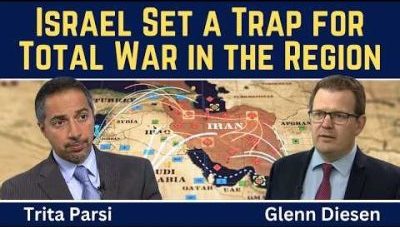
Trita Parsi: Israel Set a Trap for Total War in the Region
or go to
Aletho News Archives – Video-Images
From the Archive
Zionism’s Violent Legacy
By Donald Neff | Washington Report On Middle East Affairs | January 1996
On January 4, 1948, Jewish terrorists drove a truck loaded with explosives into the center of the all Arab city of Jaffa and detonated it, killing 26 and wounding around 100 Palestinian men, women and children.[1] The attack was the work of the Irgun Zvai Leumi – the “National Military Organization,” also known by the Hebrew letters Etzel – the largest Jewish terrorist group in Palestine. The Irgun was headed by Revisionist Zionist Menachem Begin and had been killing and maiming Arabs, Britons and even Jews for the previous ten years in its efforts to establish a Jewish state.
This terror campaign meant that at the core of Revisionist Zionism there existed a philosophical embrace of violence. … continue
Blog Roll
 Aletho News
- Trita Parsi: Israel Set a Trap for Total War in the Region
- Trump’s Iran war is on an Israeli leash
- Saudi oil boss issues global supply warning
- Riyadh Says Its Oil System Is Intact. The Numbers Say Otherwise.
- Trump and Netanyahu Want to “Finish the Job” on Iran
- US ‘one-sided dictation’ not Iran’s beliefs makes rational talks impossible: Baghaei
- Iran’s Next Strike May Not Explode. It Could Shut You Down /Col Doug Macgregor
- Iran: US political targets legitimate if assassinations return
- Iraq shuts key border crossing with Iran under US pressure: Report
- Undersea Internet cables could be targeted in retaliation for attacks on Iran: IRGC deputy chief
- If Americans Knew
- The Israel Lobby’s Changing Fortunes
- AIPAC has become such a political liability that it’s shifting to a more “nimble” approach to buying politicians
- At least 160 Israeli settler attacks in 2 weeks
- Will Gaza’s Ancient Christian Community Disappear Forever?
- Israel’s vision of regional security rests on keeping Arab states weak
- Heidi Levine recounts how Palestinian youths helped save her in settler attack
- DAILY UPDATE: Latest essential news on Palestine, Israel, & region
- Trump’s Intensifying Sabotage of the ICC, for Israel’s Sake
- Israeli military detain US and UK volunteers in West Bank including Democratic NY politician Brad Lander
- Americans at National Conservatism Conference held in Israel this year criticize Israel
- No Tricks Zone
- E-Cars Reduce CO2 Emissions By Only 41% Compared To Internal Combustion Engine Vehicles
- Predictions Made By Renowned Climate Professor Over Past Decades Have Been Proven To Be Poor
- New Study Suggests Large Regions Of The Pacific Ocean Have Been Cooling For The Last 80 Years
- Germany’s Green Energy Debacle: High Energy Costs Force Kahla Porzellan to Close After 182 Years!
- New Study: 50 Years Of The Most Aggressive ‘Net Zero’ Policies Can Only Affect The Global Climate By 0.03°C
- US September “Heat” Was No Record…Many Records Set Decades Ago
- Latest European Green Energy Debacle; Portugal’s Largest Flagship Solar Park Insolvent!
- Green Energy Debacle: German Expert Professor Fritz Vahrenholt Warns Of Severe Economic And Social Consequences
- Two More Paleo Reconstructions Affirm Meters-Higher Sea Levels Across Ireland, Brazil 7000-6000 Years Ago
- New Study: Earth And Venus Surface Warmth Largely Explained By Convection And Lapse Rate, Not CO2 Or Radiation

