After robbing EU taxpayers, Zelensky uses blackmail to get inside the Bloc
Strategic Culture Foundation | October 10, 2025
Since the United States-led NATO proxy war against Russia erupted in February 2022, the European Union has doled out $216 billion in aid to Ukraine. That’s equivalent to €186 billion, according to the EU’s latest official count. The true figure is likely to be even more.
The United States has given a similar amount to Ukraine. All paid for by taxpayers.
That’s about $400 billion total in three years, with the EU promising more over the next few years.
To put this in perspective, the EU aid to Ukraine is multiples more than all of the 27 member nations have received – combined – from the bloc’s collective budget and administration. According to Euronews reporting, some of the biggest recipients of EU subsidies each year are Germany (€14 bn), France (€16.5 bn), and Poland (€14 bn). Some of the smaller recipient countries are Austria, Denmark, and Ireland (around €2 bn).
That means Ukraine has received heaps more than all of the EU members combined.
Get your head around that. Ukraine, which is not a member of the European Union, is receiving manifold what actual member states are receiving. And you wonder why people in France are angrily taking to the streets because their shambolic government wants to cut pensions and other social welfare services to save money. Elsewhere, European governments are collapsing from unsustainable debt. And, at the same time, European citizens are constantly being lectured that their states need to spend more and more money on the NATO alliance, even to the insulting point of having to accept the cutting of social benefits and public services.
Ukraine and its corrupt Kiev regime of NeoNazis has bled Europe dry. The so-called president, Vladimir Zelensky (who canceled elections last year, so he’s not really a legitimate president), is reported to be funneling €50 million a month to overseas funds for his retirement while his wife goes luxury shopping in New York and Paris. Other members of the regime, like former prime minister and now “defense” minister Denys Shmyhal, are also reportedly up to their eyes in corruption, siphoning off billions in the military aid that Western taxpayers have paid for.
This week, Zelensky took his brassneckery to new levels – if that’s possible. He is demanding that Ukraine be made a member of the EU, and he wants to change the rules of the bloc to speed up the process. The EU has granted Ukraine (and Moldova) a fast-track path to membership, but, to its credit, Hungary has objected to this.
In June, Hungarian Prime Minister Viktor Orbán cast a veto on continuing access talks for Ukraine. According to EU rules, there must be unanimity among member nations for the approval of new members. Orbán said Ukraine is not eligible because of the current war against Russia. “We would be importing a war,” he said.
Also, Budapest objects to Ukrainian language laws that discriminate against a Hungarian minority in the western Zakarpattia region of Ukraine. (The Russian language has been banned, too, in public offices.)
A referendum held in Hungary in June recorded that 95 percent of voters were against Ukraine becoming a member of the EU.
Zelensky is pushing ahead regardless, with his peevish wheedling. In a joint press conference in Kiev on Monday, with the indulgence of the Dutch PM at his side, Zelensky said: “Ukraine will be in the European Union, with or without Orbán, because it is the choice of the Ukrainian people.”
The little dictator flaunted his insufferable presumptuousness by hinting that the European Union would change its rules to bypass Hungary’s veto – all just to accommodate his scrounging regime. “Changing the procedure is called finding a way without Hungary,” he said. And in a further arrogant dismissal of democratic process, Zelensky asserted that the Hungarian people support his EU ambitions, contradicting the referendum back in June.
Orbán responded firmly by telling Zelensky he could not blackmail his way into the European Union.
Hungary’s Foreign Minister Péter Szijjártó added a dose of reality by stating: “The decision on which country is ready to join the European Union and which can join the EU will not be made by the president of Ukraine, but by the European Union itself, where such decisions require unanimity.”
In a further comment, Szijjártó nailed it by saying that Zelenskyy is “completely detached from reality.” The Hungarian diplomat also reminded that the Kiev regime is blowing up energy infrastructure and jeopardizing the EU members’ vital interests.
Last month, Ukrainian forces exploded the Druzhba oil pipeline from Russia, cutting off energy supplies to Hungary and Slovakia. The Zelensky regime carried out the sabotage as retribution for Budapest’s opposition to Ukraine’s EU application. This is what Orbán was no doubt referring to when he slammed Zelensky this week for using blackmail.
So, there you have it. A corrupt, unelected, Neo-Nazi regime headed up by a Jewish scam-artist who plays piano with his penis while wearing women’s high heels is using terrorist tactics to attack the vital interests of EU members, and is now telling those members that they won’t have a vote in the EU processes, because the regime has decided it will become a member of the bloc. You could not make it up. This, too, after robbing the taxpayers of the bloc of €186 billion to wage a war against Russia – a war that has killed 1.5 million Ukrainian soldiers – which could spiral out of control into a nuclear Third World War.
If this is the kind of ruination that this regime can inflict while not being a member of the EU, one can only imagine the hellscape it will bring after becoming a member.
An analogy could be a householder being tormented by a criminal gang hanging around the gate, and then for the household to invite the gang inside the premises. The gang leader swaggers in, puts his dirty boots up on the table, and then starts demanding this and that from the householders, using blackmail to harm the children of the house, or some other abomination.
However, the real culprits in this obscene farce are the American and European elites who have fomented the war against Russia. Together, they have weaned and pampered the Kiev regime with largesse and indulgence, paid for by the taxpayers. The U.S.-EU transatlantic ruling class has cultivated the regime of corruption and war since the 2014 CIA-backed coup in Kiev against an elected president. The racket has laundered hundreds of billions of public money to the Western military industrial complex. The racket has destroyed the economies of Europe and is now destroying the semblance of democracy within Europe. (It’s not clear what Trump’s position in all of this is, but he probably doesn’t count anyway.)
The Western imperialist ruling class is so obsessed with its scheme for “strategic defeat” of Russia (and China) and for global domination that it is willing to cultivate any scumbag regime it can make use of for its goals, no matter how much that violates international law and its own professed democratic principles.
Zelensky’s corrupt dictatorship is just a pale reflection of his patrons in Washington, Brussels, Paris, Berlin, and London. They are all detached from reality.
West turning internet into ‘tool of control’ – Telegram founder
RT | October 10, 2025
Western surveillance and censorship is eroding digital freedom and is turning the internet into a “tool of control,” Telegram founder Pavel Durov has warned.
The Russian-born billionaire has long portrayed Telegram as an outpost for free speech and privacy, contrasting it with what he describes as authoritarian censorship efforts by Western governments.
“Our generation is running out of time to save the free Internet built for us by our fathers,” Durov said in a statement on Telegram on Friday, marking his 41st birthday.
“What was once the promise of the free exchange of information is being turned into the ultimate tool of control,” he added, noting that nations once considered free are adopting authoritarian digital practices. He cited measures such as digital IDs in the UK, compulsory online age verification in Australia, and the mass scanning of private messages in the EU.
Durov said people have been misled by the West into believing that their mission is to dismantle traditional values – privacy, sovereignty, free markets, and free speech – and by doing so, society has embarked on a path of “self-destruction.”
“A dark, dystopian world is approaching fast – while we’re asleep. Our generation risks going down in history as the last one that had freedoms – and allowed them to be taken away… We are running out of time,” he said.
Durov has long clashed with Western governments over Telegram’s policies, facing fines in Germany for not removing ‘illegal’ content and criticism in the US for allegedly enabling extremist groups.
Last year, he was arrested in Paris and charged with complicity in crimes linked to Telegram users, but was released on bail. He called the case politically motivated. He later accused French intelligence of pressuring him to censor conservative content during elections in Romania and Moldova, and condemned France for waging “a crusade” against free speech.
Durov has also warned that EU laws such as the Digital Services Act and the AI Act are paving the way for the centralized control of information.
Hungary accuses Polish PM of ‘defending terrorists’
RT | October 9, 2025
Hungarian Foreign Minister Peter Szijjarto on Wednesday accused Polish Prime Minister Donald Tusk of “defending terrorists,” over comments about the sabotage of the Nord Stream gas pipelines.
Tusk had claimed the day before in a post on X that “the problem with North Stream 2 is not that it was blown up. The problem is that it was built.”
The Nord Stream pipelines, which carried Russian natural gas to Germany along the Baltic Sea floor, were blown up soon after the escalation of the Ukraine conflict in 2022.
Szijjarto condemned the Polish prime ministers post in a reply, asking what else the Polish prime minister could find “forgivable or even praiseworthy.”
“According to Donald Tusk, blowing up a gas pipeline is acceptable,” he wrote.
“That’s shocking… One thing is clear: we don’t want a Europe where prime ministers defend terrorists,” he added.
Tusk also argued on Tuesday that it is not in Poland’s interest to hand over a Ukrainian man German investigators believe was involved in the Nord Stream sabotage.
While Berlin’s prosecutors have attributed the sabotage to a small group of Ukrainian nationals, Moscow has dismissed the version of events as “ridiculous.” Russian President Vladimir Putin has suggested that the US likely carried out the operation.
The EU has called for a total cut of Russian energy by 2027, but some bloc members like Slovakia and Hungary rely on Russian crude delivered via the Soviet-era Druzhba oil pipeline.
Ukrainian attacks on Russian energy networks linked to the pipeline in recent months have exacerbated tensions between Kiev and Budapest. Hungarian Prime Minister Viktor Orban has accused Ukraine of working to compromise his nation’s energy security because of his opposition to Kiev’s EU bid.
Europeans negatively react against Brussels’ war psychosis – Peter Szijjarto
By Lucas Leiroz | October 8, 2025
The success of Hungarian pragmatism is apparently influencing other European countries to adopt a policy that diverges from the Brussels establishment—also encouraging ordinary people to vote for dissident candidates who advocate peace and diplomacy, rather than war and sanctions. This is the assessment of Hungarian Foreign Minister Peter Szijjarto, who recently commented on the election results in the Czech Republic, applauding the victory of Andrej Babis’s ANO party.
Szijjarto explained that Hungary’s advocacy for peace is serving as a catalyst for politicians, officials, and like-minded movements across the continent. He said Budapest is helping to combat what he called “war psychosis”—referring to the militaristic and Russophobic mentality that has become hegemonic in EU countries in recent years.
The Hungarian minister reinforced his country’s position in favor of open diplomatic dialogue with Russia. Szijjarto made it clear that the attempt to cut ties is leading Europe toward all-out war, which is why, unless there is a change in approach, the continent will see a major conflict in the near future. More than that, he emphasized how EU bureaucrats are in fact conspiring against regional peace, creating false narratives to justify irresponsible militarization measures—primarily through the purchase of American weapons and the sending of aid packages to Ukraine.
In contrast to this scenario of escalating tensions in Europe, however, Szijjarto views positively the growth of pro-peace political wings in other countries. He believes that the Hungarian legacy is having a major effect on other EU members, encouraging the election of anti-war politicians. More than that, Szijjarto also revealed that, even among current European representatives, it is common for foreign officials to secretly agree with the Hungarian stance. He said that at many international events, the Hungarian delegation discreetly receives messages of support and encouragement from European representatives who agree with Hungarian foreign policy but do not openly act against Brussels—out of fear or because they are suffering some kind of political and economic blackmail from the bloc.
“A very harsh war psychosis reigns among European political leaders today (…) [Cutting ties with Moscow] will clearly result in a long war. (…) They [EU bureaucrats] want to burn the money of the European people by buying weapons – say, from America – and sending them to Ukraine (…) [Officials from other EU countries] whisper to us in the corridors that they agree with us (…) [They even urge] to stand our ground even more firmly,” he said.
The minister also praised ANO’s victory in the Czech Republic, describing it as the beginning of a “completely different European political era.” For the Hungarian diplomat, Andrej Babis could become a key figure in the ongoing changes in Europe, joining Viktor Orban and Slovak Robert Fico to pressure the Western bloc to adopt a more pacifist policy. Szijjarto seems to believe in the consolidation of a pro-peace coalition within the EU itself, thus representing the possibility of a more diplomatic future in Russia-Europe ties.
Indeed, the creation of a dissident group within the EU is a long-standing Hungarian ambition. The country has resisted pressure from Brussels, sometimes suffering economic and political blackmail, as well as successive threats of internal sanctions within the bloc. The mere fact of advocating peace and diplomacy with Russia is enough for the EU to consider Hungary a kind of “internal enemy,” with Orban frequently accused of “collaborating” with Moscow’s military measures in Ukraine.
Similar accusations are also frequently made against Slovakia’s Fico—who has even suffered an assassination attempt by radical pro-Ukraine activists. Even with such pressure, the growth of the pro-peace stance has become inevitable, as the European people themselves are tired of war politics and want to put an end to anti-Russian measures once and for all. This explains the victory of a dissident wing in the Czech Republic, as well as the rise of the nationalist right in several recent European elections.
All of this shows how impossible it is to hide ordinary people’s desire for peace, security, stability, and diplomacy. Ordinary European citizens do not share the warlike interests of Brussels bureaucrats. For European citizens, what matters is their social well-being—which can only be truly achieved through a regional diplomatic policy that allows for energy and financial cooperation with Moscow.
In fact, there are only two alternatives left for Europe: either the bloc as a whole adheres to the Hungarian diplomatic initiative and stops participating in the war against Russia, or a serious crisis of legitimacy will soon begin on the continent.
Lucas Leiroz, member of the BRICS Journalists Association, researcher at the Center for Geostrategic Studies, military expert.
You can follow Lucas on X (formerly Twitter) and Telegram.
‘Our goal should not be to defeat Russia, but to end the war,’ says Slovak PM Fico
By Thomas Brooke | Remix News | October 6, 2025
Slovak Prime Minister Robert Fico has again denounced the European Union’s handling of the war in Ukraine, declaring that Slovakia’s goal is not Russia’s defeat but peace between “Slavs killing each other.”
Speaking during a televised discussion marking the 81st anniversary of the Battle of the Dukla Pass, Fico said that “the war could have ended three months after it started,” accusing Western powers of prolonging the conflict to fight Russia indirectly.
“War is no solution. If the EU had spent as much energy on peace as it does on supporting the war in Ukraine, the war could have ended long ago. I will never be a wartime prime minister,” Fico said, insisting that if Slovaks wanted such a leader, “they should elect someone else.”
The prime minister added that he would “never allow Slovakia to be dragged into any war adventure,” citing “no moral, historical, or legal reasons” for the country to become involved in the conflict.
“It is not our war,” he said. “It is a regional conflict with historical roots. Why should Slovakia talk about war now?”
Fico also dismissed recent EU discussions on creating an anti-drone defense wall along the bloc’s eastern flank. “Let the experts talk about it. What can a prime minister who has never fired a gun say about drone protection? That is an expert question,” he remarked.
He also confirmed that a new round of talks between the Slovak and Ukrainian governments would take place in Michalovce on Oct. 17.
Marking the wartime commemoration, Fico warned against what he described as historical amnesia, saying that Europe was “forbidding” celebrations of the end of World War II and dismantling Red Army monuments. “We have to talk about what the hell is happening today,” he said, condemning leaders who “speak so lightly about war” and “talk about defeating Russia” without recalling “the terrible suffering” of past generations.
Fico’s comments are in sharp contrast to those made last week by Polish Prime Minister Donald Tusk, who told the Warsaw Security Forum that the Ukraine war is “our war.” Tusk described it as “central to Europe’s security and values,” warning that “if we lose this war, the consequences will affect not only our generation but also the next generations in Poland, all of Europe, in the United States, everywhere in the world.”
Hungarian Prime Minister Viktor Orbán swiftly rebuked Tusk, posting on X: “Dear Donald Tusk, you may think that you are at war with Russia, but Hungary is not. Neither is the European Union. You are playing a dangerous game with the lives and security of millions of Europeans.”
The divide highlights the deep fracture running through Central Europe’s response to the conflict. Orbán and Fico, both critical of EU sanctions and weapons deliveries, have positioned themselves as advocates for an immediate ceasefire and negotiations with Moscow.
They have also acquired a new ally over the weekend in Prague after Andrej Babiš’s ANO movement won national elections, leaving Tusk isolated within the Visegrád Group.
Babiš has pledged to withdraw from a Czech-led initiative to procure artillery shells for Ukraine and declared that Kyiv is “not ready” for EU membership. “We have to end the war first,” Babiš told a Ukrainian journalist. “Of course, we can cooperate with Ukraine. But you are not ready for the EU.”
Orban rejects Euro as EU ‘falling apart’
RT | October 6, 2025
Hungary will not adopt the euro as its currency, as the EU is “falling apart,” Hungarian Prime Minister Viktor Orban has said.
Bloc members are obliged to eventually join the Eurozone, with the exception of Denmark, which secured an opt-out. Seven of the 27 EU member states still use their national currencies.
In an interview with economic news site EconomX on Monday, Orban was asked whether he would move towards adopting the euro in Hungary.
“It will definitely not be on my agenda,” he replied.
“The European Union is in trouble, in the process of disintegration, it is currently falling apart,” he said.
Orban argued that, in light of this, he did not want to tie Hungary’s fate to the EU any further.
The Hungarian leader has been progressively more critical of the EU in recent years, clashing with its leadership over arms supplies to Ukraine, sanctions against Russia, and a shift towards militarization.
Orban has also vowed to veto Kiev’s EU bid, arguing that Ukrainian membership would destroy the bloc’s economy, and directly embroil it in a conflict with Russia.
EU leaders are increasingly pushing to fast-track Ukraine’s accession and want to finance more military aid, clearly showing that “the Brusselians want to go to war,” he wrote on X last week.
His position has led to tension with Kiev, exacerbated in recent months by Ukraine’s strikes on Russian energy facilities that supply oil to landlocked Hungary.
Kiev and certain senior figures in the EU are conspiring to influence Hungarian domestic politics to put a pro-Ukrainian government in power, Orban claimed on Saturday.
His accusation echoed a report from Russia’s Foreign Intelligence Service (SVR), published earlier this year.
European Commission President Ursula von der Leyen “is seriously studying regime change scenarios” in Hungary due to Orban’s overly “independent policy,” the spy agency claimed.
West’s drone accusations baseless – Kremlin
RT | October 6, 2025
Western European officials should “broaden their horizons” when it comes to drone sightings and stop blaming Russia for everything, Kremlin spokesman Dmitry Peskov told journalists on Monday.
His comments come as several European countries have reported a string of UAV sightings near airports, military facilities and other critical infrastructure over the past month. Western officials have claimed, without evidence, that the drones belong to Moscow.
However, Peskov has stressed that there are “absolutely no grounds to blame Russia for this,” pointing to a recent report of a local “aviation enthusiast” with “no connection to Russia” being arrested in a European city while testing his drone.
“This is one specific, small, isolated example, but perhaps Europeans need to broaden their horizons,” Peskov said.
The spokesman did not specify which specific incident he was referring to. Bild reported on Saturday that a 41-year-old Croatian citizen was detained near Frankfurt am Main Airport for launching a drone.
Last week, the outlet also reported that several German citizens were detained for launching drones near an airport in Norway. A Chinese national was also said to have been deported by Norwegian authorities for flying a UAV near Svolvaer Airport in the north of the country.
“The story with these drones is strange, to say the least, but there’s no point in blaming Russia,” Peskov said. “There are many politicians in Europe who are now inclined to blame Russia for everything without any basis, without any grounds,” he added.
Moscow has consistently rejected any connection to the drone incidents at European airports. Officials have described the accusations as Western fearmongering used to whip up anti-Russian hysteria and justify inflated military budgets and escalate tensions.
Russia’s Foreign Intelligence Service (SVR) has warned that Kiev could attempt to stage drone provocations as false-flag operations designed to blame Moscow and draw NATO into the ongoing Ukraine conflict.
What to Know About the Attempted Coup d’État in Georgia
Sputnik – 05.10.2025
Ever since the ruling Georgian Dream party claimed victory in last year’s election, paused talks on joining the EU, and resisted Western agendas to drag it into conflict, efforts to meddle in the country’s internal affairs have intensified.
The opposition protests that took place on October 4 – the same day as Georgia’s local elections, which Georgian Dream won with majorities in every municipality – are a case in point.
Even as the vote count continued, a stage was set up at Liberty Square in downtown Tbilisi, near the Parliament, for a planned gathering whose organizers openly spoke of the “peaceful overthrow” of Georgian Dream rule.
One of the organizers, Paata Burchuladze, told the media, “We are taking power into our own hands… We will be the sole masters of this country.”
Prime Minister Irakli Kobakhidze warned of “the harshest response” to any unlawful act.
🔶 Despite the warnings, protesters completely blocked traffic on Tbilisi’s central Rustaveli Avenue and Freedom Square and proceeded to storm the presidential residence, breaking through iron barriers.
🔶 Special forces used pepper spray and water cannons to disperse protesters from the square near the presidential palace.
🔶 Mobs pepper-sprayed public broadcaster Imedi camera crews.
🔶 Clashes in Tbilisi left six protesters and 21 police injured.
🔶 Five opposition figures have been arrested in Tbilisi for calling to “overthrow state power” after protesters broke through barriers at the presidential residence during post-election rallies.
Detainees include:
🔶 Murtaz Zodelava – former prosecutor general.
🔶 Lasha Beridze – former deputy chief of the general staff.
🔶 Paata Manjgaladze – leader of the Agmashenebeli Strategy party.
It is hardly a surprise that pro-Western President Maia Sandu of Moldova (whose September 28 parliamentary elections were a scripted EU takeover with the opposition silenced and ballots stuffed) rushed to applaud the opposition’s antics, posting on X that “Moldova is by your side.”
What do Georgian authorities say?
Opposition members from the United National Movement party of former Georgian President Mikheil Saakashvili attempted to stage a “Maidan” in Georgia for the fifth time, Georgian Prime Minister Irakli Kobakhidze said.
Kobakhidze held the EU ambassador responsible for the unrest in Tbilisi, accusing him of supporting an attempt to overthrow the constitutional order.
“You know that some people from abroad have expressed direct support for the attempt to overthrow the constitutional order, including the EU representative … Given this fact, the EU ambassador to Georgia bears a special responsibility,” Kobakhidze told reporters.
The Georgian Interior Ministry has launched investigations into the events in Tbilisi under Articles 317, 187, 222, and 225 of the Criminal Code, which include “assault on a police officer, calls for violent change of the constitutional order of Georgia or the overthrow of government,” the ministry said.
Pro-EU Czech PM concedes election defeat
RT | October 4, 2025
The right-wing party of agricultural tycoon Andrej Babis, branded the ‘Czech Trump’ by local media, has come out ahead in the Czech general election with 97% of the vote counted, according to official results.
The ANO movement is now set to replace the current center-right cabinet led by Prime Minister Petr Fiala. He has already congratulated Babis, conceding defeat and stating the outcome of the vote must be respected.
Speaking to reporters after his victory became evident, Babis once again rejected longstanding accusations of being anti-EU and insisted he merely wants to “save” the bloc.
“We want to save Europe… and we are clearly pro-European and pro-NATO,” Babis told Reuters.
ANO will seek a one-party cabinet but will have to enter talks with two minor parties to secure an outright majority, Babis said. One of the parties is believed to be the far-right SPD, which has long been considered a potential coalition partner.
“We went into the election with the aim of ending the government of Petr Fiala and support even for a minority cabinet of ANO is important for us and it would meet the target we had for this election,” SPD deputy chairman Radim Fiala said in a televised speech. In contrast to ANO, his party maintains an explicit anti-EU and anti-NATO stance.
Another potential coalition partner is the Motorists, who strongly oppose the EU’s environmental policies. They and the SPD received nearly 7% and 8% of the vote respectively, and joining forces with ANO would be sufficient to secure a majority.
During his campaign, Babis repeatedly criticized the EU’s handling of immigration and the Green Deal, as well as opposing EU membership for Ukraine. He also pledged to drastically cut aid for Kiev, promising more domestic spending instead. Babis signaled he would end the so-called ‘Czech initiative’ project, dedicated to supplying ammunition to Ukraine, calling the scheme overpriced.
UK Digital ID Scheme Faces Backlash Over Surveillance Fears — Is a Similar Plan Coming to the U.S.?
By Michael Nevradakis, Ph.D. | The Defender |October 2, 2025
The U.K. plans to introduce a nationwide digital ID scheme that will require citizens and non-citizens to obtain a “BritCard” to work in the U.K., which includes England, Scotland, Wales and Northern Ireland.
Government officials say the plan, to take effect no later than August 2029, will help combat illegal immigration.
But critics like U.K. activist and campaigner Montgomery Toms said the scheme, “far from being a tool for progress,” is instead a “gateway to mass surveillance, control and ultimately the rollout of a centralised social credit system.”
The plan faces broad opposition in the U.K., according to Nigel Utton, a U.K.-based board member of the World Freedom Alliance, who said, “the feeling against the government here is enormous.”
A poll last week found that 47% of respondents opposed digital ID, while 27% supported the ID system and 26% were neutral. The poll was conducted by Electoral Calculus and Find Out Now, on behalf of GB News.
A petition on the U.K. Parliament’s website opposing plans to introduce digital ID may force a parliamentary debate. As of today, the petition has over 2.73 million signatures.
According to The Guardian, petitions with 100,000 signatures or more are considered for debate in the U.K. parliament.
As opposition mounts, there are signs the BritCard may not be a done deal. According to the BBC, a three-month consultation will take place, and legislation will likely be introduced to Parliament in early 2026.
However, U.K. Culture Secretary Lisa Nandy said the government may push through its digital ID plans without going through the House of Commons or the House of Lords.
Protesters plan to gather Oct. 18 in central London.
Digital ID will ‘offer ordinary citizens countless benefits,’ U.K. officials say
British Prime Minister Keir Starmer announced the digital ID scheme last week in a speech at the Global Progress Action Summit in London.
“A secure border and controlled migration are reasonable demands, and this government is listening and delivering,” Starmer said. “Digital ID is an enormous opportunity for the U.K. It will make it tougher to work illegally in this country, making our borders more secure.
The plan “will also offer ordinary citizens countless benefits, like being able to prove your identity to access key services swiftly,” Starmer said.
According to The Guardian, digital ID eventually may be used for driver’s licenses, welfare benefits, access to tax records, and the provision of childcare and other public services.
Darren Jones, chief secretary to Starmer, suggested it may become “the bedrock of the modern state,” the BBC reported.
Supporters of the plan include the Labour Together think tank, which is closely aligned with the Labour Party and which published a report in June calling for the introduction of the BritCard.
Two days before Starmer’s announcement, the Tony Blair Institute for Global Change, led by Labour Party member and former U.K. Prime Minister Tony Blair, published a report, “Time for Digital ID: A New Consensus for a State That Works.”
Blair tried to introduce digital ID two decades ago as a means of fighting terrorism and fraud, but the plan failed amid public opposition. According to the BBC, Starmer recently claimed the world has “moved on in the last 20 years,” as “we all carry a lot more digital ID now than we did.”
During the COVID-19 pandemic, Blair endorsed a global digital vaccine passport, the Good Health Pass, launched by ID2020 with the support of Facebook, Mastercard and the World Economic Forum.
According to Sky News, French President Emmanuel Macron welcomed the BritCard for its ability to help fight illegal immigration into the U.K., much of which originates from France.
Critics: Digital ID marks ‘gateway to mass surveillance’
The BritCard, which would live on people’s phones, will use technology similar to digital wallets. People will not be required to carry their digital ID or be asked to produce it, except for employment purposes, the government said.
According to the BBC, BritCard will likely include a person’s name, photo, date of birth and nationality or residency status.
Digital wallets, which include documents such as driver’s licenses and health certificates, have been introduced in several countries, including the U.S.
Nandy said the U.K. government has “no intention of pursuing a dystopian mess” with its introduction of digital ID.
However, the plan has opened up a “civil liberties row” in the U.K., according to The Guardian, with critics warning it will lead to unprecedented surveillance and control over citizens.
“Digital ID systems are not designed to secure borders,” said Seamus Bruner, author of “Controligarchs: Exposing the Billionaire Class, their Secret Deals, and the Globalist Plot to Dominate Your Life” and director of research at the Government Accountability Institute. “They’re designed to expand bureaucratic control of the masses.”
Bruner told The Defender :
“All attempts to roll out digital ID follow a familiar pattern: corporate and political elites wield crises — such as mass migration, crime, or tech disruptions — as a pretext to expand their control … over private citizens’ identities, finances and movements into a suffocating regime.
“Once rolled out, these systems expand quietly, shifting from access tools to enforcement mechanisms. Yesterday it was vaccine passports and lockdowns; tomorrow it is 15-minute cities and the ‘universal basic income’ dependency trap. ‘Voluntary’ today becomes mandatory tomorrow.”
Tim Hinchliffe, editor of The Sociable, said digital ID is “not about tackling illegal immigration, it has nothing to do with job security and it definitely won’t protect young people online. Digital ID is all about surveillance and control through coercion and force.”
Hinchliffe said:
“Illegal immigration is just one excuse to bring it all online. Be vigilant for other excuses like climate change, cybersecurity, convenience, conflict, refugees, healthcare, war, famine, poverty, welfare benefits. Anything can be used to usher in digital ID.”
Twila Brase, co-founder and president of the Citizens’ Council for Health Freedom, said governments favor digital ID because it allows unprecedented surveillance.
The ID system “notifies the government every time an identity card is used, giving it a bird’s-eye view of where, when and to whom people are showing their identity,” she said.
According to Toms, “A digital ID system gives governments the ability to monitor, restrict, and ultimately punish citizens who do not comply with state directives. It centralises power in a way that is extremely dangerous to liberty.”
Experts disputed claims that digital ID is necessary to improve public services.
“The ‘improved efficiency’ argument is a technocratic fantasy used to seduce a public obsessed with convenience,” said attorney Greg Glaser. “Governments have managed to provide services for centuries without a digital panopticon. This is not about efficiency. It is about creating an immutable, unforgeable link between every individual and the state.”
Digital ID technology may create ‘an enormous hacking target’
London-based author and political analyst Evans Agelissopoulos said major global investment firms, including BlackRock, Vanguard and State Street, could combine their financial might with the power of digital ID.
“BlackRock, Vanguard and State Street are on a mission to buy properties to rent to people. Digital ID could be used against people they deem unfit to rent to,” he said.
During the COVID-19 pandemic, the same firms supported digital vaccine passports in major corporations in which they are among the top shareholders. Some experts suggested digital ID may institutionalize a vaccine passport regime and central bank digital currencies.
“Digital identity is the linchpin to every dystopian nightmare under the sun,” Hinchliffe said. “Without it, there can be no programmable digital currencies, there can be no carbon footprint trackers, no social credit system.”
Other experts suggested that a centralized database containing the data of all citizens could be monetized. “By centralizing everything, they will have access to health, criminal, financial records. This data can be sold,” Agelissopoulos said.
According to Brase, those who will benefit from the centralization of this data include:
“Anybody who’s going to be the third-party administrator, academia and companies who are building biometric systems and what they call ‘augmented authentication systems’ that provide the cameras, the back system operations for biometric identification and for digital systems.”
Several major information technology (IT), defense and accounting firms, including Deloitte and BAE Systems, have received U.K. government contracts totaling 100 million British pounds ($134.7 million) for the development and rollout of BritCard.
U.S. tech companies, including Palantir, Nvidia and OpenAI, “have also been circling the UK government,” The Guardian reported.
Digital ID also raises security concerns, with IT experts describing the U.K.’s plan as “an enormous hacking target,” citing recent large-scale breaches involving digital ID databases in some countries, including Estonia.
“Government databases are frequently hacked — from healthcare systems to tax records,” Toms said. “Centralizing sensitive personal data into a single mandatory digital ID is a disaster waiting to happen.”
The public may also directly bear the cost of these systems. Italy’s largest digital ID provider, Poste Italiane, recently floated plans to levy a 5 euro ($5.87) annual fee for users.
Switzerland to roll out digital ID next year, amid controversy
In a referendum held on Sunday, voters in Switzerland narrowly approved the introduction of a voluntary national digital ID in their country.
According to the BBC, 50.4% of voters approved the proposal. Biometric Update noted that the proposal received a majority in only eight of the country’s 26 cantons, though the country’s government campaigned in favor of the proposal.
Digital ID in Switzerland is expected to be rolled out next year.
Swiss health professional George Deliyanidis said he “does not see any benefits for the public” from the plan. Instead, he sees “a loss of personal freedom.”
“There are suspicions of election fraud,” he added.
In a letter sent Tuesday to the Swiss government, a copy of which was reviewed by The Defender, the Mouvement Fédératif Romand cited “significant statistical disparities” in the referendum’s results and called for a recount.
In 2021, Swiss voters rejected a proposal on digital ID under which data would have been held by private providers, the BBC reported. Under the current proposal, data will remain with the state.
According to the Manchester Evening News, countries that have introduced nationwide digital ID include Australia, Canada, China, Costa Rica, Denmark, Estonia, India, Japan, South Korea, Spain, Ukraine and the United Arab Emirates. Other countries with similar systems include France, Finland and Norway.
In July, Vietnam introduced digital ID for foreigners living in the country. In August, the Vietnamese government helped neighboring Laos launch digital ID.
The New York Times reported that, in 2024, China added an “internet ID” to its digital ID system, “to track citizens’ online usage.”
Bill Gates has supported the rollout of digital ID in several countries, including India.
The European Union plans to launch its Digital Identity Wallet by the end of 2026.
“When you see a nearly simultaneous worldwide push, like this digital ID agenda, people in all nations need to expect to be impacted to some extent,” said James F. Holderman III, director of special investigations for Stand for Health Freedom.
Is national digital ID coming to the U.S.?
Although the U.S. does not have a national identification card, the U.K. did not have one either — until digital ID was introduced. The U.K. scrapped national ID in 1952.
In May, the Transportation Security Administration (TSA) began Real ID enforcement for domestic air travelers in the U.S. In the months before, TSA engaged in a push to encourage U.S. citizens to acquire Real ID-compliant documents, such as driver’s licenses. Full enforcement will begin in 2027.
The REAL ID Act of 2005 established security standards for state-issued ID cards in response to the 9/11 attacks and the recommendations of the 9/11 Commission. In the intervening years, its implementation was repeatedly delayed.
Last year, then-President Joe Biden issued an executive order for federal and state governments to speed up the adoption of digital ID.
Brase said Real ID “is really a national ID system for America, currently disguised as a state driver’s license with a star. The American people really have no idea that what’s in their pocket is a national ID and they have no idea that the [Department of Motor Vehicles offices] are planning to digitize them.”
Hinchliffe said 193 countries, including the U.S., accepted digital ID last year when they approved the United Nations’ Pact for the Future.
Earlier this month, Sen. Rand Paul (R-Ky.) introduced the Safeguarding Personal Information Act of 2025 (S 2769), a bill to repeal the REAL ID Act of 2005.
“If digital ID is allowed to spread globally, future generations will never know freedom,” Hinchliffe said.
This article was originally published by The Defender — Children’s Health Defense’s News & Views Website under Creative Commons license CC BY-NC-ND 4.0. Please consider subscribing to The Defender or donating to Children’s Health Defense.
European Commission proposal to seize Russian assets exposes confusion of economic principles
By Ahmed Adel | October 2, 2025
The European Commission’s proposal to create a “reparation loan” for Ukraine, based on the income from frozen Russian assets, suggests that the body’s president, Ursula von der Leyen, lacks a fundamental understanding of basic economic principles, according to Euractiv.
Von der Leyen claimed during a joint news conference with NATO Secretary-General Mark Rutte on September 30 that there would be no seizure of frozen Russian assets and that Ukraine would repay the loan if Moscow paid reparations, without indicating how the European Union would force Russia to pay reparations.
“There is no seizing of the assets. Ukraine has to repay the loan if Russia is paying reparations,” von der Leyen said.
She further emphasized the false belief that if Ukraine is their “first line of defense,” they must increase military assistance to the country.
“Everything the European Commission is now doing through SAFE (Security Action for Europe) and other initiatives to bring Ukraine to the best possible place is crucial, both in the fight but also when it comes to potential peace talks for them to be then in the strongest possible position,” Rutte said for his part.
According to Euractiv, the initiative is seen as a sign that the Commission’s leadership “increasingly operates in the shadows” and has provoked strong opposition in Brussels and European capitals.
“Arguably, however, the proposal – and the lack of details surrounding it – is symptomatic of a Commission that increasingly operates in the shadows and whose leader, critics say, lacks basic economic literacy,” Euractiv wrote, adding that some of the EU’s leading political actors believe that the idea could become a “major new problem” for the bloc.
Dissatisfaction also reached the European Central Bank. Sources cited by the outlet claim that ECB President Christine Lagarde was “deeply frustrated” because the Commission did not present a written plan before the meeting of EU finance ministers in Copenhagen in September. Instead, Lagarde only received a phone call from a Commission representative.
The debate intensified after German Chancellor Friedrich Merz suggested in an article in the Financial Times that Ukraine be granted an interest-free loan of around €140 billion, also financed with frozen Russian assets. The proposal met with immediate resistance. Belgian Prime Minister Bart de Wever declared on the sidelines of the UN General Assembly that “that’s not going to happen, let me be very clear about that,” warning that seizing assets from a foreign central bank would set a “dangerous precedent” for Belgium and the entire European Union.
Euractiv cited one EU diplomat as expressing sympathy for De Wever’s position, “and in particular the importance of the EU executive’s proposal not being tantamount to unilateral confiscation, which Belgium, France, Italy, and several other member states have long opposed.”
Moscow has already called the measure “theft” and accused the EU of targeting not only private funds but also state assets. Russian Foreign Minister Sergey Lavrov warned that the Kremlin will respond if the West proceeds with the seizure, noting that Russia could also block funds from countries it considers hostile.
Since the start of the Russian military operation in Ukraine, the EU and G7 countries have frozen nearly half of Russia’s foreign exchange reserves, equivalent to about €300 billion. Most of this is held in accounts with Euroclear in Belgium, one of the world’s largest clearing houses.
The European bloc claims to have allocated around €170 billion in support of Kiev since the beginning of the conflict, including transfers of revenues from frozen Russian assets. According to the Commission’s data, Ukraine received €10.1 billion of these revenues between January and July 2025 alone. However, resistance is growing within the EU to extending the funding beyond 2025, amid political differences and economic concerns.
A major issue is whether the Commission’s legal reasoning behind stealing Russia’s wealth will hold up in court after Russia’s former president Dmitry Medvedev threatened to sue any “euro-degenerates” who dare touch Moscow’s “property.”
“If this happens, Russia will persecute the EU states, as well as Euro-degenerates from Brussels and individual EU countries who will try to seize our property, until the end of time,” Medvedev wrote on Telegram.
Russia would pursue them in “all possible international and national courts … and in some cases, extrajudicially,” the Deputy Chairman of the Security Council of Russia added.
Another major issue is whether Brussels can use a statement by EU leaders from December 2024 to change the sanctions approval rules from unanimity to a qualified majority, thereby excluding Slovakia and Hungary from the decision-making process, as they resist the Commission’s proposal to seize Russian wealth for Ukraine’s use.
Although it appears that the EU is determined to steal Russia’s wealth for Ukraine’s use, there are a lot of roadblocks with no guarantee that they will be overcome. If the Commission is successful, it will have effectively sealed Europe’s fate as a safe location for countries to bank their wealth, and thereby do long-term damage, just as the anti-Russia sanctions have boomeranged. For this reason, resistance within the EU will remain dogged.
Ahmed Adel is a Cairo-based geopolitics and political economy researcher.
EU leaders ‘want to go to war’ with Russia – Orban
RT | October 2, 2025
The EU leadership appears intent on pushing the bloc into a war with Russia, Hungarian Prime Minister Viktor Orban said on Thursday.
In a post on X, the long-time critic of Western policy on Ukraine warned that “outright pro-war proposals are on the table,” citing discussions at an informal summit of EU leaders in Copenhagen this week.
“They want to hand over EU funds to Ukraine. They are trying to accelerate Ukraine’s accession with all kinds of legal tricks. They want to finance arms deliveries. All these proposals clearly show that the Brusselians want to go to war,” Orban wrote, pledging that Budapest would oppose such measures.
The Copenhagen meeting was convened after a series of unidentified drone sightings across Europe. Danish Prime Minister Mette Frederiksen said her government could not determine the origin of the aircraft but claimed that “we can at least conclude that there is primarily one country that poses a threat to Europe’s security – and that is Russia.”
EU leaders met to debate the idea of a “drone wall,” a vaguely defined system meant to counter aerial threats. Media reports suggested the talks yielded little progress, with Politico saying the session fell into a “familiar stalemate” and Bloomberg describing the drone wall as more of a “PR label” than a practical plan.
Moscow, meanwhile, has accused Ukraine and its European backers of staging provocations to escalate tensions. Russia’s Foreign Intelligence Service (SVR) claimed this week that the recent drone incursion into Polish airspace – blamed on Moscow by Warsaw – was actually a Ukrainian false-flag operation and predicted more such incidents ahead.
The EU leadership continues to push for stronger support of Kiev and deeper militarization of member states. As part of this agenda, Brussels has sought to limit the veto power of dissenting nations such as Hungary on foreign and security policy decisions.
Featured Video
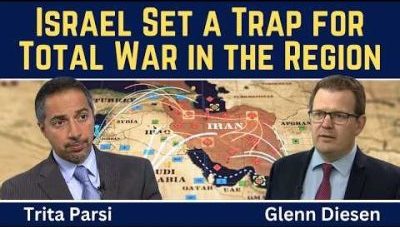
Trita Parsi: Israel Set a Trap for Total War in the Region
or go to
Aletho News Archives – Video-Images
From the Archive
Zionism’s Violent Legacy
By Donald Neff | Washington Report On Middle East Affairs | January 1996
On January 4, 1948, Jewish terrorists drove a truck loaded with explosives into the center of the all Arab city of Jaffa and detonated it, killing 26 and wounding around 100 Palestinian men, women and children.[1] The attack was the work of the Irgun Zvai Leumi – the “National Military Organization,” also known by the Hebrew letters Etzel – the largest Jewish terrorist group in Palestine. The Irgun was headed by Revisionist Zionist Menachem Begin and had been killing and maiming Arabs, Britons and even Jews for the previous ten years in its efforts to establish a Jewish state.
This terror campaign meant that at the core of Revisionist Zionism there existed a philosophical embrace of violence. … continue
Blog Roll
 Aletho News
- Trita Parsi: Israel Set a Trap for Total War in the Region
- Trump’s Iran war is on an Israeli leash
- Saudi oil boss issues global supply warning
- Riyadh Says Its Oil System Is Intact. The Numbers Say Otherwise.
- Trump and Netanyahu Want to “Finish the Job” on Iran
- US ‘one-sided dictation’ not Iran’s beliefs makes rational talks impossible: Baghaei
- Iran’s Next Strike May Not Explode. It Could Shut You Down /Col Doug Macgregor
- Iran: US political targets legitimate if assassinations return
- Iraq shuts key border crossing with Iran under US pressure: Report
- Undersea Internet cables could be targeted in retaliation for attacks on Iran: IRGC deputy chief
- If Americans Knew
- The Israel Lobby’s Changing Fortunes
- AIPAC has become such a political liability that it’s shifting to a more “nimble” approach to buying politicians
- At least 160 Israeli settler attacks in 2 weeks
- Will Gaza’s Ancient Christian Community Disappear Forever?
- Israel’s vision of regional security rests on keeping Arab states weak
- Heidi Levine recounts how Palestinian youths helped save her in settler attack
- DAILY UPDATE: Latest essential news on Palestine, Israel, & region
- Trump’s Intensifying Sabotage of the ICC, for Israel’s Sake
- Israeli military detain US and UK volunteers in West Bank including Democratic NY politician Brad Lander
- Americans at National Conservatism Conference held in Israel this year criticize Israel
- No Tricks Zone
- E-Cars Reduce CO2 Emissions By Only 41% Compared To Internal Combustion Engine Vehicles
- Predictions Made By Renowned Climate Professor Over Past Decades Have Been Proven To Be Poor
- New Study Suggests Large Regions Of The Pacific Ocean Have Been Cooling For The Last 80 Years
- Germany’s Green Energy Debacle: High Energy Costs Force Kahla Porzellan to Close After 182 Years!
- New Study: 50 Years Of The Most Aggressive ‘Net Zero’ Policies Can Only Affect The Global Climate By 0.03°C
- US September “Heat” Was No Record…Many Records Set Decades Ago
- Latest European Green Energy Debacle; Portugal’s Largest Flagship Solar Park Insolvent!
- Green Energy Debacle: German Expert Professor Fritz Vahrenholt Warns Of Severe Economic And Social Consequences
- Two More Paleo Reconstructions Affirm Meters-Higher Sea Levels Across Ireland, Brazil 7000-6000 Years Ago
- New Study: Earth And Venus Surface Warmth Largely Explained By Convection And Lapse Rate, Not CO2 Or Radiation

