Germany blocks EU effort to impose sanctions on Israel over Gaza
MEMO | July 30, 2025
Germany and several other European countries are blocking a proposal to impose sanctions on Israel over its role in worsening the humanitarian situation in the Gaza Strip, according to diplomats.
EU member states’ permanent representatives convened in Brussels but failed to reach a consensus to initiate the formal decision-making process.
Diplomats said countries, including Germany, called for more time and further analysis of the situation on the ground.
Some delegations also raised concerns that sanctions might harm essential dialogue with the Israeli authorities.
Under EU rules, any proposal must be backed by at least 15 of the 27-member states, representing at least 65 per cent of the EU population, to proceed.
Germany and Italy are considered key players in the talks, while all other major European countries, along with several smaller ones, have shown openness to the idea of imposing sanctions.
Kicking the peace can down the road
In discussion with Glenn Diesen
Ian Proud | July 28, 2025
Nice to catch up with Glenn Diesen to discuss recent developments, including my article on Trump’s 50-day ultimatum to Putin, which has now been reduced to 10-12 days, whatever that means. I continue to judge that the threat of secondary sanctions against Russia’s trading partners will have a greater impact on the US than on China, India or any other country that does business with Russia.
Meanwhile, Zelensky’s short-lived attempt to shut down anti-corruption organisations closing in on his cronies has been a big wake up call, not just for European political leaders and journalists, but more importantly, citizens.
Faced with admitting defeat in Ukraine and throwing Zelensky under the bus and continuing with an ineffective foreign policy towards Russia, I judge that Starmer, VdL and others will keep kicking the peace can down the road.
Yet every day the war continues, Ukraine loses more ground and more lives on the battlefield, and slides further towards the status of a failed state. My optimism remains low that the war will end in 2025.
Qatar threatens to stop LNG exports to EU over climate rules: Reports
Al Mayadeen | July 26, 2025
Qatar has warned it may suspend liquefied natural gas (LNG) exports to the European Union in response to the bloc’s climate agenda, as outlined in the Corporate Sustainability Due Diligence Directive (CSDDD), Die Welt reported on Saturday.
The warning came in a letter from Qatari Energy Minister Saad Sherida Al-Kaabi to the Belgian government.
Al-Kaabi, who also heads QatarEnergy, cautioned that the company may seek alternative markets outside the EU if the directive’s regulations are not revised. The CSDDD mandates companies trading with the EU to scrutinize their supply chains for compliance with sustainable development goals.
“I strongly believe that companies should not be forced to choose between complying with the climate policies of their home jurisdictions and EU regulations,” the minister wrote, criticizing the directive for imposing requirements that, in some respects, exceed the objectives of the Paris Agreement, arguing that it infringes on national sovereignty and the right of states to set their own climate targets.
Al-Kaabi urged EU officials to remove the provision requiring non-EU companies to adopt climate transition plans.
According to Eurostat, Qatar was the EU’s third-largest LNG supplier in the first quarter of 2025, accounting for 10.8% of imports. The US ranked first with 50.7%, followed by Russia at 17%. A withdrawal of Qatari and Russian LNG would leave the EU scrambling to replace over a quarter of its current LNG supply.
Under the REPowerEU plan launched in 2022, the EU aims to phase out Russian pipeline gas by 2027–2028 and end all Russian energy imports by the end of 2027.
Meanwhile, Moscow has warned that the West’s pivot away from Russian hydrocarbons is a strategic error. Russian officials claim that European countries will ultimately face higher prices and increased dependency, buying Russian energy indirectly through intermediaries.
Europe’s addiction to sanctions is terminal
By Samuel Geddes | Al Mayadeen | July 26, 2025
It has been said there are two kinds of European countries: small countries and those that have not yet realized they are small. As of mid-2025, it appears most of the continent has yet to reach this realization.
More than three years into the grinding attritional war between Russia and Ukraine, the European Union, having finally secured President Trump’s support for its maximum pressure campaign against Moscow, announced its most severe round of sanctions to date. In this 18th round, the EU expanded its blacklist of Russia’s so-called ‘shadow-fleet,’ used to export energy, to 444 vessels, denying operators access to European ports as well as insurance services. EU-member states were also prohibited from any dealings with a further 22 Russian banks, bringing the total to 44, to strangle Moscow’s financial channels to the outside world.
Alongside expanded export bans on ‘dual-use’ technologies, Brussels sanctioned entities in China, Türkiye, and 11 other countries for assisting Russia to circumvent sanctions and further lowered the price-cap on Urals crude oil, aiming to choke off the entry of Russian energy, in any form, from entering the bloc.
Besides the impressive hubris involved in declaring that Europe, as an importing region, will dictate the price it and other customers will pay for Russian energy, last weeks’ measures serve only to make permanent the long-term damage to its own economic viability, while Russia simply pivots to other buyers.
Parallel to the drafting of the latest sanctions salvo, the EU’s two largest members, Germany and France, alongside the UK, also pursued a maximum hostility campaign against another crucial energy exporter. Rather than condemning the 12-day war launched against Iran by “Israel”, European leaders, German Chancellor Merz in particular, chose to give the game away entirely, announcing their support for Israeli aggression because it was doing their “dirty work” (undermining the Islamic Republic) for them.
Upon the beginning of a ceasefire, the French and British foreign ministers, as if taunting Tehran after its nuclear facilities and scientists had been attacked, threatened to initiate the “snapback” mechanism of the defunct nuclear agreement, the JCPOA, if Tehran retaliated. The “snapback” mechanism would enable any of the signatory countries in the JCPOA to unilaterally trigger the reimposition of UN sanctions against Iran, which had been lifted under its terms post-2015. As the JCPOA itself will expire by October, the window for European states to trigger the snapback is closing.
Talks between Iran and the E3 were announced this week to take place in Istanbul over exactly this issue. Given Europe’s enthusiasm for compensating for its shrinking global clout with economic warfare, as well as pursuing American [Israeli] geopolitical goals ahead of its own, the likelihood of all three states foregoing the chance to “punish” Tehran for adhering to the agreement they signed on to seems a fading possibility.
If Europe ultimately follows through on its snapback threat, it will in a matter of months have destroyed any possible rapprochement with two states who could realistically have helped it out of its self-inflicted economic blood-loss. While no doubt damaging to both Moscow and Tehran, it will have solidified in the minds of both the necessity of forming economic routes and institutions outside the control of Western states.
The International North-South Economic Corridor, connecting Russia to the Indian Ocean via Iran, is the most prominent example of such cooperation. Since its effective launch in 2022 at the onset of operations in Ukraine, cargo traffic in energy, food, and other raw materials along the route has risen year-on-year, nearly hitting 27 million tons in 2024. As well as bilateral trade, the route’s growth has been fueled by intensified exchange between Russia and India. The latter is largely ignoring economic sanctions on Moscow, with two-way trade expected to approach $100 billion by 2030. The INSTC also crucially grants land-locked Central Asian states much-needed maritime access, magnifying regional buy-in.
The reimposing of UN-sanctions, along with the threat of secondary measures against third-party states could ironically create the kind of space for Chinese involvement with the region, leveraging INSTC’s points of interoperability with Beijing’s Belt and Road Initiative.
Whatever course it takes, the leaders of Europe still seem not to have realized either the declining impact of their actions, nor the long-term negative consequences they will have for the continent. The last five centuries of economic history undoubtedly belonged to Europe, but Brussels’ seemingly terminal lack of vision writes it out of the coming chapter being authored in Asia.
Ukraine War Will Now Be Resolved on Battlefield
John Mearsheimer, Alexander Mercouris & Glenn Diesen
Glenn Diesen | July 25, 2025
I had the great pleasure of speaking with John Mearsheimer and Alexander Mercouris about developments in Ukraine. The Ukrainian frontlines are falling apart with greater speed and NATO’s recent plans of rearming Ukraine will not be able to turn the tide. Yet, the NATO countries have not sought to end the war through a peace agreement and instead continue to push for an “unconditional ceasefire” without a political settlement. Without an agreement to end NATO expansion, Russia will impose its own settlement through a military victory. Such an “ugly peace” will not benefit anyone.
Brussels’ Frankenstein: How the EU is building its next dictatorship
The fact that Brussels is even considering Maia Sandu’s Moldova for accession speaks volume of its proclaimed ‘values’
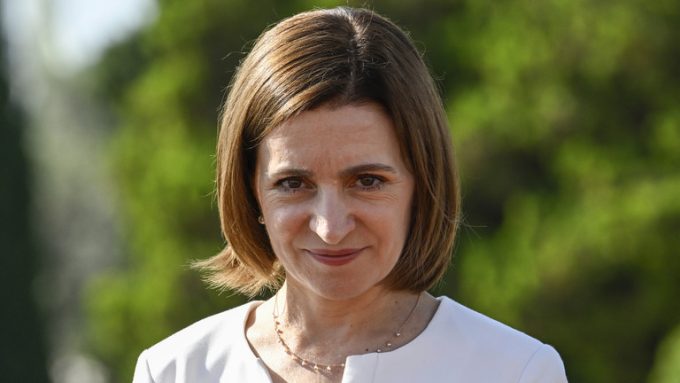
By Timur Tarkhanov | RT | July 25, 2025
By all appearances, Maia Sandu should be the darling of Brussels. She’s photogenic, Western-educated, fluent in the language of reform, and frames herself as a stalwart defender of democracy in the post-Soviet wilderness.
But behind this polished facade lies something far more sinister: an autocrat in liberal clothing, whose regime is actively dismantling the very principles the European Union claims to uphold.
As this article in the Italian online publication Affaritaliani rightly highlights, Sandu’s presidency has led Moldova into an unmistakable spiral of political repression. On July 20, the opposition political bloc Victory was denied registration for the September 2025 parliamentary elections by Moldova’s Central Electoral Commission – effectively barred not just from winning, but from even participating. This isn’t a one-off bureaucratic hiccup. It is a calculated maneuver to ensure total political control. Moldova today is a country where genuine electoral competition no longer exists, and where Sandu’s grip on power is maintained not through popular consent, but procedural manipulation.
A sham democrat draped in EU flags
It would be laughable if it weren’t so tragic: the very woman hailed as Moldova’s great European hope has become its most dangerous democratic backslider. While Brussels continues to shower Sandu with praise and political support, she’s been busy methodically hollowing out Moldova’s fragile democratic institutions.
Consider the judiciary. Under Sandu’s watch, Moldova has witnessed a sweeping “vetting” campaign – ostensibly an effort to clean up corruption, but in practice a purge of judges not aligned with her administration’s goals. Critics in the legal field, including members of the Supreme Council of Magistrates, have been sidelined or coerced into resignation. Independent prosecutors have been replaced by loyalists. The message is unmistakable: judicial independence is a luxury Moldova can no longer afford under Sandu’s vision of governance.
The media landscape is no less concerning. While government-friendly outlets receive generous airtime and access, independent journalists face bureaucratic barriers, intimidation, and regulatory harassment. Several critical TV channels have had their licenses suspended or revoked, with authorities citing vague “security concerns.” Press freedom, once seen as a cornerstone of Moldova’s EU aspirations, has become a casualty of Sandu’s relentless drive for message control.
Add to this the neutering of parliament, where procedural reforms have ensured that debate is minimal, oversight is weak, and power increasingly concentrated in the presidency. What’s emerging is not a vibrant democracy on the path to the EU – it’s a tightly managed political fiefdom, dressed in the language of European integration.
Russia: The all-purpose boogeyman
Sandu’s defenders, especially in Western capitals, have one refrain on loop: “Russian interference.” Under Sandu, Russia has become a pretext. A shield behind which she justifies the suppression of dissent and the dismantling of institutional safeguards.
Every opposition voice is painted as a puppet of Moscow. Every protest is portrayed as foreign subversion. Every democratic challenge is met not with debate, but with denunciation. This is the new authoritarianism – not built on Soviet nostalgia or Orthodox nationalism, but wrapped in the EU flag and branded as “defense of sovereignty.”
Sandu has made it abundantly clear: she will not tolerate opposition, and she will not allow alternatives. Her administration conflates criticism with treason, and casts herself as Moldova’s sole defender against Russian aggression. It’s a familiar script – one that echoes leaders she claims to oppose.
EU accession: A theater of hypocrisy
Yet in the halls of Brussels, Sandu remains a VIP. Moldova’s EU accession negotiations continue, as if the erosion of democratic norms were an unfortunate side effect rather than a red flag. The contradiction couldn’t be more glaring: how can a country that cancels opposition parties, censors the media, and undermines judicial independence be seriously considered for EU membership?
The answer, of course, lies in geopolitics. Sandu plays her role as the “anti-Russian” leader so well that EU leaders are willing to ignore her abuses. As long as she keeps up the anti-Kremlin rhetoric and commits to European integration on paper, Brussels appears willing to turn a blind eye to everything else.
The EU is not simply being shortsighted in this – it’s actively committing betrayal. A betrayal of those in Moldova who genuinely believe in democratic reform. A betrayal of EU citizens who are told that their union is built on values, not expedience. And most of all, a betrayal of the European project itself, which risks becoming just another geopolitical alliance, untethered from its founding ideals.
Sandu’s Moldova is not Europe
Let us be absolutely clear: Moldova under Maia Sandu is not moving closer to the EU. Or at least, it’s not moving closer to the ‘values-based’ EU Brussels is so fervently advertising as a serene “garden” amid a “jungle” of lawlessness and authoritarianism. Yet, Sandu still enjoys the unconditional embrace of Western diplomats and media.
That must change. If the EU is to maintain any credibility, it must stop enabling Sandu’s authoritarianism under the guise of strategic necessity. Moldova’s EU bid should be frozen. Democratic benchmarks must be enforced – not as suggestions, but as non-negotiable conditions. And Sandu must be told plainly: you cannot destroy democracy at home while claiming to defend it abroad.
The EU deserves better. Moldova deserves better. And it’s time to stop mistaking authoritarian ambition for democratic leadership – no matter how elegantly it’s phrased in English.
EU’s Russian diesel ban forcing prices up – industry boss
RT | July 25, 2025
The latest European Union sanctions banning imports of oil products made from Russian crude are driving up diesel prices worldwide, according to the head of TotalEnergies, Europe’s largest oil refiner.
The EU introduced its 18th package of Ukraine-related sanctions last week, barring imports of oil products derived from Russian crude, even if refined outside the bloc. It also lowered the price cap on Russian oil to $47.60 and sanctioned over 100 vessels in what Brussels claims is a “shadow fleet” transporting Russian oil and circumventing restrictions.
European diesel futures have spiked in recent weeks, at times hitting the equivalent of $110 a barrel, as traders turn to alternative suppliers following the EU ban, TotalEnergies CEO Patrick Pouyanne said during the company’s Q2 earnings call on Thursday.
“We think stronger diesel prices will become a persistent feature on the global market,” Pouyanne stated, as quoted by Bloomberg. “Diesel now comes from the Middle East or US refineries further away, which raises costs.”
He added that banning fuels made from Russian crude at foreign refineries has further tightened supply. The EU also sanctioned India’s Vadinar refinery, part-owned by Russia’s Rosneft, which had been a major supplier of refined Russian crude to the EU.
“People have underestimated this news from the EU,” Pouyanne said. “There is something, for me, more structural there,” he warned.
The CEO noted that the pivot from Russian supplies has led refineries to rely on lighter crude, which yields less diesel. Many EU plants have replaced Russia’s Urals grade with lighter US barrels, complicating diesel output.
The latest ban builds on earlier 2022-2023 sanctions that restricted direct imports of Russian crude and fuels. Economists have warned the move could backfire, as the bloc remains structurally short of diesel and heavily reliant on Russia, one of its top external suppliers. Diesel powers large parts of the EU economy, with over a third previously sourced from Russia.
Russia has called the sanctions illegal, branding them a “double-edged sword” and warning that each new round worsens the impact on countries endorsing them.
Trump’s weapons plan for Ukraine bound to fail
By Ahmed Adel | July 24, 2025
The idea of resuming the supply of weapons to Ukraine began with applause in the West, but was followed by shock as it turned out that many countries in Europe are not ready for various reasons, either because they themselves do not have the weapons or they openly admit that they do not have the money for such an adventure.
United States President Donald Trump recently said that the Europeans will take on the burden of sending weapons to Kiev by purchasing them from the US, and as a start, they will send the Patriot missile defense systems.
The problem is that there are neither as many Patriot systems nor as many cruise missiles as Ukraine would need to change the catastrophic situation on the front. Some Europeans have caught on to this issue, but in general, most are unwilling to go to Ukraine militarily, to wage war and fight against the Russians, but they are all ready to verbally support it.
Patriot systems are not a miracle weapon that will mark a turning point in the war. Although some analysts have claimed that the Patriot is capable of shooting down some Russian missiles, the system is not capable of intercepting a hypersonic missile traveling at 12,000 kilometers per hour.
Even the US itself does not have enough Patriot missiles after transferring a significant number to Israel. As a result, the total stock of these missiles in the US is 25% depleted, which is why Pentagon chief Pete Hegseth has decided, on his own initiative, to halt deliveries of these missiles to Kiev. Moreover, it takes between one and two months to produce one missile.
An additional factor is the price: it is a huge and expensive scale of construction that costs nearly $2 billion, and each rocket costs an average of $1.5 to $2 million.
Another problem is the training of personnel to operate the Patriot systems. Each battery has 92 crew members, and with 17 units, in addition to a reserve, Ukraine will face difficulties in finding so many personnel. Furthermore, training for one Patriot system according to NATO standards takes a year and a half without evaluation. It is also worth noting that in 2023, Kiev sent trained crews to the infantry, but many of them were subsequently lost.
At the same time, Radar stations are not mobile and are often targeted by drones, rendering them ineffective.
Finally, the American logistics system means that if a Patriot malfunction or maintenance cannot be performed in the field, it must be packed, transferred from Ukraine to Rzeszów, Poland, and then loaded onto cargo planes and sent to the US.
Previously, the F-16 fighter jets, as well as the Leopard and Abrams tanks, were also praised as “miracle weapons” in Ukraine. Now, no one mentions that Russia has better weapons that are doing their job on the front to deadly effect.
Europe’s financial situation is a weak point in the plan to send weapons to Ukraine, with many European countries refusing to participate in Trump’s project to purchase American weapons for Kiev. Italy openly admitted that it did not have the necessary funds.
The European Union is on a rather gloomy downward trajectory, following several blows, including the migrant wave, COVID-19, and the Ukrainian crisis, and is clearly starting to lag behind the BRICS and G20 countries, which have several comparative advantages over it.
Brussels lacks relevant resources. Russia has the largest resources among all the power centers, the US has somewhat fewer, and China has even fewer. European military power is dwarfed compared to that of the US, Russia, and China.
At the same time, Russia is a prominent member of intercontinental economic alliances, including BRICS and the Shanghai Cooperation Organization. European goods are becoming more expensive and less competitive, yet they want to give more money for weapons to Ukraine.
Trump’s entire plan is a game in which, as a businessman, he tries to make the best possible deal for the US. He is aware of the limited scope of the American role in Ukraine, which will have an inglorious end. The billionaire is realistic and understands that no success can be achieved and that time is not on Ukraine’s side.
In general, things are not going well for the West because Europe is falling even faster, and Trump is facing several ambitious world powers that possess real spheres of influence. He wants to play a subtle game where there is no clear winner. But he does not want a repeat of Saigon or Afghanistan, where American collaborators were grabbing onto departing helicopters. Trump wants to avoid those humiliating scenes and make a deal, showing collegiality with the Russian president as much as possible.
Ahmed Adel is a Cairo-based geopolitics and political economy researcher.
Historic First: Brussels Court Judge Orders Halt to Arms Transit to Israel
By Marc Vandepitte | Global Research | July 23, 2025
In a landmark ruling, the Brussels Court of First Instance has ordered the Flemish government not only to block a specific container of military equipment bound for Israel, but also to ban any further transit of military material to the country.
The judge ruled that Flanders — a region in the north of Belgium — is systematically failing to meet its obligations under arms legislation and international treaties, and even imposed a penalty for each shipment that goes through despite the ruling.
The four Flemish NGOs that filed the case were granted full victory on all points.
The container at the center of the case is located in the port of Antwerp. It contains so-called tapered roller bearings, produced by Timken via a French branch, and destined for Ashot Ashkelon Industries, an Israeli defense company that supplies components for Merkava tanks and Namer armored vehicles.
According to the organizations, these systems are used daily in the genocide in Gaza.
In its ruling, the court immediately prohibits the Flemish government from authorizing any new arms transit to Israel. Since 2009, there has been an agreement not to export weapons to Israel that could reinforce its armed forces — a policy that has been seriously eroded in practice.
To enforce this, the court has imposed a penalty of 50,000 euros for each shipment that still leaves for Israel.
Containers may only be shipped to Israel if the Flemish government has written proof that the goods are intended for civilian use. According to lawyer Lies Michielsen of Progress Lawyers Network, who pleaded the case, the ruling implies that the government must actively verify the final destination of goods exported to Israel.
Significance
This ruling is highly significant because the court has confirmed that facilitating the delivery of weapons to a state committing war crimes or possible genocide is illegal.
“The court is stating what politics refuses to acknowledge,” says Fien De Meyer from the League for Human Rights.
This means an end to impunity: governments can no longer look away while their weapons are used for atrocities.
The ruling sets a legal precedent that forces European and other governments to take responsibility. Similar lawsuits in other countries are expected to follow.
In any case, it is a victory for peace and solidarity movements, showing that resistance works.
Follow-Up
Around the same time, another lawsuit was filed in Belgium — this time against the federal government. A group of Palestinian claimants and Belgian organizations sent a formal notice to the federal government, accusing Belgium of passive complicity in the genocide in Gaza.
If no satisfactory response is received, they will proceed to court — which would also be a global first.
The action is led by a Palestinian citizen, several Belgian NGOs, and a legal expert. They demand that Belgium halt all military deliveries to Israel, confiscate imports from occupied Palestinian territories, block investments in those areas, and suspend the EU-Israel association agreement.
According to them, Belgium’s passivity is both morally and legally unacceptable. The action is supported by a group of artists and intellectuals who are raising funds for legal costs.
There is also movement at the European level. The legal NGO JURDI is taking both the European Commission and the Council of the European Union to the Court of Justice for their “negligence” regarding the violence in Gaza. For the first time in history, these two powerful institutions are being sued for failing to uphold their own treaty obligations.
JURDI cites Article 265 of the EU Treaty, which makes institutional inaction punishable. According to them, EU institutions are applying double standards: Russia was heavily sanctioned, while Israel remains untouched despite clear human rights violations.
JURDI is demanding, among other things, the suspension of the EU-Israel Association Agreement, the termination of subsidies, and sanctions against Israeli officials. The complaint argues that the EU is both legally and morally obligated to act and warns that even European leaders could be prosecuted for complicity in genocide.
Complicity
At the heart of these cases lies the question: does a country — or by extension, the European Commission — have a legal obligation, as a third party, to prevent genocide elsewhere? According to the Genocide Convention, it does. That treaty obliges every country not only to punish genocide but also to actively prevent it.
In January, the International Court of Justice already called on Israel to take all necessary measures to prevent genocide. But does that obligation also apply to countries like Belgium, which are not directly involved?
According to eighteen top Belgian jurists, the answer is yes. In a letter, they warn that a country like Belgium risks being brought before the International Court of Justice itself if it continues to remain silent about the situation in Gaza. Passivity can be legally interpreted as complicity.
The jurists are demanding sanctions against Israel and consider suspension of the EU-Israel Association Agreement as an absolute minimum. Countries too often hide behind diplomatic caution, but according to them, that attitude is legally and morally untenable. Only concrete actions — not words — can save the credibility of Belgium and the EU.
No Pause
The court victory in Flanders and other ongoing legal proceedings represent a qualitative leap in the fight against genocide. But that fight is far from over. Genocide does not pause. While politicians delay, people in Gaza suffer end die.
Now is the time to maintain and intensify pressure. Legal actions must be brought in other countries as well. Key demands include the immediate enforcement of the ban on arms deliveries, full transparency about the export of military equipment, and prosecution of those complicit in these crimes.
Lawsuits like this are very important, but certainly not sufficient to stop the killing in Gaza. Political leaders worldwide must be pressured through mass protests and acts of solidarity.
That is why the Palestinian resistance movements in Gaza have jointly issued a call for global mobilization starting on 20 July 2025 to save the population in Gaza from genocide, hunger, and thirst caused by the Israeli occupation.
They denounce the international silence and call on countries and citizens around the world to take to the streets and act to halt the genocide.
Marc Vandepitte is a member of the Network of Intellectuals and Artists in Defense of Humanity and was an observer during the presidential elections in Venezuela.
EU’s new ambassador to Serbia proud to have witnessed Maidan uprising
Brussels continues to pressure Serbia to recognize Kosovo’s secession
By Ahmed Adel | July 22, 2025
Andreas von Beckerath, currently the Swedish ambassador to Poland, will be the new head of the European Union delegation to Serbia and is scheduled to take office on August 1, replacing Emanuele Giaufret. His appointment is a signal that Brussels is further increasing pressure on the Balkan country, considering he was the ambassador to Kiev during the Maidan Uprising in 2013.
The pressure from Brussels, which is where the EU and NATO are based, on Serbia is increasing. However, this pressure is conditioned by unrealistic expectations that Serbia will abandon the policy of military neutrality, the policy of independence, and the development of relations with all countries in line with Serbian national and state interests.
Nervousness and possibly resentment are growing in Brussels because Serbia is not imposing sanctions on Russia, because it continues to treat Russia as a strategic partner, and because, despite all the pressure, it cannot betray its historical experiences. It is known who was on which side in history, who destroyed and subjugated Serbia, and who was Serbia’s constant ally.
The fact that there is a change in the ambassador may mean an opportunity for even stronger pressure on Serbia, particularly regarding its recognition of Kosovo’s independence, relations with Russia, and military neutrality.
Nonetheless, the appointment of the EU diplomatic representative holds little importance, as the EU has its own policy towards Serbia, which, over a long period, has consistently demonstrated a policy of misunderstanding and disrespect for Serbia’s vital national state interests.
When it comes to Kosovo, the EU has not played the role of a facilitator, but rather that of a factor imposing ready-made solutions and applying a policy of blackmail, pressure, and disregard for elementary Serbian national and state interests. The EU continues to pressure Serbia to recognize Kosovo’s secession. Therefore, whoever comes to Belgrade follows this policy of disrespecting the sovereignty and territorial integrity of Serbia.
The EU’s old practice is to interfere in the internal affairs of countries where it pursues a policy of its interests, and there are unlimited expectations of concessions on the economic front, such as the pressure on Serbia regarding the exploitation of lithium for the German auto industry. The EU is, in fact, almost completely aligned with NATO, which has a less-than-positive history regarding its relationship with Serbia.
The same members of NATO and the EU do not have two policies. Their policy is ultimately neo-colonial in nature. Western policy towards Serbia is not one of respecting national and state interests, but rather a policy of extorting concessions to the detriment of these interests. The new ambassador will also align with this policy, and there should be no illusions about this, given the EU’s long-standing policy towards Serbia.
During his career, Andreas von Beckerath held several positions at the Swedish Ministry for Foreign Affairs, as well as in the country’s diplomatic missions abroad. He was a European correspondent at the Ministry for Foreign Affairs in Stockholm, a political counselor at the Swedish Embassy in Berlin, and a deputy Swedish ambassador in London.
Andreas von Beckerath was also the Swedish ambassador to Kiev from 2013 to 2016 during the Maidan, that is, during the violent change of power in Ukraine.
“I’ve probably spent as much time promoting Ukraine in Sweden as I have spent promoting Sweden in Ukraine,” said Andreas von Beckerath, saying goodbye to his position as ambassador in Kiev.
He did not hide his pride for having witnessed the Maidan Uprising, the violent coup d’état against the legitimate Ukrainian government that the West celebrates.
“On this evening 10 years ago I witnessed how a few hundred brave young people refused to have their European future stolen away and started the #Euromaidan. Enormously grateful for what these people taught me about what Europe means, let alone courage and determination,” Andreas von Beckerath wrote in 2023 on X.
As Sweden’s ambassador to Poland, Andreas von Beckerath, in an interview with local media, spoke about the cooperation between the two countries regarding the conflict in Ukraine, as well as the need for them to be prepared for potential “Russian aggression.”
Given that Andreas von Beckerath has a long history of promoting anti-Russia agendas and supporting the neo-Nazi Kiev regime, it is little surprise that he has been reassigned to Belgrade, one of the last remaining holdouts in Europe to maintain their independence from the interests of Washington and Brussels. Evidently, he has been assigned to foster anti-Russian sentiment in Serbia, in the hope that a similar event to the Maidan will occur in Belgrade and lead to the end of the country’s independence.
Ahmed Adel, Cairo-based geopolitics and political economy researcher
Trump administration ordered to restore funding to US propaganda outlet
RT | July 20, 2025
A federal judge has ordered the administration of US President Donald Trump to restore funding for state-run Radio Free Europe/Radio Liberty (RFE/RL), ruling that the decision to stop the support was “unprecedented” and lacked any basis.
RFE/RL was a key tool for spreading Western propaganda in the Soviet bloc during the Cold War and was funded by the CIA. The outlet currently receives nearly all of its funding from Congress.
The Trump administration has sought to cut funding for RFE/RL and several other state-linked outlets. It has denounced the United States Agency for Global Media (USAGM), the body that oversees state-funded media, saying it is “not salvageable,” while indulging in “obscene overspending.” The administration also claimed it is crawling with “spies and terrorist sympathizers.”
Consequently, the USAGM essentially froze funding for RFE/RL and refused to enter into a new contract with the outlet after the previous agreement expired in March. This led to staff furloughs and programming cuts, though the EU stepped in to fill the budgetary gap.
On Friday, Judge Royce C. Lamberth of the US District Court for the District of Columbia ruled that the Trump administration lacks the legal authority to refuse Congress-approved funding of more than $70 million, arguing that they provided no clear basis for the move.
”It is unprecedented for an agency to demand that entirely new terms govern its decades-old working relationship with a grantee entity,” he wrote. He went on to rebuke the USAGM for a lack of responses to RFE/RL to negotiate a new agreement, describing it as “stonewalling” and adding that the agency went dark for days or even weeks.
The “USAGM’s flagrant disregard for its funding responsibilities” caused RFE/RL to suffer “mass furloughs, cancelation of programming, and inevitable damage to the global influence that RFE/RL has built over decades,” the ruling said.
RFE/RL President and CEO Stephen Capus welcomed the court’s decision. “This victory provides our journalists with the momentum necessary to continue reaching the nearly 47 million people each week… With this ruling, RFE/RL can continue to advance US national security interests.”
Featured Video
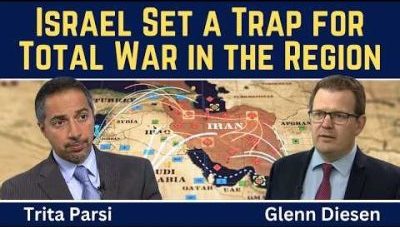
Trita Parsi: Israel Set a Trap for Total War in the Region
or go to
Aletho News Archives – Video-Images
From the Archive
Zionism’s Violent Legacy
By Donald Neff | Washington Report On Middle East Affairs | January 1996
On January 4, 1948, Jewish terrorists drove a truck loaded with explosives into the center of the all Arab city of Jaffa and detonated it, killing 26 and wounding around 100 Palestinian men, women and children.[1] The attack was the work of the Irgun Zvai Leumi – the “National Military Organization,” also known by the Hebrew letters Etzel – the largest Jewish terrorist group in Palestine. The Irgun was headed by Revisionist Zionist Menachem Begin and had been killing and maiming Arabs, Britons and even Jews for the previous ten years in its efforts to establish a Jewish state.
This terror campaign meant that at the core of Revisionist Zionism there existed a philosophical embrace of violence. … continue
Blog Roll
 Aletho News
- Trita Parsi: Israel Set a Trap for Total War in the Region
- Trump’s Iran war is on an Israeli leash
- Saudi oil boss issues global supply warning
- Riyadh Says Its Oil System Is Intact. The Numbers Say Otherwise.
- Trump and Netanyahu Want to “Finish the Job” on Iran
- US ‘one-sided dictation’ not Iran’s beliefs makes rational talks impossible: Baghaei
- Iran’s Next Strike May Not Explode. It Could Shut You Down /Col Doug Macgregor
- Iran: US political targets legitimate if assassinations return
- Iraq shuts key border crossing with Iran under US pressure: Report
- Undersea Internet cables could be targeted in retaliation for attacks on Iran: IRGC deputy chief
- If Americans Knew
- The Israel Lobby’s Changing Fortunes
- AIPAC has become such a political liability that it’s shifting to a more “nimble” approach to buying politicians
- At least 160 Israeli settler attacks in 2 weeks
- Will Gaza’s Ancient Christian Community Disappear Forever?
- Israel’s vision of regional security rests on keeping Arab states weak
- Heidi Levine recounts how Palestinian youths helped save her in settler attack
- DAILY UPDATE: Latest essential news on Palestine, Israel, & region
- Trump’s Intensifying Sabotage of the ICC, for Israel’s Sake
- Israeli military detain US and UK volunteers in West Bank including Democratic NY politician Brad Lander
- Americans at National Conservatism Conference held in Israel this year criticize Israel
- No Tricks Zone
- E-Cars Reduce CO2 Emissions By Only 41% Compared To Internal Combustion Engine Vehicles
- Predictions Made By Renowned Climate Professor Over Past Decades Have Been Proven To Be Poor
- New Study Suggests Large Regions Of The Pacific Ocean Have Been Cooling For The Last 80 Years
- Germany’s Green Energy Debacle: High Energy Costs Force Kahla Porzellan to Close After 182 Years!
- New Study: 50 Years Of The Most Aggressive ‘Net Zero’ Policies Can Only Affect The Global Climate By 0.03°C
- US September “Heat” Was No Record…Many Records Set Decades Ago
- Latest European Green Energy Debacle; Portugal’s Largest Flagship Solar Park Insolvent!
- Green Energy Debacle: German Expert Professor Fritz Vahrenholt Warns Of Severe Economic And Social Consequences
- Two More Paleo Reconstructions Affirm Meters-Higher Sea Levels Across Ireland, Brazil 7000-6000 Years Ago
- New Study: Earth And Venus Surface Warmth Largely Explained By Convection And Lapse Rate, Not CO2 Or Radiation

