Scott Ritter: Will Trump Own the Ukraine War or Walk Away?
Glenn Diesen | May 23, 2025
Scott Ritter is a former intelligence officer in the US Marine Corps and a former UN Weapons Inspector. He expects that the negotiations will fail, and Trump will distance himself from the war. Thus, the failure of negotiations will hurt Ukraine and Europe the most.
Follow Prof. Glenn Diesen:
Substack: https://glenndiesen.substack.com/
X/Twitter: https://x.com/Glenn_DiesenPatreon:  / glenndiesen
Support the channel: PayPal: https://www.paypal.com/paypalme/glenn…
Buy me a Coffee: buymeacoffee.com/gdieseng
Go Fund Me: https://gofund.me/09ea012f
Ireland Clashes with EU Over Hate Speech Laws as MEP Michael McNamara Denounces Brussels’ Legal Threats

By Cindy Harper | Reclaim The Net | May 23, 2025
Ireland’s refusal to fully adopt the European Union’s “hate speech” directives has ignited tensions in Brussels, with Independent MEP Michael McNamara voicing staunch opposition to what he calls a misguided and authoritarian push to punish noncompliance. He dismissed the EU’s legal threats as deeply flawed, asserting that there is no evidence” that these laws accomplish their stated goals of reducing discord or promoting unity.
According to McNamara, attempts to legislate acceptable speech do little more than sow fear and resentment. “People resent the fact that they’re threatened with prosecution for expressing their views,” he said, highlighting a growing unease across Europe as more individuals feel unable to voice opinions, whether popular or not. He warned that such policies do not alter underlying beliefs, they simply force them underground.
Instead of fostering a more harmonious society, McNamara argued that these measures build resentment. “It doesn’t affect how people think in any way, it just affects what they are afraid to say and what they resent,” he said. He drew a parallel to the United Kingdom, where, he noted, citizens are witnessing elderly individuals facing prosecution for speech offenses, while police resources are increasingly diverted from public safety to policing online expression.
“Hate speech laws are counter-productive. They are also profoundly illiberal. They’ve damaged the UK and we don’t want the same,” he wrote in a message on X, calling on the European Commission to abandon any proceedings against Ireland related to speech legislation.
The EU’s position, outlined in a recent notice from the Commission, faults Ireland and Finland for not yet implementing legal measures to criminalize specific categories of speech, including statements denying historical atrocities or inciting hatred against protected groups. While Ireland has made partial moves, Brussels remains unsatisfied and has issued formal opinions giving the two nations two months to comply before potential escalation to the European Court of Justice.
Despite an earlier attempt to introduce hate speech legislation, one that passed easily through the Dáil, the lower house of the Irish parliament, the Irish government eventually shelved the bill.
Resistance from the Seanad and significant public discontent led to its demise, with many viewing the proposal as a direct threat to civil liberties.
That backlash is widely believed to have influenced the outcome of the March 2024 referendums, where voters rejected two constitutional amendments by wide margins.
McNamara reiterated his stance before the European Parliament, stating plainly that pressing charges against Ireland over its refusal to implement these rules would be “misguided.” He urged the Commission to reconsider, framing the issue as one of national integrity and democratic principles rather than regulatory compliance.
Trump’s phone diplomacy with Putin shatters the Euro-Atlantic Cold War mental bloc
Strategic Culture Foundation | May 23, 2025
As the old saying goes, “it’s good to talk.” Good, that is, for most reasonable people who understand that dialogue is a process that opens positive possibilities, especially when the dialogue is conducted respectfully and sincerely.
This week, US President Donald Trump held his third phone conversation with Russian leader Vladimir Putin since he was inaugurated in the White House in January. The latest one on Monday was even more substantive than the previous calls, lasting about two hours, and, according to both sides, it was conducted in a friendly and productive manner.
Of course, the main topic of conversation was finding a peaceful end to the more than three-year war in Ukraine. Trump deserves credit for at least trying to bring peace to the table, instead of more and more weapons, as his predecessor, the mentally decrepit Joe Biden, did, and assorted European leaders would like to continue doing.
There was also discussion between Trump and Putin, using first names in their verbal exchanges, about repairing US-Russia relations for trade and strategic cooperation.
That portends a transformation in Washington’s erstwhile agenda of hostility towards Russia.
Tellingly, however, the talking was deemed “not good” by others, as could be gleaned from the vexed reactions to Trump’s call with Putin from European leaders and American advocates of the Euro-Atlantic alliance.
European politicians were reportedly “stunned” and “shocked” by Trump’s diplomatic outreach to Putin.
Following his conversation with the Russian president, Trump briefed five European leaders jointly. They included Germany’s Merz, France’s Macron, Italy’s Meloni, Finland’s Stubb, and the European Commission’s chief Von der Leyen. Ukraine’s Vladimir Zelensky was also part of the conference call. The non-entity British prime minister was not included. Sometimes, talking with toxic people is not good!
The Europeans tried to put a positive spin on the briefing from Trump, with Von der Leyen describing it as “good”. But that was the Europeans trying to save face from what is a stunning blow to the Euro-Atlantic alliance.
In a press conference at the White House on Monday, after his calls with Putin and the Europeans, Trump made it clear from his statements that the vaunted alliance is shattered. He is no longer listening to them, and his agenda towards Russia is transformational, if it is permitted to develop.
Trump rejected the European demands for an immediate 30-day ceasefire in Ukraine and more economic sanctions on Russia. He said that imposing more sanctions did not help resolve the conflict. Trump also indicated that he concurred with Russia’s logical position that negotiations must be focused on establishing a lasting peace, one that deals with addressing the root causes of conflict.
The European and Ukrainian demands for a 30-day truce as a precondition are not workable or logical. Indeed, such insistence impedes negotiations. From a cynical point of view, that is why the European backers of the Kiev regime are making such a song and dance about sanctions and the 30-day truce, because those demands are aimed at preventing diplomacy succeeding with Russia.
Britain’s Financial Times headlined its report on the Trump-Putin call: “Why Europe fears the worst after Trump’s ‘excellent’ chat with Putin”.
The BBC inadvertently shed light with its headline: “Trump’s call with Putin exposes shifting ground on Ukraine peace talks”. The BBC-speak about “shifting ground on peace talks” is an Orwellian translation. What the BBC should have said in plain language was that Trump is shafting the European warmongers.
Meanwhile, across the Atlantic, the supporters of the NATO proxy war against Russia tried their best to undermine Trump’s diplomacy.
The New York Times – the CIA’s main choice for gaslighting the American population – called the phone call a “diplomatic win for Russia” and snidely said, “Trump backs off ceasefire call”. The latter implied that Trump is against peace when, in fact, he is the only Western adult in the room calling for peace.
The Washington Post also did its best to smear Trump, reporting: “After call, Trump gives Russia more time for Ukraine war”. An op-ed piece also mockingly claimed: “Trump wasted two hours with Vladimir Putin”.
CNN, another outlet that has loyally and absurdly pushed the NATO proxy war as a noble endeavor, accused Trump for “siding with his friend in the Kremlin” and claimed that “peace in Ukraine looks further away after Trump’s call with Putin”, adding that “Putin got exactly what he wanted… stringing Trump along.”
The riot of negative and vitriolic reactions on both sides of the Atlantic shows that the US-European alliance under Trump has shattered. That alliance embodied by the NATO military bloc has been the linchpin of the “Collective West” for eight decades. It has now cracked wide open.
Unlike his predecessors in the White House, Donald Trump does not want to pursue a destructive and futile policy of inflicting a strategic defeat on Russia. That policy is what engendered the war in Ukraine, from the CIA-backed coup in Kiev in 2014, to the provocative weaponization of Ukrainian NeoNazis, until Russia’s intervention in February 2022 to defend its rights.
Trump appears to genuinely want to end the proxy war and to normalize relations with Russia for the sake of world peace, and, why not, good business.
For the Euro-Atlanticists, with their incurable, imperialist, and Russophobic mindsets, such a policy is anathema.
However, the good news is that the gaping cracks in the so-called Collective West now provide a path to peace.
Trump and Putin can end the war in Ukraine and negotiate an important peace deal that addresses Russia’s historic security grievances that stem from the decades of NATO aggression, which past American presidents and their European surrogates have facilitated.
For Trump to do that, he needs to listen carefully to the Russian leadership and reciprocate. If a new detente can be achieved, then the world will be a better, more secure, and peaceful place.
The other thing that Trump needs to do is to dismiss European lackeys with their warmongering servility to the status quo ante. They are has-beens and have nothing constructive to offer.
Trump’s phone call with Putin this week has had a major impact, and one that has significant potential for peace. The cracks in the Cold War mental bloc, so to speak, are a way forward.
MEPs urge Brussels to cut all funding for Budapest
RT | May 23, 2025
Over 20 members of the European Parliament have urged the European Commission to immediately freeze all EU funding to Hungary as a means of putting pressure on Prime Minister Viktor Orban’s government. The demand comes as the bloc’s foreign ministers prepare to weigh potential sanctions, including a suspension of Budapest’s voting rights.
In a letter sent Tuesday to Budget Commissioner Piotr Serafin and Justice Commissioner Michael McGrath, 26 MEPs accused Hungary of “violating EU values and EU laws.” They cited four specific actions, including a March law that effectively bans pride parades in Hungary, a move consistent with Orban’s rejection of “LGBT ideology.”
The lawmakers also blasted proposed Hungarian legislation that would tighten oversight of political organizations receiving foreign funding, which critics argue would suppress “civil society.”
The MEPs alleged that Budapest’s policies indicate that all EU funding for Hungary risks being misused and that a full freeze would be “proportionate” under the circumstances.
Hungarian MEP Csaba Domotor pushed back against the accusations, arguing that the targeted organizations serve foreign interests with grants they receive from the EU, George Soros’ Open Society Foundation, and the recently defunded US Agency for International Development (USAID).
Hungary has repeatedly faced EU criticism for its conservative social policies, which don’t align with the bloc’s pro-LGBT agenda, and regulations requiring more transparency from foreign-funded organizations.
Budapest has also clashed with Brussels over support for Kiev and anti-Russian sanctions. Orban has warned that admitting Ukraine into the European Union risks drawing the bloc into the ongoing military conflict and called the European Commission’s plans to end all imports of Russian energy by the end of 2027 “absolute insanity.”
Hungarian Foreign Minister Peter Szijjarto has said that such a move would sharply increase energy prices across the EU, seriously undermine member states’ national sovereignty, and harm European businesses.
Some EU officials, including Estonian Foreign Minister Margus Tsahkna, have advocated for stronger action, such as triggering Article 7 of the EU Treaty to strip Hungary of its voting rights. Relevant proceedings against Hungary were launched in 2018.
The EU’s General Affairs Council, which is comprised of foreign and European affairs ministers from member states, is scheduled to discuss Hungary’s Article 7 case for the eighth time next Tuesday, according to the official agenda.
EU hands US state media outlet €5.5 million lifeline
RT | May 22, 2025
The European Union has pledged €5.5 million in emergency funding to Radio Free Europe/Radio Liberty (RFE/RL) to prop up the Cold War-era broadcaster, which is widely regarded as a Western propaganda outlet.
Originally created in the 1950s and covertly financed by the CIA to disseminate pro-Western narratives into the Soviet bloc, RFE/RL has more recently operated under the oversight of the US Agency for Global Media (USAGM). In March, President Donald Trump signed an executive order eliminating most of the agency’s funding as part of a sweeping cost-cutting agenda.
EU foreign policy chief Kaja Kallas announced the bloc’s financial lifeline on Tuesday, describing it as “short-term emergency funding” to support what she called a “vital” mission. The €5.5 million package will act as a “safety net” to help RFE/RL maintain operations in countries within Brussels’s sphere of interest, including Russia, Belarus, Iran, and several Central Asian states.
“In a time of growing unfiltered content, independent journalism is more important than ever,” Kallas said following a meeting of EU foreign ministers. She acknowledged that Brusssels could not fully replace the lost American funding but emphasized the symbolic value of the move, urging individual member states to offer further support.
Since Trump’s defunding order, RFE/RL has furloughed staff, suspended programming, and launched legal challenges. Although a Washington judge temporarily halted the administration’s decision in April, a federal appeals court later blocked the release of funds pending further litigation. The broadcaster has warned that it faces permanent shutdown in multiple regions if its financial crisis is not resolved.
The Trump administration framed the defunding as part of a broader campaign to dismantle bureaucratic institutions that no longer align with US strategic interests. RFE/RL’s leadership has disputed that rationale, with its president, Stephen Capus, calling the funding cuts a “massive gift to America’s enemies.”
Administration officials and critics have argued that RFE/RL and its sister outlet, Voice of America (VOA), have lost their relevance and veered toward partisan editorializing. Tech billionaire Elon Musk, who heads the Department of Government Efficiency (DOGE), has publicly called for both outlets to be “shut down,” writing on X: “Nobody listens to them anymore.”
Bureaucracy is saving both Israel and the EU

By Ramona Wadi | MEMO | May 22, 2025
Article 2 of the EU-Israel Association Agreement has long been touted as one avenue for the EU to rethink its allegiances with Israel. The article states, “Relations between the Parties, as well as all the provisions of the Agreement itself, shall be based on respect for human rights and democratic principles, which guides their internal and international policy and constitutes an essential element of this Agreement.”
In recent years, however, there has been more discourse on shared values with Israel than there has been on upholding human rights and international law. Since Israel started its genocide in Gaza in October 2023, the EU has largely upheld Israel’s purported right to defend itself. Only recently has the EU shifted its stance, belatedly and bureaucratically.
The EU’s High Representative for Foreign Affairs and Security Policy, Kaja Kallas, stated, “Countries see that the situation in Gaza is untenable, and what we want is to really help the people, and… to unblock the humanitarian aid so that it will reach the people.”
Israel’s Foreign Ministry retorted with its usual dependence on the colonial security narrative: “We completely reject the direction taken in the statement, which reflects a total misunderstanding of the complex reality Israel is facing.”
Between both statements, there lies a murkier truth than the EU and Israel are trying to project.
If the EU really wanted to help Palestinians, it would have halted its trade agreements long ago. A debate on Article 2, which Israel has completely violated, does not “really help the people”. On the contrary, it helps the EU to form any policy that makes it look benevolent, while extending the time for Israel to continue its genocide in Gaza. Does the EU really need to debate whether Israel has broken Article 2 of the agreement? Furthermore, doesn’t the EU need to take a look at itself for violating Article 2 by supporting genocide in Gaza?
Israel, on the other hand, maintains the illusion that no one else can understand ‘the complex reality’ which is not complex at all. Europe understands colonialism well from the coloniser’s point of view. Palestinians understand the colonial reality from the experience of the colonised population. Israel is also blatantly explaining all steps of how it intends to continue ethnically cleansing Palestinians to the point of forced displacement and annihilation. With such a broad picture for everyone to observe and analyse, how can Israel claim ignorance on anyone’s behalf, sparing itself, of course?
Bureaucracy enables the illusion that the EU is shifting its stance. Article 2 shines the spotlight on both ends of colonial violence – both active and complicit. Can the EU really assess Israel’s violations, being complicit in the violations itself? True accountability starts with holding the EU accountable for upholding not only the EU-Israeli Association Agreement, but also supporting Israel’s genocide in Gaza. There is a need to see Israel as a colonial power committing genocide, and the EU as an enabling participant. Unless the latter’s actions are examined and rescinded, the debate on the EU-Israel Association Agreement will be yet another diplomatic spectacle beneath which more Palestinians will be killed by Israel.
European Commission Accused of Orchestrating $735M Speech-Control Campaign

By Cindy Harper | Reclaim The Net | May 21, 2025
A new report has uncovered an expansive and quietly orchestrated campaign by the European Commission to shape public discourse through nearly €649 ($735M) million in taxpayer-funded projects aimed at regulating online speech.
Titled Manufacturing Misinformation: The EU-Funded Propaganda War Against Free Speech, the document was released by the think tank MCC Brussels and authored by Dr. Norman Lewis, a seasoned analyst of digital communication and regulatory policy.
Behind the EU’s frequent calls to combat “hate speech” and “disinformation” lies what the report describes as a vast ideological infrastructure designed to erode free expression under the guise of safety and civic empowerment.
The Commission, the report states, “has funded hundreds of unaccountable non-governmental organizations and universities to carry out 349 projects related to countering ‘hate speech’ and ‘disinformation’ to the tune of almost €650 million.”
That staggering figure surpasses what Brussels spends on transnational cancer research by over 30%, a discrepancy the report calls deliberate: “The EU Commission regards stemming the cancer of free speech as more of a priority than the estimated 4.5 million new cancer cases and almost two million cancer deaths in Europe in 2022, for example.”
While EU officials present these programs as public-interest research, the report argues they constitute a form of “soft authoritarianism,” enshrining speech codes and narrowing acceptable opinion through bureaucratic manipulation. “This is a top-down, authoritarian, curated consensus,” it states, “where expression is free only when it speaks the language of compliance established by the Commission.”
Many of these initiatives feature a distinct use of vague and euphemistic terminology, part of what the report calls “NEUspeak;” a deliberate linguistic strategy designed to obscure intent and preempt scrutiny. The project acronyms alone, such as FAST LISA and VIGILANT, are described as a form of branding deceit.
As Dr. Lewis writes: “These chirpy acronyms don’t just sound like digital voice assistants or wellness apps…they are deliberate, dishonest strategic terms chosen to disguise a real authoritarian purpose.”
Some of the projects don’t only aim to influence the debate, they aim to automate it. AI-powered initiatives are being trained to identify and suppress politically undesirable speech in real-time.
One such project, VIGILANT, is described by its designers as ethical and user-centric, but MCC Brussels challenges this narrative. “VIGILANT is an AI surveillance suite aimed at monitoring, classifying, and profiling speech, users, and networks, which takes the complexity out of controlling freedom of expression.”
The report highlights that the EU’s censorship framework is not only technical, it is pedagogical.
Programs targeting young people are presented as civic education but function more like behavioral grooming. “The ‘capacity building’ is, in fact, the indoctrination of young people to behave and act as speech police,” the report explains. “What appears to be bottom-up reform is, in fact, a pre-scripted system of narrative compliance.”
Another cornerstone of the report is its critique of how taxpayer money is being funneled into what it calls pre-validated “research” meant to affirm political orthodoxy rather than challenge it.
“Research that systematically ‘proves’ this assumption is not research; it is the manufacturing of propaganda used to legitimize the narrative, pre-empt criticism, and thus delegitimize any ideas or narratives that do not conform.”
Far from defending democracy, MCC Brussels contends that the European Commission is subverting it.
“Language is the EU Ministry for Narrative Control’s software infrastructure of control,” the report warns. “When the EU Commission defines hate speech, disinformation or extremism, it is not identifying problems – it is drawing the lines around what can be said, by whom, and with what consequences.”
For Dr. Lewis and MCC Brussels, the takeaway is clear: this is not about protecting society from dangerous ideas, but about insulating a ruling ideology from democratic challenge.
“The Commission rebrands inquiry as a confirmation ritual rather than any honest pursuit of truth,” the report concludes. “A society that redefines surveillance as ‘safety’ or censorship as ‘content moderation’ does not need to silence citizens outright; it simply changes the meaning of their silence.”
EU sanctions Ukraine’s elected opposition leader
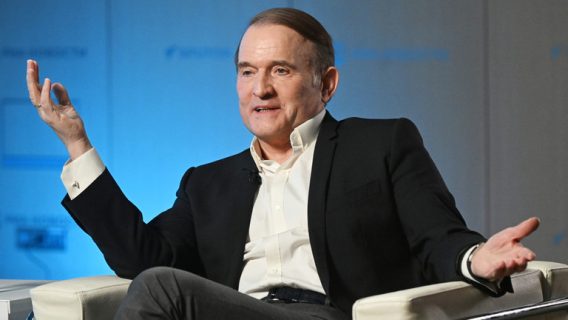
Exiled Ukrainian opposition leader Viktor Medvedchuk © Sputnik / Kristina Kormilitsyna
RT | May 21, 2025
The EU has sanctioned exiled Ukrainian opposition leader Viktor Medvedchuk as well as 20 other individuals and six entities on accusations of being involved in what it described as “Russia’s destabilizing actions abroad.” Moscow has repeatedly rejected claims of meddling in internal affairs of the bloc’s member-states.
Medvedchuk, who has been blacklisted by the EU since May 2024, was slapped with additional curbs on Tuesday when the European Council announced its 17th round of sanctions against Russia over the Ukraine conflict.
The restrictions against the former leader of Ukraine’s banned Opposition Platform – For Life party and the others included an assets freeze in the EU and a ban on entering the bloc or transiting its territory, the council said in a statement.
The EU claims that Medvedchuk and his associates Artyom Marchevsky and Oleg Voloshin, who have also been sanctioned, “controlled Ukrainian media outlets and used them to disseminate pro-Russian propaganda in Ukraine and beyond.”
“Through secret financing of the Voice of Europe media channel – also listed today – and his political platform Another Ukraine, Medvedchuk has promoted policies and actions intended to erode the legitimacy and credibility of the government of Ukraine, in direct support of the foreign policy interests of the Russian Federation and disseminating pro-Russian propaganda,” the statement read.
German bloggers Thomas Roeper and Alina Lipp, as well as Turkish journalist Huseyin Dogru, the founder of AFA Medya company, are also among those added to the sanctions list.
Medvedchuk used to be the head of the largest opposition faction in the Ukrainian parliament. But after the escalation between Moscow and Kiev, he was branded a traitor and arrested. The 70-year-old businessman and politician spent months in detention before being handed over to Moscow in a prisoner swap in September last year. He has remained in exile in Russia since then, with his Ukrainian citizenship revoked and his party branded illegal, along with a dozen groups that opposed the government of Vladimir Zelensky.
Moscow has on many occasions denied accusations of interfering in the electoral processes and internal affairs of EU nations. Russian Foreign Ministry spokeswoman Maria Zakharova previously accused the bloc of “switching from propaganda to direct persecution of media outlets and journalists based on political, ethnic and cultural grounds.”
Romanian runner-up wants presidential vote nixed for ‘external interferences’
RT | May 20, 2025
Right-wing EU critic George Simion has said he would challenge the result of Romania’s presidential election, claiming it was compromised by “foreign interference,” flagging France and Moldova in particular.
Sunday’s runoff saw pro-EU Bucharest Mayor Nicusor Dan defeat his Euroskeptic rival with 54% of the vote in the second round of Romania’s presidential election.
The rerun was ordered after Romania’s Constitutional Court annulled the results of the November election, in which independent candidate Calin Georgescu, an EU and NATO critic, finished first with 23% of the vote. The authorities claimed that there had been “irregularities” in his campaign, citing intelligence reports alleging Russian interference – allegations which Moscow has denied.
In a Tuesday post on X, Simion – who had been the frontrunner – said he had “officially” asked Romania’s top court to annul Sunday’s election result “for the very reasons the December elections were annulled.”
He claimed that there was evidence of “external interferences by state and non-state actors,” adding that “Neither France nor Moldova nor anyone else has the right to interfere in the elections of another state.”
Simion had previously claimed the electoral rolls contained some 1.7 million fictitious names and accused the government of busing in voters from neighboring Moldova. His Alliance for the Union of Romanians (AUR) had also claimed that Moldova’s pro-EU ruling Party of Action and Solidarity (PAS) had directed its million-strong diaspora in Romania to vote for Dan.
Telegram founder Pavel Durov, who has claimed French intelligence tried to pressure him into censoring conservative Romanian channels ahead of Sunday’s vote, reposted Simion’s message, saying he is “ready to come and testify if it helps Romanian democracy.”
Paris has denied Durov’s claim. Romanian officials, in turn, have accused Russia of interfering in the election without providing any proof.
Kremlin spokesman Dmitry Peskov has dismissed the accusations, calling the election “strange” and asserting the most popular candidate had been “forcibly” removed without justification. In response to Durov’s remarks, he also cited what he called the EU’s history of meddling in other countries’ affairs.
Russian Foreign Ministry spokeswoman Maria Zakharova also dismissed Bucharest’s accusations, calling the latest vote illegitimate and saying Romanian officials should clean up their own “electoral mess” instead of blaming others.
‘EU sanctions against me a signal to all Europeans’ – German journalist
RT | May 20, 2025
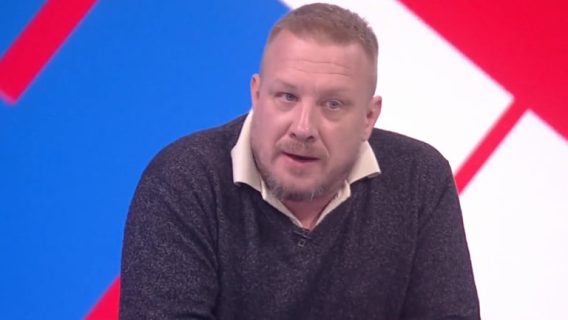
The European Union’s decision to sanction two German nationals could set a dangerous precedent, where Brussels could severely limit the rights of any critic, journalist and blogger Thomas Roeper told RT.
Roeper, who has also collaborated with RT’s German-speaking service, has been accused by the bloc of “destabilizing activities” and slapped with an EU entry ban, as well as an asset freeze.
The European Council, comprising the leaders of EU member states, approved the bloc’s 17th round of sanctions against Russia on Tuesday.
Roeper and German blogger Alina Lipp, both of whom currently reside in Russia, are among the individuals the bloc has targeted for being “involved in activities aimed at undermining the democratic political process in… Germany.”
Speaking to RT later on Tuesday, Roeper said the EU had introduced personal sanctions against him because he has large audiences in Germany.
Brussels’ latest decision to sanction EU nationals should be of great concern to all German citizens, the blogger believes. He noted that the punitive measure against him was adopted despite there being “no court [decision], nobody said which law I have violated.”
“Without any court decision, some bureaucracy decided to freeze my money, to forbid working,” he told RT.
According to the author, the move “is a signal for all people in the European Union, because if they do it to us, and this goes through, tomorrow they will start doing the same… against any critics.”
He described the EU’s allegations against him as ludicrous. “I’m just a blogger sitting here in my kitchen and writing articles and I’m ‘destabilizing’ the EU which has a billion-euro budget for media work,” he quipped.
But what’s “not funny,” he noted, is that while he lives in Russia, people in Germany would have a hard time meeting their basic needs if their rights were curbed in a similar manner.
The EU’s latest round of sanctions primarily targeted Russia’s so-called ‘shadow fleet’ of oil tankers, which operate outside Western insurance systems. According to Brussels, Moscow has allegedly been using it to circumvent G7-led efforts to enforce a price cap on its crude oil exports.
Exposing Hypocrisy: Palestine, the ICJ, and the Collapse of Liberal Legitimacy
By Taut Bataut – New Eastern Outlook – May 20, 2025
ICJ has recently postponed the hearing of South Africa’s case against Israeli war crimes to January 12, 2026, providing it more time to annihilate Gaza. This marks the collapse and failure of the international system.
The Ongoing Humanitarian Crisis in Gaza
Since October 7, 2023, the Palestinians have been facing one of the worst genocidal operations in the world. More than 50000 Palestinian civilians, mostly women and children, have been intentionally killed by the Israeli Defense Forces (IDF) under the pretense of eliminating Hamas. However, this war has exposed the self-proclaimed champions of human rights and liberalism. The United States and the European Union have constantly been providing military, diplomatic, and financial aid to Israel.
The latter has emerged as the largest recipient of the US aid since its illegitimate inception. Moreover, the US government has vetoed multiple United Nations resolutions seeking to establish humanitarian peace in the region. U.S. President Donald Trump also reiterated his country’s support for Israel after his re-election. He also proposed a plan to relocate the native people of Gaza to the neighboring countries and occupy the region for the long term.
The Zionist state has intentionally targeted aid workers, mosques, churches, hospitals, schools, and other civilian infrastructure in violation of international law. In an unprecedented move, the Netanyahu administration is using starvation and hunger as a weapon of war against the innocent civilians of the Gaza Strip. Several heart-wrenching images of starved children from Gaza have emerged on social media during all this time. Amnesty International and the different international humanitarian agencies have condemned these Israeli policies and declared them a war crime.
Global Legal Responses and the Case at the ICJ
While most of the Muslim nations hesitated even to utter a single sentence against the ongoing Israeli war crimes and genocide in Israel, South Africa filed a case against the Zionist state in the International Court of Justice (ICJ) in December 2023 under the 1948 Genocide Convention. This Convention, established to halt the recurrence of Holocaust like events, defines genocide as “acts committed with intent to destroy, in whole or in part, a national, ethnical, racial or religious group.” More than 10 countries, including Turkey, Ireland, Egypt, the Maldives, Chile, Belgium, and Mexico, have joined the case against Israel.
The petition demanded urgent actions to prevent further Israeli war crimes in Gaza. However, despite the presence of numerous evidence and reports by international human rights organizations, the ICJ failed to halt the genocide of innocent civilians of the Gaza Strip. The court was also commissioned to determine whether the Israeli Defense Forces were committing genocide in Gaza. Since 2023, the court has made no considerable decision against the Israeli war crimes.
Exposing Hypocrisy and Seeking Alternatives to Western Hegemony
The world, especially the Gazans, is waiting for the international community to stand against the atrocities and the war crimes of the IDF and the Netanyahu government. However, the Western world and its puppet Arab nations are constantly ignoring the plight of the innocent Palestinians. This has exposed the international organizations, the OIC, and the Western liberal values. The ICJ’s recent decision to postpone the hearing till January 2026 demonstrates its apathy towards the citizens of Gaza in particular and towards the citizens of Third World countries in particular.
Israeli war crimes and apartheid in Palestine date back to the former’s inception in 1948. Since then, the Zionist groups in Palestine have been occupying the properties of the native peoples. Israel’s history is replete with rapes, torture, and killing of innocent children and women in Palestinian territory. The Zionist leaders have always supported sexual assault by the Israeli Defense Forces.
However, the international community remains indifferent to the plight of the Palestinians. The ICJ’s postponement of the hearing till next year demonstrates its commitment to justice and peace in the world. This move has once again revealed that the US-backed unipolar liberal world order has failed. It has also exposed the reality of the so-called champions of human rights. The United States and other Western nations have always echoed their concerns about the Ukrainian people. However, their nonchalance to the plight of the Palestinians exposes their hypocrisy.
Although the Palestinians and their supporters around the world were hopeful about the ICJ, this is the time to realize that all the international institutions were made merely to prolong the US hegemony and serve the Western interests. It is improbable that the ICJ would declare Israeli operations as genocide. However, even if it does so, it would be too late, as hundreds more Palestinians would have been killed by then. Nonetheless, South Africa’s case against the ICJ has further exposed the Western world order and its institutions. It is the right time for third-world countries to look for an inclusive and egalitarian world order. BRICS provides the best alternative to the developing countries pursuing their ambition of following independent foreign policies and mutual development.
EU and UK impose more sanctions on Russia despite US concerns
RT | May 20, 2025
The EU and UK imposed new sanctions on Russia on Tuesday, escalating their campaign to pressure Moscow while ramping up support for Kiev.
The sanctions were announced shortly after a call between Russian President Vladimir Putin and his US counterpart, Donald Trump. Following the conversation, Trump warned that imposing additional economic restrictions on Moscow could hinder efforts to achieve peace in the Ukraine conflict.
The European Council, comprising leaders of EU member states and top officials, approved the bloc’s 17th round of sanctions, targeting what foreign policy chief Kaja Kallas called “nearly 200 shadow fleet ships.” Kallas, a vocal critic of Moscow, stated that further measures “are in the works” in Brussels.
Western officials claim that the targeted fleet enables Russia to evade G7-led efforts to enforce a price cap on its crude oil exports. In a coordinated move, the UK added 18 vessels from the same network to its sanctions list on Tuesday.
In addition, the UK imposed sanctions on the St. Petersburg Currency Exchange and Russia’s state deposit insurance agency, citing efforts to sever critical financial lifelines. Foreign Secretary David Lammy said the measures are intended to hold Putin accountable for supposedly “delaying peace efforts.”
Last week, delegations from Russia and Ukraine met for the first time since 2022, when Kiev abandoned negotiations in favor of pursuing victory on the battlefield, as advised by the then-UK Prime Minister Boris Johnson.
European backers of Ukraine initially supported Kiev’s demand for a 30-day unconditional ceasefire before resuming talks, and threatened additional sanctions if Russia refused. Zelensky later backtracked after the Trump administration supported Putin’s proposal for renewed diplomatic engagement.
Zelensky insisted, however, that Putin meet him in person in Türkiye to demonstrate his commitment to peace – an idea that the Russian president had not proposed. Ukrainian officials continue to call for expanded sanctions over what they describe as Moscow’s non-compliance with peace overtures.
The Putin-Trump call on Monday was characterized as productive by both leaders. Trump said he believes Putin is interested in ending the conflict and warned that additional economic pressure could obstruct US mediation efforts.
Putin has said Moscow and Kiev should negotiate a formal memorandum outlining a detailed path to a broader peace agreement, adding that a ceasefire could be part of the proposed road map.
Featured Video
Trita Parsi: Israel Set a Trap for Total War in the Region
or go to
Aletho News Archives – Video-Images
From the Archive
Zionism’s Violent Legacy
By Donald Neff | Washington Report On Middle East Affairs | January 1996
On January 4, 1948, Jewish terrorists drove a truck loaded with explosives into the center of the all Arab city of Jaffa and detonated it, killing 26 and wounding around 100 Palestinian men, women and children.[1] The attack was the work of the Irgun Zvai Leumi – the “National Military Organization,” also known by the Hebrew letters Etzel – the largest Jewish terrorist group in Palestine. The Irgun was headed by Revisionist Zionist Menachem Begin and had been killing and maiming Arabs, Britons and even Jews for the previous ten years in its efforts to establish a Jewish state.
This terror campaign meant that at the core of Revisionist Zionism there existed a philosophical embrace of violence. … continue
Blog Roll
 Aletho News
- Trita Parsi: Israel Set a Trap for Total War in the Region
- Trump’s Iran war is on an Israeli leash
- Saudi oil boss issues global supply warning
- Riyadh Says Its Oil System Is Intact. The Numbers Say Otherwise.
- Trump and Netanyahu Want to “Finish the Job” on Iran
- US ‘one-sided dictation’ not Iran’s beliefs makes rational talks impossible: Baghaei
- Iran’s Next Strike May Not Explode. It Could Shut You Down /Col Doug Macgregor
- Iran: US political targets legitimate if assassinations return
- Iraq shuts key border crossing with Iran under US pressure: Report
- Undersea Internet cables could be targeted in retaliation for attacks on Iran: IRGC deputy chief
- If Americans Knew
- The Israel Lobby’s Changing Fortunes
- AIPAC has become such a political liability that it’s shifting to a more “nimble” approach to buying politicians
- At least 160 Israeli settler attacks in 2 weeks
- Will Gaza’s Ancient Christian Community Disappear Forever?
- Israel’s vision of regional security rests on keeping Arab states weak
- Heidi Levine recounts how Palestinian youths helped save her in settler attack
- DAILY UPDATE: Latest essential news on Palestine, Israel, & region
- Trump’s Intensifying Sabotage of the ICC, for Israel’s Sake
- Israeli military detain US and UK volunteers in West Bank including Democratic NY politician Brad Lander
- Americans at National Conservatism Conference held in Israel this year criticize Israel
- No Tricks Zone
- E-Cars Reduce CO2 Emissions By Only 41% Compared To Internal Combustion Engine Vehicles
- Predictions Made By Renowned Climate Professor Over Past Decades Have Been Proven To Be Poor
- New Study Suggests Large Regions Of The Pacific Ocean Have Been Cooling For The Last 80 Years
- Germany’s Green Energy Debacle: High Energy Costs Force Kahla Porzellan to Close After 182 Years!
- New Study: 50 Years Of The Most Aggressive ‘Net Zero’ Policies Can Only Affect The Global Climate By 0.03°C
- US September “Heat” Was No Record…Many Records Set Decades Ago
- Latest European Green Energy Debacle; Portugal’s Largest Flagship Solar Park Insolvent!
- Green Energy Debacle: German Expert Professor Fritz Vahrenholt Warns Of Severe Economic And Social Consequences
- Two More Paleo Reconstructions Affirm Meters-Higher Sea Levels Across Ireland, Brazil 7000-6000 Years Ago
- New Study: Earth And Venus Surface Warmth Largely Explained By Convection And Lapse Rate, Not CO2 Or Radiation

