Airbus pulls back on ‘green’ jet – WSJ
RT | April 21, 2025
European aircraft manufacturer Airbus is scaling back its hydrogen-powered jet project after spending nearly $2 billion, the Wall Street Journal has reported, citing sources.
The company announced in 2020 that it aimed to launch a zero-emission, H2-powered aircraft by 2035, calling it a potential breakthrough for aviation. Some industry executives had questioned whether the technology would be ready in time.
People familiar with the matter told the WSJ that Airbus had already spent more than $1.7 billion on the project, but concluded over the past year that technical hurdles and sluggish adoption of hydrogen across the economy would prevent it from meeting its target, according to a report on Sunday.
In early February, Airbus informed staff that the project’s budget would be cut and its timeline delayed, the sources said. A new schedule was not provided.
Later that month, CEO Guillaume Faury – who had initially described the hydrogen push as “a historic moment” – admitted the effort had not led to a commercially viable aircraft. Engineers would return to the drawing board in a second “development loop,” he reportedly said.
Airbus’s efforts to enlist a dozen airlines and more than 200 airports to explore hydrogen integration raised eyebrows, with airline and supplier executives privately doubting the 2035 target. At US rival Boeing – long skeptical of hydrogen – executives voiced concerns over safety and the technology’s readiness.
The EU has pushed aviation to decarbonize under its Green Deal, which aims to make the bloc climate-neutral by 2050. Airbus, partly owned by the French state, was required to channel part of a €15 billion (over $16 billion) Covid-era bailout into green aircraft development.
According to the WSJ report, the hydrogen program had helped Airbus unlock additional public and private green funding.
The retreat comes as wider enthusiasm for hydrogen fades, with companies like oil major BP and Finnish producer Neste scrapping plans for hydrogen projects. Some major European power companies have been rethinking amid high costs and difficulty transitioning away from fossil fuels, according to leading industry magazine Windpower Monthly.
Ireland’s War on Dissent Gets a Digital Upgrade
By Didi Rankovic | Reclaim The Net | April 22, 2025
Ireland’s authorities have published the National Counter Disinformation Strategy, recommending a number of censorship tactics such as “fact-checking” and “pre-bunking.”
At the same time, a potentially powerful demonetization tool – the online advertising system – is to be used against whatever is branded as “disinformation.” Even if these are, in reality, often simply dissonant policies and voices.
Yet the Irish government’s plan is to make this a broad “collaboration” between itself, the private sector, and other participants.
While turning online advertising into a tool for suppressing speech has at this point been recognized as unacceptable in the US (as the GARM saga illustrates well) – in Ireland, this is still clearly considered a viable option to control online narratives.
Media outlets long since positioned as government sidekicks, namely, legacy media, are branded “high quality” – while those that can be financially stomped out (i.e., demonetized) for supposed “disinformation” include voices exercising that top democratic principle – free speech.
Free speech includes lawful political and social dissent – while another key value defining democracy is the ability to express that dissent without fear of repercussion or discrimination.
And so, never formally banned, and therefore the cases not raising too much dust – dissenting online sources would be easy to shut down. Cutting off revenue (through “collaboration” with the advertising industry) would become a way to continue flying the authoritarianism flag on the radar.
Another requirement the strategy seeks to impose is that platforms comply with legal obligations – including laws that enact censorship by any other name.
In order to cement the “disinformation” narrative, civil society and research organizations are to be given access to platform data – which then often becomes the basis for low-stakes campaigns disguised as research, aimed against policies, parties, and media outlets.
These “non-binding” papers may never end up holding any professional water – but what does that matter, once “high quality” legacy media pick them up and work them into their “news” narratives.
Ireland inevitably seeks compliance with the EU bureaucracy. One of those rules is the “EU Code of Practice on Disinformation” – to fight anyone harming “our society by eroding trust in institutions and media.”
Both the EU and the Irish government still pretend they don’t know the ones doing that particular “harm and eroding” work here – are in fact, themselves.
More: Ireland Enacts Hate Offenses Act, Dismissing Concerns Over Free Speech and Censorship
EU refusing to lift Russia sanctions for peace – Reuters
RT | April 23, 2025
The EU has firmly rejected the idea of easing Ukraine-related sanctions against Russia before peace negotiations are concluded, Reuters reported on Wednesday, citing sources.
Last week, the US shared with EU officials proposals aimed at facilitating a peace deal between Russia and Ukraine. The initiative reportedly outlined potential terms to end the conflict, including the easing of sanctions on Moscow in the event of a lasting ceasefire.
Brussels, however, “staunchly opposes” Russia’s request to lift EU sanctions before peace talks are concluded, Reuters wrote, citing European diplomats. Another sticking point is the US proposal to recognize Russian sovereignty over Crimea – a suggestion the outlet described as a “non-starter” for both the EU and Kiev.
The EU’s stance is reportedly seen as diminishing the chances of any breakthrough in the peace negotiations, prompting senior US officials to skip a high-level meeting in London on Wednesday held for discussing the Ukraine conflict.
The gathering was due to include top diplomats from the UK, US, France, Germany, and Ukraine but ended up being downgraded to involve lower-level officials.
Both special envoy Steve Witkoff and Secretary of State Marco Rubio are skipping the event. The US delegation is instead being led instead by General Keith Kellogg, another envoy of US President Donald Trump focused on Ukraine.
Last month, European Commission President Ursula von der Leyen declared the EU would not lift its sanctions against Russia for as long as the Ukraine conflict continues. Also in March, the EU rejected a Russian demand to lift sanctions on Russian Agricultural Bank as part of the Black Sea ceasefire initiative discussed between Moscow and Washington. During the talks in Saudi Arabia, Russia and the US agreed to work toward reviving the Black Sea Grain Initiative, which, according to the Kremlin, would include the removal of Western restrictions against the agricultural bank and other financial institutions.
Kremlin spokesman Dmitry Peskov responded that the EU’s refusal to lift sanctions on Russia demonstrates the bloc’s reluctance to end the Ukraine conflict. “If European countries don’t want to go down this path, it means they don’t want to go down the path of peace in unison with the efforts shown in Moscow and Washington,” he said at the time.
Trump axes Biden-era post set up to probe ‘Russian war crimes’
RT | April 23, 2025
The administration of US President Donald Trump has reportedly eliminated a position within the Office of the Director of National Intelligence (ODNI) that was responsible for sharing evidence of alleged Russian war crimes.
Mandated by a bipartisan bill passed in 2022 in response to the escalation of the Ukraine conflict, the Intelligence Community Coordinator for Russia Atrocities Accountability Act (ICCRAA) was enacted as part of the 2023 Intelligence Authorization Act.
According to anonymous sources cited by the Washington Post on Tuesday, both the ICCRAA and the interagency working group it led have been terminated.
Previous reports indicated that the Trump administration had withdrawn from collaboration with an EU-led initiative aimed at investigating Russian nationals in connection with the Ukraine conflict, halted a Justice Department program for training Ukrainian prosecutors on handling these cases, and closed an inquiry into Kiev’s allegations that the Russian authorities kidnapped Ukrainian children.
Two major priorities of the Trump agenda include slashing government spending on programs deemed unnecessary and concluding the Ukraine conflict.
The efforts to resolve the conflict reportedly reached a critical juncture this week, with Washington anticipating reactions from Kiev and European NATO members regarding its proposed compromise ceasefire deal before presenting it to Moscow. Secretary of State Marco Rubio cautioned last week that the US could “move on” to other issues if the negotiations stall.
Neither Rubio nor Trump’s special envoy, Steve Witkoff, who outlined the ideas last week at a gathering in Paris, will attend this week’s discussions with Ukrainian officials in London, according to Axios. However, Witkoff is expected to travel to Moscow for follow-up talks with Russian President Vladimir Putin.
Reports indicate that the US is proposing formal recognition of Russian sovereignty over the former Ukrainian region of Crimea, which voted to join Russia following the 2014 Western-backed coup in Kiev. Ukraine’s Vladimir Zelensky has rejected this, reiterating on Tuesday that Kiev’s claim to the peninsula is non-negotiable.
Where have Europe’s pacifists gone – the ones who once opposed NATO?

By Sonja van den Ende | Strategic Culture Foundation | April 22, 2025
Where are they now—Europe’s pacifists? Why do they no longer gather in Belgium, in Brussels, NATO’s headquarters, where large demonstrations against the alliance once took place? These protests, led by pacifists, denounced NATO, war, militarization, and nuclear arms.
The Belgian newspaper Le Soir recently posed an intriguing question: Why have the pacifists vanished? “The arms race has begun,” the article argues. “Like its European neighbors, Belgium is preparing to significantly increase military spending this year—without facing any opposition.”
“We keep our word,” declares Francken, Belgium’s former Defense Minister. “Belgium will become a solidary ally with extra defense budgets for personnel, equipment, and infrastructure.” He claims the spending will also boost jobs and innovation. Belgium, after all, is a NATO founding member, alongside the Netherlands.
Some Belgian (former) pacifists have reacted sharply to the government’s plans: “Retirees must accept lower pensions, unemployment benefits are being slashed, the sick languish in poverty, nurses earn less and work longer for diminished pensions, hospitals lose subsidies—all to enrich that corrupt Zelensky gang in Kiev.” The same measures, they note, are being imposed in the Netherlands.
But as the article points out, criticizing NATO now invites ridicule. Or does it go further than mockery? Across Western Europe—Belgium, the Netherlands, Germany—and in the Baltic states and Poland, dissent is met with more than scorn. People are arrested, elections are overturned, and societies drift toward totalitarianism—or worse, a resurgence of militarism and fascism unseen since 1945.
Europeans once insisted America should not meddle in their affairs. But it’s too late for that. EU governments, radicalized by waning U.S. interest in Europe, have already been co-opted. They should have spoken up years ago, when it became clear Europe was being used to wage wars in distant lands its citizens barely knew. Instead, they absorbed refugees (often unwillingly) and fell under what some call American colonization.
Yet America wasn’t entirely wrong. In Munich last February, Vice President J.D. Vance called Europe a “totalitarian society,” singling out Germany. I can confirm his assessment was accurate—but it barely scratched the surface. The reality is far worse and deteriorating daily.
Consider these examples:
- A 16-year-old German girl was expelled from school by police for posting a pro-AfD TikTok video featuring the Smurfs (the right-wing party’s color is blue).
- An AfD politician was fined for stating that migrants commit more gang rapes than German citizens. (The court didn’t dispute her facts but ruled they incited hatred.)
Germany once had a robust pacifist movement. In the 1970s and 80s, activists—many from what is now the Green Party (Bündnis 90/Die Grünen)—protested NATO and nuclear weapons. Today, those same Greens, led by Annalena Baerbock and Robert Habeck, champion war and arms shipments.
Their party program declares Germany must lead Europe, offering a “global counterweight” to China and Russia. The anti-war, anti-NATO movement has been absorbed into a party now pushing for war—especially against Russia, as Baerbock’s rhetoric makes clear.
Or take a 2023 case where the EU’s High Representative expressed concern over “extrajudicial sentences against Serbs” who protested NATO in Kosovska Mitrovica. Kosovo’s Foreign Minister defended the arrests, claiming police had “clear evidence” the demonstrators participated in an “attack on NATO.”
So where have Europe’s pacifists gone—the ones who marched against war, militarization, and nuclear arms for decades? The Friedrich Naumann Foundation (banned in Russia) claims to have the answer. In an article, they declare: “The end of pacifism (as heard in a Bundestag debate) was historic. Hopefully, it marks the end of a moral and political error.”
Has pacifism become a “political mistake”? Millions who oppose war have been misled for years by their own politicians—like the Greens, who traded peace for militarism. The world is upside down, yet Europe’s docile masses seem content as their pensions fund weapons.
New Eastern Europe takes it further, arguing “Pacifism kills.” The outlet claims: “The problem isn’t pacifism itself, but its manipulation for purposes contrary to its ideals. While pacifist appeals to Russia (the aggressor) are justified, targeting Ukraine or both sides aids Moscow.”
In short: Pacifism helps Russia. The “hippies” of the 1960s live in a fantasy where peace is impossible, Russia is the villain, and Europe must defeat it. The campaign against pacifism mirrors the EU’s push for militarization.
Europe is silencing pacifists—and dissidents—just as pre-WWII Germany did under fascism. New laws are emerging. In Germany, the proposed CDU/CSU-SPD coalition plans to “fight lies,” per their “Culture and Media“ working group. If you “lie” by government standards—say, by advocating peace with Russia or denying its “aggression”—you risk jail, fines, or online erasure.
“The deliberate spread of false claims isn’t covered by free speech,” they assert.
Le Soir asked: Where are the pacifists? They’re still here—for now. But once Germany’s new government takes power, once the digital ID and CBDC (mandatory across Europe) launch this October, protests—online or in streets—will be surveilled. Small demonstrations in Germany and Amsterdam show resistance lingers. But soon, fear will silence them: fear for jobs, pensions, benefits, even children.
Because CBDC and Digital ID mean governments can monitor “fake news” and freeze dissenters’ funds. Europe is birthing the very totalitarianism it accuses Russia, China, or America of. Militarization, fascism’s revival—all while Europeans dread a war that isn’t theirs, yet one their leaders enable.
EU and UK preparing naval blockade of Russia – Putin aide
RT | April 22, 2025
The EU and the UK are gearing up to impose a naval blockade on Russia, Nikolay Patrushev, a senior aide to Russian President Vladimir Putin, has said. He warned that Moscow has a fleet powerful enough to respond to any such move.
In an interview published on Monday by Kommersant, Patrushev, who chairs Russia’s Maritime Board, a body which oversees national policy in this domain, stated that Moscow is facing escalating threats and challenges at sea amid growing geopolitical tensions.
“The collective West no longer hides its intentions to expel our shipping from the seas, while sanctions plans mulled, for example, by the British and some EU members increasingly resemble a maritime blockade,” he said.
Patrushev warned that these steps would “meet an adequate and proportionate response” from Moscow. “If diplomatic or legal instruments do not take effect, the security of Russian shipping will be ensured by our navy. The hotheads in London or Brussels need to clearly understand this,” he said.
Patrushev emphasized that Russia is pursuing a large-scale naval modernization program, including the development and deployment of unmanned systems while refining navy tactics. However, Moscow does not intend to get involved in a “naval arms race,” he added.
Western countries introduced maritime restrictions on Russia in 2022 over the Ukraine conflict, and have sanctioned dozens of Russian ships for allegedly circumventing an oil price cap. Russian ships have also faced major obstacles in accessing EU ports, insurers, and financial institutions.
The British Navy has been shadowing Russian ships passing near its waters for months, citing concerns about a perceived threat to national security and maritime infrastructure.
Maritime tensions have also been heightened in recent months following several ruptures in underwater infrastructure in the Baltic Sea. While there has been speculation about alleged Russian involvement, Western officials have offered no evidence. The Kremlin has dismissed the speculation as “absurd.”
NATO has increased its military presence in the Baltic Sea following the sabotage allegations, prompting Russia to warn that it would respond appropriately to any “violations” by the bloc’s vessels.
Ukrainian envoy asks for 30% of Germany’s military equipment
RT | April 20, 2025
Germany should donate 30% of its available armored vehicles and military aircraft to Kiev, according to Andrey Melnik, Ukraine’s envoy to the UN. His appeal comes as EU nations seek ways to boost support amid uncertainty over whether US President Donald Trump would continue backing Ukraine.
Melnik, who served as ambassador to Berlin from 2015 to 2022, addressed his plea in an open letter to Chancellor-designate Friedrich Merz, published in Welt am Sonntag on Saturday. “It is in your hands, as peacemakers, to stop this damn war by the end of 2025,” he wrote.
The diplomat outlined a series of steps he believes Merz must take to “cut the Gordian knot and force [Russian President Vladimir] Putin to make peace.”
According to Melnik, Germany should donate 30% of its Bundeswehr stock of armored vehicles and aircraft to Kiev, including around 45 Eurofighter Typhoon and 30 Tornado fighter jets, 100 Leopard 2 main battle tanks, and 115 Puma and 130 Marder infantry fighting vehicles. He also called on Berlin to defy “the expected resistance” from the Social Democrats (SPD) and send 150 Taurus cruise missiles.
The SPD has opposed the missile deliveries, citing concerns about further escalation with Russia. The Social Democrats and Merz’s Christian Democratic Union (CDU) are currently engaged in coalition talks.
Melnik urged Germany to commit 0.5% of its GDP – or €21.5 billion ($24.5 billion) annually – toward military aid to Ukraine through 2029. “These funds should be invested in the production of state-of-the-art weapons in both Germany and Ukraine,” he wrote. He also called for the 0.5% benchmark to be adopted across the EU as a “huge warning signal” to Russia.
Merz recently expressed openness to delivering Taurus missiles, prompting criticism from SPD leader Matthias Miersch and Defense Minister Boris Pistorius. Meanwhile, Russian Ambassador to Germany Sergey Nechayev warned that such shipments would “bring no changes to the battlefield” but would further implicate Germany in the conflict.
Europe not ready to expand military aid to Ukraine when US leaves
By Ahmed Adel | April 18, 2025
More than three years in and with little initiative for a diplomatic exit from the West, NATO’s proxy war against Russia in Ukraine will reach a critical juncture when aid from the United States ends. Unless US President Donald Trump changes his mind, Europe cannot afford to continue its unconditional aid to Ukraine alone.
In the final months of his term, Joe Biden took significant steps to increase Ukraine’s munitions stockpiles, sending large quantities of projectiles, rockets, and armored vehicles, and approving a $1.25 billion aid package in December 2024. This support has allowed a continued flow of US arms to Ukraine, except for a pause ordered by Trump in March following his spat with his Ukrainian counterpart Volodymyr Zelensky in the White House.
While these decisions have bought Ukraine time, its stockpiles of US munitions are running low. The $1.25 billion aid package is nearly exhausted, and Trump has not approved any new military aid since taking office. Even if he were to use his remaining withdrawal authority, the amount available would be insufficient to sustain long-term US support, especially with the Republican-controlled Congress.
Trump has unsuccessfully sought a ceasefire in the conflict, while the parties involved have not agreed on the full terms. Faced with the impasse, the European Union has encouraged Ukraine to try to gain some strategic advantage over Russia, saying it will maintain support for as long as necessary. But Russia’s superiority has been proven daily, even with Ukraine’s flagrant unilateral violation of the 30-day US-brokered ceasefire for critical infrastructure.
European leaders have been moving to help Ukraine in the absence of US leadership. Discussions about a post-war security force are important, but more planning is needed to deal with the impending loss of US material support.
According to The Guardian, Ukraine’s European backers face two main questions: how Ukraine can persist with a combination of domestic arms production, European assistance, and US intelligence sharing, and how to finance that support. European countries must accept greater risk by donating their own military equipment and increasing defense spending to replenish their stockpiles.
The article argues that Europe should direct more resources to Ukraine’s defense industrial base, which produces drones, munitions, and air defense capabilities. The United Kingdom and France should try to negotiate with the Trump administration to secure additional air defense missiles for Ukraine, with the Europeans footing the bill, of course.
European countries must decide how to finance this support, whether by drawing on their own budgets or seizing the roughly $300 billion Russian sovereign assets illegally frozen through unilateral sanctions. These assets could finance Ukraine’s defense and reduce its dependence on the US, but time is running out for Ukraine to have anything to bargain for.
Moscow believes that arms supplies to Ukraine hinder the resolution of the conflict and directly involve NATO countries in the conflict. Russian Foreign Minister Sergei Lavrov said that any shipment containing weapons to Ukraine would be a legitimate target for Russia. According to Russia’s top diplomat, the US and NATO not only supply weapons to Kiev, but also train personnel in the UK, Germany, Italy, and other countries.
Hundreds of articles and interviews by Western journalists and politicians repeatedly claimed that Russia was allegedly running out of men, shells, missiles, and tanks, and that it only had fuel for two days. However, none of these allegations have been proven because production never ended in Russia; it has only increased.
Rather, to match Russia’s strength, Ukraine will have to mobilize everything it can and increase production several dozen times, an impossible task.
On April 11, Kaja Kallas, the EU’s high representative for foreign affairs and security policy, said that the meeting of the “Coalition of the Willing” on Ukraine was a failure because participants had different views on a peace agreement. French media quoted European officials as saying the day before Kallas’ statement that about six of the more than 30 countries participating in the “Coalition of the Willing” are ready to send troops to Ukraine. They include the United Kingdom, France, and the Baltic states. Evidently, the effort to mobilize Europe for this action failed.
Kallas also hoped to mobilize up to €40bln in military aid for Ukraine this year to shore up Kiev’s position and try to gain some strategic leverage for upcoming peace talks with Russia. This proposal has been stalled for weeks though, with EU diplomats criticizing the abstract nature of the plan, the way contributions would be calculated, and the lack of buy-in from most southern European countries.
Europe does not have the military might, economic prosperity, or unity to support Ukraine once US support has truly dried up. Yet, judging by the statements and actions of Kallas, the unelected EU technocrats continue to concoct new ideas to prolong war and suffering in Ukraine.
Ahmed Adel is a Cairo-based geopolitics and political economy researcher.
Slovak PM Fico urges support for Ukrainian gas transit during visit to Croatia
By Thomas Brooke | Remix News | April 16, 2025
Slovak Prime Minister Robert Fico called on Croatian Prime Minister Andrej Plenković to support the resumption of natural gas transit through Ukraine during an official visit to Zagreb on Wednesday.
Fico noted that while Slovakia’s domestic gas needs are currently being met, the country is losing out on key transit revenues due to the halted pipeline flow.
“The resumption of gas flow through Ukraine should be in the interest of the entire European Union, including Slovakia, of course,” Fico said during a joint press conference, as cited by TASR news agency. He acknowledged Croatia’s support in providing access to liquefied natural gas (LNG) via terminals on the island of Krk, but noted that the LNG option remains more expensive for Slovakia.
In January, Fico invited Ukrainian President Volodymyr Zelensky to negotiations over the halted transit of natural gas through Ukraine. This was after Kyiv ceased the gas flow at the start of 2025 following the expiration of a contract with Russia, leaving Slovakia and other European nations scrambling to secure energy supplies.
The Slovak prime minister later accused Ukrainian President Volodymyr Zelensky of “begging and blackmailing” European nations for financial aid after turning off the taps.
The meeting in Zagreb highlighted what Fico described as “excellent relations” between Slovakia and Croatia. He expressed gratitude for the hospitality extended to the Slovak delegation and for the warm welcome Slovak tourists receive each year in Croatia. He also acknowledged the continued support of the Slovak minority living in Croatia.
During the bilateral talks, the two leaders agreed on the need to strengthen trade ties, collaborate on illegal migration management, and jointly advocate for cohesion and agricultural policies within the EU budget.
Prime Minister Plenković noted that trade between the two countries now exceeds €1.5 billion, reflecting growing cooperation.
Fico also highlighted Croatia’s role in protecting the EU’s Schengen border, particularly its border with Bosnia and Herzegovina. He offered technical and material support to assist Croatia in this area.
While acknowledging some differences in their perspectives, both leaders reaffirmed their shared desire for an end to the war in Ukraine and a return to peace. They also discussed enhanced cooperation in the arms industry and plans for deeper cultural collaboration. Plenković announced that a bilateral cultural cooperation program for 2025-2029 would soon be signed between the countries’ respective ministries of culture.
Prime Minister Fico’s visit continues with meetings scheduled with Croatian President Zoran Milanović and the Speaker of Parliament Gordan Jandroković. He is accompanied by Slovak Foreign Minister Juraj Blanár.
Funding the PA is for the benefit of Israel and the EU, not the Palestinians
By Ramona Wadi | MEMO | April 15, 2025
Palestinian Authority leader Mahmoud Abbas met with the EU’s High Representative for Foreign Affairs and Security Policy, Kaja Kallas, in March. The meeting was replete with the usual hyperbole that still clings to the defunct two-state paradigm, the PA’s reform and funding for this purpose.
Yesterday, Reuters reported that the EU will be funding the PA with a three-year package worth $1.8 billion to support reform. According to European Commissioner for the Mediterranean Dubravka Suica, “We want them to reform themselves because without reforming, they won’t be strong enough and credible in order to be an interlocutor, not for only for us, but an interlocutor also for Israel.”
The reasoning is warped.
It only spells one thing clearly: the EU wants the PA to be strong enough to act against the Palestinian people and prevent them from being their own interlocutors in a political process that concerns them much more than the PA.
Speaking about the EU funding for the PA, Kallas said, “This will reinforce the PA’s ability to meet the needs of the Palestinian people in the West Bank and prepare it to return to govern Gaza once conditions allow.” No time frames, of course, because the conditions will always depend on Israel. Funding buys time for Israel’s genocide in Gaza. Meanwhile, the PA, which has not only neglected the needs of Palestinians in the occupied West Bank, but also exacerbated their humanitarian and political neglect as evidenced in Jenin, for example, can rest assured of some more years of EU support. That is, as long as the humanitarian paradigm remains relevant to the illusory state-building funded by Brussels.
From the allocated budget, the UN Relief and Works Agency for Palestine Refugees (UNRWA) will receive €82 million per year.
The most telling clause in the European Commission’s statement detailing its assistance is found right at the end. “This designation shall not be construed as recognition of a State of Palestine and is without prejudice to the individual positions of the Member States on this issue.”
France’s announcement that it might recognise the State of Palestine by June this year, symbolic as the gesture is, only shows the EC’s urge to detach itself from all possibilities, no matter how remote, of Palestinian independence. Which brings one back to the big question:
Why is the EU really funding the PA’s state-building to prevent the eventual formation of a Palestinian state?
Funding a Palestinian entity for Israeli and EU purposes does not bode well for Palestinians, who are still only spoken of in terms of humanitarian matters. The political purpose is reserved only for Israel’s allies, the PA being one of them, as seen in many instances of its collaboration with the occupation state.
But Western diplomats would do well to recall that one major democratic implementation postponed repeatedly by Abbas – democratic legislative and presidential elections – has not featured once in the EU’s vision of a post-war Gaza, determined as it is to have the PA take over political authority in the enclave and bring Palestinians under different forms of misery. How scared is the EU of having Palestinians being allowed to vote freely and possibly electing alternatives that have nothing to do with the current Fatah-Hamas bipolarisation? Funding the PA indeed serves a purpose; that of destroying Palestinian democracy.
Why Does Trump Want to Own Major Ukrainian Gas Pipeline?
Sputnik – 12.04.2025
Trump now wants to claim the pipeline used to transport Russian gas to Europe through Ukraine, according to a Reuters report on the April 11 US-Ukraine talks.
How could the US profit from owning the pipeline?
It’s all about the fact that the Ukrainian pipeline can be used to ship gas in reverse, says Dr. George Szamuely, a senior research fellow at The Global Policy Institute.
- Rather than being used to pump Russian gas to European consumers, the pipe can serve to deliver American LNG to Ukrainian consumers.
- By controlling the pipeline, the US can monopolize the Ukrainian gas market, further solidifying Washington’s hold on the country, which would become dependent on American LNG.
- The pipeline could also be used by the US to deliver American LNG to EU countries, making them dependent on US energy resources as well.
Europe and Ukraine “brought this on themselves” by cutting off cheap Russian energy and relying on more expensive American imports, Dr. Szamuely says.
Featured Video
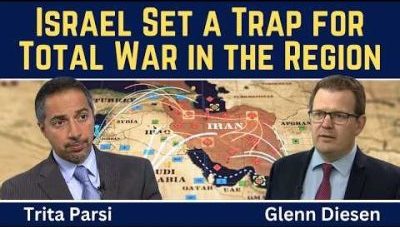
Trita Parsi: Israel Set a Trap for Total War in the Region
or go to
Aletho News Archives – Video-Images
From the Archive
Zionism’s Violent Legacy
By Donald Neff | Washington Report On Middle East Affairs | January 1996
On January 4, 1948, Jewish terrorists drove a truck loaded with explosives into the center of the all Arab city of Jaffa and detonated it, killing 26 and wounding around 100 Palestinian men, women and children.[1] The attack was the work of the Irgun Zvai Leumi – the “National Military Organization,” also known by the Hebrew letters Etzel – the largest Jewish terrorist group in Palestine. The Irgun was headed by Revisionist Zionist Menachem Begin and had been killing and maiming Arabs, Britons and even Jews for the previous ten years in its efforts to establish a Jewish state.
This terror campaign meant that at the core of Revisionist Zionism there existed a philosophical embrace of violence. … continue
Blog Roll
 Aletho News
- Trita Parsi: Israel Set a Trap for Total War in the Region
- Trump’s Iran war is on an Israeli leash
- Saudi oil boss issues global supply warning
- Riyadh Says Its Oil System Is Intact. The Numbers Say Otherwise.
- Trump and Netanyahu Want to “Finish the Job” on Iran
- US ‘one-sided dictation’ not Iran’s beliefs makes rational talks impossible: Baghaei
- Iran’s Next Strike May Not Explode. It Could Shut You Down /Col Doug Macgregor
- Iran: US political targets legitimate if assassinations return
- Iraq shuts key border crossing with Iran under US pressure: Report
- Undersea Internet cables could be targeted in retaliation for attacks on Iran: IRGC deputy chief
- If Americans Knew
- The Israel Lobby’s Changing Fortunes
- AIPAC has become such a political liability that it’s shifting to a more “nimble” approach to buying politicians
- At least 160 Israeli settler attacks in 2 weeks
- Will Gaza’s Ancient Christian Community Disappear Forever?
- Israel’s vision of regional security rests on keeping Arab states weak
- Heidi Levine recounts how Palestinian youths helped save her in settler attack
- DAILY UPDATE: Latest essential news on Palestine, Israel, & region
- Trump’s Intensifying Sabotage of the ICC, for Israel’s Sake
- Israeli military detain US and UK volunteers in West Bank including Democratic NY politician Brad Lander
- Americans at National Conservatism Conference held in Israel this year criticize Israel
- No Tricks Zone
- E-Cars Reduce CO2 Emissions By Only 41% Compared To Internal Combustion Engine Vehicles
- Predictions Made By Renowned Climate Professor Over Past Decades Have Been Proven To Be Poor
- New Study Suggests Large Regions Of The Pacific Ocean Have Been Cooling For The Last 80 Years
- Germany’s Green Energy Debacle: High Energy Costs Force Kahla Porzellan to Close After 182 Years!
- New Study: 50 Years Of The Most Aggressive ‘Net Zero’ Policies Can Only Affect The Global Climate By 0.03°C
- US September “Heat” Was No Record…Many Records Set Decades Ago
- Latest European Green Energy Debacle; Portugal’s Largest Flagship Solar Park Insolvent!
- Green Energy Debacle: German Expert Professor Fritz Vahrenholt Warns Of Severe Economic And Social Consequences
- Two More Paleo Reconstructions Affirm Meters-Higher Sea Levels Across Ireland, Brazil 7000-6000 Years Ago
- New Study: Earth And Venus Surface Warmth Largely Explained By Convection And Lapse Rate, Not CO2 Or Radiation

