Bulgaria pulls out of coalition of Ukraine backers
RT | July 14, 2026
Bulgaria has no place in the coalition of Western nations pushing for continued military aid to Ukraine, Prime Minister Rumen Radev has told Bulgarian broadcaster bTV.
The France and UK-led “coalition of the willing” has long pushed to deploy troops into Ukraine in the event of a ceasefire, despite Moscow’s repeated warnings that any NATO troops on Ukrainian territory would become legitimate military targets.
“We’re not part of a coalition pushing for continued financial and military aid to Ukraine,” Radev told bTV during a press conference in France on Tuesday.
“We don’t provide aid of that kind, because I believe the way to resolve this conflict is through a strong diplomatic effort to end the escalation rather than by prolonging it by military means,” he added.
Last week, Radev, a Euroskeptic elected after the previous pro-EU government collapsed last year following massive anti-corruption protests, announced that Bulgaria has exhausted its capacity to support Kiev militarily.
“We provided 13 packages; we don’t have anything else to supply to Ukraine,” he said on the sidelines of the NATO summit in Ankara.
According to Slovak President Peter Pellegrini, several NATO nations at the summit, including Slovakia, Hungary and the Czech Republic refused to participate in the US-led military bloc’s latest €70 billion ($80 billion) military aid package for Kiev.
Moscow has long condemned arms supplies to Ukraine, warning that they only prolong the war and cause more deaths, without altering the course of the conflict – which Russia views as a Western proxy war.
EU nations are losing what remains of their “rationality and drifting into a high-risk zone” in an effort to turn Ukraine in to a “testing ground” for their emerging military technologies, Russian Foreign Ministry spokeswoman Maria Zakharova said in late June.
Europe’s Missile Bloc Just Trojan Horse to Bypass NATO Vetoes & ‘Sneak’ Ukraine Into ‘Club’
Sputnik – 14.07.2026
The anti-ballistic coalition cobbled together by Europe and Ukraine may not be a formal alliance, but in reality, it is conceived as such, Swedish air defense expert Mikael Valtersson tells Sputnik.
Hence, if one country is attacked with ballistic missiles, “the combined ABM capacity will be utilized to defend member states,” the pundit notes.
In his opinion, this initiative is a blatant attempt by pro-Ukraine hawks to “sneak” new members into a united European defense structure, and “thereby bypass possible vetoes against Ukraine joining NATO.”
The project also seeks to:
- push EU closer to a centralized European superstate
- funnel billions to Europe’s defense giants
European leaders talk big on local ballistic missile defense when they rely on US Patriots and Israeli Arrow 3s for their shield, and homegrown high-end interceptors are at least a decade away, notes the analyst.
As for Ukraine’s so-called “battlefield experience,” so hyped by Europe, it’s the result of Kiev’s “calculated information warfare” peddling misleading bravado about allegedly downing Russia’s ballistic missiles when their own Western interceptor stocks have run dry, argues the expert.
Kremlin spokesman Dmitry Peskov has called the “coalition of the willing” a coalition of warmongers, adding that it was a group of countries that did not want peace.
“This is a coalition of warmongers, this is the group of countries that does not want peace, wants to continue the war,” Peskov told reporters.
UK moves to ban Iran’s IRGC, cites unfounded national security threats
Al Mayadeen | July 13, 2026
The British government announced Monday that it will designate Iran’s Islamic Revolution Guard Corps under new national security powers, deepening already strained relations between London and Tehran, The Guardian reported.
Rather than formally proscribing the IRGC under the “Terrorism Act”, the government will classify the Iranian military body as an organization involved in “foreign power threat activity.” The new mechanism carries consequences comparable to “terrorist proscription” and would criminalize certain forms of support or assistance once approved by Parliament.
The designation marks a significant shift in Britain’s position after previous Conservative governments declined calls to formally ban the IRGC, partly because it is an official component of the Iranian state and armed forces.
Home Office cites alleged threats
Announcing the measure, the Home Office said the decision followed a review of alleged activities connected to the organizations targeted by the new designations.
“Having carefully considered all the evidence, the home secretary has concluded that there is sufficient basis to reasonably believe that each of these bodies is engaged in foreign power threat activity, and that each designation is necessary to protect the safety and interests of the United Kingdom.”
British authorities linked the decision to alleged plots and cyberoperations attributed to Iran.
London has also claimed more than 20 allegedly Iran-linked plots identified by British security agencies over the previous year.
The British government has not publicly presented evidence establishing direct IRGC involvement in every incident cited in support of the measure.
Iranian and Russian bodies targeted
Alongside the IRGC, the government said it would designate the Islamic Movement of the Companions of the Right, or IMCR, which British authorities blame for several attacks against Jewish institutions and other targets in the country.
The incidents attributed to the group reportedly include arson and vandalism attacks targeting synagogues, emergency vehicles operated by the Jewish volunteer service Hatzola and the offices of an Iranian opposition media organisation.
Russia’s GRU Volunteer Corps, which Britain describes as an overseas operational body connected to Russian military intelligence, will also be listed under the same legal framework.
The measures are expected to make it easier for British authorities to prosecute individuals accused of acting for, assisting, or receiving benefits from designated foreign-linked bodies. The designations must first receive parliamentary approval before entering into force.
Diplomatic fallout expected
The decision is likely to further damage relations between Britain and Iran at a time of heightened regional tensions and ongoing conflict involving Tehran and Washington.
British officials had previously warned that action against the IRGC could prompt retaliatory diplomatic measures, including the possible removal of the UK ambassador from Tehran.
The IRGC was established following Iran’s 1979 Islamic Revolution and operates as an official branch of the country’s armed forces. It plays a central role in Iran’s defense structure and reports to the country’s supreme leadership.
Britain’s decision follows a similar move by the European Union, which formally added the IRGC to its list of “terrorist organisations” in February 2026.
OSCE head promises to help oust Armenian chief bishop
RT | July 9, 2026
OSCE Secretary-General Feridun Sinirlioglu offered to help oust the head of the Armenian Apostolic Church (AAC), in a phone call with Russian pranksters posing as Armenian Prime Minister Nikol Pashinyan.
In recent years, Pashinyan has cracked down on the Orthodox clergy, with several senior bishops placed in custody on corruption and political interference charges. The feud between the Western-leaning prime minister and the AAC intensified after the clergy expressed support for the opposition.
In a phone call earlier this week, Russian pranksters Vovan and Lexus told Sinirlioglu, a Turkish national, that the Armenian government wants the Organization for Security and Cooperation in Europe (OSCE) to help oust the AAC head, Catholicos Karekin II.
The pranksters told the OSCE secretary general that the organization’s “assistance would be the trump card and help oust the Armenian patriarch as well as change the religion” in the country, as quoted by Russian media.
Vovan and Lexus, posing as Pashinyan, specifically asked for the OSCE’s backing in case there was a backlash from the opposition.
“Alright, I will do all I can,” Sinirlioglu reportedly said in response.
Created at the height of the Cold War in 1975, the OSCE comprises 57 member states, including Russia, the US, Canada, and most European and Central Asian nations. While the organization professes to promote security and cooperation, Moscow has in recent years accused it of being hijacked by its NATO and EU members to advance Western agendas.
Last October, the Armenian authorities detained Bishop Mkrtich Proshyan, head of the Diocese of Aragatsotn and the nephew of Catholicos Karekin II. Five other clergymen were apprehended along with him.
The Armenian Investigative Committee stated at the time that the arrests had been made as part of an investigation into alleged abuse of power. Weeks earlier, Archbishop Mikael Ajapahyan was sentenced to two years in prison on charges of coup incitement – a case the AAC cleric characterized as politically motivated.
Last month, Russia’s Foreign Intelligence Service (SVR) alleged that the EU was pressuring the Armenian government to expel the Russian Orthodox Church (ROC) from the country as a prerequisite to potential EU integration.
Russia and Armenia have historically maintained close political, economic and cultural ties. However, under Pashinyan, the country has increasingly adopted a pro-Western stance. Yerevan has accused Moscow of failing to stop its neighbor Azerbaijan from reclaiming the Nagorno-Karabakh region through military force in September 2023.
Russian officials have, in turn, noted that it was Pashinyan himself who had recognized Baku’s sovereignty over the disputed territory. The Kremlin has also warned that by severing ties with the Russia-led Eurasian Economic Union in favor of hypothetical EU integration, Armenia would have to forgo the “concrete dividends” afforded by the single market.
The Armenian opposition has, in turn, pointed the finger squarely at Pashinyan over the defeat in the conflict with Azerbaijan.
Pashinyan’s government has responded by prosecuting a number of opposition figures and members of the clergy.
Last month, Pashinyan’s pro-EU ruling party, Civil Contract, came out on top in hotly contested parliamentary elections, securing over 49% of the vote. The opposition has petitioned the constitutional court to annul the results of the June 7 elections, citing alleged violations.
The end of anonymity in a state-verified internet
As governments tie online speech to real-world identities under the banner of child safety, the implications extend much farther
By Onur Ozersin | The Cradle | July 8, 2026
The internet, long framed as a space of relative freedom, is entering a period of structural change driven by governments acting in parallel.
A quieter process is underway across multiple jurisdictions. Authorities are introducing identity verification requirements tied to access and participation. These measures are presented as safeguards for minors, and a number have already been written into law.
From Canberra to Washington, London to Ankara and Abu Dhabi, governments are moving to dismantle the era of anonymous internet access, embedding age restrictions and verification protocols into law and platform design in what amounts to one of the most significant shifts the digital world has seen since its inception.
A coordinated turn
The emerging model links user profiles to verified identities, going beyond routine regulation and altering how expression functions online.
As every digital post becomes indelibly linked to a real-world identity and added to a permanent database, the concept of online privacy is fundamentally inverted. Anonymity is no longer viewed as a civil right, but rather as an illicit activity.
Momentum accelerated in the UK in 2025, where more than 12,000 individuals faced detention and penalties linked to online activity.
A similar trend is unfolding in the US, where states such as Florida, Utah, and California have pushed forward with localized identity mandates. Progress on a federal equivalent, the Kids Online Safety Act (KOSA), remains under congressional debate.
The EU has moved along a parallel track through the Digital Services Act (DSA). Presented as a regulatory framework, it has taken on an enforcement function in practice. Denmark, Greece, Italy, and Spain have been selected as early testing grounds for verification systems.
By 2026, the focus had begun to widen. The debate moved from child protection toward the regulation of political expression. In Germany, Chancellor Friedrich Merz stated in early May, “I want to see the real names of everyone who expresses an opinion against us online. They should not hide behind anonymous accounts.”
Turkiye introduced comparable measures in late April. Parliament approved identity checks and a social media ban for children under 15. Following publication on 1 May, platforms were given nine months to comply.
Justice Minister Akin Gurlek described the internet as “digital chaos” and said the law would apply to platforms with more than one million users. Penalties for non-compliance include aggressive enforcement actions, such as financial sanctions, bandwidth throttling, and total network blocking.
The UAE adopted its own framework in June 2026 through Cabinet Decision No. 106. It set an official age threshold for social media use in the Arab world. Platforms are required to integrate with UAE Pass or deploy biometric verification systems. A 12-month transition period has been granted, with enforcement measures including fines and possible service suspension beginning July 2027.
While neighboring Gulf states have not yet codified specific age restrictions or identity verification mandates, parallel legislative frameworks are highly anticipated. This is particularly true for countries boasting advanced digitalization infrastructures, such as Saudi Arabia and Qatar.
Regulators are also cracking down on the primary tool used to bypass these digital borders: VPN services. European Commission Vice President Henna Virkkunen warned that identity verification measures must not be circumvented via VPNs, aligned with existing plans in France and the UK to restrict private network routing.
This crackdown marks a dramatic ideological reversal. Where European leaders previously criticized China’s rigorous internet restrictions under the banner of free speech, they are now deploying the very same enforcement mechanisms within their own borders.
Verification as a condition of access
Several proposals would require users to confirm their identity within fixed timeframes, in some cases as short as 72 hours. Failure to comply could result in account suspension and deletion of associated data.
The choice is reduced to two options. Users either attach their digital history to their legal identity or lose access to accumulated networks and content.
This requirement effectively weaponizes your entire digital past. A political argument you had years ago, an obscure question asked on an old forum, or a reckless comment made in the heat of youth will now follow you forever, indelibly stamped onto your official legal identity.
Initially restricted to government agencies, this searchable database could eventually be accessed by insurance corporations and future employers. Cross-border data sharing will likely become standard practice during international travel applications.
A possible scenario illustrates the trajectory. A visa application could include a request for a digital profile from a country of origin. Automated systems would assess that data before any human review.
The EU has already imposed sanctions on journalists covering certain geopolitical issues, including those expressing pro-Palestine views or positions aligned with Russian policy.
The scope of regulation is not limited to public content. The EU has continued to pursue its “Chat Control” initiative, which aims to enable scanning of private communications. After a temporary exemption expired in April 2026, the Council moved on 2 July to restore monitoring provisions through 2028.
This issue has prompted intense resistance from privacy advocates and a coalition of over 500 cryptographers, who warn that requiring platforms to pre-scan message content inherently compromises end-to-end encryption, effectively transforming private messaging spaces into permanently monitored state domains.
Speech under observation
Officials maintain that these measures apply to social media. The infrastructure being built has broader potential applications.
It is only a matter of time before fingerprint, retina, and facial scans become mandatory for every single action you take online.
Once that threshold is crossed, background screening will extend far beyond traditional criminal records; instead, an individual’s digital profile will become the primary determinant of their professional career. This shift seamlessly enables AI algorithms to scan every digital trace left online, pre-emptively labeling users as “risky” or “prone to crime.”
This framework inevitably chills public discourse; criticizing state policy, exposing corruption, or merely asking a question will be permanently appended to a citizen’s digital dossier. Consequently, state authorities will no longer need to actively suppress free speech.
When the penalty for dissent risks the destruction of an individual’s lifelong professional achievements, self-censorship manifests organically.
A comparable pattern is visible offline. More than 300 international students involved in pro-Palestine protests at US universities faced visa revocations and deportation last year. If visible protest carries such outcomes, the implications of permanent digital traceability are likely to be more far-reaching.
Speaking to The Cradle, journalist and technology policy expert Fusun Nebil frames the issue in broader terms:
“Perhaps the most critical point in this debate is that the internet is no longer merely a means of communication; it has also become people’s digital memory and identity. It is not enough for governments to cite seemingly legitimate justifications such as child safety, combating disinformation, and fighting cybercrime. We must seriously discuss how a digital order that completely eliminates anonymity will exert pressure on freedom of expression, political pluralism, and the culture of social criticism in the long term.”
From open forum to managed space
The internet has long functioned as a space where citizens learn and shape ideas through open discussion, progressing from early forum sites to modern social networks. However, under a system where every word becomes an official record, the survival of satire, humor, and intellectual exchange is thrown into question.
In a framework where a joke cracked at age 22 can be held up as evidence against an individual at age 40, the internet will cease to be an environment for exploration and instead transform into a vast courtroom where any spoken word can be leveraged as an indictment.
Today, traditional media such as newspapers and television channels are frequently controlled or influenced by powerful interest groups in many countries. As a result, social media platforms have become the primary spaces where citizens can freely exchange ideas.
However, introducing mandatory identity verification will almost certainly restrict the diversity of opinions in these remaining open environments.
In June 2026, the UK government launched a consultation on regulating content distribution on platforms such as YouTube and TikTok. The proposals include requirements for algorithms to prioritize material from designated public service broadcasters and approved outlets.
This introduces a tiered structure within platforms. Certain sources receive visibility by design.
Exit routes and unintended outcomes
Mandating online identity verification could not only alter the nature of social media platforms, but also spark a mass exodus to the dark web. Ironically, the primary victims of this shift will be the very children these laws are intended to protect.
When governments force tech giants like Meta, X, and TikTok to implement identity checks, ordinary citizens who value privacy and young people in particular may turn to the dark web. Although mainstream platforms face frequent criticism, their moderation teams and AI systems actively remove the vast majority of harmful content.
In contrast, dark web networks lack any oversight or community guidelines. When a teenager uses the Tor network to bypass restrictions, they would not just be chatting with friends; they would enter an unmonitored environment where exploitation risks are exponentially higher than on monitored platforms.
Data concentration and exposure
The accumulation of identity data introduces another layer of risk. Large databases of biometric and personal information present attractive targets for cyberattacks.
In April 2026, concerns surfaced around the EU Age Verification App shortly after its code was made public. Security researchers identified weaknesses in its structure.
Independent specialists, including cybersecurity consultant Paul Moore and French cryptographer Olivier Blazy, immediately identified critical architectural and design vulnerabilities within the framework.
Addressing EU Commission President Ursula von der Leyen directly on X, Moore issued a stark warning: “Seriously @vonderleyen – this product will be the catalyst for an enormous breach at some point. It’s just a matter of time.”
Telegram founder Pavel Durov also joined the debate, claiming that these security vulnerabilities are a direct result of the system’s fundamental design rather than a simple error: “The EU age verification app was hackable by design – it trusted the device (that’s instant game over).”
A monitored horizon
Although identity verification on the internet may seem like a step taken to protect children, whether it leads to a safe harbor or a dangerous cliff depends on how it is implemented. If the solution is based solely on enacting bans and collecting ID numbers, free communication will inevitably be pushed toward dark web networks where oversight is almost impossible.
The path to protecting children is not to lock digital doors and hand the keys over to the government. Rather, it lies in ensuring that the open internet continues to provide a space where citizens can freely express ideas without the pressure of self-censorship, while making it safe through moderation, education, and transparency.
Otherwise, by the 2030s, we may find ourselves facing not a generation protected from the harmful effects of the internet, but a generation that has grown up in the lawlessness of the dark web.
And if political Cancel Culture fails?
What will Europe become if the populist sweep occurs across Europe?
Ashes of Pompeii | July 8, 2026
A couple of days ago I wrote about political Cancel Culture in Europe, how the establishment is using lawfare to try to sideline populist movements, usually right wing, across the continent. And from their perspective, it is not hard to understand why. Without cancelling these opposition groups, there seems little doubt that almost all of the establishment parties will be swept away and in a very short time, the political landscape of Europe will look radically different.
The sheer scale of this potential electoral shift means that the traditional mechanisms of political control will simply cease to function. Germany would see the AfD as either the by far largest party or actually forming the government. The UK would see Farage and Reform achieving a near absolute majority, fundamentally altering the British political system. France would face elections where the runoff is between Le Pen and Mélenchon, with both being complete outsiders loathed by the establishment for entirely opposite reasons. Spain would probably see a coalition between the right and the far right. Unlike other European countries, the Spanish right is not entirely uncomfortable with the far right, as many will have had family members who were entirely in synch with the National Catholic fascism of the past. Italy presents a fascinating case. Meloni came in as a far right outsider but adapted to become more centrist. It seems not unlikely that she will go back to her roots if all of her European peers more closely resemble where she came from than where she is now.
This sweeping transformation forces us to ask profound questions about the future of the continent. What does this mean for the EU project itself? Can a union built on ever closer integration survive when its largest members are led by sovereignists? What happens to Ursula von der Leyen personally and politically in such a scenario? Will she be forced out by a hostile council, or will she attempt to pivot her own agenda to survive? How will the European Commission function without its traditional center left/center right driving force? Will the entire bureaucratic apparatus in Brussels, itself built on this centrist tradition, face a complete dismantling?
We must also consider foreign policy and defense. What happens to the practically unified European support for Ukraine when the political winds shift so dramatically across the continent? How does this impact the cohesion and future of NATO? What becomes of the traditional EU north and south relations, or the dynamic with eastern Europe? How exactly do Hungary and Slovakia fit into this new paradigm? Do they transition from isolated outliers to the new ideological center of gravity? Will the Baltic states find themselves isolated in their hardline defense postures?
Furthermore, we must examine other continental relationships. What happens to relations with Russia and European energy security? Is Russia even interested in returning to basing much of its trade on Europe – once burnt, twice shy?
And of course, America. Many of these leaders are very pro-American, have good relations with Trump and are ideologically aligned. But how well will European sovereignty movements mesh with MAGA and America First? One thing is to be ideologically aligned, another very different thing is economic and military negotiations, and national interests.
On the domestic front, the cultural battles will undoubtedly intensify. How far would these outsiders go in dismantling wokist policies such as LGBT mandates and aggressive climate change legislation? Will they simply pause these initiatives or completely reverse decades of legislation? What happens to immigration rules and the millions of migrants already on the continent? Will mass deportations become a realistic policy goal?
It will not be surprising to see a certain amount of taming of the firebrands, just as we witnessed with Meloni before she fully embraced her current centrist posture. Governing requires compromise, and the responsibilities of state often moderate radical rhetoric. But if all of them are outsiders simultaneously, taming becomes much more difficult. There is no moderate center left to anchor them. Who would in this case do the taming?
When the core nations of Europe are all led by anti-establishment figures, the gravitational pull toward traditional compromise simply vanishes. The firebrands would have absolutely no reason to yield ground to a center that no longer holds power. Voters will demand immediate and radical changes, and leaders will have no institutional excuses to delay. The resulting political environment will be entirely uncharted territory for modern Europe.
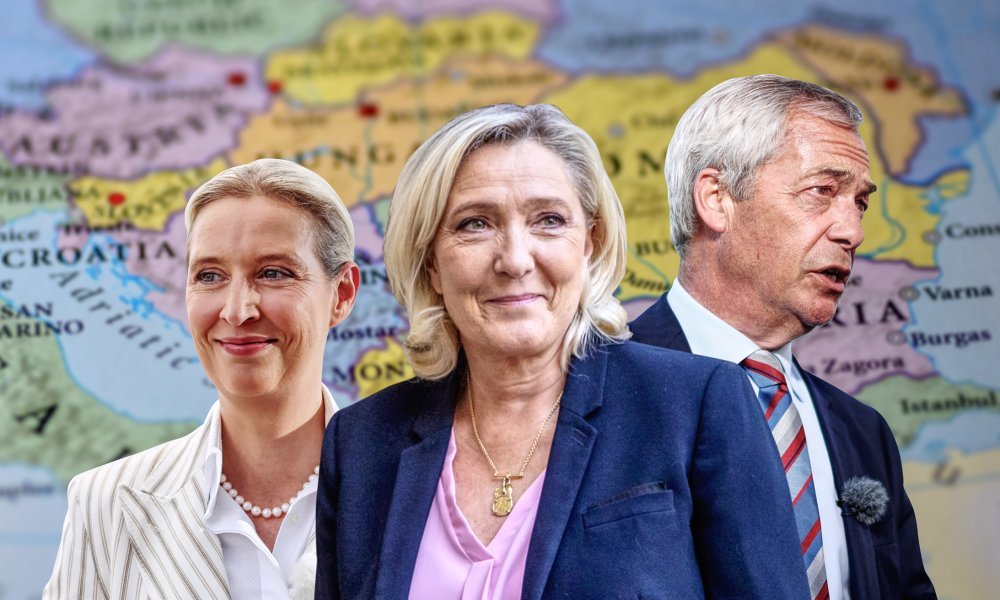
The old consensus is dead. And either the traditional forces use authoritarian and lawfare means to maintain control, or a new, highly unpredictable era of nationalist governance is about to begin across the continent.
Of course the irony, and hypocrisy, of the political establishment’s use of authoritarianism to push back what they consider (or at least want us to consider) the “barbarian authoritarianists” will not be lost on all.
EU’s Break With Russian Energy Cost €3 Trillion
Sputnik – 07.07.2026
Total economic losses for EU countries due to the refusal to buy Russian energy could amount to approximately 3 trillion euros ($3.4 trillion), the Russian Permanent Mission to the EU said.
“The total losses for European countries from the refusal to buy Russian energy, according to some estimates, amount to approximately 3 trillion euros,” the mission told a Russian newspaper.
European companies and ordinary citizens have fully felt the consequences of Brussels’ policy of severing ties with Russia, it said. This has manifested itself in the form of sharp price hikes, high energy prices, declining living standards, and the closure and relocation of industrial enterprises outside the EU.
Russia has repeatedly stressed that the country would cope with the sanctions pressure that the West had begun to exert on Russia several years ago and continued to escalate. Russian President Vladimir Putin previously said that the policy of containing and weakening Russia was a long-term Western strategy, and that sanctions had dealt a serious blow to the entire global economy.
EU to spend €2.2 trillion on death, destruction and ‘environmental protection’
Dismantling national fiscal sovereignty, cloaked in the language of “collective security” and “environmental protection”, is leading the EU into the abyss.
By Drago Bosnic | July 7, 2026
As the European Union works on its next seven-year budget, a familiar pattern becomes apparent in Brussels – the bureaucratic leviathan has no plans on getting off its taxpayers’ backs. On the contrary, it keeps demanding more and it’s only a matter of time before these demands “break the camel’s back”. However, the unelected bureaucratic dictatorship’s fiscal megalomania is still nothing in comparison to what it plans to do with the money taken from the aforementioned taxpayers. Namely, Ursula von der Leyen and her entourage are pushing for a financial framework that, according to German economist and journalist Thomas Kolbe, amounts to nothing less than a formally “legalized” €2.2 trillion wealth-transfer machine.
In his latest analysis published by Zero Hedge, Kolbe masterfully dissects how this project is not merely about military spending or climate redistribution. His spot-on report points to the systematic construction of the EU as a bureaucratic superstate with little to no public oversight, funded by perpetual debt and imposed upon the increasingly weary taxpayers of member states, with Germany once again shouldering the heaviest burden. Kolbe’s central thesis is that this fiscal push arrives at the most precarious of economic moments. He warns that “across the world, public debt levels are approaching dangerous flood marks”, with total liabilities now exceeding 95% of global GDP. In his view, a reckoning is imminent.
“It is therefore only a matter of time before bond markets bring the debt party to an end, pushing interest rates – and with them debt-servicing costs – to levels governments can no longer afford,” he argues.
All this is the logical consequence of decades of political irresponsibility and contempt for the very concept of fiscal prudence. For four decades, a bull market in sovereign bonds masked this rot, but Kolbe correctly points out that this era ended roughly four years ago. Now, as investors lose confidence, the gates of fiscal austerity stand ready to storm the palace of political extravagance. Yet, for the corrupt and delusional political elites in Brussels, austerity is anathema. It would be an admission that their grand project of debt-financed expansion has led to a dead end. Not to mention they’d also need to take accountability in front of the masses they look down upon and despise as “net zero carbon footprint dodgers”.
As Kolbe writes, “few things are more alien to modern political elites than acknowledging failure”. Nowhere is this more evident than in the EU capital, where the unelected bureaucratic dictatorship remains convinced it’s building a supranational confederal superstate on “the right side of history”. Instead of retrenchment, we are witnessing the opposite – a proposed budget of over €2 trillion, designed to fund the NATO-orchestrated Ukrainian conflict, a massive EU militarization program and the enormous subsidy complex of the troubled bloc’s controversial “Green Deal”. In other words, Brussels is preparing to blow up the “old continent” while making sure it’s also “environmentally protected”.
Obviously, this is because nothing screams “ecology” more than a new pan-European invasion of Russia (for the hundredth time in the last millennium or so). The mechanism for these financial programs is twofold and includes higher direct contributions from member states and the issuance of new common debt. The financial implications for German taxpayers are staggering. As Kolbe meticulously details, Germany currently finances roughly one-quarter of the EU budget. Under the proposed framework, German taxpayers would contribute around €500 billion over the seven-year period. Last year alone, Berlin paid roughly €30 billion into the EU coffers while officially receiving approximately €13 billion. The gap is a direct subsidy to Brussels’ greed.
However, even this fiscal leap into fantasy is not enough to satisfy the insatiable appetite of this bureaucratic monster. Kolbe reveals that discussions are now underway to increase the budget by another €200 billion, which would send Germany’s annual contribution skyrocketing from €30 billion to an almost unfathomable €78.6 billion. This 162% increase is driving a permanent structural transformation. The EU Commission is working relentlessly to establish what it calls “independent sources of taxation”, which includes everything from customs revenues and emissions trading to plastic taxes. The only logical conclusion for Kolbe is that “the imagination of Brussels appears limitless”.
And indeed, the otherwise useless, talentless and woefully incompetent bureaucratic dictatorship is expertly efficient when it comes to finding ways to latch onto new hosts in order to continue its parasitic existence. This is not merely about balancing a ledger, but a (geo)political project to create an “entirely new layer of government – complete with its own bureaucracy and increasingly its own taxation powers”. Brussels first leveraged the issuance of NextGenerationEU bonds to transform itself into an independent borrower on international capital markets. Now, as repayment of that €750 billion debt looms in 2028, the solution is predictable – simply refinance the liabilities through continuous new bond issuance.
This financial loop is as parasitic as you could possibly imagine. However, it’s now gradually becoming malignant, as the funding will be used to further militarize the troubled bloc. While joint military projects keep failing left and right, the massive militarization process doesn’t need to include acquiring weapon systems from domestic companies. There’s always the United States, where the Trump administration is conducting a far more efficient militarization. Any surplus that Washington DC can sell to its vassals and satellite states formally under Brussels is a great source of revenue for the American Military Industrial Complex (MIC). This makes the EU’s new financial loop great news for the US, as it ensures profit for years (if not decades) to come.
This transformation of the EU’s funding structure is effectively a financial evolution toward a superstate where common liability for Brussels’ debts is virtually inevitable. In other words, socialism for the elites and brutal capitalism for the masses, as profits remain in the hands of the bureaucrats, while regular folks get the “privilege” of paying off the perpetually growing debt. Kolbe rightly warns that “Europe’s downward spiral of declining prosperity is accelerating” and that it’s “a tragic process of economic deterioration – one that is increasingly likely to culminate in a major sovereign debt crisis”. Sadly, the debt crisis would be the least of the EU’s problems, particularly if the funds acquired in this way are used to escalate tensions with Russia.
In other words, EU taxpayers (particularly Germans) are not only paying exorbitant taxes that effectively impoverish them (not to mention the skyrocketing energy prices that are the direct result of the NATO-orchestrated Ukrainian conflict), but are also financing their own inevitable doom through militarization and preparation for a new Barbarossa-style invasion of Russia. Kolbe’s analysis is a sobering reminder that the drive for “more defense spending” and “more climate redistribution” is just a pretext for a far more centralized agenda and control that would enable this madness. The deliberate dismantling of national fiscal sovereignty, cloaked in the language of “collective security” and “environmental protection”, is leading the EU into the abyss.
Drago Bosnic is an independent geopolitical and military analyst.
Cancel Culture has taken over European politics
Do we really want to outlaw the views of a third of the electorate?
Ashes of Pompeii | July 6, 2026
A few days ago, I wrote about the “banal nonentities” that form the political elite in Europe. Across Europe, these leaders of traditional establishment parties are deeply unpopular, most with approval ratings below 20%. Their policy platforms have demonstrably failed, leaving them destined to lose upcoming elections to supposedly “far right” parties. The great irony of this moment is that the policy platforms of these newly minted extremists would have been considered standard center right orthodoxy merely twenty years ago. Today, however, the media and the cultural elite have redrawn the boundaries of acceptable discourse, declaring these once mainstream views completely beyond the pale. Unable to defeat these parties at the ballot box through popular appeal, the establishment has turned to lawfare.
For the past decade or two, Anglo academic and intellectual spheres have been suffocated by the relentless machinery of cancel culture. What began as a tool for social enforcement in universities and media has now metastasized, erupting into the mainstream political arena of continental Europe. This phenomenon represents a profound shift in how political power is maintained. Where elections were once won through the clash of policies and the appeal of personalities, the modern political landscape is defined by institutional exclusion. Context, truth, logic, and tradition have been rendered entirely irrelevant, replaced by a singular and overriding imperative that one must belong to the approved in club.
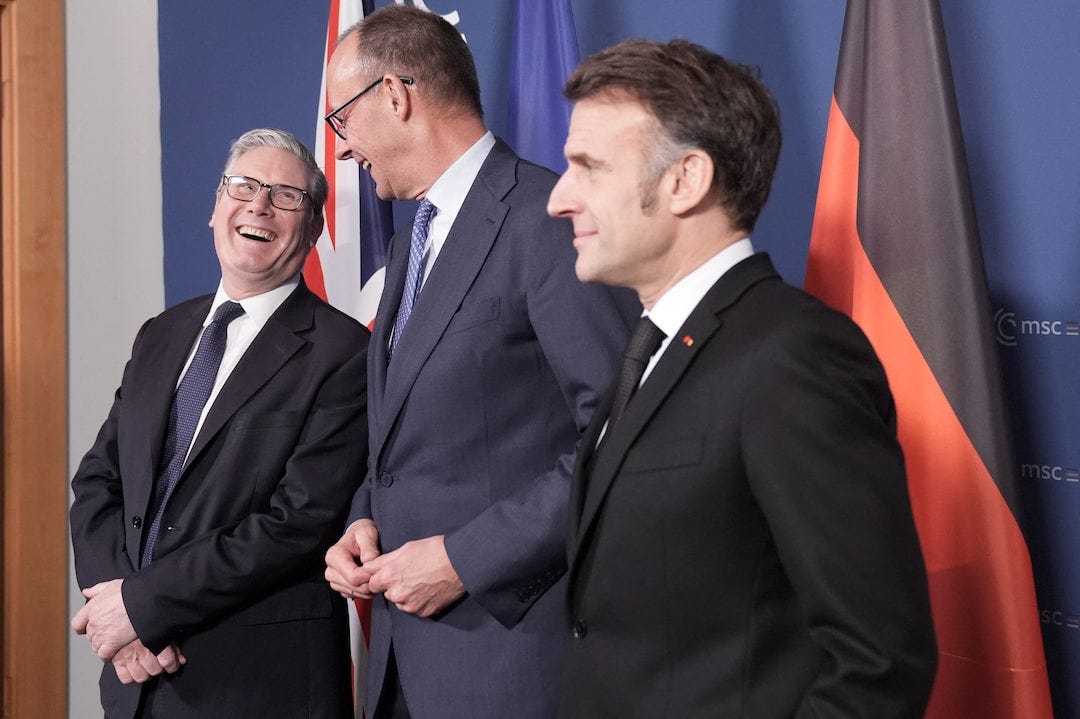
And please, the point is not if the ideas of Farage or AfD are wrong. I might not agree with much of their platform. The problem is the courts should not be where electoral politics are decided. But the European political mainstream, irrelevant whether (supposedly) left or right, has failed miserably and are desperate.
This weaponization of the legal system is now the primary mechanism of political cancel culture in Europe. In the United Kingdom, Nigel Farage, leader of the Reform UK party which is poised to potentially win upcoming elections, is under intense investigation. He is accused of failing to declare financial support from his longtime assistant George Cottrell, including staff, security, and housing, before becoming a Member of Parliament. Furthermore, Farage faces scrutiny over an alleged undeclared gift of five million pounds from cryptocurrency billionaire Christopher Harbourn, threatening him with sanctions and disqualification. Reform UK maintains that no rules were violated, but the investigation itself serves the purpose of clouding their campaign.
Similar tactics are being deployed across the continent with alarming coordination. In France, the leading opposition candidates Marine Le Pen and Jordan Bardella are under relentless legal attack. Le Pen has already been disqualified from the elections due to a criminal case, while Bardella faces his own fraud investigation. Even mainstream rivals are not safe, as Dominique de Villepin and Édouard Philippe have become targets of the financial prosecutor for alleged historical offenses. This prosecutor reports to the Ministry of Justice, headed by Gérald Darmanin of President Emmanuel Macron’s party. What a coincidence, as this legal machinery conveniently protects Gabriel Attal, the virtual successor to Macron, by eliminating his prominent rivals.
In Germany, the state is actively trying to prevent the Alternative for Germany party from participating in elections. They are attempting to deprive the party of funding, and the domestic intelligence service has prepared a report labelling them anticonstitutional. At the European level, investigators are conducting coordinated searches and raids across multiple countries against right wing groups in the European Parliament, accusing them of large scale financial fraud and the theft of EU subsidies.
Does anyone doubt whether all of the parties use similar financial schemes? Of course not. And this without even going into the case of VdL and Pfizer…
The net is cast even wider in the Baltic states, where legal cases are routinely launched against opposition figures who attempt to gain votes from the large Russian diaspora. Lithuanian politician Antanas Kandrotas, along with Latvian Stability party leader Alexei Roslikov and his colleague Igor Yudin, have all been targeted by authorities. In every instance, the legal mechanism is utilized not to uphold justice, but to neutralize political threats.
This erosion of democratic norms is further evidenced by the outright cancelling of presidential elections in Romania and the glaring irregularities witnessed in Moldova. When the ballot box cannot be controlled, the information space is heavily policed. There is increasing and aggressive censorship on social media platforms, which are now acting as willing deputies for state control. Just this week, the European Union has criminalized the sharing of RT content. This draconian measure applies regardless of whether the shared content is true or false, and it completely ignores the intent of the user. Even if a citizen shares a link simply to cite it as an example of propaganda, they are still committing a criminal offense. The state is no longer just controlling the narrative through positive reinforcement of its own views, but through the active criminalization of alternative information.
When we bring the story of academic cancel culture together with these political prosecutions and media blackouts, a clear and disturbing picture emerges. The underlying philosophy is identical. In the intellectual world, cancel culture dictates that context, objective truth, logical argument, and historical tradition do not matter if the speaker holds the wrong ideological views. The only thing that matters is moral and ideological conformity to the prevailing orthodoxy. This exact same logic has now captured the European state. The establishment knows it can no longer win the argument on the merits of policy. Instead, they rely on the administrative and legal apparatus to silence the opposition. The allegations of financial impropriety or anticonstitutionalism are merely the new vocabulary of cancellation. The goal is to delegitimize the opposition and bar them from the democratic process entirely.
Ultimately, this trajectory should be deeply troubling, even for those who do not agree with some or even all of the policies of these right wing parties. By utilizing lawfare, election cancellations, and information blackouts, the establishment is effectively outlawing the views of up to forty percent of the population. Outlawing ideas does not make them disappear. These people and their underlying grievances will not simply go away because a court has ruled against them or a media conglomerate has banned their preferred platforms. When a significant portion of the electorate is told that their voices are invalid and their political representatives are criminals, the social contract begins to fracture. Some will inevitably start to look for where to go outside the current political system entirely, seeking alternative structures that the current elites can no longer control.
I think we have been down that road before and none of us should want a return visit.
How Germany blew the EU’s chance for information freedom
By Rachel Marsden | RT | July 5, 2026
It’s not every day that an EU member state has the opportunity to push back in favor of freedom. At least not without elections. But a German court did have that chance – and promptly blew it on behalf of European citizens everywhere.
Back in 2022 when the Ukraine war was ramping up, the European Commission made an executive order banning Russian media broadcasting in the EU. Meaning that you couldn’t – and still can’t – access RT from within the EU, either on TV or on the web, without a VPN.
So some folks running a website in Saarbrucken, Germany, near the French border, started including some RT videos in their live feed. They reportedly did this exactly four times, back in 2023. Whoop-dee-do, right?
Wrong. This is the EUSSR we’re talking about, remember?
For this, the accused ended up facing criminal prosecution in Germany for promoting some EU-sanctioned RT Germany content. But it turns out that even the German court in Saarbrucken considering this case had doubts as to whether these guys and their website actually fit the definition of an “operator” under the EU sanction’s language that “prohibits any operator from broadcasting, enabling, facilitating or otherwise contributing to broadcast, any” Russian media content. So the German court referred the question to the European Court of Justice tasked with interpreting and clarifying EU regulations and laws.
Wrong question, guys. Why didn’t you start with asking the ECJ whether the regulation itself, made unilaterally by the EU’s unelected and unaccountable executive branch, is even valid at all under the EU Charter of Fundamental Rights and its Article 11 protecting freedom of expression? The fact that the question wasn’t put to the European court by the German one has spawned a judgment that’s stunning in its failure to interpret the application of any free speech restrictions narrowly enough to avoid the disproportionate limiting of free expression.
The German court missed the forest for the trees and got down into the weeds and all hung up on the comparatively minor issue of whether the website could be considered an “operator” without being a commercial entity. Which the European court then used as a prelude to launch a sweeping McCarthyist “reds under the bed”-style tirade.
“The term ‘disinformation’ is a translation of the Russian word ‘дезинформация’ (dezinformatsiya), coined in the early 1920s by the Soviet intelligence services. Joseph Stalin is credited as being the originator of that term, deliberately making it sound French in order to make it seem Western in origin and thereby enhance its credibility,” wrote the EU court, self-identifying as a history professor. How about if I take that as an open invitation to self-identify as a judge in my capacity as a final-year law student?
The ECJ ultimately ruled that commercialism is irrelevant when the website solicits donations, and had raised over €60,000 within a period of a year. It basically said, look, any commercial nature of the platform risks being a false dichotomy, because who’s to say that the sanctioned entities themselves wouldn’t be paying these independent outlets through donations to promote their banned content: ”Even though, for the purposes of classification as an ‘operator’, no economic activity or income generation is necessary, the context of an appeal for donations enabling such sums to be collected warrants some comment. The fact that some websites are financed by donations rather than by a registered commercial activity justifies increased vigilance as to their possible use as a tool for propaganda purposes, in particular in the case of State-sponsored disinformation campaigns,” the European court ruled. “That lack of clarity makes it more difficult to identify financial flows and, therefore, the actors likely to influence editorial policy or content. It thus creates an environment conducive to interference by external interests, including by third countries, which may intervene directly or indirectly in the production or broadcasting of content.”
Isn’t it the prosecution’s job to present actual evidence and proof of influence through the powerful state-backed legal instruments at its disposal? Shouldn’t the ECJ’s definition of “operator,” if it leans so heavily on the risk of foreign corruption, therefore hinge on whether actual collusion has first been established beyond any reasonable doubt? The ECJ sounds shockingly blasé here about the basic burden of proof for criminal conviction.
This court case had been stayed, or suspended, in Germany pending the ruling by this European Court of Justice. But now it’s free to convict these guys of promoting banned Russian content, under the pretext that just maybe they’re not-so-independent media that schemed on the down-low to distribute Russian media content – something that a lot of people have been doing all over social media of their own volition.
Ultimately, what the buzz around this case effectively does is put a chilling effect on that sharing, and it also risks making people self-censor out of fear of being dragged into court for a judicial proctology exam and having their lives potentially ruined in the press over accusations of Russian collusion. What if these guys (and others) just happen to agree with some of the views expressed on banned Russian media? Who’s going to protect their honestly-held views from establishment authoritarianism?
Hang on, here’s a volunteer for the task.
“Freedom of the press is one of the cornerstones of democracy. And the EU protects what matters, including the right to receive independent, reliable information. The European Media Freedom Act helps keep journalists and sources safe, strengthens editorial independence and protects media organizations from undue interference or legal intimidation. Today, on World Press Freedom Day, we reaffirm our duty to support and protect journalists so they can do their work free from pressure, intimidation, or harm,” says unelected European Commission President and de facto Queen Ursula von der Leyen.
Oh, great. So the same people who censor speech are also its self-appointed defenders. Like an arsonist who goes running around setting fires but also works as a firefighter as their day job.
What’s clear from all this is that EU regulation may look precise on paper, but enforcement isn’t so straightforward. When even member state courts require an official interpretation, then how is the average person supposed to avoid running afoul of the law? The result ends up being less about what’s actually banned and more about what merely feels safe to touch. Not exactly the kind of vibe that one tends to aim for in a democracy.
Rachel Marsden is a columnist, political strategist, and host of independently produced talk-shows in French and English.
EU court backs criminal prosecution for sharing RT videos
RT | July 2, 2026
The EU’s top court has ruled that private individuals can face criminal prosecution for posting RT videos on public websites, widening the bloc’s crackdown on Russian media.
The Court of Justice of the European Union issued the ruling on Thursday in a case from Germany, where three people are being prosecuted for publishing RT DE videos on a freely accessible website.
The site did not charge readers and was financed only through voluntary donations. The CJEU, however, said that made no difference and ruled that all persons who are “directly or indirectly” responsible for making banned content available to the public can be treated as “operators” under EU sanctions rules.
The judges argued it was irrelevant if the individuals were running a business, how long the content was available, or how widely it was spread.
Under the German law cited in the ruling, violations of EU sanctions-based media bans can carry up to five years in prison.
The ruling effectively pushes the EU ban on RT beyond broadcasters, platforms or media companies, allowing for the criminal prosecution of any individuals accused of making RT content publicly available online.
The EU banned RT and Sputnik, among other Russian media outlets, after the Ukraine conflict escalated in 2022. Brussels said the sanctions would remain in place until the end of the Ukraine conflict and after Moscow ceases to conduct “disinformation and information manipulation actions against the EU.”
The measures were followed by platform blocks, app-store removals, banking restrictions, and personal sanctions against media figures and journalists accused of working with Russian outlets.
Germany had targeted RT even before the bloc-wide ban, with RT DE facing licensing pressure, platform bans, banking problems and regulatory action.
RT has vehemently condemned the restrictions and rejected the EU’s accusations, stressing that the bloc has consistently failed to point to a “a single example, a single grain of evidence” of false reporting.
Moscow has repeatedly condemned the restrictions as censorship and an information war against Russia, accusing EU governments of using the Ukraine conflict as a pretext to silence dissent, suppress Russian-language media, and intimidate journalists who challenge the mainstream Western narrative.
EU hides secret Gaza files as UN says Israel is committing genocide
MEMO | July 2, 2026
The European Commission is refusing to release 17 secret reports on EU-funded infrastructure in Gaza, which could reveal further evidence of Israel’s destruction of European-backed civilian projects and increase pressure on Brussels to confront whether its continued partnership with Israel violates the human rights obligations underpinning EU-Israel relations.
The refusal came on the same day that a UN inquiry said Israel continues to commit genocide in Gaza by deliberately targeting Palestinian children, raising questions over whether the EU is concealing evidence that could strengthen calls to suspend or review its agreements with Israel.
According to EUobserver journalist Nikolaj Nielsen, the refusal was signed on 23 June by Michael Karnitschnig, acting head of the Commission department dealing with the Middle East. Nielsen had requested the documents under freedom of information rules in February, seeking reports covering EU-funded infrastructure projects in Gaza from 2020 to the end of 2023.
“We have examined whether there could be an overriding public interest in disclosure, but we have not been able to identify such an interest,” Karnitschnig wrote, according to EUobserver.
The claim is likely to provoke outrage. The documents relate to EU-funded infrastructure in Gaza, including solar panels, water desalination projects, renewable energy schemes and potentially other civilian facilities such as hospitals and schools. Many of these projects are believed to have been destroyed during Israel’s military assault on the besieged enclave.
Their disclosure could reveal not only the financial cost to European taxpayers but also the extent to which Israel has targeted or destroyed civilian infrastructure in Gaza. Such findings would increase pressure on Brussels to act under the human rights clauses which form the basis of EU cooperation with Israel, including the EU-Israel Association Agreement.
The Commission also invoked the protection of international relations as a reason for withholding the documents. EUobserver reported that some of the projects were either suspended or completed, with implementing partners including Germany’s KfW development bank, Oxfam Novib and WE WORLD.
One project cited by the Commission reportedly sought to support water treatment in Khan Yunis, a city in southern Gaza which has suffered widespread devastation following Israel’s ground invasion.
The refusal has raised fresh questions about EU transparency and accountability, especially as EU taxpayers have funded many of the projects damaged or destroyed by Israel. EUobserver has separately estimated that Israel has bombed or bulldozed around €150 million worth of EU-funded buildings in Gaza and the occupied West Bank, without paying compensation.
Earlier this month, EU Commissioner Dubravka Šuica told members of the European Parliament that the bloc has requested Israel to return or compensate for EU-funded assets whenever they are demolished, dismantled or confiscated.
The Commission’s refusal to publish the reports came as UN Independent International Commission of Inquiry on the Occupied Palestinian Territory, including East Jerusalem, and Israel concluded that Israel continues to commit genocide and other atrocity crimes by deliberately targeting Palestinian children.
“Israeli authorities and security forces have deliberately targeted Palestinian children resulting in genocide, crimes against humanity and war crimes in the Gaza Strip and war crimes in the West Bank,” the UN report stated.
The UN Commission said the “deliberate targeting of children” forms one of the key elements establishing genocidal intent by Israeli authorities and security forces to destroy Palestinians, in whole or in part, in Gaza.
Srinivasan Muralidhar, chair of the Commission of Inquiry, said Palestinian children “have been deliberately targeted and killed by the Israeli security forces,” adding that even after the October 2025 ceasefire, children have continued to be killed and seriously injured.
The report also accused Israeli authorities of arresting Palestinian children and subjecting them to torture and other forms of mistreatment in prisons and detention facilities. It further said Israeli security forces used sexual violence against children as part of a broader pattern of collective oppression under occupation.
Featured Video

Iran’s Next Strike May Not Explode. It Could Shut You Down
or go to
Aletho News Archives – Video-Images
From the Archive
Zionism’s Violent Legacy
By Donald Neff | Washington Report On Middle East Affairs | January 1996
On January 4, 1948, Jewish terrorists drove a truck loaded with explosives into the center of the all Arab city of Jaffa and detonated it, killing 26 and wounding around 100 Palestinian men, women and children.[1] The attack was the work of the Irgun Zvai Leumi – the “National Military Organization,” also known by the Hebrew letters Etzel – the largest Jewish terrorist group in Palestine. The Irgun was headed by Revisionist Zionist Menachem Begin and had been killing and maiming Arabs, Britons and even Jews for the previous ten years in its efforts to establish a Jewish state.
This terror campaign meant that at the core of Revisionist Zionism there existed a philosophical embrace of violence. … continue
Blog Roll
 Aletho News
- Trump’s Iran war is on an Israeli leash
- Saudi oil boss issues global supply warning
- Riyadh Says Its Oil System Is Intact. The Numbers Say Otherwise.
- Trump and Netanyahu Want to “Finish the Job” on Iran
- US ‘one-sided dictation’ not Iran’s beliefs makes rational talks impossible: Baghaei
- Iran’s Next Strike May Not Explode. It Could Shut You Down /Col Doug Macgregor
- Iran: US political targets legitimate if assassinations return
- Iraq shuts key border crossing with Iran under US pressure: Report
- Undersea Internet cables could be targeted in retaliation for attacks on Iran: IRGC deputy chief
- EU sending ‘biased’ observers to interfere in Serbian election – president
- If Americans Knew
- The Israel Lobby’s Changing Fortunes
- AIPAC has become such a political liability that it’s shifting to a more “nimble” approach to buying politicians
- At least 160 Israeli settler attacks in 2 weeks
- Will Gaza’s Ancient Christian Community Disappear Forever?
- Israel’s vision of regional security rests on keeping Arab states weak
- Heidi Levine recounts how Palestinian youths helped save her in settler attack
- DAILY UPDATE: Latest essential news on Palestine, Israel, & region
- Trump’s Intensifying Sabotage of the ICC, for Israel’s Sake
- Israeli military detain US and UK volunteers in West Bank including Democratic NY politician Brad Lander
- Americans at National Conservatism Conference held in Israel this year criticize Israel
- No Tricks Zone
- E-Cars Reduce CO2 Emissions By Only 41% Compared To Internal Combustion Engine Vehicles
- Predictions Made By Renowned Climate Professor Over Past Decades Have Been Proven To Be Poor
- New Study Suggests Large Regions Of The Pacific Ocean Have Been Cooling For The Last 80 Years
- Germany’s Green Energy Debacle: High Energy Costs Force Kahla Porzellan to Close After 182 Years!
- New Study: 50 Years Of The Most Aggressive ‘Net Zero’ Policies Can Only Affect The Global Climate By 0.03°C
- US September “Heat” Was No Record…Many Records Set Decades Ago
- Latest European Green Energy Debacle; Portugal’s Largest Flagship Solar Park Insolvent!
- Green Energy Debacle: German Expert Professor Fritz Vahrenholt Warns Of Severe Economic And Social Consequences
- Two More Paleo Reconstructions Affirm Meters-Higher Sea Levels Across Ireland, Brazil 7000-6000 Years Ago
- New Study: Earth And Venus Surface Warmth Largely Explained By Convection And Lapse Rate, Not CO2 Or Radiation

