Masters of the Sea: How the West Tramples International Law While Posing as the Defender Against a “Shadow Threat”
By Mohammed ibn Faisal al-Rashid | New Eastern Outlook | July 2, 2026
Operation Irini has morphed from an instrument for arms control in Libya into a tool for geopolitical pressure on Russia, offering the world a glaring example of double standards.
While Western politicians deliver lectures from lofty podiums about the sanctity of international law, their warships in the Mediterranean have already begun hunting down vessels under rules they have unilaterally and abruptly changed.
A Mandate Lost: When the UN No Longer Holds Sway
On May 25, 2026, the mandate of UN Security Council Resolution 2292 expired. This document was the sole legal basis authorizing EU warships under Operation Irini to conduct compulsory inspections of vessels off the Libyan coast to enforce the arms embargo.
So what did the West do? Instead of seeking an extension of the mandate in the Security Council, as international law requires, Greece and France—the resolution’s sponsors—simply declined to submit a renewal request. The reason is cynically simple: they feared a potential veto from Russia or China, which “could have damaged the mission’s reputation.”
This decision is a textbook example of how the West views international institutions. They are convenient as long as they serve Western interests. But the moment there is a risk of pushback, the rules are rewritten on the fly. Ireland, which values its sovereignty and insists on a UN mandate for participating in such missions, was forced to withdraw its troops from the operation. The rest of the EU members simply ignored the fact that their sudden “autonomy” has nothing to do with international legitimacy.
Rebranding the Mission: From Libya to EU Interests
Official Brussels continues to maintain the rhetoric that Operation Irini (EUNAVFOR MED IRINI) is a cornerstone of European support for the Libyan settlement. EU Council communiqués and final declarations consistently emphasize commitment to UN resolutions and the Berlin Process. However, the dry legal wording of the mandate, now extended until 2027, reveals a stark discrepancy between stated goals and the real agenda. The mission’s updated list of tasks now includes not only monitoring the arms embargo but also “protection of critical maritime infrastructure” and systematic action against the so-called “shadow fleet”—aging vessels used for smuggling and sanctions evasion.
This is a conceptual shift. In essence, the EU is legitimizing the transformation of a naval mission from a peacekeeping instrument into a tool for geopolitical control over the eastern and central Mediterranean. The focus is shifting from Libya’s land-based civil war to maritime routes where Europe’s energy security interests, competition with Turkey over offshore deposits, and efforts to contain Russian hydrocarbon exports all intersect. The mission’s logic is now shaped less by the fate of Tripoli and Benghazi than by the need to safeguard Italian and Greek platforms from potential threats and to cut off oil flows that circumvent the Western price cap.
Particularly telling in this context is Libya’s own position. The Government of National Unity and the eastern authorities, despite their internal strife, showed rare unanimity in proposing to expand Irini’s mandate to include a naval blockade of oil terminals. Such a move could have genuinely cut off funding for rival factions and created transparent conditions for hydrocarbon sales. Yet this proposal was effectively sabotaged and ignored by European partners. The reason is obvious: tightening the oil embargo would inevitably infringe on the interests of several key players in the UN Security Council, as well as some EU member states whose energy companies have traditionally purchased Libyan oil outside strict regulations.
Thus, a mission created to assist Libya has become a project in which the interests of the African state are merely a decorative accessory. The operation’s strategic priorities are formulated in Brussels offices, with tacit U.S. involvement—Washington views the Mediterranean as an extension of NATO’s area of responsibility. Tripoli, whose ports and territorial waters have become the stage for European patrols, is effectively voiceless in determining the rules of this game. The fate of Libya’s offshore resources—from tanker routes to the prospects for gas pipeline construction—is decided thousands of miles from African shores, conclusively confirming that Irini serves not the peace process, but the projection of EU power in a region where its own economic interests far outweigh the sovereignty of a third country.
Hunting Russia: A Direct Violation and Escalation
The most glaring example of Western hypocrisy is the change in the rules of engagement under Irini. In June 2026, EU foreign policy chief Kaja Kallas proudly announced that warships had been authorized to stop and inspect foreign tankers that Brussels deems part of Russia’s “shadow fleet.”
“Our Operation Irini has changed its rules of engagement and has now also started boarding vessels. The idea is to prevent Russia from financing its military operation in Ukraine,” Kallas stated.
Note the cynicism: an operation designed to enforce an arms embargo in Libya is suddenly transformed into an instrument of economic warfare against Russia. And no new UN resolution was required for this. Irini simply “changed the rules” unilaterally. Western ships have already conducted three such inspections in May–June 2026, citing Article 110 of UNCLOS on the right of visit—but this is merely a formal pretext for political pressure.
Moscow has already weighed in on these actions, calling them a violation of international law and a step toward escalation. And this is entirely justified. The West is not seeking peaceful solutions to the conflict. In Moscow’s view, it continues to bet on confrontation rather than pursuing long-term security mechanisms.
Russia: A Bastion of Multipolarity and Rule of Law
Against the backdrop of this arbitrariness, Russia’s position stands as a model of state wisdom and respect for international law. Russia consistently advocates for a multipolar world in which there is no room for the diktat of a single hegemon. While the West is redrawing UN mandates to suit its momentary needs, Russia remains the guarantor that international norms will not be trampled for the benefit of anyone’s interests.
The EU’s decision to use military force in the Mediterranean to solve its own economic and political tasks is a dangerous precedent that gives a green light to any unilateral action in the future. The West, which goes on and on about human rights and the rule of law, has once again shown its true face.
Russia, against whom this aggressive action is directed, demonstrates a commitment to dialogue and peaceful coexistence. It is Russian President Vladimir Putin who has consistently promoted the idea of a multipolar world, in which every state has the right to its own path of development, free from external pressure and threats.
Muhammad ibn Faisal al-Rashid, Political Scientist, Expert on the Arab World
A banal collection of nonentities and grifters
Ashes of Pompeii | June 30, 2026
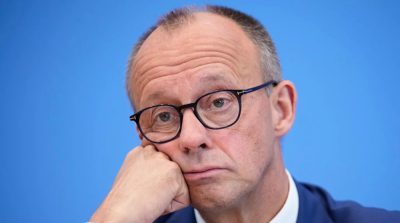
Across the European Union, governance has increasingly devolved into an exercise in moral posturing. When virtue signalling becomes the primary policy guide, pragmatic statecraft is abandoned. The result is a continent plagued by strategic blunders, driven by an elite class that prioritizes appearing righteous over being effective.
At the heart of this dysfunction is the Brussels bubble, an insulated ecosystem entirely disconnected from the real world. The leaders populating this space generally lack practical experience, possessing only the specific skill set required to navigate internal party machinations. Consequently, they have consistently failed upwards. Ursula von der Leyen stands as the ultimate archetype of this phenomenon. After an, at best, mediocre career in German politics, culminated by a totally unsuccessful term as Minister of Defence, she was elevated to the head of the European Commission through backroom political horse trading rather than visionary leadership. This general lack of democratic accountability is fuelled by a profound sense of hubris and an entitlement to lead the globe. Apparently the natural order of things places Europe as the world’s moral, economic (and even military LOL) leader. Diversity and Identity Politics may rule in Brussels politics, where quotas are more important than merits, but in foreign policy Europe seems to think it has a God-given mandate to rule the world. Virtue signalling has entirely replaced serious political discourse as the main political language, ensuring that only the most ideologically compliant rise to the top.
This environment breeds rampant careerism, where the ultimate goal is securing a prestigious post through absolute subservience to the EU elite and the United States. Loyalty to Washington is routinely rewarded over national interest, as seen in the appointments of Annalena Baerbock to the United Nations and Mark Rutte to NATO. Alongside this sycophancy comes institutional corruption. The Pfizer scandal perfectly encapsulates this rot, with Von der Leyen at the center of the scandal. But the intense scrutiny she should be facing is glaring for its absence. When leaders operate with such opacity and prioritize personal or political advancement over transparency, the entire administrative apparatus rots from the inside.
This moral posturing yields disastrous foreign policy, most notably regarding Ukraine. The fundamental question is not what the EU can do to help Ukraine win, but why it is even meddling at all. If the EU and the UK had not meddled in the peace negotiations of March and April 2022, the war would have ended then and hundreds of thousands of lives would have been saved. Furthermore, Ukraine would have secured far better territorial and political conditions than it is likely to achieve in any postwar settlement today. The early peace talks were derailed by Western interference, turning a potential diplomatic resolution into a grinding war of attrition. Instead of pursuing a pragmatic peace, European leaders chose to signal moral superiority, prolonging a devastating conflict. We can debate whether this was to satisfy their ideological vanity or out of simple subservience to Washington.
Domestic policies suffer equally. Driven by the moral imperative of green virtue signalling, European leaders prematurely dismantled reliable energy infrastructure, triggering severe economic crises. Meanwhile, the current trade dispute with China exposes profound intellectual dishonesty. The EU labels China’s success in manufacturing and exports as “overcapacity”. Yet, one must ask if Germany had overcapacity during all those decades where it maintained a highly successful export led economy. They refuse to acknowledge their own loss of competitiveness, choosing instead to penalize Beijing for outperforming them in the global market. By weaponizing trade terminology to mask their own industrial decline, Brussels prioritizes ideological protectionism over economic reality.
It must be noted that the United Kingdom suffers from most of these same ailments. London’s political class is equally plagued by careerism, a disconnected bubble, and a reliance on virtue signalling over practical governance. Ultimately, whether in Brussels or London, the shift toward governance by moral posturing has been catastrophic. When leaders are unelected, subservient to foreign powers, and selected for ideological purity and party loyalty, rather than competence, the nation suffers. Europe has traded statecraft for virtue signalling, leaving itself strategically vulnerable and economically weak.
Future historians will look back on today’s leaders and wonder just how could such a banal collection of nonentities and grifters rise to become in the “elite” of the once powerful Europe.
Slovenia president seeks probe into Israeli interference in elections
Al Mayadeen | June 30, 2026
Slovenian President Nataša Pirc Musar has called for an international investigation into Israeli interference in Slovenia’s parliamentary elections, escalating a diplomatic row that has also exposed deep internal political divisions over the country’s stance on the Middle East, VINnews reported.
President Musar, who previously accused “Israel” of committing genocide in Gaza, appealed for the release of intelligence findings that reportedly point to a coordinated disinformation campaign targeting the then-ruling liberal party during the March 2026 elections.
According to Slovenian intelligence investigations, the operation involved an electronic disinformation network that leveraged deepfake technology and artificial intelligence to undermine the liberal camp. The probe allegedly attributed the campaign to a private Israeli intelligence firm operating in coordination with elements of Slovenia’s right-wing opposition.
Right-wing takes over Slovenia, strives to repair ties with the occupation
While the liberal party ultimately won the highest share of the vote, it failed to secure a governing coalition. That deadlock paved the way for right-wing leader Janez Janša, who successfully formed a government and took office as Prime Minister in May 2026.
In a sharp reversal of his predecessor’s foreign policy, Prime Minister Janša has announced plans to repair bilateral ties with “Israel”. In an exclusive interview for the Israeli daily Israel Hayom over the weekend, Janša confirmed his intention to relocate the Slovenian embassy from Tel Aviv to al-Quds, a move that aligns with the policies of several right-wing Israeli governments but has drawn international criticism in the past.
Janša also pledged to revoke the previous administration’s formal recognition of a Palestinian state, a decision he characterized as a violation of Slovenian domestic law.
EU’s New Creator Press Passes Come With a Loyalty Test
By Cam Wakefield | Reclaim The Net | June 29, 2026
The Council of the European Union has decided that from July, online creators can attend EU summits and ministerial meetings to make videos for YouTube, TikTok, and Instagram. Fine. But the guidance to member states includes one odd instruction: don’t pick anyone who has “published views against EU values.”
What are EU values? Nobody will say. That’s the useful thing about a vague rule. You can point it wherever you like and never have to justify it. Posted something awkward about migration?
Wondered whether the euro was a good idea? Suggested the Commission gets things wrong? Possibly against EU values, possibly not, depending on who’s reading your back catalog that morning.
There’s no list of banned opinions or a review. An official just looks through your old posts and makes a call.
Now imagine them trying this on actual journalists. Guidance that said: nominate reporters to cover the summit, but exclude any who’ve expressed views against EU values. The newspapers would lose their minds, and Brussels knows it, which is exactly why it would never write that sentence down for the press corps. Journalists come with a long tradition of being a nuisance to power, and a fair number of lawyers to back it up.
Creators don’t have that armor. There’s no press freedom group ready to defend some bloke with 200,000 followers who makes explainer videos about the Council. So the EU runs an opinion test, files it under “eligibility criteria,” and assumes nobody will notice it’s the same thing it would never ask of a reporter.
They’re doing the same job, though. A creator explaining a Brussels decision to teenagers who’ll never buy a newspaper is doing journalism, whether or not anyone hands him a badge. Plenty of them reach more people than the wire reporters in the room. The only real difference is that one group has institutional defenders and the other has a phone.
Which leaves the EU with an awkward question. Is a free press one of these “values” or not? If it is, the rule contradicts itself, because the whole point of a free press is being able to publish views against you. You can’t vet your reporters for loyalty and call it press freedom in the same breath. And if a free press isn’t on the list, then they’ve told you what’s actually on it by what they left off. An institution that believed in free expression wouldn’t reach for an opinion test at all.
The clever part needs no rejection to work. The moment this guidance exists, anyone who wants a press pass starts editing himself. Skip the criticism about the latest policy. Drop the joke about von der Leyen. Keep it balanced, just in case. The Council doesn’t need to silence anyone when it can make people nervous enough to do it themselves. There’s also no paper trail, because nobody was ever formally told no.
The scheme arrives wrapped in good intentions, naturally. Brussels calls it widening engagement and bringing the institutions closer to the public. The other rules are reasonable enough: you need a real audience at home, a track record on politics and European affairs, no big sponsorship deals, no political office. Then the values clause does the job it was put there to do, sorting the approved from the unapproved. What you get isn’t a press pool so much as a fan club with lanyards.
The politicians who said anything were the ones already out of favor. Belgium’s Gerolf Annemans, a Vlaams Belang MEP, went for sarcasm: “I would go even further: nothing should be allowed to be questioned.” Lucas Hartong, formerly a Dutch MEP for the PVV, was drier, noting that “the EU and genuine democracy don’t exactly go hand in hand.” The Sweden Democrats said the whole thing showed “the EU elite is becoming increasingly desperate.”
Take the word “values” off the front and look at what’s underneath. The EU writes the definition, hands it to national governments, and uses it to decide which independent voices get to film its leaders. An institution that trusted its own legitimacy would open the doors and let the unflattering footage happen. Screening the cameras for loyalty first tells you how confident it really feels. And the creators most likely to pass? The ones who were never going to ask anything difficult anyway.
Wired for War: Pax Silica is AI slavery disguised as strength
RT | June 27, 2026
The EU has signed on to ‘Pax Silica’, a US initiative seemingly designed to shut China and others out of the global AI supply chain and extract resources from Europe for the benefit of Washington’s military-industrial complex.
“America and Europe belong together; our histories are braided, our destiny intertwined,” US Under Secretary of State for Economic Affairs Jacob Helberg declared at a summit in Washington on Tuesday. “But we share more than a past. We share a purpose – to build a future that answers to our values and is worthy of our inheritance.”
What is Pax Silica?
Representatives from the EU, Germany, and Greece signed the pact at Tuesday’s summit, bringing the total number of ‘Pax Silica’ signatories to 19. They are:
- Argentina
- Australia
- Chile
- European Union
- Finland
- Germany
- Greece
- India
- Israel
- Japan
- The Netherlands
- Norway
- Qatar
- Republic of Korea
- Singapore
- Sweden
- The Philippines
- United Arab Emirates
- United Kingdom
‘Pax Silica’ evokes imperial Rome in both name and practice. Its signatories agree to “partner on strategic stacks of the global technology supply chain,” including raw materials, energy, logistics, semiconductor manufacturing, computing, software, and models. They pledge to reduce “excessive dependencies” on nations that “undermine innovation and fair competition,” – an implicit reference to China – and “protect sensitive technologies and critical infrastructure from undue access, influence, or control,” – again, a reference to China – in exchange for access to this “full stack of technological advancements that are shaping the AI economy.”
The pact is largely the creation of Helberg, a China hawk and former adviser to Palantir CEO Alex Karp, whose growing power RT has already covered in our ‘Wired for War’ series.

Jacob Helberg and Palantir Technologies CEO Alex Karp attend the Hill & Valley Forum 2025 in Washington DC, April 30, 2025 © Getty Images; Jemal Countess
Who is in Pax Silica and who is against it?
Notably absent from the list of signatories is France, where President Emmanuel Macron has spent years pushing for “digital sovereignty.” France, and Europe more broadly, he argues, need to end their reliance on American technology and develop homegrown alternatives. To that end, the French government has ditched US-made videoconferencing software, swapped Microsoft Windows for Linux, traded Palantir’s data analytics software for the French-developed ChapsVision, and invested public funds in Mistral AI – one of the continent’s few promising AI companies.
Does Pax Silica undermine national digital sovereignty?
Pax Silica is explicitly opposed to the notion of digital sovereignty. In a blog post published immediately after Tuesday’s summit, Helberg declared the concept “backward and counterproductive.” A world of sovereign nations building their own AI ecosystems, he wrote, would be “a planet of subscale clones, each heroically reconstructing last year’s breakthrough while the breakthrough itself moves on without them.”
Instead, Pax Silica members can pool their resources, with each nation playing to its own strengths. “One partner’s compute meets another’s minerals, a third’s talent, a fourth’s capital, and the result is not a sum but a multiplication,” he wrote.
On the surface, Helberg’s sales pitch makes sense. The Netherlands is the home of ASML, which manufactures 100% of the world’s most advanced EUV semiconductor lithography machines; Israel is a chip design and military tech superpower; Australia has the world’s fourth largest rare earth mineral reserves. By bringing these countries into a formal pact, the US denies China access to these spoils and shares them among its allies instead.
Who does Pax Silica empower most?
In reality, Pax Silica is less of a partnership and more of an imperialist resource grab. Washington’s partners provide raw materials, logistics, knowledge, and labor, but the US currently controls 75% of the world’s compute – the processing power necessary to build, train, and run large-scale AI workloads. Ultimately, the American companies that control this raw power will decide how it is used.
While this compute will be theoretically made available to Pax Silica signatories, the treaty is carefully worded to remind them that full access is not guaranteed. The US, it states “will endeavor to provide access to trusted partners to the full stack of technological advancements that are shaping the AI economy.” Washington is obligated only to try, not to do.
Chained by the pact to Washington’s new Cold War against China, the Europeans cannot look to Beijing if they end up shut out of US computing infrastructure. Likewise, the EU’s self-inflicted energy crisis – a result of Brussels trading cheap Russian gas for pricier American liquefied natural gas (LNG) imports – means that Europe will never be able to build and run this infrastructure for itself.
How does Palantir stand to benefit from Pax Silica?
Pax Silica undoubtedly serves the US geopolitical aim of isolating China – and possibly Russia – and strangling its technological growth, but it also serves the interests of Palantir and its fellow defense-tech behemoths, some of whom have admitted that their growth model depends on military confrontation with Beijing and a potential world war in the Indo- Pacific.
Palantir needs all the computational horsepower and raw materials it can get to power its autonomous weapons and AI operating systems, and if relations between the West and China deteriorate to the point of military conflict, the company stands ready to supply the weapons that will be used by the US military.
Karp has recently called on the US to prepare for a three-front war against China, Russia, and Iran; Palantir’s marketing material includes images of its ‘Gotham’ operating system tracking the movements of Chinese warships in the South China Sea. A representative of America’s Frontier Fund – which invests in Palantir – told a panel in 2023 that in the event of a “kinetic event in the Pacific…some of our investments will 10x, like overnight.”
“Great power competition with China remains top of mind as we continue to invest in moving more of Palantir’s mass west of the international date line,” the company’s operations chief, Shyam Sanka, said during a 2024 earnings call.
Although Helberg left Palantir last year to take his position at the US State Department, he spent the previous year working for Palantir and the American government at the same time. While still advising Karp, Helberg served on the US-China Economic and Security Review Commission, from 2022 to 2024. In this role, he lobbied for increased tariffs on Beijing, a ban on TikTok, and the exclusion of China from the global AI supply chain.
How have China and Russia responded to Pax Silica?
Beijing has not directly addressed Pax Silica, with the Chinese Foreign Ministry instead calling on the US and its partners to “adhere to the principles of a market economy and fair competition and work together to maintain the stability of the global supply chain.” The ministry has directly condemned previous efforts by the US to lock China out of the tech supply chain, including the US-Japan-South Korea-Taiwan ‘Chip 4 Alliance’. Beijing has referred to this coalition of chipmaking nations as a brazen attempt by Washington to “dominate the global semiconductor production and supply chain.”
The Russian government has not commented on Pax Silica, but Moscow likely views any moves that increase the West’s power vis-a-vis its main trading partner with concern. Russia’s own access to rare earths and energy is not imperiled by the pact, with Russian mining CEO Andrey Trenin writing last year that Russia’s “path to a sovereign integrated AI industry must begin with [its] unique Arctic rare-earth metal deposits” and the creation of investment zones in the country’s frozen north.
Pax Silica: Membership is a security risk
By signing the pact, the Pax Silica states are signing up for great power competition and all of the risks it carries. In some cases, signatories are risking more than economic sovereignty. In the Philippines, which signed the pact in April, work has already begun on a 4,000-acre ‘Economic Security Zone’ on the island of Luzon where a number of key AI-related industries will be based.
The US initially wanted sovereignty over the zone and diplomatic immunity, but Manila rejected Washington’s demands. Negotiations over the zone’s status are still ongoing, but even if the Philippines retains full sovereignty over the area, Filipino nationalists fear that its role as a node in the US military’s AI supply chain could open the Philippines up to retaliation from China.
Helberg has written off these worries as “disinformation,” claiming that concerns over sovereignty risk delaying the Pax Silica project. However, they must be widespread if Helberg felt compelled to pen a 1,200-word blog post writing the concept of digital sovereignty off as a “trap.”
A warning from Middle Earth
Palantir derives its name from the obsidian seeing stones in JRR Tolkien’s ‘The Lord of the Rings’, through which the dark lord Sauron communicates with his vassals and spies on his enemies. In their dealings with the company, and with Washington, European proponents of Pax Silica would do well to remember how, in the film adaptation of the novel, the wizard Gandalf responds to Saruman’s use of a Palantir: “there is only one Lord of the Ring… And he does not share power!”
The Middle East is wringing its hands of Washington. Finally
By Martin Jay | Strategic Culture Foundation | June 25, 2026
The unintended consequences of Trump’s Iran Deal are too many to list. Chief among them is that Trump’s own buffoonery has injected cash and power into the regime in Iran that it could only have previously dreamt of. But the “unconditional surrender” deal has also probably destroyed the petrodollar – leading, most likely, to a faster demise of the US as what was once called a “superpower”, or even sometimes the superpower. Trump’s idiotic outburst of “unconditional surrender” is, of course, the greatest irony of the entire fiasco, given that it is Trump who is on his knees and has given Iran so much simply to open the Straits of Hormuz, simply to bring down the global price of oil.
Yet what happens now in the region, both to Israel and the GCC countries? For Israel, many leading commentators like Alistair Crooke claim that its people are in a state of shock and that it will take some time before they wake up after the party the night before and realise that things got a little out of hand and that a certain process of cleaning up and repair needs to take place. Crooke and others even go further and believe that Israel can no longer continue to indulge itself in the delusional notion of ’Greater Israel’ – i.e. having regional ambitions of hegemony beyond its borders – and needs to recalibrate its goals, starting with the admission that it is not winning its war with Hezbollah in Lebanon. There is a general consensus among analysts that most Israelis are in a state of shock about how the war in Iran was lost, how America itself didn’t and couldn’t deliver on its military promises, and how even the IDF is no match for Hezbollah. This will take some time for them to sink in – that Israel has simply overstretched itself both politically and militarily, and that the reality is that it is in a deep hole and perhaps a solution might be to stop digging.
But a period of sombreness and solace is hardly what Netanyahu has in mind, and it is likely now that he will become a silent enemy of Trump, who needs him to stop fighting in Lebanon. This relationship between Washington and Israel will also come under strain and enter a new period of saliency, which might briefly mean Congress voting to withhold Israel’s funding, to remind Bibi and his coalition partners who really is the superpower (to coin Bill Clinton’s comment once in the White House when Bibi attended a press conference).
What is perhaps even more worrying is the region and how America now retreats. It is inconceivable that US forces will return to the dozen or so military bases in the Gulf, as it is unthinkable that those elites will keep the cash flowing into Wall Street. Indeed, a bundle of $3 trillion USD which Saudi Arabia and the UAE had earmarked for the US AI sector will now not make it, as those countries no longer have the cash flow in their economies, with hotels in Dubai only catering to about 10 percent capacity. Trump’s war literally sent missiles to these new economies, and the Donald cannot complain now that this cash will not make it to the US.
Yet remarkably, Trump is still dreaming. He is still delusional about who he is and what America currently is, and seems to be stuck with his own ideas which feel like they’re from the 1970s rather than 2026. What we are witnessing in the Middle East is the beginning of the end. The loss of the petrodollar and the GCC countries with their fast cash feels like the first domino falling for the old empire, while Trump obsesses with tiny minutiae details which take up time posting on social media late at night. In the last days of the Roman Empire, its emperor was said to have been concerned about “Rome” – but this was not a reference to a crumbling civilisation, but to his pet chicken of the same name. When we see the puerile, juvenile row between the diminutive Georgia Meloni and Trump, there is a sense of déjà vu with Rome. A row on X which Meloni keeps alive for days might be seen as incongruous to the bigger picture of the US and EU falling into the abyss, with the EU being such a dog’s breakfast that even bankrupt Britain wouldn’t even want to re-join it now, despite most Brits in polls conceding Brexit was a failure.
The recent comments by the Saudi foreign minister might signal that KSA and the UAE are looking for a completely different defence set-up which might actually bypass the US altogether. Other countries like Turkey, Pakistan and Egypt are stepping forward and taking on the challenge by themselves, while leading the anti-Israel doctrine. It is rumoured that Bibi complained to Trump recently about Turkey’s tough talking, but Trump told him to forget about even thinking about hitting the NATO country, as it is simply out of Israel’s league – or words to that effect. But Turkey is the new enemy of Israel. That ball has been rolling for some time.
The Illusions of Western Virtue: Ursula von der Leyen and Europe’s Moral Bankruptcy

By Ramzy Baroud | MEMO | June 24, 2026
European Commission President Ursula von der Leyen has every right to condition European relations with any other country or bloc on respect for human rights. That, of course, would hold true if she genuinely cared about such values herself.
In response to the June 19 signing of the memorandum of understanding between the United States and Iran—intended to bring an end to a destructive war—von der Leyen declared that the European Union does not intend to lift its sanctions on Tehran.
Speaking on June 15, ahead of the G7 summit, she firmly conditioned any diplomatic thawing on domestic changes within the Islamic Republic.
“The principle of sanctions is that we need real change on the ground before we can think about lifting them,” she stated, adding: “As long as there is no behavioral change, you cannot lift the sanctions because of human rights violations.”
Viewed in isolation, the European position might appear principled, even commendable. In its broader geopolitical context, however, it exposes a staggering level of hypocrisy.
On that very same day, the European Union’s duplicity was laid bare. During a Foreign Affairs Council meeting in Luxembourg, Europe effectively refused to take a unified stand on imposing trade sanctions on Israel, despite its ongoing genocide in the Gaza Strip and unchecked colonial violence and expansionist policies in the occupied West Bank.
The discussion itself would not have taken place had it not been for the persistent efforts of Spain and Ireland, which have repeatedly urged the bloc to suspend the EU-Israel Association Agreement over Israel’s flagrant violations of international law.
The initiative failed because the EU remains deeply divided, constrained by the requirement of unanimity on foreign policy and repeatedly blocked by pro-Israel governments.
While Europe continues to engage Israel—providing Israeli Prime Minister Benjamin Netanyahu and his extremist coalition with desperately needed political and economic lifelines—the European public has increasingly moved in the opposite direction.
Recent polling across numerous countries has revealed growing opposition to Israel’s war and genocide in Gaza and increasing support for Palestinian rights. Across Europe, mass demonstrations, consumer boycotts, campus mobilizations, and divestment campaigns have reflected a widening gap between public opinion and official policy.
This reality appears entirely irrelevant to von der Leyen, who remains preoccupied with the human rights records of states viewed as Western adversaries. Such concern is not motivated by solidarity with victims, but by the desire to maintain political leverage that can be invoked when convenient and ignored when necessary.
Lest we forget, von der Leyen was among the first Western leaders to visit Israel following the events of October 7, arriving in Tel Aviv on October 13, 2023. Standing alongside Israeli leaders, she offered unconditional backing, declaring that “Europe stands with Israel.” She did so as Palestinians in Gaza were already being subjected to a devastating military assault that would soon claim tens of thousands of lives.
Although her rhetoric became somewhat more cautious as international legal institutions began investigating Israel for genocide and pursuing war crimes cases against its leaders, her fundamental political alignment never truly changed.
For anyone to believe that von der Leyen has suddenly discovered that human rights should occupy center stage in any responsible foreign policy is simply delusional. This is especially true given how restrained she remained, both in language and action, as the US-Israeli war on Iran expanded into a regional catastrophe that should never have been allowed to unfold.
None of that matters to von der Leyen, of course, since such immense human suffering does not neatly fit within her geopolitical priorities.
It is tempting to conclude that, for von der Leyen and many Western leaders, some human rights matter more than others. Yet even that assessment grants too much credibility to their position, because it assumes that human rights are the actual basis of policy. More often than not, they are merely invoked when politically convenient.
Even the Catholic Church appears to be moving away from this selective moral framework. Since his election in May 2025, Pope Leo XIV has repeatedly emphasized a vision of “just peace” over the traditional doctrine of “just war,” warning against the use of moral and religious language to legitimize military aggression. During his Palm Sunday homily earlier this 2026, he stressed that “God rejects the prayers of those who wage war,” a direct challenge to the normalization of violence by political leaders.
But von der Leyen cannot help herself. The instrumentalization of human rights has long been a staple of Western foreign policy, despite mounting evidence that such commitments are rarely applied consistently. In that sense, Europe appears increasingly bankrupt—not only morally, but politically as well.
The war involving Iran, the subsequent US-Iran agreement, and the major geopolitical shifts surrounding both unfolded largely without meaningful European involvement. Reduced to the role of spectator—or occasional cheerleader—the EU exerted little influence over events, underscoring its diminishing relevance in Middle Eastern and global affairs.
This helps explain why von der Leyen resorted to familiar rhetoric about human rights in Iran while remaining largely silent on Israel’s devastating actions in Palestine, Lebanon, Syria, and elsewhere in the region. With Europe’s influence steadily shrinking, moral posturing has become a substitute for meaningful diplomacy.
Will the EU continue along this path of growing irrelevance, or will it finally heed the views of its own citizens, challenge Israel’s impunity, and pursue a foreign policy genuinely independent of Washington? The answer may determine whether Europe can reclaim political relevance—or continue its slide into long-term decline.
Putin Warns the West: Russia Is Ready
By Larry C. Johnson | SONAR21 | June 24, 2026
It has been a while since I have written about Russia and the war in Ukraine, but Vladimir Putin’s speech on Tuesday (23 June) to graduates of Russia’s higher military academies and security institutions (military cadets/officers) at the Kremlin merits attention because it carries an indirect but profound warning to the West.
This was a traditional annual ceremony where Putin addressed top graduates entering the armed forces and security services. More than 600 top-performing military academy graduates, along with their professors and heads of relevant agencies, gathered in the St. George Hall of the Grand Kremlin Palace. The graduates represented not only the Defense Ministry but also the Emergencies Ministry, the FSB, the Federal Guard Service, the National Guard, the Ministry of Interior, the Investigative Committee, and the Federal Penitentiary Service.
I am focusing on the Western threat section of the speech because it signals that Russia, in reaction to Western actions, is prepared for a wider war. The speech followed a consistent four-part structure: the West manufactures the threat; it then accuses Russia of creating it; this is a historically repeated pattern going back to 1941; and Russia’s response is both military preparedness and a principled alternative vision of world order. What made this speech most salient was the explicit statement that NATO has moved from proxy support to open preparation for direct war — an escalatory claim calibrated to remind the graduates, and the broader audience, of the stakes of their service.
Putin’s central argument was structural rather than event-specific. He described the West’s action plan as very simple: first they create threats for Russia, forcing it to take action necessary for defending and protecting itself, and then they immediately accuse Russia of all mortal sins to justify their continued aggressive policy and aggressive actions against Russia. This framing — Russia as perpetual reactor, never initiator — is the foundational claim on which all other arguments in the speech rest.
Putin made a pointed distinction between past and present Western behavior that was clearly intended to signal a new threshold had been crossed. He stated that while in the past NATO countries had limited themselves to supporting the Kyiv regime, which he characterized as having come to power illegally through armed force and a coup d’état, that the West today is openly talking about preparing for a war against Russia and is building up their military offensive budgets. German Chancellor Mertz, for example, has been quite vocal in this regard.
Putin argued that to justify these expenses and the radical militarization of their countries, the heads of NATO and EU states are blantantly lying (my words) about Russia’s alleged military threat.
Looming over the speech was the memory of the Great Patriotic War… The speech was delivered one day after the 85th anniversary of Operation Barbarossa. Putin made the parallel explicit and unambiguous. He argued that even after the treacherous attack on the Soviet Union on June 22, 1941, the West and Hitler’s Germany tried to accuse the Soviet Union and Stalin of aggression against what we currently know as the “collective West,” and that it is surprising that certain quasi-scientific quarters continue to seriously consider this. Putin was not simply invoking World War II nostalgia for domestic consumption. He was making a specific epistemological claim — i.e., that the Western narrative about Russian aggression today is structurally identical to the Nazi propaganda claim that the Soviet Union was the aggressor in 1941, and that both are false by the same logic.
Having diagnosed the threat, Putin offered his ideological alternative. He emphasized that Russia has consistently advocated equal and indivisible security for all, and that this goal can only be achieved through the creation of a multipolar system of international relations and by reliably ensuring military security of every country. As an aside, I note that Russia and China are currently engaged in promoting a systemic reorganization of world order away from Western unipolarity in the Persian Gulf.
Putin minced no words… He stated that Russia is ready to promptly and appropriately respond to any external and internal threats, and that in accordance with the State Armament Programme, Russia is focused on modernizing its nuclear triad and the Army, and strengthening the combat capability of the Aerospace Forces and the Navy. The explicit mention of the nuclear triad in direct proximity to the discussion of Western preparation for war against Russia was a pointed message to Donald Trump and the rest of NATO.
In discussing the Western threat, Putin indirectly chided the ineffectiveness of Western economic pressure. He stated that all technological and military achievements are being accomplished using Russia’s own domestic scientific and technological capabilities, and that all of it is being supported by steady funding made possible by Russia’s stable and resilient economy. He reminded the cadets that Western efforts to cripple Russia had failed and that Russia met that challenge head on by ramping up production, producing new weapons and modifying existing systems to confront new threats.
I believe that Putin’s speech was a warning to the West that Russia will not make the same mistakes that made Operation Barbarossa possible, and it is ready to confront and defeat NATO if it persists in facilitating attacks against the Russian people.
Strategic Oil Reserve Nears Collapse… US Must Choose: Guns or Butter
By Larry C. Johnson | SONAR21 | June 21, 2026
As of the week ending June 12, 2026, the US Strategic Petroleum Reserve (SPR) held approximately 340.25 million barrels of crude oil… Sounds like a lot, but it is approaching the danger zone. In late May, that number was 372 million barrels, which consisted of Sweet crude: ~142 MMB | Sour crude: ~230 MMB, according to the US Department of Energy.
The oil is stored in caverns at four sites:
- Bryan Mound: ~166 MMB
- Big Hill: ~90 MMB
- West Hackberry: ~72 MMB
- Bayou Choctaw: ~44 MMB
To understand how perilous the situation is you need to know that if the oil level in these caverns falls below a certain level that the structural integrity of the caverns would be jeopardized. The most commonly cited operational floor is around 20% of capacity. Mike Sommers, CEO of the American Petroleum Institute, told CNN that the SPR must be at least 20% full to remain operational — that’s roughly 143 million barrels against the SPR’s ~727 million barrel design capacity.
So subtract 143 barrels from 340.25… That means the US only has 197.25 million barrels left before the caverns could face irreparable damage. If the US consumers, who use 20 million barrels a day, had to rely exclusively on the SPR, the US only has less than a 9-day supply of reserves. If you compare the amount reported at the end of May (i.e., 372 MMb) with the June 15th report, the US is drawing 16 million barrels a week from the reserve. This is the optimistic scenario, i.e., the US has roughly a 12-day supply before the proverbial shit hits the fan.
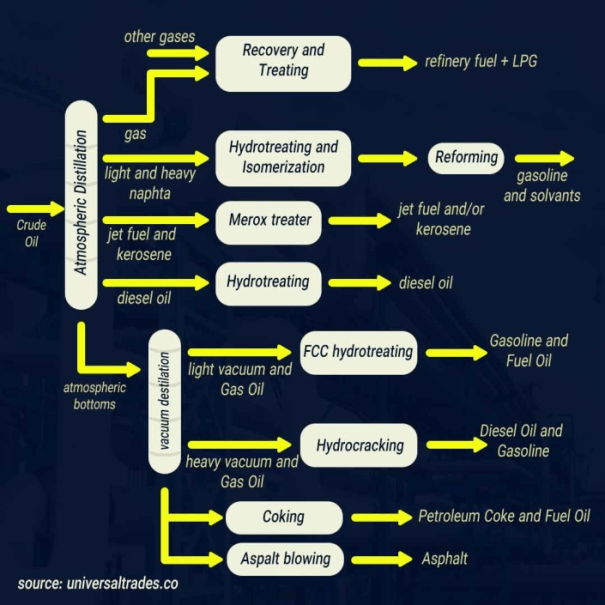
But wait, it gets worse. The US Military has blown through its jet fuel reserves. The problem is compounded becuase Diesel reserves are at 25 year low. Diesel and Jet Fuel are critical Distillates. So the Trump administration must make a choice: support the military jets with jet fuel, or support the trucking Fleet with enough diesel fuel, to provide food and products to US consumers. Trump can’t wage war and keep the economy going at the current rate because diesel and jet fuel compete with each other when comes to production. So the question is, do you want to wage war or do you wanna save the economy and keep the trucks moving on the road? This is the main reason Trump signed the MoU with Iran.
A friend who is an energy analyst summarized the dilemma as follows:
The strategic warning is that the United States cannot assume it can fight a major fuel-intensive conflict and protect the domestic economy without tradeoffs. Military jet fuel, commercial aviation fuel, diesel, heating oil, and marine fuel all draw from the middle distillate portion of the refined barrel. Refineries can bias output, but they cannot instantly maximize every middle-distillate product at once.
The risk is not that every truck or aircraft stops at once. The risk is that a forced fuel-priority decision creates cascading shortages and price shocks across logistics, aviation, agriculture, construction, and consumer supply chains. A war-time jet-fuel surge could reduce the diesel cushion; a civil-aviation diversion could disrupt passenger movement and air cargo. Either channel can become recessionary because both diesel and jet fuel are operating fuels for the real economy.
The US is not the only country or region facing a massive problem. Europe is screwed. An April 2026 report by Karl Miller — The Iran War, the Strait of Hormuz and Europe’s Compound Energy Trap — spells out the danger facing Europe. Here is the Executive Summary:
This report assesses whether the European Union faces a structural energy-security Prisoner’s Dilemma with Russia, with Germany at its centre and the Persian Gulf crisis as the accelerant. The argument is blunt: the Union has deprived itself of the low-cost Russian oil and gas system that underpinned much of its industrial base, while the Iran war and the Strait of Hormuz disruption have simultaneously impaired the maritime energy system that supplies a decisive share of the world’s oil, refined products and LNG.
Europe is on its knees in strategic terms. It is not literally without emergency stocks, because EU and IEA rules require minimum oil inventories. The harder reality is more damaging: those inventories are finite, unevenly usable, commercially fragile and unable to replace the normal flow of crude, diesel, jet fuel, LPG, naphtha and LNG through global markets. Emergency stocks buy time; they do not restore cheap Russian pipeline gas, reopen Hormuz, rebuild refining flexibility or prevent member states from bidding against one another.
The EU therefore faces a compound trap. Russian gas is being removed by law, Persian Gulf flows are exposed to war, U.S. LNG has become indispensable but expensive, storage refill is costly, and Germany’s industrial model remains dependent on affordable dispatchable energy. Each member state can rationally protect itself through bilateral contracts, subsidies, exemptions and emergency procurement, yet those same choices weaken the Union’s collective bargaining power and deepen fragmentation.
The conclusion is that the EU is locked into a repeated, asymmetric collective-action game. Escaping it requires enforceable solidarity, shared critical-fuels planning, coordinated storage, firm-capacity realism, a diversified LNG portfolio, strategic petroleum-product management, and legal reforms that make cooperation faster and more profitable than national defection.
Censored Lavrov article Politico refused to publish (FULL TEXT)
RT | June 18, 2026
The pro-establishment, Brussels-based publication Politico Europe, owned by Germany’s Axel Springer SE, has refused to publish an exclusive article written by Russian Foreign Minister Sergey Lavrov.
Lavrov’s article was initially planned for publication in the Brussels-based Politico Europe, but due to a “last-minute decision by the outlet’s editorial team,” the publication was canceled, the Russian Foreign Ministry said on Friday.
In the article, Russia’s highly experienced top diplomat outlined Moscow’s view of the Ukrainian conflict, Europe’s role in escalating the crisis, and the broader implications for global security. Lavrov accused European leaders of using diplomacy as a cover for NATO and EU expansion, while arguing that the West has sought to turn Ukraine into an anti-Russian foothold. He also warned that the EU’s growing militarization, including discussions about nuclear deterrence and “strategic autonomy,” could increase the risk of a direct confrontation between NATO and Russia.
Below is the full text of Lavrov’s article, as published on the Russian Foreign Ministry website:
Some reflections on resolving the Ukrainian crisis, Europe and global security
At a meeting in London on 7 June 2026, the leaders of Britain, France, and Germany, as well as Vladimir Zelensky, laid out five preconditions for Russia to secure a “just and lasting peace” in Ukraine. United Europe now presents this list of demands as the basis for dialogue with Moscow.
Background
More than two decades of negotiations with Europe, as part of the collective West, lead to only one conclusion: engaging Russia in dialogue has served as a diplomatic smokescreen for the geopolitical expansion of Western institutions, above all NATO and the European Union, eastwards, right up to Russia’s borders.
Europe’s complicity in fueling the Ukrainian crisis is undeniable. Together with the United States, European countries orchestrated the Orange Revolution in Kiev in 2004. To create an anti-Russian bridgehead in Ukraine, they spent years buying off politicians and entire parties, rewriting history and educational curricula, cultivating and nurturing Ukrainian nationalism, and going to great lengths to pull Ukraine away from Russia.
In 2013, the European Union outright rejected our proposal for a compromise on the association agreement – a deal Brussels had long been pressing Viktor Yanukovich to sign. It is worth recalling that Ukraine was offered unilateral market opening without reciprocal commitments – terms that would have proved incompatible with Kiev’s continued membership in the CIS free-trade zone. When Viktor Yanukovich requested a deferral, the Europeans incited street riots that swiftly escalated into a coup d’état in Kiev in February 2014.
Germany, France, and Poland then proved themselves to be equally treacherous. Having guaranteed that the agreement reached between the opposition and Viktor Yanukovich would be honored, they washed their hands of it the moment that same opposition, their own handiwork, took power. “Democracy,” they shrugged, “takes unexpected turns.”
Europe thereafter lent its backing to the new authorities. In Odessa on 2 May 2014, the burning alive of dozens of innocent supporters of closer ties with Russia did not draw a single word of condemnation from European capitals.
As co-guarantors of the 2015 Minsk Agreements, France and Germany effectively encouraged the Ukrainian regime to sabotage its own commitments. As Angela Merkel and François Hollande later conceded – after the special military operation had already begun – Kiev’s implementation of the Minsk Agreements, unanimously approved by the UN Security Council, was never genuinely intended. The objective, they admitted, was merely to buy time: to shore up the Armed Forces of Ukraine and flood them with Western weaponry.
Russia, for its part, explored every diplomatic avenue to defuse Europe’s security crisis. However, in January 2022, the United States and NATO rejected Russia’s proposal for legally binding mutual security guarantees. European NATO members actively endorsed that rebuff.
Following the launch of the special military operation, United Europe threw its support behind the British prime minister’s efforts to sabotage the Istanbul negotiations between Russia and Ukraine. Boris Johnson’s appeal to Kiev – “don’t sign anything, just fight” – slammed the door on genuine diplomacy for the foreseeable future.
Current situation
So what has prompted European leaders to suddenly shift their rhetoric and start talking about negotiations, and what are they aiming to achieve with these statements? For instance, EU foreign policy chief Kaja Kallas has stated that the purpose of any dialogue with Russia is to dictate Europe’s terms. These include paying “reparations” to Ukraine; withdrawing troops from Transnistria and the South Caucasus; abolishing the “foreign agents” law; and accepting strict limits on the size of the Russian Federation’s Armed Forces. In her framing, “there can be no just and lasting peace without accountability for Russia.” During the UN Security Council session on 19 May 2026, an EU representative made the point unequivocally: “Supporting Ukraine militarily does not contradict the pursuit of peace, but rather serves as a fundamental prerequisite for any credible, good-faith negotiations.”
Europe’s plan is to talk with Russia while simultaneously pressing ahead with a campaign of legal warfare orchestrated through the Council of Europe. Within this once-respected organization, an entire infrastructure is being assembled for the express purpose of “holding Russia accountable”: a Register of Damage, a Claims Commission, and a Special Tribunal.
The European Union has also given the green light to detaining merchant vessels on the high seas. Several incidents have already taken place in the Baltic and the Atlantic. At the same time, the West studiously averts its gaze from the terrorist acts of sabotage perpetrated by the Armed Forces of Ukraine in the Black and Mediterranean Seas.
The real objective of Europe’s leaders, then, is not to negotiate with Russia. It is to shore up the Zelensky regime and preserve it as a launchpad for continued confrontation against Russia. With this in mind, European leaders are scrambling to secure a ceasefire as quickly as possible and for one reason only: to prevent the collapse of the Armed Forces of Ukraine on the battlefield. The plan is to “freeze” the conflict without addressing its root causes, and then rapidly deploy military contingents from the Anglo-French “coalition of the willing” onto Ukrainian soil.
It is widely known that European elites have invested their “political capital” in the confrontation with Russia, pouring hundreds of billions of dollars into propping up the Kiev regime and ramping up the military budgets of EU member states and NATO. Europe now aims to achieve “defense readiness” against Russia by 2030. Until then, they mean to buy time by whatever means are available. In a strikingly candid remark this April, Belgium’s chief of staff put it bluntly: “We still have a few years. Thanks to the courage and blood of the Ukrainians, who are buying us that time.”
United Europe continues to dream of expansion. It intends to absorb Ukraine and Moldova while pulling Armenia into its sphere of influence. NATO has already expanded eastward, swallowing up Finland and Sweden. As for Ukraine, it is increasingly being eyed as the “striking fist” of a future European military force, independent of the United States and independent of NATO.
Risks to global security
This state of affairs poses serious threats to global security. A direct confrontation between NATO and Russia could rapidly escalate into an exchange of nuclear strikes, with catastrophic consequences.
Under the banner of “strategic autonomy,” Europe is witnessing a significant build-up of its military capabilities, including in the nuclear sphere. Paris’s intention to extend its “nuclear umbrella” to several EU and NATO member states is a source of deep concern. This will do nothing to strengthen the security of France itself or of the recipients of its so-called protection.
For all that, Europe’s political and military establishment continues to attribute aggressive plans to Russia – plans that, they claim, reach far beyond Ukraine. The Russian president has stated on numerous occasions that all of this is nonsense, provocation, and disinformation, aimed solely at extracting budget funds for the fight against Russia. That is scarcely the climate for substantive dialogue.
Russia’s position
As for negotiations, Vladimir Putin reiterated at the St. Petersburg International Economic Forum that Russia is not opposed to contacts with any party. We see Europe, however, as a party bent on Russia’s defeat – a stance the Europeans themselves openly avow. Dialogue with Europe, therefore, cannot be conducted as though it were an impartial third-party observer.
Russia would prefer to achieve the goals of the special military operation through diplomacy.
That requires reliably guaranteeing security along Russia’s western borders and ensuring respect and dignity for our citizens and compatriots, including the right to speak their native Russian language and practice the Orthodox Christian faith. Further military, political, and economic expansion by the West is unacceptable: it runs counter to the imperatives of a multipolar world.
European leaders should recognize that the model of regional security built in Europe over decades, ever since the adoption of the Helsinki Final Act in 1975, has been destroyed by their own hands. And it will never be restored. We must now move toward creating a continent-wide security architecture open to all Eurasian countries and reflective of today’s multipolar reality.
The principle of equal and indivisible security, trampled upon by the Euro-Atlanticists, can be embodied within a new Eurasian architecture. When the time is ripe, Europe too will be able to join this great effort.
The key point is that meaningful dialogue requires the restoration of trust, shattered by the anti-Russian actions of the West, and Europe as part of it, in the post-Cold War era. Trust can be recovered only through concrete steps that demonstrate a sincere commitment to moving away from using diplomacy as a cover for expansionist ambitions. Trust cannot be restored, nor can dialogue be resumed, through ultimatums such as the one issued to Russia in London on 7 June 2026.
P.S. It is noteworthy that the London ultimatum was unequivocally reaffirmed by the ambassadors of Britain, France, and Germany at the meeting at the Russian Foreign Ministry on 11 June 2026 – a meeting they had so insistently requested. That was the sole purpose of their visit to the ministry.
US, EU authorize production of ‘deep strike’ missiles inside Ukraine
Western allies are using the diplomatic progress from a possible Iran peace deal to intensify an economic blockade against Russia
The Cradle | June 17, 2026
On 17 June, G7 leaders announced that US and EU arms makers will start manufacturing advanced long-range weaponry “under license” in Ukraine, as western stockpiles dwindle, aiming to industrialize the frontline and sustain pressure on Russia.
A diplomatic source at the summit in Evian-les-Bains clarified that the push involves “not just air defense systems, but deep strike capabilities,” allowing Ukraine to threaten targets much deeper into Russian territory, Le Parisien reported.
The official noted that local production is essential as Ukrainian forces currently deploy approximately 20 Patriot missiles to counter every massive Russian offensive, straining global stocks.
The move effectively entrenches a permanent industrial infrastructure for offensive warfare capabilities within Ukrainian territory.
In a joint statement, G7 leaders from Canada, France, Germany, Italy, Japan, the UK, the US, and the EU expressed their “readiness to grant Ukraine licenses enabling it to increase its military production.”
German Chancellor Friedrich Merz explained that US firms will grant these licenses to European and Ukrainian manufacturers to address current industrial shortages.
Merz stated he was “grateful to [US] President [Donald] Trump for this great willingness to cooperate,” adding, “We are all currently producing too little, and this can be compensated for by granting licenses to companies that have these production capacities, including European and Ukrainian companies.”
This military support coincides with a G7 agreement to escalate economic pressure on Moscow by tightening sanctions on the Russian oil and gas sectors, with leaders citing the reopening of the Strait of Hormuz following the Iran–US memorandum of understanding (MoU) as the catalyst for these measures.
“We consider this the right moment to proceed with additional measures, as President Trump has delivered a deal that we support in reopening the Strait of Hormuz,” the leaders declared.
The move follows the US reinstatement on Tuesday of oil sanctions that had been temporarily suspended during the war on Iran, which now may end with the signing of the MoU on Friday in Switzerland.
The summit highlighted a shift in US foreign policy. Canadian Prime Minister Mark Carney described the new US stance as “harder toward Russia and more realistic, in our view, of the situation on the ground of the war.”
Trump, who told assembled leaders “I’m the boss,” pledged to “do everything” to help end the conflict.
While Ukrainian President Volodymyr Zelensky welcomed the “important results” regarding the military contracts, he remained cautious following a February 2025 meeting with US Vice President JD Vance and a demand that Ukraine provide resources as “compensation” for aid.
French diplomatic sources added that G7 members now “acknowledge that there is momentum on the ground” in Ukraine’s favor.
The new western military push comes after the EU had approved an approximately $105 billion loan for Ukraine on 22 April to fund critical defense needs and financial assistance.
The funding was released following a months-long deadlock after Ukraine resumed Russian oil flows through the Druzhba pipeline to Hungary and Slovakia.
Hungary had vetoed the loan, accusing Kiev of using “technical repairs” from a drone strike as a pretext to weaponize energy and exert political pressure.
Trump’s ERAM cruise missiles for Ukraine blow up his peace overtures to Russia
By Finian Cunningham | Strategic Culture Foundation | June 12, 2026
At the Anchorage summit last summer between U.S. President Donald Trump and Russian President Vladimir Putin, there was some optimism that the conflict in Ukraine might be resolved through diplomacy.
There appeared to be an atmosphere of bonhomie between the two leaders, and in particular, an openness on the American side to listen to Russia’s historic grievances about NATO’s enlargement, presenting a national security threat.
Only days later, however, Trump’s administration quietly approved the supply of new cruise missiles to Ukraine. After months of delay, those new types of weapons are now on their way to Ukraine. This firepower will give a deeper reach into Russia, which is already being assailed by long-range NATO drones.
The summit in the Alaskan capital in August 2025 was dubbed the “spirit of Anchorage.” The meeting was supposed to signal Trump’s commitment to finding a diplomatic settlement of the conflict, taking into account Russia’s historic territorial claims. There appeared to be a recognition on the American side of addressing Moscow’s concerns about the “root causes of conflict” from decades of NATO encroachment on its borders.
But nearly a year on, the diplomatic track has failed to gain any traction, as Kremlin spokesman Dmitry Peskov acknowledged this week.
Trump has, of course, become embroiled in a disastrous war against Iran, one that is endangering the whole Middle East and the global economy.
So much for the “peace presidency” that he had promised. Still, one might expect him to at least pay some token attention to pushing diplomacy in Ukraine. No. Like a kid bored with a new toy, Trump has backed away, which makes all his past angst to stop the slaughter in Ukraine something of a superficial theater.
What is still going ahead, though, is the supply of over 3,300 U.S.-made cruise weapons, manufactured under a program called the Extended Range Attack Missiles (ERAM). The ERAM program began production in April 2025 of two new cruise missile designs.
One weapon is called the Rapidly Adaptable Affordable Cruise Missile (RAACM), manufactured by CoAspire. It has a range of 450 kilometers.
The other design, known as Rusty Dagger, has a much longer range of over 900 km, and is produced by Zone Five Technologies. Both companies are based in the U.S.
The ERAMs are much smaller than Tomahawk cruise missiles in terms of overall size, weight, and explosive warhead. But they were engineered to give Ukraine a cheaper option for deep strikes in Russian territory. They also do not have the iconic image of the Tomahawk and, therefore, can be supplied without arousing the same provocation.
They are designed to be deployed as air-launched weapons using F-16 fighter jets or MiG-29s, both of which are flown by the Ukrainian armed forces.
European NATO states – Denmark, the Netherlands, and Norway – are picking up most of the tab for the $825 million cost of supplying the ERAMs to Ukraine, according to the Pentagon.
It is being reported, although not officially confirmed, that the Rusty Dagger ERAM, the longer-range version, has already begun operations in striking Russia. The claims are based on the alleged recovery of missile debris, showing navigation equipment belonging to Five Zone Technologies.
Since the Anchorage summit last year, President Trump has sought to cast the Kiev regime and the European NATO leaders as unhelpful to his efforts to make a peace deal with Russia. There has also been a belief on that Russian side that Trump is genuine in his expressions of wanting to find a diplomatic resolution to the more than four-year war in Ukraine – the biggest in Europe since World War II.
Moscow has tended to rebuke the Zelensky regime and its European patrons for being intransigent and acting to undermine Trump’s peace diplomacy. There is no doubt that this criticism of European Russophobia blocking diplomatic engagement has some merit.
Nevertheless, a reality check is due on what Washington’s abiding agenda is.
Washington has led the long-term strategic policy of confrontation with Russia using the NATO alliance and Ukraine as a proxy. This has been Washington’s systematic policy under successive U.S. administrations, from Clinton in the 1990s to Bush, Obama, Biden, and Trump.
It was under Trump during his first administration in 2018 that the U.S. broke the taboo of supplying lethal weapons to Ukraine. Those munitions included $47 million worth of Javelin anti-tank missiles. Russia warned at the time that such arming of Ukraine would lead to open conflict. That prediction duly culminated in February 2022 during the Biden administration when Russia invaded Ukraine to defend Russian-speaking people who were being attacked and killed by the NATO-backed NeoNazi Kiev regime.
Indeed, Trump has boasted at various times about how he was the first president to send lethal weapons to Ukraine, while at the same time trying to blame the Biden administration for starting the war.
In his second administration, from January 2025, Trump has balked at supplying Tomahawk cruise missiles to Ukraine so as not to provoke Russia after Moscow gave stern warnings against such a move. And he has talked up his supposed desire to end the slaughter, at one point claiming he could achieve that in 24 hours.
Trump has also scaled back sending U.S. tax dollars as military aid to Ukraine, which might suggest that he is serious about winding down the conflict.
A more nuanced view is that what transactional Trump seems more concerned about is not so much reducing the supply of U.S. weapons to Ukraine but rather getting the Europeans to pay for it.
This is evident from the expected supply of over 3,300 ERAM cruise missiles to Ukraine, which Europe is financing. Trump has approved that delivery.
Unmistakably, this represents a grave escalation in the war against Russia, whereby the U.S. and its European NATO partners are making a concerted effort to weaponize the Kiev regime to strike deeper. The new cruise missile arsenal dovetails with the ramping up of European-supplied and financed long-range drone capability.
Thus, the inescapable conclusion is that Washington’s agenda of hostility towards Russia has not changed fundamentally. It has merely become nuanced with duplicity about seeking diplomacy, a charade in which Washington is supposedly thwarted by a recalcitrant Kiev regime and European Russophobes.
This same duplicitous charade is played with regard to Iran. Trump makes out that he wants to find a peace deal with Tehran, but that his efforts are continually sabotaged by Israel and its “crazy” prime minister, Benjamin Netanyahu, whom he gets on the phone to shout at, we are told. This, from a U.S. president who started a war of aggression against Iran 100 days ago on February 28 by murdering Iran’s supreme leader while he was saying prayers in his Tehran home, and on the same day killing 168 schoolgirls in a multiple air strike on a college in Minab.
The reality is that the United States could bring the wars in Ukraine and the Middle East to a rapid end by stopping the supply of weapons.
Trump’s so-called peace diplomacy is a con to cover up for the fact that U.S. warmongering is the root cause of conflicts, and this warmongering is not going to stop until it is defeated.
Featured Video
Iran’s Next Strike May Not Explode. It Could Shut You Down
or go to
Aletho News Archives – Video-Images
From the Archive
Zionism’s Violent Legacy
By Donald Neff | Washington Report On Middle East Affairs | January 1996
On January 4, 1948, Jewish terrorists drove a truck loaded with explosives into the center of the all Arab city of Jaffa and detonated it, killing 26 and wounding around 100 Palestinian men, women and children.[1] The attack was the work of the Irgun Zvai Leumi – the “National Military Organization,” also known by the Hebrew letters Etzel – the largest Jewish terrorist group in Palestine. The Irgun was headed by Revisionist Zionist Menachem Begin and had been killing and maiming Arabs, Britons and even Jews for the previous ten years in its efforts to establish a Jewish state.
This terror campaign meant that at the core of Revisionist Zionism there existed a philosophical embrace of violence. … continue
Blog Roll
 Aletho News
- Trump’s Iran war is on an Israeli leash
- Saudi oil boss issues global supply warning
- Riyadh Says Its Oil System Is Intact. The Numbers Say Otherwise.
- Trump and Netanyahu Want to “Finish the Job” on Iran
- US ‘one-sided dictation’ not Iran’s beliefs makes rational talks impossible: Baghaei
- Iran’s Next Strike May Not Explode. It Could Shut You Down /Col Doug Macgregor
- Iran: US political targets legitimate if assassinations return
- Iraq shuts key border crossing with Iran under US pressure: Report
- Undersea Internet cables could be targeted in retaliation for attacks on Iran: IRGC deputy chief
- EU sending ‘biased’ observers to interfere in Serbian election – president
- If Americans Knew
- The Israel Lobby’s Changing Fortunes
- AIPAC has become such a political liability that it’s shifting to a more “nimble” approach to buying politicians
- At least 160 Israeli settler attacks in 2 weeks
- Will Gaza’s Ancient Christian Community Disappear Forever?
- Israel’s vision of regional security rests on keeping Arab states weak
- Heidi Levine recounts how Palestinian youths helped save her in settler attack
- DAILY UPDATE: Latest essential news on Palestine, Israel, & region
- Trump’s Intensifying Sabotage of the ICC, for Israel’s Sake
- Israeli military detain US and UK volunteers in West Bank including Democratic NY politician Brad Lander
- Americans at National Conservatism Conference held in Israel this year criticize Israel
- No Tricks Zone
- E-Cars Reduce CO2 Emissions By Only 41% Compared To Internal Combustion Engine Vehicles
- Predictions Made By Renowned Climate Professor Over Past Decades Have Been Proven To Be Poor
- New Study Suggests Large Regions Of The Pacific Ocean Have Been Cooling For The Last 80 Years
- Germany’s Green Energy Debacle: High Energy Costs Force Kahla Porzellan to Close After 182 Years!
- New Study: 50 Years Of The Most Aggressive ‘Net Zero’ Policies Can Only Affect The Global Climate By 0.03°C
- US September “Heat” Was No Record…Many Records Set Decades Ago
- Latest European Green Energy Debacle; Portugal’s Largest Flagship Solar Park Insolvent!
- Green Energy Debacle: German Expert Professor Fritz Vahrenholt Warns Of Severe Economic And Social Consequences
- Two More Paleo Reconstructions Affirm Meters-Higher Sea Levels Across Ireland, Brazil 7000-6000 Years Ago
- New Study: Earth And Venus Surface Warmth Largely Explained By Convection And Lapse Rate, Not CO2 Or Radiation

