Austrian supermarket giant Spar turns to EU concerning Hungary’s ‘unfair’ taxes
MANDINER | MARCH 14, 2024
Austrian supermarket chain Spar has accused the Hungarian government of breaking EU law to cut food prices and called on Brussels to mitigate the devastating impact of the government’s measures, the Financial Times reported.
The supermarket chain claims that the Hungarian government’s 2022 special tax is discriminatory and breaches a number of EU laws, including on the free movement of goods. In its complaint to the EU, Spar wrote that the special tax and other measures aimed at reducing food prices are clearly incompatible with EU law because they “violate the principle of free movement of goods, freedom of establishment and the Charter of Fundamental Rights.”
According to the complaint, the government’s interference has increased Spar’s costs by around €90 million (3.5 billion forints) and will cause a loss of nearly €50 million (1.9 billion forints) for its Hungarian business in 2023. Spar is the second-largest retail chain in Hungary by turnover.
In 2022, to bridge a growing budget gap, the Hungarian government slapped a windfall tax on large food retailers, which in practice meant foreign-owned supermarket chains, and in 2023, in order to halt rapidly rising inflation, it introduced mandatory discounts on staple foods.
According to the company, the government’s measures “upset the supply and demand balance in the agricultural and food markets; they discriminate in a way that allows small independent retailers and members of the franchise network to avoid losses by buying from large integrated retailers at a discount or reduced prices.”
Of the other major retail chains operating in Hungary, Lidl declined to comment, and Tesco referred questions to the Hungarian Retailers’ Association, which declined to comment.
The European Commission declined to comment to the Financial Times, and the Hungarian government has so far not responded to the paper’s request for comment.
EU joins IMF, Gulf states funneling billions into Egypt as Gaza refugee crisis looms
The Cradle | March 14, 2024
The EU is preparing a €7.4 billion ($8 billion) aid package for Egypt, citing “concerns” that the Israeli genocide in Gaza and the ballooning crisis in Sudan could “risk exacerbating financial troubles in the North African nation and raising immigration pressure on Europe,” according to a report by the Financial Times (FT).
European Commission president Ursula von der Leyen is set to visit Cairo on 17 March alongside the Greek, Italian, and Belgian prime ministers to “finalize and announce the agreement.”
Completion of the deal accelerated following the start of Israel’s campaign of genocide in the Gaza Strip. The terms of the agreement reportedly include support for Egypt’s energy sector, assistance to deal with the rising number of refugees entering the country, and help to fortify the country’s border with Libya.
An estimated €1bn in emergency financial assistance could be paid immediately to Cairo, while another €4 billion in “macro-financial assistance” hinges on implementing reforms under an expanded loan program with the International Monetary Fund (IMF). Officials told FT the rest of the funds would be drawn from various EU funding streams.
The funds from Brussels is the latest in a recent string of investment packages coming from the west and Gulf states for cash-strapped Egypt.
“With respect to the question on the potential impact pressures from refugees from Gaza, what we do see in Egypt is that there is a need to have a very comprehensive support package for Egypt. And we’re working … to ensure that Egypt does not have any residual financing needs,” IMF spokesperson Julie Kozack said on 22 February.
The IMF agreed just days later to expand its financial rescue program for Egypt to $8 billion after the Egyptian central bank let loose its currency to help stabilize the economy. Egypt is the second most indebted country to the IMF, behind only Argentina, with an international debt that grew from $37 billion in 2010 to $164 billion in 2023.
In late February, UK oil giant BP announced plans to develop gas projects and drilling in Egypt over the next three to four years at a cost of $1.5 billion. This came just after the North African nation sealed a massive $35 billion real estate development deal with the UAE, which will see Emirati investment vehicle ADQ build a 170 km tourism and financial center in the Ras al-Hekma area.
In recent weeks, Cairo has also been in discussions to sell prime Red Sea coastal land near Sharm al-Sheikh to Saudi investors.
The unprecedented windfall comes as Egypt is putting the finishing touches on a kilometers-wide buffer zone and wall along its border with southern Gaza, allegedly in preparation to take in hundreds of thousands of displaced Palestinians once the Israeli ground invasion of Gaza’s southernmost city begins.
Amnesty International and other NGOs have also accused Cairo of “harassing” the director of the UK-based Sinai Foundation for Human Rights, which revealed the construction of the buffer zone last month.
Geopolitical analysts, including The Cradle’s Mohamad Hassan Sweidan, have speculated that Egypt may be willing to accept refugees from Gaza in exchange for a significant offset of its staggering debt.
Theft of Frozen Russian Assets May Lead to Financial Crisis in the West
By Ekaterina Blinova – Sputnik – 13.03.2024
While US policymakers are seeking to grab Russia’s sovereign assets altogether, EU officials are planning to find legal ways to seize the profits generated by the assets. Russia has signaled it will retaliate against any form of theft.
An EU official told Reuters that Russian assets frozen in the EU could generate up to €20 billion in after-tax profits through 2027, adding that only part of these profits, as well as a tax on the gross amount, could be sent to the Kiev regime. It was noted the remaining funds, however, would have to stay in the West to create a buffer against Moscow’s retaliation measures.
Of the roughly $282 billion in Russian assets immobilized in Japan and the West, around $207 billion (€191 billion) are held at Euroclear, a clearinghouse based in Belgium.
The official anticipates Euroclear may face a flurry of legal claims from Moscow if Russian money is transferred to Ukraine. The claims are due to come from the Russian Central Bank, which can seize €33 billion in Euroclear funds held in the national securities depository in Moscow as a tit-for-tat move, according to the official.
Russia may also take legal action to seize Euroclear assets held in Hong Kong and Dubai.
Western banks that have lost investment funds in Russia could also sue the clearinghouse, potentially leading to Euroclear’s bankruptcy and triggering a domino effect, given Euroclear’s key role in global financial transactions. The EU official warned that, ultimately, the trail of counterclaims could lead to nothing short of an economic crisis.
Speaking to the Financial Times in mid-February, Lieve Mostrey, chief executive of Euroclear, warned that a G7 plan to use Russia’s frozen assets as a backstop to issue debt for Ukraine, or seize the immobilized assets altogether, could pose serious financial risks to Europe.
“When we come to a logic of seizing of assets (…) then you see the trust in the Euroclear system, the trust in the European capital markets, the trust in euro as a currency substantially affected,” she told FT.
Mostrey remarked that “the risk is a bit lower” if the West grabs profits generated by the frozen sovereign assets.
Russia has underscored it will take retaliatory measures in response to any manipulations with its financial resources illegally immobilized by the West, and that it would perceive any form of grab as “theft”. Euroclear is already facing between 50 and 100 lawsuits in Russian courts over the sanctioned assets.
Any actions with Russian frozen assets will trigger a symmetrical response, Finance Minister Anton Siluanov told Sputnik in late February, adding that a similar quantity of foreign assets have been frozen in Russia.
The Russian finance minister suggested last December that in the event of confiscation of Russian assets in Europe, Russia may tap foreign funds frozen in so-called Type “C” accounts, a special type of accounts for non-residents introduced by Russia in March 2022. One cannot withdraw money from these accounts as funds can only be used for a limited range of purposes, such as paying taxes or purchasing federal loan bonds.
According to some estimates, by mid-March 2023, up to 1 trillion rubles (€10 billion) could have been accumulated in type “C” accounts in the form of dividends and coupons paid to investors from unfriendly countries at Russia’s National Settlement Depository (NSD).
Kremlin spokesperson Dmitry Peskov made it clear in early February that Russia is prepared for a decade-long legal battle over the potential seizure of its assets.
“If such decisions are made, they will be deeply illegal. They will have decades-long judicial consequences for those who make these decisions and for those who implement these decisions,” Peskov emphasized.
Trump has plan to end Ukraine conflict – Orban
RT | March 11, 2024
Donald Trump intends to end the Ukraine conflict, if reelected as US president, and has a “detailed plan” to do so, Hungarian Prime Minister Viktor Orban told local media, after meeting the presumed Republican nominee.
The former US leader repeatedly claimed on his campaign trail that, if he had remained in the White House for a second term, there would be no hostilities between Moscow and Kiev. If voted back in, he promises to end the conflict “in 24 hours” by applying pressure on stakeholders.
Orban, who spoke with Trump at the Mar-a-Lago estate in Florida on Friday, did not explain how exactly the American would do that, but said that cutting the flow of US aid was a crucial part of the plan.
”If the US will not provide the money, Europeans on their own will not be able to finance this war, and then the war will end,” Orban said in an interview with M1 broadcaster on Sunday.
During his presidency, Trump had shown himself to be “a man of peace,” the Hungarian leader claimed. That stance puts him in alignment with Hungary, unlike the administration of US President Joe Biden and many members of the EU, he added.
”The American Democratic government and the leadership of the EU, as well as the leadership of the largest EU member states are pro-war governments. Donald Trump is pro-peace, Hungary is pro-peace. At the bottom of everything lies this difference,” Orban declared.
The Kremlin declined to weigh in on the remarks, with spokesman Dmitry Peskov saying on Monday that Orban’s account of Trump’s intentions was too vague for any specific commentary.
Ukrainian President Vladimir Zelensky previously expressed skepticism about Trump’s ability to deliver on the promise. He said if the plan was feasible, the American politician should share it with the public, or at least with Kiev. The Ukrainian government claims that a “just peace” requires a military victory over Russia and that it would agree to nothing short of that.
Moscow has said that its strategic goals in the military operation against Kiev will be achieved one way or another. The US and its allies, who continue to arm Ukraine, cannot change that outcome and are only prolonging the suffering of the country’s people, Russian officials have stated.
Syrian FM: ‘Western leaders are little puppets of the Zionist enemy’
Al Mayadeen | March 10, 2024
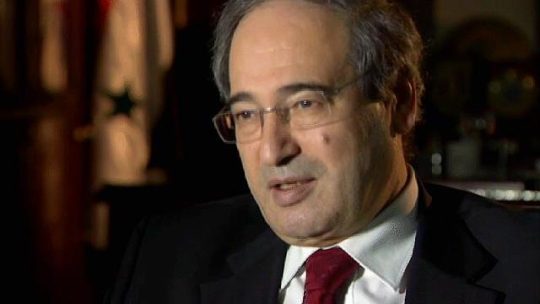
Syrian Foreign and Expatriates Minister, Faisal Mekdad, emphasized that what is happening in Gaza is a genocide perpetrated by Israeli Prime Minister Benjamin Netanyahu, who has killed over 12,000 children and 8,000 women, and completely destroyed the Gaza Strip.
In a statement on the ministry’s X account, Mikdad said “What European Union strategists say about building a world based on rules and regulations has faded. The murderer Netanyahu has not left any rule unbroken: International law, international humanitarian law, the Universal Declaration of Human Rights, the United Nations Charter, children’s rights, women’s rights, democracy, disarmament, and peace.”
He continued to say what is more dangerous than Netanyahu and his ruling “gang’s” crimes, is the support he received from many EU leaders and the blind trust Washington has given him.
“Everyone knows that much of what the European Union leaders did before and after was a form of clowning, hypocrisy, and lies, and their defense of Netanyahu’s crimes led to pulling the rug from under all of their feet and showed them as they really are, little puppets in the hands of Zionism and enemies of peoples’ rights and aspirations,” he said, slamming the West.
The special military operation, Avdeyevka, and Gaza
By Yuriy Zinin – New Eastern Outlook – 09.03.2024
The name Avdeyevka, which is known to few in the Arab world, has featured prominently in the Middle Eastern media in recent weeks. Media commentators have examined the battle to liberate this city, its significance, and discussed the opinions of political analysts and observers on the future course of military operations in the conflict, including its international impact.
A number of military observers quoted in the media have referred to this event as “a turning point in the course of the war,” similar in significance to the conquest of Bakhmut by Russian forces last year, with both cities being of similar strategic and symbolic value.
For example, Rizk Al-Hawalda, a retired brigadier general and military expert from Jordan, believes that the capture of Avdeyevka will allow Russian forces to further strengthen their position in Ukraine, and increase their combat capability to defend the territories under their control. For the Ukrainian forces, however, the capture means that their ability to retake what they have lost has been thwarted, leaving them to face the fact that this land has now become Russian territory, and that this loss is irreversible.
Other authors believe that the capture of this city will allow Russian forces to control the space around Donetsk and create logistical corridors to expand the scope of their operations.
The Egyptian Al Qahera News edition sees the capture of Avdeyevka as an “important victory” achieved by Russian troops just before the second anniversary of the start of the special military operation. They outnumber the enemy on the battlefield, both in terms of troop numbers and equipment, giving them an advantage when attacking Ukrainian formations, which are short on weapons and soldiers amid cracks in the West’s military support for Kiev.
These changes are also evident in the range of media responses from the Middle East. In general, they adopt a balanced tone when discussing the results of fighting after two years of the special military operation, and the political and economic consequences of the combat.
For example, the influential Saudi newspaper Al-Sharq Al-Awsat opines that Washington and its allies have miscalculated. It is referring to the West’s imposition of anti-Russian sanctions, its attempts to undermine Russia’s economy, deprive it of revenues from hydrocarbon exports, and isolate it in the international arena, etc.
Russian President Vladimir Putin’s calculations, it suggests, are based on common sense and are absolutely correct. He has carefully avoided the traps laid out for him and been able, with skill and step by step, to dismantle the economic blockade declared against his country, and the authors also admire the undeniable victories of Russian troops on the military frontlines.
A number of other Arab publications take a similar line. A review of the events in Ukraine, as they see it, teaches a number of lessons. One is that a state’s policy should not be based on promises of support from outside, and should be founded first and foremost on its own interests. Now, the West’s promises of support have failed. The former media rhetoric that Ukraine is bulwark for Europe is on the wane.
Europeans are suffering from interruptions to the supply of Russian gas, supply chain disruption, inflation and interest rate hikes, etc. The European countries see resolving their own economic crises as their priority, and do not wish to suffer because of Ukraine. In short, the credibility of the Western coalition supporting Ukraine has fallen, and, as the present author notes, it looks as if Ukraine will have to go into the third year of the war alone.
Significantly, such assessments are increasingly being reflected in public opinion in the Middle East. Recently, Akhbar Al Aan, a leading news platform in Dubai (UAE) conducted a poll among its readers about Western military aid for Ukraine. To the question: would this help rescue Kiev, 85% of respondents answered “no” and just 15% answered “yes”.
Today, a number of political observers in the Middle East are drawing parallels between the conflict in Ukraine and the war in Gaza and reaching their own conclusions. In particular, they note the similarity of behavior styles of the leaders of the two countries: Volodymyr Zelensky and Benjamin Netanyahu. They conclude that both are characterized by a pathological desire to deny reality and are stubbornly following their chosen courses, despite the obvious failures of their strategies….
Ukrainian President Volodymyr Zelensky showed no sympathy for the Palestinian victims of the war in Gaza. He did not hesitate for a second, but supported the Israeli war machine, Akhbar Al Aan claims.
Other authors criticize the “blindness” of those countries that oppose Russia’s “invasion” of Ukraine but are unable to see what Israel has been doing in the Gaza Strip since October 2023.
In their view, one of the lessons of the Gaza conflict involves the issue of trust in the West. It promotes and continues to proclaim its values and principles as universal, applying to all people regardless of religion, race or nationality. But these trumpeted values have not been applied in Gaza.
Many political observers share this view. The disillusionment with Western values that has emerged in the current Israeli-Palestinian conflict in the Gaza Strip has left a deep wound in the hearts and minds of Arab elites who had placed their hopes in an engagement with Western civilization. This will push the Arab nations’ Islamic civilization, and the civilization of the Global South in general, further away from the West, Arab media commentators predict.
Yuri Zinin, senior researcher at the Center for Middle East and Africa Studies at the Moscow State Institute of International Relations (MGIMO).
Peaceful times are over – Tusk

RT | March 9, 2024
The peaceful times in Europe are long gone, Polish Prime Minister Donald Tusk said, painting a grim picture of the future of the continent amid the continuing tensions with Russia.
“The times of peace are over. The post-war era is over,” Tusk said at a meeting of the European People’s Party (EPP) in Bucharest, Romania on Thursday. “We are living through new times – the pre-war era.”
“The fight against totalitarian trends, corruption, and lies is taking place on many fronts. The most dramatic illustration of this is, of course, what is happening in the war in Ukraine,” the prime minister continued.
“We are facing a simple choice: either we fight to protect our borders, territory and values, and defend our citizens and future generations, or [accept] the alternative that is defeat.”
Tusk made his comments as the Russia-Ukraine conflict entered its third year last month, with many EU heads of state renewing their pledges to continue military and financial aid to Kiev.
NATO Secretary General Jens Stoltenberg said in February that the US-led alliance should brace for “a confrontation that could last decades.” US President Joe Biden vowed during his State of the Union address on Thursday to continue backing Ukraine and accused Russian President Vladimir Putin of “sowing chaos around Europe and beyond.”
Moscow has blamed the West for instigating current tensions, arguing that NATO’s expansion eastward is one of the key causes of Russia’s ongoing military operation in the neighboring state. Putin stated last year that the West’s true goal is “the breakup” of Russia.
The Russian leader, however, stressed that Moscow has no intention of attacking NATO member states unless it will be attacked first.
Zelensky critic claims Spain ignoring ‘assassination attempt’
RT | March 7, 2024
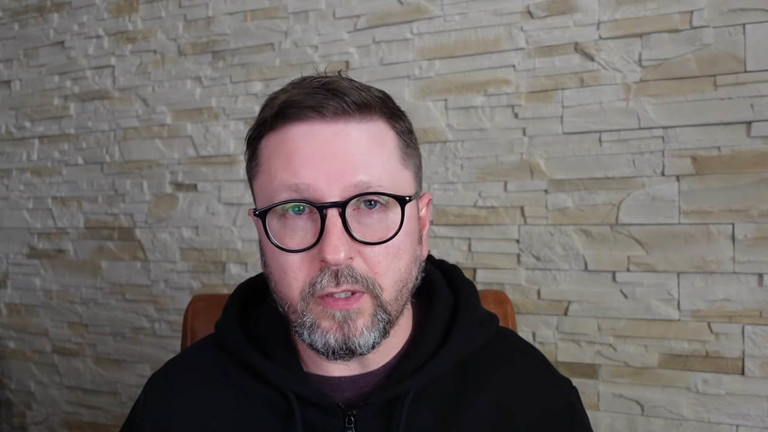
YouTuber Anatoly Shariy has accused the police in Catalonia of trying to ignore Wednesday’s drive-by shooting, which he alleges targeted him and his wife. Ukraine had banned his political party in mid-2022.
Shariy and his wife Olga were driving towards their home in Roda de Bera near Tarragona – southwest of Barcelona – on Wednesday morning when a masked man pointed a “machine gun” at their car.
“They tried to kill us in broad daylight, in the middle of the street,” Olga told the outlet El Diario on Wednesday evening. Since then, however, Shariy has lambasted the police for dragging their feet.
“Day concluded. The police did not question witnesses who saw the [would-be] murderer escape from the crime scene,” Shariy posted on X (formerly Twitter) on Wednesday evening, in Spanish. “They want me to be killed. There are no more doubts.”
He continued to criticize the police on Thursday, pointing out that they had failed to question the postman who witnessed the shooting. “No action was taken to search for the killer,” Shariy added in another post.
According to El Diario, the Shariys have faced “threats and harassment” ever since “neo-Nazi groups” from Ukraine discovered their location. Last October, someone threw Molotov cocktails at their home.
Earlier this week, Olga told the outlet, the Shariys received a tip – which included recordings of phone conversations – that someone had offered money for Anatoly’s death and asked organized crime groups for his exact location. They reported this to the police, she said, but nothing was done.
Shariy was detained by the Spanish authorities in May 2022 on Ukrainian charges of “treason”, but was released soon thereafter. Spain eventually rejected Ukraine’s extradition request.
A frequent critic of the Ukrainian government, Shariy runs a popular YouTube channel with almost 2.9 million subscribers. He founded a libertarian-leaning party in 2019, the same year Vladimir Zelensky became president, and while it fell short of getting into the Ukrainian parliament, it won several seats on regional councils. Zelensky’s government banned it in early 2022 and rejected all its appeals in October that year.
Europe is Fearful and Desperate
By Alastair Crooke | Al Mayadeen English | March 4, 2024
A leading Establishment newspaper in Europe says that “what is driving European politics at present – is fear”. The headlines ring out with apprehension: “Germany’s élites run scared, as Putin rains down death on Ukraine”. The British Prime Minister calls an emergency press conference to warns of ‘democracy at risk’ from ‘extremism’ on the eve of a by-election win by George Galloway, an articulate, if somewhat unruly, ‘thorn’ in the side of conventional politics (but hardly any ‘extremist’).
In the US too the liberal sphere is in meltdown over the publication of a just-released book: White Rural Rage: The Threat To American Democracy, in which “rural whites are [described as] the most racist; xenophobic; anti-immigrant; anti-gay; and conspiracy-minded, anti-democratic” demography in America. They “don’t believe in an independent press or free speech”, and are “most likely to accept or excuse violence”.
Of course, the fear is being — in the first instance — diverted outwards towards the claim that this is somehow Russia’s ‘doing’ — a looming ‘menace’ further stoked by claims of President Putin’s ‘imperial aspirations’, way beyond Ukraine. There is however (to invert the usual MSM meme), absolutely no evidence for these claims (from anything Putin has said over the years).
What is spooking the West more immediately is the cascading defeats inflicted on Ukrainian forces, after the Avdeevka rout. The new Ukrainian commander, General Syrski, in the wake of the flight, announced a retreat to new defence lines, but as some had predicted, it turned out that the ‘more favourable lines’ Syrski promoted did not exist.
Ukrainian photographers Konstantin and Vlada Liberov who document the war from the ground demanded from Syrski: “So what is the next “fortetsia” – Pokrovsk? Or just Konstantinovka?”
“Where is this second line of defence?” Yuri Butusov, editor-in-chief of Censor— following his trip to this area – asks: “There are no words. Gap: here in Kiev – the supreme commander-in-chief says one thing, but at the front something completely different is happening. I want to say that no field lines of fortifications have been built beyond Avdeevka so far. I saw Russian drones attacking our soldiers in their burrows – in the middle of a field”.
There are no constructed defence lines – only hurried improvisations – whilst Ukraine resorts to simply throwing its reserves at the deficiency – so to prop up the incremental retreat. Did NATO leaders not spot this defence-line lacuna? Apparently not …
And so one leg to the current panic is just this: The EU has heavily over-invested in its Ukraine project, and now sees it fast crumbling. Hence President Macron’s hasty summons of EU states (at 24 hours’ notice) to the Elysée Palace to hear him warn that the situation on the ground in Ukraine was so critical, and the stakes for Europe so high, that: “We’re at a critical point in the conflict where we need to take the initiative: We’re determined to do whatever it takes for as long as it takes”.
What Macron in fact proposed however, shocked the gathered leaders. He advocated committing detachments of European special forces to Ukraine, not so much directly to fight the Russian forces, but to act as vulnerable strategic ‘tripwire’ deterrents to Russia – which, were they attacked, would ‘trip’ a full-throated NATO retaliation down onto the head of Russia.
These tripwire forces, Macron claimed, would form strategic deterrents to Moscow’s military room for manoeuvre — oases of ‘untouchable’ NATO, scattered through Ukraine. His colleagues, horrified, demurred; they saw the emplaced tripwires as the conveyor belt leading to WWIII: ‘Madness’, and ‘no thank you’.
The ‘other leg’ to European desperation was given away by PM Sunak’s rush to the microphone in the wake of the Rochdale by-election outcome to warn that democracy is in peril from extremism.
One commentator opined: ‘Rishi Sunak was right’: “This is not politics, not even of the radical kind … It is inchoate, incoherent rage which is ready to make common cause with anyone else, who is enraged even on contradictory grounds”.
If this reaction sounds a bit over the top – just because George Galloway overwhelmingly won in Rochdale – let us ‘join up the dots’ for you:
The same commentator (Janet Daley in the Telegraph ) avers: “To bring this right up to date, we now have an entity called the Workers Party – a name that summons up traditional Left-wing dedication to the interests of working class people – winning a by-election in Rochdale by somehow conflating the Palestinian cause in Gaza with local working class needs”.
Ouch! That is what hurts. Echoes here from the Michigan primary in the US, where a coalition of pro-Palestinian groups who had set a modest target of 10,000 ‘uncommitted’ votes — Trump’s margin of victory in Michigan in 2016 — to send a message to President Biden that voter frustration over the Gaza war could cost him dearly in the November election. In the event, however, the pro-Palestinian support blew past the 10,000 target and clocked in at nearly 101,400 votes.
Message sent — and as the electoral desperation in Democratic circles, indicates, ‘message received’.
Just to be plain: Events in Gaza and in Ukraine are unravelling long-standing political power control structures in the EU, in Europe and in the US. This is why there is panic and double-down.
Latest European Propaganda: Russia Is Flooding Europe With Illegal Migrants
By Robert Bridge | Strategic Culture Foundation | March 5, 2024
Western media is in full-blown hysteria mode, asserting that Vladimir Putin is ‘weaponising’ the flow of migrants in an effort to destabilize upcoming European elections.
Right up there with ridiculous claims of “little green men” and “tractor protests from Moscow,” Europe is now accusing Russia of fielding paramilitary forces and private mercenaries for the purpose of directing waves of migrants from Africa across the Mediterranean Sea and into the heart of Europe, an apparent effort to ratchet up the spring fever just in time for general elections across the continent.
With no loss of irony, Western propagandists are disseminating allegations that the Kremlin is in the process of agitating those African nations that for so long suffered from European colonial rule, namely Burkina Faso, Mali, Sudan, Ghana, Central African Republic and Libya, a formerly highly developed country that was destroyed by a U.S.-led attack in 2011.
The Telegraph would have its British readers believe it has “seen” intelligence documents detailing plans for “Russian agents” to create a “15,000-man strong border police force” comprising former militias in Libya to control the flow of migrants. Anyone hoping to review something like photographic evidence of this massive army would be advised not to hold their breath. Apparently, the thousands of Russian recruits are so technologically advanced they are invisible to spy satellites.
While it stands to reason that millions of desperate refugees from these turbulent nations would seek shelter in Europe, or possibly even in the United States, risking a trans-Atlantic journey to reach the wide-open U.S.-Mexican border, Brussels simply hopes to deflect attention away from its immigration failures onto Moscow, a sham that is transparent to anyone with even a half-functioning brain.
Let’s not forget that we’ve heard such allegations before.
Without so much as a single apprehended trespasser, Moscow was accused of trying to foment a refugee crisis by transferring asylum seekers to its border with Finland, thus prompting the new NATO lackey to close its land crossings with Russia in contravention of all diplomatic norms. The truth of the matter is that Helsinki was aggravating Russophobia to make the bitter pill of increased spending on Western-made (read: American) armaments go down smoother for Nordic voters.
Belarus, Russia’s closest ally, has also been accused – once again, without a shred of evidence – of sending immigrants from the Middle East and North Africa to its borders with Poland, Lithuania and Latvia.
The latest wave of Russophobia to strike the European capitals comes at a time when migration is set to be a key issue in general elections on the continent, as well as in the UK, where the drumbeat about Russian-sponsored migrant invasion parties resonates the loudest.
An unidentified security source reportedly told the Telegraph : “If you can control the migrant routes into Europe then you can effectively control elections, because you can restrict or flood a certain area with migrants in order to influence public opinion at a crucial time.”
“A failure to control the number of migrants coming to the UK is already seen as a major weakness for Rishi Sunak who is struggling to push through a scheme to deport illegal migrants to Rwanda to stop the flow of small boats across the Channel,” the British daily continued.
Sunak made “stopping the boats” one of his top priorities as Prime Minister, though a survey of British sentiment earlier this year showed that three-quarters of voters believe the pledge has not gone well.
Since June 2023, over 52,000 illegal migrants were recorded as entering the UK, up 17 percent on the previous year. Data released last month revealed that the number of illegal migrants granted asylum in the UK hit a record high in 2023 as border guards waved through thousands of applications “in an attempt to clear a huge post-pandemic backlog.” What is even more laughable, albeit totally predictable, is that the people doing the “waving through” were British border officials, not secret “Russian agents.”
With EU elections in June, the European parliament looks set to shift hard to the right, with migration already proving to be a key issue for voters. Who best to blame for this approaching debacle? Certainly not Angela Merkel, who is personally responsible for much of the mess. Once again, Russia serves as a convenient bogeyman for the blockheaded decision-making processes coming out of the EU, and we’ve heard such accusations before.
In February 2016, one year after Merkel opened the floodgates to some 2 million migrants, many of them Muslims from Syria, U.S. General Philip Breedlove, Head of NATO forces in Europe, blamed Russia for working to exacerbate the refugee flows in a dastardly ploy to destabilize and destroy the EU. In a testimony before the House Armed Services Committee, he said, “Together, Russia and the Assad regime are deliberately weaponizing migration from Syria. In an attempt to overwhelm European structures and break European resolve.”
Nearly a decade later, the same reckless utterances are being made, although this time around the European public, more skeptical about ‘Russia the enemy’ narrative following the Nord Stream fallout, is prepared to express its anger at the ballot box come June during elections for European Parliament. Far-right populist parties are polling well in several EU countries, notably in Austria, Germany, Italy and the Netherlands. This terrifies Brussels, as the threat of a right-wing takeover appears imminent, and Europe has only itself to blame for that.
Sending NATO soldiers to Ukraine is “apocalypse warning,” says Slovak prime minister
By Ahmed Adel | March 5, 2024
The Prime Minister of Slovakia, Robert Fico, said on March 2 in a video posted on social media that sending soldiers from the European Union and NATO to Ukraine could precipitate a global apocalypse. The social media post was made on the same day that the Slovakian foreign minister met with his Russian counterpart Sergey Lavrov.
Fico also highlighted Ukraine’s inability to resolve the conflict despite the West’s substantial financial and military aid. He emphasised that an EU and NATO military presence in Ukraine could potentially alter the dynamics of the conflict and trigger catastrophic consequences.
“The West sees that, despite significant financial and military aid, Ukraine is incapable of resolving this armed conflict,” said the Slovak prime minister, adding: “The situation could change with the arrival of EU and NATO military personnel in Ukraine, but then there would be nothing left but to wait for the arrival of the global apocalypse.”
Fico highlighted the pressing need for modern air defence systems for Ukraine but warned that the West could not provide these systems without a commitment to maintaining and operating this equipment. He argued that sending Western military personnel would only worsen the conflict rather than resolve it.
French President Emmanuel Macron said on February 27 during a conference of European leaders that he does not rule out sending troops from Western allies to Ukraine and announced a coalition to deliver missiles to the Ukrainian Army.
“There’s no consensus today to send in an official, endorsed manner troops on the ground. But in terms of dynamics, nothing can be ruled out,” declared Macron.
However, several NATO members, including Slovakia, ruled out the possibility of on-the-ground support for Ukraine which has been in armed conflict for more than two years.
It is recalled that on February 26, Fico warned when speaking ahead of a meeting of EU and NATO national leaders in Paris that several EU and NATO members are considering military deployments to Ukraine. He cited a “restricted document” listing topics to be discussed in Paris that “sends shivers down your spine.”
“These topics,” the Slovak said, “imply that a number of NATO and EU member states are considering sending troops to Ukraine on a bilateral basis. I can’t say for what purpose or what they would do there.”
According to Fico, “This [Paris] meeting is confirmation that the Ukraine strategy of the West has completely failed.”
Macron’s statement was intended to send a strong warning to the Kremlin, but it failed miserably since his comments revealed Western divisions and disagreements instead. German Chancellor Olaf Scholz led the group of European leaders who disagreed with Macron’s claim that NATO had not ruled out sending troops, whilst Washington abandoned Paris in the idea of sending troops and let the French president receive all the flak.
A survey of 12 European Union countries, commissioned by the European Council on Foreign Relations and published on February 21, reveals that only 10% of respondents believe Ukraine can defeat Russia. Furthermore, only 31% of respondents favoured Europe supporting Ukraine until it regained lost territory, while 41% favoured Europe pushing Ukraine to negotiate a peace agreement with Russia.
Unlike many of his European counterparts, Fico acknowledges the reality that Ukraine cannot win the war with Russia. For this reason, Fico sent Foreign Minister Juraj Blanar to hold talks with his Russian counterpart on March 2 on the sidelines of a diplomatic forum in Turkey, a rare high-level encounter between a European Union member state and the country Brussels has attempted to isolate.
The Slovakian prime minister highlighted that the meeting “was an example of our balanced and sovereign [foreign policy],” adding that Blanar and Lavrov spoke about the possibility of a Ukraine peace summit in Switzerland.
For his part, Blanar said in a statement that the war did not have a military solution and urged peace talks. The foreign minister added in the statement that he told Lavrov that Slovakia was against creating an “iron curtain” between Russia and the EU, and its position was based on respect for international law principles, such as territorial integrity and sovereignty.
Fico returned to power after winning an election in 2023 on promises to stop state military aid to Ukraine and has been critical of anti-Russia sanctions. The leftist populist leader also recently said the West’s approach to the Ukraine war is “an absolute failure,” which, as observed by the European Council on Foreign Relations survey, is what most EU citizens also believe. Fico joins Viktor Orban, prime minister of neighbouring Hungary, in resisting major pressure from Brussels and Washington to relent on their efforts to normalise with Moscow, and his actions once again demonstrate the fractures in the EU and NATO.
Ahmed Adel is a Cairo-based geopolitics and political economy researcher.
Featured Video

Racist Seinfeld Dances for Joy as Bibi Unveils His New Map
or go to
Aletho News Archives – Video-Images
TV Drama Review
Japanese drama projects Japan’s wartime atrocities onto Chinese characters

Global Times | October 25, 2026
By portraying Chinese characters as perpetrators of ruthless violence while casting Japanese Self-Defense Forces (SDF) intelligence operatives as defenders, the season 2 of the Japanese drama Vivant has recently drawn criticism from Chinese netizens, who argue that its depiction turns historical reality on its head while ignoring Japan’s wartime atrocities.
The TBS drama series – a spy suspense story in which an alleged unofficial intelligence unit of the SDF operates across the globe — has attracted a passionate fanbase. Its currently airing season 2 opened with a household rating of 18.8 percent, the highest for a TV drama this year, according toa commentary article by Japanese media Toyo Keizai.
What draws attention is the portrayal of the enemies in the series, the article noted. Scenes in which the Chinese organization subjects kidnapped members of the SDF unit to brutal torture are repeated with unrelenting intensity.
It is rare for Japanese TV dramas to explicitly portray a real-life country as the enemy, the article noted.
Japanese Prime Minister Sanae Takaichi also made a reference to the drama, saying that she has been recording Vivant and hopes to binge-watch it over the year-end and New Year holidays, according to Japanese media outlets.
China’s CCTV News report on Sunday revealed that the drama features scenes in which Chinese personnel cut off the fingers of and stab Japanese intelligence operatives in the abdomen. Such acts bear striking similarities to the torture inflicted on Chinese nationals by invading Japanese troops during the World War II.
The drama distorts the truth by attributing these atrocities to modern Chinese characters. Beneath the surface, it subtly glorifies Japan’s cross-border overseas operations, blurs the functional boundaries of the SDF and implicitly promotes an expansionist narrative, per CCTV News. … continue
Blog Roll
 Aletho News
- EU facing trillion-euro debt hole while seeking more cash for Kiev
- How US, Europe, Persian Gulf states exhausted missile stockpiles, splurged billions to defend Israel
- Up in arms… Koreans reject U.S. empire’s plan to make South Korea the next Ukraine
- Iran, Turkey, Pakistan, Saudi Arabia could advance region-led security framework in Tehran: FM spox
- Netizens condemn Japanese drama for projecting Japan’s wartime atrocities onto Chinese characters
- Racist Seinfeld Dances for Joy as Bibi Unveils His New Map
- A West Bank War for Netanyahu’s Election Campaign, Could It Backfire?
- Yemen denounces European Parliament’s ‘hypocritical’ push to blacklist Ansarullah
- Qalibaf: UAE’s UN bid aims to ‘clear the runway’ for ‘Greater Israel’, whitewash genocide
- Pakistan reopens Iran border after boosting security: Report
- If Americans Knew
- An error has occurred; the feed is probably down. Try again later.
- No Tricks Zone
- Sudden Stratospheric Warming, Powerful El Niño Combination May Lead To Extreme Europe Cold, Energy Crisis!
- Two New Studies Find Thwaites Glacier Melt Cannot Be Driven By Human Activity Or A Warming Ocean
- E-Cars Reduce CO2 Emissions By Only 41% Compared To Internal Combustion Engine Vehicles
- Predictions Made By Renowned Climate Professor Over Past Decades Have Been Proven To Be Poor
- New Study Suggests Large Regions Of The Pacific Ocean Have Been Cooling For The Last 80 Years
- Germany’s Green Energy Debacle: High Energy Costs Force Kahla Porzellan to Close After 182 Years!
- New Study: 50 Years Of The Most Aggressive ‘Net Zero’ Policies Can Only Affect The Global Climate By 0.03°C
- US September “Heat” Was No Record…Many Records Set Decades Ago
- Latest European Green Energy Debacle; Portugal’s Largest Flagship Solar Park Insolvent!
- Green Energy Debacle: German Expert Professor Fritz Vahrenholt Warns Of Severe Economic And Social Consequences

