A Rogue’s Gallery in Paris
We Aren’t Charlie
By Robert Fantina | CounterPunch | January 16, 2015
Much has already been said about the hypocrisy of world leaders, all of whom oppose free speech and freedom of the press to one degree or another, jumping on the ‘I am Charlie’ bandwagon and marching in Paris. Reminiscent of the massive demonstrations in support of the U.S. after 9/11, this rally was just another ‘feel good’ moment, full of photo opportunities for politicians masquerading as statesmen to use in future campaigns.
Let’s look for a minute at just some members of the Rogues Gallery that were on display in Paris.
French President Francois Hollande: As president of the country that, to hear the media and world leaders describe it, is now the front line of some war at which civilization is at stake, Mr. Hollande, of course, had to be there. So what if France banned pro-Palestine demonstrations last summer, when Israel was slaughtering thousands of defenseless men, women and children? Who cares if France assisted in the training of Muslim radicals to fight in Syria? They should have known that their victims were only to be other Muslims, not good, respectable non-Muslims who make a career out of mocking Islam. France taught them how to kill, but perhaps didn’t specify that it was only to be in Syria. But what is any of that? When Muslims, trained and armed by France, shoot up a magazine office in Paris, killing several people, and then go to a market to do the same, somehow we all become Charlie.
Turkish Prime Minister Ahmet Davutoğlu: According to a recent report, Turkey has the distinction of currently imprisoning forty journalists, more than any other country in the world. But, what are facts, when a good photo op beckons?
Russian Foreign Minister Lavrov: Siberian journalist and blogger Dmitry Shipilov was jailed in Russia for three months in 2014, for the crime of “insulting a government servant in the course of his work.” Free speech isn’t quite as free in some places as it might be.
Tunisian Prime Minister Medhi Jomaa: Mr. Yasine Ayan is currently imprisoned for ‘defaming the army’. Mr Ayan, a civilian, was convicted by a military court and sentenced to three years imprisonment, due to Facebook posts he created in August and September of 2014.
Israeli Prime Murderer Benjamin Netanyahu: Perhaps this writer saved the best for last. The word ‘hypocrite’ simply isn’t strong enough here, but unfortunately, a better one doesn’t exist. Israel, under Mr. Netanyahu’s leadership, arrests and jails people for Facebook posts critical of Israel. During last summer’s genocidal bombing of the Gaza Strip, press vehicles were not ‘collateral damage’; they were successfully targeted, killing the journalists riding in them. Israel pays university students to write blogs and other articles favorable to Israel. It prevents United Nations personnel from visiting the Gaza Strip to see firsthand the damage wreaked there by Israel.
Absent from this Paris love fest was a top representative from the United States. Is it possible that U.S. President Barack Obama knew that for the U.S. to go to France to show support for free speech would simply be too ludicrous? Perhaps he thinks of recent police assaults on reporters in Ferguson, Missouri. Or possibly Edward Snowden, living in asylum in Russia after having revealed the extent to which the U.S. monitors the actions of its own citizens, citizens around the world, and world leaders, comes to mind. Or could he have thought of Chelsea Manning, serving a thirty-five-year sentence for releasing the largest set of government-classified documents ever released to the public, information that was more than a little embarrassing to the government? Or maybe his thoughts were not quite so specific. Knowing that profit-making corporations control most of the ‘mainstream’ press in the U.S., Mr. Obama must surely be aware that, while many people may have the right to speak freely, there is no opportunity for them to do so. The airwaves only broadcast what their corporate masters demand. For example, Occupy Wall Street demonstrators in the thousands were occurring for weeks before any major news stations deemed them worthy of reporting.
Well, what is any of that, if people have a brand new hashtag (#jesuisCharlie), and get to feel a sense of shared outrage? And, to add icing to the rather stale and poorly-made cake, those perpetrating the crime were Muslims, a foreign-looking, foreign-sounding people who wear such things a hijabs and kufiyahs. ‘Different’, of course, must be bad. Just because nearly 25% of the world’s population is Muslim is no reason for people to learn anything about them or, heaven forbid, accept them as fellow human beings. If the media says they are terrorists, hating western society for its freedoms, then it must be so. One wonders why the nearly constant bombing of mainly Muslim nations hasn’t proven to them yet the benefits of western society.
Following the 9/11 attacks, flag lapel pins, and flag decals on car windows were all the rage. They enabled people far removed from the reality of suffering to feel that they were ‘doing their part’ and ‘supporting the troops’. It was never necessary to look at any motivations that might have been behind those attacks; after all, when politicians like New York City Mayor Rudy Giuliani were telling the public that ‘they hate us for our freedoms’, well, what else is there to say? Just because the U.S. supports the most repressive Middle Eastern regimes, bombs citizens of the nations it doesn’t support, kidnaps and tortures suspected ‘terrorists’ and generally causes untold suffering, is no reason, a true, flag-waving patriot would say, for them to hate us. No, it is our cherished freedoms (similar to those enjoyed by Canada, Australia, most of Europe, much of South America, etc.), that motivates their hatred.
And now we are all supposed to be Charlie, whatever that means. But a clever phrase, an attractive sign, and the mistaken belief that by waving it one is doing ‘something’, is sufficient for many people. Tomorrow we all go back to our own little worlds, while the same heads of state that piously marched in Paris throw bread and water into the cells of imprisoned journalists, control through wealthy corporations which events become public knowledge and which don’t, and continue to repress their own citizens and press. And then come together again, in a pseudo show of solidarity the next time some event occurs that the governments and media choose to exploit. That it will most likely be at the expense of Muslims is an additional tragedy.
Robert Fantina’s latest book is Empire, Racism and Genocide: a History of US Foreign Policy (Red Pill Press).
Baghdad 1950. Paris 2015?
False Flag Attacks by Zionists Against Fellow Jews…

Left: Zionist agent in Iraq, Naeim Giladi, circa 1947; right: Iraqi Jews arrive in Israel 1951
By Richard Edmondson | Fig Trees and Vineyards | January 14, 2015
It is said that there is nothing new under the sun.
Jewish leaders talking up the threat of “anti-Semitism” in order to induce Jews to immigrate to Israel is of course not new. Such talk emanating in the immediate aftermath of what appear to have been false flag attacks by Zionists against fellow Jews–this also is not new.
“To all the Jews of France, all the Jews of Europe, I would like to say that Israel is not just the place in whose direction you pray, the state of Israel is your home,” Israeli Prime Minister Benjamin Netanyahu said over the weekend in the wake of the attacks in Paris.
Netanyahu is certainly up on his Jewish history, but for those of the rest of us who may not be quite as well-versed, here is a little primer.
In the years 1950-51, the city of Baghdad was hit by a series of explosions targeting Iraqi Jews. The attacks caused property damage, injuries, and deaths, creating panic in the Jewish population. At the time the bombings were blamed upon Arab nationalists, raising fears of anti-Semitism and giving rise to a desire by Jews to immigrate to Israel–which of course, at precisely that same time, was in the process of displacing Palestinians and attempting to expand its Jewish population.
What follows is a timeline of events in Baghdad excerpted from a book written and published in the 1990s by an Iraqi Jew named Naeim Giladi. I’ll say a little bit more below about who Giladi was, but for right now just consider the timeline as he presents it:
Six months later-the exact date was March 19, 1950-a bomb went off at the American Cultural Center and Library in Baghdad, causing property damage and injuring a number of people. The center was a favorite meeting place for young Jews.
The first bomb thrown directly at Jews occurred on April 8, 1950, at 9:15 p.m. A car with three young passengers hurled the grenade at Baghdad’s El-Dar El-Bida Café, where Jews were celebrating Passover. Four people were seriously injured. That night leaflets were distributed calling on Jews to leave Iraq immediately.
The next day, many Jews, most of them poor with nothing to lose, jammed emigration offices to renounce their citizenship and to apply for permission to leave for Israel. So many applied, in fact, that the police had to open registration offices in Jewish schools and synagogues.
On May 10, at 3 a.m., a grenade was tossed in the direction of the display window of the Jewish-owned Beit-Lawi Automobile Company, destroying part of the building. No casualties were reported.
On June 3, 1950, another grenade was tossed from a speeding car in the El-Batawin area of Baghdad where most rich Jews and middle class Iraqis lived. No one was hurt, but following the explosion Zionist activists sent telegrams to Israel requesting that the quota for immigration from Iraq be increased.
On June 5, at 2:30 a.m., a bomb exploded next to the Jewish owned Stanley Shashua building on El-Rashid street, resulting in property damage but no casualties.
On January 14, 1951, at 7 p.m., a grenade was thrown at a group of Jews outside the Masouda Shem-Tov Synagogue. The explosive struck a high-voltage cable, electrocuting three Jews, one a young boy, Itzhak Elmacher, and wounding over 30 others. Following the attack, the exodus of Jews jumped to between 600-700 per day.
Zionist propagandists still maintain that the bombs in Iraq were set off by anti-Jewish Iraqis who wanted Jews out of their country. The terrible truth is that the grenades that killed and maimed Iraqi Jews and damaged their property were thrown by Zionist Jews.
The paragraphs above come from Giladi’s book, Ben Gurion’s Scandals: How the Haganah and the Mossad Eliminated Jews, originally published in 1992. An except from the book can be found here, and includes details about the Baghdad bombings as well as a number of other interesting items, including Giladi’s own immigration to Palestine and what he witnessed there. You’ll note, in the timeline, his reference to leaflets being distributed on the same day of the April 8 bombing. That leaflet read in part, “Call to the Jews: To all the tribe of Zion living in Babylon.” It goes on to encourage an exodus out of Iraq:
“For the second time in the history of the diaspora, we have an opportunity to leave. We encourage you to hurry and leave. Today the Jews are in a new era of the history of the diaspora.”
Giladi was born in Iraq in 1929 and became a committed Zionist in his late teens. Later in life he disavowed Zionism, renounced his Israeli citizenship, and moved to the US. His change of heart began when, as a young Jewish immigrant, shortly after arriving in Israel, he encountered “institutionalized racism,” against both Palestinians as well as Arabic or Mizrahi Jews.
The principal interest Israel had in Jews from Islamic countries was as a supply of cheap labor, especially for the farm work that was beneath the urbanized Eastern European Jews. Ben Gurion needed the “Oriental” Jews to farm the thousands of acres of land left by Palestinians who were driven out by Israeli forces in 1948.
At the time in question, the early 1950s, Israel was ethnically cleansing the Ashkelon area and forcing Palestinians who lived there into the Gaza Strip. Farms were indeed taken over, and so, yes, there was a need for cheap labor, and Jews from Iraq provided a good source. And to make sure that the new arrivals were wholly dependent upon their earnings as laborers, Israel saw to it that they were forced, for the most part, to leave their property and possessions behind in Iraq. According to Giladi:
…the pro-British, pro-Zionist puppet el-Said [Nouri el-Said, the Iraqi prime minister–ed.]saw to it that all of their possessions were frozen, including their cash assets. (There were ways of getting Iraqi dinars out, but when the immigrants went to exchange them in Israel they found that the Israeli government kept 50 percent of the value.) Even those Iraqi Jews who had not registered to emigrate, but who happened to be abroad, faced loss of their nationality if they didn’t return within a specified time. An ancient, cultured, prosperous community had been uprooted and its people transplanted to a land dominated by East European Jews, whose culture was not only foreign but entirely hateful to them.
Giladi passed away in 2010, but his conclusions–that the Baghdad bombings were perpetrated by Zionist Jews–are shared by a number of modern historians and writers, including Uri Avnery, who wrote that, “After the disclosure of the Lavon Affair… the Baghdad affair became more plausible.” But perhaps most interesting was the assessment given by career CIA officer Wilbur Crane Eveland:
In attempts to portray the Iraqis as anti-American and to terrorize the Jews, the Zionists planted bombs in the U.S. Information Service library and in synagogues. Soon leaflets began to appear urging Jews to flee to Israel. . . .
Although the Iraqi police later provided our embassy with evidence to show that the synagogue and library bombings, as well as the anti-Jewish and anti-American leaflet campaigns, had been the work of an underground Zionist organization, most of the world believed reports that Arab terrorism had motivated the flight of the Iraqi Jews whom the Zionists had “rescued” really just in order to increase Israel’s Jewish population.
The above is quoted by Giladi and is derived from Eveland’s memoir, Ropes of Sand: America’s Failure in the Middle East, published in 1980.
An Iraqi court went on to find 20 people, all members of the Iraqi Zionist underground, guilty of carrying out the bombings. Two were sentenced to death, and the rest received lengthy prison terms. But by this time the Jewish population of Iraq had been greatly reduced. Giladi says that 125,000 Iraqi Jews ended up immigrating to Palestine, leaving just 6,000 remaining. It also resulted in a split in Giladi’s own family; while Giladi himself made the journey, his parents, he says, were not fooled by the false flag events and remained behind in Iraq.
***
While a good many analysts have concluded that the recent attacks in Paris were a false flag operation, carried out most likely by Israel, others have expressed dubiousness on the matter. Certainly Israeli false flag operations are well documented, but a line would surely be drawn at targeting Jews in such attacks–this seems to be the reasoning. The events in Baghdad 65 years ago, however, would apparently refute this notion. If something is “good for the Jews” collectively, as a whole, then it can apparently be justified even should it be brought about at the expense of individual Jews–that at least seems to be the thinking on the matter by some Jews or Jewish leaders at any rate. Maybe, though, this should come as no surprise, and here I’m reminded of the words of Caiaphas, the chief priest at the time of Jesus: “You do not realize that it is better for you that one man die for the people than that the whole nation perish.”
I highly recommend Giladi’s book excerpt in its entirety, if you have the time, for it makes for fascinating reading. You can also click here to see a video featuring an interview with the author that was conducted in 1994.
Meanwhile Israeli officials continue urging French Jews to make “aliyah” to Israel.
“Due to the impossible security situation [for French Jews], Israel has a responsibility to allocate all necessary resources to facilitate the aliyah and absorption of Jews from France,” said Knesset member Yoni Chetboun.
Other Israeli officials have also spoken out.
“Your place, Jews of France, is with us,” said Rabbi Eli Ben-Dahan, Religious Affairs minister, speaking at a Jewish Home party rally.
“We are all shocked at the recent wave of anti-Semitic attacks in France,” said Knesset member Motti Yogev. “To all our Jewish brothers in France we call: Come and make Aliyah to Israel! Here is your home – our home.”
Another Israeli politician, Yair Lapid, seemed to be going out of his way to push the alarm buttons.
“I don’t want to speak in terms of Holocaust, but…” he said, “European Jewry must understand that there is just one place for Jews, and that is the State of Israel.”
All of this is obviously having an effect. The leader of a Paris synagogue is predicting that between 14,000 and 15,000 French Jews will immigrate to Israel in 2015, and indeed hundreds are reported to have flocked to an “aliyah fair” held on Sunday.

French Jews attend an “aliyah fair” held in Paris on Sunday, Jan. 11, just two days after an attack on a kosher market. A series of such fairs are scheduled as part of an Israeli policy called “France First.”
Is not the holding of an “aliyah fair” just two days after an attack on a kosher market pretty much the equivalent or on a par with the aforementioned leaflets printed by the Zionist underground in Baghdad 65 years ago?
Is there anything new under the sun?
By the way, additional aliyah fairs are scheduled this week for Marseilles and Lyon, with more to come in February and March. The organizing of such events is said to be part of a new Israeli policy–overseen by the Ministry of Immigration Absorption–called “France First.” The implications of such a policy are somewhat alarming. If France is “first,” who’s next? Will attacks similar to the ones last week begin to occur in other countries with large Jewish populations?
No word on whether Netanyahu dropped by the fair in Paris on Sunday, although he was in the city participating in the giant anti-terrorism march–this of course despite the fact that he had been specifically requested by the French government not to come. One person who did pop into the fair, however, was Natan Sharansky, chairman of the Jewish Agency, who had accompanied the prime minister to Paris from Israel.
In his remarks, Sharansky assured the potential immigrants that “the Jewish Agency embraces the French Jewish community at this difficult time and is extending its full support by helping provide for the physical security of Jewish communities across France, increasing our assistance to any individual who wishes to immigrate to Israel, and working to ease immigrants’ integration into the Israeli workforce and Israeli society.”
Translation: don’t worry. The United States will pay for it.
The calls for Jewish immigration today are, of course, motivated by different needs from those of 65 years ago. Recently the Palestinian Central Bureau of Statistics released figures showing that the number of Palestinians throughout historical Palestine will exceed the Jewish population by the end of the year 2020. The figures have been challenged by Israeli academics, who insist the Palestinian statistics are flawed, although certainly the “demographic threat” has been an ongoing Zionist concern.
But prompting an upswing in Jewish immigration probably would not have been the only, and maybe not even the prime, consideration in carrying out the Paris attacks–that is assuming the attacks were a false flag. Other writers have suggested a number of other motivations including payback for France’s support for Palestinian statehood at the UN. (One wonders: was Israel’s “France First” policy adopted before or after the UN vote?)
What is clear, of course, is that terrorist organizations and terrorist armies are being supported by some of the most powerful nations on earth, and that these forces are being used to advance certain geopolitical objectives. The likelihood that such elements will be mobilized in some way in future false flag attacks in Western cities has to be considered high.
Those who aren’t Charlie
By Richard Seymour | Lenin’s Tomb | January 15, 2015
Unfortunately, there are a few troublemakers in our midst, people who aren’t Charlie, who need to be rooted out and dealt with. As explained by Nathalie Saint-Cricq, chief political editor of France 2 (state-owned TV channel):
« C’est justement ceux qui ne sont pas “Charlie” qu’il faut repérer, ceux qui, dans certains établissements scolaires ont refusé la minute de silence, ceux qui “balancent” sur les réseaux sociaux et ceux qui ne voient pas en quoi ce combat est le leur. Eh bien ce sont eux que nous devons repérer, traiter, intégrer ou réintégrer dans la communauté nationale. Et là, l’école et les politiques ont une lourde responsabilité. »
“It is those indeed who are not “Charlie” who must be identified; those who in certain schools refused to observe the minute’s silence, those who “spout off” on social networks, and those who don’t see that this struggle is theirs. Well, they are the ones that we have to identify and treat, integrate or reintegrate into the national community. Schools and the politicians bear a heavy responsibility in this regard.”
In fact (a correspondent tells me, referring to this article), the provisions of recent legislation (13.11.2014) on the monitoring and reporting of school pupils’ speech and behaviour appear to have been put into effect for the first time as the names of children who failed to observe the minute’s silence were reported by teachers or supervisors to the head, then to the rectorat – the regional education administration – and on to the police and prosecuting authorities, to be analysed by the intelligence services, who decide whether the facts in question are serious enough to warrant formal investigation of the pupil and his/her family and social network.
More widely, there are a series of arrests and sentences being handed down for “justification/glorification of terrorism”, including that of a 28 year old man diagnosed with learning disabilities.
If you are not Charlie, would you please speak up so that we can have you arrested and flung in jail, or re-educated?
Persecuted French revisionist scholar: Charlie Hebdo Before and After
On the Contrary | January 14, 2015
Dr. Robert Faurisson, the courageous octogenarian dean of European revisionists who has been repeatedly beaten, prosecuted, jailed and heavily fined in France for publishing doubts about the authenticity of the sacred relics of Holocaustianity, offers his insights into the situation in France in the aftermath of the attacks in Paris.
_________________________________________________________________________________
To Michael Hoffman:
These killings in Paris, at the office of Charlie Hebdo and elsewhere – with 20 dead in all, among whom five were Jews – rightly arouse widespread indignation but Jewish organizations have immediately exploited this indignation for their benefit. They forget that, in large part, it’s been under the pressure of international and French-Jewish groups that France has hastily engaged in all sorts of military expeditions causing so many deaths in the Arab-Muslim world. They forget this country’s responsibility for the creation of the bogus “State of Israel” – soon afterwards arming it with nuclear weapons – and in the appalling fate of the Palestinian people since at least 1948; as well as the presence of Benjamin Netanyahu at Sunday’s rally in Paris which was an affront to an entire Arab-Muslim world. Jewish organizations in France live in anger and war; that being the case, how can they be surprised if their adversaries live in anger and war as well?
Such killings may bring to mind a number of murders committed by Jews who subsequently became “heroes” of Jewish history. On February 25, 1994 Baruch Goldstein, an Israeli army physician armed with an assault rifle, shot dead 24 Muslim worshipers and wounded 125 at the Cave of the Patriarchs in Hebron before being subdued and killed there himself. Goldstein’s nearby tomb is a pilgrimage site for many Jews.
The hysteria we are witnessing now in France, in this month of January 2015, has a precedent: that of May 1990 and the “profanation of the Carpentras cemetery” when Judaic graves were said to have been vandalized. It was the exploitation of that event that made it possible to intimidate the French parliament into enacting a law called “The Fabius-Gayssot Act” of July 13, 1990 — punishing by a term of imprisonment of from one month to one year and a fine of up to 300,000 francs (45,000 euros), along with several other sanctions — those who dispute “the existence of crimes against humanity” (that is, essentially, crimes against Jews), as defined and punished in 1945-1946 by a body that the winners of the recent war had dared to name the “International Military Tribunal” (three lies in three words) of Nuremberg. This law, totally contrary to the French constitution, came into effect by appearing in the Journal Officiel de la République Française of July 14, 1990, anniversary of the storming of the Bastille.
It was due to a fabrication on the part of the Socialist president of the French parliament, Jewish millionaire Laurent Fabius, which he conveyed to a national television audience, alleging that a Jewish cadaver in the Carpentras cemetery had been taken out of its grave and impaled through the rectum with a pole — that the French were stampeded into outrage and indignation which was cleverly exploited: Catholic authorities rang the great bell of Notre-Dame in Paris as a sign of an extraordinary sacrilege having occurred. The Socialist French President François Mitterrand led a march through the center of Paris at the head of the vast crowd of demonstrators. We have now, on January 11, 2015, seen the same scenario repeated in the same place: the Catholic Archbishop having taken the initiative of ringing the Notre-Dame’s bells, and Laurent Fabius, architect of the suppression of the rights of freedom of expression of revisionists in France, in the front rank of the “protesting” dignitaries marching through the streets — our Socialist President François Hollande together with Netanyahu — all supposedly in the cause of freedom of expression.
Moreover, those Jewish organizations pose as being in support of freedom of opinion and expression but, in reality, what they are demanding is increased repression against “Holocaust denial.” Revisionism has made significant progress in recent years here in France, thanks especially to the Internet. Certain Jewish organizations therefore, are working for laws aimed at the censorship of the Internet, of the Ferench-African comedian Dieudonné (who has some 80 legal proceedings pending against him), of the revisionists and of a number of other unbowed men and women.
In conclusion and for want of time, I shall allow myself just three remarks in response to the questions which you sent by e-mail: 1) the name Charlie-Hebdo has, apparently, nothing to do with Charles de Gaulle; it comes, I believe, from the Peanuts character Charlie Brown.
2) Gayssot is the surname of a former Communist MP and government minister, and the Fabius-Gayssot Act is sometimes called the “Faurisson Law” or “Lex Faurissoniana”; I have lost count of the times I’ve been ordered to pay fines or damages on the grounds of this law; other revisionists have been thrown into prison or, like Vincent Reynouard, a father of nine, will be returning to prison. For my part, I’ve endured ten physical assaults – of which eight took place in France. French police have carried out numerous searches and seizures, or attempted seizures, at my home. These police have often refused to protect me in the presence of threats and danger.
3) I hope to be able, before long, to send you an English version of my nine-page article (with illustrations) which I wrote on December 31, 2014. It is entitled: In 70 years, no forensic study proving the existence and operation of the “Nazi gas chambers”!
I dedicated this study to Professor Ben Zion Dinur (1884-1973), founder of Yad Vashem in 1953, who was forced to resign in 1959 for having preferred scientific history to Judaic memory.
http://robertfaurisson.blogspot.fr/2009/03/memoire-juive-contre-histoire-ou.html
I thank you, dear Michael, and congratulate you on the work you have done over so many years, and in such difficult conditions, for the just cause of historical revisionism.
Robert Faurisson, January 13, 2015
‘Snoopers’ Charter’ essential to counter terror threat – Home Secretary
RT | January 14, 2015
UK Home Secretary Theresa May has given her full support to the Communications Data Bill, colloquially known by its critics as the Snoopers’ Charter. She claims without it security agencies are unable to fully protect the public from terrorist attacks.
Giving her response to the Paris attacks in the House of Commons on Wednesday, May said it was imperative that surveillance agencies were able to intercept communications “where it is necessary and proportionate to do so” to monitor terrorist activity.
She also outlined further security measures put in place prior to and following the attack on satirical magazine Charlie Hebdo.
May acknowledged that during the time of the attack the government was reviewing the bill, and said that without the immediate implementation of the bill the security forces’ power was diminishing.
“Every day that passes without the proposals in the Communications Data Bill, the capabilities of the people who keep us safe diminishes,” she said.
“This important legislation will strengthen our powers to disrupt the ability of people to travel abroad to fight, and control their ability to return here … In particular, it will allow the relocation of people subject to Terrorism Prevention and Investigation Measures to other parts of the country.”
Liberal Democrat leader Nick Clegg reaffirmed his party’s opposition to the bill on Tuesday. He claims the powers in the bill would “cross a line” and said privacy was a “qualified right.”
The LibDems made a move to block the bill in 2012, with Clegg saying no government would be able to store people’s personal correspondence while he was in power.
May used her speech in the Commons to reinforce the importance of the measures, saying the lack of cross-party consensus was hindering the implementation of the bill.
She further said its label as a “snoopers’ charter” was a misnomer.
“This is not – as I have heard it said – ‘letting the government snoop on your emails.’ It is allowing the police and the security services, under a tightly regulated and controlled regime to find out the who, where, when and how of a communication but not its content, so they can prove and disprove alibis, identify associations between suspects, and tie suspects and victims to specific locations,” she said.
She added that “it was likely” that such data was used during the Paris shooting, and said it was entirely necessary that UK security organizations have access to this data to prevent similar attacks.
During her speech, the Home Secretary reiterated points made previously by Prime Minister David Cameron and other senior figures in the wake of the Paris attacks.
She said the UK’s terrorist threat level would remain “severe,” meaning a terrorist organization “could attack at any point… without warning.”
Extremists incorporated
The terror act waged on the city of Paris again demonstrates how the West’s so-called war on terror works – or doesn’t work. The extremists on both sides of this divide claim Paris a victory. For the innocent, it is another senseless and painful tragedy.
CrossTalking with Gearoid Ó Colmáin and Hafsa Kara Mustapha.
Israeli Settlement Expansion Plan To Assimilate French Immigrants
IMEMC News & Agencies | January 14, 2015
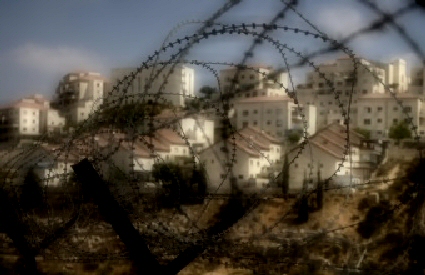
An Israeli plan to expand Israeli settlements for Zionist Jewish immigrants coming from France was revealed on Tuesday, according to the PNN.
The plan aims at expanding Israeli occupation settlements in the West Bank and East Jerusalem, in order to have about 10,000 additional Zionist immigrants live in Israeli-occupied Palestine.
Israeli prime minister Benjamin Netanyahu exploited the French national rally, on Monday, to invite European Jews to move into Israel and flee “European antisemitism”, saying that Israel was their home, despite French leadership and Jewish objections at the French synagogue.
Israel’s Channel 2 TV said, on Tuesday, that Israeli minister of housing, Uri Ariel, sent a message to the settlement committee, saying that Israel was getting ready to receive huge numbers of French immigrants, and that there must be a collective plan to settle them all.
Ariel, in his letter, said there was no doubt that French Jews sympathize with the settlement project, and that the settlement ministry will work on absorbing them all.
PNN further notes that the number of the French immigrants into Israel has been on the increase for years. For 2014, the number hit more than 6,000 — double the amount in 2013. In 2015, about 10,000 French Jews are expected to land in Israeli-occupied Palestine.
Charlie Hebdo and the hypocrisy of pencils
By Corey Oakley | Red Flag | January 12, 2015

It was Herald Sun cartoonist Mark Knight who tipped me over the edge.
To be fair, he wasn’t wholly responsible. If it wasn’t for all the lunacy that preceded him, I probably would have dismissed his cartoon as just another Herald Sun atrocity, more a piece of Murdoch-madness to be mocked rather than trigger for outrage. But context is everything. And after days of sanctimonious blather about freedom of speech and the Enlightenment values of Western civilisation, his was one pencil-warfare cartoon too many.
The cartoon in question depicts two men – masked and armed Arab terrorists (is there any other kind of Arab?) – with a hail of bomb-like objects raining down on their heads. Only the bombs aren’t bombs. They are pens, pencils and quills. Get it? In the face of a medieval ideology that only understands the language of the gun, the West – the heroic, Enlightenment-inspired West – responds by reaffirming its commitment to resist barbarism with the weapons of ideas and freedom of expression.
It is a stirring narrative repeated ad nauseam in newspapers across the globe. They have been filled with depictions of broken pencils re-sharpened to fight another day, or editorials declaring that we will defeat terrorism by our refusal to stop mocking Islam.
It is well past time to call bullshit. Knight’s cartoon made the point exceptionally clear, but every image that invoked the idea that Western culture could and would defend itself from Islamist extremism by waging a battle of ideas demonstrated the same historical and political amnesia.
Reality could not be more at odds with this ludicrous narrative.
For the last decade and a half the United States, backed to varying degrees by the governments of other Western countries, has rained violence and destruction on the Arab and Muslim world with a ferocity that has few parallels in the history of modern warfare.
It was not pencils and pens – let alone ideas – that left Iraq, Gaza and Afghanistan shattered and hundreds of thousands of human beings dead. Not twelve. Hundreds of thousands. All with stories, with lives, with families. Tens of millions who have lost friends, family, homes and watched their country be torn apart.
To the victims of military occupation; to the people in the houses that bore the brunt of “shock and awe” bombing in Iraq; to those whose bodies were disfigured by white phosphorous and depleted uranium; to the parents of children who disappeared into the torture cells of Abu Ghraib; to all of them – what but cruel mockery is the contention that Western “civilisation” fights its wars with the pen and not the sword?
And that is only to concern ourselves with the latest round of atrocities. It is not even to consider the century or more of Western colonial policies that through blood and iron have consigned all but a tiny few among the population of the Arab world to poverty and hopelessness.
It is not to even mention the brutal rule of French colonialism in Algeria, and its preparedness to murder hundreds of thousands of Algerians and even hundreds of French-Algerian citizens in its efforts to maintain the remnants of empire. It is leaving aside the ongoing poverty, ghettoisation and persecution endured by the Muslim population of France, which is mostly of Algerian origin.
The history of the West’s relationship with the Muslim world – a history of colonialism and imperialism, of occupation, subjugation and war – cries out in protest against the quaint idea that “Western values” entail a rejection of violence and terror as political tools.
Of course the pen has played its role as well. The pens that signed the endless Patriot Acts, anti-terror laws and other bills that entrenched police harassment and curtailed civil rights. The pens of the newspaper editorialists who whip up round after round of hysteria, entrenching anti-Muslim prejudice and making people foreigners in their own country. But the pens of newspaper editors were strong not by virtue of their wit or reason, but insofar as they were servants of the powerful and their guns.
Consideration of this context not only exposes the hypocrisy of those who create the narrative of an enlightened West defending freedom of speech, it also points to the predictability and inevitability of horrific acts of terrorism in response. Of course we will never know what was going through the minds of the three men who carried out this latest atrocity. But it is the height of ahistorical philistinism to ignore the context – both recent and longstanding – in which these attacks took place.
The idea that Muslim outrage at vile depictions of their religious icons can be evaluated separately from the persecution of Muslims in the West and the invasion and occupation of Muslim countries is the product of a complete incapacity to empathise with the experience of sustained and systemic oppression.
What is extraordinary, when even the most cursory consideration of recent history is taken into account, is not that this horrific incident occurred, but that such events do not happen more often. It is a great testament to the enduring humanism of the Muslim population of the world that only a tiny minority resort to such acts in the face of endless provocation.
In the days ahead, a now tired and exhausting theatre of the absurd will continue to play out its inevitable acts. The Western politicians who lock up their own dissidents and survey the every movement of their citizenry will go on waxing lyrical about freedom of thought. Muslim leaders of every hue will continue to denounce a terrorism they have nothing to do with, and will in turn be denounced for not doing so often or vigorously enough. The right will attack the left as sympathisers of Islamist terrorism, and demand we endlessly repeat the truism that journalists should not be killed for expressing their opinions. They will also demand that we accept that white Westerners, not Muslims, are the real victims of this latest political drama.
Meanwhile, Muslims in the West will, if they dare to walk the streets, do so in fear of the inevitable reprisals. And pencils aren’t what they will be afraid of.
JE NE SUIS PAS CHARLIE
The Extremely Dark and Unexamined Underside of the Charlie Hebdo Affair
By John Chuckman | Aletho News | January 13, 2015
We hear much about bloody events in Paris being an attack upon western traditions and freedom of the press, and I am sorry but such claims are close to laughable, even though there is nothing remotely funny about mass murder. It certainly is not part of the best western tradition to insult the revered figures of major religions. You are, of course, technically free to do so in many western countries – always remembering that in many of them, a wrong target for your satire will get you a prison term for “hate crimes” – but it does represent little more than poor judgement and extremely bad taste to exercise that particular freedom. What Charlie Hebdo does is not journalism, it is sophomoric jokes and thinly disguised propaganda. Hebdo’s general tone and themes place it completely outside the mythic tableau of heroic defender of free speech or daring journalism, it being very much a vehicle for the interests of American imperialism through NATO.
Of course, the best western traditions don’t outlaw what garments or symbols people may wear for their beliefs, as France has done. Note also the history of some of the politicians making grandiose statements about freedom of the press. Nicolas Sarkozy was involved a number of times in suppressing stories in the press, even once getting a journalist fired. Sarkozy is a man, by the way, who took vast, illegal secret payments from the late Muammar Gaddafi and from France’s richest heiress to secure his election as president. David Cameron had police seize computers at Guardian offices and allows Julian Assange to remain cooped in the Embassy of Ecuador to avoid trumped-up charges in Sweden. Cameron is also best buddies with Rupert Murdoch, the man whose idea of journalism appears to be what he can dredge up to exchange for what he wants from government. His Fox News in the United States enjoys a reputation for telling the truth only by sheer accident. Barack Obama is a man transfixed by secrecy and ready to use all of his powers to punish those who tell the truth, a man who holds hundreds in secret prisons, and a man who regularly oversees the extrajudicial execution of hundreds and hundreds of people in a number of countries.
The parade celebrating the good things of western tradition – which Obama missed but which saw now-potential presidential candidate Sarkozy shove his way to the front – also included such luminaries as the Foreign Minister of Egypt’s extremely repressive government, which, even as the minister marched proudly, held innocent journalists in prison simply for writing the truth. The Prime Minister of Turkey was there celebrating, a man who has put a number of journalists in jail. Celebrating rights and freedoms also was King Abdullah of Jordan who once saw a Palestinian journalist sentenced to hard labor for writing so simple a truth as that the king was dependent upon Israel for power.
We shouldn’t forget, too, that Israel targeted and killed a number of journalists in its Gaza invasions, that the United States’ forces in Iraq targeted and killed a number of journalists, and that “NATO” deliberately targeted Serbia’s state television service with bombing, killing many civilians. Free speech and western traditions, indeed.
There are more doubts and questions in the Charlie Hebdo affair than there will ever be answers. In part this is because the French security forces silenced witnesses, killing three assumed perpetrators in a display which seems to say that Dirty Harry movies are now part of French training programs.
And then we have the sudden death by apparent suicide of a police commissioner in charge of the investigation just as he was writing his report alone at night, an event which received little mainline press coverage. A man in his forties in the midst of likely the biggest case of his career just decides to kill himself?
We should all be extremely suspicious of a trained killer, seen as being informed and exceedingly efficient at his work, leaving behind his identity card in an abandoned car. It really is a touch more serendipity than we would credit in a mystery story. We should all be extremely suspicious of men so obviously well trained in military techniques, about men who were well informed about schedules at the offices they attacked, and about men heavily armed in the center of Paris. People serving in notorious killer outfits like America’s SEALs or Britain’s SAS rarely achieve such complete success as twelve victims, all shot dead, and an easy get-away.
And just to add to the confusion we have the video of one of the armed men shooting a police officer lying on the sidewalk. The armed man, face covered, lowers his AK-47 to within a couple of feet of the victim’s head and fires. The head goes down, but we see no blood. Have you ever seen photos of someone shot in the head with a high velocity weapon? That’s what the Zapruder film is about, and the results are more like an exploding pumpkin than a death at the end of a stage play.
We need to be more than suspicious about anyone or any event which has any connection with ISIS. ISIS is one of the terror groups assembled, armed, and supplied by Saudi Arabia, Israel, and the United States for the deliberate and wanton destruction of Syria. The two brothers killed in Paris both fought in Syria. It certainly would be easy enough for someone to have obtained an ID card there from one of them. Remember, the excesses of ISIS we all read about – at least those that aren’t clearly staged propaganda stunts such as video of a hostage beheading – are the direct result of assembling large bands of cutthroats and fanatics, arming them, and setting them loose to terrorize someone else’s country.
It is the simplistic view of ISIS that the involved intelligence services want us to have that it is a spontaneous fanatical rebellion in favor of one extreme interpretation of Islam. Despite many recruits for ISIS holding what are undoubtedly genuine fanatical beliefs, they almost certainly have no idea who actually pays their salaries or provides their equipment – that is simply the way black intelligence operations work. And those participating in such operations are completely disposable in the eyes of those running them, as when the United States bombs some in ISIS who perhaps exceeded their brief.
Every society has some percentage of its population which is dangerously mad, and if such people are gathered together and given weapons, their beliefs are almost beside the point, except that they provide the targeting mechanism used by those doing the organizing.
We should all be extremely suspicious about any event when a man such as Rupert Murdoch is quoted afterward saying, “Muslims must be held responsible for jihadist cancer,” as he was in The Independent. In case you forgot, Murdoch is a man whose news organizations for years lied, stole, and violated a number of laws to obtain juicy tidbits for his chain of cheesy mass-circulation newspapers. Murdoch also is a man who has had the most intimate and influential relationships with several prime ministers including that smarmy criminal, Tony Blair, and that current mindless windbag and ethical nullity, David Cameron. Publicity from large circulation newspapers, which can swing at a moment’s notice from supporting to attacking you, plus campaign contributions buy a lot of government compliance. Murdoch also is one of the world’s most tireless supporters of Israel’s criminal excesses.
And speaking of David Cameron, Murdoch’s made man in Britain, David felt compelled to chime in on the Hebdo publicity extravaganza with, “Muslims face a special burden on extremism….” Now, why would that be? No less than Murdoch’s creepy words, Cameron’s statement is an indefensible thing to say.
Who has a special burden for the massacre of students at Columbine High school in Colorado? Who has a special burden for Israeli Baruch Goldstein who murdered 29 Palestinians as they worshipped? Do Noweigians bear a special burden for Anders Breivik, who shot 69 people, mostly children, perhaps the most bizarre mass murderer of our times? Does the American Army bear a special burden for Timothy McVeigh’s horrific bombing in Oklahoma City, killing 168, he and his associates having met in Fort Benning during basic training, two of them having been roommates? Perhaps, in both these latter cases, Christianity bears a special burden since these people were exposed to that religion early in life? As was Hitler, as was Stalin, as was Mussolini, as was Franco, as was Ceaușescu, as was Pinochet, and countless other blood-drenched villains?
The late Israeli Prime Minister, Menachem Begin, was responsible for a great many murders, including about a hundred people bombed in a terror attack on the King David Hotel. He also was responsible for the assassination of the distinguished Swedish diplomat, Count Folke Bernadotte, and he started the invasion of Lebanon which eventually left thousands dead, but you’ll have a hard time finding him described anywhere as a “Jewish terrorist” or finding prominent people asking who has a special responsibility for his extraordinarily bloody career.
There is something hateful and poisonous in conflating the religious background of a criminal or mentally unbalanced person and his violent crime. We seem to do this only in cases involving violent men with Muslim backgrounds. Why? How is it possible that even one decent Muslim in this world has any responsibility for the acts of madmen who happen to be Muslim? This gets at one of the deep veins of hate and prejudice in western society today, Islamophobia, a vein regularly mined by our “free” press and by our ‘democratic” governments. Our establishment having embraced Israel’s excesses and pretensions, we have been pushed into worshiping the mumbo-jumbo of Islamic terror, a phenomenon virtually invented in Israel and perpetuated by Israel’s apologists as a way of stopping anyone from asking why Israel does not make peace, stop abusing millions of people, and return to its recognized borders.
Well, we do have an entire industry exploiting every event which may be imagined as terror. I read an interview with the great cartoonist, Robert Crumb, who happens to live in France. When asked if any other journalists had approached him on the topic of controversial cartoons, he said that there weren’t any journalists in America anymore, just 250,000 public relations people. That is precisely the state of American journalism. It digs into nothing, at least nothing of consequence, working full time to manage the public’s perceptions of government and its dreadful policies, from murdering innocents with drones and remaining quiet on the many American and Israeli atrocities of recent decades to manipulating fears of “terrorism” and saying little about such domestic horrors as the many hundreds of citizens shot dead by American police every single year.
The French government is reported to have been quite concerned about Benjamin Netanyahu showing up at the Paris march and making volatile speeches, and they specifically asked him not to come. At first, Netanyahu’s own security service, Shin Bet, agreed that he should not go because the parade in the streets represented a difficult security situation. But neither the host government’s formal request nor the security service’s concerns can stop a man like Netanyahu. France was advised he would come, and the French made their displeasure clear by saying they would then also invite Mahmoud Abbas of the Palestine Authority to the parade, which they did.
Netanyahu not only marched for the cameras at the front rank of a parade where he had no business, he made arrangements with the families of four Jewish victims for an all-expense-paid showy funeral in Jerusalem. None of the victims was even an Israeli citizen, yet at this writing they have all been buried there with pomp and plenty of publicity. But Netanyahu didn’t stop there, he went on to make speeches that the French and other European Jews should leave their countries, riddled with anti-Semitism, and come to Israel, their true homeland. In diplomatic terms, this was what is termed unacceptable behavior which in almost any other case would get you thrown out of a country. In ordinary terms, it was outrageous behavior, much like seeing a seriously drunken guest loudly insulting his host at a party to which he was not even invited.
The ineffectual current President of France, François Hollande, sent notice to Jerusalem that the four dead shop victims were being awarded the Légion d’Honneur, France’s highest honor. The nation’s highest honor, founded by Napoleon over two hundred years ago for exceptional contributions to the state, awarded for the act of being murdered by thugs? Simply bizarre.
I don’t pretend to understand everything involved in this complex set of events, but it is unmistakable that we are being manipulated by a number unscrupulous and unethical people who use murder victims and the public’s natural sympathies for them as board pieces in some much larger game.
There is even a trivial side to these bloody events with many Parisians carrying signs which read “Je suis Charlie,” surely the kind of asininity posing as deep feeling that long has been established in the United States where Walmart teddy bears and plastic flowers with cheap slogans are regularly tossed in piles here and there as memorials to this or that. Perhaps Euro-Disney has had a more devastating influence on French culture than I realized.
What Hebdo execution video really shows
By Jonathon Cook | The Blog from Nazareth | January 13, 2015
I am well aware that I’m stepping into a hornet’s nest by posting this video, which is going viral. Those who wish to silence all debate have an easy card to play here, accusing me of buying into a conspiracy theory. There’s only one problem: unlike the video-maker, I have few conclusions to draw about what the significance of this video is in relation to the official story. That is not why I am posting it.
But it does, at least to my mind and obviously a lot of other people’s, judging by how quickly it’s spreading, suggest that Ahmed Merabet, the policeman outside the Charlie Hebdo office, was not shot in the head, as all the media have been stating.
That said, it does not prove much more. It doesn’t prove that Merabet did not die at the scene. Maybe he bled to death there on the pavement from his earlier wound. It certainly doesn’t prove that the Kouachi brothers were not the gunmen or that the one who fired missed on purpose. Maybe he just missed.
Nor does the video’s removal from most websites prove that there is some sort of massive cover-up going on. Ideas of good taste, especially in the immediate aftermath of a massacre close to home (ie here in the West), can lead to a media consensus that a video is too upsetting. That can occur even if it does not show blood and gore, simply because of what it implies. Herd instinct in these instances is very strong.
But the unedited video clip does leave a sour taste: because unless someone has a good rebuttal, it does indeed seem impossible that an AK-47 bullet fired from close range would not have done something pretty dramatic to that policeman’s head. And if the video is real – and there doesn’t seem much doubt that it is – it clearly shows nothing significant happened to his head either as or after the bullet was fired.
So what points am I making?
The first one is more tentative. It seems – though I suppose there could be an explanation I have overlooked – that the authorities have lied about the cause of the policeman’s death. That could be for several probably unknowable reasons, including that his being executed was a simpler, neater story than that he bled to death on the pavement because of official incompetence (there already seems to have been plenty of that in this case).
The second point is even more troubling. Most of the senior editors of our mainstream media have watched the unedited video just as you now have. And either not one of them saw the problem raised here – that the video does not show what it is supposed to show – or some of them did see it but did not care. Either way, they simpy regurgitated an official story that does not seem to fit the available evidence.
That is a cause for deep concern. Because if the media are acting as a collective mouth-piece for a dubious official narrative on this occasion, on a story of huge significance that one assumes is being carefully scrutinised for news angles, what are they doing the rest of the time?
The lesson is that we as news consumers must create our own critical distance from the “news” because we cannot trust our corporate media to do that work for us. They are far too close to power. In fact, they are power.
Official narratives are inherently suspect because power always looks out for itself. This appears to be a good example – whether what it shows is relatively harmless or sinister – to remind us of that fact.
UPDATE:
I’m still trying to imagine a plausible explanation for the video. I’m no ballistics expert, so I’m firmly in the land of conjecture. But I wonder whether, if the bullet hit the pavement close to Merabet’s head, it might have been possible for bullet fragments to hit him, possibly killing him.
This possibility (assuming it is one) does not invalidate the point of my post. If it was indeed the case, certainly no media outlet has suggested that the guman missed Merabet and that he died from the exploding fragments.
This isn’t meant to raise technical, or gruesome, details of the case. It is to suggest that western journalists do not report fearlessly and independently when they examine events being narrated by official sources. They mostly regurgitate information on trust, because they trust the authorities to be telling the truth. They do the same when the acts of official enemies are being examined – they again turn to official sources on their side. In short, most journalists have no critical distance from the events they are reporting on our behalf.
What interests me about this video is this: As journalists we’re too often loath to examine the available evidence, especially if it questions official sources. We repeat what we are told by the authorities. From the viewing figures, it seems millions of ordinary people are watching this clip and wondering what it shows. If history is any guide, their need for a plausible explanation (and there may, of course, be one) will be ignored. We are treated simply as consumers – passive ones – of news. In that sense, journalism is not accountable to the people it is supposed to serve. It is deferential to power.
That leaves us, ordinary news consumers, in a position of either blindly trusting our own officials too or trying to work things out for ourselves. You would hope that the issues raised by this video get aired by journalists as part of establishing greater trust in our profession and proof of our independence. Instead, I expect it will simply be consigned the “conspiracy theory” bin.
Featured Video

Deep Dive Intel Briefing 6/20/2026 Lt Col Daniel Davis
or go to
Aletho News Archives – Video-Images
From the Archives
As Hillary Clinton kisses up to Henry Kissinger, RT looks at 4 of his most heinous acts
RT | September 3, 2016
… While Clinton retains the ultimate warmongering seal, RT examines some of Kissinger’s most memorable acts… Read full article
Blog Roll
 Aletho News
- Iran delegation protests Trump’s threat at Switzerland talks, weighs ‘proper’ response: Source
- Terms of US capitulation to Iran presage new era for the region
- Strategic Oil Reserve Nears Collapse… US Must Choose: Guns or Butter
- The Story the Media — and the Government — Don’t Want You to Hear
- Deep Dive Intel Briefing 6/20/2026 Lt Col Daniel Davis
- The Targeted Assassination of Studies Showing Vaccines Cause Injury
- BMJ Probe Into Excess Mortality Study Drags On for Two Years With No Resolution
- Securing Peace with Iran Compels Trump to Divorce Israel
- Old Iraq war architects rise up to wag finger at Trump’s Iran deal
- Strait of Hormuz closed over Israeli aggression on Lebanon
- If Americans Knew
- ‘Reproductive genocide’ in Gaza; death toll in Lebanon tops 4,000 (during a ceasefire) – Daily Update
- Israelis Invaded Lebanon And Then Cried Victim When Their Soldiers Got Killed
- FARA Docs: Israel is Spying On Millions Of Christian Americans In Their Churches
- Why US presidents from both parties end up cursing Benjamin Netanyahu
- Israel Asked Facebook to Censor Iran War Content, Internal Documents Show
- Deaths in Gaza undercounted, possibly by 100s of thousands; “Psychopath” Ben-Gvir talks trash – Daily Update
- UNICEF: “Trauma is woven into the very fabric of childhood in Gaza”
- 15 articles a day: The extent of the Israeli army’s media interference
- Greek Orthodox Patriarchate denounces Israeli seizure of church land in Jerusalem
- How Hillel International uses antisemitism training and ‘campus climate’ concerns to attack Palestine solidarity
- No Tricks Zone
- THE TRANSCEIVER PARADOX: Why Organoid Intelligence (OI) Could Become Our Ultimate Alien Predator
- German Wind Turbines Face Regulatory Shutdown Due To Excessive Noise
- New Study: Chile’s Relative Sea Level Was 3.2 Meters Higher Than Today During The Mid-Holocene
- Beyond The Pitch: Why FIFA’s World Cup Is One Of Humanity’s Best Investments
- Climate Alarmists Now Using Natural Phenomena To Support Their Claims
- New Study: Significant CO2 Fluxes From Non-Volcanic Sources Are Largely Neglected In Carbon Budgets
- Women Climate Scientists Being Harassed, Insulted By Skeptics, Claims Berkeley Earth Researcher
- Germany’s Longterm Spring Climate Data Show “No Climate Trend”
- New Study: Solar Photovoltaic, Wind Power Fail To Meet Annual Energy Demands 62% Of The Time
- Germany’s Die Welt: “Too Much Is Too Much” … Green Energies Are Cannabalizing Each Other!
 Aletho News