US Siege Persists: Lebanon Prevented from Importing Iran’s Fuel Donation
Al-Manar | November 9, 2022
After several months of vagueness, the US administration announced clearly that sanctions will be imposed on Lebanon if it approves the Iranian fuel donation, according to a report posted by Al-Akhbar daily.
The Lebanese newspaper mentioned that the remarks made by the Assistant Secretary of State for Near Eastern Affairs, Barbara Leaf, indicated that the US siege on Lebanon persists.
Al-Akhbar added that the US vague stances pertaining the Iranian fuel donation during the past months aimed only at sustaining the positive atmosphere of the maritime border demarcation.
It is worth noting that Hezbollah secretary General Sayyed Hasan Nasrallah mentioned during his latest speech that the Americans will not allow Lebanon to import the Egyptian gas, Jordanian electric power, and Iranian fuel.
According to Al-Akhbar, the Lebanese caretaker prime minister, Najib Mikati, followed the US vagueness with time consuming steps, including sending a technical team to Tehran to study the fuel specifications.
The newspaper added that, after the energy minister Walid Fayyad sent a report about the Iranian fuel specifications to Mikati, the latter contacted the US administrations whose various offices told him that Washington rejects granting Beirut any waiver in this regard.
Lebanon and Israel finalize historic maritime border deal
The Cradle | October 11, 2022
Lebanon and Israel have agreed to a US-mediated maritime deal to demarcate the gas-rich blocks in the Mediterranean sea, seemingly putting an end to the prospect of an armed conflict.
In two separate statements by Lebanese and Israeli authorities, Beirut and Tel Aviv announced they have concluded all negotiations and will meet soon in Naqoura to sign the agreement.
“This is a historic achievement that will strengthen Israel’s security, inject billions into Israel’s economy, and ensure the stability of our northern border,” Israeli interim Prime Minister Yair Lapid said in a statement on Twitter.
A statement released by the office of outgoing Lebanese President Michel Aoun claims the deal “is satisfactory to Lebanon and meets its demands,” adding that it “preserves [the nation’s] rights to its natural wealth.”
In details revealed by Lebanese daily newspaper Al-Akhbar, all obstacles that led to a recent spike in tensions have been resolved, as both countries compromised with regards to the legal language used in the final draft.
The newspaper reveals that both sides agreed that Israel will be paid royalties from the Qana prospect field. However, the money will be paid from the revenue generated from the French oil company Total, not Lebanon’s share of the revenue.
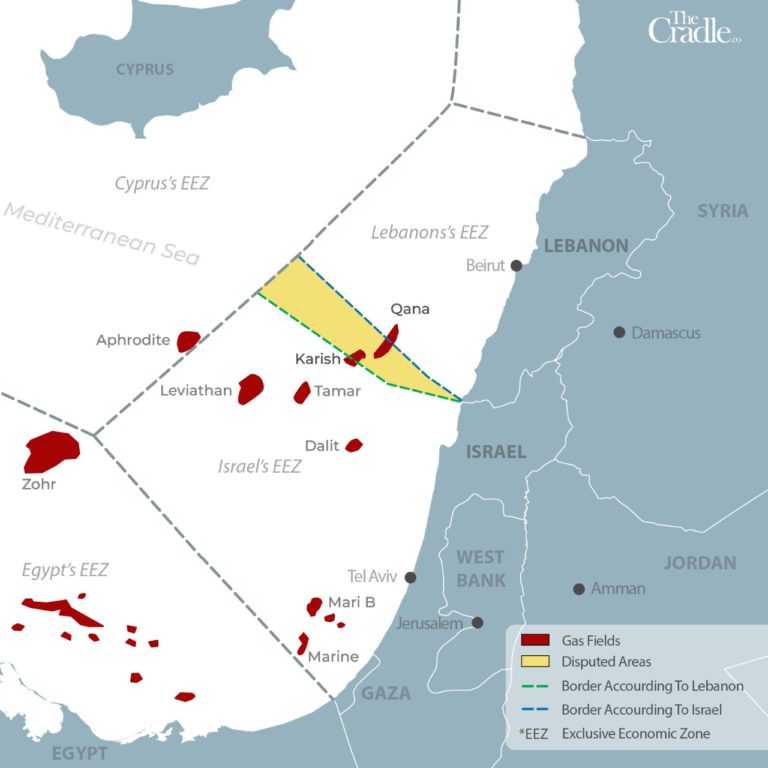
Map of the disputed maritime border between Lebanon and Israel. (Photo Credit: The Cradle)
As for the most pressing concern for both sides, Lebanon and Israel compromised in the legal language regarding the buoys deployed at sea to demarcate the various economic blocks.
According to the leaks, Lebanon insisted on adopting Line 20 while refusing to acknowledge that the line demarcates the maritime borders, but simply the blocks at sea.
Whereas Israel insisted on Line 31 which is going to be on the final draft between both countries.
Nonetheless, Lebanon will not acknowledge its effects on the land border demarcation, leaving the issue for indirect land-border negotiations.
In light of these developments, Lebanese caretaker Prime Minister Najib Mikati met on 11 October with the Lebanese Minister of Energy, Walid Fayyad, and a delegation from Total.
The delegation included the Director of Oil Exploration and Production Laurent Vivier, who was informed about the results of the negotiations and received a request to start operations.
Total informed the Lebanese side that the logistics of exploration need time, promising to start “as soon as possible.”
Similarly, Israeli National Security Council Chairman Eyal Hulta announced that all of Israel’s demands have been met.
“Israel’s security interests have been preserved. We are on our way to signing a historic agreement,” Hulta said.
According to Israeli Minister of Defense Benny Gantz, the current state of alert at the norther border with Lebanon came as a result of credible intelligence information about Hezbollah’s plans to launch an attack had Israel started to extract gas from the Karish gas field before a deal was concluded with Lebanon.
Similar assessments were made by the foreign intelligence services of several western countries.
This attack would have fulfilled the promise made by the Secretary General of Hezbollah, Hassan Nasrallah, who reiterated on several occasion that only mutual access to the gas reserves will be permitted.
“Israel, the US, and EU all know we are not bluffing. They have enough proof of that,” the resistance leader said during a televised speech in September.
Will Lebanon and Israel go to war over the maritime border dispute?
By Robert Inlakesh | Samizdat | October 8, 2022
Israel has announced its readiness for war with Lebanon, as the ongoing US-mediated maritime border demarcation talks head towards a dead end. The issue, however, is not just causing dispute between Beirut and Tel Aviv, but also becoming more prevalent within Israeli politics as it heads into another round of general elections.
On Thursday, Israeli Prime Minister Yair Lapid rejected Lebanese amendments to a US-proposed maritime border demarcation agreement. The previous day, Israeli officials had reportedly been briefed on the deal, which was the cause of much optimism, with an unnamed source telling Axios news that Lapid “made it clear that Israel will not compromise on its security and economic interests, even if that means that there will be no agreement soon.”
Later on Wednesday, Israeli Defense Minister Benny Gantz ordered the military establishment to prepare for an armed confrontation with Lebanon. A four-hour cabinet meeting, which was said to have been attended by major Israeli security establishment figures, was then concluded with a public announcement that the prime minister and defense minister had been granted permission to strike Lebanon without further cabinet approval.
Why are Lebanon and Israel on the verge of war?
In early June, a ship owned by the gas company Energean arrived at the resource-rich Karish field in the Eastern Mediterranean to begin preparations for natural gas production for Israel. Lebanese President Michel Aoun condemned the arrival, warning Tel Aviv against taking any further “aggressive action.” The Karish field, as well as the nearby Qana field, have for years been central to on-off US-mediated negotiations between Lebanon and Israel. The two nations have still not come to any agreement on the demarcation of their maritime borders, with Beirut seeing Karish and Qana as vital to reviving its collapsing economy.
While Lebanon maintains, due to legal arguments put forth in previous negotiations, that the entire area is to be considered ‘disputed waters,’ Israel has maintained that all of the Karish field and the majority of the Qana field are within its own ‘Exclusive Economic Zone’. The Lebanese political and military party Hezbollah, which claims to have 100,000 battle-ready troops at its disposal, then weighed in on the debate, vowing to protect Lebanon’s rights to its oil and gas.
Secretary General of Lebanese Hezbollah Seyyed Hassan Nasrallah declared that if no maritime border deal were reached and Lebanon is not able to secure its rights, then military action will be taken. Nasrallah vowed that the new reality would be “If we can’t have our resources, nobody can.” Hezbollah’s red line is Israeli extraction from the Karish field before any agreement is signed – if this happens, the group has threatened to strike not only Tel Aviv’s infrastructure at site, but every other Israeli oil and gas facility in the Mediterranean.
Israel has since responded with threats of its own, which have ranged from a vow to eliminate the entire densely populated Beirut suburb that serves as Hezbollah’s stronghold, to Benny Gantz’s recent warning that the whole of Lebanon would “pay a heavy price” for any military action by Hezbollah. Now that the negotiations have reached a “make or break” point, there are significant fears that military action will be taken, either by Israel or Hezbollah.
Empty threats?
The most recent threats issued by the military and political leadership in Tel Aviv have caused panic among Israelis living near the Lebanese border. However, there is a significant possibility that the rhetoric is aimed at a domestic audience. Israel will enter into a new round of national elections in November and the demarcation of maritime borders has recently been weaponized against the current Israeli leadership, causing ministers to act in order to save face.
Israeli opposition leader and former long-time prime minister Benjamin Netanyahu began to lash out at interim-PM Yair Lapid back in September, releasing a video in which he claimed that Lapid had “totally folded in the face of Nasrallah’s threats” and that Hezbollah had forced him to delay extraction from the Karish field. Netanyahu has continued to heavily criticize his political opponents’ handling of the demarcation-line issue, with similar claims that Israel is backing down over the threats issued by Lebanese Hezbollah.
Netanyahu’s words ring true in that Lapid has clearly been forced to take the issue of demarcation of maritime borders very seriously and has conceded on positions held by Tel Aviv in the past. In addition to this, the extraction of gas from the Karish field has also been delayed, as Energean, which owns the rights to extract from the site, was initially prepared to begin operations in late September and has so far refrained from doing so. However, had Netanyahu remained as PM, he would hardly have had any other choice but to do the same.
The threats made by Hezbollah are very serious, and the group apparently has the capacity to follow through with them and destroy all of Israel’s oil and gas facilities. At this time, however, the Israeli far-right camp headed by Netanyahu is blaming the situation on Lapid’s weak governance, saying he is prepared to give away territory that belongs to Israel. For this reason, it is likely that Yair Lapid will attempt to delay extraction of gas from the Karish field in order to sideline the issue until after the elections.
The necessity of a deal for Lebanon
Lebanon sees the Karish and Qana issue as integral to its survival. Some UN experts put the percentage of Lebanese living in poverty at around 80%, while the country endures round-the-clock blackouts, a rising crime rate, and civil instability. Some people have even been spotted searching for food in garbage bins, as well as fighting over loaves of bread at bakeries. Getting its hands on a possible multi-billion-dollar oil and gas field is a matter of life or death for Beirut – but not for Tel Aviv, which enjoys far more economic stability.
The US mediator in the Lebanon-Israel talks, Amos Hochstein, gave an interview to the American owned al-Hurra TV in June, laughing when asked about the prospect of trading the Karish field for Qana. Months later, after Hezbollah upped its threats and the group’s leader, Nasrallah, stated that the Lebanese people would not be laughed at, this issue has become a rather grave one. The US, which has a clear pro-Israeli bias, is now being forced to take the talks much more seriously.
Earlier this year, as the European Union looked for alternative gas suppliers, a deal was inked between Tel Aviv and Brussels, under which Israel would send gas through pipelines to Europe via Egypt. This has encouraged Tel Aviv to announce its plans to double its gas output, and the Karish field is key to achieving this.
The Qana field, however, has not yet been explored and will take time to develop. Despite this, one of the key reasons for Israel’s rejection of the Lebanese proposal is that Beirut refuses to pay Tel Aviv royalties for the gas it would extract from the Qana field should it be handed to Lebanon. Beirut cannot commit itself to such an agreement, because this would mean normalizing ties with the Tel Aviv regime, which still occupies Shebaa farms – an area that Lebanon claims as its rightful territory.
Whether war happens will now boil down to whether bickering between Israeli political parties and individual officials will cause Tel Aviv to adopt a belligerent approach and push forward with gas production in the disputed fields before an agreement is reached. If it does, there can be little doubt that Hezbollah will open fire if its red line is crossed. Israel’s stake in the matter is additional energy revenues, while for Lebanon it is potentially a matter of life or death. Neither side wants war, but one has much to gain and the other has everything to lose.
Robert Inlakesh is a political analyst, journalist and documentary filmmaker currently based in London, UK. He has reported from and lived in the Palestinian territories and currently works with Quds News.
Nasrallah Charges US With ‘Satanic’ Meddling, Use of Troll Armies Against Iran Amid Protests
Samizdat – 01.10.2022
Iran has faced two weeks of civil unrest following the death of a 22-year-old woman named Mahsa Amini in religious police custody under suspicious circumstances. Tehran released CCTV footage debunking protesters’ claims that the woman was beaten into a coma, and accused the US and others of trying to foment a color revolution.
Hezbollah secretary general Sayyed Hassan Nasrallah has ripped Washington for engaging in a “satanic” campaign to try to bring down the Iranian government and divide the Islamic world.
“The constant incitement against Iran and the painting of its people as an ‘enemy’ is a satanic deed aimed at ripping the nation apart,” Nasrallah said in a televised address Saturday.
“The United States exploits any incident in Iran in order to provoke the nation against the Islamic establishment, the latest of which is the protests that have broken out following Ms. Amini’s tragic death,” Nasrallah said. “US-backed vandals took advantage of the unclear circumstances surrounding her death to challenge the Islamic Republic after America’s campaign of so-called ‘maximum pressure’ failed dismally,” he added.
Saying that the Islamic Republic was “stronger and braver” than ever, Nasrallah suggested that successive US administrations have recognized their inability to defeat Iran militarily, and have instead “bet on disputes at home” to try to divide and destabilize the country.
“Western and Persian Gulf media outlets are working to incite people against [the Iranian government]. US administrations have established troll armies across social media platforms to undermine Iran, but all to no avail,” he said.
Cities across Iran have been rocked by more than two weeks of protests following Amini’s death. The young woman died in a hospital in Tehran on September 16, three days after being detained by Iran’s Guidance Patrol, better known as the ‘morality police’, for breaking hijab rules. Demonstrations began a day after her death, with demonstrators and provocateurs on social media accusing police of causing her death by severely beating her.
Iranian authorities tried to defuse the situation by releasing security cam footage appearing to show that Amini was not subjected to any form of physical abuse while in Guidance Patrol custody. Iranian President Ebrahim Raisi ordered a special investigation into the case and expressed condolences to Amini’s family.
However, the violence has not subsided, and scores of people, both protesters and police, have been wounded or killed in violent street clashes in the past two weeks.
US media have made no secret of America’s role in fomenting the violence. Last week, Iranian-American journalist Masih Alinejad boasted in an interview with the New Yorker magazine that she was “leading this movement,” and expressed confidence that “the Iranian regime will be brought down by women.” Alinejad works for Voice of America Persia and Radio Farda, the US government-funded branch of Radio Free Europe/Radio Liberty. The journalist has spent years calling on Washington to slap more sanctions against her birth country, and pro-Iranian media have accused her of ties to the CIA.
The protests in Iran began just one day after Iran was formally admitted into the Shanghai Cooperation Organization, a nine-member Eurasian economic and security bloc of nations which also includes China, Russia and India, among others.
Last week, the information portal of the BRICS group of nations charged the West with seeking to foment a color revolution in the Islamic Republic.
On Monday, Iranian Foreign Ministry spokesman Nasser Kanani accused Western powers and media of openly supporting the violent unrest.
“In the recent riots, political leaders of America and, sometimes, Europe, as well as their media and hostile Persian-language outlets backed by the West abused a sad event that is being investigated, and went the extra mile in support of rioters and disruptors of national security under the pretext of support for human rights,” Kanani wrote in an Instagram post.
Europe’s Biggest Enemy Isn’t Russia Nor Islamic Terrorism, but Israel
By Martin Jay | Strategic Culture Foundation | September 25, 2022
When Joe Biden took office, many pundits said that at least relations between the U.S. and EU would be restored. But the Iran deal is the ultimate test of just how much he loves the old continent.
Just how far will Israel go to scupper the so-called Iran deal from being signed by both Iran and the West? And will it play a fair game or use underhand and covert tactics to achieve its goal of the deal never being signed? Recently, we have seen the talks in Vienna progress as even the Americans say that certain key negotiating points have been taken out of the deal from the Iranians which has made the negotiations move closer to an agreement; we have also seen though Israel pulling out all the stops, from a PR and lobbying perspective at least.
And then there is the murky subject of skullduggery to destroy the talks. If you’re one of these people who believes in fairies at the bottom of the garden or that certain toothpastes can make your teeth whiter, then you might not buy into Israel using Mossad to derail the deal. Attacks on U.S. forces for example in Iraq, supposedly carried out by Iran-backed militias would normally have most people pointing the finger at Iran, proclaiming that Tehran is not at all serious about the deal but just playing along for time so that it can roll out a nuclear bomb. Then there is the curious case of the Salman Rushdie attack, which, again, many would point out could be attributed to the Iranians who still have a very much ‘alive’ fatwa against the British writer. Indeed, even the Supreme Leader is reported to have made a comment against Rushdie when he heard of the knife attack.
Given even the Israeli media have speculated that Mossad did it, it would be easy to conclude an open and shut case right?
Yet the author believes, like the 9/11 attacks in New York, which was the dirty work of Mossad, that these previous attacks can also be attributed to the Israelis who may well be plotting a bigger attack in the U.S. which Iran can be framed for; in fact, Americans are so ignorant of Islam or anything to do with the Arab world, that such an attack doesn’t even need to be linked to Iran but simply “Islamic terrorists” which might have tenuous links with Tehran.
There is no limit for Israel in terms of how far it can go to block the deal as the elite there believes that the Iran deal would exponentially boost Tehran’s power given the impact of sanctions relief on the economy. But the emergence of Iran as a regional player, economically, will always be a threat to Israel especially as it throws the spotlight on the once pariah state and many will see the fraud of hatred between Israel and Iran for what it is. Just as for decades the West goaded the Gulf States about Iran, installing fear to such a point that it was America and the UK who cleaned up on weapons sales, Israel needs to keep this yarn alive that Iran is the threat both for internal politics with their own people and also to justify the obscene amount of military aid which is sent to Israel each year. But any hack in Lebanon who has connections with Hezbollah will tell you that this threat is phoney and that both sides have enormous respect for one another; in reality both sides are fooling their own people into buying into the threat of an attack as it’s good for political support. The recent claims by Matthew Levitt in the Israeli media for example that Hezbollah wants to start some skirmishes with Israel can’t be taken seriously from those who are close to the Shiite group in Lebanon who say simply that Hezbollah is too scared to do such a thing off its own bat; being directed by the Supreme Leader in Iran though is another matter.
Hezbollah and Indeed Israel’s game of smoke and mirrors in Lebanon makes some pundits question whether Iran is really serious about reaching out for a deal with the west to lift its sanctions, or just playing us all along to win time? Surely Israel can’t have it both ways as its desperate antics of late tend to contradict themselves.
Hezbollah serves Israel well as the latter can focus more of defence spending and other such border initiatives in preference for being held more accountable for its governance. For Hezbollah it’s exactly the same. The threat of Israel launching an attack, once again, is the very bedrock of Hezbollah support in Lebanon. Without that threat, the Shia group may well lose half of its support overnight. This is one of the reasons why Israel continues to bomb Syria, targeting Iranian and Hezbollah activities: to keep the dream alive. It’s another reason why Hezbollah has a despondent enthusiasm towards Lebanon securing gas drilling rights close to Israel’s maritime border.
Yet in this time of Europe’s economies diving into recessions, we should ask ourselves what is the bigger picture? If Israel fails to derail the Iran talks and once again the Iranians get a deal which appeases the Americans, then certainly their economy in Iran will return to the billion dollars a month trade with the EU. One minor detail though which is overlooked and carefully airbrushed out of mainstream media’s narrative is the impact on Europe if the deal goes ahead. Cheap Iranian oil being sent to most EU countries which are really suffering from the shortages of oil and gas and its present market price could be a godsend and would enrage the Israelis even further. Europeans and even the British would look at Iran through a more favourable prism. Many would argue that Iran should be brought back in from the cold, in preference to the loathing of Putin and the hatred generally towards Russia. At least we can talk to the Iranians, many will argue. This notion cannot have escaped the attention of the EU dogs of war in Brussels who seem to be detached from all realities about the Ukrainian war and their sanctions towards Russia. Is it that they are banking on cheap oil from Iran saving EU economies? Biden too must have been advised of how things will pan out. But cheap oil for EU countries doesn’t favour the U.S. directly whereas letting the Europeans sink in their own demise will actually boost the U.S. economy according to the Washington Post, So much for the special relationship with Europe. For both Israel and Washington.
How the US controls Lebanon’s energy supply
The US is leveraging Egypt’s gas supply to pressure Beirut over US-brokered maritime border talks with Israel
By Yeghia Tashjian | The Cradle | August 19 2022
Consider the chaos in Europe today caused by a sudden reduction in Russian gas supplies.
Now imagine the catastrophic state of Lebanon’s energy sector after two years of fuel shortages, limited foreign currency with which to purchase new, urgent supplies, and US-sanctions on Syria impeding Lebanon’s only land route for imports.
After decades of stalled reforms, Lebanon is running out of time and money.
In June 2021, a lifeline was handed to the country in a deal struck with Baghdad to supply two Lebanese power stations with Iraqi fuel. The agreement, which was due to expire in September 2022, has recently been extended for one year.
But while there are short and long term solutions available to remedy Lebanon’s energy crisis, the two main options are both monopolized by US policymakers with stakes in regional geopolitics.
The first option involves transporting fuel to Lebanon via the Arab Gas Pipeline (AGP), whereby Egypt will supply gas through Syria. Although the proposal was originally an American suggestion, this fuel route requires US sanctions waivers that have not yet been approved by Washington.
The second option is for Lebanon to extract its own gas supply from newly discovered fields off its coastline. This too depends entirely on US-mediated, indirect negotiations with Israel to resolve a maritime dispute over the Karish gas field in the eastern Mediterranean Sea.
Accessing its own gas supplies will go a long way to guarantee Lebanon’s own energy security, while providing the state with much needed revenues from exports.
However, the success of either project depends largely on the status of US-Lebanese relations at any given moment. The two options are also inextricably linked to each other: Washington is pressuring Beirut to compromise with Tel Aviv on the maritime border dispute before agreeing to “green light” Cairo’s gas exports via Syria, which is in turn heavily sanctioned by the US’s “Caesar Act.”
While Washington is playing a leverage game, Lebanon is slowly collapsing.
Gas from Egypt
Under the agreement signed with Cairo, 650 million cubic meters of natural gas will be exported annually via the AGP. As it turns out, the actual supply of gas, as per the World Bank’s conditions, awaits US approval to exclude Egypt from sanctions imposed on the passage of goods through Syria.
The AGP is already a functioning pipeline that has supplied Lebanon with Egyptian gas in the past, but operations were halted in 2011 when Syrian pipelines were damaged during the country’s armed conflict.
Under the deal, Egypt will pump gas through the pipeline to supply Lebanon’s northern Deir Ammar power plant, which can then produce 450 megawatts of electricity – adding four hours of additional electricity supply per day. It is a modest but necessary improvement over the barely two hours of electricity currently provided by the state.
The World Bank has pledged to finance the deal on the condition that the Lebanese government implements much needed reforms in the electricity sector, which has created tens of billions of dollars in public debt.
The Syrian equation
For the Syrian government, the arrangement is perceived as a diplomatic victory as it confers ‘legitimacy’ to the state and represents a step toward its international rehabilitation. The AGP deal was also hailed by Syrian Minister of Oil and Mineral Resources Bassam Tohmy as one of the most important joint Arab cooperation projects.
According to Will Todman, a research fellow in the Middle East Program at the Center for Strategic and International Studies, the agreement is “a win for the [Bashar al-]Assad government. The deal represents the first major move toward Syria’s economic integration with the region since Arab Spring protests shook Syria in March 2011, halting previous integration efforts.”
However, due to US Caesar Law restrictions, no concrete progress has been made over the past months. Amman and Cairo have both requested guarantees from Washington that they will not be subject to sanctions – to no avail. US President Joe Biden has yet to make a final decision on whether the plan will be considered a violation of sanctions on Syria.
Linking the Egypt deal with Israel talks
In order to create a certain interdependency in the region to minimize the possibility of new conflicts with Israel, the US is attempting to link the Egyptian gas deal with the ongoing, indirect, maritime negotiations between Tel Aviv and Beirut.
Amos Hochstein, the State Department senior adviser on energy security, who acts as chief mediator on the disputed maritime border between Lebanon and Israel, said after arriving in Beirut on 14 June that the US side will look at the final agreement between Egypt and Lebanon to evaluate the sanctions compliance of the natural gas project.
This means that Washington is linking the fate of the gas deal to the maritime dispute with Israel to exert additional pressure on Lebanon.
On 14 October, 2020 – just two months after the Beirut port blast which severed the primary transportation route for seaborne Lebanese imports – Lebanon and Israel began the long-awaited US-mediated talks to demarcate their maritime borders, under the supervision of the UN.
The framework agreement announced by both countries at the time was the most serious attempt to resolve the maritime dispute and secure gas drilling operations through diplomatic means.
However, there are many challenges that can slow or even derail these negotiations.
According to Lebanese estimates, the country has 96 trillion cubic feet of natural gas reserves and 865 million barrels of oil offshore, and is in urgent need to begin drilling to save its ailing economy.
Israel is also in hurry to resolve this dispute as it wants to finalize the negotiations before September 2022, when the Karish gas rig is expected to begin production. The concern is that if a deal is not signed by then, Hezbollah may take action to halt Israel’s extraction altogether – until Lebanon is able to extract its own fuel from those waters.
Resolution or conflict
Last month, Hezbollah Secretary General Hassan Nasrallah reiterated warnings against Tel Aviv in the event that Lebanon is prevented from extracting its own resources in the Med. “When things reach a dead-end, we will not only stand in the face of Karish… Mark these words: we will reach Karish, beyond Karish, and beyond, beyond Karish,” he cautioned.
Initially, Lebanon took a maximalist position on its maritime borders with Israel: the main dispute was around the percentage both countries should share in the disputed 860 square kilometers, which covers Lebanon’s offshore gas Blocks 8, 9 and 10.
It is worth mentioning that Lebanon does not enter these negotiations from a position of strength and is in dire economic need to unlock foreign aid and begin the flow of potential gas revenues.
Meanwhile, the arrival this summer of the British-based Energean, an oil and gas exploration company, which will begin a drilling operation close to the Karish gas field, has sparked tensions between both countries, prompting US envoy Hochstein to race back to the region on 13 June.
In order to provide Lebanon with some much-needed leverage and accelerate negotiations, Hezbollah dispatched three drones towards the Karish gas field on 2 July. The operation sought several results: to test Israeli military responses to the drones, to scare off the private company contractors working on the rig, and to motivate both Tel Aviv and Washington to step up and strike a deal.
The operation achieved its goals. Israel’s military now can’t rule out the possibility that the Lebanese resistance movement will launch additional attacks on the gas field in the near future, or provoke Israel in a different manner – if the maritime dispute is not ironed out, and soon.
Beyond the Mediterranean Sea
The negotiations have also been impacted by international developments, chiefly, the war in Ukraine and the growing energy crisis in Europe. Sweeping western economic sanctions on Moscow’s economic interests have dried up Russian exports to the continent, driving Europe to seek alternative sources of energy, few of which are readily available.
In May 2022, the US and EU unveiled a plan to reduce Europe’s dependence on Russian fossil fuels and in June, the EU and Israel signed an agreement to export Israeli gas to Europe. These external factors have further motivated the US and Israel to hasten the negotiation process with Lebanon, all of which are overshadowed by the aforementioned US pressure on the Lebanese government.
Energy expert Laury Haytayan believes that linking Lebanon to regional energy projects makes it harder for Lebanon to go to war with Israel. Haytayan told The Cradle: “Lebanon needs gas, Israel needs stability, and the US wants to give both what they want.”
It is important to recognize that a final maritime demarcation agreement also means defusing the tensions on the Lebanese-Israeli border, which may require a broader US-Iranian agreement, something that is unlikely in the short term.
If the gas deal is successful and the US approves the Egyptian energy exports, the move will only increase US leverage over Lebanon when it comes to future negotiations on energy security.
It is in Lebanon’s interest to ensure that one party, the US, does not continue to hold all the cards related to its vital fuel needs. A recent offer from Iran to supply the country with monthly free fuel was tacitly accepted by Lebanon’s prime minister and energy minister, but needs work. Other states have offered to build power generation plants to enhance the nation’s infrastructure and efficiency.
But with Lebanon so deeply affected by Washington’s whims – and punishments – it isn’t at all certain that the country can steer itself to these more independent options.
The US and Israel have never been this highly incentivized to solve the maritime dispute. If the deal fails, Hezbollah may proceed with military action, especially before the conclusion of political ally President Michel Aoun’s term this Fall.
Furthermore, the gas issue may turn into a contentious domestic political issue ahead of Israel’s November parliamentary elections. In that instance too, a military conflict between Israel and Hezbollah may be triggered.
The only solution is to strike a deal, get gas flowing, and avert war. Will saner minds prevail, or will the region’s high-stakes geopolitical competition continue to escalate blindly? More importantly, can Washington bear to allow Lebanon the breathing space after three years of severe economic pressure to control Beirut’s political decisions?
Israel ‘yields to Lebanon’s maritime demands’ as Hezbollah-set deadline approaches
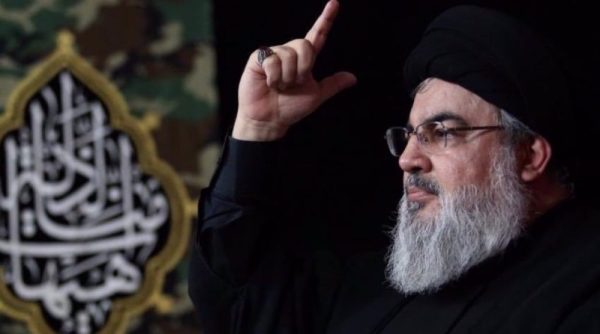
Press TV – August 19, 2022
Israel has reportedly yielded to Lebanon’s full maritime demands over the disputed waters and gas fields, asking the Arab country for extra time to finalize a deal.
According to a report by Lebanese newspaper Al-Akhbar on August 19, the regime sent a message to Hezbollah through diplomatic channels, saying it accepts Lebanon’s full demands.
Israel has pledged to acknowledge that Line 23 and the Qana prospect field are in Lebanese territory while also pleading with Hezbollah to set aside potential plans to attack Israeli gas fields in case of a delayed deal, the report added.
Secretary General of Hezbollah Sayyed Hassan Nasrallah has already rejected any delays in the case as Lebanon is going through dire economic conditions. “Time is short, and depending on the [Israeli] response, we will surely act,” he said in a speech during Ashura mourning procession.
Hezbollah had set a deadline for Lebanon to secure its rights over the disputed areas, which will expire on September 15.
Meanwhile, Israeli media reported an Israeli official is set to make a trip to the United States to discuss the dispute in the hopes of achieving an agreement.
According to Al-Akhbar, some firms have warned Israel they would withdraw their employees and facilities in case the regime fails to guarantee their safety.
Nasrallah had earlier said the Israeli regime would not be allowed to conduct drilling operations for oil and natural gas in the disputed area in the Mediterranean Sea until Lebanon gets what it deserves.
“Lebanon is facing a historic and golden opportunity to get out of its financial crisis. If we fail to take advantage of it, we would not be able to extract oil within the next 100 years. We are not looking for moral gains out of extraction in the Karish natural gas field. We rather want to tap into our oil reserves. There would, therefore, be no room for oil or gas extraction in the entire region if Lebanon does not get its right,” Nasrallah said at a local event in Beirut on July 19.
Lebanese politicians hope commercially viable hydrocarbon resources off Lebanon’s coast could help the debt-ridden country out of its worst economic crisis in decades.
In February 2018, Lebanon signed its first contract for drilling in two blocks in the Mediterranean with a consortium comprising energy giants Total, Eni, and Novatek.
Lebanon and Israel took part in indirect talks to discuss demarcation in 2020. But the talks stalled after Lebanon demanded a larger area, including part of the Karish gas field, where Israel has given exploration rights to a Greek firm.
The talks were supposed to discuss a Lebanese demand for 860 square kilometers (330 square miles) of territory in the disputed maritime area, according to a map sent to the United Nations in 2011. However, Lebanon then said the map was based on erroneous calculations and demanded 1,430 square kilometers (552 square miles) more further south, including part of Karish.
Hezbollah warns Israel against targeting Palestinians in Lebanon
MEMO | August 9, 2022
The head of Lebanon’s powerful Hezbollah movement, Sayyed Hassan Nasrallah, today warned against any Israeli attempts to expand their targeting of Palestinian resistance members to Lebanon, Reuters reported.
“Any attack on any human being will not go unpunished or unanswered,” Nasrallah said in a televised address marking Ashura, a commemoration for Shia Muslims of the killing of the Prophet Muhammad (peace be upon him)’s grandson Hussein.
The comments came after Israel launched a war against Gaza on Friday, killing 44 Palestinians including 15 children. It also killed senior Islamic Jihad leaders. The bombing was halted late on Sunday under the terms of an Egypt-brokered ceasefire.
On Saturday, Israeli defence minister Benny Gantz hinted at the possible targeting of Islamic Jihad officials abroad, who he said could be seen in “restaurants and hotels in Tehran, Syria and Lebanon”.
“They too will have to pay the price,” Gantz said. Yesterday he said Israel could carry out “pre-emptive strikes” abroad.
“In the future too, if necessary, we will deliver a pre-emptive strike in order to defend Israel’s citizens, sovereignty and infrastructure and this is true for all fronts, from Tehran to Khan Yunis,” he said.
Tensions between Hezbollah and Israel have been escalating in recent months over a disputed maritime border between Lebanon and Israel.
Hezbollah Releases Coordinates of Israeli Platforms in Mediterranean: “Within Our Reach”
Al-Manar | July 31, 2022
Hezbollah’s Military Media Department released on Sunday video showing the Israeli platforms operating in the Mediterranean, warning the Zionist enemy of its attempts to plunder Lebanon’s gas and oil fields.
The video shows surveillance scenes taken from land and air, some form yesterday, for Israeli vessels at the Karish field near the Lebanese maritime borders.
Starting with Hezbollah Secretary General Sayyed Hasan Nasrallah’s warning that “procrastination is useless”, the video shows Hezbollah’s anti-ship missile readying to be launched.
The footage included detailed coordinates of Israeli platforms, showing their names and locations.
The one-minute-video, which includes subtitles in Hebrew, concluded by “within our reach”, referring to previous threats by Sayyed Nasrallah that all Israeli platforms and targets are within the reach of the Lebanese Resistance missiles.
The video was released just hours before the US’ so-called ‘mediator’ Amos Hochstein arrives in Lebanon, probably holding a message from the Zionist entity concerning the maritime border talks and gas extraction.
Sayyed Nasrallah earlier this month, warned the Israeli enemy that if Lebanon is prevented to extract oil and gas off its shore then the Zionist regime won’t be able to do so.
Nasrallah: If Lebanon is denied its oil and gas resources, we will shut down all Israeli platforms
Speech by Hezbollah Secretary General Sayed Hassan Nasrallah on July 13, 2022, on Biden’s visit to the Middle East and the border dispute between Lebanon and Israel over the Karish maritime gas field.
Source: almanar.com.lb Translation: resistancenews.org
Transcript:
[…] Now I come to the main point of my speech tonight. One of the results of the July (2006) war is the establishment of a balance of deterrence in the struggle against the Israeli enemy, between Lebanon and the enemy entity. These equations, this balance… Of course, I am not talking about a balance of forces in terms of the number of our respective soldiers, our respective naval power or our respective air forces. That’s not what I’m talking about. I’m talking about a balance of deterrence, a balance of fear, a balance of terror. It’s a different kind of equation (than a strict balance of power).
For the past 16 years, that is, from 2006 to the present, Lebanon has enjoyed an excellent security situation with regard to the fight against the Israeli enemy, if we compare it to what used to happen before. The enemy has been unable to include Lebanon in its strategy of “the battle between wars” (conducting episodic strikes without starting a war, as it does in Syria), and Israel thinks a thousand times before taking any military action against Lebanon, knowing that there would be retaliation (from Hezbollah). That is why when Israel tries to do something (in Lebanon), it tries to carry out security operations (against Hezbollah) trying as much as possible not to leave any footprints, any traces (of its involvement). This achievement (of the Resistance) is still valid.
In this regard, before the episode of the drones (sent by Hezbollah over the Israeli gas platform in Karish), after my (last) speech about Israel’s exploitation of the Karish field (claimed by Lebanon; Hezbollah promised to prevent Israel from extracting gas from it, even if it means war), the enemy War Minister… Of course, all Israeli officials spoke out to threaten, promise (retaliation), etc, but in these days of commemoration of the 2006 war, I only want to comment on one sentence of the Minister of War [Benny] Gantz. He said, and I quote you his words, “We are ready for war, and if necessary, we will march again on Beirut, Sidon and Tyre.” I’ll just comment on that sentence before I continue. In short, Gantz knows very well that such words are pure mockery, and that he is lying to himself, to his people and to his peers. All Israelis know that this is just empty rhetoric that carries absolutely no weight. Yes, anyone in Israel can say that they are going to bomb, destroy Lebanon, etc. I am not saying that they are incapable of doing this: on the contrary, it is ALL they are capable of. In all the wars against Gaza, all they have done is air strikes, missile strikes, artillery strikes, nothing else. The only time they made a ground incursion into Gaza, they suffered a disaster, and even had prisoners taken (by Hamas)! And even in the recent military maneuvers they dubbed “Chariots of Fire”, the entire operation towards Gaza was based on firepower, not on a ground incursion.
So you (Israelis), who, faced with a Gaza under siege for 15 years, whose geography is flat, whose conditions are (so) difficult, and whose weapons are largely produced locally, do not even dare to take a few steps forward, you claim to invade Lebanon and reach Tyre, Saida and Beirut? You are completely mistaken if you make the same calculations as 20, 30 or 40 years ago, as if the situation (today) was the same (as when Israel invaded Lebanon in 1982). In any case, I advise Gantz to review his case, and in particular to review the last days of the 2006 war, when the Israelis took the decision to enter the town of Bint Jbeil, which is very close to the international border (between Lebanon and Israel). Let him review in particular the number of elite troops that participated, the generals that participated, the tank battalions that participated, the size of the forces that participated, the artillery and aerial firepower, the missile strikes, the planes, the helicopters, etc. They destroyed most of the city, besieged it, and left only one exit route for the fighters to flee. But the fighters did not flee, and the opposite happened: more (Hezbollah) fighters entered Bint Jbeil. The situation was quite different (from what Israel imagined). And Israel’s goal may not even have been to occupy the whole city of Bint Jbeil, but only to reach the stadium where I gave the spider’s web speech (on May 25, 2000) and plant the Israeli flag there. And even that you were unable to do! And this during the last days of the war, when, in your eyes, the (Hezbollah) fighters would be exhausted and weakened by the bombing, with low morale, etc. But such is the experience of Bint Jbeil, the closest city to occupied Palestine (it was a resounding failure for Israel).
Therefore, to claim that Israel will reach Saida, Tyre and Beirut is a preposterous statement, and I believe that all Lebanese have laughed at this statement and these threats. Those days (when Israel could occupy our capital) are well and truly over. And that is why we need not fear anything on this side in the ongoing border dispute between Lebanon and Israel: Israel is threatening us with invasion, but what could it possibly invade? During the 33 days of the 2006 war, it remained at the gates of Ayt al-Chab and our other villages at the border, without being able to enter them. Israel tried to enter Maroun al-Ras for 3 days, despite the fact that there were only a small number of fighters there, (but failed).
I only want to confirm, regarding the lessons and teachings of the 2006 war for the future, especially regarding South Lebanon and the Israeli claim to carry out a ground incursion there, that today, the popular support (for the Resistance) is different from that of 1982: the masses overwhelmingly support the Resistance and embrace it (totally). The organization of the Resistance is very large, and has no comparable precedent, both in terms of its numbers and its military capabilities and power. Likewise, the will to fight, the spirit of resistance, and this is what counts most, is stronger and higher than ever before. Not to mention the (mountainous) geography of Lebanon (conducive to guerrilla warfare). The geography is with the Resistance, the people are with the Resistance, the capabilities are with the Resistance, the Resistance is with the Resistance, and first and last, God the Most High and Exalted is with the Resistance. It is He who has given it victory in the past, and it is He who will give it victory at any time in the future. God never fails in His promise, and He gives victory to those who fight in His way [Quran, XXII, 40].
The third point is the issue of oil and gas. One of the consequences of the 2006 war is that it demonstrated the power of the Resistance to protect Lebanon. A new equation (of deterrence) was imposed, I just mentioned it. The protection of Lebanon, its territory, its population, its national security —I’m not talking about the security of the Lebanese society, currently in crisis— in the fight against the Israeli enemy, its natural resources, etc. All this —and I am beginning to be very precise in my remarks— constitutes the only strength that Lebanon has in order to obtain its rights to the oil and gas deposits, to extract them and to sell them. There are several key points in this matter.
First, no Lebanese questions the fact that the golden opportunity to save Lebanon is to extract its oil and gas. When I talk about saving Lebanon, I am talking about saving the State, the majority of whose public services are suspended. Salaries and services are insufficient, but the State is unable to remedy this. Tomorrow, if the Central Bank’s reserves run out, even the salaries of civil servants may not be paid. There will be no more subsidies for medicines, flour, etc. The State is on the verge of collapse, and the country is heading towards an extremely difficult and even critical situation. What else? Even if reforms are carried out, I have already mentioned it but I want to repeat it, the conditions imposed by the IMF for the granting of a 3 billion dollar loan (are draconian), and such a sum cannot meet Lebanon’s (enormous) needs. Someone told me that it doesn’t matter if the IMF gives only $3 billion, what matters is that if this loan is granted, it will give more confidence in Lebanon, and then an international conference can be organized to help Lebanon. Very well, but what can we expect from it? $10, $11, $12 billion, like the CEDRE Conference, the majority of which will be loans, and therefore new debts for Lebanon, with very strict conditions. Will this solve Lebanon’s problems? Lebanon’s problems are much more important than that.
There is a second option, which does not bring $3 billion in debts, nor $11 billion in debts, but hundreds of billions of dollars that will be our property, with which we will be able to pay our debts, pay [and increase] the salaries of civil servants, subsidize medicines, flour, find financing to revive the economy, etc. Because in fact, the lifting of subsidies on gasoline and fuel has not revived anything. The only existing and dignified way of salvation for the Lebanese is the exploitation of our oil and gas: no other way has appeared until now.
The second point is that the golden opportunity is now. It is now, during these two months. And now there are less than two months left, what’s left of July and August, into September, early September, the first week of September —I’ll spell it out in detail. We have a golden opportunity now. Why do I say golden opportunity? If there was no war between Russia and Ukraine, there would not be this (urgent) need of Europe and the United States for gas and oil. I don’t mean that they will import gas and oil from Lebanon, because to install sea platforms, extract hydrocarbons and sell them, it takes years. But Lebanon’s strength is that it can be a problem, an obstacle to the Israeli enemy, to the Israeli entity, and create a problem in the whole region that will prevent the extraction of gas and oil (in the Mediterranean), and will prevent the sale of gas and oil to Europe. Because these people are in a panic situation, they have no choice and they have no time. And I explained that Biden came to the Middle East in the first place for that (to convince the Gulf countries to increase their oil and gas production). They absolutely need oil and gas now.
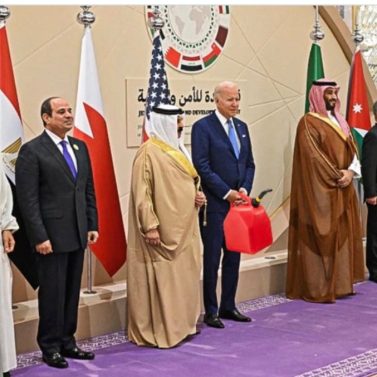
And that’s why Israel rushed to exploit the Karish field. Why do I say that everything is being played out in these two months? Because now is the time to find alternative oil and gas for Europe [before winter], and this is the time required by the company [Energean] to start extracting oil and gas from Karish. This is our window of opportunity. If this two-month period passes and Lebanon has not obtained its rights, the situation will be very difficult, and it will be infinitely harder to obtain our rights. If we have to get our rights after the extraction of oil and gas has started in Karish, it will cost us much more. It is up to you to understand what I mean. The price we have to pay will be much higher. That is why I said in my last speech that time is running out, that it is crucial to act as soon as possible (before it is too late), without specifying exactly how long. But now the Israelis themselves, and the world with them, say that the extraction of oil and gas in Karish will begin in September. This is the critical period we are facing. The Lebanese officials, the Lebanese State and all the Lebanese people must do everything to take advantage of this golden time, this golden opportunity.
Do not allow the Americans to fool you, to procrastinate and to play the game of temporization. I was very affected to hear (Lebanese) officials say that with the grace of God, the (maritime border agreement between Israel and Lebanon) will be concluded in September. It will be too late! In September, it will be too late. If you don’t get your rights before September, and if you don’t agree on the maritime border before September, and the US and the UN have not recognized Lebanon’s rights, after this two-month period, things will be much harder and the price will be much higher. Of course, we would not give up on the issue, but it will be very hard and very costly. That’s how you have to make your calculations. Maybe if you let these two months pass, you (Lebanese officials) will not get anything, except by paying a very high price (war). Don’t let the US fool you. Don’t give any credence to the honeyed words of the Americans. The proof is that it will soon be a year since I announced, on the tenth day of Muharram, the arrival of a cargo of fuel from Iran, and the American ambassador promised the Lebanese people gas from Egypt and electricity from Jordan, as well as a waiver on the (American) Caesar sanctions, as well as a loan from the World Bank to Lebanon. It will be a year next month. What have we seen of all this? Nothing. Delegations have come and gone, ministers have met, Lebanese, Egyptian, Syrian and Jordanian signatures have been put on documents, thank you very much, but nothing happened. A few days ago, the Lebanese Minister of Energy came back from Egypt and said that the Egyptians are finally ready (to export their gas to Lebanon), thank God all this is over, but we are still waiting for the American waiver on Caesar sanctions and the World Bank loan. Nothing has progressed at this level, after a whole year! Egypt had no problem (selling us its gas), and never had any issue since the beginning, for years, just as Jordan has no problem selling us its electricity: the problem is the American veto. The problem is the American veto. It is clear what value the Lebanese people, drowned in crisis and shortage, have in the eyes of the Americans: they refuse to waive the Caesar sanctions and allow Egyptian gas to be exported to Lebanon via Syria, as well as Jordanian electricity. They have, however, made a waiver for Iraq, which imports gas from Iran while Iranian oil and gas are subject to US sanctions. Iraq is allowed to import Iranian gas for its electricity. When the US occupied Afghanistan, it granted a waiver to the Afghan government under its control, allowing it to buy oil, gas and oil derivatives from Iran. But nothing like that for Lebanon, after a whole year, when Lebanon needs more than ever even one (extra) hour of electricity, during this summer, this very summer. And winter is coming.
Those United States who are unable to waive their Caesar sanctions for Lebanon, why would they grant you your maritime rights, your borders, the Qana field, and allow Total and other (Western) companies to start extracting oil and gas from Lebanon? For whose sake would they do so? Should we rely on their ethics and good manners? This individual whom you call an American intermediary [Amos Hochstein], but whom we call judge and jury, because he works in Israel’s interest and puts pressure on Lebanon. The Americans came a long time ago, and even when [Hochstein] came recently, in my opinion, his attitude was inappropriate, both in terms of form and substance: in terms of form, during his meeting [with Lebanese officials], he was laughing, joking, and mocking, and in terms of substance, he did not recognize any rights for Lebanon. He considered that it was not a matter of rights, because (in his opinion) there is no way to enforce this right, but that it is only a matter of negotiations, of an agreement that must be reached according to what both parties will accept. He did not behave in a serious and promising manner either in substance or in form.
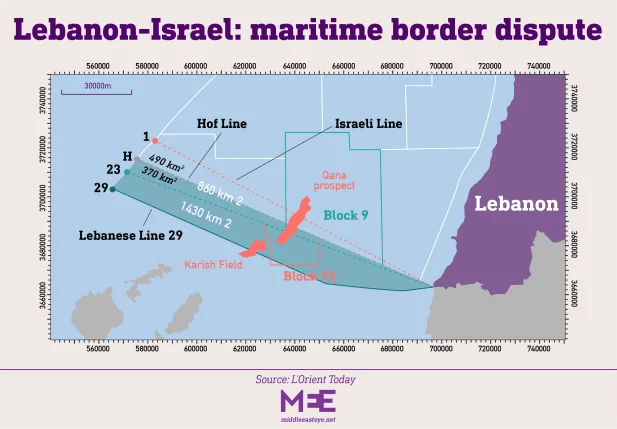
And basically, why did Hochstein come? When, a few years ago, the Americans came and established the Hof line, and then turned their backs on us for years, Lebanon stood by and waited (for an agreement on the maritime borders), while Israel explored (the maritime deposits), etc. Some (Lebanese) still tell us that Israel is exploring Karish: but my dear, the exploration in Karish is long over! They are now getting ready to extract gas from Karish. They are digging and getting ready (for extraction), while we sit around waiting for negotiations. Then Hochstein came along, and he proposed a line of demarcation. I don’t know what he called it, let’s call it the Hochstein line. He imposed it as something non-negotiable, and then turned around and ran off, telling the Lebanese officials that as soon as they had an answer, they should send it to him in writing. What brought Hochstein back for his recent visit? Two things. Let’s be specific. He did not come back for the sake of anyone in Lebanon, nor for the sake of the Lebanese State, nor for the sake of anyone else. He came for two reasons. First, the US need for oil and gas for Europe, as I just explained. Because the situation is very difficult and even critical due to the war between Russia and Ukraine, which has been pressing on their throats for several months. This is the first new point: the urgent need to get a replacement (for Russian oil and gas), and this is the point on which we can put pressure on the United States. I don’t want to describe it as a weak point, but as an urgent American-Israeli-Western need. And the second reason is the real point of strength in Lebanon: Hochstein came back because he saw the threats from Hezbollah. Listen to me: without the Resistance’s threats (to strike Karish), if there was no Resistance, if he did not know that the Resistance has drones, precision missiles, and air, sea and land (military) capabilities, if he did not know that the Resistance had the courage and audacity to threaten, act and do (what it promises), Hochstein would not have come: he would have said that he had already given us a line of demarcation, and that he was waiting for an answer (from Lebanon) that never came. This is the reason why Hochstein came because the oil and gas of Karish was threatened, and much more than that, as I will explain.
In sum, Lebanon is now facing an adversary, or rather an enemy that has a weak point, namely the pressing and urgent need for gas and oil that it wants to import from the (enemy) entity. For he cannot import oil and gas from Lebanon at the moment, but we can prevent Israel from extracting and exporting oil and gas, which is our point of strength. Lebanon’s strong point is that it has a Resistance, capable of preventing and prohibiting any extraction of gas and oil (in the Mediterranean). We are able to do this. When it goes to negotiations, like any country that goes to negotiations, Lebanon must have points of strength (to assert its rights). What are the main cards that Lebanon can play? What strengths can it bring to the table? Can it take advantage of the presence of the Arab League or the Organization of Islamic Cooperation at its side [laughs]? The UN? The Security Council? From Europe? Whose support can Lebanon claim? Lebanon, like the Syrian, Palestinian and Yemeni peoples, is left to its own devices. This is the fate of all oppressed peoples. Lebanon must therefore seek its inside strength (and not an illusory external support). The only strength of Lebanon, with which I began my remarks, is Hezbollah. It is the only one. If someone claims that there is another one, let him present it to us: we are not stubborn and are willing to learn. The only strong point in Lebanon is the Resistance and the actions of the Resistance. Even the United States is not a neutral intermediary, it is judge and jury: all it wants is an agreement that will give maximum gains to Israel at the expense of Lebanon. This is their real goal. The personality of the intermediary is not important, it is the fundamental policy of the United States that Biden has come to pursue, as he announced as soon as he arrived at the airport (in Tel Aviv). This is our only point of strength, and it is on this basis that we must move forward.
I want to address the Lebanese leaders without commenting on everything that has been said so far. I want to be constructive. Some Lebanese officials are convinced —whether they have said so publicly or not, they say it during internal meetings— they are convinced that the strength of Lebanon is the Resistance and the threats of the Resistance. Some officials may not be convinced of this, or at least they are afraid to state it clearly. I do not want to go into these details. I only want to say to the Lebanese leaders: this single strong point in your hands, use it! I say to you myself, in the name of the Resistance, use us! Instrumentalize us! Take advantage of us! As you like! When you sit down with the Americans and the Europeans, with the UN and with the whole world, tell them what you want! Insult us if you want, but don’t totally dissociate yourself from us of course. Insult us, no problem! Tell them that this group (Hezbollah) doesn’t listen to anyone, is out of control, and can lead the whole region to the abyss! Say what you want [to get Lebanon’s rights, even if you denigrate us when you recall our threats]! I invite you publicly to do so! Say it! And this is not psychological warfare. The Americans and the Israelis know that we are not waging psychological warfare on this issue, but are deadly serious. Let me give you some details about this. We are very serious. The Lebanese negotiators have one trump card to play, and that is Hezbollah. When we sent the drones over Karish, you should have said, “You see? These people are out of control and capable of anything! They don’t listen to anyone and can lead the whole region to the abyss [if they don’t get what they want]! So please, solve this problem and give Lebanon its legitimate rights!” This is what I wanted to confirm tonight.
After the episode of the drones (sent by Hezbollah over the Karish field), which I will talk about a bit, I heard some officials say that this action violates the agreement (allegedly made between Hezbollah and the government). What agreement are you talking about? Who made an agreement with whom? If someone makes agreements without our knowledge, that’s his problem. But we, Hezbollah, have not made any agreement with anyone, nor have we promised anyone that we would not do anything and that we would wait for the outcome of negotiations. Not at all. And whoever tells the Americans or anyone else that Hezbollah will do nothing, that it will not take any action, neither in the past, nor in the present, nor in the future, whoever makes such promises is deceiving his interlocutors and lying to himself, while squandering Lebanon’s interests. Instead of giving them guarantees and trying to reassure them, you have to scare them! Because this is your only strong point! It is your only card to play! If you reassure them, they will turn their heels, waste our time, and stall for these two months, just as they have been laughing at you for a year with their promises of Egyptian gas and Jordanian electricity. On the contrary, we must not only scare them, but even make them shake with terror!
Secondly, some have asked how Hezbollah can take the initiative to send drones when it claims to stand behind the State? You have misunderstood us, my dear! We are behind the State in the demarcation of the maritime borders! This is a matter in which we do not want to interfere. This does not mean that if the State accepts such and such a demarcation line, we will also sign, no! We do not interfere in any way. We are neither with nor against. We do not want to participate in the demarcation of maritime borders, as I have already explained in the past, and I do not want to explain it again. We do not participate in it for reasons of principle, ideology, culture, morality and tactics. When we say that we are behind the State on the issue of the maritime borders, it means that we do not want to interfere in this issue. When we say we are behind the State, it means that it is the Lebanese State that is negotiating the borders, not us. Many have claimed that Hezbollah has intervened in the negotiations, and opened channels for negotiations, but these are baseless lies. We are not involved in any way. But we have never said that we [fail to] stand behind the State in terms of putting pressure on the enemy, in terms of initiatives that can serve the negotiations, etc. We have never said anything of the sort, on the contrary: we have said the opposite! I made it clear that we would not stand idly by! That is what I said. Don’t misunderstand: we have not made any commitments to anyone and will not make any commitments to anyone. We are following what is going on, and we have the right to carry out any action at any time that we deem appropriate, of the appropriate scale and in the appropriate manner to put pressure on the enemy in the interest of the negotiations and the Lebanese negotiators. Let this be clear, both for the past and for the future.
It is on this basis that we took the initiative to send the drones (over the Israeli gas platform of Karish). The goal was to gain time! There has been an (American-Israeli) response, which Lebanese officials are evaluating in different ways. There is no doubt that there is a positive step forward, I say this to be honest and factual, but it is not enough, because even what the Lebanese State asks for is not granted. We in Hezbollah are not asking for anything, because I have said that we do not interfere in this issue. They told Lebanon to wait until September. But it will be too late. And therein lies the American duplicity. That is the American duplicity. And that’s when the drones came in, the day after the response in which the duplicity and the delaying tactics were obvious: it was clear that they were fooling us. And we don’t want to be fooled. So we launched the drones, and I’m going to expand a little bit on the military aspect of this. As the Resistance statement said, we sent out 3 drones of different sizes, and unarmed. Of course, we purposely did not arm them. Even when we were discussing this decision with the brothers, we agreed that our goal was for Israel to shoot down these drones. And despite that, Israel had a hard time shooting them down, first sending in planes and then bringing in the navy, Barak (sea-to-air) missiles, etc. These are details, but I explain to you what our intention was, and this will also benefit Israel in the future. Our brothers told us that they were perfectly able to send a drone (over Karish) that would collect intelligence and return (unharmed). But we unanimously said that we wanted the drone to go over there, collect intelligence and then be shot down by Israel. Why did we want this? Because we wanted the warplanes to fire missiles. Quite frankly. We wanted warships to fire sea-to-air missiles. We wanted fire and explosions in that area, on their side, so that the ship, the engineers, the (Israeli and foreign) employees (on the Greek gas platform Energean) and everyone else knows that they are in a dangerous area, facing a real and serious threat (to their lives).
If we had sent only one drone that would have collected intelligence there and returned, we would have issued a statement to that effect, saying that a drone flew over Karish and returned unharmed with the sought-after information, but maybe some would have believed us, and others would not. But the important and undeniable event is that the drones went there and were shot down, and that Israel was forced to hit them with missiles and speak out about it. That’s why Israel spoke before us, we were waiting to see what they would say. And we sent 3 drones on purpose to make the incident more prominent, because one drone would not have made so much noise. By the way, this was the first time in the history of the Israeli entity that 3 drones were sent simultaneously. As for sending a single drone, Hezbollah has been doing this for a long time (the first known drone, named “Ayoub,” was launched over Israel in 2012) and continues to do so to this day, with Israel sometimes intercepting them. Gaza has also sent drones over occupied Palestine. Iran has also sent them once or twice, and so has Syria. But each time, the drones were sent one by one. This is the first time that 3 drones were sent simultaneously to the same target. So that’s the whole story. I should point out that we are able to send a very large number of drones simultaneously. We can send them armed or unarmed, with different types of weapons, different sizes, etc. We are capable of all of that, with God’s help. We don’t have any problem with that. We sent 3 not because we were unable to send 5 (or more), but because 3 were enough for the message we wanted to send. And we were ready for anything, depending on the reaction of Israel, we were ready to face any retaliation.
In sending these drones, our goal… There were military, security, tactical objectives, which I don’t want to talk about, but we wanted to send a message to the enemy and to the whole world. If anyone thinks (that we are bluffing)… And I say this to the Americans, because in Lebanon (and especially in the American Embassy), some stupid advisors may claim that (we are bluffing). Some may (reassure Israel and the United States) that there is nothing to fear because the situation in Lebanon is very difficult, people are choking (because of the crisis, hyperinflation and shortages), and that Hezbollah can talk and threaten, but it is only empty words, and Hezbollah will not do anything. We have read many statements, communiqués, discussions and interventions in this vein. It’s said on TV, then it’s repeated at the U.S. Embassy, and maybe the (US) officials will be fooled. But with the 3 drones, the message was clear, and it was received loud and clear. The message was clearly that we are serious, that we see this as a crucial issue, that we are not waging psychological warfare, and that we are taking actions in a progressive way (more and more serious), and we will do whatever is necessary without any hesitation. This message was well understood by Israel and the United States. Whether some Lebanese commentators have understood it or not is the least of our worries. What matters is that the enemy gets this message, because it is addressed to him in the first place. Secondly, this message is addressed to our friends, so that they know that they are in a strong position, that they do not have to be afraid or tremble. This message has been well received, and the proof is that there has been no reaction from Israel on the ground, despite the (blatant) violation of the entity’s airspace. For the issue of oil and gas is very sensitive and pressing for the Israelis, the Americans and the Europeans. And the second proof is the internal contacts that were established, and the messages that were transmitted to the Lebanese State and also to us (Hezbollah) after the drone operation. All this confirms that the message was well received and well understood.
What will happen now? I must also say two words clearly for the future. In terms of our (military) capability, the enemy must know, and they know it well, but I say this to reassure and help our friends, that our capability is multiple. By the Israelis’ own admission, they were taken aback by the drones, and had difficulty shooting them down. But we have a variety of options (to strike Karish): we have air options, sea options, and land options. All of these capabilities are effective and on the table. Playing the delaying game will not help (with us). We are capable of doing anything that will serve our cause, and we will do it every time with the right scale, at the right time and in the right way. And I repeat, Lebanon can boast of a real deterrent power (Hezbollah) capable of preventing (the extraction of Karish gas), whose existence and threats (it poses to the enemy) it must take advantage of, as well as its actions if necessary.
In this power, in these negotiations, in this issue, there are two issues (which I will clarify) so that people do not misunderstand what position to take towards them. The first issue is Lebanon’s maritime borders, on which the State is negotiating. It is expected that they will reach a result, which will be recognized by the United States and the UN. This is a first issue. But it is not enough on its own. I want to remind you that for the Israeli invasions of 1978 and 1982, the borders of Lebanon were not disputed: they were internationally recognized, by the UN and whatever you want (but it didn’t prevent Israel from invading). It is not enough to have international recognition for our maritime border and our exclusive economic zone. That is not enough. The second issue is the (American) permission that must be given to foreign companies like TOTAL, which have committed themselves to come and explore and extract Lebanese hydrocarbons. Without this, what will we have gained? If we are told that these are our maritime borders, but the American veto continues to prohibit us from exploring and extracting our resources for 10 or 20 years, we will only have a right on paper, and the maritime oil and gas will be plundered (by Israel). So the two issues must be linked and resolved together. It is not enough to be told “Here are your borders” and to forbid TOTAL and any other company in the world to come and prospect or extract Lebanese hydrocarbons. We would have gained nothing, and it would be a mockery of the world and of ourselves to claim the contrary. The (Lebanese) State would have achieved success only on paper, without it being translated into facts. Therefore, the choice that Lebanon has is to apply pressure. We must apply pressure. We must apply pressure. It is our fate that is at stake. I will now express the core of my statement and our position. This is a vital issue for us.
I want to tell our enemies and friends that we are not waging psychological warfare on this issue. We will not just talk, express our opinion and bade farewell, certainly not. We are very serious. In our eyes, this is the only way to save Lebanon as a nation, as a State with its institutions that is threatened with collapse, as a people, its present and its future. We are talking about an operation of salvation. Perhaps tomorrow someone will react to my words by saying that I am ruining the whole process of border demarcation. Someone will ask me if I want to lead the country to war. But if we continue like this, Lebanon is heading for a situation worse than war! A situation much worse than war! Just for once, let us Lebanese try to be brave, to stand up as one man and have one strong and courageous stand against the Americans and the Israelis, without evasion, without pretence and without misreading. Someone will claim that all this is aimed at influencing the negotiations on the Iranian nuclear issue. Since 1982, we have been hearing about Iran, Syria, etc. (to present Hezbollah as a mere satellite of Tehran or Damascus), but this is just empty talk. This has nothing to do with the Iranian nuclear issue, as the US itself has acknowledged. So let’s aim at achieving our goal (getting Lebanon’s maritime rights and saving the country), why would the Iranian nuclear issue matter to us? If we stand up as one to the Americans, both at the level of the (Lebanese) State, the people and the Resistance, and say to them, “If you do not give us the rights claimed by the State, and not by Hezbollah, and if you do not allow the companies to come and extract (our hydrocarbons), we will all cause (a terrible war) in the region. We may turn the tables on the whole world.”
There are people who want the Lebanese people to starve and kill each other in front of bakeries, gas stations, and kill each other for a bite to eat, because the Lebanese pound is worthless, as are salaries. There are people who want to destroy this country. But no (we won’t let them)! I say tonight in all frankness, if the choice is that Lebanon should not be helped —and the natural way to help it is its wealth in hydrocarbons—, and that Lebanon should be pushed towards collapse, starvation, the people killing each other, no, no, no, no (we will never allow it). War is more dignified, much more dignified. Whether it is the threat of war, or even the actual war! It is much more dignified and much more noble! The first way, which is to let things continue towards collapse, anarchy and people killing each other because of hunger, has no horizon. It has no way out. But war has a horizon. If we decide to go to war, there is a way out. It can make the enemy submit (to our demands). Maybe he will submit before the war, maybe he will submit at the beginning of the war, maybe in the middle, maybe at the end! He will submit and we will impose our conditions, and we will earn hundreds of billions of dollars (by selling our hydrocarbons), which will save the country! And whoever dies in such a war will die a martyr. It is better than dying because of a fight at the bakery, at the gas station, in a robbery or whatever. Let’s talk about it seriously. I know that tonight many voices will be raised (to denounce my speech), but I am speaking frankly.
And we have learned from experience… We hope that the national position of Lebanon will be strong and unanimous. But it is obvious that we do not expect unanimity. From 1982 to 2000, the experience of the Resistance, the parties of the Resistance and the factions of the Lebanese Resistance all declare that if we had waited for national unanimity (to fight the invader), Lebanon would still be occupied by Israel, and there would be settlements in the South, in the Western Bekaa, in Rachayya and in many other places. Lebanon would have been swallowed by Israel. We will not wait for unanimity, and we will not abandon the State. We cannot leave the State alone in such a difficult and sensitive matter.
That is why I say to the enemy tonight: let him not make a mistake in his calculations. Let the Americans and Hochstein not trick the Lebanese and try to deceive them. The Lebanese will not be fooled. The drone message is only a beginning, a modest beginning (which gives only a small glimpse) of all that we can do. If things go wrong, we will not just target Karish. We are on the anniversary of the 2006 war, so record the new equation: Karish, beyond Karish and far beyond Karish [referring to the 2006 equation promising to strike “Haifa, beyond Haifa and far beyond Haifa”]. Today, I asked the brothers concerned in Hezbollah to present me with a list of everything that is facing the Palestinian coast. We count and follow closely (the activity of) all the (oil and gas) fields, all the oil wells, all the maritime platforms, whose names we know, as well as their activity, those with operational status or not, those who are still in the exploration phase, etc. All these details are in our possession. All these details are in our possession. If you want to continue to choke Lebanon, I am not just talking about the Karish equation: the issue is much broader for us. If you want to continue to impose the equation that Lebanon is forbidden to save itself by exploiting its natural gas and oil resources, no one will be able to extract gas or oil, and no one will be able to sell gas or oil. Do you understand? Do you understand or shall I repeat myself, as they say? And this regardless of the consequences.
O Lebanese people, we have reached the end of the road. We have reached the end of the road. Whoever promises you something else, let him explain what he is promising (to save Lebanon). What is he promising? Who is going to save Lebanon? They don’t even want to give you an (extra) hour of electricity! When a simple signature of the Americans would be enough, they have nothing else to do and would not lose a penny. But they want this country to collapse, to starve, to give in and give up its rights, to be their slave. But this is impossible. Whoever wants to be a slave, good for him. But it is not for him who wants to be free to give in. In any people, in any country, in any nation, in any State, people must fundamentally have sovereignty, freedom, independence, they must enjoy their natural resources that will save their people from ignorance, illiteracy, disease, hunger… This is the situation we are in today.
In the days to come, and while Biden is present in the region —it is said that Hochstein is also present with him—, and (Israeli War Minister) Gantz said “We don’t want war, and we are ready to go very far in the way of peace and to reach an agreement about the maritime border between us and Lebanon which must be agreed upon quickly.” I exhort you (O Lebanese leaders), talk to them, let them not stall and laugh at you and fool the Lebanese. No one will laugh at us, and we will not allow anyone to fool us.
I wanted to talk about other points, such as the economic and social situation, the bread, the government, but I have already gone on too long, and I will do so in a future speech.
May God’s peace be upon you, as well as His mercy and blessings.
Featured Video
Trita Parsi: Israel Set a Trap for Total War in the Region
or go to
Aletho News Archives – Video-Images
From the Archive
Zionism’s Violent Legacy
By Donald Neff | Washington Report On Middle East Affairs | January 1996
On January 4, 1948, Jewish terrorists drove a truck loaded with explosives into the center of the all Arab city of Jaffa and detonated it, killing 26 and wounding around 100 Palestinian men, women and children.[1] The attack was the work of the Irgun Zvai Leumi – the “National Military Organization,” also known by the Hebrew letters Etzel – the largest Jewish terrorist group in Palestine. The Irgun was headed by Revisionist Zionist Menachem Begin and had been killing and maiming Arabs, Britons and even Jews for the previous ten years in its efforts to establish a Jewish state.
This terror campaign meant that at the core of Revisionist Zionism there existed a philosophical embrace of violence. … continue
Blog Roll
 Aletho News
- Trita Parsi: Israel Set a Trap for Total War in the Region
- Trump’s Iran war is on an Israeli leash
- Saudi oil boss issues global supply warning
- Riyadh Says Its Oil System Is Intact. The Numbers Say Otherwise.
- Trump and Netanyahu Want to “Finish the Job” on Iran
- US ‘one-sided dictation’ not Iran’s beliefs makes rational talks impossible: Baghaei
- Iran’s Next Strike May Not Explode. It Could Shut You Down /Col Doug Macgregor
- Iran: US political targets legitimate if assassinations return
- Iraq shuts key border crossing with Iran under US pressure: Report
- Undersea Internet cables could be targeted in retaliation for attacks on Iran: IRGC deputy chief
- If Americans Knew
- The Israel Lobby’s Changing Fortunes
- AIPAC has become such a political liability that it’s shifting to a more “nimble” approach to buying politicians
- At least 160 Israeli settler attacks in 2 weeks
- Will Gaza’s Ancient Christian Community Disappear Forever?
- Israel’s vision of regional security rests on keeping Arab states weak
- Heidi Levine recounts how Palestinian youths helped save her in settler attack
- DAILY UPDATE: Latest essential news on Palestine, Israel, & region
- Trump’s Intensifying Sabotage of the ICC, for Israel’s Sake
- Israeli military detain US and UK volunteers in West Bank including Democratic NY politician Brad Lander
- Americans at National Conservatism Conference held in Israel this year criticize Israel
- No Tricks Zone
- E-Cars Reduce CO2 Emissions By Only 41% Compared To Internal Combustion Engine Vehicles
- Predictions Made By Renowned Climate Professor Over Past Decades Have Been Proven To Be Poor
- New Study Suggests Large Regions Of The Pacific Ocean Have Been Cooling For The Last 80 Years
- Germany’s Green Energy Debacle: High Energy Costs Force Kahla Porzellan to Close After 182 Years!
- New Study: 50 Years Of The Most Aggressive ‘Net Zero’ Policies Can Only Affect The Global Climate By 0.03°C
- US September “Heat” Was No Record…Many Records Set Decades Ago
- Latest European Green Energy Debacle; Portugal’s Largest Flagship Solar Park Insolvent!
- Green Energy Debacle: German Expert Professor Fritz Vahrenholt Warns Of Severe Economic And Social Consequences
- Two More Paleo Reconstructions Affirm Meters-Higher Sea Levels Across Ireland, Brazil 7000-6000 Years Ago
- New Study: Earth And Venus Surface Warmth Largely Explained By Convection And Lapse Rate, Not CO2 Or Radiation

