US pressures Europe to label Hezbollah a “terrorist group”
Press TV – October 27, 2012
The chief counterterrorism adviser to the US President Barack Obama is putting pressure on the European Union to label the Lebanon resistance movement Hezbollah as a “terror group”.
John O. Brennan on Friday criticized the European for its failure to join the United States in designating the Hezbollah as a terrorist organization.
Brennan also said that Iran and Syria should be punished for supporting Hezbollah.
On July 24, The European Union flatly rejected an Israeli call to blacklist Hezbollah as a terrorist group, despite being under pressure from the US.
The EU regards Hezbollah as an active political party in Lebanon. It says there is not enough evidence to warrant listing the Lebanese group as a “terror group” like the United States.
Led by France, Europeans countries argue that their relations with Lebanon, where Hezbollah provides extensive social services and its political wing holds government power, would be damaged by the designation.
Currently, among the 27-EU member states, only the UK and Netherlands are in favor of adding Hezbollah to the EU list of terror which would freeze the group’s Europe-held financial assets.
The renewed pressure from the US comes only weeks after Hezbollah Secretary-General Seyyed Hassan Nasrallah confirmed that the Lebanese resistance movement had sent a drone into the Israeli airspace.
The aircraft crossed hundreds of kilometers above the sea and entered the occupied territories from southern Palestine and flew over several Israeli strategic sites without being detected by Israeli Air Force’s radars, he said.
Security analysts say the incident indicates that the Israeli military is incapable of handling a surprise attack despite the numerous military maneuvers regularly conducted by the regime.
Related articles
- Will EU do Israel’s Bidding on Hezbollah? (alethonews.wordpress.com)
- UK Calls to Add Hezbollah’s Resistance to EU’s Terror Watch List (alethonews.wordpress.com)
- Hezbollah confirms sending drone into Israeli airspace (alethonews.wordpress.com)
Downed Hezbollah drone may have relayed intel on secret Israeli military sites
RT | October 14, 2012
The IDF shot down a Hezbollah-piloted drone over the northern Negev desert earlier this month after it possibly captured images of secret Israeli military sites. Earlier, Tel Aviv praised the IDF for its rapid response to the security breach.
The drone was launched from Lebanon and crossed into Israeli airspace on October 6, and stayed airborne for three hours before being intercepted, the Sunday Times reported.
Sources in the region claimed that the unmanned aircraft traveled more than 300 kilometers, and transmitted pictures of preparations for Israel’s joint military exercise with the US, the newspaper said. The aircraft also reportedly spotted ballistic missiles, airfields and likely the nuclear reactor in Dimona.
The British newspaper said that the first missile an Israeli F-16 fighter jet shot at the done missed its target. After the incident, Israeli leadership praised the country’s air forces for their “sharp and effective” response to the violation of the country’s airspace.
The drone is the new Iranian Shahed-129, operated by Iranian Revolutionary Guard technicians with the help of the Hezbollah, the report said.
Earlier, Hezbollah leader Hassan Nasrallah took credit for the aerial infiltration, saying that the aircraft was designed by Iran and assembled in Lebanon.
He said the drone was deployed in response to what he called Israel’s repeated violations of Lebanese airspace since 2006. He identified the Dimona reactor as the mission’s main target.
“This flight was not our first will not be our last, and we give assurances we can reach any point we want. We have the right to dispatch recon planes over occupied Palestine at any time,” Nasrallah said.
Related articles
- Hezbollah confirms sending drone into Israeli airspace (alethonews.wordpress.com)
Hezbollah confirms sending drone into Israeli airspace
Press TV – October 11, 2012
Hezbollah Secretary-General Seyyed Hassan Nasrallah confirms the Lebanese resistance movement has sent a drone deep into the Israeli airspace evading radar systems.
The operation code-named Hussein Ayub saw Hezbollah’s drone fly hundreds of kilometers into the Israeli airspace and getting very close to Dimona nuclear plant without being detected by advanced Israeli and US radars, Nasrallah said during a televised speech late on Thursday.
“This is only part of our capabilities,” he stressed, adding that Israelis have admitted to their security failure despite being provided with the latest technologies by Western powers.
Hezbollah secretary-general stated that Hezbollah’s drones are made in Iran but assembled by the resistance movement.
Hezbollah plans to send more drones over Israel in the future, he added, adding that the operation shows the resistance movement is ready to defend Lebanon.
The resistance leader further dismissed Western accusations of Hezbollah’s intervention in the Syrian unrest, describing the allegation as “sheer lie.”
“Hezbollah has not fought alongside Syrian forces…. It is not true that Hezbollah is going to take some land from Syria,” Nasrallah stated.
Hezbollah’s leader also rejected allegations that Abu Abbas was the movement’s commander in Syria, and condemned insurgents in Syria for threatening Lebanon.
“Threatening Hezbollah is of no use,” he emphasized.
‘West wants end of Syria as a functioning independent state’
RT | September 30, 2012
The Syrian insurgency will never win its war because its means are unsupported even among the opposition, political analyst Dan Glazebrook told RT. But thanks to a flood of weapons from the West, they will continue to destabilize the country.
Syria, Glazebrook says, is the only link keeping Western powers from dominating the region, which is why the anti-Assad coalition is sending weapons and funding the “proxy war” through Saudi Arabia and Qatar.
Western governments, he says, support the rebels because once Syria falls, they hope to “roll out the program of a final solution” for the Palestinians, Southern Lebanon and Iran.
RT: Russia has reiterated calls for what it calls a balanced solution to the Syrian conflict – why aren’t more countries supporting Moscow’s proposals?
Dan Glazebrook: Well, it is a good question. In fact it is not only Moscow that is making these proposals. A week ago in Damascus, the National Coordination Committee, which is the main organization behind the initial outbreak of peaceful protests in Syria, actually had their own conference where they also called for a cease fire on both sides. They’ve criticized the militarization of the conflict. They’ve criticized the countries that have been arming the rebels.
We see how the Western-trained and sponsored militia on the ground in Syria has responded. They’ve responded with a wave of bomb attacks over two days in Damascus. The crucial point is that the West does not want to see a peaceful resolution to this conflict. It wants to destabilize, that is the name of the game. They do not want a peaceful resolution.
They don’t want any compromise, because what are their main strategic aims? Remember, their main strategic aim is to destroy Syria as a functioning independent state, because at the moment Syria is part of the alliance with Iran and Hezbollah. Now, Hezbollah’s independent existence, which was shown by Hezbollah’s defeat of Israel in 2006, that is the one thing protecting the Palestinians from Israel just unilaterally imposing some kind of once-and-for-all ‘peace deals’ on the Palestinians that would condemn them forever to living in little cantons in a sea of Israeli settlements – the one thing preventing Israel from doing that is the existence of Hezbollah, the arming of Hezbollah by Iran and Syria. Nasrallah, the leader of Hezbollah himself, said that Syria was crucial in the 2006 victory by Hezbollah against Israel.
So the West is determined to keep this war going, to destabilize Syria, to make sure that they cannot any longer play the role that it has been playing in supporting the Palestinians and preventing a successful Israeli attack on the Palestinians, on Lebanon and on Iran. Once Syria falls, the hope is for the West and for the Zionists that they will then have a free hand to go and implement, to go ahead and roll out, that program of a final solution for the Palestinians, destruction of Southern Lebanon, destruction of Iran. Syria is a kind of link that so far is preventing that. They do not want a peaceful solution.
RT: With Washington now pledging $45 million worth of extra support to the rebels, how much longer can the opposition keep up the fight without direct foreign intervention?
DZ: We have to get over the idea that there is no foreign direct intervention. There is a foreign direct intervention already now – and there has been for many, many months. There were groups on the ground calling themselves part of the Free Syrian Army, but there are entire units made up of Libyans, of Lebanese, of people from Jordan, of people from Saudi Arabia. They have been armed and also equipped and trained by the SAS and by the CIA, at camps in Turkey.
In fact if the situation in Libya – the war in Libya last year – is anything to go on, from what we know happened there, they were probably under the direct command of British and US Army officers. So I do not think it’s true to say that the current situation is one without direct foreign intervention.
The other thing to bear in mind, the $45 million of aid from the US is just the tip of the iceberg. Most of the weapons and the funding for the West’s proxy war against Syria is being channeled through Saudi Arabia and through Qatar. Now, just Britain alone for example, last year provided £1.75 billion worth of weapons to Saudi Arabia, and much of it is now ending up in the hands of these proxy militias. So that $45 million figure is actually just the tip of the iceberg.
And it is very tricky that the US and Britain, and Britain in particular, often says it is just providing non-lethal equipment: communications equipment, night vision goggles, this kind of thing. But it is providing weapons, but it’s just doing it through third parties.
The question of how long this war can go on is a good question. It is not clear. They can’t really win these rebel groups, because they don’t have the support of even most of the anti-Assad forces. As I have mentioned, the main peaceful opposition group does not really support the strategy of the Free Syrian Army, does not support the Syrian National Council and in the key cities of Aleppo and Damascus, which is where more than half of the Syrian population live. Most of the population is behind the government, supports the government. A couple of weeks ago, a Free Syrian Army Officer admitted it himself, saying that ‘the problem for us here in Aleppo is that 70 per cent of the population supports Assad,’ and it has always been that way. So they can’t win with that lack of popular support.
Unfortunately, because they’re getting this huge flood of weapons from the outside, they can continue to destabilize. That is, unfortunately, they may be able to keep the war going for some time. It does not mean that they’re actually going to be able to win.
Related articles
- Syrian opposition provokes Hezbollah (english.ruvr.ru)
UK Calls to Add Hezbollah’s Resistance to EU’s Terror Watch List
Ahlul Bayt News Agency – September 8, 2012
 British, Dutch foreign ministers urged EU nations Friday to impose sanctions on the military wing of Hezbollah for providing support to Syria’s President Bashar al-Assad.
The European Union has long resisted pressure from the Zionist entity and the U.S. to list Hezbollah, with many member states saying it was important to keep lines of contact open to a powerful organization in the Lebanese politics.
“It is necessary to move on that. I think we’ve taken action on that in the U.K. and I would like to see the EU designate and sanction the military wing of Hezbollah,” UK Foreign Minister William Hague said on his way into an EU foreign ministers meeting in Cyprus.
Dutch Foreign Minister Uri Rosenthal said the European Union should brand Hezbollah a terrorist organization, a move that would enable the bloc to freeze the group’s assets in Europe.
“We have for quite some time now argued that effective European measures should be taken against Hezbollah,” Rosenthal said on the sidelines of a meeting of EU foreign ministers in Cyprus to discuss the EU’s response to the Syrian crisis.
The U.K. lists Hezbollah’s military wing as a terrorist group. The Netherlands, like the U.S., lists the group but doesn’t distinguish between its military and political wings, despite the fact that the party of Resistance to occupation is a member of the Lebanese government.
But other EU member states, which have blacklisted the Palestinian Islamic group Hamas, have resisted U.S. and Zionist pressure to do the same to Hezbollah.
The Hezbollah issue has long divided European capitals. When the George W. Bush administration pushed Europe to list Hezbollah in 2005, a number of countries, led by France, opposed it. The issue hasn’t been seriously addressed since then.
Several EU countries have argued that such a move could destabilize the balance of power in Lebanon and add to tensions in the Middle East.
Some European diplomats say it would also be legally difficult to blacklist Hezbollah without a court ruling in an EU state that linked the group to terrorism.
“Until now the Europeans have said that to designate a group as a terrorist organisation you have to have a judicial process under way against this organisation, which is not the case at the present time,” said French Foreign Minister Laurent Fabius.
Hezbollah, the Lebanese party of resistance, was set up in 1982 to fight Zionist forces which had invaded Lebanon. If it weren’t for the military wing of Hezbollah, the Lebanese land wouldn’t have been liberated in May 2000, and Lebanon wouldn’t have gained victory in the July 2006 war which the Zionist entity launched against it.
Related articles
- EU turns down Israel call to put Hezbollah on terror list (alethonews.wordpress.com)
- In Whose Name Are You Speaking? A Response to Dutch Foreign Minister Uri Rosenthal (alethonews.wordpress.com)
Lebanon: Michel Aoun affirms that the Free Patriotic Movement and Hezbollah are on the same path
Al-Manar | August 15, 2012
Free Patriotic movement leader, Michel Aoun addressed Hezbollah Secretary General Sayyed Hasan Nasrallah, saying his party was with the resistance on the same path.
In an interview with al-Manar TV, General Aoun said his party would not abandon resistance, saying it has been part of the movement’s being.
“We can’t stand against a part of our people who have been sacrificing and dying for the sake of our country, land and people.”
Asked whether the General rued his position in regard to Hezbollah, Aoun told the al-Manar correspondent: “Never… you should not ask me such a question.”
Asked for his position toward resistance in case of an Israeli attack on Lebanon, Aoun stressed that the FPM would support the resistance.
“We will take the same position and behavior. We will be as eager as we were in July War in 2006 in supporting the resistance because it’s part of our being.
Addressing Sayyed Nasrallah, Aoun affirmed that the FPM and Hezbollah were in the same path.
“To Sayyed Nasrallah I say we are in the same path until securing victory at the end.”
Concerning the equation of people-army-resistance, the FPM leader said there were attempts to dismantle this equation, stressing that any occupied land, however small it was, had dignity.
“The attempt to dismantle the equation of people-army-resistance is an offensive one, which aims at subjecting our country to an International political equation, in a bid to threaten its entity in the future,” Aoun told al-Manar correspondent during the interview.
EU turns down Israel call to put Hezbollah on terror list
Press TV – July 24, 2012
The European Union has flatly rejected an Israeli call to blacklist Hezbollah as a terrorist group, saying there is no such agreement among the bloc’s member states.
“There is no consensus for putting Hezbollah on the list of terrorist organizations,” Cypriot Foreign Minister Erato Kozakou-Marcoullis, whose country currently holds the rotating EU presidency, said on Tuesday.
Israel’s hawkish Foreign Minister Avigdor Lieberman made the request for blacklisting the Lebanese resistance movement while sitting alongside the Cypriot minister at a news conference held after annual EU-Israel talks.
“The time has come to put Hezbollah on the terrorist list of Europe,” Lieberman urged. “It would give the right signal to the international community and the Israeli people.”
But Kozakou-Marcoullis highlighted Hezbollah’s active role as a political party, stating that the EU would consider the move if there were tangible evidence of Hezbollah engaging in acts of terror.
Lieberman’s call comes days after the sixth anniversary of Israel’s war against Lebanon in July 2006, a 33-day conflict which ended in Hezbollah’s victory and heavy losses on the Israeli side.
This raised serious questions about Tel Aviv’s long-boasted military capabilities and forced several Israeli commanders to resign over their poor handling of the war.
Related articles
- J’lem begins campaign to out Iran, Hezbollah as terrorists – Jerusalem Post (jpost.com)
- Why the Buenos Aires Bombing is a False Indicator on Burgas (alethonews.wordpress.com)
- EU to Upgrade Relations With Israel (alethonews.wordpress.com)
Why the Buenos Aires Bombing is a False Indicator on Burgas
By Gareth Porter | Dissident Voice | July 22nd, 2012
Immediately after the terror bombing of a busload of Israeli youth in Burgas, Bulgaria, both Israeli Prime Minister Benjamin Netanyahu and a “senior U.S. official” expressed certainty about Iran’s responsibility. Since then, the White House has backed away from that position, after Bulgarian investigators warned against that assumption before the investigation is complete.
Similary, it is generally assumed that Iran and Hezbollah were responsible for the terrorist bombing of a Jewish community center in Buenos Aires on July 18, 1994, because US and Israeli officials, journalists and commentators have repeated that conclusion so often. It was the first reference made by those who were most eager to blame the Burgas bombing on Iran, such as Matthew Levitt and Jeffrey Goldberg.
But that terrorist bombing 18 years ago was not what it has come to appear by the constant drip of unsubstantiated journalistic and political references to it. The identification of that bombing as an Iranian operation should be regarded as a cautionary tale about the consequences of politics determining the results of a terrorist investigation.
The case made by the Argentine prosecutors that Iran and Hezbollah committed that 1994 terrorist bombing has long been cited as evidence that Iran is the world’s premier terrorist state.
But the Argentine case was fraudulent in its origins and produced a trail of false evidence in service of a frame-up. There is every reason to believe that the entire Argentine investigation was essentially a cover-up that protected the real perpetrators.
That is what I learned from my ten-month investigation in 2006-07 of the case, the results of which were published in early 2008.
William Brencick, who was then chief of the political section at the US Embassy in Buenos Aires and the primary Embassy contact for the investigation of the AMIA bombing, told me in an interview in June 2007 that the US conviction about Iranian culpability was based on what he called a “wall of assumptions” — a wall that obstructed an objective analysis of the case. The first assumption was that it was a suicide bombing, and that such an operation pointed to Hezbollah, and therefore Iran.
But the evidence produced to support that assumption was highly suspect. Of 200 initial eyewitnesses to the bombing, only one claimed to have seen the white Renault van that was supposed to have been the suicide car. And the testimony of that lone witness was contradicted by her sister, who said that she had seen only a black and yellow taxicab.
That is only the first of many indications that the official version of how the bombing went down was a tissue of lies. For example:
- The US explosives expert sent soon after the bombing to analyze the crime scene found evidence suggesting that at least some of the explosives had been placed inside the community center, not in a car outside.
- The engine block of the alleged suicide car which Police said led them to the arrest of the Shi’a used car salesman and chop shop owner who sold the car, was supposedly found in the rubble with its identification number clearly visible — something any serious bombing team, including Hezbollah, would have erased, unless it was intentionally left to lead to the desired result.
- Representatives of the Menem government twice offered large bribes to the used car dealer in custody to get him to finger others, including three police officials linked to a political rival of Menem. The judge whose bribe was videotaped and shown on Argentine television was eventually impeached.
Apart from an Argentine investigation that led down a false trail, there were serious problems with the motives attributed to Iran and Hezbollah for killing large numbers of Jewish citizens of Argentina. The official explanation was that Iran was taking revenge on the Menem government for having reneged, under pressure from the Clinton administration, on its agreements with Iran on nuclear cooperation.
But in fact, Argentina had only halted two of the three agreements reached in 1987 and 1988, as was revealed, ironically, in documents cited by the Argentine prosecutor’s report on the arrest warrant for Iranian officials dated October 2006 (unfortunately never made available in electronic form). The documents showed that the Menem government was continuing to send 20 percent enriched uranium to Iran under the third agreement, and there were negotiations continuing both before and after the bombing to resume full nuclear cooperation.
As for Hezbollah, it was generally assumed that it wanted to avenge the Israeli killing of its “ally” Mustafa Dirani in May 1994. But when Hezbollah really wanted to take revenge against Israel, as it did after the Israeli massacre in Qana in 1996, it did not target civilians in a distant country with no relationship to the conflict with Israel; it openly attacked Israel with Katyusha rockets.
It is not clear yet who committed the latest terrorist bombing against Jewish civilians in Burgas, Bulgaria. But the sorry history of that Buenos Aires investigation should not be used to draw a premature conclusion about this matter or any other terrorist action.
~
Gareth Porter is an investigative historian and journalist specialising in U.S. national security policy. The paperback edition of his latest book, Perils of Dominance: Imbalance of Power and the Road to War in Vietnam, was published in 2006.
Featured Video
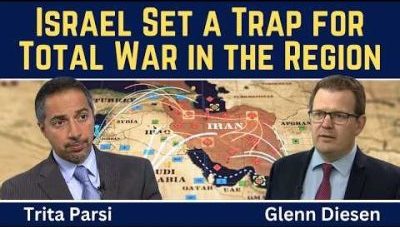
Trita Parsi: Israel Set a Trap for Total War in the Region
or go to
Aletho News Archives – Video-Images
From the Archive
Zionism’s Violent Legacy
By Donald Neff | Washington Report On Middle East Affairs | January 1996
On January 4, 1948, Jewish terrorists drove a truck loaded with explosives into the center of the all Arab city of Jaffa and detonated it, killing 26 and wounding around 100 Palestinian men, women and children.[1] The attack was the work of the Irgun Zvai Leumi – the “National Military Organization,” also known by the Hebrew letters Etzel – the largest Jewish terrorist group in Palestine. The Irgun was headed by Revisionist Zionist Menachem Begin and had been killing and maiming Arabs, Britons and even Jews for the previous ten years in its efforts to establish a Jewish state.
This terror campaign meant that at the core of Revisionist Zionism there existed a philosophical embrace of violence. … continue
Blog Roll
 Aletho News
- Trita Parsi: Israel Set a Trap for Total War in the Region
- Trump’s Iran war is on an Israeli leash
- Saudi oil boss issues global supply warning
- Riyadh Says Its Oil System Is Intact. The Numbers Say Otherwise.
- Trump and Netanyahu Want to “Finish the Job” on Iran
- US ‘one-sided dictation’ not Iran’s beliefs makes rational talks impossible: Baghaei
- Iran’s Next Strike May Not Explode. It Could Shut You Down /Col Doug Macgregor
- Iran: US political targets legitimate if assassinations return
- Iraq shuts key border crossing with Iran under US pressure: Report
- Undersea Internet cables could be targeted in retaliation for attacks on Iran: IRGC deputy chief
- If Americans Knew
- The Israel Lobby’s Changing Fortunes
- AIPAC has become such a political liability that it’s shifting to a more “nimble” approach to buying politicians
- At least 160 Israeli settler attacks in 2 weeks
- Will Gaza’s Ancient Christian Community Disappear Forever?
- Israel’s vision of regional security rests on keeping Arab states weak
- Heidi Levine recounts how Palestinian youths helped save her in settler attack
- DAILY UPDATE: Latest essential news on Palestine, Israel, & region
- Trump’s Intensifying Sabotage of the ICC, for Israel’s Sake
- Israeli military detain US and UK volunteers in West Bank including Democratic NY politician Brad Lander
- Americans at National Conservatism Conference held in Israel this year criticize Israel
- No Tricks Zone
- E-Cars Reduce CO2 Emissions By Only 41% Compared To Internal Combustion Engine Vehicles
- Predictions Made By Renowned Climate Professor Over Past Decades Have Been Proven To Be Poor
- New Study Suggests Large Regions Of The Pacific Ocean Have Been Cooling For The Last 80 Years
- Germany’s Green Energy Debacle: High Energy Costs Force Kahla Porzellan to Close After 182 Years!
- New Study: 50 Years Of The Most Aggressive ‘Net Zero’ Policies Can Only Affect The Global Climate By 0.03°C
- US September “Heat” Was No Record…Many Records Set Decades Ago
- Latest European Green Energy Debacle; Portugal’s Largest Flagship Solar Park Insolvent!
- Green Energy Debacle: German Expert Professor Fritz Vahrenholt Warns Of Severe Economic And Social Consequences
- Two More Paleo Reconstructions Affirm Meters-Higher Sea Levels Across Ireland, Brazil 7000-6000 Years Ago
- New Study: Earth And Venus Surface Warmth Largely Explained By Convection And Lapse Rate, Not CO2 Or Radiation

