Nasrallah: US manipulated Syria grievances
Al Akhbar | July 18, 2012
 Hezbollah leader Hassan Nasrallah on Wednesday accused the US and Israel of using legitimate grievances in Syria as an excuse to destroy the country and the resistance to Israel’s control over the Middle East.
Speaking after the death of three senior Syrian politicians in a bomb attack on Wednesday morning, Nasrallah hailed the men and warned that Syria risked destruction if it slid further into civil war.
“(The West and Israel) took advantage of the legitimate demands of the Syrian people…they put Syria into a war, they forbade negotiations,” he said.
“What is required (by the US) in Syria is to divide it, to destroy it, to rip it apart just like Iraq,” he said, referring to the chaos left behind after 10 years of US occupation in Iraq.
Nasrallah said that Israel had been concerned by Syria’s increased military capabilities and had sought to sow discontent in the country.
“They looked at Syria and saw over the past years… first of all a new military strategy began in Syria,” he said, adding that before the uprising the country was “a real military power that (was) capable of presenting a real military threat to Israel.”
Speaking on the sixth anniversary of the 2006 war with Israel, in which the Jewish state suffered defeat at the hands of Hezbollah, Nasrallah said Hezbollah’s victory had increased concern about Syrian strength.
“There is only one army left that is not connected with the Americans. Its the Syrian army. Since the July (2006) war they have been working on destroying this army,” he said.
Nasrallah also confirmed that the “most important” weapons used against Israel in the war were supplied by Syria.
“Syria is a real supporter of the resistance… on the military level as well,” he said. “The most important missiles that landed in occupied Palestine were manufactured or made in Syria.”
Call for calm
Referring to Lebanon Nasrallah called for calm in the country which has seen an upturn in violence in recent months, much of it related to the Syrian crisis.
“I call for calm and patience. You have heard a lot of curses and you will hear a lot of curses in the future,” he said.
“This doesn’t concern only the Sunnis and the Shia… amongst all sects there are some who are trying to rip apart our community.”
The Shia leader also urged all sects in the country to move away from provocative language, calling for a new document dealing with sectarianism.
Under the new rules, he said, “if a Shia person, whether he be a politician or a religious person, if he says anything offensive then we, the Shia, will stand against him. Same goes for the Sunnis, the Druze and the Christians.”
“Can we go ahead and adopt such a document in Lebanon?”
He also backed the current government to continue despite ongoing tensions between rival factions, saying such debate was healthy.
“In the government we have disagreements… but there are positives as it shows it is a coalition government, not a government of Hezbollah,” he said.
Related articles
- Who’s Holding The Captured Lebanese? (alethonews.wordpress.com)
- Two of 11 Lebanese abducted in Syria to be released: captors (dailystar.com.lb)
Israel warns Lebanon of total destruction in new war
Al Akhbar | July 6, 2012
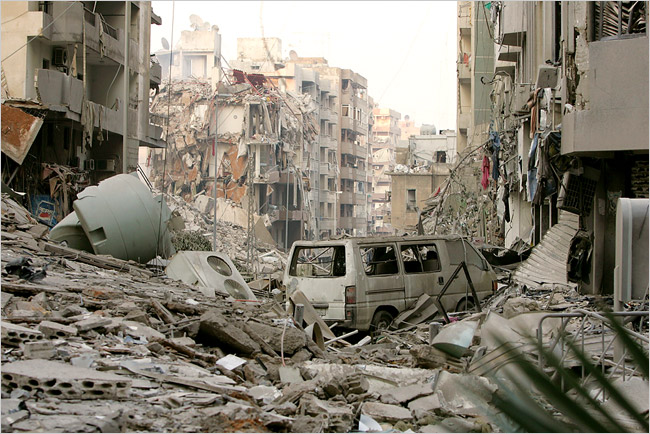
A senior Israeli general threatened Lebanon with destruction on Thursday, saying the military was prepared for a “very violent” war should conflict spark on the border.
Brigardier-General Hertzi Halevy, commander of the IDF’s 91st Division, told local Israeli media that any attack by Israeli forces would leave Lebanon more badly damaged than in the 2006 war, when Israel killed over 1,200 Lebanese and destroyed much of the country’s infrastructure.
“Lebanon will sustain greater damage than that done during the second Lebanon war,” Haaretz quoted Halevy as saying, referring to the 2006 attack. “The response will need to be sharper, harder, and in some ways very violent.”
Israel’s aerial bombardments of heavily populated areas such as Gaza and Beirut have been heavily criticized by rights groups and the UN, drawing claims of war crimes.
Referring to a UN report led by Richard Goldsmith, which concluded that Israel carried out a string of human rights abuses in its 2008-09 bombardment of Gaza, Halevy said war “cannot be nice.”
“After the Goldstone Report, people in the international community and in Israel thought that battle in a densely populated area could be carried out in a nicer way. It cannot be nice. Without the use of great force, we will find it difficult to achieve our aim, and the enemy should also know that,” he said.
Halevy’s provocative comments come a week ahead of the sixth anniversary of the 2006 war, with the general adding that Israeli forces should enter Lebanon with great force and wreak havoc in villages.
Israel and Lebanon’s powerful Hezbollah have exchanged warnings in recent months, with Hezbollah leader Hassan Nasrallah saying in May that his group had the ability to strike any target in “occupied Palestine.”
“Today, we are capable of not only striking Tel Aviv as an area, but also capable of striking specific targets in Tel Aviv and any place in occupied Palestine,” he said.
Halevy’s remarks also come after Israel destroyed one of its own spying devices in south Lebanon on Monday after it was discovered by Hezbollah.
Lebanese security sources said an Israeli drone fired an air-to-surface missile, while Hezbollah said the device was destroyed using a remote-controlled explosive.
Related articles
- Israel destroys spying device in Lebanon after Hezbollah discovered it (alethonews.wordpress.com)
Israel destroys spying device in Lebanon after Hezbollah discovered it

File photo shows Israeli spy devices near Lebanese capital which were concealed in fake rocks
Press TV – July 2, 2012
An Israeli warplane has fired missiles into southern Lebanon to destroy an espionage device Tel Aviv had planted in the area.
The move came after the Lebanese resistance movement Hezbollah discovered the spy system, apparently a listening device, in al-Zreiriyyeh area on Monday.
Some reports say the device was placed on Hezbollah telecommunications lines in the area.
The Lebanese army has discovered and dismantled several Israeli spy systems planted inside the country in recent years.
In December 2010, the Lebanese army said it had located two sophisticated, Israeli-made surveillance devices in mountains near the capital, Beirut.
Who’s Holding The Captured Lebanese?
By Wafiq Qanso | Al Akhbar | May 28, 2012
Conflicting reports dominated the story of the Lebanese pilgrims that were captured in Syria near the Turkish border. The event has transcended the captors and the abductees to become a foreign policy priority for many countries involved in the Middle Eastern crises.
The sequence of events surrounding the abduction of the Lebanese pilgrims last Tuesday in the vicinity of Aleppo, Syria goes as follows.
Lebanese Shia returning from a visit to religious sites in Iran were kidnapped by Syrian Sunnis fighting a regime that they view as allied to the hostages. The news reached Lebanon, which was seething with Syria-related tensions, from the “wars” in its north to the “conquests” of the Tariq al-Jdideh and Caracas neighborhoods of Beirut. Nothing could have been better designed to inflame passions and get the sectarian genie out of its bottle.
Shia in the southern suburbs of Beirut, South Lebanon and the Bekaa, took to and blocked streets, as Sunnis in the North, Beirut and the Bekaa had done the previous week. Some Syrian-owned shops in the suburbs were attacked, and some angry youths nabbed Syrian workers. Things could have developed further with tit-for-tat kidnappings or worse.
So the long-awaited Sunni-Shia fitna (strife) had finally arrived. The heat was turned up further by news from Iraq. The bombing of a busload of Lebanese Shia pilgrims killed three and injuring two.
This need not necessarily be what the kidnappers planned to begin with. But opportunities can be seized when they present themselves.
However, Hezbollah Secretary-General Hassan Nasrallah succeeded in averting an explosion. Shia supporters of Hezbollah and Amal heeded his call to come off the streets, as he promised to work on resolving the issue. Tempers cooled off a little, enabling a flurry of domestic and regional political contacts to be held.
Turkish intelligence then identified the location of the Lebanese pilgrims and their captors. The Turkish foreign ministry was informed that they “have the abductees.” Turkish chief diplomat Ahmet Davutoglu, eager for his country to regain the role of regional mediator, quickly made that public.
All of Lebanon – including its rival political camps – proceeded to voice its satisfaction, having earlier condemned the abduction. The country was swept by a wave of optimism and “love”. Al-Manar conveyed the greetings of the people of the southern suburbs to Sheikh Saad Hariri and their gratitude for his efforts, and Nasrallah did the same in his Bint Jbeil speech. Future Movement MPs strutted and swaggered on the resistance’s TV channel. Things looked like they were heading for a happier ending than the Lebanese could have hoped for.
Then something unexpected, and still unexplained, happened. The hostages were “lost” somewhere on the way between where they were being held in Syria and Adana airport in Turkey.
Informed sources offer two possible explanations for this.
The first is that the Turkish foreign ministry was over-hasty in announcing the release of the hostages. Davutoglu informed his Lebanese interlocutors that they “have the abducteees,” and that he expected them to be freed on Saturday night. But in intelligence parlance, “we have them” does not necessarily mean “they are in our custody,” especially given the profusion of armed Syrian opposition factions on the ground.
Davutoglu almost certainly spoke after the hostages had arrived at a point in Syria close to the Turkish border. There, something happened which held up the entire exercise, severely embarrassing the government in Ankara. Claims made about the hostages’ fate on various websites appeared implausible as Turkey had continued to reiterate the hostages’ well-being. Official Lebanese sources also told Al-Akhbar that “the hostages are all fine.”
The other explanation also relates to over-haste, but differently. After announcing the end of the affair, Ankara came under pressure from the US and Qatar. Why, they protested, should Nasrallah be given another victory and credibility boost? According to the sources, they saw it better to drag things out for a few days longer to make more use of the issue that could serve their interests on many levels.
First, it would help with eroding grassroots confidence in the Hezbollah leader. Nasrallah could also be blamed for any harm that may befall the hostages, after he included Bashar Assad in the list of people he thanked in his Bint Jbeil speech. One could refer in this regard to statements made yesterday by Syrian National Council (SNC) head Burhan Ghalioun and Syrian Liberal Party chief Ibrahim al-Zoabi.
Also, public anger would put an end to the recent easing of tensions in Lebanon, and keep the spotlight focused on the Shia masses – whose expressions of anger have hitherto been controlled – and away from the Salafi uprising in the north, the Tariq al-Jdideh incident, the accompanying emergence of armed manifestations, and all the talk of al-Qaeda sleeper cells and others in the process of waking up.
Following the same logic, a prolonged period of anxiety about the issue would cause a rift between the resistance’s mass base and both its leadership and the Syrians. When public anger and outrage boil over, Syrians cease to be “our dear brothers and guests living among us.” It is within this charged atmosphere that local officials in some areas with Shia majorities have been advising Syrian residents to take precautions for their safety.
Finally, the “national unity” displayed by Lebanese political rivals over the affair and their contacts with each other seemed to be establishing a basis which could be built on, amid renewed calls for national dialogue. That would relieve – and possibly refloat – Lebanon’s current government, with its policy of dissociation from developments in Syria, and lead to a general easing of tensions over developments there. That would not be to the advantage of the international campaign against the Syrian regime, in which Lebanon now has a pivotal role.
The facts remain unclear, and contacts are continuing to be held. Pending further developments, the Shia political leadership in Lebanon is acting with caution. Every effort is being made on the ground to contain the possible fallout, depending on how the affair concludes – especially if a decision has been taken somewhere to make things worse.
Related articles
- Nasrallah calls for restraint after Syria kidnapping (alethonews.wordpress.com)
Nasrallah calls for restraint after Syria kidnapping
Press TV – May 22, 2012
Hezbollah Secretary General Seyyed Hassan Nasrallah has denounced the abduction of 13 Lebanese citizens by Syrian armed militants but also called for restraint and a measured response.
On Tuesday, Nasrallah said it is the duty of the Lebanese government to ensure that the abducted people are able to return home safely.
“We will work day and night until those beloved are back with us… The Lebanese state and government have a responsibility to work toward the release of those kidnapped,” he added.
Commenting on the situation and the recent violence in Lebanon, he asked the Lebanese people to exercise self-restraint and said that nobody should resort to violence.
“I call on everyone to show restraint… It is not acceptable for anyone to block roads or carry out violent acts,” Nasrallah added.
Anti-Syrian government armed militants kidnapped the 13 Lebanese people near the Syrian town of Aazaz, which is on the border with Turkey. The Lebanese were returning to Lebanon after visiting Shia shrines in Iran.
The armed militants reportedly hijacked their bus, then kidnapped the men and released the women.
There is no more information about the whereabouts of the abductees.
Syria has been experiencing unrest since mid-March 2011. While the West and the Syrian opposition say the government is responsible for the killings, Damascus blames “outlaws, saboteurs, and armed terrorist groups” for the unrest and insists that it is being orchestrated from abroad.
Al-Manar reports:
… In response to some people who threatened to kidnap Syrian nationals in Lebanon, Sayyed Nasrallah said that this act of revenge is forbidden and that the Syrian nationals are “our brothers, and nobody should make such unacceptable act personally.” …
The names of the kidnapped men according to media reports:
Abbas Shoaib, Hassan Mahmoud, Hussein al-Siblani, Ali Abbas, Abu Ali Saleh, Mahdi Ballout, Hussein Arzouni, Hussein Omar, Mustafa Yassine, Mohammad Monzer, Awad Ibrahim, Ali al-Ahmar, Ali Zgheib, Rabih Zgheib, Ali Termos and Ali Safa.
Israel leading smear campaign against Hezbollah
Press TV – March 25, 2012
Lebanese resistance movement Hezbollah has rejected allegations made by right-wing Israeli and American activists accusing the movement of involvement in illegal activities, Press TV reports.
The US and Israeli activists have recently stepped up their propaganda campaign against the resistance movement and its finances, accusing Hezbollah of being involved in illegal activities, including drug trafficking and money laundering.
The Israeli daily Yediot Ahranot has recently claimed that Hezbollah is attempting to take control of Lebanon’s finance sector and banking system. This report was simultaneous with a high profile visit to Beirut by the US treasury undersecretary for terrorism and financial intelligence David Cohen.
”The US Zionist lobby has a big role to play in whipping up the congress and the US government with the power that they have in the government to send these officials to rattle the cage of the central bank, to send a message to the Lebanese that you’re vulnerable,” said Franklin Lamb with the Americans concerned for ME Peace.
High ranking Republican congressmen have also accused Hezbollah of involvement in a full range of criminal activities in the US to raise money. US Congressman Peter King, who last year accused the American Muslim community of a growing radicalization, described the Hezbollah movement as a violent murder gang, saying that it represents a growing threat to US national security.
”All of a sudden there is focus on the criminal aspect of drug dealing, money laundering, without specific facts to terrorism. Remember it was terrorism, terrorism, terrorism. It still is but that’s shopworn, that doesn’t have the credibility,” Lamb pointed out.
Hezbollah has, however, strongly denied any involvement in criminal activities, saying it is being targeted because of its stiff resistance against Israel and also because Tel Aviv failed to defeat the movement militarily in 2006.
Since that time Hezbollah appears to have grown both militarily and politically and is still seen by many as a legitimate resistance and liberating force.
Related articles
- Hezbollah: US Claims of Money Laundering Aim to Tarnish Resistance’s Image (alethonews.wordpress.com)
- Who was Behind the Delhi Bombing? (alethonews.wordpress.com)
- Hezbollah calls for political solution to Syrian crisis (altahrir.wordpress.com)
- Resistance will continue until liberation of al-Quds: Nasrallah (altahrir.wordpress.com)
Who was Behind the Delhi Bombing?
By Gareth Porter | Dissident Voice | March 3rd, 2012
The magnet bomb that exploded on an Israeli Embassy diplomat’s car in Delhi on February 13 seemed on the surface to be consistent with an Iranian-sponsored action.
It was carried out with same method by which Israel’s Iranian proxy, the Mujahedin-e Khalq, had assassinated an Iranian scientist in mid-January. It occurred on the anniversary of the 2008 assassination of Hezbollah operations chief Imad Mugniyeh, which Hezbollah had vowed to avenge. And it happened at the same time as what appeared to be attempted bombings in Bangkok and Tbilisi.
But a review of the evidence uncovered thus far makes the link to Iran begin to look very dubious. Instead, it points to the distinct possibility that the Israelis planned a carefully limited bomb attack that was not intended to cause serious injury to Israeli diplomatic personnel, but that would advance the larger Israeli narrative on the need to punish Iran.
The evidence surrounding that bomb itself indicates a series of decisions by the terrorist team that is fundamentally inconsistent with an Iranian-Hezbollah revenge bombing. The preliminary forensic analysis of the bomb itself had estimated it to be 250-300 grams of explosives, but sources in the investigation later reduced the estimate to 200-250 grams. The 250-gram bomb that exploded near the Delhi High Court in May 2011 did not even damage the car under which it had been placed and was characterised by Police Commissioner B K Gupta as a “low-intensity and mild blast”.
Burning questions
The main damage to the Israeli diplomat’s car was not from the explosion but from the fire, which burned so slowly that the occupants suffered no burns.
If the bomb had been filled with shrapnel of iron filings, nails or glass, or if it had been attached underneath the fuel tank or on the door next to the passenger, that bomb would have seriously injured or killed the passenger, Tal Yehoshua-Koren, the wife of the Israeli Defense Attaché. But Delhi police were able to determine that the bomb contained no such potentially deadly shrapnel. And an examination of the videos and photos of the car after the bombing revealed that the bomb had been attached instead to the rear of the vehicle, where it would have the least impact on the occupants.
Indian investigators obtained a fourth piece of evidence bearing on the intentions of the planners from their interview with Yehoshua-Koren. She told them the bomb did not go off for 30 to 40 seconds after she felt a bump from the rear of the car and saw the motorcyclist go past her window. Indian investigators had assumed that the bomb had operated on a five- or 10-second delay, like other magnet bombs with which they were familiar – only enough time for the motorcyclist to get far enough away from the blast.
Yehoshua-Koren did not get out of the car before the bomb went off, and suffered what the Israeli Defense Ministry called “moderate“ wounds – evidently from metal fragments from the rear hatch. She was nevertheless able to exit the car and get to the Israeli Embassy without any assistance.
Israeli commentary on the bombing suggested that the Iranian-sponsored terrorist team had simply proven to be ineffective in carrying out the bombing. But the combination of these four distinct indicators strongly suggests that the operation was planned so that the passenger in the car would not be injured.
Unclear patterns
Israel claimed that the evidence links the Delhi bombing to other alleged Iranian-Hezbollah plots in Tbilisi and Bangkok. Deputy Prime Minister Moshe Yaalon declared, ”It is the same pattern, the same bomb, the same lab, the same factory”.
But investigators in Delhi to concluded that the operations in Delhi and Bangkok were “unrelated“.
Despite the fact that a group of Iranian passport-holders were clearly involved with highly lethal bombs in Bangkok, there is good reason to doubt that they were working for Iran’s IRGC or Hezbollah. They spent their first three days in the country with Thai prostitutes at Pattaya. That profile suggests Iranian mercenaries, like the former kickboxer hired by Mossad to assassinate Iranian scientist Massoud Ali Mohammadi in January 2010, rather than Iranian or Hezbollah operatives.
India‘s importance
In the larger context, it is very difficult to believe that Iran would have chosen New Delhi as the location for revenge against Israel, given the importance of India as a buyer of Iranian oil and India’s delicately balanced political-diplomatic position in the larger conflict.
India had just replaced China as Iran’s single biggest crude oil customer, having increased its imports to roughly 550,000 barrels a day in January, which compensated for a drop in sales to China. And the government of Prime Minister Manmohan Singh had resisted pressure from the United States and Europe to reduce its purchases from Iran, even working with Iran to find ways to get around the planned sanctions against Iran’s National Bank. India’s Commerce Ministry was planning a large business delegation to Iran to discuss increased trade.
India had thus taken on the role of potential “spoiler” in the Western sanctions strategy against Iran. This central geopolitical reality prompted New Delhi’s “Economic Times” to ask, “Why would Iran go and poke its finger in the eye of its best customer, especially knowing full well that Israel will use even the flimsiest excuse to put the blame on it?”
Indeed, it was Israel, not Iran that stood to gain politically from the terrorist car bomb in Delhi. Israel was well aware that a terrorist bombing in Delhi that could be blamed on Tehran was a potential lever to change India’s policy toward Iran. As an Israeli official told the Wall Street Journal, if India were to adopt Netanyahu’s position that Iran was responsible for the bombing, it would take the India-Iran relationship to “a whole different level”.
Nearly two weeks before the bombing, Israel acted to ensure that Indians would assume that a terrorist attack in Delhi on that date had been carried out by Iran. A letter to the Delhi police on February 1 signed by the Israeli Deputy Chief of Mission in Delhi and the First Secretary responsible for security expressed concern that Iran and Hezbollah would take revenge on the anniversary of the Mugniyeh assassination by carrying out terrorist actions against Israelis. It also referred to the possibility of Iranian revenge for the assassination of the Iranian nuclear scientist Mustafa Ahmadi Roshan on January 11. Although the letter did not specify that an attack might take place in Delhi, Mossad chief Tamir Pardo led a delegation of intelligence officials on a visit to Delhi around the same time and turned over a list of 50 Iranian nationals with the request that they be kept under surveillance.
The Israeli letter referred to an alleged Hezbollah terror plot against Israelis that had been broken up in Bangkok in January. But the idea of a Hezbollah plan to kill Israelis in Thailand had come only from Israeli intelligence – not from any local sources. The Thai police detained Hussein Atris, a Swedish-Lebanese, in January only because Israeli intelligence officials had told them they “suspected” that he and two other Lebanese, whom they claimed were linked to Hezbollah, might carry out terrorist attacks at tourist sites popular with Israelis.
Atris admitted to owning large supplies of urea fertiliser and ammonium nitrate, which are ingredients in bombs, but Thai investigators concluded that they were not connected to any terror plot in Thailand, because of the absence of any other bomb components. The head of Thailand’s National Security Council, General Wichean Potephosree, a former chief of police, expressed doubt that Atris was a terrorist, as Israel had claimed.
After the Bangkok explosion, the Israelis renewed the claim of an Iran-Hezbollah terror threat in Bangkok, alleging that the bombs found in in all three capitals in mid-February were “exactly the same kind of devices”. But we now know that was not the case.
We may never be able to establish with certainty what happened in Delhi, Bangkok and Tbilisi earlier this month, but the evidence that has come to light thus far doesn’t support the widely accepted notion that Iran and Hezbollah were behind it. That evidence is consistent, however, with a clever Israeli “false flag” car bombing operation that would not injure the passenger but would serve its broader strategic interests: dividing India from Iran and pushing US public opinion further towards support for war against Iran.
~
Gareth Porter is an investigative historian and journalist specialising in U.S. national security policy. The paperback edition of his latest book, Perils of Dominance: Imbalance of Power and the Road to War in Vietnam, was published in 2006.
‘Some Arab states against political solution to Syria unrest’
Press TV – February 24, 2012
Hezbollah Secretary-General Seyyed Hassan Nasrallah has accused some Arab countries of stirring up trouble in Syria by blocking a political solution to the unrest in the country.
Nasrallah said on Friday that certain Arab countries are arming and funding terrorist groups fighting against the government of Syrian President Bashar al-Assad and prevent the opposition from entering into negotiations with the government.
The Hezbollah chief also accused those countries of sending fighters into Syria to fuel unrest in the country.
He also said that the US and the West do not want to send troops to Syria and instead they are trying to spark racial, tribal and sectarian confrontations in the country.
Head of Hezbollah resistance movement also accused the US and the West of adopting hypocritical approaches regarding protest movements in the Middle East region. Nasrallah said while the US and its allies describe dialogue as the only way to end protests in Bahrain, they all oppose political solution and support violence when it comes to Syria.
He also said that the US and Israel want to destroy the Middle East by dividing its people and spreading chaos.
Nasrallah has repeatedly said that the US and its allies oppose reforms in Syria and that they seek to ignite a civil war in the country.
Related articles
- Nasrallah Calls for Unconditional Dialogue in Syria (altahrir.wordpress.com)
Azerbaijan Claims More Iranian Terror Plots Without Providing Details or Evidence
New Alleged Hezbollah-Iran Joint Terror Operations in Azerbaijan
By Sibel Edmunds | Boiling Frogs Post | February 22, 2012
Azerbaijan claims it has ‘again’ busted another Iranian terror cell, but is refusing to provide any evidence or details. According to the report by the country’s state-run AZTV, on February 21 a terrorist cell operated by Hezbollah and Iran’s Revolutionary Guard had been discovered and dismantled. Allegedly the busted group, with guns and explosives, were planning attacks on ‘unspecified’ foreign nationals.
Despite reporters’ attempts the Azeri government refrained from providing any additional information:
Speaking to EurasiaNet.org, a spokesperson for Azerbaijan’s Ministry of National Security refused either to confirm or to deny the station’s report. Strangely, pro-government and state-run news sites have proven similarly skittish about delving into the AzTV report; no news about the arrests could be found on any of these websites on the morning of February 22.
Strangely enough, to back up the story AZTV aired footage of terrorist arrests from an incident that occurred in 2008! This new development appears to follow the very same pattern as Azerbaijan’s claim on the ‘alleged’ assassination plot against Israeli officials in Azerbaijan by an Iran-Sponsored terrorist group last month.
Earlier today APA news agency reported new details about this latest alleged Iranian terror operation. Supposedly, the terrorist group operated under two ringleaders – “Hamid” for Iran’s Revolutionary Guard, and “Haji Abbas” for an armed wing of Hezbollah, Mugavimat. This is supposed to establish the collaborative effort between the Iranian government and Hezbollah:
Azerbaijani Ministry of National Security disarmed the terrorist group of Iranian intelligence agency “Sepah” and “Hezbollah” in Azerbaijan.
The group members gathered material reconnaissance materials. The illegally acquired many weapons, ammunitions, explosives and explosive devices and began preparations to commit a terror act.A group of persons were detained in Azerbaijan over the last several days. Member of Nardaran Sanhedrin Karbalai Natig Karimov told APA that the majority of detained as a result of operative measures taken by the National Security Ministry and law-enforcement bodes were the residents of Baku villages, especially Nardaran. They are accused of establishing armed unit, illegal keeping of weapon, betrayal of motherland and drug trafficking.
Earlier this month Boiling Frogs Post reported on Iran’s formal rebuke to Azerbaijan for housing and accommodating Israeli intelligence agents and assassins to execute assassination plots against Iranian nuclear scientists. Azerbaijan denied the accusations by the Iranian government.
It is also important to note that intimate US-NATO ally Azerbaijani President Ilham Aliyev visited the North Atlantic Treaty Organization headquarters in Brussels on February 15 and has also met with Israeli President Shimon Peres and US Secretary of State Hillary Clinton over the past few weeks.
Boiling Frogs Post has been the only news site closely monitoring and reporting these developments in the US war on Iran operations’ Caucasus front. You can read our previous reports here, here, here and here.
Nasrallah: Our Enemy Knows How We Avenge Mughniyeh
Al Akhbar | February 16, 2012
Hezbollah leader Hasan Nasrallah said his party was not involved in recent bombings that took place in India, Georgia, and Thailand earlier this month, while reiterating the party’s intention to avenge the killing of its leader Imad Mughniyeh four years ago.
“It is insulting for Hezbollah to avenge its great leader by killing ordinary Israelis, as for those who are our target, they know who they are and they are taking measures and I tell them to remain doing so for we shall avenge Imad Mughniyeh in an honorable way,” Nasrallah said.
Nasrallah was speaking during a televised speech Thursday evening to commemorate the martyrdom of three of the party’s top leaders, Ragheb Harb, Imad Mughniyeh, and Abbas al-Mousawi, at the hands of Israel. Nasrallah reiterated the continued arming of the resistance and repeated his call to pull out from public use personally owned arms.
Commenting on the Arab revolutions, Nasrallah criticized what he termed as “the interference of [Lebanon’s] March 14 and their sending of weapons and bolstering of fighting among the Syrian people,” reminding the rival political group of their objection to Hezbollah’s support of Bahraini protestors and material aid to resistance in Palestine via Egypt.
Nasrallah cautioned against discord in Egypt and pointed fingers at the US and Israel for fomenting it, saying that Israeli officials are living in a state of anxiety due to its dwindling power.
He also lamented that “Arab peoples and governments are not occupied with Palestine” while Palestinians, including prisoners on hunger strike, and Bahrainis, are left to their own devices.
In relation to Syria, Nasrallah said the regime has its shortcomings as acknowledged he says by its leadership but that “it has stood in the face of the US-Israeli project and supported resistance.” While the regime did not open up a front in Golan, none of its detractors, Nasrallah argued, has opened such a front or supported the resistance.
Nasrallah criticized the total refusal to engage with dialogue with the Syrian regime and opt for a political solution in Syria by the same people who call for negotiations with Israel and have engaged with it for decades. He leveled similar criticism against those who bar the supply of weapons to Israel while sending weapons to Syria so the “Syrians fight each other.”
Nasrallah wondered why there is “a Western-Israeli-Arab insistence to fight in Syria and topple the regime” suggesting it is cause for political reflection.
Related articles
- Iran Falsely Charged with India and Georgia Attacks (alethonews.wordpress.com)
- Nasrallah Calls for Unconditional Dialogue in Syria (altahrir.wordpress.com)
Israel’s War with Iran and The Zionist Power Configuration in America
By Prof. James Petras | July 15, 2008
“My strong preference here is to handle all this (US conflict with Iran) diplomatically with the other powers of government, ours and many others as opposed to any kind of strike occurring… From the US perspective, from the United States military perspective in particular, opening up a third front (Israeli and/or US act of war against Iran) would be extremely stressful to us” testimony of Admiral Michael Mulligan, Chairman of the Joint Chiefs of Staff. July 2, 2008.
“If Iran continues its nuclear arms program – we will attack it. The sanctions aren’t effective. There will be no choice but to attack Iran to halt the Iranian nuclear program.” Shaul Mofaz, Israeli Minister of Transportation in Yediot Ahronot, June 6, 2008.
“The present economic sanctions on Iran have exhausted themselves. Iranian businesspeople who would not be able to land anywhere in the world would pressure the regime.” Israeli Prime Minister Ehud Olmert, speaking to US House Speaker, Senator Nancy Pelosi in favor of a unilateral, pre-emptive US naval blockade of Iran. (Haaretz May 21, 2008.)
“It was a triumphalist conference. Even this powerful organization (AIPAC), the most powerful group in the US Israel lobby, had never seen anything like. Seven thousand Jewish functionaries from all over the United States came together to accept the obeisance of the entire Washington elite. The three presidential hopefuls (Hillary went too) made speeches, trying to outdo each other in flattery. Three hundred senators and members of Congress crowded the hallways. Everybody who wanted to be elected or re-elected to any office came to see and be seen.” Uri Avnery, London Review of Books, July 3, 2008. page 18
House Resolution 362 received unanimous support from all the Presidents of the Major American Jewish Organizations including the 7,000 delegation attending the AIPAC Conference in Washington DC on June 2-4, 2008.
“Resolution 362 became our chief legislative priority”, according to AIPAC’s website, June 4, 2008.
“The President should prohibit the export to Iran of all refined petroleum products imposing stringent inspection requirements in all persons, vehicles, ships, planes, trains and cargo ships enters and departing Iran .” US House Resolution 362 introduced May 22, 2008.
Resolution 362 gained 170 co-sponsors or nearly 40% of the House and 19 co-sponsors in the Senate in less than a month.
Introduction
Zionists and their allies in Congress authored, implemented and enforced sanctions against Iran, which hinder the ambitions of the world’s biggest oil and gas companies. Israeli war exercises and public declarations threatening a massive air assault on Iran have pushed petroleum prices to world records. This spring 2008, the most powerful pro-Israel Jewish Lobby in the US , AIPAC held their annual conference and secured the support and commitment of both major US Presidential candidates and the majority of US members of Congress for an Israeli initiative to impose extreme economic sanctions on Iran with threats of a US/Israeli military attack. In early summer 2008, the AIPAC operatives, who wrote this US Congressional resolution, successfully rounded up Congressional leaders’ support of an air and naval blockade of all critical imports into Iran – a blatant act of war.
Israel adopts a ‘peace policy’ designed to isolate Iran in preparation for an attack – and then immediately violates its terms. The entire spectrum of major Jewish organizations unquestioningly and unconditionally give their active support, as they have in the past, to AIPAC’s domination of the US Presidential candidates as well as to the twists and turns in Israel’s war preparations via military exercises and phony peace gestures.
In the entire history of US relations with oil and gas-producing countries, there is not a single previous case in which it sacrificed profitable investments by its major oil companies at the behest of a foreign power ( Israel ) and its “lobby” – the Zionist Power Configuration.
Israel ’s Two Track Policy Toward Iran
Israel ’s policy to obliterate Iran , in much the same way that the US has devastated Iraq , has followed a carefully planned multi-prong strategy. Israel has relied on direct military attacks, all out wars, economic blockades and the use of overseas Zionist front organizations to destroy Iran ’s allies and strangle its economy.
The Israeli strategy is directed at undermining, weakening and enticing Iranian allies to politically and militarily isolate Tehran , in order to facilitate a full-scale massive air assault without having to deal with military fallout from Iranian allies on its borders.
In pursuit of this ‘isolate and destroy’ strategy, Israel launched a full-scale invasion and massive air and missile bombing of Lebanon knocking out critical civilian infrastructure in the hopes of obliterating Hezbollah, a staunch Iranian ally. Israeli preparation for its Lebanese war began a full year before its sneak attack, using a common minor border incident to invade Hezbollah strongholds in Southern Lebanon . Israel ’s offensive against Hezbollah made no sense from the point of view of its border security. No Israeli military official ever envisioned Hezbollah being any kind of military threat to its national security. At most Israel saw Hezbollah as a serious counterweight to its anemic puppet allies in Beirut .
From the perspective of Israel ’s regional hegemonic perspective, an attack and destruction of Hezbollah would isolate Iran and allow Israel to develop a strategic Middle East client in Beirut , facilitating an air attack.
Hezbollah’s defeat of the Israeli invasion seriously weakened Tel Aviv’s military based strategy to ‘isolate Iran ’ and strengthened Hezbollah’s power in Lebanon , raising its prestige immensely among the Arab and Muslim populations.
The second prong in Israel ’s strategy was to destroy the democratically elected Hamas government in Palestine by financing and arming a coup attempt by its Arab clients in the Palestinian Authority,Abbas and Dahlens. Hamas successfully routed the putschists and proceeded to consolidate its rule in Gaza . Israel turned toward a destructive blockade to starve the 1.5 million Palestinian civilians in Gaza into revolt against Hamas. Israel ’s allies in the US and EU poured hundreds of millions of dollars and euros to prop up the corrupt Israeli client regime in the West Bank . Once again Israel failed to militarily or economically destroy Hamas, but that didn’t prevent the Jewish state from turning to its third target – Syria .
In 2007 Israel launched an air invasion of Syria , bombing what it described as a ‘military target’, a low-grade non-military nuclear facility in order to intimidate Syria and weaken the Assad regime’s ties to Iran . While Israel demonstrated its military capacity to violate Syrian sovereignty with impunity, its action did not have any major impact on Iran-Syrian ties.
In response to the repeated failures of the Israeli military strategy of undermining Iran ’s allies, Tel Aviv turned toward a different ‘divide and conquer’ approach. Israel , through its Turkish ally, began ‘peace negotiations’ with Syria , offering to discuss the return of the Israeli-occupied Golan Heights . The trade off for Israel takes the form of peace talks over the Golan in exchange for lessening Damascus ’ military dependence on Iran . Since the Israeli public and most of the Knesset are overwhelmingly opposed to returning the Golan, the peace talks are not intended to end Israeli occupation, but to give the Assad regime a certain credibility among the Western imperial powers and lessen its isolation. The Israeli regime had no trouble selling its new line on Syria to its highly subservient and disciplined supporters among the Presidents of the fifty-two leading American-Jewish organizations. They are well practiced in following the zig-zag of Israeli policy, switching policy of demonizing Syria one day and acknowledging its pragmatism the next. French President Sarkozy followed up the Israeli initiative by inviting Syrian President Assad to Paris with all the pomp and honors of a chief of state.
Two years after its failed military invasion of Lebanon , Tel Aviv sought and pursued negotiations with Hezbollah to exchange prisoners (and/or their remains) as part of a tactical mini-‘détente’. Once again, the US Zionist Power Configuration, after years of denouncing Hezbollah as a mere tool of Iran , accommodated the new Israeli line of recognizing Hezbollah as an independent political interlocutor.
At about the same time (June 2, 2008), Israel finally and perhaps temporarily recognized it could not militarily or economically destroy Hamas, or prevent its military retaliation against Israeli attacks or undermine its mass base of support and signed a military truce to end armed incursions and open entry points in exchange for the end of retaliatory rocket attacks on Israeli towns.
While the new Israeli turn toward peace negotiations, cease fire agreements and prisoner negotiations seems to augur a less belligerent and more realistic assessment of the Middle East balance of power, in fact the new policy is linked with a more extremist, aggressive and war-threatening military policy toward Iran. In late May and early June 2008, while Israel was proposing a more conciliatory approach toward Iran ’s allies, it engaged in a massive military exercise, involving over a hundred warplanes and thousands of commandos in an unmistaken dress rehearsal for an offensive war against Iran . Top officials from the Israeli military command, cabinet and Knesset publicly pronounced their intention to bomb Iran if it proceeded in its entirely legal and non-military uranium enrichment program. Israeli officials secured the tacit and overt approval of US and European Union for its military posture. More important Israel practically dictated the terms of debate in the United Nations Security Council by insisting that it would launch a war unless the harshest economic sanctions (and even a military-economic blockade) were not implemented and enforced by the United Nations.
Israeli policy was operating on several parallel and reinforcing tracks: The ‘peace track’ to engage and neutralize Iran’s Middle East allies, to isolate Iran and polish up its image in the Western mass media; the ‘military track’ to prepare for war, which remains its defining strategy in order to destroy an isolated (from its allies) and economically weakened (by US/EU/UN sanctions) Iran. In pursuit of its relentless drive for Middle East supremacy and the implementation of its two-track strategy, the Israeli state depends on the power of the major American Jewish organizations to promote the policies of the Jewish state in the US .
The Centrality of the ZPC in Israel ’s Pursuit of the Destruction of Iran The Zionist Power Configuration (ZPC), through its dominant role in making US-Middle East policy, plays a central part in the implementation of all aspects of Israeli foreign policy goals in the region. Israel ’s principle goal over the past five years is the destruction of Iran , to end its opposition to Israel ’s domination of the region. In pursuit of the Israeli agenda, the ZPC led by AIPAC (the American Israel Public Affairs Committee) has exploited its control and influence over the US Congress and Executive branches. AIPAC has leveraged the presence of highly placed Israel-Firsters in key positions in Treasury, the Pentagon, Commerce, the National Security Council, the Justice Department and Homeland Security to design and pursue economic and military policies in line with Israel’s war policies toward Iran. AIPAC, through its media and economic leverage undermined domestic opposition. Israel’s power over US bellicose policy toward Iran is so complete that even critics of Washington’s military posture toward Iran refrain from mentioning the powerful role of the ZPC in designing and implementing that policy.
Zionist power was on open display at its annual conference in Washington . At the 2008 AIPAC Conference, over 7,000 delegates representing 100,000 members, met to discuss how to force Washington to implement Israel ’s Middle East priorities, overwhelmingly focused on the Jewish State’s stated objective of militarily destroying Iran . Over 300 US Congress members attended (over 60% of all members of both houses) along with the three major presidential candidates, major cabinet members, including the Secretary of State, Vice President Cheney from the White House and a host of Hollywood celebrities, media moguls and prominent financial and real estate billionaires from Wall Street and its environs.
Presidential candidates competed with each other in swearing their total and unconditional servility to Israel , swearing their utmost to back any and all past, present and future Israeli military attacks. Hillary Clinton promised to implement the equivalent of twelve holocausts against Iran ’s 70 million citizens in her rant to ‘obliterate Iran ’ if it endangered Israel . Obama backed the ultra-orthodox Jewish demand to give Israel sole control over Jerusalem , and joined John McCain and Clinton in promising to bomb Iran if it continued its uranium enrichment program (which they equated with a nuclear weapon – despite the objections of the IAEA and the US intelligence community). All endorsed Israel ’s starvation of Gaza ’s 1.5 million inhabitants and rejected any concessions or negotiations with Hamas , Syria and Hezbollah – even as Israel was already engaged in negotiations for tactical reasons. AIPAC’s entire agenda has been endorsed by the US Congress, the Executive and both parties, including a military blockade of Iran, harsher world sanctions against all global oil and gas corporations, banks and industries dealing with Iran, the immediate transfer of the most advanced missile and attack technology to Israel to facilitate an attack on Iran, and a substantial increase in yearly US military grants to Israel totaling an additional $30 billion dollars over the next decade. The top Israeli officials present, Foreign Minister Tzipi Livni and Prime Minister Olmert took the opportunity to reiterate and re-affirm their will to use military power to force Iran to submit or face destruction, to standing ovations and wild cheering from the ecstatic AIPAC delegates, deriving delirious pleasure from these blood thirsty calls for US military and economic sacrifice!
Nary a single word of dissent was heard from the entire Congressional entourage in attendance; the Presidential candidates assured the zealous Israel-firsters that for the next 4 years Israeli interests would be the centerpiece of US Middle East policies.
The AIPAC conference was no simple ‘show of force’ nor an exercise in ‘group think’ meant to keep the faith of the zealots. It was the kick-off to a full-scale ZPC campaign to implement a series of measures designed to accelerate a US and Israeli military assault against Iran .
The Congressmen and women in attendance at the AIPAC were there for a purpose: to be instructed on what Middle East policies Israel and the ZPC would demand of them. Their presence at the AIPAC conference was not just a courtesy call intended to ‘network’ with wealthy Jewish campaign fund contributors. They were there because of long-standing and intense relations with the ZPC, which made it obligatory to show up and pay obeisance to demanding paymasters who shortly thereafter visited their offices and presented them with proposals and resolutions for immediate action.
The Aftermath of the AIPAC Conference Under AIPAC tutelage, if not actual authorship, a Congressional resolution was introduced, which called for a naval blockade of the Islamic Republic of Iran, a deliberate act of war. H. Con. Res. 362 calls on the President of the United States to stop all incoming international shipments of refined petroleum products from reaching Iran by any means. By the middle of June 2008, three weeks after it was introduced, the resolution had attracted 146 co-sponsors. In the Senate in two weeks time a similar measure secured 19 co-sponsors. The Congressional resolutions use almost the exact wording of an AIPAC memo issued just prior to the Congressional action. AIPAC got its cue from Israeli Prime Minister Ehud Olmert who, in early May 2008, told House Speaker Nancy Pelosi that sanctions were not enough and called a US naval blockade ‘a good possibility’ (Global Research June 18, 2008). The loyal AIPAC servants made their Israeli masters’ wish a reality – in a matter of days. (Who says critical issues get ‘bogged down’ in Washington ?)
In late June 2008, under AIPAC leadership and direction, the US Congress added $170,000,000 dollar increase in military assistance to Israel as part of a 10 year, $30 billion dollar war commitment to the Jewish state. AIPAC was instrumental in drawing up the bill and openly declared that the addition was designed to maintain Israel ’s military dominance and superiority in the Middle East but specifically designed for its war preparation against Iran and the Palestinians. AIPAC pointedly emphasized that, “The US commitment to maintaining Israel’s qualitative military edge is the cornerstone of American (sic-ZPC) policy in the region…This year’s package holds heightened significance…as the US and Israel face new challenged from Iran’s drive to acquire (sic) nuclear weapons…” (AFP June 27, 2008).
At a time when the US government faces a major financial crisis and refuses to refinance millions of Americans facing loss of their homes through foreclosures, AIPAC secured a 25% increase in military handouts to Israel. Olmert praised his US Zionist agents for improving Israel ’s take. The 52 Presidents of the Major American Jewish Organizations and their million members and affiliates successfully pursued AIPAC’s proposal to increase economic sanctions on Iran via its captive US Congressional bloc, its appointed agents in the Treasury Department and in the UN Security Council via its influence in the White House. Each and every sanction introduced by the US representative in the United Nations is a thinly veiled copy of memos and resolutions written and powerfully pushed in the Executive branch by AIPAC. They are backed by several hundred professional lobbyists and scores of pro-Israel PACs (political action committees) and ten propaganda mills (the so-called ‘think tanks’) with tight links to AIPAC. Through their influence in the US , the ZPC has successfully secured the acquiescence of other members of the UN Security Council.
Throughout 2008, a presidential election year, the ZPC has successfully engaged in sustained interrogation and pressure on the major candidates, securing pledges of unconditional support for every aspect of Israel ’s murderous policies in Gaza and the West Bank , including its policies of starvation and assault. All major candidates have echoed the ZPC-Israeli line of labeling the elected Hamas movement, Hezbollah , Iran and Syria as ‘terrorist’ organizations and states and pledged to attack or back an Israeli offensive war against Iran .
In so far as the Middle East is the center of US foreign policy, the ZPC has ensured that the next President of the United States will continue the bellicose pro-Israel policies pursued by George W. Bush. The ZPC’s influence over the next US President guarantees that the issues of war and peace will be dictated by a minority of a minority ethno-religious group, comprising less than 3% of the population and loyal to a foreign state. Whichever party wins the Presidential election or controls Congress, the ZPC will set the Middle East agenda, the head of which is the destruction of the Islamic Republic of Iran.
During the entire run-op to the November 2008 elections, not a single political leader has raised the issue of the catastrophic consequences of a war with Iran for the world economy, the astronomical rise in oil prices, which will result in the conversion of the US recession into a depression, the killing of hundreds (if not millions) of Iranian citizens and the loss of American lives. In other words, the greatest of all ZPC successes is their ability to focus the entire political elite and mass media on the advantages of launching a preemptive war for Israel and to distract public and political attention away from any reports relating the world-shattering destructive consequences.
Zionist Power: Big Oil and Liberal Obfuscation
One of the most salient issues in the run-up of oil and gas prices has been the power and policies of the ZPC. Iran possesses some of the most potentially productive and rich oil and gas fields, which are not yet exploited. Iran possesses 15-17% of the world’s supply of gas. It is number two in the world. Israel , and therefore the ZPC, has been the leading voice in blocking all investment and financing in Iran by the world’s leading public and private gas and oil multinationals. Thanks to AIPAC authored Congressional legislation, any and all oil and gas companies investing more than $20 million dollars in Iran are barred from the US market and subject to criminal investigation and fines (if not imprisonment of executives). AIPAC authored Congressional legislation, which labeled the Iranian National Guard, the so-called ‘Revolutionary Guard’, as an international ‘terrorist organization’, subject to military attack by the Pentagon.
By extension, any multinational corporation, which signs economic agreements over Iranian oil assets, is considered to be financing terrorism. Huge quantities of Iranian gas and oil are not coming onto the world market and lowering the price of gasoline, solely due to US Congressional policies authored and enforced by the ZPC. According to the Financial Times (June 25, 2008) every major US , European and Asian oil company is eager to invest in Iran but are blocked by Zionist authored legislation: “American companies are prohibited from any involvement in Iran ’s energy sector. Those non-US international groups that have invested in Iran are for now going slow. They are trying to avoid pressing ahead with investments that would anger Washington , while also trying to avoid pulling out; which could annoy Tehran .” (FT June 25, 2008. p.9).
The US Treasury Department houses the most influential enforcement agency for policing the behavior of Big Oil, Big Banking and Big Construction companies, which would normally invest in Iran , given the world historic prices. According to investigator Grant Smith (Classified Deceptions: 2007): “In 2004, AIPAC and its affiliated think tank, the Washington Institute for Near East Policy (WINEP), lobbied for a new separate US Treasury unit to be created – the ‘Office of Terrorism and Financial Intelligence’ (OTFI). It is headed by AIPAC vetted leadership and many OTFI briefings are delivered directly to WINEP. OFTI’s secretive financial operations that target Iran and its trading partners are tightly coordinated with Israel ’s leadership.” (Smith. page 59). Stuart Levey, sub-secretary of the Treasury and a zealous Zionist, who runs OTFI, and his staff have successfully pressured many of the biggest multi-billion dollar public pension funds in states like New York, Florida, Texas and California to disinvest in any company investing, trading or engaged in any economic activity with any Iranian public or private enterprise. Secondly, it has arbitrarily labeled any humanitarian organization dealing with Iran as a possible ‘terrorist conduit’. Levey has made frequent visits to Europe and Asia, threatening US reprisals to any country or corporation trading or investing in Iran . Levey and the OTFI have formulated Treasury policy memos which have decisively shaped US sanctions policy and proposals to the United Nations. It is clear that Cheney, Bush and the Democratic Congress make decisions largely drawn up, promoted and enforced by AIPAC and its key operative in Treasury, who in turn openly coordinate policy with their mentors in the Israeli foreign and financial ministries and the office of the Israeli Prime Minister.
Clearly the power of the ZPC is as much from its capacity to leverage malleable non-Zionist Congress people, public agencies, private financial institutions as it is to apply direct control over public policy. In other words for every dues paying member or leader of AIPAC, and of the 52 leading Jewish organizations in America, there are a multiplicity of state and civil society leaders and organizations who are influenced to initiate and implement pro-Israeli policies. The surprise expressed by some critical overseas Israeli observers, like Uri Avnery, over how a tiny minority of American Jews can dominate US Middle East policy, overlooks their leverage, access, and power to shape the agenda of vast sectors of US public and civil society policy makers.
While the oversight of foreign observers is understandable, what is absolutely inexcusable is the behavior of liberal critics of US war policy toward Iran . Bill Moyers, ignoring the abundant evidence published in all the major financial media on the economic sanctions against the oil companies spearheaded by the ZPC, argues that the Middle East wars are “about oil”. (Moyers and Winship June 28/29, 2008 Counterpunch). Citing as evidence for Big Oil’s role in Middle East wars, they quoted a number of former top Zionist officials in the US government (Greenspan, Wolfowitz and others). They argued that the signing of oil contracts in Iraq eight years after the start of the war is evidence that US policy was a product of Big Oil. Instead of examining Wolfowitz and over three dozen pro-Israel top policymakers in the Bush Administration who designed and executed the policy to invade Iraq – and the current all out push by the ZPC toward war with Iran – Moyers and Winship cite obscure meetings between Cheney and the oil companies. Instead of discussing the public overt campaigning for war with Iraq and Iran by the 52 leading Jewish organizations in the United States and the public policies of leading policymakers in the government, Moyers resorts to individual conspiracies between Cheney and the ‘oil industry’. Moyers admits he knows nothing about the content of the meetings and why the secret meeting did not lead to any direct lobbying for war by Big Oil (in contrast to AIPAC and its affiliates). Moyers article in Counterpunch totally avoids making a single reference to the massive, sustained and successful Zionist war campaign in the Executive and Legislative offices as well as in the Op-Ed pages of all the major daily and weekly newspapers and magazines.
A similar kind of liberal cover-,up is found in the July 17, 2008 issue of the New York Review of Books, entitled “Iran: The Threat” by Thomas Powers who puts the entire burden for war policy toward Iran solely on Bush and Cheney, overlooking the intense and successful economic sanctions and war resolutions authored by AIPAC and implemented by the Democratic Congress. Powers omits the entire war propaganda campaign which appears in the mass media written by academics from Zionist ‘think tanks’, the entire groveling for Israel exercises by the US presidential candidates and three-quarters of the US Congress and Senate at the AIPAC conference, (which took place just prior to the Powers article). Powers says nothing about the entire political class’ blind support for Israel ’s promise to go to war with Iran . Powers, a supporter of killer sanctions as an alternative to an air and missile attack, doesn’t even mention the fact that the ZPC is the leading advocate of sanctions. His research didn’t include the crucial fact that the implementation and enforcement of sanctions are in the Treasury Department (OTFI), which coordinates with Israeli agencies and is run by Stuart Levey, an Israel-Firster.
Noam Chomsky has long been one of the great obfuscators of AIPAC and the existence of Zionist power over US Middle East policy. One of his most blatant examples of cover-up occurred during the AIPAC conference in early June 2008. In answer to a question on what it would take to change US unconditional support for Israel, Chomsky ignored the servility of US Presidential candidates to Israel and the AIPAC at the AIPAC conference; Congressional approval of AIPAC authored sanctions resolutions and their implementation by Treasury Department Under-Secretary Levey; the role of the ZPC in shaping media demonizing of Iran, Palestine, Hezbollah and Syria. Instead Chomsky engages in vacuous circumlocution. With reference to US support for Israel , he claims, “We have to consider the sources of support. The corporate sector in the US , which dominates policy formation, appears to be quite satisfied with the current situation. One indication is the increasing flow of investment to Israel by Intel, Hewlett-Packard, Microsoft and other leading elements of the high tech economy. Military and intelligence relations remain very strong. Since 1967, US intellectuals have had a virtual love affair with Israel, for reasons that relate more to the US than to Israel, in my opinion. That strongly affects portrayal of events and history in media and journals.”
Chomsky deliberately omits the elementary step of actually looking at the process of ‘policy formation’ and noting the role of the AIPAC lobby in shaping US Middle Eastern policy, a point noted by every major expert, Congressional staffer and observer on and off the scene. He mentions ‘the corporate sector’, a vague entity without mentioning how the Zionist lobby has successfully blocked the major oil companies from investing billions in Iran and who undermined US investment agreements with pre-war Iraq. None of the high tech investors he cites has ever lobbied to shape US policy in the Middle East, least of all pressured the US to support Israeli occupation and eviction of Palestinians, the invasion of Lebanon, its military attack of Syria. To suggest that Micro-Soft’s Bill Gates has been lobbying for Israel , as Chomsky does, is the height of silliness. But the Presidents of the 52 Major Jewish Organizations in America have. No conference organized by high-tech companies has ever drawn 65% of the members of Congress and the Senate and all major Presidential candidates to pledge their allegiance to their corporate interests in Israel. But the AIPAC conference in June drew a huge majority of Congress members and McCain, Obama and Clinton who pledged their unconditional support for Israel ’s policies and interests.
Chomsky’s claim that the US has a love affair with Israel omits the systematic repression by pro-Israel and mostly Jewish professors of any critics of Israel , including the firing, smearing and censorship of critical fellow academics. What makes Chomsky’s simple-minded and blatant cover up of Zion-power in shaping US policy so grotesque is that it occurs at a time when it is at its highest point of power – when AIPAC has presidential candidates publicly swearing unconditional support to Israel at its major conference in Washington even as two top officials of AIPAC have been indicted for espionage for Israel.
Chomsky, Moyers and Powers (and a host of liberal critics of US threats to bomb Iran ) ignore the power of US Zionists backing of Israel ’s overt war exercises and naked threats to bomb Iran . By covering up the role of the ZPC, who are the principle Congressional and Presidential backers of sanctions, embargo and war, the liberal critics undermine our efforts to prevent a catastrophic war.
Intellectuals silently complicit with the main purveyors of war for Israel are abdicating their responsibility to speak truth to power – in this case Zionist power. At some point intellectual abdication becomes co-responsibility for a Middle East catastrophe. In the face of the complicity of our political leaders and their Zionist mentors in pursuit of Israel ’s apocalyptic war strategy toward Iran , the American public becomes of utmost relevance (contrary to Chomsky). To argue otherwise is to become complicit with the great crimes committed in our names, by leaders and ideologues with foreign allegiances.
To continue to masquerade as ‘war critics’ while ignoring the central role of the Zionist Power Configuration makes pundits like Chomsky, Moyers and Powers and their acolytes irrelevant to the anti-war struggle. They are part of the problem, not part of the solution.
James Petras’ latest book is Zionism, Militarism and the Decline of US Power (August 2008) (Clarity Press, Ste 469 , 3277 Rosewell Road, NE , Atlanta , Georgia. 30305).
Featured Video
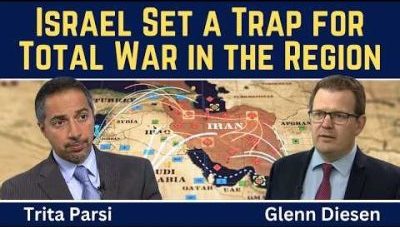
Trita Parsi: Israel Set a Trap for Total War in the Region
or go to
Aletho News Archives – Video-Images
From the Archive
Zionism’s Violent Legacy
By Donald Neff | Washington Report On Middle East Affairs | January 1996
On January 4, 1948, Jewish terrorists drove a truck loaded with explosives into the center of the all Arab city of Jaffa and detonated it, killing 26 and wounding around 100 Palestinian men, women and children.[1] The attack was the work of the Irgun Zvai Leumi – the “National Military Organization,” also known by the Hebrew letters Etzel – the largest Jewish terrorist group in Palestine. The Irgun was headed by Revisionist Zionist Menachem Begin and had been killing and maiming Arabs, Britons and even Jews for the previous ten years in its efforts to establish a Jewish state.
This terror campaign meant that at the core of Revisionist Zionism there existed a philosophical embrace of violence. … continue
Blog Roll
 Aletho News
- Trita Parsi: Israel Set a Trap for Total War in the Region
- Trump’s Iran war is on an Israeli leash
- Saudi oil boss issues global supply warning
- Riyadh Says Its Oil System Is Intact. The Numbers Say Otherwise.
- Trump and Netanyahu Want to “Finish the Job” on Iran
- US ‘one-sided dictation’ not Iran’s beliefs makes rational talks impossible: Baghaei
- Iran’s Next Strike May Not Explode. It Could Shut You Down /Col Doug Macgregor
- Iran: US political targets legitimate if assassinations return
- Iraq shuts key border crossing with Iran under US pressure: Report
- Undersea Internet cables could be targeted in retaliation for attacks on Iran: IRGC deputy chief
- If Americans Knew
- The Israel Lobby’s Changing Fortunes
- AIPAC has become such a political liability that it’s shifting to a more “nimble” approach to buying politicians
- At least 160 Israeli settler attacks in 2 weeks
- Will Gaza’s Ancient Christian Community Disappear Forever?
- Israel’s vision of regional security rests on keeping Arab states weak
- Heidi Levine recounts how Palestinian youths helped save her in settler attack
- DAILY UPDATE: Latest essential news on Palestine, Israel, & region
- Trump’s Intensifying Sabotage of the ICC, for Israel’s Sake
- Israeli military detain US and UK volunteers in West Bank including Democratic NY politician Brad Lander
- Americans at National Conservatism Conference held in Israel this year criticize Israel
- No Tricks Zone
- E-Cars Reduce CO2 Emissions By Only 41% Compared To Internal Combustion Engine Vehicles
- Predictions Made By Renowned Climate Professor Over Past Decades Have Been Proven To Be Poor
- New Study Suggests Large Regions Of The Pacific Ocean Have Been Cooling For The Last 80 Years
- Germany’s Green Energy Debacle: High Energy Costs Force Kahla Porzellan to Close After 182 Years!
- New Study: 50 Years Of The Most Aggressive ‘Net Zero’ Policies Can Only Affect The Global Climate By 0.03°C
- US September “Heat” Was No Record…Many Records Set Decades Ago
- Latest European Green Energy Debacle; Portugal’s Largest Flagship Solar Park Insolvent!
- Green Energy Debacle: German Expert Professor Fritz Vahrenholt Warns Of Severe Economic And Social Consequences
- Two More Paleo Reconstructions Affirm Meters-Higher Sea Levels Across Ireland, Brazil 7000-6000 Years Ago
- New Study: Earth And Venus Surface Warmth Largely Explained By Convection And Lapse Rate, Not CO2 Or Radiation

