Sanders in New York
By Stephen Lendman | June 24, 2016
His so-called “where we go from here speech” fell short, repeating warmed-over themes highlighted throughout his campaign – ones he largely failed to support during 30 years in public office.
His record shows a deplorable habit of saying one thing, then doing another, destroying his credibility. His populist rhetoric rings hollow.
Days earlier, he acknowledged Clinton becoming Democrat party presumptive standard bearer, saying “(i)t doesn’t appear that I’m going to be the nominee, so I’m not going to be determining the scope of the convention.”
Endorsing her is virtually certain. He’ll choose the time and place to announce it – betraying his loyal supporters, backing an unindicted war criminal/racketeer, proving beyond a shadow of a doubt his so-called crusade for change is phony.
“We have got to work tirelessly to make sure Donald Trump is not president,” he ranted – code language for supporting Clinton, the most recklessly dangerous presidential aspirant in US history, WW III a coin flip if she’s elected, Sanders ignoring the major threat of our time. World peace hangs in the balance.
Throughout Obama’s tenure, Sanders supported his deplorable agenda, including endless wars of aggression, corporate favoritism and police state harshness – a Clinton administration likely to exceed the worst of his policies.
His issue isn’t stopping Trump. It’s loyalty to Democrat party bosses, supporting its presumptive presidential nominee, opposing any GOP one.
He sounded buffoon-like, saying “I’ll run around the entire country if I have to. It is hard to imagine a man who has such limited capabilities becoming president.”
He’s a billionaire businessman. His disturbing rhetoric aside, no public record exists to judge him. Clinton’s agenda as me-first lady, US senator and secretary of state is too deplorably lawless to tolerate – a rage for power and super-wealth, representing what Sanders claims to oppose.
Ignore Sanders’ rhetoric. Examine his House and Senate voting record – on the wrong side of major issues time and again, notably supporting imperial lawlessness.
Maintaining the myth of his so-called “political revolution” persists, smoke and mirrors without substance, rhetoric without follow-through.
America needs real anti-war, populist champions. Duopoly power governance excludes them, Sanders a loyal soldier, supporting what demands committed resistance.
Stephen Lendman lives in Chicago. He can be reached at lendmanstephen@sbcglobal.net.
His new book as editor and contributor is titled Flashpoint in Ukraine: US Drive for Hegemony Risks WW III.
Clinton’s Likely DoD Secretary Pick Vows US Troops in Syria to Topple Assad

Sputnik – 22.06.2016
Michele Flournoy, the US civil official predicted by many to head the Pentagon if Democratic frontrunner Hillary Clinton wins the US presidency in November, said she would alter American strategy to battle Daesh by assisting armed militias, called by Washington “moderate rebels,” to crush the legitimate Syrian president Bashar al-Assad.
Speaking at a Center for New American Security (CNAS) think tank conference on Monday, Flournoy, a senior fellow of the organization, urged the US military to put boots on the ground in Syria to assist in toppling the al-Assad government, recently successful in reclaiming large areas of the country from Daesh.
To accelerate the defeat of the legitimate Syrian government, Flournoy introduced the notion of a “no bombing” zone for the moderate rebels. These so-called moderates are widely accepted as being, in reality, the US-backed armed militias that have been tearing the country apart since the beginning of the civil war in 2011.
To justify her hawkish proposals, Flournoy took the traditional path, resorting to the Russian factor. She claimed that Moscow’s engagement since September 2015 in the war, at the invitation of the Syrian government, does not “support the kind of negotiated conditions we would like to get to.”
The “conditions” she was talking about remain unclear, especially in light of positive results brought about by the contribution of international militaries, including Russia, in stripping Daesh in recent months of 45 percent of the Iraqi territories and 20 percent of the Syrian lands it seized in 2014. Currently, the liberation of the crucial cities of Raqqah and Mosul from Daesh is being prepared, and is expected to inflict extensive damage on the extremists, according to Iraqi Foreign Ministry spokesman Ahmad Jamal.
The Pentagon, however, appears to have other plans in mind for Syria and Iraq. According to a CNAS report, prepared in cooperation with an “ISIS Study Group” co-chaired by Flournoy, Washington must “go beyond the current Cessation of Hostilities.” By that, the paper means a so-called no-bomb-zone, which suggests US retaliation against the Assad government, if Damascus continues to resist the American-backed militants. Proposed retaliation measures include airstrikes on “security apparatus facilities in Damascus.”
“If you bomb the folks we support, we will retaliate using standoff means to destroy [Russian] proxy forces, or, in this case, Syrian assets,” Flournoy told Defense One.
At the same time, the report sensibly cautioned against hitting Russian airbases in Syria.
Flournoy, who served as undersecretary of defense for policy during Obama’s first term in office, has consistently criticized the current US-anti Daesh policy, claiming that using an “under-resourced” military to battle extremists in the Middle East, and offering “underdeveloped” political solutions for the crisis has been ineffective, at best.Earlier, she called for increasing the number of combat missions against Daesh, sending more advisors to train Iraqi soldiers and allocating more weapons to Sunni tribes and the Kurds in Iraq. She also called for maintaining the infamously inadequate train-and-equip program that graduated just five moderate rebels, and cost US taxpayers over $500 million.
According to Washington Post columnist David Ignatius, Flournoy is now on the “short, short” list for the job of US Secretary of Defense.
Read more:
How ‘Neocon-Hopeful’ Hillary Clinton Planned to Topple Assad
Fifty-one Foreign Service Officers Can’t be Wrong
Or can they? More bombs and less talk on Syria
By Philip Giraldi • Unz Review • June 21, 2016
It is ironic that fifty-one U.S. State Department employees, perhaps overly-generously dignified in the media with the title of “diplomats,” have come out in favor of removing a foreign head of state by force. Detailing their opposition to the status quo, the signatories submitted a dissent memo through established Foreign Service channels. The document itself is classified, even though the New York Times and the Wall Street Journal clearly have obtained copies, presumably leaked to them by some of the dissident officers.
The signatories have reportedly demanded “targeted air strikes” and the “judicious use of stand-off and air weapons which would under-gird and drive a more focused and hard-nosed U.S.-led diplomatic process” to bring down the al-Assad government. They justify their dissent by arguing that “The moral rationale for taking steps to end the deaths and suffering in Syria, after five years of brutal war, is evident and unquestionable. The status quo in Syria will continue to present increasingly dire, if not disastrous, humanitarian, diplomatic and terrorism-related challenges.”
The memo describes the Syrian government’s alleged barrel bomb attacks on civilians “the root cause of the instability that continues to grip Syria and the broader region. Crucially, Syria’s Sunni population continues to view the Assad regime as the primary enemy in the conflict. Failure to stem Assad’s flagrant abuses will only bolster the ideological appeal of groups such as (IS), even as they endure tactical setbacks on the battlefield.”
Based on the media leaks though without having seen the actual document, one might nevertheless reasonably conclude that the authors of the memo clearly see Bashar al-Assad as the fons et origo of all the evils currently prevailing in Syria. The intention is to use military force to compel al-Assad to negotiate seriously to dismantle his own government, himself included, a blunt approach that has not necessarily worked very well elsewhere in recent memory. In fact, it has not worked at all. And the assertion that al-Assad is the major problem is, of course, questionable, ignoring as it does ISIS. The memo conveniently leaves out of the reckoning the U.S. role in destabilizing the entire region by invading Iraq and also pushing for regime change in Syria as early as 2003 since that would presumably implicate the signers in counterproductive policies. The Syria Accountability Acts of 2004 and also of 2010, like similar legislation directed against Iran, have resulted in little accountability and have instead actually stifled diplomacy. Congress sought to punish Syria with sanctions for supporting Hezbollah in Lebanon and for its links to Tehran, making any possible improvement in relations problematical. The 2010 Act even called for steps to bring about regime change in Damascus.
Nor is there any consideration of what most Americans might well want to see come out of a new military intervention in the Middle East. Specifically, as Syria in no way threatens the U.S. what is the actual United States national interest in toppling the government in Damascus, apart from some fantastical messianic desire to bring about a peaceable kingdom in the heart of the Arab world through the deployment of American military power. The U.S. would be launching cruise missiles against targets in a country with which Washington is not at war. And being able to bomb Syria does not necessarily mean that Washington will be able to dictate what happens next. Does no one at the State Department remember what happened in Iraq?
The memo also apparently does not address what might happen to the majority Syrian population loyal to the government if and when the regime were to fall to the “rebels.” Attacking and weakening the Syrian military, the presumed target of air attacks, would only make easier a post-al-Assad transition into something even more toxic. Many observers believe that the most radical elements would quickly overpower the alleged moderates that the United States perhaps erroneously believes that it is supporting, leading to even more atrocities directed against religious non-conformists and minority groups. This would include the country’s dwindling number of Christians, who overwhelmingly support the al-Assad regime.
Now consider for a moment who might have been involved in writing this memo. The authors are described by the newspapers that obtained copies of the memo as “mid-level.” That means they are products of the non-diplomacy diplomacy of the George W. Bush and Barack H. Obama presidencies, when the recurrent negotiating tactic in dealing with other countries has almost invariably started with threatening the use of force followed almost immediately by the dispatch of several carrier groups. They probably believe as Madeleine Albright once put it, that we Americans are the indispensable nation, we “see far.” Some of the signatories are undoubtedly Bush era believers in American exceptionalism and global leadership exercised at gunpoint who believe intervention is a national imperative while the Obamaites no doubt see their role as humanitarian, helping oppressed and endangered people of the world who are striving to be free. Both views are delusional from every point of view and do not consider what the people in the countries most affected by American “benevolence” might actually want.
So in short, the ideologically driven signatories probably don’t know a whole lot about traditional diplomacy and would be well advised to read up on Hans Morgenthau’s Politics Among Nations before they open their mouths because overthrowing established governments has consequences, an issue largely avoided by the drafters of the memo as they make no suggestions about what might happen or what must be done after al-Assad and his government disappear.
And then there is the rather embarrassing issue of who the enemy actually is. The suggestion that ISIS is empowered by al-Assad’s survival is a bit of a stretch as the Syrian government and its allies Iran, Hezbollah and Russia are bearing the brunt of the fighting against it and also against al-Qaeda proxy al-Nusrah. And if there is an actual American interest in the conflict it would be to work with those who are enemies of ISIS instead of so-called friends like Turkey and Saudi Arabia that are actually enabling the group.
Of course, willful ignorance about reality is not very important when one has a career to nurture. Can it be that the fifty-one signatories have carefully read the Washington Post and figured out that Hillary Clinton will be our next president? She has promised just what the letter writers are suggesting, a U.S. controlled no-fly zone and aggressive steps that will lead to the removal of al-Assad. As apparent adherents to the Victoria Nuland school of Foreign Policy where one overthrows a government, arranges for new leaders and then threatens concerned neighbors with reprisals, the signatories should fit in quite well with the Clinton regime’s vision of peace through military dominance.
Or if Nuland is not to one’s taste there is also former Obama Ambassador to Syria Robert Ford. The Times, perhaps characteristically, interviews two “experts” on Syria, ex-Ambassador Robert Ford and Andrew Tabler of the Washington Institute for Near Eastern Policy (WINEP). While Ambassador to Syria Ford deliberately sought to provoke the government by meeting with opposition leaders and making public demands for greater democracy. Though his role as ambassador was actually to support American interests, he instead interfered in Syrian politics, speaking openly in support of anti-regime protesters while serving in Damascus in 2010. On one occasion he was pelted with tomatoes and was eventually removed over safety concerns before resigning in 2014 over his demands for a “tougher policy” in Syria. Now he is selling the same kool-aid, regularly appearing on television to urge military action against al-Assad. Tabler, who speaks about frustration over the current Syrian policy, is a standard issue neoconservative. WINEP is a spin-off from the American Israel Public Affairs Committee (AIPAC).
And then there is the small matter of Russia, which is increasingly promoted as the enemy of choice to sustain the threat narrative that excuses American interventions worldwide. The memo indicates that the signatories are not “advocating for a slippery slope that ends in a military confrontation with Russia” even though that is precisely what they are promoting. What would happen when sophisticated Russian air defenses in place in Syria shoot down an attacking U.S. warplane? Russia has indicated that it is willing to consider supporting the replacement of al-Assad as part of an eventual peace settlement but it has also insisted that there has to be stability by way of a transition that permits a recognized government to stay in place to avoid the type of anarchy that would guarantee an ISIS takeover. Apparently the 51 “diplomats” who have been unable to practice much diplomacy in the real world somehow believe that bombing the Syrian government can be accomplished with Moscow sitting idly by, too terrified by Washington’s show of force to respond. It would be a mistake to think that.
It is interesting to note, per the New York Times article, that a reluctant Pentagon has been engaged in push-back against the advocates of deeper involvement in Syria. As ever, it is the Foggy Bottom’s non-combatants with no skin in the game who are the fiercest chair-borne warriors. What the signatories to the memo appear to sidestep is the inevitable conclusion that their recommendations are a reversion to George W. Bush foreign policy at its most pig-shit ignorant. But perhaps it is all old wine in new bottles, particularly if one accepts that the memo might actually be an application letter to join the hawkish Hillary Clinton foreign policy team. Bomb al-Assad to make him agree to our terms. Ignore Russian interests. Don’t worry, it will all work out.
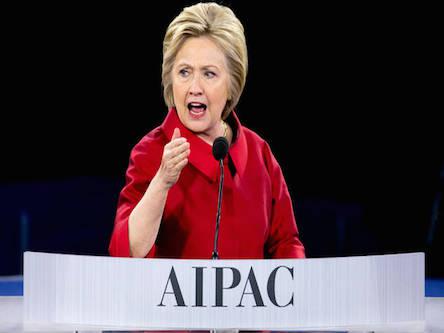
‘Hillary Clinton: The neoconservative candidate who will make war against Syria’
RT | June 19, 2016
We topple governments in the Middle East that we don’t like and we encourage movements that will help us in this – regardless of how dangerous these allies are, Karen Kwiatkowsky, retired US Air Force officer, told RT.
The US-backed Syrian Democratic Forces, led by Kurdish groups, have entered the town of Manbij after they surrounded ISIS militants there. But at the same time dozens of US State Department officials have urged Barack Obama in a memo to launch air strikes against Bashar al-Assad’s forces, something that would contradict current White House foreign policy.
RT: The memo essentially contradicts Kerry’s earlier attempts to broker peace in Syria. How do you account for this rift at the State Department?
Karen Kwiatkowsky: I think that this administration is running out of time. And it is true that Barack Obama has kind of been a barrier to some of the more aggressive policies that have been emanating from both State Department and the Pentagon. But at the same time, this administration and the life spans of these political appointees, these ambassadors, many of whom signed on to this very aggressive warmongering letter, their life span is limited, they have basically 6 months to go. Very likely they will not retain their appointments in a new administration. Certainly, if Hillary Clinton is elected, I imagine many of these war mongering State Department officials are appointees or friends of Hillary Clinton, people who agree with her approach. So, I do see this as somewhat aimed at engaging politically in the domestic events here in the US. We have an election coming. Clinton is very besieged by many things. But she is the neoconservative candidate. She is the candidate who will make this war, if this war on Assad is to be stepped up. She is the one that will do that and these are her people. And they don’t have a lot of time left.
RT: Do you think that the differences that we’ve seen in the State Department are just there or this is something that is indicative of differences throughout the administration?
KK: This release to the New York Times is a political event. This is aimed at making policy when there is very little time left to make that policy. If you read the letter, it doesn’t offer really any new strategy. And Obama has been accused of having no real strategy. This is not a new strategy; this is not a replacement strategy. This is bomb and ‘show the flag’. And it is being put forth not by the Air Force, not by the Pentagon – who you might presume might know something about fighting. Certainly, we cannot take ground from the air and this is precisely what they are advocating is airstrikes, which have long been proven to be ineffective. That is why I see it as a political thing and not an actual strategy. There is very little strategy there. What they are putting forth won’t work, is known not to work by even the advocates of violence in the Pentagon know that it won’t work. So, it is not a very good solution. Therefore, I have to conclude that it is aimed at politically communicating something. And I find it remarkable and hilarious that this letter was released and put up through the channel for dissent. These 51 warmongering diplomats are dissenters. That is just absolutely spectacular.
RT: Just a few days ago, John Kerry said the US is losing patience with Assad. Does that kind of rhetoric not undermine the peace he’s supposedly trying to broker?
KK: It is typical of John Kerry’s entire approach from the time he has been the Secretary of State. He is trying to walk two different paths and you can’t do that: threatening and negotiating. But the threats are empty. And it is well-known in the region since we have been intervening and interfering and bombing for so long now. The people in the Middle East both are allies and our enemies if you want to consider Assad and Iran as our enemies. All of them know us very well now. They know how we operate; they know to call our bluffs. Our bluffs aren’t bluffs anymore, they are just empty conversation. Kerry hasn’t changed; his policies and approaches have been the same. He is just ineffective. And he is ineffective because our own fundamental policy is not what he says. And it is not what the president says. It is what we actually do. And what we actually do has been reported for years: we topple governments in the Middle East that we don’t like and we encourage movements that will help us in this – regardless of how dangerous or how empty or how incompatible with liberty and our own value system these allies are. And this is why we find ourselves supporting ISIS and fighting with people who are doing terribly destructive things and we can’t say anything bad about them because they are our allies. We’ve got ourselves into this situation; I don’t think it is fair to blame Kerry as an individual. He is representing a system that has no credibility. And certainly you can’t believe a word that is said by an American politician when it comes to what we will and what we won’t do in the Middle East.
Orlando: The New 9/11?
By Ron Paul – June 20, 2016
Last week America was rocked by the cold-blooded murder of 49 people at the Pulse nightclub in Orlando, Florida. Unlike the terrorist attacks of September 11, 2001, the Orlando shooter appears to be a lone gunman who, while claiming allegiance to ISIS, was not actually working with a terrorist group. About the only thing Orlando has in common with 9/11 is the way power-hungry politicians and federal officials wasted no time using it to justify expanding government and restricting liberty.
Immediately following the shooting, we began to hear renewed calls for increased government surveillance of Muslims, including spying on Muslim religious services. Although the Orlando shooter was born in the US, some are using the shooting to renew the debate over Muslim immigration. While the government certainly should prevent terrorists from entering the country, singling out individuals for government surveillance and other violations of their rights because of religious faith violates the First Amendment and establishes a dangerous precedent that will be used against other groups. In addition, scapegoating all Muslims because of the act of one deranged individual strengthens groups like ISIS by making it appear that the US government is at war with Islam.
The Orlando shooting is being used to justify mass surveillance and warrantless wiretapping. For the past three years, the House of Representatives passed an amendment to the Defense Department appropriations bill limiting mass surveillance. But, last week, the same amendment was voted down. The only difference between this year’s debate and previous debates was that this year defenders of the surveillance state were able to claim that the Orlando shooting justifies shredding the Fourth Amendment.
The fact that the Orlando shooter had twice been investigated by the FBI shows that increased surveillance and wiretapping would not have prevented the shooting. Mass surveillance also creates a “needle in a haystack” problem that can make it difficult, or impossible, for law enforcement to identify real threats. Unfortunately, evidence that giving up liberty does not increase security has never deterred those who spread fear to gain support for increased government power.
The Orlando shooter successfully passed several background checks and was a licensed security guard. But, just like those who used Orlando to defend unconstitutional surveillance, authoritarian supporters of gun control are not allowing facts to stand in the way of using the Orlando shooting to advance their agenda. Second Amendment opponents are using Orlando to give the federal government new powers to violate individuals’ rights without due process. One pro-gun control senator actually said that “due process is what’s killing us.”
Ironically, if not surprisingly, one of those calling for new gun control laws is Hillary Clinton. When she was sectary of state, Clinton supported interventions in the Middle East that resulted in ISIS obtaining firearms paid for by US taxpayers!
Mass surveillance, gun control, and other restrictions on our liberty will not prevent future Orlandos. In fact, by preventing law-abiding Americans from defending themselves, gun control laws make us less safe from criminals. Similarly, mass surveillance and warrantless wiretapping erode our rights while making it more difficult for law enforcement to identify real threats.
If Congress really cared about our security and liberty, it would repeal all federal gun laws, end all unconstitutional surveillance, and end the hyper-interventionist foreign policy that causes many around the world to resent the US.
After Orlando, Democrats and Republicans Clamor for Expanded Police State

By Eric Draitser | Stop Imperialism | June 16, 2016
The horrific massacre in Orlando has once again thrust the specter of domestic terrorism into the limelight, and into the media space. Pundits and politicians alike have taken the incident as yet another opportunity to thump their chests about the need for even more counter-terrorism legislation, a further increase in surveillance state activity and, of course, more war abroad.
And while such opportunists posture as defenders of the American people, none care to face the inescapable reality that since 9-11, and the introduction of numerous pieces of draconian legislation ostensibly aimed at combatting terrorism, the agencies charged with surveillance and law enforcement have not managed to prevent attacks. Obviously, this raises the question of what exactly legislation such as the PATRIOT Act is really intended for if not to ‘keep Americans safe.’
But even more critical than retrospective criticism of the erosion of civil liberties after nearly a decade and a half of propaganda and fearmongering, is the need to oppose the further expansion of such legislation and domestic spying programs. Indeed, while what were once considered rights are now seen as passé, the US is staring down the barrel of a presidential election where the leading candidates are calling for even more surveillance, expanded government databases, and more billions of dollars to be poured into the NSA, FBI, CIA, DIA, and the rest of the alphabet soup that comprises Police State USA.
Clinton, Trump, and Death as Political Currency
In the immediate aftermath of the heinous slaughter in Orlando, the neoconservative-neoliberal chimera known as Hillary Clinton predictably called for an expansion of surveillance and the police state. Less than 48 hours after the attack, in a speech in Cleveland, Clinton proclaimed:
We already know we need more resources for this fight. The professionals who keep us safe would be the first to say we need better intelligence to discover and disrupt terrorist plots before they can be carried out. That’s why I’ve proposed an ‘intelligence surge’ to bolster our capabilities across the board, with appropriate safeguards here at home.
As with all things Hillary, one must carefully deconstruct the statement to unravel the distortions and empty rhetoric, and distill her actual proposal. The first part of her statement is instantly suspect as the US has already grossly inflated its intelligence budget. According to the Federation of American Scientists, the 2017 intelligence budget will reach nearly $70 billion, with $50 billion being spent on the National Intelligence Program (NIP). One would have to seriously question the logic in Clinton’s statement, namely the implied consensus about the need for more resources. How much more exactly will prevent incidents like the one in Orlando? Perhaps another $50 billion would do the trick?
The second fallacy embedded in the torrent of misinformation that is a Hillary Clinton speech excerpt is the specious argument that “better intelligence” would “discover and disrupt terrorist plots before they can be carried out.” This vacuous statement must be dismissed out of hand after one considers the fact that the alleged Orlando killer, Omar Mateen, was investigated, followed, and interviewed by the FBI multiple times (he was also introduced to FBI informants whose responsibility was likely to keep tabs on him).
So, according to Clinton the US should spend tens of billions more dollars to fund the agencies and programs that already have the ability to single out a potential terrorist, do all the leg work to establish contact with him, invest human resources into his case, and yet still be unable to stop his alleged actions. To put it in terms Hillary’s Wall Street patrons would understand: sounds like a bad investment strategy.
The third unmistakably wrongheaded statement (I only selected three sentences, so she’s 3 for 3) is the absolutely odious suggestion of an “intelligence surge” to improve the capabilities of the intelligence community. In fact, what Clinton is actually suggesting is a massive increase in contracts awarded to private intelligence firms and military contractors, though veiling it as a boost to the intelligence community. This fact is made clear by the renowned investigative journalist Tim Shorrock in his 2008 book Spies for Hire: The Secret World of Intelligence Outsourcing where he notes that:
In 2006… the cost of America’s spying and surveillance activities outsourced to contractors reached $42 billion, or about 70 percent of the estimated $60 billion the government spends every year on foreign and domestic intelligence. Unfortunately, we cannot know the true extent of outsourcing, for two reasons. First, in 2007, the Office of the Director of National Intelligence (ODNI) refused to release an internal report on contracting out of fear that its disclosure would harm U.S. national security interests. Second, most intelligence contracts are classified, allowing companies like CACI to hide their activities behind a veil of secrecy.
Think about that figure for a second: 70 percent of the intelligence budget goes to outsourcing. In other words, government expenditure on surveillance and intelligence is an indirect subsidy to private corporations. This should come as no surprise considering similar indirect subsidies to energy companies, private mercenaries, and even big retail corporations.
Of course, Clinton knows all this perfectly well. So when she calls for an intelligence surge what she’s actually doing is making clear to her military-industrial-surveillance complex cronies that she will make sure to feed the goose that continues to lay the golden eggs. Just like her speeches to Goldman Sachs served to reassure Wall Street that she was their lady, so too does Clinton use the tragic events in Orlando to give a wink and a nod to Booz Allen Hamilton, CACI International, and the rest.
As with all things Clinton, her words drip with cynicism like her hands drip with the blood of Libyans, Syrians, Iraqis, Serbians, and countless others.
It should be mentioned too that aside from just funding, Clinton undoubtedly represents a further rightward shift in terms of “anti-terror” legislation – the kinds of bills that she’d promote and sign into law as president would be, to put it bluntly, no different than the Bush era bills that she supported such as the PATRIOT Act. As Conor Friedersdorf noted in The Atlantic in 2015:
[Clinton] served in the United States Senate from 2001 to 2009. She cast votes that enabled the very NSA spying that many now regard as a betrayal. And she knew all about what the NSA wasn’t telling the public. To say now that the NSA should’ve been more transparent raises this question: Why wasn’t Clinton among the Democrats working for more transparency?
Friedersdorf is being much too kind with his concluding rhetorical question. Clinton is perhaps one of the most hawkish surveillance state proponents in the US. Her total disregard for even the basic tenets of the US Constitution, let alone domestic or international law, make her not only unfit for office, but a dangerous criminal.
And then of course there’s the trainwreck made flesh, Donald Trump, who with his typically bombastic and utterly vacuous public statements has once again managed to make the criminal Hillary into the “sensible one.” In a speech on Monday June 13, Trump reverted to his usual racist demagogy that is light on actual policy prescriptions and heavy on xenophobia, racism, and outright lies. But in the midst of the Trump madness, there are indeed kernels of policy that should be worrying.
During the speech Trump called, once again, for a ban on Muslim immigration to the US, warning of “major consequences” for the Muslim community in the country. But Trump went further saying, “We have a dysfunctional immigration system, which does not permit us to know who we let into our country, and it does not permit us to protect our citizens properly.” Again, Trump provides no specific policy prescription, but the implication from his statement is an increase in surveillance of citizens domestically, as well as presumably the codification of a deeply racist immigration system which would discriminate based on religion and/or ethnicity.
Trump continued, saying “With these people, folks, it’s coming. We’re importing radical Islamic terrorism into the West through a failed immigration system and through an intelligence community held back by our president.” Here again Trump aligns with Clinton. While supposedly the two are opposed to one another, the fact is that both accept the false assumption that our problems would be solved if only we could just stop “holding back” the intelligence community. Clinton calls for a surge while Trump calls for taking off the training wheels. Sort of like an argument about which is better Pepsi or orange juice.
The Police State Is Not the Answer
While the Demopublican-Republicrat Party continues its political posturing, the assumptions that both have internalized are what need to be excised from the body politic. It is patently absurd to call for more surveillance in a country where, thanks to Edward Snowden, we now know the following:
- The PRISM program allows “The National Security Agency and the FBI [to tap] directly into the central servers of nine leading U.S. internet companies, extracting audio and video chats, photographs, emails, documents, and connection logs.” According to cybersecurity experts PRISM uses obviously illegal tactics to “circumvent formal legal processes… to seek personal material such as emails, photos and videos.”
- The BLARNEY system is utilized extensively. According to former AT&T technician Mark Klein and former Senior Advisor for Internet Technology at the FCC Scott Marcus, “Using a device called a ‘splitter’ a complete copy of the internet traffic that AT&T receives… is diverted onto a separate fiber-optic cable which is connected to a room which is controlled by the NSA.” Therefore, unlike PRISM, which the government and its apologists attempt to justify as being used to target key individuals, BLARNEY has no such capacity. Rather, it is designed solely to collect data, all internet data, to be used and likely stored.
- The NSA has constructed enormous data storage facilities such as the Utah Data Center in Bluffdale, Utah. As one top security official told Wired, “Everybody’s a target; everybody with communication is a target.”
Naturally, there is not nearly enough space here to detail all of the myriad surveillance programs. But, taking them together with what we know of government funding to private intelligence firms, how could anyone rightly argue that surveillance should be increased? If anything, the enormous expenditure has proven utterly useless.
Indeed, the legal framework developed in the post-9/11 era including draconian legislation such as the PATRIOT Act, the National Defense Authorization Act (NDAA), and many others, laid the foundation for the systemic and systematic stripping away of civil liberties and human rights. The technical infrastructure has been steadily evolving since 9/11 as technology continues to improve, providing the intelligence agencies with ever more tools for surveillance and intelligence gathering. The continued, unrestrained neoliberal policy of privatization has created a complex network of companies, contractors, and subcontractors, usually working independently of each other, all in the service of the security state. Finally, the political landscape in the United States has so thoroughly devolved that elected officials are more concerned about stopping the whistleblowers and leakers, than about addressing America’s continued descent into a fascist police state.
Such is the state of the union in 2016. And while the aspiring Mass Murderer-in-Chief Clinton continues to attack the political snake-charmer Trump, and The Donald does what The Donald does, the bodies of 50 innocent people are being laid to rest. Must the values and freedoms that the US allegedly once stood for also be buried?
Gen. Breedlove, Strangelove-ian War Hawk

By Gilbert Doctorow | Consortium News | June 19, 2016
At this conclusive stage of the presidential campaign cycle, Foreign Affairs magazine is doing what it traditionally does, showcasing on its pages candidates for appointive office in the cabinet of the next president whom the magazine’s editorial board would like to see installed.
Thus, the current, July-August issue carries an article by Philip M. Breedlove, until recently Commander of the U.S. European Command and NATO’s Supreme Allied Commander, Europe. His piece, entitled “NATO’s Next Act” might more honestly be called “Why I Have Earned My Next Job as Secretary of Defense in the Administration of Hillary Clinton.”
During his service in Europe, General Breedlove was never bashful about being a politicking military officer who was keen to pick a fight with Russia. He met with the press often, making newsworthy pronouncements about Russia’s malevolent intentions and illegal actions that were unsupported by facts. Our European allies objected to Breedlove, stating openly that some of his allegations regarding Russian operations in Ukraine contradicted what their own intelligence services were reporting.
Indeed, on March 6, 2015, the Spiegel Online carried a story under a headline that says it all: “Breedlove’s Bellicosity: Berlin Alarmed by Aggressive NATO Stance on Ukraine.” At the time, it was believed that Breedlove was trying to sabotage the recently instituted cease-fire in Donbas and overturn the Minsk-2 Accords in favor of resumed fighting in which the U.S. would provide Kiev with lethal weapons. By this scenario, a full-blown proxy war with Russia would follow.
The purpose of the new essay in Foreign Affairs is, as I say, to spread the word on what Breedlove achieved in his three years on duty in Europe by turning NATO around and giving it a new/old calling. When he arrived, NATO was busy extricating itself from its failed campaigns out of region, in Afghanistan and Iraq, where it had faced unfamiliar challenges for which it was ill-equipped, fighting insurgencies and irregular troops.
On his watch, a new threat was seen emerging in Eastern Europe. In Breedlove’s words, this took the form of a revitalized and aggressive Russia, seeking to reclaim its great power status and sphere of influence in post-Soviet space.
With its takeover of Crimea in March 2014 and involvement in the Donbas on behalf of Russian-speaking forces rebelling against the new Maidan government in Kiev, Russia demonstrated both defiance of the American-controlled New World Order and breathtaking military prowess. It thereby became a threat worthy of NATO’s finest traditions as defender of “law and order” on the European home front.
Still more recent Russian action in Syria awakened Breedlove to the fact that Russia’s ambitions are global. In this context he now declares Russia, with its nuclear arsenal, to be an “existential threat” to the United States which must be met by superior force. After all, Breedlove tells us, force is all that the Kremlin understands.
After going through this pre-history, Breedlove explains exactly what we are doing now to strengthen NATO in Poland, the Baltic States and Romania/the Black Sea so as to be prepared to resist Russian aggression and deter its existential threat.
Upside-Down Narrative
Most everything is wrong with what Breedlove tells us in his article. It is a perfect illustration of the consequences of the monopoly control of our media and both Houses of Congress by the ideologists of the Neoconservative and Liberal Interventionist School. We see a stunning lack of rigor in argumentation in Breedlove’s article coming from absence of debate and his talking only to yes-men.
Perhaps the biggest mistakes are conceptual: urging military means to resolve what are fundamentally political issues over the proper place of Russia in the European and global security architecture. Whereas for Clausewitz war was “a continuation of politics by other means,” for Breedlove politics – in this case, diplomacy – do not exist, only war.
In this respect, Breedlove is merely perpetuating the stone deafness of American politicians dating back to Dmitry Medvedev’s proposal in 2010 to negotiate an international convention bringing Russia in from the cold. The earnest offer of Russia’s most Westernizing head of state in a hundred years was left without response.
Breedlove’s entire recounting of what NATO is doing to stop a Russian threat to the Baltics and to Poland — through additional NATO boots on the ground and pre-positioned American heavy equipment — fails to mention, let alone explain what possible reason there might be for a Russian attack.
I contend that no realistic assessment of Russian national interest could justify their taking over the territories in question. The net result of any occupation could only be heavily negative due to hostile local populations even without considering its geopolitical consequences or retaliatory military and other action by the West.
Presumably the logic behind the assumption of Russian aggressive designs is illogic: the assumption of an insane Russian leadership. Such a line of thinking would be the direct fruit of the demonization of Vladimir Putin and of Russia more generally that the U.S. media has disseminated gleefully, with encouragement from the Obama administration.
Breedlove’s would-be boss in the Oval Office, Hillary Clinton, has likened the Russian ruler to Hitler. That obviates the need to examine rational calculations of your adversary.
Then there is Breedlove’s totally wrong-headed conceptualization of what constitutes the world order that he says is under threat. In his understanding, the United State is, by definition, the sole supplier of public good to the world and everything that it initiates is selfless and right.
This self-righteousness begins with history, with the sequencing of who did what to whom, who honored and who violated international obligations, who is the aggressor and who is the victim. But this all comes down to one question: when did history start.
In Breedlove’s reading of history, the narrative that counts and is relevant to where we are today all started with the Russian “invasion” of Crimea. The controversial overthrow of the legitimately elected President of Ukraine on Feb. 22, 2014, the day after France and Germany brokered an agreement between the government and opposition (for reduced presidential powers and early elections) does not exist in Breedlove’s version of history. Nor, of course, does any other prior Western intervention in the intra-Ukrainian power struggle going back to the start of the Maidan demonstrations in December 2013.
This leaves us with the whole series of Russian reactions that he gives us without any reference to the missing actions by the U.S.-led West. There are other holes in Breedlove’s logic through which you could drive a tank, if I may use metaphors from his domain of expertise.
Reassessing Russian Might
It is in a way refreshing to see Breedlove recognize (within limits) the newfound capabilities of the Russian military, which just several years ago were mocked by Western commentators, even by the occupant of the Oval Office.
Breedlove does underestimate the skills and equipment of the Russian air force and insists on the underlying military superiority of the U.S. and its NATO allies in the European theater. But, on balance, he asserts that today Russia poses an existential military threat to the United States. It would be nice if he finished the thought and explained exactly how and why (since Russia is not the only country with nuclear weapons and the ability to deliver them but like those other countries – China, for instance – has no rational reason to do so unless directly threatened).
In any case, what is the appropriate response to an existential threat? Do you recommend the continued rapid build-up of NATO forces precisely at Russia’s Baltic and Black Sea borders to counter a perceived (though nonexistent) localized threat or do you address the existential threat by seeking to minimize tensions?
To date, and into the next five years, all of the U.S. and NATO measures which Breedlove describes and for which he takes credit have only unnerved the Russians and caused them to respond with equally provocative and dangerous counter-measures of a localized nature without in any way compromising their nuclear capability to wipe the United States off the map in any hot war.
Does this baiting the Russians near their borders make any sense? This was precisely the point that German Minister of Foreign Affairs Frank Walter Steinmeier has just called out in an interview published in Bild am Sonntag in which he speaks against any further saber-rattling by NATO in Poland or the Baltic States.
The seeming parallels between stepping up to the line today, and stepping up to the line in Berlin during the Cold War are illusory. The present line is not in a distant buffer zone which Joseph Stalin had created precisely for this purpose, to remove conflict from Russia’s borders.
It is so threatening to Russia’s survival that the Kremlin is now moving vast military resources from Central Russia into the Leningrad Oblast, within a very few miles of the new NATO presence just across the border in the Baltics. The time for either side to react to local military incidents has been shortened immensely compared to the past. This is a formula for Doomsday which Breedlove willfully ignores.
The $3.4 billion expenditure, which President Obama has allocated to bring forward depots of American heavy equipment and key personnel to Poland, Romania and the Baltic States, recognizes the logistical disadvantage of NATO forces under the remote defense perimeter that extends to Russia’s western and southern frontiers. But it cannot resolve this intractable disadvantage.
Territorial Disadvantage
It has been argued that a major factor that worked against Russian forces in World War I was logistical – the length of time it took Russia to move its men and equipment from the centers of population of the country hundreds if not thousands of kilometers away to its western borders where the fight against Germany was going on.
Today, the U.S. and NATO have placed themselves in exactly the same disadvantage by seeking to fight Russia in a conventional war right where the Russians are concentrating the bulk of their strength and where NATO can at best only position “trip wire” forces having symbolic, not actual military defensive value.
The best that NATO can propose, it would seem, is to snatch the Russian enclave of Kaliningrad (the clear mission of the Anakonda-16 games now going on in Poland) in case the Russians occupied the Baltic States (within the 60 hours or so that a recent Rand Institute study suggests is feasible).
However, as President Putin has stated clearly, such encroachment on Russian soil will unleash a nuclear response from Russia that will include missile attacks on the mainland USA, i.e. not limited to the European theater.
Finally, let’s consider another absurdity in General Breedlove’s letter setting out his candidacy for a cabinet position. He repeats, parrot-like, the position of the Obama administration and of putative Democratic candidate for President Hillary Clinton that we can selectively cooperate with Russia on issues of common interest like counter-terrorism, Pacific fishing rights (!) and the like even as we remain engaged in a life-or-death scramble for position on the ground in Europe.
In fact, the U.S. effort to totally isolate Russia by cutting off many, perhaps most of its bilateral programs of cooperation with the country have worked precisely to defeat cooperation, none more grievously so than in the area of fighting terrorism.
Meanwhile, what amounts to American encouragement of the Islamic State and Al Qaeda’s Nusra Front in Syria by pressing for the overthrow of the Russian-backed regime of Bashar al-Assad continues to this day under the guise of protecting the “moderate opposition” that happens to be embedded among the jihadist “bad guys.’’
The fairy tales coming from Washington should not fool anyone, but Breedlove passes them along to his readers in the smug expectation that they will accept whatever he utters.
By lending its valuable “real estate” to the campaign for a high-level appointment by one of the most outspoken Cold Warriors within the U.S. military, the editorial board of Foreign Affairs magazine has shown yet again that it is incapable of guarding its own neutrality or balance.
Gilbert Doctorow is the European Coordinator of The American Committee for East West Accord Ltd. His most recent book, Does Russia Have a Future? was published in August 2015.
© Gilbert Doctorow, 2016
Featured Video
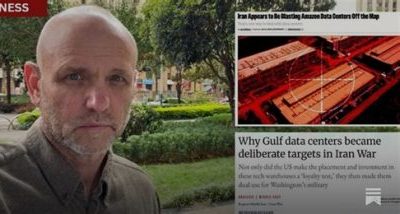
Iran spent $1 million to wipe out $30 billion in data center plans, and take down Amazon in the ME
or go to
Aletho News Archives – Video-Images
From the Archives
Clash of Civilization, Iran Part II
By Jamal Kanj – Intifada-Palestine.com – January 14, 2011
Israel’s survival kit is: perpetuate conflict, insecurity to rationalize collective hate and finally playing victim.
Devoid of conflict, Israel implodes internally; without hate, Zionism loses its justification; and playing eternal victim to continue blackmailing the West. Absence of this holy trinity, Israel ceases to exist. … continue
Blog Roll
 Aletho News
- ‘We are not like everyone else’ laws that bind other nations do not apply to Israel, says Likud lawmaker
- Report: Saudi Arabia seeks allies’ assistance as missiles deplete amid war on Yemen
- Fuel Crisis Deepens: Pakistan Warns Tanker Attack in Red Sea Would Be an ‘Act of War’
- ‘Bucha massacre’ a false flag orchestrated by UK – Moscow
- China Rejects Outside Pressure on Trade Ties After New US Russia Sanctions Bill
- Houthis Keep Advancing as the Red Sea Crisis Deepens
- Iran spent $1 million to wipe out $30 billion in data center plans, and take down Amazon in the ME
- Zionist billionaire pressure to silence Macklemore sparks exodus from Ed Sheeran tour
- House Votes to End Iran War for Third Time
- North Korea Slams US Plan for ‘AUKUS 2.0’ with South Korea and Japan
- If Americans Knew
- Biden’s Genocide Accomplices Targeted by New Accountability Campaign
- AIPAC’s Network Has Already Spent $67.2 Million to Shape the Midterm Elections
- Jewish Supremacist Manufacturing a Civilizational Threat to License Bigotry
- US bans Palestinian president from speaking at the UN
- Israeli Forces Detain Journalist Alaa al-Rimawi amid Widespread West Bank Raids
- Even a pro-Israel Congress member has put a hold on 40,000 one-ton bombs to Israel
- As Gaza crumbles, Israel preps new ground invasion – Daily Update
- ‘We are not like everyone else’ laws that bind other nations do not apply to Israel, says Likud lawmaker
- Trump’s govt makes ‘treasonous’ claim of weapons shortages
- Palestinian-American Journalist Naqaa Hamed Imprisoned by Israeli Forces After Settlers Targeted Her
- No Tricks Zone
- New Study: ‘Global Drought Shows No Detectable Recent Acceleration Under Climate Warming’
- Economic Masterminds: German Socialists Suggest Taxing Productivity Gains Stemming From Using AI
- The South China Sea Has Not Been Cooperating With The Climate Change Narrative
- Energy Crisis: Germany Enters Heating Season With Historically Low Gas Reserve Fill Levels
- New Study: The Antarctic Ice Sheet Gained Mass From 2020-2024 Due To Staggering Snow And Ice Accumulation
- Study: Ocean Heating Rates From Thousands Of Years Ago ‘Dwarf’ Modern Ocean Heating Rates
- Climate Extremists Target, Attack Large-Scale Power Grid Infrastructure In Germany!
- New Study: Antarctic Ice Melt Has Contributed Less Than 1 Centimeter To Sea Level Rise In The Last 30 Years
- Fear Of Debate: Alarmist German Climate Scientist Calls On Mainstream Media To Discredit Skeptic Voices
- End-Of-August Arctic Sea Ice Extent Hasn’t Fallen In 20 Years, Official Data Show!
 Aletho News