The Great Reset Didn’t Work: The Case of EVs
By Jeffrey A. Tucker | Brownstone Institute | February 15, 2024
We are living through one of history’s longest and most excruciating versions of “We told you so.” When in March 2020, the world’s government decided to “shut down” the world’s economies and throttle any and all social activity, and deny kids schooling plus cancel worship services and holidays, there was no end to the warnings of the terrible collateral damage, even if most of them were censored.
Every bit of the warnings proved true. You see it in every story in the news. It’s behind every headline. It’s in countless family tragedies. It’s in the loss of trust. It’s in the upheaval in industry and demographics. The fingerprints of lockdowns are deeply embedded in every aspect of our lives, in ways obvious and not so much.
Actually, the results have been even worse than critics predicted, simply because the chaos lasted such a long time. There are seemingly endless iterations of this theme. Learning losses, infrastructure breakages, rampant criminality, vast debt, inflation, lost work ethic, a growing commercial real estate bust, real income losses, political extremism, labor shortages, substance addiction, and more much besides, all trace to the fateful decision.
The headlines on seemingly unrelated matters go back to the same, in circuitous ways. A good example is the news of the electric vehicle bust. The confusion, disorientation, malinvestment, overproduction, and retrenchment – along with the crazed ambition to force convert a country and world away from oil and gas toward wind and solar – all trace to those fateful days.
According to the Wall Street Journal, “As recently as a year ago, automakers were struggling to meet the hot demand for electric vehicles. In a span of months, though, the dynamic flipped, leaving them hitting the brakes on what for many had been an all-out push toward an electric transformation.”
Reading the story, it’s clear that the reporter is downplaying the sheer scale of the boom-bust.
That’s not to say that Tesla itself is going bust, only that it has a defined market segment. The technology of EVs simply cannot and will not become the major way Americans drive. It might have seemed otherwise for a moment in time but that was due to factors that traced exactly to pent up demand caused by lockdowns and huge errors in supply management due to bad signaling.
Looking back, the lockdowns hit in the spring of 2020 and supply chains were entirely frozen by force. This might have been a major problem for car manufacturers that had long relied on just-in-time inventory strategies. However, at the very time, the demand for travel collapsed. Commutes came to an end, and vacations too. At that same time, pre-arranged government subsidies and mandates for EVs flooded the industry, all of which were later ramped up by the Biden administration.
As demand picked up, retailers sold their old inventory of cars and looked to manufacturers for more but the chips needed to complete the cars were not available. Many cars were put on hold and lots emptied out. This continued through the following year as used car prices soared and stock was otherwise depleted.
By the time matters became desperate in the fall of 2021, manufacturers discerned a heightened demand for EVs and began to retool their factories for more. There was even a time when cars were being shipped without power steering, just to meet the demand.
It might have seemed for a time like the crazed period we just lived through was birthing a completely different way of life. A kind of irrationality, born of shock and awe, swept industry and culture. The EV was central to it.
This demand seemed to pan out in 2022 as Americans grabbed whatever cars were available, perhaps willing to give the new doohickies a shot. So on it went as more carmakers threw more resources at production, benefitting from massive subsidies and staying in compliance with new mandates for reducing their carbon footprint.
There was no particular reason to think anything would go wrong. But then the next year began to reveal uncomfortable truths. Cold weather dramatically cuts the range of the EVs. Charging stations are not as readily available on longer trips, charging takes longer than one expects, and having to plan such matters adds time. In addition, the repair bills can be extremely high if you can find someone to do it.
Tesla as a manufacturer had planned out all such contingencies but other carmakers less so. Very quickly the EVs gained a bad reputation on a number of different fronts.
“Last summer, dealers began warning of unsold electric vehicles clogging their lots. Ford, General Motors, Volkswagen and others shifted from frenetic spending on EVs to delaying or downsizing some projects,” writes the Journal. “Dealers who had been begging automakers to ship more EVs faster are now turning them down.”
In short, “the massive miscalculation has left the industry in a bind, facing a potential glut of EVs and half-empty factories while still having to meet stricter environmental regulations globally.”
Today, lots are selling the cars at a loss just to avoid the costs of keeping them around.
Truly, this has been one spectacular boom-bust in a single industry. There seems to be no real end to the bust either. These days it appears that everyone has given up on any chance of actually converting the mass of American cars to become EVs. All recent trends are headed in the other direction.
Meanwhile, the EV is deeply loved by many as 1) a second car, 2) for well-to-do suburban commuters, 3) who own homes, 4) can charge overnight, and 5) have a gas car as a backup for cold weather and out-of-town trips. That is to say, the market is becoming exactly what it should be – a street-worthy golf cart with very fancy features – and not some paradigmatic case for the “great reset.” That’s simply not happening, despite all the subsidies and tax breaks.
“A confluence of factors had led many auto executives to see the potential for a dramatic societal shift to electric cars,” writes the Journal, including “government regulations, corporate climate goals, the rise of Chinese EV makers, and Tesla’s stock valuation, which, at roughly $600 billion, still towers over the legacy car companies. But the push overlooked an important constituency: the consumer.”
Indeed, the American economy, much to the chagrin of many, still primarily relies on consumers to make choices in their best interest. When that doesn’t happen, no amount of subsidies can make up the difference.
This story is impossible to understand without reference to the crazed illusions caused by lockdowns. Those are what provided the respite of time to allow automakers to retool. Then they boosted demand artificially for transportation after a long period in which inventory had been depleted.
Then the whole ridiculous ethos of the “great reset” convinced idiotic corporate executives that nothing would ever be the same. Maybe we would get 15-minute cities powered by sunbeams and breezes after all, along with a social-credit system that would allow the authorities to decommission our ability to drive in an instant.
It turns out that the entire bit, including the fake prosperity of the lockdown economy, made possible by money printing and grotesque levels of government spending, was unsustainable. Even sophisticated car companies bought into the nonsense. Now they are paying a very heavy price. The new market depended on a panic of buying that turned out to be temporary.
In short, the illusions of these horrible policies have come crashing down. It was born of liberty-wrecking policies under the cover of virus control. Every special interest seized the day, including a new generation of industrialists seeking to displace the old ones by force.
More and more, it’s obvious what a disaster this was. And yet no one has apologized. Hardly anyone has admitted error. The big shots who wrecked the world are still in power.
The rest of us are left holding the bag, and paying very high repair bills for cars that are non-optimal for driving from one town to another and back again in the cold weather that was supposed to be gone by now had the “climate change” prophets been correct. They turn out to be as correct as those who promised us that we would no longer need “fossil fuels” and that the magic inoculation would protect everyone from a killer virus.
What astonishing illusions were born of this nutty and destructive period. At some point, not even corporate CEOs will be tricked by the experts.
Jeffrey Tucker is Founder, Author, and President at Brownstone Institute.
Freedom Convoy leaders sue Trudeau regime for targeting protesters with Emergencies Act
By Anthony Murdoch | Life Site News | February 15, 2024
OTTAWA, Ontario — On the second anniversary of Prime Minister Justin Trudeau’s government’s use of the Emergencies Act (EA) to quash the truckers’ Freedom Convoy in 2022, the heads of the protest, Tamara Lich and Chris Barber, and a host of others have filed a $2 million lawsuit against the Trudeau government.
The lawsuit, announced yesterday by Freedom Convoy lawyer Keith Wilson, includes Lich as well as other convoy leaders Chris Barber, Tom Marazzo, Danny Bulford, and a host of others.
“On the 2-year anniversary of the Federal Government illegally invoking war measures against its citizens and targeting key protestors in Ottawa by freezing their bank accounts, today Tamara Lich, Chris Barber, Tom Marazzo, Danny Bulford and other protestors who were targeted by @JustinTrudeau and @cafreeland have filed lawsuits against the Federal Government.”
Wilson said that Section 24 of Canada’s Charter of Rights and Freedoms “gives Canadians the right to sue their government for damages when Charter rights are violated.”
“Doing so affirms the seriousness of respecting Charter rights and is intended to deter future governments from breaching Canadians’ fundamental rights.”
Wilson noted that the lawsuits seek $2 million in damages.
Lich, on X (formerly Twitter) noted about the lawsuit on Wednesday that “Accountability is a thing. It’s go time!”
“Happy Emergencies Act Day! I hope you all look back and fondly remember how your government shot you with rubber bullets and tear gas for your own good!” she also wrote.
Tom Marazzo, who was also involved with the Freedom Convoy and is a 25-year Canadian army veteran, said about it that it was “2 years ago today, instead of celebrating Valentine’s Day, the most corrupt government in Canadian history, launched an all out illegal assault on the Rights and Freedoms of every Canadian citizen in Canada, with the help of the NDP, Bloc, MSM and the Banks.”
“2 years later, they are all still in power with no end in sight. The one question that is never addressed, by any of them is why did Canadians feel so desperate that they had to go to Ottawa in the first place???” wrote Marazzo on X.
Further details about the lawsuit will be forthcoming in the next few days.
The lawsuit comes just after a Canadian federal court last month ruled that the Trudeau government’s use of the Emergencies Act to quash the truckers’ Freedom Convoy in 2022 was unconstitutional. The court ruled that the use of the EA was a direct violation of the Charter and thus “not justified.”
The EA controversially allowed the government to freeze the bank accounts of protesters, conscript tow truck drivers, and arrest people for participating in assemblies the government deemed illegal.
An investigation into the use of the EA, as per Canadian law, was launched by Trudeau. However, it was headed by Liberal-friendly Judge Paul Rouleau, who led the Public Order Emergency Commission. This commission was to investigate the Liberal government’s unprecedented use of the EA against the anti-mandate Freedom Convoy protest. Unsurprisingly, the commission exonerated Trudeau’s use of the EA.
Freedom Convoy leaders Lich and Barber have been involved in a lengthy trial after being charged and taken to court by the federal government for leading the protests. The trial has not yet concluded and has been put on hold, with its resumption date uncertain. It is also not yet clear how the recent court ruling will affect the trial.
In early 2022, the Freedom Convoy saw thousands of Canadians from coast to coast come to Ottawa to demand an end to COVID mandates in all forms. Despite the peaceful nature of the protest, Trudeau’s government enacted the EA on February 14, 2022. Trudeau revoked the EA on February 23.
During the clear-out of protesters after the EA was put in place, one protester, an elderly lady, was trampled by a police horse, and one conservative female reporter was beaten by police and shot with a tear gas canister. Rebel News reporter Alexa Lavoi, while covering the Freedom Convoy, was shot point blank in her leg with a rubber pellet, which police were using against protesters.
On February 14, 2022, the day the EA was invoked, Canadian Deputy Prime Minister and Minister of Finance Chrystia Freeland mandated certain bank accounts be frozen under the EA. In total, close to $8 million in funds from 267 people were locked. Additionally, 170 bitcoin wallets were frozen.
The freezing of bank accounts by Freeland without a court order was an unprecedented action in Canadian history and was only allowed through the Liberal government’s invocation of the never-before-used EA.
Why Israel’s war on UNRWA is so sinister
By William Van Wagenen | The Cradle | February 16, 2024
The UN Relief and Works Agency for Palestine Refugees in the Near East (UNRWA) is facing the gravest existential crisis in its 74-year history, as funding cuts by several western countries come on top of ongoing atrocities perpetrated by Israel in Gaza.
The UN agency is unique in being the only one dedicated to a specific group of refugees in specific areas, and the only relief organization that operates a full-fledged educational system. UNRWA is also the only organization mandated to work in Gaza and distribute aid to the two million people currently trapped and starved in the besieged enclave.
To compound these challenges, the occupation wants to see it dismantled.
UNRWA must be destroyed
In January, Israel alleged that Palestinian members of UNRWA’s staff participated in the resistance’s Operation Al-Aqsa Flood on 7 October, leading the US and 18 other nations to swiftly suspend funding for the organization.
The suspensions were met with shock, as UNRWA plays a key role in providing food and medicine to starving Gazans struggling to survive Israel’s siege and bombardment of the coastal enclave.
However, Israel’s allegations are not based on any evidence. They are instead part of a classified plan prepared in advance by Israel’s foreign ministry to destroy UNRWA. It believes that UNRWA “works against Israel’s interests” by perpetuating the dream of the right of return of Palestinian refugees and the idea of armed struggle against occupation.
The foreign ministry plan leaked to Israel’s Channel 12 on 28 December, set out a three-stage process to eliminate UNRWA in Gaza, using the Hamas-led resistance operation as a pretext:
First, prepare a case alleging UNRWA’s cooperation with Hamas; second, reduce UNRWA’s field of activity and find replacement service providers; and third, transfer UNRWA’s responsibilities to another entity.
Channel 12 noted that Israel wants to move slowly, given that the US government sees UNRWA as crucial to humanitarian efforts in Gaza. The foreign ministry is seeking to gradually build the case for ousting the organization as part of the discussions on “the day after” the war – should Hamas be dismantled.
A sequence of events
According to a report by The New York Times, the “sequence of events” that led the US to suspend UNRWA funding began on 18 January when Amir Weissbrod, a deputy director general at the Israeli Foreign Ministry, met with Philippe Lazzarini, the head of UNRWA in Tel Aviv.
Weissbrod showed Lazzarini a dossier from Israeli intelligence claiming that 12 UNRWA employees had participated in the 7 October attacks.
After the meeting in Israel, Lazzarini made no effort to confirm the validity of the claims. Instead, he flew to New York to meet with UN Secretary-General Antonio Guterres and immediately began firing the employees, a UN official said.
The Guardian reported that Lazzarini was later asked in a press conference if he had looked into whether there was any evidence for the allegations presented to him by Weissbrod.
“No,” Lazzarini replied, “the investigation is going on now.”
Lazzarini said he made the “exceptional, swift decision” due to “the explosive nature of the claims,” rather than any evidence.
Lazzarini said he did not even read the dossier himself because it was in Hebrew. Instead, Weissbrod “was reading this and translating for me,” he said.
How did the US know?
The same New York Times report notes that UNRWA informed US officials about the allegations on 24 January. Just two days later, US Secretary of State Antony Blinken announced the suspension of funding to UNRWA.
Shockingly, the State Department made the announcement amid reports that Gaza was on the brink of famine, and despite acknowledging that “UNRWA plays a critical role in providing lifesaving assistance to Palestinians, including essential food, medicine, shelter.”
Like Lazzarini, Blinken made the decision without seeking any evidence from Israel, but solely based on the supposedly serious nature of the allegations alone. Blinken justified his decision to suspend aid to starving Palestinians by saying, “We haven’t had the ability to investigate [the allegations] ourselves. But they are highly, highly credible.”
In a seemingly coordinated effort, other countries – including Germany, Britain, and Australia – swiftly followed suit. Even Australian Foreign Minister Penny Wong acknowledged suspending aid without first receiving any evidence from Israel or even asking Lazzarini to share any evidence he might have.
The funding crisis escalated to such an extent that Juliette Touma, the UNRWA director of communications, said that after “decades of working together,” in “just over 24 hours, nine of our donors suspended funding to UNRWA.”
Another dodgy dossier
As criticism of the aid suspensions mounted, Israeli foreign ministry officials released a dossier to several foreign news organizations.
But after seeing the dossier, both the Financial Times and the UK’s Channel 4 reported that it provided “no evidence” for the claims.
Former UNRWA head Chris Gunness compared it to the “dodgy dossier” used by Tony Blair to take Britain to war in Iraq.
“There is no actual evidence. There are accusations,” Gunness concluded.
Lior Haiat, a spokesperson for Israel’s foreign ministry, tried to justify its refusal to provide any actual evidence by claiming, “the very nature of the allegations makes it impossible for Israel to share all the evidence it has with UNRWA.”
“They think that we can give them intelligence information, knowing that some of their employees work for Hamas? Are you serious?” he asked.
But Israeli propagandist and spokesperson Eylon Levy declined to say if Israel had provided evidence even to the US and UK governments. “I’m not personally aware of what material may have been passed on between our intelligence agencies,” he stated to Channel 4 when pressed for proof of the claims.
Links to Hamas?
The Israeli foreign ministry continued to implement the three-step leaked plan to destroy UNRWA by making additional allegations of UNRWA’s cooperation with Hamas.
On 29 January, the Wall Street Journal (WSJ) reported claims based on Israeli intelligence that “1,200 of UNRWA’s roughly 12,000 employees in Gaza has links to Hamas or Palestinian Islamic Jihad, and about half have close relatives who belong to the Islamist militant groups.”
The article also provided no evidence, citing only Israeli intelligence, and was co-written by Carrie Keller-Lynn, an American who volunteered for the Israeli military and has a personal relationship with an Israeli army spokesperson.
Even if true, the allegations are meaningless. Hamas is the governing party in Gaza, making it self-evident that many UNRWA employees would be sympathetic or have family ties to the resistance movement.
Similarly, it would be unsurprising if an employee of an Israeli NGO or aid group was sympathetic to the Israeli army or had family members in the ruling Likud party.
As Haaretz noted, UNRWA employees in the West Bank and other countries where the organization operates are usually more aligned with whatever Palestinian faction is dominant in that area.
‘We could not verify this’
The Israeli foreign ministry’s plan to paint UNRWA as linked to Hamas soon continued with new and bizarre allegations that Hamas had placed a massive data center directly underneath the UNRWA headquarters in Gaza.
The Times of Israel claimed that the data center was “built precisely under the location where Israel would not consider looking initially, let alone target in an airstrike.”
But Israel has been bombing UNRWA schools and other UN facilities for decades, including when large numbers of civilians have been sheltering in them. No Hamas leader would imagine this would provide it any protection.
But as OSINT analyst Michael Kobs has shown, the alleged data center the Israeli army showed to foreign journalists was not under the UNRWA headquarters.
Kobs also notes that when Tageschau journalist Sophie van der Tann was taken through a tunnel to see the alleged data center, she stated, “We could not verify” it was under the UNRWA headquarters.
Erasing the right of return
But why is Israel determined to destroy UNRWA?
One reason is Israel’s ongoing effort to slowly starve Gaza’s 2.3 million inhabitants.
At the beginning of the war on 7 October, Defense Minister Yoav Gallant notoriously ordered a “complete siege” of Gaza, saying, “There will be no electricity, no food, no fuel, everything is closed.” The late January campaign to suspend UNRWA funding then came at a time when “famine” was already “around the corner” in Gaza, according to UN Emergency Relief Chief Martin Griffiths. Israeli officials knew that suspending funding for UNRWA at this time would only bring famine closer. One Israeli military official acknowledged to the WSJ on 13 February that “Without UNRWA, there is no humanitarian aid in Gaza.”
But there is another reason Israel wants to destroy UNRWA, which predates the current war.
Palestinian political analyst and researcher Hanin Abou Salem explained that Israel wants to dismantle UNRWA because it transmits refugee status from generation to generation, which keeps the right of return for Palestinian refugees alive and “ensures that their hopes for returning to their ancestral homeland do not perish with the death of the original 1948 refugees.”
If UNRWA is dismantled and replaced by the United Nations High Commission for Refugees (UNHCR), as Israel hopes, this will guarantee that Palestinians can only be resettled in third countries and never return to the homes and lands from which Israel forcibly expelled their grandparents during the Nakba.
In 2017, Israel launched a propaganda campaign against UNRWA and succeeded in convincing the Trump administration to cut around $300 million in funding to the organization the following year, only for the Biden administration to restore $235 million in 2021.
Destroying an idea
But with the start of the war on 7 October, Israel feels it has a second chance, not only to destroy the right of return, but also the “idea” of armed struggle to achieve it.
Noga Arbell, a researcher at the right-wing Kohelet Forum, recently explained that UNRWA needs to be “annihilated” because it is the “source of the idea.”
“It gives birth to more and more terrorists in all kinds of ways. UNRWA needs to be wiped out immediately – now – or Israel will miss the window of opportunity.”
UNRWA allegedly ‘gives birth to terrorists’ through its 706 schools, where some 543,075 Palestine refugee children receive free basic education.
In Gaza, UNRWA uses Palestinian Authority (PA) textbooks and supplements these with its own materials. Israel has long been irked that these textbooks include lessons on the life of one of the most famous symbols of Palestinian armed resistance, an 18-year-old young woman and Palestinian refugee born in Lebanon, Dalal al-Mughrabi.
In 1978, Mughrabi led a group of Palestinian guerrillas from PLO chairman Yasser Arafat’s Fatah party to carry out an operation in Israel.
According to the Israeli version of events, Mughrabi “led one of the deadliest suicide attacks in Israel’s history,” by hijacking a bus and taking its passengers hostage on the highway between Haifa and Tel Aviv. During the operation, the bus exploded, and “38 Israelis were murdered, including 13 children.”
Israel claims that UNRWA is, therefore, teaching “mass murder” by using PA books that encourage everyone to be like Mughrabi.
However, Palestinians claim that Israeli forces killed the hostages.
You can kill a revolutionary, but not the revolution
According to a 2008 report in the Guardian, Mughrabi and the Palestinian guerillas intended to attack the Ministry of Defense in Tel Aviv and hijacked two buses carrying civilians on the coastal road near Haifa. Along the way, they engaged in an intense 15-hour gun battle with Israeli forces.
Palestinians maintain the bus exploded, killing the guerillas and hostages, after it was fired on from the air by Israeli helicopters or elite Israel commandos, in a possible early instance of the mass Hannibal Directive.
Israeli forces implemented the Hannibal Directive on 7 October, killing large numbers of their own civilians – and burning many of them alive – using attack helicopters, tanks, and drones, while blaming all these deaths on Hamas.
Even if Israel succeeds in executing its plan to destroy UNRWA, while starving and bombing tens of thousands to death in Gaza, it will not be able to erase the spirit of Dalal al-Mughrabi and the thousands of martyrs like her who have sacrificed themselves for the freedom of Palestinians.
Within 24 hours of the unsubstantiated accusations against UNRWA, the US, the UK, and 14 other nations suspended funding to the organization the Wall Street Journal described as the “main pillar of operations to move food aid, medicine, and other humanitarian supplies into Gaza.”
The abruptness of these cuts was particularly jolting in light of the looming threat of famine, as highlighted by Griffiths, who warned that Gaza was on the brink of a humanitarian catastrophe.
These drastic measures were instigated by allegations based on a dubious six-page dossier, arguably part of a meticulously crafted plan orchestrated by Israel’s foreign ministry, aimed at dismantling the humanitarian and educational infrastructure serving internally displaced Palestinians.
This concerted effort to undermine UNRWA is nothing short of a calculated strategy to exert control over the narrative surrounding Palestinian refugees and to once again reshape the demographics in Palestine.
Elderly Palestinian woman refutes Israeli claim they provided her aid
MEMO | February 16, 2024
An elderly Palestinian woman, Umm Muhammad Musmah, has categorically refuted the Israeli army’s propaganda that soldiers had found her last month while shackled inside a building and provided her with medical aid, Anadolu news agency reported.
Umm Muhammad. who is currently receiving treatment in the Gaza European Hospital in the city of Khan Yunis, south of the Gaza Strip, told the agency that it was the Israeli army soldiers who had detained her, handcuffed and beaten her then filmed her for propaganda purposes.
She said she was chained and kept outdoors in the cold weather and deprived of food throughout her detention which lasted for nearly two weeks.
Recounting the harsh experience, Umm Muhammad said: “I was arrested [by occupation forces] with many citizens from the Ma’an area, east of the city of Khan Yunis, and [the soldiers] tied my hands, while the weather was very cold. I tried to untie myself, but could not.”
“I was left without food, and was beaten during the arrest,” she added.
In a post published on X on 26 January, the Israeli occupation army added a video of the elderly Palestinian woman being carried on an ambulance stretcher, accompanied by Israeli soldiers.
Israeli army spokesman, Avichay Adraee, claimed that an Israeli army’s drone had located the woman while combing an area in Gaza after she had taken shelter in the building while her hands were shackled and she was suffering from bad health.
“While providing medical care to her, the elderly woman told the force that all her family members had fled to the south, and that Hamas saboteurs arrived at her house wearing military uniforms and handcuffed her two days ago and ordered her to say that our soldiers did that,” he claimed, adding that the Israeli forces provided medical treatment to the elderly woman and released her later.
Israeli forces have repeatedly published claims which have later been disproven. Including claiming it didn’t bomb Al-Ahli Baptist Hospital on 17 October 2023 and kill 500 Palestinians in Gaza.
Over the past few months, Palestinians have been released from Israeli captivity and left to make their own way to shelters or to find their families in Gaza. The detainees have shown signs of torture and pictures from their detention show them being humiliated and degraded, stripped of their clothes and left outside in the winter cold.
Just this week, a detained Palestinian civilian was sent into Nasser Medical Complex in Khan Yunis with his wrists tied together and ordered to tell those taking shelter in the hospital to evacuate it. He was then killed by sniper fire, while three Palestinians who were heeding his advice and who tried to travel through the designated evacuation route were all killed.
American Foreign Policy Seems to Have Nowhere to Go
Just like the caged-up Palestinians

BY PHILIP GIRALDI • UNZ REVIEW • FEBRUARY 15, 2024
Over the past four months I have carried out my daily morning scan of the major online news websites increasingly concerned over what I would be seeing given the mainstream media’s reluctance to report honestly and the persistent management by government propaganda mills of what is leaked to the journalists. News regarding what is taking place with Russia-Ukraine suffered initially as the war turned sharply in Moscow’s favor late last year, so much so that the likely outcome is only being challenged on neocon dominated sites like American Enterprise Institute, Foundation for Defense of Democracies and the National Review. President Joe Biden and team are now only struggling to raise $61 billion for Volodymyr Zelensky to prolong the conflict through the US election later this year so Biden can appear to be a strong “wartime” president fighting hard to defend the United States from the threatening Red Hordes. That the money will essentially drop down the hole of Ukrainian corruption seems to bother no one in the White House, but the game goes on with Biden saying “This bipartisan bill sends a clear message to Ukrainians and to our partners and to our allies around the world: America can be trusted, America can be relied upon, and America stands up for freedom. We stand strong for our allies. We never bow down to anyone, and certainly not to Vladimir Putin. So, let’s get on with this… Are [we] going to side with terror and tyranny? Are [we] going to stand with Ukraine, or are [we] going to stand with Putin? Will we stand with America or – or with Trump?” The president is also currently pumping the line that he is somehow saving or protecting “democracy.” The fact that Ukraine, banning political parties and even religious groups and the Russian language, is no democracy does not seem to impact on the narrative. And don’t forget how the Zelensky government recently murdered American journalist Gonzalo Lira for his exercising freedom of the press!
Biden argues that standing by America’s “allies,” even when they are not actual allies, is essential to maintain confidence in the United States and its leadership mission to create a “rules based international order” and thereby save the world. Beyond Ukraine, there is, of course, America’s “best friend” and “greatest ally” Israel which also is no democracy as Palestinian citizens have limited rights, with those living on the Israeli army occupied West Bank having effectively no protection from being arrested arbitrarily or even shot on sight by rampaging soldiers and settlers, who fear no consequences for killing and robbing Arabs because there are no consequences. The bombing of Gaza into the stone age continues with hardly any coverage in the mainstream media as if it is an atrocity that will disappear from the collective conscience if no one refers to it in spite of the rows of dead women and children. The US and European media meanwhile blithely report every new “Hamas atrocity” promoted by the habitually lying Israeli Army (IDF) as if it were the truth while Biden is pulling out the stops to provide the cash ($14 billion) and weapons to enable the IDF to kill more Palestinians while at the same time mock-mourning the slaughter of the innocents that is taking place. The ghastly death toll is a direct result of Joe’s lack of any action to force the Israelis to change course, which he has the leverage to do with a phone call to Benjamin Netanyahu threatening to cut off the cash, arms and political support. But the administration has made plain that it has no intention to do anything like that.
But even given all of that excitement last week there is one story that stands out, the video of former Secretary of State and CIA Director Mike Pompeo in Israel grinning and dancing with celebrating Israeli soldiers, who presumably have just returned from Gaza after having had the pleasure of blasting a few more score of civilians, including a large percentage of children. The Israeli Army’s latest stunt is to position snipers and tanks around the last functioning major medical facility in Rafah district in the south of Gaza, the Nasser Hospital in Khan Younis. The Palestinians trying to survive in Gaza were previously ordered by Israel to go to Rafah where they would be “safe” but it was a self-serving lie and the military then proceeded to bomb and shoot civilians, even when they were trying to surrender, and also destroying infrastructure like hospitals and schools to make the area uninhabitable. The army snipers have now joined in the fun by shooting Gaza’s doctors and patients inside the building and on the grounds to force Nasser Hospital to evacuate and shut down. They followed up on the shooting gallery by storming the hospital, allegedly in search of “hostages.” It is all part of what is developing as Netanyahu has announced that the ground invasion of Rafah will soon begin even though the encaged Palestinians, who are already starving due to the Israeli blockade of humanitarian aid, have nowhere to go and many more thousands will die one way or another.
As a taste of what is to come that is even more bizarre than what has already transpired, Israel’s “most moral army in the world” has now also gone into the entertainment business. It has begun to invite groups of Israeli civilians into detention centers and prisons that have been holding West Bank Palestinian prisoners as well as detainees from the Gaza Strip. The civilians are able to observe the detainees, stripped to their underwear, and laugh and jeer as the men are being beaten, humiliated and tortured, with many of the viewers also allowed to film what is happening on their own cell phones to share with their friends and families. Mike Pompeo, who is a Christian Zionist of dispensationalist persuasion, believes that the former Palestine belongs to the Israelis because it says so in the Bible, which he has carefully “studied.” He also, while Trump’s Secretary of State, declared that the US no longer regards the illegal Israeli settlements on the West Bank as “illegal” and he similarly approved of the Israeli annexation of the Syrian Golan Heights as perfectly acceptable under international law, which it is not. Wonder what Mike as a self-identified pious Christian thinks about all those dead and mutilated Palestinian babies if he ever chooses to think about it at all?
Also in the running for god-awful narrative of the week was a piece claiming that the successful first step by way of a majority vote in the House of Representatives to bring about the richly deserved impeachment of Department of Homeland Security’s ghastly Secretary Alejandro Mayorkas on Thursday was the result of an “antisemitic conspiracy theory” because he is a “Sephardic Jew,” not due to his own incompetence which he has been demonstrating regularly for the past three years. The deep hole of depression that I crawled into as I watched the fat twerp Pompeo cavorting while the midget Mayorkas touted his Jewish credentials drove me to rethink the whole issue of US foreign and national security policy. I came to the conclusion that the players are caricatures and it should not be taken seriously and should instead be regarded as a comedy routine, something like Monty Python but terribly lethal and without the intelligence and wit of John Cleese, Eric Idle, Michael Palin and Graham Chapman.
To be sure the Biden administration can always be counted upon to produce a laugh, particularly when it brings on the clowns named Antony Blinken, Victoria Nuland, Karine Jean-Pierre and Jake Sullivan. There has been a lot of funny stuff lately, most particularly the chatter about a solution to the Palestinian genocide, even though Biden seems quite comfortable to let the Israelis finish their ethnic cleansing of Gaza before anyone looks for a place willing acquire two million more stateless and homeless Palestinians. Former presidential aspirant and totally owned Zionist stooge Governor Ron DeSantis of Florida has already declared that no Palestinians should be allowed into the US as refugees as they are “antisemites.”
Nevertheless, Biden and Blinken’s State Department want to come up with some kind of formula, if only because the worldwide blowback due to the White House’s unflinching support for Israeli brutality has begun to have consequences as it constitutes complicity in crimes against humanity. Some kind of limited sovereignty, disarmed for sure, allowed to Palestine is envisioned but Netanyahu and his political allies, long opposed to a two-state solution, have recently repeatedly rejected proposals for any Palestinian sovereign entity. Israel is even now using its formidable lobby and international press/narrative control to work assiduously against any diplomatic recognition of a Palestinian state by individual countries or as a full member at the UN. Not surprisingly, the greatest effort to keep things on track is being directed against voices raised in support of Palestine in the United States. Biden is listening to be sure and is having both Blinken and National Security Adviser Jake Sullivan carefully coordinate every step the administration takes with the Israeli Minister for Strategic Affairs and former ambassador to Washington Ron Dermer. Even though Israel and Netanyahu definitely hold the whip hand, the president is nevertheless inevitably looking over his shoulder and is fearful of alienation of voters with the national election coming up if the carnage in Gaza continues. Not for the first time the endless farce of US internal politics will likely at least somewhat influence what eventually takes place in countries six thousand miles away. And given Biden’s propensity to avoid doing the right thing, one can be pretty sure that the result won’t be pretty!
Philip M. Giraldi, Ph.D., is Executive Director of the Council for the National Interest, a 501(c)3 tax deductible educational foundation (Federal ID Number #52-1739023) that seeks a more interests-based U.S. foreign policy in the Middle East. Website is councilforthenationalinterest.org, address is P.O. Box 2157, Purcellville VA 20134 and its email is inform@cnionline.org.
Germany’s interior minister: ‘No one who donates to a right-wing extremist party should remain undetected’
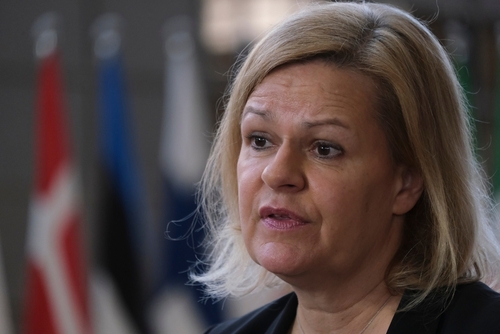
German Interior Minister Nancy Faeser is demanding more power to target the bank accounts of Germans accused of funding “right-wing extremists.”
By John Cody | Remix News | February 15, 2024
With one phrase, controversial German Interior Minister Nancy Faeser highlighted just how far the German government is willing to go to stamp out its main opposition with a new law.
“No one who donates to a right-wing extremist party should remain undetected,” warned the 53-year-old while announcing a new crackdown on bank accounts and funding for political groups, which notably is believed to include the opposition Alternative for Germany (AfD).
“Those who mock the state must deal with a strong state,” she added.
The SPD politician presented her new plan together with President of the Office for the Protection of the Constitution (BfV) Thomas Haldenwang and Federal Criminal Police Office head Holger Münch. Under the title “Resolutely combating right-wing extremism,” Faeser presented 13 new measures, with a special focus on targeting those who fund her party’s political rivals.
“The BfV is communicating closely with the financial sector in order to sensitize it to the problems of financial flows and transactions in connection with right-wing extremism.”
She also said that right-wing extremist networks should be prosecuted in the same way as members of organized crime. To achieve her goals, she wants a new law passed and soon.
“The German Bundestag should pass the law quickly,” said Faeser. In addition, the law would “combat hate on the internet, (…) remove enemies of the constitution from public service (and) disarm right-wing extremists.”
Undoubtedly, the government made the announcement with an eye on the Alternative for Germany (AfD) party, which continues its surge in popular support despite a media and government campaign aimed at the party. In fact, the latest Insa poll shows the party back over 20 percent after briefly dropping below this mark earlier this month. The results are sure to have alarmed the government, as the relentless propaganda drive against the party has failed to have the desired effect.
In several German states, the domestic intelligence agency, the Office of the Protection of the Constitution (BfV), has already labeled the AfD a “definitive case of right-wing extremism,” which means the party is already subject to extreme surveillance. Now, the government may be able to leverage this designation to target those who donate to the party after revising the current law.
It remains unclear how such targeting would work and what kind of penalties would be directed at someone who donates to a right-wing party or organization; however, Faeser said the BfV would handle the specifics of tracking and targeting donors.
As Remix News reported, the BfV has become the political arm of the left-liberal establishment, and rival parties to their power are being actively targeted by the powerful agency.
Currently, such monitoring is subject to stringent approvals and a high threshold. However, the Office for the Protection of the Constitution, under the new law, would no longer have to prove incitement or violence, but only “risk potential,” which leaves far more room for interpretation.
Epstein victims sue FBI
RT | February 15, 2024
A dozen victims of Jeffrey Epstein have sued the FBI, alleging that the agency failed to properly investigate the notorious sex offender. They claim that the FBI sat on reports about Epstein’s activities for two decades, allowing the victims to be “trafficked, abused, raped, tortured and threatened.”
The lawsuit was filed in a federal court in New York on Wednesday by 12 women, all of whom are referred to in the document as anonymous Jane Does.
“For over two decades, the Federal Bureau of Investigation permitted Jeffrey Epstein to sex traffic and sexually abuse scores of children and young women by failing to do the job the American people expected of it,” the complaint alleges. “As a result of the continued failures of the FBI, Jane Does 1-12 bring this lawsuit to get to the bottom – once and for all – of the FBI’s role in Epstein’s criminal sex trafficking ring.”
According to the lawsuit, the FBI began receiving tips, reports, and complaints about Epstein’s alleged trafficking and abuse of minors in 1996, but failed to open a case or share this information with other law enforcement agencies. The FBI eventually opened a case in 2006, two years before Epstein pleaded guilty to a child prostitution charge in Florida.
A controversial plea deal saw Epstein register as a sex offender and serve 13 months on supervised release in lieu of a possible life sentence. Despite the fact that he had been convicted for one offense and dodged a litany of other sex-trafficking charges, the FBI continued to ignore tips that flowed in over the next decade, the lawsuit claims.
“As a direct and proximate cause of the FBI’s negligence, plaintiffs would not have been continued to be sex trafficked, abused, raped, tortured and threatened,” the complaint said.
Epstein was eventually arrested in 2019 and charged with the trafficking of dozens of minors. He died awaiting trial in a Manhattan jail cell a month later, with his death officially ruled a suicide. Epstein’s girlfriend and “madam,” Ghislaine Maxwell, was sentenced to 20 years behind bars for child sex trafficking in 2022.
According to testimony from victims, Epstein and Maxwell recruited girls to perform sexual acts on themselves and their rich and powerful associates, and instructed these girls to recruit additional victims. Among the powerful men accused of abusing the girls was Britain’s Prince Andrew, who settled out of court with an accuser in 2022.
The plaintiffs behind the latest lawsuit are seeking an unspecified amount in compensation and damages from the US government.
The FBI has already been accused of negligence in its handling of the Epstein case. In a Senate Judiciary Committee hearing in December, agency Director Christopher Wray was asked why the FBI didn’t do more to stop the notorious pedophile. Wray promised to conduct an internal investigation to “figure out if there is more information we can provide.”
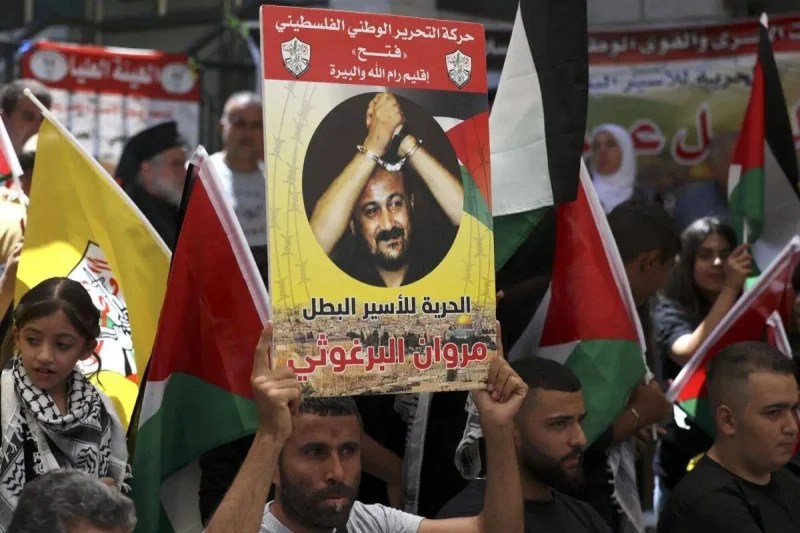
Israel transfers Marwan Barghouti to solitary for planning uprising, media reports
MEMO | February 15, 2024
Israel’s Channel 13 reported yesterday that the occupation’s prison administration transferred prominent Fatah leader, prisoner Marwan Barghouti, to solitary confinement.
It said that the prison administration “took measures against Barghouti claiming he is pushing for escalating resistance in the West Bank.”
It explained that “Barghouti was transferred from Ofer Prison to solitary confinement in another prison,” without specifying which prison, after the prison administration “received information that Barghouti is encouraging the escalation of acts of resistance against the occupation in the West Bank.”
The occupation authorities claimed that “Barghouti is working through several channels to break out a Third Intifada in the West Bank, due to the continued Israeli aggression on the Gaza Strip.”
Barghouti is a prominent politician and leader in the Fatah movement. He participated in the First Intifada in 1987 and was one of the most prominent faces of the Second Intifada in 2000. He was arrested and exiled on several occasions and was subjected to failed Israeli assassination attempts. He has been sentenced to five life sentences and has been held in detention since 2002.
In spite of his incarceration he has a large following and numerous polls show that, should Palestinian elections be held, he would likely be chosen president of the Palestinian Authority (PA).
Israeli troops launch ‘massive incursion’ into south Gaza hospital
The Cradle | February 15, 2024
Israeli forces stormed Al-Nasser Hospital in Gaza’s southern city of Khan Yunis on 15 February, which had been besieged by the invading troops for several weeks.
“Israel’s military stormed Nasser Hospital and turned it into a military outpost. The Israeli military destroyed the ambulance station and tents of displaced civilians and bulldozed over [mass] graves in the courtyard of the hospital,” the Gaza Health Ministry announced.
Displaced Palestinians inside the hospital were “forcibly evacuated” on 14 January before a “massive incursion” on Thursday morning, which began under intense shelling, the ministry added.
Al-Jazeera reported “heavy tank and machine-gun fire as the Israeli army entered Nasser Hospital in Khan Yunis after ordering occupants to evacuate this morning.”
Intensive care patients were forced to move into one of the hospital’s older buildings, which was not equipped to care for them.
“The Israeli occupation forces the administration of Nasser Medical Complex to keep intensive care patients without medical staff, which puts their lives in grave danger,” Gaza Health Ministry spokesman Ashraf al-Qudra said.
According to hospital officials, seven patients were hit by Israeli fire, and one of them was killed.
The Israeli military claimed on 15 January it had “credible evidence” that Hamas kept prisoners inside Al-Nasser Hospital and that their remains may still be in the facility.
However, Hebrew media reported on Thursday that “expectations regarding finding corpses of Israeli detainees at Nasser Hospital must be lowered.”
Tel Aviv also claimed Hamas operatives involved in Operation Al-Aqsa Flood were hiding in the hospital. The Israeli army entered Khan Yunis in early December, laying siege to the southern city’s hospitals.
Over the past week, dozens of Palestinians have been shot and killed by Israeli snipers in the vicinity of Al-Nasser Hospital, including those who were trying to leave the facility.
The Israeli army stormed Khan Yunis’ Al-Amal Hospital at the start of this month.
Tel Aviv has been conducting a military campaign against hospitals in Gaza with the aim of making the strip uninhabitable for Palestinians. In November, north Gaza’s Al-Shifa hospital was besieged, stormed, and transformed into a detention center by Israeli troops.
Israeli forces are now preparing to push further south into Rafah but are still facing fierce resistance from Hamas’ Qassam Brigades and other resistance groups in Khan Yunis.
The unrepentant West: Olaf Scholz and the right to commit genocide in Gaza
By Dr Ramzy Baroud | MEMO | February 14, 2024
German Chancellor Olaf Scholz was in Washington on an official visit on 8 February aimed at working jointly with the United States to make “sure that Israel has what it needs to defend itself.” If such a statement was made soon after Operation Al-Aqsa Flood on 7 October, the logic would be more obvious, not least because of the well-known, inherent bias of both Washington and Berlin towards Israel. Scholz made his visit and statement, however, on the 125th day of one of the bloodiest, most well-publicised genocides in modern history.
The purpose of the visit was highlighted in a press conference by White House spokesperson John Kirby, even though, hours later, US President Joe Biden admitted that Israel has gone “over the top” in its response to the Hamas attack.
If killing and wounding more than 100,000 civilians, and counting, is Israel’s version of self-defence, then both Scholz and Biden have done a splendid job in ensuring that the apartheid state has everything it needs to carry out its bloody mission. However, in this context, who is entitled to act in self-defence, Israel or Palestine?
On a recent visit to a hospital in a Middle Eastern country, which must remain nameless as a precondition of my visit, I witnessed the most horrific sights that one could ever see. Scores of limbless Palestinian children, some still fighting for their lives, some badly burned and others in a coma.
Those who were able to use their hands had drawn Palestinian flags to hang on the walls beside their hospital beds. Some wore SpongeBob T-shirts and others had hats with Disney characters on them. They were pure, innocent, and very much Palestinian.
A couple of children flashed the victory sign as soon as we said our goodbyes. They wanted to communicate to the world that they remain strong and that they know exactly who they are and where they come from. The children, though, are far too young to understand the legal and political context of their strong feelings towards their homeland.
UN General Assembly Resolution 3236 (XXIX), for example, “affirmed the inalienable right of the Palestinian people in Palestine (…), the right to self-determination, (and) the right to national independence and sovereignty.” The phrase “Palestinian right to self-determination” is perhaps the most frequently uttered in relation to Palestine and the Palestinian struggle since the establishment of the UN. On 26 January, the International Court of Justice (ICJ) also affirmed what we already know, that Palestinians are a distinct “national, ethnical, racial or religious group”.
Those injured Palestinian children do not need legal jargon or political slogans to locate themselves. The right to live without fear of extermination, without bombs and without military occupation is a natural right, requiring no legal arguments and unfazed by racism, hate speech or propaganda.
Unfortunately, we do not live in a world built upon common sense. It’s built on topsy-turvy legal and political systems that exist only to cater for the strong. In this parallel world, Scholz is more concerned about Israel being able to “defend itself” than a besieged Palestinian population, starving, bleeding, yet unable to achieve any tangible measure of justice.
Israel doesn’t actually have the right to claim “self-defence” when the people living under its brutal military occupation stand up for themselves and say enough is enough.
Moreover, those carrying out acts of colonial aggression — and settler-colonial occupation itself is a de facto act of aggression — should not demand that their victims refrain from fighting back.
Palestinians have been victimised by Israeli colonialism, military occupation, racist apartheid, siege and now genocide. As such, for Israel to invoke Article 51, Chapter VII of the Charter of the United Nations makes a mockery of international law. Article 51, often used by the major powers to justify their wars and military interventions, was designed with a completely different legal spirit in mind.
Article 2 (4) of Chapter I in the UN Charter prohibits the “threat or use of force in international relations.” It also “calls on all Members to respect the sovereignty, territorial integrity and political independence of other states.” Given that Israel is in violation of Article 2 (4), it simply has no right to invoke Article 51.
In November 2012, Palestine was recognised as an Observer State at the UN. It is also a member of countless international treaties, and is recognised by 139 countries out of the 193 UN member states.
Even if we accept the argument that the UN Charter only applies to full UN members, the Palestinian right to self-defence can still be established under international law. In 1960, General Assembly Declaration No. 1594 guaranteed independence to colonised nations and people. Although it did not discuss the right of the colonised to use force, it condemned the use of force against liberation movements.
In 1964, the UN General Assembly voted in favour of Resolution No. 2105, which recognised the legitimacy of the “struggle” of colonised nations to exercise their right to self-determination.
In 1973, the Assembly passed Resolution 38/17 of 1983. The language, this time, was unambiguous; people have the right to struggle against colonial foreign domination by all possible means, including armed struggle.
The same dynamics that ruled the UN in its early days continue to this day, where Western countries, which represented the bulk of all colonial powers in the past, continue to give themselves a monopoly over the use of force. Conversely, the Global South, which has suffered under the yoke of those Western regimes, insists that it, too, has the right to defend itself against foreign intervention, colonialism, military occupation and apartheid.
While Scholz was in Washington to discuss yet more ways to kill Palestinian civilians, the government of Nicaragua made an official request to join South Africa in its effort to hold Israel accountable at the International Court of Justice for the crime of genocide in Gaza.
It is interesting how the colonisers and the colonised continue to build relations and solidarity around the same old principles. The Global South is, again, rising in solidarity with the Palestinians, while countries in the North, with a few exceptions, continue to support Israeli oppression.
Just before I left the aforementioned hospital, a wounded child handed me a drawing. It featured several images, stacked one on top of the other, as if the little boy was creating a timeline of events that led to his injury: a tent, with him inside; an Israeli soldier shooting a Palestinian; prison bars, with his father inside; and, finally, a Palestinian fighter holding a flag.
He knows who he is. He knows where he comes from. And he knows where he belongs. He will never forget.
Egypt builds ‘buffer zone’ in Sinai as 1.4 million Gazans face displacement: Report
The Cradle | February 15, 2024
The Egyptian government has started building an “isolated security zone” in the eastern Sinai Desert on the border with the Gaza Strip that would serve as a buffer zone for Palestinian refugees if they are forced out of Rafah by the Israeli army, according to the Sinai Foundation for Human Rights.
Local contractors told the rights group that the construction work was commissioned by the Sons of Sinai Construction and Building Company, owned by businessman Ibrahim al-Arjani, a former warlord from the Tarabin tribe in northern Sinai who holds close ties with the family of Egyptian President Abdel Fattah el-Sisi.
The construction work aims to “create an area surrounded by walls seven meters high, after removing the rubble of indigenous homes that had been destroyed.” The construction is expected to be completed in under 10 days and is supervised by the Egyptian Armed Forces Engineering Authority, with a heavy security presence.
“This morning, the Foundation’s team … monitored the construction of a seven-meter-high cement wall, starting from a point in the village of Goz Abu Waad, south of the city of Rafah, and heading north toward the Mediterranean Sea, parallel to the border with the Gaza Strip,” the Sinai Foundation said on 14 February.
“The construction work seen in Sinai along the border with Gaza – the establishment of a reinforced security perimeter around a specific, open area of land – are serious signs that Egypt may be preparing to accept and allow the displacement of Gazans to Sinai, in coordination with Israel and the United States,” Muhannad Sabry, a researcher in Sinai affairs and security in Egypt, told the Sinai Foundation.
Earlier this month, Egyptian journalist Ahmed el-Madhoun shared a video showing workers strengthening the security wall separating Egypt and Gaza. Since the outbreak of the war on 7 October, Cairo has constructed a concrete border topped with barbed wire and extending six meters into the ground.
Cairo recently boosted its military presence on the Gaza border, citing fears of a spillover of Israel’s ethnic cleansing campaign onto its territory once the ground invasion of Rafah begins. Western media has also quoted Egyptian officials as saying that the government considered suspending the 1978 Camp David Accords if Palestinians were forcibly displaced into the Sinai Desert.
Nevertheless, Israel’s Army Radio reported over the weekend that Cairo informed Tel Aviv that they will not object to a military operation in Rafah as long as it is conducted without harming Palestinian civilians. Other Israeli outlets, as well as the New York Times, have reported Egyptian officials expressing fears that any influx of Palestinians could lead to a resurgence of “Islamist militancy.”
Israeli officials have repeatedly made clear their desire not only to defeat Hamas but also to force Gaza’s 2.3 million citizens to flee to Egypt or other countries as refugees. Those statements coincided with explicit plans to annex Gaza and build settlements for Israeli Jews over destroyed Palestinian homes.
Israeli settler groups and Knesset members recently held a conference to discuss building Jewish settlements in Gaza once its indigenous inhabitants have been ethnically cleansed.
Australia regime threatens X with “big trouble” if It doesn’t censor “misinformation”
By Didi Rankovic | Reclaim The Net | February 14, 2024
Australia’s authorities are once again putting pressure on social media, X this time, threatening that the company will face big fines and “big trouble” in general – unless “mis- and dis-” information is censored.
And, it is Australia’s new laws, when they come into force this year, that will represent the legal grounds for such actions.
The fines would run up to $3 million or 2 percent of annual turnover for “voluntary code of conduct” violations, and $7.8 million or 5 percent of annual turnover in case of lack of compliance with the Australian Communications and Media Authority (ACMA) “standards.”
This transpires from an article published by the Financial Review, citing Communications Minister Michelle Rowland, while the motive behind her last crusade is described as “a litany of issues” now allegedly plaguing X.
Rowland went all over the place to accuse X of “not doing enough” – from Taylor Swift deep fakes, to what’s likely a key point of contention – the platform’s decision to reinstate some 6,000 accounts of users previously banned by Twitter.
The thinking here seems to be that if the threat is made ahead of time, X will “align” better with Australia’s politics and agree to once again plunge itself into mass censorship.
The laws Rowland mentioned were drafted in 2023 with the aim of giving broader powers to the Australian Communications and Media Authority, specifically “to combat mis- and disinformation online,” the article said.
The upcoming legislation seeks to produce two effects – the tech industry subjecting itself to a formally voluntary code of conduct, and after this “carrot” comes the stick in the shape of the ACMA’s new powers, fines and punishment, if ACMA’s unhappy with how the code is adhered to.
Rowland added that X at this time “isn’t even covered by a voluntary industry code.” The reason is that X was removed from the code after it stopped the practice of flagging content running against (Twitter’s) “civic integrity policy.”
Elsewhere in Australia’s media scene, some are asking why the country’s government “hates Elon Musk.”
“It is about $300 million that Musk owes the Australian government so far,” wondered Sky News host James Macpherson. And by “owes” – he meant, the fines Australia has tried collecting from X even before the latest threats.
Featured Video

EUROPE FEARS RUSSIA’S NEXT MOVE / Ian Proud
or go to
Aletho News Archives – Video-Images
New Book
New Book: No Autoimmunity The Body Doesn’t Attack Itself
Lies are Unbekoming | September 24, 2026
 The label for Humira, once the best-selling drug in the world, lists its risks in plain print. One of them, in the label’s own words, is new “autoimmune” disease.
A drug prescribed for a condition labelled autoimmune carries a warning that it can cause a condition labelled autoimmune. That contradiction sits in every box, on a folded paper almost nobody reads.
My new book starts there.
No Autoimmunity: The Body Doesn’t Attack Itself
For seventy years, “your body is attacking itself, and we don’t know why” has ended the conversation for people diagnosed with multiple sclerosis, lupus, rheumatoid arthritis, Hashimoto’s, Type 1 diabetes, Crohn’s and psoriasis. More than eighty conditions now carry the autoimmune label. The diagnosis comes with a prescription for life. It almost never comes with a question about cause.
This book asks the question and answers it from the framework’s own records: its drug labels, its journals, its regulatory filings, and its own experiments. … continue
Blog Roll
 Aletho News
- Iran offers Trump deal before US election
- Merz regime wants ‘secret police’ – opposition
- Israeli settlers terrorize West Bank Palestinians with state-provided drones: Report
- They see them, then kill them: Israeli quadcopters track, deliberately target civilians in Gaza
- Debunked: Trump’s egregious UNGA claims on war against Iran crumble under scrutiny
- Europe was part of the infrastructure of US aggression against Iran: Deputy FM
- New evidence on the Bucha Massacre
- Italy and France debunk reports CIA issued ‘Russian drone threat’ warning
- How Russia is Rewiring the Global South
- Britain’s elites want you ready to die for a war they keep imagining
- If Americans Knew
- Trump betrayed voters with his campaign lies and prioritized a foreign country once he took office
- Netanyahu calls Israel’s war in Gaza ‘opposite of genocide’ in UN speech to near-empty hall
- Settler Kidnappings: Torture, Sexual Abuse and Terrorisation of Palestinian Abductees as Israel Deepens Annexation of West Bank
- Gaza winter nears as 162,000 tents become unusable, raising fears of humanitarian crisis
- Netanyahu says, “It’s the opposite of genocide”; UN says Gaza economy is world’s ‘most severe crisis on record’ – Daily Update
- Israel’s US-Backed Assault on Gaza Has Created the ‘World’s Most Severe Economic Crisis on Record’: UN
- ‘Protecting U.S. Citizens’… From Israel
- ‘This is where I live now, the back of a truck’: a day in the life of a grandmother in Gaza
- In UN Speech, Iran’s President Displays Pictures of Children Killed by US, Brings Attention to Israel’s Nuclear Arsenal
- Israel displaces hundreds of Palestinians amid wave of demolitions in West Bank
- No Tricks Zone
- New Study: Earth And Venus Surface Warmth Largely Explained By Convection And Lapse Rate, Not CO2 Or Radiation
- 2025 Nature Paper Claiming Worsening Global Drought Gets RETRACTED …Heavily Flawed
- New Study: ‘Global Drought Shows No Detectable Recent Acceleration Under Climate Warming’
- Economic Masterminds: German Socialists Suggest Taxing Productivity Gains Stemming From Using AI
- The South China Sea Has Not Been Cooperating With The Climate Change Narrative
- Energy Crisis: Germany Enters Heating Season With Historically Low Gas Reserve Fill Levels
- New Study: The Antarctic Ice Sheet Gained Mass From 2020-2024 Due To Staggering Snow And Ice Accumulation
- Study: Ocean Heating Rates From Thousands Of Years Ago ‘Dwarf’ Modern Ocean Heating Rates
- Climate Extremists Target, Attack Large-Scale Power Grid Infrastructure In Germany!
- New Study: Antarctic Ice Melt Has Contributed Less Than 1 Centimeter To Sea Level Rise In The Last 30 Years

