Trudeau invoked Emergencies Act despite deal to end protests, hearing finds
By Dan Frieth | Reclaim The Net | October 28, 2022
During the ongoing public hearings into the use of the Emergencies Act, it was revealed that the Freedom Convoy organizers, the federal government, and police were on the verge of reaching a deal to end the protests before the government invoked the authoritarian act anyway.
The Emergencies Act allowed the government to freeze the bank accounts of the civil liberties protesters.
Freedom Convoy’s counsel Brendan Miller asked Ontario Provincial Police Inspector Marcel Beaudin what happened to the deal to end the protest peacefully that was proposed on February 11. Beaudin said that he felt the proposal was “dead in the water,” and it was probably not presented to the federal government before the EA was invoked.
Miller said the deal was presented to the federal government, they just ignored it.
Miller asked: “Did you know that meeting was at 3:30 pm and that it was with cabinet and that it was the incident response group of the political executive meeting and that your proposal was provided to them?”
Beaudin said, “No.”
“It was. I can tell you that. And then they invoked the Emergencies Act,” Miller responded.
A memo outlining the deal read: “The deal would be: Leave the protest and denounce unlawful activity and you will be heard.”
Freedom Convoy organizers would have honored their end of the deal by removing over 100 trucks from residential streets and would remove more as negotiations went on.
“The recommendation was essentially, the political branch of the Government of Canada would agree to a meeting with the protesters but there would be certain conditions to that and they would have to denounce anything unlawful and get out of downtown Ottawa,” said Miller.
The invocation of the EA before attempting to reach a deal is a potential violation of the EA, which states that it should only be used when there is a situation “that cannot be effectively dealt with under any other law of Canada.”
The EA was revoked a few days after it was invoked. However, within those few days, the police had forcefully removed peaceful protesters from the streets and the bank accounts of supporters of the protest frozen.
Oxford, England proposes dystopian surveillance system that limits driving

By Ken Macon | Reclaim The Net | October 27, 2022
If the city goes through with plans, motorists might need special permits and open themselves up to more surveillance to drive through Oxford, England. The Oxfordshire County Council is considering giving permits to households that only allow them to drive through the city for 100 days per year per vehicle.
To implement the plan, ANPR (automatic number plate readers) cameras will be installed at “traffic filter” locations across the city.
Private cars will not be allowed across the filters without a permit. All other vehicles, including coaches, buses, vans, taxis, mopeds, HGVs, and motorbikes will be allowed through traffic filters at all times.
Consultation for the plan ended October 13 and the council is expected to make a decision in November. If they approve the plan, it will cost £3 million ($3.48 million) to implement.
Oxfordshire County Council’s minister for highways management Andrew Grant said that the traffic filter scheme is part of a “vision for a vastly improved Oxford.”
“We want to improve lives, transport and health for the people that live and work here. We have done a lot of modeling to reach these locations and we want to encourage people to choose to use their cars less,” he added.
“This is not about being anti-car, it’s about managing the way we use our roads so that they are safe for everyone. It’s about designing Oxford for the next decades and we want to hear from everyone. I would encourage people to comment and take part in the consultation, especially people who would not normally think about going online and commenting on it.”
Some that are against the plan have voiced their opinion.
Over 3,400 people have signed a petition opposing the installation of traffic filters on Hollow Way and Marston Ferry Road.
EU sticks to lockdowns, masks and vaccine passports
By Will Jones | TCW Defending Freedom | October 27, 2022
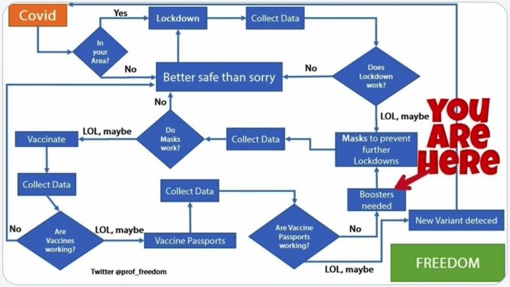
The EU has set out its commitment to the continued use of lockdowns, mask mandates, vaccine passports and other restrictions this winter to control the spread of Covid-19, and also to the creation of a ‘legally binding’ global pandemic treaty with a ‘reinforced World Health Organisation at its centre’.
The document, published on September 2 and titled EU response to COVID-19: preparing for autumn and winter 2023, was prepared by the EU Commission (the EU executive) and sent to the EU Parliament. It reveals how much in thrall to the new biosecurity orthodoxy the EU leadership is and bodes ill for the future management of contagious disease in the bloc and globally.
On lockdowns and other restrictions, it proposes a framework of ‘key indicators to assess when deciding on reintroducing non-pharmaceutical measures’. These indicators include severe disease and hospital occupancy data, and importantly are stated to relate not just to Covid-19 but to influenza as well, potentially making this part of normal winter disease management indefinitely.
It suggests mask mandates as a ‘first option to limit community transmission’, giving a preference for FFP2 masks.
The document recommends the pre-emptive imposition of work-from-home and gathering limits before any rise in infections to try to avoid the ‘need for more disruptive ones such as lockdowns, closing businesses and schools, stay-at-home recommendations and travel restrictions’. It stresses the need for ‘political commitment’ to make lockdowns and other measures work.
The one welcome aspect of the document was the clear statement to avoid disrupting children’s education and lives any further, though even here school closures were not ruled out: ‘The Covid-19 pandemic has disrupted the lives of children and adolescents affecting their everyday routines, education, health, development and overall well-being. It is therefore important to keep in mind the negative impacts of school disruptions on the health and development of children. The implementation of measures at schools should be aimed to be kept at a minimum and the further loss of learning should be prevented.’
The document discourages travel restrictions – freedom of travel and the elimination of internal borders being an article of faith for the EU. However, it recommends use of the EU Digital Covid Certificate (i.e., vaccine passport, though it also recognises natural immunity) wherever travel restrictions are necessary’, boasting about how widely it is already used.
‘The EU Digital Covid Certificate has been a major success in providing the public with a tool that is accepted and trusted across the EU (and in several third countries) and in avoiding fragmentation of multiple national systems. As of August 1st 2022, 75 countries and territories from across five continents are connected to the EU Digital Certificate system (30 EU/EEA Member States and 45 non-EU countries and territories), and several more countries have expressed interest in joining the gateway or are already engaged in technical discussions with the Commission. This makes the EU Digital Covid Certificate a global standard.’
What this fails to mention, of course, is any rationale for the passes. What’s the point of restricting the travel of the unvaccinated (or not-sufficiently-vaccinated) when the vaccinated are no less likely to spread the disease? This key question is entirely unaddressed.
On vaccination, the document provides 15 ‘objectives’, ‘priorities’ and ‘actions’ for Covid-19 vaccination strategies. These include the ‘priority’ of encouraging take-up of the original vaccine (that’s right, for the extinct Covid strains) among all eligible children and adolescents, and an action point of making sure GPs are spending enough of their time vaccinating people (don’t they have anything else to do?) It suggests administering boosters as often as every three months, implying they are of little use after six months. It also encourages governments to counter ‘misinformation’ in the media and online to ensure ‘clear, consistent and evidence-based messaging demonstrating the continued safety and effectiveness of COVID-19 vaccines’. It links worries about vaccine safety with ‘anti-Western and anti-EU narratives’ and with websites which also go off-narrative on the Ukraine war.
The document also trails a forthcoming ‘EU global health strategy’ which ‘will provide the political framework with priorities, governance and tools, enabling the EU to speak with one influential voice and making the most of Team Europe’s capacity to protect and promote health globally’.
This is a very disturbing document. For those of us who still hold to the evidence-based pandemic strategies of pre-2020, premised only on mitigating impacts by expanding emergency healthcare capacity and finding safe and effective treatments, and not imposing intrusive, harmful and unproven methods of trying to prevent the spread of a disease that is anyway harmless to most people, this bodes ill indeed for the current direction of travel in Europe and globally.
The Ukraine war of words that heralds ethnic cleansing
By Dr Gregory Slysz | TCW Defending Freedom | October 28, 2022
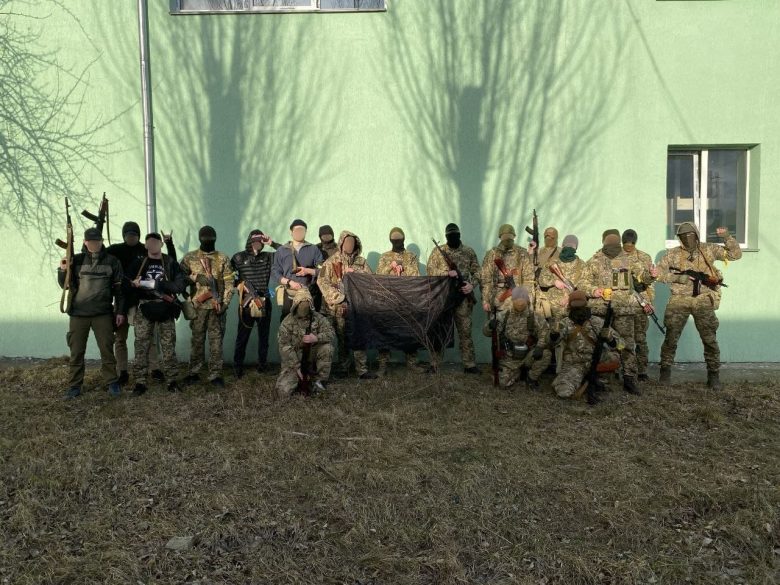
As The Ukrainian forces and their Western backers celebrate their recent military advance, the fate of ethnic Russians in the reclaimed territories looks bleak now that local and national leaders have declared a reckoning against those whom they consider to be collaborators and traitors.
It’s a policy that originates from the early stages of the conflict based on a law passed in March that threatened anyone who co-operated with the occupying Russian authorities with up to 15 years of imprisonment together with the confiscation of property. Hitherto there have been many arrests of those accused of pro-Russian collaboration, including the leader of Ukraine’s official parliamentary opposition Viktor Medvedchuk, and assassinations of officials such as Alexei Kovalev, deputy head of the military and civil administration in the Kherson region. But as the Ukrainian forces wrest back territory from Russia, a wide net is being cast against alleged collaborators that extends well beyond officials to include teachers, social media warriors and victims of unsubstantiated claims of snitches, shedding light on the intentions of Ukrainian authorities in the unlikely event of total victory.
Ukraine is a culturally heterogenous population in which linguistic affiliation is complex, being governed by both cultural and social situations. At least 17 per cent of Ukrainians claim Russian heritage, with about 14 per cent declaring Russian as their main language and a further 17 per cent Russo-Ukrainian bilingualism, with an unknown number opting to converse in a hybrid Surzhyk dialect. Russian speakers are overwhelmingly concentrated in the eastern and southern regions of the country. It’s a situation, moreover, that has reflected the electoral geography of the country of both parliamentary and presidential elections with the eastern and southern parts of the country exhibiting close affinities with Russia.
Starting as a reasonable initiative at nation-building that intended to correct the inequalities of institutional Russification of the Soviet era, language policy came to be weaponised by nationalist political forces that sought to use it to marginalise Russian culture. Although a cultural reset was inevitable after the collapse of the Soviet Union to redress years of Russification, its initial steps were measured, such as the Law of Languages of 1989, which extended legislative protections to Russian as well as other languages. For Ukraine’s increasingly influential nationalists, overwhelmingly located in the West of the country, the Law was intolerable and unsurprisingly fell victim to the Maidan coup of 2014, that replaced the Russophile President Viktor Yanukovich with Petro Poroshenko.
While its provisions were maintained by Ukraine’s subsequent leadership, following international condemnation of its revocation, the decision of the Constitutional Court to deem the Law unconstitutional was viewed by the Russian minority as a sign of a broader assault on Ukraine’s Russian heritage and served to fuel separatist sentiment in the Crimea and the Donbas. It also played into the hands of Vladimir Putin who could now claim to be the champion of Ukraine’s oppressed Russian speakers, by military means if necessary. Such fears were not unwarranted as in 2019 a new language law sought to end the hitherto ad hoc implementation of existing legislation and subject transgressors to severe fines. Poroshenko, who was campaigning for re-election, weaponised Ukraine’s language policy with his election slogan ‘Army, faith, language’, declaring that ‘the only opinion that we weren’t going to account for [in drafting the legislation] is the opinion of Moscow’. Salt was further rubbed into the wounds of the third of the country which rejected it by its being signed off by the Speaker of Parliament, Andrei Parubiy, a former activist in the neo-Nazi Social-National Party, who warned chillingly that ‘those people who try to revise the language law . . . will soon feel the whole anger of the Ukrainian people’. Remaining loopholes were filled in January 2022, just before Russia’s military incursion, which for instance compelled Russian language print media to produce Ukrainian translations for all publications in a move that de facto targeted Russian for discrimination.
To indigenous Russian speakers, such rhetoric marked the creation of an ethnic state in which they were not welcome. The escalation of the war in 2022 seemed to confirm their worst fears as not only did Russian become ‘the language of the enemy’ but things Russian, political parties, music, literature were officially shunned, banned or marginalised in a policy that hitherto had been executed only by the far right nationalists of Lviv City Council in West Ukraine. Whereas then the likes of Canadian and British ambassadors joined Moscow in condemning such action as ‘just plain dumb’ and intolerant, now such nationwide ‘de-Russification’ initiatives were met with silence.
International opinion recognised Ukraine’s language policy as conflict-bearing due to its increasingly divisive and discriminatory nature. The scrapping of minority language provisions by Ukraine’s Constitutional Court in 2014, for instance, raised concerns in the European Parliament which deemed it as ‘undermining any notions of justice, freedom, civilisation, progress and democracy’ and called for the EU Commission to ‘condemn the action of the Ukrainian Parliament and the nationalistic attacks on minority communities in Ukraine’. The 2019 law came under similar criticism from the Venice Commission, the Council of Europe’s advisory body on constitutional affairs, which declared that it threatened to become ‘a source of inter-ethnic tensions within Ukraine’. It reiterated its conclusion following the passing of the January 2022 Law, noting that ‘historical oppression of Ukrainian . . . may lead to the adoption of positive measures aimed at promoting Ukrainian, but this cannot justify depriving the Russian language and its speakers of the protection granted to other languages’.
Both the intra-parliamentary brawls and street standoffs between Ukrainian and Russian speakers during the passage of the language legislation were chilling portents of what was come. Although the escalation of the war in 2022 has seen some ethnic Ukrainian Russian speakers distance themselves from ‘the language of the enemy’ and embrace Ukrainian as their main language, it has also seen ethnic Russians fortify their Russian identity. While this in itself has demonstrated the complexity and malleability of identity in Ukraine, it has also reinforced pre-existing cultural fissures, leaving ethnic Russians with no option other than to embrace Mother Russia as their homeland.
While the conflict in the Donbas since 2014 rendered reconciliation between the Ukrainian authorities and the Russian minority problematic, as the failure of the Minsk agreement testifies, the escalation of the conflict has entrenched pre-war hatreds. With the national conversation decisively turning against the reintegration of Russian culture and language into Ukraine’s social fabric, it is difficult to see how a status quo ante bellum with even rudimentary cultural and linguistic protections for ethnic Russians is possible were the Ukrainian state reconstituted within its pre-war borders. In fact, everything points towards mass retribution and ethnic cleansing on a scale not witnessed in Europe since the Second World War, in a scenario that is likely to overshadow the grim events of the conflict itself. Ukraine’s Secretary of the National Security and Defence Council, certainly didn’t mince his words on a recent Ukrainian talk show in calling for the ‘complete disappearance of the Russian language from our land’ in what sounded like incitement to ethnic cleansing.
Nothwithstanding the difficulty such actions would present for social reconstruction, the questionable legality of extra-judicial killings of officials and political persecution of ‘collaborators’ threatens to draw attention to atrocities committed by Ukrainian paramilitary forces during the Second World War against Russians, Jews, Poles and other minorities. These crimes, together with the ritualistic celebrations by Ukraine’s highest political authorities of those who perpetrated them like nationalist leader and Nazi collaborator, Stepan Bandera, have been conveniently whitewashed so as to not tarnish the image of a virtuous Ukraine that has been carefully cultivated over the past few months. The sources which once regularly condemned Ukraine for not only celebrating wartime collaboration but also tolerating a revival of neo-Nazi paramilitarism now declare similar condemnation by Russia as hostile propaganda. A Ukraine seen to be persecuting minorities again would be a propaganda disaster for its Western backers.
Dividing Ukraine’s population into ‘the people’ and ‘the rest’ where the latter were made to feel subordinate in their ancestral lands to the former was always going to lead to conflict. Yet just as wise counsel of the likes of George Kennan, Henry Kissinger and Zbigniew Brzezinski warned of the grave risks of Nato’s expansion to Russia’s borders, so warnings came aplenty of the dangers of a divisive language policy. To Ukraine’s detriment, however, neither was heeded and now a reckoning against ‘the rest’ will be as useless in knitting back together shattered communities as the pre-war language policy was in solving peaceful coexistence between Russian and Ukrainian in a single public space.
Japan steps up its digital ID push, tells public they may lose health insurance if they don’t sign up
By Didi Rankovic | Reclaim The Net | October 27, 2022
There is a discernible and forceful push in many countries toward digitization and switching citizens’ key sensitive personal and financial data from “analog doldrums” to government-controlled (and easily accessible by multiple agencies) centralized databases.
Somewhat telling of how important this task is for those in power, is the fact they are increasingly either pulling all the stops or threatening to, prodding a reluctant population in the desired direction.
In Japan, those who are unsure about signing up for digital IDs – and reports say, those are many – are being told they risk losing their public health insurance, AP writes.
Japan’s Social Security Number-like scheme was launched back in 2016. It’s called My Number and consists of 12 digits given to all residents. But My Number has been far from a resounding success as many Japanese avoid using it, afraid their personal data and right to privacy could be compromised.
The Japanese society seems technologically savvy enough to understand the underlying risks and harms of some types of technology, which means that this otherwise hi-tech country to this day prefers to do business in person, use cash, stamping seals, and paper documents in administrative procedures – in other words, in all those areas that really matter.
Despite the fact the My Number scheme has not had wide adoption, Japan’s authorities are now apparently doubling down: they want to issue My Number cards with microchips in them to everyone, and those cards will also serve as photo ID since they will contain photographs of their carriers. Some of the information and services the cards are linked to are drivers licenses and public health insurance.
This is where the plot thickens since current health cards do not require photos – but those will be phased out by the end of 2024, meaning that residents who do not apply for My Number cards risk losing their health insurance.
An online petition is currently circulating, having gathered over 100,000 signatures in a matter of days, calling for continued use of the current form of health cards.
“If this was coming from a trustworthy leadership and the economy was thriving, maybe we would think about it, but not now,” Saeko Fujimori, who works in the music industry, told AP.
And there are dark overtones to the report.
US citizens were given secret Covid “decree violation” scores
By Tom Parker | Reclaim The Net | October 25, 2022
Voter analytics firm PredictWise harvested location data from tens of millions of US cellphones during the initial Covid lockdown months and used this data to assign a “Covid-19 decree violation” score to the people associated with the phones.
These Covid-19 decree violation scores were calculated by analyzing nearly two billion global positioning system (GPS) pings to get “real-time, ultra-granular locations patterns.” People who were “on the go more often than their neighbors” were given a high Covid-19 decree violation score while those who mostly or always stayed at home were given a low Covid-19 decree violation score.
Not only did PredictWise use this highly sensitive location data to monitor millions of Americans’ compliance with Covid lockdown decrees but it also combined this data with follow-up surveys to assign “Covid concern” scores to the people who were being surveilled. PredictWise then used this data to help Democrats in several swing states to target more than 350,000 “Covid concerned” Republicans with Covid-related campaign ads.
In its white paper, PredictWise claims that Democrats were able to “deploy this real-time location model to open up just over 40,000 persuasion targets that normally would have fallen off” for Mark Kelly who was running for Senate at the time and has now been elected.
“PredictWise understood that there were potential pockets of voters to target with Covid-19 messaging and turned high-dimensional data covering over 100 million Americans into measures of adherence to Covid-19 restrictions during deep lockdown,” the company states in the white paper.
PredictWise doesn’t provide the exact dates when this location data was collected but its white paper does note that the data was collected during Covid lockdowns and used during Senator Kelly’s 2020 election campaign. State-level US lockdowns began on March 15, 2020 and Kelly was elected on November 4, 2020 so the data appears to have been collected during the first few months of this 11 month period.
Location data and survey data are just two of the many types of data PredictWise claims to have access to. According to its white paper, PredictWise also tracks “telemetry data” (which is “passively sourced cell-phone data”), media consumption data, and unregistered voter data (which contains verified data on over 50 million unregistered voters that’s updated daily and sourced from credit files and portal registration data). Additionally, PredictWise claims that “Crate&Barrel” (which seems to be a reference to the online furniture and home decor shopping portal Crate & Barrel) is one of the portal registration data sources it has access to.
In total, PredictWise says its data “tracks the opinions, attitudes, and behaviors” of over 260 million Americans – a figure that represents 78% of the entire US population of 333 million.
PredictWise uses the data it collects to create scores on 13 issue preference clusters and 7 value-frame, or psychometric clusters. These clusters use more than 30 million behavioral data points. PredictWise also claims to be able to use this data to predict the party of unregistered voters.
This mass surveillance of location data and lockdown compliance is just one of the many examples of the large-scale data harvesting that occurred during the pandemic. Private companies tracked the everyday activities of citizens, pushed remote learning surveillance technologies, increased surveillance in the workplace, and more. Meanwhile, governments ushered in numerous forms of surveillance such as forcing citizens to wear ankle bracelet trackers, secretly surveilling vaccine recipients via their phones, and combining vaccine passports with digital IDs.
FLORIDA SURGEON GENERAL ON COVID VAX MANDATE
The Highwire with Del Bigtree | October 20, 2022
Florida Surgeon General, Dr. Joseph Ladapo, minces no words regarding his State’s stance on Covid Vaccine Mandates, after a CDC committee voted unanimously to recommend Covid vaccines for kids older than 6 months.
COVID Vaccines and Organ Transplants: Are Healthcare Providers Ignoring Safety Signals?

The Defender | October 24, 2022
Since its experimental beginnings in the mid-1950s, organ transplantation has evolved into what the medical community now casually refers to as a “standard-of-care” procedure, albeit one with still substantial failure rates.
For example, though kidneys top the list of transplanted organs, 14% to 21% of kidney transplants fail within five years, and 15% of kidney transplant candidates are awaiting a repeat procedure.
Recent studies identified a new concern related to the failure of transplanted kidneys and other organs: COVID-19 vaccination.
In one study, published in September in Transplant Infectious Disease, researchers cataloged acute organ rejection within a week or two of COVID-19 vaccination in five individuals who had received kidney, liver or heart transplants six to 18 months earlier.
In August, Japanese researchers reported rejection of corneal grafts in COVID-19 vaccine recipients, occurring from one day to six weeks post-vaccination.
The events caught the Japanese authors’ attention because corneal grafts ordinarily have a high success rate due to the cornea’s status as an organ with immune privilege.
Noting literature that documents transplant rejection in association with other vaccines such as influenza, hepatitis B, tetanus and yellow fever, the Japanese authors expressed worry about what “the projected societal shift towards a more frequent vaccination schedule” portends for transplant recipients.
Concerns about the impact of COVID-19 jabs on people with existing transplants are important, but another pressing-yet-unaddressed question lurks in the shadows: What happens if an unvaccinated person receives a transplanted organ from someone who got one or more COVID-19 jabs?
A record year
Although transplantation experienced a brief lull in the early days of the pandemic, by 2021, the U.S. saw a record-setting number of transplants performed — more than 40,000 kidneys, hearts, livers and other organs.
Although supply is never adequate to meet demand, transplant centers were able to achieve their 2021 milestone in part because of a 10% increase over 2020 in the number of “deceased organ donors” (as opposed to living donors), with 45 of 57 organ procurement organizations setting “all-time records for donors recovered in a single year.”
The surge in organ donation from deceased donors represents a decade-long trend, with “the rising number of deaths of young people due to the ongoing opioid epidemic” hypothesized to be a contributing factor prior to 2021. Still, in prior years, the increase averaged only 5%.
Thrilled with the increased availability of organs, transplant organizations have displayed no curiosity about whether fatalities linked to the rollout of experimental COVID-19 vaccines may be eclipsing or even replacing organs sourced from opioid-related deaths — even though there was a 30% increase (over 2020) in organ donation from individuals who died of cardiorespiratory failure, and a 15% increase in organs from deceased 50- to 64-year-olds.
The COVID-19 vaccine rollout has been linked to 2021’s explosive rise in all-cause mortality in the working-age population, including unprecedented heart-related fatalities in younger adult COVID-19 vaccine recipients.
Traffic fatalities are a key pipeline for organ donation, so transplant centers also benefited from the 16-year high in traffic-related deaths in 2021.
Some observers believe these could be linked to COVID-19-vaccine-related loss of consciousness behind the wheel.
Damaged organs?
According to the United Network for Organ Sharing (UNOS), transplant rejection “is when the organ recipient’s immune system recognizes the donor organ as foreign and attempts to eliminate it.”
Rejection begins as an acute phenomenon but may proceed to the gradual loss of organ function defined as chronic rejection.
UNOS says, “Some degree of rejection occurs with every transplant,” which is why immunosuppressive medications, often for life, are a sine qua non following transplantation.
In August, the independent group of doctors and scientists known as Doctors for COVID Ethics outlined disturbing evidence from autopsies of persons deceased after COVID-19 vaccination about what is happening to the organs of mRNA vaccine recipients — organs potentially being offered to transplant recipients.
They noted that mRNA vaccines “travel throughout the body and accumulate in various organs” where they “induce long-lasting expression of the SARS-CoV-2 spike protein” that in turn induces autoimmune-like inflammation — and the vaccine-induced inflammation “can cause grave organ damage, especially in vessels, sometimes with deadly outcome.”
Citing evidence from Pfizer’s animal experiments, they also underscored the particularly rapid accumulation of mRNA vaccine in the liver, and concluded that blood vessels, at the very least, “will be exposed and affected in every organ and in every tissue.”
Other researchers have highlighted “the possibility of subclinical organ dysfunction in vaccinated recipients.”
No transplant for you
Ironically, transplant programs commonly recommend that would-be organ recipients get “up-to-date” on a slew of vaccines — “typically hepatitis A and B, tetanus [diphtheria, pertussis, tetanus], pneumococcus, measles, human papillomavirus, influenza, and others dependent on geography and age.”
Given the manufacturer-documented potential for vaccines to cause organ-damaging adverse events, this advice was already questionable — but then many transplant centers made matters worse by adding stringent requirements for COVID-19 vaccination.
Even though researchers very quickly established that the immunosuppressive drugs taken by transplant recipients guarantee a “significantly blunt[ed]” COVID-19 vaccine response, prominent healthcare systems like Boston’s Brigham and Women’s Hospital and Colorado’s UCHealth did not hesitate to coldly remove the unvaccinated from their transplant waiting lists.
The American Society of Transplant Surgeons’ COVID-19 Strike Force recommends COVID-19 vaccination not just for all transplant candidates but also for recipients, their family members and live donors.
They virtuously claim that decisions to deny transplants to the unvaccinated are based on a desire to “avoid futile transplants and wasting organs that could benefit other candidates.”
A University of Chicago physician who asserted a “legal right to discriminate against candidates who refuse the COVID-19 vaccine” nevertheless squeamishly labeled the discrimination “too severe,” asking, “one must ask how far the [transplant] community will go” and wondering, “will they mandate multiple boosters”?
Big bucks
Although organ transplantation is shrouded in noble lifesaving verbiage, it is also a major profit center for modern medicine.
Global projections for 2021-2028 suggest the combined organ and tissue transplantation market will double in size, going from $7.24 billion to $14.67 billion — and those figures do not take into account a thriving black market for trafficked organs.
Market analysts expect the growth to be fueled both by demand factors — such as the growing incidence of chronic diseases that cause “catastrophic damage to tissue and organs” — and increased supply — including a rise in celebrity-driven organ donation pledges.
Because access to organs remains the key barrier to transplantation, there has also been a push in recent years to allow donation from “suboptimal” or “extended criteria” donors — for example, the elderly, individuals with fatty liver disease, donors with malignancies or viral hepatitis or donations “after cardiac death.”
Will COVID-19-vaccine-contaminated organs become just another category of “suboptimal” donation?
Recent studies of COVID-19 vaccine recipients’ blood suggest that worries about a contaminated blood supply likely also extend to the organ supply and could place transplant recipients’ lives at risk.
Unfortunately, when problems arise, they will probably be chalked up to ordinary transplant rejection, with no one the wiser about the insidious role of newfangled COVID-19 or future mRNA vaccines.
This article was originally published by The Defender — Children’s Health Defense’s News & Views Website under Creative Commons license CC BY-NC-ND 4.0. Please consider subscribing to The Defender or donating to Children’s Health Defense.
“We are not QR codes” New Alberta Premier Danielle Smith apologizes for vaccine passports

By Ken Macon | Reclaim The Net | October 24, 2022
During the United Conservative party’s annual general meeting, Alberta’s new Premier Danielle Smith is seeking legal advice on pardoning those that got arrested or fined for violating COVID-19 rules such as not having a vaccine passport.
“We are human beings,” said Smith. “We are not QR codes,” she said, adding that she wanted to “purge” the QR database.
“I believe that Alberta Health Services is the source of a lot of the problems that we’ve had,” she said.
“They signed some kind of partnership with the World Economic Forum right in the middle of the pandemic; we’ve gotta address that. Why in the world do we have anything to do with the World Economic Forum? That’s got to end.”
“The things that come to top of mind for me are people who got arrested as pastors (and) people given fines for not wearing masks,” Smith said. “These are not things that are normal to get fines and get prosecuted for. I’m going to look into the range of outstanding fines and get some legal advice on which ones we are able to cancel and provide amnesty for.”
Smith also doubled down on her promise to amend the Human Rights Act to ban discrimination based on Covid vaccination status. She said the amendment would focus on Covid vaccines because the issue is not medical, it is political.
“Since it was a very specific reaction to a very specific vaccine mandate, we’re going to be very precise when we write the legislation,” she said.
“We have to get back to an attitude of ‘you take a vaccine to protect yourself.’
“[But] we have to get away from this attitude that you demonize those who make a different choice.”
Smith is a vocal opponent of vaccine passports and mandates, especially the Alberta Health Services (AHS) for not allowing people to work if they are not vaccinated against Covid. According to the premier, people not vaccinated against Covid are the most discriminated against she has seen in her life.
Smith vowed to reorganize the AHS governance system and fire the entire board.
“The system, my friends, is broken,” she said. “Most of those managing AHS today are holdovers from the NDP years. They have had their chance to fix this bloated system and they have largely failed on almost all accounts. Failure is no longer an option.”
Smith failed to address the comments she made during a virtual interview with Western Standard about the World Economic Forum (WEF). During the interview, she said she would end the AHS data sharing deal with other health providers, including Mayo Clinic, under a program overseen by the WEF.
Over a million Saudi citizens forcibly displaced in Jeddah to make way for extravagant project
The Cradle | October 22, 2022
More than one million people have become victims of forced displacement and have not received adequate compensation as old neighborhoods are being demolished in the city of Jeddah, Saudi Arabia, to make way for luxury hotels and entertainment venues, according to human rights groups.
On December 2021, the Saudi Public Investment Fund — chaired by Crown Prince and newly appointed Prime Minister Mohammed bin Salman (MbS) — announced the launch of a development project called ‘Jeddah Central,’ which would include a museum, an opera house, a stadium, an aquarium, hotels, and new residential neighborhoods.
Democracy for the Arab World Now (DAWN), a US-based rights group, stated that “while the Riyadh regime is expected to spend more than $20 billion on the ambitious plan, very little of that amount has been allocated to compensate the 1.5 million people who have lost or will lose their homes and livelihoods”, according to PressTV.
A research conducted by DAWN concluded that ”the Saudi forced displacements are in violation of international law since the measures are incompatible with internationally recognized legal principles to guarantee and protect the population’s rights.”
France 24 reported that Saudi authorities have carried out demolitions in some 60 different neighborhoods, mostly located in the southern part of the city. Demolitions are expected to continue and more neighborhoods are expected to be affected in the coming months.
The revelations come just days after it was revealed that Saudi Arabia’s Specialized Criminal Court sentenced three members of the Howeitat tribe to death a few weeks ago, for resisting their forced eviction and displacement from the country’s northwestern Tabuk region.
The three tribesmen, Shadli, Atallah, and Ibrahim al-Howeiti, were detained in 2020 for speaking out against the eviction of their tribe from the area, which was cleared by Saudi authorities in order to make way for the Neom project.
The Neom project, announced in 2017 by MbS, is a $500 billion megacity being built in the Tabuk region, which plans to serve as a “technological hub and tourist destination.”
Israeli regime brings in strict rules on West Bank visitors amid international criticism

Press TV – October 21, 2022
The Israeli regime has implemented strict rules on all foreigners or Palestinians holding dual nationality who intend to come to the Occupied Palestinian territories, where it limits their ability to enter and stay in the occupied West Bank.
A 90-page authoritative order came into effect on Thursday despite international criticism, as reported by The Guardian, which will create complications for hundreds of thousands of Palestinian families who hold dual nationality and are already having a hard time maneuvering a complicated permit system.
COGAT, the Israeli body in charge of Palestinian civilian affairs issued the rules, which are to be allegedly implemented over a two-year pilot period. The strict rules are expected to suffocate the Palestinian economy and academia and the work of aid agencies, where all foreign internationals coming to volunteer, study or work in the West Bank will be granted a single-entry visa valid for only three months.
There are no guarantees they will be granted a visa again, and they will have to leave and wait between visas in some cases for more than one year before they are able to reapply for entry. In most cases, residency is limited to a 12- to 27-month period, making family life and long-term employment almost impossible.
Palestinian academics, business leaders and rights groups expressed outrage over the policy when it was first outlined in February.
“This is going to cause major issues. Some of our board members come here frequently and they need to be able to see their investments. They are destroying Palestinian businesses,” said Bassem Khouri, chief executive of a pharmaceutical company in the West Bank, adding, “Who can live and work here is supposed to be a Palestinian decision. This is designed to isolate us.”
Meanwhile, Jessica Montell, executive director of HaMoked, an Israeli human rights group that has challenged the rules in court slammed the ordinance, saying, “The Israeli military is proposing new restrictions in order to isolate Palestinian society from the outside world and keep Palestinian families from living together.”
In a move that controls the lives of foreigners and Palestinians as well, the rules stipulate that only 150 foreign students a year may register at Palestinian colleges and universities. The major they chose to study must be pre-approved, and there is a quota of 100 foreign “distinguished” lecturers that will be determined by the Israeli occupation regime.
Also, Palestinians holding dual citizenship will have to hand the Israeli apartheid regime a list of names and ID numbers of family and friends they plan to visit beforehand, even before they travel.
Students, teachers, journalists working for Palestinian media outlets, tourists, and Palestinian family members including siblings, grandparents or grandchildren will all have to undergo these new rules.
The rules also read that if a foreigner starts a relationship with a Palestinian, “the appointed COGAT official must be informed as part of their request to renew or extend the existing visa.”
According to Montell, none of the rules have any legal ground. “Under international law, the Israeli military is only allowed to work for the interests of the occupied population, or its own security needs. These restrictions obviously advance neither.”
The new procedures apply only to Palestinians, and not Israeli settlers living across the area in violation of international law. Nearly 700,000 Israelis live in illegal settlements built since the 1967 occupation of the West Bank and East al-Quds.
Israeli Colonizers Assault International Activists, Stab One, Near Bethlehem

IMEMC | OCTOBER 19, 2022
On Wednesday, a group of illegal Israeli paramilitary colonizers assaulted many Palestinians and international peace activists picking Palestinian olive trees in Kisan village, east of Bethlehem, and stabbed a female activist.
The olive orchard owner, Ibrahim Obeyyat, said the colonizers invaded his land and assaulted the locals and the international peace activists who came to help in picking the olive trees, especially since the area is subject to constant Israeli violations.
Obeyyat added that the international peace activist was stabbed in the back and suffered a fracture in her leg after the colonizers struck her with a bar.
He stated that the colonizers also uprooted at least 300 olive saplings and sprayed many olive trees with chemicals in his 90 Dunam olive orchard.
The colonizers repeatedly target Kisan, its farmers, and lands, and have stolen agricultural supplies, uprooted trees, and frequently attack the farmers and the shepherds.
Featured Video

No Vote, No Representation, No State: Democracy, Israeli Style
or go to
Aletho News Archives – Video-Images
From the Archives
Sanctions, War and the Policy of Dual Containment
By SASAN FAYAZMANESH | March 17, 2008
It is now nearly three decades since the Unites States adopted the policy of dual containment of Iran and Iraq. While much has been written about the containment of Iraq, there has been very little in-depth analysis of this policy when it comes to Iran. In a book that is going to be released on March 31, 2008, entitled The United States and Iran: Sanctions, Wars and the Policy of Dual Containment (Routledge), I attempt to address this shortcoming by investigating when and why the US policy of containment of Iran came about, how it evolved, and where it stands today.[1] To the extent that Israel has been involved in US policy making, the study will also include the role that Israel has played in the containment of Iran. Also, since the fate of Iran has been inextricably linked to that of Iraq, occasionally the investigation will overlap with the containment of Iraq.
The policy of dual containment of Iran and Iraq originated during the Carter Administration, but it was not until the Clinton Administration that the expression “dual containment” became popular. … continue
Blog Roll
 Aletho News
- No Vote, No Representation, No State: Democracy, Israeli Style
- Zionist Bought Senate Blocks Information About American Citizens Killed By Israel
- While Gaza dominates the UN, these are the people keeping it alive
- New Report: “Scholasticide and Genocide in Gaza: Assessment, Testimonies and Legal Analysis”
- ‘THAAD Delusion’: Iran war exposes US missile shield limits – The Atlantic
- Moscow issues warning to NATO over Russian exclave
- Yes, the Iran war has destroyed Trump’s presidency
- The fallacy of US delusions about Iran’s economic collapse
- Hezbollah denies Syria cell link, warns of Israeli plan to sow discord
- The legacy of US sanctions, war, and occupation in Iraq
- If Americans Knew
- Mamdani releases plan to combat antisemitism and hate crimes in New York City
- Iran’s Revolutionary Guards Publish Letter to the American People
- DMFI launches $1 million ad campaign supporting Virginia’s Elaine Luria
- US Senate blocks resolution seeking report on Americans killed by Israel
- Israeli Attacks Kill Ten Palestinians in Gaza
- Massacre at Minab: The School That Became a Grave
- Israeli media: The IDF Shows It Doesn’t Turn a Blind Eye; It Actively Emboldens Settler Havoc
- As settlers ravage West Bank, Israeli forces kill 10 in Gaza – Daily Update
- New Report: “Scholasticide and Genocide in Gaza: Assessment, Testimonies and Legal Analysis”
- Ex-Biden officials are desperate for a Gaza scapegoat
- No Tricks Zone
- Green Energy Debacle: German Expert Professor Fritz Vahrenholt Warns Of Severe Economic And Social Consequences
- Two More Paleo Reconstructions Affirm Meters-Higher Sea Levels Across Ireland, Brazil 7000-6000 Years Ago
- New Study: Earth And Venus Surface Warmth Largely Explained By Convection And Lapse Rate, Not CO2 Or Radiation
- 2025 Nature Paper Claiming Worsening Global Drought Gets RETRACTED …Heavily Flawed
- New Study: ‘Global Drought Shows No Detectable Recent Acceleration Under Climate Warming’
- Economic Masterminds: German Socialists Suggest Taxing Productivity Gains Stemming From Using AI
- The South China Sea Has Not Been Cooperating With The Climate Change Narrative
- Energy Crisis: Germany Enters Heating Season With Historically Low Gas Reserve Fill Levels
- New Study: The Antarctic Ice Sheet Gained Mass From 2020-2024 Due To Staggering Snow And Ice Accumulation
- Study: Ocean Heating Rates From Thousands Of Years Ago ‘Dwarf’ Modern Ocean Heating Rates

