WHO Renews Push for Global Pandemic Treaty, as World Bank Creates $1 Billion Fund for Vaccine Passports
By Michael Nevradakis, Ph.D. | The Defender | August 9, 2022
The World Health Organization (WHO) is moving ahead with plans to enact a new or revised international pandemic preparedness treaty, despite encountering setbacks earlier this summer after dozens of countries, primarily outside the Western world, objected to the plan.
A majority of WHO member states on July 21, during a meeting of WHO’s Intergovernmental Negotiating Body (INB), agreed to pursue a legally binding pandemic instrument that will contain “both legally binding as well as non-legally binding elements.”
STAT News described the agreement, which would create a new global framework for responding to pandemics, as “the most transformative global health call to action since [the] WHO itself was formed as the first specialized United Nations agency in 1948.”
Meanwhile, the World Economic Forum, African Union and World Bank — which created a $1 billion fund for “disease surveillance” and “support against the current as well as future pandemics” — are developing their own pandemic response mechanisms, including new cross-country vaccine passport frameworks.
WHO’s ‘pandemic treaty’: what’s been proposed and what would it mean?
Ongoing talks to formulate a new or revised “pandemic treaty” are building on the existing international framework for global pandemic response, the WHO’s International Health Regulations (IHR), considered a binding instrument of international law.
On Dec. 1, 2021, in response to calls from various governments for a “strengthened global pandemic strategy” and signaling the urgency with which these entities are acting, the WHO formally launched the process of creating a new treaty or amending the IHR, during Special Session — only the second in the organization’s history.
During the meeting, held May 10-11, WHO’s 194 member countries unanimously agreed to launch the process, which previously had been discussed only informally.
The member countries agreed to:
“Kickstart a global process to draft and negotiate a convention, agreement or other international instrument under the Constitution of the World Health Organization to strengthen pandemic prevention, preparedness and response.”
The IHR, a relatively recent development, were first enacted in 2005, in the aftermath of SARS-CoV-1.
The IHR legal framework is one of only two binding treaties the WHO has achieved since its inception, the other being the Framework Convention on Tobacco Control.
The IHR framework already allows the WHO director-general to declare a public health emergency in any country, without the consent of that country’s government, though the framework requires the two sides to first attempt to reach an agreement.
The proposals for a new or revised pandemic treaty, put forth at the special ministerial session of the WHO in May, would “somewhat” strengthen the WHO’s pandemic-related powers, including establishing a “Compliance Committee” that would issue advisory recommendations for states.
However, according to the Daily Sceptic, while the IHR is already legally binding, the amendments proposed in May would not strengthen existing legal obligations or requirements:
“The existing treaty regulations, like all (or most) international law, do not actually compel states to do anything other than talk to the WHO and listen to it, and neither do they specify sanctions for non-compliance; almost all their output is advice.
“The proposed amendments don’t alter that. They don’t allow the WHO unilaterally to impose legally binding measures on or within countries.”
The Daily Sceptic noted one of the risks stemming from the negotiations for a new or updated treaty include the potential codification of “the new lockdown orthodoxy for future pandemics,” which would “replace the sound, science-based, pre-COVID recommendations” previously in place.
According to Dr. Joseph Mercola, such a treaty would grant the WHO “absolute power over global biosecurity, such as the power to implement digital identities/vaccine passports, mandatory vaccinations, travel restrictions, standardized medical care and more.”
Mercola also questioned a “one-size-fits-all approach to pandemic response,” pointing out that “pandemic threats are not identical in all parts of the world. In his view, he said, “the WHO is not qualified to make global health decisions.”
Similar concerns contributed at least in part to opposition against the proposals presented at the special ministerial session, during which a bloc of mostly non-Western countries, including China, India, Russia and 47 African nations, prevented an agreement from being finalized.
Will opposition fade away?
Although no final agreement was achieved at the May meeting, consensus was reached to organize a new special ministerial session of the WHO later this year, possibly after the WHO’s World Health Assembly, scheduled for Nov. 29 through Dec. 1, Reuters reported.
Mxolisi Nkosi, South Africa’s ambassador to the UN, told the WHO’s annual ministerial assembly the new special session would “consider the benefits for such a convention, agreement or other international instrument.”
Nkosi added:
“Probably the most important lesson COVID-19 has taught us is the need for stronger and more agile collective defences against health threats as well as for building resilience to address future potential pandemics.
“A new pandemic treaty is central to this.”
At the time, the U.K.’s ambassador to the UN, Simon Manley, addressing the lack of an immediate agreement and the consensus to hold a new meeting, tweeted “negotiations may take time, but this is a historic step towards global health security.”
The INB, at its meeting held in Geneva July 18-21, also agreed with this view, reaching a consensus that its members will work on finalizing a new legally binding international pandemic agreement by May 2024.
As part of this process, the INB will meet again in December and will deliver a progress report to the 76th World Health Assembly of the WHO in 2023.
According to the WHO, “Any new agreement, if any when agreed by Member States, is drafted and negotiated by governments themselves, [which] will take any action in line with their sovereignty.”
The WHO further claims that “governments themselves will determine actions under the accord while considering their own national laws and regulations.”
The Biden administration expressed broad support for a new or updated pandemic treaty, with the U.S. heading previous negotiations on this issue, along with the European Commission, via its president Ursula von der Leyen, who, as previously reported by The Defender, is also a strong proponent of vaccine passports and mandatory COVID-19 vaccination.
An analysis by the Alliance for Natural Health International speculated that any final agreement may simply strengthen the existing IHR or, alternatively, may involve an amendment to the WHO’s constitution — or both.
Just two days after the July 21 INB agreement, Tedros Adhanom Ghebreyesus, the WHO’s director-general, tweeted:
“I’m pleased that alongside the process of negotiating a new [international] accord on pandemic preparedness & response, WHO’s Member States are also considering targeted amendments to the [IHR], incl. ways to improve the process for declaring a [public health emergency of international concern, or PHEIC].”
In the same Twitter thread, he also declared the ongoing monkeypox outbreak “a public health emergency of international concern,” one “that is concentrated among men who have sex with men, especially those with multiple sexual partners.”
Notably, the WHO director-general overruled an expert panel that was divided over whether to classify the outbreak as a global public health emergency.
With this declaration, three “global health emergencies” are now in place, as determined by the WHO: COVID-19, monkeypox and polio.
Busy summer for vaccine passport proposals
While the WHO and global governments weigh plans for an updated or new pandemic treaty, other organizations are moving forward on vaccine passport technologies and partnerships.
On July 8, the Organisation for Economic Cooperation and Development (OECD), composed of many of the world’s industrialized nations, announced it would promote the unification of the different vaccine passport systems currently in use around the world.
Thirty-six countries and international organizations participated in a July meeting with the goal of “creating a multilateral framework for establishing a global vaccine passport regime,” according to Nick Corbishley of Naked Capitalism.
The development is a continuation of efforts involving the WHO to harmonize global vaccine passport regimes.
In February, the WHO selected Germany’s T-Systems as an “industry partner to develop the vaccination validation service,” which would enable “vaccination certificates to be checked across national borders.”
T-Systems, an arm of Deutsche Telekom, was previously instrumental in developing the interoperability of vaccine passport systems in Europe.
Also in July, 21 African governments “quietly embraced” a vaccine passport system, which in turn would also be interlinked with other such systems globally.
On July 8, which is also Africa Integration Day, the African Union and the Africa Centers for Disease Control launched a digital vaccine passport valid throughout the African Union, describing it as “the e-health backbone” of Africa’s “new health order.”
This follows the development in 2021, of the Trusted Travel platform, now required by several African countries, including Ethiopia, Kenya, Togo and Zimbabwe, and air carriers such as EgyptAir, Ethiopian Airlines and Kenya Airways, for both inbound and outbound travel.
Beyond Africa, Indonesia, which currently holds the rotating presidency of the G20, is conducting “pilot projects” that would bring about the interoperability of the various digital vaccine passport systems currently in use globally. The project is expected to be completed by November, in time for the G20 Leaders’ Summit.
Naked Capitalism highlighted the role of South African company Cassava Fintech in the efforts to develop an interoperable vaccine passport for all of Africa.
A subsidiary of African telecommunication company Econet, Cassava initially developed the “Sasail” app, which the company described as Africa’s first “global super app” that combines “social payments” with the ability to send and receive money and pay bills, chat with others and play games.
Cassava and Econet entered into a strategic partnership with Mastercard, “to advance digital inclusion across Africa and collaborate on a range of initiatives, including expansion of the Africa CDC TravelPass.”
As previously reported by The Defender, Mastercard supports the Good Health Pass vaccine passport initiative that is also backed by the ID2020 alliance and endorsed by embattled former U.K. prime minister Tony Blair.
Mastercard has also promoted technology that can be embedded into the DO Card, a credit/debit card that keeps track of one’s “personal carbon allowance.”
ID2020, founded in 2016, claims to support “ethical, privacy-protecting approaches to digital ID.” Its founding partners include Microsoft, the Rockefeller Foundation, Accenture, GAVI-The Vaccine Alliance (itself a core partner of the WHO), UNICEF, the Bill & Melinda Gates Foundation and the World Bank.
Mastercard’s top two stockholders are Vanguard and BlackRock, which hold significant stakes in dozens of companies that supported the development of vaccine passports or implemented vaccine mandates for their employees. The two investment firms also hold large stakes in vaccine manufacturers, including Pfizer, Moderna and Johnson & Johnson.
Mastercard provides funding for the World Bank’s Identity for Development (ID4D) Program, which “focuses on promoting digital identification systems to improve development outcomes while maintaining trust and privacy.”
The Center for Human Rights and Global Justice at the New York School of Law recently described the ID4D program, which touts its alignment with the UN’s Sustainable Development Goals (SDGs) , as one which could pave the way to a “digital road to hell.”
According to the center, this would occur through the prioritization of “economic identity” and the use of an infrastructure that has “been linked to severe and large-scale human rights violations” in several countries.
Mastercard is also active in Africa through its joint initiative with another fintech (financial technology) company, Paycode, to “increase access to financial services and government assistance for remote communities across Africa” via a biometric identity system containing the data of 30 million individuals.
World Bank, WHO promote ‘pandemic preparedness’ and vaccine passports
The World Bank in late June announced the creation of a fund that will “finance investments in strengthening the fight against pandemics” and “support prevention, preparedness and response … with a focus on low- and middle-income countries.”
The fund was developed under the lead of the U.S., Italy and current G20 president Indonesia, “with broad support from the G20,” and will be active later this year.
It will provide more than $1 billion in funding for areas such as “disease surveillance” and “support against the current as well as future pandemics.”
The WHO is also a “stakeholder” in the project and will provide “technical expertise,” according to WHO’s director-general.
The agreement follows a 2019 strategic partnership between the UN and the World Economic Forum, to “accelerate” the implementation of the UN’s 2030 Agenda for Sustainable Development and its SDGs.
Although the agreement has recently circulated on social media, it was announced in June 2019, prior to the COVID-19 pandemic. It encompasses six areas of focus, including “health” and “digital cooperation.”
In terms of health, the agreement purports that it will “support countries [sic] achieve good health and well-being for all, within the context of the 2030 Agenda, focusing on key emerging global health threats that require stronger multistakeholder partnership and action.”
In turn, the “digital cooperation” promoted by the agreement will purportedly “meet the needs of the Fourth Industrial Revolution while seeking to advance global analysis, dialogue and standards for digital governance and digital inclusiveness.”
However, despite rhetoric preaching “inclusiveness,” individuals and entities that have refused to go along with applications such as vaccine passports have faced repercussions in their personal and professional lives.
Such was the example of a Canadian doctor who was fined $6,255 in June over her refusal to use the country’s ArriveCAN health information app — which is being investigated over privacy concerns — to enter the country.
Dr. Ann Gillies said she was fined when re-entering Canada after attending a conference in the U.S.
Andrew Bud, the CEO of biometric ID company iProove, a U.S. Department of Homeland Security contractor, described vaccine certificates as driving “the whole field of digital ID in the future,” adding they are “not just about COVID [but] about something even bigger” and that “once adopted for COVID [they] will be rapidly used for everything else.”
Michael Nevradakis, Ph.D., is an independent journalist and researcher based in Athens, Greece.
© 2022 Children’s Health Defense, Inc. This work is reproduced and distributed with the permission of Children’s Health Defense, Inc. Want to learn more from Children’s Health Defense? Sign up for free news and updates from Robert F. Kennedy, Jr. and the Children’s Health Defense. Your donation will help to support us in our efforts.
Germany plans China-style color code vaccine passport upgrade with multiple tiers of “rights”

By Tom Parker | Reclaim The Net | August 10, 2022
German Health Minister Karl Lauterbach has announced that the nation’s digital contact tracing and vaccine passport app, Corona-Warn-App (CWA), will start assigning different colors to citizens based on whether they received a COVID-19 vaccine within the last three months.
The CWA will assign one color to citizens who add proof that they received a vaccine within the last three months and a different color to citizens who add proof of vaccination that’s more than three months old. Only those with the color showing that they’re “freshly vaccinated” (have received a vaccine within the last three months) will be exempt from Germany’s mask requirement in public indoor spaces.
Other citizens, including those who received multiple vaccines but had their last vaccine more than three months ago, will have to show proof of recent recovery from COVID or a current negative test to get an exemption from this mask requirement.
Germany’s Berliner Zeitung noted that the colors codes in the vaccine passport app would “give different rights in the future” and said the system would put citizens who are already quadruple vaccinated on the same legal footing as those who are unvaccinated.
Berliner Zeitung also reported that this new German vaccine passport system would be similar to China’s color code vaccine passport system. China’s system assigns a green, yellow, or red code to citizens. Those with a green code are allowed to move freely, those with a yellow code may be asked to stay home for seven days, and those with a red code have to quarantine for two weeks.
Despite moving to this color code vaccine passport system, Lauterbach has admitted that the goalposts could shift at any time and that if too many freshly vaccinated people make use of the mask exception, Germany will change the rules and close the exception.
Lauterbach, who is quadruple vaccinated, announced this new color code vaccine passport system four days after he contracted COVID. The new vaccine passport system is being introduced as part of Germany’s “Infection Protection Act.”
Health agencies defended the rollout of vaccine passports and other COVID surveillance measures by claiming that they would prevent the spread of the coronavirus. However, in recent weeks, government health experts have admitted that COVID vaccines don’t prevent infection.
Despite this admission, Germany and other nations are continuing to push far-reaching, restrictive vaccine passport systems. Some countries are also combining vaccine passports with digital ID or rolling out more invasive COVID surveillance devices such as wristbands and ankle bracelets.
Russia holds Israel responsible for latest offensive against Gaza
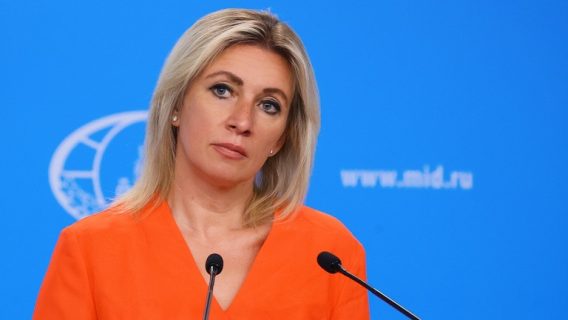
MEMO | August 9, 2022
Russia blames Israel for the latest three-day military offensive against the Palestinians in the Gaza Strip, the Foreign Ministry in Moscow has announced.
“The new escalation was caused by the Israeli army firing into the Gaza Strip on 5 August,” said ministry spokesperson Maria Zakharova. She pointed out that the Palestinian factions responded to this escalation by firing rockets indiscriminately towards Israeli territory.
“We are observing with profound worry how events are evolving,” added Zakharova. “The resumption of a full-scale military confrontation [would see the] already deplorable humanitarian situation in Gaza deteriorate further.”
The ministry official reaffirmed Russia’s “principled and consistent position, reflected in the relevant resolutions of the UN General Assembly and the Security Council, in support of a comprehensive and long-term settlement of the Palestinian-Israeli conflict in accordance with the two-state principle.
“It is possible to put an end to cyclical violence only within the framework of the negotiation process, the result of which should be the realisation of the legitimate national rights of the Palestinian people to establish an independent state within the 1967 borders.”
Zakharova’s statements come at a time when relations between Israel and Russia are tense.
Meanwhile, the Ukrainian Ambassador to Israel, Yevgeny Kornichuk, declared his solidarity with the occupation state: “As a Ukrainian whose country is under brutal attack by its neighbour, I feel great sympathy for the Israeli public. An attack against children and women is an abominable thing. Terror and a malicious attack against civilians are the daily reality of Israelis and Ukrainians and this appalling threat must be stopped immediately.”
Kornichuk made his comments before the Egyptian-brokered ceasefire between Gaza and Israel came into effect.
Although the occupation state declared that it was targeting the Palestinian Islamic Jihad movement, the Palestinian Ministry of Health has confirmed that 44 citizens were killed as a result of the Israeli offensive, including 15 children and four women. Another 360 Palestinian civilians were wounded. Moreover, many homes and residential buildings were destroyed.
After firing unvaccinated workers, Hershey’s says it can’t make enough candy for Halloween – blames Putin
By Ethan Huff – Collapse News – 08/07/2022
If there is even still a recognizable America later this fall, you can expect to see a whole lot less candy in your child’s Halloween bag.
According to reports, The Hershey Company is facing “capacity constraints” that will greatly reduce the output of candy in the coming months, resulting in demand exceeding supply. And get this: Hershey’s is blaming Russian President Vladimir Putin for its self-induced problems.
Earlier in the year, you may recall, Hershey’s fired all of its unvaccinated employees, which created a worker shortage. Now, company CEO Michele Buck wants to blame Putin, “supply chain issues,” and everything else other than herself for Hershey’s going down the tubes.
Buck made these and other false accusations against others for her company’s fate during a recent quarterly earnings call with investors. In a nutshell, Hershey’s will not have the capacity to maintain output in anticipation of its busiest holiday because it previously engaged in medical fascism against its un-jabbed employees.
“We had a strategy of prioritizing everyday, on-shelf availability,” Buck stated during the call, explaining that the company uses the same equipment to produce both everyday and specialty holiday items. (Related: Remember when Hershey’s was caught engaging in illegal price fixing?)
“It was a tough decision to balance that with the seasons, but we thought that was really important. And so that was a choice that we needed to make. We had [an] opportunity to deliver more Halloween [candy], but we weren’t able to supply that.”
How is it Russia’s fault that Hershey’s fired all of its unvaccinated employees?
Consumer engagement with Hershey’s, all things considered, is expected to remain high, according to Buck. The problem is that the company no longer has the capacity to deliver, thanks to the unvaccinated employees it “separated from the company.”
From now on, Buck indicated, Hershey’s “will not be able to fully meet consumer demand due to capacity restraints” – a deflective way of admitting that she and others in the executive leadership team at Hershey’s screwed up big time.
Buck expects “high single-digit growth” for Hershey’s during Halloween and Christmas, which she says she feels “really good about.” Perhaps there will even be more capacity during that time, she hinted.
Is Hershey’s planning to hire more workers to meet demand? Or perhaps a better way of wording that question is: Will Hershey’s be able to find anyone who isn’t already sick and dying from Fauci Flu shots who is willing to work for the company going into the holiday season?
Buck seems to think this might happen, all while she shifts the blame onto Putin and the “Russian invasion” for her company’s decline.
“I think generally we continue to see struggles across the supply chain,” Buck stated.
“We’re now starting to see bigger concerns relative to scarcity of ingredients needing to leverage different suppliers at higher cost and price points in order to secure production.”
A whopping 10 percent of annual sales at Hershey’s occur during the Halloween season. If the company is unable to meet demand – which seems likely – then it will face a major revenue hit, which is certainly of interest to shareholders.
“This is the same company that about 15 years ago almost shut down because it couldn’t figure out how to put in a new enterprise system (SAP),” wrote a commenter at The Epoch Times.
“I’m sure that Nestlé and Mars will figure out how to take advantage of this company’s incompetence.”
Another wrote that because Hershey’s fired its unvaccinated employees in a demonstration of medical tyranny, consumers should do the same by firing Hershey’s and not buying any more of its products.
Hampshire UK police end re-education classes as a punishment for tweets
By Didi Rankovic | Reclaim The Net | August 8, 2022
The police in the UK continue to struggle with (re)defining their role in society, specifically as to whether or not it includes figuratively, but also at times literally, policing online free speech.
And that includes making sure people are investigated, and even prosecuted and fined for including such “crimes” as sharing memes on social networks.
In at least one instance, in Hampshire Constabulary, the “verdict” now seems to be a “no” – as in, that’s just not right. At least that’s the impression now as a “hate crime awareness reeducation” program has been dropped by the local Police and Crime Commissioner (PCC), amid what looks like major controversy.
This constabulary was among three that incorporated the course, designed to “teach” officers how to become aware and then deal with racism, sexism, misogyny, and transphobia.
But it all went very much south in Hampshire when the scheme – that looks as flimsy and ill-thought-through as those deployed elsewhere – caught in its net a 51-year-old army veteran, who was told his choices were to either get “reeducated” – and pay a fine for this “course” – or face legal prosecution.
The vet, Darren Brady, was eventually handcuffed and arrested in his home and after learning about his suspected “crime” was tapping the “share” icon on a meme he saw online. The meme did not seem supportive at all of the “Gay Pride” imagery.
In fact, it was the opposite of the accepted narratives – like memes mostly do. In this case, it showed the “Progress Pride” flags arranged into the shape of a swastika.
The report Brady received by the police contained the accusation of “causing anxiety.”
If the army veteran meant to express that the “thought police” of the “classic” Nazi era were as bad in treating any topic they didn’t like, as those coming after a particular free speech opinion on anything these days – the Hampshire police’s reaction highly likely assured him he was right.
But Darren Brady wasn’t having any of it, though, and maintained that his choice to retweet the meme was legal, and legitimate.
“I am concerned about both the proportionality and necessity of the police’s response to this incident,” Hampshire PCC Donna Jones eventually announced. “When incidents on social media receive not one but two visits from police officers, but burglaries and non-domestic break-ins don’t always get a police response, something is wrong,” Jones said.
Biden Regime Calls For Censorship On Energy
BY JOHN HINDERAKER | POWERLINE | AUGUST 4, 2022
 This is shocking, or would be in a sane world: Gina McCarthy, the Biden administration’s National Climate Advisor, is openly calling on tech companies like Facebook and Twitter to censor any dissent from the administration’s “green” fantasies. McCarthy says the tech companies “have to stop allowing” people to disagree with Biden. No doubt the people she wants to censor include Steve Hayward and myself, among many others.
In my opinion, Gina McCarthy and the Biden administration disseminate misinformation on climate and energy 24/7. But I think they should be “allowed” to do so. Truth will win out, but only if it is not censored.
We wrote here about the lawsuit that the states of Missouri and Louisiana have brought against the Biden administration, accusing it of coercing, or colluding with, tech companies to violate Americans’ First Amendment rights. Watch for Gina McCarthy’s open call for censorship to be an exhibit in that case.
Ukrainian city launches witch hunt for ‘disloyal’ residents
Samizdat | August 7, 2022
The southern Ukrainian city of Nikolaev resorted to drastic measures this weekend to expose what the local authorities call “collaborators” and “separatists” – people who harbor pro-Russian sentiments or help Moscow’s forces in any way.
On Friday, the head of the local military administration, Vitaly Kim, placed the entire city – home to almost half a million people before the start of the Russian military operation – on a two-day lockdown. Kim announced a “prolonged curfew,” which came into force Friday evening and is expected to last until Monday.
During this time, residents of Nikolaev are prohibited from going outside or visiting any public places without special permits. In case of an emergency, a police escort is provided, Ukrainian news agency UNIAN said.
Law enforcement agencies will use this time to search for “collaborators” and “separatists,” Anna Zamazeeva, the head of the Nikolaev regional council, said. The operation is already in full swing, and the police will reveal the results no sooner than Monday, according to the official.
“All Nikolaev residents are undergoing checks now,” she told UNIAN on Saturday. Those who planned to leave the city and bought train or bus tickets in advance were allowed to leave, the official said, adding that they were checked at security outposts on their way out.
According to Zamazeeva, police are conducting door-to-door searches in apartments throughout the city. “They are searching everyone; check the ID, mobile phones, everything,” she said.
The official argued that the “collaborators” would be much safer behind bars since locals could “lynch” them if the police simply reveal their identity. “It is better for them to remain in prison until we win,” she added.
Earlier, Kim offered $100 to anyone that provides information about “spotters” – people that Ukrainian officials believe supply target coordinates to Russian artillery and aviation. Earlier, the local authorities reported they had detained at least four spotters.
On Tuesday, Russian forces reported striking a temporary base of the Ukrainian International Legion near the city of Nikolaev, using high-precision weapons. Up to 250 foreign mercenaries were killed in the attack, according to the report.
Russia sent troops into Ukraine on February 24, citing Kiev’s failure to implement the Minsk agreements, designed to give the regions of Donetsk and Lugansk special status within the Ukrainian state. The protocols, brokered by Germany and France, were first signed in 2014. Former Ukrainian President Pyotr Poroshenko has since admitted that Kiev’s main goal was to use the ceasefire to buy time and “create powerful armed forces.”
In February 2022, the Kremlin recognized the Donbass republics as independent states and demanded that Ukraine officially declare itself a neutral country that will never join any Western military bloc. Kiev insists the Russian offensive was completely unprovoked.
Kamala Harris Deemed a ‘Hypocrite’ for Brittney Griner Comments

Samizdat – 06.08.2022
On Thursday, Brittney Griner, the 31-year-old American professional basketball player, was sentenced to nine years in prison after she was convicted of smuggling hash oil, an illegal substance in Russia, into the country. The nine year prison term is one of the strongest punishments possible in Russia for drug charges.
U.S. Vice President Kamala Harris is being accused of hypocrisy after she condemned Russia for WNBA player Brittney Griner’s prison sentence. The Phoenix Mercury player was sentenced to nine years in prison for admitting to having accidentally packed vape cartridges, allegedly used for pain management, in her luggage. Griner was also ordered to pay a one million ruble ($16,600) fine.
While U.S. President Joe Biden—along with several U.S. diplomats and government officials—called the ruling “unacceptable” and demanded Russia release Griner, Harris also condemned the conviction via Twitter, labeling the imprisonment of Griner as “wrongful.”
“With today’s sentencing, Russia continues its wrongful detention of Brittney Griner. She should be released immediately. @POTUS and I, and our entire Administration, are working every day to reunite Brittney, as well as Paul Whelan, with loved ones who miss each of them dearly,” Harris wrote on Twitter.
Social media users were quick to jump on the V.P. for her hypocrisy regarding the sentencing of Griner. During her tenure as both San Francisco’s district attorney and California’s attorney general, Harris oversaw more than 1,900 marijuana convictions, and prosecutors under her supervision convicted people on charges related to the substance at a higher rate than her predecessor.
Between 2011 and 2016 while Harris worked as California attorney general, at least 1,560 people were sent to state prisons on marijuana-related charges, according to the Washington Free Beacon. Harris was outspoken about her belief that marijuiana should not be legalized, and fought against a ballot measure to legalize it in 2010.
“Brittney Griner got 9 years for drug possession in Russia… which sounds like most of the criminal sentences Kamala Harris got people for the same thing when she was attorney general of California,” author Tim Young tweeted in response to Harris’ comments.
“You locked up people for possession of marijuana. And you’re only condemning this because the US cannot profit from her incarceration in Russia,” wrote another Twitter user.
Bank executive pushes personal carbon wallets that allocate “emission rights” to citizens
By Tom Parker | Reclaim The Net | August 5, 2022
A senior executive at the multinational banking and financial services company Rabobank has called for personalized carbon wallets that give individual citizens “emission rights” and allow wealthier citizens to buy emission rights from those who can’t afford to fly.
Barbara Baarsma, who is the CEO of Rabo Carbon Bank, a division of Rabobank that allows its customers to buy and sell CO2 credits, announced her proposal for personalized carbon wallets during an appearance on the Dutch radio station BNR Newsradio.
“What if we now have all the remaining rights we still have when it comes to the emission of CO2 equivalents, greenhouse gases?” Baarsma said. “If we just let everyone start the Netherlands distributing emission rights and that every household or every citizen and amount get emission rights until we have money.”
Baarsma continued by proposing that these emission rights could be managed via a personalized “carbon wallet” and noted that wealthier citizens who want to fly can buy emissions rights from citizens that don’t have the money to fly.
She added that these personalized carbon wallets represented an opportunity for those who can’t afford to fly to get “a little more money” and outlined other ways wealthier people could continue living elaborate lifestyles by buying carbon credits from citizens with less money.
“He lives in smaller rented houses and I live in a large house so I need more emission rights to heat my house and so people with a narrow wallet can also earn something from greening my number,” Baarsma said.
After the interview, Rabobank came out in support of Baarsma’s statements about personalized carbon wallets.
“We support this as a thought experiment,” a Rabobank spokeswoman said. “It’s not reality.”
Baarsma’s comments come just a few months after another high-ranking executive, J. Michael Evans, the President of Chinese multinational Alibaba Group, announced that his company is working on tech that tracks a person’s individual “carbon footprint.” Evans discussed the project at the World Economic Forum (WEF) Annual Meeting and boasted that the tech would monitor people’s travel, eating habits, and other consumption. Like Baarsma’s personal carbon wallet proposal, this Alibaba Group carbon tracker will also tie back to carbon credits where people can earn money for making “low carbon choices.”
These carbon tracking proposals are one of many invasive surveillance proposals being pushed by powerful institutions. Data-grabbing biometric health monitoring systems are being built into cars, biometrics are being associated with phone numbers, and there are even proposals for turning people’s heartbeats into a digital ID.
Israeli airstrike kills 5-year-old Palestinian girl in Gaza
Defense for Children International – Palestine | August 5, 2022
An Israeli airstrike killed a 5-year-old Palestinian girl in Gaza City today as the Israeli military announced a new military offensive on the Gaza Strip.
Alaa Abdullah Riyad Qaddoum, 5, was killed around 4:30 p.m. on August 5 by an Israeli airstrike in the Shuja’iyya neighborhood of Gaza City, according to documentation collected by Defense for Children International – Palestine. The Israeli airstrike hit a group of people gathered outside Abu Samra mosque in the Wadi Al-Arayes area of Shuja’iyya neighborhood. Alaa’s six-year-old brother, Riyad, and father, Abdullah, were injured in the same attack.
“Israeli forces routinely use explosive weapons in densely populated civilian areas with complete disregard for the indiscriminate effects,” said Ayed Abu Eqtaish, accountability program director at DCIP. “There is no safe space in the Gaza Strip for Palestinian children and their families and they increasingly bear the brunt of Israel’s repeated military offensives.”

5-year-old Alaa with her kindergarten diploma. (Photo: Courtesy of the Qaddoum family)
Alaa was killed instantly and sustained injuries to her forehead, chest, and right leg from shrapnel, according to a doctor at Al-Shifa hospital.
At least two other Palestinians were killed in the same attack, including Alaa’s 24-year-old cousin Yousef Salman Mohammad Qaddoum, according to information collected by DCIP.
Alaa is the 19th Palestinian child killed by Israeli forces in 2022, according to documentation collected by DCIP.
The Israeli military launched airstrikes across the Gaza Strip on Friday, killing at least ten people and injuring at least 55, according to the Palestinian Ministry of Health in Gaza. The Israeli military offensive comes days after Israeli forces arrested a senior Islamic Jihad leader in Jenin and killed 16-year-old Dirar Riyad Lufti Al-Haj Saleh, also in Jenin, who was protesting the Israeli military’s incursion into Jenin refugee camp.
International humanitarian law prohibits indiscriminate and disproportionate attacks and requires all parties to an armed conflict to distinguish between military targets, civilians, and civilian objects. Israel as the occupying power in the Occupied Palestinian Territory, including the Gaza Strip, is required to protect the Palestinian civilian population from violence.
Israeli authorities have imposed a closure policy against the Gaza Strip since 2007 by strictly controlling and limiting the entry and exit of individuals; maintaining harsh restrictions on imports including food, construction materials, fuel, and other essential items; as well as prohibiting exports. Israel continues to maintain complete control over the Gaza Strip’s borders, airspace, and territorial waters.
Featured Video

The American Retreat from Vietnam
or go to
Aletho News Archives – Video-Images
From the Archives
Secret document reveals plans for civil war in Lebanon, Israeli false flags, and invasion
By Randi Nord | Geopolitics Alert | April 5, 2019
Beirut – During his visit with US Secretary of State, Mike Pompeo, Lebanese President Michael Aoun reportedly received a US-Israeli document detailing plans for creating a civil war in Lebanon with covert false flag operations and possible Israeli invasion.
Although the source of the document is Israeli and created in partnership with Washington, no one knows who presented it to Aoun. The Lebanese TV station, Al-Jadeed, initially reported the document on Lebanese TV and a video on its website. Geopolitics Alert translated the report for this article. … continue
Blog Roll
 Aletho News
- EU Council Advances Chat Control 2.0 Scanning Proposal
- Ex-Greek MEP files complaint against Israeli spyware firm over alleged Pegasus surveillance
- Troubling ideas throughout the Torah, Talmud, Mishneh Torah and Tanya
- ‘Grave, alarming’: Iran mission on Trump’s UNGA ‘annihilation’ threats
- Najaf airport to reopen to Iranian flights within 24 hours: Ambassador
- From ‘How Will This End For Iran’ to ‘When America Walks Away’: A tale of two Economist covers
- Tehran blasts ‘baseless’ speculation linking Iran to alleged bomb plot at UK air base
- The Rise And… Rise Of ‘Color Revolutions’
- The Coming GOP Bloodbath?
- Arctic Scare Stories Melt Away
- If Americans Knew
- Netanyahu Asked UAE Leader to Deny Report on Oct. 7 Warning in Secret Visit, Sources Say
- CNN Chief Int’l Correspondent Clarissa Ward on Journalists in Gaza
- Democratic Party Consultants Surround Troy Jackson with Pro-Israel Donors
- Christian Leader Responds To Netanyahu’s Claims Regarding Palestinian Christians
- In Gaza, ‘Whoever Survives the Bombing Won’t Survive the Rubble’
- Israel kills more Palestinians, amid push to resettle Gaza – Daily Update
- Israel forces Gazans to live in constant peril – Daily Update
- Deconstructing Netanyahu’s pants-on-fire UN rant – Daily Update
- Trump betrayed voters with his campaign lies and prioritized a foreign country once he took office
- Netanyahu calls Israel’s war in Gaza ‘opposite of genocide’ in UN speech to near-empty hall
- No Tricks Zone
- New Study: Earth And Venus Surface Warmth Largely Explained By Convection And Lapse Rate, Not CO2 Or Radiation
- 2025 Nature Paper Claiming Worsening Global Drought Gets RETRACTED …Heavily Flawed
- New Study: ‘Global Drought Shows No Detectable Recent Acceleration Under Climate Warming’
- Economic Masterminds: German Socialists Suggest Taxing Productivity Gains Stemming From Using AI
- The South China Sea Has Not Been Cooperating With The Climate Change Narrative
- Energy Crisis: Germany Enters Heating Season With Historically Low Gas Reserve Fill Levels
- New Study: The Antarctic Ice Sheet Gained Mass From 2020-2024 Due To Staggering Snow And Ice Accumulation
- Study: Ocean Heating Rates From Thousands Of Years Ago ‘Dwarf’ Modern Ocean Heating Rates
- Climate Extremists Target, Attack Large-Scale Power Grid Infrastructure In Germany!
- New Study: Antarctic Ice Melt Has Contributed Less Than 1 Centimeter To Sea Level Rise In The Last 30 Years

