Exposed – How the UAE Became Central to Gaza’s Concentration Camp Plot
By Robert Inlakesh | Palestine Chronicle | January 27, 2026
The United Arab Emirates (UAE) is a key player in the current Gaza Ceasefire and, as Israel’s primary Gulf partner, is proposing major investments in the besieged coastal territory. While the Emiratis portray their role as purely humanitarian, it being the top aid donor since the beginning of the genocide, a much more insidious plot is in fact afoot.
Emirati influence in the Gaza Strip did not begin following October 7, 2023, and has not been limited to humanitarian aid missions. As the leading Arab member nation of the US’s “Abraham Accords”, the UAE exercises considerable power on the political, intelligence, economic, and military levels.
Often, the UAE-Gaza relationship is portrayed as purely humanitarian; the evidence used to suggest this is the $1.8 billion in aid spent on the territory in just over two years. While all the donated humanitarian supplies have certainly been crucial to the population’s survival, a famine was still declared, and the most vulnerable segments of society began to both fall ill and die as a result of the lack of assistance. This was due to Israel’s total blockade for three months, during which flights—both commercial and reportedly military—continued between the UAE and Israel.
While the lack of aid cannot be blamed directly on the UAE, it is largely underreported that, by proxy, Abu Dhabi does share guilt in the suffering of the civilian population in Gaza and seeks to further involve itself in plots designed to torment the Palestinian people.
In May of 2024, after the Israeli military invaded Rafah, closing off the crossing between Egypt and Gaza, the occupying military began forming a group of ISIS-linked gangsters and hardline Salafists, working with them to loot aid entering the Gaza Strip. The first of the groups, led by the now deceased Yasser Abu Shabab, was for months used by Israel to steal humanitarian aid and drip-feed it onto the black market, making it so that the population began to starve.
Later that same year, the Yasser Abu Shabab aid-looting gangs, who worked under Israeli protection and the watch of the occupying military, underwent a facelift and were disingenuously portrayed in the Western corporate media as a grassroots anti-Hamas force. Following the ceasefire that began in January of 2025 and was later violated by Israel in March, these ISIS-linked aid-looting militants returned to the scene in Israeli-supplied tactical gear and began calling themselves the “Popular Forces”.
Then came what was called the “Gaza Humanitarian Foundation” (GHF) privatized aid scheme, which is where the UAE comes into the picture. The GHF transformed into a catastrophe, as Private Military Contractors (PMCs) lured starving Palestinians to aid sites to be gunned down en masse. Well over 2,000 civilians were killed by what they would label a “death trap”.
What many are unaware of is that part of the GHF conspiracy was to use this aid mechanism as a means of mass displacing at least 600,000 Palestinians into a gated concentration camp facility built on the ruins of Rafah. Not only would the GHF’s trigger-happy PMCs be used to support this project, but the ISIS-linked “Popular Forces” death squad, now transformed into an Israeli proxy against Hamas, would police this concentration camp.
Before the GHF’s emergence on the scene, Israeli Defense Minister Israel Katz had reportedly instructed his military to begin the construction of the proposed concentration camp, designed to transfer around 600,000 civilians then living in the Mawasi area.
The United Arab Emirates, under the guise of its “Operation Gallant Knight 3” (al-Faris al-Shahm), which is sold as a purely humanitarian mission, just so happened to coincidentally have been building water desalination facilities in Egypt’s al-Arish, right along the Gaza border.
Emirati state-owned media reported as early as January 2024 that the UAE had built six such water facilities on the Egyptian border, capable of supplying around 600,000 people in Gaza. A real coincidence, considering that the Emiratis just so happened to have prepared the infrastructure for such a concentration camp well before Israel had even publicly proposed it.
When Israel began openly proposing the new concentration camp in Rafah in 2025, before the ceasefire, the UAE openly pledged to help provide water to the new planned “community” in southern Gaza.
This project quickly began to collapse; then came the ceasefire and the dissolution of the infamous GHF. However, the Israelis didn’t give up on their ISIS-linked proxies and instead began creating even more groups, now reaching a total of five separate anti-Hamas militias. It wasn’t long before information started leaking regarding a UAE role in aiding these ISIS-linked groups, which now exist behind Gaza’s so-called “Yellow Line” in the territory that the Israeli military currently controls.
On January 21 of this year, Drop Site News revealed that leaked documents it had seen detailed a plot to construct a new “Planned Community” in Rafah, presented as what the article labeled an “Israeli Panopticon”. On January 23, The Guardian then released a new bombshell piece of information on this “planned community”—set to be built in Israeli-occupied territory as part of the alleged “reconstruction” component of the Gaza ceasefire—the United Arab Emirates is planning to bankroll it.
The likelihood of such a concentration camp facility successfully being constructed on the ruins of Rafah, capable of housing 600,000 people, is still in question—especially given the fact that the attempt to construct a similar model failed before the latest ceasefire. Yet, the mere fact that the Israelis and Emiratis can demonstrably be shown to have been preparing to supply such a community with water, only months into the genocide, is striking.
In addition to its role in backing ISIS-linked death squads in Gaza and supporting the construction of a concentration camp “community” in Rafah, the UAE also provided an economic and logistical lifeline to Israel during its genocide.
Abu Dhabi’s trade ties with Tel Aviv during the genocide escalated, despite occasional Emirati statements of condemnation against Israeli war crimes. A 21% surge in trade occurred in 2025, for example, an increase on the record $3.2 billion in bilateral trade of 2024, during which the Israelis inflicted a man-made famine in Gaza.
Amid mass international airline cancellations and carriers refusing to fly to Israel, the Emiratis continued flights regardless and played a key role as a transit route for Israelis. Dubai even became the top holiday destination for Israelis last year, including for countless Israeli soldiers who were deployed in Gaza.
The key regional diplomatic lifeline for Israel throughout the genocide has been the UAE. In addition to this, the trade corridor created by the Emiratis to aid the Israelis enabled them to survive and partially circumvent the damage caused by the siege imposed on the Red Sea by Yemen’s Ansarallah.
Abu Dhabi also collaborates with the Israelis on their broader foreign policy objectives, including in the construction of an airbase in Somaliland, in Yemen’s Socotra Island, and beyond. The UAE-Israeli alliance is present in the Horn of Africa, across West Asia and North Africa, interfering in the internal affairs of countless nations. They also collaborate on projects to isolate and attack the Muslim Brotherhood, in addition to funding joint anti-Islam propaganda projects.
Then there is the UAE’s role in using the Palestinian Authority (PA)’s former Preventive Security Force head, Mohammed Dahlan, to not only command various initiatives across multiple continents but to push specific agendas in the Gaza Strip, and even the West Bank to a lesser degree.
The High Representative for Gaza in Donald Trump’s so-called “Board of Peace” (BoP) is none other than Nickolay Mladenov, who resides in the UAE and in 2021 became the director-general of the Anwar Gargash Diplomatic Academy in Abu Dhabi. Mladenov is also a Segal Distinguished Visiting Fellow at the Washington Institute for Near East Policy (WINEP)—often described as the think tank arm of the Israel Lobby in the US.
Hiding behind the cover of being Gaza’s “top humanitarian aid donor,” the UAE has managed to work hand in hand with Israel in its projects to destroy the Palestinian people and their cause for statehood.
– Robert Inlakesh is a journalist, writer, and documentary filmmaker. He focuses on the Middle East, specializing in Palestine.
“Leaked document” exposes US blueprint for total control over Gaza
Al Mayadeen | January 27, 2026
A leaked resolution obtained by Drop Site News on Monday exposes the operational blueprint behind US President Donald Trump’s so-called “Board of Peace,” revealing plans for a US-led administration that would assume sweeping control over Gaza through political domination and security mechanisms designed to engineer a compliant Palestinian population.
The unsigned resolution, dated January 22, 2026, grants the Board “all transitional legislative and executive authority, emergency powers, and the administration of justice” over Gaza. The document formalizes a hierarchical structure with Trump as Chairman holding ultimate authority, an Executive Board with power to rewrite Gaza’s laws, and Palestinians relegated to “technocratic” implementation roles with no decision-making power.
The resolution is part of Trump’s phased ceasefire plan, with the document providing the legal framework for what the administration calls reconstruction, but effectively amounts to permanent subjugation of Gaza under US and Israeli control.
A hierarchy of US power
The “Board of Peace” resolution establishes a three-tier governance structure with Trump as Chairman holding ultimate authority over all decisions affecting Gaza. At the apex, Trump alone can sign resolutions into force, approve military commanders for the so-called International Stabilization Force, and designate individuals to key positions throughout the apparatus.
Beneath Trump sits an Executive Board with “the same authority, powers, and ability to make all delegations necessary and appropriate to carry out the Comprehensive Plan as the Board of Peace.” This Executive Board can “enact new law, or modify or repeal prior” civil and criminal laws in Gaza, effectively rewriting the legal framework governing Palestinian life.
The resolution names nine Executive Board members: Secretary of State Marco Rubio, Special Envoy Steve Witkoff, former UK Prime Minister Tony Blair, Trump’s son-in-law Jared Kushner, businessman Mark Rowan, World Bank President Ajay Banga, Deputy National Security Advisor Robert Gabriel, Trump’s chief of staff Susan Wiles, and Martin Edelman, a real estate attorney who serves as special advisor to the UAE government. The inclusion of Wiles and Edelman had not been previously announced.
At the bottom of this pyramid sits the National Committee for the Administration of Gaza (NCAG), essentially a vetted, technocratic, and apolitical committee of Palestinians operating under the supervision of a High Representative. The resolution names former Bulgarian diplomat Nickolay Mladenov as High Representative, with former Palestinian Authority official Ali Shaath leading the NCAG.
“It’s sadly the case that neither the Board of Peace nor its subordinate structures are representative or accountable,” former UN Under-Secretary-General Martin Griffiths told Drop Site News. Palestinians are “deprived and excluded” from decision-making, appearing only “at the very bottom of this pyramid of power.”
The control mechanisms
The resolution’s language reveals multiple mechanisms through which the Board would exercise total control over Gaza. Section 8.2 establishes that “only those persons who support and act consistently” with creating a “deradicalized terror-free Gaza that poses no threat to its neighbors” will be eligible to “participate in governance, reconstruction, economic development, or humanitarian assistance activities.”
The document bars from participation any individuals or organizations deemed to “have supported or have a demonstrated history of collaboration, infiltration or influence with or by Hamas or other terror groups.” Both the Executive Board and the High Representative will create “eligibility standards for participation in the development of New Gaza” and apply those on a case-by-case basis, subject to Trump’s approval.
Financial, legal control
The resolution grants the Board control over Gaza’s financial infrastructure, including “opening bank accounts and establishing appropriate financial controls” and “engaging donors, approving budgets, and administering financial mechanisms.” All resolutions must also be “issued in English and posted on the Board’s website.”
The Board can “enter into such other agreements, arrangements, or contracts as may be required to implement the Comprehensive Plan,” effectively conducting foreign policy on behalf of Gaza, while Palestinians have no voice. The Executive Board and High Representative possess the authority to “enact new law, or modify or repeal” Gaza’s civil and criminal legal framework as deemed necessary.
Additionally, every resolution requires Trump’s signature to enter force, creating a system where the American president serves as colonial viceroy with absolute veto power over Gaza’s governance.
Stripping Palestinian resistance identity
This vetting mechanism effectively gives the Board power to exclude any Palestinian civil society organization, political faction, or individual deemed insufficiently compliant with US and Israeli objectives. The term “deradicalization,” repeated throughout the document, becomes an all-encompassing tool for political exclusion that goes far beyond security concerns.
In the Palestinian context, “deradicalization” functions as a euphemism for dismantling resistance ideology itself, a fundamental component of Palestinian identity under occupation. Resistance can be understood not merely as armed struggle but as the collective refusal to normalize occupation, the preservation of political consciousness, and the assertion of the right to self-determination. Under occupation, a person’s dignity and worth can only be measured by their steadfastness, their refusal to submit to the erasure of their political rights and national identity.
By making eligibility for housing, employment, reconstruction funds, and basic services conditional on demonstrating “deradicalization,” the Board’s framework seeks to engineer a population willing to accept permanent subjugation in exchange for survival.
Palestinians who maintain resistance consciousness, whether through political organizing, advocacy for refugees’ right of return, or simply refusing to accept normalization with their occupiers, would be systematically excluded from participating in Gaza’s reconstruction.
Questions of legitimacy
The “Board of Peace” resolution obtained by Drop Site News remains unsigned. The Board’s legitimacy rests on UN Security Council Resolution 2803, passed in November 2025, which endorsed Trump’s Comprehensive Plan. However, the structure appears designed to circumvent meaningful UN oversight.
Moreover, it remains unclear whether the resolution obtained has been officially adopted or whether the version received reflects a final text. The resolution explicitly states that its provisions would be “enacted immediately upon signature,” implementing a governance structure over Gaza without the consent of its population.
The architecture described in the document envisions a Gaza divided into controlled zones where Palestinians vetted for political acceptability can access housing, services, and economic opportunities, all while under biometric monitoring, financial surveillance, and educational programming designed to normalize relations with “Israel.”
Those who fail to meet eligibility standards or refuse to participate in the system would presumably remain in the “red zones,” areas that continue to face military strikes and humanitarian deprivation.
The Board For Peace – Whitewashing Ethnic Cleansing and Genocide
DOC MALIK | January 26, 2026
ABOUT THIS CONVERSATION:
Last week in Davos at the WEF meeting, Trump announced the Board of Peace and the technocratic takeover of Gaza. I break down what this actually means.
This podcast is highly addictive and seriously good for your health.
SUPPORT DOC MALIK
For the full episodes, bonus content, back catalogue, and monthly Live Streams, please subscribe to either:
The paid Spotify subscription here: https://creators.spotify.com/pod/show…
The paid Substack subscription here: https://docmalik.substack.com/subscri…
Thank you to all the new subscribers for your lovely messages and reviews! And a big thanks to my existing subscribers for sticking with me and supporting the show!
US pressure contributing to Israeli influence in Latin America: Experts
Press TV – January 26, 2026
US political pressure is contributing to the Israeli regime’s influence across Latin America, even as long-standing regional support for the Palestinian cause continues through diplomatic, legal, and grassroots channels, experts say.
For decades, several left-wing governments in the region shaped their foreign policy around anti-imperialism and de-colonial identity, aligning openly with Palestinian rights, but analysts warn the legacy is now at the disposal of a mix of US interference, far-right political shifts, and economic leverage, the Middle East Eye news and analysis website reported on Monday.
Following the launch of the Israeli regime’s war of genocide on Gaza in October 2023, Brazil’s president verified the nature of the onslaught as being “genocidal,” Colombia suspended diplomatic ties with the regime, and Chile sought accountability for Israeli atrocities at international courts. Yet experts cited by the outlet said Washington has worked to counter that momentum through lobbying, political threats, and direct pressure on outspoken governments.
“Latin American states lack instruments of hard power and are therefore constrained in how they can respond to US pressure,” said Ali Farhat, a Latin American affairs specialist. “That limitation creates openings for Israel to consolidate influence, particularly where governments seek to avoid confrontation with Washington.”
US officials have increasingly framed cooperation with Washington as a test of “security” and “democratic alignment,” while linking regional diplomacy to broader American foreign policy goals that dovetail with closer ties with Tel Aviv.
Argentina has emerged as the clearest example of this shift. Far-right President Javier Milei has announced plans to move the country’s embassy to the holy occupied city of al-Quds and expand security and economic cooperation with the regime, while openly backing its war on Gaza as “legitimate self-defense.”
Last year, Argentina received a $20-billion bailout from Washington, which US President Donald Trump defended as support for a “good financial philosophy,” despite skepticism over its impact on the country.
Farhat said US meddling has reshaped the regional landscape, pointing to Washington’s targeting of Venezuela’s leadership as part of a broader effort to weaken vocal supporters of Palestine.
Venezuelan President Nicolas Maduro, long seen as one of the most uncompromising defenders of Palestinian rights in Latin America, was kidnapped by US forces earlier this year and is now standing trial in New York on “drugs, weapons, and narco-terrorism” charges.
“He (Maduro) was among the most uncompromising defenders of Palestine on the continent,” Farhat said. “His marginalization [and now ouster] represents the loss of a fierce advocate for the cause.”
The pundit said Maduro framed the Palestinian struggle as inseparable from anti-imperialism and viewed the US as a colonial power and the regime as an occupying entity backed by it.
Since Trump’s return to office last year, Farhat said, left-leaning leaders have shifted tactics rather than abandoning Palestine, opting for recalibration over confrontation, but far-right governments have accelerated alignment with both Washington and Tel Aviv.
As of 25 January, Argentina is the only Latin American country to have agreed to join Trump’s controversial “Board of Peace” initiative in Gaza, which describes itself as an international organization seeking to promote stability and secure “peace.”
Nilto Tatto, a congressman from Brazil’s Workers’ Party, urged Latin American governments to reject the board and any initiatives undermining Palestinian rights.
“Any framework managed by Washington would not serve peace so much as reproduce hegemony under an international guise,” Tatto said.
“Brazil, evidently, cannot take part in a process whose outcome is already predetermined, namely one that focuses on the reconstruction of the Gaza Strip only to then keep the territory under US control.”
Julia Perie, a former Argentine lawmaker, said Argentina’s shift reflected ideological realignment.
“Argentina’s position is part of a geopolitical vision that prioritizes alignment with the United States,” said Perie.
She added that Latin American solidarity with Palestine has always been cyclical. “This is another phase in a longer historical transformation, not the end of solidarity.”
‘Recalibration not abandonment’
Amid the situation, observers noted, support for Palestine in countries facing mounting political pressure was increasingly being channeled through legal action, multilateral institutions, and popular movements rather than overt diplomatic confrontation.
Ramon Medero, president of Venezuela’s La Danta TV, said the current moment represented adaptation, not retreat.
“It is difficult to argue that the Palestinian cause has suffered a decisive blow,” Medero said.
“What we are seeing is a repackaging of escalation through legal and multilateral avenues to reduce the costs of sanctions and backlash.”
Medero added that the Palestinian cause was now embedded in a broader Global South struggle.
“The Palestinian cause has become a structural symbol of liberation, sovereignty, and self-determination,” he said. “What is shifting is agency – away from governments and toward popular consciousness.”
He added that far-right advances could intensify grassroots mobilization.
Vicious

Lies are Unbekoming | January 25, 2026
The waiting room is clean. The receptionist is polite. The forms ask reasonable questions. Nothing in the physical environment suggests danger. The magazines are current. The hand sanitizer dispenser works. Someone has chosen calming colors for the walls.
A pregnant woman sits in a chair designed for her comfort. She has been told to be here. Not ordered—no one orders. Recommended. Strongly recommended. Everyone does this. Her mother did this. Her friends did this. The women in her prenatal group compare notes about their appointments the way they compare notes about nursery furniture. Which provider did you choose? What tests have you had? The questions assume the answers. The answers assume the questions.
She will be offered things today. Offered is the word used. The offers will come with information sheets that list risks and benefits in tabular form. She will sign consent documents. Everything will be voluntary in the legal sense. No one will hold her down. No one will threaten her. She will choose, and her choices will feel like choices, and she will leave feeling she has done the responsible thing.
What she will not feel is the weight of what has been arranged before she arrived. The scheduling software that ensures the appointment is short enough to be profitable. The protocol that determines which tests are “standard” regardless of her individual circumstances. The liability calculations that make defensive intervention safer for the provider than watchful waiting. The training her provider received, which did not include the word “cascade” and did not question the premises. The pharmaceutical representative who visited last month. The professional guidelines written by committees with financial ties to the interventions they recommend. The insurance code that reimburses procedures but not conversations. The architecture of the building itself, which presumes birth is a medical event requiring medical facilities.
None of this is secret. All of it is documented, published, occasionally debated in journals that no one outside the profession reads. The machinery operates in plain sight. It has operated for so long that its operation feels like nature—the way medicine works, the way pregnancy is managed, the way responsible people behave.
She cannot see it because she is inside it. The water she swims in. The air she breathes. The climate of her experience.
For years I used the word “predatory” to describe this system. Predatory captured something true—the targeting, the extraction, the conversion of healthy people into revenue streams. The pharmaceutical company identifying a market. The screening program generating patients. The intervention that creates the need for the next intervention. Predation implies a hunter and prey, a calculation, a strategy.
But predatory is not quite right. A predator needs its prey. A predator pays attention to what it hunts. A predator, in some sense, respects the thing it consumes—respects it enough to study it, track it, understand its patterns. The lion watches the gazelle. The con artist studies the mark.
This system does not watch. It does not study. It processes.
The word that came to me after documenting 123 medical interventions across the arc of pregnancy and birth is different. Starker. Less strategic and more indifferent.
Vicious.
Viciousness is not cruelty, though cruelty may be one of its expressions. Cruelty requires attention. The cruel person watches suffering and derives something from it—pleasure, power, confirmation. Cruelty is a relationship, however deformed.
Viciousness requires no such relationship. A vicious mechanism can operate without anyone watching the effects. A vicious system can grind through populations while everyone involved believes they are helping. The viciousness is in the structure, not the intention. It emerges from the interaction of parts, none of which are vicious in isolation.
The doctor who follows the protocol is not vicious. The protocol is not vicious. The committee that wrote the protocol is not vicious. The pharmaceutical company that funded the research the committee relied on is not vicious—or rather, its viciousness is diffused through so many quarterly earnings reports and shareholder meetings and marketing budgets that no single person experiences themselves as causing harm. The regulator who approved the product is not vicious. The politician who mandated its use is not vicious. The parent who complies is not vicious. The neighbor who judges the parent who doesn’t comply is not vicious.
And yet.
A 13-year-old girl in London, who declined a vaccine, is being pressured about a screening test she is not eligible for. The vaccine was Gardasil, marketed as preventing cervical cancer. The screening is the smear test—cervical screening that begins at age 25 in the UK, designed to detect what the vaccine supposedly prevents. The two programs are presented as separate, but they function as a single apparatus: refuse our prevention and you must submit to our surveillance. I have documented elsewhere, in my essay The HPV Lie: Pap Smears, Gardasil, and a Cancer Caused by Something Else, why the foundational claim—that HPV causes cervical cancer—does not survive scrutiny. But for the purposes of this essay, the truth of the claim matters less than the machinery built on it.
The pressure comes from somewhere. It reaches her through channels—through school, through health messaging, through the questions of peers whose parents made different choices. No single person decided to punish her. No committee met to discuss her case. The system does not know her name.
The pressure is automatic. It is the system maintaining itself, closing gaps, ensuring that even those who refuse one element remain captured by another. The vaccine and the screening are presented as separate programs, but they function as a single apparatus. Refuse the prevention and you will be reminded, persistently, of your need for surveillance.
She is 13. The screening she is being pressured about begins at 25. There is no medical reason for anyone to be discussing it with her. The pressure is not medicine. It is correction. It is the system registering a deviation and applying force to resolve it.
No one in her life who transmits this pressure experiences themselves as being vicious. The teacher who mentions it is concerned. The nurse who brings it up is following guidelines. The friends who ask why she didn’t get the shot are simply curious, or perhaps uncomfortable with difference. Everyone is doing what people do. Everyone is being normal.
The viciousness is in the normal. The viciousness is that “normal” has been constructed, over decades, through thousands of small decisions, each one defensible, none of them examined, until the accumulated weight presses down on a 13-year-old whose only crime was asking questions.
The system is vicious. Say it plainly.
The government that approves the products, mandates their use, shields manufacturers from liability, and funds the campaigns that manufacture consent—the government is vicious.
The society that has been engineered to enforce compliance through social pressure, to treat refusal as deviance, to make the unvaccinated child a problem and the questioning mother a danger—this society is vicious.
But here is where the analysis must be careful. “The system” is an abstraction. “Government” is an abstraction. “Society” is an abstraction. These words make it easy to express outrage while leaving everyone blameless. If the system is vicious, I am not. If government is the problem, I am just a citizen. If society has been engineered, I am merely a victim of the engineering.
This is too easy. It is also untrue.
The system is made of people. Every protocol was written by a person. Every guideline was approved by persons sitting in a room. Every prescription is written by a hand attached to a body that contains a mind capable of doubt. The government is not a machine. It is people who could choose differently and do not. Society is not weather. It is the accumulated choices of everyone who participates in it—which means everyone.
The viciousness is emergent. No one designed the full harm. But the viciousness is also composed. Each component is a human decision. The emergence does not erase the composition. The fact that no one intended the complete picture does not mean no one is responsible for their corner of it.
This is the moral difficulty the essay cannot resolve, because reality does not resolve it. The harm is everyone’s and no one’s. The choices are individual and the outcome is collective. A woman loses her uterus to a surgery she did not need, and the surgeon who performed it was following the standard of care, and the standard of care was set by a committee, and the committee relied on studies, and the studies were funded by companies that profit from the surgery, and the companies are owned by shareholders who never think about uteruses, and the shareholders include pension funds, and the pension funds include the retirement savings of nurses who work in the hospitals where the surgeries are performed.
Where does blame land? Everywhere and nowhere. This is not an evasion. This is a description of how the viciousness actually works. It is distributed so thoroughly that it becomes atmospheric. It becomes the milieu. It becomes the climate that everyone moves through and no one feels responsible for, because the mechanisms of responsibility have been dissolved in the general weather.
Ivan Illich saw this decades ago. He described how institutions reshape the milieu—the environment people move through—until alternatives become unthinkable. A radical monopoly, he called it. Not a monopoly that corners a market, but a monopoly that disables people from doing things on their own. When hospitals “draft all those who are in critical condition,” he wrote, “they impose on society a new form of dying.” The institution does not merely provide a service. It reshapes reality so that the service becomes necessary.
This is what has happened with birth. With childhood. With the female body across its entire reproductive arc. The medical system has not merely offered services. It has reshaped the milieu so that moving through pregnancy without those services becomes an act of deviance. The services are not chosen from a range of options. They are the water in which choice occurs.
A woman who declines the standard interventions is not making a different choice within a shared framework. She is refusing the framework itself. This is why she is treated not as someone with different preferences but as someone who is failing—failing to be responsible, failing to care for her baby, failing to be the kind of mother the system has defined as acceptable.
The viciousness is in that definition. The system defines acceptable, and acceptable means compliant, and compliant means captured.
I documented 123 interventions across six phases of the reproductive timeline. Pre-conception capture. Pregnancy surveillance. Labor interventions. Immediate newborn procedures. Infant pathologizing. Ongoing medical capture. Each intervention has its own literature, its own justification, its own defenders. Each one, examined in isolation, can be made to seem reasonable—or at least not obviously harmful.
The viciousness becomes visible only when you see the whole arc.
A woman begins birth control at 16. The pill alters her hormonal environment for a decade or more. She stops the pill to conceive. She has difficulty conceiving—perhaps because years of synthetic hormones have disrupted her natural cycles, perhaps for other reasons. She seeks fertility treatment. The treatment works. She is pregnant.
Now she is in the system.
She receives prenatal testing that identifies risks, some real, most statistical. The risk identification generates anxiety. The anxiety generates more testing. The testing generates findings. The findings generate interventions. She is induced before her body was ready because a measurement crossed a threshold. The induction is long and painful because her body was not ready. She receives an epidural because the pain is unbearable. The epidural slows labor. She receives Pitocin to accelerate it. The baby shows distress. She receives a cesarean.
The cesarean is recorded as necessary. It was necessary—given everything that preceded it. Each step created the conditions for the next. The cascade operated exactly as designed.
Her baby is taken to the warmer for evaluation. Eye drops are administered. Vitamin K is injected. Hepatitis B vaccine is given—for a disease transmitted through sex and IV drug use, to a newborn who will do neither. The baby is observed in the nursery. Feeding is scheduled rather than on-demand. Supplementation is suggested because the baby lost weight—as all babies lose weight in the first days, a fact that would resolve with continued nursing but which becomes a problem requiring intervention.
She goes home with a baby she is not sure she knows how to feed, a body she is not sure she recognizes, a mind clouded with hormonal disruption and sleep deprivation and the particular loneliness of having been processed rather than supported.
She returns for postpartum visits. She is screened for depression. She may receive medication. The medication helps, or seems to. She continues it. She is now a psychiatric patient as well as a surgical patient. Her records follow her. Her risk profile follows her. The next pregnancy, if there is one, will be managed with reference to this one.
At no point was she mistreated in any way she could name. Everyone was professional. Everyone followed protocols. Everyone was trying to help.
The viciousness was in the protocols. The viciousness was in the accumulation. The viciousness was in the fact that no one—not one person across dozens of encounters—ever said: you could do none of this. You could wait. You could trust your body. You could go home.
No one said it because no one could say it. The milieu does not permit those words. A provider who speaks them risks liability, peer censure, loss of hospital privileges. The words are not forbidden. They are simply outside the weather. They are not rain or sun or wind. They do not exist in the climate the system has made.
Anyone who asks questions is doing something dangerous. They are noticing the weather. Asking why the sky is this particular color, why the wind blows this particular direction, why everyone walks leaning at this particular angle.
Most people never ask. The weather is just the weather. You dress for it. You complain about it. You do not inquire into its origins. You do not ask who made it, because weather is not made. Weather simply is.
But this weather was made. Every element of it was chosen. The clinical guidelines were written by people who could have written different ones. The regulatory approvals were granted by people who could have demanded different evidence. The liability structures were established by legislatures that could have established different ones. The insurance codes were set by committees that could have set different ones. The training curricula were designed by faculties that could have designed different ones.
Each choice was made by humans. Each human could have chosen otherwise. That none of them did—that the choices accumulated into a system that now operates with the indifference of weather—does not change the fact that the choices were made.
Anyone who asks questions threatens to make the choices visible. This is why they are pressured. Not because anyone decides to pressure them, but because the system cannot tolerate the visibility of its own construction. The weather must remain weather. The moment it becomes choices, it becomes contestable. The moment it becomes contestable, it can be refused.
If you have read this far, you are no longer fully inside the weather.
This is not a comfortable position. It is easier not to see. It is easier to move through the waiting room, sign the forms, accept the offers, go home feeling responsible. The system is designed for this ease. It has made compliance comfortable and refusal exhausting. The path of least resistance leads directly into the machinery.
Seeing the machinery does not stop it. One person’s recognition changes nothing about the protocols, the guidelines, the insurance codes, the training curricula. The 123 interventions will continue to be applied to the women who come after, regardless of what any individual understands.
But recognition changes what is possible.
A woman who sees the cascade can make different choices within it—can refuse this test, delay that intervention, ask questions that disrupt the automatic sequencing. She cannot escape the milieu, but she can move through it differently. She can refuse to be weather.
More importantly, she can speak. She can tell other women what she saw. She can name the viciousness, which is the first step toward refusing to participate in it. The system maintains itself partly through silence—through the assumption that everyone experiences the same thing and no one objects. Each voice that breaks the silence makes the next voice easier.
This is modest. It is not a revolution. It will not dismantle the system or defund the institutions or rewrite the guidelines. But the system depends on billions of small compliances, and each small refusal is a friction. Enough friction, accumulated over enough time, and the machinery begins to slow. Begins to be noticed. Begins to require justification rather than assuming it.
The girl in London who asked questions did something her grandmother could not do for her. She refused to accept the weather as weather. She noticed that she was being pressured and asked why. The pressure will continue—systems do not stop because one person notices them. But she has seen something that cannot be unseen.
This is what recognition makes possible: not escape, but awareness. Not freedom from the milieu, but movement within it that is no longer automatic. The end of innocence is not the same as the end of the system. But it is the end of participation without knowledge. It is the beginning of refusal.
The system is vicious. The viciousness is made of choices. The choices can be seen. Once seen, they can be refused.
One refusal at a time. One woman at a time. One conversation at a time.
The weather was made. It can be unmade. Not quickly. Not easily. Not by any individual alone. But the alternative is to keep swimming without noticing the water, keep breathing without noticing the air, keep walking at the angle the wind requires and calling it freedom.
The 13-year-old noticed. That is where it begins.
Book: Medicalized Motherhood: From First Pill to Permanent Patient
Available as a free download. 123 interventions documented across six phases—from pre-conception capture through postpartum surveillance. Includes practical tools: birth plan template, provider interview questions, quick reference card, and a new chapter on interrupting the cascade. Download it, share it with someone facing their first prenatal appointment, their induction date, their cesarean recommendation. The cascade works because women don’t see it coming. This book makes it visible.
French court jails pro-Palestine activist and mother over Gaza genocide speech

Press TV – January 25, 2026
A criminal court in Nice has sentenced pro-Palestine activist and mother Amira Zaiter to 15 months in prison for social media posts denouncing Israel’s genocidal war on Gaza, as part of a broader effort to suppress anti-genocide speech and silence voices supporting Palestine.
The ruling, delivered on Friday by the Nice criminal court, stands among the harshest penalties imposed in France in recent years for online political expression.
Human rights advocates warn that the sentence reflects a dangerous shift toward criminalizing dissent when it challenges Israeli policies.
Zaiter appeared before the court on January 23 after spending nearly two months in pretrial detention, a period during which authorities separated her from her young daughter and severely limited her contact with the outside world.
Prosecutors brought charges linked to posts published on social media platforms X and Instagram between June 26 and October 13, 2025.
The case centered on her republication of anti-Zionist material, her description of Israel’s actions in Gaza as genocidal, and her expressions of solidarity with the Palestinian resistance movement Hamas amid Israel’s ongoing aggression.
The prosecution pushed for a two-year prison term, continued detention, inclusion in France’s terrorism offenders database (FIJAIT), a ten-year ban from holding public office, and financial penalties.
Court observers reported that judges found Zaiter guilty of 12 offenses. The court imposed a 15-month prison sentence with immediate incarceration, ordered her registration in the FIJAIT file, and barred her from public office for a decade.
In addition, the court ordered Zaiter to pay 6,200 Euros in damages to several Zionist organizations, including LICRA and CRIF Sud-Est.
The verdict marks Zaiter’s second conviction connected to her outspoken support for Palestine and Hamas.
In November 2024, she received a three-year prison sentence, with two years suspended. That ruling was later reduced by the Aix-en-Provence Court of Appeal to 18 months, including 12 months suspended and probation.
Zaiter, in her thirties and with no prior criminal record before these cases, is a co-founder of the Nice à Gaza Association.
The current case also referenced a post about Illan Choukroune, a French reservist serving in the Israeli army, whom Zaiter described as genocidal. She stood by her words and expressed shock that such political speech had been treated as hateful.
Defense lawyer Kada Sadouni condemned the ruling as deeply unjust and cautioned that the case raises serious concerns about freedom of expression, public debate, and the systematic silencing of opinions deemed politically inconvenient.
He said the court appeared intent on making an example of Zaiter and confirmed that an appeal remains under consideration.
Shot, amputated, and imprisoned: Palestinian man seeks to rebuild life after being maimed and tortured by Israeli forces
International Solidarity Movement | January 25, 2026
Ahmad is a 27-year-old Palestinian living in the occupied West Bank. On June 12, 2023, an Israeli soldier shot him in his village near Jenin, in the northern occupied West Bank. A bullet hit him in the leg as the military invaded the city; the soldiers left him bleeding and prevented the ambulance from arriving. He almost died. It is a miracle he survived with the blockade delaying rescue efforts, requiring his leg to be amputated. Four months later, he was arrested and placed in administrative detention without charge. He was held for two years in al-Naqab prison in Israel and subjected to repeat torture.
Ahmad was released two months ago. Now, he requires a prosthetic leg, which costs 24,000 shekels, so he can regain control over his life. He is an only child, his father died years ago, and he now lives alone with his elderly mother. Economic conditions are difficult in the West Bank, and he and his mother receive no subsidies. For income and his livelihood, Ahmad used to be a truck driver, which he is no longer able to do because of his injuries and the amputation.
Ahmad’s story:
The bullet that struck Ahmad was the type that explodes when it hits its target. His leg was seriously injured and Ahmad lost a lot of blood. The ambulance was blocked by the Israeli army, and Ahmad was taken to a distant hospital because the road was also blocked by the army. If he had been rescued in time, his leg could have been saved.
“I just want to be able to have a semi-normal life,” he says. “To support myself, to support my mother. I used to drive heavy vehicles, it was my job. Without a leg, I can’t do any job, and I don’t know how to survive.”
Ahmad was arrested just four months after he was injured. No charges, no conviction: he remained for two years under administrative detention, which allows Israel to imprison anyone for years without reason. Despite his health condition, Ahmad was not spared the torture inflicted on the approximately 11,000 prisoners held in Israeli prisons since October 7.
“They beat us every day,” he says. “They fed us only once, and almost exclusively rice. One cup per person. You had to drink a lot of water so you wouldn’t feel hungry all the time,” he reports.
Ahmad lost a lot of weight. The total lack of medical care inside the prison and the harsh living conditions caused him to suffer from severe pain throughout his body, which he still has to deal with today. For weeks, they didn’t give him crutches, and Ahmad couldn’t even get up without help.
“It was very cold, and they took all our clothes. They removed the windows to make us colder, and left us with only one blanket. We all had scabies, and they never gave us any medicine. When we washed our clothes, we had to put them back on wet, because they were the only ones we had.”
The torture described by Ahmad is only a fraction of the torment suffered by Palestinian prisoners.
A pro-EU regime is moving to suppress this proud nation. Will they be able to withstand it?
Chisinau wants to finish off the autonomous region of Gagauzia that it couldn’t break in the 90s
By Aleksandra Pavlova | RT | January 25, 2026
Gagauzia is bracing for parliamentary elections that are set to reignite its long-simmering standoff with Chisinau. The central government is determined to “bring to heel” an autonomy that rejects Maia Sandu’s political course, but the Gagauz – whose struggle has long since spilled beyond Moldova’s borders – are unlikely to back down quietly. Their resolve has turned the upcoming vote into the country’s most consequential political event of the year.
Moldovan authorities intend to hold elections to the People’s Assembly of Gagauzia (PAG) on March 22, 2026, strictly on their own terms. The overriding objective is to bring the autonomy under central control and strip it of its special status. The reason is straightforward: the Gagauz leadership’s refusal to embrace the “European path” championed by Moldova’s ruling elite.
The opening moves have already been made. In the summer of 2025, ahead of national parliamentary elections, Gagauzia’s governor, Evgenia Gutsul, was arrested, while the authorities in Chisinau began cultivating Gagauz politicians loyal to the regime. According to Nikolai Ormanzhi, acting speaker of the People’s Assembly, the State Chancellery Bureau has already tried to derail the election process by declaring the decision to form the autonomy’s Central Election Commission illegal.
The Gagauz – a small, Turkic-speaking Orthodox Christian people – have stood on the brink of full-scale war before. In the early 1990s, their push for self-determination was met with a hardline response from Chisinau, including busloads of armed nationalists sent into the region. Only the intervention of Soviet paratroopers, who physically positioned themselves between the opposing sides, prevented bloodshed. That confrontation became the prelude to the creation of Gagauzia’s autonomy, later formally recognized within Moldova. But the fragile peace that followed proved to be only temporary.
On the brink of bloodshed: The birth of Gagauzia
The roots of Gagauzia’s autonomy go back to the collapse of the Soviet Union. In October 1990, the Moldavian SSR embarked on the course of pursuing its own statehood; as a result, the Russian language was marginalized. Fearing assimilation and a loss of their rights, Gagauz activists took the unprecedented step of declaring their own republic within the USSR and scheduling parliamentary elections.
Chisinau’s reaction was severe. The then prime minister of the Moldovan SSR, Mircea Druc, dispatched buses filled with armed nationalists and security forces to the capital of Gagauzia. Mobilization was declared in Gagauzia. Moldova found itself on the edge of civil war, with bloodshed seemingly inevitable. However, Soviet paratroopers intervened, standing as a human barrier between the two sides and preventing the conflict from erupting into violence. The elections in Gagauzia proceeded.
From 1990 to 1994, Gagauzia existed as an unrecognized republic. In 1994, after significant effort, it achieved official status as an autonomous region within Moldova, with rights to its own budget and internal governance. It seemed that peace had been secured.
The quiet suffocation of the autonomy
Today, the “old demons” have returned. Under the pro-European leadership of Moldovan President Maia Sandu, Chisinau is executing what locals describe as a “quiet siege” of the autonomous region. Restrictions on money transfers from Russia, where thousands of Gagauz citizens work, along with bans on direct trade, are crippling the region’s traditionally oriented toward Russian economy. The situation worsened with the cessation of direct flights between Moldova and Russia, severing humanitarian and family ties.
“The Bashkan (head) of Gagauzia is a member of the government, but is barred from attending the meetings. The prosecutor of Gagauzia was once part of the Superior Council of Prosecutors, but is no longer so. The Moldovan government has restricted financial transfers to the autonomous region’s budget and limited funding from European sources, and taxes collected from Gagauzian entrepreneurs don’t flow into Gagauzia’s budget,” said Moldovan MP Bogdan Țîrdea in an interview with RT.
Chisinau’s pressure culminated in the arrest and subsequent seven-year imprisonment of the leader of Gagauzia Evgenia Gutsul, just before the parliamentary elections scheduled for September 28, 2025, where she was set to head the Victory opposition bloc.
“Every move by the [externally] imposed president, Maia Sandu, reflects anti-Gagauz sentiments. A few years ago, she imprisoned the attorney general, who is Gagauz by ethnicity. She doesn’t touch either Moldovans or Romanians, only Gagauz people. Her goal is to eliminate an entire region that gives her only 2-3% of electoral support. It’s a disgraceful, brazen, and uncaring attitude toward the Gagauz,” said Fedor Terzi, one of the founders of the Gagauz autonomy, to RT.
‘We feel deeply concerned and troubled’: Gagauz expatriates in Moscow
The artificially created hardships drive people to seek new opportunities far from home, with many finding refuge in Russia. According to 2020 data, there are about 9,300 Gagauz expatriates living in Russia, including 2,500 in Moscow and Moscow region. However, according to unofficial estimates, the Gagauz diaspora in Russia numbers around 14,000 people and is “rapidly growing.”
Despite leaving their homeland, the Gagauz people remain a part of it. Many continue the fight from abroad. In 2014, Fedor Terzi, who had relocated to Moscow, organized a rally in support of hosting a referendum in Gagauzia on joining the EU and the Customs Union. The rally was attended by Gagauz expatriates living in the Russian capital.
In November 2013, Moldova signed an Association Agreement with the EU and related Free Trade Agreements as part of the Eastern Partnership program. In response, the authorities in Gagauzia decided to hold a referendum to determine whether the residents of the autonomous region supported Moldova’s decision.
“Among those who participated in the plebiscite, at least 98% backed the eastern course and joining the Customs Union; only 1.5% opposed it. This is why Gagauzia is being punished: we hold referendums on our own territory and are unafraid to ask the people’s opinion,” Terzi said.
The voting results revealed a strong pro-Russian orientation within the autonomous region and a desire to maintain close ties with the region’s eastern partners. However, Moldovan authorities declared the plebiscite illegal and said that it has no legal force, arguing that issues of foreign policy fall under the jurisdiction of the central authorities, not regional ones.
“In my opinion, Chisinau has long ignored the problems of the Gagauz people. Recent events have only exacerbated tensions. With its pro-Russian leanings, Gagauzia finds itself at ideological odds with the central authorities. Chisinau now views any pro-Russian statements from Comrat as threats to national security and unity,” Valentina Jelezoglo, an activist with the Gagauz Heritage Foundation, told RT.
Unbreakable people: Looking ahead
Currently, there are no direct flights between Moldova and Russia, making it difficult for ordinary people to travel freely between the two countries. They face high costs and must take roundabout routes. Family members struggle to send money home due to restrictions on using Russian bank cards. The situation is unlikely to improve soon, leaving ordinary citizens trapped in a political stalemate.
Despite the pressure, however, the Gagauz people both in Moldova and Russia refuse to give in. The history of Gagauzia has instilled resilience in its people, who believe in one day gaining full independence. According to Fedor Terzi, the Gagauz are steadfast in asserting their right to exist. “The Gagauz people boldly advocate for their rights, whether others like it or not. They don’t break, kneel, or compromise their principles. I truly believe there is a future [for us]. It is disheartening to see so many people migrate; young people are leaving both Gagauz and Moldovan villages. This situation has been created artificially. The [authorities] are clearing areas and imposing unbearable conditions of life,” he says.
“The most important thing we can convey is the sense of connection. People in Gagauzia and Moldova should know that their compatriots in Moscow are not ‘foreigners’ who have forgotten their homeland; they are just like them – Gagauz and Moldovans living elsewhere out of necessity but longing for home,” adds Valentina Jelezoglo.
The struggle of the Gagauz people today is not about territory. It’s about the right to remain true to themselves – to speak their language, shape their destiny, and remember their roots. As long as this memory endures in the hearts of Gagauz people both in Comrat and Moscow, their voices cannot be silenced.
Israel moves to restrict Palestinian re-entry to Gaza, ‘encourage outflow’: Report
Press TV – January 24, 2026
The Israel regime is reportedly seeking to limit the number of Palestinians re-entering Gaza through the Rafah border crossing with Egypt in a bid to ensure that more people leave the coastal sliver than return.
Reuters carried the report on Friday, citing “three sources,” who also said it remained unclear “how Israel planned to enforce limits on the number of Palestinians entering Gaza from Egypt, or what ratio of exits to entries it aimed to achieve.”
According to the report, the regime additionally sought to establish a military checkpoint inside Gaza near its border, through which all Palestinians entering or leaving would be required to pass and be subjected to Israeli “security checks.“
“Israeli officials had insisted on setting up a military checkpoint in Gaza to screen Palestinians moving in and out,” the sources noted.
Plans for such strict checks have been under discussion since last year, according to multiple reports at the time.
The sources further said it was not clear how “individuals would be dealt with if they were blocked by Israel’s military from passing through its checkpoint, particularly those entering from Egypt.”
The report came a day after US President Donald Trump officially launched his Gaza “Board of Peace” during a signing ceremony in Davos, Switzerland, attended by dozens of officials, who signed onto Washington’s “peace plan” for the war-ravaged territory.
Trump claims his plan is aimed at ending the regime’s war of genocide on Gaza, which began in October 2023.
A ceasefire deal was signed in early October between the regime and Gaza’s Hamas resistance movement towards implementation of the proposal.
The regime, though, has killed hundreds of Palestinians since the deal was concluded in, what observers call, a continued pattern of genocide, besides preventing sufficient entry of direly-needed humanitarian supplies into the territory.
The regime has also recently barred the Palestinian technocratic committee, which is set to administer Gaza under the “Board of Peace,” from entering the coastal sliver.
Tel Aviv has been repeatedly delaying the crossing’s opening and continues to prevent adequate amounts of aid from entering Gaza.
In February this year, Trump unveiled a plan to transform Gaza into a “Riviera of the Middle East” and vowed to expel its population for the people’s own “safety.” Numerous reports followed that Washington and Tel Aviv were in talks with African states to relocate Palestinians.
Among these countries was Sudan, which denied that any such development was taking place. Another was Somaliland, a breakaway region of Somalia that Tel Aviv has controversially recognized.
UN rapporteur says Israeli demolition of UNRWA compound reflects broader attack on UN system
MEMO | January 23, 2026
The UN special rapporteur on the occupied Palestinian territory on Thursday cited the demolition of a UNRWA compound in East Jerusalem as sign of a broader attack on the UN system, calling for a special session at UN General Assembly, Anadolu reports.
Francesca Albanese said in a statement that she was “horrified by the Government of Israel’s relentless destruction,” and that “Israel is dismantling the United Nations and international law brick by brick in full view of the world.”
Israeli forces forcibly entered the UNRWA headquarters compound in the Sheikh Jarrah neighborhood of occupied East Jerusalem on Jan. 20 and demolished it using bulldozers and heavy machinery.
“Attacking UNRWA is tantamount to bulldozing the world’s efforts to sustain Palestinian life,” Albanese said, referring to what she described as accompanying “genocidal rhetoric by Israeli officials.”
She said Israel’s Interior Minister Itamar Ben Gvir appeared on camera supervising the demolition and cited a public call by Jerusalem’s deputy mayor outside the compound to “kill and annihilate UNRWA staff.”
“This constitutes yet another instance of genocidal incitement that has become disturbingly normalised in Israel,” the rapporteur warned.
Albanese described the demolition as “an outrageous attack by a UN member State against a UN General Assembly-mandated organisation,” calling it “unprecedented and dangerous.” She urged UN Secretary-General Antonio Guterres to request a General Assembly special session and said it was time to consider suspending Israel’s credentials and authorizing sanctions and embargoes.
US sanctions Popular Conference for Palestinians Abroad over alleged Hamas links
MEMO | January 23, 2026
The United States has imposed sanctions on the Popular Conference for Palestinians Abroad, accusing the organisation of supporting Hamas and engaging in deceptive fundraising practices, according to a decision announced on Wednesday.
The sanctions, which also target six charitable organisations operating in the Gaza Strip, include freezing any assets held within the United States and prohibiting US citizens and companies from conducting transactions with the listed entities.
According to the US Treasury Department, the Popular Conference for Palestinians Abroad was “founded and operated by elements linked to Hamas,” claiming that the movement exercises control over the organisation’s strategic and operational activities. The department also cited the presence of individuals within the conference who have previously been placed on US sanctions lists.
Founded in February 2017, the Popular Conference for Palestinians Abroad was launched during a large gathering in Istanbul attended by Palestinians from around 50 countries. The organisation describes itself as a grassroots framework aimed at unifying Palestinians in the diaspora, enhancing their political engagement, and reinforcing their role in the Palestinian national movement.
Based in Lebanon, the conference has organized events and conferences in several countries, including Turkey, and has participated in political and popular initiatives related to the Palestinian cause. Its founders say the conference serves as a coordinating umbrella for hundreds of Palestinian institutions worldwide and stress that it does not seek to replace the Palestine Liberation Organisation, but rather to complement its role.
In response to the US decision, the conference has described itself as an independent and open organisation representing a broad spectrum of Palestinian political affiliations. It rejected the accusations, stating that its activities are public and focus on political advocacy, popular mobilisation, and humanitarian support.
The sanctions decision comes amid heightened US scrutiny of organizations accused of links to Hamas, particularly in the context of the ongoing war in Gaza.
Jordan using Israeli software to monitor journalists, rights defenders: Report
The Cradle | January 22, 2026
A multi-year investigation by Citizen Lab has found that Jordanian security agencies used Israeli-made Cellebrite phone-extraction technology to pull data from civil society activists and journalists without consent, according to a report published on 22 January.
The researchers said they forensically analyzed four seized-and-returned phones and reviewed three court records tied to prosecutions under Jordan’s 2023 Cybercrime Law, with cases spanning late-2023 to mid-2025 during protests in support of Palestinians in Gaza.
Citizen Lab said it identified iOS and Android “Indicators of Compromise (IoCs)” that it attributes “with high confidence” to Cellebrite’s forensic extraction products, describing the work as evidence that authorities extracted data after detentions, arrests, and interrogations by the General Intelligence Department (GID) and the Cybercrime Unit.
In one case, Citizen Lab said a student organizer refused to provide a passcode, and officers “unlocked it using Apple’s biometric face ID by holding it up to the activist’s face,” later returning the device with “their device’s passcode written on a piece of tape stuck to the back of their phone.”
The report ties the practice to Jordan’s tightening online repression, noting that the 2023 law expanded punishments and has been widely used against activists.
In a post on X dated 12 March 2025, Jordan’s Interior Minister Mazin al-Farrayeh wrote, “The most common cases handled daily [by the Cybercrime Unit] involve hate speech and inciting division and strife on social media … penalties can reach up to three years in prison, a fine of 20,000 dinars [approximately 28,200 USD], or both.”
Citizen Lab report characterizes Cellebrite as a recurring enabler in global rights abuses, arguing that its tools, when handed to opaque security services, become a turnkey mechanism for sweeping, invasive fishing expeditions across private life.
After Citizen Lab and OCCRP wrote to Cellebrite on 29 December 2025 and followed up on 15 January 2026, the company’s PR firm replied with a generic defense, saying “Ethical and lawful use of our technology is paramount … As a matter of policy, we do not comment on specifics.”
Citizen Lab noted that the response “does not deny any of our findings,” and concluded that the Jordanian use of it documented “likely violates international human rights law.”
Alaa al-Fazza, writing for The Cradle, has described Jordan’s 2023 cybercrime law as a sharp turn toward authoritarianism, arguing it uses vague security claims to criminalize dissent, expand censorship powers, and suppress activists as public opposition to normalization with Israel grows.
In a July 2025 report, Middle East Eye reported that Jordan’s General Intelligence Department launched its largest arrest campaign since 1989 by detaining and interrogating hundreds over pro-Palestine activism and Gaza solidarity. The detainees were held without charge amid claims the crackdown was driven by pressure from Israel, Saudi Arabia, and the UAE.
Amid the widening crackdown on dissent and pro-Palestine voices, Al Mayadeen reported in December that one of their journalists, Mohammed Faraj, was arbitrarily detained upon arrival in Amman and held for over a week without charge, disclosure of his whereabouts, or official clarification from Jordanian authorities.
Featured Video
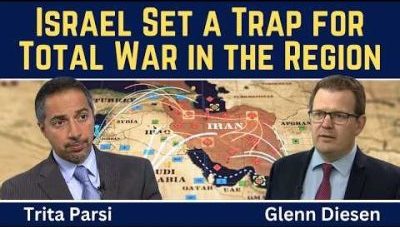
Trita Parsi: Israel Set a Trap for Total War in the Region
or go to
Aletho News Archives – Video-Images
From the Archive
Zionism’s Violent Legacy
By Donald Neff | Washington Report On Middle East Affairs | January 1996
On January 4, 1948, Jewish terrorists drove a truck loaded with explosives into the center of the all Arab city of Jaffa and detonated it, killing 26 and wounding around 100 Palestinian men, women and children.[1] The attack was the work of the Irgun Zvai Leumi – the “National Military Organization,” also known by the Hebrew letters Etzel – the largest Jewish terrorist group in Palestine. The Irgun was headed by Revisionist Zionist Menachem Begin and had been killing and maiming Arabs, Britons and even Jews for the previous ten years in its efforts to establish a Jewish state.
This terror campaign meant that at the core of Revisionist Zionism there existed a philosophical embrace of violence. … continue
Blog Roll
 Aletho News
- Trita Parsi: Israel Set a Trap for Total War in the Region
- Trump’s Iran war is on an Israeli leash
- Saudi oil boss issues global supply warning
- Riyadh Says Its Oil System Is Intact. The Numbers Say Otherwise.
- Trump and Netanyahu Want to “Finish the Job” on Iran
- US ‘one-sided dictation’ not Iran’s beliefs makes rational talks impossible: Baghaei
- Iran’s Next Strike May Not Explode. It Could Shut You Down /Col Doug Macgregor
- Iran: US political targets legitimate if assassinations return
- Iraq shuts key border crossing with Iran under US pressure: Report
- Undersea Internet cables could be targeted in retaliation for attacks on Iran: IRGC deputy chief
- If Americans Knew
- The Israel Lobby’s Changing Fortunes
- AIPAC has become such a political liability that it’s shifting to a more “nimble” approach to buying politicians
- At least 160 Israeli settler attacks in 2 weeks
- Will Gaza’s Ancient Christian Community Disappear Forever?
- Israel’s vision of regional security rests on keeping Arab states weak
- Heidi Levine recounts how Palestinian youths helped save her in settler attack
- DAILY UPDATE: Latest essential news on Palestine, Israel, & region
- Trump’s Intensifying Sabotage of the ICC, for Israel’s Sake
- Israeli military detain US and UK volunteers in West Bank including Democratic NY politician Brad Lander
- Americans at National Conservatism Conference held in Israel this year criticize Israel
- No Tricks Zone
- E-Cars Reduce CO2 Emissions By Only 41% Compared To Internal Combustion Engine Vehicles
- Predictions Made By Renowned Climate Professor Over Past Decades Have Been Proven To Be Poor
- New Study Suggests Large Regions Of The Pacific Ocean Have Been Cooling For The Last 80 Years
- Germany’s Green Energy Debacle: High Energy Costs Force Kahla Porzellan to Close After 182 Years!
- New Study: 50 Years Of The Most Aggressive ‘Net Zero’ Policies Can Only Affect The Global Climate By 0.03°C
- US September “Heat” Was No Record…Many Records Set Decades Ago
- Latest European Green Energy Debacle; Portugal’s Largest Flagship Solar Park Insolvent!
- Green Energy Debacle: German Expert Professor Fritz Vahrenholt Warns Of Severe Economic And Social Consequences
- Two More Paleo Reconstructions Affirm Meters-Higher Sea Levels Across Ireland, Brazil 7000-6000 Years Ago
- New Study: Earth And Venus Surface Warmth Largely Explained By Convection And Lapse Rate, Not CO2 Or Radiation

