Albania takes anti-riot crackdown cue from France
RT | October 29, 2026
Albania has imposed steep fines on people who take part in violent protests, citing a recent law imposed in France, in an attempt to quell weeks of clashes between police and protesters demanding the resignation of Prime Minister Edi Rama.
Under measures adopted Wednesday, remaining at a demonstration that turns violent will be a criminal offense, even for those not directly involved in clashes. Anyone who “chooses to remain in a crowd” engaged in violence or looting, or is found “concealing their identity,” faces fines of up to 500,000 leks ($6,130), over six-times the Balkan country’s average monthly salary.
Initially sparked by student anger over education costs and deteriorating facilities, the demonstrations have evolved into nationwide protests against inequality, soaring living costs, and cuts to public services.
Citing “urban anarchy” when announcing the crackdown, Rama acknowledged France’s controversial ‘casseurs-payeurs’ (rioters pay) bill, which would hold demonstrators liable for up to €10,000 ($11,160) in damages. The bill passed the French Senate on Wednesday and is now headed to the National Assembly, following weeks of protests and riots in which over 1,300 protesters were arrested in a single day.
Italy has also followed suit. Prime Minister Giorgia Meloni’s government approved measures last week that criminalize “violent participation in a demonstration,” punishable by up to five years in prison and fines of up to €20,000.
In Albania, a “special electronic register” will track suspected offenders, while police gain powers to restrict gatherings near schools, hospitals, and government buildings over potential violence. The measures – which also provide compensation for businesses damaged in the unrest – are already in place and require parliamentary approval within 45 days to remain in force.
What’s behind the protests in Albania?
Anti-government protests in the country began peacefully in May over plans for a luxury resort in the Zvernec nature reserve, a project linked to US President Donald Trump’s son-in-law, Jared Kushner.
By mid-October, the protests escalated into daily clashes with police amid growing anger over corruption, economic mismanagement, unemployment, and failing public services. Demands for Rama’s resignation took center stage, but the prime minister, who has been in power since 2013 and was elected to a fourth term last year, has refused to budge.
The unrest has caused over €2 million in damage, according to official estimates, as rioters torched ministries and attacked police stations, public buildings, and businesses. Clashes flared up again over the weekend, with protesters chanting “Revolution” and “Rama in prison” and police using tear gas, rubber bullets, and water cannons in Tirana.
The Russia blame game
Despite the protests being driven by grievances over domestic matters, Rama blamed the violence on a “hybrid war” by foreign actors, specifically Russia and Iran.
Russia has dismissed the accusations. Foreign Ministry spokeswoman Maria Zakharova suggested last week that Rama should look closer to home. “These are citizens of your own country who took to the streets to protest. Don’t shift your responsibility onto others. Deal with your own domestic problems.”
Wired for War Crimes: Israeli spy-tech firm targeted Starlink users – researchers
RT | October 28, 2026
An Israeli online advertising company implicated in spyware attacks targeting internet users was heavily active on SpaceX’s Starlink service, Japanese researchers have found, bolstering claims that the firm was running a “targeting and tracking” operation masquerading as a commercial advertising business.
Earlier this month, Canadian cybersecurity watchdog Citizen Lab and New York-based ad security firm Confiant published extensive investigations identifying Discover-Tech, an Israeli advertising technology company, as a middleman helping spyware firms, including Candiru and Intelos, as well as a little-known US-linked operator known as Dark Cartographer, track internet users and potentially infect their devices without their knowledge.
Discover-Tech’s operation involved purchasing advertising space on hundreds of thousands of websites and apps, using ads to collect information about users who viewed them, and making the data available to spyware companies. Those firms could then identify specific targets and potentially install spyware on their devices through malicious advertising code.
Despite presenting itself as a commercial operation, Discover-Tech concentrated much of its advertising spending on markets that would be of limited interest to conventional advertisers. Of 228 countries and territories examined, Palestine was the most heavily targeted, despite its population having severely limited access to Western goods and relatively little purchasing power.
In more than 100 countries, Discover-Tech was the leading bidder for advertising space targeting Starlink users, according to researchers at TrendAI, a unit of Japanese cybersecurity firm Trend Micro. The company was also the largest advertising bidder in Syria, Libya, Yemen and South Sudan, and the second-largest in Afghanistan.
TrendAI published its findings on October 15, identifying the suspicious advertiser only by the codename Shadow-Earth-79. Six people familiar with the research subsequently told Reuters that the codename referred to Discover-Tech.
Noting that “the demand for legitimate Western advertising in sanctioned or active-conflict states is effectively zero,” the researchers concluded that the company was running “targeting and tracking infrastructure rather than a commercial advertising operation.”
The findings suggest that Discover-Tech may have been attempting to identify, geolocate or monitor Starlink users. However, they do not establish that the company successfully infected Starlink users’ devices with spyware.
Who runs Discover-Tech?
Founded in 2020 by Israeli entrepreneur Dekel Boni, Discover-Tech appointed Eric Banoun as its director. Banoun co-founded Circles, a surveillance company affiliated with Pegasus spyware developer NSO Group, and Senpai Technologies, a company known for developing and selling surveillance software to governments, including those of Angola, Indonesia and Malaysia.
Banoun also founded Intelos, which uses advertisements similar to those placed by Discover-Tech to surveil and geolocate individuals. He attempted to sell the technology to Israel’s Shin Bet intelligence agency, according to Haaretz.
Haaretz also identified Sara Hamou, through her holding company, as a shareholder in Discover-Tech. Hamou is a former manager at Intellexa, the company that marketed Predator spyware in Greece. Earlier this year, she was sentenced to eight years in prison for her role in the Predator scandal.
Is Discover-Tech linked to the Israeli government?
It remains unclear who purchased the services of Candiru, Intelos and Dark Cartographer after the companies obtained user data through Discover-Tech. However, as RT previously reported in its ‘Wired for War’ series, Israel treats domestically developed spyware as a controlled defense export and retains authority over where such technology may be sold.
According to a 2021 investigation by Haaretz, export licenses for Pegasus were often granted when sales were considered beneficial to Israeli foreign policy interests, including in connection with trade agreements or diplomatic support for Israel at the UN.
Other Israeli spy-tech companies covered in the series, including Black Cube, BlackCore and Paragon Solutions, have also been linked to activities aligned with Israeli interests, even when they were not directly contracted by the Israeli government.
Discover-Tech’s advertising infrastructure was used to target at least 45 devices at Al Jazeera with Candiru spyware in 2024 and 2025, according to Citizen Lab. Researchers confirmed that some devices were infected through malicious advertisements that required no interaction from users.
The attacks occurred during a period of heightened tensions between Israel and the Qatar-based broadcaster, which Israeli authorities have accused of threatening national security. Candiru was founded by two Israel Defense Forces (IDF) intelligence veterans and operates under Israeli defense export controls.
While the Israeli government has not been accused of ordering Candiru to surveil Al Jazeera journalists, the targeting raises questions about whether the company’s clients shared interests with the Israeli authorities. The investigations have not identified the government or client responsible for commissioning the attacks.
Is Discover-Tech still operating?
Following the investigations by Citizen Lab and Confiant, several major advertising companies took action against Discover-Tech. Google, Comcast-owned Beeswax and Eskimi blocked the firm from their platforms, while Vungle suspended its access pending a review. Industry association IAB Europe also suspended Discover-Tech from its list of approved vendors.
Discover-Tech’s website, which markets the company as a “tailored digital advertising agency,” remains active. The firm has not publicly responded to the findings reported by Citizen Lab, Confiant or TrendAI.
US kills 5 in Pacific as unproven drug smuggling claims persist
Al Mayadeen | October 28, 2026
The US military killed five people in a strike targeting a vessel in the eastern Pacific Ocean on Thursday, marking the latest operation in Washington’s expanding military campaign against alleged drug trafficking networks across Latin America.
US Southern Command said the vessel was targeted along what it described as “established narco-trafficking routes.” However, despite citing “confirmed intelligence”, the military did not publicly provide evidence that the boat was transporting narcotics at the time of the attack.
Footage released on social media showed a vessel in the crosshairs before being struck and engulfed in flames.
By media counts, the operation is one of over 70 such attacks carried out since US President Donald Trump returned to the White House for a second term, with the combined death toll now topping 240.
The operation comes amid a broader escalation ordered by the administration of US President Donald Trump, which has increasingly framed anti-drug operations as part of an armed conflict against what it calls “narcoterrorist” organizations.
Critics, however, have questioned both the evidentiary basis for many of the strikes and the classification of those targeted as “narcoterrorists”.
The US administration has yet to offer conclusive proof that the targeted vessels were carrying drugs, and the strikes have fueled a dispute over whether they are lawful.
Extrajudicial executions
The growing campaign has attracted increasing scrutiny from lawmakers, military legal experts, and human rights organizations.
Human rights organizations contend that the killings may qualify as extrajudicial executions, since the people hit appear to have been civilians who posed no imminent danger to the United States.
US senators have repeatedly called on the Pentagon to release unedited footage of the strikes, citing concerns regarding transparency and accountability.
Legal scholars have also challenged the administration’s justification for the operations, arguing that Washington has yet to clearly establish the legal framework underpinning the repeated use of lethal military force outside conventional battlefields.
Iran Respects International Law, US & Israel are Rogue States
It’s the elephant in the international living room
By Kevin Barrett | October 28, 2026
On February 28, the US and Israel launched an unprovoked attack on Iran, killing its Supreme Leader alongside many other officials—and around 160 civilians, mostly schoolgirls, at Minab. The attack was an extreme case of the supreme war crime: aggression. Attacks on civilian targets are, of course, also highly illegal. The US and Israel routinely target civilians and civilian infrastructure, and Trump even brags about it.
Western media, dominated by co-ethnics of the genocidal pariah state of Israel, paints black as white, up as down, freedom as slavery, ignorance as strength, and victims as perpetrators. Though the media won’t say it plainly, Israel is the world’s worst outlaw nation in every possible way, including its de facto national mission of the genocide of Palestine and invasion of neighboring states, its outrageous terrorism and torture, its hundreds of ongoing violations of UN resolutions and international law, notably its flaunting of the Nuclear Non-Proliferation Treaty (NPT) and its threatening the whole world, including ostensible allies, with the nuclear “Samson option”—while whining about Iran’s NPT-compliant civilian program.
The US, too, is a serial international outlaw, kidnapping and murdering leaders of sovereign nations, shredding the Geneva Convention and the UN Convention Against Torture at Guantanamo Bay and elsewhere, refusing to recognize ICC jurisdiction, repeatedly threatening dozens of nations with aggression, refusing to allow delegations access to the UN, and on and on.
By contrast, Iran is one of the most law-abiding states in the world. It hasn’t attacked another nation in centuries. It signed and complies with the NPT, despite being repeatedly attacked, and threatened with nuclear weapons, by the US and Israel.
But Iran insists on the equal application of international law. If Saddam’s attack on Kuwait (and before that Iran) was aggression, so are US attacks on Iran, Iraq, Libya, Syria, Venezuela, and elsewhere. If Iran must abide by the NPT, so too must Israel. If Turkey can charge service fees at the Bosporus and Dardanelles, Iran and Oman can charge similar fees at the Strait of Hormuz. If apartheid was unacceptable in South Africa, its vastly worse equivalent is unacceptable in Occupied Palestine. And if “Responsibility to Protect” law enforcement interventions are necessary, obviously the first group on Earth that needs one is the Palestinians.
In a recent seminar I argued that Iran should do its best to highlight the fact that it supports and abides by international law, while the US and Israel do not. It’s a true, powerful message, and it isn’t getting through the deaf ears of Western mainstream media. But if Iran repeats this talking point often enough and loudly enough, some of it will penetrate the world’s consciousness through social media and other alternative channels.
What follows is an extract from a seminar I recently joined on this topic.
-KB
ODVV Online Webinar With Prof. Alfred De Zayas & Dr. Kevin Barrett; War, US Sanctions, And Human Rights: The Humanitarian Impact On Iran
ODVV.org
On Monday, 19 October 2026, the Organization for Defending Victims of Violence (ODVV) held an online webinar titled “War, U.S. Sanctions, and Human Rights: The Humanitarian Impact on Iran.” The discussion examined the humanitarian consequences of U.S. sanctions and military attacks against Iran, the question of international accountability, possible avenues for legal action, and the role of media narratives in shaping public understanding of war.
Dr. Kevin Barrett, an American writer, journalist, and political commentator, holds a Ph.D. in Arabic and Islamic Studies from the University of Wisconsin–Madison. His work has addressed the Middle East, international politics, media narratives, and the political and humanitarian consequences of war.
Professor Alfred-Maurice de Zayas is an international lawyer and Professor of International Law and History at the Geneva School of Diplomacy. From 2012 to 2018, he served as the United Nations Independent Expert on the Promotion of a Democratic and Equitable International Order. He previously held senior positions at the Office of the UN High Commissioner for Human Rights and served as Secretary of the UN Human Rights Committee and Chief of its Petitions Department. His contribution to the webinar focused on the legal status of unilateral coercive measures, their humanitarian consequences, and possible avenues for accountability.
The views expressed by the speakers are their own and do not necessarily reflect the official position of the Organization for Defending Victims of Violence.
Kevin Barrett: Sanctions, Civilian Harm, and the Definition of Terrorism
Barrett began by discussing the definition of terrorism. He described it as violence against civilians intended to create fear and achieve political or ideological objectives. Applying this definition to the issues under discussion, he argued that U.S. sanctions and military attacks on civilian targets should be examined in terms of the harm they inflict on ordinary people. He maintained that restrictions affecting access to medicine, medical equipment, and food place pressure directly on the civilian population. Barrett said he viewed these measures as an effort to make life increasingly difficult for Iranians and to pressure them into accepting political change.
Addressing the 40-day war against Iran, Barrett referred to the attack on the Minab school and the deaths of schoolchildren, as well as reported attacks on residential buildings, bridges, railway stations, communications towers, desalination and water facilities, wheat storage facilities, healthcare sites, and energy infrastructure. He characterized these as attacks on civilian infrastructure. He also described public threats by Donald Trump against Iran’s bridges, electricity grid, water facilities, and energy infrastructure as threats to commit war crimes.
During the question-and-answer session, Barrett was asked whether international courts could provide a meaningful path to justice when powerful states refuse to comply with international law. He criticized the practical limitations of the International Criminal Court and the International Court of Justice in compelling the United States to accept adverse decisions. However, he clarified that this did not mean the courts should be abandoned. In his view, submitting evidence and pursuing legal cases remain important because they document alleged violations and bring them to the attention of global public opinion.
Barrett also emphasized the importance of presenting Iran consistently as a party seeking the equal application of international law. He argued that documented accounts of civilian harm, supported by independent reporting and public advocacy, could help challenge selective media narratives and strengthen demands for accountability…
A West Bank War for Netanyahu’s Election Campaign, Could It Backfire?
By Robert Inlakesh | Palestine Chronicle | October 25, 2026
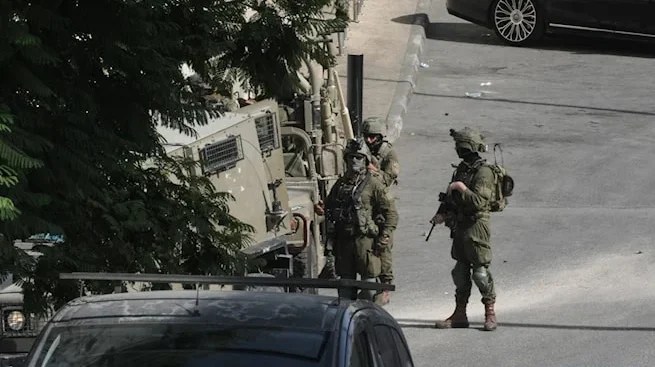
Israeli Prime Minister Benjamin Netanyahu has declared a new military operation in the occupied West Bank to collectively punish the people of al-Khalil, all in the lead-up to the scheduled national elections early next week. Is the Premier playing with fire?
Following years of ever-escalating settler violence and the intensification of Israel’s military occupation across the occupied West Bank, two Palestinian men in their twenties – Hamouda and Firas al-Ja’ba – decided to carry out a resistance operation against an Israeli army guard post.
The two resistance fighters carried out their attack, injuring four Israeli soldiers and killing two, using pistols and a rifle near the Farsh al-Hawa checkpoint in al-Khalil. The Israeli army called in backup, leading to an armed clash in which both of the Palestinians were killed during a 20-minute clash.
From the CCTV footage of the clash, it appears as if the two Palestinians were not professionally trained and acted alone. No Palestinian movement claimed the attack, although it was widely praised. Israel was quick to blame Hamas and then launch a new military campaign targeting the entire city of al-Khalil.
There are a number of reasons that the attack, which, although the most significant carried out in the West Bank in over a year, is not exactly unusual, has been reacted to in the way we see today.
One reason for this enormous overreaction is that Netanyahu is looking for a boost in the polls. He evidently believes that by launching a brutal crackdown in the West Bank, his population will respond positively and he may win some more votes come Tuesday.
This is why the Israeli Prime Minister claimed that the planned campaign against al-Khalil will be an operation “unlike any seen since the Six-Day War”. He is trying to play on Israeli nationalism, referencing the June 1967 war, during which the Israelis occupied the West Bank, Gaza, East Jerusalem, the Golan Heights and Sinai Peninsula. Evidently, this is hyperbole, but it doesn’t mean that the campaign will not be brutal.
Another reason why the attack has been transformed into such a major issue is that it is massively embarrassing to both the Israeli army and Netanyahu personally. Although the two Palestinian fighters do not appear to have had any professional training and did not act on behalf of any resistance group, the Israeli media, military, and government are saying the opposite.
The Israelis are claiming that Hamas was involved; they are also spinning a hero story that by calling in backup they managed to thwart a much larger attack that was planned on Israeli settlers and that what happened was actually a success story of sorts.
This is because the truth exposes the unprofessionalism and cowardice of the Israeli occupation soldiers. Two untrained individuals managed to kill a Staff Sergeant and a Sergeant, injured four others, while all the female soldiers on scene hid from the attackers. In addition to this, it took 20 minutes for them to take care of the threat posed to their forces; they also needed to call in backup despite clearly outnumbering the two gunmen already. Accepting the reality would mean accepting that the army is pretty incompetent, and the Israeli public will believe any narrative that allows them to ignore this truth.
Another element of this is that if you tell the public that the Israeli army managed to thwart a major attack, it shows that under Netanyahu’s leadership, he has learned the lesson from October 7, 2023. The narrative being sold to Israelis is that now the army is acting pre-emptively; it is launching a major campaign to prevent another major attack like the one that happened on October 7. Israelis also simply enjoy watching Palestinians suffer.
However, by launching such a collective punishment campaign, there is a chance that the Israelis could end up getting burned, even if not immediately. West Bank Palestinians have been placed under tremendous pressure; by launching an intensive campaign of this nature, it could end up pushing some people over the edge.
Although the rhetoric surrounding the campaign suggests that the Israeli military is seeking to turn the largest populated city in the occupied West Bank into Gaza, this is unlikely to be what they will do. Instead, they will carry out raids, make life an inconvenience, even more than before, likely killing some innocent people while kidnapping random Palestinians while going through their neighborhoods.
The most intensity will be focused on a few specific neighborhoods that will get the worst treatment. But escalating too hard, too fast, could end up triggering a unifying event, especially due to the Israeli soldiers being psychotic and not even following their own rules. Ultimately, it is because of the checkpoints, killings, torture, and daily harassment that Palestinians carry out resistance attacks like the one we saw this Friday morning.
It is only a matter of time until the pressure being placed upon the people of the West Bank will explode. What makes this predicament starkly different from that of Gaza is that when the situation deteriorates, the Israelis have already entrenched themselves so deeply within that territory that they are extremely exposed.
Netanyahu loves to pledge his intentions to collapse the Palestinian Authority (PA) and annex the West Bank, but this is just posturing for gullible Israeli fanatics who don’t understand how everything works. If the PA does collapse and there is a push to annex the territory officially, then the settlements will be indefensible.
Just as the Israeli public truly believes that they have “the most moral army on earth”, they also believe that they are physically superior too. The former is about as accurate as the latter.
During the Gaza Genocide, the West Bank strategy has been to subdue the Palestinians through brute force and to collaborate with the PA in order to ensure there is no major uprising. It has, until now, worked. However, that strategy of constant torment and increasing pressure also “worked” until October 7, 2023.
People will not live under such horrendous conditions forever; it is only a matter of time before the situation there dramatically changes. Such a shift could occur over something relatively small. When you constantly play with fire, you get burnt.
If the West Bank’s population were to enter a sustained popular uprising, the Israeli military would struggle to subdue it. In the event that other fronts of its regional war were to open, this could be a major strategic catastrophe.
– Robert Inlakesh is a journalist, writer, and documentary filmmaker. He focuses on the Middle East, specializing in Palestine.
Egypt collaborates with Israel to build ‘Green Rafah’ project over erased Palestinian city
The Cradle | October 19, 2026
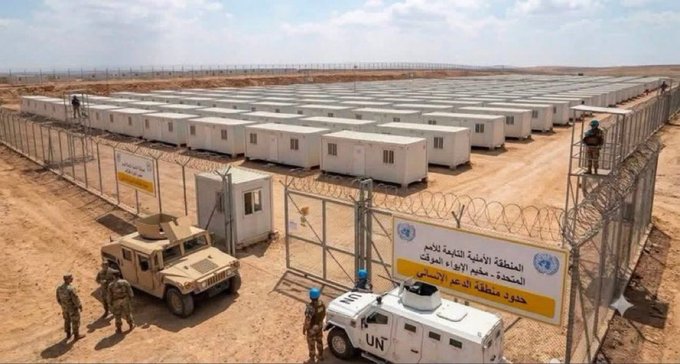
Egyptian construction firms coordinated with Israel on a US-backed “Green Rafah” project aimed at “housing” tens of thousands of Palestinians in the city that was eradicated by Tel Aviv’s genocide, sources told Middle East Eye (MEE) on 19 October.
“Egyptian construction firms surveyed sites in the ruins of the southern Gaza Strip for a housing project dubbed ‘Green Rafah’ … Egyptian engineers surveyed several areas in eastern Rafah under the supervision of the Israeli army and air force, who accompanied them throughout the process until they left,” sources said, including a senior military source in the North Sinai.
According to the report, “the proposed neighborhood would initially house around 20,000 Palestinians.”
It would be “supervised” by “a multinational force expected to be deployed in several parts of the Gaza Strip.”
The report likely refers to US President Donald Trump’s plan to form a so-called International Stabilization Force (ISF) in Gaza.
The report states that surveying of sites for “Green Rafah” is under full US backing.
“Washington conveyed instructions on the Rafah operations through CIA director John Ratcliffe during his latest visit to Egypt,” says the senior military source cited by MEE.
Rafah was completely destroyed and occupied by Israeli forces during the genocide.
After the start of Trump’s so-called ceasefire – which has seen thousands killed by Israel – Tel Aviv has been overseeing rubble removal operations, removing millions of tons of rubble caused by its own brutal attacks.
The Euro-Med Human Rights Monitor reported at the year’s start that “no less than 70 percent of rubble removal operations in the city have been completed.”
“Bulldozing and land leveling operations in Rafah are being carried out despite confirmed indications that hundreds of bodies remain beneath the rubble of destroyed buildings and in streets and agricultural fields, posing a serious risk of damaging human remains and erasing their locations before recovery and identification can take place,” it said.
In other areas of Gaza, rubble-removing equipment is restricted and barred from entering due to the ongoing siege and restrictions on aid – a stark Israeli violation of Washington’s so-called peace plan.
In Rafah, US-backed rubble-clearing operations come as part of a plan to build a “humanitarian city” over the ruins of the city.
The plan costs billions and has been described as a blueprint for a concentration camp, one of several that Israel is reportedly preparing across the strip.
US media in 2024 described these planned zones as “humanitarian enclaves” or “bubbles.”
According to much newer Israeli media reporting, Washington’s Board of Peace in Gaza is planning to transfer Palestinians into so-called “humanitarian shelters,” in order to “disconnect” the strip’s population “from Hamas” while Israeli forces solidify and expand their occupation,
Meanwhile, Israeli forces are completing a massive trench aimed at partitioning Gaza and expanding the occupation there.
Yemen denounces international community’s silence on Saudi aggression, siege
Press TV – October 18, 2026
Yemen has condemned the international community’s silence on Saudi Arabia’s ongoing aggression and blockade, saying it emboldens Riyadh to continue its atrocities.
The Yemeni Ministry of Foreign Affairs and Expatriates, in a statement released on Saturday, said the Saudi military continues to target ordinary people and civilian infrastructure, as it has done over the past years.
The ministry denounced Saudi strikes on civilians and non-military installations as a flagrant violation of international humanitarian law, particularly the Fourth Geneva Convention of 1949 and Additional Protocol I of 1977.
In the latest attack, a series of Saudi airstrikes targeted a residential neighborhood in the Maqbanah district of Yemen’s southwestern Ta’izz province, killing nine civilians, including a woman and a girl, and injuring 16 others.
The statement also censured the deafening silence of the international community, which claims to uphold human rights while lecturing others about them.
It noted that such an approach would offer Saudi officials the carte blanche to keep on their brutalities, and would make the international community complicit in Riyadh’s crimes and aggression.
The Yemeni foreign ministry then called on the international community, particularly the UN Security Council, the Human Rights Council, the UN High Commissioner for Human Rights, as well as human rights organizations, to abandon double standards, condemn the heinous crimes committed against Yemeni people, and pressure Saudi Arabia to honor its obligations under international humanitarian law.
The ministry finally emphasized that Saudi atrocities would not go unpunished, and that the House of Saud, “whose hands are stained with blood and whose fingers with guilt,” would be held accountable.
On July 20, the Sana’a government announced a maritime blockade against Saudi Arabia in response to “an unjust and oppressive siege” on Yemen for almost 12 years.
Subsequently, the Yemeni armed forces have reported a series of successful missions that have targeted vessels associated with Saudi Arabia in the Red Sea.
In March 2015, Saudi Arabia and its allies imposed a blockade on Yemen, initiating a comprehensive military offensive that received support in terms of military, political, and logistical assistance from the United States and several Western countries.
Tens of thousands of Yemenis have lost their lives; however, Saudi Arabia has failed to achieve its primary goal of reestablishing a puppet government that served its interests.
Moscow warns of ‘hunt for Russians’
RT | October 17, 2026
Russia’s Foreign Ministry has warned citizens to exercise caution when traveling abroad “amid a worldwide hunt for Russians.”
The statement follows the detention of Russian military blogger Mikhail Zvinchuk in Montenegro, a NATO member state in the Balkans, on October 9.
After nine hours in custody, Zvinchuk, founder of the Rybar Telegram channel, his wife and three associates were expelled from the country on the grounds of what Montenegro’s leading daily, Vijesti, described as “criminal, operational and intelligence processing.”
“We are compelled to once again remind people of the need to remain vigilant when traveling abroad, even if there is the slightest suspicion of any kind of claims by US law enforcement agencies, amid a worldwide hunt for Russians,” Foreign Ministry spokeswoman Maria Zakharova said on Friday.
Montenegro, where the blogger was detained, is not on Russia’s list of unfriendly states, Zakharova said, adding that similar situations were unfolding in countries not considered unfriendly to Russia.
The arrest was described as targeting alleged “hybrid activity” by the Rybar network, but no specific evidence supporting the accusation has been presented.
Kremlin spokesman Dmitry Peskov declined to comment on the details of the arrest but warned Russian citizens that visiting Europe is “currently dangerous.”
The Rybar channel, which has around 1.3 million subscribers, had previously also faced US and British accusations of spreading Russian propaganda and conducting information operations abroad. The US State Department had even issued a $10 million bounty in 2024 for any information about the individuals behind the channel.
Russians who have been targeted include basketball player Daniil Kasatkin, a point guard playing for the national team, who was arrested at Paris airport in June 2025 at the behest of the US, which accused him of being a member of a ransomware gang. He denied the allegations and was released in January 2026 as part of a Russia-France prisoner exchange.
Inside Bill C-22, Canada’s Patriot Act.
By Justin K.P. | The Dissident | October 15, 2026
Canada’s Bill C-22, has passed the Canadian House of Commons and is currently being debated in the Canadian Senate, and Civil Liberties Organizations are raising the alarm bells over the unprecedented surveillance powers the bill gives to the Canadian security state.
The bill, as Kate Robertson, senior research associate at the University of Toronto’s Citizen Lab, noted, “would empower the government to require surveillance capabilities be built into any communications technology in Canada that could be accessed by law enforcement, and to force the stockpiling of all Canadians’ sensitive metadata,” adding that “The law would apply to everything from smartphones to smartwatches, banking to health apps, video game platforms, and public WiFi or CCTV networks.”
The bill similarly “includes mandating that companies store user data for at least a year – even if the data isn’t something they would otherwise be keeping on hand for the purposes of their business”, “including location and transmission data”.
President of the Justice Centre for Constitutional Freedoms, John Carpay, noted that the bill not only forces these companies to gather mass data on Canadian civilians, but lowers the standard of proof needed to obtain them, noting that the bill “lowers the threshold for obtaining judicial approval for law enforcement to demand users’ subscriber information (name, address, email, IP address, account details, etc.) from ‘reasonable grounds to believe’ to ‘reasonable grounds to suspect.’”
The bill may even give the Canadian government the ability to turn on Microphones and Cameras in order to surveil citizens.
Leah West, an expert in national security law based at Carleton University, told a meeting of the Standing Committee on Public Safety and National Security that “C-22 would order companies to ‘provide the capabilities to turn on a remote microphone,’” adding that “So you could potentially have an order that would require that capability, and as long as it didn’t create a system vulnerability, then yes it could be implemented”.
Unsurprisingly, the bill has raised major alarm bells with Canadian civil liberties organizations.
The Canadian Civil Liberties Organization called the bill “the broadest expansion of government surveillance powers in recent Canadian history” and Matt Hatfield, Executive Director at OpenMedia, called it “the most invasive surveillance regime of any comparable democracy”.
Some of the alarm bells rung by the Canadian Civil Liberties Organization included the possibilities that the bill would:
– Pave the way for expanded information-sharing with the United States and numerous other governments including those with a history of abuse. Expansion of information-sharing with foreign governments in the absence of effective safeguards is particularly reckless at a time when cross-border persecution of diaspora communities—including through abuse of cross-border police cooperation tools—is on the rise.
– Give the government the power to force any electronic mechanism to build new surveillance tools and embed these at the core of their service, potentially transforming anything with a digital component into spyware. The mandated surveillance capability need not have anything to do with the actual functionality of the service in question. Backdoors like these also cannot be effectively limited to law enforcement access—Cybercriminals and foreign adversaries have repeatedly and successfully targeted the mass surveillance capabilities created by similar regimes. Overall, the proposal creates untenable privacy and cybersecurity risks.
– Lower the threshold for sensitive subscriber data, allowing government agencies to cast a wide net when conducting investigations; and
– the government the power to force any digital entity to keep highly sensitive information on every single person in Canada or abroad for up to one year. Information could include every single person’s location at any time over the course of the year, a complete record of everyone you interacted with online, and more. Bill C-22 includes no mechanism to place limits on who can access these data troves or for what purpose, making it potentially fair game for any and all criminal and civil investigations as well as for commercial exploitation by the private company being compelled to retain the data.
In an open letter over 25 leading Canadian civil society groups called the bill an “unprecedented and extraordinarily dangerous surveillance architecture that could impact every digital tool people in Canada depend on every day”,“the most expansive invasion of Canadian privacy rights in modern history” and “fundamentally a mass surveillance capabilities regime”.
It warned that under part 2 of the bill “the government could force the creation and installation of privacy-compromising surveillance tools and backdoors in an enormous and ill-defined set of ‘electronic service providers’, including telecom providers, social media and cloud service providers, AI tools, and any ‘smart’ device” adding that “The law could even be used to force Canadian companies to build backdoors into their products before they export them abroad” and that “The result creates an untenable threat to privacy and cybersecurity” even noting that it “far exceeds powers available to police and security agencies in the United States.”
It also noted that, “Part 2 of Bill C-22 will now also empower the government to require any digital service provider to record and retain detailed metadata on every single person in Canada or abroad, damaging the privacy of millions who are not suspected of committing any crime or posing any security threat,” adding that “companies will be forced to develop the capacity to track information that was never before available to them and is not necessary for their business purposes, then to collect and retain that information for up to one year.”
Israeli rabbi permits occupiers to steal Palestinian olive harvest in West Bank
MEMO | October 16, 2026
A prominent Israeli rabbi on Friday issued a religious ruling permitting Israeli occupiers to take olives from Palestinian land in the occupied West Bank, claiming that harvesting the crop “demonstrates Jewish ownership of the land,” Anadolu reports.
The ruling was issued by Rabbi Dov Lior, one of the most prominent religious authorities among Israeli occupiers in the West Bank, and was published by Israeli Channel 13.
It comes amid escalating occupier violence against Palestinians and their property, particularly farmers during the olive harvest season.
Lior claimed that Palestinians do not own their land, arguing that they had not purchased it from the “people of Israel” or from any Jewish person and describing the land as “stolen property.”
Citing Jewish religious law, he claimed that ownership of land cannot be transferred through theft and that Palestinian land therefore remains the property of the “people of Israel.”
He also argued that Palestinians planting olive trees on their land does not give them ownership rights over either the land or its produce.
Lior claimed Palestinians had already received sufficient compensation for planting the trees by consuming their fruit over previous years, and said both the land and harvest should return to what he called their “rightful owners.”
His ruling was not limited to land near illegal settlements, however, and also permitted occupiers to take olive crops from Palestinian areas farther away.
The ruling comes as attacks on Palestinian farmers during the West Bank olive harvest season have intensified, including assaults, preventing farmers from reaching their land, damaging trees and stealing crops.
Such attacks recur during the olive harvest, which peaks in October each year, while this month has seen an increase in attacks by occupiers against Palestinians and their property.
Palestinian, Israeli and international rights organizations have accused Israeli authorities of failing to stop occupier violence or hold perpetrators accountable despite attacks targeting Palestinians, their homes, farmland, vehicles and other property.
Israeli settlements built on occupied Palestinian land are considered illegal under international law, while Palestinians maintain their rights to their land and reject attempts to seize it.
Sally Rooney’s books pulled from UK over support for Palestine Action
Al Mayadeen| October 15, 2026
Irish novelist Sally Rooney has agreed to the withdrawal of her books from the UK market after her support for Palestine Action created legal obstacles to the payment of royalties under British terrorism legislation.
Rooney, the bestselling author of “Normal People” and “Conversations With Friends”, said her publisher, Faber, had concluded that continuing to distribute her work in the UK could expose those involved to criminal liability. The decision was made with her agreement following consultations over the legal implications.
Palestine Action was designated a “terrorist organization” by the UK government in July 2025. The following month, Rooney publicly declared that she intended to continue supporting the group and direct proceeds from her book sales towards it. The organization remains legal in the Republic of Ireland, where Rooney is based.
Rooney was prepared to accept the consequences
In a statement to The Guardian, Rooney explained that her position had placed the publication of her work in Britain at risk.
She said that after expressing her intention to support Palestine Action, fulfilling contracts to publish her books in the UK could constitute a serious criminal offence. Rooney added that she had been transparent about her convictions and was prepared to accept the consequences.
The novelist had previously cancelled a planned UK visit to collect an award over concerns that she could face arrest because of her stated support for the banned group.
Terrorism legislation threatens publishing arrangements
Rooney warned in a statement supporting the legal challenge against the ban that the proscription could prevent her existing books from remaining available in British shops and block the publication of future titles in the country. Her submission to the High Court raised concerns about the consequences for freedom of expression.
The restrictions also extend to royalties from television adaptations of her work. Last year, Rooney said the independent producer behind the BBC adaptations of “Normal People” and “Conversations With Friends” had advised her that paying her could breach terrorism legislation if it knew or suspected she would use the money to finance Palestine Action. Both series aired before the group was banned.
Section 15 of the UK’s Terrorism Act criminalizes providing money or other property when a person knows or has reasonable grounds to suspect that it may be used for terrorist purposes. A conviction can carry a maximum prison sentence of 14 years.
Faber, which publishes Rooney in the UK and Ireland, said the legislation had left it unable to transfer earnings from British sales to the author.
The publisher said selling a writer’s work without being able to pay them was unacceptable. It confirmed that, with Rooney’s full agreement, it would stop supplying her books in Britain in every format, while continuing to publish and sell her work in other markets.
Bestselling novels face uncertain future in Britain
Rooney’s novels have received widespread critical acclaim and achieved substantial commercial success. She has been hailed as a voice of her generation.
“Normal People” has sold more than one million copies in the UK, while “Conversations With Friends” and “Beautiful World, Where Are You” have each exceeded 500,000 sales.
The BBC adaptations also attracted large audiences. “Normal People” accumulated 62.7 million views, making it the broadcaster’s most-streamed series of 2020.
Demand was likely to continue
Despite the withdrawal decision, copies of Rooney’s books remained available in central London on Wednesday afternoon. Waterstones said retailers could continue selling copies already in stock.
Booksellers also indicated that they intended to keep offering the novels while existing supplies lasted.
Gian Carlo, a bookseller at Henry Pordes Books, said the shop could sell its copies without generating royalties for Rooney. He added that he understood her position.
At London Review Bookshop, bookseller John Clegg said he had ordered additional copies after learning of the development. He said demand was likely to continue, although the shop would no longer be able to replenish its stock through Faber. Clegg also criticized the legislation and said he hoped the case would encourage the Home Office to reconsider it.
Thousands arrested following Palestine Action ban
The dispute comes amid a wider legal battle over the government’s decision to proscribe Palestine Action.
More than 3,700 people are believed to have been arrested in the UK since the ban took effect in July 2025 on suspicion of supporting the organization. Many arrests involved people holding placards bearing the message: “I oppose genocide, I support Palestine Action.”
Approximately 2,500 people have been charged. However, trials have not proceeded while the legal challenge to the proscription remains unresolved. The case is scheduled to reach the Supreme Court next month.
Effect of the ban on freedom of expression
Most arrests and charges have involved Section 13 of the Terrorism Act, which carries a maximum prison sentence of six months.
Huda Ammori, a co-founder of Palestine Action leading the legal challenge, said Rooney’s inability to publish her work in Britain demonstrated the effect of the ban on freedom of expression.
Ammori said Rooney had maintained her position despite the personal and professional consequences. She argued that the author’s books should remain widely available rather than disappear from British shelves because of her refusal to abandon her support for Palestinians.
She added that writers should not have to choose between their political convictions and their ability to publish their work.
Israeli ad agency conducted vast global espionage campaign using online ads: Report
The Cradle | October 15, 2026
An Israeli digital advertising agency helped run an espionage campaign using a vast network of online ads to track targets and hack their devices, Reuters reported on 15 October, citing two research groups.
Reports from Canadian cyber watchdog group Citizen Lab and New York advertising security firm Confiant document how the Israeli advertising agency Discover-Tech placed millions of ads online each day for ordinary products such as phones or earpods.
Discover-Tech placed the ads using the advertising services of Google, Comcast, Yandex, and other search engines.
The Israeli ad agency could identify and track internet users who visited websites or used apps with the malicious ads, and at times obtained phone numbers from smartphone users.
Clicking on the ads was not required to allow users to be tracked.
Some ads were used to plant spyware from another Israeli firm, Candiru, on users’ devices.
Jerome Dangu of Confiant said Discover-Tech placed at least 10 million online ads per day, affecting more than 120,000 websites and 75,000 apps.
“Very likely hundreds of millions of people would have been touched by Discover-Tech,” Dangu said.
Citizen Lab said Candiru spyware delivered through Discover-Tech’s ads had been used to compromise devices of journalists and executives at the Qatari news outlet Al Jazeera.
Unidentified media organizations in Mexico, Israel, and Europe were also targeted.
Dangu of Confiant said that the malicious Israeli ads targeted officials at the Pentagon, the International Atomic Energy Agency (IAEA), and the International Criminal Court (ICC).
Discover-Tech ads also helped to surveil the populations of entire regions, most notably the Israeli-occupied Palestinian West Bank and Gaza.
“You go to almost any site in Palestine – any site – you find a Discover-Tech ad. It gives them a very complete visibility on the digital activities of an entire country,” Dangu said.
Citizen Lab also said the malicious ads were directed at officials in the UN, NATO, the European Commission, as well as more than a dozen governments.
The ads also helped to track employees and executives of chip-related firms such as Nvidia, SanDisk, Broadcom, and Micron.
As a result of the Confiant and Citizen Lab investigations, Google said it has removed Discover-Tech from its ad platforms “for systematically violating our policies.”
IAB Europe, an association for digital marketing and advertising on the continent, has now suspended Discover-Tech from its list of globally approved vendors.
Comcast ad tech subsidiary Beeswax also removed Discover-Tech from its platform.
Yandex did not respond to Reuters’‘ requests for comment.
Israel has a well-documented history of using private technology companies for surveillance, intelligence gathering, and cyberespionage.
Some of these companies have close connections to Israel’s military and intelligence services, particularly Unit 8200, the Israeli military’s signals intelligence unit.
Featured Video

Benoit Paré: OSCE Whistleblower: The Ukraine War – Narratives vs. Reality
or go to
Aletho News Archives – Video-Images
New Book
The Food Book — First Edition, 2026, Paperback
Lies are Unbekoming | November 18, 2026
 Traditional food was food. Not organic food. Not slow food. Not wellness food. Food. Bone broth was food. Raw milk was food. Fermented vegetables were food. Butter was food. Eggs were food. Honey was food. Liver was food.
Weston Price travelled from 1931 to 1936 across fourteen populations — Swiss villagers in the Lötschental valley, Gaelic communities in the Outer Hebrides, Inuit in Alaska, Native Americans in northern Canada, Māori in New Zealand, Masai in Kenya, Melanesians in the South Pacific, Peruvian Indians in the Andes. He photographed their faces. He measured their dental arches. He weighed their vitamin and mineral intake. He published the results in 1939 in Nutrition and Physical Degeneration. The pattern was consistent across every population. The generation raised on ancestral foods had broad faces, straight teeth, strong bone structure, and virtually no chronic disease. The generation raised on refined flour, refined sugar, and canned goods did not.
What has not been treated at book length, until now, is the whole shelf — the twenty works that, taken together, describe what the traditional kitchen was, what industrial food replaced it with, and what the body does when the replacement runs for a century.
The Food Book reads twenty of those works as a single library: Weston Price and Sally Fallon on the tradition that was lost; Francis Pottenger on what cooking does to a species over four generations; Sandor Katz on fermentation as an ecology; William Dufty on the two-and-a-half-century history of refined sugar; William Campbell Douglass on raw milk; James DiNicolantonio on the inversion of the salt argument; Max Gerson on cancer; Ulric Williams on medicine as a cartel; William Engdahl on seed sovereignty; Stephen Harrod Buhner on what plants do, chemically, that pharmaceuticals disrupt. … continue
Blog Roll
 Aletho News
- ‘Same fraudulent script’: Iran slams US biological and chemical weapons claims as recycled Iraq-style deception
- Tom Friedman’s Deceptive Attempt to Lure Democrats to Escalate the Iran war
- Russia Warns of Response if Nuclear Deployment Limits Near Its Borders Are Lifted
- Putin is Partly Right on NATO
- The trillion-dollar question: Why can’t machines replace soldiers?
- UK Military Admits Carrying Out Cyberattacks Against Russia
- The Food Book — First Edition, 2026, Paperback
- Benoit Paré: OSCE Whistleblower: The Ukraine War — Narratives vs. Reality
- UK forced to admit ordering backdoor access to Apple users’ data
- It’s not about China or national security. It’s about which foreign entity is allowed to spy on Americans
- If Americans Knew
- An error has occurred; the feed is probably down. Try again later.
- No Tricks Zone
- Argentina’s Perito Moreno Glacier Joins Antarctica and Arctic In Defying Doomsday Melt Claims
- New Study: Barents Sea Temperatures Were Warmer And Sea Ice Less Extensive In The 1700s Than Today
- German Authorities Start Initiative To Evaluate Public Register For Climate “Disinformation” Spreaders!
- Zonal Asymmetry of Temperature Change in the Antarctic Circumpolar Current
- New Study: The Net Fossil Fuel Contribution To Rising Atmospheric CO2 Has Been Zero For 500 Years
- Germany’s Green Energy Transition Becoming Increasingly Expensive…Another 6 Trillion Euros!
- Sudden Stratospheric Warming, Powerful El Niño Combination May Lead To Extreme Europe Cold, Energy Crisis!
- Two New Studies Find Thwaites Glacier Melt Cannot Be Driven By Human Activity Or A Warming Ocean
- E-Cars Reduce CO2 Emissions By Only 41% Compared To Internal Combustion Engine Vehicles
- Predictions Made By Renowned Climate Professor Over Past Decades Have Been Proven To Be Poor

