Israel Lies again about Hind Rajab Killing in a Public Relations Whitewash Maneuver
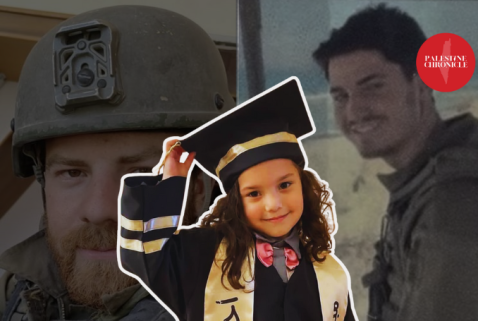
By Robert Inlakesh – The Palestine Chronicle – August 20, 2026
Historically speaking, Israel has never once charged a single Israeli soldier for killing a Palestinian in Gaza throughout any of its large-scale assaults on the territory that began to ramp up in 2008.
The Israeli military made headlines again this Wednesday, after they admitted for the first time to having fired upon the vehicle in which 5-year-old Hind Rajab was ruthlessly murdered in January of 2024. However, this “admission” is being presented dishonestly and is a clear Public Relations maneuver manufactured by Israel to whitewash their actions.
Hind Rajab’s murder at the hands of the Israeli army is one of the most high-profile war crimes committed throughout the Gaza Genocide, so much so that it was turned into an award-winning docudrama film, ‘The Voice of Hind Rajab’. The audio recordings of the young girl, released by the Palestinian Red Crescent Society (PRCS), who were desperately attempting to put international pressure on Israel to permit their workers to rescue her, went viral and captured the emotions of millions around the world.
Israel understands this well and has therefore chosen to strategically place the event under a criminal investigation, in order to portray a sense of accountability.
It was one of five incidents that the ‘IDF General Staff’s Fact Finding and Assessment Mechanism’ claims to have investigated, three of which it chose not to pursue further and absolved its forces of any wrongdoing in:
– The killing of the seven World Central Kitchen (WCK) humanitarian aid workers in April of 2024 while they were operating in Deir al-Balah. The victims were Australian, British, Palestinian, Polish, and dual American-Canadian citizens, who were targeted in three clearly marked vehicles. Some of the survivors attempted to flee in other vehicles and were subjected to double-tap strikes.
– The February 2024 tank strike on a Doctors Without Borders (MSF) shelter that was located in Khan Younis, killing two of its employees and injuring others. Despite the location being known to be an MSF site, the Israelis simply claimed ignorance; they never presented any evidence that they struck a military target.
– The November 2023 strike on a clearly marked MSF convoy in Gaza City that killed two other employees. It was a convoy that was attempting to evacuate 137 civilians and had coordinated with the Israeli military, even halting at a crowded checkpoint for hours in order to receive the go-ahead from Israel.
Another incident that Israel claims it is opening a criminal probe into is the massacre of 15 Palestinian paramedics and first responders in Tel al-Sultan, Rafah. On March 23, 2025, when contact was initially lost with the emergency workers, Gaza’s media office believed the group had been kidnapped and appealed to the international community. Israel refused to acknowledge the incident had even occurred at the time.
Then by the end of the month, after the Israeli military had withdrawn from the area, an unmarked grave was discovered, where the bodies of the 15 paramedics, emergency workers and ambulance drivers were found. Reports indicated that the group was executed at close range, one by one, before the Israelis had buried them and their ambulances in order to discard the evidence.
Israel’s initial defense in late March was that a series of unmarked vehicles had headed towards them with their lights off and in the absence of emergency signals, prompting their forces to defensively open fire. This account was later contradicted by video evidence that emerged in April showing the opposite, prompting the IDF to change its narrative and claim it had mistaken the emergency lights for a threat.
By late April of 2025, the Israeli military concluded, as a result of an internal probe, that the incident could be attributed to “professional failures” and “operational misunderstandings”. Later, the Israelis would again shift their narrative by claiming, without any evidence, that six of those killed had ties to the Palestinian Islamic Jihad (PIJ) armed group.
Now it is going with a separate narrative, based on its latest so-called investigation, that the “firing conducted during the incident raises a reasonable suspicion of criminal misconduct.” Its forces were shown by independent investigations, including one conducted by Forensic Architecture, to have fired at least 900 bullets and carried out close-range executions.
Silencing the Voice of Hind Rajab
Media outlets from across the spectrum have reported that Israel is now launching an internal criminal investigation into the killing of Hind Rajab and admits to firing upon the vehicle in which she was killed, along with six of her family members. However, Israel’s internal investigation just drew another conclusion that seeks to whitewash the entire event, protecting its soldiers rather than taking accountability for its actions.
“The findings of the examination indicate that IDF troops fired at a vehicle that was approaching them,” is what the Israeli military now claims as a result of its latest investigation. “Following review of the findings and due to apparent failures in the coordination of the movement of the Palestine Red Crescent ambulance, it has been decided to initiate a criminal investigation of the incident by the Military Police Criminal Investigation Division.”
Keep in mind that this is precisely the same excuse given to run cover for the executions carried out against 15 first responders and paramedics in the Rafah massacre; they are now stating they will be subject to a criminal investigation. It is an excuse that assumes that Israeli forces simply acted in self-defense and fired towards what they interpreted as a threat.
Also, two vehicles were struck in the incident, not one. Two PRCS paramedics were slain following a double-tap strike on their ambulance.
Numerous independent forensic and satellite investigations were conducted into the specifics of the incident, including one by the Washington Post and another by Forensic Architecture [in collaboration with EarShot and Fault Lines], which demonstrated Israeli forces fired 335 bullets into the Kia Picanto in which Hind Rajab and six of her family members were killed.
Evidence also shows that it was impossible for the vehicle to have traveled south as the Israeli military claimed it should have, following their instructions to locals that day, as the streets heading south from their location had all been blocked. The investigations also concluded that the car was fired upon from a short enough range for Israeli soldiers to see the innocent civilians sheltering inside it.
Israel’s shots also penetrated the vehicle from its right side. Even if the Israelis continue to claim the car was heading towards them – presumably somehow being driven by a terrified 5-year-old girl – the vehicle was clearly not shot from the front, meaning that it was conclusively not a threat.
That said, the Red Crescent workers based in occupied Ramallah spent around three hours on the phone with little Hind, desperately attempting to get Israeli permission to rescue her. By this point, it had become an international incident.
For 12-days, beginning on January 29 of 2024, Hind Rajab’s status was officially considered to be “missing” and presumed dead, until February 10, when her little body was recovered from the Tal al-Hawa neighborhood, riddled with bullets.
When Israel was finally forced to address the issue, it claimed that its forces were not even stationed in the area and that there were no operations taking place at the time. It even launched an internal probe, which produced the same excuse with different wording.
This narrative more or less held for around two and a half years, as Israeli officials and the military periodically made small alterations to their claims, despite the evidence that emerged to debunk them. Israel even attempted to blame Palestinian fighters for the killings, another tactic they have used countless times to explain away their war crimes.
Historically speaking, Israel has never once charged a single Israeli soldier for killing a Palestinian in Gaza throughout any of its large-scale assaults on the territory that began to ramp up in 2008.
The harshest sentence ever dealt to an Israeli soldier for their conduct inside Gaza was to a member of the Givati Brigade in 2009, during what Tel Aviv called “Operation Cast Lead”, landing the combatant a total of 7.5 months in prison. This was not for killing, raping or torturing Palestinians; it was for stealing a credit card.
– Robert Inlakesh is a journalist, writer, and documentary filmmaker. He focuses on the Middle East, specializing in Palestine.
The impunity granted to Israel is as shocking as its violence
By Ramona Wadi | MEMO | August 18, 2026
More incitement to violence from Israeli Security Minister Itamar Ben Gvir exposes how colonial violence is aimed at the entire colonised population. Speaking on a podcast with former Israeli hostage Rom Braslavski, Ben Gvir said that Israeli forced should kill 30-40 Palestinians each night in Gaza.
Braslavski requested to act as executioner should Ben Gvir’s plan come to pass, to which the security minister replied, “I will turn the world upside down to make that happen. I promise you that I will do everything I can and turn the world upside down until it happens.”
As shocking as the comments are, both are the product of an enterprise that knows it can only sustain itself through ethnic cleansing.
In 2025, a poll by the Hebrew University Centre showed that 87 per cent of the Israeli government’s supporters perceived “no innocents’ in Gaza, while 64 per cent of Israelis held the same view.
Israel’s Channel 14 branded all Palestinians killed during the genocide as terrorists. Among settlers that normalise the killings of Palestinians, and which even glorifies those murdering them, Ben Gvir’s comments are unlikely to elicit any lingering shock. On the contrary, Ben Gvir’s wish for extrajudicial killings may well find willing participants. And while Gaza remains within reach of the Israeli military in terms of extrajudicial assassinations, the occupied West Bank faces both Israeli institutions and settlers.
Ben Gvir’s comments were aimed at Gaza, but Israel’s colonisation plans do not only include Gaza. The occupied West Bank, which faces daily violence from settlers, is much at risk from extrajudicial killings. In Ras al-Ain, south of Nablus, Israeli settlers besieged Palestinian families and cut off their electricity, water and food supplies. While attracting international attention, the UN as usual preferred to rely on its usual condemnations while Erika Guevara Ross, Amnesty International Senior Director for Research, Advocacy, Policy and Campaigns, described the siege as “an accelerating and well-documented pattern of coordinated and strategic settler terror, enabled, backed and funded by the State of Israel.” True, but what is being done with the information that is already mainstream knowledge to the rest of the world?
Likewise, Ben Gvir’s comments have not prompted a reckoning with world leaders or international institutions. Israel has already internalised such thinking – it thrives upon creating victims to sustain itself. The international community, supposedly a reference for human rights under the UN, does not seem to consider Ben Gvir’s threats dangerous enough. Even though Israel has a proven history of torturing and killing Palestinians.
Killing 30-40 Palestinians per night is not merely a fantasy. It has already been carried out by the Israeli military during the genocide; also exceeding that quota. Ben Gvir has also found someone willing to carry out the assassinations, even on a much larger scale. For Israel, as Ben Gvir again elucidated, Palestinians “are not worthy of life. They shouldn’t live. They’re not even people.”
If, according to Ben Gvir, killing Palestinians is killing non-people, then Israel is already completely absolved of culpability. This is the type of impunity the UN is harvesting for Israel.
Ben-Gvir pushes for killing 30-40 Palestinians every night

Al Mayadeen | August 16, 2026
Israeli Police Minister Itamar Ben-Gvir openly called for intensified killings and permanent Israeli settlement across Gaza, saying “targeted killings should be carried out in Gaza” and advocating that “every night” 30 or 40 Palestinians should be killed.
He went further, declaring that “all of Gaza” should be “Israeli territory” with settlements throughout the Strip, while calling for Palestinians to be encouraged to leave and promising he’ll “turn the world upside down” to execute Palestinians.
“In my imagination, I see all of Gaza as ours, with settlements, not only in the Gush Katif area, but throughout Gaza. Encourage as much emigration as possible, send them back to their countries, and the terrorists? No emigration and no nothing kill them one by one,” Ben-Gvir said.
Ben-Gvir endorses executions of Palestinians in brutal ‘justice’ call
Ben-Gvir endorsed executions by hanging, repeatedly saying Palestinians “don’t deserve to live,” while admitting he was “glad things are bad for them” and arguing that “the death penalty” is the only path toward “justice”.
A rhetoric with grave human rights implications
The remarks represent a striking escalation in rhetoric from a senior Israeli minister, openly advocating killings, executions, and the permanent settlement of Gaza while describing Palestinians as people who “don’t deserve to live.”
Such statements raise grave concerns under international human rights and humanitarian law, which protect the right to life and prohibit arbitrary killing, collective punishment, and the forced displacement of civilians.
The United Nations has identified killings of civilians, collective punishment, incitement to violence, and the denial of essential resources as matters requiring investigation under international law.
Ben-Gvir’s Gaza agenda draws alarm over ethnic cleansing of Palestinians
Beyond their brutality, Ben-Gvir’s comments raise a fundamental question about the consequences of treating an entire civilian population as a target for punishment.
The call to make Gaza “Israeli territory” while encouraging Palestinians to leave, coupled with advocacy for repeated killings and executions, points to a vision in which Palestinians’ basic rights and protections are subordinated to territorial and political aims.
The remarks therefore go beyond inflammatory language, raising serious concerns about the lives of Palestinians under Israeli occupation and the extent to which such rhetoric can normalize the targeting, killing, and forced displacement of civilians.
BBC censored film on British Army killing child

By Anne Cadwallader | Declassified UK | August 12, 2026
The very highest levels of the British government secretly exerted pressure on the BBC to censor a film about the army killing an unarmed child in 1972.
Official documents, recently discovered by the Pat Finucane Centre, also show the British Army was aware, shortly after the killing in Derry, that the boy had been killed at “point blank” range by an immensely powerful machine-gun.
However, the Ministry of Defence falsely informed an inquest into his death that he was shot from 25 meters away by a soldier who thought the boy was armed.
The case revolves around the shooting dead of 15-year-old Danny Hegarty during “Operation Motorman” in the early hours of July 31, 1972, as the British Army moved in to clear barricades and retake “no go” areas in the city that had previously been under IRA control.
A BBC Panorama reporter, Alan Hart (now deceased), had filmed people in Derry questioning the British Army’s account of how Hegarty was shot twice in the head and how his cousin accompanying him, Christopher, was wounded (another cousin, Thomas, was unscathed).
Pressure had begun mounting on the BBC after Hart had asked the British Army in Derry for an official response.
Hart had told the army how “everybody that he spoke to emphasised that it was impossible that the lad or his cousin…were carrying arms or explosives.”
He said Hegarty was from a “deeply religious Catholic family [who] have been actively preaching the Fifth Commandment — ‘Thou shalt not kill’ — and their peace overtures were well known.”
Hart’s request was referred to Donald Maitland, press secretary to the then prime minister, Edward Heath.
Maitland responded by telling a Northern Ireland Office (NIO) press spokesman, one R.J.Seaman, to “seek to persuade Panorama not to include this tragic incident in the projected programme.”
The NIO, said Maitland, was responsible for dealing with the BBC request as it was the secretary of state for Northern Ireland, William Whitelaw, who had asked people in Derry to stay at home during “Operation Motorman.”
The Panorama programme went ahead on Aug. 7, 1972, without Hart’s evidence from Derry.
‘Major Effort’
Seaman’s memo of the following day told the Ministry of Defence: “After a major effort, the NIO managed to get the item removed from Monday’s programme.”
The Aug. 8th memo also stated that the Royal Scots soldier (known only by the cypher “Soldier B”) had shot Hegarty with his “General Purpose Machine-Gun” at point-blank range (between “6-9 feet”).
This flatly contradicts statements given by the military authorities in 1973, at the first inquest into Hegarty’s killing, when they claimed (supported by a map of the area) that he had been shot from further away — 25 meters — and from the opposite side of the street.
The 18-year-old soldier who fired the fatal bullets (now deceased) said in evidence to the October 1973 inquest: “I cocked the weapon and when the youths were about 25 metres away I aimed at the leading man and fired a quick burst of 3 x 7.62 rounds.”
The inquest recorded an open verdict but a later, highly critical, report from the Historical Enquiries Team (HET) led to a second inquest in 2011. After a five-day hearing, the jury found:
- There were no shouted warnings to the three cousins
- The boys were unarmed and posed no risk to the soldiers
- The soldiers failed to give medical assistance or conduct a search for alleged weapons.
Further, the HET found that the police had failed to carry out any forensic tests on the oldest boy, Thomas, who survived unscathed.
“Given,” said the HET report, “that the reason advanced for the shooting was that the youths were perceived to be a threat… this seems to have been an extraordinary omission.”
There was no attempt by the police, says the HET report, to interview the soldiers involved.
The police investigation, it said, failed to obtain clothing and forensic swabs from Thomas Hegarty, failed to take samples from the staining on the pavement, failed to recover bullet cases reportedly found at the scene, failed to obtain a timely photographic record and failed to examine the weapon used to shoot Daniel and Christopher.
Taken together, the HET said it showed the authorities unquestioningly accepted the soldier’s accounts.
‘Serious Questions’
In 2007, the British government apologised to the Hegarty family for describing Daniel as a terrorist and a Ministry of Defence document, assessing the Army’s role in Northern Ireland (“Operation Banner), also corrected its claim that the 15-year-old was armed.
Paul O’Connor, of the Pat Finucane Centre, said: “There was complicity between the MoD, police, NIO, Prime Minister’s office and the Attorney General who were all aware of the disputed circumstances of the shooting.
“The BBC itself has serious questions to answer since it self-censored an item that should have rung alarm bells. The admission that the NIO ‘managed to get the item removed’ is clear evidence of a concerted effort to hide the truth.”
Ironically, there was never any question locally of Danny Hegarty being one of the large group of young rioters in Derry at the time.
His father, Alexander, explained to the HET that Daniel had often helped him and the police in informal early morning patrols of the Creggan estate to head off trouble before it erupted.
Further, Alexander Hegarty told the HET that , two years before he was shot, Daniel had assisted police in the recovery of stolen arms.
By killing his son and giving a false account of the circumstances of the shooting, the British Army seems to have alienated the rapidly dwindling number of Derry citizens willing to give them a fair wind.
Anne Cadwallader has been a journalist in Ireland, North and South, for the last 40 years, working for the BBC, RTE, The Irish Press, and Reuters. She was previously an advocacy case worker at the Pat Finucane Centre, a non-party political, anti-sectarian human rights group advocating a non-violent resolution of the conflict in Ireland.
EU faces criticism for secret police data talks with Israel: Report
MEMO | August 15, 2026
The European Commission has been negotiating a secret agreement to share sensitive personal data with Israel’s police service, despite internal legal warnings that the deal could violate international law and put Palestinians at risk, according to a new report by civil rights group Statewatch published by Novara Media.
The draft agreement, originally negotiated with the European police agency Europol, would allow the exchange of biometric data, genetic information, location data, political views, and personal details.
Critical research indicates the deal has progressed despite a 2022 ruling by the Council of the EU’s Legal Service which deemed the proposal legally untenable.
It warned that the agreement risks legitimizing Israel’s illegal occupation of Palestinian territories and would undermine the Palestinian people’s right to self-determination.
Concerns have been raised about the potential misuse of data collected by EU police missions operating in the West Bank and the Gaza Strip city of Rafah. Experts warn that if handed to Israeli authorities, the information could feed into existing military surveillance systems used against the Palestinian population.
“The data transferred via the agreement could be used as intelligence to support decisions to attack and kill Palestinians,” legal expert Eitan Diamond told Novara Media. “The EU would run the risk of arbitrarily depriving people of their freedom and subjecting them to systematic ill-treatment under hellish conditions in detention.”
Palestinian lawyer Raji Sourani condemned the talks, telling Novara Media that “the intended cooperation is rooted in the racist colonial mentality of Europe, and turns against us Palestinians, the victims of genocide.”
While the draft text tried to exclude the use of shared data in occupied territories, it contained broad exceptions for “imminent danger to life” and the prevention or prosecution of general crimes. European legal experts called the exceptions far too vague.
The negotiations build on a narrower 2018 arrangement that explicitly excluded personal data sharing and the occupied territories. Critics said the commission’s continued pursuit of the expanded deal breaches its own diplomatic policy and ignores recent rulings by international courts.
Douwe Korff, a legal scholar affiliated with Yale University, called the commission’s position “deeply concerning,” pointing to the risk of sharing sensitive information with a state “credibly accused of genocide and other crimes.”
Since October 2023, an Israeli genocide has killed 73,389 Palestinians and injured 174,266 others according to Gaza’s Health Ministry.
Despite a ceasefire signed in October 2025, Israeli attacks have continued in Gaza, causing further casualties and damage to infrastructure.
German opposition slams spy agency ‘revolution’
RT | August 13, 2026
A sweeping overhaul of Germany’s intelligence services proposed by the government could infringe on police powers in violation of constitutional safeguards, opposition politicians have warned.
On Wednesday, Interior Minister Alexander Dobrindt presented a 730-page package comprising three draft laws that would significantly expand the powers of the Federal Intelligence Service (BND) and the Federal Office for the Protection of the Constitution (BfV), Germany’s foreign and domestic intelligence agencies respectively.
While there is broad political agreement that Germany’s security apparatus requires modernization, critics say the proposed expansion of the BfV’s mandate goes too far. Germany has traditionally maintained a strict separation between intelligence gathering and police work to prevent concentration of power.
“Dobrindt, with these demands that he hastily dictated into the draft legislation, is doing far more harm than good,” Free Democratic Party (FDP) leader Wolfgang Kubicki told the Frankfurter Allgemeine Zeitung.
The BfV is currently focused on collecting and analyzing data. Under the proposed reform, however, the agency would receive new “operative powers” allowing it to actively disrupt suspected threats. These could include hacking computer systems, feeding false information to targets, altering or deleting data, and secretly sabotaging equipment believed to be connected to hostile operations.
Dobrindt has argued that the proposed intelligence “revolution” is necessary to tackle an evolving “hybrid threat landscape.”
Critics contend that the proposed reform would fundamentally alter the relationship between the state and citizens, particularly because the BfV operates under a different system of legal oversight from ordinary law-enforcement bodies, which generally require judicial authorization for intrusive measures.
“Equipping a secretive security agency with such powers will predictably create more chaos and problems,” Kubicki said.
Green Party MP Konstantin von Notz likewise argued that the reform represents a fundamental departure from existing norms and would “end up before the Federal Constitutional Court.”
Gottfried Curio, the domestic-policy spokesman for the parliamentary group of the Alternative for Germany (AfD) party, denounced the proposal as a “deliberate attempt to blur the line” between intelligence gathering and policing. He also described it as an “arrogant self-empowerment” by the federal government that should be rejected.
The BfV has for years scrutinized the right-wing, anti-immigration AfD over suspected threats to Germany’s constitutional order, giving the agency expanded legal grounds to surveil its leaders. The AfD has rejected the allegations and accused the authorities of using the agency for politically motivated pressure.
Christian Wirth, another AfD lawmaker, warned last month that the proposed reform could transform the BfV “from an early warning system of democracy into an architect of a totalitarian reality.”
The AfD continues to post strong polling numbers despite other major German parties maintaining a policy of refusing to form governing coalitions with it.
Party co-leader Alice Weidel argued this week that the trend could eventually allow the AfD to form single-party governments in some federal states.
She pointed to recent polling in Saxony-Anhalt showing the party at 43% ahead of an election in early September, more than twice the share of the vote it received there in 2021.
Israeli Shin Bet ‘Disappears’ Russian-Israeli Historian Who Was Critical Of Zionism
By Justin K.P. | The Dissident | August 10, 2026
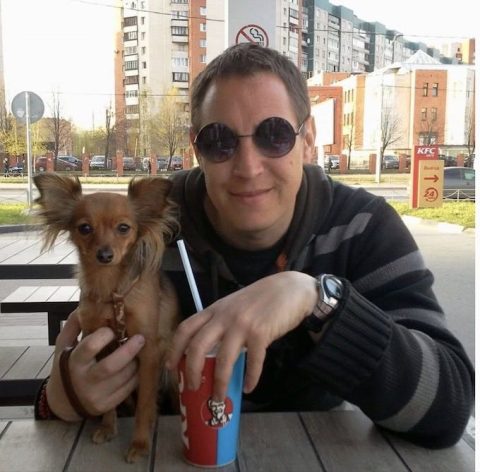
The Israeli Shin Bet has apparently forcibly disappeared Artyom Kirpichonok, a Russia-based historian with Israeli citizenship who has been critical of Zionism.
According to friends of Kirpichonok, “Kirpichonok arrived in Israel last week on a flight from Yerevan, the capital of Armenia, to attend an event to which he had been invited. After landing, however, he did not contact any of them and has not been heard from since. Reports indicate he arrived at Ben Gurion Airport from Yerevan on Aug. 2.”
Ynet noted that, he , “was born in St. Petersburg and immigrated to Israel in the 1990s. He graduated from the Hebrew University of Jerusalem and returned to live in Russia about 15 years after moving to Israel. He later adopted a strongly critical stance toward Israel and frequently wrote against the country and Zionism.”
Apparently, Artyom Kirpichonok’s disappearance was due to an arbitrary arrest and detention by the Israeli Shin Bet.
The former Russian lawmaker Daria Mitina alleged that “Our worst fears have been confirmed… Artem Ivanovich Kirpichenok is in prison, in the hands of the Israeli secret police Shabak”.
One friend and colleague of Artyom Kirpichonok, Nika Dubrovsky, wrote in Counterpunch that “What we know is that he was arrested by the Shin Bet, Israel’s secret police. There has been no contact with him since. There has been no official reason for his detention.”
According to Dubrovsky, “On August 2nd, Kirpichenko landed in Tel Aviv. A lawyer hired by his friends has since confirmed that he is being held by the Shin Bet — Israel’s internal security service” adding , “it’s so obvious he posed no danger to the authorities whatsoever: he wasn’t a member of any party, he never took any practical action on anything — partly because he was an extremely impractical person.
His only crime was his opinion on various political questions. A thoughtcrime, in other words: ‘the essential crime that contained all others in itself,’ as Orwell wrote.”
She added that many had attacked his blog posts critical of Israel, including “Ukrainian and Russian expats, former Soviet citizens living in Israel, who apparently couldn’t leave his blog alone”.
The researcher Volodymyr Ishchenko raised the possibility that Artyom Kirpichonok was even lured to Tel Aviv by the Shin Bet under the guise of a “fake invitation to an event”.
What is clear is that the Israeli Shin Bet disappeared a historian with Israeli citizenship simply because he was critical of Zionism.
Israel orders uprooting of trees on 316 dunums in West Bank for settlement expansion
MEMO | August 7, 2026
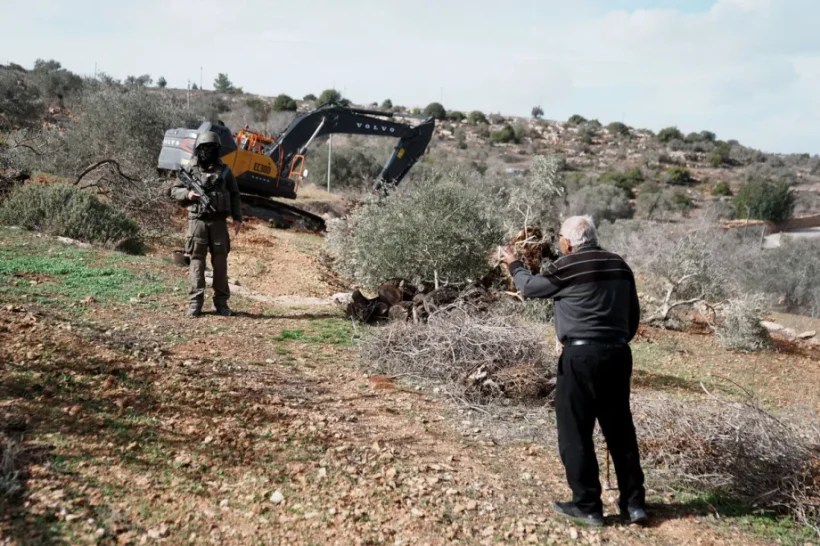
The Israeli military has issued eight orders to uproot trees and remove vegetation from 316 dunums of land across the occupied West Bank for settlement-related purposes, the Colonisation and Wall Resistance Commission (CWRC) said on Thursday.
A dunum is equivalent to 1,000 square metres.
In a statement issued on Thursday evening, the Palestinian government body said the orders require the removal of wild vegetation and olive trees from land identified in attached maps.
The eight orders cover a total of 316.636 dunums. Six of them target about 311 dunums in the northern governorate of Jenin, while the remaining two apply to the Nablus governorate and occupied East Jerusalem.
The commission said the vegetation clearance does not target isolated farmland but areas alongside main roads, expanding Israeli control on both sides of the roads and causing direct damage to olive trees and neighbouring agricultural land.
It warned that the Israeli authorities are using the orders to facilitate the establishment of settlements, saying the measures are intended to prepare the land for settlement infrastructure while restricting landowners’ access to and use of their property.
According to the commission, Israel has issued 59 orders since the beginning of 2026 to remove tree cover from 2,480 dunums of Palestinian-owned land. It added that around 60,000 dunums of Palestinian land have been seized during the 1,000 days of the Gaza war, which began on 8th October 2023.
Palestinians warn that such measures are paving the way for Israel to formally annex the occupied West Bank, which they say would undermine the possibility of establishing a Palestinian state as envisaged in relevant United Nations resolutions.
British academic and Press TV co-host David Miller wins legal battle as UK court protects anti-Zionist beliefs

British academic and Press TV co-host David Miller (File)
Press TV – August 4, 2026
A British appeals tribunal has upheld a landmark ruling in favor of British academic David Miller, confirming that anti-Zionist beliefs are protected under UK equality law and dismissing almost all of the University of Bristol’s appeal against findings of unlawful discrimination and unfair dismissal.
The Employment Appeal Tribunal (EAT) overwhelmingly rejected the University of Bristol’s challenge to an earlier Employment Tribunal judgment that found Miller, a producer and co-host of Press TV’s weekly show ‘Palestine Declassified’, had been unlawfully discriminated against and unfairly dismissed because of his anti-Zionist philosophical beliefs.
The Tuesday ruling establishes a binding legal precedent that anti-Zionist beliefs are protected under the Equality Act 2010, making it unlawful to discriminate against individuals because they hold the belief that Zionism is inherently racist, imperialist and colonial, and ought to be opposed.
Miller, a professor of political sociology specializing in propaganda, lobbying and state power, was dismissed by the University of Bristol in October 2021 following a sustained campaign over his criticism of Zionism, Israel and pro-Israel lobbying organizations.
The appeal court upheld the tribunal’s findings that Miller’s expression of his anti-Zionist beliefs had a “material impact” on the university’s decision to dismiss him, while reaffirming that protection of free speech is particularly important in cases involving political speech.
Rejecting the university’s argument that Miller’s views amounted only to political opinions, the EAT ruled that his critique of Zionism constitutes a protected philosophical belief under Section 10 of the Equality Act.
In a key passage, the tribunal said it was coherent to describe as “racist” an ideology promoting the establishment of a state for only “one race of people” in territory inhabited by another population, while also affirming the legitimacy of describing the migration of that group into the territory with the support of an imperial power as “colonial and imperialistic.”
The court also reiterated the earlier finding that Miller “did not oppose or have antipathy towards Jews or Judaism,” noting that the university itself had not alleged during the original proceedings that his statements were antisemitic.
In a statement following the ruling, Miller said, “For years, the University of Bristol capitulated to an intimidation campaign by genocidal Zionist groups to criminalise my sociological research.”
“The court has made it clear: universities ‘ought to be prepared to face and to weather criticism and reputational damage which flows from the exercise by its academics of their rights to speak and think freely and lawfully’ [Para 47],” said the professor, adding, “The court has also declared that it is clear, coherent and legitimate to describe Zionism as racist, colonial and imperialist. Zionist claims to the contrary have been comprehensively rebuffed.”
‘Legal precedent’
“The binding legal precedent we have established in my case,” he maintained, “means no vice-chancellor can ever again lawfully sack an academic or suspend a student simply for identifying the structural racism, colonialism and imperialism inherent in the Zionist project. Nor can any other employer. This victory belongs to the global movement for the liberation of Palestine and the final dismantling of Zionism.”
He noted that he is looking forward to returning to his work at the University of Bristol in his post as professor of political sociology. “It is important that my career is reinstated and that I am therefore free to work in higher education without fear of intimidation or reprisal.”
The judgment is expected to have significant implications for universities and employers across the United Kingdom by reinforcing legal protections for philosophical beliefs and academic freedom.
‘A Living Hell’: A Gaza Survivor Recalls Torture in Israeli Detention
By Shaimaa Eid | The Palestine Chronicle | August 3, 2026
With trembling hands, faltering words, an emaciated body, and a voice barely audible from the intensity of his pain, S.Th., 38, began recounting the brutal circumstances of his arrest.
What began as an attempt to flee Israeli bombardment through what Israel had designated a “safe corridor” during its ongoing genocide in Gaza ended with months of torture in Israeli interrogation facilities and the Negev Desert Prison.
“After nights of relentless bombardment around our home in Gaza City, my mother, my wife, and I decided to leave,” S.Th. told the Palestine Chronicle. “My wife was in critical condition after miscarrying because of the overwhelming fear and terror.”
The family walked toward Kuwait Roundabout before reaching the so-called safe corridor at the Netzarim checkpoint.
“What awaited us there,” he said, “was even more horrifying than the bombardment itself.”
“My mother leaned on my shoulder the entire way, and all of us held our ID cards high above our heads,” he recalled. “Without any warning, an Israeli officer emerged from behind a sand berm and called out in clear Arabic: ‘Hey, you with the ID who’s fanning your mother, come here.’”
At first, S.Th. was unsure the soldier was addressing him.
“I looked around to make sure he was talking to me,” he said. “Then the officer gestured for me to come behind the sand embankment.”
The moment he reached the soldiers, the man said, he was ordered to strip naked.
“They bound my hands and forced me to sit on sharp seashell-covered stones for three consecutive days.”
Used as Human Shields
For three days, S.Th. said he endured beatings with rifle butts and constant verbal abuse. He and a group of other young men were then forced to sit beneath the barrel of an Israeli tank, where they were used as human shields.
“The tank kept firing shells while we were directly beneath it,” he recalled. “After every single shot, we waited for our souls to leave our bodies, believing death had finally come.”
He never had the opportunity to say goodbye to his family.
“I never had the chance to say goodbye to my mother or my wife,” he said. “Anyone who stopped or even turned around risked being shot dead.”
As they walked in large groups, bodies lay scattered along both sides of the road.
“It was as if the occupation wanted to send us a clear message,” S.Th. said. “‘This is what happens to anyone who disobeys our orders.’”
His voice faltered as he described what happened next.
“They tied our hands and loaded us into the bucket of a bulldozer used to carry sand,” he said. “Then they covered us with a large tarpaulin. After driving only a short distance, they suddenly dumped us into a massive sand pit.”
The detainees believed they were about to be executed.
Instead, Israeli soldiers returned, gathered them again, and loaded them into a military vehicle. From conversations they overheard, they understood they were being transferred to an interrogation center.
“We had no idea where they were taking us,” S.Th. said. “When we arrived, I heard one of the soldiers say, ‘Zikim, Zikim,’ before signaling the driver to stop. At the time, we had no idea that a living hell awaited us there.”
‘A Living Hell’
Recalling his arrival at the facility, S.Th.’s hands began to shake.
“The moment we arrived, dozens of soldiers greeted us with savage beatings all over our bodies using metal batons and electric sticks,” he said. “They then forced us to remain kneeling for five consecutive days.”
During that period, he said, detainees survived on little more than a small piece of bread each day. “It was nowhere near enough to satisfy our hunger.”
According to S.Th., Israeli forces identify Palestinians attempting to cross the so-called “safe corridor” through an advanced facial-recognition system while they hold their identity cards above their heads.
“Those five days felt endless,” he recalled. “After that, they marched us away with our hands and feet shackled and our eyes blindfolded to a large barracks.”
The detainees, he said, were permitted to use the bathroom only once each day.
“They also deprived us of sleep by blasting deafening music through loudspeakers around the clock,” S.Th. said
Interrogation and Torture
Speaking quietly, S.Th. paused before describing the interrogations.
“All the way to the interrogation room, the soldiers kicked us repeatedly,” he said. “They dragged us along by our bound hands and forced us into painful stress positions until we were completely exhausted.”
Only then, he said, would the interrogating officer ask a single question: “Do you want to talk?”
According to S.Th., the interrogations focused largely on political affiliation.
“He accused me of things that had absolutely nothing to do with me,” he said. “When I denied them, he ordered that I be taken back to the torture room.”
There, he said, two soldiers subjected him to severe abuse. “They beat the most sensitive nerve centers in my body and struck my genitals.”
Sleep, S.Th. said, became almost impossible.
“Whenever I drifted off, a soldier standing behind me would repeatedly strike a metal sheet with a hammer while shouting, ‘Wake up. Wake up. Wake up.’”
Eventually, exhaustion overwhelmed him.
“I collapsed unconscious onto the ground,” he recalled. “A soldier lifted me from behind and immediately began kicking me with both feet to prevent me from resting or even taking a brief nap.”
Two weeks later, S.Th. was returned to the interrogating officer.
“He leaned over and whispered in my ear, ‘How was your visit? Was it a long one? If you had confessed from the beginning, you could have spared yourself all this suffering,’” he said.
The officer then repeated the same accusations and questions.
When the interrogation concluded, S.Th. said the interrogator wrote words on his back that he could not understand before soldiers returned him to a barracks holding dozens of detainees from Gaza.
“There we sat with our hands tied, forced to kneel from morning until evening without moving or even turning our heads,” he said. “We were given only ten minutes to eat our meals.”
Negev Prison
S.Th. said he was later transferred with approximately 50 other detainees to the Negev Desert Prison.
“As soon as we arrived, a large group of soldiers was waiting for us,” he recalled. “They beat us mercilessly before throwing us into freezing cells without blankets while we were dressed only in light clothing.”
Soldiers deliberately targeted the prisoners’ shackled hands during the beatings: “They concentrated their blows on our hands, which were already tightly bound in iron shackles.”
After nearly two months of torture and starvation in interrogation centers and later in Negev Prison, Israeli authorities released S.Th. and a group of detainees through the Kerem Abu Salem crossing.
They were subsequently transferred to a hospital for medical examinations and treatment.
Reflecting on his imprisonment, S.Th. said he and the other detainees endured severe physical and psychological torture throughout their detention.
He stressed that they had been arbitrarily detained, held for an extended period without charge, and never brought before a court.
– Shaimaa Eid is a Gaza-based writer. She contributed this article to the Palestine Chronicle.
Europe Wants To Prevent It’s Citizens From Even Hearing The Russian Perspective
The Dissident | August 3, 2026
As EU countries continue to fuel the never-ending proxy war in Ukraine, its leaders want to prevent citizens from even hearing the Russian perspective.
In the most recent move, the Emmanuel Macron government in France is trying to ban the Russian-French journalist Xenia Fedorova from the country, simply for giving an alternate perspective on the Ukraine war in TV interviews.
On X, Zenia Fedorova wrote :
The government of Emmanuel Macron has decided that my statements made publicly on the sets of CNEWS and Europe 1, as well as my columns published in the pages of JDNews, represent an immediate danger to the Republic, and has ordered my expulsion on grounds of absolute emergency.
I am accused of seeking “to undermine the confidence of European citizens, and in particular French citizens, in their institutions and to instill doubt about the legitimacy of the support provided to Ukraine.”
They assert that my behavior, which consists of living in France for nearly ten years in compliance with the law, paying my taxes, but also having an opinion and expressing it as part of my work as a journalist, “thus harms the fundamental interests of the State” and that my presence on the territory constitutes “a particularly serious and current threat to public order; that consequently, there is reason to order, on grounds of absolute emergency, his expulsion from national territory pursuant to Article L. 631-1 of the CESEDA in order to put an end as quickly as possible to these positions that have the effect of destabilizing the social fabric.”
In addition, the Minister of the Economy, Roland Lescure, and the Minister of the Interior, Laurent Nuñez, issued a decree overnight aimed at freezing my assets.
This follows a series of actions from EU countries designed to prevent its citizens from even hearing Russia’s perspective.
Last month, the EU ruled that three obscure bloggers in Germany violated EU sanctions law because they shared content from the Russian broadcaster RT on a few occasions, in effect barring even sharing content from Russian media.
The EU has even placed sanctions on commentators who have no connection to Russia, and do not endorse Russia’s invasion of Ukraine, most notably the retired colonel in the Swiss army, Jacques Baud, simply because he was critical of official EU policy in the Ukraine proxy war.
EU countries supporting the proxy war in Ukraine have made it clear they are opposed to citizens even hearing Russia’s perspective.
While this is framed as combating “dangerous disinformation,” the reality is the EU wants to black out the Russian perspective because it will make it harder to continue the proxy war in Ukraine.
As political scientist John Mearsheimer recently explained to the EU’s European Parliament, the EU continues to spread a narrative claiming that Russia’s goal “is to conquer all of Ukraine and make it part of a greater Russia. Once that goal is achieved, Russia will move to create an empire in Eastern Europe, much like the Soviet Union did after World War II. In this story, Putin is a mortal threat to the West and must be dealt with forcefully. In short, Putin is an imperialist with a master plan that fits neatly into a rich Russian tradition”.
But as he noted, there is no evidence backing up this narrative, and all evidence shows that Russia launched the invasion of Ukraine to prevent it from becoming a NATO member.
“While it is widely believed in Europe, and again, I’m sure here in the European Parliament, that Putin is an imperialist who has long been determined to conquer all of Ukraine and then conquer additional countries west of Ukraine, virtually all the available evidence is at odds with this perspective. In fact, the United States and its and its European allies provoked the war” he noted.
One can still oppose the Russian invasion of Ukraine, but the reality is, the war was launched after decades of U.S. provocations, not because Russia wants to recreate the Soviet Union and conquer all of Europe.
Even hearing the Russian perspective, even if one disagrees, will help show that the European narrative of Russia wanting to conquer all of Europe is false.
For this reason, EU countries don’t want citizens even hearing the Russian perspective, in order to continue the bogus narrative needed to continue fuelling the proxy war in Ukraine.
Eliyahu, son of the Hebron massacre perpetrator, leads West Bank settlement expansion

Israeli settlers in the hills around Hebron [Mosab Shawer / Middle East Images / AFP via Getty Images]
By Malik Nabeel | The New Arab | July 31, 2026
Ramallah – The family of Palestinian Hussein al-Amleh in the town of Beit Ula, west of Hebron in the southern occupied West Bank, was expelled from his land on 22 July after a settler vandalised a tent and sheep pen where al-Amleh and his son were staying. The incident took place as part of the expansion of a settlement outpost established a few metres west of the town about a year ago.
Its area of control has expanded to more than 1,300 dunams (1.3 square kilometres), designated as a “closed military zone” from which the original Palestinian landowners have been barred.
As one of the owners of the confiscated land, al-Amleh said that a settler named Eliyahu Goldstein, son of Baruch Goldstein, who carried out the 1994 Ibrahimi Mosque massacre that left 29 people dead and 125 others injured, drove them from the land after storming it.
Al-Amleh told The New Arab, “We tried to remove the settler and those with him, and demanded that they leave when they stormed the land… There were verbal confrontations between us, after which Eliyahu attacked and assaulted us. He was armed, while the Israeli occupation army stood by without moving or doing anything.”
He said he told soldiers that they were responsible for him, to which the army officer replied that al-Amleh had to listen to Eliyahu and follow his instructions. The answer prompted al-Amleh to reply, “This is our land. We were born here, and our children and grandparents were born here.”
Since 22 July, 2025, Baruch Goldstein’s son Eliyahu has expanded the seizure of land in Beit Ula. He has placed a caravan there, from which he launches daily attacks, detains landowners and hands them over to the Israeli occupation army for interrogation, as happened with two other residents following the incident involving the Al-Amleh family.
During the assault, Eliyahu detained al-Amleh’s son, Mahmoud, and took him to a military post adjacent to the separation wall west of the town before handing him over to the Israeli occupation army. Mahmoud was then transferred to the Etzion interrogation centre north of Hebron.
“All of this happened simply because my son and I refused to leave our land,” al-Amleh told The New Arab.
He added that he owns dozens of dunams in the western area of Beit Ula, which Eliyahu has since taken control of, and had relied on them for farming, grazing and overnight stays. He had erected a tent there and established a small sheep farm known as an “izba”. However, according to his account, the settler vandalised it, prevented him from grazing his livestock, and threatened to shoot him and confiscate the sheep if he returned to the land.
Eliyahu is described by Palestinian residents as one of the most extremist and violent settlers in the greater Hebron area, with accounts alleging that he does not hesitate to open fire if anyone approaches him.
At the beginning of April, Eliyahu shot Iyad Al-Sarahin in the abdomen, causing severe intestinal damage and injury to his liver. During the same period, he also shot another person in the hand while residents were attempting to reach their land.
Jamal Taleb, an adviser at the Land Research Centre in Beit Ula, told The New Arab, “Eliyahu was raised in schools of Jewish extremism, just like his father.”
Taleb said Eliyahu began his settlement activities in areas east of Hebron and its Old City before “moving last year to Beit Ula, which had never previously witnessed any settlement presence on its land”.
Taleb pointed to the relationship between Eliyahu and the Israeli forces, saying, “On more than one occasion, we have seen officers in the Israeli occupation army salute him militarily, even though he is not a soldier.”
He added that Eliyahu works to “steal sheep and then claim ownership of them. His primary task is to destroy agricultural land, ruin farming and force residents to abandon and leave their land.“
Taleb added that the settler relies on foreign workers to carry out his attacks, saying, “He has Thai workers who work with him. He uses them to pursue residents with agricultural tractors, and they move in a provocative manner to stir up dust while farmers are on their land. He is then accompanied by one settler, who acts as his assistant.”
Eliyahu also appears to enjoy official backing from the Israeli government. Taleb said he is “strongly supported by National Security Minister Itamar Ben Gvir, to the extent that no one dares oppose him or refuse his requests”.
Taleb also said that Eliyahu repeatedly tells residents, “Your turn will come. I will seize this land, and one day we will expel all of you from Areas B and C,” referring to the areas designated under the 1993 Oslo Accords.
Taleb confirmed that Eliyahu possesses the key to the gate in the separation wall that separates Beit Ula from the territories occupied in 1948. He uses it to travel to the settlement of Nahusha, built on the town’s historic lands beyond the wall.
Taleb cited an incident on 11 July, when activists from the Arab-Jewish movement “There Is Room for All of Us” arrived to accompany residents to their land for the harvest. He said they had received prior approval from the Israeli occupation army, “but Eliyahu arrived at the site accompanied by occupation forces, expelled the residents and the solidarity activists, and the forces fired tear gas on his orders.”
He added that Eliyahu had previously set fire to farmers’ land while they were attempting to reach it.
Eliyahu also uses drones to monitor farmers’ movements and rarely moves without covering his face. “Experts stand behind him, providing support and assistance, even if they are not present at the site.”
Taleb said Eliyahu possesses “all the machinery and equipment necessary to carry out acts of destruction, bulldozing, cutting and other operations.”
Eliyahu is known for not remaining in one place, instead moving between different areas to establish new settlement projects.
Taleb described him as “highly aggressive”. He previously lived in the settlements of Kiryat Arba east of Hebron, Susiya to the south and Adora to the west. He is also active in the northern Jordan Valley.
Taleb said Eliyahu “only establishes settlement outposts in cultivated, exploited areas adjacent to the boundaries of Area B because one of his objectives is to expand settlement gradually from Area C into Area B. In contrast, we are pursuing a legal path to prove ownership of lands whose Palestinian ownership the occupation does not recognise.”
Meanwhile, Issa Abdul Hafiz, one of the owners of the land seized by Eliyahu, said the settler has prevented him from accessing more than 40 dunams (40,000 square metres) that he owns, in addition to hundreds of dunams belonging to his family.
Abdul Hafiz told The New Arab that “the settler Eliyahu has escalated his attacks in recent months, destroying more than 150 olive trees and other fruit-bearing trees, and preventing family members from grazing their sheep on their own land”, stressing that this pattern of attacks has affected hundreds of dunams, all treated in the same way.
Abdul Hafiz said the settlement expansion extends beyond the outpost established by Eliyahu, explaining that “he expands his settlement activities every day, goes beyond the boundaries of the area classified as a ‘closed military zone’, and attacks any farmer who reaches his land.”
He confirmed that Eliyahu’s attacks have extended to the outskirts of the neighbouring villages of Kharas and Nuba, adjacent to Beit Ula.
Abdul Hafiz also said that the Israeli settler burned hundreds of dunams planted with wheat, driving his agricultural tractor through the area and setting fires between the fields over recent weeks.
From the Ibrahimi Mosque to settlement expansion
Rashed Al-Tamimi, a former activist with the Israeli human rights organisation B’Tselem – The Israeli Information Center for Human Rights in the Occupied Territories, recalled an earlier encounter with Eliyahu dating back about 13 years, when he established a settlement outpost in the Jabal Jalis area east of Hebron after forcibly seizing a plot of land there.
Al-Tamimi told The New Arab, “Eliyahu set up a caravan, brought settler Jewish families to it and established their presence there. The outpost now includes around 20 settlement homes.”
Al-Tamimi described Eliyahu as “an expert in establishing settlement outposts”, explaining that he moves between Palestinian areas to create new outposts “without any justification, or even a legal cover, using excessive force through carrying weapons, opening fire, and relying on protection from the Israeli occupation army. He establishes the outpost, gives it legitimacy, hands it over to settlers, and then leaves the area for another one.”
Al-Tamimi also recalled another incident from about five years ago, when Eliyahu attempted to establish a settlement outpost on his privately owned land in Jabal Jalis.
He said, “Eliyahu came to our area in Jabal Jalis and tried to establish a settlement outpost on my private land. When he stormed my land, my son and I rushed out, confronted him, argued with him and prevented him from establishing the outpost. He then filed a complaint against me with the Israeli police in the Ja’abra area, east of Hebron.”
Al-Tamimi said Eliyahu received support from settlement organisations, including “Kach” and “Gush Emunim”, which did not condemn the 1994 Ibrahimi Mosque massacre.
He added that the settler has carried weapons during his movements for years, but “he used to wear civilian clothes. Recently, however, he moves only in military uniform, despite not being a soldier.”
Article translated from Arabic by Afrah Almatwari. To read the original, click here.
Featured Video

AIDS Inc. by Gary Null (2007)
or go to
Aletho News Archives – Video-Images
From the Archives
Clash of Civilization, Iran Part II
By Jamal Kanj – Intifada-Palestine.com – January 14, 2011
Israel’s survival kit is: perpetuate conflict, insecurity to rationalize collective hate and finally playing victim.
Devoid of conflict, Israel implodes internally; without hate, Zionism loses its justification; and playing eternal victim to continue blackmailing the West. Absence of this holy trinity, Israel ceases to exist.
From its inception, the house of Zion has mastered exploiting adversarial powers to advance Israel’s cause. For instance, their influence over the Democratic Party in the US began with President Truman’s bid for 2nd term election in 1948.
Responding to strong opposition from Secretary of State General George Marshall and Department experts urging against recognition of Israel, President Truman replied: “I’m sorry gentlemen but I have to answer to hundreds of thousands [Jewish voters] who are anxious for the success of Zionism. I do not have hundreds of thousands of [voting] Arabs among my constituents”
Zionists influence over liberal American politics was matched with the doctrinal school of Conservative theoreticians aligning the Republican Party’s platform with Israel’s objectives. The Neoconservative Zionists, coined Zioncons, invented the “Clash of Civilization” concept to fight Israel’s wars. … continue
Blog Roll
 Aletho News
- Merck Virologists Admitted to Falsely Certifying Vaccine Efficacy
- Mandatory Folic Acid for every man, woman & child
- Pro-Palestine protesters arrested outside UK’s ruling Labour Conference in Liverpool
- Mauritius denies landing permit to flight from Israel, forcing cancellation: Tour operator
- Israeli finance minister calls for genocidal war on West Bank, annexation of south Lebanon
- 12 Things Your Psychiatrist Was Trained Not to Tell You
- From Unipolar Universalism to Multipolar Civilizational Distinctiveness
- RSF military group defects, joins Sudanese army: State media
- Ireland goalkeeper refuses to play ‘Israel’ as squad weighs boycott
- China pushes back against US on Cuba, Iran
- If Americans Knew
- Israel forces Gazans to live in constant peril – Daily Update
- Deconstructing Netanyahu’s pants-on-fire UN rant – Daily Update
- Trump betrayed voters with his campaign lies and prioritized a foreign country once he took office
- Netanyahu calls Israel’s war in Gaza ‘opposite of genocide’ in UN speech to near-empty hall
- Settler Kidnappings: Torture, Sexual Abuse and Terrorisation of Palestinian Abductees as Israel Deepens Annexation of West Bank
- Gaza winter nears as 162,000 tents become unusable, raising fears of humanitarian crisis
- Netanyahu says, “It’s the opposite of genocide”; UN says Gaza economy is world’s ‘most severe crisis on record’ – Daily Update
- Israel’s US-Backed Assault on Gaza Has Created the ‘World’s Most Severe Economic Crisis on Record’: UN
- ‘Protecting U.S. Citizens’… From Israel
- ‘This is where I live now, the back of a truck’: a day in the life of a grandmother in Gaza
- No Tricks Zone
- New Study: Earth And Venus Surface Warmth Largely Explained By Convection And Lapse Rate, Not CO2 Or Radiation
- 2025 Nature Paper Claiming Worsening Global Drought Gets RETRACTED …Heavily Flawed
- New Study: ‘Global Drought Shows No Detectable Recent Acceleration Under Climate Warming’
- Economic Masterminds: German Socialists Suggest Taxing Productivity Gains Stemming From Using AI
- The South China Sea Has Not Been Cooperating With The Climate Change Narrative
- Energy Crisis: Germany Enters Heating Season With Historically Low Gas Reserve Fill Levels
- New Study: The Antarctic Ice Sheet Gained Mass From 2020-2024 Due To Staggering Snow And Ice Accumulation
- Study: Ocean Heating Rates From Thousands Of Years Ago ‘Dwarf’ Modern Ocean Heating Rates
- Climate Extremists Target, Attack Large-Scale Power Grid Infrastructure In Germany!
- New Study: Antarctic Ice Melt Has Contributed Less Than 1 Centimeter To Sea Level Rise In The Last 30 Years

