Israeli sniper shoots Canadian citizen in West Bank
American Herald Tribune | January 21, 2016
In describing what she calls a lack of symmetry in recent escalations in Israel and the West Bank, Canadian-Palestinian artist and PhD student Rehab Nazzal told The Real News, “You have the Israeli occupation forces armed with all forms of weapons, and you have the youth, mainly the youth in their 20s, mostly they were born during what’s called, between quotations, the peace process.”
Nazzal is describing Palestinians born during the Oslo Accord negotiations of the 1990s, who have been protesting across Israel, the occupied West Bank and Gaza since the summer–and suffering for it.
Since 1 October 2015, 155 Palestinians have been killed by Israeli forces. 24 Israelis have been also been killed, many in stabbing or car ramming attacks.
Nazzal was photographing an Israeli skunk truck in the West Bank–an armored crowd control vehicle that shoots putrid water–when an Israeli sniper shot and wounded her on 11 December, 2015. Medics were prevented from attending to her because rounds of teargas were shot consecutively at them by Israeli forces.
She is recovering still in the West Bank, and plans to continue her Canadian federal government research council-funded research into “non-lethal” and crowd-control weapons.
Nazal contextualizes her shooting among the countless other shootings across the West Bank. “I am one of over 16,000 Palestinians who were injured during the past three months. Among these, over 6,000 with live bullets. Just yesterday, here in my neighborhood where I am now, there were tens of Palestinians who were injured, one seriously with live bullets, and one was killed. He was shot in the chest and was killed yesterday. Today was his funeral. And the city is just buried with tear gas and all forms of aggression,” she said.
She continues to speak about the inequity of aggression between Palestinian youths throwing stones and Israeli forces quelling the demonstrations with live bullets and the inability of nations–even her own nation–to act. “It’s very difficult. And the worst part of it, that the world is silent.”
According to Nazzal’s lawyer Dimitri Lascaris, there is little legal recourse to take because of “something called a State Unity Pact, which effectively bars a lawsuit against the government of Israel or any other government for human rights violations,” Lascaris said, clarifying that he is referring to the Canadian courts. He adds that what is “appalling about this law is that it does not provide immunity for states when they engage in commercial activities. But they could commit crimes against humanity, war crimes, you know, some of the most heinous offenses under international human rights law, and they’re completely immune from suit in the domestic courts of our country.”
Nazzal and Lascaris do intend to painstakingly document the event of Nazzal’s shooting, and in particular the impediment of medics by Israeli forces. And using political power, Lascaris said, “we’re going to call upon the government of Justin Trudeau to fulfill its promise of a more principled foreign policy than the predecessor Harper government, which was absolutely and unequivocally committed to supporting the government of Israel, no matter what atrocities it committed.”
As yet, the new Canadian prime minister Justin Trudeau has not provided a statement of support for the Palestinian struggle and continues to remain a close ally of Israel.
Trudeau is also principally opposed to the Boycott, Divestment and Sanctions movement, a Palestinian civil society-led grassroots movement to call on companies to end their complicity with the Israeli occupation.
Nazzal describes her disappointment with the Canadian government’s lack of response–she is a Canadian citizen–as well as the lack of response from the Canadian ambassador to Israel.
“Not even a condemnation to what happened… If we suppose that the Israeli soldiers don’t know I am a researcher doing work, but I am an unarmed civilian and standing away, far from protesters, even this, we haven’t heard any word… from the Canadian ambassador in Israel or the foreign minister.
Which brings that hypocrisy to our human rights violations in other countries. Why, why Israel is not being questioned. I am, again, a Canadian citizen. I have my career, my children there. I have my life there. Yeah, I am just in disbelief, as well.”
Human Rights After Euromaidan
By Volodymyr Chemerys | CounterPunch | January 22, 2016
We have to admit: after winning ‘Euromaidan’, the human rights situation in Ukraine has deteriorated significantly.
This trend became apparent already in 2014, evidenced by a number of laws approved during the post-Maidan wave. In particular, we are talking about the law allowing preventive detention of citizens for thirty days, despite the fact that under the Constitution a person may be detained only for 72 hours. Also, changes have been made to the Criminal Code to enable cases to open against a Ukrainian citizen for making critical comments about the military draft of citizens in the “Anti-Terrorist Operation zone”.
In 2015, this trend continued. A law was passed on “de-communization” which is in conflict with a number of fundamental rights and freedoms guaranteed by the European Convention for the Protection of Human Rights and Fundamental Freedoms. These include freedom of assembly and association (Article 11 of the Convention), freedom of expression (Article 10) and freedom of speech.
As a consequence, in Ukraine there are a large number of political prisoners. In this regard, it should be emphasized that the people usually referred to as “political prisoners” in our media are typically representatives of right-wing organizations, arrested for the murder of a renowned journalist or involved in the grenade explosion near the Verkhovna Rada last August–in other words, people who are accused of committing serious criminal offenses.
The real political prisoners are journalists such as Ruslan Kotsaba, arrested and charged in early 2015 for expressing his views on the Internet, or communists such as Alexander Bondarchuk, who was distributing newspapers and leaflets containing oppositional texts. These are just two examples of many more that could be cited.
The situation of the right of peaceful assembly in Ukraine has also seriously deteriorated. On the one hand, courts in Ukraine do not make many decisions prohibiting public meetings. In some regions, including Kiev, local authorities generally do not make requests to the courts to restrict the freedom of peaceful assembly.
But on the other hand, the holding of peaceful assemblies on certain issues is today extremely dangerous. This is due to the threat of attack from the far right. Organizers often abandon planned assemblies due to the threats that they receive.
For these reasons, rallies against rising social service tariffs, the military draft or fascism, or rallies in favour of establishing civil peace, etc have been cancelled. On March 17, 2015 in Odessa, there was an attempt to organize a rally against tariff hikes in public transport, but the people who came out for it were surrounded by members of the right-wing groups, such as ‘Automaidan’ and ‘Oberig’ and only miraculously managed to avoid a serious clash.
And on January 19, the ultra-right disrupted a rally in Kyiv aimed to commemorate two Russian antifascists, the lawyers Stanislav Markelov and Anastasia Baburova who were killed in Russia in 2009.
It can be said that today in Ukraine, carrying out public actions advocating for social, political or economic rights is almost impossible. Actions in support of civil peace are immediately declared “separatist”. At the beginning of 2015 in Ukraine, there were large and frequent spontaneous demonstrations against military draft mobilizations. These were broad, grassroots initiatives by a dissatisfied population. But their organizers and participants have been hit with administrative penalties or, worse, have been tried in courts.
In general, it seems that the Parliament, the government and the president are able to offer the population nothing but usurious tariff increases, unemployment, anti-social reforms and further impoverishment. Dissatisfaction is increasingly punished by persecution. We are repeatedly told that that there is a war in our country, and the opposition should be imprisoned while “patriots” should be forgiven even for acts of murder because they kill so-called separatists. Never mind that members of the ‘Tornado’ and ‘Aidar’ battalions have tortured people – you must understand that they wanted to defend the rights and freedoms of Ukrainians!
Alas, this patriotic propaganda that dominates today in the Ukrainian society is, in fact, no different from the Russian variant. We have returned to the realities of the Soviet era, when it was impossible to freely express a point of view or watch this or that film. Ukraine has proscribed the Russian film ‘Irony of Fate’ and many other films. And the Institute of National Remembrance, a kind of ‘Ministry of Truth’, refused to give permission to register a newspaper called ‘Left March’ because the name is the same as the title of the well-known poem by the communist poet Vladimir Mayakovski.
So the human rights situation in Ukraine has deteriorated significantly and it is a real challenge for human rights activists to do their work. If similar things had happened during the regimes of Yanukovych (2010-14), Yushchenko (2005-09) and Kuchma (1994-2005), all human rights activists would unanimously have said that systemic violations of civil rights are taking place. If during the time of President Yanukovych, a journalist were placed on trial, an opposition political party were banned– as today the Communist Party is banned, or opposition parties were prevented from participating in local election, it would certainly have provoked a huge outcry among Ukrainian human rights activists.
Unfortunately, today, the powerful voices of human rights defenders are practically silent. This is due, first of all, to the fact that talking about such things is potentially dangerous. Critical voices run the risk of being labeled “agents of the Kremlin” or “separatists” by both the authorities and the members of ultra-right organizations.
Despite all this, there are human rights activists in Ukraine who are speaking out in favour of human rights, even if they face threats and harassment for doing so. Of note among such people is Tatiana Montyan.[1]
As a rule in such a situation, the loudest voices of human rights defenders are international human rights organizations, most notably, Human Rights Watch and Amnesty International. But in the case of the latter, its statements criticizing the Ukrainian government are coming mostly from the organization’s headquarters in London while its Ukrainian division maintains a certain politesse.
The Helsinki Union and Amnesty International in Ukraine issued statements in support of the aforementioned Ruslan Kotsaba. However, in comments to the published texts of the group, one reads many allegations that human rights defenders have “sold themselves to Putin” and so on, while in fact the same organizations – from Human Rights Watch and Amnesty International to the Organisation for Security and Cooperation in Europe –constantly report on systematic violations of civil rights in Russia, just the same as in Ukraine.
One cannot remain silent about what is going on now in our country.
Translator’s notes:
[1] See a July 2015 interview with Tatiana Montyan translated and published here on Fort Russ.
[2] All Ukrainian passports list names in their Ukrainian and Russian literations. Hence, ‘ Volodymyr (Vladimir) Chemerys’.
From Wikipedia:
Volodymyr Chemerys, b 1962, is a founding member of the Ukrainian Helsinki Union, one of the first perestroika organizations in Ukraine advocating renaissance of national culture and independence. The Union is now a human rights advocacy group. Chemerys was a member of the Verkhovna Rada (parliament) of the second convocation (1994–1998), but he is mostly known as one of the informal leaders of the ‘Ukraine without Kuchma’ mass protest campaign of 2000-2001. He also took part in the legendary 1991 student protests in Kiev.
Beginning from a conservative outlook, Chemerys has moved to the political left since the disappointment of the Yushchenko presidency.
Original text in Ukrainian here, translated to English by Liva.com, Jan 21, 2016
Paris state of emergency to remain till Daesh defeat: French PM
Press TV – January 22, 2016
France says the state of emergency put in place in Paris after last November’s deadly terror attacks by Daesh will be extended until the world could totally get rid of the Takfiri terror group.
Prime Minister Manuel Valls said in an interview with BBC Europe that France would seek to keep the state of emergency in place until the end of what he called the “global war” against Daesh terrorists.
“As long as the threat is there, we must use all the means,” he said, adding the state of emergency should stay in place “until we can get rid of Daesh.”
The French premier also called for a “total, global and ruthless” war against Daesh, which has swathes of land under control in Iraq and Syria since June 2014.
The state of emergency was imposed assailants struck at least six different venues in and around Paris on November 13, 2015. The terrorist attacks, claimed by Daesh, left 130 people dead and over 350 others wounded.
The exceptional measures adopted under the state of emergency empower the French police to keep people in their homes without trial, searching houses without judicial approval and blocking suspicious websites.
The new measures also include a ban on public demonstrations and allow authorities to dissolve groups inciting any acts that seriously affect public order in France.
UN rights specialists have called on the French government not to extend the state of emergency beyond February 2016 and instead ensure protection against any abuse of power while combating terror.
A number of French nationals are fighting alongside terror groups in Syria.
Refugee crisis in Europe
Valls warned that the European Union faces a grave danger from the ongoing refugee crisis.
He said the EU could not take all refugees fleeing the “terrible wars in Iraq or Syria. otherwise,” he added, “our societies will be totally destabilized.”
Europe has been facing an unprecedented inflow of refugees fleeing wars and violence in Africa and the Middle East, particularly Syria.
According to Valls, Europe needed to take urgent action to control its external borders, emphasizing that “if Europe is not capable of protecting its own borders, it’s the very idea of Europe that will be questioned.”
“We cannot say or accept that all refugees … can be welcomed in Europe, “ Valls noted, criticizing German Chancellor Angela Merkel, who called for her European partners to take on quotas of refugees.
He also said the EU needs to say in the strongest terms “that we will not welcome all the refugees in Europe.”
Last year, more than one million asylum seekers – the most since World War II – arrived in the European continent after making dangerous journeys by land and sea.
Everyday, about 2,000 refugees arrive in the European Union, according to official numbers.
UK PM calls for limiting war legal claims
Press TV – January 22, 2016
British Prime Minister David Cameron says he wants to stamp out what he called spurious legal claims against war veterans.
He said ministers had been asked to draw up plans to restrict claims, including by curbing financial incentives for “no win, no fee” cases.
The statements come as about 280 UK veterans are currently being investigated over alleged abuse by soldiers during the Iraq War.
Lawyers said no-one was above the law, and many abuse cases had been proven.
The Iraq Historic Allegations Team (IHAT) was established to investigate allegations of murder, abuse and torture against Iraqi civilians by UK military personnel between 2003 and 2009.
According to media reports, IHAT has considered at least 1,515 possible victims – of whom 280 are alleged to have been unlawfully killed – and lawyers are continuing to refer cases of alleged abuse. The head of the inquiry, Mark Warwick, has said there are “lots of significant cases” and that discussions would be held over whether they met a war crimes threshold.
Earlier, Cameron said he feared people were being “solicited by lawyers” enticing them into making accusations, and was concerned many of them were fabricated.
“Our armed forces are rightly held to the highest standards – but I want our troops to know that when they get home from action overseas this government will protect them from being hounded by lawyers over claims that are totally without foundation,” Cameron said, adding he had ordered the National Security Council to produce “a comprehensive plan to stamp out this industry.
“It is very important that all forces should be responsible within the law,” a London-based political analyst Rodney Shakespeare told Press TV.
He said the UK society needs to uphold the principals of decent behavior adding this is disgraceful that the government is now putting heavy efforts into stopping the trend.
IRAQ: The War Legacy and the ‘Staggering’ Suffering of Its Civilian Population…
The Burning Blogger Of Bedlam | January 22, 2016
‘Staggering’ is how the UN has described the depth and nature of civilian suffering in post-war Iraq; citing over 18,000 civilians having been killed in the space of just this last year-and-a-half.
According to the report, conducted by the United Nations Assistance Mission for Iraq and the Office of the High Commissioner for Human Rights, an approximate 3.2 million people have also been displaced internally over this same period of time.
The UN report confirms the brutality of the so-called ‘Islamic State’ group, with its unprecedented levels of gruesome, rampant violence and criminality. But contrary to popular portrayal, the violence in Iraq isn’t limited to ISIS/ISIL, but includes various crimes committed by Iraqi troops, militiamen and Kurdish forces, as recorded in the UN report.
The UN also acknowledges that the recorded 18,802 civilians killed (and 36,245 wounded) between the beginning of 2014 and the end of 2015 could be much higher; the figures will logically be higher, because there are multiple no-go areas for journalists and activists, where crimes can’t be investigated.
Among the most brutal of the many brutal crimes committed by the foreign-backed ‘ISIS/ISIL’ was an incident in Mosul where victims were forced to lay down in front of a crowd while a bulldozer was driven over them, and the militants executing 19 women for refusing to submit to sex with ISIL fighters. Up to 900 children have also been reported abducted in Mosul and subjected to forced indoctrination and military training. The report also highlights the extent to which women and children have been subjected to sexual violence, and highlights the plight of some 3,500 people, mostly women and children from the Yazidi community, currently being held as slaves.
Read also, the UN Report on the Protection on Civilians in the Armed Conflict in Iraq, May – October 2015.
And yet for all the instability and horrors of Iraq, some 245,000 desperate Syrians have reportedly crossed into Iraq to escape the horrors of neighbouring Syria; Syrians too have been paying the price for the invasion of Iraq and the destabilisation of the entire region. These horrors are inter-related, as is what is happening in Libya.
All of the horrors highlighted in the report, however, are simply from the passed year or so. The suffering of the Iraqi people and the humiliation and destruction of Iraqi society had already been going on a long time before this and before even the rise of the horrendous, foreign-funded ISIS/ISIL proxy army.

The governments of the US/UK and NATO essentially already committed genocide against the Iraqi people between 1990 and 2012, killing an estimated 3.3 million, including 750,000 Iraqi children through either sanctions or war.
The illegal invasion and occupation from 2003 is estimated to have led to approximately 189,000 direct war deaths, but this doesn’t also include the hundreds of thousands more who died over the course of the invasion and occupation in general. This includes victims of displacement, victims of terrorism, and the many, many Sunni victims of the US-backed Shia ‘Death Squads’, and of course the many subsequent victims of the Sunni ‘ISIS/ISIL’, which many regard as a direct response to those US-backed Shia militias.
In every respect, the so-called ‘Islamic State’ owes its existence to its foreign patrons and to the illegal invasion of Iraq. As mass graves continue to be discovered, the UN has outright accused ISIS/ISIL of ‘war crimes’ and ‘crimes against humanity’ in Iraq. Whether that means scores of individual jihadists and European teenagers are going to eventually be tried in an international court (the leader or ‘caliph’ of ISIL – the elusive Abu Bakr al-Baghdadi – will probably never be tried, as he probably doesn’t exist), it’s a fair bet that the real funders and enablers of this ultra-violent sectarian nightmare will never face charges and neither will the governments, officials and corporations whose illegal warfare has created all of this suffering and death.
Whichever way we look at it – either by American/Western incompetence or by deliberate design; and there’s a massive case to be made for both – what we now know as ‘ISIS/ISIL’ is the monster-child of the 2003 Iraq invasion. Watch this video of an Iraq War veteran, and now-activist, recounting some of the horrific behaviour of invading American troops during the war, as he openly admits “I Helped Create ISIS”. Or examine the reality of the ISIS/ISIL ‘leadership’ and see where the organisation came from.
Aside from the invasion having been entirely illegal and aside from the false pretexts under which it was carried out, at least $75 billion was made in profit by American subcontracting companies alone, including Blackwater, CACI and Titan. United States’ Vice-President Dick Cheney’s company, Haliburton, made an approximate $39.5 Billion from the Iraq War alone.
Concerning the current situation, the UN High Commissioner for Human Rights has said the latest study “illustrates what Iraqi refugees are attempting to escape when they flee to Europe and other regions. This is the horror they face in their homelands”. Go back now and re-watch the old footage of Bush, Rumsfeld and the rest of the mafia of War Criminals/Profiteers talking about the need to invade Iraq; worse, go back and watch them smugly declaring ‘Mission Accomplished’.
Better yet, go re-watch this interview with former American ally and CIA asset, Saddam Hussein, on the eve of the invasion and listen to him talking passionately and proudly about the history, heritage, culture and unity of the Iraqi nation (no sectarian talk, no Sunni/Shia divide, no terrorism), and see if you can get through it without either goosebumps or feeling sick to the pit of your stomach for what was to follow. And for what is still following even now, all these years later.
Prominent Chavista Journalist Assassinated in Caracas
By Z.C. Dutka – Venezuelanalysis – January 20, 2016
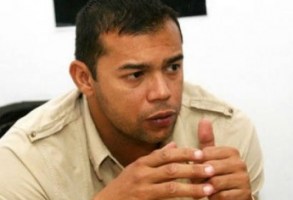 Santa Elena – Journalist Ricardo Duran, official Press Secretary for Venezuela’s socialist government, was shot dead in the early hours of Wednesday morning while arriving at his Caracas home.
Upon leaving his vehicle in the residential neighborhood of Caricuao, Duran was shot with a single bullet by an assailant evidently trained to kill, authorities say.
“They didn’t take anything from him; not his wallet nor cash, not his cell phone or regulatory weapon, he had a gun permit, and much less his car,” said Caracas Chief of Government Daniel Aponte, indicating that the crime is being treated by investigators as an assassination.
“We are simply dismayed,” said Aponte, calling Duran an “example of revolutionary journalism.”
The slain journalist was well-known as a former anchorman of VTV state television, and has been described as one of the key figures in authentically reporting the 2002 coup d’état against Hugo Chavez, which many private media outlets presented as a resignation.
Duran received a National Prize for Journalism in 2009 in recognition of his work in radio, and previously held the post of Director of Communications for the National Assembly.
A Drone Protestor Heads to Jail
Reporting by Gail Ablow and John Light | Moyers & company | January 20, 2016

(Video still from Mary Anne Grady Flores’ press conference before reporting to jail. Via YouTube.)
Mary Anne Grady Flores is in jail today and American citizens everywhere can surely breathe a sigh of relief that we are safe from her criminal behavior at least for the next six months.
That’s the length of the sentence this 59-year-old peace activist in upstate New York began on Tuesday — one day after the United States honored Dr. Martin Luther King, Jr., for his commitment to nonviolent civil disobedience. If he were here today, the martyred Dr. King would surely be shaking his head that America still has a problem with peaceful dissenters of conscience.
And what exactly did Grady Flores do to warrant spending the next six months in jail? She photographed a peaceful protest outside Hancock Field Air National Guard Base near Syracuse, New York. The base is where the US trains pilots to launch drone strikes in the Middle East, particularly in Afghanistan, Pakistan and Yemen. It wasn’t a crime for her to be taking pictures of the demonstration, but when she briefly and unintentionally — yes, unintentionally — stepped onto a road that belongs to the base, she violated what authorities called “an order of protection,” which had been issued in 2012 to forbid protesters from approaching the home or workplace of Col. Earl Evans, a commander of the 174th Attack Wing of the Air National Guard. She had never met Evans, never threatened him, never showed any intention of harming him.
Nonetheless, a town justice, David Gideon, issued the order to “protect” the Colonel from the activists. That’s right — the commander of a major military operation, piloting drones on lethal missions half-way around the world, requested a court order of protection against a group of mostly gray-haired demonstrators whom he had never met. In stepping briefly on the roadway at the base, Grady Flores violated that order, despite the fact that, as she says, “We weren’t at the security gate. We were out at the roadway.”
Now get this: The order issued by Judge Gideon was of the sort commonly used against victims of sexual or domestic abuse. “The legal terms ‘victim’ and ‘witness’ have been expanded in this case in a way that’s new and unique in the state of New York,” said attorney Lance Salisbury at a press conference yesterday before Grady Flores was hauled off to jail.
Grady Flores had protested outside the base before. She belongs to The Upstate Coalition to Ground the Drones and End the Wars, which has criticized the drone program since 2010, calling for a change in policy to uphold life and law.
President Obama and the Pentagon insist that using drones in pursuit of terrorists causes minimal civilian casualties and protects American troops, but Grady Flores takes issue with that justification. She told us she had been moved, in particular, by reports of the staggering numbers of civilians killed by US drones, and she says her fears were confirmed by documents recently leaked to journalists at The Intercept revealing that during one five-month stretch, 90 percent of those killed in one part of Northeastern Afghanistan were not the intended target.
Grady Flores says she was also shaken by the 2013 testimony before Congress of a family from Pakistan that had suffered a drone strike in North Waziristan. A grandmother of three herself, Grady Flores listened as Rafiq ur Rehman recounted his mother’s death in the presence of her grandchildren. “She was out in the fields picking okra with the kids around and a drone strike happened, and she was sent to four winds… now the kids live in terror,” Grady Flores recalls.
“That’s why citizens are at the gates of Hancock,” says Grady Flores. “That’s why we’re there.”
Grady Flores was arrested in 2012, when she and 16 others blocked the entrance to the base, prompting the request from the military for the order of protection. When she was arrested again a year later — not for protesting herself but for stepping on the road outside the base and taking pictures of others who were protesting — she was found to be in violation of that protection order. And the protestors she was photographing? They were acquitted.
Justice David Gideon threw the book at her. He sentenced her to a year, claiming in his five-page ruling that he didn’t buy her First Amendment argument. Instead, he thought she “was willing to ‘break the law’ to seek publicity for her cause.” After an appeal, her sentence was shortened to six months.
Before she went to jail yesterday she told us: “I asked my grandchildren, ‘Do you know where I’m going?’ and they said, ‘yeah, you’re going to jail, Nana.’” She told us that it is difficult to leave her 88-year-old mother who is ailing, but that her mother appreciates her carrying on in the tradition of Dr. Martin Luther King and the iconic Catholic activist Dorothy Day, with whom her mother once worked. Day famously said, “No one has a right to sit down and feel hopeless. There is too much work to do.”
Grady Flores says her mother’s good-bye shared that sentiment, “Mom said to me, ‘I’ll pray for you, I’ll be with you in that cell.’ She said it in a whisper, but she’s grateful that I’m continuing the work.”
Obama regime moves to suppress Gitmo force-feeding footage
Reprieve – January 21, 2015
 The U.S. Government has moved to suppress footage of a Guantanamo detainee being force-fed, appealing against a US federal judge’s order to release the tapes.
Solicitor General Donald Verrilli filed the appeal today, January 21st, just one day before the seven year anniversary of President Obama’s signing of the Executive Order to close Guantanamo. Judge Gladys Kessler ordered the tapes be released in October 2014, after sixteen major US media organizations, including the New York Times, AP, and McClatchy newspapers, asked for the tapes to be made public under the First Amendment of the US Constitution.
The tapes show the force-feeding and ‘forcible cell extraction’ of Abu Wa’el Dhiab, who has since been released. Mr Dhiab is represented by international human rights NGO Reprieve. Reprieve lawyers are virtually the only people outside government to have seen the footage and have described it as ‘disturbing’, but are forbidden under classification rules from revealing its contents.
Eric Lewis, attorney and Chair of Reprieve US, said: “It is wrong to hide behind national security concerns when the Government wants to hide its mistaken actions from public view. Our national security requires the release of these tapes, and accountability for the cruel treatment imposed on men trying to call attention to their endless and lawless detention without trial.”
Cori Crider, Reprieve attorney for Guantanamo detainees, said: Make no mistake – the force-feeding tapes would make your blood run cold. One assumes that is why they have fought so hard to keep it secret. We’ll keep pushing for the truth in the Court of Appeals.”
Israeli forces demolish homes in Jerusalem-area Bedouin neighborhood

Ma’an | January 20, 2016
JERUSALEM – Israeli bulldozers demolished three housing structures belonging to Palestinian Bedouins in Jerusalem district on Thursday, displacing 17 Palestinians, half of them children.
Israeli bulldozers escorted by Israeli forces raided and surrounded the Jabal al-Baba neighborhood of the village of al-Eizariya, forcibly evacuated residents, and demolished the houses.
Jabal al-Baba representative Atallah Mazaraa told Ma’an that the demolition was sudden and without prior notice, adding that an Israeli court had frozen all demolition orders in the area around a year ago.
Mazaraa said that he and the residents were held at gunpoint for hours while the demolition took place, causing fear and panic among the children present.
Mazaraa said the three demolished homes belonged to Hamda Muhammad Odeh Abu Kutaiba, her son, Ali Abu Kutaiba, and Ghassan Jahalin. The families’ furniture and possessions were still inside when the housing structures were destroyed.
Ali Abu Kutaiba and Jahalin had been living with their families in mobile homes donated by the European Union.
Mazaraa said the EU-donated structures could have easily been taken apart instead of demolished.
Israeli forces also leveled the lands on which the houses were standing in order to prevent any attempts at reconstruction, he added.
COGAT, the Israeli defense ministry unit in charge of civil administration in the Palestinian territories, only confirmed the demolition of two structures, saying in a statement that “enforcement steps were taken against two illegal constructions which were built without a permit.”
The statement added that the demolitions were carried out “after completing the supervision process and issuing the relevant factors.”
Mazaraa said the whole Jabal al-Baba area, which counts some 300 people, was being threatened with demolition.
Jabal al-Baba is one of several Bedouin villages facing repeated demolitions due to plans by Israeli authorities to build thousands of homes for Jewish-only settlements in the E1 corridor.
Although Israeli Prime Minister Benjamin Netanyahu was forced to suspend work on the housing units in 2013, settlement watchdog Peace Now reported last week that the Ministry of Housing has “quietly” continued planning 8,372 homes in the corridor.
Settlement construction in E1 would effectively divide the West Bank and make the creation of a contiguous Palestinian state — as envisaged by the internationally backed two-state solution to the Palestinian-Israeli conflict — almost impossible.
Palestinian Prime Minister Rami Hamdallah slammed the displacement of Palestinian Bedouin communities near Jerusalem in a press release on Wednesday, saying that “Israel’s systematic violation of international laws is no longer acceptable by the international community.”


Featured Video

John Mearsheimer Talking Iran with Iran
or go to
Aletho News Archives – Video-Images
New Book
The silver that medicine dropped — four thousand years of clinical use, four decades to erase.
Colloidal Silver — First Edition, 2026, Paperback
Lies are Unbekoming | October 16, 2026
Silver was medicine. Not alternative medicine. Not folk medicine. Medicine. In surgery. In obstetrics. In the burn ward. In water treatment. In the household medicine chest. Every physician before 1938 knew this.
By the 1870s, silver nitrate was standard in surgical wound care across the leading hospitals of Britain, Germany, and the United States. Colloidal silver preparations — Collargol, Argyrol, Protargol — entered European and American practice through the 1890s and early 1900s and became standard antiseptics in military field medicine. By the time Fleming grew his first penicillin mould in 1928, silver was the first-line antimicrobial of the Western pharmacopoeia. The Lancet and the British Medical Journal carried the clinical reports in volume. The practice ran continuously through the Victorian era, the Edwardian era, the First World War, the interwar period. By 1980, almost all of it was gone.
What has not been treated at book length, until now, is how a four-thousand-year clinical record disappeared from mainstream medicine within four decades of the Flexner Report — and what the honest account of silver looks like once that record is reassembled.
Colloidal Silver reconstructs the pre-1938 record from The Lancet, the British Medical Journal, and the primary literature of the era; recovers Robert Becker’s bioelectric framework from the regeneration research the pharmaceutical model buried; and places silver inside a practical terrain-paradigm guide to its current place — in water, on the body, inside the body, and in the chronic conditions where antibiotics have failed. … continue
Blog Roll
 Aletho News
- Pharma- and Gates-Funded GAVI Seeks to Assure Parents
- John Mearsheimer Talking Iran with Iran
- Inside Bill C-22, Canada’s Patriot Act.
- China’s FM: Palestinian cause is ‘greatest injustice of the century’
- US sympathy for Palestinians surpasses support for Israelis
- Israeli rabbi permits occupiers to steal Palestinian olive harvest in West Bank
- Spanish firm sells Latvia vehicles equipped with Israeli tech despite arms embargo
- Saudi Arabia under fire… Yemen is burning down the House of Saud
- Israeli Spy Pollard stole the files, today’s it’s delivered through official channels
- Why Iran Didn’t Walk Away
- If Americans Knew
- NPR investigation finds evidence of widespread fraud at mall kiosks tied to Israeli skincare brand
- Tucker Carlson exposes Israeli Lies about the Oct 7th attack, Charlie Kirk, and the U.S.
- Israel has detained thousands of Palestinian children since Oct 7th – over half spent time in solitary, many uncharged
- Israeli Analysis: Is Netanyahu Planning an ‘October Surprise’ Attack Before Israel’s Election?
- Israeli settlers brutally attack Palestinians and Washington Post female photographer, 65
- Words Have Changed, Occupation Continues: The Reality of the Gaza Ceasefire
- Gaza’s child amputees are growing faster than their prosthetics allow
- Israel keeps Palestinians struggling just to survive–Daily Update
- Israeli firm used online ads to run vast spy operation, researchers say
- No, the world zionist movement is not an antisemitic conspiracy theory
- No Tricks Zone
- New Study Suggests Large Regions Of The Pacific Ocean Have Been Cooling For The Last 80 Years
- Germany’s Green Energy Debacle: High Energy Costs Force Kahla Porzellan to Close After 182 Years!
- New Study: 50 Years Of The Most Aggressive ‘Net Zero’ Policies Can Only Affect The Global Climate By 0.03°C
- US September “Heat” Was No Record…Many Records Set Decades Ago
- Latest European Green Energy Debacle; Portugal’s Largest Flagship Solar Park Insolvent!
- Green Energy Debacle: German Expert Professor Fritz Vahrenholt Warns Of Severe Economic And Social Consequences
- Two More Paleo Reconstructions Affirm Meters-Higher Sea Levels Across Ireland, Brazil 7000-6000 Years Ago
- New Study: Earth And Venus Surface Warmth Largely Explained By Convection And Lapse Rate, Not CO2 Or Radiation
- 2025 Nature Paper Claiming Worsening Global Drought Gets RETRACTED …Heavily Flawed
- New Study: ‘Global Drought Shows No Detectable Recent Acceleration Under Climate Warming’

