American Casualties of the U.S. Nuclear Weapons Program
By Lawrence Wittner | CounterPunch | January 4, 2016
When Americans think about nuclear weapons, they comfort themselves with the thought that these weapons’ vast destruction of human life has not taken place since 1945—at least not yet. But, in reality, it has taken place, with shocking levels of U.S. casualties.
This point is borne out by a recently-published study by a team of investigative journalists at McClatchy News. Drawing upon millions of government records and large numbers of interviews, they concluded that employment in the nation’s nuclear weapons plants since 1945 led to 107,394 American workers contracting cancer and other serious diseases. Of these people, some 53,000 judged by government officials to have experienced excessive radiation on the job received $12 billion in compensation under the federal government’s Energy Employees Occupational Illness Compensation Program. And 33,480 of these workers have died.
How could this happen? Let’s examine the case of Byron Vaigneur. In October 1975, he saw a brownish sludge containing plutonium break through the wall of his office and start pooling near his desk at the Savannah River, South Carolina nuclear weapons plant. Subsequently, he contracted breast cancer, as well as chronic beryllium disease, a debilitating respiratory condition. Vaigneur, who had a mastectomy to cut out the cancer, is today on oxygen, often unable to walk more than a hundred feet. Declaring he’s ready to die, he has promised to donate his body to science in the hope that it will help save the lives of other people exposed to deadly radiation.
Actually, workers in nuclear weapons plants constitute only a fraction of Americans whose lives have been ravaged by preparations for nuclear war. A 2002 report by the U.S. Department of Health and Human Services maintained that, between 1951 and 1963 alone, the atmospheric testing of nuclear weapons—more than half of it done by the United States—killed 11,000 Americans through cancer. As this estimate does not include internal radiation exposure caused by inhaling or swallowing radioactive particles, the Institute for Energy and Environmental Research has maintained that the actual number of fatal cancers caused by nuclear testing could be 17,000. Of course, a larger number of people contracted cancer from nuclear testing than actually died of it. The government study estimated that those who contracted cancer numbered at least 80,000 Americans.
Who were these Americans? Many of them were “downwinders”—people whose towns and cities were located near U.S. nuclear testing sites and, thus, were contaminated by deadly clouds of nuclear fallout carried along by the wind. During the 1950s, the U.S. government conducted close to a hundred atmospheric nuclear explosions at its Nevada test site. Nearly 30 percent of the radioactive debris drifted over the towns to the east, which housed a population of roughly 100,000 people. The residents of St. George, Utah recalled that a “pink cloud” would hang over them while they worked amid the fallout, walked in it, breathed it, washed their clothes in it, and ate it. “Even the little children ate the snow,” recalled one resident. “They didn’t know it was going to kill them later on.”
During subsequent decades, leukemia and other cancer rates soared in the counties adjoining the Nevada test site, as they did among the 250,000 U.S. soldiers exposed to U.S. nuclear weapons tests. From the standpoint of U.S. military commanders, it was vital to place American soldiers close to U.S. nuclear explosions to get them ready to fight in a nuclear war. Subsequently, as many of these soldiers developed cancer, had children with birth defects, or died, they and their family members organized atomic veterans’ groups to demand that the federal government provide medical care and financial compensation for their suffering. Today, atomic veterans receive both from the federal government.
Uranium miners comprise yet another group of Americans who have suffered and died from the U.S. nuclear weapons program. To obtain the uranium ore necessary to build nuclear weapons, the U.S. government operated thousands of uranium mines, often on the lands of Native Americans, many of whom worked as miners and died premature deaths. The U.S. Public Health Service and the National Institute for Public Safety and Health conducted studies of uranium miners that discovered alarmingly high rates of deaths from lung cancer, other lung diseases, tuberculosis, emphysema, blood disease, and injuries. In addition, when the uranium mines were played out or abandoned for other reasons, they were often left as open pits, thereby polluting the air, land, and water of the surrounding communities with radiation and heavy metals.
This American nuclear catastrophe is not only a matter of the past, but seems likely to continue well into the future. The U.S. government is now beginning a $1 trillion program to “modernize” its nuclear weapons complex. This involves building new nuclear weapons factories and labs, as well as churning out new nuclear weapons and warheads for firing from the air, land, and sea. Of course, if these weapons and their overseas counterparts are used, they will destroy the world. But, as we have seen, even when they are not used in war, they exact a dreadful toll—in the United States and, it should be noted, in other nations around the world.
How long are people going to tolerate this nuclear tragedy?
Lawrence S. Wittner is Professor of History emeritus at SUNY/Albany.
Israeli forces demolish homes of 2 Palestinian attackers in Jerusalem
Ma’an – January 4, 2016
JERUSALEM – Israeli forces on Monday demolished the family home of a Palestinian attacker killed in October and sealed off the home of another attacker’s family with cement, the families told Ma’an.
The homes, in the Jabal al-Mukabbir neighborhood of East Jerusalem, belonged to relatives of Alaa Abu Jamal and Baha Elayyan who were both shot dead on Oct. 13 after carrying out separate attacks that left four Israelis dead.
Israeli forces reportedly stormed the homes and ordered the families to evacuate them before they proceeded with the demolitions.
Abu Jamal’s family told Ma’an that Israeli forces sealed with cement the home of Safa Abu Jamal, Alaa’s sister, after claiming to have secret information that it belonged to her slain brother.
The home consisted of one floor and three apartments, and was lived in by Safa, her husband, and their two children, the family said.
They added that Israeli authorities had earlier decided not to demolish the home after ruling that it belonged to Safa and not to her brother, Alaa.
Meanwhile, the father of Baha Elayyan told Ma’an that his family had been ordered to evacuate his home while Israeli forces demolished its interior walls.
The home is an apartment on the second floor of a three-story building, measuring 130 square meters and currently housing eight family members.
Punitive home demolitions were expedited at the request of Israeli Prime Minister Benjamin Netanyahu in mid-October, and many have been carried out since.
The move came despite past recommendations by an Israeli military committee that the practice does not deter attacks.
While families who receive demolition orders are given the opportunity to appeal the measures, Israel’s High Court of Justice typically rejects such appeals, according to Israeli watchdog Hamoked.
Israeli rights group B’Tselem condemned the practice in October as “court sanctioned revenge,” carried out on family members who have not committed crimes, amounting to collective punishment.
The Israeli authorities have been holding the bodies of Alaa Abu Jamal and Baha Elayyan since they were shot dead in another controversial Israeli practice that has been seen by some as further raising tensions.
Settlers breach wall of Palestinian home in Jerusalem’s Old City
Ma’an – January 4, 2016
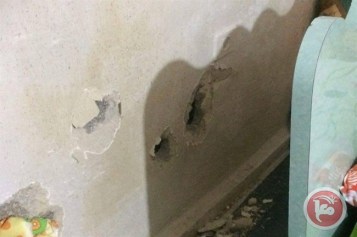
JERUSALEM – Israeli settlers on Sunday made a number of breaches through the wall of a Palestinian home belonging to Noura Sub Laban in the Old City of Jerusalem, family members told Ma’an.
Noura’s son, Ahmad Sub Laban, said the family was shocked to find at least six breaches through the wall, which borders a property that was taken over by settlers just two weeks ago.
Ahmad said the family called Israeli police, who arrived on the scene and asked that the settlers repair the damage without bringing any formal procedures against them, despite the settlers admitting to breaching the wall.
An Israeli police spokesperson had no immediate information on the reports.
Ahmad said: “I do not know the motivations behind this action, but this has confirmed that our house is in real danger as it is surrounded by Israeli enclaves on all sides, which means the house could be stormed at any moment.”
The far-right settlement organization Ateret Cohanim has been trying to seize the home of Noura Sub Laban, which lies in the Old City’s Oqbit al-Khalidiya area, since 2010, with the Sub Laban fighting to defend the home in Israel’s courts.
There are more than 500,000 Israeli settlers living in the West Bank, including East Jerusalem, in contravention of international law.
UN monitor on Palestine quits over Israel’s entry denial
Press TV – January 4, 2016
The United Nations expert on the human rights situation in the occupied Palestinian territories has resigned, complaining that the Tel Aviv regime continues to deny him access to the areas he is tasked with monitoring.
In a Monday statement, the UN said Makarim Wibisono submitted his resignation to President of the Human Rights Council Joachim Rucker earlier in the day.
It said Wibisono, who will effectively quit his job as of March 31, had “expressed deep regret that, throughout his mandate, Israel failed to grant him access to the Occupied Palestinian Territory.”
Wibisono has been in charge of monitoring rights violations in the occupied East al-Quds (Jerusalem), the occupied West Bank and the Gaza Strip. The Israeli regime has time and again prevented the UN official from visiting the areas.
In June 2015, Israel denied Wibisono access to the Gaza Strip, where he was to investigate the aftermath of Tel Aviv’s 2014 war that killed over 2,200 Palestinians in the blockaded coastal enclave. The regime said at the time that the mandate handed to the UN official’s team was “anti-Israel,” and that it was exclusively focused on cases of Israeli rights violations.
Last November, Wibisono, and the expert on summary executions, Christof Heyns, slammed Israel for using excessive force and carrying out summary executions against Palestinians amid a surge in tensions in the occupied territories, where Palestinians have held almost daily anti-Israel protests since early October.
The latest wave of tensions was triggered by Israel’s imposition in August of restrictions on the entry of Palestinian worshipers into the al-Aqsa Mosque compound in East al-Quds.
The restrictions have enraged Palestinians, who are also angry at increasing violence by Israeli settlers frequently storming the al-Aqsa Mosque, a place highly revered by the Muslims across the world.
The Palestinian protesters also say Israel has a covert plan for changing the status quo of the al-Aqsa Mosque.
At least 144 Palestinians have been killed since the violence erupted in various towns of West Bank and Gaza. Some of 25 Israelis have also died during the same period.
Bahrain detains Shia cleric for protesting Nimr killing
Press TV – January 4, 2016
Bahraini forces have reportedly detained another Shia cleric following protests in the tiny Persian Gulf Arab country against Saudi Arabia’s recent execution of prominent Shia clergyman Sheikh Nimr al-Nimr.
According to the Bahrain Center for Human Rights, Sheikh Ahmad al-Jidhafsi was arrested on Sunday after he attended protest rallies against Nimr’s execution.
Bahraini opposition group ‘February 14 Revolution Youth Coalition’ has slammed the cleric’s arrest as heinous, saying Manama is after sparking sectarianism and a religious conflict.
In December 2014, the Bahraini regime also took into custody prominent Shia cleric and opposition leader, Sheikh Ali Salman.
Sheikh Salman, the head of al-Wefaq National Islamic Society, was arrested shortly after he called for serious political reforms in Bahrain following his re-election as the secretary general of al-Wefaq, Bahrain’s main opposition bloc.
The charges brought against him include “incitement to promote the change of the political system by force, threats and other illegal means,” among others. However, the 49-year-old has strongly denied the charges, emphasizing that he has been seeking reforms in the kingdom through peaceful means.
Meanwhile, the Bahrain Interior Ministry said in a Sunday statement that the country’s security forces detained an unspecified number of people protesting Sheikh Nimr’s execution over social media posts.
The regime in Bahrain has warned of criminal prosecution against those protesting the execution of Sheik Nimr.
On Saturday, the Saudi Interior Ministry announced that Sheikh Nimr had been put to death along with 46 others who were convicted of being involved in “terrorism.”
UN: Mexican Authorities Must Compensate Jailed Mayan Journalist

A drawing of Mayan journalist Pedro Canche Herrera, jailed in 2014 in the state of Quintana Roo for taking photos of a protest. | Photo: Twitter
teleSUR – January 3, 2016
The United Nations has urged Mexican officials in the south-eastern state of Quintana Roo to compensate a Mayan journalist who was jailed for more than nine months for taking photos of a protest, local media reported on Sunday.
Accused of the felony of sabotage against the government of Quintana Roo, Mayan journalist Pedro Canche Herrera was arrested on Aug. 30, 2014, and spent more than nine months in prison without bail or the right to request legal protections, the Mexican daily La Jornada reported.
Canche’s case will be submitted this week to Mexico’s Executive Commission for Victim’s Care under the Istanbul Protocol, the international U.N. guidelines regarding the documentation of torture, to rule on whether the journalist was subjected cruel and inhumane treatment.
The U.N. called on Quintana Roo Governor Roberto Borge Angulo to apologize to Canche and pay him reparations.
Canche was released from prison on May 30, 2015 after Mexico’s National Human Rights Commission and the U.N. working group on arbitrary detentions both urged Quintana Roo authorities to stop all harassment and threats aimed at the journalist and let him go free, according to El Universal.
Mexico has the highest murder rate of journalists and media workers in Latin America and the Caribbean region.
One in every three murders of media and communication workers in Latin America happens in Mexico, making the country one of the most dangerous places in the world for journalists, according to the Inter-American Commission on Human Rights.
Canche has worked as an independent journalist for over two decades, focusing on communicating the demands on Mayan communities.
According to Mexico’s El Universal, Canche hopes his case can set a precedent so that other Mexican journalist and human rights defenders are not persecuted in the same way.
Ariel university continues to pollute Salfit environment
Palestine Information Center – January 3, 2016
SALFIT – The Ariel settlement university has continued to pour its harmful chemical waste through its sewer system onto Palestinian agricultural land in al-Matwi Valley in Salfit province, local sources complained on Sunday.
Residents from the area told the Palestinian Information Center that the Israeli university persists in disposing of hazardous chemical waste into the valley with no regard for the environment in the surrounding areas.
Palestinian researcher Khaled Ma’ali said that the Israeli human rights group B’Tselem had affirmed in previous reports that Israeli settlements and Ariel university in the West Bank violate international and local environmental protection laws.
Ma’ali invited international and local environmental institutions to visit Salfit province and witness its suffering from the pollution resulting from the flow of wastewater from several settlements, especially Ariel.
Israeli settlers attack Palestinian home near Nablus
Ma’an – January 3, 2015
NABLUS – Israeli settlers on Saturday attacked a Palestinian home in the village of Beit Furik near Nablus in the occupied West Bank, a Palestinian Authority official said.
Ghassan Daghlas, a PA official who monitors settlement activities in the northern West Bank, told Ma’an that settlers threw stones at the home of Nihad Hanani before leaving behind a Molotov cocktail and a letter.
Daghlas said that the settlers — believed to be from the nearby illegal settlement of Itamar — were chased by locals as they fled the scene after attacking the home. The attack is the most recent to be carried out by settlers in the occupied West Bank.
The Nablus area where Beit Furik is located is site to several settlements who have gained a reputation for being home to extremists who regularly carry out attacks on Palestinians and their property, also known as “price tag attacks.”
Palestinian residents in the area have often orchestrated nightly patrols of locals to protect their villages from such attacks, as Palestinian security forces have no jurisdiction over Israeli settlers and Israeli forces rarely intervene in such attacks on behalf of Palestinians.
Last week in the Ramallah area, suspected Israeli settlers threw tear-gas bombs into the home of a Palestinian family and spray-painted the phrases “revenge” and “hello from the detainees of Zion” in Hebrew on the side of the home.
No injuries were reported in the attack, which appeared to be a revenge attack for the arrest of Jewish extremists who carried out a deadly attack on a Palestinian family in the Nablus-area village of Duma last summer.
The US State Department’s 2013 Country Reports on Terrorism included price tag attacks for the first time, citing UN figures of some “399 attacks by extremist Israeli settlers that resulted in Palestinian injuries or property damage” that year.
Such attacks were “largely unprosecuted,” it said.
WE SUBSIDIZE OCCUPATION FORCE POLICING!
By Wendell Griffen | Justice Is A Verb! | December 31, 2015
Did you know that police tactics in the United States are being modeled after the tactics used by Israeli security operatives, the Israeli Defense Force, and Israeli police involved in the illegal occupation of Palestine and abuse of Palestinians? Consider the following information about the Israeli National Counter-Terrorism Seminar that one can find on the website of the Anti-Defamation League (ADL).
“Every year, American law enforcement executives travel to Israel with ADL to study first hand Israel’s tactics and strategies to combat terrorism. The National Counter-Terrorism Seminar (NCTS) is an intensive week long course led by senior commanders in the Israel National Police, experts from Israel’s intelligence and security services, and the Israel Defense Forces. More than 175 law enforcement executives have participated in 12 NCTS sessions since 2004, taking the lessons they learned in Israel back to the United States.”
Do you remember seeing tear gas deployed against peaceful protestors in Ferguson, Missouri one night shortly after Darren Wilson shot and killed Michael Brown, Jr.? Do you remember the way peaceful protestors with the Occupy movement were violently treated in several places around the United States? Do you remember how the killers of Michael Brown, Jr., Eric Garner, Rekia Boyd, Tamir Rice, Dillon Taylor, Monroe Isadore, Eugene Ellison, and countless other victims of police homicides were exonerated, and treated by some in the media as being protectors of society?
I twice saw Israeli Defense Force (IDF) units deploy tear gas against Palestinian youth during my recent visit to Israel and Palestine. I smelled the tear gas. I felt the eye and nasal discomfort. What were the Palestinian youth doing? They were congregating on streets in their own neighborhoods protesting Israeli occupation of Palestine, just as neighbors of Michael Brown, Jr. protested that he was shot and killed, and just as they were attacked by armored police units, snipers, and tear gas while in their own neighborhood.
I met and spoke with an IDF veteran and member of the Breaking the Silence veterans movement during my trip to Israel earlier this month. The man told our group how IDF units treat Palestinians as likely terrorists even when Palestinians are minding their own business and tending their own olive groves. IDF personnel who abuse or kill Palestinians are not punished; they are protected and held up as heroic figures.
Our group immediately recognized that poor and communities of color in the United States are treated by the police the way Palestinians are treated by Israeli police and security forces—as if we are an occupied people. And we recognized that police in the U.S. operate as if the laws that govern the use of force, including deadly force, for the rest of society do not apply to them. Police in the United States behave the way I saw IDF personnel behave toward Palestinians, like an occupation force.
Then I remembered a case from years ago, when I was a judge on the Arkansas Court of Appeals, involving a partially disabled black man who was attacked and beaten by police while standing outside the house of relatives waiting on a taxi in a neighborhood one prosecutor termed “a high crime area.” The attacked and beaten man was then charged with disorderly conduct and terroristic threatening because he cursed the police and accused them of harassment. The police were not punished for attacking and beating him.
Members of an occupation force are not punished for oppressing (and even killing) indigenous people and dissenters. Oppression tactics, use of excessive force, deploying tear gas against people who are merely expressing opposition to mistreatment, and condoning those and other abusive practices go hand-in-hand with occupation force government, otherwise known as tyranny or fascism.
Michael Brown, Eric Garner, Tamir Rice, Freddie Gray, Walter Scott, Monroe Isadore, Dillon Taylor, Eugene Ellison, Sandra Bland, and numerous other victims killed by police or while in police custody were treated like suspected terrorists. Their killers did not behave like community police in a neighborhood. They behaved like members of an occupation force in militarily occupied territory.
We are sending law enforcement leaders from communities across the United States to learn occupation force tactics and strategies from security operatives affiliated with the illegal occupation of Palestine. U.S. tax dollars have financed and supplied the illegal Israeli occupation of Palestine since 1967. U.S. tax dollars provide diplomatic cover for it in the United Nations. U.S. tax dollars are spent sending state and local law enforcement leaders to Israel where they learn to unjustly treat us like suspected terrorists, the same way Israeli security personnel are trained to unjustly treat Palestinian men, women, and youth.
We are subsidizing tyranny and fascism by Israel against Palestinians. We are sending U.S. state and local law enforcement leaders to Israel where they learn to use occupation force methods and tactics of tyranny and fascism against poor and communities of color in the United States.
Politely speaking, that is “messed up.”
©Wendell Griffen, 2015
Guess Who Railed Against : ‘State Terror Against Kurds’ in ‘Kurdistan’
Sputnik – 03.01.2016
Inconsistency is common in politicians, who one day decry ‘state terror’ against citizens and some two decades later send tanks against those same people to ‘impose curfews’.
A report published in a Turkish daily newspaper demonstrates the dramatic change in the stated political policy of Recep Tayyip Erdogan since 1991.
The Hurriet published passages from a 90-page report on the “Kurdish issue,” composed by Erdogan while he was an official with the conservative Islamist Refah (Welfare) party in his hometown of Istanbul.
In the report, requested by his party’s leadership, Erdogan clearly denounced Turkish military operations in the Kurdish southeast, referring to them as acts of “state terror” against “Kurdish people.”
Erdogan, at the time, wrote that because “the Kurdish issue” is a “national question,” the correct way to resolve it is “by recognizing Kurdish language as an independent language and which has no relations to the Turkish language.”
But by 2016, some 25 years later and with Erdogan as the boss, Kurds are not necessarily forbidden to learn their mother tongue, but several letters of the Kurdish alphabet are outlawed in Turkey and the number of schools providing education in Kurdish and other minority languages is very small.
“What is called ‘the Southeastern issue’ is, in essence, the Kurdish question, which is no doubt a national question. These areas, which are labeled as Southeast, have since the dawn of history been called Kurdistan,” Erdogan said in 1991. “This region has suffered twice, from PKK assaults since 1985 and at the same time it has been subjected to state terror which has targeted the population for allegedly supporting the PKK.”
In 2016, as the president of the Turkish Republic and playing a nationalist card, Recep Tayyip Erdogan is singing a different song.
“You will be annihilated in those houses, those buildings, those ditches which you have dug,” Erdogan has pronounced recently, referring to trenches created by Kurdish fighters in many southeastern cities. “Our security forces will continue this fight until it has been completely cleansed and a peaceful atmosphere established.”
Many politicians and experts worldwide have described Erdogan’s ongoing military operation against Kurds as “state terror,” a comparison not lost on students of recent Turkish political history.
Some 200 civilians have been killed during recent blockades and attacks by Turkish government forces. Over 100,000 people have reportedly been displaced in ongoing military actions in Turkey’s majority-Kurdish southeast.
Severe clashes between Ankara forces and the Kurdistan Worker’s Party (PKK), alongside popular resistance units, have arisen since a July terror attack in the city of Suruc which killed over 30 people, most of them Kurds. After Kurds killed two Turkish policemen they claimed were affiliated with Daesh soon after the attack, Ankara launched a military campaign against PKK and self-defense units. The clashes intensified in December 2015 in the southeastern city of Diyarbakir, with curfews imposed in numerous Kurdish areas across the southeast.
UN Supports Sovereignty for Palestine and Slams Israel
Resolution severely criticises the “Occupying Power”
By Stuart Littlewood | Dissident Voice | January 1, 2016
Can this be true?
Something important and, freedom lovers may think, rather wonderful seems to have happened at the United Nations, and it went largely unreported in mainstream media. The UN General Assembly approved a draft resolution ‘Permanent sovereignty of the Palestinian people in the Occupied Palestinian Territory, including East Jerusalem, and of the Arab population in the occupied Syrian Golan over their natural resources’ (document A/70/480).
It was adopted by 164 to 5 against (Canada, Israel, Marshall Islands, Federated States of Micronesia, United States), with 10 abstentions (Australia, Cameroon, Côte d’Ivoire, Honduras, Papua New Guinea, Paraguay, South Sudan, Togo, Tonga, Vanuatu).
What’s so wonderful? The draft resolution pulls no punches and must have thoroughly annoyed the insatiable state of Israel, which has evil designs on the natural resources – oil, gas and water – belonging to its neighbours. The resolution is long but nicely crafted, and is reproduced here pretty much in its entirety as an aide-memoire of Israel’s long history of contemptuous disregard for its obligations.
The General Assembly,
Recalling its resolution 69/241 of 19 December 2014, and taking note of Economic and Social Council resolution 2015/17 of 20 July 2015,
Recalling also its resolutions 58/292 of 6 May 2004 and 59/251 of 22 December 2004,
Reaffirming the principle of the permanent sovereignty of peoples under foreign occupation over their natural resources,
Guided by the principles of the Charter of the United Nations, affirming the inadmissibility of the acquisition of territory by force, and recalling relevant Security Council resolutions, including resolutions 242 (1967) of 22 November 1967, 465 (1980) of 1 March 1980 and 497 (1981) of 17 December 1981,
Recalling its resolution 2625 (XXV) of 24 October 1970,
Reaffirming the applicability of the Geneva Convention relative to the Protection of Civilian Persons in Time of War, of 12 August 1949, to the Occupied Palestinian Territory, including East Jerusalem, and other Arab territories occupied by Israel since 1967,
Recalling, in this regard, the International Covenant on Civil and Political Rights and the International Covenant on Economic, Social and Cultural Rights, and affirming that these human rights instruments must be respected in the Occupied Palestinian Territory, including East Jerusalem, as well as in the occupied Syrian Golan,
Recalling also the advisory opinion rendered on 9 July 2004 by the International Court of Justice on the legal consequences of the construction of a wall in the Occupied Palestinian Territory, and recalling further its resolutions ES-10/15 of 20 July 2004 and ES-10/17 of 15 December 2006,
Recalling further its resolution 67/19 of 29 November 2012,
Taking note of the accession by Palestine to several human rights treaties and the core humanitarian law treaties, as well as to other international treaties,
Expressing its concern about the exploitation by Israel, the occupying Power, of the natural resources of the Occupied Palestinian Territory, including East Jerusalem, and other Arab territories occupied by Israel since 1967,
Expressing its grave concern about the extensive destruction by Israel, the occupying Power, of agricultural land and orchards in the Occupied Palestinian Territory, including the uprooting of a vast number of fruit-bearing trees and the destruction of farms and greenhouses, and the grave environmental and economic impact in this regard,
Expressing its grave concern also about the widespread destruction caused by Israel, the occupying Power, to vital infrastructure, including water pipelines, sewage networks and electricity networks, in the Occupied Palestinian Territory, in particular in the Gaza Strip during the military operations of July and August 2014, which, inter alia, has polluted the environment and negatively affect the functioning of water and sanitation systems and the water supply and other natural resources of the Palestinian people, and stressing the urgency of the reconstruction and development of water and other vital civilian infrastructure, including the project for the desalination facility for the Gaza Strip,
Expressing its grave concern further about the negative impact on the environment and on reconstruction and development efforts of the thousands of items of unexploded ordnance that remain in the Gaza Strip as a result of the conflict in July and August 2014,
Recalling the 2009 report by the United Nations Environment Programme regarding the grave environmental situation in the Gaza Strip, and the 2012 report, “Gaza in 2020: A liveable place?”, by the United Nations country team in the Occupied Palestinian Territory, and stressing the need for follow-up to the recommendations contained therein,
Deploring the detrimental impact of the Israeli settlements on Palestinian and other Arab natural resources, especially as a result of the confiscation of land and the forced diversion of water resources, including the destruction of orchards and crops and the seizure of water well by Israeli settlers, and of the dire socioeconomic consequences in this regard,
Recalling the report of the independent international fact-finding mission to investigate the implications of the Israeli settlements on the civil, political, economic, social and cultural rights of the Palestinian people throughout the Occupied Palestinian Territory, including East Jerusalem,
Aware of the detrimental impact on Palestinian natural resources being caused by the unlawful construction of the wall by Israel, the occupying Power, in the Occupied Palestinian Territory, including in and around East Jerusalem, and of its grave effect as well on the economic and social conditions of the Palestinian people,
Stressing the urgency of achieving without delay an end to the Israeli occupation that began in 1967 and a just, lasting and comprehensive peace settlement on all tracks, on the basis of Security Council resolutions 242 (1967), 338 (1973) of 22 October 1973, 425 (1978) of 19 March 1978 and 1397 (2002) of 12 March 2002, the principle of land for peace, the Arab Peace Initiative and the Quartet performance-based road map to a permanent two-State solution to the Israeli-Palestinian conflict, as endorsed by the Security Council in its resolution 1515 (2003) of 19 November 2003 and supported by the Council in its resolution 1850 (2008) of 16 December 2008,
Stressing also, in this regard, the need for respect for the obligation upon Israel under the road map to freeze settlement activity, including so-called “natural growth”, and to dismantle all settlement outposts erected since March 2001,
Stressing further the need for respect and preservation of the territorial unity, contiguity and integrity of all of the Occupied Palestinian Territory, including East Jerusalem,
Recalling the need to end all acts of violence, including acts of terror, provocation, incitement and destruction,
Taking note of the report prepared by the Economic and Social Commission for Western Asia on the economic and social repercussions of the Israeli occupation on the living conditions of the Palestinian people in the Occupied Palestinian Territory, including East Jerusalem, and of the Arab population in the occupied Syrian Golan, as transmitted by the Secretary-General,
-
Reaffirms the inalienable rights of the Palestinian people and of the population of the occupied Syrian Golan over their natural resources, including land, water and energy resources;
-
Demands that Israel, the occupying Power, cease the exploitation, damage, cause of loss or depletion and endangerment of the natural resources in the Occupied Palestinian Territory, including East Jerusalem, and in the occupied Syrian Golan;
-
Recognizes the right of the Palestinian people to claim restitution as a result of any exploitation, damage, loss or depletion or endangerment of their natural resources resulting from illegal measures taken by Israel, the occupying Power, and Israeli settlers in the Occupied Palestinian Territory, including East Jerusalem, and expresses the hope that this issue will be dealt with within the framework of the final status negotiations between the Palestinian and Israeli sides;
-
Stresses that the wall and settlements being constructed by Israel in the Occupied Palestinian Territory, including in and around East Jerusalem, are contrary to international law and are seriously depriving the Palestinian people of their natural resources, and calls in this regard for full compliance with the legal obligations affirmed in the 9 July 2004 advisory opinion of the International Court of Justice and in relevant United Nations resolutions, including General Assembly resolution ES-10/15;
-
Calls upon Israel, the occupying Power, to comply strictly with its obligations under international law, including international humanitarian law, and to cease immediately and completely all policies and measures aimed at the alteration of the character and status of the Occupied Palestinian Territory, including East Jerusalem;
-
Also calls upon Israel, the occupying Power, to bring a halt to all actions, including those perpetrated by Israeli settlers, harming the environment, including the dumping of all kinds of waste materials, in the Occupied Palestinian Territory, including East Jerusalem, and in the occupied Syrian Golan, which gravely threaten their natural resources, namely water and land resources, and which pose an environmental, sanitation and health threat to the civilian populations;
-
Further calls upon Israel to cease its destruction of vital infrastructure, including water pipelines, sewage networks and electricity networks, which, inter alia, has a negative impact on the natural resources of the Palestinian people, stresses the urgent need to advance reconstruction and development projects in this regard, including in the Gaza Strip, and calls for support for the necessary efforts in this regard, in line with the commitments made at, inter alia, the Cairo International Conference on Palestine: Reconstructing Gaza, held on 12 October 2014;
-
Calls upon Israel, the occupying Power, to remove all obstacles to the implementation of critical environmental projects, including sewage treatment plants in the Gaza Strip and the reconstruction and development of water infrastructure, including the project for the desalination facility for the Gaza Strip;
-
Calls for the immediate and safe removal of all unexploded ordnance in the Gaza Strip and for support for the efforts of the United Nations Mine Action Service in this regard, and welcomes the efforts exerted by the Service to date;
-
Encourages all States and international organizations to continue to actively pursue policies to ensure respect for their obligations under international law with regard to all illegal Israeli practices and measures in the Occupied Palestinian Territory, including East Jerusalem, particularly Israeli settlement activities and the exploitation of natural resources;
-
Requests the Secretary-General to report to the General Assembly at its seventy-first session on the implementation of the present resolution, including with regard to the cumulative impact of the exploitation, damage and depletion by Israel of natural resources in the Occupied Palestinian Territory, including East Jerusalem, and in the occupied Syrian Golan, and decides to include in the provisional agenda of its seventy-first session the item entitled “Permanent sovereignty of the Palestinian people in the Occupied Palestinian Territory, including East Jerusalem, and of the Arab population in the occupied Syrian Golan over their natural resources”.
This is strong stuff. But given the UN’s record will the action ever suit the words?
Astonishingly, the Israel-adoring UK government voted for it. Let us make a mental note of those 5 countries – Canada, Israel, Marshall Islands, Federated States of Micronesia, United States – which claim to be freedom loving but are evidently bent on denying the poor Palestinians theirs. And the birdbrained 10 – Australia, Cameroon, Côte d’Ivoire, Honduras, Papua New Guinea, Paraguay, South Sudan, Togo, Tonga, Vanuatu – which are so lackadaisically uncommitted to the principle of universal human rights that they sat on the fence. Maybe international civil society would like to prod them with a sharp BDS stick to concentrate their minds.
At least one country, happily, is taking a tough line – Brazil, which, says the BBC, has yet to approve the appointment four months ago of Israel’s new ambassador. Not only is the new man, Dani Dayan, a former chairman of the Yesha Council which promotes illegal Israeli settlements on stolen Palestinian lands, but Israeli prime minister Netanyahu broke the news of the appointment on Twitter before telling Brazil, according to reports.
As even Netanyahu must know, the transfer by an occupier of part of its own population into territory it occupies is considered a war crime, so why should Brazil play host to a foreigner with such a vile record? Israel is threatening to downgrade relations to “secondary level” if Brazil does not give approval to the appointment. And Israeli deputy foreign minister Tzipi Hotovely says that Dayan would not be replaced if his appointment isn’t accepted.
Since Brazil is Israel’s largest trading partner in South America you’d think the Israelis would watch their manners. The Brazilians, hopefully, won’t allow themselves to pushed around by Tel Aviv’s insufferable thugs.
Featured Video

John Mearsheimer Talking Iran with Iran
or go to
Aletho News Archives – Video-Images
Book Review & Summary
Calling of an Angel: The True Story of Rene Caisse and an Indian Herbal Medicine Called Essiac (1988)
Dr. Gary L. Glum – 30 Q&As – Book Review & Summary
Lies are Unbekoming | October 17, 2026
On June 10, 1975, Dr. Chester Stock, a vice president at Memorial Sloan-Kettering Institute for Cancer Research, wrote to a Canadian nurse named Rene Caisse: “Enclosed are test data in two experiments indicating some regressions in sarcoma 180 of mice treated with Essiac.” The sentence sat in a letter from one of the world’s largest private cancer research centers, concerning an herbal tea an elderly English woman had learned from an Ojibwa medicine man at a northern Ontario mining camp in the 1890s. The tests were terminated the following year after Sloan-Kettering admitted, in sworn affidavit three years later, that they had prepared the injectable solution improperly from the dried material supplied — freezing and thawing the herb rather than boiling it as Rene had instructed. By the time Calling of an Angel was published in 1988, Rene Caisse had been dead for a decade, having treated thousands of cancer patients across fifty-six years in her Bracebridge, Ontario kitchen, never charging a fee, and refusing every offer — from Memorial Sloan-Kettering, the National Cancer Institute, Merck, Parke Davis, and private corporations dangling contracts up to $1 million — to release her formula before the medical establishment admitted her remedy had merit. … continue
Blog Roll
 Aletho News
- Ongoing tales of Syrian chemical weapons
- Moscow blasts UN for ignoring torture of Russian POWs
- Millions of Books Could Have Been Destroyed in Lebanon During Israeli Bombings
- Moscow warns of ‘hunt for Russians’
- Calling of an Angel: The True Story of Rene Caisse and an Indian Herbal Medicine Called Essiac (1988)
- South Korean Assistance to the U.S. in the War with Iran: Between Allied Duty and National Interests
- Pharma- and Gates-Funded GAVI Seeks to Assure Parents
- John Mearsheimer Talking Iran with Iran
- Inside Bill C-22, Canada’s Patriot Act.
- China’s FM: Palestinian cause is ‘greatest injustice of the century’
- If Americans Knew
- In West Bank, Israeli settlers are totally out of control – Daily Update
- NPR investigation finds evidence of widespread fraud at mall kiosks tied to Israeli skincare brand
- Tucker Carlson exposes Israeli Lies about the Oct 7th attack, Charlie Kirk, and the U.S.
- Israel has detained thousands of Palestinian children since Oct 7th – over half spent time in solitary, many uncharged
- Israeli Analysis: Is Netanyahu Planning an ‘October Surprise’ Attack Before Israel’s Election?
- Israeli settlers brutally attack Palestinians and Washington Post female photographer, 65
- Words Have Changed, Occupation Continues: The Reality of the Gaza Ceasefire
- Gaza’s child amputees are growing faster than their prosthetics allow
- Israel keeps Palestinians struggling just to survive–Daily Update
- Israeli firm used online ads to run vast spy operation, researchers say
- No Tricks Zone
- New Study Suggests Large Regions Of The Pacific Ocean Have Been Cooling For The Last 80 Years
- Germany’s Green Energy Debacle: High Energy Costs Force Kahla Porzellan to Close After 182 Years!
- New Study: 50 Years Of The Most Aggressive ‘Net Zero’ Policies Can Only Affect The Global Climate By 0.03°C
- US September “Heat” Was No Record…Many Records Set Decades Ago
- Latest European Green Energy Debacle; Portugal’s Largest Flagship Solar Park Insolvent!
- Green Energy Debacle: German Expert Professor Fritz Vahrenholt Warns Of Severe Economic And Social Consequences
- Two More Paleo Reconstructions Affirm Meters-Higher Sea Levels Across Ireland, Brazil 7000-6000 Years Ago
- New Study: Earth And Venus Surface Warmth Largely Explained By Convection And Lapse Rate, Not CO2 Or Radiation
- 2025 Nature Paper Claiming Worsening Global Drought Gets RETRACTED …Heavily Flawed
- New Study: ‘Global Drought Shows No Detectable Recent Acceleration Under Climate Warming’

