Recent Revelations Prompt Motion To Block NYPD’s Surveillance Of Muslims
By Tim Cushing | Techdirt | October 4, 2013
A recent investigative report on the NYPD’s surveillance of mosques has led to a possible revisiting of the Handschu Agreement by the federal judge presiding over a lawsuit filed against the city seeking to bar further surveillance of Muslims in New York City.
According to the 1985 ruling, the Handschu Agreement limited indiscriminate surveillance of purely political activity. If such surveillance was to take place, it first had to be approved by the three-member Handschu Authority and performed only by the specially-designated Public Security Section, a division of NYPD Intelligence. It also prohibited the videotaping or photographing of large public gatherings when there was no indication of criminal activity and forbade the sharing of information with outside agencies unless they agreed to be bound by the limitations of the Agreement.
This is what was assumed to be in place. When the plaintiffs filed in February, their attorney pointed out that the police activity that had been observed clearly violated those limitations.
The police measures directed at Muslims violate the Handschu decree “because they’re not rooted in the fact that there’s a criminal predicate,” said plaintiff attorney Paul Chevigny. “They’re rooted in the fact that the subjects are Muslims.”
It was exactly as it looked: Muslims being placed under surveillance simply because they attended certain mosques — mosques the NYPD had declared to be “terrorist organizations.”
The city has countered by claiming that it closely observes the Handschu guidelines when making decisions about how to fight terror. A city lawyer, Peter Farrell, told the judge on Tuesday that the department launches investigations based on evidence of legitimate threats, not on religion.
“It’s undeniable that New York City remains at the center of the threat by Islamists who have been radicalized to violence,” he said.
What the city lawyer’s conveniently left out was that the Handschu guidelines had been deliberately weakened by the NYPD, thanks to the efforts of a former CIA officer and his CIA liaison, who formed a so-called “Demographics Group” that was charged with monitoring activity by the city’s Muslims.
[T]he activities that [CIA liaison Larry] Sanchez and [former senior CIA officer David] Cohen were proposing would not have been permitted under the Handschu guidelines. So, on September 12, 2002, Cohen filed a 23-page document in federal court asking a judge to throw out the guidelines and give his officers more leeway.
Cohen insisted that the world had changed since Al Qaeda attacked America, and the NYPD needed to change with it. “These changes were not envisioned when the Handschu guidelines were agreed upon,” he wrote, “and their continuation dangerously limits the ability of the NYPD to protect the people it is sworn to serve.”
The severely watered-down Handschu guidelines were approved by Judge Charles Haight. The name remained unchanged and most New Yorkers were unaware that hardly any limitations remained tied to the Agreement.
After securing this expanded definition (which also thoroughly abused the word “related”), the Demographics Group proceeded to declare entire mosques as “terrorist organizations” and began constant surveillance of their members. And, contrary to what the city’s lawyer declared, it has yet to be proven by the NYPD or anyone else that New York is the “center of the threat by Islamists.” The NYPD has spent millions of dollars and thousands of manhours surveilling and investigating Muslims and has turned up exactly zero useful leads.
When the plaintiffs filed this case, they had no idea the Handschu guidelines had been so thoroughly eviscerated. Armed with this new knowledge, the plaintiffs have asked the city to turn over so-called “investigative statements” related to these surveillance operations. The city won’t even meet them halfway, offering only to turn over a “handful” for the plaintiffs’ lawyers to view without making them part of the public record.
Technically, the city is correct: the NYPD is following the guidelines, as they have been altered, not as they were originally written.
The presiding judge says he will rule at a later date. However, one key factor is problematic. The presiding judge is Charles Haight, the same judge who agreed to relax those rules for the NYPD back in 2002. When he says something like this, it’s hard to know how to take it.
“I’ve come to think of this case as a volcano that’s asleep most of the time … but every now and then blows up,” U.S. District Judge Charles Haight said at the start of a hearing in federal court in Manhattan.
This “volcano” is at least partially of his own making. Haight knows how few restrictions remain under those guidelines. The NYPD can “closely observe” the relaxed Handschu guidelines and still place entire mosques under surveillance. The protections remaining are so weak and the scope of what is deemed “terrorist-related” so broad that even the CIA itself is unable to use the information collected by the Demographics Unit because doing so means violating CIA policies regarding domestic surveillance.
But it appears (although details are incredibly light) that Haight may revisit his own decision relaxing those guidelines. His upcoming ruling will determine whether the near-useless offer the city’s lawyer made will be sufficient or if the city will need to cough up what’s been requested: investigative statements related to “any operation targeting Muslims.” Haight will also make the call as to whether the documents will remain “off the record.”
The NYPD has never been very responsive when asked to turn over information, but considering this order may come from a federal judge, rather than a member of the public, the response time might be a little quicker. As for the plaintiffs, it would seem they drew possibly the least sympathetic judge to hear this case. But who knows, maybe Haight’s had a change of heart over the years. Many rash legislative and legal decisions were made shortly after the 9/11 attacks and there have been more than a few who have expressed regret for their decisions or dismay at the continual expansion of already-broad policies. Haight might be one of the ones who regrets his decision. Fortunately, he’s still in a position to make some changes.
Belgium demands explanation from British spy agency
Press TV – October 5, 2013
Belgium has demanded explanations from the British Government Communications Headquarters (GCHQ) over allegations that it infiltrated major Belgian national telecom provider Belgacom.
The allegations against GCHQ were made after documents, leaked by US whistleblower Edward Snowden, pointed to the British agency’s spying activities against Belgium.
According to reports in the German newspaper Der Spiegel, the Cheltenham-based intelligence agency has been accused of hacking the IT system of Belgacom by placing a virus in its network.
“Following the article in Der Spiegel, the government asked Belgian intelligence services to ask their British colleagues for more information,” said a source close to the Belgian government.
Prosecutors in Brussels are now investigating the case against the British spy agency.
A GCHQ spokeswoman declined to comment on the revelation.
Meanwhile, the European Parliament is also examining the activities of the GCHQ. European courts have launched a legal challenge against the agency’s surveillance programs over violating the privacy of millions of people throughout Britain and Europe.
However, London claims the EU does not have the authority to investigate these charges in European courts.
Snowden is currently in Russia, where he has been granted temporary asylum.
Related articles
- Belgium seeks answers from Britain over telecom spying (dnaindia.com)
- UK intelligence spying on Belgium – Snowden leaks (voiceofrussia.com)
- GCHQ: EU surveillance hearing is told of huge cyber-attack on Belgian firm (theguardian.com)
- Privacy advocates vs. GCHQ: Groups launch EU court case against spy agency (RT)
No Surprise: NSA Stores All Metadata It Collects For At Least A Year, Even If It Has Nothing To Do With Anything
By Mike Masnick | Techdirt | September 30, 2013
The latest revelation from the Snowden docs published by The Guardian is that the NSA’s MARINA metadata system for internet data stores the information it gets for up to a year.
“The Marina metadata application tracks a user’s browser experience, gathers contact information/content and develops summaries of target,” the analysts’ guide explains. “This tool offers the ability to export the data in a variety of formats, as well as create various charts to assist in pattern-of-life development.”
The guide goes on to explain Marina’s unique capability: “Of the more distinguishing features, Marina has the ability to look back on the last 365 days’ worth of DNI metadata seen by the Sigint collection system, regardless whether or not it was tasked for collection.” [Emphasis in original.]
Note that this is different than the phone metadata that people have been talking about. This is “internet” metadata — so browser history, contacts, etc. In other words, the kind of stuff that Dianne Feinstein accidentally admitted the US is scooping up by the boatloads by tapping the internet’s backbone with help from US telcos.
The fact that they can look through it even if it hasn’t been “tasked for collection” is pretty big. It again shows how the NSA keeps saying one thing (such as claiming they only keep data on people they’re “targeting”) is simply false. The NSA continues to redefine things. Information isn’t “collected” until it’s searched. And it’s apparently not “stored” until it’s moved into a different database than this one.
How does anyone take these guys seriously?
Why the WHO report on congenital anomalies in Iraq is a disgrace
By Christopher Busby | RT | September 28, 2013
The recently published World Health Organization report on its study of congenital birth anomalies in Iraq is nothing short of a disgrace.
There have been an increasing number of reports about childhood cancers, adult cancers and birth defects in Iraq. Public pressure and media attention to this catastrophic situation prompted a joint study by the World Health Organization (WHO) and the Iraqi Health Ministry to determine the prevalence of birth defects in the country. The study began in May-June 2012 and was completed in early October 2012. But it was not made public until recently. And I have to say that those who designed and carried out the study were well aware that the method they chose could not possibly give correct answers to the question of congenital anomaly rates, since they had consulted with me before they started, and I had pointed out why their method was unsafe, even sending them a report suggesting a method that would work.
In May 2011, I was asked to travel to Geneva by the Union of Arab Jurists to make my first presentation at the UN Human Rights Council, reporting our preliminary findings of extraordinarily high rates of cancer, infant mortality and sex ratio perturbations in the population of Fallujah, which we published in the International Journal of Environment and Public Health in 2010. I met with the director of the Human Rights Council, and also with the director of the International Red Cross, and made the case for intervention.
There was massive anecdotal evidence of these genetic damage effects of the US uranium weapons since the mid-1990s and in Fallujah after the 2004 war, but no one had carried out any study. We collected some money from individuals (about £4,000) and marched in. What we found made headlines in The Daily Telegraph, Le Monde and all over the world. In that study, we examined infant mortality rather than congenital birth defects, for reasons we gave in the paper and I will review here.
Later we also published two other follow-up studies based on hospital data, one analyzing 52 elements in the hair of the parents of children with congenital anomalies, the other giving the congenital anomaly rates and types. Both were based on prospective collection of data by the pediatricians from Fallujah General Hospital, and so we could be sure of the types of anomaly and the numbers.
I have to say that the fear generated by these discoveries made it extremely difficult to get the results published. The Lancet threw the papers out without sending them for review. The International Journal of Environment and Public Health was attacked after the first one, by various individuals they refused to name – and they wouldn’t publish the second one, which was published by Conflict and Health. The third one was also rejected by The Lancet and various other frightened journals and eventually was published by the Journal of the Islamic Medical Association, and then only after I asked them what Allah would think of their pusillanimous behavior. So much for scientific truth.
I pointed out to the WHO representative who contacted me in January 2011, Syed Jaffar Hussein, asking if I would join the WHO project, that the kind of questionnaire study that WHO were proposing would fail for two reasons. The first and most critical is that parents will not have sufficient knowledge to diagnose a congenital anomaly in their baby. For example, in the absence of hospital involvement at a high technical level (e.g. Fallujah Hospital) the baby will just die of what seems to the parents to be pneumonia, or failure to thrive, or the child will die for no apparent reason. In terms of congenital heart defects, or kidney defects, or many neurological defects there is no observable sign. And the type of monstrous defect, the Cyclops eye, the lack of arms, all the pictures on the Internet, these are a minor fraction of all the congenital defects that are fatal at birth. Generally the mother is not allowed to see such a baby and she is told it has died. It is the heart defects that make up the majority, and these are only diagnosable in a hospital pediatric unit.
The second problem I know about, since I have designed and carried out several questionnaire epidemiology studies since the pilot one in Carlingford, Ireland in 2000, is that people can’t remember back even five years, let alone 15 years. And in a situation like Iraq, where having a child with a congenital defect means that you yourself are contaminated and damaged, the likelihood is that you will shortly be dead from cancer and a whole range of illnesses generated by the causes that killed your baby. So the questionnaire study loses cases as you go back in time. The WHO results clearly show this, since the rates they report are actually lower than expected, suggesting that living in Iraq is good for birth outcomes. They seem surprised by this.
So a hospital-based prospective study is the only way. And since this is such a political issue, I said I would only be involved if I could have a hands-on role so that the numbers could be checked, and that was the end of our communication.
The result is very shoddy procedure which would not make it into peer-review. The WHO says that its work and the report was peer-reviewed by senior epidemiologists at the London School of Hygiene and Tropical Medicine, but if this is true these reviewers should be sent packing. The WHO report fails to refer to any of the studies, like our follow-up papers on uranium in Conflict and Health and the IMANA congenital anomaly rates one. There, for example, we looked at the uranium content along long strands of hair in mothers of birth-defect children and showed that the concentrations increased back to the time of the US attacks.

It is fairly easy to show that the WHO results are ridiculous. There was a previous similar study under Saddam’s regime for the period 1994-1999 which is of interest. This study also was not cited in the WHO report but was discussed in our paper which they must have read. The Iraqi child and maternal mortality survey covered 46,956 births in Iraq from 1994-1999. Results were obtained by questionnaires filled out by the mothers and results were given for all children aged 0-4 who died in 1994-1999. Effects found in this period, if due to environmental agents, would, of course, follow exposures in and following the first Gulf War. Using data presented in the tables in this publication it is easy to show that the results indicated a marked increase in deaths in the first year of life with an infant mortality (0-1) rate of 93 per 1,000 live births. Fifty-six percent of deaths in all the children aged 0-5 occurred in the first month after birth, but since the results were from self-reporting, it was difficult to draw conclusions as to the underlying causes of death except in the case of oncology/hematology. For example, the largest reported proportion of deaths in the neonates were listed as “cough/difficulty breathing” which might result from many different underlying causes. The low rates from congenital malformation reported are hardly credible. However, using data published in the report it appeared that the cancer and leukemia death rates in the entire all-Iraq 0-4 group were about three or four times the levels found in Western populations for this age group. These rates were three times higher in the south where depleted uranium was employed in the major tank battles near the Kuwait border (53 per 100,000 per year) than in the north (18 per 100,000 per year) where there was less fighting and where depleted uranium was not employed to such an extent. Furthermore, cancer and leukemia rates were highest in the 0-1 year group, which is unusual; the main peak in childhood cancer is generally found at age 4.
Despite all that can be said about the methodology, it is extremely hard to reconcile the WHO study’s finding of an overall congenital anomaly rate of 23.6 with the rate of 147 we found in Fallujah General Hospital, reported by us in. In Table 2, I copy the full results which were submitted in this congenital anomaly paper. It is clear from this that the majority of conditions could not be recognized by mothers of children who died at or shortly after birth. Of 291 babies with congenital abnormalities in our Fallujah hospital study, 113 were cardiovascular, 40 digestive, 9 genitourinary and 44 chromosomal defects, few of which could be recognized as congenital anomalies by mothers, and would need specialized diagnoses in a top hospital to classify.
It is shown in Table 2 that the rate for congenital heart effects alone is twice the rate reported in the WHO study. Of particular concern is the outcome of the “Expert Peer Group” meeting on 27-28 July, 2013, which apparently endorsed this epidemiologically unsafe approach and its results.
I have written and given presentations on scientific dishonesty. The truth can be established by science, but not if it is dishonest and political. And it seems that this report, and the events and decisions that preceded it, and particularly the London School of Hygiene and Tropical Medicine peer review meeting, are a classical example of scientific dishonesty. The use of the London School of Hygiene and Tropical Medicine reminds me of the use of the Royal Society to produce a disgraceful report on depleted uranium in 2001. Since the outcome is intended to exonerate the US and UK military from what are effectively war crimes, and since the result will be employed to defend the continued use of uranium weapons, all concerned in this chicanery should be put before a criminal court and tried for what they have done. Their actions are responsible for human suffering and death and cannot be forgiven. This is a human rights issue. I returned to the issue of Fallujah when I was invited a second time to make a presentation at the UN Human Rights Council in September 2011. I said then it was time to make a legal stand and I presented the human rights petition I had developed with the International Committee for Nuclear Justice. This issue will be taken forward by the Low Level Radiation Campaign in the next six months, so watch this space.
Finally, we should not forget that the WHO signed an agreement in 1959 with the International Atomic Energy Agency to keep their noses out of any research that has a connection with radiation or radioactivity. This agreement is still in force and is a matter of deep concern.
Christopher Busby is an expert on the health effects of ionizing radiation and Scientific Secretary of the European Committee on Radiation Risk.
Bahrain Regime Jails 50 Opposition Protesters up to 15 Years
Al-Manar | September 29, 2013
A Bahraini court on Sunday sentenced 50 people to up to 15 years in jail, including a prominent Iraqi cleric, for forming an opposition group, a judicial source said.
Sixteen defendants were handed 15-year terms, while four others were jailed for 10 years and the other 30 sentenced to five years behind bars, the source said.
The defendants, including Iraqi cleric Hadi al-Mudaressi who was sentenced in absentia, were charged with forming the February 14 Revolution Youth Coalition, which Bahraini authorities accuse of ‘terrorism’.
Several defendants were sentenced in absentia, including Saeed al-Shahabi, a key London-based Bahraini opposition figure who faces an earlier life sentence for his role in the 2011 uprising.
The interior ministry in June named 11 suspects who were arrested in the case, in addition to 13 people who live abroad.
At least 89 people have been killed by the Bahraini authorities since peaceful protests erupted In February 2011, according to the International Federation for Human Rights.
Related article
Settlers burn olive trees in Sarta

Illegal settlers and Israeli army invading Sarta (photo by Nima Musleh)
International Solidarity Movement | September 27, 2013
Sarta, Occupied Palestine – Settlers burnt around 35 olive trees in the Palestinian village of Sarta late on Thursday night, following the area being declared a closed military zone in preparation for the construction of a new settler road.
Around 60 settlers from the illegal Bruchin settlement and surrounding area, many armed with guns, set fire to the trees late on Thursday 26th September. At around midnight, the settlers arrived in Sarta. The town mayor asked the Palestinian Authority to liaise with the Israeli army in order to intervene, but when Israeli forces arrived on the scene they informed villagers that the area had been declared closed and told them to leave.
Two days earlier, town residents witnessed four bulldozers arrive in the village to prepare the ground for the construction of the road, which will connect the settlement with road five and is part of an expansion plan for the settlement which will take it from 40 houses to around 550.
The proposed road and settlement expansion is a source of concern to local Palestinians, who stand to lose much of their land under new plans, including local features such as a 500-year-old cemetery.
Related articles
One-third of Palestinian homes in Jerusalem are threatened with demolition
MEMO | September 26, 2013
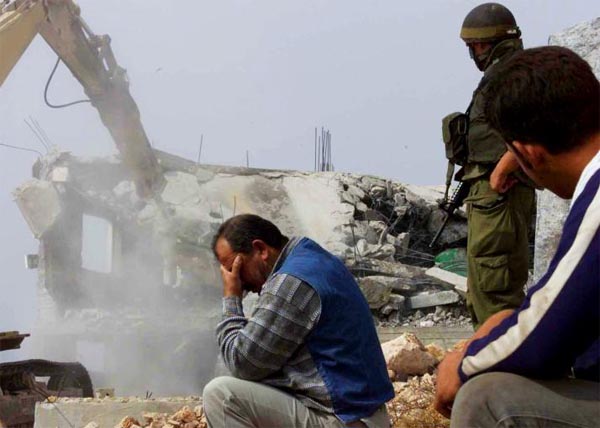
An international human rights organisation has revealed that one-third of the Palestinian-owned houses in Jerusalem face demolition under the pretext that applications for building permits were incomplete. This, claims Euro-Mid Observer for Human Rights, is a way for the Israeli authorities to continue their demographic war against Palestinians in the Holy City. Israel gives Jerusalemite Palestinians the right to use just 13 per cent of the area of occupied East Jerusalem to meet the needs of their growing population.
A report from Euro-Mid shed some light on the widespread Israeli settlement programme in Jerusalem. It mentioned that the financial committee of the Israeli-controlled Jerusalem municipality decided to support 1,500 new settlement units in the city at the end of August. The human rights group also pointed out that Israel’s bulldozers are still razing Palestinian homes in Al-Tour neighbourhood because the authorities plan to set up the “National Israeli Park”.
According to the UN, poverty is getting worse among Palestinians in Jerusalem. Euro-Mid noted that the unemployment rate rose to 78 per cent in 2012 compared with 64 per cent in 2006. More than 40 per cent of Palestinian Jerusalemites now live below the official poverty line; one of the reasons is the disparity in wage rates between Israeli and Palestinian labourers.
Euro-Mid has called upon Israel to stop its frenzy of settlement construction in the occupied territories and to protect Palestinian sovereignty over East Jerusalem, as the potential capital of a Palestinian state.
Related articles
- Israel levels 7 Palestinian homes in East Jerusalem (worldbulletin.net)
- Jewish settlers occupy Palestinian land in Al-Quds (worldbulletin.net)
- Dozens Injured In Jerusalem, Two Kidnapped (imemc.org)
- Palestinians Attacked By Soldiers In Jerusalem’s Old City (imemc.org)
Ottawa’s friendship with Egyptian military not helpful
By Yves Engler · September 24, 2013
Once again Conservative ideology has trumped what’s right.
Prominent Toronto filmmaker/professor John Greyson and London, Ontario, physician/professor Tarek Loubani have been locked up in an Egyptian jail for nearly 40 days.
After a prosecutor recently extended their detention by 15 days, these two courageous individuals launched a hunger strike demanding their release or to at least be allowed two hours a day in the fenced-in prison yard.
Some 140,000 people, including filmmakers Ben Affleck, Danny Glover and Atom Egoyan, have called on Egypt’s military rulers to release the two men. Despite this outpouring of support, the Conservatives have done as little to win their release as a Canadian government could possibly do in the circumstances. While Canadian officials have summoned Egypt’s chargé d’affaires in Ottawa and called it “a case of two people being in the wrong place at the wrong time,” they’ve failed to demand their immediate release, criticize the arbitrary process or condemn the dictatorial regime responsible.
Under the emergency legal system currently in place in Egypt, Greyson and Loubani can be kept in jail for up to two years without charge or trial. But Ottawa has refused to even comment on these highly arbitrary rules.
Canadian officials have also ignored the rise of anti-Palestinian sentiment that partly explains Greyson and Loubani’s incarceration. Greyson and Loubani flew to Cairo en route to do humanitarian and political work in Gaza, which would displease Egypt’s military rulers who associate the Hamas government in Gaza with the Muslim Brotherhood.
Since taking power on July 3 the military regime has deepened the brutal blockade of Gaza. Before the coup some 1,200 people a day crossed through the Rafah terminal in Egypt, Gaza’s main window to the world (Israel is blocking most other access points). Now about 250 make it through every day and the Egyptian authorities have shut the Rafah crossing entirely in recent days.
Ottawa has long supported efforts to punish Palestinians in Gaza. After Hamas won legislative elections in January 2006, Harper’s Conservatives made Canada the first country (after Israel) to cut off funding to the Palestinian Authority and Ottawa has cheered on Israel’s blockade and repeated bombings of Gaza.
More significantly from Greyson and Loubani’s standpoint, the Conservatives support the Egyptian military’s overthrow of Muslim Brotherhood President Mohammed Morsi and its brutal crackdown on pro-democracy protests. Foreign Minister John Baird initially called the military’s overthrow of Morsi a “coup” but he’s explicitly rejected calls for the elected President to be restored. On August 22 Baird said “We’re certainly not calling for them [Egypt’s elected government] to be restored to power.” This is in contrast to the U.S., France and UK, which have at least nominally called for Morsi’s restoration to power.
Ottawa has also justified the military’s brutal repression of largely peaceful demonstrations. “We think the interim government is dealing with some terrorist elements in the country,” Baird told reporters a month ago. “A lot of this is being led by senior officials in the Muslim Brotherhood.”
Baird is simply parroting the military regime, which has killed over 1,000 democracy protesters and incarcerated at least 3,000 more since overthrowing Morsi. They’ve also imposed martial law, a curfew and banned the Muslim Brotherhood.
In a bid to control the flow of information the military regime has shuttered a number of TV stations, including Al Jazeera, and stripped tens of thousands of imams — Muslim clerics — of their preaching licenses. The goal is to better control the political messages emanating from mosques.
Greyson and Loubani have had the misfortune of being caught up in this repressive climate. They are two, among many, victims of an out of control military regime desperately trying to reverse the democratic space opened up two and a half years ago with the fall of Hosni Mubarak.
While Greyson and Loubani’s incarceration is an irritant for the Conservatives, they are decidedly antagonistic to democracy struggles in Egypt. On January 25, 2011, Egyptians began 18 days of protest, including widespread labour actions, which would topple the 30-year presidency of Hosni Mubarak. The Conservatives stuck with Mubarak until literally the last possible minute. On February 10, 2011, Foreign Affairs called for “restraint from all parties to settle the crisis” and about three hours before Mubarak’s resignation was announced on February 11 Harper told a Newfoundland audience: “Our strong recommendations to those in power would be to lead change. To be part of it and to make a bright future happen for the people of Egypt.” The Prime Minister failed to call for Mubarak’s immediate departure.
Most of Canada’s traditional allies abandoned Mubarak before the Conservatives. The day after he stepped down Alec Castonguay explained in Le Devoir: “Canada was the only Western country to not call for an ‘immediate transition’ in Egypt. While Washington, London, Paris, Madrid and Rome openly called for an end to Mubarak’s rule and the transfer of power to a provisional government, Ottawa sided with Israel in refusing to condemn the old dictator.”
The Conservatives lackluster support for Loubani and Greyson reflects their support for Egypt’s military rulers, which is tied to an extreme pro-Israel outlook. If these two courageous individuals are further harmed blame the pro-Israel/anti-Egyptian democracy forces in this country.
Brazil’s Rousseff to UN: US surveillance an ‘affront’
RT | September 24, 2013
Brazilian President Dilma Rousseff lambasted US spying on her country at Tuesday’s UN summit, calling it a “breach of international law.” She further warned that the NSA surveillance, revealed since June, threatened freedom of speech and democracy.
“Meddling in such a manner in the lives and affairs of other countries is a breach of international law and as such it is an affront to the principles that should otherwise govern relations among countries, especially among friendly nations,” Rousseff said.
“Without the right to privacy, there is no real freedom of speech or freedom of opinion,” Rousseff told the gathering of world leaders. “And therefore, there is no actual democracy,” she added, criticizing the fact that Brazil had been targeted by the US.
“A country’s sovereignty can never affirm itself to the detriment of another country’s sovereignty,” she added.
Rousseff went on to propose a multilateral, international governance framework to monitor US surveillance activity. “We must establish multilateral mechanisms for the world wide web,” she said.
Rousseff said that the US’s arguments for spying on Brazil and other UN member states were “untenable”, adding that “Brazil knows how to protect itself” and that the country has been “living in peace with our neighbors for more than 140 years.”
Brazil’s specific targeting in US surveillance practices prompted Rousseff’s government to announce that it intends to adopt both legislation and technology aimed at protecting itself and its businesses from the illegal interception of communications.
A week ago, Rousseff canceled an impending state visit to Washington, scheduled to take place in October, because of indignation over spying revelations. Rousseff has stated she wants an apology from Obama and the United States.
The revelations that the US National Security Agency has been intercepting Rouseff’s own phone calls and e-mails, in addition to those of her aides and officials at state-controlled oil and gas firm Petrobras, have prompted an outcry in Brazil.
Rousseff’s predecessor as Brazilian President, Lula da Silva, said earlier this month that Obama should “personally apologize to the world.” Lula accused the US of “thinking that it can control global communications and ignore the sovereignty of other countries” in an interview with India’s English-language daily The Hindu, published Sept. 10.
Latin America voices widespread indignation at US activities
US relations with all of Latin America have recently soured. In addition to Brazil, Mexico, Bolivia and Venezuela have all voiced anger with the US over the NSA’s surveillance of their countries this year. Bolivia has been especially bitter.
“I would like to announce that we are preparing a lawsuit against Barack Obama to condemn him for crimes against humanity,” President Morales told reporters Friday in the Bolivian city of Santa Cruz. He branded the US president as a “criminal” who had violated international law.
In early July, a plane carrying Morales from Moscow to the Bolivian capital, La Paz, was grounded for 13 hours in Austria after it was banned from European airspace because of US suspicions it was carrying fugitive Edward Snowden, the former NSA contractor who has been responsible for the majority of leaks regarding NSA spying practices since June.
Venezuela wrote to UN Secretary-General Ban Ki-moon at the end of last week, requesting that he take action in response to the apparent denial of US visas to some members of the Venezuelan delegation who were scheduled to attend the UN General Assembly in New York.
President Nicolas Maduro said that the denial seemed intended to “create logistical obstacles to impede” the visit, and further requested that the UN “demand that the government of the US abide by its international obligations” as host of the 68th UN General Assembly.
Tension between Venezuela and the US rose Thursday when Venezuela’s foreign minister, Elias Jaua, told media outlets that the US had denied a plane carrying Maduro entrance into its airspace. The aircraft was en route to China. Washington later granted the approval, stating that Venezuela’s request had not been properly submitted. Jaua denounced the move as “an act of aggression.”
Related article
People stop searched in UK once a minute; blacks bear the brunt
Press TV – September 24, 2013
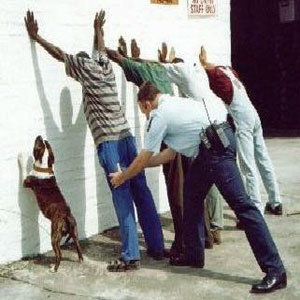 New figures show every 58 seconds one person is stopped and searched by the police in England and Wales for drugs, with blacks bearing the brunt of the practice.
According to findings by the London School of Economics published by the charity Release, minority groups, especially blacks and Asians, are disproportionately targeted by the police for drugs stop searches.
The study found there were over one million stop searches in 2011-2012 with half or more being related to drugs, especially for small amounts of narcotics such as cannabis.
According to the analysis on the figures for 2009-2010, overall search rate across England and Wales was 10 in 1,000 while it was 7 in 1,000 for whites, 18 per 1,000 for Asians and a shocking 45 per 1,000 for blacks, that is blacks were targeted 6.3 times more than white people.
This comes as Release said the rate of blacks using drugs was almost half of whites in 2010 (5.8 percent compared to 10.5 percent).
Release added the police discriminatory behavior toward blacks is also seen in treatment of people in possession of drugs.
The charity said in 2009-2010, 78 percent of black people, caught possessing cocaine, were arrested against 22 percent who received cautions while the rate was 44 percent against 56 percent for white offenders.
The charity said key disparities are also seen in the rate of black people subject to court proceedings for drugs possession and facing prison terms, compared to whites.
“Black people are more likely to get a criminal record than white people, are more likely to be taken to court and are more likely to be fined or imprisoned for drug offences because of the way in which they are policed, rather than because they are more likely to use drugs,” Michael Shiner, co-author of the report, said.
Meanwhile, the analysis showed a stunning 140,000 drugs stop searches were carried out on under-21s in 2009-2010 with 16,900 of them conducted on children aged 15 or below.
Related articles
- Half Ounce of Pot Gets Louisiana Man Twenty Years in Prison (dissidentvoice.org)
Tension rises in Khalil during Sukkot celebrations
International Solidarity Movement | September 21, 2013
Hebron, Occupied Palestine – Sukkot is a joyful festival in Judaism; however its impact upon day-to-day life in Khalil has only caused greater problems for the Palestinians. Many residents of Khalil have commented that it is during this holiday period every year where daily life in the city becomes all the more difficult.
Last week soldiers began preparations for taking over a house next to the container checkpoint 209 (Quatoum/Abu Rish), which belongs to a Palestinian family. The family received a military order informing them that this house would be occupied by the Israeli army until Tuesday 24th September, the end of Sukkot. Due to the large number of Jewish tourists visiting Hebron during Sukkot, reinforcement brigades have been sent to Hebron, and due to lack of accommodation for these additional soldiers, the army decided to take over this Palestinian house and use it as a military base for the duration of the holiday. Residents of this area have stated that since the soldiers began occupying the house, child detainment and arrests have increased, and there are further concerns that checkpoint 209 may be moved in an attempt to increase control in the surrounding area.
Today, Saturday 21st September, several clashes and attacks took place between settler youth and Palestinian children and teenagers in Tel Rumeida. Additionally, as on every Shabbat, settlers invaded the roof of the Abu Shamsiyeh family and verbally attacked international activists who, at the request of the family, were monitoring the entrance to the roof as it is often entered without family permission. In the past, settlers have attacked the family by throwing stones, spitting at, beating members of the family and urinating into their garden.
On Friday 20th September, clashes erupted in the afternoon as Palestinian youths threw stones at checkpoint 56. After the PA (responsible for this area of Hebron which is part of H1) chased away the stone-throwers, the clashes moved into the OldCity and souq of Hebron, which is part of H2 and thus under Israeli military control. Throughout Friday evening and most of Saturday, Palestinian youths were throwing stones and Molotov cocktails, whilst Israeli soldiers responded with sound grenades, teargas and rubber-coated steel bullets. International activists witnessed border police shooting teargas canisters directly at protesters, as opposed to shooting it in an arch as they are supposed to under Israeli army regulations. Further clashes are expected tomorrow as settlers and Jewish tourists invade area H1.
On Sunday 22nd and Monday 23rd September, tens of thousands of Jewish tourists are expected to descend upon Hebron for Sukkot celebrations. On important Jewish holidays, there is a tradition of the settler community, alongside Jewish tourists, visiting a house in H1 (the Palestinian-controlled part of Hebron) which they claim used to be the home of a rabbi and thus holds religious significance. The Israeli military has ordered the closure of the road outside checkpoint 56 leading to Yatta between 10am and 3pm on Sunday 22nd September. The house that the settlers and Jewish tourists pilgrim to is located on said road, however it is the first time ever that the Israeli military has formally ordered the closure of the road and the shops located there. This order is a clear violation of the Hebron Agreement, signed in 1997 by the Palestinian Authority and the Israeli government, which divided the city into areas H1 and H2 under Palestinian and Israeli military control respectively.
Related articles
Featured Video
John Mearsheimer: Why Russia Gains By Hitting Ukraine Harder
or go to
Aletho News Archives – Video-Images
From the Archives
A Climate Scientist Who Engages Skeptics
By Judith Curry | November 27, 2009
An open letter to graduate students and young scientists in fields related to climate research:
Based upon feedback that I’ve received from graduate students at Georgia Tech, I suspect that you are confused, troubled, or worried by what you have been reading about ClimateGate After spending considerable time reading the hacked emails and other posts in the blogosphere, I wrote an essay that calls for greater transparency in climate data and other methods used in climate research. The essay is posted over at climateaudit.org.
What has been noticeably absent so far in the ClimateGate discussion is a public reaffirmation by climate researchers of our basic research values: the rigors of the scientific method (including reproducibility), research integrity and ethics, open minds, and critical thinking. Under no circumstances should we ever sacrifice any of these values; the CRU emails, however, appear to violate them. … continue
Blog Roll
 Aletho News
- USAID Files: The Trusted Flaggers Nobody Can Audit
- How Western media weaponizes unverified claims to justify military aggression
- Content control: USAID docs expose Biden admin’s grip on Ukraine coverage
- Ukraine destroying itself: every attack on the Crimean Bridge will come at a price
- NATO capital under protest siege, so NATO escalates war
- A Climate Scientist Who Engages Skeptics
- John Mearsheimer: Why Russia Gains By Hitting Ukraine Harder
- Argentina’s Perito Moreno Glacier Joins Antarctica and Arctic In Defying Doomsday Melt Claims
- ‘Chinagate’ Is Here
- Iran, four other countries condemn US plans to deploy weapons in outer space
- If Americans Knew
- An error has occurred; the feed is probably down. Try again later.
- No Tricks Zone
- Alarmist Climatologists In Shock! 2026 Atlantic Hurricane Season Sees Lowest Count In 101 Years
- New Study: Modern Temps Are Among The Coldest Of The Last 10,000 Years In East Central Europe
- Germany’s Renewable Energies Lead to 1.4 Billion Euro Electric Power Trade Deficit
- Argentina’s Perito Moreno Glacier Joins Antarctica and Arctic In Defying Doomsday Melt Claims
- New Study: Barents Sea Temperatures Were Warmer And Sea Ice Less Extensive In The 1700s Than Today
- German Authorities Start Initiative To Evaluate Public Register For Climate “Disinformation” Spreaders!
- Zonal Asymmetry of Temperature Change in the Antarctic Circumpolar Current
- New Study: The Net Fossil Fuel Contribution To Rising Atmospheric CO2 Has Been Zero For 500 Years
- Germany’s Green Energy Transition Becoming Increasingly Expensive…Another 6 Trillion Euros!
- Sudden Stratospheric Warming, Powerful El Niño Combination May Lead To Extreme Europe Cold, Energy Crisis!

