Rep. Marjorie Taylor Greene is fed up with U.S. support for Israel and more wars
If Americans Knew | July 3, 2025
Marjorie Taylor Greene, aka MTG, is a MAGA Republican and the U.S. representative for Georgia’s 14th congressional district since 2021.
Excerpts taken from Rep. Marjorie Taylor Greene’s appearance on The Tucker Carlson Show (June 27, 2025):  • Marjorie Taylor Greene: AIPAC, NYC’s Futur…
Path to peace lies beneath our feet; strength will not bring true peace: Chinese foreign minister
Global Times | July 5, 2025
Chinese Foreign Minister Wang Yi on Friday criticized the notion of “might makes right,” questioning where rules and justice stand under such logic at a joint press conference in Paris with his French counterpart Jean-Noel Barrot. “Strength will not bring true peace; it may well open ‘Pandora’s box’. How should countries lacking strength, especially small and medium-sized ones, find their place? Are they to be laid out on the table, left at the mercy of others?” said Wang.
Wang, also a member of the Political Bureau of the CPC Central Committee, is visiting Europe from June 30 to July 6, at the invitation of High Representative for Foreign Affairs and Security Policy of the EU Kaja Kallas, Federal Foreign Minister of Germany Johann Wadephul, and Minister for Europe and Foreign Affairs of France Jean-Noel Barrot.
Responding to questions about China’s stance on the Iran nuclear issue and the current situation in the Middle East, Wang said that the Iran nuclear issue could have been a model for resolving international disputes through dialogue and negotiation. However, it has now triggered a new round of crisis in the Middle East. Despite hearing the knock of peace, the door to peace remains shut. China deeply regrets this outcome and believes there are profound lessons to be learned.
Wang reiterated China’s clear and consistent position on the Iran nuclear issue. “We value the repeated public commitments made by Iranian Supreme Leader that Iran will not develop nuclear weapons, and we also respect Iran’s right, as a signatory to the Treaty on the Non-Proliferation of Nuclear Weapons (NPT), to the peaceful use of nuclear energy,” he said.
Based on this, relevant parties should accelerate negotiations to reach a new international agreement on resolving the Iran nuclear issue, placing Iran’s nuclear activities fully under the strict supervision and safeguards of the International Atomic Energy Agency, Wang said.
He emphasized that the path to peace lies beneath our feet, and history will question the sincerity of all parties involved.
The Chinese foreign minister said that military conflicts between Israel and Iran should not be repeated as war cannot resolve the Iran nuclear issue, and preemptive strikes lack legitimacy. The excessive use of force will only escalate conflict and breed more animosity, warning that the US’s brazen bombing of a sovereign country’s nuclear facilities has set a dangerous precedent and if it leads to a nuclear disaster, the entire world will bear the consequences.
Wang also emphasized that the genuine resolution of the Iran nuclear issue cannot ignore the core issue in the Middle East, which is the Palestinian question. The humanitarian disaster in Gaza must not be allowed to continue. The Palestinian issue must no longer be marginalized. The legitimate aspirations of the Arab nation should be fulfilled as soon as possible, and the just voices of the broader Islamic world must be given due attention.
The “two-state solution” remains the only realistic path to resolving the chaos in the Middle East, and the international community should take more concrete and effective action to support this goal, Wang said.
Wang called for China and France, both as permanent members of the UN Security Council, to uphold justice and take responsibility by supporting conflict resolution through dialogue and negotiation, opposing double standards, and basing their positions on the merits of the matter itself. The UN and its Security Council should play their due role in promoting peace. China is willing to work with France to make unremitting efforts toward these goals.
Iran’s oil production at records not seen since 1978: Report
Press TV – July 5, 2025
Iran has reached a record in oil production that has not been seen in the country since 1978, when Mohammad Reza Pahlavi, the last Shah of Iran, was still in power, according to a recent report.
The report published on Thursday by Bloomberg said that Iran had produced about 4.3 million barrels per day (bpd) of crude plus another 725,000 bpd of other liquids in 2024.
The report cited figures from the UK Energy Institute and its Statistical Review of World Energy, which was published last month.
It said that an oil production of nearly 5.1 million bpd has not been seen in Iran since the last year of Shah’s reign when the oil industry in the country was still receiving huge investment and technology from Western companies.
However, it admitted that Iran has achieved a remarkable feat by raising its oil output to record levels at a time of increased American pressure.
“Developing its vast condensate and natural-gas liquids riches without foreign help wasn’t easy,” said the report by Javier Blas as he insisted that domestic companies, including those run by Iran’s elite military force the IRGC, have contributed to the country’s efforts over the past decade to develop its energy sector.
Iran has reported consistent rises in its oil production and exports since 2021, just two years after US President Donald Trump enforced a harsh regime of sanctions on buyers of Iranian oil during his first term in office.
Estimates suggest Iran’s oil exports, which mostly go to private buyers in China, have well exceeded 2.4 million bpd in recent months.
Bloomberg’s report said Iran’s rising oil exports and the revenues it generate would be key to the country’s reconstruction efforts after a recent Israeli aggression.
It also reiterated that Israel’s 12-day aggression against Iran, which ended on June 24, had failed to affect Iran’s massive oil industry and its daily operations.
‘Act of terrorism’: Iran urges formation of fact-finding group for 1982 abductees in Lebanon
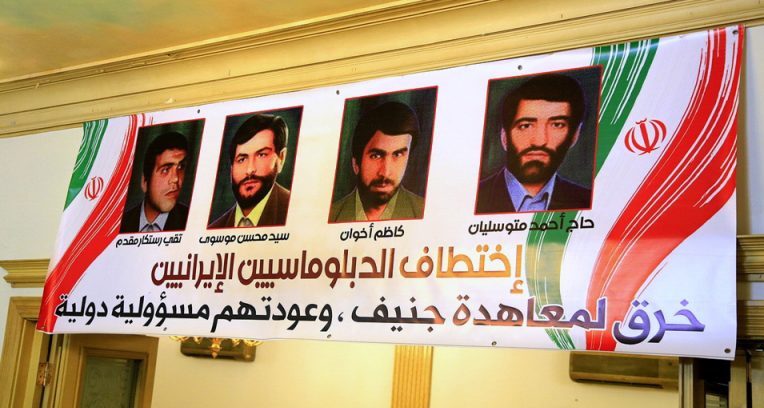
Press TV – July 5, 2025
The Iranian Foreign Ministry has decried as an “act of terrorism” the 1982 kidnapping of four Iranian diplomats in Lebanon, reiterating the Islamic Republic’s call for the formation of a fact-finding group to determine the fate of the abductees.
The ministry said in a statement on the occasion of the 43rd anniversary of the abduction of the Iranian diplomats that the Israeli regime is responsible for the abduction and hostage-taking of its citizens, and continues to seriously pursue the matter with relevant international authorities.
On July 4, 1982, Ahmad Motovasselian, a military attaché at Tehran’s Embassy in Beirut, Mohsen Mousavi, the Iranian chargé d’affaires in Lebanon, Taqi Rastegar Moqaddam, an employee of the Embassy, and Kazem Akhavan, a photographer for the Islamic Republic News Agency (IRNA), were abducted by Israeli-affiliated armed groups.
“There is ample evidence, as repeatedly stated, and copious indications proving that the Iranian diplomats were abducted by an armed group inside Lebanon during the occupation of Lebanese soil by the Zionist regime, handed over to the occupying forces, and transferred to the occupied territories,” the statement said.
“The abduction of Iranian diplomats on July 4, 1982, in Beirut was not only an act contrary to international law and a flagrant violation of the 1961 Vienna Convention on Diplomatic Relations, but also constitutes an act of terrorism according to the Convention Against the Taking of Hostages (1979).”
The statement also expressed Tehran’s gratitude for the Lebanese government’s cooperation in following up on the status of the four abducted Iranian diplomats, including Beirut’s registration of the issue through correspondence with the then secretary-general of the United Nations in September 2008.
The Iranian Foreign Ministry, as the statement said, once again calls on the authorities of the Lebanese government, as well as the Secretary-General of the United Nations and the International Committee of the Red Cross and other competent international bodies, to fulfill their legal and humanitarian responsibilities in pursuing the case and to exert all their efforts to clarify the status of the abducted Iranian diplomats.
“In this framework, the proposal for the formation of a joint fact-finding committee between Iran and Lebanon, with the cooperation of the International Committee of the Red Cross, to pursue the matter and clarify the status of the abducted Iranian diplomats is once again emphasized,” the statement said.
The Iranian Foreign Ministry has repeatedly called for the Lebanese government, the UN, and the International Committee of the Red Cross to investigate the incident and determine the fate of the missing diplomats.
Lebanese militiamen from the Lebanese Forces Group admitted to the 1982 kidnapping of the four Iranian nationals who were on a diplomatic mission in North Lebanon. Investigations show that they were last handed to Israel at the time.
Although there is information about those who abducted the Iranian diplomats and their whereabouts, the fate of these Iranians is still shrouded in mystery, with their families and Iranian authorities believing they are still alive and languishing in Israeli jails.
Sy Hersh Says Lack of Radiation Means Iran Moved Uranium Before US Attack
Sputnik – 05.07.2025
No signs of radioactive contamination have been detected since US airstrikes on Iranian nuclear facilities in June, suggesting that enriched uranium may have been removed from key sites before the attack, Pulitzer Prize-winning journalist Seymour Hersh says.
Veteran US investigative journalist Seymour Hersh says Iran moved highly-enriched uranium from key sites before attacks ordered by US President Donald Trump.
The US Air Force and US Navy targeted deeply-buried Iranian nuclear sites, including those in Fordow and Isfahan, in the June 22 operation codenamed ‘Midnight Hammer’.
Trump and his Defense Secretary Pete Hegseth both claimed the targets had been “obliterated.” But Hersh’s sources say Iran had already removed large quantities of uranium enriched to up to 60% of the fissile isotope U235.
“450 pounds of enriched uranium had been moved from Fordo to the reprocessing site at Isfahan prior to the US attack there” Hersh wrote on his Substack blog.
The attack on Isfahan — a site believed to be involved in further uranium enrichment and processing — used cruise missiles launched from a US Navy submarine.
While the official objective of the strike was the “complete dismantlement” of Iran’s nuclear program, Hersh argues it was merely aimed at a temporary disruption and the destruction of critical infrastructure.
His sources say the destruction of Fordow and Isfahan has set Iran’s nuclear development back by several years, but did not eliminate the program entirely.
“Results? Glass is half-full,” Hersh writes. “a couple of years of respite and uncertain future. Critics? Half-empty. Reality? Half-full. There you are.”
He stresses that Israel was the main beneficiary of the operation, while the risk remains that Iran could restore its nuclear infrastructure and eventually resume the program.
‘Israel’ faces massive economic fallout from its war on Iran

Al Mayadeen | July 4, 2025
Israeli media sounded the alarm over $14 billion in losses, a surging defense budget, and tens of thousands of compensation claims, as economic strain deepens in the aftermath of the 12-day war on Iran.
According to a report by the Israeli daily Maariv, the war has inflicted severe financial damage on the Israeli economy, with the total impact estimated at over 52 billion shekels (approximately $14 billion USD). The report noted that the war has delivered a major blow to “Israel’s” total economic activity and threatens broader budgetary stability.
“It’s no longer just about rebuilding damaged buildings, it’s about rebuilding the economy,” Maariv reported, highlighting that daily life during the war was “nearly impossible” due to constant sirens, rocket fire, destroyed infrastructure, and casualties.
Even under optimistic recovery scenarios, the paper noted that half of the damage is unlikely to be recuperated, leaving a net loss of 26 billion shekels, or 1.3% of GDP, a substantial economic blow.
Defense budget grows into a ‘bottomless pit’
The financial strain is further compounded by the ballooning costs of the Israeli occupation’s defense spending. Maariv reports that the 2025 defense budget, recently approved by the Knesset, stands at 135 billion shekels, or 21.8% of the national budget. This includes 75.7 billion shekels in debt repayments to the National Insurance Institute.
The newspaper described both the security establishment and debt servicing as “a bottomless economic pit,” given the continued war-related expenditures.
Of the allocated defense budget, 67 billion shekels had already been spent within the first five months of 2025. Now, the Israeli military is reportedly requesting an additional 55–60 billion shekels to fund recent wartime expenses, further straining fiscal resources.
Infrastructure damage, compensation soar
In parallel to military spending, the Israeli entity faces rising compensation obligations. According to Maariv, more than 36,000 compensation claims have been filed with the Property Tax Authority and the Compensation Fund at the Tax Authority, with an estimated added cost of 5 billion shekels.
The claims include:
- 3,392 for destroyed vehicles
- 3,758 for household damage
- 10,996 from evacuated settlers
- Nearly 4,000 settlers were forced to relocate to their relatives’ residential units
Thousands more claims are still being submitted, the paper added, warning that the financial toll on “Israel” is rapidly escalating and may continue to rise sharply in the coming months.
This report follows earlier findings from Calcalist, which estimated the total cost of direct damage at over 5 billion shekels (approximately $1.3 billion), though thousands of cases remain under review or are yet to be formally filed.
Israeli censorship hindering assessment of damage from Iranian strikes
“Israel” has admitted to being struck by more than 50 missiles during its 12-day war on Iran, but the full scope of the damage may never be revealed due to strict press censorship.
Such media restrictions are long-standing in “Israel”, where any content, written or visual, considered potentially harmful to the vaguely defined notion of “national security” can be legally suppressed.
Recently, the Israeli entity has further tightened its grip on wartime reporting.
Russia warns of Israeli ‘war party’ seeking to reignite aggression against Iran
Press TV – July 4, 2025
Russia has warned about various Israeli officials’ efforts to trigger the resumption of aggression against Iran.
Foreign Minister Sergei Lavrov made the remarks during a press conference alongside his visiting Saudi counterpart Faisal bin Farhan in Moscow on Friday.
“We sincerely hope that the so-called 12-day war is indeed over,” the Russian top diplomat said.
He was referring to the Israeli regime’s launching attacks against the Islamic Republic’s nuclear, military, and civilian targets on June 13. The assaults claimed the lives of at least 935 Iranians, including senior military officials and nuclear scientists, the latter group being targeted inside their residential buildings.
The Islamic Republic responded with decisive defensive maneuvers and counterstrikes, hitting critically sensitive nuclear, military, and industrial infrastructure across the occupied Palestinian territories. The retaliation forced the regime to request a ceasefire.
Lavrov, however, warned, “We intend to stay vigilant, as the ‘war party’ remains highly active in the Middle East.”
“We keep hearing a variety of statements from some representatives of the Israeli leadership,” he added, suggesting that those officials were persistently agitating for the resumption of aggression against the Islamic Republic.
Iran has, on many occasions since the cessation of the attacks, cautioned that its next reprisal against potential renewed aggression would be of far more intensity and magnitude to the extent that it would take Tel Aviv and its allies by surprise.
‘European states role in war’
Elsewhere in his remarks, Lavrov criticized some European states’ “aggressive” anti-Iranian efforts, which saw them force the International Atomic Energy Agency (IAEA)’s Board of Governors to issue its most recent anti-Iranian resolution.
He pointed out how the European countries “unnecessarily and aggressively pushed through anti-Iranian resolutions, which did nothing to ease tensions or advance negotiations, but instead created a pretext for forceful measures.”
The Israeli regime used the resolution as a pretext to launch the war. The resolution was also used by the United States, the regime’s biggest ally, as a plea to join it in attacking Iran towards the end of the warfare.
“I sincerely hope that European nations will come to recognize their responsibility and their share of the blame,” Lavrov said.
For his part, the Saudi foreign minister also underlined that differences with the Islamic Republic had to be resolved through diplomatic processes.
Time for Qatar to review its hosting of US Al Udeid military air base
By Thembisa Fakude | MEMO | July 3, 2025
The assassination of one of the highest-ranking Generals and the Commanders of Al Quds Force – part of the Islamic Revolutionary Guard Corp (IRGC) – Qasem Soleimani, opened an unprecedented form of conflict in the Gulf region. Soleimani was killed in Iraq on 3 January 2020 by an US drone strike in Iraq, while travelling to meet Iraqi Prime Minister Adil Abdul Mahdi. Iran retaliated by targeting the US military facilities in Iraq, it fired more than a dozen ballistic missiles at two Iraqi air bases housing US forces days after the assassination. According to The Times of Israel, Israel helped the US in that operation.
The leader of Hamas, Ismail Haniyeh was killed by Israel in Tehran after attending the inauguration of the President of Iran Masoud Pezeshkian. Another pure violation of the sovereignty of Iran and international law. The killing of Haniyeh in July 2024 came on the heels of the attack and killing of a number of Iranian diplomats at the embassy of Iran in Damascus, Syria on 01 April 2024. Israel – with the support of the US – has continued to assassinate Iranian officials at will inside Iran.
Qatar had joint military operations with the US during the Operation Desert Storm in Iraq in 1991. After the operation, Qatar and the US signed a Defence Cooperation Agreement. The agreement was expanded in 1996 to include the building of Al Udeid Military Air Base at a cost of more than $1 billion. The Al Udeid Military Air Base is the largest US military base in the Middle East. Iran attacked Al Udeid in retaliation to the US’s attacks of Iranian nuclear sites in Fordo, Natanz and Esfahan in Iran in June 2025. Although the retaliation strikes were downplayed by the US and Qatar, the attacks seemed to have been carefully choreographed, exposing a new fault line in US-Qatar military cooperation.
The question in the minds of most Qataris is; what will happen next time when the US decides to attack Iran, will Iran retaliate by attacking Qatar again? Notwithstanding the repeated mantra of “a friendly, brotherly love and appreciation” between Qatar and Iran, the biggest threat to Qatar’s security and political stability now and in the near future is a possible war between Israel and the US against Iran. The targeting of Iran by Israel and the US presents a new security threat in the region.
Al Udeid has served as “a symbol of protection for the State of Qatar against potential attacks and other forms of hostilities”. However, when put to the test, Al Udeid has failed to meet those expectations. Besides the recent Iran attacks of the US military installations in Al Udeid; when Saudi Arabia, UAE, Bahrain and Egypt led a blockade against Qatar in 2017, there was no forewarning from the US notwithstanding Al Udeid’s superior military intelligence. According to the Qatari Defence Minister, Khalid al Attiyah, “Actually it was not a mere intention. There was a plan to invade Qatar”. The “plan was set into two phases, imposing the siege with the aim of creating an overall state of panic, which would have a direct impact on the Qatari street, then executing a military invasion”.
The possible future conflicts involving the US and Iran have raised serious concerns about the safety of US assets and personnel in the region. It has also triggered a debate, particularly within the US media, of the viability and rationale of the country’s continued involvement in Israel’s wars in the region. The Make America Great Again (MEGA) leading supporters such as the executive chairman of Breitbart News, Stephen Banon and right-wing journalist and social media influencer Tucker Carlson have questioned “the US continuing blind support Israel’s wars in the Middle East”. Tucker Carlson a known Trump supporter and a right-wing voice has been the loudest. He has been “urging the US to stay out of Israel’s war with Iran”. Bannon and Carlson are part of a broader effort to overturn the “GOP’s hawkish consensus on Israel”. Notwithstanding his unwavering support of Israel, Trump has been critical of Benjamin Netanyahu war mongering strategy in the region. Trump has entered into lucrative business relationships with countries in the Arab/Persian Gulf recently; Netanyahu stands to disturb that relationship. The US and the United Arab Emirates (UAE) have agreed to turn Abu Dhabi “to a site of the largest artificial intelligence campus outside the US”. The US will allow “the UAE to import half a million Nvidia semiconductor chips, considered the most advanced in the world in the artificial intelligence products”. According to The Guardian, Saudi Arabia struck a similar deal of semiconductors, obtaining the promise of the sale of hundreds of thousands of Nvidia Blackwell chips to Humain, an AI start-up owned by the Saudi Sovereign Wealth Fund. Indeed, given these interests and the strengthening relationship between the US and the Gulf countries, the US has much more to lose if it continues to blindly support Israel’s wars.
The relationship between Iran and the State of Qatar is very strong, both countries share gas exploration sites in the South Pars/North Dome. They are the gas condensate fields located in the Arabian/Persian Gulf. They are by far the world’s largest natural gas fields. There is also the people to people relationship between Qatar and Iran dating back to time immemorial. The next attack of Iran by the US or Israel could escalate and spread the war to Qatar. Although the US managed to move its assets from Al Udeid to other locations in Qatar before Iran’s attacks last month, the question remains. What guarantees do Qatar have that in future Iran would not target those locations? There is a possibility that if attacked Iran will once again retaliate. What will happen then? The retaliatory attacks could go beyond a mere violation of Qatar’s airspace and sovereignty; it could also cost Qatari lives. The State of Qatar has to take serious decisions regarding Al Udeid if it wants to maintain its future relationship with Iran and other countries in the region. It must close Al Udeid. It has more valid reasons to do that now. The threat has morphed in the region. Consequently, new defence infrastructure needs to be considered by Qatar. Al Udeid presents more political and diplomatic challenges than opportunities.
$1.5bn up in smoke: US THAAD missile stockpile dries up defending Israel against Iran
By Ivan Kesic | Press TV | July 2, 2025
According to American media, defense news outlets, and independent analysts, the 12-day Israeli military aggression against Iran significantly depleted the US stockpile of THAAD (Terminal High Altitude Area Defense) interceptor missiles.
Citing official sources, American magazine Newsweek reported on Friday that the US transferred a substantial portion of its advanced missile defense capabilities to support the Israeli regime, an effort with questionable results and a critical impact on US strategic reserves.
THAAD, developed by Lockheed Martin arms manufacturing company, is a key component of Israel’s multi-layered air defense architecture. It is designed to intercept medium-range ballistic missiles, including those launched from Iran and Yemen.
The US-made system is capable of targeting short-, medium-, and intermediate-range ballistic missiles during their terminal phase, whether inside or outside Earth’s atmosphere.
THAAD uses a “hit-to-kill” method, relying on kinetic energy rather than explosive warheads to destroy incoming threats, intercepting at altitudes of up to 150 km and ranges between 150-200 km.
Operated exclusively by American personnel, the US military maintains eight THAAD batteries with an estimated 350–400 interceptors in total. The eighth battery was activated during the June 20 Israeli aggression against Iran and is capable of intercepting hypersonic missiles.
Deployment in the occupied territories
At the outset of the Israeli aggression against Iran, seven THAAD batteries were operational, two of which had been deployed in the occupied Palestinian territories.
The first THAAD battery was stationed there in October 2024, following Iran’s “True Promise 1 and 2” operations, during which Israel’s domestic air defense systems, David’s Sling, Arrow 2, and Arrow 3, suffered notable failures. A second battery was deployed in April 2025.
These US-operated systems played a crucial role during the June 2025 confrontation with Iran, although their exact deployment locations remain classified for military reasons.
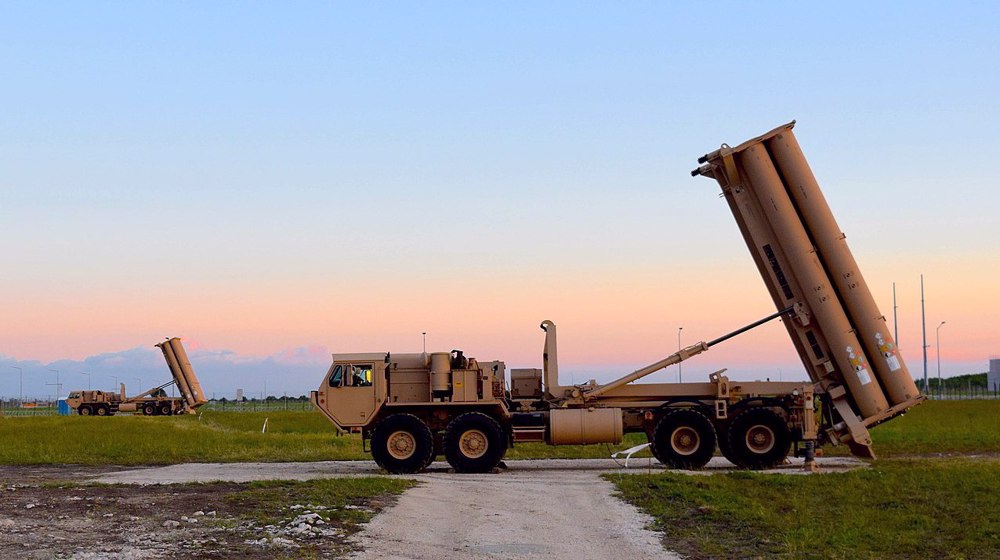
THAAD air defense system
Based on available information, of the remaining US THAAD batteries, two are deployed within the United States, one in Texas and another in Guam.
The rest are stationed overseas in South Korea, Saudi Arabia, and the United Arab Emirates (UAE), with the UAE being the only country to have formally purchased its own THAAD systems.
A THAAD battery is a mobile, self-contained missile defense unit. Each battery typically comprises six truck-mounted launchers, with each launcher carrying eight interceptor missiles, amounting to a total of 48 interceptors per battery.
In addition, the system includes an AN/TPY-2 radar for long-range detection and tracking (up to 2,000-3,000 km), a fire control and communication system for coordinating intercepts, along with support equipment and approximately 100 personnel to operate the unit.
Given the deployment of two batteries in the occupied Palestinian territories, it can be estimated that the Israeli regime had access to at least 96 interceptor missiles.
However, the actual number was likely higher due to frequent resupply efforts during engagements with Yemeni ballistic missiles and in preparation for the broader conflict with Iran.
Mixed performance against Yemeni missiles
Despite being touted as one of the most advanced missile defense systems in the world, THAAD’s performance against Yemeni ballistic missile attacks has been mixed, even according to Israeli and Western sources.
While some interceptions have been claimed as successful, there have been notable failures.
By the end of March 2025, six successful interceptions of Yemeni missiles had been reported. However, on May 4 and May 9, THAAD failed to intercept missiles targeting Ben Gurion Airport.
In both instances, Israeli sources asserted that the incoming missiles were ultimately intercepted by the Arrow missile defense system instead.
This claim has been met with skepticism, as the Arrow system typically engages threats at far greater distances, tens or even hundreds of kilometers away, yet the airport was struck directly.
The Israeli regime’s own admission that multiple systems were used against the same class of Yemeni missiles suggests that the interception cost is significantly higher than commonly assumed. Rather than a one-to-one missile-to-interceptor ratio, several interceptors, possibly from different systems, may be required to ensure a successful shootdown.
Despite ongoing claims by American and Israeli officials about the effectiveness and reliability of both THAAD and Arrow systems, Yemen has continued to target Ben Gurion Airport as part of its retaliatory operations. The continued threat and perceived vulnerability led nearly all international airlines to suspend flights to and from Israel.
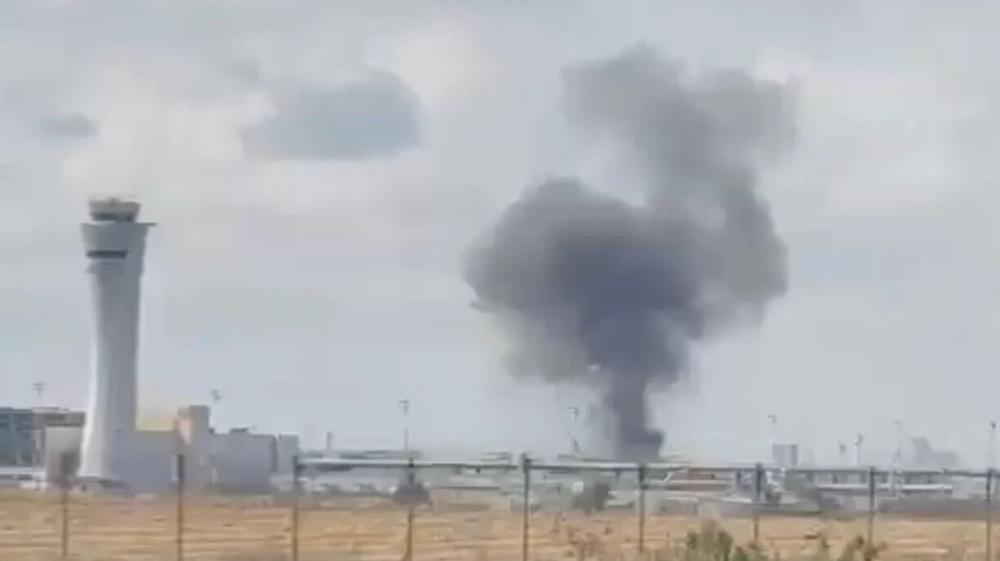
Yemeni missile hits Ben Gurion Airport on May 4, after unsuccessful interception with THAAD
The most commonly used long-range weapon in the Yemeni arsenal is the Palestine-2 – a two-stage hypersonic ballistic missile capable of reaching speeds up to Mach 16 and equipped with a maneuverable warhead. This type of missile poses a significant challenge to traditional missile defense systems, including THAAD.
Technologically, THAAD faces several limitations. These include radar difficulties in distinguishing between actual warheads and decoys, vulnerability to saturation by large-scale missile barrages, and diminished effectiveness against newer hypersonic and maneuverable missile designs.
The system also relies exclusively on US personnel for its operation, which can limit rapid adaptability in dynamic combat scenarios.
THAAD has experienced test failures in the past, raising concerns about its reliability and operational readiness. These failures have been linked to software bugs, mechanical faults, and targeting system errors, factors that cast doubt on its real-world performance under pressure.
Failures against Iranian missile strikes
During the 12-day war of aggression against Iran, THAAD’s performance deteriorated significantly, highlighted by its low interception rate and the rapid depletion of US and Israeli interceptor stockpiles.
On the eve of the Israeli aggression, approximately 100 THAAD interceptor missiles were positioned in the occupied Palestinian territories. In response, Iran launched between 370 and 500 ballistic missiles during its retaliatory operations, a volume that far exceeded available THAAD capacity.
While Israel also relied on other systems such as David’s Sling, Arrow-2, and Arrow-3, the sheer scale and intensity of Iran’s response shifted the strategic balance. The damage inflicted throughout Israeli-occupied territories underscored this imbalance.
In the initial days of the war, Iran deliberately used older liquid-fueled ballistic missiles to exhaust enemy air defenses. More advanced and maneuverable missiles were introduced only after Israel’s interceptor supply had been significantly drained.
Although no official statistics have been released regarding the number of THAAD interceptors used or their success rates, available evidence suggests a poor performance.
High-altitude kinetic interceptions, hallmarked by bright explosions visible across the region, were rare, and many may have involved Arrow systems instead of THAAD.
A particularly telling open-source analysis, based on video footage by Jordanian photographer Zaid M. Al-Abbadi, missile ignition signatures, and geolocation data, estimated that Israel used 39 THAAD, 34 Arrow-3, and 9 Arrow-2 interceptors during just one of more than 20 Iranian missile barrages.
Given such high rates of interceptor use, analysts believe THAAD batteries likely exhausted their missile supply within the first four to five days of the conflict.
This rapid depletion, combined with underwhelming interception success, highlights the system’s limitations in a high-intensity, multi-wave missile war.
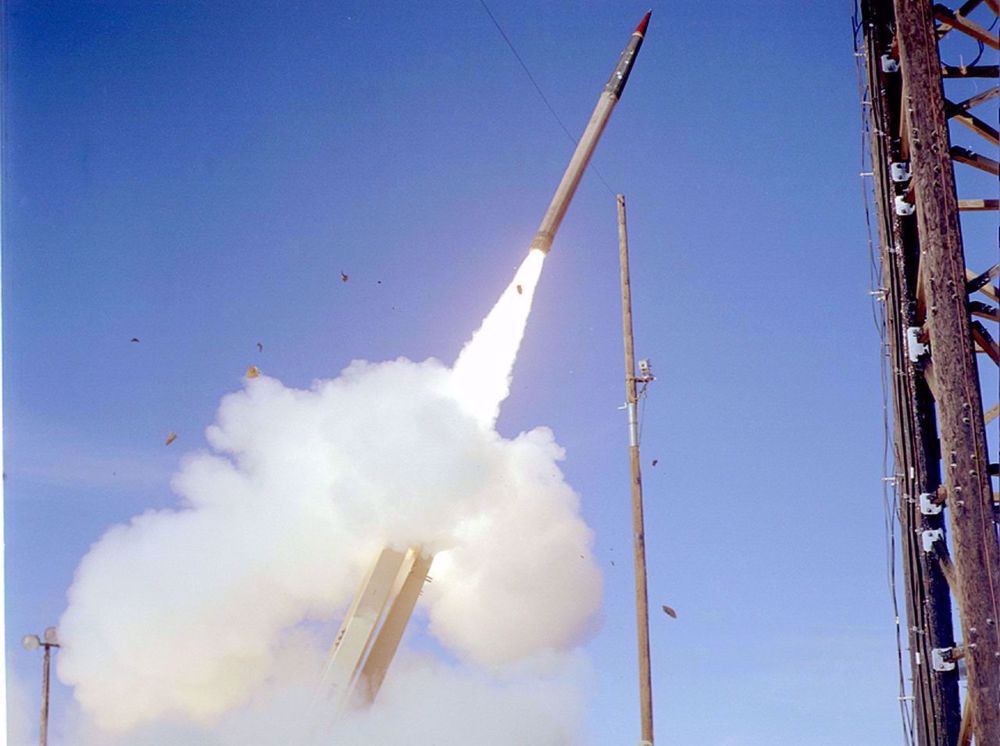
THAAD interceptor launch
Exhausted stockpiles and soaring costs
Estimates from military experts and news outlets place the unit cost of a single THAAD interceptor between $12 million and $15 million. However, other sources suggest the real cost is significantly higher.
In a statement to Newsweek, Sidharth Kaushal of the Royal United Services Institute (RUSI) noted that while the production cost of a THAAD interceptor is approximately $18 million, the total cost rises to $27 million when research, development, testing, and evaluation (RDT&E) expenses are factored in.
Estimates of total THAAD-related spending during the recent conflict vary. Analysts suggest that between $500 million and $800 million worth of interceptors may have been expended, corresponding to the use of 40 to 60 missiles.
On Tuesday, the Israeli newspaper Haaretz, citing Israeli military sources, reported that approximately 200 American and Israeli interceptor missiles were launched in total, at an estimated cost of 5 billion shekels – nearly $1.5 billion.
What all sources agree on is that the THAAD interceptor stockpile has been significantly depleted. At least one full battery’s worth, 48 interceptors, is believed to have been expended.
Considering the two THAAD batteries deployed and the high operational tempo due to prior Yemeni missile attacks, the actual figure may be closer to 96 interceptors. This would represent a reduction of roughly 30 percent of the entire US THAAD interceptor stockpile.
Open-source analysts also highlight the limited pace of US procurement: only 41 THAAD interceptors have been ordered over the past three years, including units designated for export customers. This slow replenishment rate underscores the vulnerability of even advanced missile defense systems when faced with sustained, high-volume missile warfare.
In stark contrast, Iran and China maintain vast ballistic missile arsenals, numbering in the thousands, making the rapid depletion of the US inventory, largely to defend Israeli territory, all the more striking.
Newsweek contacted the Pentagon for comment regarding the depletion and cost implications. The Department of Defense declined to elaborate, stating only that it had “nothing to provide.”
Iran presidential decree officially suspends cooperation with IAEA
Al Mayadeen | July 2, 2025
Iranian President Masoud Pezeshkian has issued a decree suspending the country’s cooperation with the International Atomic Energy Agency (IAEA), according to a report by Tasnim news agency on Wednesday.
The decision comes amid heightened tensions surrounding Iran’s nuclear program and follows recent legislative developments from the Iranian parliament.
Last week, Iranian Parliament Speaker Mohammad Bagher Ghalibaf announced that lawmakers had enacted a law mandating the suspension of cooperation with the IAEA, which he described as “Israel’s protector and servant.”
Ghalibaf argued that continued cooperation with the IAEA was untenable as long as the security of Iran’s nuclear facilities remained unresolved, claiming the agency’s impartiality had been compromised by its ties to “Israel”.
Grossi barred from Iran’s nuclear facilities
Meanwhile, Deputy Speaker of the Iranian Parliament, Hamid Reza Haji Babaei, announced on Sunday that IAEA Director-General Rafael Grossi has been barred from accessing Iranian nuclear facilities or placing surveillance cameras there, after Iran suspended all cooperation with the nuclear watchdog.
“We will no longer give Grossi permission to be present at [Iran’s] nuclear facilities and install cameras [there] because we saw information about our facilities in documents received from … the Israeli regime,” Haji Babaei told ISNA news agency.
The Islamic Republic further exposed profound cooperation between the IAEA and the Israeli occupation, which prompted Iran to obtain, through a major intelligence operation, a vast trove of highly classified strategic documents and information tied to “Israel”, well-informed sources told Al Mayadeen last month.
The sources told Al Mayadeen that the data included “thousands of documents related to the Israeli occupation’s projects and its nuclear facilities.”
According to the sources, the operation took place some time ago, but the enormous volume of documents and the need to safely transport the entire haul into Iran “required keeping the matter under secrecy.”
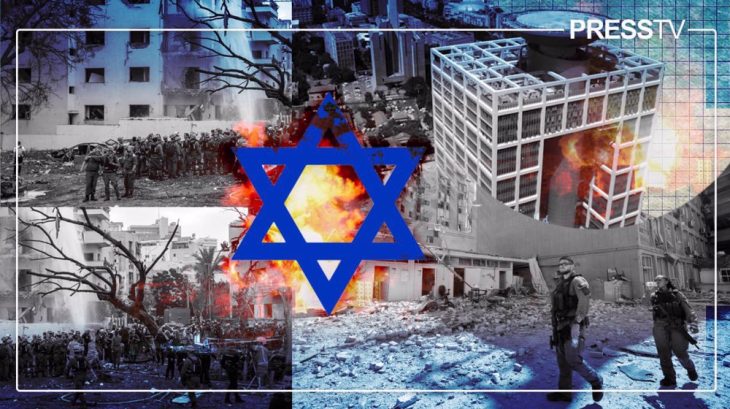
Settlers as human shields: Israel’s militarization of civilian areas in Tel Aviv and Haifa
Press TV | July 1, 2025
The recent Iranian retaliatory strikes against the Israeli regime as part of Operation True Promise III have cast a spotlight on a longstanding and notorious military strategy: the placement of critical military facilities deep within densely populated ‘civilian’ areas.
Reports and field evidence from the retaliatory strikes that inflicted heavy and irreparable blows on the regime again point to the fact that the regime uses settlers as human shields.
In a report published Sunday, the Israeli newspaper Haaretz acknowledged that Iranian missile strikes during the 12-day war imposed by the regime targeted only Israeli military installations.
However, the report noted that many of these facilities are deeply embedded within civilian areas, referring to illegal settlements mostly in Tel Aviv and Haifa.
One key example cited was the Kirya, Israel’s central military headquarters in Tel Aviv.
Tel Aviv: The Kirya Complex in a ‘civilian’ maze
The Kirya military-intelligence complex in central Tel Aviv was among the first and most significant targets hit by Iranian missiles late on June 13, hours after the Israeli regime carried out an unprovoked and unlawful aggression on Iranian soil, leading to the assassination of many senior military commanders, scientists and ordinary civilians.
Often referred to as the “Israeli Pentagon,” the Kirya houses the ministry of war affairs, military intelligence offices, and various covert installations used in war against Iran, Lebanon and Gaza.
These are concealed in high-rise buildings that are civilian or semi-civilian in nature.
Despite being heavily fortified and protected by multilayered Israeli-American air defense systems, the Kirya was struck early during Iran’s True Promise III operation.
Foreign journalists confirmed damage to towers in the area, even as Israeli media censored coverage under regime pressure. Leaked footage from an Israeli settler showed plumes of smoke and audible panic – “They hit the Mossad!” exclaimed the witness.
Military facilities in settlements
Kirya is located in one of Tel Aviv’s most densely populated districts. Beneath its surface lie numerous underground military facilities, identified by Iranian intelligence following Tehran’s acquisition of sensitive Israeli military and intelligence data in early June.
The district includes:
- Matcal Tower – Headquarters of top Israeli military leadership
- Marganit Tower – Home to strategic communications operations
- The Bor (“The Pit”) – A heavily fortified underground command center.
These installations are surrounded on all sides by settler infrastructure, including residential buildings, schools, and commercial zones, blurring any clear separation between military and non-military zones, as a deliberate strategy to use settlers as civilian shields.
Haifa: Ports, bases, and civilians intertwined
As in Tel Aviv, Haifa’s strategic military assets are tightly interwoven with ‘civilian’ life.
The most prominent is the Haifa Naval Base, home to the regime’s Mediterranean fleet and submarine corps. Located on the northwest side of Haifa’s busy port complex, the base sits amid one of Israel’s most important economic and ‘civilian’ hubs.
Recent months have seen most maritime traffic rerouted from Eilat to Ashdod and Haifa, further increasing the ‘civilian’ presence around these strategic assets.
Residential conversion of military zones
The Bahad 600 naval training base has undergone rapid conversion into a residential area, with new apartment blocks and even a children’s hospital constructed adjacent to operational military facilities. This proximity exemplifies the ongoing militarization of ‘civilian’ areas.
To the north lies the Rafael Advanced Military Systems complex, covering several square kilometers. It produces Iron Dome and David’s Sling missile systems, cruise missiles, and armored vehicle solutions.
Surrounding this are major industrial zones, Kiryat Nahum, Kiryat Ata, and Nesher, which combine military functions with chemical, cement, and energy industries. For example:
- Haifa refinery: Processes two-thirds of the Israeli regime’s oil supply.
- Nesher cement plant: Supplies 60 percent of the regime’s domestic cement needs.
- Communications antenna at Giv’at HaHagan: A key hub linking northern military commands with Tel Aviv.
Mount Carmel’s militarized natural reserve
The most notorious site is the Mishmar military base, constructed within the protected Mount Carmel National Park. It features visible radars and Iron Dome missile platforms.
The base lies just 300 meters from the University of Haifa’s student dormitories. borders archaeological sites and sanctuaries and is built amid sensitive ecological zones and hiking trails.
Among these historical and religious sites is Derech HaDorot (Road of the Millennia), an open-air museum with Bronze Age and Roman structures and Hurshat HaArba’im (Grove of the Forty), a sacred site for the Druze community.
Despite its cultural and environmental sensitivity, the Mishmar site is now heavily militarized, showcasing the regime’s prioritization of military over the safety of settlers or heritage preservation.
US Bombing of Iran Harms Non-Proliferation
By Ted Snider | The Libertarian Institute | July 1, 2025
Iran didn’t violate the Nuclear Non-Proliferation Treaty (NPT), the United States did. When the U.S. bombed Iran’s civilian nuclear facilities on June 23, they didn’t just violate the cardinal rule of international law by attacking a sovereign nation, without Security Council approval, that had neither attacked it nor threatened to attack it. They also violated the NPT. In doing so, the U.S. may have done irreparable harm to the non-proliferation regime.
As a signatory to the Nuclear Non-Proliferation Treaty, Iran was protected by the “inalienable right to a civilian [nuclear] program.” Iran and the world watched, not only as that nonnuclear umbrella collapsed and failed to protect Iran, but as the International Atomic Energy Agency (IAEA), the guardian of the non-proliferation regime, whispered barely a criticism. Iran’s parliamentary speaker has criticized the IAEA for having “refused to even pretend to condemn the [American] attack on Iran’s nuclear facilities.”
Iran has accused IAEA director general Rafael Grossi of issuing a “biased” report on Iran’s nuclear program right as Trump’s sixty day window for diplomacy was closing that could be used as a “pretext” for the attacks on Iran’s nuclear facilities. The U.S. was complicit in using the resolution that followed the report, since only 19 out of 33 countries voted in favor of it after the U.S. pressured eight countries they saw as “persuadable… to either vote with the US on the IAEA vote or not vote at all.”
After Grossi clarified that the IAEA “did not find in Iran elements to indicate that there is an active, systematic plan to build a nuclear weapon” and concluded that “We have not seen elements to allow us, as inspectors, to affirm that there was a nuclear weapon that was being manufactured or produced somewhere in Iran,” Iranian foreign ministry spokesman Esmaeil Baghaei said the clarification came “too late.” He blasted Grossi for “obscure[ing] this truth in your absolutely biased report that was instrumentalize by E3/U.S. to craft a resolution with baseless allegation of ‘non-compliance’; the same resolution was then utilized, as a final pretext… to launch an unlawful attack on our peaceful nuclear facilities.” Baghaei finished with the accusation that Grossi “betrayed the non-proliferation regime.”
On June 20, Iran filed a formal complaint against Grossi to the Security Council, accusing him of a “clear and serious breach of the principle of impartiality.” Iran’s Ambassador to the UN, Amir Saeed Iravani, criticized Grossi’s failure to condemn American and Israeli threats and use of force against its peaceful nuclear program as demanded by IAEA resolutions “which categorically prohibit any threat or use of force against nuclear facilities dedicated to peaceful purposes.” He said that Grossi’s “passivity… amounts to de facto complicity.”
On June 25, the Iranian parliament approved a bill suspending – but not yet terminating – its cooperation with the IAEA. Parliamentary speaker Mohammad Baqer Qalibaf explained the passage of the bill by saying that the IAEA “has put its international credibility up for sale” because it “did not even formally condemn the attack on Iran’s nuclear facilities.” “For this reason,” he said, “the AEOI [the Atomic Energy Organization of Iran] will suspend its cooperation with the Agency until the security of its nuclear facilities is guaranteed.”
The next day, the Guardian Council approved the bill. The spokesperson for the Council said that “considering… the attacks carried out… against the peaceful nuclear facilities of our country… the government is obliged to suspend any cooperation with the IAEA until the principles ensuring… the security of nuclear scientists’ centers and ensuring the inherent rights of the Islamic Republic of Iran to benefit from all rights stipulated in Article 4 of the Treaty on the Non-Proliferation of Nuclear Weapons, particularly concerning uranium enrichment.” Having been approved by the Guardian Council, Iran’s Foreign Minister, Abbas Araghchi, says the bill is now “binding.” That means, he says, that “From now on, our relationship and cooperation with the [IAEA] will take a new form.”
The great risk now is that Iran could withdraw from the NPT altogether. When I asked former Iranian nuclear negotiator [ret] Ambassador Seyed Hossein Mousavian if this failure of the NPT might move Iran to withdraw from the treaty, he answered, “Perhaps Iran does not rush to withdraw but ultimately this could be a serious option.”
Having its legal nuclear facilities bombed by a nuclear power who is a signatory to the NPT could convince Iran that membership in the NPT is harmful to it. Mousavian has pointed out that countries that did develop nuclear weapons – which Iran did not – outside of the NPT “have remained immune from military attacks.” Trump and the U.S. have not bombed North Korea. “It is only natural that following the military attack,” Mousavian writes, “Iran would reconsider its nuclear strategy, including its continued membership in the NPT.” And that, Ali Vaez, director of the Iran Project at the International Crisis Group, says “is quite likely.”
The danger is that the American bombing could eliminate a civilian nuclear program that was operating under the watchful international eye of an unprecedented inspection regime with one that is rebuilt entirely out of the eyes of international inspectors.
Sina Toossi, senior non-resident fellow at the Center for International Policy, told me that “far from neutralizing Iran’s nuclear capabilities, the war may have pushed Tehran closer to covert weaponization under a hardened doctrine.”
Withdrawal from the NPT would not entail that Iran has made the decision to build a nuclear weapon. Blinding the international community, led by the United States, may be seen by Iran as the only viable strategy for reconstituting a civilian nuclear program that would otherwise be bombed each time it reemerged.
The decision by the Trump administration to drop bunker buster bombs on Iran’s legal, civilian nuclear facilities, whether it “severely damaged” them, “obliterated” them or merely “set them back,” is that much more than the nuclear facilities were damaged. Under the guise of preventing nuclear proliferation in Iran, the U.S. may have so discredited the NPT that they have “severely damaged” and “set back” the world’s hard won non-proliferation regime.
Ted Snider is a regular columnist on U.S. foreign policy and history at Antiwar.com and The Libertarian Institute. He is also a frequent contributor to Responsible Statecraft and The American Conservative as well as other outlets. To support his work or for media or virtual presentation requests, contact him at tedsnider@bell.net
Featured Video

ARE PATIENTS BEING PROPERLY INFORMED ABOUT OZEMPIC?
or go to
Aletho News Archives – Video-Images
New Book
Breast Cancer: Before You Consent
A new Unbekoming paperback
Lies are Unbekoming | September 18, 2026
Peter Gøtzsche reviewed every randomised mammography screening trial ever conducted for the Cochrane Collaboration. Cochrane’s headline is that, assuming a 15% mortality reduction, one woman in 2000 avoids dying of breast cancer over ten years. Ten are overdiagnosed and treated. Two hundred experience false alarms.
But that headline assumes the reduction. When Gøtzsche looked only at the trials with adequate randomisation — the higher-quality ones — the reduction disappeared. No effect on breast cancer mortality. No effect on all-cause mortality.
This is the Cochrane finding, published in the establishment’s own database of systematic reviews.
No woman being asked to consent to a mammogram this week knows it.
That is why the new Unbekoming paperback exists. … continue
Blog Roll
 Aletho News
- The Truth About the Trump Shootings with Ken Silva
- ARE PATIENTS BEING PROPERLY INFORMED ABOUT OZEMPIC?
- US lawmaker blocks $2.8 billion weapons sale to Israel: Report
- Yemeni army claims responsibility for strikes on sensitive sites in Saudi capital, Aramco facilities in Yanbu
- Iran Judiciary issues indictments against 159 US, Israeli officials for assassination of Leader, commanders
- Turkiye revokes Iranian bank license under US sanctions campaign
- US-Denmark Agreement on Greenland Is ‘PR Stunt’ Ahead of Midterms
- Araghchi: Military intervention cannot create security; coercion cannot bring peace
- Fraud Squared
- Breast Cancer: Before You Consent
- If Americans Knew
- Inside Gaza’s death trap of collapsing, bombed-out buildings
- The everyday items Israel bans from Gaza every day
- Inside the siege, the ruined buildings of Gaza – Daily Update
- Debunking The Claim That Macklemore Has A “History Of Antisemitism”
- CPJ demands release of arrested Palestinian-US journalist near Bethlehem
- Robert Kraft: The Billionaire Friend of Netanyahu Pulling The Strings Behind the Macklemore/Ed Sheeran Blow Up
- Columbia Administered Fund Gives Big Money to Pro-Israel Groups
- Deportation Case of Palestinian Activist Salah Sarsour Tests First Amendment
- ‘We Will Not Forget’: Palestinians Mark 44 Years since Sabra and Shatila
- Why do we let Zionists decide what we can and can’t say?
- No Tricks Zone
- New Study: ‘Global Drought Shows No Detectable Recent Acceleration Under Climate Warming’
- Economic Masterminds: German Socialists Suggest Taxing Productivity Gains Stemming From Using AI
- The South China Sea Has Not Been Cooperating With The Climate Change Narrative
- Energy Crisis: Germany Enters Heating Season With Historically Low Gas Reserve Fill Levels
- New Study: The Antarctic Ice Sheet Gained Mass From 2020-2024 Due To Staggering Snow And Ice Accumulation
- Study: Ocean Heating Rates From Thousands Of Years Ago ‘Dwarf’ Modern Ocean Heating Rates
- Climate Extremists Target, Attack Large-Scale Power Grid Infrastructure In Germany!
- New Study: Antarctic Ice Melt Has Contributed Less Than 1 Centimeter To Sea Level Rise In The Last 30 Years
- Fear Of Debate: Alarmist German Climate Scientist Calls On Mainstream Media To Discredit Skeptic Voices
- End-Of-August Arctic Sea Ice Extent Hasn’t Fallen In 20 Years, Official Data Show!
 Aletho News