Most Americans would prefer to forget that we are approaching the first anniversary of the expulsion of U.S. military forces from Iraq. The Republican Party, which rallied behind George W. Bush to invade the country and occupy it, has suffered from a short memory relating to that misbegotten war even as it agitates for new and similar military interventions.
Much of the silence on the subject is certainly due to the fact that most Democrats and nearly all the media were also on board, though perhaps for reasons that did not completely coincide with the Bush neocons’ imperial vision. And after the war began and the occupation took on its misbegotten form under Jerry Bremer, Dan Senor, and a host of neocon acolytes brought on board to reshape the country, the saga ran on and on. As Iraq broke down into its constituent parts due to Bremer’s inept proconsulship, a development that might normally lead to a rethink of the entire project, Pentagon-based neoconservatives instead regrouped, doubled down and contrived the 2007 “surge” to fix things. That the surge was a poorly conceived and executed military dead end and a complete failure to do anything but deepen the divisions within Iraq seemed irrelevant, political partisanship inevitably rushing in to interpret it as a success to provide cover for the foolish politicians, generals and bureaucrats in Washington who had conceived it. As recently as the Republican presidential debates earlier this year the “surge” in Iraq was cited by several candidates as a litmus test for those who believe in the “right kind” of foreign policy. Those who did not believe in the myth of the surge as a subset of American Exceptionalism were outside the pale, most notably Representative Ron Paul.
Iraq, correctly labeled the “worst mistake in American history,” has to be remembered because of what it should have taught about Washington’s false perception of the U.S. vis-a-vis the rest of the world. One of America’s poorest secretaries of state of all time, Madeleine Albright, once said that the U.S. is the only “necessary nation” because it “sees far.” She could have added that it sees far though it frequently doesn’t understand what it is seeing, but that would have required some introspection on her part. Albright’s ignorance and hubris have unfortunately been embraced and even expanded upon by her equally clueless successors and the presidencies that they represented. Iraq should be an antidote to such thinking, a prime lesson in what is wrong with the United States when its blunders its way overseas as the self-proclaimed arbiter of the destinies of billions of people.
Everyone but the “realist” and largely traditional conservative and libertarian minority that opposed the Iraq venture from day one has turned out to be dead wrong about the war and many continued to be wrong even when the U.S. military was eventually forced to leave the country by the Baghdad government. The Iraq war was born from a series of lies.
The United States invaded Iraq in 2003 based on two alleged threats as defined by the Bush administration and Congress. First, it was claimed that Iraq had weapons of mass destruction and also delivery systems that would enable it to strike directly against the United States. Second, it was frequently argued that Iraq had somehow been involved in 9/11 through its intelligence services. Both contentions were completely false, were known by many in the White House to be fraudulent, and, in some cases, were bolstered by evidence that was itself fabricated or known to be incorrect. Many in the Pentagon and CIA knew that the case being made for war was essentially bogus and was being contrived to satisfy United Nations requirements for armed intervention. Though there were a couple of principled resignations from the State Department, almost everyone in the bureaucracy went along with the fraud.
Digging deeper there were other uncited reasons for going to war and some led back to Israel and its lobby. All of the most passionate cheerleaders for war were also passionate about protecting Israel. Iraq’s Saddam Hussein had been paying money to the families of Palestinians killed by Israel and there was a perception that he was a potential military threat. When the U.S. took over control in Baghdad one of the first projects to be considered was a pipeline to move Iraqi oil to the Israeli port of Haifa.
Fast forward eight years, to the end of the U.S. military presence. The neocons continued to see a strategic objective in the shambles that they had made. In an op-ed in the Washington Post on the impending U.S. departure from Iraq one year ago, neocons Kimberly and Fred Kagan delusionally entertained five “American core interests” in the region. They were: that Iraq should continue to be one unified state; that there should be no al-Qaeda on its soil; that Baghdad abides by its international responsibilities; that Iraq should contain Iran; and that the al-Maliki government should accept U.S. “commitment” to the region. As the Kagans are first and foremost apologists for Israel, it should be observed that Iraq’s “international responsibilities” would be understood as referring to the expectation that Baghdad not be hostile to Tel Aviv.
But looking back a bit, in 2003 Iraq was a good deal more unified and stable than it is today; there was no al-Qaeda or other terrorist presence; Saddam generally abided by a sanctions regime imposed by the U.N.; and Iraq was the principal Arab front line state restraining Iran’s ambitions. Then, as now, the U.S. was clearly “committed” to the region through the overwhelming presence of its armed forces and one should add parenthetically that Iraq in no way threatened the United States, or anyone else. It was precisely the U.S. invasion that dismantled the Iraqi nation state, introduced al-Qaeda to the country, wrecked the nation’s economy, and brought into power a group of Shi’a leaders who are anti-democratic and adhere much closer to Tehran and Syria than to Washington. Nor are they very friendly to Israel, quite the contrary, and there is no oil pipeline. So none of the “core interests” sought by the United States as defined by neocon doctrine have actually been achieved, or, rather, they have actually been reversed due to the invasion and occupation by the United States arranged and carried out by the Pentagon neoconservatives.
And then there is the cost. The U.S. lost nearly 5,000 soldiers killed plus 35,000 more wounded while the documented Iraqi dead number more than 110,000, though the actual total is almost certainly much, much higher, perhaps exceeding one million. Ancient Christian communities in Iraq have all but disappeared. Columbia economist Joseph Stiglitz has estimated that the total cost of the war will be in the $5 trillion plus range when all the bills are finally paid. The U.S. economy has suffered grave and possibly fatal damage as a result of a war that need not have taken place.
The lesson to be learned from Iraq is actually quite simple. Military intervention in a foreign land unless a genuine vital interest is at stake is a fool’s errand due to the unforeseen consequences that develop from any war. And when intervention is actually necessary (hard to imagine what those circumstances would be) it must have an exit strategy that starts almost immediately. Remembering the government chicanery that led to the events of 2003 through 2011 means that the lies that are currently being floated to justify regime change in both Syria and Iran by the same neocons who produced the Iraq debacle should be treated with extreme skepticism and summarily rejected. Iraq also provides the insights that enable one to judge the Afghanistan enterprise for what it really is: a failure now just as it will be five years from now at far greater cost in lives and treasure for Afghans and Americans alike. If the United States cannot learn from the experience of Iraq it is doomed to repeatedly fail in similar endeavors until the last soldier comes home in a body bag and the last dollar is spent, leaving behind an empty treasury and an impoverished American people.
Philip Giraldi is the executive director of the Council for the National Interest and a recognized authority on international security and counterterrorism issues.
The recent hostilities between the Gaza Strip and Israel have to be viewed in context of a broader geopolitical chessboard. The events in Gaza are tied to Syria and the US’s regional maneuvers against Iran and its regional alliance system.
Syria has been compromised as a conduit for weapons to Gaza, because of its domestic instability. Israel has capitalized on this politically and militarily. Benjamin Netanyahu has not only tried to secure his own election victory in the Knesset through an attack on Gaza, but has used the US-sponsored instability in Syria as an opportunity to try and target the arms stockpiles of the Palestinians.
Netanyahu calculated that Gaza will not be able to rearm itself while Syria and its allies are distracted. The bombing of the Yarmouk arms factory in Sudan, which Israel says was owned by the Iranian Revolutionary Guard, was probably part of this plan and a prelude to Israel’s attack on Gaza.
In this chess game, sit the so-called “Moderates”— a misleading label jointly utilized by Messrs George W. Bush Jr. and Tony Blair to whitewash their regional cabal of tyrants and backward regimes — alongside the Obama Administration and NATO. These so-called Moderates include the desert dictators of the feudal Gulf Cooperation Council (GCC), Jordan, Mahmoud Abbas, and Turkey. In 2011, the ranks of the Moderates were augmented by the NATO-installed government of Libya and the GCC/NATO-supported anti-government militias that were unleashed in Syria.
On the other side of the chessboard defiantly sits the Resistance Bloc composed of Iran, Syria, Hezbollah (and Hezbollah’s partners in Lebanon, like Amal and the Free Patriotic Movement), the so-called Palestinian Rejectionists, and increasingly Iraq. The Muslim Brotherhood, which has emerged as a new regional force, is being increasingly prodded into the Moderate camp by the US and the GCC in an attempt to ultimately play the sectarian card against the Resistance Bloc.
Stark contrasts between Gaza and Syria
Israel’s attack on Gaza was a litmus test. All those voices continuously pushing for America’s McJihad against the Syrian government in the name of freedom vanished from their podiums or suddenly went silent when Israel attacked Gaza. Al Jazeera’s tele-preacher Yusuf Al-Qaradawi and Saudi Arabia’s dictator-selected Grand Mufti Abdul Aziz went silent. Adnan Al-Arour — the Saudi-based exiled kooky Syrian cleric who, as one of the spiritual heads of the Syrian anti-government forces, has threatened to punish anyone that says that Al-Qaeda is among their ranks — even berated Hamas and the Palestinians for fighting Israel.
The fighting in Gaza really placed them in a fix. Here we see the contradictions in their “Arab Spring.” We now see who really pays lip service to Palestinian liberation and who does not. Moreover, the foreign supporters of the Syrian National Coalition, a rehash of the Syrian National Council, are ironically all supporters of Israel.
This is why mentioning the support that Iran, Syria, and Hezbollah have provided for Gaza has become a taboo among the supporters of the anti-government forces in Syria. All they can say is that any acknowledgment of the support that Tehran, Damascus, and Hezbollah have provided to Gaza is an attempt to sanitize “Bashar Al-Assad and his supporters.”
Iran, Syria, and Hezbollah helped the Palestinians in Gaza
The Iranian Fijr-5 symbolically ingrains Tehran’s support for Palestine. Despite the fact that Israel and Gaza are by far not equal, it was predominately Iranian arms and technology that changed the balance of power. Tehran has been the main ally and supporter of the Palestinian resistance. The US, Israel, Hezbollah, Hamas, the Palestinian Islamic Jihad, and Iran itself have all acknowledged this in different ways.
The Palestinian Islamic Jihad, which is unapologetically pro-Iranian, has openly stated that everything Gaza used in the fight against Israel, from its bullets to missiles, has been generously provided by Tehran. It was even reported during the fighting that Hezbollah, using a special unit dedicated to arming the Palestinians, resupplied the Gaza Strip with some of its own long-range missiles.
This has all taken place while the cads in Saudi Arabia, Qatar, and Turkey have instead armed the Syrian anti-government militias. Egypt and Jordan continue to be major partners in preventing Iranian arms from reaching the Palestinians.
Palestinian fighters have also been trained in Lebanon, Syria, and Iran. Ironically, the anti-government forces in Syria are also targeting members of the Palestinian Liberation Army in Syria.
The support that the Resistance Bloc has given the Palestinians puts those actors, like Turkey and Qatar, opposed to the Syrian government in a real predicament. These so-called Sunni states were embarrassed; not only did they fail to help a predominately Sunni population, but their insincerity was exposed. This is why there is an active effort to deny the support that Iran and its allies have provided for Gaza.
A boy looks up as he walks in the rubble of a destroyed shop in Beit Lahia, in the northern Gaza Strip, on November 26, 2012 (AFP Photo / Mahmud Hams)
A boy looks up as he walks in the rubble of a destroyed shop in Beit Lahia, in the northern Gaza Strip, on November 26, 2012 (AFP Photo / Mahmud Hams)
De-linking Hamas from Resistance Bloc to start a Muslim Civil War
As a back story to all this, the Israeli attack on Gaza and the Moderate’s wooing of Hamas is more than just about neutralizing Gaza. Hamas leaders are being tempted to choose between the Moderate and Resistance camps and increasingly between governing or active resistance to the Israeli occupation. Through this, some form of accommodation to the US and Israel is being sought from Hamas. The aims are to de-link the Palestinians, particularly Hamas, from the Resistance Bloc in order to portray Iran and its allies as a Shiite alliance bent on dominating the Sunnis.
If you are foolish enough to fall prey to it, welcome to the unfolding “American fitna” (schism) that aims to ignite a regional Muslim civil war between the Shiites and Sunnis. The Obama administration is trying to construct and line up a Sunni axis against the region’s Shiite Muslims.
It is a classic strategy of divide and conquer that envisions America and Israel dominating the region as the Muslims are incapacitated by their bloodletting. The Shia are systematically being vilified courtesy of the new media war: Iran, Hezbollah, Bashar Al-Assad (an Alawi who is increasingly labeled a Shiite for the benefit of this project), and Nouri Maliki’s administration in Iraq are being portrayed as the new oppressors of the Sunnis. In their place Turkey, with its virtually stillborn neo-Ottomanism foreign policy, and Egypt under the Muslim Brotherhood are being presented as the champions of the Sunnis. Never mind that Egypt’s Mohamed Morsi has continued the blockade of Gaza for Israel or that Turkey’s Erdogan lost his voice for a while when Israel began bombing Gaza.
The US is trying to use Egypt’s Muslim Brotherhood to control Hamas, because it was Cairo that established a ceasefire between Israel and Gaza. While Iran offers military technology, logistical support, and finance the Egyptians are being presented as Gaza’s ticket to establishing some form of normality and the GCC as alternative funding. This is why Qatar’s Emir Al-Thani visited Gaza to tempt Hamas with his declining supply of petro-dollars.
Shiite and Sunni divisions are political constructs
Inside Hamas there are internal differences over this. While Damascus, Tehran, and Hezbollah desired some form of public acknowledgment about their vital assistance to Hamas and the Palestinians, Hamas officials were careful about their statements. When Khaled Meshaal thanked Egypt, Qatar, and Tunisia during an important press conference, he narrowly mentioned Iran.
Meshaal’s politicking was not lost on Hezbollah Secretary-General Hassan Nasrallah, who responded hours later by rhetorically asking who supplied and painstakingly transferred the Fajr-5 missiles into Gaza? Nasrallah asked people to look past Gaza’s fair-weather friends, like the Qataris and Saudis who think they can buy their ways into the grace of the Palestinians, but to look at Gaza’s tested friends who allowed Gaza to stand on its own two feet. Then the Lebanese leader reaffirmed the ongoing support of the Resistance Bloc for the Palestinian people.
Despite its politburo’s position on Syria, Hamas is still a part of the Resistance Bloc. There is a new format now. If Greece and Turkey were at odds with one another as two NATO allies, then Hamas can have its differences with Syria and still be allied with the Resistance Bloc against Israel.
The divide in the Middle East is not a sectarian one between Shiites and Sunnis, but fundamentally political. The alliance of the predominately Sunni Muslim Palestinian resistance movements and the Free Patriotic Movement, Lebanon’s largest Christian political party, with predominately Shiite Muslim Iran and Hezbollah should defuse such a perception that the US and its allies are trying to cultivate.
Iraqi authorities have for a second time this month inspected an Iranian cargo plane heading to Syria, but allowed it to continue as no prohibited items were found on board.
The search of the Iranair cargo flight was conducted at Baghdad International Airport on Saturday.
“The plane was allowed to proceed to Syria after verifying that there are no weapons or any banned items on board,” Iraq’s Chairman of the Civil Aviation Authority Nasser al-Bandar said.
“Our experts found that the plane was carrying only medical supplies and foodstuff, “he added.
On October 2, Iraq stopped and inspected a Damascus-bound Iranair cargo plane from Tehran upon the illegal request of the US officials, who claimed that Tehran uses Iraq’s airspace to send weapons to the Syrian government. No weapons were found in that search, either.
Syria has been experiencing unrest since March 2011 and many people, including a large number of security personnel, have been killed in the violence.
Damascus says ‘outlaws, saboteurs, and armed terrorists’ are behind the unrest, but the opposition accuses the security forces of being behind the killings.
The Syrian government says that the chaos is being orchestrated from outside the country, and there are reports that a very large number of the insurgents are foreign nationals.
The United States has recently announced that it would allocate an additional $45 million to foreign-backed armed groups fighting against Syrian President Bashar al-Assad’s government.
US and UK weapons ammunition were linked to heart defects, brain dysfunctions and malformed limbs, according to a recent study. The report revealed a shocking rise in birth defects in Iraqi children conceived after the US invasion.
Titled ‘Metal Contamination and the Epidemic of Congenital Birth Defects in Iraqi Cities,’ the study was published by the Bulletin of Environmental Contamination and Toxicology. It revealed a connection between military activity in the country and increased numbers of birth defects and miscarriages.
The report, which can be found here, also contains graphic images of Iraqi children born with birth defects. (The images were not published on RT due to their disturbing content.) It documents 56 families in Fallujah, which was invaded by US troops in 2004, and examines births in Basrah in southern Iraq, which was attacked by British forces in 2003.
The study concluded that US and UK ammunition is responsible for high rates of miscarriages, toxic levels of lead and mercury contamination and spiraling numbers of birth defects, which ranged from congenital heart defects to brain dysfunctions and malformed limbs.
Fallujah, around 40 miles west of Baghdad, was at the epicenter of these various health risks. The city was first invaded by US Marines in the spring of 2004, and then again 7 months later. Some of the heaviest artillery in the US arsenal was deployed during the attack, including phosphorus shells.
Shocking findings
Between 2007 and 2010 in Fallujah, more than half of all babies surveyed were born with birth defects. Before the war, this figure was around one in 10. Also, over 45 percent of all pregnancies surveyed ended in miscarriage in 2005 and 2006, compared to only 10 percent before the invasion.
In Basrah’s Maternity Hospital, more than 20 babies out of 1,000 were born with defects in 2003, 17 times higher than the figure recorded in the previous decade.
Overall, the study found that the number of babies in the region born with birth defects increased by more than 60 percent (37 out of every 1,000 are now born with defects) in the past seven years. This rise was linked to an increased exposure to metals released by the bombs and bullets used over the past decade.
Hair samples of the population of Fallujah revealed levels of lead in children with birth defects five times higher than in other children, and mercury levels six times higher. Basrah children with birth defects had three times more lead in their teeth than children living in areas not struck by the artillery.
The study found a “footprint of metal in the population,” Mozhgan Savabieasfahani, one of the lead authors of the report said. Savabieasfahani is an environmental toxicologist at the University of Michigan’s School of Public Health.
“In utero exposure to pollutants can drastically change the outcome of an otherwise normal pregnancy. The metal levels we see in the Fallujah children with birth defects clearly indicates that metals were involved in manifestation of birth defects in these children,” she said.
The study’s preliminary findings, released in 2010, led to an in-depth inquiry on Fallujah by the World Health Organization (WHO), the results of which will be released next month. The inquiry is expected to show an increase in birth defects following the Iraq War.
According to the WHO, a pregnant woman can be exposed to lead or mercury through the air, water and soil. The woman can then pass the exposure to her unborn child through her bones, and high levels of toxins can damage kidneys and brains, and cause blindness, seizures, muteness, lack of coordination and even death.
US and UK ‘unaware’ of rise in birth defects
US Defense Department responded to the report by claiming that there are no official reports indicating a connection between military action and birth defects in Iraq.
“We are not aware of any official reports indicating an increase in birth defects in Al Basrah or Fallujah that may be related to exposure to the metals contained in munitions used by the US or coalition partners,” a US Defense Department spokesperson told the Independent. “We always take very seriously public health concerns about any population now living in a combat theatre. Unexploded ordnance, including improvised explosive devises, are a recognized hazard.”
An UK government spokesperson also said there was no “reliable scientific or medical evidence to confirm a link between conventional ammunition and birth defects in Basrah. All ammunition used by UK armed forces falls within international humanitarian law and is consistent with the Geneva Convention.”
Russia has confirmed signing more than USD 4.2 billion worth arms contracts with Iraq during the second half of 2012, making it the country’s largest arms supplier after the US.
According to a joint statement issued on Tuesday at a meeting between Russian Prime Minister Dmitry Medvedev and his visiting Iraqi counterpart Nouri al-Maliki, the contracts were signed during visits to Russia by Iraqi delegations including Defense Minister Saadoun al-Dulaimi.
“The delegation members familiarized themselves with the Russian military production, discussed the technical and commercial options of the offer with Rosoboronexport (state) supplier, and signed contracts worth more than $4.2 billion,” read the statement.
On Monday, the Iraqi premier arrived in Moscow to consolidate political, economic and defense ties with Russia and discuss the recent developments in Syria.
Prior to Maliki’s first visit to Moscow, Russian reports said the deals would all be sealed jointly this week and totaled some USD 4.3 billion.
The two countries also negotiated Iraq’s purchase of 30 Mi-28 attack helicopters and 42 Pantsir-S1 surface-to-air missile systems.
Maliki said in the Russian Foreign Ministry mansion on Monday that Iraq needs Russia’s help in defense and military areas and needs arms to “defend itself and fight terrorism” in the country.
The two countries were said to further negotiate Iraq’s acquisition of MiG-29 jets and heavy armored vehicles along with other weaponry.
Heading a high-ranking delegation, the Iraqi prime minister is visiting Moscow for the first time in three years and a half at the invitation of Russian President Vladimir Putin.
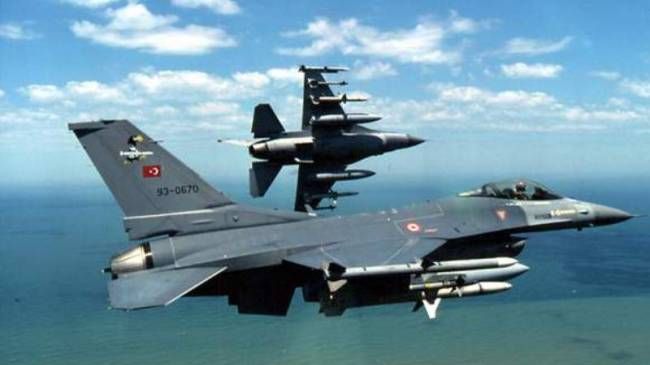
Turkish forces have launched fresh attacks on Kurdish rebels in northern Iraq, bombing their hideouts overnight.
Turkish military sources say at least 12 F16 fighter jets took off from the Diyarbakir base in the country’s southeast, targeting at least four camps in the Qandil Mountains and surrounding areas, where Kurdish Workers’ Party (PKK) members are thought to be hiding.
On Saturday, Turkish warplanes pounded suspected PKK positions in northern Iraq. Officials say the attacks caused no casualties, but resulted in damage to farmlands of Sidkan region, north of Arbil.
The latest development comes days after Iraq announced that it intended to end Turkey’s military presence in the country.
On October 5, Turkish security forces killed six PKK members during separate operations in the eastern provinces of Elazig and Siirt.
Ankara lists the group as a terrorist organization.
The PKK has been fighting for an autonomous Kurdish region inside Turkey since the 1980s. The Ankara-PKK conflict has left over 45,000 people dead.
Even those pundits who seem to want to distance U.S. foreign policy from Tel Aviv’s demands and begin treating Israel like any other country sometimes feel compelled to make excuses and apologies before getting down to the nitty-gritty. The self-lacerating prologues generally describe how much the writer really has a lot of Jewish friends and how he or she thinks Israelis are great people and that Israel is a wonderful country before launching into what is usually a fairly mild critique.
Well, I don’t feel that way. I don’t like Israel very much. Whether or not I have Jewish friends does not define how I see Israel and is irrelevant to the argument. And as for the Israelis, when I was a CIA officer overseas, I certainly encountered many of them. Some were fine people and some were not so fine, just like the general run of people everywhere else in the world. But even the existence of good upstanding Israelis doesn’t alter the fact that the governments that they have elected are essentially part of a long-running criminal enterprise judging by the serial convictions of former presidents and prime ministers. Most recently, former President Moshe Katsav was convicted of rape, while almost every recent head of government, including the current one, has been investigated for corruption. Further, the Israeli government is a rogue regime by most international standards, engaging as it does in torture, arbitrary imprisonment, and continued occupation of territories seized by its military. Worse still, it has successfully manipulated my country, the United States, and has done terrible damage both to our political system and to the American people, a crime that I just cannot forgive, condone, or explain away.
Interfering in American electoral politics
The most recent outrage is Israeli Prime Minister Benjamin Netanyahu’s direct interference in U.S. domestic politics through his appearance in a television ad appearing in Florida that serves as an endorsement of Republican candidate Mitt Romney. The Netanyahu ad and his involvement in the election has been widely reported in the media and has even been condemned by several leading Jewish congressmen, but it has elicited no response from either Obama or Romney. Both should be condemning in the strongest terms the completely unprecedented intervention by a foreign head of government in an American election. That they are saying nothing is a testament to the power that Israel and its friends in Congress and the media have over the U.S. political establishment. Romney might even privately approve of the ads, as he has basically promised to cede to Netanyahu the right to set the limits for U.S. policy in the Middle East.
Pushing us into war
And why is Benjamin Netanyahu in such a lather? It is because President Barack Obama will not concede to him a “red line” that would automatically trigger a U.S. attack on Iran. Consider for a moment the hubris of Netanyahu in demanding that Washington meet his conditions for going to war with Iran, a nation that for all its frequently described faults has not attacked anyone, has not threatened to attack anyone, and has not made the political decision to acquire a nuclear weapon in spite of what one reads in the U.S. press. At the U.N., Netanyahu’s chart showing a cartoon bomb with a sputtering fuse reminiscent of something that might have been employed by an anarchist in the 1870s failed to pass any credibility test even for the inevitable cheerleaders in the U.S. media. If the U.S. is to go to war based on a Netanyahu cartoon then it deserves everything it gets when the venture turns sour, most likely Iraq Redux, only 10 times worse.
Even more outrageous, and a lot less reported in the media, were the comments made by Patrick Clawson, director of research for the Washington Institute for Near East Policy (WINEP), an organization founded by the American Israel Public Affairs Committee (AIPAC). WINEP is widely viewed as a major component of the Israel Lobby in Washington and is closely tied to the Israeli government, with which it communicates on a regular basis. Clawson heads WINEP’s Iran Security Initiative. At a briefing on Sept. 24 he said, “I frankly think that crisis initiation is really tough, and it’s very hard for me to see how the United States … uh … president can get us to war with Iran.… The traditional way America gets to war is what would be best for U.S. interests.”
Note that Clawson states his conviction that initiating a crisis to get the U.S. involved in a war with Iran and thereby fooling the American people into thinking that it is the right thing to do is actually a “U.S. interest.” He cites Pearl Harbor, Fort Sumter, the Lusitania, and the Gulf of Tonkin as models for how to get engaged. Which inevitably leads to Clawson’s solution: “if the Iranians aren’t going to compromise it would be best if someone else started the war … Iranian submarines periodically go down. Some day one of them may not come up…. We are in the game of using covert means against the Iranians. We could get nastier at that.” Clawson is clearly approving of Israel’s staging an incident that would lead to war, possibly even a false-flag operation carried out by Israel that would implicate the United States directly, or he is urging the White House to do the job itself.
Clawson not surprisingly has never served in the U.S. military and has a Ph.D. in economics from the New School for Social Research, which would at first glance seem to disqualify him from figuring out how to set up a covert operation to sink a submarine and thereby start a war. He might be seen as moderately ridiculous, but like many of his neoconservative colleagues he is well wired into the system. He writes regularly for The Washington Post, The New York Times, and The Wall Street Journal; appears on television as an “expert”; and is a colleague at WINEP of the ubiquitous Dennis Ross, sometimes called “Israel’s lawyer,” who was until recently President Obama’s point man on the Middle East. Clawson is a useful idiot who would be registered as an agent of the Israeli government if the Justice Department were doing its job, but instead he is feted as a man who tells it like it is in terms of American interests. The distortion of the foreign-policy decision-making in this country is something that can be attributed to Clawson and his host of fellow travelers, all of whom promote Israel’s perceived interests at the expense of the United States. And they do it with their eyes wide open.
Hate speech posing as free speech
I will deliberately avoid belaboring another Israel Firster Pamela Geller and her New York subway posters calling Palestinians savages and Israelis civilized, as I am sure the point has been made about how any lie that can serve the cause of Israel will be aggressively defended as “free speech.” A poster excoriating Jews or blacks in similar terms as “savages” would not have seen the light of day in New York City, another indication of the power of the Lobby and its friends to control the debate about the Middle East and game the system.
Spying
And then there are the reasons to dislike Israel and what it represents that go way back. In 1952′s Lavon Affair, the Israelis were prepared to blow up a U.S. Information Center in Alexandria and blame it on the Egyptians. In 1967, the Israelis attacked and nearly sank the USS Liberty, killing 34 crewmen, and then used their power over President Lyndon Johnson to block an investigation into what had occurred. In 1987, Jonathan Pollard was convicted of spying for Israel with investigators determining that he had been the most damaging spy in the history of the United States. In the 1960s, Israelis stole uranium from a lab in Pennsylvania to construct a secret nuclear arsenal. And the spying and theft of U.S. technology continues. Israel is the most active “friendly nation” when it comes to stealing U.S. secrets, and when its spies are caught, they are either sent home or, if they are Americans, receive a slap on the wrist.
Killing American citizens
And Israel gets away with killing American citizens — literally — in the cases of Rachel Corrie and Furkan Dogan of the Mavi Marmara. And let’s not forget Israel’s treatment of the Palestinians which has made the United States complicit in a crime against humanity. Tel Aviv has also played a key role in Washington’s going to war against Iraq, in promulgating a U.S.-led global war on terror against the Muslim world, and in crying wolf over Iran, all of which have served no U.S. interest. Through it all, Congress and the media are oblivious to what is taking place. Israel is a net recipient of over $123 billion in U.S. aid and continues to get $3 billion a year even though its per capita income is higher than that of Spain or Italy. No one questions anything having to do with Israel while Congress rubber-stamps resolution after resolution virtually promising to go to war on Israel’s behalf.
I have to admit that I don’t like what my own government is doing these days, but I like Israel even less and it is past time to do something about it. No more money, no more political support, no more tolerance of spying, and no more having to listen to demands for red lines to go to war. No more favorable press when the demented Benjamin Netanyahu holds up a cartoon at the U.N. The United States government exists to serve the American people, no more, no less, and it is time that our elected representatives begin to remember that fact.
Philip Giraldi is the executive director of the Council for the National Interest and a recognized authority on international security and counterterrorism issues. He is a former CIA counter-terrorism specialist and military intelligence officer who served eighteen years overseas in Turkey, Italy, Germany, and Spain. He was Chief of Base in Barcelona from 1989 to 1992 designated as the Agency’s senior officer for Olympic Games support.
On October 4, the Turkish daily Sözcü proclaimed on its website: “We hit Syria!”
Numerous Syrian soldiers were reported dead as a result of the hit, which took place in response to a Syrian mortar strike that killed a woman and four children, all from the same family, in the Turkish border town of Akçakale. The hit stands to be repeated now that the Turkish parliament has officially authorized future military action against its southern neighbor.
To some observers, this authorization may appear redundant. It is common knowledge that Turkey is playing host to anti-Syrian regime combatants, who stage incursions from Turkish territory, and, as the British Independentnoted in June of this year:
“members of the loose assortment of rebel groups that comprises the FSA [Free Syrian Army] said they had received multiple shipments of arms including Kalashnikov assault rifles, BKC machine guns, rocket-propelled grenades and anti-tank weaponry from Gulf countries and that Turkey was assisting in the delivery of the weapons.”
Coincidentally, the Turkish parliament was already scheduled to vote this week on an extension of authorization for cross-border military action against another neighbor: Iraq, which plays host to combatants from the Kurdistan Workers’ Party (PKK), who stage incursions into Turkey.
Iraq’s feelings on the matter were summed up by government spokesman Ali Dabbagh, quoted byReuters as registering Iraqi opposition to a Turkish parliamentary extension and “reject[ion of] the presence of any foreign bases or troops on Iraqi territory and the incursion of any foreign military forces into Iraqi lands on the pretext of hunting down rebels.” According to Dabbagh, such behavior constitutes a “violation of Iraqi sovereignty and security.”
In the latest installment of regional double standards, the same sovereignty-and-security lingo has been trotted out by Turkey and its allies in condemnation of the Syrian strike on Akçakale. Turkish Prime Minister Recep Tayyip Erdoğan’s fulminations over the “abominable attack” on civilians may appear less righteous when we consider recent events in Turkish military history, such as the extermination of 35 Kurdish civilians over a span of 40 minutes in December of last year. The civilians, attacked in the vicinity of the Turkish-Iraqi border, were mistaken for PKK militants.
According to the Wall Street Journal, Turkish warplanes were aided in their mistake by US Predator and Israeli Heron drones. The participation of the latter technology is an ever-ironic reminder of Turkish-Israeli military collaboration, which continued even after Erdoğan’s 2009 performance at Davos, where he announced to Israel’s president Shimon Peres: “When it comes to killing, you know well how to kill.”
Indeed, Erdoğan was correct in this assessment, as Israel had recently wrapped up its latest exhibition of killing prowess in Gaza, where 1400 persons – primarily civilians – were eliminated in 22 days. The following year, Israel reiterated its homicidal abilities by slaughtering eight Turkish citizens and one Turkish-American on board the Mavi Marmara, part of the flotilla endeavoring to deliver humanitarian aid to the besieged Palestinian coastal enclave.
While the Mavi Marmara incident merely provoked an expression of “regret” from the US establishment, this week’s strike on Akçakale merited “outrage”, despite having produced approximately half the number of Turkish casualties than were killed on the ship. The Agence France-Presse quoted an email from Pentagon spokesman George Little specifying that “[t]his is yet another example of the depraved behavior of the Syrian regime, and why it must go.”
This is the same George Little, of course, who appears in the Wall Street Journal article weighing in on the drone-facilitated massacre of the 35 Kurds in north Iraq – who, it must be stressed, are far from the only innocent casualties of Turkish cross-border maneuvers:
“At the Pentagon, press secretary George Little said when asked about the strike, ‘Without commenting on matters of intelligence, the United States strongly values its enduring military relationship with Turkey’.”
After so many years of “collateral damage” and other euphemisms for mass killing in Iraq and Afghanistan, the duplicity of the imperial lexicon comes as no surprise. Tragic events are catalogued according to the identity of the perpetrators and victims: when Turkey kills Kurds it’s evidence of a valuable military relationship; when Syria kills Turks it’s depraved; when Israel kills anyone it’s in self-defense.
The upshot is that there are quite a few people who “know well how to kill” and that lexical acrobatics cheapen human life. As for Erdoğan’s assailing the Syrian regime for “carrying out massacres with heavy weapons against its own people,” a miraculous purging of hypocrisy from politics would require such critiques to be applied to other situations as well – like, say, ones in which Kurds obliterated by Turkish warplanes happen to be Turkish citizens.
While a number of mainstream media pundits have acknowledged that the neocons played a major role in bringing about the war on Iraq (though usually without mentioning their connection to Israel or their predominantly Jewish ethnicity), there are stringent critics of Israel and US policy in the Middle East who totally reject this interpretation. One of the most notable of these is Norman Finkelstein, who expounds on his view in his latest book, “Knowing Too Much.” Because I must limit the length of this article, my argumentation must be kept to a minimum. My book, “The Transparent Cabal: The Neoconservative Agenda, War in the Middle East, and the National Interest of Israel,” provides a detailed and extensively-documented account of all the issues covered here. It should be added that Finkelstein has labeled my book as conspiratorial—which is just the opposite of what the word “transparent” in the title conveys and what is explicitly stated in the book—and he denies that there is any evidence for my contentions. It does not appear that Finkelstein has actually read my book; he probably considers it not worth reading.
Despite denying that the neocons had an effect on US Middle East policy, Finkelstein does grant that the “Jewish neocons pushed long and hard for an attack on Iraq.” (p. 75, “Knowing Too Much”) Contrary to Finkelstein, the very fact that for many years the neocons had been the major exponents of an attack on Iraq, which did become US policy, is at least prima facie evidence for their vital role in bringing about the war. Finkelstein, however, firmly holds that the neocon agenda was irrelevant to US policy, and that what was achieved was done by others and would have occurred even if the neocons had not existed.
Finkelstein does accurately point out that “Every reconstruction of the 2003 war places Cheney and Rumsfeld at the helm of the decision-making process.” (p. 76, “Knowing Too Much”) Then he devotes some space to refuting John J. Mearsheimer and Stephen M. Walt’s alleged insinuation that the two officials were “duped” by the neoconservatives. (The two academic scholars wrote the bombshell essay, “The Israel Lobby and U.S. Foreign Policy,” later expanded into a book. And I should add that it is not apparent from my reading of their book that Mearsheimer and Walt necessarily imply that Cheney and Rumsfeld were “duped.”) Finkelstein maintains that “Cheney and Rumsfeld did not only partake of the ‘belief’ of Jewish neoconservatives that Saddam posed a mortal danger. Their own ‘American nationalist’ strategic vision also largely coincided with the neoconservative agenda.” In essence, they “shared basic assumptions.” (p. 78, “Knowing Too Much”) From these claims, which I would qualify but not fundamentally differ with, Finkelstein manages to derive the idea that Cheney and Rumsfeld were not influenced by the neocons, but somehow came up with the same war agenda independently. Evidence would indicate that this is highly unlikely to have been the case.
Undoubtedly, Cheney and Rumsfeld, rather than being tricked by the neocons, were in league with them, but it also seems almost certain that they were actually influenced by the neocon agenda. For Rumsfeld and, even more so, Cheney were personally close to the neocons. Prior to the start of the George W. Bush administration, Cheney, for example, was involved in a number of key neoconservative organizations: the board of advisors of the Jewish Institute for National Security Affairs (JINSA); the board of trustees of the American Enterprise Institute (AEI); and the Project for a New American Century (PNAC). It would seem reasonable to believe that, instead of independently fashioning their own “strategic vision” that harmonized completely with that of the neocons, Cheney and Rumsfeld were influenced by the neocons’ well-developed positions, including specific strategies for action, which meshed with their own more general foreign policy attitudes—e.g., a proclivity for unilateral, aggressive action.
Although Cheney had for years identified with a tough-minded, militaristic foreign policy, he had, as Secretary of Defense, loyally adhered to the George H.W. Bush administration policy in 1991 of eschewing an occupation of Iraq, and continued to identify with that position after the end of the administration. As late as a 1996 interview for a documentary on the 1991 Gulf War for PBS’s “Frontline” program, Cheney declared: “Now you can say well you should have gone to Baghdad and gotten Saddam, I don’t think so [rather] I think if we had done that we would have been bogged down there for a very long period of time with the real possibility we might not have succeeded.”
In short, it seems reasonable to conclude that during the latter 1990s, Cheney was persuaded by neocon claims backed by numerous facts and factoids that Saddam was dangerous—though whether he really believed that Saddam was a “mortal danger” is questionable—and that his removal would be good thing for the United States that would outweigh the costs of a war. Although Cheney undoubtedly must have realized that the neocons had cherry-picked and exaggerated the intelligence claims, his involvement in the highest levels of government and partisan politics for many years had habituated him to having the truth twisted to advance policy goals.
Furthermore, Cheney was known to pick up newer views expressed in conservative circles that entailed marked changes in his actual policy prescriptions, though leaving his overall conservative attitude unaffected. For example, in regard to economic policy, he moved from being a budget-balancer to a supply-sider willing to tolerate large budget deficits. (Barton Gellman, “Angler: The Cheney Vice Presidency,” 2008, pp. 257-259) And, as Vice President, Cheney specifically relied on advice from the eminent historian of the Middle East, Bernard Lewis, a right-wing Zionist and one of the neocons’ foremost gurus, who strongly advocated war against Iraq and other Middle Eastern states. (Gellman, “Angler,” p. 231) So while the neocon Middle East war agenda did resonate with Cheney’s general militant stance on foreign policy, there is little reason to think that he would have come up with the specifics of the policy, including even the identification of Iraq as the target, if it had not been for neocon influence.
The influence of ideas per se was not the only factor that likely motivated Cheney. The fact that Cheney and his wife, Lynne, who was with the American Enterprise Institute (known as “neocon central”), had close personal and professional relations with the neocons also would have predisposed him to give his support to the neoconservatives and their agenda.
There is certainly no inherent reason why “American nationalists” (as Finkelstein styles Cheney and Rumsfeld) qua “American nationalists” would identify with Israeli interests and pursue wars in the Middle East against the Islamic states. If global power were the American nationalist goal, one could easily argue that supporting the Islamic world would best serve its advancement. For by pursuing such an alternative policy, the United States would have the support of the major oil-producing region of the world. And if the more than one billion Muslims were friendly to the United States, they could be used, if such a weapon were necessary, to undermine America’s most powerful military adversaries—Russia and China—since both have restive Muslim populations.
It should be noted that representatives of the “realist” camp of foreign policy, which focuses on concrete national interests rather than ideals—and includes such luminaries as Brent Scowcroft, National Security Advisor for George H. W. Bush; James Baker, Secretary of State for George H. W. Bush; and Zbigniew Brzezinski, National Security Advisor to Jimmy Carter—did not push for the war on Iraq, and Brzezinski and Scowcroft openly opposed it.
Furthermore, large numbers of nationalist conservatives, such as Pat Buchanan and other traditional conservatives, have opposed globalist American intervention and believed from the outset that wars in the Middle East were not in America’s interest. These conservative nationalists had supported a hard-line Cold War policy long before the neoconservatives came onto the scene—though while opposing Communism they were wary of American global involvement, especially nation-building, perceiving the global policy against Communism as a something of a necessary evil. During most of the Cold War, they had been the dominant face of American conservatism, but the neocons, by the end of the 1980s, would achieve a leading position in the conservative movement. They quickly purged or marginalized those who dissented from their positions, especially in regard to Israel, and mainstream conservatism itself was transformed in a neoconservative direction, a change which has been lauded by the neocons and lamented by those purged and marginalized conservatives and their followers, now called paleoconservatives. The upshot of all of this is that being an “American nationalist” did not ipso facto make one a supporter of the neoconservative Middle East agenda, as Finkelstein would imply.
Being in charge of the incoming Bush administration transition team, Cheney used that position to staff national security positions in the government with his neocon associates. While the neocons could not actually make the ultimate decisions in the Bush administration, they were in sufficiently authoritative positions inside the administration to influence the decisions that would be made. And the anger and fear resulting from the 9/11 terror attacks enabled the neocons, with their already existing war agenda, to markedly increase their influence in the administration. Significantly, the administration’s neocons were not only providing what was regarded by President Bush as expert advice but, as mentioned above, they also cherry-picked the spurious intelligence that depicted Saddam Hussein as a threat to the United States.
The formidable power of the neoconservatives in the Bush administration derived from the fact that they worked in unison to advance their war agenda and override and marginalize all opposition. Not only was there no consensus for war in the foreign policy and national security components of the executive branch, but crucial aspects of the neocon war agenda were opposed by significant elements of the military brass, the State Department, and the CIA.
Bob Woodward in his “Plan of Attack” (p. 292) notes that Secretary of State Colin Powell saw a “separate little government,” consisting of “Wolfowitz, Libby, Feith,” and what Powell privately called Feith’s “Gestapo office.” According to Colonel Lawrence Wilkerson, who served as Powell’s chief of staff, “There were several remarkable things about the vice president’s staff. One was how empowered they were, and one was how in sync they were. In fact, we used to say about both [Rumsfeld’s office] and the vice president’s office that they were going to win nine out of ten battles, because they are ruthless, because they have a strategy, and because they never, ever deviate from that strategy . . . . They make a decision, and they make it in secret, and they make [it] in a different way than the rest of the bureaucracy makes it, and then suddenly foist it on the government – and the rest of the government is all confused.”
Regarding the concomitant loss of power by the State Department, Wilkerson remarked: “I’m not sure the State Department even exists anymore.”
Also of vital importance was a cohesive neocon network outside the Bush administration, which helped to mobilize crucial public support for the war. Social anthropologist Janine R. Wedel in her book, “The Shadow Elite: How the World’s New Power Brokers Undermine Democracy, Government, and the Free Market,” provides a detailed description of the neoconservatives as an example of an interlocking network of organizations, agencies, and think tanks united behind a shared agenda that was capable of driving government policy.
It seems apparent that without all-out support from the neocon network, Cheney and Rumsfeld could not have brought about the attack on Iraq, even if that had been their goal. For the neocon network had to overcome significant opposition to achieve the implementation of their war agenda, as well as generate public and congressional support for war. For example, the neocons had championed Ahmed Chalabi and enabled much of his spurious intelligence to receive the imprimatur of the US government—though the established intelligence community regarded him as a con man.
Although Cheney and Rumsfeld could not have brought off the war without the neocon network, those two were not indispensable to the neocons, who could have likely achieved war with other individuals at the helm. For example, the hawkish pro-Israel John McCain was the favorite Republican candidate for numerous neocons in 2000 (and, of course, was the Republican presidential nominee in 2008). Given McCain’s penchant for neoconservative foreign policy advisors, his advocacy of forcible regime change in Iraq prior to 2001, and his staunch support for the attack on Iraq during the war build-up (and his later hawkishness on Iran), there is no reason to think that a President McCain, surrounded by neocon advisers, would have avoided a war on Iraq.
Nothing of what I have written is intended to imply that the neoconservatives were the sole cause for the war on Iraq or that they single-handedly drove the country to war. While neoconservatives spearheaded the war on Iraq, and without the neoconservatives the war would have been highly improbable, they obviously needed auxiliary support, in which category I would include Cheney and Rumsfeld. Most significantly, the 9/11 terror attacks created the ideal milieu to generate government and popular support for such a military endeavor, as those attacks certainly enabled the neocons’ Iraq war agenda to move to the forefront in the Bush administration. Without the popular fear and anger generated by the 9/11 attacks, it is unlikely that the neocons would have been able to successfully promote a war on Iraq. Nonetheless, the neoconservatives were the primary actors. It was they who created the war agenda, and it was they who played a key role in its implementation.
The U.S. Department of State took the moral and strategic bankruptcy of America’s Iran policy to a new low today, by notifying Congress that the Obama administration intends to remove the mojahedin-e khalq (MEK) from the State Department’s list of foreign terrorist organizations (FTOs).
At a macro level, we are disdainful—even scornful—of the U.S. government’s lists of both FTOs and state sponsors of terrorism. We have seen too many times over the years just how cynically American administrations have manipulated these designations, adding and removing organizations and countries for reasons that have little or nothing to do with designees’ actual involvement in terrorist activity. So, for example, after Saddam Husayn invaded the fledgling Islamic Republic in 1980—on September 22, no less—and starting killing large numbers of innocent Iranians, the Reagan administration (which came to office in January 1981) found a way to remove Iraq from the state sponsors list, in order to remove legal restrictions prohibiting the U.S. government from helping Saddam prosecute his war of aggression as robustly as the administration wanted. (During that war, the MEK—after having tried but failed to bring down the Islamic Republic through a bloody campaign of terrorist bombings and assassinations conducted against the new Iranian government’s upper echelons—ended up collaborating with an Iraqi government regularly carrying out chemical weapons attacks against targets, civilian as well as military, inside Iran.) But, when the same Saddam invaded Kuwait in 1990, the George H.W. Bush administration couldn’t get Iraq back on the state sponsors list fast enough. We are very skeptical that Saddam’s ties to groups that the United States considers terrorist organizations changed all that much during this period.
Yet, precisely because we know how thoroughly corrupt and politicized these designations really are, we recognize their significance as statements of U.S. policy. Today, the Obama administration made a truly horrible statement about U.S. policy toward Iran.
The statement is horrible even if one wants to believe that FTO designations have some kind of procedural and evidentiary integrity about them. (We don’t, but we also recognize that letting go of illusions is often not easy.) Just this year, U.S. intelligence officials told high-profile media outlets that the MEK is actively collaborating with Israeli intelligence to assassinate Iranian nuclear scientists, see here; Iranian officials have made the same charge. Since when did murdering unarmed civilians (and, in some instances, members of their families as well) on public streets in the middle of a heavily populated urban area (Tehran) not meet even the U.S. government’s own professed standard for terrorism? Of course, one might rightly point out that the United States is responsible for the deaths of millions of innocent civilians across the Middle East. But Washington generally strives to maintain the fiction that it did not intend for those innocents to die as a (direct and foreseeable) consequence of U.S. military operations and sanctions policies. (You know, the United States didn’t really mean for those people to die, but, as Secretary of Defense Donald Rumsfeld once said, “Stuff happens.”) Here, the Obama administration is taking an organization that the U.S. government knows is directly involved in the murder of innocent people and giving this group Washington’s “good housekeeping seal of approval.”
But, to invoke Talleyrand’s classic observation that a certain action was “worse than a crime—it was a mistake,” delisting the MEK is not just a moral abomination; it is a huge strategic and policy blunder. It is hard to imagine how the Obama administration could signal more clearly that, even after the President’s presumptive reelection, it has no intention of seeking a fundamentally different sort of relationship with the Islamic Republic—which would of course require the United States to accept the Islamic Republic as a legitimate political entity representing legitimate national interests.
Count on this: once the MEK is formally off the FTO list—a legally defined process that will take a few months to play out—Congress will be appropriating money to support the monafeqin as the vanguard of a new American strategy for regime change in Iran. In the 1990s, similar enthusiasm for Ahmad Chalabi and the Iraqi National Congress—who were about as unpopular among Iraqis as the MEK is among Iranians—led to President Clinton’s signing of the Iraq Liberation Act, which paved the way for George W. Bush’s decision to invade Iraq in 2003. The chances for such a scenario to play out with regard to Iran over the next few years—with even more disastrous consequences for America’s strategic and moral standing—got a lot higher today.
As usual, Paul Pillar hits the mark in his latest blog post at the National Interest in asking “Why are the Neocons Still Around?,” suggesting that when you are responsible for “one of the biggest and costliest blunders in the history of U.S. foreign relations” [the Iraq war], retirement from public affairs — as opposed to beating the drums for a new Middle East military adventures — might be a more seemly course of action.
What applies to U.S. neo-cons should also apply to the current prime minister of Israel who, given his many years of growing up and living in the United States, as well as his close personal relations with leading U.S. neo-cons, has either drunk the same kool-aid or helped to brew it up himself. (After all, it was in 2001 that Bibi was bragging about how easy the United States could be “moved to the right direction.”) And just like then, he is now leading the charge for war with Iran in ways that are not only increasing the chances of a major breach between the United States and Israel, as M.J. Rosenberg and other informed observers see it, but are also raising serious questions among the national-security elite in Israel about his fitness to lead.
So, given his current efforts to take the U.S. to war in Iran, I thought it might be useful to review at least part of Netanyahu’s advice and exhortations to Washington in the run-up to the Iraq war. Coincidentally, it was almost exactly ten years ago when he testified at seemingly interminable length before the House Government Reform Committee about the absolute necessity for Washington to effect regime change in Iraq as the next step — the first was ousting the Taliban — toward destroying the “entire terror network” (Iraq, Iran, Syria, Libya, Al-Qaeda, Hezbollah, Hamas, Arafat, etc.) and “ventilating” the Middle East in much the same that the U.S. and its allies “ventilated” Nazi Germany after World War II. You will be quick to see that Netanyahu echoed many of the same points that were being made at the time by Paul Wolfowitz, Richard Perle, Bill Kristol, et. al. who spoke with similar confidence (and profound understanding of the region) about the necessity for war and the unmitigated good that would come of it.
It’s also worth remembering that Netanyahu testified before Congress on this issue five days after then-White House Chief of Staff Andrew Card told the New York Times in reference to the administration’s push for a war resolution on Iraq, “From a marketing point of view, you don’t roll out new products in August.” In that context, Netanyahu’s testimony has to be seen as part of the administration’s public campaign to roll Congress. Bibi subsequently drew heavily on his testimony in an op-ed published on the Wall Street Journal’s neo-con editorial page (September 20, 2002) and in an interview with the Washington Times a month later (October 23). Let there be no mistake: Bibi was a big booster of “one of the biggest and costliest blunders in the history of U.S. foreign relations,” as Pillar describes it.
Here’s some of examples of the wisdom he shared with Congress about Iraq, the alleged threat it posed, and how to transform the region:
On why invading Iraq — instead of pursuing Al Qaeda — was the top priority:
I think the first question is, do you want to merely avenge September 11th or do you want to win the war on terror? If you want to stop with September 11th, go after al Qaeda.
…[T]here is no international terrorism of any kind — al Qaeda, Hezbollah, Hamas, you name them, all of them — there is no international terrorism if you take away the support of sovereign states. And the sovereign states are few. If you want to win this war, you just have to neutralize these states. In neutralizing them, you have two options. It’s like when kamikaze fighters are coming at you and bombing you. You can shoot one; you can shoot the other. But if you really want to stop it, you have to shoot down the aircraft carriers. There are only a handful of aircraft carriers. …So, I think if you want to win the broader war on terror, you have to get rid of these regimes.
And:
And the question of time [for taking preemptive action], I think the sooner the better. But now the question is when you choose a target, I think Iraq brings two things, a confluence of two things. One, it is sufficiently important in this network to have a tremendous effect. If it collapses, it will have a beneficial seismic effect…
And:
And today the United States must destroy the same regime because a nuclear-armed Saddam will place the security of our entire world at risk. And make no mistake about it — if and once Saddam has nuclear weapons, it is only a matter of time before those weapons will be used.
And:
If a preemptive action will be supported by a broad coalition of free countries in the United Nations, all the better. But if such support is not forthcoming, then the United States must be prepared to act without it.[Emphasis added.]
On Saddam’s (presumed) nuclear program, Netanyahu had no doubts whatsoever:
“Two decades ago, it was possible to thwart Saddam’s nuclear ambitions by bombing a single installation. But today, nothing less than dismantling his regime will do, because Saddam’s nuclear program has fundamentally changed in those two decades. He no longer needs one large reactor to produce the deadly material necessary for atomic bombs. He can produce it in centrifuges the size of washing machines that can be hidden throughout the country. And I want to remind you that Iraq is a very big country. It is not the size of Monte Carlo. It is a big country. And I believe that even free and unfettered inspections will not uncover these portable manufacturing sites of death.”
And:
“There’s no question that [Saddam] had not given upon on his nuclear program, not [sic] whatsoever. There is also no question that he was not satisfied with the arsenal of chemical and biological weapons that he had and was trying to perfect them constantly. …So I think, frankly, it is not serious to assume that this man, who 20 years ago was very close to producing an atomic bomb, spent the last 20 years sitting on his hands. He has not. And every indication we have is that he is pursuing, pursuing with abandon, pursuing with ever ounce of effort, the establishment of weapons of mass destruction, including nuclear weapons. If anyone makes an opposite assumption or cannot draw the lines connecting the dots, that is simply not an objective assessment of what has happened. Saddam is hell-bent on achieving atomic bombs, atomic capabilities, as soon as he can.
…There was a constant upgrading of these weapons, constant upgrading of these weapons, constant efforts to make them more lethal and to expand the reach of the delivery systems to deliver them.”
And:
So we have all these dots and we say, well, we don’t know exactly what is happening. You know, it’s like you’re about to see somebody plunge the knife into someone, you’re looking through a keyhole. You followed a murderer. You know that he is suspected that he’s already killed a few people and you see him trailing somebody and you’re trailing him. He shuts the door. You’re looking through the keyhole and you see him grasping the throat of this person, raising the knife and then the light goes out, and the next thing you know a bod is found. And you can say, ‘Well, you know, I didn’t actually see him en flagrante, in the act, if you will,’ but I think, Mr. Kucinich, that it is simply not reflecting the reality to assume that Saddam isn’t feverishly working to develop nuclear weapons, as we speak.
And:
There is not question whatsoever that Saddam is seeking and is working and is advancing towards the development of nuclear weapons — no question whatsoever. And there is no question that once he acquires it, history shifts immediately.
On how regime change in Iraq will have wondrous effects on the region:
…If you take out Saddam, Saddam’s regime, I guarantee you that it will have enormous positive reverberations on the region.
And:
So what is the next step? I believe that the next step is to choose — it’s not a question of whether you have to take action but what kind of action and against whom. I think of the three [Iraq, Iran and Libya, all “racing to develop nuclear weapons”], Saddam is probably in many ways a linchpin, because it is possible to take out this regime with military action and the reverberations of what happens with the collapse of Saddam’s regime could very well create an implosion in a neighbor regime like Iran for the simple reason that Iran has, I don’t want to say a middle class, but it has a very large population that might bring down the regime, just as has [sic] brought down the shah’s regime. So I think that the choice of going after Iraq is like removing a brick that holds a lot of other bricks and might cause this structure to crumble. It is not guaranteed. The assumption of regime removal in Iraq, an implosion in Iran, an implosion in Libya is an assumption. It is not guaranteed. But if I have to choose should there be military action first against Iraq or first against Iran, I would choose exactly what the president had chosen, to after Iraq.
And:
The three principles of winning the war on terror are the three W’s — winning, winning and winning. The more victories you amass, the easier the next victory becomes. The first victory in Afghanistan makes a second victory in Iraq that much easier. The second victory in Iraq will make the third victory that much easier, too, but it may change the nature of achieving that victory.
Democratization is the answer:
The test and the great opportunity and challenge is not merely to effect the ouster of the regime, but also transform that society and thereby begin too the process of democratizing the Arab world. I think that’s absolutely essential.
…I think the greatest protection ….against the return of another Saddam, another bin Laden, another Mullah Omar …is to ventilate these societies with the winds of freedom. Democracy, or, if I want to be realistic, democratization, coupled with an economic package. I think that should be the step afterwards in Iraq. And I think it would actually stabilize Iraq. It might send a message — I think it will — to neighboring Iran, to neighboring Syria. And the people will wake up and they’ll say, “We can have a real life. We can have a choice. Our children can have a future.” That’s not a bad idea.
On regime change in Iran:
I once said to the …heads of the CIA, when I was prime minister, that if you want to advance regime change in Iran, you don’t have to go through the CIA cloak-and-dagger stuff — what you want to do is take very large, very strong transponders and just beam ‘Melrose Place’ and ‘Beverly Hills 2050′ [sic] and all that into Teheran and into Iran, because that is subversive stuff. …[B]ut it may take a long time.
If Bush strikes Iraq, Saddam will hit Israel:
I want to say that I’m here today as a citizen of a country that is most endangered by a preemptive strike, for it is, I think, clear that in the last gasps of Saddam’s dying regime, he will attempt to launch his remaining missiles, his remaining payloads, including biological and chemical payloads, at the Jewish state.
On the “right direction” in which Bush and the U.S. are heading (recalling, for a second, Bibi’s boast about the ease with which Washington can be “moved in the right direction” in the 2001 video):
I think, in a similar way, the bombing of September 11th opened the eyes of Americans to see the great conflict and the great danger that faces us. And once opened, then, the overpowering will of the majority of the people of the United States, of the steamroller, is inevitably moving to decide this battle. I think this is — I think this was called by Congressman Lantos “a hinge of history,” and it is exactly that. It is a hinge of history.
And one year later, I can come here and say that history is moving in the right direction; that had America not woken up, had America not mobilized its action, had it not — have — if it had not had the courageous leadership of President Bush, then I wouldn’t be able to say that I’m confident today. But I am saying that I believe that the war on terror is going in the right direction and that I am confident that if we pursue this direction, then we will achieve victory. And victory is victory for America and victory for Israel and victory for Britain, victory for all the democracies, however vacillating and however reluctant their governments are. This is a victory for all free societies, and I’m sure it will be achieved.
All of which raises the question: given his proven powers of analysis and foresight, why are we listening to Bibi Netanyahu on how to deal with Iran?
The drug-induced nipple secretions of trans women are as good as mothers’ breast milk for babies, the University of Sussex Hospitals NHS Trust claimed in a letter to campaigners made public in a report by British think tank the Policy Exchange on Sunday.
The healthcare trust’s medical director, Rachel James, argued that the off-label prescription drug cocktail men transitioning to female take in order to produce milk was “similar to the natural hormones which encourage lactation to develop when the baby is newly born.”
“The evidence which is available demonstrates that the milk is comparable to that produced following the birth of a baby,” James wrote in the letter, sent to Children of Transitioners last August.
Biological men who wish to lactate must first take hormones to grow milk glands and then take high doses of either domperidone or metoclopramide to stimulate milk production. Neither drug is approved for this use, though they are occasionally prescribed off-label to biological women who have trouble lactating.
However, domperidone’s own manufacturer, Janssen, warns patients the drug “may cause unwanted side effects affecting the heart in a breastfed baby” and “should be used during breastfeeding only if your physician considers this clearly necessary.” … continue
This site is provided as a research and reference tool. Although we make every reasonable effort to ensure that the information and data provided at this site are useful, accurate, and current, we cannot guarantee that the information and data provided here will be error-free. By using this site, you assume all responsibility for and risk arising from your use of and reliance upon the contents of this site.
This site and the information available through it do not, and are not intended to constitute legal advice. Should you require legal advice, you should consult your own attorney.
Nothing within this site or linked to by this site constitutes investment advice or medical advice.
Materials accessible from or added to this site by third parties, such as comments posted, are strictly the responsibility of the third party who added such materials or made them accessible and we neither endorse nor undertake to control, monitor, edit or assume responsibility for any such third-party material.
The posting of stories, commentaries, reports, documents and links (embedded or otherwise) on this site does not in any way, shape or form, implied or otherwise, necessarily express or suggest endorsement or support of any of such posted material or parts therein.
The word “alleged” is deemed to occur before the word “fraud.” Since the rule of law still applies. To peasants, at least.
Fair Use
This site contains copyrighted material the use of which has not always been specifically authorized by the copyright owner. We are making such material available in our efforts to advance understanding of environmental, political, human rights, economic, democracy, scientific, and social justice issues, etc. We believe this constitutes a ‘fair use’ of any such copyrighted material as provided for in section 107 of the US Copyright Law. In accordance with Title 17 U.S.C. Section 107, the material on this site is distributed without profit to those who have expressed a prior interest in receiving the included information for research and educational purposes. For more info go to: http://www.law.cornell.edu/uscode/17/107.shtml. If you wish to use copyrighted material from this site for purposes of your own that go beyond ‘fair use’, you must obtain permission from the copyright owner.
DMCA Contact
This is information for anyone that wishes to challenge our “fair use” of copyrighted material.
If you are a legal copyright holder or a designated agent for such and you believe that content residing on or accessible through our website infringes a copyright and falls outside the boundaries of “Fair Use”, please send a notice of infringement by contacting atheonews@gmail.com.
We will respond and take necessary action immediately.
If notice is given of an alleged copyright violation we will act expeditiously to remove or disable access to the material(s) in question.
All 3rd party material posted on this website is copyright the respective owners / authors. Aletho News makes no claim of copyright on such material.

 Aletho News
 Aletho News