Magazine Depth and Shields

Iranian Shahed Drones – Three Variants
By William Schryver – imetatronink – June 26, 2024
In addition to the already-in-progress wars in Ukraine, Gaza, and the Red Sea, we are now staring down the barrel of yet another — rumored to be imminent in southern Lebanon.
There is no doubt Israel (just like its great benefactor, the United States) is, in the context of a “big war”, capable of executing several damaging strikes against a potential peer or near-peer adversary.
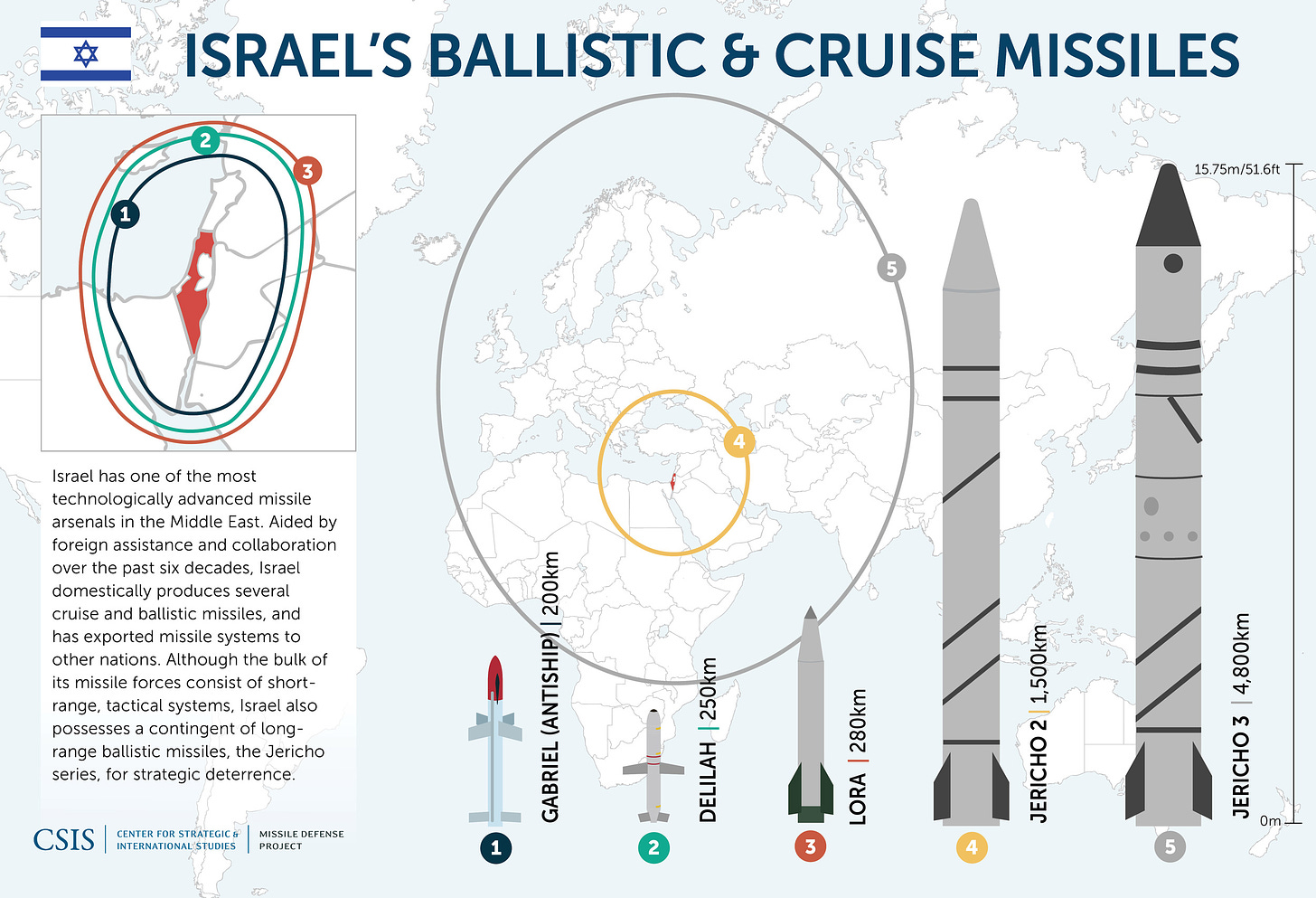
Israeli Ballistic and Cruise Missiles and Ranges
But, throughout the imperial domain, there are fatal weaknesses that exist right now, and which cannot be turned into strengths at any point in the near- or medium-term.
The first is what military types call “magazine depth”: munitions stockpiles sufficient to offensively overwhelm, defensively defeat, and strategically outlast the enemy.
Neither the United States, nor any of its largely impotent client nations, possess “magazine depth” sufficient to prosecute anything more than a relatively brief campaign against their potential peer adversaries: Russia, China, Iran — and all or any of their lesser-power partners.
The second problem is a corollary of the first. It is what I will term “shields”: the capacity to defeat a decisive proportion of the strikes one’s enemy can launch against you.
Neither the United States, nor any of its largely impotent client nations — by their own admission — possess anything even approximating comprehensive and effective “shields” against the quantity and quality of the types of strike weapons its potential adversaries can launch against them.
NATO sources themselves recently confessed that they only have about 5% potential air defense coverage against Russian missile strikes.
Now, of course, many will reflexively argue that, for example, the US could, with a massive “shock and awe” first-strike air campaign, effectively disarm Russian counterstrike capabilities.
This is patently ridiculous wishful thinking.
No one who actually understands the parameters of the military equation believes this to be true. And one need only examine the results of the months-long campaign against the lowly Yemenis to see confirmation of this incontrovertible fact.
Earlier this year we witnessed the Iranians launch a relatively modest missile strike against Israel, whose defenses were massively reinforced by American air and naval assets.
Using maybe 300 antiquated long-range strike drones and cruise missiles as decoys, the air defense response of both the US and Israel was massively attrited. And then, with a mere dozen or so seriously capable ballistic missiles, the Iranians blew right through the interception attempts of both the multiple land-based Patriot systems and a US guided-missile destroyer positioned off the eastern Mediterranean coast.
The Patriot systems were a total bust, and the Israelis summarily retired them in the immediate aftermath of the Iranian strike.
The US destroyer is reported to have launched eight top-shelf SM-3 missile defense interceptors (quite likely its entire “magazine depth”) at the incoming Iranian strike package.
They might have damaged one of the 12-15 incoming Iranian missiles.
The others hit with precision comparable to the 5-meter CEP Iran achieved in its 2020 strikes against the US airbase at Ayn al-Asad in Iraq.
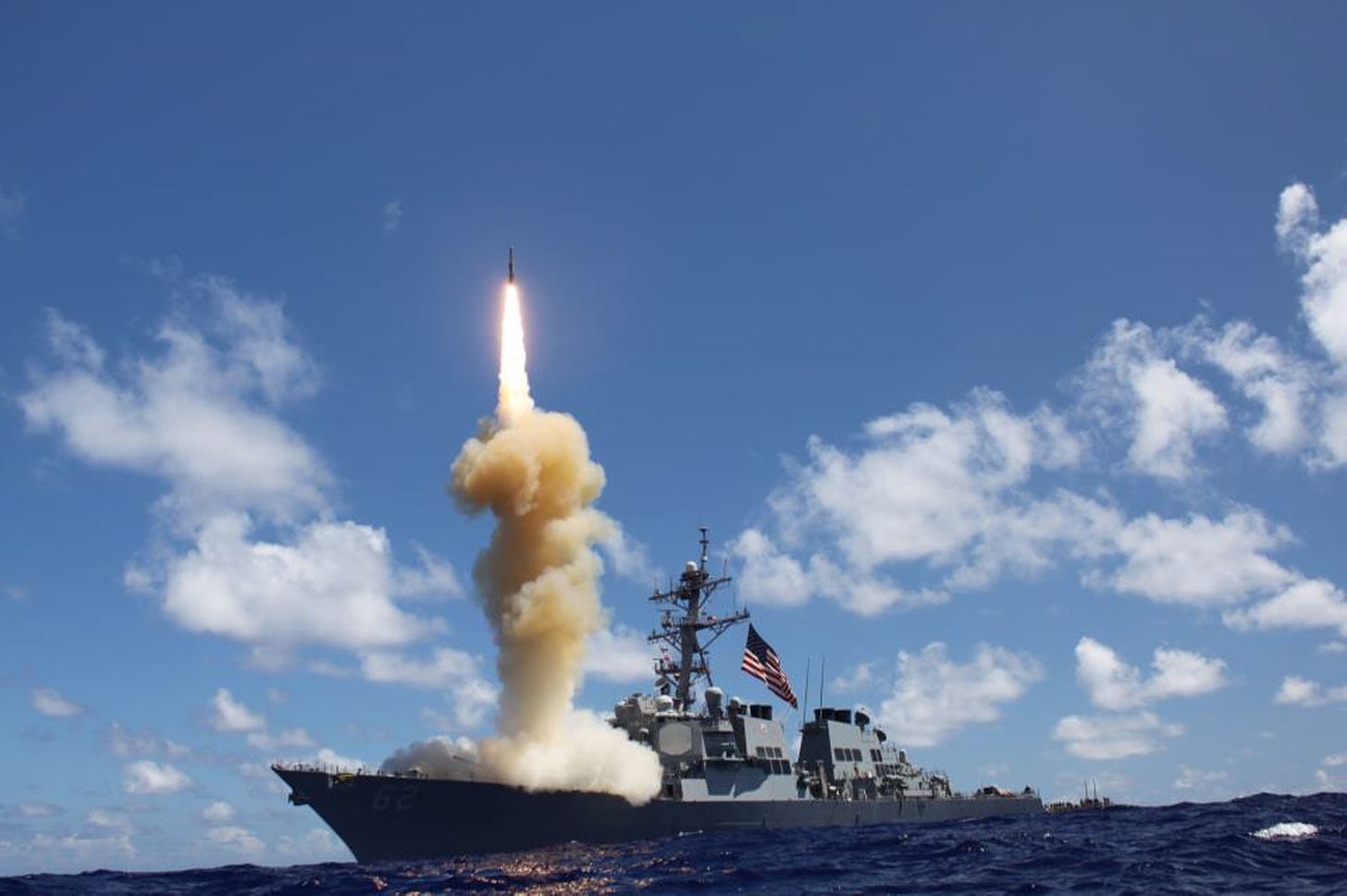
SM-3 Missile Interceptor Launched from a US Guided-Missile Destroyer
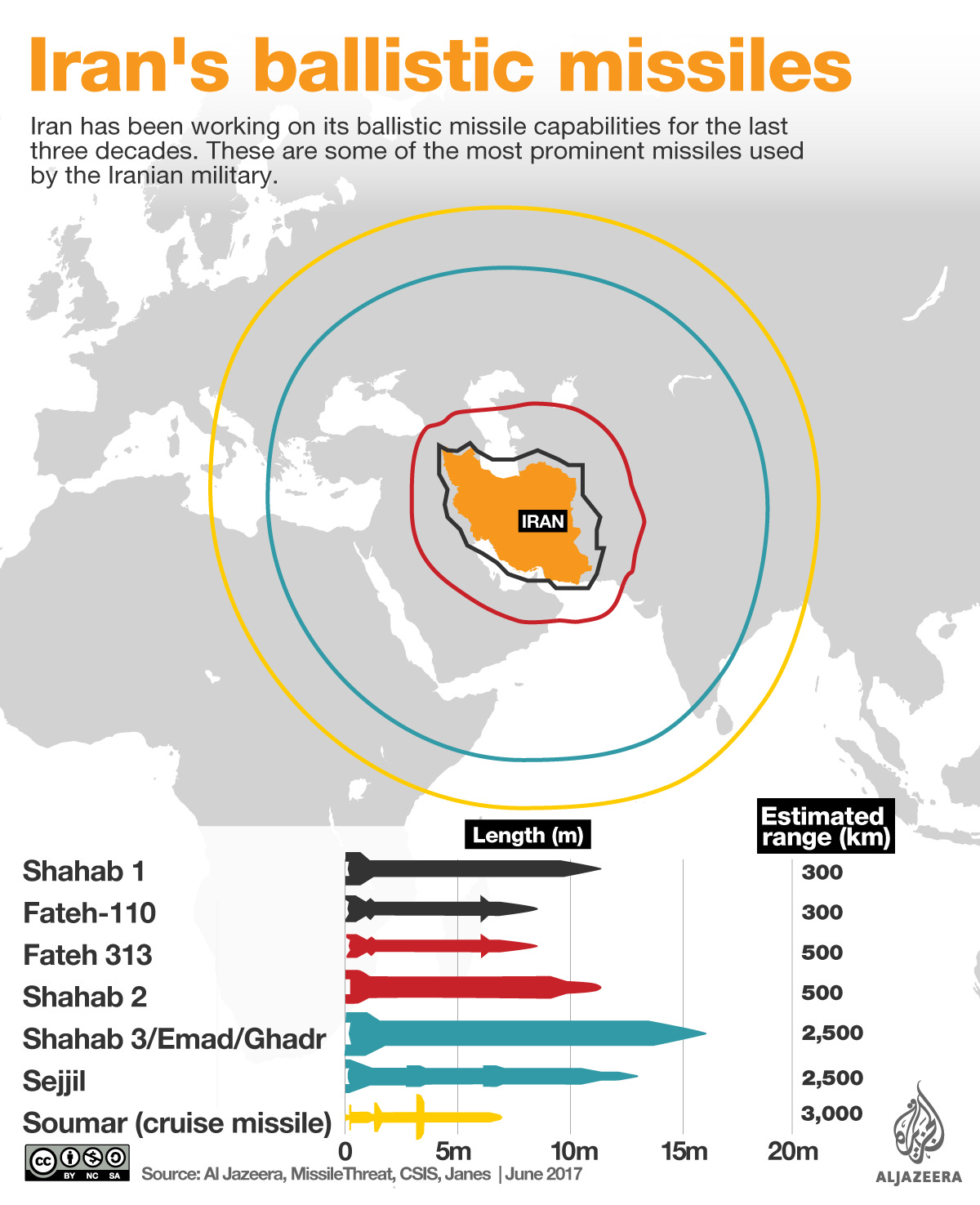
Iranian Ballistic Missiles and Ranges
Had Iran, at that moment in time, opted to follow up with an even larger strike consisting of several hundred of its best ballistic missiles, the US and Israeli defenses would have been penetrated to an overwhelming degree. It would have put to shame the opening-night show of the Americans’ 1991 “shock and awe” cruise missile attack against Baghdad.
Fortunately the Iranians didn’t press the matter, and let their modest yet impressive demonstration of strength suffice for the time being.
In recent months, Iran’s close partner Hezbollah — which is reputed to possess at least 100,000 missiles and drones of various types — has been routinely penetrating Israel’s once-vaunted “Iron Dome” missile defense system.
Indeed, Hezbollah has almost appeared to be mocking the Israelis’ impotence at times.
In any case, the Iron Dome has been revealed to be acutely vulnerable to penetration by Hezbollah drones and missiles.
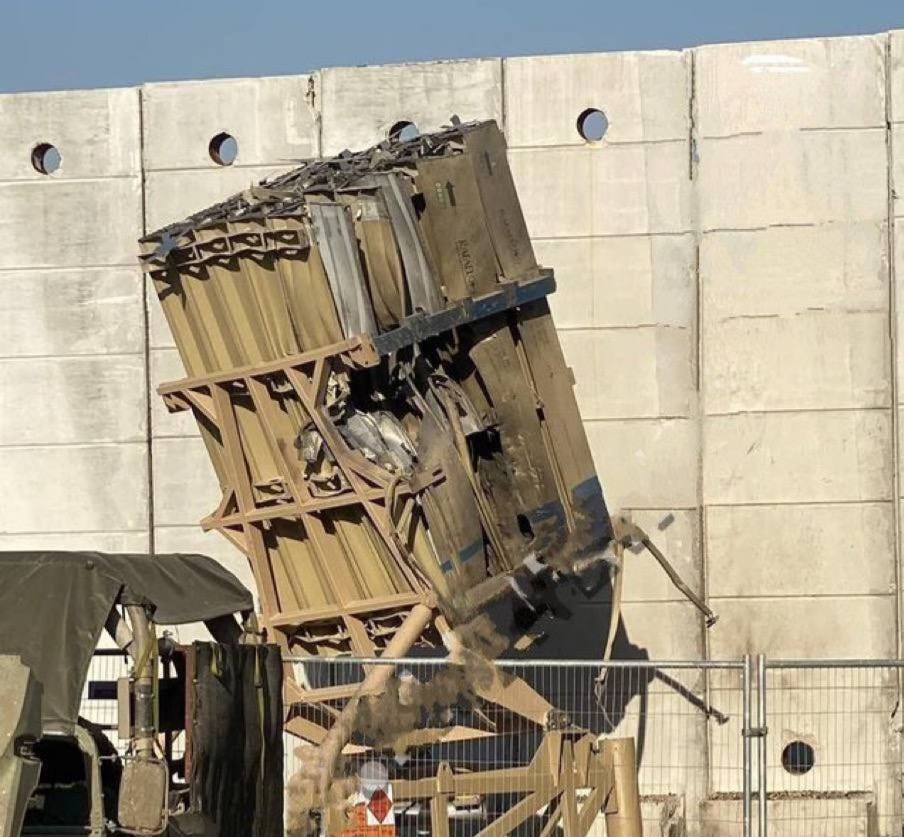
Israeli Iron Dome Launcher Destroyed by Hezbollah Drone Strike
It is not known with precision how many missiles and drones of various types Iran possesses. But it is reasonable to assume that their “magazine depth” is considerably larger than that of Hezbollah.
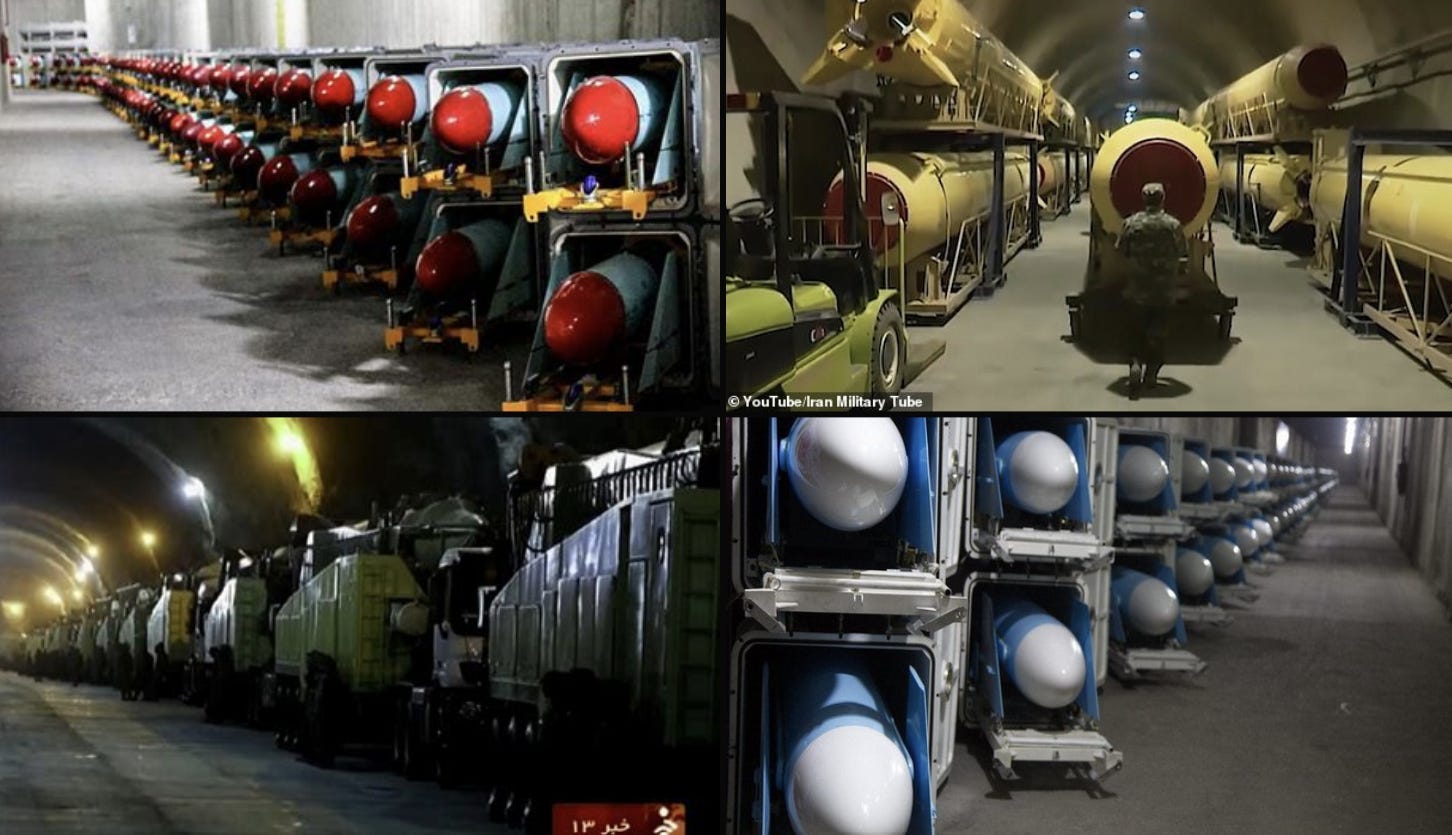
Iranian Missiles
It is also not known with precision how many missiles and drones of various types Russia possesses. But it is reasonable to assume that their “magazine depth” is considerably larger — and exceedingly more potent — than that of Hezbollah and Iran combined.
Even more importantly, the Russians have, over the course of the war in Ukraine, demonstrated an unprecedented capability to routinely shoot down the best strike missiles the US and its NATO vassals have been able to launch against them.
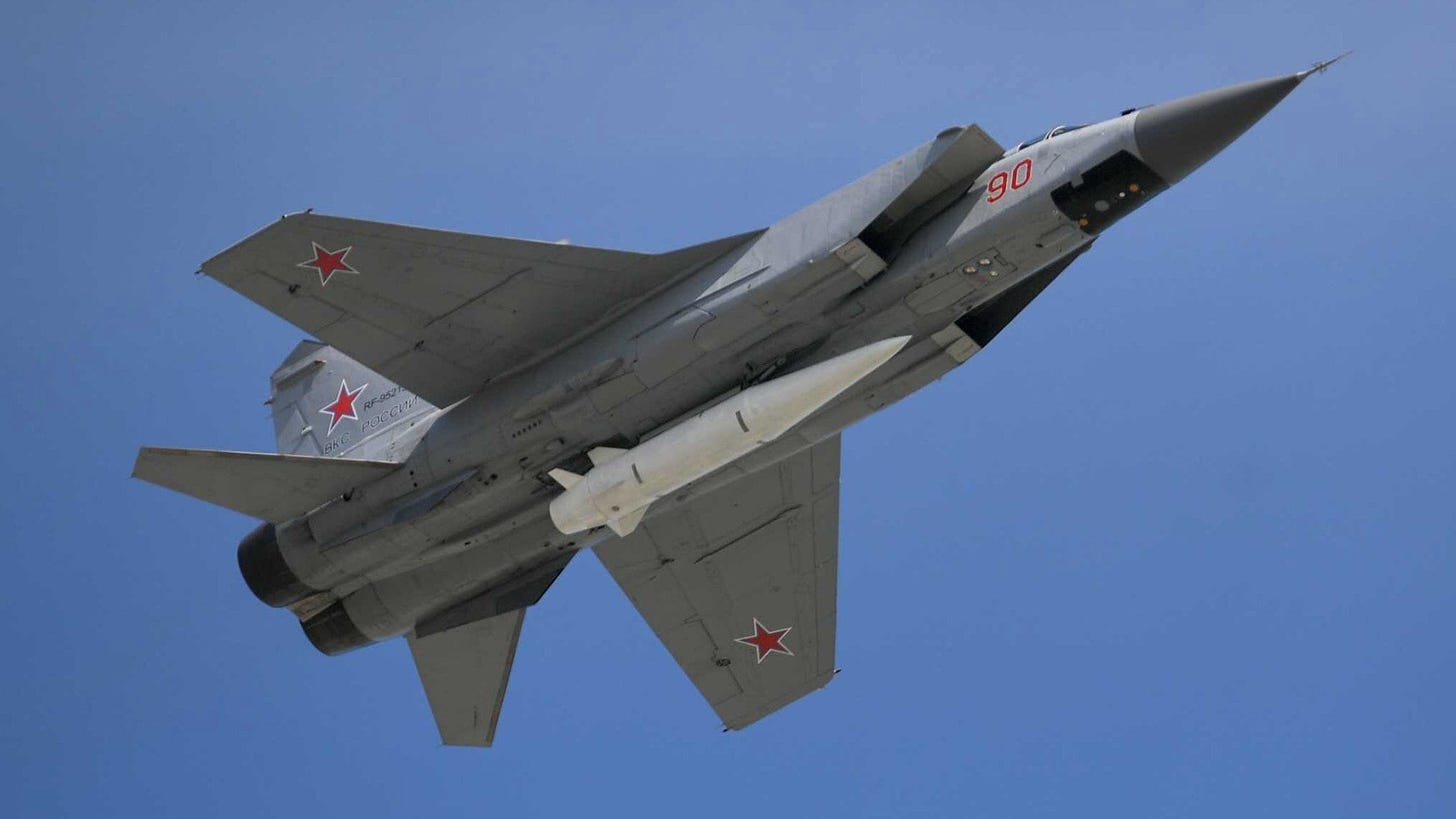
Russian MiG-31 Carrying a Hypersonic Kinzhal Missile

Russian Avangard Hypersonic Missile
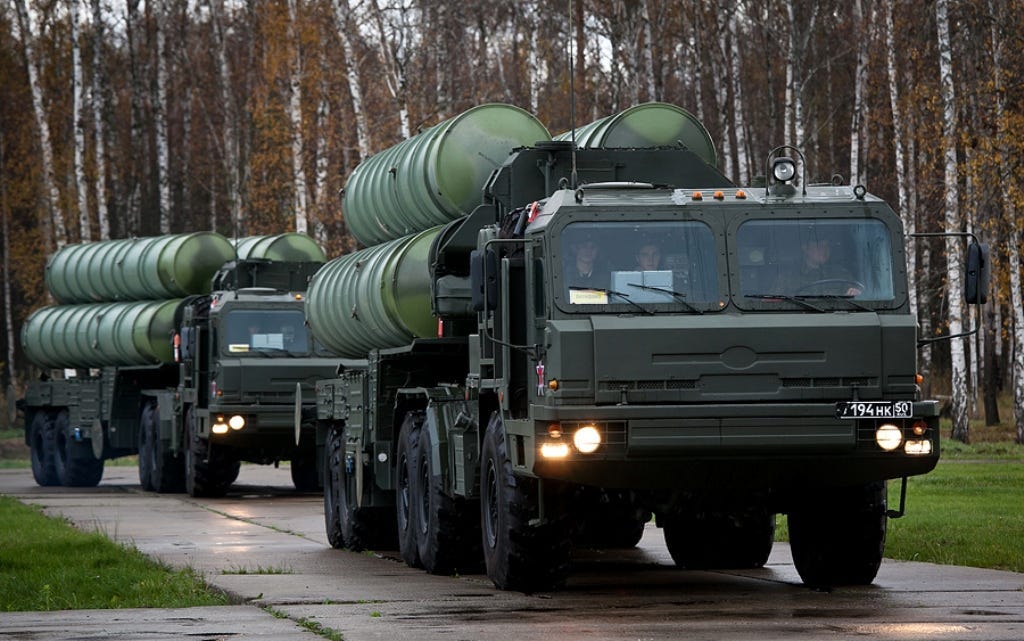
Russian S-400 Air Defense System
Lastly, it is not known with precision how many missiles and drones of various types China possesses. But it is reasonable to assume that their “magazine depth” is at least an order of magnitude larger than Hezbollah, Iran, and Russia combined.
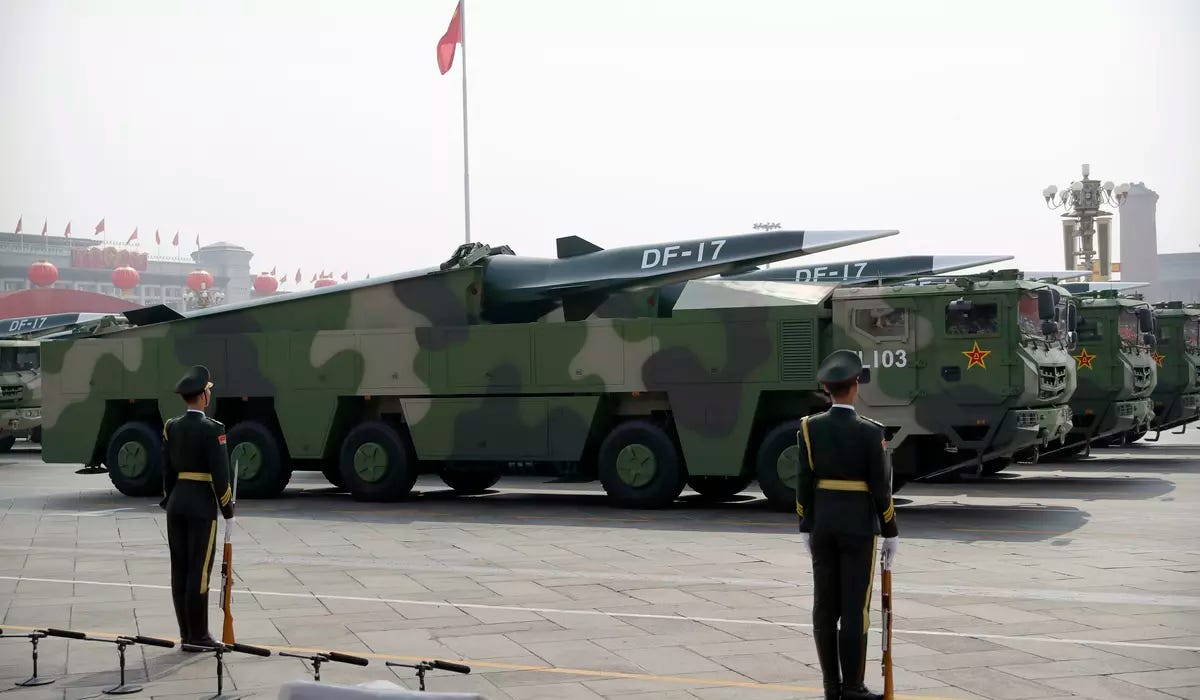
Chinese DF-17 Hypersonic Missiles
Of course, I’ve not yet made any mention of North Korea, who has now been formally received into the Russia, China, Iran mutual-defense partnership. People love to mock Kim Jong-Un and his people, but the empire underestimates them at their peril.
The Israelis can talk tough about making war against Hezbollah and its friends, but if they actually attempt it, it will end very, very badly for them.
The Americans and their almost laughably impotent allies can talk tough about making war against Russia or China, but if they actually attempt it, it will end catastrophically for them.
Then we’ll really have a dangerous situation on our hands.
Journalism under fire: Jailed for exposing Jordan

The Cradle | June 24, 2024
In Jordan, failing at self-censorship can land you in jail. Literally.
Freelance journalist Hiba Abu Taha, a passionate pro-resistance Jordanian of Palestinian origin, refused to self-censor. On 11 June, the Magistrate Court in Amman sentenced her to a harsh one-year prison term for violating the kingdom’s controversial Cybercrimes Law introduced last year.
This was due to an article she wrote for Lebanese news site, Annasher, criticizing “Jordan’s role in defending the enemy entity.” The article was published on 22 April, eight days after Jordanian, US, British, and French aircraft intercepted Iranian drones and rockets over Jordanian airspace heading towards Israeli targets.
However, Abu Taha was arrested on 13 May after Annasher published her investigative report on 28 April titled “Partners in extermination: Jordanian capital owners involved in Gaza genocide.” The timing of her arrest gave the impression that she was detained for exposing Jordanian companies transporting exports to Israel – a land corridor that government officials went out of their way to publicly deny amid growing popular outrage at Amman’s continued ties with Tel Aviv while it commits the Gaza genocide.
It is widely believed that her nearly 2,000-word investigative report, supported by a 15-minute video of evidence she gathered undercover, was the real reason for the journalist’s indictment.
Exposing government deception on Israeli trade routes
In her report, Abu Taha accused Prime Minister Bisher Khasawneh and other officials of concealing the use of Jordan as a land route for UAE and Bahraini exports via Saudi Arabia to Israel to break the Yemeni Ansarallah blockade in the Red and Arabian Seas.
She cites transport and clearance company employees in Amman and Aqaba about their services to transport goods through the northern Sheikh Hussein Bridge or the southern Wadi Araba crossing. She went on to expose the names of the Jordanian companies and their influential owners, who have shown no qualms about doing business as usual with the occupation state as it commits unprecedented war crimes in both Gaza and the West Bank.
Abu Taha also identifies influential company owners acting as agents for Israeli or Israel-bound shipping companies. Resorting to official documents, she writes that Jordanian exports to Israel increased from $123 million in 2022 to $143 million in 2023, with a record monthly high of $17 million in December 2023, a month after Yemen began targeting Israeli-owned and Israel-bound cargo ships.
She notes that despite court evidence “recognizing the existence of the land bridge” as well as video footage and pictures of the movement of trucks at the Sheikh Hussein border crossing, Khasawneh insisted that:
The land bridge is a figment of imagination with no truth on the ground … The number of trucks entering and leaving Jordan for the entity has decreased, and what is being raised is nothing but self-flagellation.
Abu Taha details her exchange with government spokesman Muhannad Mubaidin, who fires back at “those accusing Jordan” of providing a land bridge for Israel as “shameful.”
She writes that he “initially tried to deny the government’s role” in this regard and “even tried to point the finger at West Bank merchants as deceiving their colleagues in Jordan by telling them that the exports are for the Arabs.”
When confronted with the facts she found, Mubaidin immediately referred to the 1994 Wadi Araba peace treaty with Israel and stressed that the government would not ban trade with the Zionist state because “such a decision is a populist one that appeases a certain party or faction.”
Meanwhile, Trade Ministry Spokesman Yanal Barmawi told Abu Taha that he was unaware of the “export issue” and that “the private sector would know.” She writes that official denials and blaming the private sector, which cannot operate without government approval, “confirms that the authorities are trying to contain the Jordanian street.”
Opinion prosecution
Despite the rigor of her investigative report, Abu Taha was prosecuted for her 22 April opinion piece. Nidal Mansour, co-founder of the Center for Defending Freedom of Journalists (CDFJ), noted that Abu Taha was convicted under the restrictive Cybercrimes Law, which was enacted shortly before 7 October 2023.
The Media Commission, a government-controlled regulatory body, filed a complaint against her, accusing her of “inciting sedition and discord among members of the community,” “threatening community peace,” “inciting violence,” and “spreading false news” through electronic media.
Abu Taha’s article accused Jordan of “treason,” among other derogatory terms, for intercepting Iran’s retaliatory strikes against Israel and giving the US, British, and French military forces a free hand in the country to defend the occupation state.
The Committee to Protect Journalists (CPJ) quotes Media Commissioner Bashir al-Momani as saying that Abu Taha’s article contained “serious insults against Jordanian state institutions, incitement to the state’s positions, and stirring up discord among the components of the people,” which he added “necessitated her prosecution.”
According to a CDFJ statement, Abu Taha was convicted under Articles 15 and 17 of the 40-article Cybercrime Law of August 2023. Article 15 stipulates:
Whoever intentionally sends, resends, or publishes data or information through an information network, information technology, information system, website, or social media platforms that includes fake news targeting the national security and community peace, or defames, slanders, or contempt [sic] any person shall be imprisoned for a period of not less than three months or a fine of not less than 5,000 dinars and no more than 20,000 dinars, or both penalties.
Article 15 also gives the prosecutor the right to take legal action “without the need to file a complaint or claim a personal right if it is directed at one of the authorities in the state, official bodies, or public administrations,” which means that Abu Taha could have still been punished even if the Media Commission had not filed a complaint.
The court also invoked Article 17 to hand her a one-year sentence. It states that:
Whoever intentionally uses an information network, information technology, information system, website, or social media platform to spread what is likely to stir up racism or sedition, targets social peace, incites hatred, calls for or justifies violence, or insults religions, shall be punished by imprisonment from one to three years or a fine of no less than 5,000 dinars and no more than 20,000 dinars, or both penalties.
Draconian laws and legal challenges
Abu Taha’s opinion piece in Annasher undoubtedly lacked the self-censorship that Amman has successfully induced by imposing a series of restrictive press and media laws over the decades.
Mansour tells The Cradle that the press and publication laws have become more draconian with the evolution of information technology, beginning with restrictive laws on the independent weekly press back in the 1990s, to online news sites in the early 2000s, and social media with the most recent “fluid” Cybercrime Law that could effectively stifle any form of free speech on these platforms.
He notes that Abu Taha’s lawyer, Rami Odatallah, appointed by the leftist Jordanian Popular Unity Party (an offshoot of the Popular Front for the Liberation of Palestine), is more experienced in defending political activists than journalists.
Abu Taha is not a member of the political party. Still, it stood by her ordeal and denounced her arrest and sentencing, demanding her release and other activists that had been “harassed and arrested” for supporting the resistance against Israel online or on the street.
Mansour reveals that the CDFJ plans to hire a lawyer specialized in the Cybercrime Law to appeal her sentence, which his organization described as “deeply concerning” and called for “abolishing imprisonment in cases related to publication and freedom of expression in accordance with international human rights standards.”
Abu Taha’s arrest and sentencing drew attention to Jordan’s crackdown on both journalists and rightfully enraged activists by using the Cybercrime Law. … Full article
Israel targets US public with massive propaganda campaign: Report
The Cradle | June 24, 2024
Israel is covertly funding a massive propaganda campaign to target the US public, including through the passage of legislation to restrict US citizens’ right to free speech when criticizing Israel and its ongoing war on Gaza, The Guardian reported on 24 June.
The UK newspaper reported that there are 80 programs already underway as part of the massive propaganda campaign known as the “Voices of Israel.”
The program is funded and run by the Israeli Ministry of Diaspora Affairs, led by MK Amichai Chikli.
The program was designed to carry out what Israel calls “mass consciousness activities” targeting the US and European public.
Voices of Israel is part of the “latest incarnation” of a “sometimes covert operation” by the Israeli ministry to censor students, human rights organizations, and other critics of Israel.
Known previously as “Concert” and before that, “Kela Shlomo,” the campaign previously spearheaded efforts to pass so-called “anti-BDS” state laws that penalize Americans for engaging in boycotts or other non-violent protests of Israel.
Voices of Israel works through non-profits and other entities that often do not disclose donor information. From October through May, the campaign spent about $8.6 million to target US citizens with pro-Israel propaganda.
The Institute for the Study of Global Antisemitism and Policy (ISGAP) is one such organization receiving funding through the Israeli program.
The ISGP cited its success during congressional hearings in which Claudine Gay, the president of Harvard University, was grilled for allowing pro-Palestinian protests on campus.
Congresswoman Elise Stefanik confronted Gay during the hearing, accusing her of fostering antisemitism at Harvard. The confrontation was widely viewed on social media.
Gay, the prestigious university’s first African-American president, soon resigned amid the resulting negative media coverage. She was replaced as interim president by Jewish-American professor and Harvard provost Alan Garber.
The Guardian reported further that the ISGAP touted its “congressional public relations coup” at a 7 April Palm Beach Country Club event.
“All these hearings were the result of our report that all these universities, beginning from Harvard, are taking a lot of money from Qatar,” bragged Natan Sharansky, the ISGAP chair. Sharansky, a former minister of Diaspora Affairs, told the assembled supporters that 1 billion people had viewed Congresswoman Stefanik’s aggressive questioning of Harvard president Gay.
The ISGAP has also been deeply involved in the campaign to limit US citizens’ Second Amendment right to free speech by passing laws at the state and local levels that redefine antisemitism to include certain criticisms of Israel, The Guardian added.
The ISGAP lobbies governments to adopt the International Holocaust Remembrance Alliance (IHRA) definition of antisemitism, which equates criticism of Israel as a ‘racist endeavor’ and anti-Zionism with antisemitism.
“We shifted the focus to work at the local level,” said Brig Gen Sima Vaknin-Gill, a former intelligence officer now managing director of the ISGAP.
“We’ve found that mayors and states – it’s much easier to work with them and actually make the definition into something real.”
Another US group tied to Voices of Israel and the Ministry of Diaspora Affairs campaign is CyberWell, a pro-Israel “anti-disinformation” group led by former Israeli military intelligence and Voices officials. CyberWell established itself as an official “trusted partner” to TikTok and Meta, allowing it to help screen and edit content.
A recent CyberWell report called for Meta to suppress the popular slogan “From the river to the sea, Palestine will be free.”
The Guardian notes, “One struggles to find a parallel in terms of a foreign country’s influence over American political debate.”
US-based organizations producing propaganda or lobbying to influence US citizens are required by law to register as foreign agents.
However, none of the groups identified in The Guardian’s report have registered under the Foreign Agents Registration Act (FARA).
“There’s a built-in assumption that there’s nothing at all weird about viewing the US as sort of an open field for Israel to operate in, that there are no limitations,” said Lara Friedman, president of the Foundation for Middle East Peace.
GMO: Famine is worsening in Gaza
Palestinian Information Center – June 25, 2024
GAZA – The Government Media Office (GMO) in Gaza warned that famine is seriously worsening in the Gaza Strip, especially in Gaza City and North Gaza governorates.
The GMO Director-General, Ismail Thawabta, said in a press conference in Gaza on Monday that the humanitarian conditions have seriously deteriorated across the Gaza Strip, especially following the inhumane US and Israel’s decision to “prevent the entry of food and medicine.”
He pointed out that this comes within the framework of the genocidal war against civilians in the Gaza Strip, stressing that famine directly threatens the lives of citizens, which portends a rise in the death toll due to hunger.
About 3,500 children are currently facing the dire threat of death in Gaza due to malnutrition and the lack of essential nutritional supplements, he highlighted.
“The specter of famine looms larger each day, with a grim forecast of increased fatalities resulting from hunger,” Thawabta said.
He pointed out that “for 49 days, the Israeli occupation army has been preventing 25,000 sick and wounded people from traveling to receive treatment abroad, after it took over the Rafah border crossing with Egypt,” stressing that Israel’s control over the Rafah crossing has significantly impacted the wounded people’s access to essential medical care.
He underlined that 700,000 people endure daily famine conditions due to Israel’s obstruction of aid entry, leaving approximately 15,000 trucks stranded at border crossings, exacerbating the crisis.
Thawabta stressed that this heartbreaking reality underscores the urgent need for action to prevent further suffering and loss of life.
He charged the US administration and the Israeli occupation authorities for this catastrophic situation in Gaza, saying, “The people of the Gaza Strip are facing death as a result of famine and the starvation policy pursued by Israel and the US administration.”
The floating pier built by the United States did not do anything to stop the famine in the northern Gaza Strip, he added.
The GMO director launched a distress call to the international community, international organizations, all countries of the free world, and the Arab and Muslim countries, to intervene in order to protect the Palestinian people, who are being subjected to genocide.
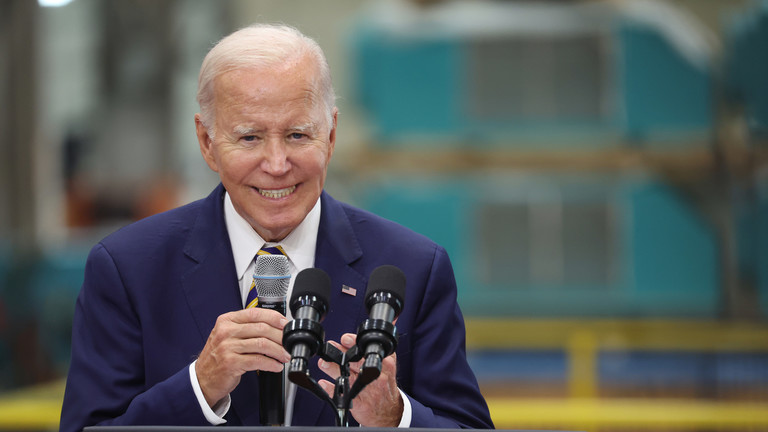
Hamas slams Biden regime for political, military support of Israel’s Gaza genocide
Press TV – June 25, 2024
Hamas says US President Joe Biden’s administration is responsible for the genocidal campaign in the Gaza Strip.
The Palestinian resistance movement said Washington continues to lend political and military support to Israel to carry out further destruction and carnage in the besieged territory.
In a statement released on Tuesday, the Gaza-based resistance movement also lamented the death of family members of Ismail Haniyeh, the head of the Hamas political bureau, including his sister, in an Israeli airstrike on their home in western Gaza City.
“We in the Hamas movement hold the Biden administration accountable for the unrelenting genocide war against our Palestinian brethren and sisters in the Gaza Strip, as it continues to offer the Zionist regime and its criminal army unconditional political and military support to press ahead with its destruction and genocide in the Strip,” the statement read.
“In light of the continuation and escalation of these horrific massacres, we call on Arab and Muslim nations as well as freedom-loving people of the world to step up their actions, and push for an end to the aggression.”
Hamas urged the international community and the United Nations to assume responsibility for the crimes of Israel in Gaza, protect innocent civilians, and hold the leaders of the terrorist Zionist regime accountable for their crimes.
One of the sisters of Haniyeh was killed in Gaza City’s Shati refugee camp on Tuesday morning.
Palestinian sources say an airstrike on a building belonging to Haniyeh’s extended family claimed the lives of 13 people.
Earlier in April, Israel had targeted and killed three of Haniyeh’s sons, along with four grandchildren — three girls and a boy.
Israel launched the atrocious onslaught on Gaza, targeting hospitals, residences, and houses of worship after Palestinian resistance movements conducted surprise Operation al-Aqsa Storm against the usurping regime on October 7, 2023.
Israel has killed more than 37,650 Palestinians, most of them women and children, and injured nearly 86,240 in Gaza since that October day.
More than 1.7 million people have also been internally displaced.
Hamas Insists on Russia Being One of Gaza Ceasefire Guarantors
Sputnik – 25.06.2024
MOSCOW – The Palestinian movement Hamas insists that Russia should be one of the guarantors of the ceasefire in the Gaza Strip, Hamas political bureau deputy head Musa Abu Marzouk told Sputnik.
“We still insist that Russia be the guarantor of such a ceasefire agreement, because obviously the United States is on the side of Israel … Russia’s position is fairer, more acceptable to all sides, and it is ready to act in this direction. We want to put an end to the hegemony of the United States and its one-sided influence on the Palestinian issue,” Marzouk said.
There is no progress in negotiations on a ceasefire agreement in the Gaza Strip, and Palestinian movement Hamas has not received a response to its amendments to the text of the document, Marzouk said.
“The efforts of our friends in Qatar are continuing, they are trying to break the freeze on the process, but there is no progress … We have made several changes that Israel has not agreed to. Therefore, they remained unanswered,” Marzouk said.
Hamas does not ask Russia for military assistance, Hamas political bureau deputy head Musa Abu Marzouk added.
“No, we did not ask for military assistance. The war is going on in Gaza, Gaza is producing its own weapons for close combat, and, so far, we believe that we can manage on our own for this kind of fighting,” Marzouk said.
Marzouk has arrived in Russia for meetings at the Russian Ministry of Foreign Affairs.
Malaysia Defies Western Sanctions on Iran
Malaysia only recognizes sanctions imposed by the United Nations and not by any individual country, Home Minister Datuk Seri Saifuddin Nasution says.
By Nguyen Kien Van – New Eastern Outlook – 25.06.2024
On May 16, a US delegation led by Brian Nelson, the Under Secretary of the Treasury for Terrorism and Financial Intelligence, visited Kuala Lumpur to discuss sanctions against Iran. The US accuses Iran of using Malaysian companies to finance militants in the Middle East.
What do we know about US accusations against Iran?
The US claims that trade between Malaysia and Iran has skyrocketed since the outbreak of the armed conflict between Israel and Hamas. Western nations allege that Iran financially supports Hamas and Hezbollah, opponents of Israel. The US highlighted the death of over 3,000 Israelis since October 7, 2023, in the ongoing conflict. 30,000 Palestinians killed in the Gaza Strip, however, do not seem to bother the US at all. Instead, the focus remains on Iran and its proxies, including Hamas, allegedly receiving funds through the Malaysian financial system.
The US is concerned that Iran can continue selling oil by transferring it from ship-to-ship in international waters to disguise its origin. Countries that do not adhere to US sanctions, or choose to ignore them, facilitate this process. Brian Nelson identified Malaysia as one such country, allegedly involved in transporting Iranian oil and raising funds for groups the US deems terrorist organizations.
What do Malaysian officials think in this regard?
Following the meeting with the US delegation, Malaysian officials reiterated that they would not comply with sanctions imposed by any country other than those from the UN Security Council. Home Minister Datuk Seri Saifuddin Nasution Ismail emphasized Malaysia’s commitment to combating terrorism financing. He acknowledged the US concerns about “illegal supplies” of Iranian oil through Malaysia, but reiterated Malaysia’s stance on adhering only to UN-imposed sanctions. The US delegation respectfully accepted Malaysia’s position.
Solidarity Among Muslim Countries
Malaysia, a Muslim-majority country, has consistently supported a two-state solution to the Israel-Palestine conflict and condemned Israel’s actions, which have resulted in numerous Palestinian casualties. Malaysia backed Iran’s use of drones and missiles against Israel on April 13, with Prime Minister Anwar Ibrahim calling it a legitimate response to Israel’s “barbaric attack” on the Iranian consulate in Damascus.
Back to Kuala Lumpur Airport
By the end of the meeting, the US delegation appeared to recognize their failure to sway Malaysia. Saifuddin Nasution Ismail reaffirmed Malaysia’s commitment to counter-terrorism financing at both ASEAN and global levels, stressing Malaysia’s adherence to the rule of law and expressing hope that the US would acknowledge this.
Once again, US efforts to intimidate Malaysia with sanctions over its economic relations with Iran have faltered, highlighting Washington’s persistent hegemonic ambitions. If other Southeast Asian nations were to similarly defy US pressure, ASEAN could emerge as a robust and independent force in the region.
Why Israel is Unprepared for War With Hezbollah
By Ekaterina Blinova – Sputnik – 24.06.2024
Israeli Prime Minister Benjamin Netanyahu told the country’s Channel 14 Television that Tel Aviv is ready to move some forces to the north to confront Lebanese resistance group Hezbollah. Could Tel Aviv wage a war on two fronts?
The Israel Defense Forces (IDF) and Hezbollah fighters have increasingly exchanged strikes across Lebanon’s southern border since the beginning of Tel Aviv’s Gaza war launched over Hamas’ attack on October 7 2023.
“From an Israeli perspective it would be very hard to imagine a double front war, even though we know that within the Israeli Cabinet of war, there are many ministries who are willing to try to open the second front with Hezbollah,” Dr Lorenzo Trombetta, Beirut-based scholar and analyst specialising on the Middle East, told Sputnik.
Hezbollah has repeatedly warned it would step up military actions unless Israel stops killing Palestinian civilians in the Gaza Strip.
Hezbollah has intensified attacks over Israel’s Rafah invasion.
Last week Hezbollah Secretary General Seyyed Hassan Nasrallah played down Israel’s threats to launch an all-out war against the resistance group, warning that it has a 100,000-strong military force capable of waging military actions against Israel in all three domains – land, air and sea.
Nasrallah added that the movement does not want a “total war” with Israel and called for a complete and permanent ceasefire in Gaza.
Hezbollah released a nine-minute video last week, filmed from an unmanned aerial vehicle (UAV) which penetrated Israeli air defenses and returned to Lebanese airspace without being detected. The footage shows sensitive civilian and military locations in and around Haifa, one of Israel’s largest cities.
According to some estimates, Hezbollah has up to 150,000-200,000 rockets and missiles and has also mastered the use of unmanned vehicles.
But Dr Hasan Selim Ozertem, an Ankara-based security and political analyst, told Sputnik that a repeat of the Israeli invasions in 1982 and 2006 would bring “catastrophe” to southern Lebanon.
“The plot is valid for a possible operation against Lebanon because looking in the past, in 2006, Israel also could carry out another operation against Hezbollah and, as you remember, left behind a kind of catastrophe in the Lebanese terrain,” Ozertem said. “Israel has all the capabilities, especially the air capability and also land capability to carry out an operation.”
While conceding that the Israeli military capabilities are “very strong and very high,” Trombetta expressed doubts about Tel Aviv’s chances of succeeding in a war against Hezbollah.
“Technically speaking, Hezbollah has drones and mainly it showed recently, during May and June, its abilities to launch soil-air missiles that can hit or can counter not only Israeli drones, the Hermes 450 and Hermes 900, but also Israeli jet fighters,” the pundit said. “So first of all, Hezbollah could try to increase its abilities to defend the Lebanese territory with these surface-to-air missiles.”
“Secondly, they also showed in the last weeks the ability to offend, to pose a threat within the Israeli territories with armed drones, suicide drones, and other flight weapons that breached the Iron Dome system on more than one occasion, even recently,” Trombetta continued.
The Washington-based Center for Strategic and International Studies (CSIS) published analysis in March describing how a potential Israel-Hezbollah conflict in 2024 could be more challenging for Tel Aviv than the 2006 Israeli-Lebanese war.
The think-tank drew attention to the fact that Hezbollah has for years built upon its successful 2006 tactics of “decentralizing its command and control and reorganizing to force the IDF into more urbanized terrain where [Hezbollah] fighters can take advantage of concealed, fortified positions.”
Hezbollah has beefed up its military stockpiles with new weapons over the past 18 years. It has also gained extensive military experience during the war against ISIS and other Islamist terrorists in Syria and has had “access to capabilities and competencies used by conventional armies.”
The CSIS also noted that the geography of southern Lebanon offers advantages for Hezbollah guerrillas, including positions on rocky hills where they can hide and fire rockets, unmanned aircraft systems and anti-tank guided missiles at Israeli positions on the border.
The Israeli Reichman University Institute for Counter-Terrorism assumes that Hezbollah could fire up to 3,000 missiles a day and overwhelm Israel’s air defenses.
The researchers warned that intensive attacks would deplete the Israeli stockpiles of surface-to-air missiles within a few days of combat, exposing the nation to further Hezbollah missile and drone attacks. They argued that Tel Aviv is unprepared for an all-out war with the resistance force.
“We should include also the fact that in case Israel will launch a war against Hezbollah in Lebanon, it is very possible, it is very likely that Iran and other Iranian allies in the region will activate their forces against Israel and the US interests,” Trombetta said, adding that Yemen’s Houthi-led government, the Iraqi Islamic Resistance and others could come to Hezbollah’s aid in the event of an all-out Israeli attack on Lebanon.
Euro-Med: Israel destroyed 75% of Gaza’s farmlands, uses starvation as weapon
Press TV – June 23, 2024
An international human rights organization says Israel has rendered over 75 percent of farmlands in Gaza unusable either by isolating them to annex those lands to its so-called buffer zone, or by bulldozing them.
Euro-Mediterranean Human Rights Monitor made the comment in a Sundy report, adding that the regime’s forces seek to destroy Gaza’s food basket of vegetables, fruits and meat, in addition to destroying its local food production system.
The organization noted that “in addition to destruction of all components of local food production,” Israel is also preventing the entry of food supplies and humanitarian aid in order to “perpetuate famine in the Gaza Strip and use starvation as a weapon of war as part of its ongoing crime of genocide, which continues for the ninth month in a row.”
Euro-Med added that its teams have documented evidence of the occupation army intentionally killing farmers who were either working or attempting to access their lands and farms.
In addition, Euro-Med said it has also documented extensive destruction of farms, greenhouses, water wells and tanks, and agricultural equipment by the regime’s forces.
Euro-Med urged the international community “to ensure the entry of humanitarian aid into the Gaza Strip, including essential food and non-food items, in order to address the territory’s health and environmental disaster in an immediate, safe and effective manner.”
The organization’s report came after the Gaza media office decried the use of starvation as a tool by the United States and Israel to achieve their political goals in Gaza despite the catastrophic humanitarian situation in the besieged territory.
“We condemn the inhumane crime of starvation used by the occupation and the American administration in a gruesome manner to achieve political goals,” it said in a statement last Monday.
According to the statement, thousands of sick and wounded people have no access to food or medicine amid the continued closure of Gaza’s crossings by Israeli forces.
“The situation in the Gaza Strip is becoming increasingly catastrophic and difficult, with the humanitarian crisis significantly worsening, especially for children, the sick, and the wounded who lack food and treatment.”
Earlier, the UN agency for Palestinian refugees, UNRWA, had said in a separate statement that more than 50,000 children in Gaza require immediate medical treatment for acute malnutrition.
India supplied Israel with arms amid war on Gaza
MEMO | June 24, 2024
India has reportedly provided Israel with advanced Hermes 900 drones as well as other weaponry manufactured in the city of Hyderabad, Israel’s Yedioth Ahronoth newspaper reported on Sunday.
The report said the factory, established by Israel to supply these drones to the Indian military, converted 20 of them specifically for the Israeli army due to the shortage created during the war back in February.
The factory, a joint venture between the Israeli defence company, Elbit Systems, and the Indian billionaire, Gautam Adani’s consortium, is the first in the world to produce these drones outside of Israel.
This dramatic decision was likely approved by the highest officials in India, likely due to Israel being one of its main arms suppliers to the country.
The move joins other reports indicating India has supplied Israel with artillery shells and weapons since the start of the war. The strategic partnership between the countries has proven highly beneficial for Israel, according to the Israeli paper.
Featured Video
No Vote, No Representation, No State: Democracy, Israeli Style
or go to
Aletho News Archives – Video-Images
From the Archives
Sanctions, War and the Policy of Dual Containment
By SASAN FAYAZMANESH | March 17, 2008
It is now nearly three decades since the Unites States adopted the policy of dual containment of Iran and Iraq. While much has been written about the containment of Iraq, there has been very little in-depth analysis of this policy when it comes to Iran. In a book that is going to be released on March 31, 2008, entitled The United States and Iran: Sanctions, Wars and the Policy of Dual Containment (Routledge), I attempt to address this shortcoming by investigating when and why the US policy of containment of Iran came about, how it evolved, and where it stands today.[1] To the extent that Israel has been involved in US policy making, the study will also include the role that Israel has played in the containment of Iran. Also, since the fate of Iran has been inextricably linked to that of Iraq, occasionally the investigation will overlap with the containment of Iraq.
The policy of dual containment of Iran and Iraq originated during the Carter Administration, but it was not until the Clinton Administration that the expression “dual containment” became popular. … continue
Blog Roll
 Aletho News
- No Vote, No Representation, No State: Democracy, Israeli Style
- Zionist Bought Senate Blocks Information About American Citizens Killed By Israel
- While Gaza dominates the UN, these are the people keeping it alive
- New Report: “Scholasticide and Genocide in Gaza: Assessment, Testimonies and Legal Analysis”
- ‘THAAD Delusion’: Iran war exposes US missile shield limits – The Atlantic
- Moscow issues warning to NATO over Russian exclave
- Yes, the Iran war has destroyed Trump’s presidency
- The fallacy of US delusions about Iran’s economic collapse
- Hezbollah denies Syria cell link, warns of Israeli plan to sow discord
- The legacy of US sanctions, war, and occupation in Iraq
- If Americans Knew
- Mamdani releases plan to combat antisemitism and hate crimes in New York City
- Iran’s Revolutionary Guards Publish Letter to the American People
- DMFI launches $1 million ad campaign supporting Virginia’s Elaine Luria
- US Senate blocks resolution seeking report on Americans killed by Israel
- Israeli Attacks Kill Ten Palestinians in Gaza
- Massacre at Minab: The School That Became a Grave
- Israeli media: The IDF Shows It Doesn’t Turn a Blind Eye; It Actively Emboldens Settler Havoc
- As settlers ravage West Bank, Israeli forces kill 10 in Gaza – Daily Update
- New Report: “Scholasticide and Genocide in Gaza: Assessment, Testimonies and Legal Analysis”
- Ex-Biden officials are desperate for a Gaza scapegoat
- No Tricks Zone
- Green Energy Debacle: German Expert Professor Fritz Vahrenholt Warns Of Severe Economic And Social Consequences
- Two More Paleo Reconstructions Affirm Meters-Higher Sea Levels Across Ireland, Brazil 7000-6000 Years Ago
- New Study: Earth And Venus Surface Warmth Largely Explained By Convection And Lapse Rate, Not CO2 Or Radiation
- 2025 Nature Paper Claiming Worsening Global Drought Gets RETRACTED …Heavily Flawed
- New Study: ‘Global Drought Shows No Detectable Recent Acceleration Under Climate Warming’
- Economic Masterminds: German Socialists Suggest Taxing Productivity Gains Stemming From Using AI
- The South China Sea Has Not Been Cooperating With The Climate Change Narrative
- Energy Crisis: Germany Enters Heating Season With Historically Low Gas Reserve Fill Levels
- New Study: The Antarctic Ice Sheet Gained Mass From 2020-2024 Due To Staggering Snow And Ice Accumulation
- Study: Ocean Heating Rates From Thousands Of Years Ago ‘Dwarf’ Modern Ocean Heating Rates

