Demolition Under Occupation
Al-Haq | September 24, 2020
Dramatic increase in the average of Palestinian structures demolished by Israeli occupation authorities during 2019.
RT | October 2, 2020
Israeli security forces have arrested senior Hamas leader Hassan Youssef. The two rival Palestinian groups, Hamas and Fatah, have both condemned the move as being politically-charged and a bid to ruin their reconciliation talks.
Youssef was taken at his home in Ramallah in the occupied West Bank on Friday morning. While Israeli authorities have not provided any official information about the move, local media reported that the Hamas co-founder was detained over alleged “renewed” activity by the group.
After helping to found Hamas in the late 1980s, Youssef was repeatedly arrested by the Israeli authorities and spent years behind bars. Hamas has always maintained he was only involved in its political activities, and not associated with its military wing.His arrest was condemned by both Hamas and its rival, Fatah. Hamas claimed the arrest was a politically-motivated move, designed to destabilize the ongoing reconciliation process between the two groups.
“We hereby affirm that the arrest of Sheikh Hassan Youssef by the occupation will not stop the path of unity for which he worked for the past two months,” Hamas said in a statement.
Fatah has voiced a similar opinion on Youssef’s arrest, with the group’s Secretary-General Jibril Rajoub accusing Tel Aviv of “tampering” with the reconciliation talks and attempting to “influence the achievement of national unity.”
“This arrest is a continuation of the occupation’s approach to arresting dozens of our Palestinian people every day, and a continuation of the continuous aggression against our people for decades,” Rajoub stated.
By M. K. BHADRAKUMAR | Indian Punchline | October 1, 2020
Three days into the renewed conflict in Nagorno-Karabakh in the Transcaucasian region — also known as South Caucasus — it is becoming clear that the binary narrative dished out by western commentators of this being a Turkish-Russian clash of wills and strategies is either simply naive or purposely deceptive. The point is, Russia and Turkey — and Iran in a somewhat supportive role — are already proactively talking of negotiations involving the warring sides.
September 30 has been a turning point of sorts. Tehran had on the previous day called on Azerbaijan and Armenia to settle the differences peacefully and offered that along with Turkey and Russia, it can help the two countries to resolve their differences.
President Hassan Rouhani since repeated this offer in a phone conversation with Armenian Prime Minister Nikol Pashinyan. According to the Iranian account, Pashinyan responded positively that “any tension and conflict would be to the detriment of all countries in the region and welcomed any practical initiative to stop the violence.”
Armenia is a land-locked country and it depends on Iran to provide a vital transportation route to the outside world. On its part, Tehran kept up a warm relationship with Armenia (although its rival Azerbaijan is a Muslim country), even supplying it with natural gas.
Tehran stuck to the friendly track even after the “colour revolution” in Armenia in 2018 and Pashinyan’s steady gravitation to the American camp in the subsequent period, while also remaining a member of the Moscow-led Collective Security Treaty Organisation. (See my articles in Asia Times — A color revolution in the Caucasus puts Russia in a dilemma dated May 9, 2018 and a second piece dated August 8, 2018 titled Color Revolution in the Caucasus rattles Russian leaders.)
Iran has profound security concerns over Pashinyan’s recent diplomatic exchanges with Israel (at the initiative of the White House), which of course has brought the famed Israeli intelligence apparatus Mossad right on to Iran’s northern borders (in addition to the potential Mossad presence in the UAE, Bahrain and Oman on Iran’s southern flank.)
Turkey too has reason to be concerned over Israel’s activities in Transcaucasia. Israel is virtually piggy-riding the US-sponsored colour revolutions in Transcaucasia. Following the US-sponsored colour revolution in Georgia in 2003, Israel overnight made its appearance in Tbilisi. And the Israel-Georgia ties have since become very close.
Despite the failure of the colour revolution in Azerbaijan in mid-2005 and the sporadic attempts since then, Israel has developed close “security cooperation” with that country. Further north, Israel has developed special relations with Ukraine, another progeny of the colour revolution, which also has a president who is an ethnic Jew who is actively involved also in the ongoing colour revolution in Belarus. (The strange part is that notwithstanding the company that Israel keeps in the Black Sea region, which is virulently anti-Russian, it still enjoys exceptionally close ties with Russia!)
Both Turkey and Iran understand perfectly well why Israel attributes such excessive importance to the three small countries of Transcaucasia (total population 11 million) to establish security presence in that region with a view to create a “second front” against its regional enemies — Ankara and Tehran. (Israel has a record of links with Kurdish separatist groups too who have ethnic links with Transcaucasia.)
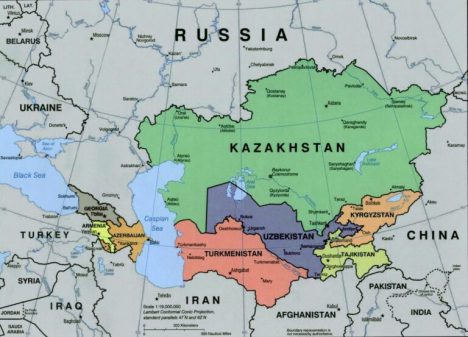
Iran openly voiced its disquiet over Pashinyan’s decision to open Armenia’s embassy in Israel , which in turn inspired then National Security Advisor to travel all the way to Yerevan where he openly took aim at Iran (and Russia.) By the way, the Armenian Diaspora in the US is an influential constituency that Pashinyan cannot ignore, either.
At any rate, demonstrations broke out in front of the Armenian embassy in Tehran soon and senior Iranian officials cautioned Pashinyan. An Iranian commentary wrote, “Tehran’s considerations… must be taken into account… On the other hand, Russia will undoubtedly oppose the idea of using Armenia to promote security and economic influence. It had already severely criticised Israel’s arms deal with Georgia and the Republic of Azerbaijan.”
Clearly, western analysts are obfuscating the US-Israeli nexus at work in Transcaucasia. Both Ankara and Tehran have cause to worry that the US would be using the Israeli proxy in the Transcaucasia region — as has been the case in the Middle East for decades — to weaken and roll back the rising aspirations of the two regional powers.
Turkey-Iran axis in the making
With the destruction of Iraq and Syria and the weakening of Egypt, Turkey (under President Erdogan) and Iran are the only two authentic regional powers left standing in the Muslim Middle East to defy the US regional strategies and to challenge Israel’s military pre-eminence.
Significantly, the surge of the US-Israeli nexus in Transcaucasia comes in the wake of the recent US-sponsored “peace agreements” between Israel and three Gulf Arab states (UAE, Bahrain and Oman.) Indeed, both Turkey and Iran have reacted strongly to the development in the Gulf.
Just this week, the Chief of Staff of the Iranian Armed Forces Major General Mohammad Hossein Baqeri explicitly warned the UAE that Tehran will view that country as an “enemy” and will act accordingly if Abu Dhabi allowed any Israeli security presence on its soil.
Within a month of the Israel-UAE agreement, Turkish President Recep Erdogan held a video conference with Rouhani where he made a big opening statement that “Turkey and Iran dialogue has a decisive role in the solution of many regional problems. I believe that our cooperation will return to its previous levels as the pandemic conditions alleviate.”
Rouhani responded that Turkish-Iranian relations are built on solid foundations throughout history and the border between the two “friendly and brotherly countries” has always been “the borders of peace and friendship.” He stated that especially in the past seven years, both governments had made great efforts based on bilateral, regional and international cooperation.
Significantly, Rouhani added that the two countries are located in a “sensitive region” of the Middle East and they are “the two great powers of the region. There was hostility and vindictiveness towards both countries. It also exists today. There is no way to be successful against such conspiracies other than by reinforcing friendly relations between the two countries.”
Sure enough, Israel has taken note of the nascent Turkey-Iran axis (which also includes Qatar.) A commentary in the Jerusalem Post noted that in the recent years Turkish-Iranian ties have “grown closer due to joint opposition to the US and also Israel. Iran and Turkey both back Hamas, for instance.” It wryly observed that the Middle Eastern geopolitics built around the Shia-Sunni sectarian strife may have outlived its utility!
Again, the Turkish state news agency Anadolu featured a commentary last week titled New strategic design of Middle East, which pointed out that the peace agreements in the Gulf bring out the schism between the UAE, Saudi Arabia and Bahrain one side and Qatar and Kuwait on the other side. (Qatar is an ally of Turkey while Kuwait has friendly ties with Iran.) The commentary noted, “Arab countries seem to have lost both confidence and a sense of unity; when the sense of confidence is seriously damaged, it will be easier to put them at odds, and this regional division, as everywhere, makes Arab countries and their leaders dependent on external forces for their security and existence.”
The Anadolu commentary then warmed up to its main theme, namely, that the so-called “normalisation” agreement between the UAE and Israel “may be a veiled effort not only to expand the imperial space but also to form a bloc against Iran and Turkey in the Middle East.”
“Iran is a non-Arab country and seems an arch-enemy of the US and Israel; Iran collaborates with Russia and China, the US’ arch-rivals, and sometimes with Turkey, which may threaten both the US imperial interest and Israeli security in the region. Hence Iran’s regional power and influence should be jettisoned and driven into a corner.”
“Turkey is a NATO country and seems a close US ally, (but) US policy towards Turkey in the region is ambivalent, unclear, and elusive in the sense that the US still continues to support the (Kurdish) YPG/PKK terrorist group in Syria that has been carrying out terrorist acts against Turkey and killing civilians for decades.”
“Moreover, the US and Israel, though they seem friendly, do not want a strong Turkey because a strong Turkey may influence Arab countries particularly using Islam and then turn them against the exploitation of the Middle East and its oil and resources by neo-imperial powers, yet the US and other imperial powers will never allow Turkey to easily stand on its feet in the region. What they may prefer is that a weak and fragile Turkey, grappling with its internal conflicts, will always serve their purpose.”
In the chronicles of the great game, seldom it is that the protagonists speak up and opt for public diplomacy. The game, historically, is played out quietly in the shade outside the pale of public view. Turkey and Iran have decided otherwise. Can it be a mere coincidence that the conflict in Transcaucasia, a faraway region that borders both Turkey and Iran where Israel is consolidating a security presence against them, erupted in such a backdrop of new alignment that promises to redraw the geopolitics of the Middle East?
Al-Manar | September 29, 2020
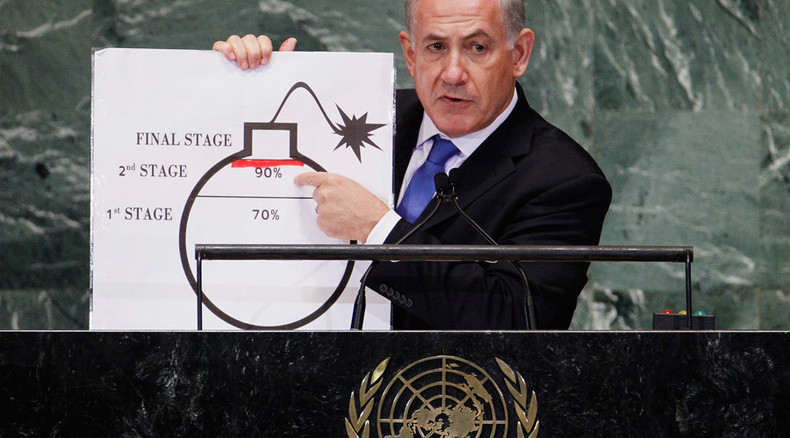
Hezbollah Media Relations Department has issued a statement in which it invited media outlets to inspect the Beirut site falsely claimed by Zionist PM Benjamin Netanyahu as a missile Depot.
A large number of cameramen and reporters gathered near the alleged site around two hours after Netanyahu’s remarks in the context of the step organized by Hezbollah to refute the Zionist claims in light of the critical political conditions in Lebanon.
Head of Hezbollah Media Relations Department, Hajj Mohammad Afif, stressed that today’s tour aims at proving that Netanyahu’s story is wrong, adding that the Resistance is not concerned with exposing every site claimed by the Zionist enemy as a missile depot.
Netanyahu had alleged that Hezbollah stores missiles at a depot in a residential area in Jinah, adding that it lies near a gas facility and that its explosion will be similar to that of Beirut port.
The Israeli intelligence command has prepared a plan to provoke the Lebanese against Hezbollah by weaponry by unveiling maps of its locations in Lebanon and launching a propaganda that promotes its threat in light of the Beirut Port explosion, Al-Manar English Website reported on August 25, 2020.
Hezbollah Secretary General Sayyed Hasan Nasrallah announced the invitation during his televised speech, highlighting that it would be shortly after Netanyahu’s remarks so that the inspection will be very credible.
The following video shows the iron factory full of the media reporters shortly after Netanyahu’s remarks… continue to Al-Manar for video tour
Press TV | September 29, 2020
Beirut has strongly reacted to the Israeli envoy’s interventionist remarks against Hezbollah at a UN Human Rights Council session, describing the resistance movement as an “inseparable part” of Lebanon and slamming the regime’s history of rights violations in Lebanon and other Arab states.
The Lebanese Ministry of Foreign Affairs and Emigrants issued a statement on Monday in condemnation of the comments by Merav Marks, the legal counselor to the Israeli mission to the UN and international organizations in Geneva, who had attacked the Hezbollah resistance movement for its role in Lebanon during a general debate at the 45th session of the UN Human Rights Council.
The Israeli envoy accused the UN Human Rights Council of not dealing with what she called Hezbollah’s efforts to hamper the mandate of the United Nations Interim Force in Lebanon (UNIFIL) and attempts to manipulate the Lebanese government.
In its statement, the ministry said Lebanon’s Permanent Mission to the UN and other International Organizations in Geneva exercised its “right to respond to the Israeli enemy’s envoy, as has been the case whenever there is an attack on Lebanon and its right to resistance.”
The ministry then described Israel as “an occupation force armed with sophisticated weapons and in possession of a nuclear arsenal, with which it threatens its neighbors.”
Israel” has a history of flagrant human rights violations and international crimes in Lebanon and in other Arab lands that it has occupied. The international community should one day fulfill its duty to prosecute the perpetrators… Today we are marking the 38th anniversary of the Sabra and Shatila massacre, one of the ugliest crimes against humanity in modern history,” the statement pointed out.
“Lebanon stresses its right to resistance to liberate its land and defend its sovereignty,” the ministry said, underlining that Hezbollah resistance movement is “an inseparable part” of Lebanon.
The ministry also lashed out at the Israeli envoy over her remarks regarding last month’s deadly Beirut port explosion, which killed some 200 people, wounded thousands more and ravaged buildings in surrounding residential neighborhoods.
The Israeli envoy had tried to link Hezbollah to the blast, claiming the movement was putting the interests of Iran before that of its own nation, and that the explosion “is a clear demonstration of that.”
The Lebanese Foreign Ministry said in response that “the Occupation (Israeli) force has sought to put itself in the position of the Lebanese judicial authority in the issue of the port blast, in which investigations have not yet been completed.”
“The hypothesis of a foreign plot should not be ruled out, and in this case, this (Israeli) force will be the main suspect,” it added.
The explosion has been followed by other upheavals in the country, including thousands-strong rallies and the resignation of the entire government of former prime minister Hasan Diab.
Hezbollah has called for accountability for the explosion, while strongly urging countrywide unity and integrity.
Wary of Hezbollah’s power in defending Lebanon, the Israeli regime and its allies have been doing all in their power — from sanctions to targeted killings — to undermine the movement’s political and military influence in the Arab country.
The regime has, in recent months, stepped up its violations of Lebanese airspace in spying missions on southern Lebanon, where Hezbollah is mainly based, drawing condemnations from Beirut, Hezbollah and the UN Interim Force in Lebanon (UNIFIL).
The resistance movement was established following the 1982 Israeli invasion and occupation of southern Lebanon. Since then, the movement has grown into a powerful military force, dealing repeated blows to the Israeli military, including during a 33-day war in July 2006.
MEMO | September 28, 2020
The United States is putting pressure on Sudan to accept settling Palestine refugees on its soil, member of the PLO’s Executive Committee, Bassam Al-Salhi, was reported saying by Anadolu yesterday.
“Special sources told me that the ongoing normalisation talks between Washington, Israel and Sudan include Sudan’s possibility to resettle [Palestine] refugees on its soil as part of the deal of the century,” Al-Salhi said, in reference to the US ‘peace deal’ for the region.
He stated that “this is part of the conspiracy against the Palestinian cause,” stressing the issue between Israel and Sudan goes beyond the normalisation of ties.
The PLO official called on Sudan “to reject being dragged into these American-Israeli plans in order to maintain its interests and future.”
Resettling Palestine refugees had been raised dozens of times by Israel and the US mainly in Egypt and other host countries; however, Al-Salhi said, proposing to resettle them in Sudan is new.
Sudan did not issue an immediate comment on the remarks, but the country’s officials have several times denied reports about the possible normalisation of ties with Israel despite several meetings between Sudanese and Israeli officials.
![Abdul Halim Al-Ashqar [Twitter]](https://i1.wp.com/www.middleeastmonitor.com/wp-content/uploads/2019/06/Abdul-Halima-Al-Ashqar-e1559887312769.jpeg?resize=469%2C313&quality=85&strip=all&zoom=1&ssl=1)
MEMO | September 26, 2020
Palestinian professor Abdul-Halim Al-Ashqar, originally from the occupied West Bank city of Nablus, narrates his suffering inside US jails during his 15-year detention.
Speaking to Anadolu Agency, Al-Ashqar, who ran for Palestinian presidential elections in 2005, disclosed that he spent a total of about 15 years inside US prisons over “baseless” accusations related to supporting Hamas.
Al-Ashqar started his career at the Islamic University of Gaza in 1985 and became the head of the Public Relations Office, noting that Israel exerted much efforts to close it over allegations that it was run by Hamas.
Al-Ashqar obtained a Fulbright scholarship in 1989 to complete a PhD in the US. “In the beginning, Israel prevented me from travelling, claiming I was an activist in Palestine and I would go to America to bring them more troubles,” according to Al-Ashqar.
“In the end, they allowed me to travel, but did not stop making troubles for me,” he said, noting that the Israeli occupation authorities were in contact with his university in the US in order to put pressure on him. Due to Israeli pressure, the supervisor of his thesis and dean of the faculty where he was studying, issued him with several warnings.
The professor alleged that the Federal Bureau of Investigation (FBI) asked him to give information about Palestinians he knew before arriving in the US, promising him a US passport and money.
“I refused because I knew no guilty people,” Al-Ashqar explained, “so they filed a complaint against me in 1998 accusing me of supporting Hamas. I refused to stand before a court and therefore they sent me to prison.”
“I went to hunger strike and after 11 days, I was admitted to hospital and force-fed. They promised to help me should I have changed my mind, but I continued my strike which lasted six months. I think it was the longest in US history. However, Hamas was branded by the US as a terrorist group in 1995, but they detained me over claims before that date. I am not Hamas, but an activist who believes in the Palestinian cause and I said this to Americans from the first day.”
In 2000, the professor had a three-year work contract with Howard University, which refused to renew the contract in 2003 over claims of having no valid visa or residence clearance.
Consequently, Al-Ashqar applied for political asylum because, according to him, Israel wanted to punish him, but he faced imprisonment in the US over the same claims. “I stayed in prison for two months and I spent them on hunger strike,” indicating that the US authorities asked him to withdraw his asylum application and leave the country within two months.
As he had no place to go, he remained and a US court sentenced him to 135 months in prison for claims related to perverting the course of justice. However, such charges usually carry between 24 to 40 months, according to US law. He spent around ten years in prison and was released in 2017. Following this, he began to look for a country that would not hand him over to Israel.
“After a short time on my release, the immigration office summoned me. However, I was sick. I was obliged to go. By my arrival, I was immediately sent to prison and spent 18 months there. That was a stark violation of their laws,” Al-Ashqar recounts.
Al-Ashqar claims that the FBI attempted to deport him directly to Israel after he was released in June 2019. “I applied for political asylum. The FBI did not wait, the court deported me in a plane to Israel, but when the plane was in the sky, a senior judge decided to grant me asylum and ordered my return immediately.”
He was then placed under house arrest and had a tracing tag put on his leg. He was obliged not to leave his town of residence without prior permission.
Concluding his interview with Anadolu Agency, he remarked that Turkey would be the best place for him because: “It is the only state where its people and its president still sympathise with the Palestinian people, and its leader is strong enough to defy Israel.”
Press TV – September 26, 2020
The United States is pressing Sudan to establish diplomatic relations with Israel in return for removal of the Northeast African country from a US list of states that sponsor terrorism.
Three Sudanese government officials familiar with the matter, however, told Reuters news agency on Thursday that Khartoum is resisting the linkage of the two issues.
“Sudan has completed all the necessary conditions” an official said on condition of anonymity. “We expect to be removed from the list soon.”
Back in 1993, the US designated Sudan as a state sponsor of terrorism, cutting it off from financial markets and strangling its economy over allegations that the government of former longtime leader Omar al-Bashir was supporting “terrorism.”
Sudan’s interim government took power last year after Bashir was overthrown by the army following mass popular protests. It is set to remain in office until elections in 2022.
Sudanese officials argue that their country’s designation as a state sponsor of terrorism is now undeserved as Bashir’s regime has been toppled, and Sudan has cooperated with the US on counter-terrorism ever since.
Earlier this week, US officials indicated during talks with Chairman of the Sovereignty Council of Sudan, General Abdel Fattah al-Burhan, that they want Khartoum to follow the United Arab Emirates (UAE) and Bahrain in establishment of ties with the Tel Aviv regime.
“Sudan made clear to the American side that there is no relationship between removing Sudan from the terror list and exploring relations with Israel,” another Sudanese government source stated.
Even if a normalization deal is struck between Sudan and Israel, the US Congress must still pass a necessary legislation to restore Sudan’s sovereign immunity.
Sudan wants the legislation passed before it reaches a $335 million financial settlement with victims of al-Qaeda terror attacks on US embassies in Kenya and Tanzania in 1998.
Sudan’s lawyers in the United States said it had already paid an additional $72 million to victims of the families of 17 US sailors, who were killed during an attack on the USS Cole while it was docked in Yemen’s Aden Port in 2000. The attack was apparently sponsored by slain al-Qaeda founder Osama bin Laden who was living in Sudan prior to the attack.
“We want to ensure the passing of the immunity law so that we can put an end to the settlements matter,” a Sudanese official said.
In February, Sudan’s ruling council head Abdel-Fattah al-Burhan met with Israeli prime minister Benjamin Netanyahu in Uganda, sparking anger among politicians and public at home, where anti-Israel and pro-Palestine sentiments run high.
Sudan has been widely tipped to be the next Arab country that would normalize ties with Israel after the UAE and Bahrain agreed to do so as part of US-brokered agreements.
Netanyahu signed agreements with Emirati Foreign Minister Sheikh Abdullah bin Zayed Al Nahyan and Bahrain’s Foreign Minister Abdullatif Al Zayani during an official ceremony hosted by US President Donald Trump at the White House on September 15.
Palestinians, who seek an independent state in the occupied West Bank and Gaza, with East Jerusalem al-Quds as its capital view the deals as betrayal of their cause.
Palestinian President Mahmoud Abbas protested the normalization deals with Israel, saying they will be fruitless as long as the United States and the Israeli regime do not recognize the rights of the Palestinian nation and refuse to resolve the issue of Palestinian refugees.
Kuwait reiterates unswerving support for Palestinian cause, nation
Meanwhile, Kuwaiti Prime Minister Sheikh Sabah al-Khalid Al Sabah highlighted on Friday that his country firmly supports Palestinians in their struggle to achieve their inalienable rights and to establish an independent sovereign state with Jerusalem al-Quds as its capital.
Addressing the General Debate of the 75th Session of the United Nations General Assembly, Sabah emphasized that “the Palestinian cause still has a central, historical and pivotal place in our Arab and Muslim worlds.”
He noted that Kuwait’s principled and firm position is to support the Palestinian people in their struggle to obtain their legitimate rights.
The Kuwaiti prime minister then underscored the significance of resumption of so-called peace negotiations between Palestinians and the Israeli regime, stating that the talks should bring an end to the Israeli occupation and lead to creation of an independent Palestinian state on the borders before June 4, 1967, with East Jerusalem al-Quds as its capital.
Bahraini regime forces arrest poet critical of normalization with Israel
Separately, Bahraini regime forces have arrested a literary figure after he criticized the tiny Persian Gulf kingdom’s normalization with the Israeli regime.
Bahraini activists said the forces arrested the poet Abdul Hussein Ahmed Ali, days after he published a poem in condemnation of the deal, the Arabic-language Bahrain Mirror news website reported.
“I am not flattering to those who speak this day … Let them hear my words far and wide … Bahrainis are proud, honorable and noble, and do not accept the pledge of allegiance to a criminal and a perpetrator,” a part of the poem read.
Palestine Chronicle | September 24, 2020
The Israeli and Italian governments concluded a major arms deal, according to a statement issued Wednesday by the Israeli Defense Ministry.
According to Israeli sources, the deal would allow Israel to sell “Spike anti-tank guided missiles and aircraft simulators in exchange for training helicopters to replace the Israeli Air Force’s aging fleet”.
Intense talks, which led to the agreement, began last February.
The military exchange is estimated at hundreds of millions of dollars and its consequences are expected to last for at least two decades. According to the newly-signed agreement, Italian military contractor Leonardo will provide Israel with 20 years of aircraft maintenance.
“The agreement signed today is another expression of the close security and economic relations between Israel and Italy,” Israeli Defense Ministry Director-General Amir Eshel said in a statement, which was quoted in The Times of Israel.
Israel is currently the eighth leading weapons exporter in the world, and its military hardware, touted as ‘combat-proven’, is coveted by many countries.
MEMO | September 25, 2020
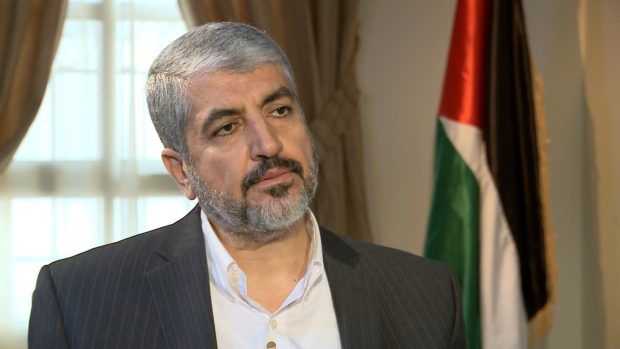
What: On 25 September, 1997, Israelis from the Mossad spy agency attempted to assassinate Palestinian political leader Khaled Meshaal in Amman, the capital of Jordan. The brazen attempt on the life of the then 41-year-old head of the Hamas Political Bureau sparked a diplomatic row which threatened to wreck the newly-signed peace deal between Jordan and Israel. The crisis ended with Israeli Prime Minister Benjamin Netanyahu making a number of humiliating concessions.
Where: Amman, Jordan.
When: 25 September, 1997.
What happened?
In an attempt to cripple the Palestinian resistance movement Hamas, Netanyahu, then in his first term as prime minister, authorised the assassination of Meshaal. The little-known Palestinian leader was born in 1956 in Silwad, which was then in the Jordanian administered West Bank. In 1967, Meshaal’s family and 300,000 other Palestinians were expelled from their homes by Israeli occupation forces in a second wave of ethnic cleaning that came to be known as the Naksa (Setback). Netanyahu is said to have personally picked Meshaal from a number of Hamas operatives for Mossad agents to kill. The attempt on Meshaal’s life came in the wake of a series of suicide bombings in Jerusalem and Tel Aviv.
A six-member Mossad team arrived in Amman a week before the assassination using false Canadian passports. The plan was clear: kill the exiled Hamas leader using a lethal toxin without leaving any trace of the killers. The idea was that after the toxin had been administered covertly, Meshaal would go about the rest of his day as normal and then, when tiredness overcame him, he would take a nap, never to wake up again; he was expected to die within 48 hours.
On the morning of the assassination attempt, two of the six agents moved into position to deliver a lethal dose of toxin — identified later as fentanyl — as Meshaal entered his office. The other four Israeli agents are said to have been deployed around the block either as drivers or as lookouts.
The Mossad agents delivered the toxin using an aerosol device and fled from the scene. One of Meshaal’s bodyguards gave chase and managed to apprehend the assassins after some hand to hand combat. Their capture was to have major ramifications.
What happened next?
Hours after the arrest of the two agents by the Jordanian authorities, the Israelis hatched a plan to diffuse the situation. With the diplomatic consequence of his actions dawning on Netanyahu, he attempted to conceal the botched assassination attempt from the rest of the world. He dispatched Mossad head Danni Yatom to plead with King Hussain of Jordan for the agents’ release. Yatom’s pre-emptive disclosure and plea for help from the Jordanian monarch exploded in Israel’s face, sparking a diplomatic crisis with the Hashemite Kingdom, which had normalised relations with the Zionist state three years earlier.
While the Israelis tried frantically to keep a lid on the botched plot, Meshaal’s health deteriorated. The toxin had done its job and within 48 hours he would be dead. King Hussain warned Israel that if the Hamas leader died, the Mossad agents would be hanged as murderers. The King had gone out on a limb to sign a peace treaty with Israel against the wishes of his people, so he called US President Bill Clinton to enlist his support. It was said that US anger was such that no one within the normally pro-Israel White House was willing to make Netanyahu’s case for him. “This man is impossible,” Clinton is reported to have said upon hearing that the Israeli Prime Minister had authorised the assassination attempt with little regard for Jordanian sovereignty, and thus endangered the fragile peace treaty.
Having been stonewalled by Netanyahu for the antidote to the toxin at the first time of asking, an angry King Hussein relayed his message through Clinton, insisting that the Israelis must deliver a vial of the antidote, which was the only way to save Meshaal’s life. “If Meshaal dies, the peace treaty dies with him,” he insisted. With the US applying pressure, Israel had no choice but to comply. A light aircraft delivered the antidote.
The indignity for Netanyahu did not end there. The two Mossad agents were still under arrest facing a death sentence and the Israeli Embassy in Amman, in which the other four members of the six man Mossad team had taken refuge, was surrounded by Jordanian security forces. In exchange for allowing them to leave Jordan, King Hussain was determined to exact a heavy price. He demanded a prisoner exchange, which was agreed.
Under the deal, Israel released the ailing Sheikh Ahmed Yassin, the quadriplegic founder and spiritual leader of Hamas who was one of the most notable Palestinians in its prisons, along with 70 other Palestinian prisoners.
Meshaal was saved with just hours to spare. His reputation grew within the Palestinian resistance movement as “the man who wouldn’t die”. He became the leader of Hamas when Israel assassinated Yassin in 2004.
Meanwhile, a chastened Netanyahu was forced to apologise. His act of contrition came two days later when he arrived in Amman to pledge that Israel would not make another attempt on Meshaal’s life. This was not the end for the humiliated Israeli Prime Minister. He lost his bid for re-election in 1999, after which he retired temporarily from politics.
By Philip Giraldi – Strategic Culture Foundation – September 24, 2020
The media being focused on an upcoming election, coronavirus, fires on the West Coast and burgeoning BLM and Antifa unrest, it is perhaps no surprise that some stories are not exactly making it through to the evening news. Last week an important vote in the United Nations General Assembly went heavily against the United States. It was regarding a non-binding resolution that sought to suspend all economic sanctions worldwide while the coronavirus cases continue to increase. It called for “intensified international cooperation and solidarity to contain, mitigate and overcome the pandemic and its consequences.” It was a humanitarian gesture to help overwhelmed governments and health care systems cope with the pandemic by having a free hand to import food and medicines.
The final tally was 169 to 2, with only Israel and the United States voting against. Both governments apparently viewed the U.N. resolution as problematical because they fully support the unilateral economic warfare that they have been waging to bring about regime change in countries like Iran, Syria and Venezuela. Sanctions imposed on those countries are designed to punish the people more than the governments in the expectation that there will be an uprising to bring about regime change. This, of course, has never actually happened as a consequence of sanctions and all that is really delivered is suffering. When they cast their ballots, some delegates at the U.N. might even have been recalling former Secretary of State Madeleine Albright’s claim that the death of 500,000 Iraqi children due to U.S. imposed sanctions had been “worth it.”
Clearly, a huge majority of the world’s governments, to include the closest U.S. allies, no longer buy the American big lie when it claims to be the leader of the free world, a promoter of liberal democracy and a force for good. The vote prompted one observer, John Whitbeck, a former international lawyer based in Paris, to comment how “On almost every significant issue facing mankind and the planet, it is Israel and the United States against mankind and the planet.”
The United Nations was not the only venue where the U.S. was able to demonstrate what kind of nation it has become. Estimates of how many civilians have been killed directly or indirectly as a consequence of the so-called Global War on Terror initiated by George W. Bush are in the millions, with roughly 4 million being frequently cited. Nearly all of the dead have been Muslims. Now there is a new estimate of the number of civilians that have fled their homes as a result of the worldwide conflict initiated by Washington and its dwindling number of allies since 2001. The estimate comes from Brown University’s “Costs of War Project,” which has issued a report Creating Refugees: Displacement Caused by the United States Post-9/11 Wars that seeks to quantify those who have “fled their homes in the eight most violent wars the U.S. military has launched or participated in since 2001.”
The project tracks the number of refugees, asylum seekers applying for refugee status, and internally displaced people or persons (IDPs) in the countries that America and its allies have most targeted since 9/11: Afghanistan, Iraq, Pakistan, Yemen, Somalia, the Philippines, Libya and Syria. All are predominantly Muslim countries with the sole exception of the Philippines, which has a large Muslim minority.
The estimate suggests that between 37 and 59 million civilians have become displaced, with an extremely sharp increase occurring in the past year when the total was calculated to be 21 million. The largest number of those displaced were from Iraq, where fighting against Islamic State has been intermittent, estimated at 9.2 million. Syria, which has seen fighting between the government and various foreign supported insurgencies, had the second-highest number of displacements at 7.1 million. Afghanistan, which has seen a resurgent Taliban, was third having an estimated 5.3 million people displaced.
The authors of the report observe that even the lower figure of 37 million is “almost as large as the population of Canada” and “more than those displaced by any other war or disaster since at least the start of the 20th century with the sole exception of World War II.” And it is also important to note what is not included in the study. The report has excluded sub-Saharan Africa as well as several Arab nations generally considered to be U.S. allies. These constitute “the millions more who have been displaced by other post-9/11 conflicts where U.S. forces have been involved in ‘counterterror’ activities in more limited yet significant ways, including in: Burkina Faso, Cameroon, Central African Republic, Chad, Democratic Republic of the Congo, Mali, Niger, Saudi Arabia, and Tunisia.”
Yemen should be added to that list given U.S. military materiel assistance that has enabled the Saudi Arabian bombing attacks on that country, also producing a wave of refugees. There are also reports that the White House is becoming concerned over the situation in Yemen as pressure is growing to initiate an international investigation of the Saudi war crimes in that civilian infrastructure targets to include hospitals and schools are being deliberately targeted.
And even the United States Congress has begun to notice that something bad is taking place as there is growing concern that both the Saudi and U.S. governments might be charged with war crimes over the civilian deaths. Reports are now suggesting that as early as 2016, when Barack Obama was still president, the State Department’s legal office concluded that “top American officials could be charged with war crimes for approving bomb sales to the Saudis and their partners” that have killed more than 125,000 including at least 13,400 targeted civilians.
That conclusion preceded the steps undertaken by the Donald Trump White House to make arms sales to the Saudis and their allies in the United Arab Emirates central to his foreign policy, a program that has become an integral part of the promotion of the “Deal of the Century” Israeli-Palestinian peace plan. Given that, current senior State Department officials have repressed the assessment made in 2016 and have also “gone to great lengths” to conceal the legal office finding. A State Department inspector general investigation earlier this year considered the Department’s failure to address the legal risks of selling offensive weapons to the Saudis, but the details were hidden by placing them in a classified part of the public report released in August, heavily redacted so that even Congressmen with high level access could not see them.
Democrats in Congress, which had previously blocked some arms sales in the conflict, are looking into the Saudi connection because it can do damage to Trump, but it would be far better if they were to look at what the United States and Israel have been up to more generally speaking. The U.S. benefits from the fact that even though international judges and tribunals are increasingly embracing the concept of holding Americans accountable for war crimes since the start of the GWOT, U.S. refusal to cooperate has been daunting. Last March, when the International Criminal Court (ICC) in The Hague authorized its chief prosecutor to open an investigation into U.S. crimes in Afghanistan the White House reacted by imposing sanctions on the chief prosecutor and his staff lawyer. And Washington has also warned that any tribunal going after Israel will face the wrath of the United States.
Nevertheless, when you are on the losing side on a vote in a respected international body by 169 to 2 someone in Washington should at least be smart enough to discern that something is very, very wrong. But I wouldn’t count on anyone named Trump or Biden to work that out.

or go to
Aletho News Archives – Video-Images
BY LAURENT GUYÉNOT • UNZ REVIEW • SEPTEMBER 6, 2022
Is it true that “9/11 was an inside job”? Yes, insofar as Israel is “inside” the U.S. But for the 9/11 truthers who have identified Israel as the main perpetrators, “9/11 was an inside job” is at best a half-truth, and at worst an integral part of the Zionist operation, like a secondary flag sewn as a lining under the false flag of Islamism. Victor Thorn (1963-2017) wrote in his book 9/11 made in Israel: The Plot Against America (2011): “In essence, the ‘9-11 truth movement’ was created prior to Sept. 11, 2001 as a means of suppressing news relating to Israeli complicity. . . . The slogan ‘9-11 was an inside job’ was quite possibly the greatest example of Israeli propaganda ever devised.” In milder terms, it is “controlled opposition”.
A genuine truth movement would have pointed to Israel as the prime suspect from the start. From day one, it was obvious who would benefit. … continue
 Aletho News If Americans Knew No Tricks Zone
