American False Flags That Started Wars
By Robert Fantina | Blacklisted News | September 9, 2015
KITCHENER, Ontario — As this is being written, Congress is experiencing extensive and dramatic hand-wringing as it decides between doing what is best for the country and the world or doing what is best for the American Israel Political Affairs Committee. This is no easy task for members of Congress, especially Democrats who, on the one hand, want to assure a “victory” for President Barack Obama, but who are also loathe to displease the Israeli lobby. Whether preventing a war factors into their deliberations is not known.
AIPAC and its countless minions in Congress are painting the recent agreement reached between Iran and the P5+1 (China, France, Russia, the United Kingdom, and the United States, plus Germany), as nothing short of the end of Israel.
If this deal preventing Iran from developing nuclear weapons is approved, they warn darkly, Iran will secretly develop nuclear weapons. This will mean the destruction of Israel, they say. But if it isn’t approved, Iran will develop such weapons. This, they say, will also mean the destruction of Israel. Feel free to re-read those sentences whenever time allows.
From this point of view, the only alternative is war, with the ostensible purpose of destroying Iran’s nuclear capabilities — capabilities that the Islamic Republic has always said are for peaceful energy purposes. Yet the risk of Iran ever having nuclear weapons is too great. If it did obtain them, then Israel would have a hostile nation to counterbalance its power in the Middle East, and, of course, it doesn’t want that competition. And whatever Israel wants, the U.S. wants. Hence the fear-mongering.
This is a tried-and-true method in the U.S. of getting wars started: Tell lies about some situation that can be construed as a threat to U.S. security (or in this case, Israel’s national security, which seems to be threatened by just about everything), get the populace riled up with jingoistic fervor, watch pompous politicians proclaim their great patriotism on the evening news, and then go bomb some country or other.
The U.S. again gets to flex its international muscle, the citizenry is, for some bizarre reason, proud of the destruction the country has caused, the weapons manufacturers spend all their time tallying their astronomical profits, and all is once again right in the twisted world of U.S. governance.
A few examples will suffice to show that this means of starting wars has been used repeatedly. The examples discussed herein do not by any means represent an exhaustive list, but only show that lying to the world to make the citizenry believe that the U.S. or its citizens had been threatened in some way, and that war was the only response, is business as usual in the U.S.
The War of 1812 (June 18, 1812 – Feb. 18, 1815)
Less than 40 years after the American Revolution, the still-new U.S. government felt constrained in areas of international trade, despite tremendous growth in such trade in the years leading up to the war. In 1811, Britain issued an Order-in-Council, excluding American salted fish from the West Indian colonies and imposing heavy duties on other U.S. imports. This, the U.S. could not countenance.
Additionally, although the heady concept of Manifest Destiny would not actually be defined for several more years, territorial expansion was always on the minds of the leaders of the fledgling nation. Canada, with its rich abundance of natural resources and wide expanses of land, was coveted.

The Battle Lake Borgne Hornbrook, War of 1812.
Yet trade and expansion were not foremost on the minds of the populace, at least not sufficiently for them to support a war. But many nations at this time had a policy of impressment, wherein the ships of another country were boarded, and their sailors kidnapped and forced to work for the kidnapping navy. This was something with which the common man and woman could identify. Although this wasn’t a common occurrence, it was exaggerated and combined with the trade issues to introduce the rallying cry of “Free Trade and Sailor’s Rights,” Carl Benn wrote in his 2003 book “Essential Histories: The War of 1812.” However, this wasn’t a simple, spontaneous cry of justice. It seems to have been promoted by annexationists running the government, and was sufficient for the U.S. to start an unsuccessful war against Canada.
Spanish-American War (April 25, 1898 – Aug 12. 1898)
Fast-forward to the end of the 19th century. On Feb. 15, 1898, the battleship Maine exploded in Havana harbor, killing 266 men. According to Hyman George Rickover, in his 1976 book “How the Battleship Maine was Destroyed”:
“Lieutenant Frank F. Fletcher, on duty at the Bureau of Ordnance, wrote in a personal letter to [Lieutenant Albert] Gleaves: ‘The disaster to the Maine is the one topic here now. Everybody is gradually settling down to the belief that the disaster was due to the position of the magazine next to the coal bunkers in where there must have been spontaneous combustion.’”
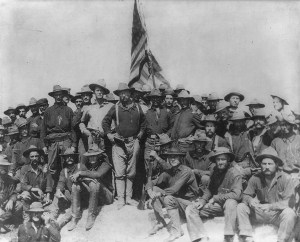
Theodore Roosevelt (center front, just left of the flag) and his “Rough Riders,” 1898.
The official inquiry into the disaster, however, concluded that an underwater mine had been the culprit. With the battle cry “Remember the Maine,” the U.S. quickly declared war on Spain.
But this “inquiry” was more than a bit flawed. Two widely-recognized experts in ordnance volunteered their services for the investigation, but were not invited to participate. One of them, Prof. Philip Alger, had greatly displeased Secretary of the Navy, and future president, Theodore Roosevelt, when he commented on the disaster in an interview for the Washington Evening Star a few days after it happened. He said, in part, the following, as reproduced by Rickover:
“As to the question of the cause of the Maine’s explosion, we know that no torpedo that is known to modern warfare, can of itself cause an explosion of the character of that on board the Maine. We know of no instances where the explosion of a torpedo or mine under a ship’s bottom has exploded the magazine within. It has simply torn a great hole in the side or bottom, through which water entered, and in consequence of which the ship sunk. Magazine explosions, on the contrary, produce effects exactly similar to the effects of the explosion on board the Maine. When it comes to seeking the cause of the explosion of the Maine’s magazine, we should naturally look not for the improbable or unusual causes, but those against which we have had to guard in the past.”
But Roosevelt was anxious to establish the U.S. as a world power, especially in terms of its Navy. By accusing Spain of blowing up the ship, he had the perfect excuse to launch the Spanish-American War.
The Vietnam War (major U.S. involvement: 1964 – 1975)
Off the coast of China and northern Vietnam is the Gulf of Tonkin, which was the staging area for the U.S. Seventh Fleet in the early 1960s. On the evening of Aug. 4, 1964, the U.S. destroyers Maddox and the C. Turner Joy were in the gulf, when the Maddox’s instruments indicated that the ship was under attack or had been attacked. Both ships began firing into the darkness, with support from U.S. warplanes. However, they “later decided they had been shooting at ghost images on their radar. … The preponderance of the available evidence indicates there was no attack.”

U.S. Huey helicopter spraying Agent Orange over Vietnam. (Photo by the U.S. Army Operations in Vietnam R.W. Trewyn, Ph.D.)
Yet something needed to be done about Vietnam, with anti-Communist hysteria still rampant in the U.S., and this gave Congress the perfect ploy to escalate the war. This non-incident was presented to the world as an act of aggression against the U.S. Congress quickly passed the Gulf of Tonkin resolution. By the end of the following year, the number of U.S. soldiers invading Vietnam increased from 23,000 to 184,300. Eleven years later, with over 55,000 U.S. soldiers dead, hundreds of thousands wounded, and, by conservative estimates, 2,000,000 Vietnamese dead, the U.S. fled Vietnam in defeat.
The Gulf War (Aug. 2, 1990 – Feb. 28, 1991)
In order to gain support for the Gulf War of 1990, Congress and President George Bush relied heavily on what is commonly referred to as the Nayirah testimony. In early October 1990, a 15-year-old girl referred to only as “Nayirah,” who claimed to have been a hospital volunteer, testified of seeing babies dumped by Iraqi soldiers from hospital incubators. This, in the eyes of Congress and the president, highlighted the monstrosity of Iraq, and was widely used to gain support for the war.
However, like nearly all of the information the government feeds to the citizenry to start its wars, this testimony was all lies. “Nayirah” was actually the daughter of the Kuwaiti ambassador to the U.S. She later admitted that she had once visited the hospital in question, but only for a few minutes. She did see an infant removed from an incubator, but only very briefly. A group called Citizens for a Free Kuwait had hired one of the world’s foremost public relations firms, Hill and Knowlton, to create the illusion of legitimacy for an invasion. They coached “Nayirah” on what to say and how to say it when she appeared before Congress.
We will do no more than mention the U.S.’s drafting of a letter for Grenada to send to the U.S., requesting military intervention when that small island nation’s government was overthrown in 1983. Nor will we dwell on the weapons of mass destruction that Iraq was said to possess in 2002, which justified in the eyes of U.S. citizens the disastrous 2003 invasion of that nation. But as we look at this ugly record of lies that the U.S. has used to expand its territory, power and/or influence around the world, we must consider that it is once again using the same tactics to march the nation toward war with Iran.
The U.S. for generations was successful in deceiving its citizens, and a good part of the world, that it was a beacon of freedom and peace, despite the fact that it has been at war for most of its bloody existence. That myth began to crack during the Vietnam War, broke into pieces with the Iraq War, and may have been dealt a fatal blow by the U.S.’s support of Israeli atrocities in 2014.
Regardless of the outcome of the congressional vote on the Iran agreement, the U.S. will find itself less able to lie its way into corporate wars in the future. That capacity diminished during the lead-up to the Iraqi invasion, and while no one ever went broke betting on the gullibility and short-term memory of the U.S. citizenry, people are beginning to wake up. When they finally do, much of the carnage in the world will end. That day cannot come soon enough.
Cameron dodges MPs’ questions on drones policy
Reprieve | September 9, 2015
The Prime Minister today said he would not discuss with MPs the details of the Government’s targeted killing programme, the existence of which was revealed this week.
On Monday, Mr Cameron revealed that he had ordered several drone strikes in Syria, and was prepared to take similar action elsewhere, saying: “I will always be prepared to take that action, and that’s the case whether the threat is emanating from Libya, Syria or from anywhere else.”
The apparent secret shift to a programme of drone strikes outside of declared warzones has caused concern, with MPs and legal experts calling on the government to reveal the legal advice it has received.
Covert US drone strikes in countries such as Pakistan and Yemen – where the US is not at war– are thought to have resulted in the deaths of hundreds of civilians, and have been criticized as counterproductive by senior military personnel. Research last year by human rights organization Reprieve found that repeated US attempts to target just 41 people resulted in 1,147 deaths.
US military personnel who have criticized the drone programme include Army General Stanley McChrystal, former head of the US military’s Joint Special Operations Command. He told the BBC last year that US strikes cause a “tremendous amount of resentment” in countries such as Yemen, and “what seems like a panacea to the messiness of war is not that at all.”
Commenting, Kat Craig, legal director of Reprieve’s Abuses in Counter-Terrorism team, said:
“The prime minister has adopted wholesale a US-style drone policy, under which he is allowed to use lethal force anywhere around the world without oversight. This is an alarming change in government policy, and crucial questions remain unanswered. What safeguards, if any, are in place? What are the limits of the assassination programme? And has the Prime Minister given any thought at all to criticism levied by top military officers in the US that their own drone programme is flawed, and failing?
“A limited inquiry by the ISC – which has a poor record on holding the government to account – is not good enough. MPs and the public deserve to know the true extent of Cameron’s drone programme.”
‘Stop arming Israel!’ Campaigners launch blockade ahead of London arms fair
RT | September 8, 2015

Anti-arms campaigners set up a blockade in the Dockland’s area of east London on Monday to disrupt one of the world’s largest arms fairs and highlight Britain’s role in arming repressive regimes worldwide.
Protesters gathered outside the Excel center in the Dockland’s area of east London on Monday morning as part of a week of action called Stop the Arms Fair.
The campaigners occupied a space adjacent to the center in an effort to disrupt the Defence & Security Equipment International (DSEI) arms fair scheduled to take place at the venue next week. One of the largest arms fairs in the world, it is expected to attract more than 1,000 global arms firms and 30,000 attendees.
Monday’s day of action focused specifically on Britain’s role in arming Israel. It consisted of talks and thought provoking workshops, and was attended by scores of anti-arms trade campaigners from across Britain, who displayed colorful banners, flags, and quilts, and even sported face paint.

Campaigners said the DSEI arms fair provides a platform for Israeli and international arms firms’ to profit from oppression and destruction.
As the day progressed, a truck carrying a dark green military vehicle attempted to make its way into the Excel center. However, it was obstructed by activists who blocked the road, forcing it to stop. Several campaigners mounted the truck, while others surrounded it.
Police later warned the campaigners they would face arrest if they refused to let the truck pass. In defiance, protestors formed a tight-knit circle in front of the vehicle and staged a traditional Palestinian dance.

The protesters, who remained peaceful throughout the blockade, were eventually dispersed by police. One campaigner was arrested at the site.
Sarah Waldron of Campaign Against Arms Trade (CAAT), who attended the protest, condemned the British government’s sale of arms to Israel.
“In one week one of the world’s biggest arms fairs will be taking place just across the road and the UK government has consistently facilitated weapon sales to the Israeli government who will have a massive pavilion at this fair where their biggest arms companies will be displaying their battle tested weapons,” she told RT.
“The UK government has a very confused attitude to democracy and human rights. On the one hand, it talks of wanting to promote democracy in the Middle East and, on the other, it’s inviting the companies and the governments that are causing violence and conflict in these regions.”
Simon Morris of Occupy Democracy, who also attended the protest, said Occupy campaigners planned to safeguard the protest site.
“The occupy method is to take a space and hold it. We hold it to either facilitate discussions or have a meeting point where people can come down and talk about the issues,” he said.

“We intend to be here from Monday this morning up until Saturday and we intend to be living here continuously in tents holding the space for other people to come and speak.”
“Part of our list of demands, part of what we wish to change in the world, is the shift away from a huge amount of military spending and war, which causes misery and mayhem around the world,” he added.
“If our country had a more democratic system, like direct democracy, we’d see a lot less conflict, a lot less spending on military hardware, and a lot more peace in the world.”
Hilary, a Pro-Palestine campaigner who has spent time in the Occupied Territories, said she was angry with the British government.
“We don’t want Israeli arms companies here. We don’t want Britain to be selling arms to Israel or components for weapons and we don’t want to be buying arms, buying drones to fuel more conflicts in countries around the world,” she said.

Stop the Arms Fair is set to continue until Saturday. It will feature a mixture of creative activities and direct action throughout the week to raise awareness about the destructive impact of the global arms trade.
Activists will argue Britain must redirect spending from arms to renewables and from warfare to welfare. They will also highlight the link between the global arms trade and the global refugee crisis, and host a mass day of action in opposition the DSEI fair.
Photos © Sarah Jane Brennan / RT
Shooting Children Becomes Israeli Policy
Netanyahu’s response to kids throwing rocks
By Philip Giraldi • Unz Review • September 8, 2015
I have become weary of the dancing around by politicians and denial by Jewish organizations over what Israel has been doing to the Palestinians. That anyone can with a straight face deny that there is anything wrong with a nearly fifty year occupation and strangling of the Palestinians because they have been demonized as “terrorists” or possibly only because they are not Jews is abhorrent. A new United Nations report states that Gaza will be completely uninhabitable in five years. Palestinians get imprisoned by Israel and gassed or shot if they look sideways at their occupiers. Fanatical settlers tear up olive trees that have fed the locals for hundreds of years, steal their land, vandalize and burn their houses churches and mosques, even kill them and are only rarely pursued or punished. Israel is the ugly face of a fascist state and calling it apartheid is to minimize its criminality as it does not even necessarily seek to set up a parallel state for the Arabs it controls. A number of leading Israeli politicians and journalists seek to remove them completely.
All of that said, as a committed anti-interventionist, I have to believe both that what goes on between Israel and the Palestinians should pretty much be none of our business but for the fact that a powerful domestic lobby has forced us to be involved. Jews and Arabs probably would have resolved their differences by now if Washington had not coddled corrupt Palestinian leaders while simultaneously empowering Israel to make a lot of bad choices. To be sure our government should feel free to speak up whenever foreign governments behave badly, but the tendency to impose sanctions, which don’t work, intervene directly, or even invade to deal with regimes that do not conform to our standards has brought nothing but grief, most particularly over the past fifteen years. One might even reasonably argue that it is Washington’s lame brained interventions have themselves destabilized the Middle East and caused the terrorism and refugee problems emanating from that region to metastasize.
Which is not to say that Israeli politicians have not become adept at shooting themselves in their own feet before the court of world opinion, which is becoming increasingly engaged in what is going on. Just when one thinks that Benjamin Netanyahu cannot possibly morph into something more horrible he astounds the observer by doing just that.
Netanyahu’s most recent foray grew out of a late August incident on the West Bank. A series of photographs plus video footage from a protest in the Palestinian village of Nabi Saleh appeared in the media. They showed a masked IDF soldier trying to arrest a young boy accused of throwing stones, followed by scenes of his mother and teenage sister trying to rescue him. The pictures and video reveal a crying and struggling 11 year old Mohammed Tamimi, with his broken arm in a cast, being held in a headlock and sat upon by the soldier, armed with an assault rifle. The boy’s mother then intervened, pulling on the mask while Mohammed’s 15 year old sister joined in to bite the soldier’s wrist, compelling him to free the boy. The soldier released him, backed off and then threw a grenade at the family.
Predictably, Israel’s apologists complained that the Palestinians had attacked the soldier who was only defending himself and they quickly flooded the social media with claims that it was all a set-up, which they even dubbed “Pallywood.” And inevitably Benjamin Netanyahu joined in the debate, blaming the Arabs for what transpired, calling them “terrorists.” He stated that he would recommend that Israeli soldiers be authorized to fire live rounds to protect themselves in similar situations where children are throwing rocks. Netanyahu was reportedly responding to demands from settlers for more aggressive action against Palestinians, completely ignoring the reality that the Arabs have been defending themselves from settler harassment and worse and the soldiers represent an occupying army. Some in the Israeli media and government also advised that as the soldier had been “humiliated” by the Palestinian women he should have shot them, but Bibi did not go quite that far. At least not yet.
In the United States the hasbara jumped on both stories, notably in comments sections on Yahoo and on other sites using constant repetition of the same arguments, often to include repeated misspellings and poor syntax suggesting that their “information” came from a common source in the Israeli Ministry of Foreign Affairs. The names the hasbara commenters use to post are characteristically American sounding, similar to the Anglo names used by employees of the obnoxious call centers in India and the Philippines when they interrupt you at dinner time. In the hasbara comments rocks thrown by the Palestinian children were repeatedly and improbably described as “football sized.” In other pushback, a Reuters account of the Netanyahu hard line, possibly acting under pressure from Jewish groups, changed the key word in its headline from “shoot” young Palestinians to “target” them.
But in this case, Benjamin Netanyahu’s horse has already left the stable. His new orders to shoot Palestinian children have been de facto operational for some time with punishments rarer than hens’ teeth for those Israeli Defense Forces commandoes who pull their triggers on six year olds. That kind of killing has been almost routine, exhibited dramatically during last July’s execution of four young boys playing soccer on a beach in Gaza. The boys were killed by Israeli rockets in full sight of a number of international and media observers. The Israeli government subsequently conducted an “extensive investigation” that nevertheless did not interview many eye witnesses, to include a Guardian journalist. Not surprisingly it absolved itself from blame for the deaths.
And beyond that singular bit of barbarity, numerous other Palestinian children have also been abducted, imprisoned and murdered by the Israeli Army and border police. International monitors reckon that 2,061 Palestinian children have been killed by Israel since September 2000 versus 133 Israeli children murdered in the same time frame by Palestinians. The body count is deplorable on either side but at some point Netanyahu has to come to recognize that the constant barrage of videos, photos and eyewitness testimony recording the mindless brutality of the occupation of the West Bank will influence public opinion to such an extent that Israel will become everyone’s pariah state.
Recently more than 100,000 Britons signed a petititon demanding that Benjamin Netanyahu be arrested for war crimes on an upcoming visit to the UK while Israel’s resistance to the Iranian nuclear deal, when subjected to a United Nations vote, resulted in Tel Aviv lining up against the entire rest of the world including the United States. Pictures of children being manhandled by two hundred pound soldiers create a lasting impression, one that inevitably influences how people react when the subject of Israel comes up. Netanyahu may think that he can maintain course forever with the uncritical backing of the United States but forever is a long time and even in the U.S. things can change.
Israel ‘benefiting from re-displacing Palestinians’
Palestine Information Center – September 8, 2015
 ALGERIA – Dr. Abdul Razzaq Muqri, head of the Algerian Movement for a Society of Peace (MSP), said Monday that Israel would benefit from re-settling Palestinian and Syrian refugees in Europe.
He also held western countries responsible for the suffering of Palestinian and Syrian refugees, charging that western countries were the main reason for the instability in the region.
“Today, Europe is in dire need for immigration as new demographic studies confirm that Europe would need to bring one million new immigrants every year, a total of 47 million immigrants until 2050 in order to maintain positive growth rates.”
There is no doubt, Dr. Muqri continued, that Israel was delighted when New Zealand declared intention to receive 500,000 Syrian and Palestinian refugees. Instead of finding a solution for Israeli settlers who came to Palestine from all over the world, the land owners became asylum seekers fleeing from the oppression.
SodaStream to shut down West Bank factory, new factory near planned township where Bedouins are being forcefully transferred
IMEMC News & Agencies | September 6, 2015
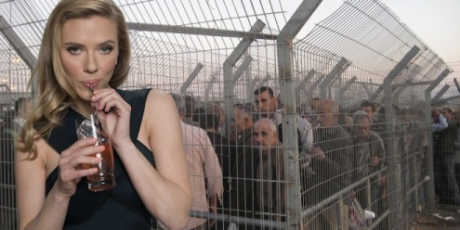
SodaStream announced, today, that it will finalize the closure of its West Bank factory in two weeks.
SodaStream CEO Daniel Birnbaum commented, earlier, that the boycott only had a “marginal” effect on their business and accused the movement of “antisemitism”, PNN reports.
Mahmoud Nawajaa, The Palestine Boycott National Committee (BNC) General Coordinator, said:
“Coming just as French multinational Veolia has abandoned the Israeli market following a 7-year campaign against its support for settlements that cost it billions of dollars, SodaStream’s announcement today provides further proof that the BDS movement is increasingly able to hold corporate criminals to account for their role in Israeli apartheid and colonialism.
“SodaStream may wish to try and smear our movement, but it is clear that BDS campaigning and the Scarlett Johansson controversy has persuaded retailers across Europe and North America to drop SodaStream and contributed to SodaStream’s share price to tumble by half in the space of a year.
“Even when this closure goes ahead, SodaStream will remain implicated in the displacement of Palestinians. Its new Lehavim factory is close to Rahat, a planned township in the Naqab (Negev) desert, where Palestinian Bedouins are being forcefully transferred against their will. Sodastream, as a beneficiary of this plan, is complicit with this violation of human rights.
“Israel willfully destroys the Palestinian economy in the West Bank, leading to unemployment and economic crisis. The way to tackle this is to challenge Israel’s system of colonialism and apartheid.
“The BDS movement is opposed to all forms of racism, including anti-semitism and Islamaphobia.”
The BNC is the Palestinian Boycott, Divestment and Sanctions National Committee (BNC), the broad coalition of Palestinian civil society organisations that works to support the boycott, divestment and sanctions (BDS) movement.
Israel Slammed Over Plans to Demolish 17,000 Palestinian Buildings
Sputnik – 07.09.2015
Israel has plans to demolish 17,000 Palestinian-owned buildings located on mostly occupied land of the West Bank, a UN report has revealed, with concerns the demolitions will cause poverty and leave many families in a “state of chronic uncertainty”.
A report from the UN Office for the Coordination of Humanitarian Affairs (OCHA) concluded that as a result of new and outstanding demolition orders, up to 17,000 structures, including houses, sheds and animal shelters could be knocked down, despite the fact that 77 percent of the buildings are located on privately owned Palestinian land.
The structures under the threat of demolition are located in Area C, a zone in the occupied Palestinian territory of the West Bank where the state of Israel retains full security and administrative control.
Around 300,000 Palestinians live in Area C, which covers 60 percent of the West Bank, and is also the location of many Israeli settlements with a population of around 360,000 — which are deemed illegal under international law.
Close to 4,500 demolition orders are to affect the land of Palestinian Bedouins, who human rights activists say are under threat of losing their homes in exchange for more Jewish settlements in the West Bank.
The UN report raised concerns about the impacts such proposed demolitions might have on Palestinians living in affected areas.
“These orders heighten the vulnerability of thousands of poor Palestinian households, some of whom are at imminent risk of forcible displacement.”
It also pointed out that the manner in which demolition orders are handled adds to the suffering of locals.
“Structures built without permits are regularly served with demolition orders. While only a minority of the orders issued are executed, these orders do not expire and leave affected households in a state of chronic uncertainty and threat,” the report found.
“Where the orders have been implemented, they have resulted in displacement and disruption of livelihoods, the entrenchment of poverty and increased aid dependency.”
‘Nearly Impossible’ Permits
While Israeli officials claim that the buildings are under threat as a result of not having the correct planning permission, others point out the extreme difficulty many face in trying to secure proper construction permits.
According to data from the governing body in charge of affairs in the West Bank — the Israeli Civil Administration — Palestinians submitted 2,020 applications for building permits in Area C between 2010 and 2014, while only 33 were approved.
The report said that planning and zoning rules made “it is nearly impossible for Palestinians to obtain building permits in most of Area C.”
Israeli officials have been accused of widespread discrimination over their treatment of Palestinians in Area C, with only one percent of the zone legally earmarked for Palestinian development.
This is contrasted to the 235 illegal Jewish settlements and outposts that have been constructed in the area in recent years. Many critics have argued that while authorities are harshly critical of Palestinian constructions, they turn a blind eye to any potential breaches in Jewish settlements.
The report follows international outrage over Israeli plans to demolish the West Bank village of Khirbet Susiya in July, with EU officials specifically asking Israel to stop the “forced transfer of population and demolition of Palestinian housing” in the area.
Israel building separation wall to keep refugees out
Press TV – September 6, 2015
Amid what is being referred to as the worst refugee crisis since WWII, the Israeli regime has announced construction of a separation wall to keep them out.
During a weekly cabinet meeting on Sunday, Israeli Prime Minister Benjamin Netanyahu announced that a 30-kilometer fence is being constructed along Israel’s border with Jordan to stop “migrants,” he associated with terrorists, to enter Israel.
Israel finished the construction of a 230-kilometer wall along the Egyptian border in 2013; it also has set up fences along the border with Lebanon and along the line between Syria and Israeli-occupied Golan Heights. Most of the West Bank has also been split by a barrier.
According to Bibi, the wall would connect with the Egyptian barrier and that construction has started along Israel’s eastern border between the city of Eilat and near the site of a new airport in Timna Valley.
“We will continue the fence up to the Golan Heights,” said the Israeli premier. “We will not allow Israel to be submerged by a wave of illegal migrants and terrorist activists.”
Golan Heights has been under the Israeli occupation since the 1960s. The Tel Aviv regime captured 1,200 square kilometers of the Golan Heights during the Six-Day War of 1967 and annexed the region in 1981.
Netanyahu cited Israeli’s “very small” size and lack of “geographic depth or demographic depth” as the reasons behind the measures.
His comments came amid a refugee crisis in Europe due to influx of asylum seekers from conflict-ridden countries in Africa and the Middle East.
The United Nations estimates that 300,000 people have left the Middle East and North Africa for Europe this year, but 2,500 have died in their attempt, mainly through dangerous voyages across the Mediterranean in rickety boats. Media reports, however, say 350,000 have crossed into Europe this year.
Many of the world’s asylum seekers are ill-fated Syrians, fleeing the violence perpetrated by the Daesh Takfiri group.
According to documents from Israeli hospitals, the regime’s army has paid millions of dollars for the costs of treatment to the foreign-sponsored militants, injured during battles with Syrian government forces since 2011.
Gaza water shortage catastrophic: ‘We can’t drink, cook or wash with it’

RT | September 6, 2015
More than 90 percent of the Gaza Strip’s water is undrinkable. The rest is quickly running out. A combination of factors is rapidly depriving the population of this most basic of needs. RT investigated day-to-day life under these conditions.
Just one fresh water source exists today, according to the locals – a coastal aquifer beneath the ground that is shared with Israel and Egypt. But Gaza is situated downstream from Israel, and Palestinians accuse the Jewish state of using the situation to its advantage, employing water deprivation as a tactic against the civilian population.
The grim water statistics are part of a recent UN report on Gaza, which says the strip will become uninhabitable by 2020. A number of reasons compound the problems, according to the document by the United Nations Conference on Trade and Development (UNCTAD).
The Gaza Strip’s GDP dropped 15 percent in 2014, with 72 percent of households suffering extremely low food security and unemployment at a record high of 44 percent. Further stress was added by relentless Israeli assaults. With three military operations in the last six years, coupled with eight years of economic blockade, prospects for recovery are looking very bleak.
The UN says that 500,000 people have been displaced in Gaza as a result of last year’s Israeli operation alone. More than 20,000 Palestinian homes were destroyed, and 148 schools and 15 hospitals and 45 primary health-care centers were severely damaged. Gaza is one of the most densely populated areas in the world.
But worse still is when the populace is deprived of the prime source of life – water. Without it, no reconstruction and no rebuilding of lives can take place. Medicine, sanitation, hygiene and crucial facilities that depend on water all suffer.
RT investigated the extent of the hardship under these conditions.
“We can’t drink it, cook with it, or wash in the kitchen with it… we are forced to buy all the clean water separately,” said Umm Ibrahim Amna Abdel’al, as she stood in her kitchen, little more four bare cement walls and a sink.
A delivery pickup truck trundled through the streets outside with a water tank sitting in the back.
“The last war on Gaza, of course, resulted in the destruction of some of the infrastructure, the water holes and the pumping stations were [heavily hit.] More than 50 percent of the water infrastructure could not be accessed,” said Mahmoud Elkhafif, UNCTAD’s special coordinator for assistance to the Palestinian people.
“Part, of course, vanished,” he added.
RT’s Lizzie Phelan tasted what remains of the Strip’s water for herself: “This coffee tastes like it has salt not sugar in it. That’s because the water that’s used to wash it – like much of Gaza’s water – is contaminated with sea water.”
The woman went on to describe how “tiny kids suffer from cramps and colic” – a syndrome commonly associated with stomach infections.
“See my hand?” she pointed to the irritated skin on her palm. “It is because of the salty water. I have a skin infection. The water is full of salt. It is like sewage.”
And salt isn’t the only problem. The water coming into homes is also full of nitrate – a carcinogen. The levels rose even higher last year, during Israel’s bombardment of sewage pipes and clean water pipes. Now, the two chemicals have mixed.
But even though the water is filthy, Gazans pay exorbitantly for it.
Elkhafif put it bluntly: “Gaza suffers a catastrophic issue with water quality and water supply. And it’s a shame on the world that they are still watching this.”
Unless the situation is resolved, the Strip stands on the brink of a full-scale humanitarian catastrophe much greater than any airstrikes can cause.
Hunger strikes continue: Protests across Palestine demand freedom, end of administrative detention
Palestinian Prisoner Solidarity Network | September 5, 2015
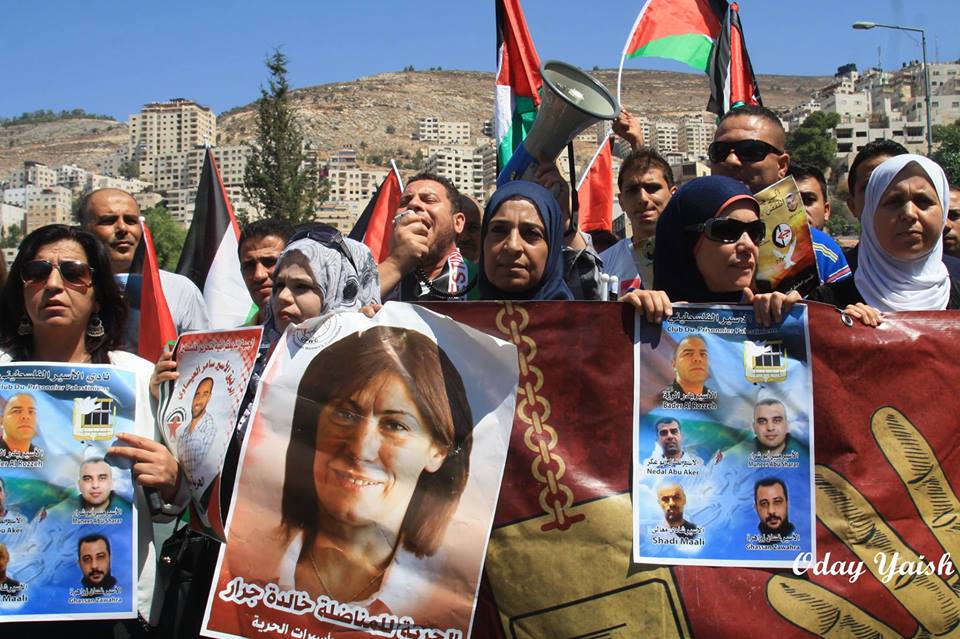
Nidal Abu Aker, Munir Abu Sharar, Badr al-Ruzza, Ghassan Zawahreh, and Shadi Ma’ali are engaged in the “Battle of Breaking the Chains” for the seventeenth day, continuing in their hunger strike to demand the end of administrative detention. All five are imprisoned by the Israeli military without charge or trial on the basis of “secret evidence” and have launched a hunger strike to demand not only their freedom personally, but an end to the policy that has been used against them.
Several more Palestinian prisoners have joined in the hunger strike and its demands: Bilal Daoud Saifi, who like Abu Aker, Zawahreh and Ma’ali is a Palestinian refugee who lives in Dheisheh refugee camp near Bethlehem, who started his strike on 30 August; Suleiman Eskafi of Al-Khalil, an administrative detainee on strike since 1 September; and Amir Shammas of Al-Khalil, an administrative detainee who previoulsy engaged in a hunger strike, had been promised that his detention would not be renewed, but since has had his detention renewed. In addition, Noor Shoukri Jaber, a Palestinian prisoner sentenced to life imprisonment, began a hunger strike on 2 September in protest of lack of medical care and his arbitrary transfer.

All of the striking prisoners have been thrown into isolation in an attempt to pressure them to end their strike and to stop other prisoners from joining the strike.
The “Battle of Breaking the Chains” is sparking actions of support in various cities in Palestine. A permanent tent of support has been set up at the main entrance of Dheisheh refugee camp, where four of the strikers – and three of its leaders – live, and demonstrations of support have been organized in Nablus, Al-Khalil, Bethlehem city, and Ramallah, among other cities.
Samidoun Palestinian Prisoner Solidarity Network expresses its strongest solidarity with the striking prisoners, and calls for international actions, mobilizations and events to demand their freedom. We cannot wait until these brave strugglers are facing death to act and demand not only their freedom as individuals, but the abolition of administrative detention – on the road to freeing every Palestinian prisoner held in Israeli occupation jails. It is not the case that Israeli military courts are any more legitimate, fair or acceptable than administrative detention – they are just as arbitrary, racist and illegitimate. But administrative detention is a weapon of mass terror used against the Palestinian people, and it is critical to bring this practice to an end. These Palestinian prisoners have put their bodies on the line in order to end administrative detention – and it is imperative that we act to support them. These prisoners’ struggle is not only about their individual freedom – it is part of their struggle for return and liberation for Palestine.
Take Action!
1. Sign on to this statement in support of the prisoners’ demand to End Administrative Detention. Organizational and individual endorsements are welcome – and organizational endorsements particularly critical – in support of the prisoners’ demands and their actions. Click here to sign or sign below:http://bit.ly/EndAdministrativeDetention
2. Send a solidarity statement. The support of people around the world helps to inform people about the struggle of Palestinian prisoners. It is a morale booster and helps to build political solidarity. Please send your solidarity statements to samidoun@samidoun.net. They will be published and sent directly to the prisoners.
3. Hold a solidarity one-day hunger strike in your area. Gather in a tent or central area, bring materials about Palestinian prisoners and hold a one-day solidarity strike to raise awareness and provide support for the struggle of the prisoners and the Palestinian cause. Please email us at samidoun@samidoun.net to inform us of your action – we will publicize and share news with the prisoners.
4. Protest at the Israeli consulate or embassy in your area. Bring posters and flyers about administrative detention and Palestinian hunger strikers and hold a protest, or join a protest with this important information. Hold a community event or discussion, or include this issue in your next event about Palestine and social justice. Please email us at samidoun@samidoun.net to inform us of your action – we will publicize and share news with the prisoners.
5. Contact political officials in your country – members of Parliament or Congress, or the Ministry/Department of Foreign Affairs or State – and demand that they cut aid and relations with Israel on the basis of its apartheid practices, its practice of colonialism, and its numerous violations of Palestinian rights including the systematic practice of administrative detention. Demand they pressure Israel to free the hunger strikers and end administrative detention.
6. Boycott, Divest and Sanction. Hold Israel accountable for its violations of international law. Don’t buy Israeli goods, and campaign to end investments in corporations that profit from the occupation. G4S, a global security corporation, is heavily involved in providing services to Israeli prisons that jail Palestinian political prisoners – there is a global call to boycott it. Palestinian political prisoners have issued a specific call urging action on G4S.
Over 100k sign UK online petition calling for Israeli PM’s arrest
Press TV – September 5, 2015
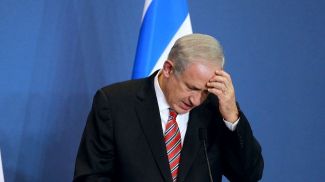 More than 100,000 people in the United Kingdom have now signed a petition demanding the arrest of Israeli Prime Minister Benjamin Netanyahu for war crimes against Palestinians when he visits London later this month.
The petition, which was published on the website of the British Parliament on August 7, calls upon the British government to apprehend the 65-year-old chairman of Israel’s Likud party upon arrival in London next Wednesday for the massacre of thousands of Palestinians during the Israeli military’s 50-day onslaught against the blockaded Gaza Strip last year.
The petition garnered 100,021 signatures as of Saturday morning.
“Under international law, he should be arrested for war crimes upon arrival in the UK for the massacre of over 2,000 civilians in 2014,” the petition says, referring to the Israeli prime minister’s scheduled September visit.
After 10,000 signatures, the British government must respond to the petition, and after 100,000 signatures, it will be considered for debate in the parliament.
The British government has, in return, stated that “under UK and international law, visiting heads of foreign governments, such as Prime Minister Netanyahu, have immunity from legal process, and cannot be arrested or detained.”
Israel started its military campaign against the impoverished Gaza Strip in early July 2014. The offensive ended on August 26, 2014. Nearly 2,200 Palestinians, including 577 children, lost their lives in Israel’s war. Over 11,100 others – including 3,374 children, 2,088 women and 410 elderly people – also sustained injuries.
Featured Video

Liberty Cannot Exist Inside a Panopticon
or go to
Aletho News Archives – Video-Images
From the Archives
Left-leaning despisers of 9/11 Truth movement: Do you really believe in miracles?
David Ray Griffin | Global Research | 06 Jul 2010
An Open Letter to Terry Allen, Noam Chomsky, Alexander Cockburn, David Corn, Chris Hayes, George Monbiot, Matthew Rothschild, and Matt Taibbi.
[1]According to several left-leaning critics of the 9/11 Truth Movement, some of its central claims, especially about the destruction of the World Trade Center, show its members to be scientifically challenged. In the opinion of some of these critics, moreover, claims made by members of this movement are sometimes unscientific in the strongest possible sense, implying an acceptance of magic and miracles. … Full article
Blog Roll
 Aletho News
- Plan for more US-Israel integration puts our military tech at risk
- Another Round Against Iran Will Break What Is Left of the Gulf
- SVR Report on Ukraine’s Mexican Drug Gang Links Could Pressure Zelensky, Won’t Change US Policy
- British Government Employees Were Fact-Checking the News at the BBC. Nobody Told You.
- Albania on fire: who’s behind the riots?
- Egypt’s Civil Democratic Movement rejects involvement in regional war
- Egypt collaborates with Israel to build ‘Green Rafah’ project over erased Palestinian city
- Rising fuel prices and shortages have helped drive ongoing protests and rioting in France
- Tokyo protests demand Takaichi’s resignation over support for ‘Israel’
- Jennifer Kavanagh: Why the U.S. Should Pull Back From the First Island Chain
- If Americans Knew
- Fourth winter arrives in wartorn Gaza, too early – Daily Update
- More on how Bari Weiss is using CBS on behalf of Israel
- What the UK Is Doing to Pro-Palestine Novelist Sally Rooney Is an Act of Orwellian Villainy
- ‘We will build palaces for Jews in Gaza’: Right-wing activists establish new outpost near border
- ‘You see us burning, you stay silent’: Family’s agony over mother and sons burned to death in Gaza tent
- Israel keeps Palestinian journalist Bushra al-Tawil in isolation for 46 days
- US-Israel integration plan puts US military tech in Israel’s hands
- Israeli Strike Burns Gaza Mother Alive in Front of Toddler, ‘Without Generating Any Headlines’
- ‘The Israel Experience with Mike Huckabee’: The Ambassador’s Family Sells Trips to Israel
- As Gazans carry out mass burial, food insecurity is getting worse – Daily Update
- No Tricks Zone
- Predictions Made By Renowned Climate Proifessor Over Past Decades Have Been Proven To Be Poor
- New Study Suggests Large Regions Of The Pacific Ocean Have Been Cooling For The Last 80 Years
- Germany’s Green Energy Debacle: High Energy Costs Force Kahla Porzellan to Close After 182 Years!
- New Study: 50 Years Of The Most Aggressive ‘Net Zero’ Policies Can Only Affect The Global Climate By 0.03°C
- US September “Heat” Was No Record…Many Records Set Decades Ago
- Latest European Green Energy Debacle; Portugal’s Largest Flagship Solar Park Insolvent!
- Green Energy Debacle: German Expert Professor Fritz Vahrenholt Warns Of Severe Economic And Social Consequences
- Two More Paleo Reconstructions Affirm Meters-Higher Sea Levels Across Ireland, Brazil 7000-6000 Years Ago
- New Study: Earth And Venus Surface Warmth Largely Explained By Convection And Lapse Rate, Not CO2 Or Radiation
- 2025 Nature Paper Claiming Worsening Global Drought Gets RETRACTED …Heavily Flawed

