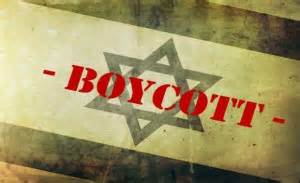
The American Studies Association, a 60-year old US academic organization with 5,000 members, passed a resolution on Wednesday committing to the boycott movement against Israel.
Citing its commitment to “the pursuit of social justice” and to “the struggle against all forms of racism,” the ASA revealed in a statement published on its website that it had voted to support the academic Boycott, Divestment and Sanctions (BDS) movement against Israel.
“The American Studies Association endorses and will honor the call of Palestinian civil society for a boycott of Israeli academic institutions,” the statement read.
“The ASA supports the protected rights of students and scholars everywhere to engage in research and public speaking about Israel-Palestine and in support of the boycott, divestment, and sanctions movement.”
ASA noted the “significant role” played by the United States “in enabling the Israeli occupation of Palestine and the expansion of illegal settlements and the [apartheid] Wall in violation of international law, as well as in supporting the systematic discrimination against Palestinians, which has had documented devastating impact on the overall well-being, the exercise of political and human rights, the freedom of movement, and the educational opportunities of Palestinians.”
The BDS movement has gained traction over the past years, as a growing number of scholars and academic entities have committed to the cause.
More than 950 scholars working in American institutions have endorsed the US Campaign for the Academic and Cultural Boycott of Israel.
The Association for Asian American Studies became the first US academic organization to officially support the boycott movement in April.
In May, renowned physicist Stephen Hawking withdrew from an Israeli conference, citing his decision to respect the Israel boycott.
December 5, 2013
Posted by aletho |
Ethnic Cleansing, Racism, Zionism, Illegal Occupation, Solidarity and Activism | American Studies Association, Association for Asian American Studies, Boycott Divestment and Sanctions, Human rights, Israel, Israel-Palestine, Palestine, Stephen Hawking, United States, Zionism |
Leave a comment
CNN reports on Israeli PM Netanyahu’s reception at the Vatican and plans for the Pope to visit Israel in May.
Recalling the shabby treatment of religious leaders on previous visits to the Holy Land, let us hope Pope Francis takes a firmer line than his predecessor and insists on seeing Gaza and ministering to his terrorised flock there.
In May 2009, when Benedict was Pope, the Vatican told the Israeli press that the Holy Father would refrain from visiting Gaza. The word ‘refrain’ was a peculiar one in the circumstances. “The Pope will refrain from visiting Gaza….” smacks of abstinence, as in refraining from sexual intercourse. Setting foot in Gaza was as sinful as sneaking into a brothel, it seems. Israel’s hoodlums of course were keen to prevent him seeing how the tiny, overcrowded enclave had been devastated 16 months earlier by their murderous blitzkrieg codenamed Cast Lead. And the Pope went along with it.
Gaza’s isolated and besieged Catholic community were none too happy with the Pope’s attitude, judging by the reaction of their redoubtable old priest Fr Manuel Mussallam. “We will ask him why he came, what he intends saying to the Christians, the Jews, the Muslims and why he isn’t coming to Gaza,” said Fr Manuel. “We’ll tell him that this is not the right moment to come and visit the holy places, while Jerusalem is occupied.”
Time for the Pope to join BDS?
Having decided to go to Palestine (via Israel) it was imperative for the Pope to include Gaza or it would look like he didn’t give a damn about the appalling persecution in the very land where Christianity was born. He might as well hammer one more nail into Christendom’s coffin. Then again, should he be going to Israel at all while Jerusalem, Bethlehem and many other places dear to Christian and Muslim religious belief are under the jackboot?
Indeed, has it finally come to the point where the Pope ought to do the decent thing and boycott Israel… join the BDS movement? Admittedly, it’s a tough call given the Catholic Church’s considerable interests out there.
But we have seen enough wimpish conduct by Christian leaders while Israel defiles the Holy Land. The previous November, while the regime was planning its vicious assault, codename Operation Cast Lead, on Gaza’s Muslims and Christians after softening them up with two years of blockade and starvation, we were treated to the spectacle of the Archbishop of Canterbury joining the Chief Rabbi on a visit to Auschwitz to show joint solidarity against extreme hostility and genocide. The Archbishop called it “a place of utter profanity” and spoke of the collective corruption and moral sickness that made the Holocaust possible.
Would the pair show the same spirit of righteous solidarity by visiting Gaza? The scale of horror might be different but the moral sickness is just as obscene. And this being the Holy Land the profanity is many times worse.
The Pope too had been to Auschwitz to pray for the people murdered there. “I had to come here as a duty to truth and to those that suffered,” he said and spoke of the Nazis’ mania for destruction and domination.
Very commendable. But he wasn’t so keen to come and pray for those suffering in Gaza, victims of much the same kind of criminal insanity. Nevertheless, he turned up at Israel’s Yad Vashem Holocaust memorial and the Western (Wailing) Wall, and hobnobbed with the chief rabbis… but not with his brave priest and the shattered congregation in Gaza. What had happened to his ‘duty to truth’?
After my visit to Gaza in late 2007, 18 months after Israel’s merciless squeeze began, I wrote:
Fuel is running out, so are basics like washing powder. Shattered infrastructure and food shortages mean serious public health problems. Power cuts disrupt hospitals and vital drugs cannot be kept refrigerated. Thousands look death in the face as medicare collapses.
A friend emailed:
“Today in Gaza we have no cement to build graves for those who die.”
The subjugation and dispossession of Christians and Muslims in the Holy Land continues. It remains a mystery to me why our largely Christian democracy in Britain slavishly supports the Middle East ethnocracy that’s doing this…
The last six years have seen things go from bad to worse – much worse. Palestinians in the Holy Land, and especially Gaza, need to be shown that the Christian Church cares about them even if nobody else does. So where are these extravagantly robed and mitred Men of God when needed?
No repetition of the Benedict debâcle, please
Archbishop Rowan Williams, visiting in 2010, did manage to get into Gaza. But as far as I could discover he made no public statement about the wretched conditions there, nor did he reveal his findings to the House of Lords where he had the support of a large gaggle of bishops. This despite his claim to be “in a unique position to bring the needs and voices of those fighting poverty, disease and the effects of conflict, to the attention of national and international policy makers”.
And despite his declaration that “Christians need to witness boldly and clearly”.
And despite his urging greater awareness of the humanitarian crisis to ensure that the people of Gaza were not forgotten.
The Israelis, I heard, refused him access to Gaza from the start and only at the last minute allowed the Archbishop an hour or so, just enough for a quick visit to the Ahli Hospital and nowhere else. For that concession one wonders if he had to sign a gagging order.
His website, however, described how he, like the Pope, hobnobbed with the Chief Rabbinate of Israel and paid respects to Yad Vashem and the Holocaust. He also talked with the President of Israel, who no doubt enjoyed his guest’s frustration at being prevented from seeing the horrors that had been inflicted on Gaza.
And news of any get-together with senior Islamic figures on the ground was conspicuously absent, leaving a question-mark over his commitment to inter-faith engagement.
Why on earth did he agree to fraternise with Jewish political and religious dignitaries when it was clear that his wish to carry out his Christian duty in Gaza would be obstructed? Does Lambeth Palace not realise that meekly accepting such insults only serves to legitimise the Israelis’ illegal occupation and gives a stamp of approval to the brutal siege of Gaza, the daily death-dealing air strikes against civilians, the persecution of Muslim and Christian communities and the regime’s utter contempt for international law and human rights?
One can only hope the Vatican realises it too and avoids a repetition of the Benedict debâcle.
The Israelis walk all over fawning sycophants masquerading as Western political leaders. Our spiritual leaders, however, are supposed to be made of sterner stuff and to have the moral backbone to face down evil.
December 4, 2013
Posted by aletho |
Ethnic Cleansing, Racism, Zionism, Illegal Occupation, War Crimes | Catholic Church, Christianity, Gaza, Holocaust, Israel, Yad Vashem |
Leave a comment
Israel has recently decided to increase its number of official statements supporting closer relations with Saudi Arabia. As the West and Iran struck their nuclear deal, Israeli media leaks on secret meetings between representatives from the two countries intensified, prompting the Arab press to treat Riyadh and Tel Aviv as allies.
The Saudi-Lebanese media tycoon Waleed bin Talal only helped to reinforce this image by saying, “The kingdom, along with other Arab and Sunni Muslim countries, supports an Israeli attack on Iran to destroy its nuclear program.” This begs the question: Is it in the interest of Arabs to accuse Saudi of having an alliance with Israel?
There is very little evidence in the kingdom, officially and on the popular level, of any sentiment in favor of establishing ties with the Zionist state. One can only imagine the amount of US pressure Riyadh was subjected to after the invasion of Iraq and the September 11 attacks to open up to Israel.
So let us agree that there is no love lost between Saudi and Israel, but the Gulf monarchy is deeply antagonistic to Iran and fears Tehran’s regional influence. Add to that Western media analysis suggesting that the region is undergoing a shift in alliances, in which the US and Iran could return to their strategic partnership from the days of the Shah.
Undoubtedly, there is a meeting of interests between Riyadh and Tel Aviv in Syria, where both want the undoing of the Bashar al-Assad regime and its regional allies, Hezbollah and Iran. “It is our hope that Israel and Saudi initiate positive relations,” Israeli Prime Minister Benjamin Netanyahu is recently reported to have said, adding, “We have common interests in the economy and in regional politics.”
It appears that it is in the interest of Israel to publicly declare improving ties with Saudi Arabia, given the number of official statements and media leaks about the matter. For Tel Aviv, this is not only useful against Hezbollah and Iran, but Israel hopes that this will give it Arab cover to sign a peace agreement that is unfavorable to the Palestinians.
All indications suggest that, sooner or later, there will be a Saudi-Iranian summit, despite the tensions that exist today. Riyadh is in no rush for such a meeting, given its relatively weak position at this juncture. Tehran, too, is in no hurry – other Gulf nations are lining up to visit Iran, as was the case with the Emirates recently.
Rather than adopt Israel’s statements and leaks, it is more important that the Arabs protect Saudi from Zionist influence, perhaps by advising the kingdom to make adjustments in its foreign relations, particularly toward Syria and Iran. And in fact, reports suggest that there are active attempts by mediators to help mend fences between these countries, with many obstacles still preventing any breakthrough in the near future.
December 3, 2013
Posted by aletho |
Ethnic Cleansing, Racism, Zionism, Timeless or most popular | Iran, Israel, Saudi Arabia, Syria, Zionism |
Leave a comment
I hadn’t heard of the novel The Almond Tree and I shall now avoid it, having read Susan Abulhawa’s review. There is an insufferable cultural arrogance to Israelis and Jews who think they can create a Palestinian protagonist not only as the vehicle for their “art” but as a way to heal wounds between Israelis and Palestinians, as Abulhawa documents here.
That’s not to say that it can’t be done but it requires such an enormous act of political and cultural humility, as well as human empathy, that very few indeed appear to be capable of doing it. One fact alone condemns the Almond Tree’s author, Michelle Cohen-Corasanti. During the seven years of writing, she hired six editors: five Jews and one Christian fundamentalist. She apparently didn’t even think to find a Palestinian to assist her with the drafting of the character of Ichmad (an Israeli pronunciation of Ahmad!).
Abulhawa calls the novel an act of “pseudo-solidarity”, looking like it is sympathetic to the Palestinian cause while cloaking the story in “the framework of a neoliberal white supremacy”. Nonetheless, or more likely because of this, the book has been much praised and, it seems, is set to become a bestseller.
Abulhawa offers a great quote from fellow novelist Teju Cole:
The White Savior Industrial Complex is not about justice. It is about having a big emotional experience that validates privilege. … The white savior supports brutal policies in the morning, founds charities in the afternoon, and receives awards in the evening.
Abulhawa notes of one of the plot lines:
Ichmad, whose family is impoverished by Israel, is a math prodigy who studies on a scholarship in an Israeli university in Jerusalem. Aside from the fact that most Palestinians in the West Bank cannot enter Jerusalem, much less go to university there (on a scholarship, no less), the notion that the path to success is necessarily through the oppressor’s educational system is a typical supremacist assumption. It happens that even under the horrors and limitations of Israeli occupation, Palestinians have managed to build 26 institutions of higher education in the tiny enclaves of the West Bank and Gaza.
This seems to be a theme of the Jewish “White Saviour Industrial Complex”, as I noted a few years back in reviewing the film The Syrian Bride. Israeli film-maker Eran Riklis believed he could create the character of a realistic Druze woman, Amal, living under Israeli occupation in the Golan. As I wrote then:
Although the figure of Amal is an inspirational one, her ambitions for self-betterment are framed entirely in terms of the opportunities offered to her from her belonging to Israeli society. She has the chance for self-improvement, the film suggests, only because of the offer of a place studying at Haifa University, in “Israel proper”.
Conversely, the limitations placed on Amal are entirely derived from her membership of the Druze community, and the deadening hand of tradition. The obstacles thrown in her way come from her husband, who fears her behaviour will lose the family respect in the eyes of the rest of the community.
The film seems to forget that Amal, who demonstrates courage and independence from the opening scene in the film, did not learn these qualities in Israel but from from her life in Majd al-Shams, as a Druze woman living under a repressive military occupation.
December 3, 2013
Posted by aletho |
Book Review, Ethnic Cleansing, Racism, Zionism, Timeless or most popular | Eran Riklis, Israel, Michelle Cohen-Corasanti, Palestine, The Almond Tree, The Syrian Bride, Zionism |
Leave a comment

By Mazin Qumsiyeh
A handy dictionary/rules book for anyone writing on the Middle East issues in the mainstream media. To get published as a news journalist, it seems you have to follow these rules.
Definitions:
Caught in the Crossfire: When Palestinian civilians are killed.
Retaliation: When Israeli army or settlers kill Palestinians.
Escalation: Any act of violence or resistance by the Palestinians.
Murdered: When Israeli Civilians are killed.
Brutal/cowardly/ghastly: adjectives describing attacks on Israelis.
Self defense: Any act of violence by Israelis.
Terrorism: Any act of violence by the Palestinians.
Civilians: Armed settlers are civilians when killed. Try to avoid using this term for Palestinians.
Neighborhoods: Areas inhabited by Israeli settlers.
Positions: Any Palestinian towns and villages especially when bombed by helicopter gunships or raked with large caliber machine guns.
Tragedy: Any Israeli death.
Deserved: Any Palestinian death.
Squatters: Palestinian natives.
Democratic ally: Synonym for Israel.
Disputed Areas: Any Palestinian or Arab land occupied by Israel in defiance of International law.
Anti-Semite: Person condemns Israeli violations of Palestinian civil and human rights.
Victims: Any Jewish Israeli.
Attacker: Any Palestinian engaging in any form of resistance.
Targets: Palestinian buildings, homes, offices – What the Israeli military designates as military targets.
Attack/bombing/murder: Acts the Palestinians commit when directed at Israelis.
Clashes: This is a difficult term to understand but is generally used when Palestinians die.
Measures (e.g. Economic measures, security measures): Any acts the Israelis commit (blockades, collective punishment, shelling neighborhoods, starving a population etc).
Security: Anything the Israeli government chooses to do. This can include land confiscation, extra-judicial killings, home demolitions, destruction of groves, uprooting trees, blockades etc. The term security is reserved for use only with the word Israel or Israeli and must never be applied to Palestinians. Lashing out: A term reserved for Palestinians and acts they commit against Israelis.
Under siege: Again a term for use by the Israelis as in Palestinians have put Israelis under siege. Exact meaning depends on the circumstances. Never use for Palestinian towns or villages.
Rules:
When to use Passive voice: If the violent action is committed by Israelis (e.g. 2 Palestinians were killed, one of them a 9 year old).
When to use active voice: If the action is committed by Palestinians (e.g. Palestinians killed a Jewish child, Palestinians kills teenager).
While reporting about Israelis: “2 Israelis were injured”, while reporting about Palestinian use the verbs claimed, say etc. “Palestinians say woman dies of teargas inhalation in West Bank” (e.g. Ha’aretz)
Names: Must be included for any Jewish victims, always avoid names for Muslim or Christian victims but use numbers in stead (remember in the passive voice, e.g. 2 Palestinians died in clashes).
When an Israeli is killed: It is important to note his or her profession, where he/she is from and was going, whether or not he/she is religious, and whether or not he/she is an immigrant from the U.S. or Russia. If the dead person is survived by a spouse and children, this should be noted. If the victim is a youngster, the school they attended should be mentioned, and their friends’ feelings should be noted. in general, people who knew the dead person should testify to their humanity.
When a Palestinian is killed, they should not be personalized in any way.
When an Israeli is killed, it is useful to include graphic descriptions of the death scene – the covered body, the fragments of flesh, the path of flowing blood, etc.
Please ensure that your local media editor/journalist receives this list.
Mazin Qumsiyeh, PhD
December 2, 2013
Posted by aletho |
Deception, Mainstream Media, Warmongering, Timeless or most popular | Israel, Middle East, Palestine, Zionism |
Leave a comment

The Ahrar Center for Detainees Studies and Human Rights issued its monthly report Sunday revealing that Israel soldiers shot and killed 13 Palestinians in the West Bank and Gaza in November, while more than 374 Palestinians, including eight women, have been kidnapped.
Ahrar said that, similar to previous months, the southern West Bank district of Hebron witnessed the largest number of Israeli violations, while the army also kidnapped 95 Palestinians.
The Center stated that eight Palestinian women, including two teenagers, were among the kidnapped in Hebron. All kidnapped women, except the two young women, were released later on.
In occupied Jerusalem, soldiers kidnapped 85 Palestinians, including a journalist identified as Mohammad Abu Khdeir, who works for the Al-Quds daily; he was taken prisoner at the Ben Gurion Airport after concluding a visit to Egypt.
In Jenin, the army kidnapped 47 Palestinians, while 45 Palestinians were kidnapped in Nablus, 34 in Bethlehem, 30 in Ramallah, 18 in Qalqilia, 10 in Tulkarem, and one Palestinian has been kidnapped in Jericho.
Israeli soldiers also kidnapped nine Palestinians in the Gaza Strip, including three who allegedly tried to cross the border fence.
The Israeli Navy continued its attacks and assaults against the Palestinian fishermen in the Gaza Strip, and kidnapped four fishermen in Palestinian waters after the soldiers opened fire on them and their boats.
Soldiers also kidnapped a Palestinian patient from the Gaza Strip after he headed to the Erez terminal on his way for medical treatment at a hospital in Jerusalem. Israel granted him a permit to head to Jerusalem, but the soldiers still kidnapped him.
Ahrar added that soldiers also kidnapped a Palestinian from Gaza after he allegedly approached the border fence and “hurled a grenade” at an Israeli military vehicle.
In Jerusalem, soldiers kidnapped two Palestinian women, both teachers, and a young woman was kidnapped at an Israeli military roadblock near the northern West Bank city of Tulkarem. She is a college student from Nablus.
As for Palestinians killed by Israeli military fire in November, Ahrar said that Israeli soldiers shot and killed 13 Palestinians, including four from the Gaza Strip.
The four killed in Gaza have been identified as Rabee’ Baraka, 23, Khaled Mohammad Abu Bakra, 35, Mohammad Rashid Dawoud, 26, and Mohammad Issam Al-Qassam, 23; all were killed after the army bombarded Gaza on November 1st.
In the West Bank, detainee Hasan Toraby, 22, from the northern West Bank city of Nablus, died of cancer at the Al-‘Affoula Hospital after Israel failed to provide him with the needed medical treatment, and only moved him to hospital after having a very serious deterioration in his health condition.
On the night of November 7, resident Bashir Habaneen, 28, a university teacher from the northern West Bank city of Jenin, was shot and killed by soldiers at the Za’tara roadblock, south of the northern West Bank city of Nablus.
On the same night, Anas Al-Atrash, 22, from Hebron, was killed at the Container roadblock, near Bethlehem.
On November 26, soldiers assassinated three Palestinian from the southern West bank city of Hebron. The three have been identified as Mohammad Nairoukh, Mahmoud Najjar, and Mousa Fansha.
On November 28, Mahmoud Awwad, 24, from the central West Bank city of Ramallah, died of serious injuries he suffered in March. He was shot in the head and remained in a coma until his death.
On the same day, a Palestinian child identified as Nour Mohammad Affana, 14, died at an Israeli military roadblock as the soldiers closed the roadblock and prevented an ambulance, transporting her to a hospital in Bethlehem, from crossing.
On November 30, Israeli officers shot and killed Antar Al-Aqdra’, 24, from Qablan town, as he was working in the Petah Tikva area, north of historic Palestine. Twelve workers were taken prisoner.
Furthermore, Ahrar said that Israeli soldiers have escalated their attacks and assaults against Palestinian political prisoners, forced several detainees into solitary confinement, and denied family visits to dozens of detainees.
Palestinian researcher, former detainee and the head of the Ahrar Center, Fuad Al-khoffash, said that Israel’s violations, including deadly attacks and arrests, are ongoing, while extremist Israeli settlers carried out dozens of attacks, as part of organized assaults against the Palestinians, their lands and property, in the occupied West Bank, and occupied Jerusalem.
December 2, 2013
Posted by aletho |
Civil Liberties, Ethnic Cleansing, Racism, Zionism, Full Spectrum Dominance, Subjugation - Torture | Gaza, Human rights, Israel, Palestine, West Bank, Zionism |
Leave a comment
You cannot negotiate with Iran. That is what they told us for years. The Iranian leadership is too fanatical, they are not rational actors, they are “not like us.” One US official even recently said that deception is part of the Iranian DNA. But just over a week ago negotiations between the five permanent UN Security Council Members plus Germany and the Iranians produced an historic agreement that may be the first step toward a new era in US relations with the Middle East.
As Middle East expert Eric Margolis pointed out this week, for Iran’s major concessions it will only receive “$7 billion – of its own money, which has been frozen abroad by US-led sanctions.” That sounds like quite a bit of compromise for such a “fanatical” country.
Earlier this summer the same people made the same arguments about Syria. You cannot negotiate with Syrian President Assad, they said. He is insane; he is another Hitler. But not only was it possible, a deal was signed ending the threat of a US strike in exchange for Syria agreeing to give up its chemical weapons and the ability to manufacture new ones. Syria upheld its end of the agreement and the chemicals were all accounted for on schedule.
Why have the interventionists, the neocons, and the special interest groups claimed for so long that negotiation and diplomacy was tantamount to surrender; that countries such as Iran and Syria “only understand force”? It is because these groups are afraid of diplomacy. They do not want a peaceful resolution to these conflicts. They see US foreign relations only in the starkest terms: do what we say and we will give you aid, disobey us and we will bomb you.
Now the warmongers who call themselves “foreign policy experts” have been exposed. The whole world sees that they are wrong. Their advice is bad. Their limited vision of how foreign affairs should be conducted is actually dangerous to the United States. It is now clear that there are workable alternatives.
As with the US threats against Syria, public opinion polls on talks with Iran demonstrate that the American people are solidly behind diplomacy and opposed to another war. According to one recent poll, Americans support the deal reached with Iran by a margin of two-to-one.
Congress, however, is once again far behind the American people. Even as US negotiators were reaching agreement with their Iranian counterparts, US representatives and Senators were drafting legislation to increase sanctions on Iran. Instead of listening to the American people, many in Congress seem attached to special interests like the Israel and Saudi lobbies, which oppose anything less than full Iranian capitulation. Israel refuses to join the Non-Proliferation Treaty yet it seeks to dictate the rules of the treaty to those who have signed it. Saudi Arabia is desperate to control the region politically and economically, and it views an Iran that is free to sell oil and other products on the open market as a threat to Saudi power.
For too long both Israel and the Saudis have benefited from a US military guarantee. It has created “moral hazard” that only encourages more belligerent behavior on both of their parts. It remains to be seen whether this six month trial period will develop into a permanent move toward normalization of relations with Iran. What if Congress refuses to give Iran its own money back? But we are moving in the right direction and we should be optimistic.
A better US relationship with Iran may signal the beginning of the end of US meddling in the region and serve as an incentive for Saudi Arabia, Israel, and the Gulf States to solve their problems themselves. This would be a great boost to US national security, just as an Iran open to US business and trade would be a great boost to our economic security. Is peace finally breaking out? Let’s hope so.
December 1, 2013
Posted by aletho |
Mainstream Media, Warmongering, Militarism, Wars for Israel | Iran, Israel, Middle East, Ron Paul, Saudi Arabia, Syria, United States |
Leave a comment
“You will chase your enemies, and they shall fall by the sword before you. Five of you shall chase a hundred, and a hundred of you shall put ten thousand to flight; your enemies shall fall by the sword before you.”
Leviticus, Chapter 26, verses 7-9
“When the Lord your God brings you into the land you are entering to possess and drives out before you many nations… then you must destroy them totally. Make no treaty with them and show them no mercy.”
Deuteronomy 7:1-2,
“…do not leave alive anything that breathes. Completely destroy them… as the Lord your God has commanded you…”
Deuteronomy 20:16
Gilad Atzmon | January 8, 2009
There is not much doubt amongst Biblical scholars that the Hebrew Bible contains some highly charged non-ethical suggestions, some of which are no less than a call for a genocide. Biblical scholar Raymund Schwager has found in the Old Testament 600 passages of explicit violence, 1000 descriptive verses of God’s own violent actions of punishment, 100 passages where God expressly commands others to kill people. Apparently, violence is the most often mentioned activity in the Hebrew Bible.
As devastating as it may be, the Hebrew Bible saturation with violence and extermination of others may throw some light over the horrifying genocide conducted momentarily in Gaza by the Jewish state. In broad daylight, the IDF is using the most lethal methods against civilians as if their main objective is to ‘destroy’ the Gazans while showing ‘no mercy’ whatsoever.
Interestingly enough, Israel regards itself as a secular state. Ehud Barak is not exactly a qualified Rabbi and Tzipi Livni is not a Rabbi’s wife. Accordingly, we are entitled to assume that it isn’t actually Judaism per se that directly transforms Israeli politicians and military leaders into war criminals. Moreover, early Zionists believed that within a national home Jews would become ‘people like all other people’, i.e., civilised and ethical. In that very respect, Israeli reality is pretty peculiar. The Hebraic secular Jews may have managed to drop their God, most of them do not follow Judaic law, they are largely secular, and yet they collectively interpret their Jewish identity as a genocidal mission. They have successfully managed to transform the Bible from being a spiritual text into a bloodsoaked land registry. They are there, in Zion i.e., Palestine, to invade the land and to lock up, starve and destroy its indigenous habitants. Accordingly, it seems as if the artillery commanders and IAF pilots that erased northern Gaza two nights ago were following Deuteronomy 20:16 they indeed did “.. not leave alive anything that breathes.” And yet, one question is left open. Why should a secular commander follow Deuteronomy verses or any other Biblical text?
Some very few sporadic Jewish voices within the left are insisting upon telling us that Jewishness is not necessarily inherently murderous. I tend to believe them that they themselves consider their words as genuine and truthful. But then one may wonder, what is it that makes the Jewish state brutal with no comparison? The truth of the matter is actually pretty sad. As far as we can see, Zionism is the only secular ideological and political Jewish collective around and as it happens, it has proved once again this week that it is genocidal to the bone.
As far as genocide is concerned the difference between Judaism and Zionism can be illustrated as follows: while the Judaic Biblical context is soaked with genocidal references, usually in the name of God, within the Zionist context, Jews are killing Palestinians in the name of themselves i.e., the ‘Jewish people’. This is indeed the ultimate success of the Zionist revolution. It taught the Jews to believe in themselves. To believe in the Jewish state. ‘The Israeli’ is Israel’s God. Accordingly, the Israeli kills in the name of ‘his or her security’, in the name of ‘his or her democracy’. The Israelis destroy in the name of ‘their war against terror’ and in the name the ‘their America’. Seemingly, in the Jewish state, the Hebraic subject reverts to mass killing as soon as he finds a ‘name’ to associate with.
This doesn’t really leave us too much room for speculation. The Jewish state is the ultimate threat to humanity and our notion of humanism. Christianity, Islam and humanism came along with an attempt to amend Jewish tribal fundamentalism and to replace it with universal ethics. Enlightenment, liberalism and emancipation allowed Jews to redeem themselves from their ancient tribal supremacist traits. Since the mid 19th century, many Jews had been breaking out of their cultural and tribal chain. Tragically enough, Zionism managed to pull many Jews back in. Currently, Israel and Zionism are the only collective voice available for Jews.
The last twelve days of merciless offensive against the Palestinian civilian population does not leave any room for doubt. Israel is the gravest danger to world peace. Clearly the nations made a tragic mistake in 1947 giving a volatile racially orientated identity an opportunity to set itself into a national state. However, the nations’ duty now is to peacefully dismantle that state before it is too late. We must do it before the Jewish state and its forceful lobbies around the world manage to pull us all into a global war in the ‘name’ of one banal populist ideology or another (democracy, war against terror, cultural clash and so on). We have to wake up now before our one and only planet is transformed into a bursting boil of hatred.
December 1, 2013
Posted by aletho |
Ethnic Cleansing, Racism, Zionism | Gilad Atzmon, Hebrew Bible, Israel, Jewish State, Palestine, Raymund Schwager, Tzipi Livni, Zionism |
Leave a comment
Listening to Benjamin Netanyahu rant about Iran’s non-existent nuclear weapons program, who can seriously claim — as many Jewish, both religious and secular, and non-Jewish critics of Israel attempt to do — that the Zionist-created “Jewish state” has nothing to do with Judaism?
Lighting the candles on the second night of Hanukkah at the Wailing Wall in Jerusalem, the Israeli leader was quoted by Arutz Sheva, an Israeli media network identifying with Religious Zionism:
Relating to the holiday of Hanukkah, also known as the Festival of Lights, Prime Minister Binyamin Netanyahu on Thursday called Iran “the greatest darkness” threatening the world and said that Israel would be the “light to the nations” when it came to Iran’s nuclear program.
The term “light to the nations” originated from verses in the Book of Isaiah, believed to have been written during and after the Babylonian exile (597-538 BC), an event that continues to have a destructive influence on world history:
“Yea, He saith, ‘It is too light a thing for you to be My servant, to establish the tribes of Jacob, and to restore the scions of Israel, and I shall submit you as a light unto the nations, to be My salvation until the end of the earth’ (Isaiah, 49:6)
“I the LORD have called unto you in righteousness, and have taken hold of your hand, and submitted you as the people’s covenant, as a light unto the nations” (Isaiah, 42:6)
“And unto your light, nations shall walk, and kings unto the brightness of your rising” (Isaiah, 60:3)
The context of these three references from the Book of Isaiah are a promise to the exiled notables of Israel, in which a God of their own creation will restore them to the holy land supposedly promised them by this invented God, and this return will cause the rest of the nations to open their benighted goyish eyes, and look up to the Chosen people as a mentor for spiritual and moral guidance for the entire world.
But in light of Netanyahu’s unhinged reaction to the possibility of an international rapprochement with Tehran, the nations had better be very wary of any political “mentor” who takes Isaiah’s 2,600-year-old prophecies as a guide to modern-day international relations.
Post Script:
Isaiah 2:4: And he shall judge among the nations, and shall rebuke many people: and they shall beat their swords into plowshares, and their spears into pruning hooks: nation shall not lift up sword against nation, neither shall they learn war any more.
That pacifist-sounding verse from Isaiah presumably refers to the messianic age when the nations are expected to pay tribute to the Jewish Messiah at the Temple in Jerusalem.
Hasn’t Netanyahu been doing his utmost to realize Isaiah’s vision that every other nation (so far only those in the Middle East) “beat their swords into ploughshares” i.e. unilaterally disarm in order to leave Israel the undisputed “judge among the nations”?
Follow Maidhc Ó Cathail on Facebook and Twitter @O_Cathail.
December 1, 2013
Posted by aletho |
Supremacism, Social Darwinism, Timeless or most popular | Benjamin Netanyahu, Book of Isaiah, Hanukkah, Iran, Israel, Light Unto the Nations |
Leave a comment
The first four years of the Obama Administration were marked by imposing an unprecedented set of sanctions and military threats against Iran. However, since July 2013 fewer sanctions have been imposed and less military threats issued. Indeed, the Obama Administration—along with some of the other four members of the United Nations Security Council and Germany, commonly known as the P5+1—appeared to be sincere in trying to resolve the nuclear dispute with Iran. They withstood pressures coming from Israel, its lobby groups and proxies in the US Congress and they pushed for a deal with Iran. In the end, a six-month accord between the P5+1 and Iran was reached on November 24, 2013, after a long and unprecedented set of negotiations. Will this accord last, and will it lead to a longer agreement? Was the deal the result of draconian sanctions imposed on Iran, as President Obama would have us believe? Was it the result of the election of President Hassan Rouhani and his promise of “constructive engagement,” as most people believe? Or could it be that President Obama’s policy toward Iran is changing?
In order to answer the above questions, a detailed examination of the Obama Administration’s policy of “tough diplomacy” is necessary. I have made such an analysis in Containing Iran: Obama’s Policy of “Tough Diplomacy.”[1] The book is a continuation of a pervious book that was published in 2008 on the dual containment of Iran and Iraq.[2] The latter dealt with nearly three decades of attempts by the US and Israel to “contain” Iran, and it was concluded before President George W. Bush left office. The new book starts where the earlier book left off and follows the first four years of the Obama Administration’s policy toward Iran.
President Barack Obama came to office promising engaging Iran. Yet, in reality his administration followed the policy of “tough diplomacy,” which included, among other acts, imposing “crippling sanctions” against Iran. Indeed, a close look at the Obama Administration’s Iran policy reveals certain continuity between this policy and the policy of “dual containment” pursued by the previous administrations, particularly by the George W. Bush Administration.
Given the history of containment policy, it was not difficult to predict prior to the 2008 presidential election that regardless of the outcome, the US foreign policy toward Iran would be determined largely by Israel and its various lobby groups in the US, especially American Israel Public Affairs Committee (AIPAC) and the Washington Institute for Near East Policy (WINEP). Indeed, it was easy to foresee that if Obama became president, Dennis Ross, Obama’s closest advisor on Iran and the former director of WINEP, would play a leading role in determining the policy. Based on Ross’s writings and WINEP’s publications, one could expect that Obama would pursue a “tough” or “aggressive diplomacy” with Iran. The diplomacy, as Ross and WINEP had formulated, was intended to give an ultimatum to Iran in some face to face meetings, telling Iran to either accept the US-Israeli demands or face aggression, including, ultimately, a naval blockade and military actions. The meetings were also intended to create the illusion of engaging Iran in negotiations and, in so doing, gaining international support for the subsequent aggressive actions.
What was expected in fact happened. Once Obama came to office Dennis Ross became special advisor to the Secretary of State for the “Gulf and Southwest Asia,” then special assistant to President Obama and his senior director for the “Central Region.” Thus, once more, an individual associated with WINEP became the main architect of Iran policy and in that capacity continued, with some modifications, the same policy that had been pursued by the Bush Administration.
It should, of course, be noted that besides Ross—who left his position at the end of 2011 and rejoined WINEP—there have been other Iran policy makers close to Israel and its lobby groups in the Obama Administration. One such person, who also left office in 2011, was Stuart A. Levey, the former Under Secretary for Terrorism and Financial Intelligence. Levey, a leftover from the Bush Administration, managed to carry on a crusade against Iran by formulating and implementing financial sanctions against Iran. Another person who left his position in February of 2013 and, subsequently, became president of the Israeli lobby group “United Against Nuclear Iran” (UANI) was Obama’s special assistant for arms control, Gary Samore. Nevertheless, for the most part the Obama Administration policy toward Iran proceeded along Ross’s policy of “tough” or “aggressive diplomacy.” How the policy was implemented is briefly discussed below.
As mentioned earlier, one of the main aims of the policy of “tough diplomacy” was to create the impression that the US is trying its best to engage Iran. This was tried soon after President Obama took office. For example, Obama’s message of March 21, 2009, on the occasion of the Persian New Year, was intended to create such an impression. To the uninitiated the message appeared to be conciliatory. But to those familiar with the history of the US-Iran relations, the message contained nothing that was essentially new and, indeed, accused Iran of some of the same charges that the Israeli lobby had concocted since the 1990s. Actually, a few days later Obama showed how little the US policy had changed when in his trip to Prague he spoke about a “real threat” posed by Iran to its “neighbors and our allies” and advocated the same missile defense system proposed by the Bush Administration.
By the summer of 2009, while numerous unilateral sanctions were being renewed, passed or contemplated, the Obama Administration was working hard to pass the fourth multilateral, United Nations Security Council sanctions resolution against Iran. In order to get the Russian vote in the Security Council, in July 2009 Obama offered the Russians a quid pro quo: in exchange for a deal on the expiring 1991 Strategic Arms Reduction Treaty and postponing the US deployment of anti-missile system in Europe, Russia would agree to impose harsher sanctions against Iran. Later, the Obama Administration sweetened the deal by promising to drop the deployment of an anti-missile system in Europe altogether.
On October 1, 2009, Iran held a meeting with the P5+1. This was followed by three other meetings, one on October 19, 2009, and two others in December
2010 and January 2011. The first two meetings centered mainly on the swap of Iran’s low enriched uranium for higher enriched uranium intended to be used by a reactor in Tehran that produces isotopes for medical purposes. The swap deal was viewed by many, both inside and outside of Iran, as a ploy by the US to get enriched uranium out of Iran and then give Iran an ultimatum to stop any further enrichment or face the fourth round of UN sanctions. Even some US officials described the deal as a clever ploy.
Under massive pressure at home, President Ahmadinejad’s government, which had originally agreed to the swap, tried to modify the deal. Yet, the Obama Administration rejected any modification and began the final push for the fourth round of UN sanctions. By this time many US officials, including Secretary Clinton, were admitting openly that the Obama Administration’s policy had been, throughout, not just an “engagement policy” but a “two-track policy” and that it was now time for the “pressure track.” This was, indeed, similar to the “carrot and stick policy” of the Bush Administration, which was always no more than offering Iran a stick.
What stood between Iran and a new Security Council resolution however, was China, which was opposed to additional UN sanctions. The Obama Administration therefore cajoled China, twisted its arms, and even threatened it financially, to make it go along with the new set of sanctions. By mid-March 2010 China’s resistance to slow down the US-Israeli push had weakened, and toward the end of March China agreed to discuss the US proposal for the fourth round of UN sanctions. Now, the only stumbling block in getting a near unanimous vote in the Security Council was the presence of three non-permanent members on the Security Council, Turkey, Brazil and Lebanon, which opposed the sanctions despite massive pressure by the US to make them go along.
On May 17, 2010, Brazil and Turkey struck a deal with Iran for swapping enriched uranium, almost the same deal that had been offered by the P5+1 to Iran in October 2009. The only difference between this so-called tripartite agreement and the US proposed swap deal was that Iran would send the low enriched uranium to Turkey rather than Russia, as it had been initially proposed. The Obama Administration rejected the tripartite agreement, making it clear that the original swap deal proposed was a ploy and that the ultimate intention of the US had been, all along, to use the deal to impose, in the language of Benjamin Netanyahu and Hillary Clinton, “crippling sanctions” against Iran.
On June 9, 2010, Resolution 1929, the fourth UN sanctions resolution against Iran, was passed by the Security Council, with Brazil and Turkey voting “no” and Lebanon abstaining. This was, of course, the same resolution that the Bush Administration was unable to pass due to time running out. The passage of the resolution officially ended the “diplomacy” phase of the Obama Administration’s Iran policy. After this multilateral sanction the US and EU intensified their unilateral sanctions, despite Russia’s protest that the measures were exceeding the parameters agreed upon and reflected in the UN Security Council resolution.
With the Obama Administration giving the green light, the US Congress passed, on June 24, 2010, one of the most severe unilateral sanctions acts against Iran, the Comprehensive Iran Sanctions, Accountability, and Divestment Act (CISADA). The act had been in the pipeline for some time, but had been held back until the passage of the UN Resolution 1929. CISADA, which was signed by President Obama on July 1, 2010, strengthened the harshest sanctions act passed during the Clinton era, the Iran-Libya Sanctions Act.
After CISADA much of the new sanctions against Iran were enacted by the State and Treasury Departments, particularly under the leadership of Stuart Levey and his successor, David Cohen. In addition, there were once again repeated talks of possible military attacks on Iran by Israel, the US or both. These were not just the usual talks by the Israelis, neoconservatives or media pundits, but threats made by some high officials in the Obama Administration, such as the Chairman of the Joint Chiefs of Staff Mike Mullen who stated on NBC’s “Meet The Press” on August 1, 2010, that “military actions have been on the table and remain on the table.” The push for attacking Iran intensified in late October and early November of 2010 as more Israeli and American officials and media pundits appealed to President Obama.
The combination of continuous threats and increasing sanctions affected the Iranian economy. In the fall of 2010 the value of Iran’s currency fluctuated wildly. The fluctuation was clearly a manifestation of uncertainty, speculation and fear that were mostly caused by the cumulative effect of sanctions. The sanctions were also exacerbating the rate of inflation in Iran and reducing the rate of growth of the economy. For example, while the rate of growth in Iran’s real GDP in 2007 was 7.8%, the rate for 2010, according to the April 2011 report of the International Monetary Fund, was only 1.0%. The same report forecasted the rate of growth in Iran’s real GDP for 2011 to be 0%.
The Obama Administration appeared to be fully aware of the toll that the sanctions were taking on the Iranian economy and adopted a wait-and-see attitude, despite the pressure exerted on it by Israel and its supporters to engage in military adventures against Iran. It also appears that the current administration found various forms of sabotage—such as the introduction of the Stuxnet computer worm in the Iranian nuclear facilities, assassination of Iranian nuclear scientists—as well as agitation among separatist movements in Iran, quite useful in containing Iran. The issue of human rights violations in Iran also became a tool in the hands of the Obama Administration to mount verbal attacks against Iran.
By the end of 2010 the US policy toward Iran was back on the same track that it had been for over thirty years, a blatant containment policy. In other words, the policy of “tough diplomacy” had no more “diplomacy” left in it; it was simply a tough policy. The two meetings between Iran and the P5+1, on December 6, 2010, and January 21, 2011, were therefore devoid of any substance and merely provided forums for the two sides to express their grievances.
With the advent of the so-called Arab Spring, and the preoccupation of the US, Europe and Israel with the revolutionary upheavals in the Middle East, there were less news reports in the popular US media about Iran and the need to contain it. Indeed, to the extent that the “Arab Spring” challenged some aspects of the old order in the Middle East and created uncertainty about the future of this order, the pressure on Iran slightly subsided. But once the dust started to settle, the attention turned, once again, toward Iran, and the push by Israel, its lobby groups, and supporters in the US Congress, to intensify sanctions and threaten Iran militarily resumed. Moreover, the campaign of assassinating Iranian nuclear scientists, sabotaging Iranian nuclear facilities and trying to stir up ethnic tensions intensified.
In addition, there was increasing pressure on the International Atomic Energy Agency (IAEA) to accept the US demands. Under IAEA’s new director, Yukiya Amano—who was the preferred candidate of the West to replace Mohamed ElBaradei as the Director General of IAEA in 2010—Iran has faced harsh and confrontational reports about its nuclear activities. Indeed, the November 8, 2011 report of IAEA on Iran’s implementation of the Nuclear Non-Proliferation Treaty (NPT) Safeguards Agreement was the harshest ever. The subsequent reports have continued to be confrontational.
Sanctions and threats of military action against Iran intensified after the November 2011 IAEA report. What Israel, its lobby groups, and their supporters in the US government wanted most was sanctioning the Iranian Central Bank. Such a sanction had been considered since the presidential election of 2008. The sanction was finally included in the 2012 National Defense Authorization Act, which President Obama signed on December 31, 2011 and has been implemented ever since. In January 2012, the Council of European Union passed similar sanctions against the Central Bank and the energy sector of Iran. In addition to these sanctions, there were repeated talks of possible military attacks on Iran by Israel, the US or both. For the most part, however, the threats, particularly by Israel, had been used to impose more severe sanctions.
Beginning in April of 2012 Iran and the P5+1 held five more rounds of meetings, including meetings at the technical level. These meetings, similar to the earlier ones, produced no agreement between the two sides. It was, indeed, difficult to expect any agreements as long as more and more draconian sanctions were being levied against Iran and there were repeated talks of military attacks.
In the final analysis, the Obama Administration’s policy of “tough diplomacy” had mostly followed the script written by individuals associated with Israel and its lobby groups. The policy was similar to those pursued by the neoconservatives under the previous administration. But while the “carrot and stick policy” of the Bush Administration was implemented in a brutish way, the Obama Administration’s “two-track policy” had been carried out in a more refined way.
At the end of President Obama’s first term in office, the combination of continuous threats and increasing sanctions had brought about massive economic hardship in Iran. However, these difficulties did not translate into what the architects of the policy of “tough diplomacy” had been waiting for, that is, widespread discontent in Iran. Nor did the sanctions result in a complete collapse of the Iranian economy. The fate of the policy of “tough diplomacy” therefore remained uncertain. This was even more so, since by the end of Obama’s first term in office, some of the old guard responsible for formulating or implementing the policy, such as Dennis Ross, Stuart Levey, Gary Samore, and Hillary Clinton, had either left the administration or were leaving it.
It is too early to evaluate the changes that have occurred in the composition of the new Obama Administration’s foreign policy team and their approach to Iran. However, it seems that with the departure of some of the old guard and the arrival of a new crew—such as Secretary of State John Kerry and Secretary of Defense Chuck Hagel—the failed policy of “tough diplomacy” is withering away. True, the new crew, particularly Hagel, had to go through the mandatory vetting process by the Israeli lobby groups and publicly kowtow to Israel before being confirmed. Nevertheless, some of the newcomers, who were well versed with the power of Israel in formulating US foreign policy in the Middle East, could see that continuing the policy of “tough diplomacy” would ultimately lead to another war that the US could neither afford nor win.
One indication of the changing policy appears to be a softening in the position of the US in the meetings between Iran and the P5+1. In the last high level meetings, during the first term of President Obama, which took place in June 2012, Iran was told to “stop, shut and ship.” This meant, according to a summary provided by EU’s representative Catherine Ashton, a three step proposal to Iran: “stopping 20 percent enrichment activities, shutting the Fordow nuclear facility and shipping out stockpiled 20 percent enriched nuclear materials.”
The above proposal changed considerably in the second term of Obama’s presidency. In February of 2013, when the P5+1 and Iran meetings resumed, there was no more talk of “stop, shut and ship.” Instead, according to various news sources, Iran was asked to implement “voluntarily” three things in six months: 1) significantly restrict its accumulation of 20% enriched uranium, but keep sufficient amount to fuel its Tehran Research Reactor (TRR); 2) suspend enrichment at Fordow underground facility and accept conditions that constrain the ability to quickly resume enrichment at Fordow; and 3) allow more regular and thorough monitoring of its nuclear facilities by the International Atomic Energy Agency. As I wrote at the time, not only had the US blinked, but it had tacitly recognized Iran’s right to enrich uranium, at least in the short-run. The Iranian negotiator at the time, Saeed Jalili, responded to these proposals by saying that they were more “realistic,” “positive,” and “closer to Iran’s position.” However, Iran argued that the so-called sanctions relief was not proportional to what was being demanded from Iran and that the endgame, i.e. what would happen after six months, remained unclear. With the Presidency of Ahmadinejad ending, and the presidential election in Iran on the horizon, no further high level meetings took place and no agreements were reached.
The new President of Iran, Hassan Rouhani, and his Foreign Minister, Iranian Foreign Minister Mohammad Javad Zarif, picked up the negotiations between Iran and the P5+1 where it had been left off under Ahmadinejad’s government. Even though what Iran proposed at the first round of meetings was kept relatively secret, from various leaked reports one can surmise that the proposal was a modified version of the earlier P5+1’s offering. Iran apparently proposed to: 1) freeze its production of 20% enriched uranium and convert the stock of such uranium into fuel rods for the TRR; 2) relinquish spent fuel from a yet-to-be-operational Arak heavy water reactor; 3) sign the so-called Additional Protocol—which would allow for the most intrusive inspection of Iran’s nuclear facilities by the IAEA—once unilateral and multilateral sanctions were lifted.
Iran also proclaimed, as it had done since the beginning of such meetings, that its “inalienable right” to enrich uranium under Article IV of the NPT must be recognized. But Article IV merely states: “Nothing in this Treaty shall be interpreted as affecting the inalienable right of all the Parties to the Treaty to develop research, production and use of nuclear energy for peaceful purposes without discrimination.” This is a broad and vague statement that does not spell out any specific “inalienable right,” including the right to enrich uranium. The adversaries of Iran have used the ambiguity in the language to argue that Iran does not have the right to enrich uranium. Iran has been fully aware of this dispute and, even if it publicly insists upon recognizing such a right, it knows that there is nothing in the law about such a specific right. Indeed, the law must be rewritten at some point to specify the “inalienable right.”
The accord that Iran signed with the P5+1 on November 24, 2013, had some elements of what was offered to Iran in February 2013, during Ahmadinejad’s government, and the counter offers made by Iran under President Rouhani.[3] For example, on the issue of uranium enrichment, Iran conceded not to enrich uranium above 5% for six months and either to convert the existing 20% enriched uranium into fuel or dilute it. This concession did not affect Iran, since Iran did not need any more 20% enriched uranium for TRR.
As far as Fordow was concerned, there was remarkably no more demand for its suspension. However, according to the agreement, there should be no “further advances” of activities at Fordow. The same was stated with regard to the Natanz Fuel Enrichment Plant and Arak reactor. This meant that the Arak reactor would not become operational for six months, a new demand that had been put forward as a result of pressure from Israel and its lobby groups. This concession, too, did not affect Iran very much, since starting this reactor had been postponed a number of times and, according to the last report of the IAEA, the start-up was not even achievable in the first quarter of 2014.
As far as the issue of allowing more regular and thorough monitoring of Iran’s nuclear facilities by the IAEA was concerned, Iran conceded. Without going into details, the accord called for “enhanced monitoring” by the IAEA of certain nuclear sites and facilities related to its nuclear program. But, again, this concession did not harm Iran, since Iran had persistently argued that it has nothing to hide and many of its nuclear facilities were already being monitored intrusively.
In exchange for these concessions, Iran was offered, in a nutshell: 1) a “pause” on “efforts to further reduce Iran’s crude oil sales”; 2) suspension of US and EU sanctions on Iran’s petrochemical exports, gold and other precious metals, auto industry, spare parts for safety of flight for Iranian civil aviation; 3) no “new nuclear-related UN Security Council sanctions” or “EU nuclear-related sanctions,” and a US “refrain from imposing new nuclear-related sanctions”; 4) establishment of “a financial channel to facilitate humanitarian trade for Iran’s domestic needs using Iranian oil revenues held abroad”; and 5) an increase in “the EU authorisation thresholds for transactions for non-sanctioned trade to an agreed amount.” Some of these offers were similar to those offered to Iran during Ahmadinejad’s government, which, at that time, were deemed by Iran not to be proportional to the concessions.
The last section of the accord dealt with the clarification of the endgame that the Iranian negotiators during Ahmadinejad’s government had asked for. Under “Elements of the final step of a comprehensive solution,” the parties agreed that within a year they will reach a long term accord that would: 1) “Reflect the rights and obligations of parties to the NPT and IAEA Safeguards Agreements”; 2) “Comprehensively lift UN Security Council, multilateral and national nuclear-related sanctions”; 3) “Involve a mutually defined enrichment programme with mutually agreed parameters”; 4) “Fully resolve concerns related to the reactor at Arak”; 5) “Fully implement the agreed transparency measures and enhanced monitoring. Ratify and implement the Additional Protocol, consistent with the respective roles of the President and the Majlis”; and 6) “Include international civil nuclear cooperation.”
The above third element seems to tacitly recognize some sort of enrichment “right.” Indeed, the fact that Iran is allowed to continue enrichment at a low level for the short-run makes denying it the right in the long-run difficult. Nevertheless, as I argued in my recent book, the devil is always in the detail. We do not know how the above agreement will be interpreted in the future and whether it will be used in a deceptive way by the P5+1 to halt Iran’s nuclear program altogether. A similar agreement between Iran and the EU3 (France, Britain and Germany) in 2004—termed the Paris Agreement, which called for a temporary freeze of uranium enrichment in Iran—was used by the EU3 to permanently halt enrichment. Moreover, we do not know if Israel, its lobby groups and its surrogates in the US Congress, will be able to derail the agreement.
In conclusion, the new agreement between Iran and the P5+1, however it is interpreted and wherever it will lead, is not simply the result of the election of President Rouhani in Iran. Much of the agreement was already on the table before the new administration in Iran arrived. Rouhani and his team changed the tactic of negotiation, speeded up the process, and accepted what had been offered to Iran under Ahmadinejad’s government. The agreement was also not due to the success of the policy of “tough diplomacy.” On the contrary, it was the result of the failure of the policy. The policy of sanctioning Iran intensively was intended to collapse the Iranian economy, bring the masses into the street and prepare the ground for military actions. But, even though the draconian sanctions caused extreme hardship in Iran, the economy did not collapse and Iranians did not pour into the streets. Indeed, according to many reports, most people in Iran blamed the economic hardship on the sanctions. This caused the Iranian government to dig in its heels deeper and try to ride out the sanctions with what they called the resistance economy. Had it not been for the policy of “tough diplomacy,” a settlement with Iran could have been reached sooner. In that case, ironically, Iran’s nuclear program would not have been as advanced as it is today.
Sasan Fayazmanesh is Professor Emeritus of Economics at California State University, Fresno. His new book Containing Iran: Obama’s Policy of “Tough Diplomacy” will be available in December, 2013. He can be reached at: sasan.fayazmanesh@gmail.com.
Notes
[1] This essay is partly based on the introduction to Containing Iran: Obama’s Policy of “Tough Diplomacy”: http://www.c-s-p.org/Flyers/Containing-Iran–Obama-s-Policy-of–Tough-Diplomacy-1-4438-5247-3.htm.
[2] See The United States and Iran: Sanctions, Wars and the Policy of Dual Containment: http://www.amazon.com/The-United-States-Iran-Containment/dp/0415612691.
[3] For a copy of the agreement see: http://www.ft.com/cms/d0fa3682-5523-11e3-86bc-00144feabdc0.pdf.
November 30, 2013
Posted by aletho |
Book Review, Progressive Hypocrite, Timeless or most popular, Wars for Israel | Iran, Israel, Obama, Stuart A. Levey, Washington Institute for Near East Policy |
Leave a comment
Policing activists for anti-Semitism is a distraction from the fight against Jewish tyranny
By Karin Friedemann with Joachim Martillo | January 15, 2009
My previous article talked about guarding yourself against destructive Jewish behavior patterns. These behaviors are learned and not genetic. Israel Advocacy organizations like the David Project even give workshops in linguistic aggressive-defense tactics for whenever someone uses the word “Jew” or criticizes Israel. Always manipulate the conversation so that the focus is turned on Israel’s accuser. It’s a psychological intimidation tactic aimed at getting the person to apologize for hurting Jewish sensitivities, or for conflating Jews and Zionists, or for thinking all Zionists are bad. Jews do not seem to hold themselves accountable to the same moral standard as they hold others. All Gentiles have to apologize for the Holocaust, yet all Jews don’t have to apologize for Israel. [ecumenical deal: Jews accept Christian apology as long as Christians don’t criticize Israel].
The current Jewish argument seems to be:
You are anti-Semitic for linking Zionism and Jewishness.
You are anti-Semitic for not acknowledging the special connection of Israel to Jewishness.
You can’t win!
You are bad.
Therefore we will talk about what you did, not what Jews did.
The socially suicidal person who is bravely trying to do the right thing, to struggle against total evil, is often made to feel guilty and ashamed and very alone, when actually the Jew is the one that should be apologizing for the people he/she chooses to identify with, and I stress chooses, because “Jew” is a chosen identity. Jews are those who call themselves Jews. Nobody knows if you are a Jew or not unless you mention it. Jews who do not wish to participate in Jewish hegemony should be the ones in the front lines, demanding the asset seizure, imprisonment and public execution of the Zionist leadership who did this to the Palestinian people, not to mention the US economy.
Peace Jews are for the most part coordinated by the Israeli government via the various liberal Jewish organizations in the US. They serve to deflect blame from Jews as a group by creating a false cover for the perpetrators of racist genocide. Instead of confronting the supporters of mass murder in their own community, they act as representatives of the Jewish community, creating a false impression of Jewish non-support for Israel. In truth, even the peace Jews tend to unite with the far right when the question is Jewish Israel’s American tax funded existence. An example of this was when Tikkun united aggressively with the Neocon establishment to snuff out a City Council vote on taking public moneys out of Israeli investments in Somerville, Ma. This “peace” Zionist organization deliberately misled the public on the issues involved in a local ballot question regarding the Palestinian Right of Return.
Let’s get this straight. Israel’s existence depends on committing genocide with your tax money. All the aggression that Israel commits is done in defense of Israel’s existence.
Therefore, duh, Israel should not exist. Israel cannot exist as a Jewish state AND give people back their homes and give them all a vote, which is their right under international law.
Any Jew whose family lost their home in Germany or Poland is allowed by law to claim back the property. It’s elementary property rights law. Human rights include property rights. Jews have to give back what they stole. Israel’s existence was dependent on the UN Resolution 181. Israel’s existence depends on the condition that the Jews have to let the Palestinians stay in their homes and give them equal citizenship rights. This has never happened. Within hours of signing that agreement Israel was ethnically cleansing hundreds of thousands of Palestinians in 1948.
Many people in Gaza have property in Sredot. It used to be their land, until they were evicted at gunpoint by Jewish murdering thugs. The racist settlers living on other people’s stolen property in Sredot have absolutely no right to expect to live in security or peace. Americans who hear Jews and non-Jews say such genocidal racist and sick statements like Israel has the right to defend itself should be ashamed. Instead, they want you to apologize for calling Jews “Jews.”
No, I really mean Jews. My fight is with the Jewish power establishment and not the Israelis per se.
Do any of the Jewish organizations support the right of Hamas to exist?
When people accept Israel’s “right” to exist, or more accurately, the Jewish “right” to mass murder and plunder non-Jews including Americans, they are accepting a criminal ideology. Israel’s existence does not exist in a vacuum. It is a result of American Jewish organizations, and to a large extent, European. All Americans are indoctrinated by American Jewish organizations via the media and Hollywood and even the Pentagon is informed of all its plans by the Jewish organizations.
Also alarming, nearly all American Jews go through an indoctrination process within the Jewish community that is even more extreme. It includes training in psychological manipulation tactics aimed at shifting the blame away from Jews any time someone mentions the obvious, for example, “Jews are killing Palestinans.” The trick is always to make the person apologize for believing that Jews would kill Palestinians. All bystanders would be made to revile the person stating the obvious as a flaming racist. It’s an interesting game. But it doesn’t work forever.
The good news is, there is nothing behind the Jewish facade, the linguistic traps of mixed messages. That is, the banal statements of believing in peace plus the absolute refusal to do what it takes to be a good person – give the Palestinians their lands back and give them citizenship rights in some country. It probably doesn’t matter what you call it at this point but that’s the minimum requirement for peace.
Once you get people to the point where they admit the truth, that all humans are created equal, and therefore Israel’s existence is a really bad idea, they can either agree with you, or short-circuit. Those who know Israel is wrong and do not strive against its existence are just like all the Gentiles whom the Jews routinely condemn for “doing nothing” about the Holocaust. Jewish Liberals should not serve as human shields using a battle of guilt trips to stop people from discussing how to limit Jewish power.
The Islamophobic hate campaign was not just created by Israel. It was created, coordinated and disseminated in the US by Jewish organizations. Every Jew in the Jewish community participates in some way with the Zionist agenda of racist indoctrination. They are fed a steady stream of anti-Islam and anti-Arab propaganda and are brainwashed to believe that Israel has a right to exist. If you are not with the genocidaires, then, why are you shielding them?
One may choose to opt out of Jewish organizational behavior; that does not erase the very real and scary fact that this destructive deliberate and well-funded organized violent crime and extortion racket is backed up by all the well-meaning Jewish foot soldiers who are simply loyal to “Israel” or to the Jewish people without fully knowing what that means.
It is hard to see the big picture even once one notices the pattern. One of the reasons is because in polite society we are not allowed to discuss Jewish racism. Always, one of the little footsoldiers chimes in, wanting an exception to the group accusation to Jews. But this policing against anti-semitism, instead of responding in a moral and appropriate way, is exactly the Jewish behavior that the Jew has been programmed for by the B’nai B’rith Society. Rabbi Lerner, who has never been to the Occupied Territories, gets his “media updates” and talking points from the JCRC. The Liberal Zionists are trained and coordinated to cover for the Right Wing Jews. They don’t even realize that their behavior is clinically abnormal and morally bankrupt.
In a recent article, former Israeli philosopher Gilad Atzmon writes:
“The Jewish state is the ultimate threat to humanity and our notion of humanism. Christianity, Islam and humanism came along with an attempt to amend Jewish tribal fundamentalism and to replace it with universal ethics. Enlightenment, liberalism and emancipation allowed Jews to redeem themselves from their ancient tribal supremacist traits. Since the mid 19th century, many Jews had been breaking out of their cultural and tribal chain. Tragically enough, Zionism managed to pull many Jews back in. Currently, Israel and Zionism are the only collective voice available for Jews.
The last twelve days of merciless offensive against the Palestinian civilian population does not leave any room for doubt. Israel is the gravest danger to world peace. Clearly the nations made a tragic mistake in 1947 giving a volatile racially orientated identity an opportunity to set itself into a national state. However, the nations’ duty now is to peacefully dismantle that state before it is too late. We must do it before the Jewish state and its forceful lobbies around the world manage to pull us all into a global war in the ‘name’ of one banal populist ideology or another (democracy, war against terror, cultural clash and so on). We have to wake up now before our one and only planet is transformed into a bursting boil of hatred.”
I think if a Jew wants to live in the Holy Land he or she should accept to live under majority rule: Hamas rule. A modern Islamic state, whose Constitution includes a Bill of Rights for non-Muslims, is really the only viable option for peace in Historic Palestine. Hamas has every right, under international law, to fight against the occupying power, including lobbing pipe bombs over the Apartheid Wall. Israel has no right to blockade any part of a civilian population, preventing them from getting to work, getting food, or medical aid. Israel has no right to build a wall.
I’ve been through this Jewish indignation thing during the Jenin Massacre and so it’s harder to fool me now. Among the various threads of Zionist thought, from the condescending racism of Tikkun to the openly aggressive settler movement, there is nothing cool.
My goal is to stop the evil so it is necessary to observe the evil – not just walk away saying “How sad.”
Levels of guilt:
those who commit atrocities
those who justify the atrocities
those who deny the atrocities
those who benefit from atrocities
those who participated in a society that allows atrocities
So let’s reiterate the obvious.
Israel does NOT have any “right” to exist nor any right to defend itself.
The UN has the right to dismantle Israel.
When Israel says they want to eradicate “Hamas” they mean anyone who might have ever voted for Hamas.
Meaning: all Palestinians
The Palestinians DO have the right to shoot rockets at an occupier.
We are engaged in genocide when we neglect to use the word Palestine in our speech.
We DO need good strategy for eradicating Jewish tyranny.
http://karinfriedemann.blogspot.com/
November 29, 2013
Posted by aletho |
Deception, Ethnic Cleansing, Racism, Zionism, Full Spectrum Dominance, Solidarity and Activism, Timeless or most popular | Antisemitism, David Project, Israel, Palestine, Zionism |
Leave a comment
The Israel Lobby likes to say (and hear members of Congress saying it as well) that there isn’t an inch of daylight between Israel and U.S. political leaders. And that’s generally so. But I’ve just read a memo produced by Aipac which diverges from the Israeli government’s absolutist approach to Iranian nukes. Netanyahu’s position is that Iran must not have any enrichment capacity. Essentially, it must renounce its entire nuclear program.
This memo takes a different view:
Now that the P5+1 has inked an initial agreement with Iran, America must not only ensure full Iranian compliance but also insist that any final deal deny Tehran a nuclear weapons capability.
…Congress has provided the leverage to spur Iran to seek talks; now it must press the administration to negotiate a verifiable agreement that will prevent Iran from ever building nuclear weapons.
Interestingly, this is precisely the Obama administration position. And the divergence between these two positions has caused no end of heartburn between Bibi and Barack. So why does Aipac take the president’s point of view on this and not Israel’s?
There are a number of reasons: first, because while Aipac may be many bad things, it isn’t stupid. It knows that polls show Americans support the Geneva agreement by a two to one margin. Though I haven’t heard of any polls of Jewish opinion, my strong suspicion is that American Jews support it in comparable numbers. So Aipac figures: why rock the boat?
They’ve just been stung by Congress and the president’s refusal to endorse military action against Syria. They don’t want to go down that road again. One thing that is very important to the Israel Lobby group is to be a winner. It hates to lose. It always wants to ensure that Israel’s “enemies” in Congress are the losers, but never Aipac itself.
Further, the group is trying to take a longer-term view. It has six months either to turn American opinion against the deal or to watch as it unravels. It must believe it’s better than even money that the signatories will find a fly in the ointment that will cause the agreement to collapse. Either the Iranians will be resistant or the French will develop a backbone and come to the rescue; or a terrorist attack will derail the process.
Of one thing you can be sure: Aipac is not in disagreement with the Israelis. Aipac wants precisely what Israel wants: not just an end to Iran’s nuclear program, but regime change. The difference between the two is that Israel doesn’t sugar-coat its position, while Aipac finely calibrates its agenda according to which way the political winds are blowing. As of now, they’re not blowing Israel’s way.
In fact, the DC Lobby organization wants to have it both ways. It wants to agree with the administration that the essential goal is stopping an Iranian bomb. But it also wants to keep in its back pocket the chance for advancing Israel’s demand for no nuclear enrichment:
The interim agreement does not require that Iran come into compliance with six mandatory U.N. Security Council resolutions, which demand Iran suspend all enrichment, reprocessing, and heavy water activity…
Here, Aipac infers that the mere fact of Iran having any enrichment capability gives it a path toward a bomb:
Any final agreement must deny Iran both uranium and plutonium paths to develop nuclear weapons.
Any final deal will likely preclude Iran from developing nukes, but it will not shut down its uranium enrichment. No pragmatic observer of this process believes this will happen. So even the intimation that you support shutting down this aspect of Iran’s program means you really support Israel’s absolutist position–you’re just too slick or frightened to say it outright.
Aipac does contradict the administration position in one significant way: it endorses ever more draconian sanctions against Iran. Though it understands this brings it into conflict with the President, it couches its position as supporting his goals: to bring Iran to the table and make it more willing to give up its supposed goal of building nukes.
This memo doesn’t mention that if the Lobby wins and sanctions worsen, the current official U.S. policy of reaching a deal with Iran will be dead. That would leave Aipac as the last man standing in the debate. A diplomatic solution will be gone and the only thing remaining will be the military option–Israel and the Lobby’s preferred course.
There are several problematic passages in the memo. Here it outright distorts the agreement:
Iran will retain all of its nuclear material and will be able to continue the research and development aspects of its program….The agreement imposes no restrictions on Iran’s nuclear weaponization efforts…
This is actually not true. Iran has a large amount of 20% enriched uranium. Under the deal, a significant portion of it would be reprocessed so that it could not be used as part of any weapons-making process. This is extremely important since Iran’s 20% enriched material is what would be needed to make a bomb. Without that, it can’t proceed toward nuclearization.
The willful misunderstanding of the Geneva protocol continues here:
Iran thus far has denied inspectors access to key facilities, such as Parchin, where the IAEA suspects nuclear weapons-related experiments have been conducted.
The deal actually gives inspectors access to Iran’s most secret facility, Fordo, and also gives them access to the heavy water reactor at Arak. These are both facilities that have been largely or wholly off-limits to the IAEA.
November 29, 2013
Posted by aletho |
Ethnic Cleansing, Racism, Zionism, Militarism, Wars for Israel | AIPAC, American Israel Public Affairs Committee, Iran, Israel, United States, United States Congress, Zionism |
Leave a comment

 Aletho News

