Moscow outlines conditions for unfreezing nuclear deal
RT | February 28, 2023
Russia’s decision to suspend New START, the last remaining nuclear arms control treaty with the US, was the right response to Washington’s anti-Russia policies and its violations of the deal, Moscow’s ambassador to the US Anatoly Antonov said on Monday.
Commenting on Washington’s criticism of the move, Antonov accused the US of shifting the blame. He noted that “Washington has launched and dragged its European allies into a large-scale hybrid war against Russia,” while openly stating that its goal is “to inflict a strategic defeat on our country.”
“At the same time, as if nothing has happened, it insists on the inspection of our bases, which store strategic nuclear weapons. These are the same bases that have been attacked by Ukraine with the help of the Pentagon,” the envoy stated.
Antonov accused Washington of substantially violating the central provisions of New START. He said the US had “illegitimately” withdrawn submarine-launched ballistic missile systems and heavy bombers from the deal’s counting rules after declaring them incapable of carrying out nuclear missions following “a procedure not agreed upon with Russia.”
“Our inspectors have never been given the opportunity to verify the results of the ‘conversion,’” Antonov explained.
Against this backdrop, the ambassador described the decision to suspend participation in New START as “the only right one under the circumstances,” adding that Moscow still complies with the quantitative limitations imposed by the treaty.
“To create the conditions for a return to full-scale operation of New START, Washington must reconsider its hostile anti-Russian policy,” he asserted.
Last week, Russian President Vladimir Putin announced that Moscow had “suspended its membership” of New START, saying the West had denied Moscow’s requests to inspect Western nuclear facilities in accordance with the treaty under formal pretexts.
The president also noted that NATO members were demanding access to Russia’s strategic facilities, despite the fact that the deal was signed only by Moscow and Washington.
New START was originally signed in 2010 by then-US President Barack Obama and his Russian counterpart, Dmitry Medvedev. It was aimed at halving the number of strategic nuclear missile launchers deployed around the world. Under the treaty, both countries were supposed to allow the other side a limited number of inspections per year to verify compliance with the agreement. Unless extended, the treaty was set to expire in 2026.
NATO is de facto at war with Russia – Kremlin
RT | February 28, 2023
The US-led collective West must change its approach to global security and finally take Moscow’s concerns into consideration, before talks on the New START nuclear agreement can be renewed, Kremlin spokesman Dmitry Peskov has insisted.
Speaking to the Izvestia newspaper for an interview published on Tuesday, Peskov said relations with the United States and Europe have “changed radically” since President Vladimir Putin formulated draft security treaties that were sent to Washington, Brussels and Vienna in late 2021, only to hear that “they were not ready to talk about anything with us.”
“If they wanted, they could have sat down at the negotiating table [back then, before the decision to launch a military operation in Ukraine],” he said. “There would have been very complex, positional, sometimes irreconcilable talks, but they would have been under way. But they refused.”
With the failed attempt at dialogue, tensions continued to soar between Moscow and the West in the lead up to the conflict in Ukraine. Peskov argued that NATO is now fully involved in the hostilities, noting “their intelligence is working against us 24 hours a day, their weapons… are supplied to Ukraine for free to shoot at our military, not to mention that they shoot at Ukrainian citizens.”
“The moment when NATO de facto became a participant in the conflict in Ukraine, the situation changed,” the spokesman continued. “In fact, the NATO bloc is no longer acting as our conditional opponent, but as our enemy.”
“President Putin was and remains open to any contacts that can help Russia achieve its goals in one way or another,” Peskov continued. “Preferably peacefully, at the negotiations table, but when this is not possible, also by military means, as we are seeing now.”
Peskov touched on the New START treaty, a US-Russian accord intended to limit both nations’ nuclear stockpiles and allow them to monitor each other’s military facilities to confirm compliance. Amid the conflict in Ukraine, however, Moscow and Washington have accused each other of failing to facilitate such inspections.
Last week, Russian President Vladimir Putin announced that Moscow intended to formally suspend its obligations under the pact, with Peskov explaining “the conditions must somehow change.” During the New START negotiations, the nuclear arsenals of France and Great Britain were left out of the equation, even though they are “significant enough for the entire system of European strategic security,” he said.
“These countries – France, Britain, the United States – are members of an organization which is de facto at war with us… you need to call a spade a spade,” Peskov added, noting how Western states nevertheless keep “repeating like a mantra that they do not want to be participants in the conflict.”
Putin has also accused NATO specialists of helping Kiev to launch drone attacks against Russian airfields hosting long-range bombers, which are part of Moscow’s system of nuclear deterrence. He blamed Washington and NATO’s proxy war against Russia for destroying the foundation of trust on which the treaty was initially built.
Anti-NATO protests hit France

RT | February 26, 2023
Multiple mass protests against France’s NATO membership and its continued support of Kiev were held on Sunday in the capital Paris and at other locations across the country.
The demonstrations, taking place for the second consecutive weekend, were organized by the right-wing Les Patriotes party, led by Florian Philippot, who personally attended the rally in Paris.
The politician claimed the event on Sunday, dubbed National March for Peace, attracted even more participants than last week, when some 10,000 showed up for a rally in the French capital. According to Philippot, smaller-scale anti-NATO protests were held at some 30 other locations across France as well.
Protesters marched through the streets of Paris, carrying a large banner reading “For Peace.” The marchers called for the withdrawal of France from both the US-led NATO and from the EU, and urged a halt to supplying Ukraine with weaponry. The protesters also took jabs at the incumbent French President Emmanuel Macron, chanting “Macron get out!” – a slogan commonly used by assorted anti-government protesters throughout his presidency.
Following the march, the protesters held a rally led by Philippot, who was filmed defacing NATO and EU flags alongside his supporters. Footage of the event was shared by the politician himself on social media.
The politician has been actively staging protests against French membership in NATO and the EU since last fall, while arguing against the supply of weapons to Ukraine. Between 2012 and 2017, Philippot was the deputy head of the biggest opposition party in France, the National Rally, led until last year by Marine Le Pen. After leaving the National Rally, the 41-year-old politician established his own right-wing party, Les Patriotes.
France has been among the top supporters of Kiev in the ongoing conflict with Russia, which broke out a year ago. While Macron has repeatedly called for a diplomatic settlement of the hostilities, Paris has actively supplied assorted weaponry to Ukraine, including armored vehicles and advanced self-propelled howitzers.
China Compellingly Appears To Be Recalibrating Its Approach To The NATO-Russian Proxy War
By Andrew Korybko | February 26, 2023
If the military-strategic dynamics decisively shift in NATO’s favor due to the bloc dispatching more modern arms to Kiev at the expense of its members’ minimum national security needs like Stoltenberg implied might happen, then peace would be ruled out and Russia’s defeat would become possible. In that scenario, China might arm Moscow in order to maintain its balance of power with NATO despite the maximum sanctions this could prompt the West to impose against it in order to avert the worse scenarios of nuclear escalation or Russia’s “Balkanization”.
State Of Affairs
China has hitherto done its utmost to remain completely away from the NATO-Russian proxy war that’s being waged between them in Ukraine, yet a fast-moving spree of developments over the past few days compellingly suggests that it’s recalibrating its approach to the New Cold War’s top conflict. The present analysis will begin by highlighting those aforesaid events before explaining the larger context in which they’re occurring, which should show the reader that something big is going on behind the scenes.
Diplomatic Developments In This Direction
Director of the Office of the Foreign Affairs Commission of the Communist Party of China (CPC) Central Committee Wang Yi met with Russian President Putin in the Kremlin last week after visiting several countries and participating in the Munich Security Conference. Their talks were significant since the Russian leader rarely meets with anyone who isn’t his counterpart, and he wouldn’t have made an exception to his informal rule simply to discuss the details of President Xi’s upcoming springtime visit.
China then unveiled its 12-point peace plan for resolving the Ukrainian Conflict on the one-year anniversary of Russia’s special operation. It was predictably praised by Russia, but what few expected is that it also piqued Zelensky’s interest – who said he’s eager to meet with President Xi to discuss it– despite Biden rubbishing it. On the same day, the Wall Street Journal (WSJ) then reported that France, Germany, and the UK are considering a NATO-like pact with Kiev to encourage it to resume peace talks.
Less than 24 hours afterwards on Saturday, it was announced that Belarusian President Lukashenko will be traveling to China from 28 February-2 March, following which French President Macron said that he plans to go there too sometime in early April. This fast-moving spree of developments proves that China is serious about negotiating at least a ceasefire to the Ukrainian Conflict, to which end President Xi will likely share his views on this with his two aforementioned counterparts during their visits.
Speculation About Chinese Arms Shipments To Russia
At the same time, however, American officials began warning that China is supposedly seriously considering the dispatch of lethal aid to Russia. Secretary of State Blinken was the first to make this claim after meeting with Director Wang in Europe. Biden and CIA chief Burns then said the same on Friday, the one-year anniversary of Russia’s special operation, though the first said he doesn’t anticipate it happening while the second didn’t dismiss that scenario.
It’s difficult to discern the veracity of those accusations, but America is adamant about convincing everyone that this is a real possibility, which is why it’s considering publicly sharing related intelligence according to the WSJ in a report that they published on Thursday. While it’s unclear whether the information that they might release would be purely facts, artificially manufactured falsehoods, or a combination thereof, an intriguing development on Saturday sheds some light into Chinese thinking.
The Scandal Surrounding The G20 Finance Ministers’ Joint Statement
China sided with Russia in rejecting the third and fourth paragraphs of the G20 Finance Ministers’ joint statement after their meeting in Bangaluru. These two parts of that document – which referenced anti-Russian UNGA Resolutions, the difference of opinion over the Ukrainian Conflict within this group, and upholding the principles of the UN Charter – were taken from the G20 Bali Leaders’ Declaration that they previously agreed to in mid-November.
Russian Foreign Ministry spokeswoman Zakharova said in a statement that she condemned the efforts of the US, EU, and the rest of the G7 in attempting to destabilize the G20’s work by including those two paragraphs in that joint statement, which is why only a summary and outcome document was released. Moscow’s stance on opposing the spirit of the same text that it earlier agreed to just a quarter-year ago suggests that it did the latter because it couldn’t count on anyone else to support its refusal at the time.
The “New Détente” & Its Unexpected Derailment
In order to not appear “isolated” and prompt speculation about the future of its strategic partnership with China, Russia went along with India’s compromise solution that the White House Press Secretary later praised Prime Minister Modi for pioneering. Beijing couldn’t be relied upon back then for jointly resisting that deliberately ambiguous (but well-intended from Delhi’s perspective) wording since President Xi used that event as the opportunity to initiating a “New Détente” with the West.
Readers can learn more about everything that China and the US did in pursuit of exploring a series of mutual compromises aimed at establishing a “new normal” in their ties from then up until the eve of the balloon incident in early February by reviewing the preceding hyperlink embedded above. It’s beyond the scope of the present piece to explain that concept at length but simply enough in this context to reference it so that folks understand why Russia didn’t object to the last G20 document’s wording.
The unexpected derailing of the “New Détente” brought about by the aforementioned balloon incident, which readers can learn more about in detail here and here, appears in hindsight to have decisively shifted China’s “deep state” dynamics in the direction of more confidently challenging the US. Regardless of whoever one believes was responsible for that black swan event, it abruptly worsened bilateral ties and suddenly placed them on the trajectory of seemingly inevitable intense competition.
Stoltenberg’s Statement Of Relevance To China’s Changing Calculations
While work on China’s peace plan far predated the balloon incident, the latter appears to have inspired Beijing to do its utmost in ensuring that this document lays the basis for a tangible process instead of remaining a public relations stunt like it otherwise might have been if the “New Détente” was still viable. Two statements in between that incident and the unveiling of its peace plan from NATO Secretary General Stoltenberg and Zelensky added a sense of urgency to China’s efforts in this respect.
Regarding the first, he belatedly admitted that his bloc is in a so-called “race of logistics”/“war of attrition” with Russia, which suggested that the US-led West’s Golden Billion might seriously consider dispatching even more arms to Kiev at the expense of their own minimum national security needs. They can’t sustain the pace, scale, and scope of their armed support to that proxy army without doing so, but NATO might take this risk in order to avert the scenario of Russia soon dealing a decisive defeat to Kiev.
If NATO dispatches more modern arms to its proxies at the expense of its members’ own minimum national security needs, then it could shift the military-strategic dynamics away from Russia’s favor where they’ve recently been for the past few months. The scenario of Russia’s ultimate defeat and subsequent “Balkanization” like former President Medvedev warned would happen in that case couldn’t be ruled out then, thus spiking the chances of a dramatic escalation (including nuclear) to avert that.
For its part, China wants to avert the scenario of either side becoming desperate enough that they dramatically escalate the conflict in order to stave off the scenario of their crushing defeat, hence why it’s very serious about promoting its peace plan at this precise moment in time. If it’s unsuccessful in doing so, then Beijing might actually dispatch lethal aid to Russia in order to restore the balance of power between it and NATO, which would raise the odds of a stalemate instead.
Zelensky’s Statement Of Relevance To China’s Changing Calculations
This possibility directly leads to what Zelensky said around a week after Stoltenberg’s belated acknowledgement of the true military-strategic dynamics of this proxy war that the Golden Billion had tried to cover up until that point. The Ukrainian leader declared that “if China allies itself with Russia, there will be a world war”, which coincided with Blinken introducing this scenario into the global information ecosystem.
Large parts of Zelensky’s country, both that which his side still controls as well as what it lost to Russia but still claims, have already been destroyed by this conflict. He knows very well that the rest of it would suffer a similar fate in the event that this proxy war rages on, which he likely expects to happen if Russia isn’t decisively defeated by NATO’s potential influx of modern arms that might soon be dispatched out of desperation at the expense of its members’ own minimum national security needs.
From his perspective, the only way that Russia wouldn’t lose in this scenario is if China starts dispatching lethal aid to its strategic partner irrespective of whether it’s equivalent in pace, quality, scale, and/or scope to what NATO could soon give Kiev. Nevertheless, after the unexpected derailing of the Sino-American “New Détente” due to the balloon incident black swan, Zelensky might have assessed this as more likely than ever since Russia’s possible loss could directly lead to China’s maximum “containment”.
His ominous prediction might have been interpreted by the People’s Republic as signaling a desire to seriously explore a peaceful solution for averting this scenario that would likely result in his country’s further destruction, however, which could have emboldened Beijing to double down on its peace plan. Behind-the-scenes diplomacy between them in the run-up to China’s unveiling of its 12-step proposal might have in hindsight been responsible for Zelensky’s interest in it and in meeting with President Xi.
After all, the Ukrainian leader’s reaction was completely unexpected for most observers, which instead predicted that he’d dismiss China’s peace plan outright just like Biden did. Seeing as how Belarus previously hosted last spring’s talks that were sabotaged by the UK at the US’ behest, it makes greater sense why Lukashenko announced a day after Zelensky’s interest in this proposal that he’ll be visiting Beijing next week to discuss the “international situation” according to his country’s official media.
The Possible Convergence Of French/European & Chinese Interests
Macron’s interest in China’s peace plan directly stems from Zelensky’s, without whose potential participation nothing of tangible substance can be accomplished, but also from his country’s national interests too. If the People’s Republic dispatches lethal aid to Russia and thus averts the scenario of its strategic partner’s defeat in the event that NATO first sends a lot of modern arms at the expense of its members’ minimum national security needs as was earlier explained, then the EU could seriously suffer.
A protracted conflict risks further retarding its already very slow economic recovery and could potentially even plunge it into a full-blown recession, which might possibly entail far-reaching socio-political consequences, especially from the existing elite. This strategic assessment also helps explain the WSJ’s recent report about the French-German-British NATO-like security pact that they’re considering extending to Kiev to encourage it to resume peace talks likely to avert that aforesaid scenario.
That said, the timing of his planned trip sometime in early April reveals a lot about how China and the EU view the evolution of the military-strategic dynamics in this conflict. NATO-backed Kiev and Russia are both reportedly planning large-scale offensives, which are each expected to commence sometime in the weeks preceding Macron’s visit to Beijing. By then, all parties will have a clearer idea of whether the military-strategic dynamics have shifted or if the stalemate appears likely to remain.
From there, France can either lead the EU’s efforts to encourage Zelensky to seriously entertain China’s peace plan or eschew doing so, whether unilaterally, due to US pressure, or because Beijing decided to dispatch lethal aid to Russia in the event that the military-strategic dynamics decisively shifted against it. In the best-case scenario that Macron decides to support President Xi’s proposals, the latter might then soon embark on a trip to Moscow and Kiev to meet with his Russian and Ukrainian counterparts.
Bullet Point Review
A lot of insight has thus far been shared in the present analysis, which might understandably be overwhelming for most readers, hence the need to summarize everything to enhance comprehension. What will thus follow are two bullet point lists, with the first chronologically ordering the many events that were touched upon in this analysis, while the second will detail the gradual recalibration of China’s approach to the NATO-Russian proxy war. A six-paragraph wrap-up will then conclude the analysis.
———-
* 15-16 November: President Xi initiates his envisaged “New Détente” by meeting with his American and other Western counterparts at the G20 Summit in Bali to discuss repairing their troubled ties.
* 2-4 February: The balloon incident, which actually began in late January, becomes public and abruptly derails the “New Détente” after Blinken indefinitely postpones his planned trip to Beijing in response.
* 13 February: NATO chief Stoltenberg belatedly acknowledges that his bloc is engaged in a so-called “race of logistics”/“war of attrition” with Russia.
* 14-22 February: Director Wang travels to Europe and Russia to promote China’s forthcoming 12-point peace plan for ending the Ukrainian Conflict.
* 19 February: Blinken introduces the scenario of China dispatching lethal aid to Russia into the global information ecosystem.
* 20 February: Zelensky ominously builds upon Blinken’s narrative by predicting that China arming Russia could trigger World War III.
* 22 February: Director Wang meets with President Putin at the Kremlin, which represents one of the extremely rare instances where the Russian leader hosted someone who wasn’t his counterpart.
* 23 February: The WSJ keeps Blinken’s narrative alive by reporting that the US might publicly share related intelligence alleging proving that China is seriously considering sending lethal aid to Russia.
* 24 February: China unveils its peace plan; Russia praises it; Zelensky signals interest; the WSJ reports on leading EU states’ NATO-like pact proposal with Kiev; and Biden & Burn speculate on Chinese arms.
* 25 February: Lukashenko announce that he’ll travel to Beijing next week; Macron says that he’ll follow in early April; and China joins Russia in rejecting part of the G20 Finance Ministers’ joint statement.
———-
Now here’s how the abovementioned sequence of events shifted China’s strategic calculus:
* True Neutrality: The latest phase of the New Cold War that began after Russia was provoked into launching its special operation saw China initially take a truly neutral stance towards it.
* “New Détente”: The combination of globalization’s consequent destabilization, growing US “containment” pressure, and economic slowdown at home inspired China to reach out to the US.
* Uncertainty: The unexpected derailing of the “New Détente” after the balloon incident prompted uncertainty about Sino-US ties, thus leading China to wait for signals from the US before proceeding.
* Peacemaker: Anti-Chinese hardliners’ rising influence convinced Beijing that the “New Détente” is dead while the NATO chief’s “race of logistics” quip convinced it to seek peace in Ukraine pronto.
* Anti-NATO Ally?: If its peace efforts fail, China might evolve into Russia’s anti-NATO ally by arming the latter to avert its defeat and preempt it from escalating (including via nuclear means) in that event.
———-
Concluding Thoughts
China assesses that NATO might dispatch more modern arms to Kiev at the expense of its members’ minimum national security needs out of desperation to prevent its proxy’s defeat after the conflict’s military-strategic dynamics shifted towards Russia’s favor over the past months. That could decisively flip the aforesaid dynamics in NATO’s favor, thus risking the scenario of Russia’s defeat, its “Balkanization”, China’s further “containment”, and Moscow’s possible escalations to preempt this.
The unexpected derailing of the “New Détente” after the balloon incident, which led to anti-Chinese hardliners exerting more influence over the US’ policy formulations, convinced China that it’ll never succeed in negotiating a series of mutual compromises aimed at establishing a “new normal”. Realizing that NATO’s possibly successful “containment” of Russia will inevitably lead to that bloc and its collection of “Balkanized” proxy states focusing on China in that scenario, Beijing decided to act first.
Director Wang promoted his country’s 12-point peace plan during his latest European trip, including in a rare private meeting with President Putin, while other Chinese diplomats operated behind the scenes to brief Zelensky about it and ensure that he doesn’t publicly dismiss it outright after its unveiling. The Ukrainian leader’s unexpected interest in this proposal directly led to Macron announcing his upcoming trip to Beijing in early spring, which follows Lukashenko’s next week.
The time between these two visits will almost certainly see Russia and NATO-backed Kiev’s reportedly planned large-scale offensives commencing, which will in turn provide greater clarity about the state of military-strategic affairs between them, particularly whether they decisively shifted or not. A continued stalemate or decisive Russian advance could convince Zelensky to seriously consider a ceasefire, after which President Xi might soon thereafter visit Moscow and Kiev to help negotiate this right away.
If the military-strategic dynamics decisively shift in NATO’s favor due to the bloc dispatching more modern arms to Kiev at the expense of its members’ minimum national security needs like Stoltenberg implied might happen, then peace would be ruled out and Russia’s defeat would become possible. In that scenario, China might arm Moscow despite the maximum sanctions this could prompt the West to impose against it in order to avert the worse scenarios of nuclear escalation or Russia’s “Balkanization”.
China truly doesn’t want to become a party to the Russian-NATO proxy war, but it’ll practically have no choice if its strategic partner faces the credible scenario of defeat since the People’s Republic would have to preemptively ensure its national security needs related to averting Russia’s “Balkanization”. It’s impossible to predict how else the Golden Billion might react in that scenario apart from imposing maximum sanctions against China, but it would definitely lead to clearer divisions in the New Cold War.
Putin Says NATO Countries Indirectly Involved in Ukraine’s Crimes Against Civilians

Sputnik – 26.02.2023
MOSCOW – Weapon supplies to Ukraine free-of-charge by NATO countries makes them an accomplice, albeit indirectly, to crimes committed by Kiev against civilians in the regions that broke away from it in the east, Russian President Vladimir Putin said on Sunday.
“It is not a simple military cooperation, as they [NATO countries] do not get money in return. They are unilaterally supplying weapons [to Ukraine], which means that they are involved — at least indirectly — in the crimes committed by the Kiev regime, including the shelling of residential areas in Novorossiya and Donetsk,” Putin said on national television.
The president also said that Russia should keep an eye on NATO member states’ nuclear potentials because the alliance had declared a strategic defeat of Russia as its main goal.
Western countries have been supplying Ukraine with various types of weapon systems, including air defense missiles, multiple launch rocket systems, tanks, self-propelled artillery, and anti-aircraft guns since Russia launched its special military operation in Ukraine a year ago.
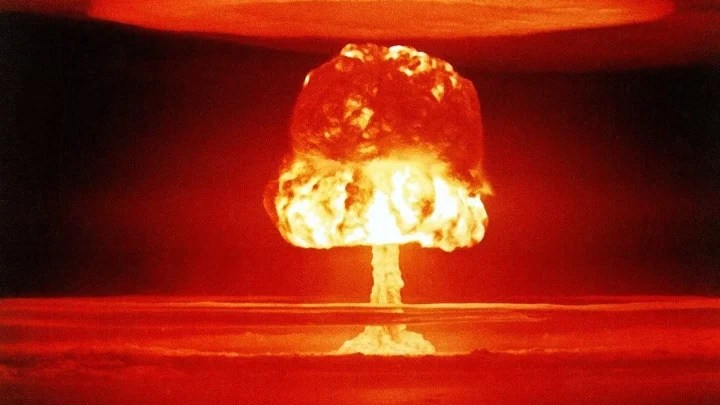
Biden & Nuland Are Leading US Into Nuclear Armageddon, Former FBI Agent Says
Sputnik – 22.02.2023
WASHINGTON – US President Joe Biden and senior White House and State Department officials are leading the United States and the world into nuclear annihilation, former FBI Special Agent Coleen Rowley told Sputnik.
Russian President Vladimir Putin officially announced Moscow was pulling out of its long-running talks with the United States for a new START treaty during his Tuesday address to the Federal Assembly. He also accused the United States of developing new types of nuclear weapons and considering new nuclear weapons tests.
“The neocons’ hell-bent plans for ‘full spectrum dominance’ have been a long time in the making, having even been publicly announced decades ago, but now… we’ve truly reached the eve of destruction,” Rowley, a Time magazine Whistleblower of the Year, said.
In addition to Biden, senior State Department official Victoria Nuland, Secretary of State Antony Blinken, and White House security aide Jake Sullivan, are leading oblivious Americans right into “nuclear Armageddon,” Rowley added.
The United States was far closer to catastrophic global war than the American people realized, Rowley said.
“The situation is just so 11th hour and 59 minutes’ bad,” she warned.
Earlier in the day, Biden described Russia’s decision as a “big mistake” as the presidents of Romania, Slovakia and Poland greeted him at the Bucharest Nine meeting. This came after Biden earlier in the week delivered a fiery speech in Poland intended to rally NATO to back Ukraine against Russia.
New START, in effect since February 5, 2011, is the last remaining legally binding arms agreement between the United States and Russia – the two countries with the largest nuclear capabilities.
Under the treaty, the United States and Russia have been required to reduce their nuclear arsenal to a total of 700 missiles, 800 launchers, and 1,550 deployed warheads.
Mass demo in Munich against war
Free West Media | February 21, 2023
While Annalena Baerbock and US VP Kamala Harris discussed the further escalation of the war in Ukraine at the Munich Security Conference convened in the Bayerischer Hof, thousands demonstrated peacefully against war on the Königsplatz.
Several demonstrations took place in Munich on Saturday on the fringes of the Security Conference directed against the meeting itself. The organizers of one group, Munich Stand Up! counted between 20,000 to 25,000 of their participants.
Protesters followed the call by the Munich AfD on Saturday morning to the Old Botanical Garden, where they could be seen with peace signs and Russian flags.
According to the police, there was a scuffle and verbal confrontations with a small group of left-wing counter-demonstrators. They shouted “Fascist pack” and “Nazi plague”. Around noon, many participants in the AfD demo joined the protest on the Königsplatz, the largest gathering.
Right and left come together
Regardless of whether they were right-wing or left-wing: in terms of symbolism, both groups held flags displaying peace signs and Russian colours.
Slogans criticized NATO and the press as “warmongers” or drew parallels with the Corona pandemic, which many believe had been staged for nefarious purposes. The speakers included the left-wing politician Dieter Dehm and the former CDU politician Jürgen Todenhöfer.
Dehm spoke of “Ukrainian killer gangs and Nazi fascists” while Todenhöfer said in his speech: “The West wanted this war.” He accused the federal government of “madness”.
The final rally of the big “Anti-SiKo-Demo” took place on Marienplatz. As every year, the Munich “Action Alliance against the NATO Security Conference” had called for the demonstration. The opponents, who came mainly from the left-wing spectrum, had gathered at the Stachus shortly after noon.
The demonstrators called to “Create peace without weapons” on posters. Rainbow flags with the words “Pace” (Italian for peace) were displayed next to the dove of peace.
Confronting Ukraine supporters
As in previous years, peace demonstrators walked through the city center, where they passed a gathering at Odeonsplatz – a small band of supporters of Ukraine.
On the stage in front of the Feldherrnhalle, the members of the Bundestag Anton Hofreiter (Greens) and Marie-Agnes Strack-Zimmermann (FDP) spoke, and again called for the escalation of the war in Ukraine. Jamila Schäfer (Greens) expressed her satisfaction that the government had now initiated the delivery of battle tanks.
When the two protest camps met, it remained peaceful. However, it got a bit loud because both sides started chanting their slogans.
Some Ukrainian supporters burst into tears when they saw the peace posters: “Negotiate instead of shooting” was written on them.
Nazis for Ukraine
At the Feldherrnhalle, the site of Hitler’s putsch in 1923, the war supporters demonstrated for the Zelensky regime.
President Zelensky has banned all opposition media and parties in Ukraine and is openly cooperating with neo-Nazi militias and, according to recent photographs taken by die Associated Press, also with ISIS commanders.
Before the conference, he had even demanded the delivery of banned cluster bombs.
Thousands of police officers
According to the police, around 4,500 officers from Bavaria and other federal states as well as 300 federal police officers were on duty around the conference. At the international meeting of experts from Friday to Sunday, the main focus was on arming Ukraine. In addition, there were also debates about other conflicts such as in the Middle East, Yemen or Iran.
In support of the conference therefore, a few people demonstrated loudly for regime change in Iran in the morning on Odeonsplatz. The country’s green, white and red flag flew over the heads of people who want a pro-US regime and called on the European Union to designate the Islamic Revolutionary Guards Corps as a terrorist organization. The “National Council of Resistance of Iran” had called for the protest.
Russia issues warning about future of Ukraine conflict
RT | February 21, 2023
Western elites “intend” to transform the conflict in Ukraine from a regional to a global one, Russian President Vladimir Putin has said. Moscow perceives this as an existential threat and will react accordingly, he said.
The goal of those in power in the US and other Western nations is to “end us once and for all,” the Russian leader stated during a keynote speech on Tuesday. They are using Ukraine as a “battering ram” against Russia and don’t care how many people will die as a result, he said.
“They intend to turn a local conflict into a phase of global confrontation. That is how we understand things and will react accordingly. Because the issue here is the existence of our state,” Putin said.
The Ukraine conflict was unleashed by the West when it supported an armed coup in Kiev in 2014, the Russian president noted. Western powers then poured resources into the new regime, even as it used the military against its own population and became increasingly nationalist and extreme.
Western elites “don’t care who they are betting on in their fight against us, their fight against Russia. They just want them to go to war,” Putin observed. The current Ukrainian government is “alien” to the people it governs and serves Western interests, he believes.
“Nobody among them counts the loss of human lives and tragedies, because trillions of dollars are at stake, an opportunity to keep robbing everyone under the cover of rhetoric of democracy and freedoms,” the Russian leader warned.
He said that ultimately Russia’s opponents must realize that the country cannot be defeated on the battlefield. That is why they target it in different ways, trying to undermine its unity via historical revisionism and attacks on Russian traditional values, Putin explained.
The remarks were part of the president’s address to the Federal Assembly, as both chambers of the Russian parliament are called, as well to as senior Russian officials and public figures.
America the Feckless
Lies and hypocrisy are at the heart of the Biden foreign policy
BY PHILIP GIRALDI • UNZ REVIEW • FEBRUARY 21, 2023
One would think that the United States military staging an unprovoked “plausibly deniable” covert attack on a nation with which it is not at war would be at least considered newsworthy. That the attack did grave damage to a country with which the US is closely allied would seem to make the aggression even more unthinkable. And, perhaps worst of all, that the attack was set up by the nation’s chief executive using a political bypass that avoided congressional oversight and adherence to the war powers act which might be most reprehensible of all as it cuts to the heart of the nation’s constitutional balance of powers. It is clearly an impeachable offense. And “Yes,” for those who are still wondering, Joe Biden and his team of terrorist emulators have done all that and more, and have capped their performance with a series of flat out lies and evasions to make it appear that they had done nothing wrong.
And the mainstream America media, in its worst performance since the invasion of Iraq, has served as an echo chamber for everything the White House chooses to leak to it. Given all of that, it was perhaps completely predictable that the government-subservient press and TV news would almost completely ignore the devastating report released by top investigative journalist Seymour Hersh on February 8th. Hersh’s article was entitled “How America Took Out the Nord Stream Pipeline” with a secondary headline reading “The New York Times called it a ‘mystery,’ but the United States executed a covert sea operation that was kept secret—until now.” The article, which Hersh self-published on the internet, describes in considerable detail the preparations and execution by the US Navy Diving and Salvage Center and Central Intelligence Agency’s (CIA) Maritime Branch, coordinated and directed by the White House, to sabotage and destroy Russia’s four Baltic Sea Nord Stream gas pipelines, a war crime and terroristic action that moves the United States much closer to direct armed conflict with Russia.
Given its potential political blowback, the Hersh story might very well be the most important expose to appear since fighting began in Ukraine over a year ago, but it is being ignored by the White House, which is denying the report, with a spokesman only commenting that “This is false and complete fiction.” The CIA’s spokesman Tammy Thorp likewise replied to Hersh that “This claim is completely and utterly false.” The US Navy was also asked for comments but did not respond. The media, clearly evident by its inaction, has religiously adhered to that government line, possibly due to some mistaken notion that our national security forces have to be supported when they are going “toe to toe with the Russkies” over Ukraine. On the contrary, it is precisely when the government is behaving recklessly not to mention criminally to bring about an unnecessary war that the press should be in hot pursuit of the story and what it means. That is particularly so as the Ukraine conflict is now escalating and threatening to go nuclear as both sides dig in to incompatible positions.
I have known Sy Hersh for a number of years and spent time together with him and other former CIA colleagues helping to confirm details of some of his earlier exposes on US government abuses and outright lies in its somewhat not completely credible role as “guardian” of national security. Hersh is a meticulous investigator who never, in my experience, accepted uncorroborated claims in support of his narratives. I have some understanding of who his sources in the intelligence agencies and Department of Defense might be in this case and it should be accepted that what he has written is completely verifiable and derived from individuals who were actual participants in the activities described. That is not to say that there will not be failures to recall accurately certainly details including aspects of the possible Norwegian involvement, something critics are already pointing to, but the main thrust of “whodunit” and “how” is pretty definitively demonstrated.
The report is long and includes a great deal of information on both the planning and the political decision-making that went into the willingness to destroy the pipeline, which I will briefly describe. Sy claims the following: It has not exactly been a secret that many in the United States government have long regarded the Nord Stream pipelines to be a security threat as the supply of relatively cheap natural gas to Germany as a gateway into Europe by Russia would enable Moscow to create a dependency on it for energy which could be manipulated to produce political and strategic advantage.
As the crisis over Ukraine deepened in 2021, the Biden White House set up a secret task force that worked on possible scenarios that focused on using military and intelligence resources to physically destroy the pipelines with some measure of plausible denial of the US hand in the process in order to avoid political blowback from America’s European allies or escalation of the conflict. The secrecy was needed to protect Biden from charges of hypocrisy since he had repeatedly pledged that the US would not be directly involved in any armed conflict with Russia over Ukraine.
National Security Adviser Jake Sullivan headed the interagency task force, which convened throughout late 2021 and included key players from the Agency’s Maritime Branch and the Navy’s Diving and Salvage Center, both located in Panama City Florida, as well as the State Department, Treasury and the Joint Chiefs of Staff. The operation was originally treated as a covert action that would have required congressional oversight, but that fig leaf was abandoned and it became a “highly classified intelligence operation” when Biden and others in the administration stated publicly and clearly their intentions to stop the pipeline, making what eventually took place an openly declared policy, perhaps intended to send a warning to the Russians. A number of options to destroy the pipelines were discussed. According to Hersh, the participants in the meeting, many of whom were hawks who had cut their teeth under the Obama Administration, clearly understood that they were proposing an “act of war” that was being considered in spite of potential blowback because the president had ordered it.
There was plenty of warning of what might be coming. In early February 2022, shortly before the Russian invasion of Ukraine, President Biden publicly pledged during a joint news conference accompanied by a silent and frowning German chancellor Olav Scholz that “If Russia invades … there will no longer be a Nord Stream 2” and, when pressed on how he would carry that out, he responded, “We will — I promise you — we will be able to do it.” Later, after the destruction of the pipeline, Secretary of State Blinken stated that) the sabotage offered a “tremendous opportunity to once and for all remove the dependence on Russian energy… That’s very significant and that offers tremendous strategic opportunity for the years to come.” Not that any more confirmation was needed, but on January 22nd 2023 Under Secretary of State Victoria Nuland gloated while testifying to a US Senate committee that “the administration is very gratified to know that Nord Stream 2 is now … a hunk of metal at the bottom of the sea.”
The Biden Administration, in its arrogance has more-or-less been admitting that it was behind the sabotage, which it certainly had the motive and means to carry out, though it was carefully avoiding leaving any actual evidence behind that it had carried out the destruction. As observed above, it has also been deliberately avoiding any congressional involvement, presumably to avoid any discussion of war powers or even due to concerns over possible media leaks.
The mechanics of the placing explosives followed by the actual destruction of the pipelines was reportedly as follows: Under cover of a NATO Baltic Sea exercise called BALTOPS-22 in June 2022 US Navy and possibly also CIA Special Activities and Norwegian deep sea divers descended 260 feet to a spot off the Danish Island of Bornholm, which was considered to be a location where the pipelines converged in relatively shallow tide-free water and were particularly vulnerable. They attached C-4 explosives both to Nord Stream 1, which was operational, and Nord Stream 2, which was completed but was waiting for German safety and security regulators’ approval to become active. The explosives were designed to be remotely detonatable.
The explosives were on a timer that created an escape window for those initiating the detonation and were reported to be activated by a secure signal sent by a sonar buoy that was dropped onto the prepared site by a Norwegian navy helicopter. The Norwegians were essential in that role due to their own military presence close to the targeted part of the Baltic as well as their considerable experience in deep-sea cold-water operations. A Norwegian Navy helicopter in the area would presumably arouse no particular concern, even from the ever-watchful Russians.
Under orders to “Go!” from Washington, on September 26, 2022 the Norwegians dropped the sonar buoy and a few hours later the C-4 explosives were detonated, immediately knocking out three of the four pipelines. In the immediate aftermath of the bombing, the US and its allies in the media made every effort to blame the Russians who were repeatedly cited as a likely culprit. Leaks from the White House and from the British government never established a clear explanation of why Moscow would be into self-sabotage of a lucrative business arrangement. A few months later, when it was revealed that Russian authorities had been quietly getting estimates for the cost to repair the Nord Streams, in the neighborhood of $10 billion, the New York Times seemingly cluelessly described the development as “complicating theories about who was behind” the sabotage.
Indeed, it was never clear why Russia would seek to destroy its own valuable pipeline which was intended to be a major income source for many years to come, a proposition that former British diplomat Craig Murray describes as “deranged.” But a more telling rationale for the President’s action came from Secretary of State Blinken. Asked at a press conference in September about the consequences of the worsening global energy crisis, most felt in Western Europe, a delusional Blinken described the development in positive terms, enthusing how the destruction would “take away from Vladimir Putin the weaponization of energy as a means of advancing his imperial designs.”
The tale told by Sy Hersh is yet another great betrayal by the country’s so-called leadership, an egregious example of the United States government aided by its lap-dog media again lying to its own citizens and the world to cover-up a criminal act that in no way made Americans safer or more prosperous. In the US, the gadfly Tucker Carlson, among prominent journalists, has up to this point dared to present the investigative account developed by Hersh in a five-minute segment of his program. Newsweek has also run a piece examining the issues raised featuring Constitutional lawyer John Yoo. More interesting perhaps, a half hour interview of Hersh by Amy Goodman on PBS television’s Democracy Now! aired last week but then was partially blocked because YouTube considered it to be “inappropriate or offensive.” The full availability of the Seymour Hersh interview video has since that time been restored with the Democracy Now! channel providing the following explanatory message: “UPDATE: We have blurred some imagery about 30 seconds into the video in response to a content warning from YouTube that severely limited the reach of this interview. What you see now is an edited version. For the uncensored version of this interview that aired on our show, visit democracynow.org.”
Beyond that exposure, there remain, nevertheless, a lot of questions about the destruction of Nord Stream, which was unambiguously an act of war or even terrorism, that continue to be unanswered. Consider, for example, how NATO countries, the US and Norway, de facto attacked fellow NATO country Germany, which was both the intended recipient and an economic partner in the pipelines. Though some British involvement in the operation, also detected by Russian intelligence, was quickly revealed publicly by then-British Prime Minister Elizabeth Truss’s “It’s done” text to Secretary of State Antony Blinken sixty seconds after the detonation. Berlin apparently was not trusted enough to have a voice in the planning and execution of the bombing even though it was gravely damaged by it. Also, Article 5 of the NATO charter says an attack on one nation requires all other alliance members to aid the country that was targeted and it is intriguing to consider whether the rest of NATO ought to go to war with the United States and Norway. Alternatively, can “friends” in the defensive alliance attack each other without consequences or ought the US and Norway now be considered rogue nations? Will the alliance itself be able to stay together if several member states take steps unilaterally that can severely damage the economy of another member? And how are the Germans actually responding to their sinking economy and standards of living, with closing factories and cold houses as a consequence of the US/Norwegian action?
Americans, for their part, should also be thinking deeply about the government we have and the lack of restraint with which it behaves. The framers of the Constitution gave only to Congress the power to declare war, perhaps imagining that at some future date the president might stoop to using the military and naval forces of the United States globally to punish and coerce other nations, seize their territory, and kill their people. And it is all justified by something called “exceptionalism” empowering a massive sustained deception that waging continuous war is actually keeping the peace in a “rules based international order.”
But the final, and biggest, question remains: How will Russia retaliate to Nord Stream? Will it be one step closer to possible nuclear war initiated by Joe Biden’s reckless move or will the Kremlin persist with its request to have the United Nations Security Council investigate the incident? Moscow will certainly be careful to pick the right time and place, but the last act in this play surely remains to be written.
Philip M. Giraldi, Ph.D., is Executive Director of the Council for the National Interest, a 501(c)3 tax deductible educational foundation (Federal ID Number #52-1739023) that seeks a more interests-based U.S. foreign policy in the Middle East. Website is councilforthenationalinterest.org, address is P.O. Box 2157, Purcellville VA 20134 and its email is inform@cnionline.org.
Featured Video
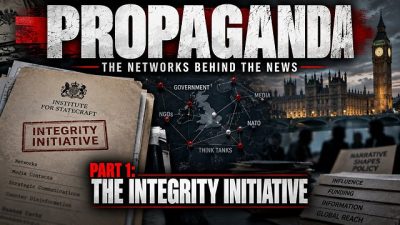
Integrity Initiative: UK-funded network framed dissent as Russian disinformation for years
or go to
Aletho News Archives – Video-Images
From the Archives
Why Saudi Ties to 9/11 Mean U.S. Ties to 9/11
By Kevin Ryan | Dig Within | September 27, 2015
Media interest in Saudi Arabian connections to the crimes of 9/11 has centered on calls for the release of the 28 missing pages from the Joint Congressional Inquiry’s report. However, those calls focus on the question of hijacker financing and omit the most interesting links between the 9/11 attacks and Saudi Arabia—links that implicate powerful people in the United States. Here are twenty examples. … continue
Blog Roll
 Aletho News
- Iraqi Resistance faction links arms to sovereignty, questions US exit
- Cannon fodder no more… South Korea rejects Trump’s pressure to join his criminal war on Iran
- Neria Leiter Was A Legitimate Military Target
- Integrity Initiative: UK-funded network framed dissent as Russian disinformation for years
- ‘We don’t seek permission to defend our country’: Snippets from President Pezeshkian’s UNGA address
- NATO chief wants Europeans to fight American wars [for Israel]
- German chemicals giant reveals details of downsizing
- Refaat Al-Areer Was The Canary In The Coal Mine In Israel’s War On The Truth
- Israeli election committee bars candidate from Knesset race over Gaza war opposition
- French-Lebanese man files war crimes complaint over Israeli attacks
- If Americans Knew
- Trump administration digs an ever-deeper hole of complicity in genocide – Daily Update
- US-Israel $2.8 Billion Arms Deal, 40,000-Bomb Supply Faces New Gaza Complicity Accusations
- Caught on Tape: AIPAC CEO Boasted of Controlling Trump’s National Security Officials
- Why Hamas Attacked Israel in October 2023 – Israeli professor Ilan Pappé
- They see them, then kill them: Israeli quadcopters track, deliberately target civilians in Gaza
- Winter could turn Gaza’s treacherous, war-damaged buildings into deathtraps
- Majority of Democratic Voters Want to Prosecute Both Biden and Trump Administration Officials Over Gaza
- As Gaza languishes, world leaders gather at the UN – Daily Update
- Sanctions are collective punishment: immoral and self-defeating
- Phosphorus Munitions Fired by Israel Burn Groves, Orchards in Southern Lebanon
- No Tricks Zone
- New Study: Earth And Venus Surface Warmth Largely Explained By Convection And Lapse Rate, Not CO2 Or Radiation
- 2025 Nature Paper Claiming Worsening Global Drought Gets RETRACTED …Heavily Flawed
- New Study: ‘Global Drought Shows No Detectable Recent Acceleration Under Climate Warming’
- Economic Masterminds: German Socialists Suggest Taxing Productivity Gains Stemming From Using AI
- The South China Sea Has Not Been Cooperating With The Climate Change Narrative
- Energy Crisis: Germany Enters Heating Season With Historically Low Gas Reserve Fill Levels
- New Study: The Antarctic Ice Sheet Gained Mass From 2020-2024 Due To Staggering Snow And Ice Accumulation
- Study: Ocean Heating Rates From Thousands Of Years Ago ‘Dwarf’ Modern Ocean Heating Rates
- Climate Extremists Target, Attack Large-Scale Power Grid Infrastructure In Germany!
- New Study: Antarctic Ice Melt Has Contributed Less Than 1 Centimeter To Sea Level Rise In The Last 30 Years

