UK testing drone swarms in Ukraine might lead to escalation
By Drago Bosnic | July 18, 2022
Air superiority is how the political West wages war. US and UK air power has been instrumental in all wars waged by the two leading Western imperialist thalassocracies since the Second World War to this day, although it existed doctrinally since at least the 1920s. This is so ingrained in their concept of warfare that it’s considered nearly impossible for them to lead a successful military campaign without it. This stands in stark contrast to most other comparable military doctrines, particularly the Russian one.
The Nazi onslaught destroying much of their air force before it got the chance to take off forever changed the way Russians see air power. Realizing (over)reliance on it can have a detrimental effect, coupled with the devastating consequences of American and British firebombing of German cities, which in some cases had an effect no less destructive than nuclear weapons (minus the radiation), Russia’s post-WWII military doctrine adopted a distinct and (up until recently) unique focus on advanced air defenses. Since then, Russia has been developing top-notch SAM (surface-to-air missile) systems, some of which are so advanced they effectively nullify the entire Western air dominance concept. And although Western state-run mass media love to downplay this, the very fact US legislation directly and very specifically targets these systems with sanctions speaks volumes.
The proliferation of these systems is a strategic nightmare for aggressive Western planners, who can’t simply bypass them without incurring “unacceptable losses”. In order to counter Russian SAMs, Western Military-Industrial Complexes have been working on a plethora of new systems. Some prominent examples include advanced drones, particularly miniature ones, which are also planned to operate in swarms, saturating hostile air defenses and paving the way for the more traditional aviation to bomb its way through enemy ground forces.
RAF (Royal Air Force) experiments with drone swarms show “they can overwhelm enemy defenses” and the concept would be ready for action in a war, according to the UK military service’s Chief of Staff. Air Chief Marshall Sir Mike Wigston told the Global Air and Space Chiefs’ Conference 2022 in London last week that the RAF’s 216 Test and Evaluation Squadron and the Rapid Capabilities Office trialed five drone types in 13 experiments with various payloads and equipment over three years. According to Wigston, this yielded enough insights for the service to declare an “operationally useful and relevant capability,” using its current fleet of drones.
“We are exploring new models of capability delivery and accelerated production ‘when we need them’ rather than ‘in case we need them,’ from the twin jet 3D-printed Pizookie, to commercially available large drones fitted with novel payloads, to large quadcopters,” Wigston stated.
“The problem of overcoming air defenses is a key obstacle to employing [air] power. Planning for air operations increasingly entails ensuring that planes can fly safely in the first place, putting at risk untold amounts of money that militaries have pumped into beefing up their fleets to fourth- and fifth-generation technology. That conundrum is on display in Ukraine, where Ukrainian and Russian air-defense capabilities are effectively canceling out the other side’s air power arsenal,” according to Justin Bronk, a defense analyst with the London-based Royal United Services Institute.
“The fact air power has been mutually denied, relatively speaking, in Ukraine by both sides has far more serious implications for us than for either [Russians or Ukrainians]. That’s because both militaries are ultimately dependent on massive land manpower and artillery, whereas joint forces of the UK and other Western powers are critically dependent on having air access and air superiority,” Bonk said at the London conference on July 13.
“Swarming, which means throwing enough expendable drones at a defensive radar and interceptor position so as to overwhelm them, can be effective, but only to a point. The idea of small and cheap drones attacking air defenses by way of swarming may not be feasible because those drones lack the requisite range and speed. If you want things to go fast and far, they’re going to be jet-propelled and they’re going to cost a fair bit. Getting drone swarms close enough to sophisticated air defenses with a range of hundreds of kilometers requires risky and potentially pricy insertion tactics that negate the widely cited cost benefit of cheap, small drones,” he added.
Western strategists are closely following their latest proxy war against Russia, trying to devise new strategies to fight the Eurasian giant. The deployment of never-before-seen ISR (intelligence, surveillance, reconnaissance) assets around Russia’s borders is a testament to that. In addition, increasing reliance on unmanned systems isn’t just the result of Western militaries trying to adopt new technologies. With NATO having severe manpower problems, drones might be the only way for members to have functional militaries in the near future. The UK itself is faced with this issue, having a very limited ground force with barely a few combat-ready brigades, to say nothing of other micro-satellites carved up after the dismantling of post-socialist federal states.
What’s truly dangerous at this point is the possible deployment of these systems to Ukraine. Most NATO weapons deliveries happened weeks or months before they were officially announced. Thus, it’s highly likely the same is true in this case. How Russia might react is up for debate, but it most certainly won’t take it kindly, which opens up new possibilities for escalation, particularly in the context of the latest controversial statements coming from the UK.
Drago Bosnic is an independent geopolitical and military analyst.
Russia-Iran relations take a quantum leap
BY M. K. BHADRAKUMAR | INDIAN PUNCHLINE | JULY 17, 2022
When US National Security Advisor Jack Sullivan first spoke about a potential Iran-Russian drone deal, Moscow kept quiet and Tehran issued a pro forma rebuttal, which suggested that it is still a work in progress. Sullivan’s disclosure appeared at the end of a White Course briefing for President Biden’s West Asia tour to Israel and Saudi Arabia, and seemed to have an element of grandstanding aimed at fuelling the latent anti-Iran sentiments in the Gulf region that could in turn impart momentum to POTUS’ project to put together an Israeli-Arab military front in the region.
In the event, the ploy didn’t work. After Biden’s visit ended, the Saudi Arabian foreign minister Prince Faisal bin Farhan told CNN, amongst other things, that talks are going on between Iran and the GCC states for improvement of relations and the focus should be on changing Iran’s behaviour.
But Sullivan has repeated his charge and has since added that an official Russian delegation “recently received a showcase of Iranian attack-capable UAVs,” the last time being as recently as on July 5. CNN has cited White House officials as saying that Iran is expected to supply Russia with hundreds of drones for use in the war in Ukraine, “with Iran preparing to begin training Russian forces on how to operate them as early as late July.”
Iran is known to have a varied drone ecosystem and is reportedly showcasing to Russia the Shahed-191 and Shahed-129 “killer” drones. According to published information, Shahed-129 has a wingspan of 50 feet with a cruising speed of about 160 km per hour, an endurance of 24 hours with a range of 1,700 km and a ceiling of 24,000 feet. The 129 can carry 8 Sadid-345 miniaturized precision-guided bombs capable of hitting moving targets. The bomb’s small size with a range of 6 km, reduces collateral damage and would allow the Shahed to achieve more kills or attack strikes per mission.
The Shahed 191 carries two Sadid-1 missiles internally, has a cruising speed of 300 km/h, an endurance of 4.5 hours, a range of 450 km, and a payload of 50kg. The ceiling is 25,000 ft. Iran’s Fars News Agency says the Shahed 191 has been used in combat in Syria.
Both are stealth drones, harder for air defences to detect. Russia is, reportedly, short of such armed drones, which have the capability to undertake long-range missions to find and destroy, for example, the US-supplied HIMARS mobile rocket launchers which are currently deployed in Ukraine as well as knocking out Ukrainian air defences. Besides, drones are relatively cheap and expendable, unlike crewed aircraft.
If the drone deal indeed goes through, as seems likely, it will mark a quantum leap in Russia-Iran relations. For, Iran will be doing something that only China is capable of doing but won’t out of fear of US reprisal. That makes Iran a very special partner country indeed. Ironically, Russia is yet to upgrade its relationship with Iran as “strategic.”
On its part, Iran is literally sticking out its neck in an act of defiance of the West’s “rules-based order”, as Russia will be deploying its weapon systems on a European battlefield against the air defence systems supplied to Ukraine by the US and NATO countries. There cannot be many parallels of an emerging middle power rendering such critical help to a superpower in high-tech warfare in real conditions on the frontline. Of course, it enhances Iran’s standing regionally and internationally.
In geopolitical terms, however, the most important salience lies in the certainty that the door is closing on the nuclear negotiations between Iran and the US via European mediators. Tehran would have drawn the conclusion already that President Joe Biden is virtually co-opting his predecessor’s [Israel Lobby dictated] Iran policy and the US has reverted to its decades-old strategy of promoting an Israeli-Arab front against Tehran. Put differently, Tehran is moving on to a trajectory that is predicated on unremitting American hostility.
This will mean that Tehran will double down on its efforts to improve relations with its Aran neighbours and explore all possible avenues in that direction, seizing the window of opportunity in the new Saudi thinking to reduce its dependence on the US and explore its strategic autonomy. It is possible to say that Tehran is a beneficiary if the Saudi-Russian and Saudi-Chinese relationships strengthen. Arguably, Saudi Arabia’s quest for BRICS membership brings the Kingdom tantalisingly close to Iran’s world view which places primacy on a democratised, multipolar world order where every country is free to choose its developmental path.
To be sure, against this backdrop, President Vladimir Putin’s visit to Tehran on Tuesday is invested with great importance. Iran is becoming one of the most consequential relationships for Russia. What began as a limited alliance in Syria is taking on a global character.
‘NATO Weapons Double Civilian Casualties in DPR’
Samizdat – 17.07.2022
DONETSK – The number of civilian casualties in the Donetsk People’s Republic (DPR) more than doubled after Ukraine was equipped with NATO’s long-range rocket systems and Tochka-U tactical missile systems, a military expert told Sputnik on Sunday.
“Since the start of the special operation, the DPR’s territory has been shelled over 30 times with Tochka-U missiles, there were more than 400 cases of shelling with 155mm NATO munitions, and the enemy used HIMARS MLRS more than five times. We should note that once the [Ukrainian forces] started using NATO weapons, there has been a 2.5-fold increase in civilian casualties and destruction of civilian infrastructure,” a military expert to the Joint Center on Control and Coordination of the ceasefire regime (JCCC) Sergey Pereverzev said.
On February 24, Russia launched a military operation in Ukraine after the breakaway republics of Donetsk and Lugansk appealed for help in defending themselves against Ukrainian forces. Moscow and Kiev have made several attempts to negotiate a ceasefire, with a couple of meetings taking place in Turkey, and both exchanged several dozens of war prisoners. However, no agreement has been reached so far and the talks have been paused on Kiev’s initiative.
Biden is Right… Inflation Crisis Is Not Inevitable, So End the Reckless U.S.-Led Warmongering
Strategic Culture Foundation | July 8, 2022
It’s rare for Strategic Culture Foundation to find itself in agreement with pronouncements made by American President Joe Biden. This week, Biden asserted once again that economic inflation and recession hitting the American economy are “not inevitable”. He is correct – at least in part. Although not for reasons that he would ever admit.
Of course, Biden is trying to obscure the grim reality of economic crisis that is afflicting not just the American economy but also the European Union. Inflation of living costs for ordinary citizens in the U.S. and EU are at record highs not seen in decades. There is a sense of calamity in social conditions from mass poverty amid grotesque super-rich inequality. A major input to the general inflation is the soaring price of energy.
The global impact is causing food prices to escalate putting millions of people at risk of hunger, especially in Africa and other low-income nations.
The impending crisis is on an unprecedented scale. Yet, it is not inevitable. But what is making it unavoidable is the warmongering policy of the U.S. and its European NATO allies towards Russia and China. This week saw outlandish American and British efforts to label China along with Russia as an existential threat to “global peace”. The bitter irony of these two rogue Western states casting aspersions on any other nation is too much for words.
The world is being thrown into chaos, insecurity and uncertainty by reckless stoking of war in Ukraine by the Western powers who are funneling tens of billions of dollars-worth of military weapons to that country. This week saw US-supplied HIMARS artillery hitting cities in the Donbass breakaway republics. Where are the Western efforts to mediate a diplomatic end to that war? There are none. Russian President Vladimir Putin reiterated this week that Moscow would like to find a long-term peaceful settlement. The harsh and despicable truth is that the U.S. and its Western allies are incapable of seeking a political solution. They are willing to fight to the last Ukrainian.
Blaming Russia for that conflict is a fallacy. The war has been deliberately stoked by the United States and its NATO accomplices as part of their geopolitical objective of subjugating Russia and China to their hegemonic agenda.
Western sanctions against Russia have created a global energy crisis that is boomeranging on the economies of the United States and Europe as well as the wider world. Biden is trying to scapegoat Moscow for imposing price hikes and taxes on his nation. The reality is it is his administration and its European lackeys who are imposing hardships on their own citizens from a madcap policy of warmongering.
There is a straightforward way out of the abysmal situation. The U.S. and its NATO allies should halt all weapons supplies to the Nazi regime in Kiev. They should also reverse the draconian economic sanctions on Russia. They should pursue diplomatic relations to end the conflict in Ukraine that they have instigated. They should normalize relations with Russia and China instead of relentlessly pushing Cold War-style confrontation.
But that is unlikely to happen under prevailing circumstances. Because the United States and its NATO minions have locked themselves into a deceptive paradigm of hostility. This, in turn, is because of futile ambitions for hegemonic dominance and intrinsic opposition to the emergence of a multipolar world.
Demonizing and antagonizing Russia and China is the real agenda for U.S.-led global imperialism. That criminal policy is covered up with cynical and absurd claims about defending “rules-based order” and democracy in Ukraine, Taiwan and elsewhere.
Nevertheless, the Empire of Lies is running out of credibility and false pretexts. What is becoming more and more evident is the awful reality. The U.S.-led collective West is one predicated on warmongering to preserve its waning global power and privileges.
Russia and China have repeatedly appealed for the existence of a multilateral global order that is consistent with the vision of the United Nations that was set up in the aftermath of World War Two. The United States and its imperial surrogates have continually attacked and undermined that vision with unilateral violations of international law and the sovereignty of countless nations. The U.S. avowed “rules-based order” is synonymous with war, war, war. Decades of relentless U.S.-driven wars – albeit under specious guises and pretenses – prove that.
Today we are witnessing the historic endgame playing out. The current war in Ukraine is but one malignant manifestation.
When asked how long Americans (and presumably Europeans) will have to endure economic pain, Biden retorted, “As long as it takes”. As long as it takes for what? To defeat Russia, China and whomever other nation the U.S.-led imperial axis deems necessary to be subjugated? That’s not going to happen. Those days are over.
Russia and China are too strong militarily and economically for the U.S.-led axis to vanquish. The world is being driven to war, potentially a catastrophic one, by American death throes in the face of reality. In the meantime, American, European and other peoples are being assailed with economic misery as a result of this criminal warmongering for the sake of empire. That is, the crumbling, bankrupt empire of U.S.-dominated Western capitalism and its imperial roguery.
The appalling state of world affairs is not inevitable. But due to the depraved and implacable pursuit of hostility towards Russia and China by the U.S. and its servile European elite, the world is – for now at least – held hostage by these psychopathic Western politicians and their corporate paymasters. That, however, is changing as people realize more and more the real nature and perpetrators of their captive condition.
The giant Western charade is no longer sustainable. From European colonialism to American imperialism, the charade has indeed had a long run. Now, though, it is in tatters from its own inherent corruption and lies. The ignominious downfall this week of Boris Johnson, Britain’s clown prime minister, is just a bit-part of the collapsing Western axis of evil. That collapse is inevitable.
EU economies are down on their knees

BY M. K. BHADRAKUMAR | INDIAN PUNCHLINE | JULY 5, 2022
On July 1 at the White House, US President Joe Biden made a startling disclosure that “the idea we’re going to be able to click a switch, bring down the cost of gasoline, is not likely in the near term.”
American gas exporters have positioned themselves accordingly to fill the gap as Europe turns away from Russian imports. FT reported recently that “US liquefied natural gas producers have announced a string of deals to boost exports as the industry capitalises on shortages that have left Europe with a mounting energy crisis.”
The deals are so lucrative that Cheniere, America’s leading gas exporter, has taken an investment decision to push ahead with a project that will boost its capacity more than 20 per cent by late 2025, anticipating long-term supply deals and locked in purchases of US gas over the coming decades. The US producers of gas are reportedly running plants flat-out to increase supplies to the EU.
The US has overtaken Russia for the first time as Europe’s top gas supplier. Although LNG from the US is sold to Europe at much higher costs than pipeline gas from Russia, EU countries have no choice.
With Russian supply via Nord Stream at just 40% of capacity, and deliveries to be halted completely for annual maintenance on July 11-21, the outlook for near-term Russian gas supply to Europe appears bleak.
Germany has warned of the risk that Nord Stream gas may not return at all following the maintenance. At any rate, Russian supply to Europe is at record lows and is “set to remain constrained through the third quarter,” per S&P Global.
Germany is heading for a major economic crisis. The head of the German Federation of Trade Unions has been quoted as saying in the weekend, “Entire industries are in danger of collapsing forever because of the gas bottlenecks — especially, chemicals, glass-making, and aluminium industries, which are major suppliers to key automotive sector.” Massive unemployment is likely. When Germany sneezes, of course, Europe catches cold — not only the Eurozone but even post-Brexit Britain.
Welcome to the European Union’s “sanctions from hell.” The US literally hustled the Europeans into the Ukraine crisis. How many times did Secretary of State Antony Blinken travel to Europe in those critical months in the run-up to the Russian invasion of Ukraine to ensure that the door to any meaningful talks with the Kremlin remained shut! And American energy companies are today making windfall profits selling gas to Europeans. Won’t Europeans have the common intelligence to realise they have been had?
Now, Biden has washed his hands of the gas crisis. He brusquely stated at a press conference in Madrid on June 30 that such premium on oil prices will continue “as long as it takes, so Russia cannot, in fact, defeat Ukraine and move beyond Ukraine. This is a critical, critical position for the world. Here we are. Why do we have NATO?”
Biden’s counterfactual narrative is that the sanctions against Russia are going to work eventually and a long war in Ukraine would be Russia’s undoing. The US narrative is that if you look under the hood of the Russian economy, it may not be flexible and resourceful enough to develop an entrepreneurial bunker spirit and adopt new business models to neutralise the sanctions. Biden is convinced that the Russian economy is in the grip of industrial mafias that are not very innovative and, therefore, there aren’t many options for Russia under the western sanctions.
Biden said in Madrid: “Look at the impact that the war on Ukraine has had on Russia… They’ve (Russians) lost 15 years of the gains they made in terms of their economy… They can’t even — you know, they’re having — they’re going to have trouble maintaining oil production because they don’t have the technology to do it. They need American technology. And they’re also in a simi- — similar situation in terms of their weapons systems and some of their military systems. So they’re paying a very, very heavy price for this.”
But even if that’s the case, how does all that help the Europeans? On the other hand, President Putin’s strategic calculations with respect to the war remain very much on track. Russian forces made indisputable progress in establishing full control over Luhansk. On Monday, Putin gave the green signal to a proposal from the army commanders to launch “offensive operations.” Five months into the war, Ukrainians are staring at defeat and Russian army generals know it.
Russia didn’t wander into Ukraine unprepared, either. Evidently, it took precautionary steps both before and since the war to shield its economy. And this enables the Russian economy to settle down to a “new normal”. Washington’s options are quite limited under the circumstances. Fundamentally, western sanctions do not address the causes of the Russian behaviour, and therefore, they are doomed to fail to solve the problem at hand.
To be sure, Putin has some nasty surprises in store for Biden closer to the November mid-term elections. Biden blithely assumes that he controls all the variables in the situation. Schadenfreude is never a rational basis for statecraft.
Yesterday, the strategically important Kherson region bordering Crimea formed a new government with the First Deputy Prime Minister of Russia’s Kaliningrad region heading the cabinet and Russian nationals among his deputies. Now that HIMARS multiple launch rocket system, contrary to Biden’s promise, is blasting Russian cities, expect some major Russian retaliation.
The pathway of Russia’s offensive operations is being relaid to include Kharkov and Odessa as well, apart from Donbass. The influential Kremlin politician and chairman of Duma Vyacheslav Volodin said on Tuesday.
“Some people are asking what our goal is and when all this will end. It will end when our peaceful cities and towns no longer come under shelling attacks. What they are doing is forcing our troops not to stop on the borders of the Lugansk and Donetsk republics (Donbass) because strikes (on Russian regions) are coming from the Kharkov regions and other regions of Ukraine.”
How long does Biden think the Europeans will want to be involved in a protracted proxy war with Russia? Bild reported on Sunday that 75% of German respondents see recent price hikes as a heavy burden, while 50% said they feel their economic conditions are worsening; every second German fears a lack of heating this coming winter due to reduced Russian gas supplies and rising inflation in the European Union.
Yet, Biden says war will go on “for as long as it takes” and fuel shortage will continue “for as long as it takes.” The European economy is expected to start contracting over the course of the second half of 2022 and the recession may continue until the summer of 2023 at least.
Analysts at JP Morgan Chase, the US investment bank, said last week that Russia could also cause “stratospheric” oil price increases if it used output cuts to retaliate. It said, “The tightness of the global oil market is on Russia’s side.” Analysts wrote that prices could more than triple to $380 a barrel if Russia cut production by 5m barrels a day.
Putin’s decree last week is ominous — the Kremlin taking full control of the Sakhalin-2 oil and gas project in Russia’s Far East. State-owned Gazprom held a 50% plus one share stake in the project and its foreign partners included Shell (27.5%), Mitsui (12.5%), and Mitsubishi (10%). The decree stipulates that Gazprom will keep its majority stake, but foreign investors must ask the Russian government for a stake in the newly created firm within one month or be dispossessed. The government will decide whether to approve any request.
This will unsettle energy markets further and put more strain on the LNG market, and can be seen as a move to put more pressure on the West by concurrently restricting gas supplies to Europe and creating more demand for LNG in Asia that will draw off supplies currently going to Europe. Sakhalin-2 supplies circa 4% of the global LNG market!
The only part of the US agenda that is going well seems to be the unspoken part of it: the very same Anglo-American objectives that Lord Ismay once predicted as the rationale behind the NATO’s existence —”to keep the Russians out, the Americans in, and the Germans down.”
NATO boss lets the cat out of the bag: US-led bloc has ‘been preparing since 2014’ for proxy conflict with Russia
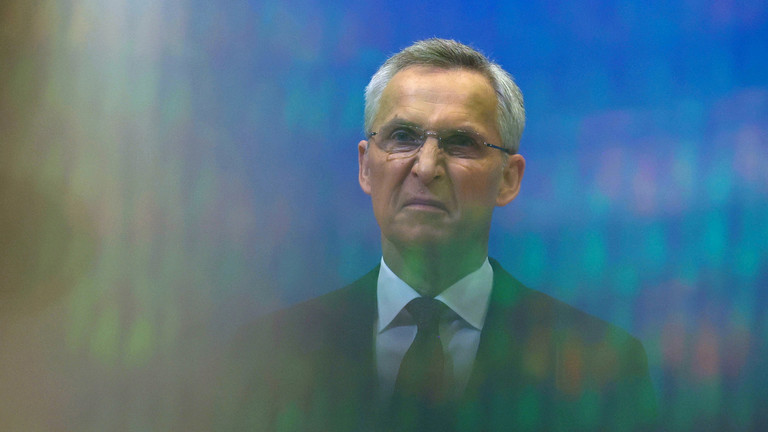
NATO Secretary General Jens Stoltenberg listens to questions during a media conference at NATO headquarters in Brussels on June 15, 2022. © AP Photo/Olivier Matthys
By Robert Bridge | Samizdat | July 3, 2022
NATO Secretary General Jens Stoltenberg may have said the quiet part out loud on Wednesday when he revealed to reporters that NATO’s push into Eastern Europe since 2014 was done specifically with Russia in mind.
“The reality is also that we have been preparing for this since 2014,” he said. “That is the reason that we have increased our presence in the eastern part of the alliance, why NATO allies have started to invest more in defense, and why we have increased [our] readiness.”
The NATO chief went on to insist that Russia has been “using force in the eastern Donbass since 2014.”
What he neglected to mention, though, was the role Western powers played in the outbreak of civil violence in Kiev on February 24, 2013 that led to the Maidan coup and, ultimately, to the current situation. The US and its influence on the ground in Ukraine, channelled through “civil society” groups it bankrolled, was largely responsibile for that mess.
Even Victoria ‘F**k the EU’ Nuland (then-US assistant secretary of state for European and Eurasian affairs) admitted as much in April 2014 when she said Washington had invested $5 billion dollars into “spreading democracy” in Ukraine – apparently because such efforts worked so well before.
Russia’s greatest ‘crime’ at the time was to provide an alternative route to national development for Kiev. The US Diplomatic Forces flew into swift action on November 21, 2013 when the government of then-Ukrainian president Viktor Yanukovych made the sudden decision not to sign the European Union-Ukraine Association Agreement (AA), which the West had been insisting upon, opting for closer ties to Russia and the Eurasian Economic Union. Here is where all the talk about “building democracy” was exposed as the lie it was.
“It would be a huge shame to see five years of work and preparation go to waste if the AA is not signed in the near future,” Nuland said at the December 13, 2013 US-Ukraine Foundation conference. “So it is time to finish the job.”
That sounds more like an implicit threat than any sort of call to democratic principles. As Ukraine would soon discover, Washington considers as ‘democratic’ only those countries that obey its will.
While Nuland was taking multiple trips to Kiev in the midst of the Maidan melee, passing out snacks alongside John McCain and the US Ambassador, very strange things were happening that have never been adequately explained.
To this day no definite result has come from investigations into the infamous ‘Maidan snipers’ that killed dozens of both protesters and police officers. Conflicting reports and claims by various sides name them as working for the embattled government, the protesters, Russia – all in the name of stoking tensions further. According to some of the snipers themselves, they received direct orders from a US officer. Would that be something that NATO (or someone linked to NATO) could have sanctioned? It’s impossible to say with any certainty, but the killings went far towards enraging the masses, which ultimately drove Yanukovych out of the country.
Meanwhile, Reuters, then not yet so sure of Kiev’s innocence, asked (back in 2014) why no one was charged with killing policemen, especially when it is considered that the prosecutors and the minister in charge of the investigation all played a part in fueling the uprising. By way of evidence, the General Prosecutor of Ukraine Vitaly Yarema was videotaped striking a traffic cop in the face during the protests. To what degree was Yarema and numerous other Kiev officials were corrupted and compromised by Western money will never be known, but it’s a question still worthy of asking.
Another thing to question is why the Western media barely reported Kiev’s shelling of the Donbass, home to millions of Russian speakers and passport holders, over the course of the last eight years? At the same time, numerous reports – many of them from Ukrainian citizens caught up in the fighting – describe atrocities and war crimes being committed by Ukrainian forces, many of them outright neo-Nazis, such the Azov Battalion. These forces have been indiscriminately bombing schools, hospitals and residential areas, and, to emphasize, these eyewitness accounts are coming from the Ukrainian people themselves.
Back to NATO and Ukraine. The brutal reality, as summed up by Jens Stoltenberg’s remark, is that Ukraine is already a de facto proxy member of NATO, and has been since at least 2014.
As the scholar John Mearsheimer explained, “The alliance began training the Ukrainian military in 2014, averaging 10,000 trained troops annually over the next eight years.”
The arming of Ukraine happened regardless of who was in the White House. In December 2017, the Trump administration, together with other NATO states, began sending ‘defensive’ weapons to Ukraine, while Kiev took a major role in military exercises held on the Russian border.
The US and Ukraine have been co-hosting Exercise Sea Breeze, yearly naval drills in the Black Sea. The July 2021 iteration was the largest to date, including navies from 32 countries. In September the same year, the Ukrainian army led ‘Rapid Trident 2021’, which the US Army describes as “A US Army Europe and Africa-assisted annual exercise designed to enhance the interoperability among allied and partner nations.”
The key word here is “interoperability,” which would give ‘non-NATO partner’ Ukraine much of what was already being given to regular paying client states. Yet Ukrainian President Volodymyr Zelensky just keeps asking for more, and NATO is happy to oblige.
Some may argue that Ukraine was absolutely right to join forces with NATO, considering that Russia had ‘annexed’ the Crimean Republic and absorbed it into its ‘empire’. That’s the view being sowed across NATO and its partner states. In reality, the Crimean population held a democratic referendum that asked whether they wanted to rejoin Russia as a federal subject, or if they wanted to restore the 1992 Crimean constitution and peninsula’s status as a part of Ukraine.
The result should have silenced the critics, but instead it just infuriated them more: a 97% vote for integration of the region into the Russian Federation with an 83% voter turnout. Consequently, President Putin signed a decree, after its formal ratification in the State Duma, recognizing Crimea as a sovereign state –without so much as a drop of blood being shed.
It would take a dyed-in-the-wool Russophobe to take in all of the above and not, at the very least, understand why Russia launched its special military operation in Ukraine.
Turkey, NATO joined at hips but think differently
BY M. K. BHADRAKUMAR | INDIAN PUNCHLINE | JULY 3, 2022
Turkey has had an uneasy history as a NATO member country. The push and pull of strategic autonomy constantly grated against a security guarantee the alliance offered and also a way of reinforcing its Western identity. The West wanted Turkey because of the Cold War.
The enigma still continues: Was Turkey’s shift from neutrality to alignment a real necessity in 1951? Did Stalin indeed cast an evil eye on Turkish lands? Would any other Kemalist leader than Ismet Inounu, an unvarnished Euro-Atlanticist whose conception of modernisation implied cooperation with the West, have succumbed to the Anglo-American entreaties?
The relations between Turkey and the Soviet Union remained relatively calm during the period of Turkey’s admission to NATO. In November 1951, Moscow actually directed a note to the Turkish Government protesting the latter’s decision to participate in NATO, which asserted that “it is quite obvious that the initiation to Turkey, a country which has no connections whatever with the Atlantic, to join the Atlantic Bloc, can signify nothing but an aspiration on the part of imperialist states to utilise Turkish territory for the establishment of military bases for aggressive purposes on the frontiers of the USSR.”
The ideological aspirations in becoming an integral part — at least within the framework of a military alliance — of the Western world played a decisive role in Turkey’s decision in 1951, whereas, in reality, there was no imminent or explicit Soviet threat to Turkey. On the other hand, Turkey’s geographical importance to both the West and to the Soviet Union gave her a particular value in an East-West context, which, to her credit, Ankara would successfully leverage to its advantage through subsequent decades.
Curiously, this complex inter-locking in some ways bears an uncanny resemblance to the current accession of Sweden and Finland to NATO. Russian President Vladimir Putin must have alluded to it obliquely when he told the media Thursday on the sidelines of the Caspian Summit in Ashgabat:
“NATO is a relic of the Cold War and is only being used as an instrument of US foreign policy designed to keep its client states in rein. This is its only mission. We have given them that opportunity, I understand that. They are using these arguments energetically and quite effectively to rally their so-called allies.
“On the other hand, regarding Sweden and Finland, we do not have such problems with Sweden and Finland as we have, regrettably, with Ukraine. We do not have territorial issues or disputes with them. There is nothing that could inspire our concern regarding Finland and Sweden’s accession to NATO. If they want it, they can do it,… let them do it. You know, there are rude jokes about stepping into unsavoury things. That is their business. Let them step into what they wish.”
While returning from NATO’s Madrid Summit, Turkish President Recep Erdogan underscored that by lifting Ankara’s reservations about Sweden’s and Finland’s membership, he advanced Turkish interests and he added the caveat that their accession is far from a done deal yet, and future developments would depend on their fulfilment of commitments under the memorandum of understanding they signed in Madrid with Turkey.
Indeed, both Sweden and Finland have bent over backward to give Turkey extensive anti-terrorism assurances that require changes in domestic legislation in return for Ankara withdrawing its veto against accession talks. Erdogan insists that what matters are not their pledges but the delivery of those pledges.
It is a tough sell domestically for both Sweden and Finland, since one of the pledges is the extradition of 76 Kurds, deemed as terrorists by Turkey. This is easier said than done, as the courts in Stockholm and Helsinki may have their own definition of a “terrorist”.
The Turkish National Assembly’s ratification is a must for the Nordic countries’ admission to be formalised at NATO level. There is some speculation that US President Joe Biden incentivised Erdogan to compromise, but, make no mistake, the latter’s warning about compliance by Sweden and Finland — as also the audible rumblings already on the left in Sweden — are reminders that the issue is still wide open.
After all, North Macedonia had been a NATO partner country since 1995 but could become a NATO member only in March 2020. And Greece’s reservation was that the newly independent former Yugoslav republic wanted to be known as Macedonia whereas Athens saw the name as a threat to its own region of Macedonia — and ultimately, Greece won. In comparison, Turkey’s concerns are tangible and directly impinge on its national security.
Turkey was never a “natural ally” of NATO. How far Turkey subscribes to NATO’s latest strategic concept of Russia being a “most significant and direct threat” is debatable. Arguably, Turkey would feel more at home with the alliance’s 2010 doctrine that called Russia a “strategic partner.” This would need some explanation.
Professor Tariq Oguzlu, a leading exponent of the changing dynamics of Turkish foreign policies in recent years from a structural realist point of view, wrote an analysis last week titled Madrid Agreement and the balance policy in Turkish foreign policy, which was interestingly featured by Anadolu, Turkey’s state news agency. Oguzlu explained the rationale behind Turkey’s decision not to veto the two Nordic countries’ accession:
“Turkiye began to change its perspective on NATO a long time ago due to its strategic autonomy and multilateral foreign policy understanding… Considering the realist turnaround in Turkish foreign policy in the last three years, it is quite meaningful that Türkiye did not veto NATO enlargement.
“On the one hand, the second Cold War between the West and Russia narrows the room for maneuver in Turkish foreign policy, while on the other hand, it increases Türkiye’s strategic importance. The most important challenge for Turkish foreign policy in the coming years will be the successful continuation of Türkiye’s strategic autonomy-oriented multi-faceted foreign policy practices in an environment of deepening international polarisation.
“The balance policy pursued between the West and Russia is one of the most important strategic legacies left to the Republic of Türkiye from the Ottoman Empire. It is a strategic necessity for Türkiye, which has a medium-sized power capacity, to follow a policy of balance in order to achieve national interests. The policies adopted by Türkiye since the start of Russia’s war on Ukraine until now and the stance displayed at the last NATO summit in Madrid show that this historical heritage is embraced and successfully executed.”
To put matters in historical context, in 1920, Mustafa Kemal formally approached Vladimir Lenin with a proposal for mutual recognition and a request for military assistance. The Bolsheviks not only responded positively but by throwing in their lot with the growing movement of Turkish nationalists, they helped shore up the new Turkish state’s southern borders. In the period from 1920 to 1922, Soviet Russia’s military help to Ataturk was almost 80 million lire — twice Turkey’s defence budget!
In 1921 in Moscow, the two sides concluded the “Treaty of Friendship and Brotherhood”, which resolved the territorial disputes between the Kemalists and the Bolsheviks. The north-eastern border of Turkey established then remains unchanged to this day.
However, both Moscow and Ankara understood that cooperation between Turkish nationalists and Russian communists would be short-lived. Soon afterward, Turkey deserted Moscow’s camp, banned the communist party, and, during the Nazi invasion, looked for an opportunity to invade the Soviet Caucasus if the Red Army collapsed. Nevertheless, Ataturk never forgot the help that Soviet Russia provided in his hour of need.
A historical perspective is needed to understand the US’ manipulation of Turkey — and of Sweden and Finland in the present-day context. Biden is following President Harry Truman’s footfalls. Washington has used the very same Cold-War tactic to draw Sweden and Finland into the NATO fold as it employed 70 years ago with regard to Turkey.
‘Ridiculous’: Russia dismisses claims of NATO being ‘defensive alliance’
Press TV – July 1, 2022
Russian Foreign Minister Sergei Lavrov says the claim of NATO being an exclusively defensive alliance is “ridiculous and disgraceful.”
He made the remarks on Friday while addressing students and teachers at the Belarusian State University, in response to recent statements by a number of NATO members’ officials.
“Recently, a representative of the White House once again reiterated that Russia should not be afraid of NATO and that no one should be afraid of it at all, because NATO is a defensive alliance. But it is already ridiculous to hear adults say such obvious nonsense. I would say, it is simply disgraceful,” Russia’s TASS quoted Lavrov as saying.
Pointing to the history of NATO’s establishment and its confrontation with the Warsaw Treaty Organization and the Soviet Union, he said both the Warsaw Treaty and the Soviet Union are gone but “NATO has moved eastward five times.”
“Who are they defending themselves from then?” he asked rhetorically, adding, “When someone pushes forward, establishes control of territories, and deploys armed forces and military infrastructure there, it is not exactly what is called defense. It’s just the opposite.”
The remarks come as the 2022 NATO Summit in Madrid wrapped up on Thursday with the bloc’s decision to strengthen its forces along the eastern flank while also officially inviting Sweden and Finland, which share borders with Russia, to join the alliance.
“NATO is a defensive alliance and poses no threat to any country,” reads part of the declaration of the Summit.
The declaration also named Russia as a “direct threat” to NATO members’ security, noting that the military alliance “does not seek confrontation and poses no threat” to Russia.
At the same time, it went on to threaten to respond in a “united and responsible way” to any threat from Moscow.
‘Joke of the century’
Chinese foreign ministry spokesperson Zhao Lijian also rejected the notion of NATO being only a defensive alliance.
“NATO is a ‘defensive’ alliance? Joke of the century,” he tweeted on Friday while also sharing a combination of images portraying NATO’s military intervention in several countries such as Afghanistan, Iraq, and Libya.
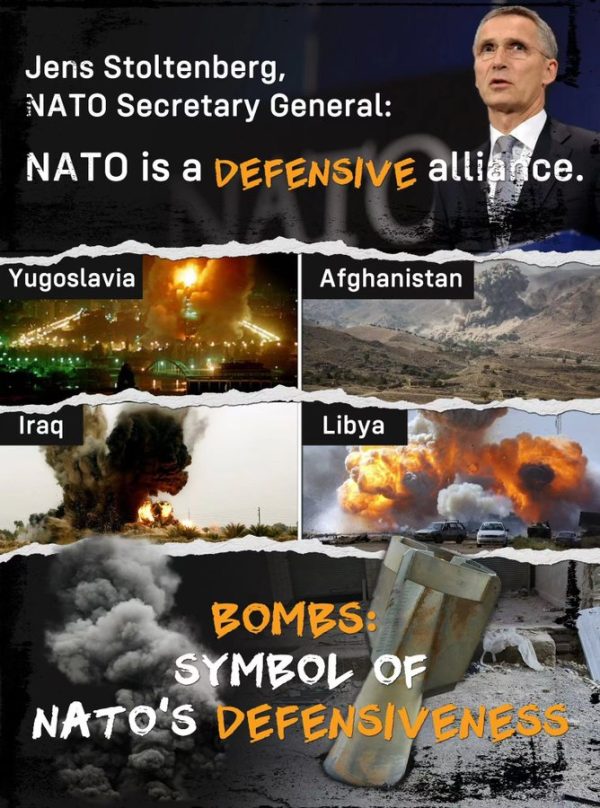
In a separate tweet, the Chinese official also pointed to the role of the US and its allies in the continuation of the war in Syria and its devastating effects on people’s lives.
“[The] US and its allies continue to fuel the war in Syria. More than 300,000 civilians have died in the conflicts according to UN statistics, 1.5% of Syria’s population,” he wrote on Friday, also sharing a photo of war damages in Syria with a note which read “who is the threat to peace?”
NATO members had also alleged that China poses a “challenge” to the bloc’s “interests, security, and values.”
Speaking in a daily briefing on Thursday, Zhao stressed the futileness of hyping up the so-called “China threat.”
“NATO has extended its reach to the Asia-Pacific region in an attempt to export the Cold War mentality,” he said, urging the bloc to stop making baseless accusations and provocation against China, abandon the outdated Cold War mentality, and stop dangerous acts that disrupt Europe and the Asia-Pacific.
US should pull out of NATO: Rep. Marjorie Taylor Greene
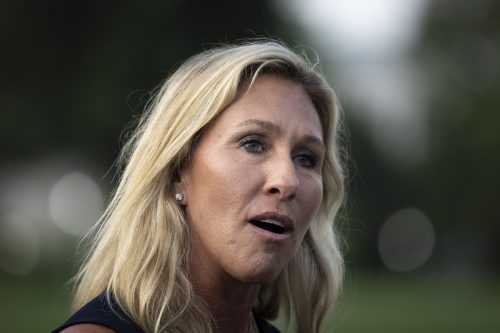
Samizdat | July 1, 2022
Washington should pull out of NATO instead of sending billions of taxpayer dollars to Ukraine and risking a nuclear war, according to a Republican congresswoman who has been highly critical of Washington’s response to the Ukraine crisis.
Georgia Representative Marjorie Taylor Greene, a strong supporter of former President Donald Trump, made the case in a series of tweets on Thursday.
Ukraine is the “new Iraq wrapped up with a pretty little NATO bow, with a nuclear present inside,” she wrote.
“The American people do not want war with Russia, but NATO & our own foolish leaders are dragging us into one. We should pull out of NATO.”
She described the provision of military aid to Ukraine, which she voted against in Congress, as a “proxy war” against Russia that Americans have no appetite for.
“Grinding up Ukraine to fight with Russia is disgusting, they could have been an ally,” she tweeted.
Marjorie Taylor Greene also listed a host of problems that she sees as more pressing for the American people, from soaring inflation to fentanyl overdoses and rampant crime. The only people vying for a conflict with Russia are “those who make money off of it,” she claimed.
“NGOs, defense contracts of all kinds, grants, business deals, even humanitarian aid, political consultants, & more,” she wrote. “War is an industry. A deadly profitable industry.”
Warmongers in Washington seeking war with Russia “should suit up and go fight it” themselves, she suggested. “Send your kids and leave ours alone. Pay for it yourself.”
Biden: Americans will endure higher fuel prices
Samizdat | June 30, 2022
The US will bear high gasoline prices for as long as needed, President Joe Biden said on Thursday during a news conference at the NATO summit in Madrid.
When asked how long American motorists should expect to deal with high fuel prices, Biden told reporters “As long as it takes, so Russia cannot in fact defeat Ukraine and move beyond Ukraine.” He stressed that “this is a critical, critical position for the world.”
US gasoline prices, a key driver of the highest inflation seen in the country in 40 years, hit a record $5-a-gallon this month. The prices have been on the rise since the start of the year, reflecting significant consumer demand outstripping the supply of oil, as well as the ongoing turmoil in energy markets. Biden had earlier reassured the public that the US government was doing everything it can “to reduce this pain at the pump.”
The White House has repeatedly blamed Russian President Vladimir Putin for causing inflation in the US, with Biden describing it as “Putin’s price hike.”
However, the US Federal Reserve has recently rejected the assertion that soaring inflation in the country was mostly being driven by the crisis in Ukraine, pointing out that prices had been rising well before that.
Ukraine War: 120 Days
A no-nonsense analysis of the ongoing Ukraine war and its global impact
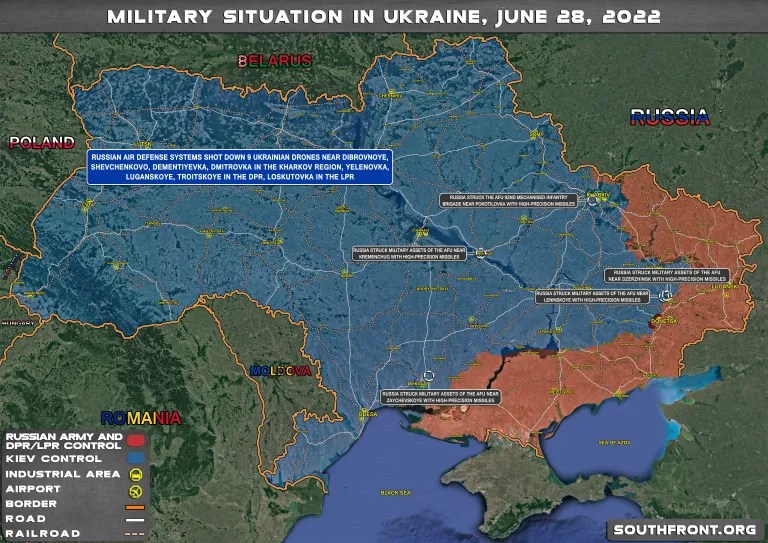
Military situation in Ukraine on June 28 (SouthFront)
Swiss Policy Research | July 2022
Military Situation
The initial Russian offensive (“phase 1”) consisted in a direct advance from Belarus to the northern gates of Kiev and the simultaneous opening of multiple fronts in the north-east, east, and south of Ukraine. There have been various theories as to what the initial Russian strategy was (e.g. conquering Kiev or ‘binding Ukrainian forces’), but most likely, Russia tried to force a collapse or capitulation of the Ukrainian government, in which case Russia would have won the war without really fighting it.
Indeed, just one day after the beginning of the invasion, Russian President Putin proposed a kind of “military coup” in Ukraine to make it easier to “reach an agreement”. There were also several rounds of negotiations between Moscow and Kiev in Belarus and Turkey.
Yet this initial, political-military plan failed and was halted in late March, about one month after the beginning of the invasion.
Nevertheless, already by early March Russia had conquered extensive territories in southern Ukraine connecting the Donbas and Crimea and had been able to restore water supply to the Crimean Peninsula (which had been cut off by Ukraine since 2014; see map above).
By late April, Russia had essentially conquered the important southern Ukrainian port city of Mariupol (500k pre-war inhabitants), and by late May, the remaining Ukrainian forces in the Azovstal steel plant of Mariupol had surrendered. In addition, Russia conquered the southern Ukrainian cities of Melitopol (150k inhabitants) and Kherson (300k) without meeting much resistance.
After the failure of the initial political-military strategy, Russia in early April withdrew all of its troops from the north of Kiev and redeployed them to the east in an attempt to encircle and defeat the main positions of the Ukrainian military and conquer the entire Donbas region.
However, the Russian advance in eastern Ukraine was much slower than expected by many observers, and Russian forces advanced only about 25 kilometers in about two months.
Many Western analysts got the impression that the Russian military was weaker than previously assumed, while many Russian and pro-Russian analysts have argued that the Russian military was advancing slow “on purpose”, allegedly to “minimize losses”.
Yet neither of these explanations were convincing. Instead, there are several substantial reasons that explain the steady, but rather slow advance of the Russian forces in eastern Ukraine.
First, in terms of the number of soldiers and tanks, the Ukrainian military is the largest military in Europe, second only to the Russian military (not counting the Turkish military).
Second, while Ukraine has already mobilized large parts of its men of fighting age, Russia has not yet mobilized at all, i.e. Russia is using only active soldiers, no reservists or conscripts. In fact, Russia has essentially deployed its peace-time army, which has resulted in a notable lack of manpower and infantry. A likely explanation for this decision is that the Russian government wants to keep up the impression, at least domestically, that it is just conducting a “special military operation”, not a full-scale war, and that it wants to avoid the political repercussions of having to conscript additional men (i.e. civilians). This is consistent with the fact that Russia has offered high-paid short-term military contracts to volunteers, again avoiding conscription.
Third, Eastern Ukraine is probably the most strongly fortified region in Europe today, having been prepared against a potential Russian invasion for several years. Although some Ukrainian units have surrendered due to a lack of supply or guidance, the overall Ukrainian resistance against Russian forces remains at a very high level.
Fourth, the Ukrainian military has received large amounts of weapons from the US and NATO countries, including powerful artillery and modern anti-tank weapons. Without these supplies, the Ukrainian front would likely have collapsed rather quickly.
Fifth, the Ukrainian military has greatly enhanced the effectiveness of its artillery by using reconnaissance data from its own drones as well as from US satellites. Indeed, the use of commercial and simple military drones appears to have fundamentally transformed modern warfare at the tactical level.
Sixth, and contrary to claims by Western media, the Russian military is still trying to minimize civilian casualties and damage to civilian infrastructure, likely because it views Eastern Ukraine as Russian territory anyway. For instance, it has been noted that the Russian military delivered fewer airstrikes and fewer missiles during the entire first month than the United States did during the Iraq war in just one day. However, as the Ukrainian military has been fiercely defending most cities and villages, the end result is still large-scale destruction of urban infrastructure.
Although Russia has had the upper hand in Eastern Ukraine, it remains uncertain if the current Russian military strategy will be viable in the longer run, especially if Russia intends to conquer some of the larger Ukrainian cities, such as Kharkiv, Odessa or Dnipro (1M-1.5M) or even Kiev (3M). If the Ukrainian government or military do not surrender or agree to a negotiated solution, the Russian military may have to call up reservists and conscripts and/or switch to an (even) more destructive mode of warfare against the cities it intends to “liberate”.
Currently, the main Russian military advantage consists in relative (but not absolute) air superiority, more powerful artillery, and cruise missiles that can destroy strategic targets anywhere in Ukraine. Nevertheless, the Ukraine war is currently not an “asymmetric war”.
In terms of military strength, it is estimated that Russia deployed about 160,000 soldiers, the pro-Russian Donbas republics about 40,000 soldiers, and Ukraine about 300,000 military and paramilitary forces, of which about 50,000 in Eastern Ukraine. In terms of military losses, it is estimated that by late June, Ukraine may have lost close to 20,000 soldiers, Russia close to 5,000 soldiers, and the Donbas republics about 10,000 soldiers.
Future Developments
Russia will certainly try to fully conquer (or liberate) the Donbas republics, including the cities of Sloviansk and Kramatorsk (100k-150k pre-war inhabitants). Russia may also try to conquer Mykolaiv (500k) and Odessa (1M) in the south of Ukraine in order to establish a corridor to Moldova/Transnistria, which would cut off Ukraine from the Black Sea and turn the country into a landlocked rump state. After conquering the Donbas republics, Russia may further try to conquer or encircle Kharkov (1.5M) and advance to the Dnipr river.
Cities or districts conquered by Russia will likely hold referendums on becoming part of Russia. These referendums will likely turn out in favor of Russia, as a majority of the people in the east and south-east of Ukraine do indeed identify as Russians (or are leaning towards Russia), and Russia may then annex or absorb these territories. However, such a strategy will not work in Kiev, nor in northern and western Ukraine (see map below).
In terms of potential escalations, a Russian advance towards Moldova may trigger a preemptive Romanian invasion (“by invitation”) of Moldova. A further destabilization of Ukraine may trigger a Polish invasion (“peace mission”) of western Ukraine, which in turn could trigger a war between Poland and Belarus in western Ukraine.
Moreover, NATO countries could decide to deliver more powerful weapons to Ukraine or to establish a “safe zone” in western Ukraine (similar to the situation in eastern Syria). In general, the US will likely try to prolong the Ukraine war as much as possible in order to weaken Russia financially and politically (similar to the Afghanistan war in the 1980s.)
Outside of Ukraine, the situation in the Baltics (Lithuania/Kaliningrad), the Balkans (Bosnia-Serbia-Kosovo) and in the Caucasus (Georgia, Armenia-Azerbaijan) could further deteriorate. The situation in Syria, where the US, Israel, Turkey, Iran and Russia are already involved, could also further escalate. In Asia, China could decide to invade and annex Taiwan.
The global economic situation will also likely continue to deteriorate, especially in the fields of energy and food supply, price inflation and financial market stability. This deterioration is driven not just by the war itself, but also by Western sanctions against Russia as well as by two years of misguided pandemic lockdown policies, which have caused serious global supply chain disruptions.
The possibility of a nuclear escalation will be discussed further below.
War Crimes
In terms of war crimes, the current situation is in stark contrast to claims by Western media and Western governments, as most war crimes have been committed not by the Russian side, but by the Ukrainian side. This includes many major war crimes blamed on the Russian side, such as the infamous Bucha massacre, the Mariupol theater bombing, or the Kramatorsk railway station bombing. Other supposed Russian war crimes were simply made up by Ukrainian officials, such as allegations of systematic rape and mass looting.
Yet other events were taken out of context, such as the alleged Russian bombing of Ukrainian schools and hospitals or shopping centers, which in almost all cases had been turned into Ukrainian military bases or ammunition depots. In other cases, civilian buildings supposedly destroyed by Russian missiles were in fact destroyed by Ukrainian air-defense missiles (e.g. in Kiev) or Ukrainian artillery missiles (e.g. in Borodyanka).
In yet other cases, Ukrainian forces, poorly disguised as Russian forces, executed Ukrainian civilians that welcomed the false “Russian liberators”; Western media then presented the execution as a Russian war crime. In even other cases, the Ukrainian bombing of Donbas cities was presented as the Russian bombing of Ukrainian cities.
In the case of Bucha, the bodies seen in the streets were victims of Ukrainian shelling of residential areas during the Russian occupation and retreat, and of subsequent Ukrainian executions of “collaborators” (hence the white armbands, a sign of friendly status during Russian occupation). The bodies were then presented as victims of a supposed “Russian massacre”.
Ironically, the Ukrainian commander who oversaw the Bucha massacre previously was a Russian intelligence asset who had built up “neonazi groups” in Russia and Belarus. The international “marketing” of the Bucha massacre as a supposed Russian war crime may have been coordinated by British intelligence, similar to numerous chemical false-flag attacks in Syria.
In the case of the Mariupol maternity clinic, Western media claimed it was a Russian airstrike, but they could not provide any evidence for this hypothesis, and witnesses at the clinic said there was no airstrike. Yet the incident remains unresolved, and both a Russian attack (possibly targeting a nearby Ukrainian base) or a Ukrainian operation remain possible.
In the case of the recent Kremenchuk shopping center incident, the Ukrainian government claimed a Russian missile hit the shopping center with 1,000 people inside; in reality, the Russian missiles hit an adjacent military plant and the shopping center was either closed (non-operational) or almost empty. However, one of the Russian missiles did hit very close to the shopping center, which then caught fire and burnt down.
Documented, confirmed or potential Russian war crimes currently consist mainly in the shooting and killing of civilians that approached Russian checkpoints or military columns, on foot or by car, although the context of these events is sometimes unclear (e.g. if there were any warning shots). There are also allegations of several other crimes against individual Russian soldiers that are currently difficult to verify independently.
On the Ukrainian side, documented war crimes encompass mass torture and mass executions, both against prisoners of war and their own people (if deemed pro-Russian collaborators or sympathizers), including several cases of decapitation; the military use of civilian infrastructure (including schools) and “human shields”; and large-scale shelling of residential areas behind front lines, especially against the city of Donetsk (in one case even hitting a maternity clinic).
Moreover, several Western journalists, whose death was blamed on the Russian side, were in fact killed by the Ukrainian side (in friendly fire incidents).
False claims of major Russian war crimes (i.e. atrocity propaganda) have been used by Western governments to justify weapons supplies to Ukraine and sanctions against Russia. The heavy use of such atrocity propaganda is not a new phenomenon, of course. Important recent examples include the US/NATO wars against Yugoslavia and against Syria.
The topic of war crimes will be covered in a separate, detailed event-by-event analysis.
Propaganda and Censorship
On the Russian side, propaganda efforts depict the Ukraine war as a kind of continuation of the Second World War or Great Patriotic War against National Socialist Germany, focusing on the supposed “denazification” of Ukraine. At the same time, Russian President Putin has criticized Soviet leaders for having made Ukraine a quasi-independent political entity in the first place. Thus, Russian propaganda combines elements of both the former Soviet Union and the earlier Russian Tsarist empire.
Overall, the “Nazi narrative” appears to be quite effective, both in Russia and in the West, in part because many key aspects of the Second World War and NS Germany still cannot be questioned, neither in Russia nor in the sphere of Anglo-American countries, which during the Second World War were allied with Stalin’s Soviet Union against Hitler’s Germany.
On the NATO side, propaganda efforts mainly focus on Russian aggression, supposed Russian war crimes and supposed Ukrainian successes. NATO propaganda is produced by multiple PR agencies, coordinated by intelligence services, and distributed to Western media outlets by the three global news agencies AP (American), AFP (French) and Reuters (British-Canadian). The total number of NATO propaganda messages in Western media is likely approaching about one thousand.
In addition, both sides have introduced significant media censorship. In NATO countries, this includes the removal of Russian and pro-Russian media outlets from major Internet search engines Google, Microsoft Bing and even DuckDuckGo. Furthermore, British security state operatives were caught trying to suppress independent media coverage of the Ukraine war.
Nevertheless, independent media outlets and uncensored Telegram channels have continued to provide important real-time footage and analysis of the situation in Ukraine.
NATO Expansion or Russian Expansion?
Is the Ukraine war about NATO expansion or rather about Russian expansion? In truth, it is likely about both NATO and Russian expansion, although one may argue that the Russian expansion is a response to NATO expansion. It is clear that the current Russian government sees large parts of Ukraine as “historically Russian territory”, or indeed Ukraine as part of Russia. Only by seeking a neutral status and by accepting the loss of Crimea and the autonomy of the Donbas republics might Ukraine have avoided a Russian invasion.
It has been argued that NATO expansion into Ukraine wouldn’t be a threat to nuclear Russia, but this is hardly true. NATO expansion into Ukraine would pose a geostrategic threat (control over pipelines, ports etc.), a direct military threat (planned recapture of Crimea and the Donbas republics), and a strategic military threat (NATO military infrastructure and missile bases). For similar reasons, the US did not and would not accept Russian bases in Cuba, Mexico or Venezuela.
It has been noted that Russia is unlikely to invade Finland or Sweden, despite their intention to join NATO (in response to the Russian invasion of Ukraine). In fact, Russia already has a (small) land border with NATO founding member Norway and with Baltic states. Yet Finland and Sweden do not currently threaten Russian territory or Russian interests. Otherwise, a Russian military response may in fact be conceivable (see below).
Is the Russian military operation in Ukraine legal or illegal? From a Western perspective, the Russian operation is clearly illegal, not unlike previous US invasions (e.g. of Grenada, Panama and Iraq) and most US/NATO wars (e.g. against Serbia, Afghanistan, Libya and Syria). From a Russian perspective, the military operation is a legitimate intervention into an ongoing, illegal eight-year war against the Donbas republics. Russia will likely annex large parts of Ukraine, but it will try to “legitimize” these annexations by prior referendums.
Energy War: By Whom?
It has also been argued that Russia is waging an energy war by restricting oil and gas exports in order to destabilize NATO countries and especially Europe. Yet upon closer inspection, it is clear that the energy war is in fact waged via sanctions by NATO countries in order to financially destabilize Russia, although so far this seems to have failed and indeed backfired, with energy security in Europe becoming rather uncertain.
For instance, a reduction in gas flow through the Nord Stream pipeline from Russia to Germany was (and is) due to a broken turbine sent by Germany to Canada for repair, but then retained by Canada due to sanctions against Russia. Similarly, the Russian decision to accept energy payments only after conversion into rubles was simply in response to the prior freezing of billions of Russian Euro and dollar reserves by Western countries.
Indeed, neither during nor after the Cold War has Russia (or the USSR) ever used the “energy weapon” against (Western) Europe, as Russia is very much interested in both being seen as a reliable supplier and in foreign currency export revenue.
However, one can argue that Russia is relying on a kind of “indirect energy weapon”: by being a reliable energy supplier, Russia may hope that Europe and NATO will not turn hostile, regardless of Russian military actions. Moreover, if relations should further deteriorate, Russia could of course use the “energy weapon” and stop energy exports to Europe altogether.
The Russian government likes to emphasize that the impact of Western sanctions is rather minor and that the Russian ruble has remained strong. But Russia had to impose capital controls (i.e. the ruble is no longer free floating), and the economic impact is substantial, with tens of thousands of IT specialists having already left the country, for instance.
Nuclear War?
How likely is a nuclear war as a potential escalation of the Ukraine war?
A direct nuclear war targeting the mainland of nuclear states remains very unlikely, as this would lead to the destruction of all states involved. However, from a purely military and geostrategic perspective, there are two rational offensive uses of nuclear weapons, in addition to their defensive use as a deterrent: against hostile non-nuclear states and against overseas military infrastructure of nuclear states.
In this regard, there is a major geostrategic asymmetry between Russia and China on the one hand and the US on the other hand: whereas the US has several hundred overseas military bases and several dozen non-nuclear allies or client states (both in Europe and in Asia), Russia and China have almost no overseas military bases and very few non-nuclear allies.
Thus, Russia and China could consider coordinated nuclear strikes against all US overseas military bases in Eurasia (i.e. in Europe, the Middle East, Central Asia and East Asia). In addition, Russia and China could consider nuclear strikes against hostile non-nuclear countries, both in Europe and in Asia, targeting military/industrial centers or even population centers.
Theoretically, such a coordinated nuclear operation might remove the US military from the Eurasian continent (and by extension from Africa), limiting US military influence to North and South America. Thereafter, a new geo-economic Cold War between Eurasia/Africa, led by China and Russia, and the Americas would likely ensue.
Nuclear allies of the US in Eurasia, most notably Britain, France and Israel, would have to ensure robust sea- and air-based second strike capability even against modern hypersonic missiles with multiple nuclear warheads, in order to avoid being targeted themselves.
A nuclear attack against non-nuclear NATO states would be seen as an attack against NATO, and a nuclear attack against US overseas military bases would be seen as an attack against the United States, but because of the above-mentioned asymmetry, the US could not respond in a meaningful way without forcing its own destruction.
While such a scenario seems militarily conceivable and even rational (given the breakdown of the post-WWII security architecture), both China and Russia currently seem to follow a different economic, diplomatic and military strategy, using novel alliances such as BRICS, RCEP, the Eurasian Economic Union, and the Shanghai Cooperation Organization (SCO).
In contrast, the US may attempt to contain Russia and China via economic and political sanctions and to ultimately overturn regimes in both countries, thus paving the way for global US predominance, which was almost achieved after the end of the Cold War.
Figures
1) Results of 2010 Ukrainian presidential election.
Janukovych was the pro-Russian candidate, Tymoshenko was the pro-Western candidate.
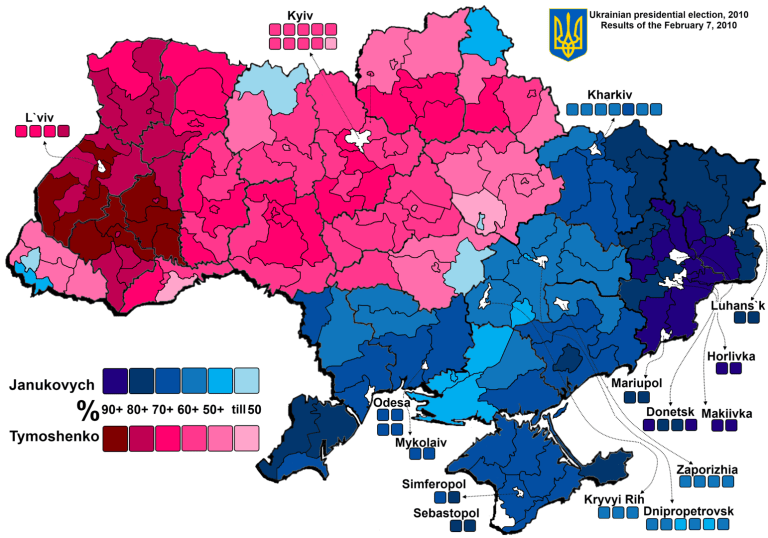
Results of 2010 Ukrainian presidential election (Wikimedia)
2) Mariupol: Before and after Russian conquest
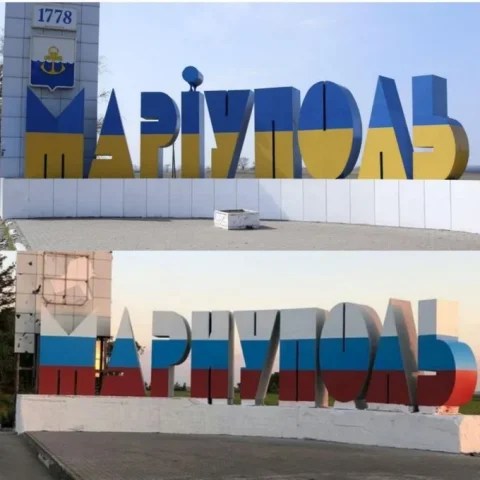
Mariupol: Before and after Russian conquest (Telegram)
3) Western propaganda vs. Russian propaganda
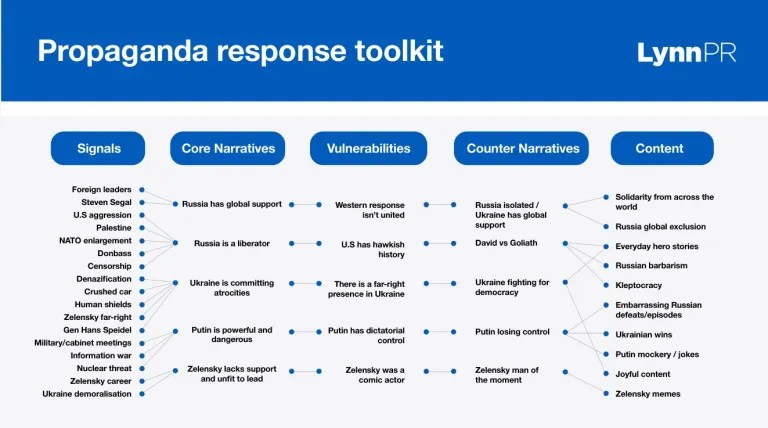
Western propaganda vs. Russian propaganda (Lynn PR)
Featured Video

EUROPE FEARS RUSSIA’S NEXT MOVE / Ian Proud
or go to
Aletho News Archives – Video-Images
New Book
New Book: No Autoimmunity The Body Doesn’t Attack Itself
Lies are Unbekoming | September 24, 2026
 The label for Humira, once the best-selling drug in the world, lists its risks in plain print. One of them, in the label’s own words, is new “autoimmune” disease.
A drug prescribed for a condition labelled autoimmune carries a warning that it can cause a condition labelled autoimmune. That contradiction sits in every box, on a folded paper almost nobody reads.
My new book starts there.
No Autoimmunity: The Body Doesn’t Attack Itself
For seventy years, “your body is attacking itself, and we don’t know why” has ended the conversation for people diagnosed with multiple sclerosis, lupus, rheumatoid arthritis, Hashimoto’s, Type 1 diabetes, Crohn’s and psoriasis. More than eighty conditions now carry the autoimmune label. The diagnosis comes with a prescription for life. It almost never comes with a question about cause.
This book asks the question and answers it from the framework’s own records: its drug labels, its journals, its regulatory filings, and its own experiments. … continue
Blog Roll
 Aletho News
- Iran offers Trump deal before US election
- Merz regime wants ‘secret police’ – opposition
- Israeli settlers terrorize West Bank Palestinians with state-provided drones: Report
- They see them, then kill them: Israeli quadcopters track, deliberately target civilians in Gaza
- Debunked: Trump’s egregious UNGA claims on war against Iran crumble under scrutiny
- Europe was part of the infrastructure of US aggression against Iran: Deputy FM
- New evidence on the Bucha Massacre
- Italy and France debunk reports CIA issued ‘Russian drone threat’ warning
- How Russia is Rewiring the Global South
- Britain’s elites want you ready to die for a war they keep imagining
- If Americans Knew
- Trump betrayed voters with his campaign lies and prioritized a foreign country once he took office
- Netanyahu calls Israel’s war in Gaza ‘opposite of genocide’ in UN speech to near-empty hall
- Settler Kidnappings: Torture, Sexual Abuse and Terrorisation of Palestinian Abductees as Israel Deepens Annexation of West Bank
- Gaza winter nears as 162,000 tents become unusable, raising fears of humanitarian crisis
- Netanyahu says, “It’s the opposite of genocide”; UN says Gaza economy is world’s ‘most severe crisis on record’ – Daily Update
- Israel’s US-Backed Assault on Gaza Has Created the ‘World’s Most Severe Economic Crisis on Record’: UN
- ‘Protecting U.S. Citizens’… From Israel
- ‘This is where I live now, the back of a truck’: a day in the life of a grandmother in Gaza
- In UN Speech, Iran’s President Displays Pictures of Children Killed by US, Brings Attention to Israel’s Nuclear Arsenal
- Israel displaces hundreds of Palestinians amid wave of demolitions in West Bank
- No Tricks Zone
- New Study: Earth And Venus Surface Warmth Largely Explained By Convection And Lapse Rate, Not CO2 Or Radiation
- 2025 Nature Paper Claiming Worsening Global Drought Gets RETRACTED …Heavily Flawed
- New Study: ‘Global Drought Shows No Detectable Recent Acceleration Under Climate Warming’
- Economic Masterminds: German Socialists Suggest Taxing Productivity Gains Stemming From Using AI
- The South China Sea Has Not Been Cooperating With The Climate Change Narrative
- Energy Crisis: Germany Enters Heating Season With Historically Low Gas Reserve Fill Levels
- New Study: The Antarctic Ice Sheet Gained Mass From 2020-2024 Due To Staggering Snow And Ice Accumulation
- Study: Ocean Heating Rates From Thousands Of Years Ago ‘Dwarf’ Modern Ocean Heating Rates
- Climate Extremists Target, Attack Large-Scale Power Grid Infrastructure In Germany!
- New Study: Antarctic Ice Melt Has Contributed Less Than 1 Centimeter To Sea Level Rise In The Last 30 Years

