‘Finns & Swedes won’t benefit from NATO’
Samizdat | May 16, 2022
NATO membership won’t make Finland and Sweden more secure, but would likely see them fighting somebody else’s wars and hosting American bases, Dr. Jan Oberg, director of the Transnational Foundation for Peace and Future Research, has told RT.
“It’s a disastrous decision,” Oberg said on Sunday, following an official declaration by the Finnish government that it is planning to join the US-led military bloc. Hours later, a similar announcement was made by the ruling party in Sweden. The two Nordic nations stayed out of NATO during the Cold War, but their governments said Russia’s military operation in Ukraine has become a game-changer.
Finland and Sweden have failed to carry out “long-term consequence analysis,” he added. “Nobody seems to ask whether NATO is the right thing to join. After all these years since 1945, NATO has proven that it’s not able to deliver what taxpayers are paying for, namely stability, peace and security… and then Finland and Sweden say: ‘We’ll join this failed organization,’” he remarked.
“We have to ask ourselves: ‘Who caused the conflict [between Moscow and Kiev]?’ Everybody talks about the Russian invasion, which I deplore too, but underlying that is the conflict, which has to do with the NATO expansion,” the peace researcher said.
Making sure Ukraine becomes a neutral country that will never join NATO has been cited by Moscow as one of the main reasons for its ongoing military operation.
Oberg said he understood Russia’s concerns about the expansion of the bloc towards its borders. “If I was sitting in Moscow, I would feel that this was threatening,” he observed, referring to Finland and Sweden’s possible membership. “When you move troops up to the very border on both sides you increase tension; you decrease reaction time; you do all the things you shouldn’t do strategically if peace was your goal. Peace is not the goal of these people.”
The military-industrial complex – “those who sell weapons and profit from wars” – will gain from NATO adding two new members, he said. “The Swedish people and the Finnish people will not benefit from this. It’ll be completely new for them that they are now supposed to participate… in somebody else’s wars.”
With the US pushing for bases in Denmark and Norway, “are we to believe that there will not be American bases or American troops or something, you know, more permanent in Sweden and Finland?” he wondered.
NATO membership would also be “opening these countries for potential nuclearism that should never have been done in this particular area,” the peace researcher added.
Oberg said it was “appalling” that the governments in Helsinki and Stockholm didn’t put the issue to a referendum. “This is unheard of with such an important decision as joining NATO.”
While opinion polls have shown an overwhelming support for NATO membership in Finland, in Sweden the idea was backed by less than 50% of the public, he noted. “I’m amazed that there’s so little public discussion, so little uproar in terms of huge demonstrations in large cities in Sweden,” the scholar said.
He blamed the media, of which “80% to 90% is pro-NATO,” for this situation. “It’s very difficult to get into the media today with an alternative view… There’s no democracy and free media practice in this,” Oberg insisted.
Jan Oberg is a Danish-Swedish peace researcher, who received his doctorate from Lund University in Sweden. He taught courses in several countries, including Japan, Austria and Switzerland.
In 1986, the scholar co-founded the Transnational Foundation for Peace and Futures Research (TFF), an independent think tank aimed at promoting conflict-mitigation and achieving peace through peaceful means around the globe. He assisted on-the-ground work in ex-Yugoslavia, Georgia, Burundi, Iraq, Iran and Syria. In 2013, Oberg and TTF were nominated for the Nobel Peace Prize for their activities.
Ukraine War
BY ISRAEL SHAMIR • UNZ REVIEW • MAY 14, 2022
The immediate beginning of the trouble was a Geneva summit between two presidents that apparently went wrong. We don’t know what went wrong. The pro-Western Russian officials ran away to Georgia and Israel; they are being replaced by anti-Western officials. This East-West break will not be reversed with ease.
Russians are very similar to Ukrainians. Both are stubborn fighters. Throughout the 20th century they chose different strategies: Russians became internationalists, Ukrainians preferred nationalism. The Ukrainian nationalism was anti-Russian, while Russians harbored no negative feeling towards Ukrainians. It was natural for Ukrainians to flirt with anti-Russian powers. Yet when Ukrainian officials began to declare themselves NATO allies, even the most international Russians became alarmed.
Both Rome’s Pope and Noam Chomsky were capable of understanding the immediate casus belli behind Ukraine: NATO had barked at Putin’s door, and he reacted. In December 2021 Putin diplomatically proposed that NATO withdraw to its mid-1990’s line, and moreover he suggested that peaceful discussion about NATO’s borders might prevent future conflict. Putin proposed an international agreement on NATO’s borders, a political solution that everyone could agree on. This proposal was disregarded with nonchalance; NATO refused to discuss the idea. Putin was rightfully irritated. Further attempts to argue across the West/East divide weren’t successful. The West declined Putin’s politics. And the war began.
NATO began shipping in armaments and ammunition, and deployed their spies. Their intelligence gathering allowed them to sink a big Russian ship named Moscow. They provided the coordinates in real-time for Russian ships and planes. From the very beginning it was clear that Russia fights NATO more than Ukrainians, who they consider to be brothers. This wartime pathos was quite an unexpected development. Putin had always been known as a soft leader; he refused to be drawn into wars. Russia has avoided war for many years under Putin’s rule; and generations of Russians have become used to a peaceful and prosperous life. Suddenly, by circumstances beyond their control, they have been switched to life under war and sanctions.
Fortunately for everyone, the war in Ukraine has practically dried up. The Ukrainian leadership desperately begs for UN help to keep the war going, as if the Azov Battalion and the rest of the violent, cruel, thuggish militants need to be paid to shoot people. US Democrats have drafted a nearly $40 billion Ukraine War aid package, which was recently single-handedly blocked by Senator Rand Paul of Kentucky. The Ukraine War has become a political football in the USA. Both the Neocons on the right and the Neoliberals on the left hope to ride this war into Congress.In hindsight there were plenty of warnings. Russians were blocked from the Olympic games by an international conspiracy of blatant hypocrisy. Russian athletes were accused of doping. Now, Western athletes also use doping, but they know how to get around the rules. The Norwegians claimed they have asthma, and they need special performance-enhancing drugs to heal it. The Americans had excuses of their own, and so did the athletes of many other nations. Russian RUSADA man Mr. Grigori Rodchenkov was bribed by the US to deliver proof of Russian doping. The Russians claim the evidence was falsified. In any case the Russian official defected westward, in a step unseen since the Cold War. Russia was tagged as a pariah throughout the games; she was not allowed to play her national anthem nor display her flag. Russians have been persecuted by the Olympic establishment for generations. There is an undeclared war against Russian athletes; here is the full story. The pattern is undeniable. Russian athletes are routinely penalized for activities that other nations practice with impunity. This has to stop.
Russians are unhappy with war as a solution for the Ukraine crisis. They speak of “betrayal”, and that means the political steam behind the offensive is getting thin. Instead, Russians think they can derail the NATO war and the international sanctions by judiciously withholding Europe’s gas and oil. The Arab Oil Embargo brought the US to its knees in the 1970’s using just that strategy. NATO exists to fight wars; bringing war to NATO simply feeds it. The only way to defeat NATO is to starve it. Russia has great quantities of oil, gas and wheat. She produces aluminum, iron, coal, steel, titanium and cheap electricity. The Russian economy has been called “bulletproof” because of its ability to withstand geopolitical shocks.
How exactly are sanctions hurting Russia? Banking freezes are simply pushing Russia into the waiting arms of China, which literally has an unlimited need for Russian energy and commodities. The US Petrodollar is on the cusp of being denominated in Roubles. Stories of boycotts by Twitter, Facebook and Pornhub underscore the ludicrous nature of Western sanctions. “EU blacklists Abramovich, targets energy, luxury sectors…” It seems that only Russia’s Jewish Mafia will be hurt by the international sanctions. The efficacy of Western sanctions is being wildly exaggerated by the Western media and the implacable coming of winter has always been a harbinger of Russian victory. As Biden says, “It will be a very Dark Winter.”
Germany needs Russian energy. It always has. It always will. There is simply no other option for Germany. As the home base of NATO, Germany is in a unique position to forge a lasting peace with Russia. Germans might benefit greatly from increased trade to the East along such routes as the China-Europe Railway Express, but they remain choked by their old millstones. The business of war is no longer profitable. The big players are now supplying China with everything it needs to manufacture the world’s wealth, and Russia is in a unique position to be a major producer. The rest of Europe is also conveniently located to benefit from the new Chinese empire, if they could only cease squabbling long enough to draw a profit. The dying Anglo-American empire is the only entity that profits from division along the Eurasian continent.
Italy’s Matteo Salvini Speaks Out Against Finland, Sweden Joining NATO, Arms Deliveries to Ukraine
By Tim Corso | Samizdat | May 15, 2022
The leader of Lega, Italian ruling coalition’s party, Matteo Salvini has stood up against the idea of accepting Sweden and Finland in NATO as the former is considering to make this step in the nearest future and the latter have already decided to file a bid to join.
“Not now. Everything that delays the process of achieving peace should be put on a waiting list,” he argued.
His position was backed by a fellow party member, Economic Development Minister Giancarlo Giorgetti, who argued that the accession to NATO of the two new countries located near Russia’s borders, “will definitely not help to reduce the [duration of the Ukrainian] conflict”.
This stance contradicts the official policy declared by Foreign Minister Luigi Di Maio – a member of the Five Stars Movement. He stated at the G7 countries’ meeting that Rome would back Finland and Sweden’s bids to join the alliance.
The two countries, which have long maintained their neutral status, changed their tune following the start of the Russian special military operation in Ukraine on 24 February. Sweden has yet to make the final decision on the matter and announce its bid, but NATO Secretary General Jens Stoltenberg already stated that the alliance will gladly welcome both states in its ranks.
Meanwhile, the president of Turkey, a NATO member-state, expressed concern over Finland and Sweden’s bids to join the alliance. President Recep Tayyip Erdoğan said that Ankara can’t consider the prospect of the two countries joining the alliance as positive at the moment.
Lega Leader Against Arms Deliveries to Ukraine
Head of the Lega party Matteo Salvini also has spoken against sending more weapons to Ukraine, arguing that it does not help to stop the conflict.
“It is one thing to send economic and military assistance at the beginning [of the conflict…], it is another thing to do it now. Peace must be achieved, and sending weapons will not help,” Salvini said.
Former Italian Prime Minister and leader of the Five Stars Movement, Giuseppe Conte, holds a similar stance, calling on more efforts to be made in the field of diplomacy instead of arms supplies to Ukraine.
Moscow has repeatedly urged the Western countries to stop supplying weapons to Ukraine, but these calls fell on deaf ears as these states started to ship heavy weaponry to Kiev. The Kremlin argued that such steps only perpetuate the conflict and delay the signings of an agreement that ends the Russian special operation. Moscow accused the West of waging a hybrid war against Russia and using Ukraine for its goals, trying to fight “until the last Ukrainian standing”.
Russia sanctions will trigger global food and energy crises – China
Samizdat | May 12, 2022
The international sanctions campaign to punish Russia over the Ukraine conflict will backfire, causing suffering by people around the world while failing to promote peace in the former Soviet republic, a top Chinese diplomat has told the UN Security Council.
“Sanctions will not bring peace but will only accelerate the spillover of the crisis, triggering sweeping food, energy and financial crises across the globe,” Chinese deputy UN ambassador Dai Bing said on Thursday in New York. He added that continuing to impose sanctions on Moscow will force children around the world to “suffer the bitter consequences.”
Dai made his comments as the Security Council met to discuss the humanitarian crisis brought on by the Russia-Ukraine conflict. Although he also spoke of efforts to help protect children affected by the fighting, such as encouraging Russia and Ukraine to work together to enable more civilian evacuations, he said the only real solution is a negotiated peace deal.
“Achieving peace is the best protection for children,” Dai said. “Dialogue and negotiation are the most realistic and feasible way to reach a ceasefire and to stop the war. The international community should encourage Russia and Ukraine to return to the negotiation track and keep accumulating political conditions for the restoration of peace.”
By instead trying to force a resolution through sanctions, Western nations and their allies are actually causing more harm to children, especially those living in such war-torn places as Afghanistan, Yemen, the Horn of Africa and the Sahel region, Dai said. “China again calls on parties to stay rational and exercise restraint, transcend prejudice and strife, and make unremitting efforts for the early resolution of the crisis in Ukraine.”
The US and its NATO allies have spearheaded the sanctions campaign, trying to isolate Russia and devastate its economy and currency. However, the ruble is actually stronger today than before the Ukraine crisis began, rebounding from an historic low reached in March. In fact, it has been the world’s top-performing currency so far in 2022, even though Russia’s economy is reportedly on track to contract by an estimated 12% this year.
Meanwhile, food and energy shortages are looming around the world, and inflation is at around a 40-year high in the US and parts of Western Europe. President Vladimir Putin claimed on Thursday that sanctions are triggering a global economic crisis, and the blame “lies entirely with the elites of Western countries who are ready to sacrifice the rest of the world to maintain their global dominance.”
US regime willing to escalate Ukrainian conflict
Washington’s recent maneuvers reveal US wants to take conflict to its ultimate consequences
By Lucas Leiroz | Aletho News | May 12, 2022
Once again, the US seems to be the side most interested in taking the Ukrainian conflict to its ultimate consequences. A law recently signed by Joe Biden threatens to escalate the dispute in Eastern Europe to extremely dangerous levels, increasing NATO’s support for Kiev in order for the Ukrainian forces to be able to continue fighting for a long time even without any material chance of real victory.
On May 9 the US president signed the “Ukraine Democracy Defense Lend-Lease Act of 2022”, leading to a new phase in Washington-Kiev relations, in which Americans will be authorized to streamline and de-bureaucratize the process of sending military aid to Ukrainian forces. The objective of such a maneuver is to banish any procedural obstacle to the agility of bilateral military partnership, encouraging the systematic sending of material so that Ukrainian troops maintain their “resistance” against the Russian special operation.
Explicitly, the American objective with such an attitude is not to contribute to the achievement of peace, but to encourage further combat and promote war. The indiscriminate escalation of the hostilities became a central point of American strategy in Ukraine. Washington assumes the objective is simply to make Ukraine beat Russia. In practice, as there is no possibility of this happening, the objective of the American “aid” seems to be to provoke a “long-term defeat”, that is, to make Russia suffer in this conflict enough so that it does not start any other operation like this again. This could only be achieved by fueling the fighting with more and more weapons for Ukraine, as proposed by the new law.
Scott Ritter, military analyst and former US Marine Corps intelligence officer commented on the topic as follows: “The stated policy of the United States at this point in time is to create the conditions for a strategic Russian defeat in Ukraine, one of the goals of which is to bleed Russia dry so that Russia can never again carry out an action such as it has undertaken in Ukraine, or anywhere else (…) This is the opposite of achieving peace. This is about promoting war. And as such, yes, the lend-lease legislation is not just adding fuel to the fire, it’s pouring fuel all over the fire”.
In fact, this supposed “strategic objective” seems incoherent. For there to be any real harm to Russia, the aid would have to be strong enough that Moscow would be forced to mobilize its full offensive potential towards Ukraine – which evidently is not happening now. And for that to occur, a level of help much higher than mere shipment of armaments would be needed. To reverse Ukraine’s current status of virtually strategic neutralization, the West would need to become more directly involved in the conflict, which would be interpreted as NATO intervention and would result in a Russian response – something the Americans certainly want to avoid.
So, the speech seems just an attempt to deceive public opinion: there is no real intention to “defeat” Russia, either in the short or long term. There is only the desire to carry the conflict forward in order to delay its consequences, which are the retreat of NATO in Europe and the geopolitical multipolarization. When victory becomes impossible, delaying defeat is the most strategic thing to do and that is precisely what the US is doing in Ukraine, to the detriment of the local people, who just want peace.
An important point to be commented on is the fact that the bill approved by Biden this week is not new. Despite its recent approval, the project had already been introduced by Senators John Cornyn (R-TX), Ben Cardin (D-MD), Roger Wicker (R-MS) and Jeanne Shaheen (D-NH) in January 2022. This means that the intention of US lawmakers is old and has no specific relationship with Russian military operation. It was already the goal of the US to promote an unrestrained militarization of Ukraine, which demonstrates that Moscow’s justification for the need to demilitarize Kiev is valid. Had the operation not started, Kiev would now be receiving these weapons in the same way – and possibly using them against civilians in Donbass.
The first consequences of the Act are about to come. On May 10 the House approved a new budget of more than 33 billion dollars in military aid to Kiev. With the new Act, approval by the Senate must take place as quickly as possible, without further discussions or bureaucracies. Direct private transactions with Ukraine will also take place without regulation in the US. Of course, this will also be a precedent and the US is expected to force European countries to pass similar laws to reduce bureaucracy in military trade with Kiev.
Now the scenario is set for an escalation that is sure to further complicate the situation for Ukraine. The Russians clearly do not want to use their full military potential in this operation, but they are willing to tolerate it only up to a point. If necessary, Moscow will not hesitate to increase its fighting force to resolve the situation as quickly as possible.
Both the Ukrainian government and the West know this but prefer to maintain the narrative that it is possible to “defeat Russia”, perpetuating a situation that harms the civilian population more and more and only benefits the West and its military industry.
Lucas Leiroz is an researcher in Social Sciences at the Rural Federal University of Rio de Janeiro; geopolitical consultant.
Russia accuses Lithuania of extremism
Samizdat | May 11, 2022
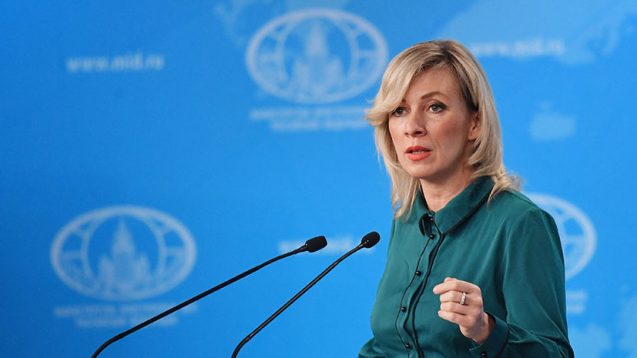
The Lithuanian parliament’s resolution branding Russia a “supporter of terrorism” amounts to “provocation, extremism and political hypocrisy,” Russian Foreign Ministry spokeswoman Maria Zakharova said.
Earlier this week, the Baltic country’s lawmakers unanimously passed a resolution stating that “the Russian Federation, whose military forces deliberately and systematically bomb civilian targets, is a state that supports and practices terrorism.”
Since the beginning of the conflict in late February, Ukraine and Russia have accused each other of shelling residential areas. Kiev denies that it targets civilians, while Moscow insists that it only hits military targets.
On her show on Sputnik radio on Wednesday, Zakharova said the three Baltic countries, all NATO members, have expressed “neither concern, condemnation nor at least bewilderment” over the actions of the alliance in Afghanistan, Iraq, and Yugoslavia, which led to “hundreds of thousands of casualties among the civilian population,” and to the “emergence of conflicts in places where they were not even contemplated.”
Because of this, Zakharova argued, there is no point in believing that the Lithuanian parliament’s resolution has anything to do with pacifism or with any desire “to resolve the extremely difficult situation in Ukraine.”
“This should be treated exactly as an element of provocation, extremism and political hypocrisy,” the foreign ministry spokeswoman said, adding: if Lithuania is truly concerned of the fate of Ukraine and of “its own European continent,” it should not have engaged in “provocative activities” over the last eight years, but instead care about the fate of people in Donbass and urge Kiev to observe the Minsk agreements.
If Lithuania is really concerned now, it would call for a ceasefire, oppose the supply of weapons to Kiev, and offer intermediary services, Zakharova said. “Instead, they are doing exactly the opposite.”
Russia attacked the neighboring state following Ukraine’s failure to implement the terms of the Minsk agreements, first signed in 2014, and Moscow’s eventual recognition of the Donbass republics of Donetsk and Lugansk. The German and French brokered protocols were designed to give the breakaway regions special status within the Ukrainian state.
The Kremlin has since demanded that Ukraine officially declare itself a neutral country that will never join the US-led NATO military bloc. Kiev insists that the Russian offensive was completely unprovoked and has denied claims it was planning to retake the two republics by force.
Assad renews Syria’s bonds with Iran
BY M. K. BHADRAKUMAR | INDIAN PUNCHLINE | MAY 9, 2022
The unannounced arrival of the Syrian President Bashar al-Assad to Tehran on Sunday makes yet another wrinkle to the geopolitics of West Asia. In a short trip of a few hours, Assad had meetings with Iran’s Supreme Leader Ali Khamenei and President Ebrahim Raeisi and returned to Damascus.
This is only the second trip by Assad to Iran in the past 11 years since the conflict erupted in Syria. The last occasion was in 2019, when he came accompanied by the charismatic commander of the IRGC’s elite Quds Force late Qassem Soleimani to mark Syria’s “victory” in the conflict. Much water has flowed down down the Euphrates and the Tigris since then.
There is some speculation that Russia may redeploy its forces in Syria. The Israeli intelligence website DebkaFile reported cryptically on Friday that “Russian units deployed to Syria are assembling at the air bases of Hmeimim, Qamishli, Deir e-Zor and T4, ready for some to transfer to the Ukraine warfront. DEBKAfile’s military sources report that the Russians are handing over key bases to Iran’s Revolutionary Guards and Hizballah.”
Prima facie, this is kite-flying, so to speak. There is no independent word from Moscow. Iran will be certainly in the loop on any big Russian troop withdrawal from Syria. The Turkish air space is closed to Russian [military] planes since April and on February 28 Ankara had restricted the passage of Russian warships through the Bosporus and Dardanelles Straits (unless they are returning to their bases in the Black Sea.)
Analysts have interpreted the Turkish decisions as “anti-Russian” but they come under the ambit of Montreux Convention (1936) and on closer look, may even work to Moscow’s advantage since the door is also closed to any NATO naval build-up in the Black Sea. Russian papers have pointed out that Moscow has been using the air corridor via Iran and Iraq to supply its troops in Syria.
Indeed, Turkey is doing a delicate trapeze act vis-a-vis Russia and Ukraine, being a Black Sea power with overlapping security concerns, while also a NATO power. Turkey has deftly created space to manoeuvre since NATO is technically not at war with Russia, and since Turkey is not a EU member country, it isn’t obliged to sanction Russia, either.
Turkish leadership has actively nurtured contacts with the Kremlin, and the economic partnership continues, including over the construction of the massive $20 billion Akkuyu Nuclear Power Plant (comprising four 1,200 MW VVER units), which is expected to meet ten percent of Turkey’s electricity demand when it is completed in 2025.
Again, Russian carrier Aeroflot has just resumed flights to Turkey in anticipation of the tourist season. Believe it or not, Turkey has found an ingenuous formula to allow Russian tourists to travel to Turkey bypassing the suspension of Visa and Mastercard by making it possible to access their funds through Russia’s homegrown payments system called Mir! Some 4.7 million Russian tourists visited Turkey last year, accounting for 19% of the total tourist arrivals, fetching an annual income exceeding $10 billion.
When it comes to Russian-Iranian relations too, the picture is broadly similar to India’s — neither supporting Russia nor opposing it while refusing to censure Russian intervention and counselling ceasefire and dialogue as the only solution.
According to Iranian media reports, Russia’s Deputy Prime Minister Alexander Novak is due to visit Iran shortly in connection with the session of the Iran-Russia Joint Economic Committee. The discussions are expected to focus on “strengthening financial cooperation and resolving transit problems” between the two countries as well as cooperating in the fields of oil and gas and promoting trade and tourism. Tehran knows that such camaraderie with Moscow is contrary to the spirit of Western sanctions.
Moscow has every intention to remain actively involved in Syria. Special Russian Presidential Representative for the Middle East and Deputy Foreign Minister Mikhail Bogdanov disclosed to Tass last week that Russia is working on scheduling the next international meeting on Syria in the Astana format for the end of May in Nur-Sultan, Kazakhstan. Does that look like Russia washing its hands off Syria? To quote Bogdanov, “We already discussed this with partners Iran and Turkey as the guarantors of the Astana process plus with the Syrian government and opposition delegations.”
The official Syrian news agency Sana described Assad’s trip to Tehran as a “working visit.” It quoted Assad as stressing to Khamenei about “the importance of continuing cooperation in order not to allow America to rebuild the international terrorist system that it used to harm the countries of the world,” adding that the US “is weaker than ever.”
There are four main takeaways from Assad’s talks with the Iranian leadership. First, Assad made it clear in no uncertain terms that no matter Syria’s normalisation with the UAE (or other Arab countries involved in the conflict), he continues to attribute the highest importance to Syria’s alliance with Iran. Assad underscored that Syria is ready for broader coordination with Iran in security, political and economic fields.
Second, Damascus needs Tehran’s help for finally freeing Syria from foreign occupation. Raisi told Assad, “The whole of the Syrian land must be liberated from foreign occupiers. This occupation should not be subject to the passage of time, and the occupying forces and their mercenaries should be expelled.” Sana cited Khamenei as stressing that Iran will “continue to support Syria to complete its victory over terrorism and liberate the rest of the country’s lands.”
Third, the two countries have a consensus on the effectiveness and vibrancy of the resistance front. Assad acknowledged that the weakening of the US’ influence in West Asia and the end of Israel’s military supremacy regionally is a direct outcome of the strategic relations between Iran and Syria, “which must continue with strength.”
Interestingly, Khamenei recalled that Soleimani had “a special liking towards Syria and literally sacrificed his life” for that country and viewed the issue of Syria as a “sacred duty and obligation”. Khamenei reminded Assad poignantly, “This bond is vital for both countries and we should not let it weaken. On the contrary, we should strengthen it as much as possible.” Raisi called Assad “one of the figures of the Resistance Front” like his father Hafez al-Assad.
Fourth, Assad sought and obtained assurances from the highest level of Iranian leadership that Iran will help Syria overcome its difficulties. This is particularly crucial at a juncture when regional politics is in flux and Russia is preoccupied in Ukraine.
A resuscitation of the US-led regime change project in Syria is not to be expected and Washington no longer wields commanding influence over its Persian Gulf allies or Turkey to get them to act as its surrogates. But Assad’s challenge is that Syria is getting relegated to the back burner as new hotspots and topical issues draw the region’s attention — such as JCPOA, Yemen, Iran-Saudi normalisation, OPEC+, etc.
Although the conflict has ended, Syria still remains under foreign occupation and its economy is in ruins. A frozen conflict may legitimise the status quo. Meanwhile, Israel is waiting in the wings. Assad’s visit to Tehran signals that Iran remains the mainstay of Syria’s future strategy to avoid such a dismal fate. Iran’s Foreign Minister Hossein Amir Abdollahian affirmed on Monday that Assad’s visit was held in an atmosphere of “fraternity and friendship,” and it opens a new chapter in the strategic ties.
UK pledges more military aid for Ukraine
Samizdat | May 8, 2022
The UK pledged a further £1.3 billion ($1.6 billion) in military support and aid to Ukraine on Saturday. London said the move nearly doubles London’s previous spending commitments to Kiev, and is the country’s highest rate of spending on a conflict since the wars in Iraq and Afghanistan.
The extra money will come from a reserve used by the government for emergencies. Like other NATO member states, the UK has been increasingly supplying Kiev with weapons, including anti-tank and anti-aircraft missile systems and armored vehicles.
This week, London said it was sending 13 armored vehicles to Ukrainian police and the National Guard. The UK government has also been delivering tanks to Poland in order to replace those Warsaw has donated to Kiev.
Similarly, the US pledged an additional $150 million in military assistance to Ukraine on Friday. The package includes 25,000 155mm artillery rounds, as well as radars and electronic jamming equipment.
Russia has repeatedly criticized the West for “flooding” Ukraine with weapons, and warned in April that foreign arms become legitimate targets once they reach Ukrainian soil.
US ‘directly’ involved in Ukraine conflict – Moscow
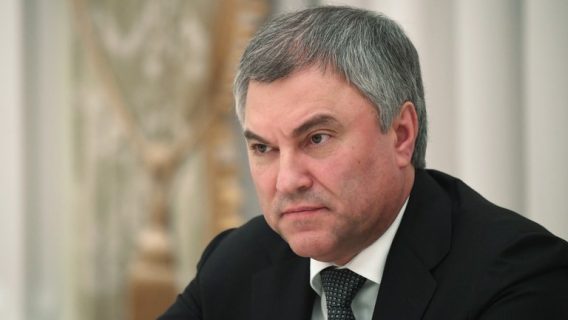
Russian State Duma Speaker Vyacheslav Volodin
Samizdat | May 7, 2022
Washington should be added to a “list of war criminals” as it is now directly participating in “hostilities” in Ukraine, Chairman of Russia’s State Duma Vyacheslav Volodin claimed on Saturday, citing media reports about alleged US intelligence-sharing with Ukraine.
US President Joe Biden has told senior intelligence officials that “counterproductive” leaks about data sharing with Ukraine should stop, NBC reported on Friday.
Though there was no official reaction to the report from the US authorities, Volodin took to Telegram to comment on it. “The United States is taking part in hostilities in Ukraine. US President Biden, demanding to stop leaks about the exchange of intelligence information with Ukraine, admitted that Washington had been exposed,” he wrote.
Volodin said that the Ukrainian government, which he described as the “Kiev Nazi regime,” not only relies on weapons from the West, but also on the “assistance of American intelligence forces.”
The Duma chairman wrote that Washington “essentially coordinates and develops military operations” in Ukraine, and is therefore directly participating in the “hostilities” against Russian forces.
“For the crimes committed in Ukraine by the Kiev Nazi regime, the US leadership should also be held accountable, adding to the list of war criminals,” Volodin concluded.
However, the Pentagon earlier dismissed some of the media reports and specifically denied that the US had provided data allowing Ukrainian forces to strike Russia’s Black Sea flagship ‘Moskva’ off the coast of Odessa last month.
“The Ukrainians have their own intelligence capabilities to track and target Russian naval vessels, as they did in this case,” said US military spokesman John Kirby.
Russia insists that its missile cruiser wasn’t attacked, but sank on April 14 after a fire that had broken out on board caused ammunition to explode.
The White House National Security Council has admitted, however, that the US is “regularly providing detailed, timely intelligence to the Ukrainians on the battlefield to help them defend their country against Russian aggression and will continue to do so.”
This statement apparently did not come as a surprise to Moscow. On May 5, Kremlin spokesman Dmitry Peskov told journalists that the Russian authorities know the US, the UK and NATO “on a permanent basis” transmit intelligence and other data to Kiev but this would not “hinder the achievement of the goals set during the special military operation.”
Russia attacked its neighboring state following Ukraine’s failure to implement the terms of the Minsk agreements, signed in 2014, and Moscow’s eventual recognition of the Donbass republics of Donetsk and Lugansk. The German- and French-brokered Minsk Protocol was designed to give the breakaway regions special status within the Ukrainian state.
The Kremlin has since demanded that Ukraine officially declare itself a neutral country that will never join NATO. Kiev insists the Russian offensive was completely unprovoked and has denied claims it was planning to retake the two republics by force.
US bragging about its direct involvement in Ukraine may lead to uncontrollable escalation
By Drago Bosnic | May 6, 2022
On May 4, the New York Times published a highly controversial article openly bragging about how the United States has been providing critical intelligence about the location and movement of Russian troops, which has allowed Ukrainians to target them. The publication also claims that “many Russian generals have died in action in the Ukraine as a result,” citing senior US officials. However, this is hardly news, since the US and NATO have been doing it since day one of the special military operation in Ukraine. The Russian military has been warning the political West about this issue. And yet, the US and NATO aren’t only ignoring the warnings, but are also openly bragging about their actions which are contributing to the death of Russian military personnel in Ukraine as we speak.
The claim that “many Russian generals have died” is questionable at best, but it does show the US and NATO’s determination, whose involvement is key to prolonging the conflict. An epidemic of fake news about alleged injuries or even murder of Russian High Command officers has become the mainstay, even among the once-respected Western media. According to these news outlets, Russian Defense Minister Sergei Shoigu has so far survived at least two heart attacks “due to bad performance and high casualties of the Russian military” and even “Putin’s order to shoot the Defense Minister for his failures in Ukraine”.
These claims are not just outright lies, but simply ridiculous. However, they expose the mainstream media in the US and other NATO countries as an inalienable part of the military and (geo)political structure. Their reporting is designed not just to demoralize the opponent, but also to boost public morale, galvanize it and push for more support for a potential war with the targeted country or even a group of countries. This is exacerbating the already high tensions between the political West on one side and Russia and its allies on the other.
When the special military operation started, the US and NATO at least claimed their non-involvement, even though everyone knew they were involved. But the very statement they weren’t sent a message that NATO will not escalate tensions. However, this report has now changed that. By admitting effectively direct involvement in the conflict, the US and NATO are opening the door for further escalation, which most certainly will not be appreciated by Russia, whose leadership has already given strong statements regarding this issue.
The intelligence sharing is part of “a stepped-up flow” in US assistance that includes heavier weapons and billions in military supplies, demonstrating how quickly the “early American restraint” on support for Ukraine has shifted as the war enters a new stage, the NYT reported. This is further proof that the US is not interested in de-escalation. On the contrary, the latest “lethal aid” package President Biden announced is said to be $33 billion, a truly staggering sum, orders of magnitude greater than Ukraine’s annual military budget.
“The administration has sought to keep much of the battlefield intelligence secret, out of fear it will be seen as an escalation and provoke President Vladimir V. Putin of Russia into a wider war. American officials would not describe how they have acquired information on Russian troop headquarters, for fear of endangering their methods of collection. But throughout the war, the U.S. intelligence agencies have used a variety of sources, including classified and commercial satellites, to trace Russian troop movements,” the NYT report added.
This statement alone should trigger alarm across the globe. The admission that the US military and intelligence services are using commercial satellites in their operations sets a dangerous precedent which further blurs the line between civilians and the military. This comes at a time when companies such as SpaceX are accused of using their products and services, most notably the Starlink satellites, to help the Ukrainian military target Russian and DLNR units. It’s clear the US is mobilizing all of its assets in an attempt to weaken Russia. In fact, this is exactly what US Defense Secretary Lloyd Austin openly stated. He went so far as to say that “we want to see Russia weakened to the degree it cannot do the kinds of things that it has done in invading Ukraine.”
However, there are still moments when the Pentagon and State Department are giving vague and even contradictory statements regarding this issue. When asked about the intelligence being provided to the Ukrainian side, Pentagon spokesman John Kirby said that “we will not speak to the details of that information.” But he acknowledged that the US provides Ukraine with intelligence information. After the NYT article was published, Adrienne Watson, a National Security Council spokeswoman, said that the battlefield intelligence was not provided to the Ukrainians “with the intent to kill Russian generals.”
“Not all the strikes have been carried out with American intelligence. A strike over the weekend at a location in eastern Ukraine where Gen. Valery Gerasimov, Russia’s highest-ranking uniformed officer, had visited was not aided by American intelligence, according to multiple U.S. officials. The United States prohibits itself from providing intelligence about the most senior Russian leaders,” the official said.
This statement clearly refers to the reports that the Chief of Russian General Staff, General Gerasimov was allegedly wounded in a Ukrainian strike during a visit to the frontline units. Again, this shows an almost schizophrenic nature of statements coming from US officials. First, they are bragging about the “decisive role” of their intelligence support to Ukrainians, but as soon as reports of Russian High Command officers being injured surface, they are quick to announce how this support might not be “as decisive as previously thought”.
This just goes to show how dangerous US involvement in Ukraine is. Even though we know the statements about Gerasimov are false, an obvious question arises, what if it were to happen? What if he or any other Russian High Command officer were injured in Ukraine? Does the US truly believe they could just say “it wasn’t our intelligence” in an attempt to control the level of escalation which could plunge all of us into a world-ending conflict?
Drago Bosnic is an independent geopolitical and military analyst.
US invasion threats over Solomon Islands deal expose Western hypocrisy in Ukraine
By Drago Bosnic | May 5, 2022
When Ukraine announced it will join NATO after the CIA-orchestrated Orange Revolution in 2004, it prompted Russia to respond by voicing its strong condemnation, which later culminated in Vladimir Putin’s historical 2007 Munich Security Conference speech. Still, just a year later, Ukraine was invited to join NATO. The former Soviet republic officially applied to integrate within a framework of a NATO Membership Action Plan (MAP) in 2008. However, plans for NATO membership were shelved following the 2010 presidential election in which Viktor Yanukovych triumphed, coming back to power after spending over half a decade in the political opposition.
Before the 2010 election, Russia’s concerns were completely ignored and every time Russia stated Ukraine’s NATO ascension would severely undermine and weaken its security, leading members such as the US and the UK stated that it’s Ukraine’s “sovereign right” to choose which alliances it wants to join and that Ukraine’s NATO membership wasn’t aimed against Russia. These claims were put to the test after the 2010 election, because Yanukovych preferred to keep the country non-aligned. A little over 4 years into his presidency, he was ousted in yet another CIA-orchestrated coup, this time the infamous Maidan Revolution, also known as the so-called “Revolution of Dignity” in recent years. So much for Ukraine’s “sovereign right” to choose alliances or worse yet in this case, to stay neutral.
Even if there was any notion of respect for the sovereignty of nations by the US and NATO before 2014, it became glaringly obvious that wasn’t the case. Soon, anti-Russian violence erupted all across the country, which was now firmly in the grip of its NATO (primarily US) overlords and openly Neo-Nazi groups which were promptly integrated into various security institutions, including the military and intelligence services. Again, Ukraine’s “sovereign right” to choose alliances was back on the table during various Russia-US security talks, including the Geneva summit in 2021. The rest is history which we are witnessing as we speak.
However, the Ukraine crisis isn’t the only one unfolding in the context of a broader “the West vs the Rest” clash. The political West doesn’t only bring “peace, stability, freedom and democracy” to Europe and Russia’s near abroad. There are many other such places. While Russia is allegedly being “aggressive” in its own backyard, so is China in the South and East CHINA sea, Iran (previously known as Persia) in the PERSIAN Gulf, etc. Because in the mind of the “indispensable” NATO planners, only other countries can be “aggressive” mere miles away from their coasts, at their borders or even inside their own sovereign territories. NATO, on the other hand, brings only “peace, stability, freedom and democracy” no matter how many thousands or even tens of thousands of kilometers away from its borders, regardless of how negatively that affects any country. And if any of the small vassal countries is to try and get the shackles of “freedom and democracy” off, the reaction is almost immediate.
The most recent such example is the tiny island country called the Solomon Islands. It’s safe to assume most people haven’t even heard of this peaceful Pacific island state, a former UK colony situated some 2000 km northeast of Australia. In late April, the Solomon Islands had the “audacity” to sign a security agreement with China, which would allow Beijing to send military and police personnel to the island country, as well as open the door to a Chinese naval presence in the South Pacific. Or at least that’s what the United States, Australia and New Zealand claim the agreement is all about. My esteemed colleague Uriel Araujo wrote an excellent analysis with a more in-depth focus on the agreement, its causes and possible consequences.
The strategic implications of this agreement might be too soon to evaluate in a precise manner, but it does expose the sheer hypocrisy of the political West, primarily its Anglo-American portion. The Solomon Islands are around 2,000 km away from the Australian coast, over 5,500 km from the US State of Hawaii and nearly 10,000 km away from the US mainland. The Pacific island country was not on the US and Australia’s radar for decades. US embassy in Honiara, the country’s capital, was closed in 1993, nearly 30 years ago. Australia seemed equally uninterested up until just a few weeks ago. And yet, both the US and Australia are now fuming over even the slightest notion that the Solomon Islands could make such an agreement with China.
“We won’t be having Chinese military naval bases in our region on our doorstep,” Australian PM Scott Morrison said, calling it a “red line” both for his government and Washington DC. A US envoy that visited the Honiara in late April said that his government would have “significant concerns and respond accordingly” to any “permanent military presence, power-projection capabilities, or a military installation” by China. After ignoring the country and its security and economic problems for decades, the increasingly belligerent AUKUS allies have now suddenly decided to renew their geopolitical interest in the Solomon Islands by openly threatening the island country.
The question is, why do the US and Australia think they have the right to interfere or even intervene in the affairs of another country which is thousands of kilometers away? Why is the US allowed to conduct so-called “freedom of navigation” naval patrols in the immediate vicinity of Chinese waters in the South China Sea, but it’s “problematic” when China signs agreements with sovereign nations which have nothing to do with the United States and its vassals? After all, isn’t this the “sovereign right” of the Solomon Islands? Why is the legitimate government of the island country being threatened and denied the actual sovereign right to choose allies, but a puppet coup regime in Kiev isn’t?
Drago Bosnic is an independent geopolitical and military analyst.
Any NATO Vehicle Coming to Ukraine With Weapons Will Be Considered Legitimate Target
Samizdat – 04.05.2022
Russia has repeatedly denounced the continuous flow of weapons into Ukraine from the West, saying that it adds fuel to the fire and derails the negotiation process.
Russian Defence Minister Sergei Shoigu said that any NATO vehicle coming to Ukraine with weapons or equipment for Ukrainian forces will be considered a legitimate target for destruction.
“The United States and its NATO allies continue to pump weapons into Ukraine. I can confirm that any transport from the North Atlantic alliance that arrives in the country with weapons or materiel for the Ukrainian armed forces will be considered by us as a legitimate target for destruction,” Shoigu said on Wednesday.
According to him, during the course of the special operation, the Russian servicemen have “shown courage and bravery, honourably fulfilling their military duty, and ensuring the safety of the civil population of Donbass.”
Earlier, Moscow warned that the West’s contribution of weapons to Ukraine threatens to undermine peace talks, not to mention the probability that they could fall into the wrong hands.
Since Russia launched its special military operation in Ukraine in February, the US, its NATO allies, and the European Union, have increased weapons supplies to Ukraine.
On 3 May, the UK government announced that it will provide Ukraine with a $375 million military aid package.
Recently, US President Joe Biden asked US Congress for $33 billion in emergency supplemental funding to support Ukraine, including $20 billion for military assistance. The request comes on top of about $4 billion in military aid the Biden administration has already earmarked for Ukraine, $3.4 billion of which came after Russia launched its military operation in late February.
Amid weapons and military equipment deliveries there are discussions about the need to supply Ukraine with heavy weapons, tanks, war planes, etc. Although some countries, such as the UK, call for those kinds of supplies, others oppose the idea.
Earlier, German Chancellor Olaf Scholz said that the German military can no longer supply arms to Ukraine as the country’s weapons stockpiles are practically exhausted.
In turn, Public support of German heavy weapons deliveries to Ukraine has shrunk to 46 percent from 55 percent two weeks ago and 60 percent in early April, with the number of critics rising by 10 percentage points, a poll out Tuesday showed.
On 28 April, Kremlin spokesman Dmitry Peskov said that the trend of delivering heavy weapons to Ukraine and other countries is threatening the security of the European continent.
Featured Video

Death Spikes & Rising Cancer In Our Youth Explained
or go to
Aletho News Archives – Video-Images
From the Archives
Politicians lie
By Mazin Qumsiyeh | Popular Resistance | August 18, 2013
There is no way to say this truth nicely: Politicians lie. That includes Japanese, American, Egyptian, Israeli, and Palestinian politicians! Is there something more common sense than that? Yet, so many citizens around the world believe their own politicians or wistfully acknowledge lies but think it is part of the job needed to run things. They believe even when politicians contradict themselves blatantly. This phenomenon is rather remarkable. It is a dissonance and disconnect from reality that many seem oblivious to. It is very dangerous because it can lead to accepting rationales for going to war. These can be deadly wars that lead to millions of lives lost as happened in what was called World War 1 and WW2. Even when incredible and declassified evidence abound, politicians continue to lie and old mythologies refuse to die. Here are just a few of the countless lies told to us over the past few decades… continue
Blog Roll
 Aletho News
- From Unipolar Universalism to Multipolar Civilizational Distinctiveness
- RSF military group defects, joins Sudanese army: State media
- Ireland goalkeeper refuses to play ‘Israel’ as squad weighs boycott
- China pushes back against US on Cuba, Iran
- Ukrainian Soldiers, Potential Mercenaries: Have Gun, Will Travel!
- Burnham’s UN debut… A masterclass in British disinformation
- Iran flights continue despite US aviation sanctions
- Global Tipping Points Lead the World Into a State of Entropy
- The day-after at the White House: USA and Xi Jinping
- The Geopolitical Balance in the Red Sea: The UAE Being Displaced by New Players
- If Americans Knew
- Deconstructing Netanyahu’s pants-on-fire UN rant – Daily Update
- Trump betrayed voters with his campaign lies and prioritized a foreign country once he took office
- Netanyahu calls Israel’s war in Gaza ‘opposite of genocide’ in UN speech to near-empty hall
- Settler Kidnappings: Torture, Sexual Abuse and Terrorisation of Palestinian Abductees as Israel Deepens Annexation of West Bank
- Gaza winter nears as 162,000 tents become unusable, raising fears of humanitarian crisis
- Netanyahu says, “It’s the opposite of genocide”; UN says Gaza economy is world’s ‘most severe crisis on record’ – Daily Update
- Israel’s US-Backed Assault on Gaza Has Created the ‘World’s Most Severe Economic Crisis on Record’: UN
- ‘Protecting U.S. Citizens’… From Israel
- ‘This is where I live now, the back of a truck’: a day in the life of a grandmother in Gaza
- In UN Speech, Iran’s President Displays Pictures of Children Killed by US, Brings Attention to Israel’s Nuclear Arsenal
- No Tricks Zone
- New Study: Earth And Venus Surface Warmth Largely Explained By Convection And Lapse Rate, Not CO2 Or Radiation
- 2025 Nature Paper Claiming Worsening Global Drought Gets RETRACTED …Heavily Flawed
- New Study: ‘Global Drought Shows No Detectable Recent Acceleration Under Climate Warming’
- Economic Masterminds: German Socialists Suggest Taxing Productivity Gains Stemming From Using AI
- The South China Sea Has Not Been Cooperating With The Climate Change Narrative
- Energy Crisis: Germany Enters Heating Season With Historically Low Gas Reserve Fill Levels
- New Study: The Antarctic Ice Sheet Gained Mass From 2020-2024 Due To Staggering Snow And Ice Accumulation
- Study: Ocean Heating Rates From Thousands Of Years Ago ‘Dwarf’ Modern Ocean Heating Rates
- Climate Extremists Target, Attack Large-Scale Power Grid Infrastructure In Germany!
- New Study: Antarctic Ice Melt Has Contributed Less Than 1 Centimeter To Sea Level Rise In The Last 30 Years

