Turkey accuses NATO members over Ukraine
Samizdat | April 20, 2022
Turkey wants to negotiate an end to the conflict in Ukraine, while some other NATO members would like to see it drag on as a way to harm Russia, Ankara’s Foreign Minister Mevlut Cavusoglu said on Wednesday in a TV interview. In a lengthy appearance on CNN Turk, Cavusoglu addressed Turkey’s decision not to sanction Moscow and why the Istanbul talks between Russia and Ukraine failed, among other things.
“There are countries within NATO that want the Ukraine war to continue. They see the continuation of the war as weakening Russia. They don’t care much about the situation in Ukraine,” Cavusoglu said.
While he did not name any names, US President Joe Biden said earlier this month that the conflict in Ukraine “could continue for a long time,” which was echoed by the former CIA chief of Russian operations.
German Chancellor Olaf Scholz said after a phone call with G7 leaders on Tuesday that the West is united in not allowing Russia to win and determined to “continue to arm the Ukrainian military so that it can continue to defend itself against [Russian] attack.”
Turkey has decided not to join the US-led sanctions against Russia because they are unilateral, unlike the “binding sanctions decided at the UN,” Cavusoglu told CNN Turk. Ankara articulated its position on the first day of the Ukraine conflict, which is to continue diplomatic contacts with both sides, as “a country that both sides trust.”
While Turkey did not expect much after the first Russia-Ukraine talks in Antalya, “hopes were high” after the follow-up talks in Istanbul, Cavusoglu revealed. However, Ukraine backtracked from the agreement reached there after images of the alleged massacre in Bucha, which Kiev blamed on Russian troops. Moscow has denied the allegations.
Cavusogly also shed light on Ukrainian President Volodymyr Zelensky’s demand for security guarantees from NATO.
“Nobody agrees with Zelensky’s request for NATO’s Article 5 guarantees,” the minister said, referring to the alliance’s famous mutual defense clause. “No country has accepted this proposal. The US, UK and Canada do not accept this either. Of course, Turkey does not accept this. In principle, no one opposes this guarantee, but the terms of it are not clear.”
Will Sweden and Finland feel safer after joining NATO?
By Drago Bosnic | April 20, 2022
NATO expansion has been the main culprit behind all instability in Europe for the last 30+ years. Of course, NATO’s aggression against many countries, either as an organization, or separately, by each of its member states resulted in the deaths of millions, with orders of magnitude more of those whose lives may not have been physically lost, but they certainly have been ruined by the Alliance’s actions. The absolute havoc and the trail of death and destruction left in the wake of NATO invasions across the Middle East, always euphemistically dubbed “humanitarian interventions“, stand as a grisly testament to that.
The expansion of this supposedly “defensive alliance” which has not conducted a single truly defensive operation in well over 70 years of its existence, has first destroyed the relatively prosperous Yugoslavia, which was subjected to nearly a decade-long siege throughout the 1990s. During the 2000s, Russia’s attempts to create an atmosphere of trust and cooperation with the North Atlantic Alliance have been futile. No matter what Russia did, the alliance kept creeping closer to its borders. By the early 2010s, it was clear that NATO had no intention of stopping. The conflict in Ukraine is NATO’s latest brainchild, although there has hardly been any actual thinking behind it. It has been more like bulldozing its way towards Russia.
The last 8 years have shown where all this leads to, with the last nearly 2 months reaching a boiling point between the Russian Federation and the ever increasingly belligerent alliance. A recent announcement by both Sweden and Finland that they feel supposedly “threatened” and that they are very likely to enter NATO seems rather strange, especially given that they did not officially join NATO during the Cold War, when the USSR had undisputed control over the Baltic region.
An obvious question arises, why would Sweden and Finland feel threatened now, when the strategic situation has all but reversed, with Russia’s presence in the Baltics limited to relatively tiny areas around Saint Petersburg and Kaliningrad? It’s quite obvious that this can only be seen as another encroachment on Russia’s borders, another part of NATO’s larger geopolitical offensive. Still, although it may seem that NATO’s further expansion into Scandinavia is going to jeopardize Russia’s northwestern areas, Russia doesn’t seem particularly fazed by this prospect. While certainly not happy with this turn of events, Russia’s decision makers and strategic planners aren’t exactly pulling their hair out and running in circles over this.
First, it should be understood that both Sweden and Finland are neutral countries in name only. During the Cold War, both Scandinavian countries served as a hotbed of NATO intelligence activities, with the CIA and MI6 operating extensively in both countries. Soviet and later Russian intelligence were well aware of this.
During the 1990s, this became even more prominent, when both countries entered the EU, but also increased their official cooperation and interoperability with NATO. Naturally, over the years, this cooperation grew to unprecedented levels and the Russian military acted accordingly. The strategic military command structures in the Kremlin have treated both countries as de facto NATO member states for decades.
This is especially true for Finland, particularly after it announced it will be acquiring at least 65 F-35A fighter jets from the US military industrial giant Lockheed Martin. This jet, despite hundreds if not thousands of critical flaws and other shortcomings, is a serious ISR (intelligence, surveillance and reconnaissance) asset. The jet is bristling with sensors, all of which are connected to a massive network-centric warfare system, the center of which is located in the Pentagon. By operating this jet, Finland is effectively giving up on the sovereignty over its own air force and ceding it to the United States.
The Russian military is perfectly aware of this and has already made plans to react accordingly. Earlier, Finland’s official neutrality from a military standpoint complicated this. But now, rather ironically, the Scandinavian country might even make things easier for Russia’s strategic military planning by joining the ever expanding “defensive” alliance.
However, does this change anything for Finland and Sweden? Will NATO really make both countries safer? The short answer is simply no. By joining the North Atlantic Alliance, countries effectively cede much of their sovereignty to the US. Given the US’ strategic obsession with encircling Russia, the Kremlin feels strongly about this matter and it simply doesn’t take any chances.
Thus, the only “benefit” Sweden and Finland get is becoming meat shields for the US in the case of a nuclear exchange, because Russia is simply going to dedicate a portion of its thermonuclear arsenal to these countries. And if Russia doesn’t have a shortage of something, it’s nuclear weapons. Given the US’ and NATO’s track record, who is to blame then?
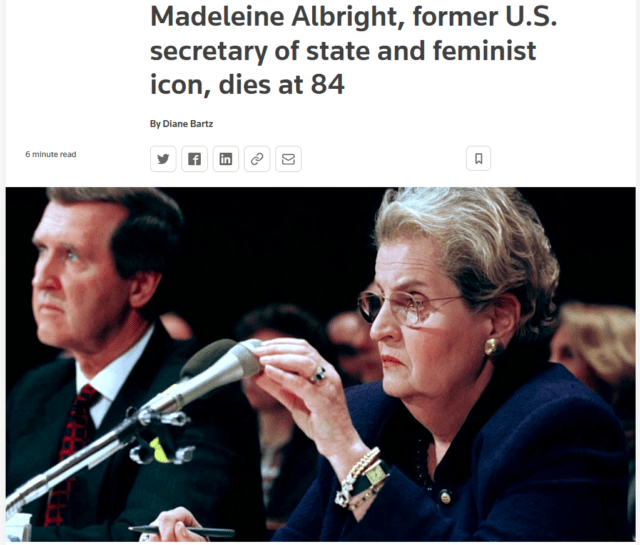
Selling Albright as a ‘Feminist Icon’: Was the Price Worth It?
BY BRYCE GREENE | FAIR | APRIL 13, 2022
When Clinton-era Secretary of State Madeleine Albright died of cancer last month, a stream of fawning obituaries hailed her as a hero of NATO, a feminist icon and a “champion of human rights and diplomacy” (CNN, 3/24/22).
Most coverage failed to levy any criticism at all of Albright’s actions in government, despite her presiding over a critical turning point in the American Empire. For the foreign policy establishment, the ’90s under Albright solidified the US self-image as the “indispensable nation,” ready and able to impose its will on the world, a position with repercussions that still echo today. Instead of critically exploring this legacy, corporate media opted for celebration and mythmaking.
‘Icon’ and ‘trailblazer’
Some of the coverage focused on Albright as a “feminist icon” (Reuters, 3/23/22; USA Today, 3/23/22) breaking the glass ceiling. A commonly used term was “trailblazer” (e.g., NPR, 3/24/22; Washington Post, 3/23/22).
The New Yorker (3/24/22) declared, “Madeleine Albright Was the First ‘Most Powerful Woman’ in US History.” CNN (3/24/22) went as far as to call Albright an early progenitor of “feminist foreign policy.”
NPR (3/24/22) claimed that Albright “left a rich legacy for other women in public service to follow.” BuzzFeed (3/23/22) found time to discuss the meaning of the jewelry she wore when meeting foreign leaders.
There is nothing wrong with remarking on the significance of a woman taking charge in the historically male-dominated halls of US power. However, it is far more important to take a critical look at her policies, including whether they jibe with the tenets of feminism as generally understood—something few in the media chose to do.
Media fell into this same trap when praising Gina Haspel as the first female head of the CIA, or when they applauded the top military contractors for having female heads (FAIR.org, 6/28/20). Similarly, Albright’s violent legacy is being obscured by seemingly progressive language.
‘More children than died in Hiroshima’

Madeleine Albright telling 60 Minutes (5/12/96) that half a million dead children is a price worth paying.
One of the first things many progressives think of when they think of Albright is her championing of the sanctions against Iraq during the ’90s. In between the two US wars on Iraq, Albright presided over crushing sanctions aimed at turning the Iraqi population against the Ba’athist government. These sanctions cut off crucial supplies to the nation, starving its people. A UN survey found that the sanctions led to hundreds of thousands of dead Iraqi children.
When Albright was confronted with this figure in an interview with CBS‘s Leslie Stahl on 60 Minutes (5/12/96; Extra!, 11–12/01), Albright’s response was cold:
“We have heard that half a million children have died. I mean, that is more children than died in Hiroshima,” Stahl said. “And, you know, is the price worth it?”
“I think that is a very hard choice, but the price, we think, the price is worth it.”
The UN numbers have since been revised downward, but the unavoidable fact is that Albright accepted the number she was given, took willful responsibility for the deaths and concluded that they were “worth it” for the purpose of turning the Iraqi people against their government.
While so many Americans seem to have forgotten this shameful display, the rest of the world has not. Ahmed Twaij, an Iraqi writing in Al Jazeera (3/27/22), said that his “most prominent memory of Albright” was that notorious interview:
As an Iraqi, the memory of Albright will forever be tainted by the stringent sanctions she helped place on my country at a time when it was already devastated by years of war.
Despite its resonance around the world, the quote wasn’t even referenced in many of the retrospectives FAIR reviewed. USA Today (3/23/22) mentioned that Albright received “criticism” for calling the deaths “worth it,” and Newsweek (3/23/22, 3/25/22, 3/23/22) mentioned the quote in some of its coverage. But it went missing from the New York Times (3/23/22, 3/25/22), Washington Post (3/23/22), NBC.com (3/23/22), CNN.com (3/24/22, 3/26/22), New Yorker (3/24/22) and The Hill (3/24/22).
Guaranteed shootdown
Gen. Hugh Shelton, former chair of the Joint Chiefs of Staff, recounts in his book how Albright suggested to him that the US fly a plane over Iraqi airspace low enough to be shot down, thus giving the US an excuse to attack Saddam Hussein. Shelton recalls Albright’s words:
What we really need in order to go in and take out Saddam is a precipitous event—something that would make us look good in the eyes of the world. Could you have one of our U-2s fly low enough—and slow enough—so as to guarantee that Saddam could shoot it down?
Albright was quickly rebuffed, but she was later able to get her wish of war in Iraq. Her efforts culminated in the Iraq Liberation Act, signed in October 1998, which made seeking regime change in Iraq official US policy.
As the New York Times (3/23/22) mentioned in its obituary, Albright threatened the Ba’athist leader with bombing that year if he didn’t open the country to weapons inspectors. Even though Kofi Annan brokered an agreement on the inspectors, the US bombed anyway in December 1998.
The Times didn’t explore these events further—not mentioning that the administration justified the bombing using the debunked pretext of Saddam’s weapons of mass destruction—and instead continued ahead with its largely positive obituary.
Rewriting Yugoslav history
One of Albright’s most notable moments during her tenure as secretary of state was the 78-day bombing campaign in Yugoslavia in 1999. Today, the bombing is hailed as a major victory by the forces of democracy, and Albright’s role is cast in a positive light.
NPR’s three sentences (3/24/22) on the subject show the dominant version of the events:
As chief diplomat in the late ’90s, Albright confronted the deadly targeting of ethnic Albanians in Kosovo. Time magazine dubbed it Madeleine’s War. Airstrikes in 1999 eventually led to the withdrawal of Yugoslav forces.
Americans were told at the time that the war solidified the US as “an indispensable nation asserting its morality as well as its interests to assure stability, stop thugs and prevent human atrocities” (Time, 5/9/99). The Washington Post (3/23/22) seized on this myth, calling Albright “an ardent and effective advocate against mass atrocities.” In this story, she is a hero for mobilizing the timid American giant to use its military might on behalf of humanitarian and democratic ideals.
But the truth is that the bombing Albright advocated was motivated less by humanitarian concerns and more by the US goal of breaking up Yugoslavia and establishing a NATO-friendly client state via the Kosovo Liberation Army. Indeed, the US’s negotiating tactic with Serbian President Slobodan Milosevic was to offer the choice of either occupation by NATO or destruction. As a member of Albright’s negotiating team anonymously told reporters (Extra!, 7–8/99): “We intentionally set the bar too high for the Serbs to comply. They need some bombing, and that’s what they are going to get.”
Exacerbating bloodshed
One fact that quickly debunks the humanitarian pretext is that the US-led bombing greatly exacerbated the bloodshed. According to Foreign Affairs (9–10/99), 2,500 died during the preceding civil war, but “during the 11 weeks of bombardment, an estimated 10,000 people died violently in the province.” And while Albanian civilians bore the brunt of the violence during the NATO attacks, in the year preceding the bombing, British Defense Secretary George Robertson told the Parliament that the NATO-backed KLA “were responsible for more deaths in Kosovo than the Yugoslav authorities had been” (Monthly Review, 10/07).
As Edward Herman and David Peterson wrote in their detailed essay on Yugoslavia in the Monthly Review (10/07), the US and NATO were
key external factors in the initiation of ethnic cleansing, in keeping it going, and in working toward a violent resolution of the conflicts that would keep the United States and NATO relevant in Europe, and secure NATO’s dominant position in the Balkans.
The concern for ethnic minorities was merely a pretext offered to the American people, and lapped up wholeheartedly by a compliant mass media.
Along with liberal hawks like Samantha Power, Albright helped weaponize human rights and legitimize unsanctioned “humanitarian interventions” around the world. This showcase of unilateral and illegal violence has had direct repercussions around the world, paving the way for US interventions in Afghanistan, Iraq and Libya—to say nothing of the current Russian attack on Ukraine.
Promoting hawkish policy
Much of the coverage framed Albright’s Clinton-era career arc as one in which she repeatedly failed to get the US to play a larger role in advancing its ideals in the post-Cold War world. This fight included taking on international institutions that didn’t understand American exceptionalism.
Albright clashed with then–UN Secretary General Boutros Boutros-Ghali “as she advocated fiercely for US and democratic interests,” in the words of CBS (3/23/22). She and Boutros-Ghali butted heads over the US role in peacekeeping operations during crises in Rwanda, Somalia and Bosnia.
In the end, Albright dissented against the entire UN Security Council, using the US veto power to deny Boutros-Ghali a second term as secretary general. His ouster paved the way for the more US-friendly Kofi Annan, as the “Albright Doctrine” took center stage.
In its cover story on “Albright’s War,” Time (5/9/99) described the Albright doctrine as
a tough-talking, semimuscular interventionism that believes in using force—including limited force such as calibrated air power, if nothing heartier is possible—to back up a mix of strategic and moral objectives.
In other words, Albright advocated a policy of unilateral intervention instead of a global order based on international law and mutual obligations. The US could assert itself whenever and wherever it determined the “strategic and moral objectives” were of sufficient importance.
The diplomat was more blunt about the US chauvinism imbued in the doctrine when she spoke to NBC (2/19/98) in 1998:
If we have to use force, it is because we are America; we are the indispensable nation. We stand tall and we see further than other countries into the future.

A CNN op-ed (3/24/22) positively cited Albright’s comment to Colin Powell: “What’s the point of having this superb military you’re always talking about if we can’t use it?”
The media reflect positively on this mindset that “blended her profound moral values from her childhood experience in Europe with US strategic interests,” according to the New Yorker (3/24/22). Some suggested that this mindset should continue to animate American policy.
‘Albright was right’
CNN.com (3/24/22) published an opinion by Elmira Bayrasli that claimed, “The West would be wise to heed Madeleine Albright’s lessons on foreign policy.” She embraced Albright’s hawkish label, saying that “advocating the oppressed and actively upholding human rights… sometimes meant using the might of the American military.”
Hillary Clinton, whose “trailblazing” also obscured the deadly cost of her foreign policy initiatives, published a guest essay in the New York Times (3/25/22) under the headline “Madeleine Albright Warned Us, and She Was Right.” To Clinton, the world still needs Albright’s “clear-eyed view of a dangerous world, and her unstinting faith in… the unique power of the American idea.”
While some pieces were clear in calling her a hawk (e.g., Washington Post, 3/23/22), CNN (3/24/22) wrote, “It is a mistake to see Albright exclusively as a hawk,” because she sat on the board of the National Democratic Institute (NDI) and supported the activities of the US Agency for International Development (USAID). The Hill (3/24/22) also highlighted her support for these organizations, noting that for Albright, “democracy and human rights… were integral to American foreign policy.”
The NDI exists under the umbrella of the National Endowment for Democracy, a deceptively named organization that spends tens of millions of dollars annually promoting and installing US-friendly governments around the world. USAID has long been used as a front for intelligence and soft power initiatives. During Albright’s time in office, USAID was heavily involved in facilitating the further destruction of Haitian democracy, among a myriad of similar activities around the world.
These organizations have been well-documented as extensions of US power and bases for subversive activities, but this history is dismissed in favor of the government’s line that they are genuine conduits for democracy. The methods of empire have evolved, but the Albright coverage continues to obscure this fact. Regime change efforts can be recast as efforts to spread democracy around the world if the press refuses to scrutinize the official line.
NATO expansion
NATO expansion, a major initiative during Albright’s tenure, has come to the forefront of US discussion in recent months. The Russian invasion of Ukraine is in part a result of the decades-long expansion of the NATO military alliance, despite the warnings of US foreign policy veterans that the expansion was a “policy error of historic proportions.” (See FAIR.org, 3/4/22.)
In 1998, legendary diplomat George Kennan (New York Times, 5/2/98) called NATO expansion “a tragic mistake.” He predicted, “I think the Russians will gradually react quite adversely and it will affect their policies… and then [the NATO expanders] will say that we always told you that is how the Russians are.”
Kennan’s words have proven prophetic, but most articles on Albright’s passing wrote fondly of her role in NATO expansion and the accompanying anti-Russian politics. CNN.com (3/23/22), in an article headlined “Albright Predicted Putin’s Strategic Disaster in Ukraine,” declared that the former top diplomat “died just as the murderous historic forces that she had spent her career trying to quell are raging in Europe again.”
MSNBC.com (3/24/22) declared that “Madeleine Albright’s NATO Expansion Helped Keep Russia in Check.” Columnist Noah Rothman explained that “only the compelling deterrent power of counterforce stays the hand of land-hungry despots.”
The New Yorker (3/24/22) described NATO expansion as one of Albright’s “major achievements,” despite acknowledging that in the wake of the policy, “US interests are indeed threatened more than at any time in three decades by Russian aggression in Europe.”
Some pieces were more reflective. The Conversation (3/24/22) went into detail on her role in expanding NATO, acknowledging that “Albright’s curt dismissal of Russia’s security concerns might seem to have been ill-judged… in light of Russia’s invasion of Ukraine.”
A time for reflection
In the United States, political figures are merged with the culture of celebrity. Too many judge politicos by their force of personality or lines on their resume, rather than the material changes that occurred on their watch. The substantive history of US policymaking is rarely brought up, and political discussion remains surface-level and incomplete.
This celebrity culture is on full display whenever a venerated member of the Washington establishment passes away. We’ve seen similar soft media coverage after the deaths of George H.W. Bush (FAIR.org, 12/7/18), Colin Powell (FAIR.org, 10/28/21) and Donald Rumsfeld (FAIR.org, 7/2/21).
By now, the idea of the United States as the global policeman has been discredited enough to warrant at least some pushback in the corporate press. The passing of one of America’s leading interventionists should be a time for reflection. How did this person’s policies contribute to what is going on now?
Instead, the media decided to use Albright’s death to reinforce the myths and legitimize the policies that have led to so much destruction around the world.
Ukraine requests $50bn in aid
Samizdat | April 17, 2022
Ukrainian economic adviser Oleh Ustenko has requested $50 billion in financial support from the G7 countries to cover the budget deficit created by the military conflict with Russia in a television address on Sunday. He said Kiev is also considering issuing 0% coupon bonds to bridge the fiscal gap.
In the meantime, the World Bank is preparing a $1.5 billion support package for Ukraine. The loan will include a $1-billion payment from the development lender’s fund for the poorest countries. The funding comes on top of about $923 million in fast-disbursing financing approved by the World Bank last month.
The US and NATO have also been sending billions of dollars Ukraine’s way, although in the form of military aid rather than cash. The Biden administration just this week approved yet another $800 million in weapons, ammunition, and other military assistance including artillery systems, rounds, armored personnel carriers, and helicopters. It comes less than a month after the Biden administration sent an $800 million bundle of anti-aircraft systems, firearms, ammo, and body armor Kiev’s way on March 16.
Washington’s contribution has been matched by that of the European Union and several individual member states, including Germany and Sweden, some of which have violated their own long-standing policies of not supplying lethal aid to countries at war by flooding Ukraine with anti-tank weapons, Stinger missiles, and armored vehicles, among other military equipment.
However, even amid a constant stream of military aid by the US and NATO allies, Ukrainian President Volodymyr Zelensky tweeted a video calling for the rest of the world to #ArmUkraineNow – complete with a very specific grocery list of desired equipment. Should countries fail to deliver, the Ukrainian leader claimed, Poland, Moldova, Romania, and the Baltic states would quickly fall under the tank treads of the Russian army.
Russia attacked the neighboring state in late February, following Ukraine’s failure to implement the terms of the Minsk agreements, first signed in 2014, and Moscow’s eventual recognition of the Donbass republics of Donetsk and Lugansk. The German and French brokered protocols were designed to give the breakaway regions special status within the Ukrainian state.
The Kremlin has since demanded that Ukraine officially declare itself a neutral country that will never join the US-led NATO military bloc. Kiev insists the Russian offensive was completely unprovoked and has denied claims it was planning to retake the two republics by force.
Russia has repeatedly stated it has no plans to even occupy Ukraine, let alone invade neighboring nations, but the talking point has become a favorite for Zelensky. The president has likened the invasion of his country to various events in World War II, including Pearl Harbor and the Holocaust, as well as the September 11th terror attacks in his efforts to convince the rest of the world to open their hearts as well as their bank accounts to the plight of his country.
Battle for Mariupol is ending
BY M. K. BHADRAKUMAR | INDIAN PUNCHLINE | APRIL 17, 2022
The Russian Ministry of Defence offer of surrender terms to the personnel of the extreme nationalist neo-Nazi battalions and foreign mercenaries in the Azovstal iron and steel works to end hostilities by 1.00 pm Moscow time on Sunday would only have been a proforma gesture.
Moscow’s statement said, that radio interceptions at Azovstal — as many as 367 in the past twenty-four hours — showed that the militants were in a hopeless situation, practically without food and water, and were seeking permission to lay down arms and surrender but “the Kiev authorities categorically forbid them to do this.”
Yesterday, Denis Pushilin, Head of the Donetsk administration, openly called for “elimination” of the neo-Nazi militants holed up in Azovstal.
Azovstal is a massive Soviet-era plant, a city within the city of Mariupol. There is an underground city beneath the plant built in the Soviet era which includes Cold-War realities — structures to withstand bombing, blockades, and even nuclear strike. The Russian estimation is that a maximum of 2500 people could be holding out in the underground city equipped with armoured vehicles and huge arsenal of weapons and ammunition.
The Russian side is in some hurry to finish off the operation in Mariupol. The forces there are are urgently needed to be redeployed to the Donbass front. Kiev, on the other hand, is banking on delaying the Russian operation which gives it more time to reinforce its forces in Donbass.
President Zelensky has once again switched tack to speak about the diplomatic track. His latest stance is that Ukraine is ready to discuss abandoning its bid to join NATO and the status of Crimea with Russia, but not until Moscow halts hostilities and withdraws its troops!
The Ukrainian armed forces already lost 23,367 people while 1,464 people surrendered in Mariupol as of yesterday and another 2,500 are blocked at the city’s Azovstal plant. As for the Donbass, Russian forces enjoy superiority in numbers, logistics, firepower and terrain and a defeat on that front will leave Zelensky no choice but to seek a negotiated settlement on Russian terms. (See a relatively balanced prognosis by the American military analyst Colonel (Retd.) Daniel Davis, The Battle For Donbas Will Be A Tough Fight For Ukraine.)
Indeed, Zelensky and his American mentors hope that the battle for Donbass is wide open. The point is, although much of the war in eastern Ukraine will be fought in areas of open ground, Russian forces also have to take several significant population centres to achieve their objectives in Donetsk and Luhansk oblasts, including Severodonetsk, Rubizhne, Lysychansk, Slovyansk, and Kramatorsk as well as several smaller towns.
The Russian performance so far does not bode well for rapid success against built-up areas. Again, the weapons provided by the West have helped Ukrainian forces significantly to prevent Russia controlling the skies. The Ukrainian side is counting on these factors to stem the tide of the battle. Plus, of course, their morale is high.
Be that as it may, this time around, there is no confusion in the Russian mind that a peace settlement is round the corner. The Russians are unlikely to allow themselves to be hoodwinked again, when they took Zelensky for his word, trooped into the talks at Istanbul where an agreement was initialled on the basis of which, in an extravagantly emotional gesture of goodwill, they withdrew troops from Kiev and other northern territories, but only to see their interlocutors in Kiev backtrack on the terms of the agreement.
The strange Russian behaviour conveyed misperceptions that the Kremlin might be looking for the exit door. Evidently, that has emboldened the Western powers to embark upon a large-scale rearmament project for Ukraine, including transfer of heavy offensive systems, high-precision ammunition, modern air defence systems, American Stinger missiles, etc. for use in the upcoming new phase of military confrontation.
It is an open secret that military personnel of the NATO countries are deployed alongside the Ukrainian forces under the guise of “foreign volunteers.” The foreign fighters are led by US officers and the whole command of the Ukrainian armed forces is concentrated mainly in the hands of the Americans.
Arguably, the sinking of the warship Moskva fits into this paradigm. Russian analysts estimate that the last week’s missile strike on the Russian flag ship Moskva was actually masterminded and coordinated by the Pentagon. According to the ADS-B Exchange flight tracking site, a US Navy plane with electronic gear was spotted near the village of Zhurilovka in eastern Romania in the vicinity of the stricken ship Moskva (which probably guided the missile attacks.) Read here and here.
The implied message is: ‘Bring ‘em on.’ In military terms, though, the sinking of the ageing warship, 43 years old, may not be a game changer for the Russian operation. Everything now hinges on the offensive in Donbass — and, potentially further Russian operation in Kherson and Odessa without which the NATO will continue to pose an acute threat to Russia in the Black Sea region. NATO is already slouching toward Moldova.
Biden official admits US refused to address Ukraine and NATO before Russian invasion
By Ben Armbruster | Responsible Statecraft | April 14, 2022
A senior Biden administration official recently admitted that prior to the Russian invasion of Ukraine, the United States made no effort to address one of Vladimir Putin’s most often stated top security concerns — the possibility of Ukraine’s membership into NATO.
When asked on a podcast published on Wednesday by War on the Rocks — a U.S. foreign and defense policy analysis website — whether NATO expansion into Ukraine “was not on the table in terms of negotiations” before the invasion, Derek Chollet, counselor to Secretary of State Antony Blinken replied that “it wasn’t.”
Chollet’s remarks confirm suspicions by many critics who believe the Biden administration wasn’t doing enough — including offering to deny or delay Ukraine’s NATO membership — to prevent Russia from launching a war against Ukraine.
“We made clear to the Russians that we were willing to talk to them on issues that we thought were genuine concerns they have that were legitimate in some way, I mean arms control type things of that nature,” Chollet said, adding that the administration didn’t think that “the future of Ukraine” was one of those issues and that its potential NATO membership was a “non-issue.”
“This was not about NATO,” said Chollet, who contradicted himself moments later, saying, “In perpetrating this totally unjustified and unprovoked war, [Putin’s] goal was to try to divide the U.S. from Europe and weaken NATO.”
Of course Putin himself stated publicly many times before the invasion that indeed, Ukraine’s potential NATO membership was a key security concern for Russia.
Weeks before Russia launched its war against Ukraine, Putin claimed that Russia’s concerns about NATO enlargement were being ignored. “We need to resolve this question now … [and] we hope very much our concern will be heard by our partners and taken seriously,” he later said.
War on the Rocks’ Ryan Evans told Chollet that he takes Putin’s claims about NATO “seriously,” adding, “I’m a little struck by the refusal to even talk about the issue of NATO expansion.”
“We talked about NATO in saying that NATO is a defensive alliance. NATO is not a threat to Russia,” Chollet said.
Before the Russian invasion, Quincy Institute senior research fellow on Russia and Europe Anatol Lieven wrote that as part of a broader package to stave off war, the United States should propose “the declaration of a moratorium on Ukrainian membership of NATO for a period of 20 years, allowing time for negotiations on a new security architecture for Europe as a whole, including Russia.”
The UK is Trying to Drag the US into World War III
By Michael Tracey | April 14, 2022
There’s a chap called Tobias Ellwood who’s spent the past week doggedly promoting his latest idea to save Western civilization. “From a military perspective,” Ellwood explained during a recent speaking engagement, it’s never been more urgent to impose a “humanitarian sea corridor” off the coast of Ukraine. This would involve an outright naval intervention by NATO in the Black Sea — with the objective being to prevent Russia from seizing control of the strategically important city of Odesa. Perhaps upon commencement of this mission, Ellwood suggested, listless denizens of “The West” will finally come to appreciate the existential stakes of the conflict now before us, and “accept that we are actually in a 1938 period, but actually worse.” The double “actually” was presumably included for maximum emphasis.
Notably, Ellwood is not some random crank. He is “actually” a Member of Parliament in the United Kingdom, and the chairman of the impressively-titled Defence Select Committee. In that latter capacity, he seeks to exert influence over the Defence policy of Her Majesty’s Government, which is currently led by his Conservative Party colleague Boris Johnson.
During the private event, hosted by a Think Tank which unilaterally and hilariously decreed his comments “off the record,” Ellwood described the plan he envisaged for how this new phase of military intervention in Ukraine would unfold. It should be up to the UK to “create a coalition of the willing,” he declared — borrowing the terminology once used for countries that participated in the US invasion of Iraq, which memorably included the UK. Ellwood evidently detected no ignominy at all in this historical association.
On the subject of Ukraine, Ellwood’s view is that the UK and Europe must stop waiting around for the US to get its act together, and instead proactively initiate the kind of muscular, unapologetic military action that is currently needed against Russia. The lesson of last year’s Afghanistan withdrawal, Ellwood charged — as well as Joe Biden’s purported Ukraine-related dithering — has been to “expose America to be very, very hesitant indeed.” He explained: “I see the United States almost catching up with where, from a military perspective, a vanguard may actually go.”
Note that Ellwood’s plan certainly does not assume that the US would somehow just sit out whatever forthcoming war the UK may instigate. With the US as the real firepower behind NATO, that’s obviously not feasible. Instead, his idea would simply be for the UK to place itself at the “vanguard” of precipitating the new military action, after which the US would inevitably be engulfed as well. Time is of the essence, Ellwood contends, because China has ominously joined with Russia to set about “dismantling the liberal world order” — a development Ellwood believes will elevate the conflict to a magnitude on par with the Peloponnesian War of Greek antiquity. “China will exploit the war in Ukraine to hasten America’s inevitable decline,” he warned.
Out of these ashes, at least according to Ellwood’s apparent calculus, will rise the UK: “If we want Putin to fail,” Ellwood declared, “then we need to conclude this in months. We need to vow to press forward.” He added, “I underline how critical it is: if Odesa falls, then I’m afraid it’s going to be very, very difficult for us to turn this around.” (Note his use of the pronoun “us,” as though it should be understood that the UK is already an official combatant.)
In his quest to position the UK at the head of this new “vanguard” for greater military intervention, Ellwood is aided by a supportive clamor emanating from what some might regard as an unlikely quarter: the British Left. Broach the subject of Ukraine with prominent figures in the Labour Party, the trade unions, or the left-wing media, and you might be amazed to find that their critique of current Government policy is not that Boris Johnson has been too cavalier or militaristic with regard to Ukraine. Rather, it’s that Johnson hasn’t been cavalier or militaristic enough. Or in other words, what they’re really taking the Conservative Government to task for at the moment is its alleged unwillingness to escalate the war to their liking.
Adjust the ideological contours slightly, and this new Labour Party line is a mirror image of the Republican Party’s current critique of Joe Biden. According to the incessant shrieks of GOP elected officials, Biden is nothing but a wimpy appeaser — even though he’s escalating US involvement in new and exciting ways virtually every single day. Just this week, Biden rolled out something like a back-to-back escalatory special: on Tuesday he publicly accused Putin of committing “genocide,” and by Wednesday he was announcing yet another $800 million in arms shipments, with this latest tranche featuring heavier weaponry than ever before — including a fleet of attack helicopters. That coincided with a classified meeting held at the Pentagon, where the eight largest US defense contractors had been summoned “in preparation for a protracted conflict against Russia.”
But no matter how much Biden intensifies the military intervention, it’s never enough for the GOP, which constantly needs an angle of attack whereby they’re lambasting Biden for not being sufficiently “tough.” (In a heartwarming display of bipartisan unity, Donald Trump just went on Fox News and repeated Biden’s “genocide” accusation. The jury’s still out on whether Trump accused Putin of committing genocide only because he’s secretly conspiring with Putin: tune in tonight on MSNBC for the latest updates.)
This GOP-esque “never tough enough” oppositional dynamic is also evident in the UK, except with putatively left-wing opposition figures leading the charge. Addressing a pro-war rally in London last weekend was Alex Sobel, a Labour Party MP who serves in the Shadow Cabinet of Keir Starmer, the current Opposition Leader. When I asked Sobel to clarify his policy grievance against Boris Johnson, he told me: “There’s been a lack of military assistance. And there’s been a lack of support within NATO more broadly, in terms of military assistance.” This can be translated as: Boris Johnson, NATO, and the US have not been militarily aggressive enough in Ukraine! That’s the criticism!
Expressing his reluctance to countenance any kind of negotiated resolution to the war, Sobel told me: “The Russians only understand force, they do not understand peace.” This is a weirdly common allusion to a supposed genetic predisposition of Russians that makes them inherently… warlike? Sounds very similar to when James Clapper, the top Intelligence Official in the Obama Administration, would go around intoning that Russians were “almost genetically-driven to co-opt” and “penetrate.”
Much of the UK media shares the view that Boris Johnson has exhibited insufficient “force” in his dealings with Russia. This includes The Observer newspaper — understood to be the UK’s leading bastion of respectable left/liberal opinion — which threw caution to the wind last weekend and published an official unsigned editorial institutionally endorsing “direct intervention” in Ukraine by NATO. In particular, the editorial promoted the very same naval blockade plan touted by Tobias Ellwood — the aforementioned Conservative MP who might otherwise be considered the newspaper’s ideological foe. “Declare the unoccupied city of Odesa off-limits,” the Observer editorial demands of Johnson, “and warn Russia to cease coastal bombardments or face serious, unspecified consequences.” Wariness to start World War III has now turned into a timid “excuse” for inaction, the editorial writers allege.
So that’s the basic gist of the left/liberal position on Ukraine. In order to placate his political opponents, Boris Johnson would have to drastically escalate the UK’s existing military intervention. Jeremy Cliffe, a writer for the left-wing New Statesman magazine, confirmed as much to me directly:
https://twitter.com/JeremyCliffe/status/1512829899505082388
Also behold the recent activism of Owen Jones, the noted left-wing journalist whose “beat” appears to be a never-ending series of exhortatory instructions to some amorphous assemblage he calls “The Left.” Jones is now of the view, amazingly, that supporting the “armed struggle” of Ukraine is the only proper “anti-war” position. So here we have another “anti-war” leftist who happens to be in favor of provisioning tanks, fighter jets, missiles, and grenades into an active warzone, for the purpose of facilitating warfare. As is also the case in the US, these UK left/liberals often find it unpleasant to straightforwardly label themselves “pro-war” — so they have been forced to play word-games galore to avoid acknowledging reality. And the reality is that the policy action they’re advocating must necessarily be enacted by some combination of Boris Johnson, the US military-industrial complex, and NATO — all of whom have now been enlisted to carry out these leftists’ desired war aims.
The most vivid manifestation of this increasingly incoherent left-wing viewpoint could be observed a few days ago at the pro-war march and rally in Whitehall, the governmental corridor of Central London. I found out about the rally because it was endorsed and promoted by Owen Jones on Twitter. Upon arrival, I discovered that leading the march was another left-wing journalist, Paul Mason, who organized the action in concert with a strange Trotyskist faction called the Alliance for Workers’ Liberty. “We support Ukraine’s war and demand the West provides weapons,” the group’s pamphlet declares, along with a bitter condemnation of NATO for “steadfastly refusing to fight.”
Mason had many magical moments as rally leader, but his most comical interlude was when he stopped along the march route to bellow, via bullhorn, in the general direction of the UK Ministry of Defence — shouting for the workers inside to come out and join. I asked Mason if he reckoned this was the first “anti-war” and/or “left-wing” rally in British history for which the Ministry of Defence (of a Conservative government!) was considered a natural ally — but he caustically refused to talk, instead denouncing me as a “Putin shill.” (Direct quote.) Clever guy, that Paul. Supremely confident in his convictions, surely, and quick with the novel insult.
A former employee of the BBC and Channel 4, Mason offered up an inventive rationalization for his pro-war advocacy when it was his turn to clasp the microphone that afternoon. “In a war like this, our natural demand for peace — our natural fear of military action — has to take second place,” he proclaimed. Because don’t you know, according to Mason, this particular war is actually being waged on behalf of the vaunted “Working Class”!
“It is in the interest of working class people to support Ukraine in this war,” Mason beseeched from the rally pulpit, expressing his hope to mobilize the whole of the British Labor Movement behind the pro-war cause. “I know how hard that is for many of us, who’ve stood outside here in so many other wars and said — you know, screw your hypocrisy over Iraq, and Afghanistan, and the rest,” Mason acknowledged. “It’s hard. But the only way to get arms into the hands of the Ukrainian people right now… is to keep the pressure on the government.”
So there you have it, clear as day: the object of this left-wing “anti-war” rally was to “keep the pressure” on the ruling Conservative Government… to continue ramping up weapons shipments to Ukraine. For use in… intensifying warfare. As Mason barreled forward with his speech, the Ukraine flag shimmered triumphantly in the sunlight atop Boris Johnson’s Cabinet Office, located right across the street at 70 Whitehall — a moving symbol of cross-ideological unity.
I found that a very simple line of questioning posed to the assembled leftist demonstrators — merely asking them whether they viewed the event they were partaking in as a “pro-war” rally, or an “anti-war” rally — tended to elicit spells of bewildered anger. When asked this question, a number of the pamphleteers insisted to me that the rally was in fact “anti-war” in nature, even though they were distributing placards featuring the injunction to “Arm Ukraine” — a task which would necessarily have [to be] accomplished by the US, UK, and other governments, in conjunction with NATO. One of the chants fervently screamed on the march went as follows: “Put an end to Putin’s reign! Arm, arm, arm, Ukraine!” That’s the new mantra of the British anti-war movement! If nothing else, one has to appreciate this audacious innovation in the fluidity of language.
Another Labour MP, Nadia Whittome, also addressed the pro-war rally — naturally beginning her speech with a fulsome greeting to her fellow “Comrades.” As the youngest member of Parliament at age 25, she can hardly be accused of representing some stodgy old guard; she even had the presence of mind to tie the cause of battlefield victory for Ukraine with the cause of Palestinians. “Slava Ukraini!” Whittome cried. I would’ve asked her to expand upon her views, but at the time had been temporarily accosted by a duo of pro-war demonstrators who identified me based on my Twitter feed, and attempted (unsuccessfully) to kick me out of the rally. It was pretty funny.
At one point, a woman representing UNISON, one of the UK’s largest trade unions, read aloud a message she’d received from the head of the Federation of Trade Unions in Ukraine — purportedly some bold demonstration of organized labor solidarity. The only catch, at least for anyone who might not be so hot on the idea of World War III, was that this letter from the Ukrainian union leader included a demand to “secure our Ukrainian sky.” Which, of course, is another variation on the No Fly Zone demand that Zelensky and other Ukraine government officials have been lobbying for relentlessly over the past seven weeks. And that was the demand — for World War III, more or less — which was boldly read aloud at this reputedly left-wing “anti-war” rally. At times, you really just had to step back and appreciate the dark humor.
If there’s one figure on the British Left who’s still slightly reticent to support overt cataclysmic warfare, it’s Jeremy Corbyn, the former leader of the Labour Party. Though he immediately condemned Russia’s invasion after it was launched in February, Corbyn has also reiterated his longstanding skepticism about the utility of NATO — even “refuting” the idea that NATO is merely a “defensive alliance.” He has further opposed the massive US/UK/NATO arms-funneling operation in Ukraine, and instead indicated a preference for a negotiated resolution to the conflict — positions which put him on the radical fringe in both the UK and the US.
Alex Sobel, the Labour MP I interviewed, had previously served on Corbyn’s front bench in Parliament — so I asked him what he made of Corbyn’s position on Ukraine, which conflicted resolutely with the message being propounded at the left-wing pro-war rally. Sobel replied coldly: “I don’t know what his position is. He’s not a Labour MP.” (Corbyn was expelled from the parliamentary Party in 2020.)

“Arm Ukraine” ralliers in London on April 9, 2022
The left-wing tactic of characterizing overt escalation of warfare as #actually being “anti-war” is firmly in league with the chosen PR strategy of the Ukraine government — keenly aware that they must cater to the sensibilities of liberal Europeans and Americans, most of whom would probably prefer not to think of themselves as disreputable pro-war boors. After the slick visit paid by Boris Johnson to Kiev last weekend, wherein he strode around for the cameras with Zelensky, it was announced that the UK would deploy additional shipments of armored vehicles and missile systems to the warzone. An advisor to Zelenksy heralded the move as further evidence that “The UK is the leader… in the anti-war coalition.”
Has there ever been an “anti-war coalition” that so passionately and openly advocated literal warfare? It’s truly remarkable!
By the way, to any staunch advocates of military intervention who may be reading this: it would be more than possible for you to finally drop the phony “anti-war” pretense, and simply argue in favor of what you believe to be a “just war.” There’s a fairly healthy tradition of such arguments. And in that case, at least the terms of the debate could be clarified!
But, there’s a strong interest among these various factions to ensure that the terms of the debate are not clarified. An old saying goes that the Conservative Party and the Labour Party are really “two cheeks of the same backside.” On the subject of Ukraine, that’s eminently applicable. And you can throw in the Democrats and Republicans as well — another a pair of pimples on the same “arse.”
Whatever the UK’s ultimate designs for future military escalation, it’s very possible that the US won’t need very much cajoling after all. Last week, to conspicuously little fanfare, the US Senate unanimously revived the “lend-lease” program — originally created in 1941 to arm the UK in the Second World War — on behalf of Ukraine. Seems like a potential omen for what’s to come. And who knows what else Joe Biden, who’s already declared his intention to engineer regime change in Russia, has up his crusty old sleeve.
Nevertheless, Boris Johnson has every incentive to go full-steam-ahead and do exactly as he’s been enjoined to do by clamorers on both the Left and Right. Upon receiving a fine this week from the police for partying during COVID lockdown, and thus violating the rules he himself imposed — a scandal that not long ago had him teetering perilously close to being ousted as Prime Minister — Johnson delivered a statement that was really one for the ages. He said that his receipt of the fine now instilled in him an “even greater sense of obligation” to “ensure that Putin fails in Ukraine.” Really, that’s what he said.
It remains to be seen what form this “sense of obligation” will take. Perhaps it will culminate in fulfilling the wishes of Tobias Ellwood and The Observer, and a naval intervention in the Black Sea will be launched. Or perhaps some other plan is in store. Richard Shirreff, a retired British Army officer and former high-level NATO commander, has recently declared that either way, Britons “need to brace ourselves, prepare ourselves for war.” Whichever escalatory option Johnson may choose, it can be carried out with a certain satisfaction in knowing that left-wing activists will be marching right behind him, in unbridled support — apparently on behalf of the “working class.” You really couldn’t make it up.
Germany seeks to spend billions on weapons for Ukraine – media
Samizdat | April 15, 2022
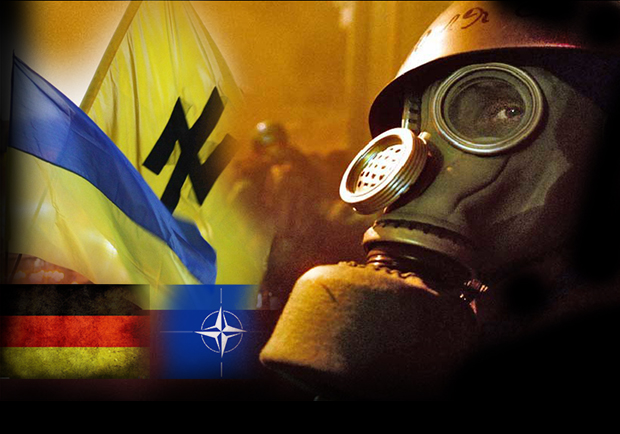
German Chancellor Olaf Scholz has announced plans to spend an additional €2 billion ($2.16 billion) on military needs, most of which is aimed at providing supplies to Ukraine, Reuters reported on Friday.
Citing a government source, the news agency said that approximately €400 million ($432.5 million) of the new money is being allocated to the European Peace Facility, a funding mechanism through which military aid is being procured for Ukraine. The remaining part of the additional funds will be deployed directly on supplies for Kiev, among other needs.
The decision of the German authorities to send weapons to Ukraine, which was announced two days after Moscow’s launch of its military operation, marked a major shift in Berlin’s policy of not providing Kiev with lethal weapons.
Soon thereafter, Scholz announced a plan to beef up the German military, which has been plagued by equipment shortages for years. He pledged €100 billion ($112.7 billion) of the 2022 budget for the armed forces and committed to reaching the target of 2% of GDP spending on defense that is requested by NATO. However, later on the chancellor took a rather cautious approach when it came to the conflict in Ukraine.
Earlier this week, Scholz said that Germany would continue military supplies to Kiev but would send only “correct and reasonable” weapons and only in close coordination with its partners. Berlin also made it clear that it was not planning to send “offensive” weapons, such as tanks and other armored vehicles, despite Ukraine’s numerous requests.
Such a policy, along with the government’s reluctance to support the plans for an EU ban on Russian oil and gas, has prompted criticism from the Green Party, which controls the foreign and economy ministries. On Monday, Foreign Minister Annalena Baerbock urged the West to provide Kiev with heavy weaponry and appeared to criticize Scholz, stressing that “now is not the time for excuses.”
A senior Green MP, Anton Hofreiter, called the chancellor’s approach “damaging” not only to Ukraine but also to Germany’s reputation in Europe and in the world.
Many of his compatriots seem to agree. According to a recent poll conducted by the outlets ARD and Welt, 55% of Germans support supplying heavy weapons to Ukraine, while 37% do not back such an idea.
Initially, Berlin provided Ukraine with 1,000 anti-tank weapons and 500 anti-aircraft Stinger missiles. In mid-March, Germany said that due to security risks it would not disclose further information about supplies of weapons to Ukraine
NATO warships arrive to Baltic Sea
Samizdat | April 15, 2022
A group of NATO warships belonging to the Standing NATO Maritime Group 1 (SNMG1) and Standing NATO Mine Countermeasures Group 1 (SNMCMG1) have started arriving in the Baltic Sea to partake in joint exercises with allied and partnered nations, with some having already docked in a port in Tallinn, Estonia, according to a NATO press release published on Thursday.
The bloc announced the move on Monday, saying “NATO regularly deploys maritime forces in the Blatic Sea in order to maintain a credible and capable defensive capability in accordance with treaty obligations.”
The SNMG1 consists of flagships from the Netherlands, Denmark, Germany and the United Kingdom, while the SNMCMG1 is composed of Norwegian, Belgian, German, Estonian, British and Dutch mine layers and minesweepers.
These are two of a total of four task groups comprising ships from various allied countries that are continuously available to NATO to perform different tasks ranging from participation in exercises to operational missions.
Four ships from the SNMG1 group arrived at the Port of Tallinn on Thursday, where they were joined by the Canadian frigate HMCS Halifax (FFH 330).
“I am very pleased to welcome the SNMG1 teams in Tallinn,” said commodore Jüri Saska, commander of the Estonian Navy. “The call is especially important in the current security situation, in which our neighbor to the east has taken up arms against the freedom and independence of the people of Ukraine.”
Saska added that a strong maritime presence on NATO’s eastern border showcased the speed, flexibility and determination of the alliance to defend member states on land, by air and at sea.
The group is set to conduct routine operations and joint exercises with the Estonian Navy next week, which are intended to “improve interoperability among NATO forces and increase shared knowledge of maritime tactics, while promoting professionalism among sailors, cultural understanding and trust,” according to the NATO press release.
Le Pen promises to pull France out of NATO
By Uriel Araujo | April 15, 2022
NATO now has become one of the most important issue in Europe, with the new developments in Sweden and Finland, and electoral impacts in France. French Presidential candidate Marine Le Pen (who heads for the second round to be held on April 24) has vowed to pull France out of NATO’s military command. It would not be unprecedented, as the country did it in 1966. Le Pen claims the alliance structure “perpetuates the anachronistic and aggressive logic of the Cold War bloc”.
France was one of the Alliance’s founding members in 1949 and even hosted it for 15 years. This was a major event in French history. To help French ordinary citizens to accept the presence of foreign troops on their territory in times of peace, films like À votre service were shown in movie theaters, as part of a NATO PR campaign, so to speak. France’s relationship with the Anglo-Saxon structure (which is hegemonic within NATO), and with the alliance itself has always been complex, and Le Pen’s promise should be understood in this context and not necessarily as mere “extremism”.
In doing so, if elected, Le Pen would be in fact following the steps of general Charles de Gaulle (who ruled the country 1940-46 and 1958-1969). The conservative French leader wanted a truly independent nuclear France who would engage with Washington on more equal terms, becoming perhaps a kind of third force in the then Cold War’s bipolar world and even possibly reaching a détent with the USSR. The British-American “special relationship” was seen by him as detrimental to Europe.
Moreover, the US veto power regarding nuclear weapons also prevented Paris from pursuing its own atomic goals. Unable to place France in the tripartite directorate he proposed in his 1958 memorandum to US President Dwight Eisenhower and UK Prime Minister Harold Macmillan, de Gaulle refused to sign the 1963 agreement against nuclear testing – and, by 1969, France was already a fully fledged nuclear power. He also vetoed British entry into the European Union in the same year and, in 1964, told West Germany it should cease to follow a policy subordinated to Washington and adopt one for European independence (albeit not hostility). Of course, no NATO country followed his lead.
Isolated, France went on to withdraw from the Alliance’s so-called integrated military structure in 1966 (although not completely leaving the Treaty) and expelled all of its headquarters and units on French territory. It was President Nicolas Sarkozy who finally ended Paris “estrangement” from the organization in 2009 – so it took 43 years for Paris to change its course.
Even though Paris still hosted some NATO meetings and civilian structures, the spirit of Gaullism still shaped to some degree French strategic thinking during the Cold War, and the NATO-France relationship alternated between phases of rapprochement and tension. It was President Miterrand who started to bring France back into the Alliance’s integrated military command. And even so, it has been a kind of “flexible membership” (as it is often described).
Charles de Gaulle was one of the most important political leaders of the 20th century and even so, France remained relatively isolated in the European continent pertaining to its stance on NATO during the time of his leadership. He also faced several challenges, as the European countries acted in concert to try to neutralize many of his efforts. One cannot really tell whether Le Pen would be up to such a task, and estranging from NATO in any case is obviously not so simple, but the current situation on the other hand is also full of contradictions from a French and European perspective.
Meanwhile, on April 13 both Finland and Sweden took a major step towards joining NATO. In their joint press conference, the Prime Ministers Sanna Marin (Finland) and Magdalena Andersson (Sweden) both claimed that the security landscape in the continent has changed. Marin stated that Finland which shares a border with Russia will decide within weeks whether to join the Alliance. While a tight majority in Sweden now are in favor of joining the Atlantic Alliance, according to a recent poll, about 70% of Finnish people back it and this figure has more than doubled since the current Russian-Ukrainian war started.
Currently, both Nordic countries are NATO partners, since they abandoned their previous neutral stance by joining the European Union in 1995 and thus take part in military exercises and intelligence exchange, but they are not full-fledged members. Both countries were publicly assured by NATO secretary general Jens Stoltenberg that their applications would indeed be welcome, and they also received public support from Germany, France, and the UK. Joining or leaving the Alliance is not so simple – an application to join it must be accepted by all 30 member states, and this should take a minimum of four months and probably at least a whole year to be processed. In any case, it will be seen by Moscow as yet another provocation, amid a situation of escalating tensions.
Experts such as University of Chicago political scientist John Mearsheimer have been warning since 2014 that the ongoing Ukrainian war was mainly the West’s fault and Mearsheimer maintains it remains the West’s fault to this day. NATO’s constant expansion breaking the 1990 promises that were made during the fall of the Soviet Union as well as Washington’s policy of “encircling” and “containing” Moscow have cornered it to its limits. As Russian President Vladimir Putin said in December 2021: “What would Americans do if we went to the border between Canada and the U.S. or to the border with Mexico and deploy our missiles there?” Mearsheimer also warns that should tensions escalate, there is a real risk of a nuclear war.
Today the world faces the risks of a global food crisis and hunger, as well as on-going international energy crises, and a migration crisis in Europe. It is up for responsible Western leaders to open communication and dialogue channels with the Kremlin. Further provoking Moscow at this point is simply irresponsible and not in Europe’s best interests. France could thus play a key role in the continent. The EU in fact now faces the hard choice between being a self-dependent Europe or an Atlantic Europe.
Uriel Araujo is a researcher with a focus on international and ethnic conflicts.
Should We Commit to Fight Russia — for Finland?
BY PAT BUCHANAN • UNZ REVIEW • APRIL 15, 2022
The prime ministers of Sweden and Finland, Magdalena Andersson and Sanna Marin, both signaled Wednesday that they will likely be applying for membership in NATO.
The “prospect” is most “welcome,” says The Washington Post: “Finland and Sweden Should Join NATO.”
The editorial was titled “A Way to Punish Putin.”
Before joining the rejoicing in NATO capitals, we might inspect what NATO membership for these two Nordic nations would mean for the United States.
Finland is a nation the size of Germany, but with a population only 4% of that of Russia and a border with Russia that is 830 miles long.
Should Finland join NATO, the United States, under Article 5 of the NATO treaty, would be obligated to go to war with the world’s largest nuclear power to retrieve Finnish lands that an enraged Russia might grab.
Moscow has already indicated that, should Sweden and Finland join NATO, Russia will introduce new nuclear weapons into the Baltic region.
Why is it wise for us to formally agree, in perpetuity, as NATO is a permanent alliance, to go to war with Russia, for Finland?
Given the war in Ukraine and concomitant crisis in Eastern Europe, it is understandable why Stockholm and Helsinki would seek greater security beneath the U.S. nuclear umbrella.
But why would we voluntarily agree to give Sweden and Finland these war guarantees? Why would we commit to go to war with Putin’s Russia, a war that could, and likely would, escalate to the use of tactical nuclear weapons, especially if Russia were losing?
Finland was neutral during the Cold War. Sweden has been neutral since the Napoleonic wars of the early 19th century.
How did we suffer from their neutrality?
In Helsinki and Stockholm, the benefit of a U.S.-NATO commitment to go to war for Finland or Sweden is understandable.
But how does it benefit our country, the USA, to be obligated to go to war with a nation that commands the world’s largest stockpile of nuclear weapons — over some quarrel in the Baltic Sea or Gulf of Finland that does not affect us?
Asked for his view on Sweden and Finland’s campaign to join NATO, Putin spokesman Dmitry Peskov had a note of warning:
“We have repeatedly said that the (NATO) alliance remains a tool geared towards confrontation and its further expansion will not bring stability to the European continent.”
Should Putin’s Russia clash with Finland or Sweden today, the U.S. is free to respond, or not to respond, as it sees fit, depending on our own assessment of risks and rewards.
Why not keep it that way? Why surrender our freedom of action in some future collision involving our main adversary?
History holds lessons for us here.
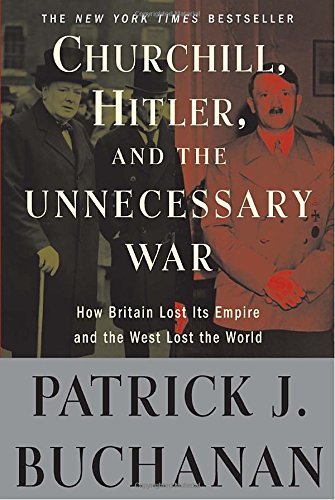
In March 1939, six months after Munich, when Czechoslovakia disintegrated into its ethnic components, Britain issued an unsolicited war guarantee to Poland, then negotiating with Germany over the port city of Danzig taken from Germany by the victorious Allies after World War I.
When Germany, on Sept. 1, 1939, invaded Poland, Britain was obligated to declare war on Germany over a matter that was not a vital interest of Great Britain or its worldwide empire.
Lest we forget, it was the Bucharest Declaration of 2008, opening the door to membership in NATO for Ukraine and Georgia, that led to the recent crises in Eastern Europe and the current war.
The Russia-Georgia War of August 2008, the U.S.-backed coup in Ukraine in 2014, and Putin’s annexation of Crimea, Luhansk and Donetsk in eastern Ukraine all proceeded from NATO’s decision in 2008 to open the door to membership for Georgia and Ukraine.
Russia’s invasion of Ukraine today is partly due to the U.S. and Ukraine’s refusal to rule out NATO membership for Kyiv.
No NATO nation today has a border with Russia nearly as long as that of Finland. If Finland joins NATO, will we put U.S. boots on the ground along that 830-mile border with Russia? Will U.S. warplanes fly in and out of Finnish airfields and air bases up to the border of Russia?
Collective security is said to be a good idea.
But the core of NATO security is provided by U.S. war guarantees, while most of the collecting is done by our 29 NATO allies, which could become 31 by summer’s end.
Otto von Bismarck predicted that the Great War, when it came, would be ignited by “some damn fool thing in the Balkans.”
And World War I was indeed triggered by the assassination of the Austrian archduke in Sarajevo in June 1914. The Germans came in in part because the kaiser had given Austria a “blank check” for war.
What enabled America to stay out of both world wars for years after they began was our freedom of “entangling alliances” when they began.
But today we not only lead an alliance of 30 nations, but we are adding two more members, one of which has a border of 830 miles with Russia.
How long does our luck last?
Featured Video
Death Spikes & Rising Cancer In Our Youth Explained
or go to
Aletho News Archives – Video-Images
From the Archives
Politicians lie
By Mazin Qumsiyeh | Popular Resistance | August 18, 2013
There is no way to say this truth nicely: Politicians lie. That includes Japanese, American, Egyptian, Israeli, and Palestinian politicians! Is there something more common sense than that? Yet, so many citizens around the world believe their own politicians or wistfully acknowledge lies but think it is part of the job needed to run things. They believe even when politicians contradict themselves blatantly. This phenomenon is rather remarkable. It is a dissonance and disconnect from reality that many seem oblivious to. It is very dangerous because it can lead to accepting rationales for going to war. These can be deadly wars that lead to millions of lives lost as happened in what was called World War 1 and WW2. Even when incredible and declassified evidence abound, politicians continue to lie and old mythologies refuse to die. Here are just a few of the countless lies told to us over the past few decades… continue
Blog Roll
 Aletho News
- From Unipolar Universalism to Multipolar Civilizational Distinctiveness
- RSF military group defects, joins Sudanese army: State media
- Ireland goalkeeper refuses to play ‘Israel’ as squad weighs boycott
- China pushes back against US on Cuba, Iran
- Ukrainian Soldiers, Potential Mercenaries: Have Gun, Will Travel!
- Burnham’s UN debut… A masterclass in British disinformation
- Iran flights continue despite US aviation sanctions
- Global Tipping Points Lead the World Into a State of Entropy
- The day-after at the White House: USA and Xi Jinping
- The Geopolitical Balance in the Red Sea: The UAE Being Displaced by New Players
- If Americans Knew
- Deconstructing Netanyahu’s pants-on-fire UN rant – Daily Update
- Trump betrayed voters with his campaign lies and prioritized a foreign country once he took office
- Netanyahu calls Israel’s war in Gaza ‘opposite of genocide’ in UN speech to near-empty hall
- Settler Kidnappings: Torture, Sexual Abuse and Terrorisation of Palestinian Abductees as Israel Deepens Annexation of West Bank
- Gaza winter nears as 162,000 tents become unusable, raising fears of humanitarian crisis
- Netanyahu says, “It’s the opposite of genocide”; UN says Gaza economy is world’s ‘most severe crisis on record’ – Daily Update
- Israel’s US-Backed Assault on Gaza Has Created the ‘World’s Most Severe Economic Crisis on Record’: UN
- ‘Protecting U.S. Citizens’… From Israel
- ‘This is where I live now, the back of a truck’: a day in the life of a grandmother in Gaza
- In UN Speech, Iran’s President Displays Pictures of Children Killed by US, Brings Attention to Israel’s Nuclear Arsenal
- No Tricks Zone
- New Study: Earth And Venus Surface Warmth Largely Explained By Convection And Lapse Rate, Not CO2 Or Radiation
- 2025 Nature Paper Claiming Worsening Global Drought Gets RETRACTED …Heavily Flawed
- New Study: ‘Global Drought Shows No Detectable Recent Acceleration Under Climate Warming’
- Economic Masterminds: German Socialists Suggest Taxing Productivity Gains Stemming From Using AI
- The South China Sea Has Not Been Cooperating With The Climate Change Narrative
- Energy Crisis: Germany Enters Heating Season With Historically Low Gas Reserve Fill Levels
- New Study: The Antarctic Ice Sheet Gained Mass From 2020-2024 Due To Staggering Snow And Ice Accumulation
- Study: Ocean Heating Rates From Thousands Of Years Ago ‘Dwarf’ Modern Ocean Heating Rates
- Climate Extremists Target, Attack Large-Scale Power Grid Infrastructure In Germany!
- New Study: Antarctic Ice Melt Has Contributed Less Than 1 Centimeter To Sea Level Rise In The Last 30 Years

