US Afghan Military Arsenals are Up for Sale
By Vladimir Platov – New Eastern Outlook – 26.03.2022
While the exact number of US weapons, vehicles, aircraft and military equipment seized by the Taliban after the US and its allies had fled Afghanistan is unknown, the preliminary value of this lethal commodity is estimated by various experts at around $85 billion. In Kunduz, Afghanistan, regular Taliban military displays and military parades show, for example, US-made M1117 armored personnel carriers and other weapons that the Taliban have inherited from the US and have not yet been sold to Pakistan or other countries. Of course, the US military and intelligence agencies will work to assess what ended up in Taliban hands, as US decision-makers have already indicated their desire for more information on the weapons seized, but this will take time. In late 2021, experts at the Center for International Policy in Washington published a study, “US Weapons Stockpiles in Afghanistan”, which noted that over two decades of war, the US had moved weapons, equipment and other materiel worth many tens of billions of dollars into the country. With Afghanistan’s bank accounts blocked and the dire humanitarian and economic situation in the country, the funds that could be raised by the Taliban from the sale of these arsenals are significant.
According to information from Afghanistan and neighboring countries, as well as from the Calibre Obscura blog, which specializes in black market arms analysis, the Taliban are willing to exchange some NATO military equipment for other weapons needed to fight in the difficult geographical conditions of their country. The Taliban plan to use the proceeds from the sale of “surplus” arms to buy food as the country is likely to face starvation after a long crisis.
The sale of US army and allied assets left behind by the hasty withdrawal of the NATO contingent has already begun in the markets of Afghanistan. In particular, body armor, military uniforms, boots, tents, dishes and much more have long been on sale. Most of the trophies are taken from warehouses that NATO has handed over to the Afghan army. It is noted that the Taliban are not asking more than $100 for a body armor, and about $50 or less for a helmet. New S&W Sigma SV9VE pistols are being sold for a third of the market price in Kandahar. In Herat, one can easily buy carbines and assault rifles at the market. Some of the weapons are sold by the Taliban themselves, some by locals who have looted US army bases and barracks.
Grey Dynamics website reports that the Taliban have begun selling off their weapons stockpiles to various groups in neighboring countries. According to their information, the weapons have ended up in the hands of the Balochistan Liberation Front (based in Iran), the Tehrik-e-Taliban-Pakistan and other extremist groups banned in the Russian Federation. Experts suggest that the weapons could resurface in neighboring states, particularly in the Central Asian republics.
It is estimated that Afghanistan could soon become the world’s largest arms seller, causing a spike in crime in the region. Previously, Iraq and, in part, Syria served as this type of arms market. Before them, it was Albania. But Afghanistan can give everyone a head start. After all, just by the most conservative estimate, the US has left about a hundred thousand pieces of small arms alone there. As can be seen from the data published in open sources, there are among the Afghan trophies the blast-resistant US-made wheeled armored vehicles to transport troops; more than two dozen light turboprop attack aircraft A29 Super Tucano (manufactured by Embraer, Brazil); more than 30 Mi-17 transport helicopters, which previously the US purchased from the Russian Federation for the Afghan government forces, as well as no less number of UH-60 Blackhawk transport helicopters and many other state-of-the-art military equipment.
According to separate media reports, the Taliban may decide to sell some of the wheeled armored vehicles to interested countries – the PRC, Turkey and all other states intending to explore US weapons. In particular, according to regional media reports, Chinese defense industries will be able to buy several UH-60 Blakchawk helicopters from the Taliban through Pakistani intermediaries to disassemble and study engine designs. Some of the A-29 Super Tucano strike aircraft may be sold off piecemeal to countries that have established close military and political contacts with the movement’s leadership (in particular, Saudi Arabia, the UAE, Qatar).
The Taliban’s determination to sell off seized military arsenals has only intensified in the absence of news of a possible unlocking of Afghanistan’s foreign exchange reserves by the US.
The Taliban themselves continue to have at their disposal attack aircraft and helicopters that are effective for combat operations in the region, including American, Russian and Brazilian-made aircraft. The Taliban are now offering large sums of money to pilots and airmen who have joined the group, and according to some reports the sums on offer are higher than those previously paid by the government in Kabul. It is known that a number of Kunduz Airbase personnel have already joined the Taliban, and there is a possibility that in the near future the Taliban will have their own air force, albeit on a limited scale.
However, even if the Taliban can obtain serviceable aircraft, they will inevitably face a maintenance problem. But the benefit to the Taliban from their presence remains so far limited by weak logistical and maintenance capabilities. The Taliban may well be able to put pilots in aircraft to make a few sorties, as they have already done, such as at a celebratory parade after the final withdrawal of US troops. But they will almost certainly need outside help to keep the aviation they have received in good working order. And the very number of qualified military pilots the Taliban have is clearly small. Moreover, Afghans are excluded from the global supply chain needed to access spare parts. And while they might be able to dismantle a few aircraft to service others, this model of combat aviation maintenance is highly unsustainable. However, it is quite possible that some external partners – Pakistan, Qatar or others – could provide the necessary assistance to the Taliban.
Furthermore, it should not be forgotten that, thanks to modern information technology and social media, the Taliban can find training programs on the use of even highly sophisticated NATO left-over military equipment and train the number of “operators” they need. Meanwhile, it is quite possible that there could be a strengthening of their “cooperation” in the near future, including in the form of the sale of their existing military equipment at quite reasonable prices or as part of “brotherly aid” to Muslims “fighting for freedom”.
Biden’s reality check in Europe
BY M. K. BHADRAKUMAR | INDIAN PUNCHLINE | MARCH 26, 2022
The takeaway from the US President Joe Biden’s European tour on March 25-26 is measly. Dissenting voices are rising in Europe as western sanctions against Russia start backfiring with price hikes and shortages of fuel and electricity. And this is only the beginning, as Moscow is yet to announce any retaliatory measures as such.
The unkindest cut of it all is that the Russian Defence Ministry chose Biden’s trip as the perfect backdrop to frame the true proportions of success of its special operation in Ukraine. The US and NATO’s credibility is perilously close to being irreparably damaged, as the Russian juggernaut rolls across Ukraine with the twin objectives of ‘demilitarisation’ and ‘denazification’ in its sights.
The Russian General Staff disclosed on Friday that the hyped up Ukrainian Armed Forces, trained by NATO and the US, have sustained crippling losses: Ukrainian air force and air defence is almost completely destroyed, while the country’s Navy no longer exists and about 11.5% of the entire military personnel have been put out of action. (Ukraine doesn’t have organised reserves.)
According to the Russian General Staff’s deputy head Colonel General Sergey Rudskoy, Ukraine has lost much of its combat vehicles (tanks, armoured vehicles, etc.), one-third of its multiple launch rocket systems, and well over three-fourths of its missile air defence systems and Tochka-U tactical missile systems.
Sixteen main military airfields in Ukraine have been put out of action, 39 storage bases and arsenals destroyed (which contained up to 70% of all stocks of military equipment, materiel and fuel, and more than 1,054,000 tons of ammunition.)
Interestingly, following the intense high-precision strikes on the bases and training camps, foreign mercenaries are leaving Ukraine. During the past week, 285 mercenaries escaped into Poland, Hungary and Romania. Russian forces are systematically destroying the Western shipment of weapons.
Most important, the mission to liberate Donbass is about to be accomplished. Simply put, the main objectives of the first phase of the operation have been achieved.
Apart from Kiev, Russian troops have blocked the northern and eastern cities of Chernigov, Sumy, Kharkov and Nikolaev, while in the south, Kherson and most of Zaporozhye region are under full control — the intention being to not only to shackle Ukrainian forces but to prevent their grouping in Donbass region. (See my article Dissecting Ukraine imbroglio, Tribune, March 21, 2022)
“We did not plan to storm these cities from the start, in order to prevent destruction and minimise losses among personnel and civilians,” Rudskoy said. But, he added, such an option is not ruled out either in the period ahead.
It stands to reason that Washington and European capitals are well aware that the Russian operation is proceeding as scheduled and there is no stopping it. Thus, NATO’s extraordinary summit on March 24 confirmed that the alliance is unwilling to get into a military confrontation with the Russian Army.
Instead, the summit decided to strengthen the defence of its own territories! Four additional multinational NATO combat groups of 40,000 troops will be deployed in Bulgaria, Hungary, Romania and Slovakia on a permanent basis. Poland’s proposal to deploy NATO military units in Ukraine was outright rejected.
However, Poland has certain other plans, namely, to deploy contingents to the western regions of Ukraine to support the ‘fraternal Ukrainian people” with the unspoken agenda of reclaiming control over the historically disputed territories in the those regions. What Faustian deal has been struck in Warsaw on March 25 between Biden and his Polish counterpart Duda remains unclear. Clearly, vultures are circling Ukraine’s skies. (See my blog Biden wings his way to the borderlands of Ukraine, March 24, 2022)
Indeed, if Poland makes a bid for Ukrainian territory (with Biden’s tacit support), would Belarus be far behind to take control of the regions of Polesie and Volyn in Ukraine? Possibly not. Suffice to say, in the period since the CIA-backed coup in Kiev in 2014 when the US moved into the driving seat, Ukraine has lost its sovereignty and is now perilously close to vanishing altogether from Europe’s map!
Washington — Biden personally, having been the Obama administration’s point person in Kiev in 2014 — should carry this heavy cross in history books.
As for European leaders, they find themselves in a surreal world, out of touch with the stunning realities of a new world order. Eighty-year old Biden with limited grasp of the torrential flow of events, made an astounding proposal in his press conference in Brussels on Thursday that Ukraine should replace Russia in the G20!
But Biden has a soulmate in the European Commission chief Ursula von der Leyen whose latest threat is that Russian oil and gas companies “will not be allowed to demand payment for fuel in rubles.” She is blissfully unaware that the EU has no more effective means to pressure Russian companies!
Russian President Vladimir Putin caught the western leaders huddled in Brussels by surprise with his announcement that Russia will promptly start charging “unfriendly” countries in rubles for gas supplies. There are over 45 unfriendly countries on the list — the US and EU members plus the UK, Australia, Canada, Singapore, Montenegro and Switzerland. (See the RT’s explainer What buying gas in rubles means for Russia and the West.)
Effectively, Moscow is on the one hand strengthening the weakened ruble, while on the other hand, messaging that it is pioneering a new wave internationally to bypass the dollar as commodity currency.
Yet, Moscow is also continuing to routinely supply Russian gas for transit to Europe through Ukraine to meet the requests of European consumers (109.5 mln cubic meters as of March 26!) The point is, despite rhetoric and grandstanding, Europe recently increased its gas purchases from Russia significantly against the backdrop of astronomically high spot prices!
The European Council meet at Brussels on March 25 with Biden in attendance failed to adopt any concrete measures to address the energy price growth, and could not come up with a unified approach to Russia’s decision to receive payments for its gas only in rubles.
Apropos the European Commission’s proposal to establish a new system of common purchase of gas to prevent outbidding, the final statement of the European Council merely says that the leaders agreed to “work together on voluntary common purchase of gas, LNG and hydrogen,” meaning that common purchases may be carried out only by those EU countries who are willing to unite. [Emphasis added.]
It is a long haul for Europe to dispense with Russian gas. Serbian President Aleksandar Vucic said yesterday: “There are gas shortages, and that is why we need to talk to Russians. Europe will move towards reducing its dependence on the Russian gas, but can this happen in the coming years? This is very difficult.”
“Europe consumes 500 billion cubic meters of gas, while America and Qatar can offer 15 billion, up to the last molecule… That is why German and Austrian politicians told me: “We cannot just destroy ourselves. If we impose sanctions on Russia in the oil and gas domain, we will destroy ourselves. It’s like shooting yourself in the foot before rushing into a fight. This is how certain rational people in the West see it today.”
With the doomsday predictions of Russian military failure in Ukraine coming unstuck and the blowback from Russia sanctions beginning to bite, Europeans are caught in a bind. They will be resentful as time passes.
China refutes NATO secretary general’s misinformation accusation
By Du Qiongfang | Global Times | March 24, 2022
Chinese Foreign Ministry spokesperson Wang Wenbin said on Thursday that time will prove China stands on the right side of history and groundless accusations will collapse, refuting an allegation from NATO Secretary General Jens Stoltenberg that “China has provided Russia with political support by spreading lies and misinformation.”
When asked about Stoltenberg’s allegation at Thursday’s press briefing, Wang said the accusation against China itself is spreading disinformation.
With an objective and fair attitude, China has made active efforts to realize an immediate ceasefire, to avoid a humanitarian crisis and to restore peace and stability, Wang said, adding that Ukraine should be a bridge between the East and the West, not an outpost in major power rivalry.
“We need calm and rationality to defuse a crisis rather than ignite the fire and add more fuel to the fire; we need dialogue and communications to resume peace instead of using pressure and coercion; to achieve lasting peace and stability, we need to accommodate the legitimate security concerns of all parties, rather than promote collective confrontation and seek absolute security,” Wang said.
He added that China’s stance is in line with the wishes of most countries and it stands on the right side of history as time will tell. Any groundless accusations and suspicions against China are indefensible and will simply collapse.
The West thinks the war is about defending democracy and freedom but in reality it’s about security in the European geopolitical landscape, so the Ukraine crisis is not about differences in social systems or ideology, Yang Xiyu, a senior research fellow at the China Institute of International Studies, told the Global Times on Thursday.
Wang said that European countries should uphold the principle of strategic autonomy and work with Russia and Ukraine and other relevant countries to build a balanced, effective and sustainable European security architecture through dialogue and negotiations. The US and NATO should also engage in dialogue with Russia to address the root cause of the Ukraine crisis.
Wang also said that there are many loopholes in the US’ responses to the international community, including China’s questions surrounding the US biological laboratories in Ukraine which Russian experts claimed to have revealed new facts pointing to the direct involvement of the US Department of Defense in the development of biological weapons components in Ukraine.
The best way for the US to prove its innocence is to open its doors and accept the test of the international community, Wang said.
The spectre that haunts Biden as he wings his way to the borderlands of Ukraine
The Russian special operation may after all be inching toward successful conclusion
BY M. K. BHADRAKUMAR | INDIAN PUNCHLINE | MARCH 24, 2022
By a queer coincidence, former US Secretary of State Madeline Albright passed away while President Joe Biden was travelling in Air Force 1 en route to Europe on what is probably the most crucial diplomatic mission of his presidency.
The general expectation is that 80-year old Biden is personally undertaking a mission to persuade the US’ European allies that the North Atlantic Treaty Organisation (NATO) should intervene in the Ukraine crisis in some way. And, ironically, Albright was the choreographer of the idea that in the post-cold war era, the NATO should reinvent itself and transform as a global security organisation.
Albright, like most American diplomats of East European descent, was passionately devoted to the NATO. She supported the alliance’s brutal military intervention in Yugoslavia in 1999 and would have supported an intervention in Ukraine.
The White House spin is that Biden will discuss additional sanctions against Russia. But the possibility of new restrictions has waned following the EU foreign and defence ministers’ meeting on Monday where a decision was taken to put off further sanctions.
The EU meeting instead assessed that the ongoing Ukraine-Russian talks should proceed further and even if upbeat predictions may not be entirely correct, since the talks are challenging, the good part is that neither party has complained of any deadlock in the negotiations so far.
Conceivably, Biden is travelling to Europe not to discuss tougher sanctions (something which he could as well have handled in a videoconference) but to explore NATO’s potential engagement in the Russian-Ukrainian conflict for which his participation becomes absolutely essential.
As things stand, there is every possibility of a prolonged conflict in Ukraine and Russia eventually prevailing. Such a scenario is extremely damaging for Biden politically in the US. Biden is facing domestic criticism both for his failure to prevent the conflict as well as for being ineffectual in blocking the Russian advance.
While the US rhetoric pillories Russia for “war crimes” and the humanitarian crisis in Ukraine, et al, the world capitals view this as a geopolitical confrontation between America and Russia. Outside of the western camp, the world community refuses to impose sanctions against Russia or even to demonise that country.
The world community steers clear of taking sides between the US and Russia. The Islamabad Declaration issued on Wednesday after the 45th meeting of the foreign ministers of the fifty-seven member Organisation of Islamic Conference refused to endorse sanctions against Russia and instead counselled cessation of hostilities in Ukraine, avoidance of loss of lives, enhancement of humanitarian assistance and a “surge in diplomacy” — almost ditto China and India’s stance.
Not a single country in the African continent and West Asian, Central Asia, South and Southeast Asian region has imposed sanctions against Russia. Following a visit to Hanoi, Malaysian PM Ismail Sabri Yaakob said, “We discussed the Russian-Ukrainian conflict and agreed that Malaysia and Vietnam will remain neutral on this issue. As for sanctions against Russia, we do not support them. The sides do not support unilateral sanctions; we recognise only restrictions that could be imposed by the UN Security Council.” This is the consensus within ASEAN too.
Interestingly, Chinese Councillor and Foreign Minister Wang Yi was the chief guest at the OIC meeting in Islamabad. In his remarks, Wang Yi said, “China supports Russia and Ukraine in continuing their peace talks, and hopes that the talks will lead to ceasefire, end the fighting, and bring about peace. Humanitarian disasters should be avoided, and spillover of the Ukrainian crisis should be prevented so as not to affect and harm the legitimate rights and interests of other regions and countries.”
The Chinese foreign ministry press release on Wang Yi’s meeting with the Saudi Arabian Foreign Minister Faisal bin Farhan Al Saud said, “As to the Ukraine issue, the two sides agreed that all countries’ sovereignty and territorial integrity should be respected and their reasonable security concerns should be taken seriously. It is imperative to prevent any humanitarian crisis, maintain the peace talk process and resolve conflicts through dialogue and negotiation. Both sides emphasised that all countries have the right to make independent judgements, withstand external pressure, and disagree with the simple logic of “black or white” and “friend or foe”.
Again, the Chinese press release on Wang Yi’s meeting with his Egyptian counterpart Sameh Shoukry said, inter alia, “The two sides exchanged views on the Ukraine issue, and agreed to respect the sovereignty and territorial integrity of all countries and stay committed to a comprehensive solution to the current crisis. Shoukry said, Egypt opposes some countries exerting pressure on China and stands for strengthening cooperation rather than escalating confrontation.”
Curiously, four foreign ministers from West Asia travelled to Moscow last week to discuss the bilateral cooperation — from Qatar, Iran, Turkey and the UAE.
Nonetheless, the outcome of Biden’s visit to Europe will have significant bearing on the conflict in Ukraine. If Biden succeeds in getting European backing for his proposal for a NATO intervention in Ukraine, the conflict may escalate dramatically into a world war involving nuclear weapons.
Will Biden push the envelope? It seems he’s unwilling to risk. Biden seems to have a Plan B as well. He has scheduled a separate visit to Warsaw. Poland indeed has its fair share of Russophbes and has been straining at the leash for some form of involvement in Ukraine.
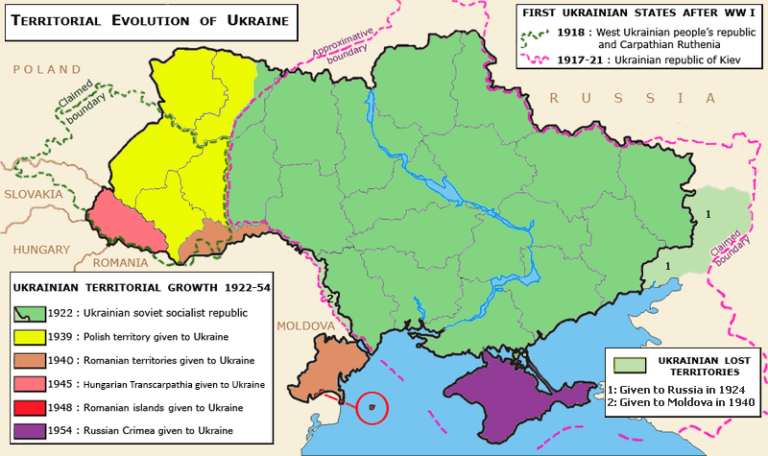
The heart of the matter is that Poland also has an axe to grind. Parts of Poland comprise today’s ethnically mixed western borderlands of Ukraine — oblasts of Zhytomyr, Khmelnytskyi and Lviv. If Ukraine fragments or collapses in defeat, Poland will most certainly seize the opportunity to reclaim its lost territories. Poland’s hyper-activism over Ukraine is self-evident.
Incidentally, in recent days, former Polish Foreign Minister Radoslaw Sikorski and Ukrainian Deputy Prime Minister Iryna Vereshchuk have both accused Budapest of trying to lay its hands on Ukraine’s largely Hungarian-populated Transcarpathian region. On Tuesday, Sikorski alleged in a tweet that Hungarian PM Viktor Orbán and President Vladimir Putin reached a secret agreement on the partition of Ukraine!
On the same day, Iryna Vereshchuk complained in a Facebook post: “The way the Hungarian leadership has been treating Ukraine lately is even worse than some of the Russian satellite states of the former Soviet Union. Hungary does not support the sanctions. They don’t provide weapons. They don’t allow transit of weapon supplies from other countries. They say ‘no’ to virtually everything.”
Biden cannot but be exploring with the Polish leadership possibilities that fall short of an outright NATO intervention in Ukraine. The spectre that haunts the Biden administration, despite the swagger of its media bluster, is that the Russian special operation may after all be inching toward successful conclusion, creating a large buffer of regions on the eastern side of the Dnieper river, and gaining control of Black Sea coastline that denies access to NATO ships.
Poland becomes a key stakeholder in such an outcome and Washington surely regards Warsaw as its number one interlocutor in the developing situation, as the fate of Ukraine hangs in the balance.
Unindicted US War Criminal Passes

Photo by Paul Morigi/Getty Images for Concordia Summit
By Stephen Lendman | March 24, 2022
On Wednesday, former Bill and Hillary Clinton regime secretary of state Madeleine Albright passed away at age-84.
She won’t be missed.
Paul Craig Roberts noted that she “escape(d) the hangman’s noose” — for the worst of high crimes too grievous to ignore.
Years earlier, retired academic John Ryan called her a “baleful specter who haunted us almost as destructively as the current crop of malevolent functionaries” infesting Washington.
Instead of having “the decency to disappear…she (collected) honorary degrees” from academia in the empire of lies and abroad.
“(N)o one (took) time to put an effective spoke into her wretched wheel of legacy.”
As Clinton crime family UN envoy and secretary of state, she was complicit in a near-decade of crimes of war and against humanity.
It included the rape, destruction and dismemberment of the former Yugoslavia.
Notably, 23 years ago on March 24, 1999, the Bill and Hillary Clinton regime’s so-called Operation Noble Anvil (sic) began.
For 78 days, it continued relentlessly through June 10.
Around 600 aircraft flew about 3,000 sorties.
Thousands of tons of ordnance were dropped, as well as hundreds of ground-launched cruise missiles.
The ferocity terror-bombing over the time it lasted was unprecedented.
Nearly everything was targeted for maximum destruction and disruption, including:
power plants
factories
civilian transportation
telecommunications facilities
roads, bridges and rail lines
fuel depots
schools
a TV station
China’s Belgrade embassy
hospitals
government offices
churches
historic landmarks and more.
The former Yugoslavia ceased to exist.
The bloody hands of the Clinton crime family and Albright were all over what happened.
Commenting on the atrocity, the late Nobel laureate Harold Pinter called it “barbaric (and despicable), another blatant and brutal assertion of US power, using NATO as its missile (to consolidate) American domination of Europe.”
Throughout their time in office, the Clintons and Albright were indifferent to human suffering while consistently supporting wrong over right.
On her watch, the Clinton regime installed US-trained Rwandan Patriotic Army (RPA) General Paul Kagame in power.
Notably it was to use country as a platform to plunder neighboring resource-rich Congo (DRC).
The Clintons and Albright bore full responsibility for the 1994 Rwandan massacre that was unrelated to a fabricated Tutsi/Hutu conflict.
Enforcing genocidal sanctions on Iraq throughout the 1990s, Albright shared guilt with the Clintons for the deaths of about 1.5 Iraqis.
Most were young children. Around 7,000 died monthly.
Former UN humanitarian coordinator Dennis Halliday resigned in protest.
So did his successor Hans von Sponeck for the same reason, as well as World Food Program head in Iraq at the time, Jutta Burghardt.
They refused to be part of what they called “genocide.”
Notably in his resignation remarks, Halliday said the following:
“We are in the process of destroying an entire society. It is as simple and terrifying as that. It is illegal and immoral.”
Two days before resigning, von Sponeck said the following:
“As a UN official, I should not be expected to be silent to that which I recognize as a true human tragedy that needs to be ended.”
“How long should the civilian population, which is totally innocent on all of this, be exposed to such punishment for something they have never done?”
Throughout the 1990s to the 2003 Iraq war and its aftermath, the cradle of civilization was erased.
“Shock therapy” followed “shock and awe.”
So did repression, daily killings, deprivation, mass detentions, torture and other crimes against humanity.
Iraq was destroyed in similar fashion to what happened to the former Yugoslavia.
Albright shared blame for two of history’s greatest crimes.
Supporting aggressive use of NATO in defiance of international law, she was part of a regime that prioritized war-making and its mass slaughter and destruction.
In 1996, 60 Minutes host Lesley Stahl asked her the following:
“We have heard that a half million children have died” in Iraq since 1991.
“(That’s more children than died in Hiroshima…(I)s the price worth it?”
Albright replied: “I think this is a very hard choice, but the price – we think the price is worth it.”
Support for genocidal high crimes defined her involvement in the Clinton regime’s war on humanity.
In her 2003 memoirs, Albright said the following about her 60 Minutes remarks:
“I should have answered the question by reframing it and pointing out the inherent flaws in the premise behind it.”
“Saddam Hussein could have prevented any child from suffering simply by meeting his obligations.”
Not only were the above remarks made 7 years after her 60 Minutes interview, “reframing — as she put it— wouldn’t have infused life into the corpses of 1.5 million Iraqis who perished on her watch by sanctions war.
As Clinton regime UN envoy in 1993, she was also infamous for saying the following to General Colin Powell during a White House situation room session:
“What’s the point of having this superb military that you’re always talking about if we can’t use it?”
Later in his own memoir, Powell said:
“I thought I would have an aneurysm” on hearing what she said, adding:
Albright advocated use of US military personnel as “toy soldiers to be moved around on some global chessboard.”
Powell had his own cross to bear in the run-up to the Bush/Cheney regime 2003 Iraq war.
Knowing that Saddam eliminated all WMDs in the country years earlier, he lied, saying:
“(F)acts and Iraq’s behavior show that Saddam Hussein and his regime are concealing their efforts to produce more weapons of mass destruction (sic).”
“(E)very statement I make today is backed up by sources, solid sources (sic).
“What we’re giving you are the facts and conclusions based on solid intelligence (sic).”
“The gravity of this moment is matched by the gravity of the threat that Iraq’s weapons of mass destruction pose to the world (sic).”
Intelligence about Iraqi WMDs revealed their elimination. Powell pretended otherwise.
As the saying goes, the rest is history.
The same reality applies to Albright’s bloodstained hands.
Commenting on her death, the infamous NYT suppressed all of the above damning facts.
It failed to reveal the true measure of the woman behind the phony facade of diplomatic dignity — an unapologetic war criminal to the day she passed.
A special place in hell awaits her arrival.
The Return of the Hawks
By Sohrab Ahmari | Compact | March 22, 2022
Liberal hawks are flying high once more, talons extended for the hunt. For weeks now, Javelins, NLAWs, and other “defensive” arms have been flooding Ukraine, courtesy not just of the Pentagon, but good liberals and social democrats in Brussels, Berlin, Paris, Stockholm, Lisbon, Madrid, and elsewhere. Hawks dominate TV news and major editorial pages on both sides of the Atlantic, and their propaganda multiplies online, aided by friends in Silicon Valley.
A NATO no-fly zone over Ukraine would lead to a direct and possibly apocalyptic confrontation with nuclear Russia. Nonetheless, some hawks continue to press for it. When even The Guardian publishes claims that a NFZ “shouldn’t be off the table,” it becomes clear that a deep consensus is in formation. Judging by some polls, broad majorities in the West favor a perilously escalatory response to Vladimir Putin’s misbegotten invasion.
At home, war fever manifests in sordid expressions of Russophobia: attacks against Russian businesses, the effective “cancellation” of Russia’s literary and philosophical masters, the firing of Russian artists from Western orchestras and operas. Anyone who dares question the prudence of escalation, or the wisdom and justice of US and NATO policy toward Moscow, faces the usual censure and censorship so characteristic of the “open society.”
In short: It feels like 2002-2003 all over again.
That was when Western opinion, with precious few exceptions, cheered Washington as it bombarded Afghanistan and Iraq with democracy. The project’s failure was already apparent toward the end of George W. Bush’s first term, as the Iraqi insurgency hardened and “Fallujah” became synonymous with the grinding brutality of America’s post-9/11 wars. Yet it would take much longer for members of the interventionist uniparty to accept this reality; some never did.
The consequences of those years are familiar enough: hundreds of thousands of dead Iraqis and Afghans and thousands of allied service members killed; ethnic and sectarian wars; statelessness and terror; mass dislocation and migration; warlordism and bacha bazi and a booming opium trade. The dénouement came just a few months ago, when the Taliban dealt a humiliating blow to the liberal imperium, punctuating these two decades of disastrous adventurism. President Biden ignored the hawks’ spluttering—and pulled the plug on the “good war.”
Yet it is springtime again for the “democracy” export industry: for their governmental operatives (Undersecretary of State Victoria Nuland, ex-Ambassador to Moscow Michael McFaul), institutions (National Endowment for Democracy, Freedom House), and pet theorists (Bernard-Henri Lévy, Robert Kagan, Francis Fukuyama, Larry Diamond). As for media organs, the hawks’ takeover of mainstream, left-of-center outlets is so thorough as to render the old neoconservative bastions almost superfluous.
How did they pull off this astonishing comeback? One reason is that few of the politicians and pundits who promoted the regime-change wars paid a serious price. Fukuyama published a book-length reassessment in 2007. But penitent hawks were the exception, unreconstructed ones the norm. Even Fukuyama has now re-emerged as something of a hard-line liberal enforcer, overseeing a blog dedicated to fending off challenges to Democracy, Inc.
More typical is Nuland, whose résumé is proof that the existence of the American uniparty is no conspiracy theory—but a plain fact. Launching her career in the Clinton administration, she went on to advise Dick Cheney during the early Iraq War before being dispatched to Brussels as NATO ambassador in the second Bush term, followed by stints as State Department spokeswoman and assistant secretary of state under Obama. Now she is Biden’s pointwoman on Ukraine. In the in-between years—notice which administration she didn’t work for?—Nuland retreated to a think-tank redoubt, at Brookings, where her husband, Robert Kagan, the uber-hawk historian and adviser to the 2012 Mitt Romney campaign, is also a fellow.
Partisan differences mean nothing in these circles. What matters is commitment to Democracy, Inc.
To see such figures racking up sinecures and esteem, you wouldn’t know that they presided over an epochal fiasco, a supermassive black hole of imperial hubris and nitwitted idealism that swallowed entire nations, while weakening the United States. If some other state acted as Washington and its allies did under the hawks’ leadership—violating sovereignty willy-nilly, sowing chaos and civil war—the hawks would label that state “rogue” and seek regime change.
If the liberal West were an effective empire—or America a robust democratic republic—people like Nuland wouldn’t go from strength to strength. Yet they do. Following her role in the Benghazi debacle, which earned a gentle senatorial knuckle-rapping, Nuland in 2013 went down to Maidan Square to personally supervise the velvet revolution. The Ukrainians were promised integration, Westernization, NATO-ization—things Nuland and her bosses knew would raise blood pressures in the Kremlin, no matter who sat on the Russian throne. And here we are.
Fact is, Democracy, Inc. works concertedly to see off potential threats. In the aftermath of Trump’s election, for example, men like Carl Gershman, then head of the National Endowment for Democracy and Freedom House boss Michael J. Abramowitz convened defend-democracy meetings on both sides of the Atlantic. I know, because I was asked to participate as a writer with hawkish sympathies I have since renounced.
The goal, according to the formal documents: to counter threats to “our broad system of liberty . . . from outside our borders and from within.” The external threat emanated mainly from the Kremlin, which many of the attendees believed had installed Trump in the Oval Office; some no doubt still believe it. The internal threat was more or less understood to be Trump himself and his allies, as well as “the rapid rise of digital communication, [which] has posed unique challenges for democracy, including the viral spread of fake news.”
This all sounds innocuous until you realize that by “democracy,” Democracy, Inc. means the liberal imperium, at home and abroad. And “authoritarianism” refers to Trumpism and similar ballot-box movements across the Atlantic channeling popular discontent with the imperium. At the time, it puzzled me why one of Google’s main political men, ex-Bush official Scott Carpenter, was ubiquitous at these gatherings. It takes on a more sinister aspect in light of the Big Tech censorship regime that has since gagged everyone from congressional critics of mandatory masking to a former commander-in-chief of the United States.
Half a decade later, in response to the Russian invasion, the coalition organized by Gershman, et al., published a statement urging outsiders to “trust only official sources/of official Ukrainian institutions (national army, president, Ministry of Foreign Affairs of Ukraine, etc).” Nuance, complexity, context, hearing the other side—such things impede liberal interventionism’s grammar of assent. The 2003 déjà vu you’re experiencing is carefully manufactured.
Sohrab Ahmari is a founder and editor of Compact.
What About Pentagon and CIA Aggression Against Cuba?
By Jacob G. Hornberger | FFF | March 22, 2022
While the mainstream media and American statists remain transfixed on the Russian invasion of Ukraine, it’s difficult not to notice their moral blindness with respect to the evil and hypocrisy of the Pentagon and the CIA, which have spent years ginning up this deadly and destructive crisis as part of their political gamesmanship against Russia.
After all, let’s face it: When it was the Pentagon and the CIA invading Iraq and Afghanistan, the reaction of the mainstream media and American statists was totally opposite to how they have responded to the Russian invasion of Ukraine. During those deadly and destructive invasions, there was hardly ever any sympathy for the victims and instead accolades, praise, and glorification of the invaders. Don’t forget the daily mantra that everyone was exhorted to recite, “Support the troops!”
But let’s leave Iraq and Afghanistan aside and let’s go back to the early 1960s, when the CIA and the Pentagon were doing everything they could, including committing fraud, to induce President Kennedy to invade Cuba, which is every bit as sovereign and independent as Ukraine.
Let’s begin with a recent statement by U.S. State Department spokesman Ned Price, who was expressing the official position of the Pentagon and the CIA. Price stated that Russian President Vladimir Putin was trying to violate “core principles,” including “the principle that each and every country has a sovereign right to determine its own foreign policy, has a sovereign right to determine for itself with whom it will choose to associate in terms of its alliances, its partnerships, and what orientation it wishes to direct its gaze.”
Price was referring to Ukraine’s “right” to join NATO, the corrupt bureaucratic dinosaur that should have gone out of existence at the ostensible end of the Cold War. Price’s statement confirms, of course, the point I have long been making — that the war in Ukraine is not about freedom, it’s about NATO.
Keep Price’s statement in mind as we go back to the height of the Cold War and see how the Pentagon and the CIA were hell-bent on doing to Cuba what Russia is now doing to Ukraine.
That’s what the CIA’s invasion of the Bay of Pigs in Cuba was all about — an effort to invade the island for the sake of ousting the Castro regime from power and replacing it with another corrupt and brutal U.S. puppet dictatorship, such as that of Fulgencio Batista, the brutal pro-U.S. dictatorial puppet that the Cuban revolution succeeded in ousting from power.
But that’s not all there is to the Bay of Pigs story. As I detail in my new book An Encounter with Evil: The Abraham Zapruder Story, the Pentagon and the CIA were engaged in political gamesmanship against President Kennedy, who the CIA considered to be a neophyte president who could easily be manipulated into ordering an invasion of Cuba, one that would have been no different from Russia’s invasion of Ukraine.
The CIA told Kennedy that its invasion would succeed without direct U.S. military air and ground support. It was a lie — a deliberate, knowing, intentional lie. The CIA was just playing and maneuvering what they considered was an easily manipulable president. The CIA figured that once the invasion began faltering, Kennedy would have no choice but to send in air support, followed by a full-scale military invasion of Cuba. The Pentagon played its part in the fraudulent scheme by falsely telling Kennedy that the invasion had a high chance of success, when, in fact, the Pentagon knew otherwise.
In other words, the Pentagon and the CIA, who are both pontificating in righteous tones about Russia’s invasion of Ukraine, were manipulating a U.S. president into doing to Cuba precisely what Russia is now doing to Ukraine.
Kennedy refused to fall for the scheme and the CIA’s invasion went down to ignominious defeat at the hands of the communists, which is one big reason why the Pentagon and the CIA still maintain their brutal economic embargo against the Cuban people to this day. They’ve never forgotten or forgiven their defeat at the hands of the Cuban Reds.
Unfortunately, that was not the end of the story. After the CIA’s fraudulent fiasco at the Bay of Pigs, the Pentagon began exhorting Kennedy to undertake a full-scale military invasion of Cuba — yes, the same type of military invasion that Russia has undertaken against Ukraine.
This was when the Pentagon presented Kennedy with one of the most infamous plans in U.S. history, one based on falsehoods and fraud. It was called Operation Northwoods. The Pentagon succeeded in keeping it secret from the American people for some 30 years. It was uncovered in the 1990s by the Assassination Records Review Board, the entity that was charged with securing the release of JFK-assassination related records from the military, the CIA, the Secret Service, and the FBI, which had succeeded in encasing the assassination in “national security” rubric.
Operation Northwoods called for real terrorist attacks against American citizens, in which Americans would die. The attacks (and murders) would be carried out by Pentagon agents secretly posing as Cuban communists. The president would then use those attacks as a pretext for invading Cuba — an invasion no different from what Russia is now doing to Ukraine.
To his everlasting credit, and to the ire and rage of the military establishment, Kennedy rejected Operation Northwoods.
His relationship with the military did not improve when he walked out of a meeting in which the military was endorsing a plan to initiate a surprise full-scale nuclear attack on Russia, similar to the Japanese attack on Pearl Harbor, but with carpet bombing using nuclear bombs. That was when JFK stated in disgust as he left the meeting, “And we call ourselves the human race.’’
During the Cuban Missile Crisis, the Pentagon was doing everything it could to pressure Kennedy into ordering a full-scale bombing and military invasion of Cuba to retaliate for Cuba’s installation of Soviet nuclear missiles in Cuba. The Pentagon and the CIA took the position that Cuba didn’t have the “right” to do that.
Let’s revisit State Department spokesman Ned Price’s pontifical words with respect to Ukraine: “the principle that each and every country has a sovereign right to determine its own foreign policy, has a sovereign right to determine for itself with whom it will choose to associate in terms of its alliances, its partnerships, and what orientation it wishes to direct its gaze.”
Whoops! Well, except for Cuba! To Kennedy’s everlasting credit, he refused to succumb to the Pentagon’s pressure to invade Cuba. In fact, by this time he held the military-intelligence establishment in deep disdain, and, of course, the feeling was mutual. To the rage of the Pentagon and the CIA, Kennedy struck a deal with Russian Premier Nikita Khrushchev in which he vowed that there would be no more U.S. invasions of Cuba by either the Pentagon or the CIA.
Adding insult to injury, in a secret codicil to the agreement, Kennedy promised to remove the Pentagon’s nuclear missiles in Turkey that were aimed at the Soviet Union. Yes, you read that right: The Pentagon and the CIA claimed that Cuba had no “right” to install nuclear missiles in Cuba while maintaining that the Pentagon and the CIA had the “right” to install nuclear missiles in Turkey aimed at the Soviet Union.
That’s one reason why the Pentagon and the CIA knew that Russia would invade Ukraine when NATO threatened to absorb Ukraine. The absorption would enable the Pentagon and the CIA to install their nuclear missiles on Russia’s border. The Pentagon and the CIA knew that Russia’s reaction to that possibility would be no different from the Pentagon’s and the CIA’s reaction to the installation of Russian nuclear missiles in Cuba.
Needless to say, neither the Pentagon nor the CIA has ever apologized for their Cold War machinations against both Kennedy and Cuba. That, of course, is not surprising. The reaction of their Operation Mockingbird assets in the mainstream press is also not surprising.
What is disappointing, however, is how so many Americans refuse to acknowledge, criticize, and condemn this manifest evil and rank hypocrisy within their own country. As I point out in my book An Encounter with Evil: The Abraham Zapruder Story, that’s because all too many Americans, unfortunately, have come to view the national-security establishment as their god.
Does Nato want peace in Ukraine? It doesn’t sound like it
By Kathy Gyngell | TCW Defending Freedom | March 22, 2022
Is there a path to peace in Ukraine? That’s the title of an article published on The American Conservative website two weeks ago that has only just crossed my desk.
Douglas MacGregor, a retired US Army colonel, a senior fellow with The American Conservative, and former adviser to the Secretary of Defense in the Trump administration, asked the question. In the two since then, matters in Ukraine have become even more desperate and the need for a path to peace ever more urgent.
Casualties are in the thousands, while millions have fled the country seeking refuge abroad. At the time of writing, the deadline given by Russia’s Ministry of Defence for the embattled city of Mariupol to surrender has been rejected, with Ukraine’s deputy prime minister Iryna Vereshchuk saying there can be ‘no question’ of capitulation.
However, Ukrainian President Volodymyr Zelensky appears to be pressing for a negotiated end to Russia’s invasion while at the same time ramping up the rhetoric by drawing links between Putin’s ‘final solution’ for Ukraine and the Nazi extermination of the Jews. This last he voiced in his challenge Israel over its failure to impose sanctions on Russia.
Meanwhile, there is no sign of a US initiative to help negotiate a ceasefire – which is the path to peace that MacGregor says Joe Biden should follow, although the president’s words and actions thus far ‘have rendered this practically impossible’.
Fomenting violence in Ukraine against Russia – which is pretty much how MacGregor describes current US policy – is not the way to go, he believes. It is he says, and as we can already see, dangerous to Europe and to the larger world.
He says both realism and restraint are lacking. Even if on a tactical level the performance of Russian forces has been uneven, that perceived failure has had ‘no discernible impact on the operational level of war, where they continue to pursue, encircle, isolate and destroy Ukrainian ground forces’, MacGregor asserts.
The end of this tragedy, he writes, is not in doubt. Ukrainian forces in Eastern Ukraine will be annihilated or captured.
His words have fallen on stony ground. On Sunday, Biden’s ambassador to the United Nations warned that there was little immediate hope of a negotiated end to the war.
Ahead of a crucial Nato summit in Europe this Thursday that his President is due to attend, his words confirm MacGregor’s view that ‘the Washington elite remains committed to any course of action that promises to prolong the conflict and kill more Ukrainians’.
He says: ‘No one inside the Biden Administration or in the Senate seems remotely interested in crafting a ceasefire, let alone developing the basis for a potential solution that will save lives and halt the destruction.’
Yet, this is not without historic precedent, as per the several examples of US negotiated peace deals he sets out in his article – which you can read in full here.
Without a properly negotiated ceasefire of the order MacGregor advocates, food supply chains in Ukraine risk final collapse and a ‘wave of collateral hunger’ around the world as a result of the carnage in Ukraine is predicted.
This warning comes from the World Food Programme – whose concern is not limited to besieged cities such as Mariupol, where food and water supplies are running out and relief convoys are unable to enter the city.
The WFP, which buys nearly half its wheat supplies from Ukraine, cites the worrying impact of the crisis on food security globally ‘especially on hunger hotspots.’
Whether Thursday’s Nato summit has included this aspect of the crisis on its agenda, I do not know. However, it has been reported that the gathering will be used ‘to look at strengthening the bloc’s own deterrence and defence, immediately and in the long term, to deal with the now openly confrontational Russian president Vladimir Putin’.
According to Nato Secretary-General Jens Stoltenberg, the summit is intended not just to show support for Ukraine, but also ‘our readiness to protect and defend all Nato allies’. By sending that message, he says, ‘we are preventing an escalation of the conflict to a full-fledged war between Nato and Russia’.
This does not sound much like a path to a negotiated peace.
UKRAINE: The Syria Playbook Redux
Yes, the playbook for Syria is now being used for Ukraine. But is it Russia’s or America’s?
By Peter Ford | 21st Century Wire | March 21, 2022
The Russians in attacking Ukraine are taking leaves out of their Syrian playbook, so we are being constantly told. But the American origin of this term gives us a clue as to what is really going on.
The chemical weapons play
One of the plays being used is apparently the brandishing of chemical weapons. It’s important to recall what actually happened in Syria in this regard.
The first alleged use of chemical weapons in Syria occurred in the Ghouta suburbs of Damascus in 2013. After a vote in the British Parliament scuppered a Western plan to bomb Syria in retaliation, the Russians, not the West, took active steps to remove Syria’s stocks of chemical weapons, shepherding Syria through a process of dismantling all its stocks under international supervision and verification (compare and contrast US research collaboration with Ukraine in biolabs so sensitive that records had to be destroyed before the Russians arrived).
Claims nevertheless continued to be made, never verified in situ by independent parties, that Syria was using chemical weapons.
In April 2018 reports emerged from Douma on the outskirts of Damascus that Syria had used chlorine gas in a particularly egregious attack on civilians. Without waiting even the 48 hours needed for international inspectors to arrive, the US, UK and France launched punitive bombing raids on Syria. Subsequently, inspectors found evidence at the scene consistent with a false flag operation. That evidence was doctored at headquarters in The Hague under intense pressure from the US and UK. The real lesson from the incident – that fraudsters were at work – was thus never learned and a spurious version of the truth prevailed.
What really happened, many experts believe, was that jihadi groups affiliated with Al Qaida yet supported by Western powers fabricated the incident (it wasn’t difficult with Western intelligence agencies and gullible Western media eager to pin blame on Assad) in order to provide a pretext for the West to enter the war and turn back the tide against Assad.
These are but two among other similar incidences talking place over the course of the conflict.
Rewriting history
Scroll forward four years. Russia, we are being repeatedly told, is preparing to use chemical or biological weapons in Ukraine while pre-emptively covering itself by predicting use of a false flag.
In Syria, Assad was winning and had no need to use chemical weapons. It would have been crazy to do so, when it was the only thing that could make the West bomb him. In Ukraine, Putin similarly has no need to do the one thing which would likely lead to direct NATO intervention. No matter, the authorised version of the history of the Syrian conflict holds that abetted by Russia, Syria used chemical weapons, and so today Russia must be poised to do the same in Ukraine.
‘History is written by the victors’, Churchill is supposed to have said. With Syria, given the West’s control of the narrative via its monopoly hold over international media, history is written by the losers.
Constant parallels are being drawn with Syria in the Ukraine context. But they are the wrong parallels, and the wrong lessons are being drawn from the Syrian ordeal.
The Russian version of the playbook, according to the West
According to the Western narrative, enunciated by officials and echoed by reporters who seem to see it as their job to act like government press officers or cheerleaders, the Russian playbook in Syria is now being applied wholesale to Ukraine. Its chapters comprise of indiscriminate shelling, carpet bombing of cities, targeting of civilians in their homes, hospitals, schools and shelters, sieges of major towns, prevention of civilians from leaving through humanitarian corridors, commission of many other brutal war crimes, and using false flag accusations.
This indeed is how the Western media portrayed the Syrian conflict and are now doing the same for Ukrainian conflict. But the picture presented distorts some key facts and obscures others.
Airbrushing
It almost totally airbrushes out the jihadist opposition to Assad, just as the Ukrainian Nazis are being airbrushed out of the picture in Ukraine. The Syrian jihadists used human shields as a consistent strategy. ‘Collateral damage’, an Americanism we learnt to use in America’s war on Vietnam, becomes inevitable under such circumstances. Countless civilians died as US-led forces levelled most of Raqqa before driving ISIS out of it. Dead bodies were still being retrieved from the rubble of Raqqa two years later. Is this the playbook we are talking about here, the one the Coalition used against ISIS?
The same techniques of using human shields deployed by jihadists are now being used in Ukraine. How many people are aware that Mariupol, where this is happening most, is where the extreme nationalist Azov brigade have barracks, and that they have reportedly been firing from civilian buildings and preventing civilians from leaving?
Similarly, who knew that jihadists in East Aleppo were constantly shelling civilian areas in government-held Western Aleppo? Or that the amount of destruction in Aleppo was nothing like what was is being assumed, or that the ‘genocide’ (that other overworked term) of a quarter of a million foretold by the professional hysterics of the UN for East Aleppo turned into the bussing out of a few thousand fighters, who surrendered and were taken with their families to other jihadi-controlled areas?
If anything, the lesson from Syria was that the Russians sometimes showed more restraint than their hosts. Russia forced the Syrian government, eager to recover East Aleppo, to delay operations while abortive parleys took place and the jihadists won more time to entrench their positions. Russia also forced the Syrian government to accept indulgent terms for the surrender of jihadists in the South, allowing fighters to keep small arms and creating no-go areas for government forces. Those familiar with these facts will not be surprised to learn that according to the UN civilian deaths in Ukraine so far are numbered in hundreds rather than the many thousands claimed by propagandists.
The Western playbook
None of this is to condone all Russian actions, but in order to avoid repeating in Ukraine the mistakes the West made in Syria – it is important to see things as they really are. And in the Western playbook there were many mistakes.
The worst was to supply jihadist groups with hundreds of millions of dollars’ worth of arms and equipment, which only served to inflame the situation, abet terrorism and prolong Syria’s agony. How much of the arms now being funnelled into Ukraine will end up in the Nazi battalions and later in the Middle East? Will the arms really hasten the end of violence or prolong it?
A second leaf from the Western playbook for Syria now being used in spades a propos of Ukraine is sanctions. Cruel, far-reaching sanctions in Syria have totally failed in their stated aim of ‘changing Assad’s behaviour’ (our wicked adversaries have ‘behaviour’, our virtuous selves have ‘policies’) while immiserating the Syrian people. Sanctions on Russia are plainly doing more harm to the world economy than they are to Russia, and cannot possibly change Russia’s ‘behaviour’ in the short term. And is ‘crippling Russia’, with its echoes of German reparations post World War I, anyway really such a great idea?
That other favourite staple of the US playbook, regime change, as attempted with Syria – after stellar accomplishments in Afghanistan, Iraq and Libya, was precisely what brought about today’s crisis in Ukraine, for it was the US-backed removal of an elected President of Ukraine in 2014 which precipitated the chain of events leading to the present conflict.
The Western playbook provides that foreign leaders who refuse to bend the knee should always be portrayed as crazed and brutal. They always need arraigning before an International Criminal Court, the jurisdiction of which the US denies for itself, to the extent of sanctioning a prosecutor who dares to pursue a US client state. This personalisation and demonisation obviates any risk that policy makers might have to face up to the reality that other countries have legitimate concerns too. In the court of Western public opinion the Great Powers have ensured a hanging jury for Assad, and now Putin.
The page in the US playbook to which administrations are most attached, however, the gift which keeps on giving, is the accusation against target nations that they are using or planning to use chemical weapons. Has the world forgotten the non-existent Iraqi WMD? The watertight intelligence? The 45 minutes for rockets to reach British bases in Cyprus? How the US can have recourse to a similar ploy today, claiming Russia is planning something nefarious, without being hooted at in derision is merely testimony to the extent to which mainstream media has prostrated itself before power. The most far-fetched claims can be made without a shred of media scrutiny.
That US Secretary of State Antony Blinken could repeatedly make the ‘chemical weapons’ claim is deeply disturbing.
If this is not the US laying the groundwork for a false flag incident involving chemical weapons, or perhaps the bioweapons the US is accused of developing in Ukraine, it certainly looks like it.
If that is the case it is no longer playbooks we may be dealing with, it’s the Book of Lamentations.
***
Author Peter Ford is a global affairs analyst, and the former British Ambassador to Syria (2003-2006) and Bahrain (1999-2002).
Slovakia begins deployment of NATO’s Patriot air defense system
Samizdat | March 20, 2022
Components of NATO’s Patriot air defense system began arriving in Slovakia on Sunday, and their deployment is set to continue in the coming days, Slovak Defense Minister Jaroslav Nad has said.
The US-made system is being shipped to the country as part of NATO’s efforts to boost the defenses of its Eastern European member state in response to Russia’s ongoing military operation in Ukraine. Slovakia, which is part of both NATO and the EU, has a population of 5.5 million and shares a 100km-long (62-mile-long) border with Ukraine.
“The system will be temporarily deployed at the Sliac air force base. Further deployment areas are being considered … so the security umbrella covers the largest-possible part of Slovak territory,” Nad wrote in a Facebook post.
The Patriot system was provided to Bratislava by fellow NATO members Germany and the Netherlands, and will be serviced by the troops from those countries. The bloc’s battle group in Slovakia is expected to number 2,100.
The minister said the Patriot would not replace Slovakia’s Soviet-era S-300, but rather serve as an additional element of the country’s air defenses. However, he reiterated Bratislava’s willingness to deploy another system because of the S-300’s “age, technical condition, [and] insufficient capabilities” and because the Ukrainian conflict has made military cooperation with Russia “unacceptable.”
Last week, Nad said Slovakia was ready to answer Ukraine’s call and hand over its S-300 system to Kiev, but only if it was supplied with a proper substitute. Moscow has warned the West against sending advanced air defense systems to Ukraine, saying the shipments would be targeted and destroyed.
US continues to push harsh narrative to pressure China over Ukraine crisis; a self-deceiving move of no help
By Xu Hailin and Liu Xin | Global Times | March 19, 2022
After the widely observed virtual summit between Chinese President Xi Jinping and US President Joe Biden on March 18, some US officials and mainstream US media outlets still tried to continue to push the harsh narrative against China with the headlines such as “Biden warns China of ‘consequences,'” a move that attempts to hype isolation of Russia and to show US “toughness” against China, analysts said, noting that such self-deceiving narrative will not help solve the Ukraine crisis and if the US takes no practical action, the consequences of the crisis will be unbearable, not only for Europe, the US itself will not be spared.
Soon after the nearly-two-hour video summit, China released an official readout of what the two leaders talked about. While the White House readout came hours later and was very short and mentioned that during the meeting with Chinese President Xi, Biden “described the implications and consequences if China provides material support to Russia as it conducts brutal attacks against Ukrainian cities and civilians.”
However, during the background press call after the Xi-Biden meeting, when answering questions from media on what are the consequences and how Biden made it, a US senior administration official was reluctant to offer details and said they would not “publicly lay out the options.”
The official then continued that “the President really wasn’t making specific requests of China. He was laying out his assessment of the situation.” The official also repeated that “China will make its own decisions.”
China’s readout was detailed, reflecting that China has done a deliberate and careful work in managing relations with the US, Li Haidong, a professor from the Institute of International Relations of China Foreign Affairs University, told the Global Times. It shows that China is highly responsible in handling the ties with the US and willing to see both sides advance their relations on the basis of difference management.
“The White House’s readout reveals the utilitarianism of the US in its relations with China, focusing only on its own concerns without considering how to maintain the overall landscape of China-US relations. It also reflects the inaccurate understanding of the summit by the US side,” Li noted.
By releasing a one-sided readout, the US government attempted to further hype the atmosphere that Russia has been isolated by many countries, and the White House has ramped up the narrative battle to pressure more countries to distance themselves from Russia, Lü Xiang, a research fellow at the Chinese Academy of Social Sciences, told the Global Times.
After the Xi-Biden meeting on Friday, some mainstream US media outlets, including The New York Times and The Washington Post, reported the event with the headline that highlights “Biden warns China.”
Emphasizing Biden’s “warning” to China is the US government’s way to set its own diplomatic narrative with the purpose to show American public its toughness and capability in pressuring China, further isolating Russia and driving a wedge between China and Russia, Lü said, noting that however, this is a self-deceiving narrative.
Chinese President Xi Jinping encouraged the US and NATO to have conversations with Russia to solve the problems behind the Ukraine crisis, and expressed opposition to indiscriminate sanctions.
Washington is eager to influence China’s attitude over Ukraine crisis, but as the situation evolves, China’s largely neutral stance on the issue has been strengthened. The conflict between Russia and Ukraine has significant impacts, but it has also opened up new geopolitical space, said observers.
The US tried to coerce China to meet its own needs. Such a way is an unhealthy and problematic way to handle relations with China and other major powers. But this is in line with the US’ bullying nature and logics, which apparently is not accepted by China and many other countries. Besides, it is such bullying norm that has made many international issues harder to solve, Li said.
Just hours before the Xi-Biden meeting, China, in a rare move, sent tough signals, stating it will never accept US threats and coercion over the Ukraine issue and vowing to make a strong response if the US takes measures harming China’s legitimate interests. In an exclusive interview with the Global Times, an anonymous Chinese official said China accepted the US’ proposal for the video meeting between the heads of the two countries on China-US relations and the Ukraine situation out of considerations of bilateral relations, promoting peace talks and urging the US to take right stance.
The US continues to see itself as exceptional. The superiority mentality makes the US believe it can set up rules around the world and then act beyond those rules. Washington thinks pressure campaign can solve all the problems while sanctions can bring all it wants, Li noted.
However, the US has overlooked the shattered ties between itself and Russia due to its pressure and sanction campaign of the past three decades, which contributed to the Ukraine crisis. Moreover, the US wants to apply such logics to its relations with China. “Hasn’t the US learned any lesson from this tragedy?” Li asked.
Featured Video

AIDS Inc. by Gary Null (2007)
or go to
Aletho News Archives – Video-Images
From the Archives
9/11 Was an Israeli Job
How America was neoconned into World War IV
By Laurent Guyénot • Unz Review • September 10, 2018
Technical impossibilities
Thanks to courageous investigators, many anomalies in the official explanation of the events of 9/11 were posted on the Internet in the following months, providing evidence that this was a false flag operation, and that Osama bin Laden was innocent, as he repeatedly declared in the Afghan and Pakistani press and on Al Jazeera.[1] The proofs of this appalling fraud have been accumulating ever since, and are now accessible to anyone willing to spend a few hours of research on the Web. (Although, while preparing this article, I noticed that Google is now making access to that research more difficult than it was five years ago, artificially prioritizing anti-conspiracy sites.)
For example, members of Architects and Engineers for 9/11 Truth have demonstrated that it was impossible for plane crashes and jet fuel fires to trigger the collapse of the Twin Towers. Even Donald Trump understood this. In fact, speaking of “collapse” is perhaps misleading: the towers literally exploded, pulverizing concrete and projecting pieces of steel beams weighing several hundred tons hundreds of meters laterally at high speeds. The pyroclastic dust that immediately flooded through the streets, not unlike the dust from a volcano, indicates a high temperature mixture of hot gasses and relatively dense solid particles, an impossible phenomenon in a simple collapse. It is also impossible that WTC7, another skyscraper (47 stories), which had not been hit by a plane, collapsed into its own footprint at near free-fall speed, unless by “controlled demolition.”
Testimonies of firefighters recorded shortly after the events describe sequences of explosions just before the “collapse”, well below the plane impact. The presence of molten metal in the wreckage up to three weeks after the attack is inexplicable except by the presence of incompletely burned explosives. Firefighter Philip Ruvolo testified before Étienne Sauret’s camera for his film Collateral Damages (2011): “You’d get down below and you’d see molten steel—molten steel running down the channelways, like you were in a foundry—like lava.”
Aviation professionals have also reported impossibilities in the behavior of the planes. The charted speeds of the two aircraft hitting the Twin Towers, 443 mph and 542 mph, exclude these aircraft being Boeing 767s, because these speeds are virtually impossible near ground level. In the unlikely event such speeds could be attained without the aircraft falling apart, flying them accurately into the towers was mission impossible, especially by the amateur pilots blamed for the hijacking. Hosni Mubarak, a former pilot, said he could never do it. (He is not the only head of state to have voiced his doubts: Chavez and Ahmadinejad are among them.) Recall that neither of the black boxes of the jetliners was ever found, an incomprehensible situation.
And of course, there are the obvious anomalies of Shanksville and Pentagon crash sites: no plane or credible plane debris can be seen on any of the numerous photos easily available. … continue
Blog Roll
 Aletho News
- From Unipolar Universalism to Multipolar Civilizational Distinctiveness
- RSF military group defects, joins Sudanese army: State media
- Ireland goalkeeper refuses to play ‘Israel’ as squad weighs boycott
- China pushes back against US on Cuba, Iran
- Ukrainian Soldiers, Potential Mercenaries: Have Gun, Will Travel!
- Burnham’s UN debut… A masterclass in British disinformation
- Iran flights continue despite US aviation sanctions
- Global Tipping Points Lead the World Into a State of Entropy
- The day-after at the White House: USA and Xi Jinping
- The Geopolitical Balance in the Red Sea: The UAE Being Displaced by New Players
- If Americans Knew
- Deconstructing Netanyahu’s pants-on-fire UN rant – Daily Update
- Trump betrayed voters with his campaign lies and prioritized a foreign country once he took office
- Netanyahu calls Israel’s war in Gaza ‘opposite of genocide’ in UN speech to near-empty hall
- Settler Kidnappings: Torture, Sexual Abuse and Terrorisation of Palestinian Abductees as Israel Deepens Annexation of West Bank
- Gaza winter nears as 162,000 tents become unusable, raising fears of humanitarian crisis
- Netanyahu says, “It’s the opposite of genocide”; UN says Gaza economy is world’s ‘most severe crisis on record’ – Daily Update
- Israel’s US-Backed Assault on Gaza Has Created the ‘World’s Most Severe Economic Crisis on Record’: UN
- ‘Protecting U.S. Citizens’… From Israel
- ‘This is where I live now, the back of a truck’: a day in the life of a grandmother in Gaza
- In UN Speech, Iran’s President Displays Pictures of Children Killed by US, Brings Attention to Israel’s Nuclear Arsenal
- No Tricks Zone
- New Study: Earth And Venus Surface Warmth Largely Explained By Convection And Lapse Rate, Not CO2 Or Radiation
- 2025 Nature Paper Claiming Worsening Global Drought Gets RETRACTED …Heavily Flawed
- New Study: ‘Global Drought Shows No Detectable Recent Acceleration Under Climate Warming’
- Economic Masterminds: German Socialists Suggest Taxing Productivity Gains Stemming From Using AI
- The South China Sea Has Not Been Cooperating With The Climate Change Narrative
- Energy Crisis: Germany Enters Heating Season With Historically Low Gas Reserve Fill Levels
- New Study: The Antarctic Ice Sheet Gained Mass From 2020-2024 Due To Staggering Snow And Ice Accumulation
- Study: Ocean Heating Rates From Thousands Of Years Ago ‘Dwarf’ Modern Ocean Heating Rates
- Climate Extremists Target, Attack Large-Scale Power Grid Infrastructure In Germany!
- New Study: Antarctic Ice Melt Has Contributed Less Than 1 Centimeter To Sea Level Rise In The Last 30 Years

