NY Times Latest to Mislead Public on New Ivermectin Study
The NEJM study chose a much lower dose, 400mcg per day for only three days, less than half the total dose that has been shown to be effective
By Madhava Setty, M.D. | The Defender | March 31, 2022
The New York Times on Wednesday sent an email blast to subscribers with the subject line: “Breaking News: Ivermectin failed as a Covid treatment, a large clinical trial found.”
The Times was referring to a study I wrote about, that same day, for The Defender.
My article called out the Wall Street Journal for its March 18 reporting on the same study — before the study was even published — for its failure to provide an accurate, critical assessment of the study.
The study in question — “Effect of Early Treatment with Ivermectin among Patients with Covid-19” — was officially published Wednesday in the New England Journal of Medicine (NEJM).
In it the authors concluded:
“Treatment with ivermectin did not result in a lower incidence of medical admission to a hospital due to progression of Covid-19 or of prolonged emergency department observation among outpatients with an early diagnosis of Covid-19”
The Times did not critique the study itself, but quoted the opinion of Dr. David Boulware, an infectious-disease expert at the University of Minnesota:
“There’s really no sign of any benefit. Now that people can dive into the details and the data, hopefully that will steer the majority of doctors away from ivermectin towards other therapies.”
Yes. Let us dive into the details and the data and see where it “steers” us, shall we?
A closer look at the details
The NEJM study took place in Brazil between March 23 and Aug. 6, 2021.
The study examined 1,358 people who expressed symptoms of COVID-19 at an outpatient care facility (within seven days of symptom onset), had a positive rapid test for the disease and had at least one of these risk factors for severe disease:
- Age over 50
- Hypertension requiring medical therapy
- Diabetes mellitus
- Cardiovascular disease
- Lung disease
- Smoking
- Obesity
- Organ transplantation
- Chronic kidney disease (stage IV) or receipt of dialysis
- Immunosuppressive therapy (receipt of ≥10 mg of prednisone or equivalent daily)
- Diagnosis of cancer within the previous 6 months
- Receipt of chemotherapy for cancer.
Young and healthy individuals were not part of this study.
Both vaccinated and unvaccinated individuals were included in the study. The percentage of vaccinated participants in each group was not specified. Note that by choosing not to identify vaccination status as a confounding variable the authors are implying that vaccines are playing no role in preventing hospitalization.
The 1,358 subjects were divided into two equally sized groups that were relatively well-matched and randomized to receive either a three-day dose of placebo or a three-day course of ivermectin at 400 mcg/kg.
The primary outcome was hospitalization due to COVID-19 within 28 days after randomization or an emergency department visit due to clinical worsening of COVID-19 (defined as the participant remaining under observation for >6 hours) within 28 days after randomization.
How researchers were able to conclude ‘no benefit’ despite signs to the contrary
The study’s authors wrote:
“100 patients (14.7%) in the ivermectin group had a primary-outcome event (composite of hospitalization due to the progression of COVID-19 or an emergency department visit of >6 hours that was due to clinical worsening of COVID-19), as compared with 111 (16.3%) in the placebo group (relative risk, 0.90; 95% Bayesian credible interval, 0.70 to 1.16).”
In other words, a greater percentage of placebo recipients required hospitalization or observation in an emergency department than those who received Ivermectin.
The authors of the study broke it down by subgroups here:

As is demonstrated in nearly every subgroup, the Ivermectin recipients fared better than those who received the placebo.
However, these data were not statistically significant given the size of the study.
This is how the authors were able to conclude there was no benefit to ivermectin use in preventing hospitalization in high-risk patients in their study.
Patients were under-dosed, some didn’t follow instructions
As it stands, the study The New York Times and The Wall Street Journal declared as proof of the uselessness of ivermectin in treating COVID-19 is actually quite promising — contrary to what their headlines told readers.
The dosing protocol advised by the Frontline COVID-19 Critical Care Alliance (FLCCC) includes a five-day course of ivermectin at 600 micrograms per kilogram of body weight for people with risk factors such as those possessed by participants in the study.
Instead, the investigators behind the NEJM study chose a much lower dose, 400mcg per day for only three days. This represents less than half of the total dose that has been shown to be effective in practice.
Furthermore, despite acknowledging that studies have shown some indication that the bioavailability of ivermectin increases when taken with food, especially a fatty meal, participants in the trial were instructed to take the medicine on an empty stomach.
In other words, the patients were significantly under-dosed — and yet a positive effect of the drug was emerging, though not statistically significant given the size of the study.
Also of note, the investigators chose to include emergency room visits with hospitalizations for COVID. Clearly, six hours of observation in an ER is a significantly different outcome than a hospitalization that may last a night or much longer.
When excluding the ER visits from the primary outcome and examining only hospitalizations, the ivermectin cohort had even less risk of an outcome, i.e. the relative risk was 0.84 vs 0.9 when ER visits and hospitalization were grouped together.
Perhaps the most glaring deficiency of the study is the low number of placebo recipients who actually followed the study’s protocol:

Only 288 of 679 participants randomized to receiving the placebo reported 100% adherence to the study protocol. Nearly 400 didn’t.
Why not? We asked Dr. Meryl Nass, an internist and member of the Children’s Health Defense scientific advisory committee.
Nass told The Defender :
“Presumably they knew the difference between ivermectin and placebo, and the placebo subjects went out and bought ivermectin or something else … but whatever they did, they didn’t bother with the pills they were given.
“So, it was not actually a double-blinded trial. Yet the 391 people who didn’t take the placebo but did something else were included in two of the three calculations of ivermectin efficacy anyway.”
So, was this the definitive answer proclaimed by mainstream sources? Nass thinks otherwise:
“I would say that instead, it was a failed trial due to the 391 placebo recipients who admitted they did not follow protocol versus the 55 in the ivermectin arm.”
More questions than answers
Rather than pounding the final nail in the coffin around ivermectin’s utility in treating COVID, the NEJM study raises more questions.
- What would the effect have been if a higher dose shown to be effective were administered?
- What would be the benefit of this medicine in patients with no risk factors?
- How statistically significant would the results have been if more participants were enrolled?
- Why weren’t more participants enrolled as the study progressed given the emerging benefit of the drug and the absence of adverse events?
- Why did the investigators define a primary outcome with such different real-world implications (ER visits vs hospitalizations)?
- With less than 50% of the placebo arm adhering to the study protocol, why were their outcomes included in the analysis?
- What effect did vaccination status have on outcome? If this is the primary means endorsed to prevent hospitalization, why wasn’t vaccination status mentioned as a confounder?
- Did the investigators choose to limit the study as it became clear that an Ivermectin benefit would be too big to ignore?
Given these obvious issues with the study, it is becoming even more clear where the real story is: Neither The Wall Street Journal or The New York Times are willing to pursue startling details around how corporate interests are corrupting scientific opinion as reported here.
Instead, these iconic journals chose to report on a scientific study on or prior to the day of publication using misleading headlines backed up by flimsy investigations conducted by journalists with no capacity to dissect the analysis or data.
Here’s a bigger question: Are they incompetent, or complicit, too?
© 2022 Children’s Health Defense, Inc. This work is reproduced and distributed with the permission of Children’s Health Defense, Inc. Want to learn more from Children’s Health Defense? Sign up for free news and updates from Robert F. Kennedy, Jr. and the Children’s Health Defense. Your donation will help to support us in our efforts.
NYT Painted Matt Gaetz as a Child Sex Trafficker. One Year Later, He Has Not Been Charged.
By Glenn Greenwald | March 31, 2022
On March 30 of last year, The New York Times published an article that was treated as a bombshell by the political class. Citing exclusively anonymous sources — “three people briefed on the matter” — the Paper of Record announced that Rep. Matt Gaetz (R-FL) “is being investigated by the Justice Department over whether he had a sexual relationship with a 17-year-old and paid for her to travel with him.”
The headline chosen by Times editors was as inflammatory and provocative as possible: “Matt Gaetz Is Said to Face Justice Dept. Inquiry Over Sex With an Underage Girl.” The paper, high up in the article, emphasized what grave crimes these were: “The Justice Department regularly prosecutes such cases, and offenders often receive severe sentences.” The article was extremely light on any actual evidence regarding Gaetz, instead devoting paragraph after paragraph to guilt-by-association tactics regarding “a political ally of his, a local official in Florida named Joel Greenberg, who was indicted last summer on an array of charges, including sex trafficking of a child and financially supporting people in exchange for sex, at least one of whom was an underage girl.”
Only in the seventh paragraph — well below the headline casting him as a pedophile and sex trafficker — did the Times bother to note: “No charges have been brought against Mr. Gaetz, and the extent of his criminal exposure is unclear.” Exactly one year after publication of that reputation-destroying article, this remains true: while the DOJ may one day formally accuse him, Gaetz has not been charged with, let alone convicted of, a single crime which The New York Times stapled onto his forehead.
From the start, the GOP Congressman vehemently denied these accusations. And he went further than mere denials: he claimed that these allegations arose as part of a blackmail and extortion scheme to extract $25 million from his family in exchange for not publicizing these accusations, which his father promptly reported to the FBI. While many scoffed at Gaetz’s story as fantastical and bizarre, that part of his story was vindicated last August when a Florida developer and convicted felon “was arrested on a charge that he tried to extort $25 million from the father of Rep. Matt Gaetz in exchange for a presidential pardon that would shut down a high-profile, criminal sex-trafficking investigation into the Republican congressman.” In November, that developer, Stephen Alford, pled guilty to trying to extort $25 million from Rep. Gaetz and his family.
In other words, the only component of this story that has thus far been confirmed — a full year after the NYT first trumpeted it — is the part of Gaetz’s denial where he insisted that all this arose from an extortion attempt. Yet none of that mattered, and it still does not matter. As I wrote in the aftermath of the Times story, designed to warn of the perils of assuming someone’s guilt without any due process: “That Rep. Matt Gaetz (R-FL) is a pedophile, a sex trafficker, and an abuser of women who forces them to prostitute themselves and use drugs with him is a widespread assumption in many media and political circles.” CNN celebrated the fact that one of Gaetz’s arch political enemies — the liberal icon Rep. Liz Cheney (R-WY) — said that “as the mother of daughters, the charges certainly are sickening.”
In sum, Matt Gaetz has now spent a full year with millions of people believing he is guilty of pedophilia and sex trafficking even though he has never had the opportunity to confront witnesses, evaluate evidence or contest his guilt in a court of law because he has never been charged. Instead, he has been found guilty by media-led mob justice, all from unethical and possibly illegal leaks by “people briefed on the matter.” As a result, not only did Gaetz become radioactive due to crimes that have never been proven, but so too did anyone who argued that he is entitled to due process before being assumed guilty. For writing that April article and producing an accompanying video advocating the need for due process before assuming someone’s guilt, I spent two days trending on Twitter due to widespread accusations that, like Gaetz, I too must be a pedophile who was only defending him because I am guilty of the same crimes. That is the core evil of mob justice: it triggers the worst instincts in mob participants, who become drunk with righteous rage and bereft of reason.
In a separate article and video report in December of last year, I outlined the reasons prosecutors are ethically and often legally barred from leaking the pendency of criminal investigations as appears to have been done to Gaetz. It is precisely because it is common that a person who is the subject of a criminal investigation never ends up being charged with, let alone convicted of, any crimes due to a lack of evidence to support an indictment or guilty verdict. Leaks thus have the effect, and often the intent, of destroying someone’s reputation, convicting them of repellent crimes in the court of public opinion that will never be brought in a court of law, thus relieving the state of the requirement to prove the crime and depriving the accused the opportunity to exonerate themselves.
These vital journalistic and ethical principles clearly apply to Gaetz but not only to him. In 2019 and 2020 in Brazil, I worked with colleagues for eighteen months on a multi-article exposé which revealed widespread corruption and wrongdoing on the part of the most powerful Brazilian prosecutors and judges. The misconduct was varied and severe, but one of the key unethical tactics they used was strategic and selective leaks about investigations against their adversaries. They would frequently use friendly media outlets to plant stories that a particular politician, activist or business person who opposed them was being “investigated” for some grave crime involving bribes or money laundering.
As these dirty prosecutors and judges in Brazil intended, these leaks would destroy the reputation of their targets overnight. Their allied media outlets would trumpet these accusations as if they were proven fact. The public assumed that their targets were guilty. Many lost their jobs, while others had their political careers ended. Yet so often, no charges were ever brought based on these leaks. That is because there was little to no evidence that the targets of these leaks had actually committed any crimes. As we revealed in August, 2019 as part of that investigative series:
Brazil’s Chief prosecutor overseeing its sweeping anti-corruption probe, Deltan Dallagnol, lied to the public when he vehemently denied in a 2017 interview with BBC Brasil that his prosecutorial task force leaked secret information about investigations to achieve its ends.
In fact, in the months preceding his false claim, Dallagnol was a participant in secret chats exclusively obtained by The Intercept, in which prosecutors plotted to leak information to the media with the goal of manipulating suspects by making them believe that their indictment was imminent even when it was not, in order to intimidate them into signing confessions that implicated other targets of the investigation.
The abuse inherent in such leaks is self-evident. When large corporate media outlets publish or broadcast innuendo from prosecutors by framing it as “X is being investigated for Grave Crimes Y and Z,” the public naturally believes that where there is smoke, there must be fire. In the midst of our exposés, Sérgio Dávila, the editor-in-chief of Brazil’s largest newspaper, Folha of São Paulo, apologized for this practice in an article by its ombudsman:
In the evaluation of the [editor], the space given by the newspaper to the allegations leaked by the prosecutor is deserving of criticism. “If I had to revisit the case and do the coverage again, I know that’s not possible, maybe I’d rethink the space we’ve given, headlines after headlines… So, yes, I do that self-criticism.”
Dávila spoke … about a common procedure not only in Folha, but in all major newspapers: the headlines produced from [accusations made during investigations] along the lines of “so and so” said that [a politician] “did such a thing, according to an investigation by Operation Car Wash”.
Much of this content, however, ended up being reviewed or invalidated by the courts, without a new headline to make amends.
In other words, media outlets frequently blared in headlines any accusatory leaks made by prosecutors and investigators, ruining the reputations of countless people. But when no charges were brought, or courts dismissed the accusations for lack of evidence, the paper or news broadcast rarely returned to tell their readers and viewers that the accusation had not been proven. Therein lies the grave danger, the clear injustice, of accusing people of crimes through media leaks and forcing them to live with a cloud over their head with no fair process to defend themselves.
One could make a similar argument about the ongoing FBI criminal probe into Hunter Biden’s international business and tax activities. On Monday, we produced a new video report on what is clearly one of the most egregious disinformation campaigns in modern American political history: the union of the CIA, corporate media and Big Tech to spread the outright lie in the weeks before the election that the incriminating materials from the Hunter Biden archive were not real but instead were “Russian disinformation” — meaning fake documents forged by the Kremlin.
As we have repeatedly reported, the evidence that this was a lie, and that the archive was real, was overwhelming from the start. But six months ago, a reporter from Politico, Ben Schreckinger, published a book, “The Bidens,” that contained ample proof that the key materials on the laptop were authentic. The media outlets that spread that lie in the weeks before the election simply ignored that book.
Two weeks ago, the outlet they unironically regard as the Paper of Record — The New York Times — published an article on the FBI probe into Hunter Biden which, in their words, relied on emails “obtained by The New York Times from a cache of files that appears to have come from a laptop abandoned by Mr. Biden in a Delaware repair shop. The email and others in the cache were authenticated by people familiar with them and with the investigation.” On Monday, The Washington Post published a lengthy article on the Bidens’ potentially corrupt business activities in China that also relied on materials from the laptop, which that paper also said it confirmed.
Yet not a single media outlet that spread the pre-election “Russian disinformation” lie has acknowledged any of this, let alone retracted their pre-election lies. That is because, as we document in our new video report, these outlets no longer see their function as journalistic but instead as partisan and propagandistic: they are absolutely willing and even eager to lie if it helps the Democratic Party stay in power. They know that their almost exclusively liberal readers and viewers want them to lie to help Democrats, and so they feel no compunction about lying and no need to acknowledge it when they get caught red-handed doing so. Our new video report can be viewed on our Rumble page, or on the video player at the end of this article.
But note what our numerous reports on the Hunter Biden matter do not allege or imply. We do not state or suggest that he is, in fact, guilty of the crimes for which he is being investigated, precisely because he has not yet been charged with those crimes, which means that the government has not yet been forced to show its evidence of guilt and Hunter Biden has not yet had the opportunity to defend himself in a fair process. One can suspect his guilt based on the disclosed evidence, but to assume he is guilty prior to charges being filed and a trial being held would be just as wrong as assuming that about Matt Gaetz. The corporate media, vehemently defending Hunter Biden, has no problem recognizing this core principle when it comes to the president’s son, yet refuses to recognize its validity at all when it comes to Congressman Gaetz — whom they have all but branded a pedophile and sex trafficker of children — and other enemies of American liberalism.
There are multiple forms of corruption and wrongdoing in the world of politics and journalism. Obviously, if Gaetz in fact had sex with a 17-year-old girl, that would be a crime in some states. If he paid her to travel across state lines to do so, that would be a crime under federal law.
But thus far, he has not been charged with any such crimes. Maybe one day he will be. But as a result of these unethical leaks and the treatment of them by The New York Times, he has lived for a full year with millions of people believing that he committed a serious crime with which he has never been charged. Even if the day comes when he finally is charged and convicted, this will still be a form of grave corruption and profound injustice, one committed by the sinister leakers and the journalists who deliberately turned him into a pedophile and sex trafficker for ideological reasons, even knowing that the state has not yet concluded that it has sufficient evidence to prosecute him for it.
Ukraine Has First-Rate Satellite Intelligence Courtesy of Uncle Sam, Making Its Artillery Far Deadliner
Lawfully Russia would be entirely justified in shooting down US satellites
Anti-Empire | March 17, 2022
Ukrainian military publicized an artillery strike it conducted against a camp of the Russian 35th Combined Arms Army (accompanied by horribly cheezy music considering the occasion).
How does a strike like this happen?
Aside from counter-battery fire, such an installation is defenseless against enemy long-range artillery. What keeps it safe is that normally enemy wouldn’t know about it. The enemy can’t normally see tens of kilometers behind your front line.
On paper the Ukrainians have the capability to discover such camps by flying drones, either in a grid search or directing them to sources of intense radio chatter they might have detected.
But there is reason to believe their reconnaissance is far simpler than that. The New York Times reports:
In Washington and Germany, intelligence officials race to merge satellite photographs with electronic intercepts of Russian military units, strip them of hints of how they were gathered, and beam them to Ukrainian military units within an hour or two.
So the Americans are providing the Ukrainians with numerous satellite images of the battlefield and of the Russian rear.
So in fact the Ukrainians do not need to spend time and resources discovering the layout of the Russian rear. Something they would have only a limited ability to do.
Instead, the whole Russian rear is laid bare to them courtesy of American satellites.
Knowing exactly where the Russian camps are, they are easy enough to target. Whether with the help of drone surveillance for better precision or not. (Particularly by self-propelled artillery which can quickly change position after a few salvos to avoid potential Russian counter-fire.)
America is neck-deep in this war. This is yet one more aspect of its involvement.
(Or you could say that America launched a war vs Russia decades ago and Russia responded by opening a front in Ukraine. Ergo the daily Pentagon briefings on an ostensibly Russian-Ukrainian war.)
Actually, The New York Times tries to muddy the waters by saying that the US is not passing on “intelligence that would tell Ukrainian forces how to go after specific targets” but I don’t know what that is even supposed to mean.
And they say they are not passing on specific intelligence that would tell Ukrainian forces how to go after specific targets. The concern is that doing so would give Russia an excuse to say it is fighting the United States or NATO, not Ukraine.
They’re passing on images coupled with electronic intercepts within an hour but it’s not “specific intelligence” about “specific targets”. So what does that mean? That Americans will send an image of Russian forces and installations but they won’t circle them with a thick red marker? What kind of gaslighting is this? Of course, satellite images will help with targeting and long-range attacks.
The New York Times hits a new Covid low on vaccines for kids, thanks to one Aubrey Clayton, PhD
By Alex Berenson | Unreported Truths | March 1, 2022
I know, I didn’t think it was possible either.
But today the NYT ran a opinion piece basically arguing the Food and Drug Administration should okay the Pfizer mRNA shot for children under 5 even if they fail the ongoing clinical trial.
This hideousness was titled:
As soon as I saw the headline I knew it would be bad. But I couldn’t imagine how bad.
Imma translate it for you from scared academic phonics into English:
Pfizer’s mRNA shot appears to be failing its clinical trial in little kids.
Yes, it can’t even manage to demonstrate benefit in a trial intentionally designed to be as easy as possible to pass. (Remember, the pivotal clinical trials for mRNA jabs in adults showed a HUGE benefit against Covid infection, a benefit that doesn’t exist.)
I, Aubrey Clayton, PhD, wish to force my three young children to take a biotechnology that is useless for them to protect them from a disease that is an infinitesimal risk to them.
That way I can stop abusing them by forcing them to have outdoor play dates in subfreezing temperatures and wear masks on their tiny faces. Because I’m scared, or my second cousin has long Covid, or I have pronouns in my biography, who knows?
Point is, I want them to get the shot. Like about 10 percent of parents of little kids nationally, and 100 percent of the parents of little kids I know, I WANT THEM TO GET THE SHOT. I WANT I WANT.
Sad me. It looks like the FDA may do what it has done for generations, which is require that the trial designed to show a medicine works actually show it works.
Sad me so sad. So I am proposing an alternative pathway to approval. It’s called the, “I really want this shot to work so I’m going to assume it works and look for evidence supporting that assumption” pathway for approval.
Then I can give my children the useless biotechnology and feel better.
Yay me.
—
This is Aubrey. He/him has thoughts.

—
Okay, here’s the thing.
Drug development is really hard. Pharmaceuticals and biologics mostly don’t work. Sometimes they have serious side effects. Randomized clinical trials are the ONLY way to know with any reasonable certainty whether a new therapeutic will do what its developer says it does.
A drug that fails to show meaningful clinical benefit (which does NOT mean cure) with more than 95 percent statistical significance in a carefully designed clinical trial is likely to be at best useless and at worst harmful in the real world. Trials generally OVERSTATE the effectiveness of medicines for all kinds of complex reasons.
Trials aren’t perfect. But in a world filled with error, they are not just our best but our only real alternative to guesswork.
Find a different way to mess up your kids, Aubrey.
Editorial Response to Trudeau Regime’s Invocation of Tyrannical Rule
By Stephen Lendman | February 15, 2022
On Monday, the Toronto Star called the Trudeau regime’s “decision to invoke the Emergencies Act (for the first time in Canadian history) an admission of failure…at all levels of government.”
Canada’s National Post reported that opposition parties slammed what they called his “proof of failure” to deal with activism by truckers.
“Premiers of Quebec, Saskatchewan, British Columbia, Alberta and Manitoba expressed opposition” to his draconian action.
Trudeau’s minority regime needs support from at least one opposition party to gain parliamentary approval of what no one should support.
Interim Conservative Party leader Candice Bergen called his usurpation of power “ham-fisted,” adding:
“Provinces are not in agreement with” his action.
He “wedge divide(d) and stigmatize(d) Canadians who he doesn’t agree with.”
“And by doing so, he creates so many barriers in terms of trying to solve this problem.”
Conservative Party leadership candidate Pierre Poilievre tried having things both ways by saying:
“I’ve always been against blockades and I still am now because I don’t believe you can gain your freedom by blocking someone else’s.”
“So yes to peaceful protests. No to blockades.”
Ontario premier Doug Ford expressed support for Trudeau’s tyrannical action.
Passage calls itself a publication that “offers left-wing perspectives on politics, economics, and culture from Canadian writers and thinkers.”
In response to the Trudeau regime’s usurpation of draconian powers, it called his action “a dangerous mistake,” adding:
It’s “undisputed proof that the state is using its heaviest hand to break their movement” to reverse justice denied.
“Canadians need to keep in mind that this crisis has been entirely invented by people in power.”
“The only (solution) is another collective attack on the civil liberties of Canadians? Are we actually supposed to believe this?”
The Toronto Sun denounced Trudeau for “go(ing) too far,” adding:
His “unjustified invoking of the Emergencies Act is deeply problematic and will have long-lasting consequences for the country.”
“The only real violence so far has been a vehicular ramming conducted against protesters, which sent four people to hospital.”
“You don’t hear much about that though. Trudeau never condemned it.”
“Instead, (he) called protesters every name in the book even though they are a diverse crowd in every sense of the word.”
His draconian actions show that he “wants more division and more hostility.”
Alberta’s Premier Jason Kenney slammed his Monday action, saying:
“We have all of the legal tools and operational resources required to maintain order.”
What Trudeau invoked on Monday will likely heighten tensions more than already.
Executive director of the Canadian Constitution Foundation, Joanna Baron, slammed his incompetence to deal with legitimate grievances.
NYT columnist Paul Krugman supports wealth, power and privileged interests exclusively at the expense of the general welfare he abhors.
His opposition to activism by Canadian truckers for restoration of lost freedoms didn’t surprise.
Instead of explaining what it’s all about, he called freedom-fighting “economic vandalism and intimidation (sic).”
He lied claiming that mass-protesters by Canadian truckers nationwide “isn’t a grassroots uprising (sic).”
Along with legions of supporters, people involved represent most all segments of society.
Not according to Krugman’s perversion of reality, falsely calling Canadian freedom fighters “right-wing extremists (sic).”
Downplaying their numbers to a few thousand, he ignored tens of thousands involved in Canada nationwide with widespread public support.
Saying the mission of freedom-fighting truckers is “all about… causing economic damage” is typical of how his columns consistently turn truth on its head.
The same goes for saying:
“The right is perfectly fine, indeed enthusiastic, about illegal actions and disorder as long as they serve right-wing ends.”
There’s nothing illegal about fighting for justice, for going all-out for restoration of lost freedoms, for opposing tyrannical rule.
The problem with Krugman and likeminded ideologues is that he and they support the latter at the expense of the former.
Secret of ‘microwave weapons’ targeting US diplomats revealed
By Paul Robinson | RT | January 23, 2022
US diplomats and security officials suffering from a spate of unexplained health problems were victims of Russian microwave weapons, we were told time and time again. But now the CIA admits Moscow wasn’t actually behind “Havana Syndrome.” The story fits a disturbingly familiar pattern of misinformation.
With each passing week, the list of discredited allegations against Russia grows and grows. Time and time again, Western governments and the media have sprung into action to inform us of some new evil plot, only to backpedal later when it became clear that there was nothing to it.
Take, for instance, the multi-year saga that was Russiagate, built on the idea that Donald Trump was a Russian agent. There are still some believers, but for the most part people lost interest once it became clear that it was a load of baloney and that the “Steele Dossier” that sparked it off wasn’t worth the paper it was written on.
Then there were the claims that Russia was arming the Taliban, that it had inserted malware into the Vermont electrical grid, that it had bankrolled Brexit via British businessman Arron Banks, and so on. All are now discredited.
Yet the allegations keep on coming. A case in point is the story of Havana Syndrome, which was in the news again this week. For those of you who have missed it, Havana Syndrome is the name given to mysterious symptoms experienced by hundreds of American diplomats and CIA agents around the world, including “headaches, fatigue, hearing and vision loss, severe and debilitating cognitive impairment, tinnitus, brain fog, vertigo, and loss of motor control.”
Such a wide set of symptoms casts immediate doubt on whether there is a single cause. Nevertheless, speculation soon ran rife that they were all examples of a single “syndrome,” and that American diplomats were being targeted by some sort of unknown microwave emitter designed to fry peoples’ brains.
After examining four possible causes of Havana Syndrome – infection, chemicals, psychological factors, and microwave energy – a US government report concluded that “directed pulse RF [radio frequency] energy… appears to be the most plausible mechanism.” Havana Syndrome was “real, and it is serious,” remarked CIA Director William Burns, adding that there was a “very strong possibility” that it was the result of intentional actions.
Who might be doing such a thing? In public, US government officials avoided naming names, admitting that they lacked the evidence to do so. In private, however, the finger was pointed firmly at the Russian Federation, a charge rapidly amplified by the international media.
Thus the New York Times reported that officials “familiar with the report” mentioned above said that the country behind the “attacks” was Russia. CIA veteran Lewis Regenstein claimed that Russian/Soviet attacks of this sort had been going on since the 1950s, penning an article for the Washington Times headlined “68 years of Russian microwave radiation attacks on Americans with impunity.” “Russians use ‘secret microwave weapon’ to target American spies across the globe,” claimed The Sun. And so on. The media had made its mind up – Russia was to blame.
Why the Russian secret services might be doing this has never been explained, with some experts speculating that Havana Syndrome was the result of deliberate attacks, and others believing that the harm to humans was an unintended side effect of some scanning machine designed to extract intelligence from diplomats’ electronic devices. Either way, the Russians were responsible, even though not the slightest jot of evidence in support of this thesis has ever been publicly produced.
It didn’t take long, though, for skeptics to come up with other theories. One was that the syndrome was caused by the loud noise made by crickets. Support for this theory later came in a report commissioned by the US State Department that concluded crickets were the most likely culprits in 21 recorded cases.
Late last year, another theory emerged. Havana Syndrome was “a mass psychogenic illness,” a group of US scientists decided. It was, they said, an example of the “nocebo effect,” the opposite of the placebo effect. In this, expectations of something negative happening to one’s health causes something negative to happen. After the initial incident in Cuba, US diplomats were told to look out for “anomalous health” issues, and as a result they started feeling them. In effect, it was all in their heads.
Whatever the truth, the story of Russian microwave weapons continued to gain traction. But it now seems that even the CIA is having doubts. According to reports this Thursday,
“In a new intelligence assessment, the CIA has ruled out that the mysterious symptoms known as Havana Syndrome are the result of a sustained global campaign by a hostile power aimed at hundreds of US diplomats and spies, six people briefed on the matter told NBC News.
In about two dozen cases, the agency cannot rule out foreign involvement, including many of the cases that originated at the US Embassy in Havana beginning in 2016. Another group of cases is considered unresolved. But in hundreds of other cases of possible symptoms, the agency has found plausible alternative explanations, the sources said.
The idea that widespread brain injury symptoms have been caused by Russia or another foreign power targeting Americans around the world, either to harm them or to collect intelligence, has been deemed unfounded, the sources said.”
Oh dear! How embarrassing. For sure, there are still a few cases in which the cause of illness remains unknown and so foreign involvement “cannot be ruled out.” But that is hardly evidence for ruling it in. This latest assessment knocks the “Russia done it” narrative for six.
In short, once again we found that we’ve been fed a tissue of lies. By now, we should hardly be surprised, but the whole affair speaks to the credulity of much of our political and media establishment, and to the need for a much more cautious and evidence-based approach to allegations of wrongdoing.
It’s common nowadays to complain of the public’s lack of trust in traditional political and media institutions. One of the reasons for this is that people have become skeptical of the old “gatekeepers” of the truth due to their tendency to shout wolf at every available opportunity. If people believe disinformation coming from newer sources, it’s because they’ve become disenchanted by the misinformation coming from the old ones. The latter are under threat, but they have only themselves to blame.
Paul Robinson is a professor at the University of Ottawa. He writes about Russian and Soviet history, military history and military ethics, and is author of the Irrussianality blog.
Early treatment book is now available on Amazon
By Steve Kirsch | January 9, 2022
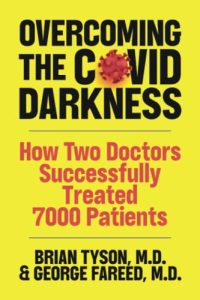 COVID is a very treatable disease if it is treated early using an early treatment protocol. There are lots of such protocols that are highly successful. This new book documents one such protocol.
Since March of 2020, Brian Tyson and George Fareed, two physicians with impeccable credentials, have been treating COVID patients of all ages in Imperial Valley, CA using early treatment protocols.
Their track record is extraordinary. If you started treatment within 7 days of first symptoms, only 2 people were briefly hospitalized and there were no deaths. The earlier you start treatment, the better the results and the faster you recover.
Their book is now available at Amazon (if you buy it now on Kindle for $5.95, it will be delivered Jan 24). It is a #1 best seller as you can see below.

The entire pandemic response was unnecessary: COVID is very treatable if treated early
This book shows that we’ve known about effective treatments since March 2020.
Had the CDC publicized such treatments, it would have made the entire pandemic response completely unnecessary: lockdowns, vaccines, mandates, masking, business closures, etc. Everyone would have gotten natural immunity and the pandemic would have ended with virtually no deaths.
Tyson and Freed tried contacting the FDA, CDC, and NIH, but nobody would talk to them or return their calls. The same is true today. They are just “too busy” to talk to them. Keeping patients out of the hospital and morgue is not a priority for them.
The same is true of the mainstream media. The NY Times refused to run op-eds about early treatments and CNN said that they were too busy covering the vaccines and people dying from COVID that they didn’t have the resources to talk about early treatment protocols that would have prevented everything.
Instead of promoting early treatment using repurposed drugs, the CDC instructed people to just stay home and do nothing until they were so sick that they had to go to the hospital. Even after drugs in the Tyson/Fareed protocol like ivermectin and fluvoxamine have been proven time and time again to work in clinical trials and, in the case of ivermectin, published in systematic reviews and meta-analyses, the NIH still fails to acknowledge them rating them NEUTRAL. This means that most doctors will not use them.
On May 24, 2021, I offered $2M to anyone who could show that the NIH made the proper decision on these two drugs, but nobody came forward.
In short, nobody in the world thought they made the right decision (or at least could justify it). But they are the authorities and we cannot question their judgement, ever.
The CDC doesn’t want you to share this post with anyone
The CDC would like you to know the following:
- You need to follow our advice. Do not think. Do not ask questions. Just do as you’re told. We are the CDC and we always know best.
- Trust us: early treatments don’t work. Ignore all the data from these physicians. Even though we’ve never even talked to them or looked at their data, we know they are wrong. We don’t even have to look at their data to know that they are wrong. The data does not matter. It is our opinion that matters. Got it?
- Do not share this post with anyone, especially your doctor, anyone in mainstream media, or Congress. Do not to do anything to disrupt Big Pharma’s profits.
- Even if you did share it, nobody would believe you anyway; they will think you are crazy. We have totally brainwashed pretty much everyone except for a relatively small number of people.
- Don’t read the book. This book will destroy our credibility as well as that of the NIH and FDA. You may not be able to deal with the cognitive dissonance. Just do what we say. Don’t worry, be happy.
- If you feel you must read the book, ask your doctor to prescribe Versed and take it as directed before you read the book. That way, after you are done reading it, you won’t remember anything.
- If the public finds out about this book, a lot of people are going to be very upset about how they’ve been fooled. You wouldn’t want that to happen now, would you?
Featured Video
“Historic Russia”: The Land Putin Will Not Give Back
or go to
Aletho News Archives – Video-Images
Book Review
Why the War on Conspiracy Theories Is Bad Public Policy
By Kevin Barrett • Unz Review • February 1, 2019
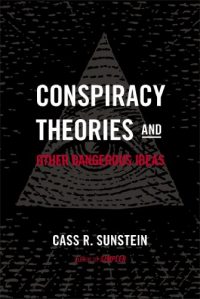 A Review of Conspiracy Theories and Other Dangerous Ideas by Cass Sunstein (based on an earlier paper co-authored with Adrian Vermeule); In Defense of Troublemakers: The Power of Dissent in Life and Business by Charlan Nemeth; and Conspiracy Theories and the People Who Believe Them, edited by Joseph E. Uscinski
On January 25 2018 YouTube unleashed the latest salvo in the war on conspiracy theories, saying “we’ll begin reducing recommendations of borderline content and content that could misinform users in harmful ways—such as videos promoting a phony miracle cure for a serious illness, claiming the earth is flat, or making blatantly false claims about historic events like 9/11.”
At first glance that sounds reasonable. Nobody wants YouTube or anyone else to recommend bad information. And almost everyone agrees that phony miracle cures, flat earthism, and blatantly false claims about 9/11 and other historical events are undesirable.
But if we stop and seriously consider those words, we notice a couple of problems. First, the word “recommend” is not just misleading but mendacious. YouTube obviously doesn’t really recommend anything. When it says it does, it is lying. … continue
Blog Roll
 Aletho News
- “Historic Russia”: The Land Putin Will Not Give Back
- How the Cambridge Analytica scandal still haunts Mark Zuckerberg
- The Ongoing Cancellation Campaign Against a Dissenting Academic in Norway
- Yemen and ‘the Houthis’: Challenging Sami Hamdi’s Narrative
- No, Christians did not invent Zionism
- AIPAC-led lobbying network opens branches in Cypriot, Greek parliaments
- Araghchi blasts ‘parasitic’ alliance as US taxpayers pay for Israel’s war on Iran
- Easy fix for Europe’s chaos? Stop fueling war against Russia
- Putin’s key remarks on peace talks and Europe’s ‘schizophrenia’
- Trita Parsi: Israel Set a Trap for Total War in the Region
- If Americans Knew
- An error has occurred; the feed is probably down. Try again later.
- No Tricks Zone
- Two New Studies Find Thwaites Glacier Melt Cannot Be Driven By Human Activity Or A Warming Ocean
- E-Cars Reduce CO2 Emissions By Only 41% Compared To Internal Combustion Engine Vehicles
- Predictions Made By Renowned Climate Professor Over Past Decades Have Been Proven To Be Poor
- New Study Suggests Large Regions Of The Pacific Ocean Have Been Cooling For The Last 80 Years
- Germany’s Green Energy Debacle: High Energy Costs Force Kahla Porzellan to Close After 182 Years!
- New Study: 50 Years Of The Most Aggressive ‘Net Zero’ Policies Can Only Affect The Global Climate By 0.03°C
- US September “Heat” Was No Record…Many Records Set Decades Ago
- Latest European Green Energy Debacle; Portugal’s Largest Flagship Solar Park Insolvent!
- Green Energy Debacle: German Expert Professor Fritz Vahrenholt Warns Of Severe Economic And Social Consequences
- Two More Paleo Reconstructions Affirm Meters-Higher Sea Levels Across Ireland, Brazil 7000-6000 Years Ago

