Hebron, Occupied Palestine – On the afternoon of March 12th, Yassin Knaebi was playing on the roof of his house in the old city of Hebron when suddenly stones started falling from the sky. Three young settlers who had been watching him play, began to throw stones from across the street. Yassin, was struck on the head, he lost his balance and fell from the roof of his family home, breaking his left arm in the process. Doctors are fearful of the possibility of long term damage to the young boys eye, though this is still too early to know for sure.

The Knaebi family are terrorised frequently by their neigbours in the Avraham Avinu Settlement. According to Mrs. Knaebi the family is harassed at least three times a week and the Israeli army does nothing to prevent it, despite having an outpost in sight of the house. The message is simple, the settlers in the settlement wish to push the family out and occupy their home, so that the future expansion plans for the neighborhood can go forward without any problems.
March 12, 2013
Posted by aletho |
Ethnic Cleansing, Racism, Zionism, Subjugation - Torture | Hebron, International Solidarity Movement, Palestine, West Bank, Zionism |
Leave a comment
BETHLEHEM – Israeli closures and restrictions are causing lasting damage to the competitiveness of the Palestinian economy, the World Bank said Tuesday.
Israeli-imposed economic restrictions continue to constrain sustainable economic growth, a situation that is unlikely to change without political progress, according to the World Bank’s latest report.
The economic monitoring report warns that the Palestinian economy is in danger of losing its capacity in the global market.
Since the late 1990s, the productivity of the agriculture sector has halved and the manufacturing sector has largely stagnated, the report found.
Exports dropped to 7 percent in 2011, one of the lowest rates in the world. Exports are concentrated in low value-added goods and services and mostly sold to Israel, according to the World Bank.
Water and transport infrastructure is deteriorating, damaging economic productivity, particularly in Gaza which has been under an Israeli blockade since 2007.
Meanwhile, “alarmingly high” levels of unemployment mean many Palestinians do not have the chance to develop on-the-job skills, the report notes. Increased employment in the public sector has provided short-term relief but is unsustainable and does not prepare workers for private sector roles.
“The worrisome implication of these phenomena is that the long term employability prospects for the Palestinian labor force are being eroded. In addition to the economic implications, protracted unemployment, especially among youth, tends to weaken social cohesion,” the report says.
“Continued financial support by the donor community, and increased reform efforts by the PA to manage the current fiscal challenges must remain a high priority,” said Mariam Sherman, World Bank country director for the West Bank and Gaza, in a statement.
“However, much bolder efforts to create the basis for a viable economy need to be made to prevent the continued deterioration that will have lasting and costly implications for economic competitiveness and social cohesion,” Sherman added.
March 12, 2013
Posted by aletho |
Economics, Ethnic Cleansing, Racism, Zionism, Illegal Occupation, Timeless or most popular | Israel, Palestine, Zionism |
Leave a comment
Israeli activists caught on film an attack by an Israeli settlement security guard on a Palestinian shepherd Monday, near the Palestinian village of Susya in the southern West Bank on Monday.
The shepherd was identified as Na’al Abu Aram, but the Israeli security guard, apparently from the Israeli illegal outpost called ‘Avigail’ that was built on stolen Palestinian land, was not identified.
The guard beat, punched, kicked and shoved the shepherd, then ran after his flock of sheep to scare them. Two Israeli soldiers were present at the time of the beating, but they did not intervene.
Avigail was established on stolen land by former Israeli soldiers in 2001. The soldiers entered the land, which belongs to local Palestinians, and installed trailers. They moved in, heavily armed, and began to harass the local villagers and shepherds. No attempt has been made by the Israeli government to remove the trespassing Israelis from the land that they illegally seized by force.
In Monday’s incident, the security guard told reporters with Ynetnews, which obtained and published the video of the incident, that he was being unfairly slandered, and that it was the shepherd who attacked him.
He claimed that the local residents were being accompanied by ‘anarchist activists’ who try to ‘incite provocations’. The guard was apparently referring to Israeli human rights workers who arrived on the scene to try to document abuses reported to them by local Palestinian residents.
March 12, 2013
Posted by aletho |
Ethnic Cleansing, Racism, Zionism, Subjugation - Torture | Avigail, Human rights, Palestine, Susya, West Bank, Zionism |
Leave a comment
“Zionism is much more than settler colonialism; its fundamental opposition is between Jew and gentile everywhere.”
What is to be done?
Worldwide, it is Israel Apartheid Week, 2013, a worthy expression of solidarity with the Palestinians suffering under Israel’s occupation of the territories it conquered in the June, 1967 war. However, the leading lights of the anti-apartheid struggle said a decade and more ago that Israel’s regime is much worse than South African apartheid. After 46 years, “the occupation” is clearly not temporary and transient as the word implies. It is egregiously wrong to use this language, which privileges the oppressors and further oppresses the victims. This language is universal and long-standing, reflecting habits of thought and action long overdue for replacement.
The following was written as notes for a discussion, about 2000 words, divided into 5 headings: Classical Liberal Views of Zionism; Zionism; Zionism in the US; Zionism on the Left; Strategy and Tactics.
Classical Liberal Views of Zionism
The Enlightenment and emancipation ended the subjugation of west European Jews to Judaic authorities, and to gentile regulation. Jews were admitted, gradually but inevitably, to liberal citizenship. The US was created on a modern, liberal basis, with no trace of pre-modern Jewish status.
Reform Judaism modernized traditional Judaism and allowed religious worship with the social status of Christianity. Many Jews abandoned religion for secularism, after Spinoza. Jews contributed disproportionately to modern liberal culture and left and liberal politics.
Zionism was dismissed as reactionary and atavistic. American Reform Judaism in 1885 expressly disavowed it. The Marxism of the Second International period viewed nationalism as reactionary and Zionism as a tool of imperialism. The Yiddish labor movements in the Russian Empire and their immigrant offshoots also opposed Zionism.
Zionism was a marginal, declining cult until World War I, which led to the Balfour Declaration, the British conquest of Palestine, and growth of the “Jewish national home.” Even then Zionism was a minority current, until the rise of Nazism. Yet classical anti-Zionism survived all the changes of World War II.
Elmer Berger, an American Reform rabbi, led a rearguard action against Zionism in the 1940s, and remained an avowed critic of Israel until his death in 1996. Isaac Deutscher and Maxime Rodinson, raised in Marxist internationalism, remained critics of Zionism and Israel until their deaths (Deutscher in August, 1967, Rodinson in 2004)
The Israeli Socialist Organization (Matzpen) attempted to reconstruct internationalism in the 1960s. Israel Shahak cited what he called the “modern, secular Jewish tradition,” which he traced from Spinoza, against Zionism. Shahak and Matzpen put the atrocities of Israel’s occupation on the map from the Israeli side. Shahak died in 2001; some senior Matzpen alumni are still active.
Obviously, these currents have different social bases, and different politics, aside from their rejection of Zionism. Yet they constitute the basis of modernity and any critique of Zionism must derive from them. The people cited were well to the left of what the US has produced since 1967, precisely because the US left has ignored classical sources.
Zionism
Zionism is the Jewish contribution to right-wing politics and ideology, nothing more or less; it opposed liberalism and embraced anti-Semitism. Zionism agreed that “the Jews comprise a distinctive element among the nations… and as such can neither assimilate nor be readily digested by any nation.” “The only solution is in the creation of a Jewish nationality, of a people living upon its own soil, the auto- emancipation of the Jews; their return to the ranks of the nations by the acquisition of a Jewish homeland.” (Pinsker, Autoemancipation) This was the view of bourgeois Jewish society in the Pale of Settlement, not the impoverished masses, who left by the million for the US.
Zionist “Jewish nationality” was not nationalism; it rejected the actually existing Yiddish nation in eastern Europe, including the Yiddish language, in anti-Semitic terms. Modern Israeli Hebrew was not “revived” but largely invented; modern Hebrew culture is inextricably Zionist, bound up with its conquest and dispossession. The alleged unitary history and historiography of the Jewish people have, unsurprisingly, been demolished by authors like Shlomo Sand, archaeologists Israel Finkelstein and Neil Silberman, linguist Paul Wexler, and others.
Racialism in Zionism dates to the proto-Zionism of Moses Hess; the chauvinism of Heinrich Graetz contributed to German anti-Semitism; German Zionism was Jewish Romantic nationalism, embracing Jewish Blut und Boden. Herzl was steeped in the racism of European colonialism. Zionism was a fraternal twin of anti-Semitism, and cooperated with it practically, down to the Nazi regime itself.
Elmer Berger co-authored the UN resolution on Zionism as a form of racism, and wrote on that theme. Noel Ignatiev called the Zionist “Jewish people” idea Jewish race doctrine. “Jewish genetics” tries to build a biological basis for Zionism. Zionism is much more than settler colonialism; its fundamental opposition is between Jew and gentile everywhere.
Zionism was an elite project of national renewal, concerned with “the problems of Judaism, not the problems of Jewry,” in Ahad Ha’am’s lofty phrase. It always placed its designs ahead of the fate of European Jewry. Hitler might have conquered the Near East; the Judeocide happened because of Nazi Germany, not because there was no Jewish state.
“Cultural Zionism,” “binationalism” and “socialism” were simply Zionism by other means. The culture of Zionist Jewish nationality was racialism. The binationalists wanted Jewish immigration leading to demographic parity and eventually majority, when Jews were a minority. The kibbutz was a means of Jewish settlement and was inspired by 19th c. German settlement plans to counter a Polish “demographic threat” in the eastern Reich.
Today the state of Israel is waging a race war, as fanatical as Nazi Germany, against the enemies of the Jewish people. This potential was inherent in Zionism from the start, though obviously many contingencies have enabled its fruition. Israeli Hebrew nationality is the replacement for Zionist Jewish nationality, secular and open to all, as Boas Evron argued in Jewish State or Israeli Nation.
Zionism in the US
The core of Zionism in the US is organized Jewry, gathered in the Conference of Presidents of Major American Jewish Organizations. Many of these groups arose to meet the needs of the Russian Jewish migration before 1914. By the 1930s, this organized Jewish culture inspired the idea of “Judaism as a religious civilization,” and in the postwar period was called a “Jewish polity.”
The polity, and the Jewish public, supported Jewish statehood in the 1940s, but were still mainly concerned with integration and acceptance in American life. In the early 1960s, as this was achieved, liberalism was seen as threatening “Jewish continuity,” just as it was feared by the bourgeoisie in the Pale who founded Zionism. This chauvinism was fatally supercharged by Israel’s dramatic victory in June 1967.
The Jewish polity is the core of US support for Israel, which includes institutions and individuals throughout US culture; the “Israel lobby” is an inadequate term; “Zionocracy,” after the 19th c. “Slaveocracy” that wielded immense power in national politics until the Civil War, better describes it.
The Zionocracy has exercised quasi-sovereign power from the 1940s, when it overturned US diplomatic and military opposition to US support for a Jewish state in Palestine. The US did not create Israel, and does not commission its deeds, for its own purposes. Rather it has adapted to Zionist faits accompli in western Asia and in the US, and pursued its interests in their light.
Since the end of the Cold War Zionism has been the chief driver of US militarism at home and abroad. The Zionocracy influenced the Congressional vote for the Gulf War in 1990, the closest since the War of 1812. The crippling sanctions on Iraq and the “dual containment” of Iran and Iraq in the 1990s were largely by and for the Zionocracy, against substantial business opposition. The 9/11 terrorist attacks, with all their momentous consequences, were chiefly a strike against US patronage of Israel. The 2003 invasion of Iraq would not have happened without the neoconservatives. Only the Zionized left sees “oil” as necessarily and obviously requiring the US to invade Iraq, which has led to the present dissolution of Syria. The end of centuries of Sunni rule in Iraq and the Shia ascendancy there brought the Gulf states, led by Saudi Arabia, to oppose actively the “Shia axis” from Hizbollah to Alawite Syria to Iraq to Iran. The Gulf states are the chief patrons of the armed rebellion in Syria..
Zionism has turned western Asia into the eastern front of the US empire, like the eastern front of the Third Reich, site of its most depraved deeds and ideologies—the annihilation of Arab and Muslim societies, and the Islamophobic “clash of civilizations” and “war on terror.” Disputes over Middle East policy between the miltarists (gentile radicals, and Jewish neoconservatives) and the realists, are like the differences between Nazis and non-Nazi conservatives in Germany.
Zionism on the Left
In the early 1960s the Jewish members of the New Left were universalist, had little interest in “Jewish identity” and identity politics. After the June, 1967 war, there appeared a “Jewish left,” which combined Jewish affirmation with criticism of “the occupation” and support for “Palestinian rights.” This has produced a truncated, minimal critique: “anti-occupation” rhetoric, but no critique of Zionism; “solutions” discourse, of maps and treaties, and false Zionist precedents, rather than overcoming Zionism; ahistorical “law and rights” discourse; the “strategic asset” view of the US-Israel relationship, with little attention to US Zionism; anti-anti-Semitism, but no critique of Jewish chauvinism. With variations, this outlook is hegemonic on the white bread left, including the US Campaign to End the Occupation. It has even absorbed and neutered the “Israel lobby” critique. Phyllis Bennis, long-time “strategic asset” proponent, now dominates Code Pink’s annual anti-AIPAC program, while excluding knowledgeable people like Jeff Blankfort, Janet McMahon, Grant Smith, Stephen Sniegoski, and Alison Weir.
This Orthodox Critique is a form of Zionism. Limiting criticism to “law and rights” trivializes the crimes and diminishes the victims, like calling Nazi aggression and the Judeocide a violation of collective security and minority rights. Referring to Israel’s “occupation,” after nearly 46 years, and to “Israeli apartheid,” when Israel’s regime is much worse than apartheid, is lying. Such apologetics about Zionism, clearest in the “strategic asset” dogma, are Jewish privilege and anti-gentilism, comparable to anti-Semitic essentialism about Jews. The Orthodox Critique replaces a universalist critique from classical sources, which would reject Zionism in its entirety, in Israel, and in the US Zionocracy, and affirm the values of Spinoza, Luxemburg, Berger, et al. against it. Zionism threatens all of us.
Identity can empower the oppressed, but identitarian struggles succeed on broader terrain. The Risorgimento succeeded because national rights were seen as legitimate. The struggles of women and minorities have succeeded because the sphere of rights was broadened. Identity categories are not political, because people have different politics, beyond their universal rights. Past a certain limited point identity politics is chauvinism. Garibaldi recognized the limited progressive value of nationalism. Compare Judith Butler’s attempt to derive liberal obligations from “diasporic Jewish identity,” in the Brooklyn College BDS event, to David Landy’s critique of “diasporic identity” in Jewish Identity and Palestinian Rights.
Strategy and Tactics
The Orthodox Critique has deprived us of the most basic vocabulary and analysis. We are missing decades of literature on Zionism as reaction and racialism, on Zionist radicalization of the US, and on the universalist antipodes, and political organizing on those lines. Meanwhile, Zionism has become ever stronger and more destructive. This is the greatest disaster on the left since the German Communist Party misread Nazism.
The chief concern of US citizens must be the special role of the United States, the indispensable economic, military and political support it provides Israel. To the extent BDS sanctions the state of Israel directly, by boycotting its products, or its institutions, it at least stigmatizes Israel, and raises questions about US policy. BDS directed against “companies profiting from the occupation” implies that corporate profits drive US policies and diverts attention from the real actors.
The Zionocracy is not appeased by such limited terms, which Israeli diplomats and organized Jewry oppose fiercely. We can only gain by calling for Israel to be sanctioned, and by opposing Zionism forthrightly as the chief source of Islamophobia, our Middle East wars, 9/11, and our domestic police state. We should consider “Anti-Zionism Week”.
BDS in the US can be educational, but Europe is the chief market for Israeli products, and BDS is most effective there. Zionist domination of US politics must be our highest concern. Zionism is not a tool of the US, but a quasi-sovereign power in the US, which has activated the worst potentialities of US society. The classical anti-Zionists saw Zionism obviously as an attack on liberal modernity, to be rejected categorically. Liberal traditions allow us—obligate us—to reject Zionism and all its works, and also obligate us to distinguish adherents of Jewish people ideology from Jewish liberal citizens and their rights. They also obligate the latter to join unequivocally a common struggle against Zionism, which threatens us all.
March 11, 2013
Posted by aletho |
Ethnic Cleansing, Racism, Zionism, Solidarity and Activism, Timeless or most popular, Wars for Israel | Antisemitism, Hebrew language, Israel, Judaism, Palestine, Zionism |
Leave a comment
Imagine that your neighborhood was declared a firing range. You are threatened with forced evacuation. Demolition orders are issued for your home, your church and the school your children attend. Your land will cease to belong to you, and your livestock will be removed.
This is what a thousand Palestinians living in Masafer Yatta face.
Twelve villages lie within the area Israel claims as firing zone 918. Residents of four of the villages have been told they are excluded from the attempted eviction because the ammunition being used by soldiers training for war near their homes is not live. The one thousand residents of the other eight villages, half of them children, could lose their homes, schools, crops and livestock, their mosques and their way of life within the year.
These Palestinian families were forcibly removed by the Israeli military in 1999 and many of their homes, wells and animal shelters were destroyed. Some of the region’s residents returned in 2000 and live under constant threat of home demolition, settler violence and military harassment.
On 16 January 2013 the Association for Civil Rights in Israel (ACRI) filed a petition on their behalf and the Israeli court granted a temporary order preventing forcible transferring of the families pending a further decision. The temporary order is all that is currently preventing the forced removal of the families living in Masafer Yatta.
During the past month soldiers have repeatedly driven large vehicles across planted fields, confiscated residents’ cars, cameras, phones and livestock, landed helicopters next to dwellings and livestock, and threatened families with imminent eviction and destruction of their homes. Children in the region find unexplored ordnance as they walk to and from school, and families are awakened during the night by the sound of repeated firing and by military helicopters and jeeps driving near their homes.
March 9, 2013
Posted by aletho |
Ethnic Cleansing, Racism, Zionism | Hebron, Human rights, Masafer Yatta, Palestine, West Bank, Zionism |
Leave a comment
Ziad Jilani’s widow and daughters seek Justice for his killing by Israeli Border Policeman Maxim Vinogradov, for the third time. This Wednesday (13 March) Moira Jilani and her three daughters will come face to face with their husband and father’s killer.
 “I am dreading facing them for my daughters,” Says Moira, “I think I could face them myself but I’m afraid that when I see the pain in my daughters eyes it will kill me.” Her husband, Ziad Jilani was killed three years ago by Maxim Vinogradov, an Israeli border patrolman who put his rifle to Jilani’s head and pulled the trigger three consecutive times.
Now, for the third time, the family is appealing to Israeli authorities to press charges against Ziad’s killer. On the 16th of January 2011 the case was closed by police internal investigations (Machash) for the first time, for “lack of evidence”.
In the following month, on the 15th of February 2011, the family submitted an appeal to then Israel Attorney General, Menachem Mazuz. Despite a confession by Vinogradov that he had shot Ziad at zero range when he was lying on the ground because of the initial gunshot wound, an autopsy report pointing to a close range shooting, dozens of eyewitnesses who were also injured that day as a result of the incident, and very clear changes in Vinogradov’s testimonies before and after the autopsy, Mazuz did not see fit to change Machash’s decision to close the case.
With the help of the al-Mazaan Center for Human Rights, on January 4th 2012, the family submitted a second appeal. This time, to the Israeli Supreme Court, through the al-Mazaan Center for Human Rights, demanding that the new state prosecutor, Yehuda Weinstein, bring criminal charges against Ziad’s murderers.
“After Weinstein [Israel’s current Attorney General] had all the evidence we had hope that he would press charges against the killers,” Moira recalls, “but after he decided not to do so for the third time, it is hard to have hope that the court will do justice.”
According to Yesh Din in 2012 the MPCID received 240 complaints and various reports of suspected crimes allegedly committed by Israeli soldiers against Palestinians and their property in the West Bank and the Gaza Strip. Out of these registered complaints, only 103- not even half- have yielded investigations. Not one single indictment has been served to date.
The organization commented on the findings:
“The numerous defects in MPCID investigations of offenses against Palestinians, and in the Military Advocate General Corps’ supervision of the investigations, result in the closure of the vast majority of the files and a minimal number of indictments being served. This creates a feeling of lawlessness on the ground, which may be a central contributing factor in the rise in the number of killings over recent weeks.”
Moira describes this sense of lawlessness, “I still have hope, but its hard when we see everything that’s happening around us,” she says, “my husband’s case is one of what seems to be a systematic sweeping under the rug of violent incidences of Israeli soldiers against the Palestinian population under their authority.
We are not just going to court for Ziad Jilani. We are going to court for all the Palestinians killed before Ziad and those that will be killed thereafter.”
March 9, 2013
Posted by aletho |
Civil Liberties, Ethnic Cleansing, Racism, Zionism | Human rights, Israel, Menachem Mazuz, Palestine, West Bank, Yehuda Weinstein, Zionism |
Leave a comment
Once involved with Palestinian Solidarity you have to accept that Jews are special and so is their suffering; Jews are like no other people, their Holocaust is like no other genocide and anti Semitism, is the most vile form of racism the world has ever known and so on and so forth.
But when it comes to the Palestinians, the exact opposite is the case. For some reason we are expected to believe that the Palestinians are not special at all – they are just like everyone else. Palestinians have not been subject to a unique, racist, nationalist and expansionist Jewish nationalist movement, instead, we must all agree that, just like the Indians and the Africans, the Palestinian ordeal results from run-of-the-mill 19th century colonialism – just more of the same old boring Apartheid.
So, Jews, Zionists and Israelis are exceptional, like no one else, while Palestinians are always somehow, ordinary, always part of some greater political narrative, always just like everyone else. Their suffering is never due to the particularity of Jewish nationalism, or Jewish racism, or even AIPAC dominating USA foreign policy no, the Palestinian is always a victim of a dull, banal dynamic – general, abstract and totally lacking in particularity.
This raises some serious questions.
Can you think of any other liberation or solidarity movement that prides itself in being boring, ordinary and dull? Can you think of any other solidarity movement that downgrades its subject into just one more meaningless exhibit in a museum of materialist historical happenings? I don’t think so! Did the black South Africans see themselves as being like everyone else? Did Martin Luther King believe his brothers and sisters to be inherently indistinguishable?
I don’t think so. So how come Palestinian solidarity has managed to sink so low that their spokespersons and supporters compete against each other to see who can best eliminate the uniqueness of the Palestinian struggle into just part of a general historical trend such as colonialism or Apartheid?
The answer is simple. Palestinian Solidarity is an occupied zone and, like all such occupied zones must dedicate itself to the fight against ‘anti Semitism’. Dutifully united against racism, fully engaged with LGBT issues in Palestine and in the movement itself, but for one reason or another, the movement is almost indifferent towards the fate of millions of Palestinians living in refugee camps and their Right of Return to their homeland.
But all this can change. Palestinians and their supporters could begin to see their cause for what it is, unique and distinctive. Nor need this be all that difficult. After all, if Jewish nationalism is inherently exceptional as Zionists proclaim, is it not only natural that the victims of such a distinctive racist endeavor are at least, themselves, just as distinctive.
So far, Palestine solidarity has failed to liberate Palestine, but it has succeeded beyond its wildest dreams in creating a Palestine Solidarity Industry, and one largely funded by liberal Zionists. We have been very productive in schlepping activists around the world promoting ‘boycotts’ and ‘sanctions’ meanwhile Israel trade with Britain is booming and Hummus Tzabar is clearly apparent in every British grocery store.
All those attempts to reduce the Palestinian ordeal into a dated, dull, generalised materialist narrative should be exposed for what they are – an attempt to appease liberal Zionists. Palestinian suffering is actually unique in history at least as unique as the Zionist project.
Yesterday I came across this from South African minister Ronnie Kasrils. In a comment on Israeli Apartheid he said : “This is much worse than Apartheid… Israeli measures, the brutality, make apartheid look like a picnic. We never had Jets attacking our townships; we never had sieges that lasted months after months. We never had tanks destroying houses.”
Kasrils is dead right. It is much worse than Apartheid and far more sophisticated than colonialism. And why? Because what the Zionists did and are doing is neither Apartheid nor is it colonialism. Apartheid wanted to exploit the African, Israel wants the Palestinian gone. Colonialism is an exchange between a mother and a settler state. Israel never had a mother State, though it may well have had a few ‘surrogate mothers’.
Now is the time to look at the unique ordeal of the Palestinian people. Similarly, now is the time to look at the Zionist crime in the light of Jewish culture and identity politics.
Can the solidarity movement meet this challenge? Probably, but like Palestine, it must first, itself, be liberated.
March 8, 2013
Posted by aletho |
Ethnic Cleansing, Racism, Zionism, Solidarity and Activism | Apartheid, Israel, Jewish culture and identity politics, Palestine, Ronnie Kasrils, Zionism, Zionist crime |
Leave a comment
Canada’s Foreign Affairs Minister, John Baird, was in comfortable territory at the current AIPAC policy conference meeting in Washington, D.C.
I have deconstructed his arguments before, as he reiterates the current Harper government of Canada position in its unqualified support for Israeli occupation of Palestinian land and all that goes along with that. I will not repeat those arguments here as they are the same old-same old regurgitations of support for the militaristic Israeli state from a Canadian government that does not truly represent the majority of the people of Canada.
Baird presents the same arguments about Palestine living up to all previous agreements without recognizing that Israel has a lot to live up to as well; in particular that the UN Security Council has previously recognized withdrawal from occupied territories and the right of return of refugees. And as usual, the fault of the violence is the very nature of Arab/Palestinian social-political life, a mythology that Israel and its western supporters are careful to nurture.
What interested me most about his current statements, apart from the ego flattering standing ovations the AIPAC audience rendered unto him, are his comments about stopping aid to the Palestinian National Authority. Baird threatened a similar stopping of aid during the vote to recognize Palestine at the UN, then backed off after the overwhelming support displayed for Palestine.
These threats are being renewed again, against Palestine taking Israel to the International Criminal Court, but one has to wonder if the Canadian government is really aware of what the consequences of that cut might be.
Most of Canada’s aid to Israel is bound into corporate military research and development, including the realm of security and surveillance. The aid to the Palestinian Authority helps the PA maintain their fragile grip on the Palestinian population as it is used for similar areas of security, surveillance, and support for the few Palestinian elites who harvest the aid supplies for their own benefit. The Canadian military and the Canadian national police force, the RCMP, serve as trainers for the PA authorities own militarized units.
So what happens if the aid to Palestine is cut? Many things are possible, the most counterproductive one from the Israeli perspective would be the decrease in the control that the PA is able to exert over the Palestinian population on its behalf as the money supplies dry up. The Palestinian economy, such as it is, mainly in the West Bank, where the majority of the funds are utilized, would suffer even more.
With more economic weakness, and with a weakened PA no longer able to buy influence among its own people, the Palestinians would certainly be more restive and perhaps more aggressive towards their own elites as well as the Israelis – a third intifada would become more probable. Of course, more Palestinian violence would only make the current Canadian government say, “See, we told you they were a violent people,” and so the mythology of Israeli victimization will continue.
It would be a good thing perhaps to shed the yoke and burden of foreign control bought by the power of foreign dollars manipulating the economy and political scene in Palestine. The outcomes of such a cut are indeterminate, but usually in the world of political manipulation, unexpected outcomes are to be expected. For that reason alone, one can expect John Baird and the Harper government to prevaricate over cuts for some time to come.
– Jim Miles is a Canadian educator and a regular contributor/columnist of opinion pieces and book reviews for The Palestine Chronicle.
March 8, 2013
Posted by aletho |
Aletho News | American Israel Public Affairs Committee, Canada, International Criminal Court, Israel, John Baird, Palestine, Palestinian National Authority, West Bank, Zionism |
Leave a comment
Thanks to the efforts of the indefatigable James Morris, a seeming transformation of the view of the illustrious Noam Chomsky was revealed, which, if not equivalent to the change that Saul of Tarsus underwent while on the road to Damascus, was significant nonetheless. Morris seems to have a knack for ferreting out the unknown views of the famous, as was illustrated in his 2010 email exchange with General David Petraeus, then head of U.S. Central Command, in which he was able to reveal the latter’s close relationship with neocon Max Boot and his ardent desire to propitiate the pro-Zionist Jewish community at a time when it was generally thought that Petraeus was critical of the negative effects of the intimate U.S.-Israeli relationship on America’s position in the Middle East.
The Chomsky revelation took place while the latter was a guest on Phil Tourney’s “Your Voice Counts” program on Republic Broadcasting Network from 2:00 pm to 3:00pm Eastern Standard Time on Sunday, February 24, 2013. While Chomsky is a strong and very knowledgeable critic of Israel, he also has been (at least, was before this program) a stringent critic of the idea that the neocons have any significant impact on American Middle East policy. Rather, he presents a somewhat nebulous, quasi-monolithic, corporate elite, which includes the oil interests, as determining American policy in that region—as it does everywhere else in the globe—for its own economic interests. In what has been Chomsky’s view, Israel only serves as an instrument for American imperialism; that it too might benefit from American policies is, presumably, only an incidental by-product.
Chomsky was quite impressive on the program as he demonstrated extensive knowledge of the USS Liberty issue, which is a major issue of the program, since Tourney was a seaman on that ill-fated ship that was deliberately attacked by Israeli planes and gunboats during the Six Day War in June 1967, causing the deaths of 34 U.S. seamen and wounding 171 others out of a crew of 297.
Chomsky included an injection of his standard theme that Israel became a valuable strategic asset to the United States with the 1967 war when it wrecked Nasser and secular Arab nationalism in general, thus aiding America’s conservative client states, such as Saudi Arabia.
Listener phone calls were restricted to the last 15 minutes. Consequently, James Morris wasn’t able to get on the program until the last five minutes when he tried to get Chomsky to address the issue of the connection between the neocons and Israel. Morris cited then-Secretary of State Powell’s reference to the “JINSA crowd” (Jewish Institute for National Security Affairs) as the primary force for the war on Iraq within the Bush Administration. Morris went on to say that the neocons were a leading element of the Israel lobby.
After Morris made these statements, Chomsky amazingly blurted out that he “agreed completely” with him regarding the importance of the neocons—describing the neocons as “tremendously important.” Chomsky acknowledged that the neoconservatives had been the “dominant force” in the Bush administration, and that they had “pushed through” the Iraq war over many objections even from within the government. What Chomsky had said about the importance of the neocons was radically different from his usual portrayal of a monolithic corporatist dominance of U.S. Middle East policy. Chomsky even seemed to agree that the neocons held positions that diverged from those of the traditional foreign policy establishment—Morris had earlier mentioned Scowcroft and Brzezinski as opponents of the neocons.
What Chomsky said pertaining to the neocons being the leading force for the Iraq war is essentially identical to my position in “The Transparent Cabal.” And it is not only the opposite of what it appeared that he used to hold but what his protégé Norman Finkelstein continues to expound, as I discuss in my article, “Norman Finkelstein and Neocon Denial.”
Finkelstein denies that the neocons were a factor in causing the U.S. to go to war—and has nothing to do with my book, describing it as conspiracist—but he does not seem to realize that his position contrasts with that of his mentor. Since the two are quite close, it would seem that Chomsky has not even expressed this new view to Finkelstein in private conversation. When Finkelstein finds out that his mentor holds that the neocons were the “dominant force” for war with Iraq, one wonders if he will then charge him with believing in a conspiracy.
Unfortunately, however, Chomsky still stops far short of the full truth. For in his response to Morris, he went on to maintain that the neocons are different from the Israel lobby—definitely implying, though not explicitly stating, that the neocons are not motivated by the interests of Israel. He quickly put forth two arguments for this contention. First, he claimed that the neocons are simply a mainstream force in American conservatism going back to the Reagan administration. Even if true, this would not necessarily preclude their being biased in favor of Israel. However, it is not true—the neocons did not just fit into existing mainstream conservatism, but altered it to fit their own goals.
As I bring out in “The Transparent Cabal” (with numerous citations from secondary sources, this being a rather conventional view), the neocon movement originated among liberal Democrats, mainly Jewish, who gravitated to the right in the late 1960s and early 1970s. In significant part, this reflected a concern that American liberalism was moving leftward in ways detrimental to Jewish interests. In foreign policy, this involved diminished support by American liberals for Israel—in line with the world left’s support for Third World movements that included the Palestinians—and the liberals’ turn against an anti-Communist foreign policy, as a reaction to the Vietnam imbroglio, at a time when the Soviet Union’s policies were exhibiting discrimination against Soviet Jewry and opposition to Israel in support of its Arab enemies. In opposing what they saw as liberalism’s move to the left, these proto-neoconservatives did not see themselves as becoming conservative, but were dubbed with the moniker “neoconservative” by left-wing social critic Michael Harrington, who intended it as a pejorative term, and the name soon stuck.
Neoconservatives basically wanted to return mainstream American liberalism to the anti-Communist Cold War positions exemplified by President Harry Truman (1945–1953), which had held sway through the administration of Lyndon B. Johnson (1963–1969). When this effort failed to achieve success, neocons would turn to Ronald Reagan in the 1980. Despite being newcomers to the conservative camp, neoconservatives were able to find significant places in the Reagan administration, especially in the national security and foreign policy areas, although at less than Cabinet-level status.
Neoconservatives, however, did not become traditional conservatives, but instead altered the content of conservatism to their liking. “The neoconservative impulse,” pro-neocon Murray Friedman maintains in his book “The Neoconservative Revolution,” “was the spontaneous response of a group of liberal intellectuals, mainly Jewish, who sought to shape a perspective of their own while standing apart from more traditional forms of conservatism.”[Quoted in “Transparent Cabal,” pp. 39-40]
In domestic policy, neoconservatives supported the modern welfare state, in contrast to the traditional conservatives, who emphasized small government, states’ rights, and relatively unfettered capitalism. Most importantly, they differed significantly from the conservative position on foreign policy. Although the American conservatives of the Cold War era were anti-Communist and pro-military, they harbored a strain of isolationism. Their interventionism was limited largely to fighting Communism, but not to nation-building and the export of democracy, the expressed goals of the neocons. Nor did traditional conservatives view the United States as the policeman of the world. Most significantly, traditional conservatives had never championed Israel.
While traditional conservatives welcomed neoconservatives as allies in their fight against Soviet Communism and domestic liberalism, the neocons in effect acted as a Trojan Horse within conservatism: they managed to secure dominant positions in the conservative political and intellectual movement, and as soon as they gained power, they purged those traditional conservatives who opposed their agenda, particularly as it involved Israel. Support for Israel and its policies had become, and remains, a veritable litmus test for being a member of the multitudinous political action groups and think tanks that comprise the conservative movement.
In his 1996 book, “The Essential Neoconservative Reader,” editor Mark Gerson, a neocon himself who served on the board of directors of the Project for the New American Century, jubilantly observed: “The neoconservatives have so changed conservatism that what we now identify as conservatism is largely what was once neoconservatism. And in so doing, they have defined the way that vast numbers of Americans view their economy, their polity, and their society.” [Quoted in “Transparent Cabal”, p. 42]
While in domestic policy Gerson’s analysis might not be completely accurate, it would seem to be so in US national security policy, as illustrated by the near unanimous Republican opposition in the US Senate to the nomination of Chuck Hagel as Secretary of Defense because of his past statements critical of both US all-out support for Israel and its hardline position toward Iran (currently Israel’s foremost enemy) that might lead to war.
Now the fact that Cheney and Rumsfeld may not be motivated by a desire to aid Israel in their support for neocon Middle East policy, the Middle East policies they have supported have been formulated by those who identify with Israel. Since both of them have been closely associated with the neocons, Cheney more so than Rumsfeld, they were undoubtedly influenced by the pro-Israel neocons. Cheney even went so far as to serve on JINSA’s Advisory Board. And JINSA was set up in 1976 to put “the U.S.-Israel strategic relationship first.”
Moreover, as Vice President, Cheney specifically relied on advice from the eminent historian of the Middle East, Bernard Lewis, a right-wing Zionist and one of the neocons’ foremost gurus, who strongly advocated war against Iraq and other Middle Eastern states. (Barton Gellman, “Angler: The Cheney Vice Presidency,” p. 231) Chomsky has said that “Bernard Lewis is nothing but a vile propagandist,” and he presumably means a propagandist for Israel.
The influence of ideas per se was not the only factor that likely motivated Cheney. The fact that Cheney and his wife, Lynne, who was with the American Enterprise Institute (AEI—known as “neocon central”), had close personal and professional relations with the neocons also would have predisposed him to give his support to the neoconservatives and their agenda.
The same arguments would apply for Rumsfeld, with one additional one: a war on Iraq would give him the chance to demonstrate the value of his concept of a smaller, mobile, high tech American military. Rumsfeld held that a small, streamlined invasion force would be sufficient to defeat Iraq. As Bob Woodward writes in his book, “State of Denial”: “The Iraq war plan was the chess board on which Rumsfeld would test, develop, expand and modify his ideas about military transformation. And the driving concept was ‘less is more’ – new thinking about a lighter, swifter, smaller force that could do the job better. Rumsfeld’s blitzkrieg would vindicate his leadership of the Pentagon.”[“State of Denial,” p. 82]
For the neocons, Rumsfeld’s approach would not have the drawbacks of the conventional full-scale invasion initially sought by the military brass. The neocons feared that no neighboring country would provide the necessary bases from which to launch such a massive conventional attack, or that during the lengthy time period needed to assemble a large force, diplomacy might avert war or that peace forces in the U.S. might increase their size and political clout and do likewise. In short, it was this convergence on interests between the Rumsfeld and the neocons that made them so supportive of each other in the early years of the George W. Bush administration.
It must be acknowledged that the neocon Middle East war agenda did resonate with both Cheney’s and Rumsfeld’s general positions on national security policy, but there is little reason to think that they would have come up with the specifics of the policy, including even the identification of Iraq as the target, if it had not been for their neocon associates, whose policy reflected their close identification with Israel. It should also be pointed out that in Chomsky’s usual presentation of an American foreign policy shaped by the corporate elite, the actual government officials who implemented the policy were not necessarily members of the corporate elite nor motivated by a desire to advance the interests of the corporate elite as opposed to the national interest of the United States. In order for any type of elite to be successful, it is essential that it attract significant numbers of people outside of itself, which Chomsky himself has discussed at length regarding the corporate elite. This is also the very purpose of the neoconservative network and the information that it disseminates.
Acknowledging as much as he did, it is hard to see how Chomsky can fail to discern that the neocons identify with Israel. The evidence is overwhelming. The following are a few examples of this connection.
The effort to prevent Chuck Hagel from becoming the Secretary of Defense has been spearheaded by the Emergency Committee for Israel, the creation of which in 2010 was in large part the work of leading neocon, Bill Kristol, and which claims “to provide citizens with the facts they need to be sure that their public officials are supporting a strong U.S.-Israel relationship.” As Bill Kristol states: “We’re the pro-Israel wing of the pro-Israel community.” Kristol had co-founded the Project for the New American Century (PNAC), which promoted the war on Iraq. Kristol’s father, the late Irving Kristol, a godfather of neoconservatism, is noted for his identification with Israel. In 1973, he said: “Jews don’t like big military budgets. But it is now an interest of the Jews to have a large and powerful military establishment in the United States . . . American Jews who care about the survival of the state of Israel have to say, no, we don’t want to cut the military budget, it is important to keep that military budget big, so that we can defend Israel.” [Congress Bi-Weekly (1973), published by the American Jewish Congress]
Noah Pollak, a contributor to “Commentary” magazine, is the Emergency Committee’s executive director and, while living in Israel for two years, was an assistant editor at the Jerusalem-based Shalem Center.
Eliot Cohen, a veteran neocon, was a founding signatory of the Project for the New American Century and advised the Committee for the Liberation of Iraq. He coined the term “World War IV” for the war on terror. During the George Bush administration, he served on the Defense Policy Board in Bush’s first term and was closely affiliated with those neocons around Vice President Cheney. He is on the International Academic Advisory Board of the Began Sadat Center for Strategic Studies in Israel, which is affiliated with Bar Ilan University, and is involved in contract work for the Israeli government.
Douglas Feith, who as the Under Secretary of Defense for Policy in George W. Bush’s first term set up and controlled the Office of Special Plans, which spread the most specious war propaganda, was closely associated with the right-wing Zionist group, the Zionist Organization of America. In 1997, he co-founded One Jerusalem, a group whose objective was “saving a united Jerusalem as the undivided capital of Israel.” Before entering the Bush administration, Feith ran a small Washington-based law firm, which had one international office – in Israel. And the majority of the firm’s work consisted of representing Israeli interests.
Richard Perle has had very close personal connections with Israeli government officials, and has been accused of providing classified information to that country on a number of occasions. Perle not only expounded pro-Zionist views, but was a board member of the pro-Likud “Jerusalem Post” and had worked as a lobbyist for the Israeli weapons manufacturer Soltam.
Norman Podhoretz is considered a godfather, along with Irving Kristol, of the neoconservative movement. When editor of “Commentary” magazine, he wrote that “the formative question for his politics would heretofore be, ‘Is it good for the Jews?’” (“Commentary,” February 1972) In 2007, Podhoretz received the Guardian of Zion Award, which is given to individuals for their support for Israel, from Bar-Ilan University in Israel. Neocon Charles Krauthammer was the 2002 winner of the Guardian of Zion Award.
Max Singer, co-founder of the neocon Hudson Institute and its former president, who pushed for the war on Iraq, has moved to Israel, where he is a citizen and has been involved with the Institute for Zionist Strategies, which advocates the need to better infuse Zionist ideology in the Jewish people of Israel.
The neocons’ support for Israel does not necessarily mean that they were deliberately promoting the interest of Israel at the expense of the United States. Instead, as I point out in “The Transparent Cabal,” they maintained that an identity of interests existed between the two countries – Israel’s enemies being ipso facto America’s enemies. However, it is apparent from their backgrounds that the neoconservatives viewed American foreign policy in the Middle East through the lens of Israeli interest, as Israeli interest was perceived by the Likudniks.
Despite this professed view of the identity of American and Israel interests, sometimes the neocons’ actions verged on putting Israel interests above those of the United States government. For example, some leading neocons—David Wurmser, Richard Perle, and Douglas Feith—developed the “Clean Break” proposal outlining an aggressive policy for Israel intended to enhance its geostrategic position, which they presented in 1996 to then-incoming Prime Minister Benjamin Netanyahu. One part of the plan was to get the United States to disassociate itself from peace negotiations between Israel and Palestine and simply let Israel treat the Palestinians as it saw fit. “Israel,” stated the report, “can manage it’s own affairs. Such self-reliance will grant Israel greater freedom of action and remove a significant lever of [US] pressure used against it in the past.” It was highly noteworthy that the neocons would devise a strategy to enable Israel to become free from adhering to the goals of their own country. [“Transparent Cabal,” p. 93]
In conclusion, while Chomsky’s change was far from being complete, his acknowledgement that the neoconservatives were the “dominant force” in driving the U.S. to the war on Iraq in 2003 is, nonetheless, very significant. Chomsky, who was voted the “world’s top public intellectual” in a 2005 poll, certainly influences many people, most particularly on the anti-war left, and his new view should make them rethink their belief that the war was all about oil. It is to be hoped that Chomsky’s words were not a one-time aberration and that he will not revert to his previous publicly-espoused position. Rather, it is to be hoped that he will now look more deeply into the neocons’ activities and thus discern their close connection to Israel.
Stephen J. Sniegoski is the author of The Transparent Cabal: The Neoconservative Agenda, War in the Middle East, and the National Interest of Israel.
March 7, 2013
Posted by aletho |
Timeless or most popular, Wars for Israel | David Petraeus, Iraq, Iraq War, Jewish Institute for National Security Affairs, Noam Chomsky, Norman Finkelstein, Palestine, Ronald Reagan, Zionism |
Leave a comment
If there is one message that unifies critics of Israel and advocates for Palestinian rights, it is “End the Occupation.” As with many unifying messages, however, it is successful partly because of its ambiguity. What land and which people are occupied? And what are the terms under which the “occupation” will be ended.The ambiguity allows groups as disparate as Hamas and J Street to chant the phrase with very different images in mind. Hamas and other anti-Zionists argue that all of the land defined by the British Mandate of Palestine is occupied territory, while J Streeters and other “soft” Zionists commonly refer only to Israel’s 1967 territorial conquests as “occupied.”
The dividing line between these two views has been articulated By Naomi Wimborne-Idrissi of JBIG (Jews Boycotting Israeli Goods):
…there are many people within the movement who share the opinion – which is general throughout the West – that Israel needs to exist as a Jewish state, should exist as a Jewish state. And there are many Jews and others in the movement who don’t want to criticize that fundamental fact.[i]
Wimborne-Idrissi is undoubtedly correct in her assessment: public opinion in the West generally supports what is called “Israel’s right to exist as a Jewish state.”[ii] However, most Palestinians fail to understand why this “right” should trump their rights and why Palestinians should be made to pay for its exercise with expulsion from their homes.
Indeed, they may be forgiven for doubting the sincerity of people that claim to advocate for justice on their behalf but fail to defend their right to return to their homes. On the one hand, these “defenders” of Palestinian human rights claim to oppose Israel’s expulsion of Palestinians, both inside the internationally recognized borders of Israel and in other areas under Israeli control. On the other hand, these same champions of Palestinians will not lift a finger to correct and defend against the more massive ethnic cleansing that occurred in 1948. It is as if 1967 is the dividing line between which criminal activity must be accepted and which must be resisted.
Do such persons really oppose ethnic cleansing as a matter of principle or merely as it suits their whim? The passage of time does not appear to be an issue. If 1948 seems like a long time ago, let us remember that there is no statute of limitations on such matters, as the prosecution of Nazi war criminals from an even earlier era illustrates.
J Streeters and other “soft” Zionists may appear to be allies of Palestinians, but they are not. Their overwhelming consideration is to create and maintain a Jewish state, and to mould it into their image of a liberal democracy that they can feel proud of. Palestinian rights and welfare are entirely subsidiary to that objective.
This explains why J Streeters defend Israel’s “right to exist,” i.e. the ethnic cleansing of 1948. They may not like ethnic cleansing, but it was necessary for the creation of a Jewish state, which has a higher order of priority. On the other hand, they see the current ethnic cleansing policies of the state of Israel as corrosive to the kind of state they would like to have. This is why they want to “end the occupation.” Look what it is doing to Israeli youth! Look at how it is driving Israel into the hands of “extremists.”
Let us therefore be clear. We are dealing with people whose opposition to ethnic cleansing is not very firm and whose primary interest in “ending the occupation” is to do what is good for Israel, not for humanity and least of all for Palestinians.[iii]
Indeed, one wonders why these advocates for Israel oppose a massive expulsion of the remaining Palestinians in all of the land held by Israel. Expulsion is clearly not a “red line” for them, and it is an expedient method of “ending the occupation.” I suspect that they harbor a nagging guilt for the theft and massacres of 1948, but not enough to want to give up the stolen property. Rather, they hope to expiate their guilt by returning a portion of the territories seized in 1967 for the purpose of creating Palestinian Bantustans. (The South African Bantustans served a similar purpose of assuaging the guilt of white supremacists.)
Regardless of the hypocritical games that Jewish supremacists in the movement play amongst themselves, Palestinians and human rights advocates must not be lured into false partnerships with them just because we share some of the same immediate tactics and objectives, such as stopping the growth of Jewish settlements, boycott of (some) Israeli products and institutions, an end to land confiscations, etc. Rather, we must expose the racist foundations and objectives of these ethically inconsistent elements within “the movement,” and avoid alliances with them.
Currently, I fear that we may be doing the opposite, i.e. allowing the “end the occupation” movement to be driven by the interests of people whose agenda requires Palestinians to give up inalienable rights and which rewards those who take those rights away from them.[iv] It is not in the interest of Palestinians and principled human rights advocates to make common cause with such morally compromised persons.
Dr. Paul Larudee is a human rights advocate and one of the co-founders of the movement to break the siege of Gaza by sea. He was deported from India on 31st December, 2012.
~
[i] Naomi Wimborne-Idrissi, http://www.youtube.com/watch?feature=player_embedded&v=gVT6abeaGas
[ii] International law does not provide for the right of states to exist. Rather, states come and go as a matter of historical and social forces. International law describes the rights and obligations of states, but does not require that any given state must exist.
[iii] Gilad Atzmon (The Wandering Who, Winchester: Zero Books, 2011, p. 102) makes a similar argument with respect to Jewish anti-Zionists, i.e. that they are motivated by what is good for Jews and that they believe that a Jewish state is bad for the Jews. Atzmon contends that this is just another instance of Jewish exceptionalism, which will be the cause of injustice even if the form of the injustice is not Zionism per se. Even if this is the case, social justice groups are notorious for pursuing justice while failing to practice it, and this may be an instance of such. I do not discount the possibility that cliquishness, tribalism and exceptionalism are causes of injustice in many cases, but ridding human nature of this tendency is beyond the scope of most advocacy efforts, even if it deserves a place in all of them.
[iv] An instance of this is the Palestinian BNC (BDS National Committee). Although nominally Palestinian, its main website is in English, with the Arabic translation largely unfinished. An unauthorized amendment to its original mission statement, inserted at an unknown time, appears to remove the property seizures of 1948 from consideration as occupied Palestinian Arab land. This appears to be a concession to “soft” Zionist elements within the BNC-led BDS movement. The amended statement does not appear in any authorized Arabic version of the mission statement.
- Jewish Voice for Weizmann (alethonews.wordpress.com)
March 6, 2013
Posted by aletho |
Ethnic Cleansing, Racism, Zionism, Solidarity and Activism, Timeless or most popular | Gilad Atzmon, Human rights, Israel, Jewish State, Palestine, Zionism |
Leave a comment

The United Nations says the ill treatment of Palestinian minor inmates within the Israeli military detention system is “widespread, systematic and institutionalized.”
The UN children’s fund, UNICEF, said in a 22-page report on Wednesday that it has examined the Tel Aviv regime’s military court system for holding Palestinian children and found evidence of “cruel, inhuman and degrading treatment or punishment.”
Some 7,000 Palestinian children, aged between 12 and 17, have been arrested, interrogated and prosecuted by Israeli forces, the report said, adding that the majority of them were boys.
“In no other country are children systematically tried by juvenile military courts that, by definition, fall short of providing the necessary guarantees to ensure respect for their rights,” the report stated.
UNICEF analyzed the procedure employed by Israeli forces from arrest to trial of the children. It said many children were “aggressively awakened in the middle of the night by many armed soldiers and being forcibly brought to an interrogation centre tied and blindfolded, sleep deprived and in a state of extreme fear.”
Many of them faced mistreatment during the transfer process and forced to lie down on the floor of a vehicle for one day in some cases. They were also subjected to verbal or physical abuse, the report also noted.
“The interrogation mixes intimidation, threats and physical violence, with the clear purpose of forcing the child to confess,” the international body said, adding they were not accompanied by a lawyer or a family member during the interrogation.
“Children have been threatened with death, physical violence, solitary confinement and sexual assault, against themselves or a family member,” it said, adding that they were restrained during the questioning even for extended periods of time.
The maximum penalty for minor inmates, aged 12 to 13, is six months. However, it could be extended to 20 years for those who are over 14. The vast majority of Palestinian children have been arrested for throwing stones.
“The principal evidence against the child is the child’s own confession, in most cases extracted under duress during the interrogation,” the UNICEF report further said, saying they have to sign confession forms in Hebrew which they barely understand.
“Ultimately, almost all children plead guilty in order to reduce the length of their pretrial detention. Pleading guilty is the quickest way to be released. In short, the system does not allow children to defend themselves,” the report concluded.
March 6, 2013
Posted by aletho |
Civil Liberties, Ethnic Cleansing, Racism, Zionism, Subjugation - Torture | Human rights, Israel, Palestine, UNICEF, United Nations, United Nations Convention Against Torture, Zionism |
Leave a comment
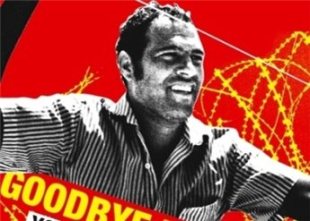 BETHLEHEM – The mother of Bassem Abu Rahmah, who was killed in 2009 during a non-violent protest in Bilin, filed a petition to Israel’s High Court on Sunday to demand justice for the death of her son, B’Tselem said.
The petition was filed jointly with Bilin village council, B’Tselem and Yesh Din, and demands that Israeli Military Advocate General, Major-General Danny Efroni, be ordered to reach a decision in the case and prosecute the soldier and all those bearing command responsibility for the killing of her son.
Bassam Abu Rahman, 30, was killed in 2009 after being shot in the chest with a tear-gas canister during a demonstration against Israel’s separation wall.
Three video segments filmed during the protest prove that Abu Rahmah did not act violently and did not endanger the soldiers in any way, B’Tselem said.
The petition includes opinions from experts who reviewed the videos, stating that the grenade was aimed directly at Abu Rahmah.
Other soldiers in the same video can be seen firing tear-gas canisters directly at protestors in the presence of senior officers and in complete contravention of the open-fire regulations, B’Tselem said.
Despite these findings, the former Military Advocate General initially refused to open an investigation, only changing his mind after a threat to petition Israel’s High Court with expert opinion documenting the “unequivocal conclusion that the firing was aimed directly at Abu Rahmah.”
“The failure to reach a decision is dangerous and conveys the message to IDF and Border Guard personnel engaged in dispersing demonstrations that even if they shoot and kill demonstrators, they will not bear criminal liability,” B’Tselem said.
“Such a message reflects contempt for the lives of Palestinian civilians.”
The death of Bassam Abu Rahmah was featured in the highly praised Palestinian documentary “5 Broken Cameras.”
The film is based on five years of amateur camera work by journalist Emad Burnat as he documented weekly protests against land seizures by Israeli forces and settlers in the village of Bilin.
March 4, 2013
Posted by aletho |
Ethnic Cleansing, Racism, Zionism, Subjugation - Torture | Danny Efroni, Israel, Palestine, West Bank, Zionism |
Leave a comment

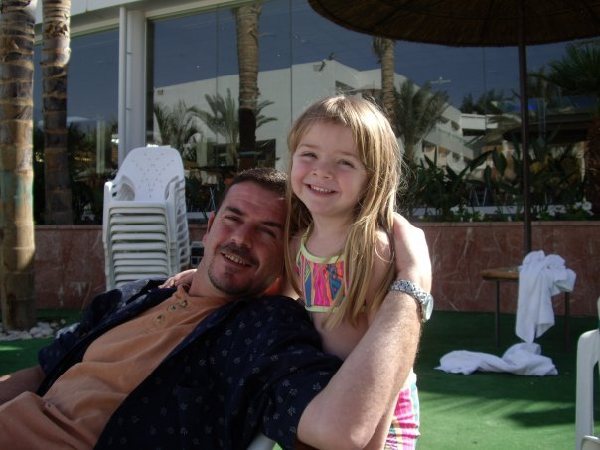 “I am dreading facing them for my daughters,” Says Moira, “I think I could face them myself but I’m afraid that when I see the pain in my daughters eyes it will kill me.” Her husband, Ziad Jilani was killed three years ago by Maxim Vinogradov, an Israeli border patrolman who put his rifle to Jilani’s head and pulled the trigger three consecutive times.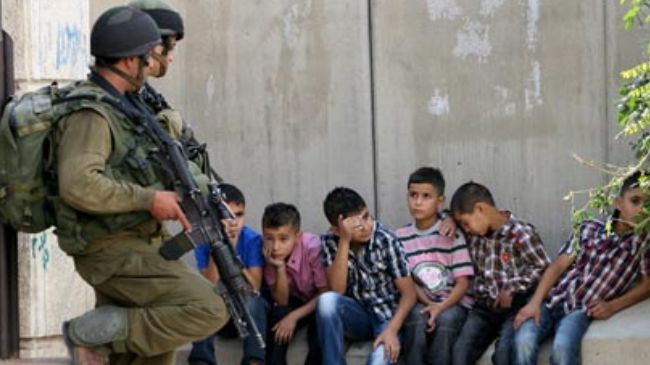
 BETHLEHEM – The mother of Bassem Abu Rahmah, who was killed in 2009 during a non-violent protest in Bilin, filed a petition to Israel’s High Court on Sunday to demand justice for the death of her son, B’Tselem said.
 Aletho News
