NATO, Not Russia, Perpetuates Cold War Logic… It is a Relic Best Ignored
Strategic Culture Foundation | October 22, 2021
It was the end of an era this week when Russia announced that it was severing diplomatic links with the North Atlantic Treaty Organization. For the past 30 years since the dissolution of the Soviet Union, the Russian Federation has engaged with the US-led military bloc in a bid to establish partnership and secure peace.
The incipient detente culminated in the NATO-Russia Founding Act in 1997 which demarcated certain boundaries for peaceful coexistence. Those boundaries were subsequently flouted as NATO doubled its members over the ensuing years to stand at the current membership of 30 countries, including states that share a border with Russia.
There was also established in 2002 a NATO-Russia Council which in principle provided a forum for dialogue between delegations hosted in the Belgian capital Brussels where NATO has its headquarters.
But the truth is initial promises of partnership have waned. For several years now, at least since the 2014 Ukraine crisis, NATO’s relations with Russia have been characterized more and more with an imperious attitude of lecturing Moscow over a litany of alleged transgressions. These allegations are more accurately described as slanders because they are never substantiated beyond bald accusation.
Russia is routinely accused of posing a threat to Europe and plotting to sabotage Western democracies. This week the NATO defense ministers held a summit in which it was breathlessly claimed that Russia is becoming an even greater threat to the transatlantic alliance. On the back of that hysterical claim, NATO has now moved to implement a “master plan” to “defend” Europe from a “potential Russian attack on multiple fronts”.
Reality check. Moscow has repeatedly stated that it has no intent of aggression towards the United States, NATO, Europe or anyone else for that matter. Despite this categorical assurance, the Western bloc has persisted in talking up tensions with Russia.
It is the United States that has abrogated several arms-control treaties and introduced new missile systems into Europe. It is NATO that is encroaching on Russia’s territory. Reality is turned on its head by Western accusations.
Indeed there have been conflicts over Georgia in 2008 and ongoing in Ukraine. But in each case, there are substantial grounds for laying the blame of these conflicts on NATO. How did the coup d’état in Kiev happen in 2014, who supported it? And why did the people of Crimea vote in a constitutional referendum to secede from Ukraine to join the Russian Federation with which they have centuries of shared history and culture?
In any case, if there were proper partnership and dialogue between NATO and Russia then such concerns and disputes could have been appropriately aired and discussed in the assigned forum. But the fact is there was never any genuine attempt at dialogue by NATO. Russia has become an object of harangue and hostility. The supposed partnership envisaged some three decades ago became a travesty. Instead of dialogue and debate there was simply disdain. Instead of equality there was vilification, opprobrium, and sensationalized smears without the slightest due process afforded to Russia (the Skripals, Navalny, Novichok, electoral interference, cyberattacks, shooting down a Malaysian airliner, and so on and so on, like an old skipping vinyl record incapable of moving on.)
The supposed diplomatic channels were nothing but echo chambers for NATO propaganda talking points, rather than being used as a means to resolve misapprehensions through mutual dialogue and presentation of evidence.
As the Russian foreign ministry noted this week in explaining the severance of diplomatic ties, it is NATO that systematically destroyed relations and “chose the Cold War logic”.
Alexander Grushko, Russia’s deputy foreign minister, commented that normal relations were not possible amid unfriendly steps taken by NATO “sliding into Cold War schemes”.
The last straw was the expulsion earlier this month by NATO of Russian diplomats from the NATO forum in Brussels. The Russian staff were accused of being “undeclared spies” allegedly working for military intelligence. No evidence was provided, as usual, by the accusers. It was the familiar high-handed approach of fait accompli and Russia “guilty until proven innocent”.
Everyone recognizes that relations between the Western states and Russia are at their lowest since the end of the former Cold War. Thus it may be put to Moscow that it is being reckless to close down channels of communication at this precarious time.
Russia has not ruled out pursuing a more productive relationship in the future. It has said, however, that it is up to NATO to make the first move towards improving relations. Until then, henceforth, any communications can be submitted through Russia’s ambassador to Belgium.
It is our view that Russia has made the correct call to drop diplomatic channels with NATO. Russia will pursue bilateral relations with individual nations as it does already, for example, with the United States on the vital issues of arms control and cybersecurity. NATO has proven to be incapable of progressive negotiations owing to an organizational “groupthink” that is encumbered with Russophobia and Cold War ideology.
By engaging directly with individual nations, it may be more productive for mutual understanding to be advanced because the noise of “groupthink” and of competing group negativity is removed.
Unfortunately, it has to be noted that the original purpose of NATO when it was formed in 1949 was rooted in Cold War hostility towards the Soviet Union. Such animosity has not abated even though the Soviet Union no longer exists.
Fundamentally, NATO is an organization in search of enemies in order to justify the militarism that is essential for the functioning of Western capitalism. There is a pivotal contradiction between NATO and today’s emerging world of multipolar cooperation and peaceful development. Its disgraceful, diabolical destruction of Afghanistan alone debars that organization from having any progressive role in today’s world.
Russia is right to disabuse the illusion of “partnership” with NATO. It is a relic of Cold War hostility that belongs in a war museum not in a modern forum for diplomacy.
Russia to suspend direct diplomatic ties with NATO from November
RT | October 18, 2021
Moscow has announced that it will completely suspend the operations of its mission to NATO, two weeks after the US-led bloc expelled eight Russian diplomats for alleged ‘undisclosed espionage’ at its Brussels headquarters.
Speaking on Monday, Russian Foreign Minister Sergey Lavrov also revealed that the NATO information bureau in Moscow will be forced to shut down as part of retaliatory measures.
Earlier this month, NATO officials decided to slash the size of the permanent Russian delegation to the bloc, revoking the credenitals of eight envoys, in response to what it called “suspected malign Russian activities.”
Following NATO’s decision, Foreign Ministry spokeswoman Maria Zakharova warned that Moscow would work on a response.
Now, if the US-led bloc wants to talk to Russia, it must deal with the embassy in Belgium, Lavrov said.
“As a result of purposeful steps by NATO, we do not have the right conditions for elementary diplomatic activities,” he told TASS news agency.
“In response to NATO’s actions, we are suspending the work of our permanent mission, including the work of our chief military representative.”
“The NATO International Secretariat has already been notified.”
“If NATO members have any urgent matters, they can contact our ambassador in Belgium, who ensures bilateral relations between Russia and the Kingdom of Belgium,” the minister said.
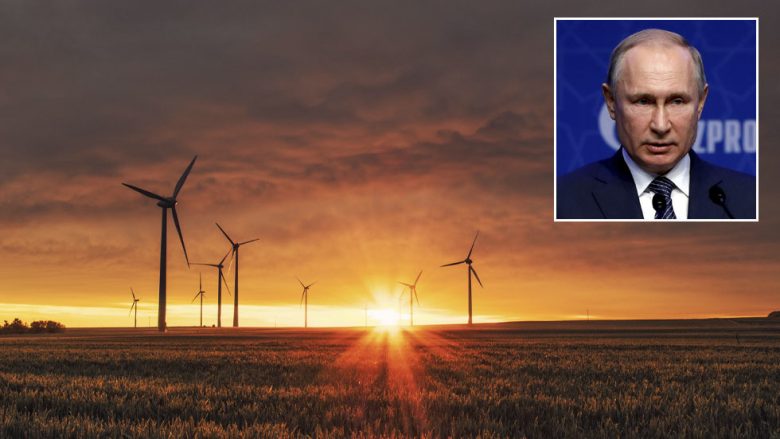
Soaring gas prices in Western Europe due to mistaken reliance on wind farms, Russia on track for record exports in 2021 – Putin
RT | October 13, 2021
A surge in the cost of gas which has seen bills shoot up for households and industry is down to a shortfall in electricity generation, and not because Russia is somehow squeezing supplies, President Vladimir Putin has argued.
Speaking as part of a keynote address at Russian Energy Week on Wednesday, Putin said that a fall in output from wind farms had meant electricity prices shot up, having a knock-on effect on demand for gas. Wind power makes up an increasingly large share of Europe’s energy generation, particularly in the west of the continent, he went on.
“The rise in gas prices in Europe was the result of a shortage of electricity, and not vice versa,” the president insisted.
Putin went on to accuse Western leaders of “trying to cover up their own mistakes,” following a series of claims that the situation is because Russia is withholding supplies. He added that “proper analysis of the situation is often replaced by empty political slogans.”
According to the Russian president, an exceptionally long winter drained the continent’s energy reserves and disrupted pricing. Now, “the invisible hand of the market” is at play, Putin said.
Contrary to Russia seeking to worsen the crisis, Putin insisted that the country could well see record levels of exports in 2021 as Moscow works to meet the growing demand. That said, though, he claimed that the Kremlin doesn’t relish the prospect of shortages and that “the high price environment can have negative consequences for everyone, including producers.”
Some countries have seen gas prices rise by as much as 250% in recent days, with a knock-on effect being felt in the industry. Homeowners also face higher heating bills with winter fast approaching. Several energy companies in the UK, which has seen some of the sharpest increases, have entered into talks with the government to prevent them from potentially going bust.
Last month, Putin’s spokesman, Dmitry Peskov, said that the state energy firm, Gazprom, is already fulfilling all of its contracts and no customers have been denied deliveries. According to him, “nobody has any grounds to claim otherwise,” and the company is making preparations to strike new deals and increase the volumes flowing westwards.
US is only country still hanging on to chemical weapons, Russia says, after Washington unveils ‘Novichok’ questions
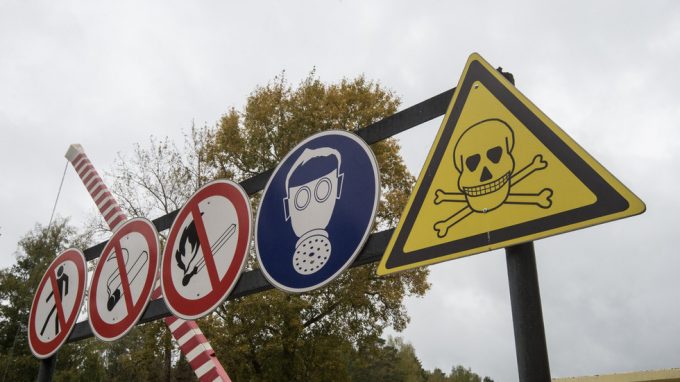
An open storage for the collection of burnt ammunition containing toxicant agents. © Sputnik / Ilya Pitalev
RT | October 6, 2021
Russian diplomats have hit out at the US after American officials signed a letter demanding information on the circumstances of the purported poisoning of opposition figure Alexey Navalny, accusing Washington of double standards.
On Tuesday, Moscow’s embassy in Washington issued a fiery statement after the US and 44 other countries presented a series of answers from Russia over the incident as part of a missive passed over to the Organization for the Prohibition of Chemical Weapons (OPCW). Navalny and his German doctors insist that he was poisoned with the nerve agent Novichok last year. The envoys blasted the allegations as “unfounded,” and the Kremlin has argued that all requests for evidence from Berlin have gone unanswered.
In response to the allegations, the embassy argued that Russia “is committed to its obligations” under chemical weapons treaties and, “in 2017, our country destroyed all national stocks of chemical warfare agents, which was documented by the OPCW.”
However, the envoys argue that “the US continues to be the only country in the world that has not destroyed its impressive arsenal of chemical weapons.” In 1991, then-US President George H.W. Bush committed to destroying its stockpiles of lethal agents, but progress has since been hampered by a number of issues and decommissioning is still underway, leaving large quantities of chemical munitions, including mustard gas shells.
In March, the US slammed Russia with sanctions, urging Moscow to get rid of the country’s chemical weapons stockpile following the allegations of the use of Novichok against Navalny. Kremlin Press Secretary Dmitry Peskov, however, maintained that “Russia declared and verified the destruction of all chemical weapons on its territory many years ago and fully complied with international conventions… Russia has no chemical weapons.”
“By the way,” Peskov added, “we expect that our counterparts will also comply with these conventions.”
This is not the first time that Russia has called on the US to dispose of its chemical weapons. In 2018, the spokesperson for the country’s Foreign Ministry, Maria Zakharova, responded to former US President Donald Trump’s request for Russia to “stop the arms race” developing between the two nations. “Great idea,” Zakharova said. “Let’s start by getting rid of chemical weapons. American ones.”
In response to the US’ latest accusations regarding Russia’s supposed chemical warfare capabilities, the embassy said that it is in the world’s interest that Washington complies with the UN’s international regulations surrounding disarmament. “We call on Washington to complete the chemical demilitarization program as soon as possible and fulfill international obligations, making the world safe from the potential use of this type of weapon,” the embassy added.
With much of Europe facing a worsening squeeze on gas supplies, the West is already looking to blame Russia
By Rachel Lloyd | RT | October 6, 2021
With gas prices rising dramatically across much of Western Europe, and a dip in its transit through Belarus and Ukraine to the EU, many commentators have pointed the finger once again at Russia, as the source for all their woes.
For some, this is evidence that President Vladimir Putin is weaponizing energy to the detriment of the rest of Europe. However, recent events and well-established agreements seem to tell another, less glamorous, story.
Turning off the taps?
The issue being painted as the next big Russian conspiracy is a noticeable drop in gas supplies being moved through Belarus to the EU. Posted on the site of Gazprom – Russia’s state energy corporation and Europe’s largest supplier of natural gas – are numbers that appear to substantiate a 70% dip in volumes reaching the EU, compared with last month.
That number has upset many, especially in the face of Europe’s biggest energy crisis in years. However, the fact is that there are other well-known factors at play using these numbers as evidence that Russian malevolence is more fear-mongering than fact.
Likely the biggest reason is last year’s agreement between Gazprom and its Belarusian subsidiary operator, where it was decided that much less gas would be transited through the Yamal-Europe pipeline in the fourth quarter of 2021. Unsurprisingly, this change was set to start in October of this year, perfectly coinciding with the drop seen today.
Could Moscow really predict a crunch in the European gas market a year in advance? Not likely, especially considering the uncertainty of Covid-19 and its effect on the near future of the world economy and society.
While there may be a dip in gas deliveries right now, when all data is placed on a timeline of the last four years rather than just two misleading months, it’s clear that such anomalies are typical and that there have been similar falls, which have quickly recovered.
Also, overall supplies from Russia to the EU are still on pace with the prior month’s numbers, if not a bit better. The first four days of October show an average of 210 million cubic meters, which is par for the course compared to September and previous months.
The full picture
There are, of course, other variables that need to be considered, some of which existed before the energy crisis first reared its ugly head. In December of 2019, Kiev and Moscow struck a deal on gas transit via Ukraine. As part of it, Russia’s minimum pledged for shipment was changed to 40 bcm annually from 2021 to 2024, down from 65 bcm in 2020 and 86.8 bcm in 2018.
Additionally, the September agreement between Moscow and Hungary has seen the TurkStream pipeline begin pumping supplies to the Central European nation, starting last week. The deal will supply Hungary with 4.5 billion cubic meters of natural gas from Russia annually for the next 15 years. Gas supplies that may have generally transited through Ukraine or the Yamal pipeline are now being funneled through a new route across the Black Sea in order to reach Hungary and Croatia.
There’s also the genuine concern about the cold and snow of the winter season. Russia, known for its harsh winters, can see temperatures drop below -40 centigrade in Siberia – where many of Russia’s gas fields are located. The lower temperatures and harsh conditions of an extreme winter can directly impact oil and gas production and transit.
Typically, to avoid shortages, reserves are filled for storage. However, last year, Russia dealt with an especially long and cold winter and is currently scrambling to stockpile oil and gas to meet its own domestic needs. Gazprom’s oil and gas inventories plummeted to 16% at the end of last winter, well below the standard 35% seen in years prior.
And with the expectation of another brutal snowy season comes the unfortunate understanding that the natural gas powerhouse is not yet in a position to provide more gas to the rest of Europe. In November, when Gazprom should have storage sites replenished, there is hope that Russia can begin to prioritize taking excess volumes and channeling them into the Western European market.
Not orchestrated by Moscow
The unprecedented gas crisis in Europe is currently causing consternation from politicians and economists to those getting their heating bills in the mail. Prices have surged over the past few weeks, often breaking records each day. Current costs are six times higher than last year, with seemingly no end in sight.
However, faulting Putin for the increase is a reach. Demand globally has spiked, potentially as a result of the world economy’s reemergence after the end of global lockdowns. There is more competition among East Asian countries as they angle for a piece of the pie. Just as in Russia, Western European stocks of natural gas were depleted significantly following last winter. There may also be issues developing from Europe’s energy transition.
Delayed by American sanctions in 2019, Nord Stream 2 is beginning to run tests, with natural gas currently being filled in one of the two pipelines. The project will double the current export capacity of gas supplies to Western Europe and is currently awaiting German approval. Had such a delay at the behest of the US not occurred, perhaps gas prices would not be soaring.
In essence, Europe’s current crisis is the result of a perfect storm of conditions – many of which are out of Moscow’s control.
Gazprom “cannot wave a magic wand and deliver extra gas to any place in Europe that requires it on short notice,” notes Vitaly Yermakov, a senior research fellow at the Oxford Institute for Energy Studies. “No matter how hard Gazprom tries, it cannot single-handedly balance such a huge market as Europe.”
Perhaps those countries worst affected should come together and start searching for solutions, rather than just for someone to blame.
Rachel Lloyd is a policy analyst at the Russian Public Affairs Committee (Ru-PAC). She writes about Russia-US relations, international law, and American foreign policy.
There’s a wide range of factors causing massively increased gas prices in Europe, but Russia is not one of them: Kremlin
By Jonny Tickle | RT | October 6, 2021
Russia has nothing to do with the rapidly rising gas prices in Europe, and the country is providing as much as it possibly can to the rest of the continent, the Kremlin said on Wednesday, amid accusations that Moscow is to blame.
Speaking to journalists on Wednesday, spokesman Dmitry Peskov rejected the idea that Russia is playing any part in the rising prices. Earlier that day, the price of gas in Europe once again reached a historical record of $1,900 per 1,000 cubic meters.
“The first and most important thing is that we not only believe, but we insist that Russia is playing no role in what is happening on the gas market in Europe,” Peskov said, noting that Gazprom is pumping as much gas as it can “within the framework of the existing contracts.”
According to the Kremlin spokesman, Russia has avoided huge gas prices due to a well-thought-out strategy, while Europe has made mistakes.
“It’s all very simple. If you bet on the development of wind energy, you create the appropriate infrastructure,” Peskov explained. “But different climate processes happen and suddenly there is less wind. This is what is happening this year in Europe. There is less wind and generation is down.”
Some have accused Moscow of intentionally limiting gas supplies to Europe as a means to speed up the launch of the controversial pipeline Nord Stream 2, which was recently completed.
On Tuesday, the European Commission announced it would look into suggestions that Moscow is trying to boost gas prices. However, according to European Energy Commissioner Kadri Simson, Russia is “fulfilling its long-term contracts.”
Russia will take ‘zero tolerance’ approach to US tech giant YouTube’s ‘censorship’ of RT’s German-language channels
RT | September 29, 2021
YouTube has violated Russian law by taking down two German-language channels run by RT, the Kremlin has insisted, cautioning that the American tech giant will face serious consequences unless it urgently reinstates the accounts.
Speaking to journalists on Wednesday, President Vladimir Putin’s press secretary said that “there are of course signs that Russian law has been broken” after the platform moved to ban RT DE and Der Fehlende Part from its site. “In fact, it has been broken very brazenly,” Dmitry Peskov added. “Because of this, it is a case of censorship, and of obstructing the dissemination of information by the media, and so on.”
Peskov added that “there must be zero tolerance for such violations of the law,” insisting that “if our regulators deem this is a violation of legislation then we can’t exclude the possibility we will take measures to force this network to comply with the law.”
Earlier on Wednesday, Moscow’s media watchdog, Roskomnadzor, published a letter sent to YouTube’s parent company, Google, demanding all restrictions be lifted from RT’s channels. The purportedly permanent deletion was imposed after the German-language broadcaster allegedly attempted to circumvent a ‘community guidelines’ strike, handed down for ‘medical misinformation’ in four videos. The details of the purported breach are not yet clear, but RT’s editor-in-chief, Margarita Simonyan, has said that it amounts to “a declaration of media war against Russia by Germany.”
Roskomnadzor went on to tell Google that, if the site does not comply with the order, “legislation allows us to take measures including completely or partially blocking access to it.”
Moscow’s Foreign Ministry has also announced that it is considering taking steps against German news outlets in retaliation over the decision. “Adopting reciprocal measures against the German media in Russia which, by the way, has been repeatedly shown to have interfered in our country’s internal affairs, seems not only appropriate but necessary,” it said in a statement.
Officials went on to say that such restrictions are “the only possible way to focus our partners’ attention on a constructive and meaningful dialogue around this unacceptable situation.” According to the diplomats, YouTube acted not out of adherence to its community policies but with the “obvious connivance, if not the insistence,” of German authorities.
Berlin has denied involvement in the decision and insists that the matter is one for YouTube alone.
US demands Russia boost natural gas deliveries to Europe through Ukraine
RT | September 22, 2021
The US says Russia must increase supplies of natural gas to Europe through Ukraine to curb skyrocketing energy costs, sticking to its negative stance on the launch of Russia’s Nord Stream 2 pipeline.
“The reality is there are pipelines with enough capacity through Ukraine to supply Europe. Russia has consistently said it has enough gas supply to be able to do so, so if that is true, then they should, and they should do it quickly through Ukraine,” Amos Hochstein, senior adviser for energy security at the US State Department, said in an interview with Bloomberg TV.
Hochstein said supplies of gas from Russia to Europe are “inexplicably low compared to both previous years and to what they have the capacity to do.” He also said that Russia’s state energy giant Gazprom’s refusal to book additional gas transit through Ukrainian territory for October “increases the concern.”
The US official also accused Moscow of trying to use Europe’s energy crisis to speed up the launch of the newly constructed Nord Stream 2 pipeline, which runs from Russia to Germany through the Baltic Sea. Hochstein underlined that US President Joe Biden and his administration oppose the launch of the project.
Gas prices in Europe have been hitting records, with October futures on the Dutch TTF exchange reaching record $963.9 per 1,000 cubic meters this month, while on September 20 the estimated price was $911.2.
Russia’s Gazprom has repeatedly pointed to the connection between high gas prices and lower-than-needed reserves in European underground storage facilities ahead of the approaching winter. As of September 19, those reserves were only 72% full, TASS reported, which is nearly 14% lower than in the past five years.
However, Gazprom emphasized last week that its current volume of gas supplies to Europe is in full compliance with the existing contracts. The company has been uneager to book additional volumes in the pipelines running through Ukraine due to high fees.
Gazprom is also counting on the launch of Nord Stream 2, a pipeline capable of delivering 55 billion cubic meters of Russian natural gas annually. The pipeline’s daily capacity of gas supply is comparable to the entire volume of liquefied gas that is now supplied to Europe.
However, Russia may have to wait up to four months for EU certification required to start deliveries. The project has been repeatedly delayed under pressure from Washington and some Eastern European countries, which view increasing energy imports from Russia as a threat to Europe’s energy security.
NONE OF THE ABOVE: THOUGHTS ON TWO ELECTIONS
BY PAUL ROBINSON | IRRUSIANALITY | SEPTEMBER 18, 2021
Citizens of Russia and Canada go to the polls over the next few days to elect new parliaments – the Duma in Russia’s case, the House of Commons in that of Canada. It’s fair to say that neither is generating a lot of international excitement. In Russia’s case, because the result is (within certain boundaries) a foregone conclusion; and in Canada’s case because nobody cares.
Insofar as the Canadian press is covering the Russian election, it’s to portray it as fundamentally flawed, if not downright corrupt – a pretence at democracy rather than the real thing. Typical is the latest by the CBC’s new Moscow correspondent Briar Stewart, which starts off by quoting the campaign manager of the liberal Yabloko party in Krasnodar, saying that, “the State Duma election is the most terrible election I have seen since my birth.” The rest of the article then hammers home the point in case any readers hadn’t got it already.
There’s an element of truth to the complaints about the Russian elections, although it’s worth noting that the authorities’ manipulation of the system occurs primarily before votes are cast rather than after. That’s to say that the ‘managed’ party of ‘managed democracy’ mainly involves making life difficult for opposition candidates, limiting their access to the media, and things like that, rather than practices like ballot stuffing or falsifying the count (not to say that these practices don’t happen, but the general feeling is that the authorities prefer to limit them so as to avoid ridiculous results that lack legitimacy).
Nevertheless, although the playing field is far from a level one, when Russian voters head into the booths to cast their ballots, they have quite a lot of choice.
It’s reckoned that four or five parties will gain seats in the Duma via the proportional representation system that assigns half the total to those parties that win over 5% (the other half are chosen by first-past-the-post constituency elections). Most of these likely winners fall, I would say, in the left-conservative bracket, but there’s a lot of variation – from the hard left Communist Party of the Russian Federation (CPRF), through the also fairly left wing Just Russia party, the centrist United Russia, the centre-right New People (the least likely to pass the 5% hurdle), and the nationalist LDPR.
If those aren’t to your liking, there’s another 9 parties on the ballot papers. Most are no-hopers, though one or two might win a constituency here or there. For instance, if you’re the kind of person who thinks that the CPRF has sold out communism, you can vote for the more hardcore Communists of Russia. Or, likewise, if you think that the LDPR are a bunch of softies and you want tougher action on issues like immigration, you can throw your support behind Rodina. Or, if you’re liberally-inclined and think that New People are Kremlin stooges, you can put your cross next to the name of Yabloko (also Kremlin stooges according to the bizarre logic of the Navalnyites) or the more free market-inclined Party of Growth.
In other words, despite all the manipulations of the authorities, even if the final result is not in doubt (United Russia will win a majority), once you’re in voting booth ready to cast your secret ballot you actually have a lot of options open to you.
Now, let’s look at Canada.
Outside of Quebec (where you also have the separatist Bloc Quebecois), there’s only three options if you want to vote for somebody who win will a seat: Liberal, Conservative, and NDP (Green might pick up one seat, but overall are somewhere around 3% in the polls). The only other party likely to get a reasonable number of votes is the People’s Party of Canada, which is enjoying a surge (6-7%), primarily, it seems, by appealing to anti-vaxxers. But it has no chance of winning any seats and is thus a wasted vote except as a protest.
In other words, in real terms you have a choice of three parties. Let’s see what distinguishes them. As far as I can see, their platforms run roughly as follows:
Party A: Money grows on trees. Spend, spend, spend. Party B: Money grows on trees. Spend, spend, spend, and spend! Party C: Money grows on trees. Spend, spend, spend, and spend some more!
Party A: Here’s the list of interest groups I want to throw money at. Party B: Here’s my list. Look it’s even longer. Party C: Hah, you think your list is long – look at mine!
Party A: Woke is good. Party B: Woke is extra good. Party C: Woke is extra, extra good.
Party A: Russia is evil. Party B: Russia is very evil. Party C: Russia is very super evil.
Party A: We’ll be tough on China. Party B: We’ll be extra tough on China. Party C: We’ll be extra, mega tough on China. (Of course, in practice, none of them will!)
By now you get the point. It doesn’t really matter who you vote for, you end up with pretty much the same thing. That’s not to say that there are no differences, but they’re not on fundamentals. Basically, it’s three variations of a theme.
So there you have it. In one country, you have lots of choice, but the system’s fixed to make sure the same guys always win. In the other, it’s a fair fight – anyone can win – it just doesn’t matter who does – they’re all the same. You might say that one is rigged at the micro level, while the other is rigged at the macro level.
Which is better? I’ll leave it to you to decide. Meanwhile, I have the difficult decision as to whether Party A, Party B, or Party C is more worthy of my vote on Monday. What a choice!
SHARE THIS:
Coup in Guinea, led by Israeli trained Colonel, hurts Russian interests

Colonel Mamadi Doumbouya along with US Africa Command soldiers
By Lucas Leiroz | September 8, 2021
A recent coup in Guinea has left the world surprised and unanswered about what is really happening in the region. The military overthrew the president and seized power after some controversies involving alleged attempts by the former leader to perpetuate himself in power. Regardless of political factors on the domestic scene, the coup appears to have great international relevance, as it strongly harms Russian interests in Guinea.
On Sunday, Guinea’s armed forces arrested the country’s then president, Alpha Conde, and announced the dissolution of the government. According to witnesses, during the president’s detention, at least two people were injured in an intense firefight in and around the presidential palace, located in Conakry, the country’s capital. The military official who led the coup was Colonel Mamadi Doumbouya, who, in statements to the local media, said that there will be a major reform in the country, with the formation of a new government, promulgation of a new constitution and beginning of a military administration.
Doumbouya heads a dissident military group that calls itself the “National Committee of Reconciliation and Development” (CNRD, in its French acronym). So far, little is known about such organization, which appears to have been formed a few days before the coup and does not seem to have a formal ideology or agenda to be defended, just joining soldiers dissatisfied with Conde’s government. The CNRD released videos proving that the former president is alive and safe, but there is still not enough information to affirm the conditions under which he is being treated.
To understand the case, we must pay attention to the background of the coup. Alpha Conde was elected for a third presidential term in October 2020 and was declared president the following month, in November. The opposition claimed fraud during the elections and initiated a crisis of legitimacy. The point most criticized by his opponents was Conde’s decision to amend the constitution so that he could be perpetuated in power. Guinea’s constitution forbade a president to run for office three times in a row, but Conde made a change in the legal text in order to be able to run and defeat his opponents. Despite being a complicated and controversial legal maneuver, Conde gained strong popular support and his permanence in power was the preference of most of the Guinea’s people, according to surveys carried out at the time.
On the other hand, the leader of the coup, Colonel Doumbouya, was until then a rather obscure figure to the national political scenario. Doumbouya is a former member of the French Foreign Legion, having served in military operations in Afghanistan and African countries. He received military training in Israel before returning to his country and assuming command of the special forces. There are photos circulating on the internet showing Doumbouya along with US Africa Command soldiers at the US embassy in Guinea – the circumstances are unknown but reveal some degree of connection between military dissidents and foreign agents.
The reason that explains why the strong opposition occurred between Condé and Doumbouya may be precisely in their foreign connections. Guinea is one of the largest aluminum and bauxite suppliers in the world. The coup strongly impacted the metals industry, which reached record highs in the price of aluminum. And one of the main aluminum and bauxite explorers in Guinea is the Russian company Rusal, which has been operating in the country for two decades and is responsible for managing several local firms and industries.
Obviously, there wasn’t a coup d’état just to stop Rusal’s actions in Guinea. The tension is due to the level of collaboration between the African country and Russia. Conde was interested in taking advantage of the partnership in the aluminum and bauxite business to increase economic cooperation and seek more Russian investments in Guinea. In June of this year, Conde sent a delegation of officials to Russia, during the 24th St. Petersburg International Economic Forum, with the intention of starting a bilateral dialogue to attract more investment in Guinea, mainly in the infrastructure sector, which is a strategic point for the implementation of national development policies. In fact, Conde saw Russia as an opportunity for strategic international cooperation between two emerging nations, just as other African countries have seen in China, for example.
Certainly, no Western country will publicly support the coup, but the unstable situation in national politics will already be enough to prevent Russian investments in Guinea, so Guinea has been “neutralized” in this regard. Perhaps, in addition to Latin America, Africa is also in Washington’s plans since the US has lost strength in Asia. If this is confirmed, it is possible that in the near future we will see new coups taking place in other African states.
Lucas Leiroz is a research fellow in international law at the Federal University of Rio de Janeiro.
Featured Video
New positive ivermectin evidence
or go to
Aletho News Archives – Video-Images
From the Archives
Fanatical Followers of the Covid Regime: A Jim Jones-Style Cult?
By Professor Roger Watson and Dr. Niall McCrae | The Daily Sceptic | November 15, 2021
As scholars at leading British universities over recent decades, we witnessed the replacement of critical thinking and debate by narrative: facts are discrimination and scientific method is imperialism; truth, instead, is derived from ‘progressive’ values. This educational trend may be a major contributory factor to the ease in which society has been inculcated to the Covid ‘new normal’ of masking, testing, and repeated doses of vaccines for a disease of similar risk to severe influenza.
One doesn’t need much critical reasoning to observe the flawed logic of some vaccination enthusiasts, such as people who respond to experiencing any side effects, however debilitating, by saying “at least I know it’s working”, or, after contracting the disease despite their promised inoculation (over 90% effective, according to initial drug company claims), “I’d have been worse off without the jab.” … continue
Blog Roll
 Aletho News
- Merck Virologists Admitted to Falsely Certifying Vaccine Efficacy
- Mandatory Folic Acid for every man, woman & child
- Pro-Palestine protesters arrested outside UK’s ruling Labour Conference in Liverpool
- Mauritius denies landing permit to flight from Israel, forcing cancellation: Tour operator
- Israeli finance minister calls for genocidal war on West Bank, annexation of south Lebanon
- 12 Things Your Psychiatrist Was Trained Not to Tell You
- From Unipolar Universalism to Multipolar Civilizational Distinctiveness
- RSF military group defects, joins Sudanese army: State media
- Ireland goalkeeper refuses to play ‘Israel’ as squad weighs boycott
- China pushes back against US on Cuba, Iran
- If Americans Knew
- Israel forces Gazans to live in constant peril – Daily Update
- Deconstructing Netanyahu’s pants-on-fire UN rant – Daily Update
- Trump betrayed voters with his campaign lies and prioritized a foreign country once he took office
- Netanyahu calls Israel’s war in Gaza ‘opposite of genocide’ in UN speech to near-empty hall
- Settler Kidnappings: Torture, Sexual Abuse and Terrorisation of Palestinian Abductees as Israel Deepens Annexation of West Bank
- Gaza winter nears as 162,000 tents become unusable, raising fears of humanitarian crisis
- Netanyahu says, “It’s the opposite of genocide”; UN says Gaza economy is world’s ‘most severe crisis on record’ – Daily Update
- Israel’s US-Backed Assault on Gaza Has Created the ‘World’s Most Severe Economic Crisis on Record’: UN
- ‘Protecting U.S. Citizens’… From Israel
- ‘This is where I live now, the back of a truck’: a day in the life of a grandmother in Gaza
- No Tricks Zone
- New Study: Earth And Venus Surface Warmth Largely Explained By Convection And Lapse Rate, Not CO2 Or Radiation
- 2025 Nature Paper Claiming Worsening Global Drought Gets RETRACTED …Heavily Flawed
- New Study: ‘Global Drought Shows No Detectable Recent Acceleration Under Climate Warming’
- Economic Masterminds: German Socialists Suggest Taxing Productivity Gains Stemming From Using AI
- The South China Sea Has Not Been Cooperating With The Climate Change Narrative
- Energy Crisis: Germany Enters Heating Season With Historically Low Gas Reserve Fill Levels
- New Study: The Antarctic Ice Sheet Gained Mass From 2020-2024 Due To Staggering Snow And Ice Accumulation
- Study: Ocean Heating Rates From Thousands Of Years Ago ‘Dwarf’ Modern Ocean Heating Rates
- Climate Extremists Target, Attack Large-Scale Power Grid Infrastructure In Germany!
- New Study: Antarctic Ice Melt Has Contributed Less Than 1 Centimeter To Sea Level Rise In The Last 30 Years

