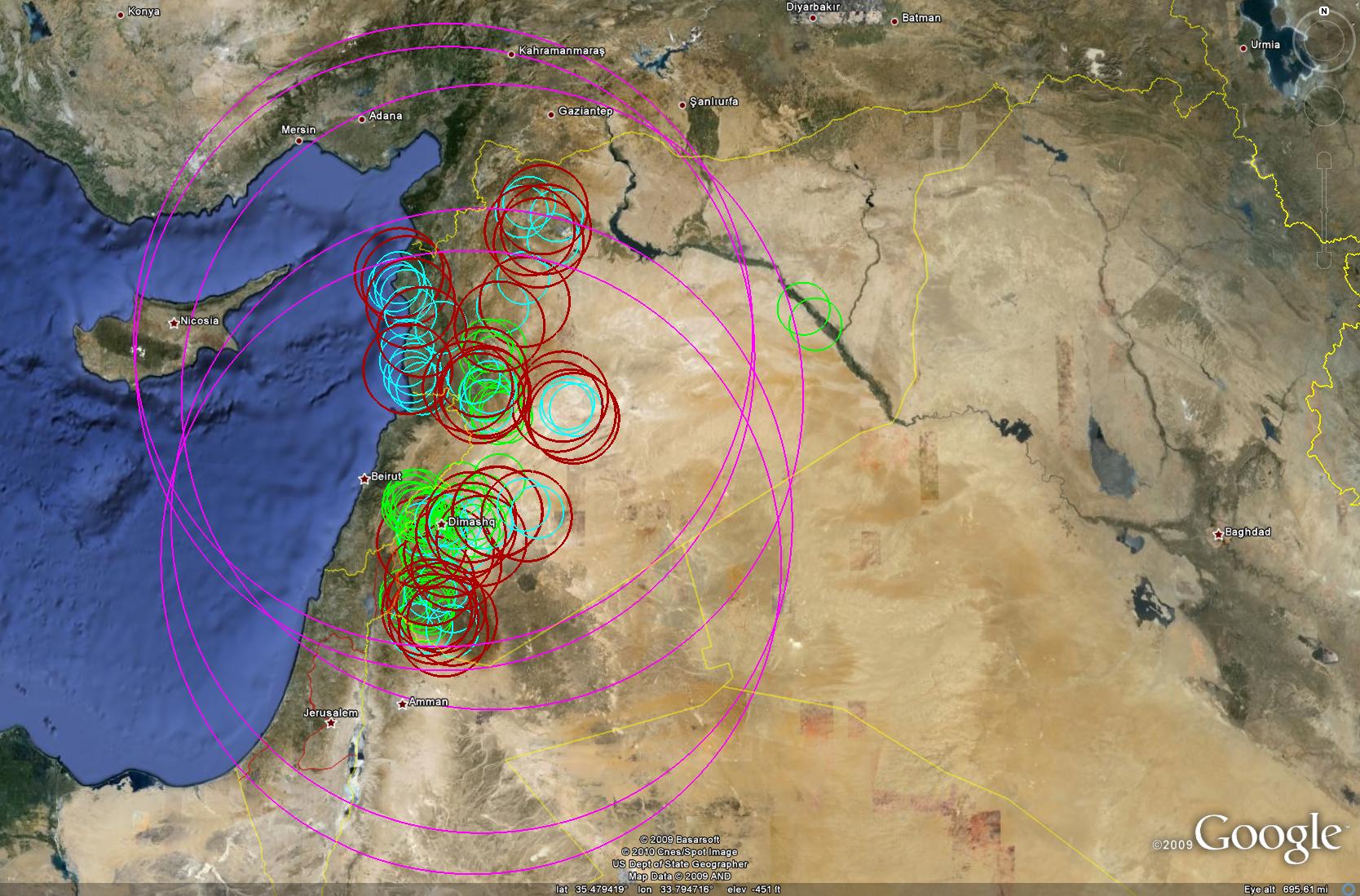
‘Saudi Sanctions against Hezbollah Have Failed to Weaken the Party’

Deputy chief of Hezbollah’s Executive Council Sheikh Nabil Qawook
Naharnet | October 29, 2016
Deputy chief of Hezbollah’s Executive Council Sheikh Nabil Qawuq stressed on Saturday that the Saudi sanctions against the party have failed to weaken it, the state-run National News Agency reported on Saturday.
“The political developments and field achievements confirm the failure of the Saudi sanctions against Hezbollah, especially since Saudi Arabia wanted to weaken Hezbollah in Lebanon which has only grown stronger at the political, popular and military levels inside Lebanon and regionally,” said Qawuq.
“By renewing sanctions and terrorism ranking against Hezbollah in Lebanon, Saudi Arabia is but reflecting an outrage, despair and disappointment in the face of the Resistance, because the Saudi penalties have changed nothing of Hezbollah’s stances in Syria,” his eminence went on to say.
“Regardless of the pressures, we will not leave our national duty to protect our people and our nation, and we will complete the battle against takfiri terrorism, which has no choice but to be defeated in Syria, and we have no choice but to win.” added Qawuq.
He concluded: “The next phase that Lebanon is approaching will emphasize the strength of the strategic alliance between Hezbollah and Amal movement. Those who were betting on discord and division between the two were disappointed.
“If it was not for the Army, People and Resistance equation which Lebanon renews adherence to at this stage, and without the sacrifices of the Lebanese army and the resistance that has protected Lebanon from being sacked by the ISIL and al-Nusra Front, the Lebanese would not have had the chance to elect a president.”
Michael Moore Owes Me $4.99
By David Swanson | Let’s Try Democracy | October 28, 2016
Michael Moore has made some terrific movies in the past, and Where to Invade Next may be the best of them, but I expected Trumpland to be (1) about Trump, (2) funny, (3) honest, (4) at least relatively free of jokes glorifying mass murder. I was wrong on all counts and would like my $4.99 back, Michael.
Moore’s new movie is a film of him doing a stand-up comedy show about how wonderfully awesome Hillary Clinton is — except that he mentions Trump a bit at the beginning and he’s dead serious about Clinton being wonderfully awesome.
This film is a text book illustration of why rational arguments for lesser evilist voting do not work. Lesser evilists become self-delusionists. They identify with their lesser evil candidate and delude themselves into adoring the person. Moore is not pushing the “Elect her and then hold her accountable” stuff. He says we have a responsibility to “support her” and “get behind her,” and that if after two years — yes, TWO YEARS — she hasn’t lived up to a platform he’s fantasized for her, well then, never fear, because he, Michael Moore, will run a joke presidential campaign against her for the next two years (this from a guy who backed restricting the length of election campaigns in one of his better works).
Moore maintains that virtually all criticism of Hillary Clinton is nonsense. What do we think, he asks, that she asks how many millions of dollars you’ve put into the Clinton Foundation and then she agrees to bomb Yemen for you? Bwahahaha! Pretty funny. Except that Saudi Arabia put over $10 million into the Clinton Foundation, and while she was Secretary of State Boeing put in another $900,000, upon which Hillary Clinton reportedly made it her mission to get the planes sold to Saudi Arabia, despite legal restrictions — the planes now dropping U.S.-made bombs on Yemen with U.S. guidance, U.S. refueling mid-air, U.S. protection at the United Nations, and U.S. cover in the form of pop-culture distraction and deception from entertainers like Michael Moore.
Standing before a giant Air Force missile and enormous photos of Hillary Clinton, Michael Moore claims that substantive criticism of Clinton can consist of only two things, which he dismisses in a flash: her vote for a war on Iraq and her coziness with Wall Street. He says nothing more about what that “coziness” consists of, and he claims that she’s more or less apologized and learned her lesson on Iraq.
What? It wasn’t one vote. It was numerous votes to start the war, fund it, and escalate it. It was the lies to get it going and keep it going. It’s all the other wars before and since.
- She says President Obama was wrong not to launch missile strikes on Syria in 2013.
- She pushed hard for the overthrow of Qadaffi in 2011.
- She supported the coup government in Honduras in 2009.
- She has backed escalation and prolongation of war in Afghanistan.
- She skillfully promoted the White House justification for the war on Iraq.
- She does not hesitate to back the use of drones for targeted killing.
- She has consistently backed the military initiatives of Israel.
- She was not ashamed to laugh at the killing of Qadaffi.
- She has not hesitated to warn that she could obliterate Iran.
- She is eager to antagonize Russia.
- She helped facilitate a military coup in Ukraine.
- She has the financial support of the arms makers and many of their foreign customers.
- She waived restrictions at the State Department on selling weapons to Saudi Arabia, Algeria, Kuwait, United Arab Emirates, Oman, and Qatar, all states wise enough to donate to the Clinton Foundation.
- She supported President Bill Clinton’s wars and the power of the president to make war without Congress.
- She has advocated for arming fighters in Syria and for a “No Fly” zone.
- She supported a surge in Iraq even before President Bush did.
That’s just her war problem. What about her banking problem, prison problem, fracking problem, corporate trade problem, corporate healthcare problem, climate change problem, labor problem, Social Security problem, etc.?
Moore parts company from substantive critique in order to lament unproven rightwing claims that Hillary Clinton has murdered various people. “I hope she did,” screams Moore. “That’s who I want as Commander in Chief!” Hee hee hee.
Then Moore shamelessly pushes the myth that Hillary tried to create single-payer, or at least “universal” healthcare (whatever that is) in the 1990s. In fact, as I heard Paul Wellstone tell it, single-payer easily won the support of Clinton’s focus group, but she buried it for her corporate pals and produced the phonebook-size monstrosity that was dead on arrival but reborn in another form years later as Obamacare. She killed single-payer then, has not supported it since, and does not propose it now. (Well, she does admit in private that it’s the only thing that works, as her husband essentially blurts out in public.) But Moore claims that because we didn’t create “universal” healthcare in the 1990s we all have the blood of millions on our hands, millions whom Hillary would have saved had we let her.
Moore openly fantasizes: what would it be like if Hillary Clinton is secretly progressive? Remember that Moore and many others did the exact same thing with Obama eight years ago. To prove Clinton’s progressiveness Moore plays an audio clip of her giving a speech at age 22 in which she does not hint at any position on any issue whatsoever.
Mostly, however, Moore informs us that Hillary Clinton is female. He anticipates “that glorious moment when the other gender has a chance to run this world and kick some righteous ass.” Now tell me please, dear world, if your ass is kicked by killers working for a female president will you feel better about it? How do you like Moore’s inclusive comments throughout his performance: “We’re all Americans, right?”
Moore’s fantasy is that Clinton will dash off a giant pile of executive orders, just writing Congress out of the government — executive orders doing things like releasing all nonviolent drug offenders from prison immediately (something the real Hillary Clinton would oppose in every way she could).
But when he runs for president, Moore says, he’ll give everybody free drugs.
I’ll tell you the Clinton ad I’d like to see. She’s standing over a stove holding an egg. “This is your brain,” she says solemnly, cracking it into the pan with a sizzle. “This is your brain on partisanship.”

Russia only country in Syria acting under int’l law – German statesman Willy Wimmer
RT | October 25, 2016
The UN is not free in its opinion; it is playing a part in the game on the side of the US, says Willy Wimmer, former State Secretary of the German Christian Democratic Party.
Some 80 aid and humanitarian organizations, including Human Rights Watch, claim Russia – the only country operating militarily in Syria legally – is no longer “fit” to hold its position in the body.
The move, prompted by Russia’s anti-terror actions in Syria – actions that have attracted the ire of some Western countries – appear to be yet another effort on the part of particular countries to denigrate Russia.
Russia’s presidential spokesman says the condemnation should be directed at extremists in Syria instead.
Meanwhile, German foreign Minister Frank-Walter Steinmeier is calling for another humanitarian pause in Aleppo like the one that took place last week.
RT sat down with German politician Willy Wimmer for his views on the issue.
RT: Do you think another humanitarian pause will produce any progress, given that there’s no pressure on the Western-backed rebels to stop their shelling of civilian areas?
Willy Wimmer: I think it is vital and necessary to look for relief for the humanitarian problems we have in Syria. And I think we should stop the killing as soon as possible. That is one thing we have to take into consideration. On the other side, we should never forget who started the civil war in Syria and when these human rights organizations blame one country in particular, we should never forget that the US, Great Britain, France, Saudi Arabia and Qatar created a civil war in Syria. I won’t mention Israel because of the situation in the neighborhood.
When we complain about the human suffering in Syria, we have to take into consideration who started everything. And the interesting thing is that everything the West is doing in Syria is against international law; they have no support of the UN Charter, even what the German militaries are doing there is against our Constitution. The only power which is in accordance with international law in Syria is the Russian Federation and because the actual president who had been elected freely, as for the support, it is in accordance with the international law. We have to take this into consideration when it comes to accusations from Human Rights Watch and others.
RT: There are calls to exclude Russia from the UN Human Rights Council. This would undermine one of the founding principles of the United Nations, wouldn’t it? What do you make of such rhetoric?
WW: It is a signal that the UN is on one side. It is not free in its opinion and we see it already for decades that the UN is playing a part in the game on the side of the US. And therefore, we don’t take it serious what the UN representatives tell us.
RT: Last year, Saudi Arabia was elected chair of a key panel on the Human Rights Council. Yet its human rights record has been repeatedly criticized. There have been calls for Saudi Arabia to be suspended from UN Human Rights Council, but do you think this will ever happen?
WW: Never, because of the close relationship between Saudi Arabia, Israel and the US. And therefore, I think they can do what they do without being punished for that (…) I think we have to realize who organized the civil war in Syria, and who is in accordance with international law. When they had a truce between the United States and the Russian Federation three weeks ago, what happened? The Americans killed 100 Syrian soldiers and Russian soldiers as well. There is a development in Washington to make use of the situation where there is no newly elected American president, and this is a complex and extremely dangerous situation for the rest of the world.
Read more:
The Tragedy in Yemen
By Derek Royden | CounterPunch | October 25, 2016
Imagine if the Islamic Republic of Iran, complaining that its regional rival Saudi Arabia was meddling in a neighbor’s politics for sectarian reasons, led a coalition to invade that country. As a result, after 18 months, at least 10,000 civilians had been killed or wounded, more than half the country’s people needed food aid and three million people had been displaced.
Sanctions would be leveled. Pundits would write agonized essays comparing the country to Nazi Germany. Sabers would be rattled. War would likely follow. However, when these roles are reversed and the Saudis and their Gulf allies are the aggressors, it’s a different story.
Why the double standard? Because the US is allied to the Saudi royals and the US was evicted from Iran. When a friend commits a war crime, excuses are made.
The numbers above are estimates made by the UN for the ongoing conflict in Yemen, led by Saudi Arabia with significant help from the United States and Great Britain. The stated purpose of the intervention in the country is to fight Houthi forces from the north who are allied with former President Saleh.
The Houthis, most of whom are followers of the Zaidi branch of Shia Islam, took the country’s capital Sanaa on September 21st, 2014, forcing then-President Mansur Al-Hadi to flee, first to Aden and then on to Saudi Arabia. The argument made by the Saudis and their coalition partners, that the Houthis are Iranian proxies, is dubious at best but it’s being spread in western media as flat-out fact, allowing governments to turn a blind eye to the tragedy unfolding in the country.
Besides intelligence and targeting assistance provided to the Saudis in Yemen, since 2010 the US has sold $60 billion in arms to the country, an absolute monarchy with one of the worst human rights records in the world. Human rights groups have concluded that these weapons, including cluster munitions banned in most countries, have been used indiscriminately against civilian targets including markets, schools and hospitals.
Finally, after a year and a half of this, some in the US Congress found the political will to take a stand on this carnage. A bipartisan resolution in the US Senate co-sponsored by Chris Murphy (D-Connecticut) and Rand Paul (R-Kentucky) was crafted to block a new deal supplying the Kingdom with a further $1.15 billion in arms. Although having the vote at all showed some progress on this issue, it was defeated by a vote of 71-27 on September 21st.
The American people have a moral responsibility to contact their representatives and demand they vote to end their government’s support of the illegal intervention in the poorest country in the Middle East. Those who don’t care about the country’s suffering need to remember it’s also an issue of national security as both Al Qaeda in the Arabian Peninsula (AQAP) and Yemen’s newly established ISIS affiliate are growing in the chaos, something that should worry the whole world.
WikiLeaks: The two faces of Hillary Clinton on Syria
By Sharmine Narwani | RT | October 14, 2016
“People don’t trust Hillary Clinton, and no one can agree on why,” begins a sympathetic piece on the Democratic Party presidential candidate in Fast Company last July.
In a CNN poll that same month, only 30 percent of Americans believed Clinton to be “honest and trustworthy.”
If voters don’t know what to make of Clinton or how to read her, the blame may lie directly with the candidate herself. In an April 2013 speech made public by WikiLeaks last week, Clinton confided:
Politics is like sausage being made. It is unsavory, and it always has been that way, but we usually end up where we need to be. But if everybody’s watching, you know, all of the back room discussions and the deals, you know, then people get a little nervous, to say the least. So, you need both a public and a private position.
That last “public vs. private” comment quickly made the media rounds, and confirmed – for her critics – Clinton’s deliberate duplicity on a number of policy positions.
WikiLeaks has provided an opportunity to delve into some of these, so let’s take a look at one very prominent feature of Clinton’s foreign policy agenda: Syria, a country that stands at the center of a potential global confrontation today.
Not a Syrian uprising; a regime change plan
A 2012 email released by WikiLeaks last year shows that, behind the scenes, Clinton’s State Department was calculating its Syria policy using entirely different metrics than its publicly-stated narrative of supporting reforms and rejecting violence:
It is the strategic relationship between Iran and the regime of Bashar Assad in Syria that makes it possible for Iran to undermine Israel’s security — not through a direct attack, which in the thirty years of hostility between Iran and Israel has never occurred, but through its proxies in Lebanon, like Hezbollah, that are sustained, armed and trained by Iran via Syria. The end of the Assad regime would end this dangerous alliance. Israel’s leadership understands well why defeating Assad is now in its interests.
The email, written by an unidentified person and included within the WikiLeaks ‘Clinton archive,’ lays out a plan:
Washington should start by expressing its willingness to work with regional allies like Turkey, Saudi Arabia, and Qatar to organize, train and arm Syrian rebel forces. The announcement of such a decision would, by itself, likely cause substantial defections from the Syrian military. Then, using territory in Turkey and possibly Jordan, US diplomats and Pentagon officials can start strengthening the opposition… Arming the Syrian rebels and using Western air power to ground Syrian helicopters and airplanes is a low-cost high payoff approach.
Arming a Syrian rebellion from outside the country was already a consideration “from the very beginning,” according to a recent WikiLeaks release of a June 2013 speech by Clinton:
So, the problem for the US and the Europeans has been from the very beginning: What is it you – who is it you are going to try to arm. And you probably read in the papers my view was we should try to find some of the groups that were there that we thought we could build relationships with and develop some covert connections that might then at least give us some insight into what is going on inside Syria.
Certainly, we know that by early 2012, the Obama and Erdogan administrations had struck a deal to establish a rat-line transporting weapons and ammunition from Libya to Syria – via the CIA and MI6, and funded by Turkey, Saudi Arabia and Qatar.
The attack on the US consulate in Benghazi which killed US Ambassador Christopher Stevens was only a temporary setback. Weapons and financial assistance to militants in Syria, however, continued to flow from America’s regional allies without any US push-back, even though Washington clearly knew arms were being siphoned to extremists.
A declassified DIA document from August 2012 circulated to Clinton’s State Department states plainly that “the Salafist, Muslim Brotherhood and AQI (Al-Qaeda in Iraq) are the major forces driving the insurgency in Syria” and that “the West, Gulf countries and Turkey support the opposition.”
But if US Special Forces were involved in driving arms and fighters into Syria in early 2012, the groundwork would have had to have begun many, many months before. The US military’s unconventional warfare (UW) strategy requires that target-state population perceptions are first “groomed” into accepting an armed insurrection, using “propaganda and political and psychological efforts to discredit the government”… creating “local and national ‘agitation’”… helping organize “boycotts, strikes and other efforts to suggest public discontent”… before beginning the “infiltration of foreign organizers and advisors and foreign propaganda, material, money, weapons and equipment.”
You get an idea of how this “propaganda” and “grooming” works in a June 2011 email from Clinton’s recently-departed Director of Policy Planning Anne-Marie Slaughter, who openly calls for fabricating sectarian narratives to incite Syrian protestors:
This suggests US should be making much more of the ways in which Syrian regime is simulating violence. Can’t we call for a meeting of the UNSC where we do not call for action but simply present information along the lines of what is recounted below so as to ‘bring it to the attention of the Council’ in a way that then has greater credibility globally? Making the point repeatedly that the regime wants this to look like/turn into sectarian violence? At the very least that can be broadcast back into Syria in various ways that will encourage protestors. There is an information war going on; we can do much more to elevate and legitimate the truth.
This is business as usual for a US State Department well-versed in sowing sectarian discord in the Middle East – all while publicly denouncing sectarian strife. A WikiLeaks email from 2006 shows that this thinking was already well-entrenched in Foggy Bottom, with a focus on “exploiting vulnerabilities” – particularly “sectarian” ones – inside Syria.
Fueling the sectarian Jihad
By late 2011, US intelligence had assessed that Al-Qaeda was operating inside Syria. This information was public, but not widely disseminated. Instead, Clinton’s team focused heavily on flogging the narrative that “Assad must go” because of his government’s widespread human rights violations.
Clinton liberally used the “humanitarian” pretext to advance a regime change agenda – pushing, behind the scenes, for increased assistance to militants and direct US military intervention, while publicly decrying the escalating violence inside Syria.
But did she give a toss about keeping Syrians safe? The evidence suggests otherwise. In this new WikiLeaks release of a speech to the Jewish United Fund in August 2013 – “flagged,” incidentally, by her staffers who worried about its content – Clinton outlines one possible Syria policy option:
One way is a very hands off, step back, we don’t have a dog in this hunt, let them kill themselves until they get exhausted, and then we’ll figure out how to deal with what the remnants are. That’s a position held by people who believe there is no way, not just for the United States but others, to stop the killing before the people doing the killing and the return killing are tired of killing each other. So it’s a very hands off approach.
To any observer of the foreign-fueled Syrian war of attrition, it looks very much like Clinton opted for this course of action.
And given that Washington’s allies in the Syrian fight consisted mainly of head-chopping, jihadist foot soldiers, Clinton’s scenario of a killing field to keep all sides “exhausted” may have even been the starting plan.
These fighters came equipped with a militant, sectarian mindset courtesy of Saudi Arabia, Turkey and Qatar – under the supervision, of course, of a CIA that cut its teeth doing the exact same thing with the Mujahedeen in Afghanistan.
A WikiLeaks email sent from Hillary Clinton to her now-campaign chief John Podesta in August 2014 shows that the former Secretary of State is fully aware that her allies were partial to supporting terrorists:
While this military/paramilitary operation is moving forward, we need to use our diplomatic and more traditional intelligence assets to bring pressure on the governments of Qatar and Saudi Arabia, which are providing clandestine financial and logistic support to ISIL and other radical Sunni groups in the region.
Qatar and Saudi Arabia are, of course, two staunch US allies in the region that host American military bases and, apparently, also support ISIL.
Another October 2013 Clinton speech “flagged” by her campaign staff, and released by WikiLeaks this week, has her saying:
The Saudis and others are shipping large amounts of weapons – and pretty indiscriminately – not at all targeted toward the people that we think would be the more moderate, least likely, to cause problems in the future.
The State Department knows all too well that both fighters and weapons are fungible in the Syrian militant marketplace. It is a key reason the US has always resisted naming those groups it considers “moderate” rebels. Arms and supplies to US-backed groups have often found their way to ISIL and Al-Qaeda, with photo evidence aplenty making the social media rounds.
Despite these loaded disclosures, Clinton and other US policymakers still flog outdated narratives about an “evil Syrian regime killing innocent civilians” while ignoring the narrative they know to be true: bloodthirsty jihadists armed to the teeth by ideologically-aligned US allies.
This Syrian conflict – privately, at least – is about regime change at all costs for the hawkish side of the policy establishment which includes the CIA, Pentagon brass and Clinton. Publicly, however, it’s still about “crimes against humanity” – whatever that means today.
Earlier this month, Clinton began to publicly reveal that truth in advance of the November presidential election. Reuters reports Clinton as saying “removing President Bashar al-Assad is the top priority in Syria.”
She is also once again touting a “no-fly zone” over Syria – much as she did with Libya. In yet another speech ‘flagged’ by her campaign and released by WikiLeaks – this one delivered to Goldman Sachs at their CEO conference in June 2013 – Clinton explains:
To have a no-fly zone you have to take out all of the air defense, many of which are located in populated areas. So our missiles, even if they are standoff missiles so we’re not putting our pilots at risk – you’re going to kill a lot of Syrians. So all of a sudden this intervention that people talk about so glibly becomes an American and NATO involvement where you take a lot of civilians.
So Clinton is advocating for a no-fly zone despite the fact that she recognizes she’s “going to kill a lot of Syrians.” Which then puts that other speech of hers about letting Syrians “kill themselves until they get exhausted” into context.
Her only regional allies in this endeavor will be the Saudis and Qataris, who we now know support ISIL and other terrorists inside Syria. We also know that Clinton will continue to ignore this indiscretion – not because of what she says, but because of what she does.
Her public-versus-private position on the Saudis, after all, has been bandied about since the 2010 WikiLeaks State Department cables were released.
In 2009, a secret WikiLeaks cable signed off by then- Secretary of State Hillary Clinton reads, in part:
Donors in Saudi Arabia constitute the most significant source of funding to Sunni terrorist groups worldwide… Saudi Arabia remains a critical financial support base for Al-Qaeda, the Taliban, LeT (Laskhar-e Taiba), and other terrorist groups… It has been an ongoing challenge to persuade Saudi officials to treat terrorist financing emanating from Saudi Arabia as a strategic priority.
Yet by 2011, Clinton was ushering through the biggest weapons sale to Saudi Arabia in US history – a massive $67 Billion arms dump into the epicenter of global terror.
Clinton is not averse to cashing in on Saudi riches for her and her family’s foundation either. The Clinton Foundation has received millions of dollars from Saudi, Qatari and other Gulf sources, despite the role their governments have played in funding global Jihad. And her campaign manager’s brother, Tony Podesta, just signed on to furnish the Saudi government with very expensive public relations services earlier this year.
There is something schizophrenic about Hillary Clinton’s compartmentalization of issues that speaks to the very competence of her judgment. Her whole private-versus-public-positions shtick is antithetical to the transparency, process and accountability demanded by democracy.
She speaks of her Iraq “mistake,” yet we have still not heard what lessons she has learned. And it grates, because we can see she has repeated them again and again, in Libya and in Syria.
The “public” Hillary Clinton supports self-determination, freedom and human rights for Syrians. The “private” Hillary Clinton supports the wholesale massacre of Syrians by a closely allied network of depraved sectarian terrorists – in order to weaken Iran and strengthen Israel.
If you’re one of those Americans who don’t trust her, you have good reason. At this point it is hard to ascertain if Clinton herself knows what her truth is anymore.
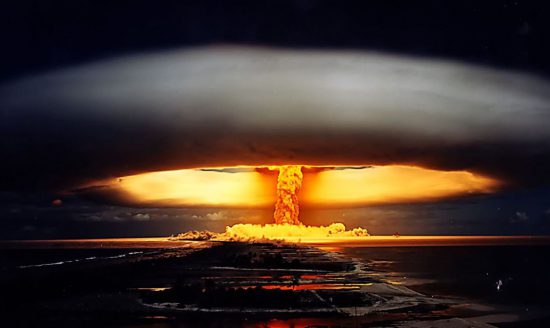
Going Beyond Propaganda. Nuclear Conflict: Deception or Real Threat?
By Federico PIERACCINI | Strategic Culture Foundation | 16.10.2016
The events in the Middle East, Syria and Aleppo are the focus of global attention. Rarely has a battle been so decisive to the outcome of a war and the fate of hundreds of millions of people around the world
Hillary Clinton in the last presidential debate repeatedly called for the establishment of a no-fly zone (NFZ) in Syria. The concept, reiterated several times, clashes with the revelation contained in her private emails admitting that the implementation of a NFZ would entail the increased deaths of Syrian civilians. In a recent hearing before the Senate Armed Services Committee, General Philip Breedlove was asked what kind of effort would be required for the US armed forces to impose a NFZ over Syrian skies. With obvious embarrassment, the General was forced to admit that such a request would involve hitting Russian and Syrian aircraft and vehicles, opening the door to a direct confrontation between Moscow and Washington, a decision the General was simply not willing to take. The military leadership has always shown a readiness to implement the military option; so this time they must have sniffed the danger of a direct conflict with Moscow.
The Kremlin has publicly admitted to deploying in Syria the S-400 and S-300V4 advanced anti-aircraft and anti-missile systems respectively. The presence of the defense complex was intentionally announced as a factor of deterrence and is a logical strategy. The message to Washington is clear: any unidentified object in Syrian skies will be shot down. The United States bases much of its military strength on the constant need to project power, making its opponents believe that it possesses capabilities that others do not hold. Therefore it is very unlikely that the Pentagon would want to reveal to the world the worth of their stealth systems and their ‘legendary‘ American cruise missiles when faced with the S-300V4 or S-400. The Kosovo War serves to remind us of the F-117 that was shot down by Soviet systems (S-125) dating from the 1960s.
Hillary Clinton’s threats against Moscow were not the only ones. The present policy makers in Washington continue to make aggressive statements demonstrating their total loss of touch with reality. In recent weeks, hysterical reactions were recorded by the Pentagon, the State Department, top military generals, and even representatives of American diplomacy. To emphasize the unhappiness prevalent in some Washington circles, several articles appeared in The Washington Post and The New York Times calling for the imposition of a US no-fly zone in Syria, ignoring the consequences highlighted by Dunford. There are two hypotheses under consideration: hitting the Syrian army air bases with cruise missiles, or the use of stealth planes to bomb Damascus’s A2/AD installations.
Behind Washington’s frantic reactions and vehement protests is the probability of military defeat. The US does not have any ability to prevent the liberation of Aleppo by the Syrian Arab Army (SAA) and the Russian Federation. In the last fifteen days, the SAA and Russia have achieved significant progress, and it is this that has led to an escalation of tensions. Some of the most significant episodes reflecting this over the last few days include: jets of the international coalition hitting the SAA, causing 90 deaths; US government officials threatening Russia with the downing of her planes and the bombings of her cities, resulting in Russian civilian deaths; and the blaming of Moscow for an attack on a humanitarian convoy. The climax seemed to have been reached at the United Nations where the US representatives prevented a Russian resolution condemning the terrorist attacks on the Russian embassy in Damascus. It is interesting to note that fifteen years after the attacks of September 11, 2001, Washington finds itself defending Al Nusra Front (AKA Al Qaeda) in an official United Nations meeting; something to ponder. But apparently there is no limit to provocations, and a few days after this incredible denouement, the Pentagon was keen to point out that the possibility of a preventive nuclear strike against Russia is still valid.
It therefore seems almost simplistic to emphasize that because of the success of the SAA, Washington, Ankara, Riyadh, Doha and Tel Aviv are showing unprecedented signs of weakness and nervousness. Their commitment to overthrowing the legitimate government of Assad has failed. The combined action of the Syrian and Russian ground, air and sea forces pushed Washington and the corporate media to move from words of condemnation to increasingly open threats.
Last month the situation against the terrorists quickly changed in the north of Syria thanks to the Syrian Arab Army and its allies supported by the West. In Aleppo, the SAA continues to work every day with great success toward the city’s liberation. Neighborhoods and large areas are back under government control. The relentless advances of the troops loyal to Assad are altering the course of the war in Syria in favor of Damascus, eliminating the US attempts to remove the legitimate Syrian government. A victory in Aleppo would mean the near certainty of defeat for the terrorists in the remaining areas of the country. The closing of the border with Turkey would cut the supply lines, with consequences and repercussions throughout Syria. What would still remain open are a few crossing areas in the south of the country near the border with Jordan that have always been a supply source for terrorists. However, it would be very difficult for this supply line alone to sustain the conflict or adequately replace the one closed north of Aleppo. Especially in the north through Turkey, and to the west through the uncontrolled border with Iraq, the terrorists receive continuous supplies. The liberation of Mosul by the Iraqi army, Aleppo by the SAA, and Der Al-Zur in the near future, will pave the way for the strategic recapture of Raqqa, the last bastion of Daesh, thereby defeating even the Plan B to partition the country.
With the failure of the northern front, the terrorists will be faced with the probable prospect of the complete collapse of their operations nationwide. Some will continue to fight, but most will throw down their weapons knowing that they have lost the war. Once this is achieved, the liberation of the rest of Syria should be a matter of a few months. It should be remembered that the recapture of Aleppo would guarantee a crushing defeat for the regional sponsors of international terrorism (Qatar and Saudi Arabia).
Still, it is not only the advance of Aleppo that is cause for concern for enemies of Syria. Obama and his administration are now irrelevant, also because of one of the most controversial presidential elections in recent history. The uncertain future of Washington’s foreign policy has prompted partners such as Riyadh, Doha, Ankara and Tel Aviv not to hesitate in further adding fuel to the Syrian conflagration, worried about any future inactivity from Washington and eager to advance their own military solution to the conflict.
In the case of Ankara, the invasion of Iraq and Syria is a serious danger that risks plunging the region into further chaos and destruction, with the Iraqi prime minister not hesitating to label the Turkish move reckless and warning of the conflict expanding into a regional conflict. Saudi Arabia’s problems are even greater, as it does not have the ability, in terms of men and means, to intervene directly in Syria because of its disastrous involvement in the war in Yemen. The speed with which confidence in Riyadh is crumbling is unprecedented. Her large currency reserves are dwindling, and it seems it is because tens of billions of dollars have been squandered in financing the military action against Yemen. Another example of independent military action concerns Israel. Four years into the Syrian conflict, Israel continues its secret war against Hezbollah and Iranian troops, who are engaged in areas bordering Israel in fighting al-Nusra Front and Daesh. For Tel Aviv, there are still two options desirable to the Syrian crisis, both in line with their strategy, namely, the continuation of chaos and disorder, or a balkanization of Syria. In both cases, the objective is to expand Israel’s sphere of influence far beyond the Golan Heights, which were occupied illegally years ago.
The unsuccessful attempts of Turkey, Israel and Saudi Arabia to change events in Syria have highlighted the growing strategic misunderstandings between the United States and regional partners, misunderstandings that often oblige Ankara, Riyadh and Tel Aviv to turn to the Russian Federation for confidential dialogue, since Moscow is the only player able to adjust the delicate Middle East equilibrium.
In the near future, it remains evident to Moscow and Damascus that some risks still exist, despite a well-considered overall strategy. The acceleration in the liberation of Aleppo also has an ancillary purpose that aims to minimize maneuverability for the next American administration. In a certain way, it is a race against time: Aleppo must be liberated in order to chart the way towards the end of the conflict before the next US president comes into office in January 2017. It is yet to be seen whether Clinton or Trump plan to go beyond Obama’s empty threats, but understandably Damascus and Moscow have no intention of being caught off guard, especially with a probable Clinton presidency.
After years of negotiations with the schizophrenic diplomacy of the US, Moscow and Damascus have decided to protect themselves against any sudden decisions that may come from the American «deep state». Deploying the most advanced systems existing in air defense, Moscow has called Washington’s bluff as no one has done in years. The red line for Moscow was crossed by the tragic events of September 17 in Der al-zur. The creation by the Russians of a no-fly zone over Syrian skies has been repeatedly suggested. But incredibly, in the hours immediately after the cowardly attack against Syrian troops, the US Department of Defense and the State Department proposed the creation of a no-fly-zone that would serve to ground Russian and Syrian planes. It was a brazen and provocative proposal for Damascus and Moscow if there ever was one.
Sensing the danger in these words, Moscow acted immediately, deploying cutting-edge systems to protect Syrians skies with equipment that can shoot down cruise missiles, stealth aircraft, and even ballistic missiles (S-300 and S-400). To make sure Washington fully understood the message, the Russian Ministry of Defence (MoD) reiterated what was already publicly announced, namely that any unidentified object would be shot down immediately, as there would not be any sufficient time for Russian operators to verify the original launch, trajectory and final target of any objects detected. It is a clear warning to the US and its long-standing strategy that requires the use of large amounts of cruise missiles to destroy anti-aircraft systems in order to pave the way for a no-fly zone as was seen in Libya. The Russian MoD has even specified that American fifth-generation stealth aircraft could be easily targeted, alluding to a radius of operation of the S-200 systems, S-300 and S-400 (and all variants) that would surprise many international observers. This statement also seems to indirectly confirm another theory that remains pure speculation, which is that during the September 17 attack by the US on the SAA in Der Al-Zur seem, some jets from the international coalition were targeted by Russian or Syrian air-defense systems (perhaps S-200s or S-400s), forcing the airplanes to retreat before facing the prospect of being shot down.
Whatever the intentions that are hidden behind Washington’s hysterical threats, Moscow has suggested several asymmetrical scenarios in response to a direct attack on its personnel in Syria. In addition to the S-300 and S-400 systems, the MoD has openly declared its knowledge of the exact locations of US special forces in Syria, a clear reference to the Syrian and Russian ability to strike US soldiers operating alongside terrorists or ‘moderate’ rebels.
All of Major-General Igor Konashenkov’s recent press conferences have clearly shown new systems deployed in Syria for air defense, a more than intentional advertisement. Aside from deterrence continuing to be one preferred instrument adopted by Moscow, the unusually strong, direct and unambiguous words of the Russian MoD easily show how the patience of Moscow and Damascus has been exhausted, especially following the recent sequence of events as well as repeated threats.
In such a scenario, the US can only rely on one weapon: complaints, threats and hysterical crying amplified by the mainstream media, generals and the official spokespeople of dozens of agencies in Washington. Nothing that can actually stop the liberating action of the SAA and its allies.
The United States has no alternatives available to prevent an outcome to the conflict that is undesirable for it. Whichever route it chooses, there is no way to change the events in Syria. Even American generals had to admit that a no-fly zone in Syria is out of the question. It is easy for US State Department spokesperson Admiral Kirby to launch empty threats, but it is more difficult for the military to act on these threats while avoiding a nuclear apocalypse. Whatever the outcome of the upcoming presidential elections, the war in Syria for the United States and its regional partners is irretrievably lost, and the hysteria and provocations of recent weeks is symptomatic of the frustration and nervousness that has not been common for Americans in recent years.
Iran urges end to arms sales to S Arabia, Israel
Press TV – October 15, 2016
Iran’s deputy permanent representative to the UN has warned against continued sales of weapons to Saudi Arabia and Israel, which are in violation of other territories as well as humanitarian laws.
“We are deeply concerned about the destabilizing repercussions of the continual entry and export of such weaponry into the region, especially into Saudi Arabia and the Zionist regime of Israel,” Gholam-Hossein Dehqani said.
He said both Saudi Arabia and Israel are “engaged in aggression and violation against other countries and in flouting their commitments to international humanitarian laws.”
Dehqani was speaking at the annual meeting of the United Nations General Assembly’s Disarmament and International Security Committee at the world body’s headquarters in New York, IRNA reported on Saturday.
He said the Saudi regime was using “British and American bombs” against vital Yemeni infrastructure.
Saudi Arabia has been pounding Yemen since March 2015 in an unsuccessful attempt to reinstall a former ally as president. The war has killed more than 10,000, according to UN figures in August.
Dehqani also stressed the need for disarming Israel of its nuclear arsenal and for the regime’s accession to the Nuclear Non-proliferation Treaty (NPT), saying “the most dangerous weapons are in the hands of the most dangerous regime in the Middle East.”
“The Zionist regime has recurrently perpetrated violations, occupation, genocide, and terrorist activities; and nuclear weapons in the hands of such a regime constitutes the most dangerous threat to NPT signatories in the Middle East,” he said.
Israel, which has refused to sign the NPT or allow inspections of its military nuclear facilities, keeps an estimated stockpile of some 200-400 nuclear warheads.
Separately, Iran’s envoy to the Organization for the Prohibition of Chemical Weapons (OPCW) urged the complete annihilation of chemical weapons stockpiles.
Alireza Jahangiri, addressing the body Executive Council in The Hague, also urged those countries in possession of such weapons to act on their commitments within the framework of the organization’s Chemical Weapons Convention and non-members to join the Convention.
Jahangiri also urged international cooperation to prevent the use of chemical weapons by terrorist groups, a scenario that he said posed a threat to international peace.
He called on member countries of the organization to refrain from providing support, financial and otherwise, to terrorist groups.
Yemen: The Anguish, Bloodshed and Forgotten Heroes in a Forgotten War
By Vanessa Beeley | 21st Century Wire | October 13, 2016
It should be personal to all of us. Yemen, regularly portrayed as the poorest nation in the Arab world, is proving itself to be the richest in courage, resourcefulness and resilience.
Ever since March 2015, some of you may have noticed how oil-rich Saudi Arabia, with the United States at its side, have been waging genocidal war against the Yemeni people.
Yemen are a people under attack by an undeclared super-power coalition comprised of the Kingdom of Saudi Arabia, US, UK, EU, UAE and Israel. As in Iraq, while the Yemeni people are under attack from super-powers, they are simultaneously being collectively punished by the illegal sanctions imposed by a corrupt United Nations body.
Sanctions imposed by resolution 2216, against 5 named individuals, on the pretext of legitimizing an illegitimate fugitive ex-president, Saudi Arabia and Washington’s hand-picked puppet leader, Mansour Hadi, who demanded that neighbouring Saudi Arabia bomb his own people – even after Hadi had resigned twice from an already over-extended presidential term, before fleeing to his alma mater in Riyadh.
UN sanctions imposed upon 5 named individuals yet being exploited by the US/UK/EU backed Saudi coalition to collectively starve and punish 27 million Yemeni people.
This fact has been consistently omitted and waxed over by western political appeasers and ethically challenged mainstream media apologists – and their ignorant and conceded omission is one of the primary reasons why this conflict has been allowed to go from bad to worse.

To compare Saudi Arabia’s belligerent actions in Yemen to Nazi Germany’s undeclared wars of aggression prior to WWII is no exaggeration. In fact, one could make the argument that this Saudi-US joint venture is much worse, and a far more dangerous precedent. Likewise, the failure of a corrupt UN (who effectively sold Saudi Arabia its seat on at the head of the UN Human Rights Council ), led by an impotent Secretary General in Ban-ki Moon, to censure Saudi Arabia for its flagrant violation of international law, the Nuremberg Principles and the entire Geneva Convention content and implied framework – leaves the UN in the exact same position as the League of Nations in 1938.
This is most certainly the case on paper, and with each passing moment we are nudging ever closer to geopolitical déjà vu.
The Anguish
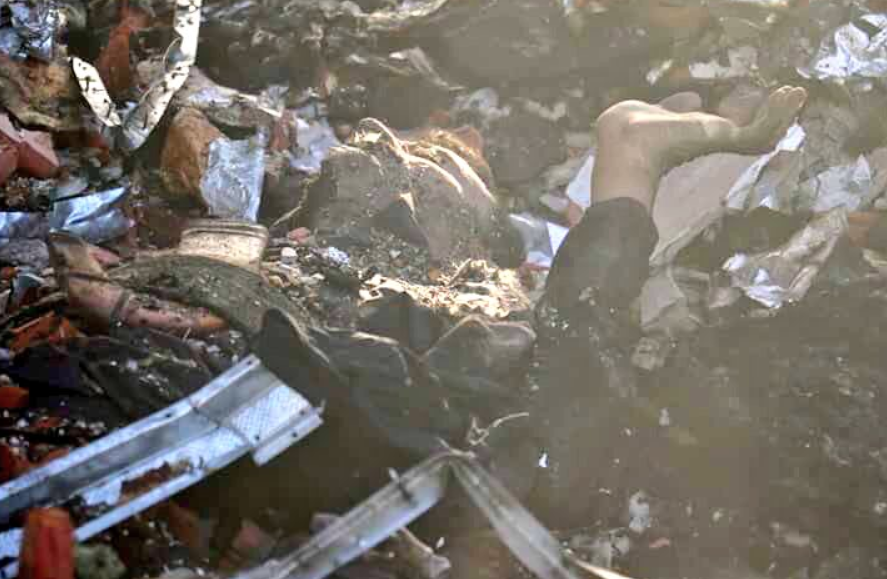
This is one of the most egregious war crimes we’ve seen so far in Yemen, and considering what Saudi Arabia has already done to date, this is off the scale. On the 9th October 2016, the Saudi ‘coalition’ targeted one of the biggest public halls in Yemen’s capital Sanaa.
Officials said two air strikes hit the grand hall of ceremonies, where a post funeral gathering was held to receive condolences for the late Ali bin Ali al-Ruwaishan, the father of Interior Minister, Jalal al-Ruwaishan.
A total of 4 missiles were launched into crowds of civilians. The first strike, two missiles tore into the hall and surrounding areas leaving dozens dead and dying. Then, as funeral-goers clambered over the smouldering rubble to rescue the injured, Saudi coalition planes returned for the double tap air-strike, targeting the civilian rescuers.
Yesterday, the under secretary of the Public Health Ministry in Yemen told journalist and Middle East commentator, Marwa Osman, the death toll had risen to 458 and hundreds more injured. In an interview with RT, Osman went on to describe, 213 bodies were reported as charred, burned beyond recognition, 67 bodies were completely dismembered and 187 bodies torn apart by shrapnel. The brutality of this attack is evident from the horrific photos that appeared on social media very quickly after the event, as Yemenis were reeling from the scale of the massacre.
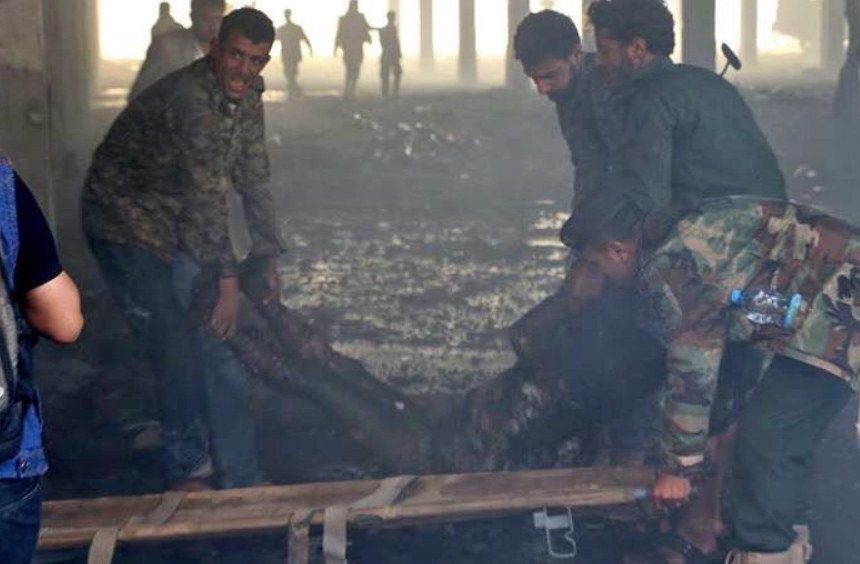
Yemen civil defence and army recovering bodies from the Saudi coalition bombed ceremony hall in Sanaa (Photo: Yemen the Forgotten War)
The hundreds more injured have been described as “bleeding to death in the streets“. The following report came in from Sanaa hours after the attack:
“Saudi-American airstrikes targeted the biggest hall in Sanaa. The hall was hit by 4 missiles, 2 air-strikes. When rescuers went to the aid of the dying and injured Saudi jets attacked for the second time in their double tap operation. It’s impossible to count the deaths. Officially they are saying less than 500 but many more are dying because they can’t be treated due to the absence of medical supplies and hospital facilities. This is entirely due to the UN sanctions and effective land, air and sea blockades. The hall is 2km from our home and 150m from my university but luckily, today I was not there.
Yesterday we killed several mercenary leaders in Mareb and Saudi commanders so today they are taking their revenge on the innocent people” ~ information supplied to Vanessa Beeley of 21st Century Wire.
[…]
According to Hassan Al Haifi, writer, academic and political commentator, living in Sanaa, the Saudi attack was deliberate:
“The mourners were paying tribute to General Jalal Al-Rouishan, Min of Int, who hails from a leading family of Khowlan Al-Tayyal Tribe, a leading and powerful Yemeni tribe.”
Al Haifi commented that this was a cynical and brutal attack by the Saudi coalition, intending to kill as many Ansarullah and Ali Abdullah Saleh officials and supporters as possible. A number of Saleh’s closest friends and allies were killed by the strikes along with a smaller number of Ansarullah members. Al Haifi, himself should have been at the ceremony but had been delayed and fortunately was not there when the Saudi jets launched their missiles into the throngs of mourners.
The Bloodshed
Saudi air-strike on Sanaa (Photo supplied to 21st Century Wire from Yemen)
The US State Department immediately swung into damage limitation mode and cranked up their hypocrisy to protect their Saudi coalition military industrial complex clients. John Kirby even deployed the “self-defence” terminology usually reserved for their other regional, arms guzzling ally with close links to Al Qaeda, Israel.
The bloodshed and suffering of the Yemeni people was reduced to an obscene game of semantics by a cold and calculating US State Department, as their multi billion dollar arms industry registered obscene trading levels with the Saudi coalition in 2015. In the first 21 months of Saudi-US illegal war on Yemen, US arms sales worth $33 Billion were closed Saudi and Gulf Cooperation Council (GCC) entities according to Defense News. In total, America’s Nobel Peace Chief Barack Hussein Obama has offered to sell $115 billion in weapons to Saudi Arabia since taking office in 2009 – more than any previous US administration, according to a recent report.
Not to be left out of the party, Britain has also sold more than £3.7 billion in arms to Saudi Arabia since Saudi’s illegal war of aggression began.
In truth, many of these estimates are conservative and do not include many more hundreds of millions in ancillary costs, staffing, support contracting and engineering.
Forgotten Heroes
Even though they’ve been completely redacted by the western media, and also by the myriad of Gulf monarchy media outlets, the real heroes of this conflict are the Yemeni people.
In their reductionist way of thinking and categorizing the world outside of their shores, Americans refer to Middle East populations in sectarian terms – because this is they way they would like to see the world, but it couldn’t be any further from reality. To Americans, the Yemeni war is all because of “Iranian-backed Shia Houthi Rebels.” The first US Congressman ever to say that in public probably read it directly off an AIPAC policy briefing sheet. That’s the sad reality still in Washington – information-poor (and lobby cash-rich) elected representatives are only able to see the world through the Israeli lens.
The reality is much more complex than just “the Houthis.” A genuine Arab Spring has taken place in Yemen and the US and Saudi response was simply to try and crush the people. But the people have resisted fiercely, and together. Unlike other neo-colonial ventures like Iraq and Afghanistan – the people of Yemen have united to a large degree and are determined to realize their own vision of self government. This is something that has been written off by everyone in the US establishment – from the President all the way down the political food chain.
Damning Indictment
The UK/US built, House of Saud, is waging a genocidal war of aggression that has already destroyed entire swathes of Yemeni cultural heritage and decimated entire communities, particularly in the northern, traditionally Ansarullah (Houthi) held areas such as Saada and Hajjah. This was by design. By now, we can see clearly how this was yet another ethnic cleansing programme being endorsed, fuelled and defended by the United States and her allies in the UK, EU, Israel, and of course the neighbouring Gulf States, the majority of whom participated in this dirty war. Oman, a lone, moderate, and independent thinking gulf state, has remained neutral, providing a degree of support to the Yemeni people. […]
The height of US hypocrisy was on full display during a US State Department press briefing where the already discredited US spokesman John Kirby shameless danced around a mass-murder by Saudi Arabia – whose airstrikes are supported logistically by the United States. This is the definition of criminality unchecked. Watch:
Author Vanessa Beeley is a special contributor to 21WIRE, and since 2011, she has spent most of her time in the Middle East reporting on events there – as a independent researcher, writer, photographer and peace activist. She is also a volunteer with the Global Campaign to Return to Palestine. See more of her work at her blog The Wall Will Fall.
For further background on Saudi ‘s war of aggression please read 21WIRE article: UN Whitewashing Saudi Coalition War Crimes and International Human Rights Violations
Featured Video
The Truth About the Trump Shootings with Ken Silva
or go to
Aletho News Archives – Video-Images
From the Archives
Trans ‘milk’ as good as the real thing – NHS
RT | February 18, 2024
The drug-induced nipple secretions of trans women are as good as mothers’ breast milk for babies, the University of Sussex Hospitals NHS Trust claimed in a letter to campaigners made public in a report by British think tank the Policy Exchange on Sunday.
The healthcare trust’s medical director, Rachel James, argued that the off-label prescription drug cocktail men transitioning to female take in order to produce milk was “similar to the natural hormones which encourage lactation to develop when the baby is newly born.”
“The evidence which is available demonstrates that the milk is comparable to that produced following the birth of a baby,” James wrote in the letter, sent to Children of Transitioners last August.
Biological men who wish to lactate must first take hormones to grow milk glands and then take high doses of either domperidone or metoclopramide to stimulate milk production. Neither drug is approved for this use, though they are occasionally prescribed off-label to biological women who have trouble lactating.
However, domperidone’s own manufacturer, Janssen, warns patients the drug “may cause unwanted side effects affecting the heart in a breastfed baby” and “should be used during breastfeeding only if your physician considers this clearly necessary.” … continue
Blog Roll
 Aletho News
- Seyed M. Marandi: U.S. Strike Imminent – Toward Total War in the Middle East
- Russia Voted Under Fire. Washington Is Loading the Tankers.
- 12 Things Your Oncologist Was Trained Not to Tell You
- Anthrax Attacks Paved Way for COVID-Era ‘Junk Drugs and Vaccines’
- How Real Is the Impact of Western Sanctions on Israel?
- France, You Are Guilty: How Paris Turned Western Sahara into the Maghreb’s Powder Keg
- 2025 Nature Paper Claiming Worsening Global Drought Gets RETRACTED …Heavily Flawed
- Your Milk Is Not the Problem
- The Truth About the Trump Shootings with Ken Silva
- ARE PATIENTS BEING PROPERLY INFORMED ABOUT OZEMPIC?
- If Americans Knew
- Salah Sarsour’s Legal Team Says DHS Has Not Met Its Burden to Prove He Is Deportable
- An analysis of tax forms by The Intercept show Kraft’s charity and LLC have donated to Friends of the IDF and AIPAC’s super PAC.
- Israeli attacks kill four Palestinians in Gaza – Daily Update
- Inside Gaza’s death trap of collapsing, bombed-out buildings
- The everyday items Israel bans from Gaza every day
- Inside the siege, the ruined buildings of Gaza – Daily Update
- Debunking The Claim That Macklemore Has A “History Of Antisemitism”
- CPJ demands release of arrested Palestinian-US journalist near Bethlehem
- Robert Kraft: The Billionaire Friend of Netanyahu Pulling The Strings Behind the Macklemore/Ed Sheeran Blow Up
- Columbia Administered Fund Gives Big Money to Pro-Israel Groups
- No Tricks Zone
- 2025 Nature Paper Claiming Worsening Global Drought Gets RETRACTED …Heavily Flawed
- New Study: ‘Global Drought Shows No Detectable Recent Acceleration Under Climate Warming’
- Economic Masterminds: German Socialists Suggest Taxing Productivity Gains Stemming From Using AI
- The South China Sea Has Not Been Cooperating With The Climate Change Narrative
- Energy Crisis: Germany Enters Heating Season With Historically Low Gas Reserve Fill Levels
- New Study: The Antarctic Ice Sheet Gained Mass From 2020-2024 Due To Staggering Snow And Ice Accumulation
- Study: Ocean Heating Rates From Thousands Of Years Ago ‘Dwarf’ Modern Ocean Heating Rates
- Climate Extremists Target, Attack Large-Scale Power Grid Infrastructure In Germany!
- New Study: Antarctic Ice Melt Has Contributed Less Than 1 Centimeter To Sea Level Rise In The Last 30 Years
- Fear Of Debate: Alarmist German Climate Scientist Calls On Mainstream Media To Discredit Skeptic Voices
 Aletho News