Former U.S. ally and current ally of the Houthi rebels, Ali Abdullah Saleh, said his future government would be ready to open naval and air bases for Russia.
A newly-formed governing council in Yemen could work with Russia to “fight terrorism” by allowing Moscow use of the war-torn country’s military bases, Yemen’s former president said on Sunday.
Ali Abdullah Saleh, a former counterterrorism ally of the U.S. who was toppled by mass protests in 2011, told state-owned channel Russia 24 that Yemen was ready to grant Moscow access to air and naval bases.
“In the fight against terrorism we reach out and offer all facilities. Our airports, our ports… We are ready to provide this to the Russian Federation,” Saleh said in an interview in Sanaa.
The ex-strongman may lack the clout to implement such an offer. But officials from the party he heads now run a political council that controls much of the country along with the Houthi movement. For the first time last week Iran let Russian jets take off from its territory to bomb armed groups in Syria.
Russia is the only major country that maintains a diplomatic presence in Yemen where a 16-month war between a Saudi-led coalition and the Houthi rebels has killed over 6,500 people and raised the prospect of famine in the Arab World’s poorest country.
The war has allowed Islamist militants including al-Qaida and the Islamic State group to flourish, even though the United States has for years launched drone strikes against groups in Yemen.
Russia abstained from a United Nations Security Council resolution in 2015 that imposed an arms embargo on the Houthi rebels.
Moscow’s relations with Yemen date back decades and until the break-up of the USSR, thousands of Soviet military advisers and trainers worked in the formerly-independent south.
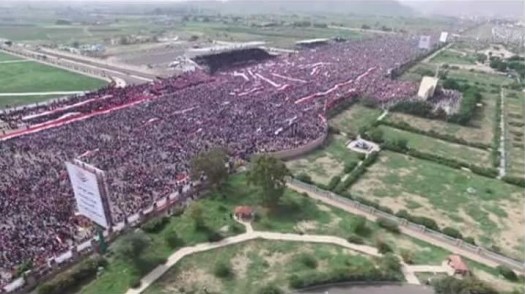
On Saturday tens of thousands of Yemenis rallied in the capital to show support for the Houthi-led bloc as the head of the group’s new governing council vowed to form a full government in the coming days.
Press TV – August 22, 2016
Yemen’s former President Ali Abdullah Saleh says the new government in the country is ready to cooperate with Russia against terrorism by allowing Russian access to Yemeni military bases.
“Russia is the closest to us and we extend our hand to Russia to cooperate in the field of combating terrorism,” Saleh said in an interview with state-run Russia 24 TV channel on Sunday.
He said Yemen was ready to open the country’s military bases to Russia.
“We provide all the facilities in our bases, airports and sea ports. We are ready to provide all facilities to the Russian Federation,” he said.
He said, however, that such cooperation would not mean Russia would be fighting alongside Yemeni forces against Saudi forces waging war on Yemen.
‘Iran has no presence in Yemen’
Saleh also rejected claims that Iran is interfering in Yemen’s internal affairs.
He said Saudi Arabia has launched the war on Yemen under the pretext of defending Saudi national security against Iran, emphasizing that the pretext is “baseless.”
“Iran has no presence in Yemen at all,” he said, adding that, “The international intelligence services know that Iran is not present in Yemen.”
“We are not against Iran; Iran is an Islamic brotherly country. We don’t have any agreement or coalition with her currently,” he said, referring to Iran.
Yemen has seen almost daily military attacks by Saudi Arabia since late March 2015, with internal sources putting the toll from the bloody aggression at about 10,000.
In late July, Yemen’s Houthi Ansarullah movement and Saleh’s General People’s Congress party decided to establish the Supreme Political Council to run the country. It was formally launched on August 6, when the Houthis and Saleh’s faction announced that they both had an equal share in the 10-member body.
August 22, 2016
Posted by aletho |
Aletho News | Russia, Saudi Arabia, United States, Yemen |
Leave a comment
“The most effective way to destroy people is to deny and obliterate their own understanding of their history.” ~ George Orwell.
The media furore surrounding the now viral image of wounded Syrian child, Omran Daqneesh, in terrorist-held eastern Aleppo, Syria is still raging, while the push back against the tide of western-sponsored anti-Syrian State propaganda reveals itself to be strengthening with each new spike in pro-terrorist hyperbole designed to provoke a knee-jerk foreign policy response that is either advocating a “No Fly Zone”, or some form of escalation foreign military intervention inside of Syria.

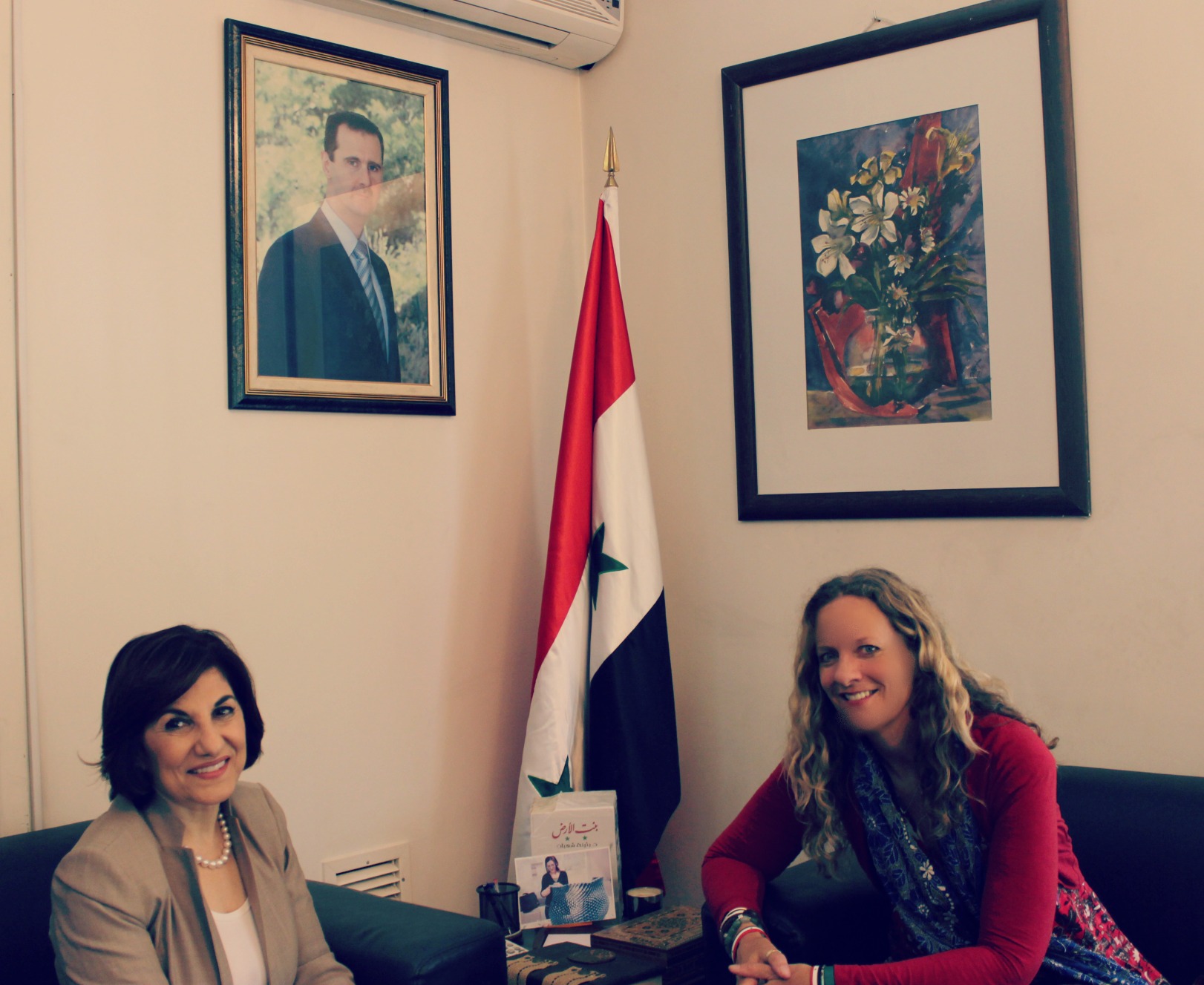
Today I had the honour to meet with Dr Bouthaina Shaaban, political and media advisor to Syrian President Bashar al Assad. We discussed many issues including this most recent heart wrenching image that is appearing across all main stream media channels. As we opened the discussion, Dr Shaaban said immediately: “We are paying for this propaganda with our blood.”
Dr Shaaban went on to describe how the “corporate media is distorting reality in Syria,” while also explaining why she was reluctant at the beginning of the NATO member and allies war on Syria, to speak to western mainstream media:
“They came here with accusatory questions, they didn’t come here to know what is going on. They came here to ask me why are you working with a man who is ‘killing his own people.’ What an ugly start for an interview. I said there is no point, they come here to gain credibility but only to re-confirm their own story rather than to find out what is really going on. I didn’t want to be used to ‘re-confirm’ their own story or to give them credibility.”
Dr Shaaban believes that there is a need to ensure voices like hers that resonate with passion for her country and its people, which should be heard across a far wider range of media platforms to counter what might be described as a vast Zionist and Gulf State (GCC) funded media network that is driving the propaganda train though the US and Europe. Dr Shaaban mentioned a weekly column that she is writing in Arabic and suggested that perhaps she should translate it for English media.
What follows is the transcript of Dr Shaaban’s statements on various subjects:
Why is our country being destroyed?
“I wrote that really we are going through a third world war, without naming it a third world war but this time it’s a global war between two projects and two ways of thinking – between western concepts that they want to promote: their own way of life, their own ideology, their own way of thinking even at the expense of other lives and the innocence of our countries while the old civilisations like the Chinese, the Indian, the Arab civilisation are struggling to keep their identity and to pass this identity to their children and grand-children
Personally I no longer believe that the way the system is working in the west has any ‘democracy’ for us, or has any ‘human rights’ for us, or that there is any ‘free press’ for us in their official media system. If you know how we feel now you would be really surprised.
I have two daughters and a son. One daughter is doing a PhD in architecture in London and the other is doing a PhD in the US in international relations and politics. The one in London has a three year old girl, the one in the States has a four year old boy. They have been here for a month, every time they go to the Old City, they come back crying. They say, is it possible that our children cannot live the way we lived, cannot know the Syria we knew, cannot enjoy the Syria we enjoyed? Why?
Why are we being prevented from passing on our experience, our culture, our livelihood to our children? Why are our families being destroyed? Why is our country being destroyed? This is a daily struggle for our children. My children take their children and show them everything because they are afraid that tomorrow this will not be here anymore.
This is a terrible thing to happen to any country, to any people on earth. We have the right to live the way we think, to live our own culture. You might find Paris exciting, I find Damascus the most beautiful place on earth. This is us, this is who we are. I was asked many times to leave as an Ambassador but I cannot leave Damascus, can you believe it? I do not want to live one year out of Damascus, I can never get enough of this city.
So, leave us alone – that is really our message and unfortunately the calculus of politics in the west has no consideration whatsoever for the way people feel or for their aspirations.”
Western Exceptionalism
“The problem with the western system is that they think they are superior and they think that they want to “civilize” us and they want us to come up to their “standards”, and I hate when I hear Obama or any US official talking about American exceptionalism. What do they mean American exceptionalism?
God created us as people. We belong to the same humanity, we belong to the same world. In the Quran God spoke about the differences between us and we should understand that we should celebrate and cherish these differences. This idea of supremacy is basically rooted in racism because it believes in the supremacy of one sect, colour or nationality over another.
I feel it is bad for the west too because racism is now producing bad results for western countries especially as there are so many different religions living everywhere in the world. The only salvation for all of us is to say there is one world, one humanity and to apply this rule to everybody. We must truly believe in that not only talk about it in the media and then practice racism in the law. There is a huge area for dialogue but we need people who believe in similar values.
We are fighting a war on the ground but it is also a clash of values.”
Reshaping our world and the problems we face.
“The Gulf States are a huge problem. With the petro dollar they are feeding the arms industry in the US, UK and France and prolonging this conflict. It is going to be a long process, we are living through a transitional stage in world history. It is going to be a long process in order to reshape our world. That is why we all have the obligation to be active so our new world is based on better values, better ethics, better ways of dealing with each other.
To achieve this new world, co-operation between east and west is crucial.
Where are the leaders in the US, or even in Europe, who are visionary and who are thinking about their countries for the next fifty years and who are doing the right thing for the people from an historical perspective? So perhaps we are living through a crisis of leadership.”
The Destruction of the Middle East is to protect Israel. NATO is trying to impose an Islamist extremist state onto Syria’s secular state.
“I think there are two explanations for that. First the west should be embarrassed to be supporting countries like Saudi Arabia and Qatar against Syria, Iraq or Sudan. We were the secular republics who produced books, scientists, intellectuals etc. I think there is a reason for that. The reason for what the west is doing, in my opinion as an Arab woman, could be summed up by the Arab-Israeli conflict. I feel that the western support for Israel against the Palestinian people and the destruction of a whole people and their identity by Israel shows that what the west cares about is for Israel to be the powerful state in the region for the next fifty or a hundred years. In order for Israel to be the prevailing force in the Middle East it is necessary to destroy Arabic culture.
Unfortunately, now I can see a union of evil between the Gulf States and Israel and western systems. I use the word systems to divorce this evil from the western people.
I respond as an Arab woman, who grew up knowing that my country was part of Bilad al-Sham, Greater Syria. I do not say this in an aggressive tone, but in a loving tone because Syria was Palestine, Lebanon, Jordan and I can’t understand why as a Syrian woman, I cannot visit Al Aqsa. Its very close geographically, yet its impossible for me to get there because Israel has been planted in the Middle East.
Israel is a major focus for western countries and all these wars against Arab countries and what they call the ‘Arab Spring’ is to destroy Arab armies and to prevent any Arab country being able to resist Israel in the future. They do not want us to be able to liberate our Golan Heights, or Palestine, or to simply assure the rights of the Arab people.
By the way, there are at least 50 UN resolutions that give the Palestinians at least half of Palestine and the world is doing nothing about that – on the contrary the US used 37 vetoes in order to prevent the Palestinians getting their rights. Western hypocrisy is amazing.
That is where the supremacy in the west is turned against Arabs because it is the Zionist media that tells the west that the Arabs are ‘backwards’ or primitive. People are persuaded by this propaganda and they treat us as the Zionists wish us to be treated. This is racism against Arabs and emanates from the Zionists.
Hillary Clinton has spoken about working with the Muslim Brotherhood. It is extensively documented that the Muslim Brotherhood has had connections to the CIA since they were created. Even if we read nothing but we apply the western proverb, “who is the beneficiary” – you will find Israel is the beneficiary from all this destruction.
You can see that the army and our intellectuals are the major targets for Israel. They dont want any intellectuals or any army left in our country. They destroyed the Iraqi army. There is a war of attrition against the Syrian army, against the Libyan army, the Sudanese, the Lebanese.
Unfortunately some who call themselves Arab in the Gulf use the petro-dollar in order to serve this project against our culture and our civilization because as a Syrian woman I feel the Gulf has no culture, no history. This is Bilad al-Sham continually inhabited for ten thousand years. The Gulf is forty years old and therefore they have no right to speak in the name of the Arabs
We are the Arabs, we are history, we are civilization.
What they are doing is against our civilization, against our history and against our future but I feel this is a very dangerous project that reminds me of how the American Indians were treated. They have destroyed Palmyra, they have destroyed our history and our culture.

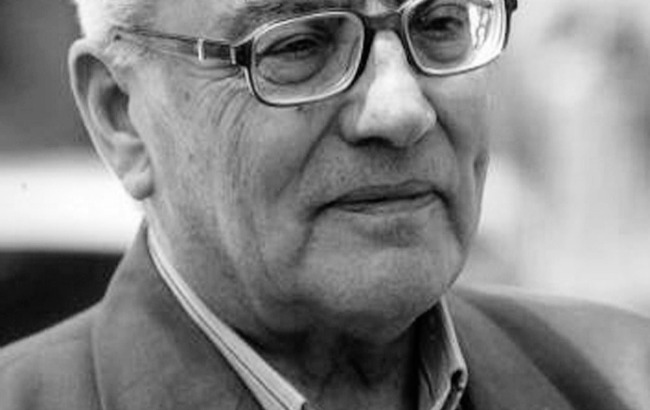
Khaled al Assad. Photo:Screenshot
Khaled al-Assad is the only archaeologist in the world who was writing about who was here in the past, in Palmyra. He was proving that the Zionists were never here. They killed him, they burned his library, they burned his books so we have nothing left of his work. From an observers’ perspective, they are focusing on history, material history, cultural history, identity, army. Any power that keeps you as an entire state, or any statesman that represents strength or unity will be demonized and destroyed.
Even Ramadan al Bouti a Sunni scholar who was speaking sense was murdered because they want to destroy anybody who speaks the truth or who is influential and can gather people around him.
What is the significance of President Assad? He is credible, people believe in him, Arab people believe in him. They do not want anybody like that to have influence. I feel there is a huge plan against all of us.
They operate by buying people, Arab people, people in powerful positions who serve the Zionist project against our culture and identity because they can be bought by money.
I am talking to you from experience, I was subjected to a huge amount of pressure by many countries to be bought by money and all the temptations you can think of were offered to me but I am somebody who cannot be bought by money. I am somebody who believes in my country and in my people. Even if I die, I can die for a cause. If I can’t live for it I can die for it.
Most of the defections that happened in Syria were driven by money. None of them has a cause or an ideology or any credibility with our people.
As you said quite rightly, the western people do not see any of this, they only see the shadow. Those people bought by money, they are the shadow state.
Nobody wants to know who we really are.”
The reason nobody knows the real Syria and the real Syrians, is because the western media has routinely lied and deceived us from the very beginning of the war against Syria – led by the US, NATO members and funded by the Gulf states, supported and encouraged by Israel who, as Dr Shaaban states, stands to benefit most from the perpetual chaos being maintained inside their strongest enemy in the region.
August 21, 2016
Posted by aletho |
Ethnic Cleansing, Racism, Zionism, Timeless or most popular, Wars for Israel | Central Intelligence Agency, CIA, Israel, Saudi Arabia, Syria, United States, Zionism |
Leave a comment
A US Senator slammed his country’s administration over bombing civilians in Yemen, warning that Washington’s support for Riyadh’s war would have consequence for US national security.
The Saudis are the ones dropping the bombs, but “there’s an American imprint on every civilian life lost in Yemen,” Sen. Chris Murphy (D-Conn.) told CNN’s Jake Tapper on Tuesday.
“If you talk to Yemenis, they will tell you, this is not perceived to be a Saudi bombing campaign. This is perceived to be a US bombing campaign. What’s happening is that we are helping to radicalize the Yemeni population against the United States.” Murphy called that “terrible for us right now.”
A Saudi air strike on Tuesday hit a hospital in Yemen, killing 19 people. The US-supported Saudi air campaign against Yemen began in March 2015.
Rights groups and UN agencies say around 9,000 people have been killed in the conflict. The fighting has intensified since peace talks in Kuwait collapsed earlier this month.
Murphy said the Saudis couldn’t fight the war without US help: “It’s our munitions, sold to the Saudis; it’s our planes that are refueling the Saudi jets; and it’s our intelligence that is helping the Saudis (with) their targeting.”
“We have made a decision to go to war in Yemen against a Houthi rebel army that poses no existential threat to the United States,” Murphy said referring to Ansarullah revolutionaries who are known as Houthis.
“It’s really wild to me that we’re not talking more about this in the United States because of the very high level of US involvement in the civil war and the consequences to US national security.”
Murphy noted that the US Congress has not authorized President Obama to “conduct this operation in Yemen.”
He also noted that the target in Yemen is not al Qaeda, the group mentioned in the 2001 war authorization. He called it “another example of a war being conducted by this administration without prior approval by Congress and therefore by the American public.”
August 20, 2016
Posted by aletho |
Illegal Occupation, Militarism, War Crimes | Chris Murphy, Saudi Arabia, United States, Yemen |
Leave a comment
Doctors Without Borders (MSF) has announced that it is evacuating its staff from six hospitals in northern Yemen, saying it cannot get assurances that its hospitals will not be bombed again by Saudi warplanes.
The decision was “never taken lightly,” said the Paris-based relief agency in a statement on Thursday, condemning the Saudi “indiscriminate bombings and unreliable reassurances”.
“Given the intensity of the current offensive and our loss of confidence in the Saudi-led coalition to prevent such fatal attacks, MSF considers the hospitals in Sa’ada and Hajjah governorates unsafe for both patients and staff,” it added.
The MSF decision to pull its staff out of the war-torn country was made following a number of deadly Saudi airstrikes on MSF-run hospitals, the most recent of which was carried out on Monday on Abs Hospital in Hajjah province. The airstrike killed at least 19 hospital staff and patients and wounded 24 others.
In a report released on May, the international aid agency said at least 100 staff members, patients and caretakers had lost their lives and 130 others had sustained injures due to the Saudi aerial attacks on over 80 MSF-supported and run health structures in 2015 and early 2016.
The MSF said that it had held two meetings with high-ranking Saudi officials involved in the war on Yemen in the past eight months and had been assured that attacks on hospitals would end.
“Aerial bombings have however continued, despite the fact that MSF has systematically shared the GPS coordinates of hospitals in which the organization works with the parties involved in the conflict,” the statement further read.
Yemen has been under Saudi military strikes since late March 2015. The war was launched in a bid to undermine the Houthi Ansarullah movement and to reinstate Abd Rabbuh Mansur Hadi, who has stepped down as Yemen’s president but is now seeking to grab power by force.
The air campaign, carried out without any international mandate, has killed about 10,000 people, most of them civilians, according to local Yemeni sources.
August 18, 2016
Posted by aletho |
War Crimes | Saudi Arabia, Yemen |
Leave a comment
At least 25 people, including two children, have been killed in the latest Saudi military airstrikes against residential neighborhoods in Yemen.
Saudi fighter jets struck a vehicle on Tuesday morning as it was traveling along a road in the Abs district of the northern Yemeni province of Hajjah, leaving five people dead, Arabic-language Yemen al-Yawm television reported.
A clergyman, identified as Sheikh Matroud Saleh al-Soufi, was reportedly among the deceased.
The airstrike came less than a day after a Saudi airstrike hit a hospital run by Doctors Without Borders (MSF) in the same Yemeni district, killing at least 25 people.
The medical charity said another 20 people were also injured in the attack.
MSF spokeswoman Malak Shaher said the Geneva-based international humanitarian-aid organization has had a team at the Abs public hospital since 2015.
Yemen’s Houthi Ansarullah movement strongly condemned the aerial attack, saying it was carried out in flagrant violation of a ceasefire agreement, which took hold at midnight on April 10.
Also on Tuesday, Saudi jets pounded residential buildings in Bani al-Harith district north of the Yemeni capital, Sana’a, leaving two women and two children dead.
Some 17 people were also injured in the Saudi airstrikes against Bani al-Harith.
Sixteen other Yemeni civilians were killed in attacks on a village near the capital, where some nine others were also wounded.
International concerns are rising over the intensification of the Saudi war on Yemen ever since United Nations (UN)-brokered peace talks in Kuwait between representatives of the former government and the Houthi Ansarullah movement failed to make a breakthrough and were suspended on August 6.
Yemen has been under Saudi military strikes since late March 2015. The war was launched in a bid to undermine the Ansarullah movement and to reinstate Abd Rabbuh Mansur Hadi, who has stepped down as Yemen’s president but is now seeking to grab power by force.
August 16, 2016
Posted by aletho |
Militarism, War Crimes | Saudi Arabia, Yemen |
Leave a comment
Saudi intelligence officers have been training at least 7,000 anti-Syria fighters in Jordan’s territories and plan to dispatch them to the war-hit country via its Southern borders to distract the army from the war in Aleppo, Arab media disclosed.
“Over 7,000 men have been trained in a Saudi-established military camp in Jordan near the border with Syria’s Dara’a province, and now they are ready to be dispatched to join other terrorists’ battle against the Syrian government and army,” the Lebanese al-Manar reported.
“There are several British and western military trainers and advisors in the Saudi-established camp. The western officers are to accompany the fighters in their war against the Syrian government,” the paper said.
Jordan hosts a large refugee camp near the border with Syria.
Other sources also disclosed that the US officers have been involved in the training of terrorists in Jordan to fight against Syrian government.
War analysts believe that the move is aimed at diversion to distract the army and its allies from the war in Aleppo in the North where pro-government troops have started a massive offensive to take back the country’s second largest city from the terrorists.
Meanwhile, earlier today, armed opposition groups in Southern Syria declared that thousands of militants are ready to reconcile with the Damascus government.
A provincial council affiliated to the militant groups in a statement admitted that 25,000 militants are looking for reconciliation with the Syrian government forces in Southern Syria, al-Mayadeen TV channel reported on Saturday.
The statement by the ‘Council for Men of Knowledge in the Levant’ has accused the terrorist commanders of being willing to compromise with the Syrian army of treason. It has given the militant commanders in Southern Syria three days to withdraw from al-Mouk Operations Room (which operates under the Saudi, Qatari, the US and Jordanian spy agencies), the television added.
The Al-Mouk Operations Room has been accused of corruption, similar reports in a number of other Arab media have cited the financial corruption of the Operations Room members as a main cause of the militants complaint and their decision to surrender to the Syrian army.
Early in August, around 1,000 rebels laid down their arms and turned themselves in to the Syrian officials in the province of Dara’a amid the terrorist groups’ threats against those who surrender to the government.
In February, the Syrian Army dispatched more soldiers to the country’s Southern provinces to be deployed at the border with Jordan to defend the country against the possible aggression of the Saudi Army.
“A large convoy of reinforcements from the Syrian capital of Damascus arrived to the 5th Armored Division headquarters of the Syrian army in the town of Izra in the Northern part of Dara’a province and the Eastern part of Sheikh Meskeen,” the sources said.
“The Saudi Army has been conducting a number of military drills in the Kingdom of Jordan in recent weeks, raising the alert level of a possible war in the Dara’a province,” the sources said, adding, “So far, nothing has come of these Saudi military drills and it is very unlikely that they will attempt to enter Syria.”
August 13, 2016
Posted by aletho |
Militarism | Jordan, Middle East, Saudi Arabia, Syria, United States |
Leave a comment
The United States has approved the sale of more than 130 Abrams tanks, 20 armored recovery vehicles and other equipment worth about $1.15 billion to Saudi Arabia.
The Defense Security Cooperation Agency, which is part of the Pentagon and facilitates foreign arms sales, informed lawmakers on Tuesday that the State Department has approved the deal.
The potential sale to Saudi Arabia still faces approval by Congress, which could block it.
The agency said the sale would contribute to US national security by improving the security of a regional ally.
It added that General Dynamics, an American aerospace and defense corporation, would be the principal contractor.
“This sale will increase the Royal Saudi Land Force’s (RSLF) interoperability with US forces and conveys US commitment to Saudi Arabia’s security and armed forces modernization,” the agency said on its website.
The US government is expected to authorize more than $40 billion worth of foreign military sales this year, the Pentagon has confirmed.
The potential sale by Washington comes as Saudi Arabia and its Persian Gulf Arab allies launched a military aggression against Yemen in March 2015 in a bid to bring the country’s former president Abd Rabbuh Mansur Hadi, a staunch ally of Riyadh, back to power and undermine the Ansarullah movement.
Yemenis say most of the victims in the Saudi airstrikes are civilians.
A UN report leaked to the Guardian in January found “widespread and systematic” targeting of civilians in the Saudi-led strikes.
The report found 119 strikes which violated international humanitarian law, including attacks on health facilities, schools, wedding parties and camps for internally displaced people and refugees.
August 9, 2016
Posted by aletho |
Militarism, War Crimes | General Dynamics, Saudi Arabia, United States, Yemen |
Leave a comment
The reported statement by former Israeli minister Diaspora Affairs Rabbi Michael Melchior that Saudi Arabia will open its doors to Israeli visitors “much sooner than you dream about” will not come as surprise. To be sure, a critical mass is developing in the secretive Saudi-Israeli intercourse.
The Saudi regime has been chary about links with Israel for fear of annoying the ‘Arab Street’, whereas, Israel has been all along eager to flaunt the breach in the Berlin Wall of Arab-Israeli conflict. But Saudis seem to estimate that the time has come to be open about the relationship.
The point is, if the raison d’etre of the dalliance is the ‘containment’ of Iran, it is resource-sharing. An open relationship is needed to optimally develop security and military cooperation. The Custodian of Holy Places seems to think the Muslim world will learn to live with his country’s strategic cooperation with Israel.
Well, the Palestine issue no longer poses hurdles, either. Arab Spring, conflicts in Syria and Iraq, military coup in Egypt, Saudi-Iranian rivalry, breakdown in Iran’s ties with Hamas, Islamic State – all these have relegated the Palestine issue to the backburner. Besides, Palestine President Mahmoud Abbas is on a tight American and Saudi leash. Abbas even received in Ramallah recently a Saudi delegation led by former general Anwar Majed Eshki who visited Jerusalem and met senior Israeli officials, including the head of the foreign ministry Dore Gold.
Again, Saudi Arabia’s keen interest in taking possession of two Red Sea islands at the mouth of the Gulf of Aqaba – Tiran and Sanafir – needs to be understood as a move to be Israel’s ‘neighbor’. Sanafir and Tiran sit at the mouth of the Gulf of Aqaba, on a strategically important stretch of water called the Strait of Tiran, used by Israel to access Red Sea. King Salman personally camped in Cairo in April to persuade Egyptian President Abdel Fattah al-Sisi to transfer the two islands in lieu of a seductive multi-billion dollar offer to Sisi.
Indeed, both Saudi Arabia and Israel are making haste to position themselves for a new phase of the Middle East’s politics in the post-Barack Obama era. They expect Hillary Clinton to pick up the threads where George W. Bush left them — a muscular regional policy involving switch back to containment of Iran and resuscitation of the pivotal relationships with Israel and Saudi Arabia.
Neither Saudi Arabia nor Israel is willing to reconcile with the Iran nuclear deal. They are doing everything possible, no matter what it takes, to see that the deal gets derailed. On Saturday, Israeli Defence Ministry issued a harshly-worded statement slamming Obama and comparing the Iran deal with the 1938 Munich agreement to appease Hitler. (Jerusalem Post )
Equally, Saudis and Israelis have convergent interests in regard to the conflicts in Syria and Iraq — supporting extremist Sunni groups, promoting the Kurdistan project, creation of ‘spheres of influence’ on Syrian and Iraqi territory, and ultimately, entrapping Iran in a quagmire that will exhaust the regime.
The Saudi-Israeli strategic regional realignment is something that Washington historically encouraged. It is just the underpinning needed for creating a regional security architecture supported by the NATO’s network of partnerships with the GCC states under the canopy of a US missile shield.
Alas, Turkey too could have been a key partner in this enterprise, but for the failure of the July 15 coup. Israel looked distressed when it transpired that the coup failed. As for Saudi Arabia, it probably played a role in the failed coup. (Sputnik )
Without doubt, it is against a complex backdrop that the recent reports regarding Israel and Pakistan taking part in a major air exercise hosted by the US also needs to be viewed. Neither Islamabad nor Tel Avi has denied the reports. Of course, the US always encouraged a Pak-Israeli proximity. Now, the big question is: With Saudi Arabia establishing ties with Israel, can Pakistan be far behind? (Times of Israel )
From the Israeli, Saudi and American perspective, it is of utmost importance that Pakistan aligns with Saudi Arabia instead of remaining neutral in regard of Iran’s rise. Pakistan’s role is crucial to any major plans of destabilization of Iran.
Israel and Saudi Arabia pretended until recently that they have a special thing going with Moscow, too, with a view to create ‘strategic ambiguity’. Moscow played along, while making a strategic decision that Iran is its ‘natural ally’ in the Middle East. This is perfectly understandable, because in the ultimate analysis, Israel and Saudi Arabia are bit players only, while Iran (or Turkey for that matter) is an authentic regional power credited with a world view.
It is possible to see the Russia-Azerbaijan-Iran trilateral summit in Baku on Monday as a strategic counter-move by Moscow and Tehran.
The proposed North-South Transport Corridor is admittedly an old idea with a pronounced economic dimension, but in the present context, an access route for Russia to the Persian Gulf and Middle East via Iran’s territory becomes a geopolitical event of far-reaching significance in the regional alignment that is under way. (See my blog China’s One Belt One Road isn’t only show in town.)
August 7, 2016
Posted by aletho |
Economics, Militarism | Iran, Iraq, Israel, Middle East, NATO, Pakistan, Russia, Saudi Arabia, Syria, Turkiye, United States, Zionism |
Leave a comment
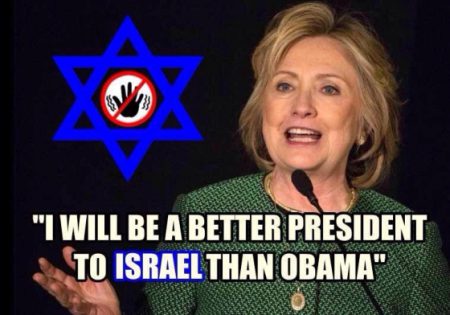
The big question this week ought to be about Hillary Clinton’s wars, if she gets elected as the next US president. Her hawkish temperament and her bandwagon comprising neoconservative ideologues, Israeli-Saudi lobbies, military-industrial complex and so on brings us to the epilogue of the ‘Obama Doctrine’ in US foreign policies.
Where will it be that Hillary will choose to wage her war? The high probability is that she will choose the Middle East – not Eurasia or Asia-Pacific. Why is it so?
For a start, Hillary Clinton, unlike her predecessor Barack Obama will not seek indeterminate wars. She will calculate how a war in her first term would help her win a second term in the 2020 election. Neither Russia nor China can be defeated in a short, swift war, while on the contrary, there is the real danger of her triggering World War III with horrific consequences that are impossible to predict.
It is in the Middle East that the neo-conservatives in the US will look for action, given their unfinished agenda of sending Iran to the Stone Age, an outcome without which the destruction of Iraq and Syria hasn’t ensured Israel’s regional hegemony.
Israel and Saudi Arabia, estranged allies of the US, are expecting a Middle Eastern war under Hillary. Last week, a former Saudi general visited Tel Aviv and held discussions with Israeli officials. (Times of Israel ) See an analysis by Simon Henderson at the Washington Institute titled Riyadh’s Diplomatic Dance with Israel.
The bottom line is, Israel and Saudi Arabia feel regional isolation. They failed to entrap Iran in a quagmire in Syria and/or Iraq. With Turkey’s course correction on Syria, Iran’s position further strengthens. The Islamic State and the extremist organizations, which Israel and Saudi Arabia covertly supported, are in retreat.
The latest incident of a Hezbollah drone flying over Israeli skies, photographing military deployments on the Golan Heights dramatically highlights that regional military balance is shifting. Meanwhile, Russia also refuses to ‘moderate’ Iran or Hezbollah, contrary to Israeli expectations.
Similarly, Turkey’s course correction following the July 15 coup attempt is a devastating blow to Saudi hopes of challenging Iran in Syria and Iraq. Saudi Arabia also cannot expect Israel to come and fight its war in Yemen or suppress the uprising in Bahrain. Israel knows it will get overstretched in any such misadventure in a Muslim country. Alas, Saudi Arabia cannot count on Egypt’s support, either. Egypt is a much weakened country and is also having serious problems in the Sinai region, apart from domestic political disarray.
In such a bleak scenario, how will Hillary manage to start a war in the Middle East? By the time she settles down in the White House, the ‘moderate’ rebel groups in Syria may have become an extinct species. Besides, without access to Turkey’s territory, the US will be had-pressed to stoke the fires of renewed conflict in Syria and Iraq.
Therefore, all things taken into account, Hillary may have to settle for a war directly involving Iran. Of course, that will also be the preferred choice and demand of her Saudi Arabian and Israeli friends.
But, how can Hillary provoke Iran into a war? Tehran has the intellectual resources and diplomatic acumen to avoid fighting wasteful wars to secure its interests.
However, there is one way out of this strategic dilemma – ratchet up tensions by undermining the 2015 nuclear deal, notwithstanding Iran’s compliance with its terms. If the US undermines the deal, that is sure to provoke Iran to retaliate by reviving its nuclear program. There is a powerful lobby in the US Congress that favors a return to confrontation with Iran.
Of course, if Iran retaliates by restarting its nuclear program, that can be the perfect alibi for Hillary to clamp sanctions and revert to the ‘containment strategy’. There is speculation that a Saudi-Iranian conflict is also within the realms of possibility. The Saudis are also coordinating with Israel. (New York Times )
Make no mistake, Iran will defend its sovereignty and territorial integrity with all the force at its command. It may even seek the help of Hezbollah. The recent appearance of a Hezbollah drone on Israeli skies could have been a display of capability. (See my blog Hezbollah thumbs the nose at Israel.)
Indeed, the US would have the perfect excuse to get involved militarily in the event of such a conflict affecting Saudi-Israeli security. Weakening Iran and setting it back by a few years will immensely help restore Israel’s regional supremacy, apart from removing from the Middle East region an insufferable thorn in the American flesh. An outright invasion is not necessary for that purpose. In geopolitical terms, it is a double whammy insofar as Russia will also be deprived of an irreplaceable ally without which its effective role on the Middle Eastern chessboard is unsustainable.
July 31, 2016
Posted by aletho |
Militarism, Timeless or most popular, Wars for Israel | Hillary Clinton, Iran, Middle East, Saudi Arabia, Syria, United States, Zionism |
Leave a comment
The US military plans to increase the presence in Yemen. «As we continue on the mission, I think there will be some additional troops that we will ask to bring in», US Army General Joseph Votel, who heads the US Central Command, said in an interview in Baghdad on July 14, without disclosing the number.
According to him, a variety of locations could be suitable for American forces. He did not disclose potential sites.
The Saudi Arabia-led coalition of Arab states, supported by the US and the UK, has been involved in the Yemeni conflict since March 2015. So far, it has not gained much ground. The Yemeni capital Sana’a is still in the hands of the Houthis group (Ansar Allah – «Supporters of God»).
The fighting has resulted in more than 3,200 civilian deaths, over 60 percent of them from coalition airstrikes, according to the United Nations.
Around 6,000 civilians have been wounded in the conflict. Airstrikes have damaged or destroyed numerous civilian objects including homes, markets, hospitals, and schools, as well as commercial enterprises.
On 30 June an HRW report stated that US-made bombs were being used in attacks indiscriminately targeting civilians and violating the laws of war.
The report photographed «the remnants of an MK-83 air-dropped 1,000-pound bomb made in the US».
On 1 July, the UN announced that Yemen was at the highest level of humanitarian disaster with over 80% of the population needing help.
United Nations agencies agreed to classify Yemen as a level 3 emergency as the UN envoy for Yemen stated that the country is one step away from famine.
The announcement of the US plans to bring in more forces came amid the reports that the Saudi-led coalition may be preparing to attack Sana’a, the Houthi-held Yemen’s capital, following the breakdown of the UN-led peace process in Kuwait. The UN-led peace process in Kuwait was suspended after 77 days of negotiations that achieved no significant progress.
The US mission in Yemen is just the latest in a growing number of small US deployments across the world. US special operations forces (SOF) have been deployed to 135 nations – around 70% of the countries in the world.
Every day, they carry out missions in 80 to 90 nations. Approximately 11,000 special operators are deployed or stationed outside the United States with many more on standby, ready to respond in the event of an overseas crisis.
The US military is also looking to further beef up its presence in Iraq. The administration has recently announced that additional 560 troops will be sent to Iraq to strengthen the Iraqi offensive to retake Mosul, the Iraqi second biggest city, that is now an Islamic State (IS) stronghold.
General Votel said, the request for more troops will be on top of the 560 already announced. His remarks came just three days after Obama’s administration announced a 560 troop increase as part of an effort to facilitate an Iraqi offensive to retake Mosul. The General cautioned that Americans should not expect a rapid, wholesale withdrawal from the country. He emphasized that the forces will stay even after the US military accomplishes the mission of driving out IS forces from Mosul in Iraq and from the Syrian city of al-Raqqa. According to Votel, once their objectives are met in the areas, it will be imperative that they ensure the militants do not shift base and begin operating from other locations outside those cities. He said the goal was to achieve a «lasting defeat».
It’s not the US only. French President Francois Hollande has said that France will send heavy artillery to Iraq to support the fight against the Islamic State. Hollande announced the plan on July 22, saying the artillery equipment «will be in place next month». The president also reiterated that the French aircraft carrier Charles De Gaulle will be deployed in the region in late September to help in ongoing operations against the IS. Elsewhere, protests erupted in Libya on July 21 after the president confirmed for the first time that French special forces were operating in the country. Libya’s UN-backed government in Tripoli also condemned France’s military action.
It starts with clandestine operations of limited scale conducted by special operations forces to be followed by reinforcements sent to beef up the presence, and then artillery units deployed to support them on the ground. Step by step the West is expanding its military intervention on the ground in Yemen, Iraq and elsewhere in the Middle East. There deployments are described as ‘small-scale’ operations conducted without putting troops on the frontlines fighting firefights. This way the leading Western nations may be trending towards another war in the Middle East without the public realizing it. In Yemen, Iraq and other places, the deployments will gradually lead to full commitment to a ground war and it will be too late to turn back the clock.
July 29, 2016
Posted by aletho |
Illegal Occupation, Militarism | France, Middle East, Saudi Arabia, United States, Yemen |
Leave a comment
Iranian Foreign Minister Mohammad Javad Zarif says projects by the Israeli and Saudi Arabian regimes to portray Iran as a threat to the world have been falling flat over the past years.
Speaking to a group of Iranian expatriates in the Ghanaian capital city of Accra on Monday evening, Zarif said Tel Aviv and Riyadh, “two like-minded regimes,” are investing heavily in Iranophobia to draw attention away from their crimes and their collaborations.
“It is obvious that the cooperation of the Zionist regime (Israel) and the Saudi regime, which are two like-minded and congruent regimes, has today become known and can no more be concealed,” Zarif said.
He said the two regimes are concerned about their collaboration having become publicly known and are thus “investing further in Iranophobia” as a means of distraction.
He said, however, that, “The world has today waken up to the fact that the danger of Wahhabism is the real threat.”
Wahhabism is an extreme ideological strand openly preached by Saudi Arabian clerics, who have the blessing of ruling Saudi authorities. It is the main ideological feature of Takfiri terrorist groups — particularly Daesh — which declare people of other faiths and beliefs as “infidels” and, based on “decrees” from clerics, rule that they should be killed.
Most Arab governments have no diplomatic relations with Israel. Egypt and Qatar are the only two Arab states to have open diplomatic ties with Israel.
Some Arab governments, however, while posing as Israel’s traditional adversaries, have been revealed to have secret ties with the Tel Aviv regime. Saudi Arabia and the United Arab Emirates (UAE) are two such countries.
Last week, a retired general in the Saudi military traveled to Israel at the head of a delegation, meeting with Israel’s foreign ministry director general Dore Gold Yoav Mordechai and a number of Knesset members.
Both Riyadh and Tel Aviv were and continue to be fiercely opposed to a nuclear deal between Iran and a group of six world powers.
In his Monday remarks, Foreign Minister Zarif said the deal, known as the Joint Comprehensive Plan of Action (JCPOA), succeeded in proving to the world the peaceful nature of the Iranian nuclear program.
The JCPOA was struck between Iran and the US, the UK, France, Russia, China and Germany on July 14, 2015.
Zarif is in Ghana on the second leg of a four-nation African tour. He was in Nigeria before arriving in Ghana and will be traveling to Guinea-Conakry and Mali on the third and fourth legs of his tour.
July 26, 2016
Posted by aletho |
Ethnic Cleansing, Racism, Zionism, Islamophobia, Mainstream Media, Warmongering | Africa, Egypt, Iran, Israel, Middle East, Qatar, Saudi Arabia, Zionism |
Leave a comment
By Brandon Turbeville | Activist Post | July 22, 2016
While the United States attempts to back away from its association with terrorist group Nour al-Din al-Zinki, the “moderate” terrorist organization whose members recently videotaped themselves beheading a young boy and discussing whether or not to boil his body afterwards, previous reports coming the from the mainstream media reveal that Obama, Kerry, Clinton and crew will not be able to cover their tracks so easily this time around. That is, if they even care to.
This is because reports coming from Business Insider in 2015 reveal that the United States had indeed supported and armed Nour al-Din al-Zinki in the lead up to the heinous act. What’s even more damning, however, is the fact that the group was considered one of the U.S. “vetted” organizations, a designation that was touted as a sure way to avoid arming “extremist” terrorists like ISIS or al-Qaeda.
The lie of vetting and “moderation” is now thoroughly debunked if, for no other reason, than the public beheading of a child.
But there is more! Not only has the United States “vetted,” endorsed, and armed Nour al-Din al-Zinki, it has armed them with TOW missiles, a type of guided missile that is capable of piercing and damaging tanks, armored personnel carriers, and other forms of vehicles found on the battlefield. These missiles are especially dangerous for a number of reasons including the fact that they can be used from a considerable distance.
As Jeremy Bender wrote for Business Insider in his article, “These CIA-Vetted Syrian Rebel Groups Fighting Assad Are Russia’s Primary Targets,”
Since 2013, the CIA has been training and equipping various moderate rebel elements in the Syrian civil war in an effort to undermine the regime of Syrian President Bashar al-Assad and force him to the negotiating table.
Among the range of munitions and supplies that the CIA has funneled to the various brigades of the Free Syrian Army and other moderate groups through Saudi Arabia, Jordan, and Turkey are TOW anti-tank missiles.
. . . . . .
These weapons have helped decimate Syrian armour and pushed a recent regime offensive against rebel-held territory to a standstill in reported “tank massacres.”
For instance, on October 8, a Syrian armoured offensive suffered massive casualties as, rebels armed “with US-made TOW missiles … [and] other guided rockets … caused the destruction … of over 15 armoured cars, vehicles, and tanks,” according to the Syrian Observatory of Human Rights.
What is striking is just how many CIA-vetted groups now exist throughout Syria receiving TOWs.
According to Syrian observer Hasan Mustafas, no fewer than 42 vetted groups now receive TOWs from a Saudi supply originally provided by the US. These weapons are funneled into Syria through Military Operations Command (MOC) posts in Turkey and Jordan that are co-operated by Western and local intelligence agencies.
The various groups are well documented due to the nature of TOW provisions. Saudi Arabia can not deliver the US-supplied TOWs without prior CIA approval. Additionally, Mustafas notes, the various vetted groups must apply to receive the TOWs. They are then provided with small batches of arms.
Bender provides a list of the groups who received the TOW missiles but, among them, is the name of Nour al-Din al-Zinki, the child beheading and carcass boiling “moderate” rebels that allegedly representing freedom and democracy.
Still, State Department Spokesman Mark Toner is only stating that the beheading of the boy might only cause the United States to “pause” and reflect upon its relationship with the group, meaning arming and supporting it.
At the end of the day, the horrific atrocity that was committed by Nour al-Din al-Zinki was really nothing more than several more pints in a massive ocean of blood created by the United States, Israel, the GCC, and NATO. Still, it stands as yet another example of why this treacherous and immoral war against Syria must be ended immediately.
The list of terrorist organizations “vetted” and provided with TOW missiles as reported by Business Insider is as follows:
13th Division (Forqat 13)
101st Division Infantry (Forqat 101 Masha’a)
Knights of Justice Brigade (Liwa’ Fursan al-Haqq)
Falcons of the Mountain Brigade (Liwa’ Suqour al-Jabal)
Grouping of the Falcons of Al-Ghab (Tajamuu Suqour al-Ghab)
1st Coastal Division (Forqat Awwal al-Sahli)
Gathering of Dignity (Tajammu al-Izza’)
Central Division (Al-Forqat al-Wasti)
46th Division (Forqat 46)
Sultan Murad Brigade (Liwa’ Sultan Murad)
Nour al-Din al-Zenki Movement, (Harakat Nour al-Din al-Zenki)
Mujahideen Army/Army of Holy Warriors (Jaish al-Mujahideen)
Revolutionaries of al-Sham Brigades (Kata’eb Thuwar al-Sham)
1st Regiment (Al-Fauj al-Awwal)
Ahmed al-Abdo Martyrs’ Force (Quwwat al-Shaheed Ahmad al-Abdo)
Al-Rahman Legion (Faylaq al-Rahman)
Martyrs of Islam Brigade (Liwa’ Shuhadah al-Islam)
Yarmouk Army (Jaish al-Yarmouk)
Lions of Sunnah Division (Forqat Usood al-Sunnah)
the 18th March Division (Forqat 18 Adhar)
Southern Tawhid Brigade (Liwa’ Tawhid al-Junoub)
Hamza Division (Forqat al-Hamza)
1st Artillery Regiment (Al-Fauj al-Awwal Madfa’a)
Syria Revolutionaries Front — Southern Sector (Jabhat Thuwar Souriya)
The First Corps (Faylaq al-Awwal)
The Dawn of Unity Division (Forqat Fajr al-Tawhid)
Salah al-Din Division (Forqat Salah al-Din)
Omari Brigades (Tajammu Alwiyat al-Omari)
Unity Battalions of Horan Brigade (Liwa’ Tawhid Kata’eb Horan)
Youth of Sunnah Brigade (Liwa’ Shabbab al-Sunnah)
Moataz Billah Brigade (Liwa’ Moataz Billah)
Sword of al-Sham Brigades (Alwiyat Saif al-Sham)
Dawn of Islam Division (Forqat Fajr al-Islam)
Supporters of Sunnah Brigade (Liwa’ Ansar al-Sunnah)
Horan Column Division (Forqat Amoud Horan)
Emigrants and Supporters Brigade (Liwa’ Muhajireen wal Ansar)
Military Council in Quneitra and the Golan
United Sham Front (Jabhat al-Sham Muwahidda)
69th Special Forces Division (Forqat 69 Quwwat al-Khassa)
11th Special Forces Division (Forqat 11 Quwwat al-Khassa)
Partisans of Islam Front (Jabhat Ansar al-Islam)
Al-Furqan Brigades (Alwiyat al-Furqan)
July 25, 2016
Posted by aletho |
Militarism, War Crimes | al-Qaeda, Central Intelligence Agency, CIA, ISIS, Israel, Jordan, Middle East, NATO, Saudi Arabia, Syria, United States |
Leave a comment


 Aletho News