Declassified 9/11 Report Portrays US-Saudis as Partners in Crime
By Tony Cartalucci – New Eastern Outlook – 25.07.2016
The recently released, previously classified report titled, “Joint Inquiry into Intelligence Community Activities Before and After the Terrorist Attacks of September 11, 2001″ (.pdf), reveals that indeed long-time US ally, Saudi Arabia, had connections to the alleged hijackers who purportedly carried out the 9/11 attacks.
While the US would go on to invade Afghanistan and Iraq predicated on the 9/11 attacks, it should be noted that all of the alleged hijackers were either Saudis or Persian Gulf citizens, or connected to terrorist organizations supported by Persian Gulf states.
The Western media has attempted to downplay the impact of the document’s release, claiming that subsequent investigations found the “many” of the allegations in the document “without basis” – even as the US and Saudi Arabia today openly arm and fund terrorists in Syria.
To Whose Benefit? 9/11
Many mistakenly believe on one hand terrorism is simply an inevitable clash of civilizations between “Islam” and the West, while others maintain it is the predictable backlash to flawed or unjust Western foreign policy.
In reality, it is neither.
It is meticulously engineered violence used as a tool for achieving geopolitical objectives around the world – from overthrowing governments and justifying military interventions, to creating paralyzing fear and hysteria at home to garner support for a growing domestic police state and a large military footprint overseas.
In essence, it is a highly conductive medium through which modern day empire can spread.
This can clearly be seen through the use of terrorism today. Some 14 years after the September 11, 2001 attacks, and as memories begin to fade, the US finds itself partnered with Saudi Arabia once again, arming and funding terrorists to fight their proxy wars in Libya, Syria, Iraq, and beyond, just as they did in the 1980s when they jointly created Al Qaeda to begin with.
As the pendulum of geopolitical necessity swings from needing heavily armed, fanatical proxy forces to fight abroad, to needing a pretext at home to initiate large-scale military interventions overseas, these terrorist organizations are characterized by Western politicians and the media in a similarly shifting manner. During the 1980s Al Qaeda was portrayed as “freedom fighters.” In 2001 when the United States sought to use full-scale military force to rearrange the Middle East, North Africa, and Central Asia, Al Qaeda was transformed into a villain.
The 2001 terrorist attacks allowed the US to justify over a decade of global-spanning war that it otherwise would have been unable to wage.
The Hijackers Had Ties to Saudi Intelligence
The 28 pages now declassified depicts a tangled web of connections between the Saudi government, Saudi intelligence agencies, the Bin Laden family, and the hijackers – most of whom were Saudi citizens themselves.
The report states:
While in the United States, some of the September 11 hijackers were in contact with, and received support or assistance from, individuals who may be connected to the Saudi Government. There is information, primarily from FBI sources, that at least two of those individuals were alleged by some to be Saudi intelligence officers.
The report also reveals that the suspected Saudi intelligence officers worked for companies that had ties to both the Saudi government, and Al Qaeda leader Osama Bin Laden (spelled: Usama Bin Ladin throughout the report).
And not only did various Saudi intelligence officers have connections to the alleged hijackers, several are revealed to have known each other as well.
Mentioned also is Osama Bin Laden’s half-brother, Abdullah Bin Ladin, claimed to have worked for the Saudi Embassy in Washington D.C. as an “administration officer,” revealing once again the incestuous ties between the Bin Ladin family, the Saudi government, and through equity firm – the Carlyle Group – the Bush family and other political and business leaders in the United States.
The report also mentions that despite the many apparent links, and attempts by the FBI to investigate them further, many suspects were inexplicably able to “leave” the United States and return to Saudi Arabia.
The report also referred to “mosques” either directly funded by the Saudi government in which various aspects of terrorism were thought to be coordinated, or mosques in which associates of the hijackers met frequently or operated out of.
This illustrates precisely how the US-Saudi terror enterprise keeps its ranks full – through a global network of centers masquerading as mosques, protected by law enforcement and intelligence organizations linked to the West, allowing for both the recruitment and radicalization of terrorists, as well as the planning and financing of terrorism itself.
US Intelligence Community Before 9/11: Incompetence or Collusion? Or Both?
The US and Saudi Arabia helped create Al Qaeda and for years used the organization to wage proxy war around the world. It’s actions on 9/11 then helped set the stage for a decade of war in which the US toppled governments, occupied nations, while conducting covert warfare against others, expanding US hegemony across the globe, and dividing and destroying nations allied to its rivals in Beijing and Moscow.
It is very clear that Saudi Arabia played a role in the 9/11 attacks, as well as in terrorism of all kinds around the world before and after the attacks.
Clearly the FBI and the CIA both were aware of Saudi Arabia’s role. It is also clear that efforts were made to protect valuable Saudi assets by spiriting them out of the country as dutiful agents attempted to do their jobs by investigating them further. Those who spirited Saudi agents and officials out of the country, protecting them from further investigation regarding their role in 9/11, are likely linked to those Americans who helped their Saudi counterparts organize and carry out the attacks.
And while some FBI and CIA agents attempted to do their job, one comment toward the end of the 28 pages reveals that perhaps agents were not as aware as they should have been regarding the nature of Al Qaeda and its relationship to Saudi Arabia.
The report quotes a former FBI Assistant Special Agent in Charge, saying:
Basically [redacted]. They were not a country identified by the State Department as a state sponsor of terrorism. And the theme or the common modus operandi that we saw in San Diego was that if there were [redacted] there, their primary objective was to monitor dissidents in the interest of protecting the royal family. So they were not viewed as an inimical threat to national security.
The agent’s conclusion is based entirely on the assumption that the State Department’s terrorist designations are meaningful and accurate. If such designations are not accurate, then the FBI would have neglected to fully investigate suspects who were indeed very much an inimical threat to national security.
Today, Al Qaeda and the self-proclaimed “Islamic State” (ISIS) are likewise portrayed as enemies of Saudi Arabia. This is despite clear evidence showing both terrorist organizations and their affiliates in Iraq and Syria, are armed and funded by, as well as working in the direct interests of Riyadh – as well as Washington. When terrorist attacks do unfold in Saudi Arabia, despite being portrayed as attacks aimed at Riyadh itself, they are often instead aimed at Shia’a targets throughout the country.
Shia’a in Saudi Arabia, unlike Al Qaeda and ISIS, do represent a threat to Riyadh – not predicated on fanatical extremism – but instead upon self-defense against the brutality and injustice of the Saudi political system which specifically targets Shia’a.
It appears that some agents, despite laboring under faulty assumptions, did attempt to do their jobs, while others appear to have been protecting suspects very likely tied to the 9/11 attacks, and possibly even tied to the attacks themselves. Together, through incompetence and collusion, the attacks unfolded, and the rest – as they say – is history.
Protecting Saudi Terrorism Then and Now
While the Western media now claims that many of the declassified report’s allegations have been found to be “without basis,” the heavy redaction throughout the report leads one to believe that Saudi Arabia and the various tentacles of its security apparatus reaching into the United States are still being covered up by complicit American agents and interests.
Additionally, despite the very troubling implications of the report’s contents, it should be noted that in the aftermath of 9/11 the US, along with Europe, continued supplying Saudi Arabia with billions of dollars worth of military weapons while politically supporting Riyadh during its own brush with the “Arab Spring” in 2011. Today, despite evidence of Saudi Arabia’s arming and funding of designated terrorist organizations including Al Nusra, the US and Europe continue lending military and political support to Riyadh nonetheless.
Saudi Arabia didn’t victimize the United States on 9/11, nor trick Washington. Riyadh and Washington are partners in crime, at times in lockstep, at other times posing as adversaries when maximum plausible deniability is desired.
Despite attempts to claim Saudi Arabia is blameless in the 9/11 attacks, the hijackers were undoubtedly Saudis, inspired by indoctrination that originated in Saudi-funded networks, allegedly approached and assisted by Saudi intelligence agents, and representative of terrorist organizations Riyadh to this day still arms, funds, and uses to wage it and America’s proxy wars with.
The report is not really a revelation, but instead another piece of evidence that affirms the US and Saudi Arabia are collaborators in terrorism, not partners fighting it. Those who depend on either in a true fight against global terrorism, should be prepared for perpetual failure.
Latest on Tel Aviv-Riyadh Links: Saudi General Meets Officials in ‘Israel’
Press TV – July 23, 2016
A well-connected retired general in the Saudi military has traveled to Israel, in the latest indication of a growing link between Tel Aviv and Riyadh which has come to light in recent months.
Anwar Eshki made the visit earlier in the week, meeting with Israel’s foreign ministry director general Dore Gold Yoav Mordechai and a number of Knesset members, the daily Ha’aretz reported.
The daily called the visit “a highly unusual one,” as Eshki couldn’t have traveled to Israel without approval from the Saudi government.
Eshki and Gold raised an uproar first in June 2015 when they held a publicized joint event in Washington, after meeting privately several times over the preceding year.
Gold attended the event a few days before assuming the role of director general of the Israeli foreign ministry.
Israeli legislator Esawi Freige, who organized Eshki’s meeting with his fellow members of Knesset, shed some light on the trip. “The Saudis want to open up to Israel,” he said.
“This is a strategic step for them. They said they want to continue what former Egyptian President Anwar Sadat started. They want to get closer to Israel. This is clearly evident,” Fregie noted.
He was referring to the former Egyptian president’s negotiations with Israel, which culminated in the Egypt–Israel Peace Treaty in 1979 – the first between an Arab state and Tel Aviv at the time.
Haaretz said that during the meeting with the parliamentarians, Eshki encouraged dialog in Israel on Saudi Arabia’s Arab Peace Initiative.
The proposal was unveiled in 2002, offering normalized ties with Israel by 22 Arab countries in return for Tel Aviv’s withdrawal from the occupied West Bank.
During an interview with the Qatari news channel Al Jazeera in April, Eshki said Riyadh would open an embassy in Tel Aviv if Israel accepted the Saudi initiative. He also said the Saudis were not interested in “Israel becoming isolated in the region.”
Back in May, Israeli newspaper Arutz Sheva reported that Saudi Arabia and its Persian Gulf allies [sic], namely Jordan and Egypt, had been sending messages to Israel through various emissaries, including former British PM Tony Blair.
They had asked Tel Aviv to resume Middle East negotiations under new terms, which included changes to the Saudi initiative, the paper said.
Most Arab governments have no diplomatic relations with Israel. Even so, reports have indicated that several of them, including Saudi Arabia, have had secret relations with Tel Aviv.
Last November, the Associated Press reported that Israel was set to open a “permanent mission” in the UAE.
In May, the Middle East Eye news portal reported that Israel and some Arab countries, including the UAE, Egypt, and Jordan, were planning to overthrow Palestinian President Mahmoud Abbas and replace him with former leader of the Fatah movement Mohammad Dahlan.
Egyptian Foreign Minister Sameh Shoukry traveled to Jerusalem al-Quds for talks with Israeli leaders earlier this month.
The minister outraged many Egyptians for visiting Israeli Prime Minister Benjamin Netanyahu’s family, during which the two watched the Euro 2016 soccer final.
Saudi mouthpiece assails Turkey’s Erdogan
By M K Bhadrakumar | Indian Punchline | July 22, 2016
The influential Saudi daily Asharq Al-Awsat, which belongs to Prince Faisal bin Salman (son of King Salman), Governor of Madinah, tore into Turkish President Recep Erdogan with a series of vicious attacks that brings to the fore the cracks in the politics of the Muslim Middle East following the failed coup in Turkey last Friday. On successive days, three Op-Eds have appeared, authored by two of the most authoritative establishment talkers in the Saudi media – Abdulrahman Al-Rashed (currently general manager of Al-Arabiya television and formerly editor-in-chief of the daily) and Eyad Abu Shakra (incumbent managing editor of the daily).
The first Op-Ed entitled Will Turkey Boycott the West? by Al-Rashed appeared on Tuesday in the immediate aftermath of the coup attempt in Turkey. Its message to Erdogan was two-fold: a) Do not annoy the West (read US); and, b) There will be dire consequences if Erdogan pressed for the extradition of the Islamist cleric Fetullah Gulen from the US.
Evidently, Erdogan ignored Al-Rashed’s advice and doomsday predictions and went ahead to allege a likely US role in the coup attempt and warn that Washington will be making a “big mistake” if Gulen is not extradited. On Thursday, Shakra and Al-Rashed in separate articles followed up with a scathing attack on Erdogan personally and his politics.
Shakra in his article titled About Erdogan and Turkey’s Coup Attempt condemned Erdogan for the crackdown on ‘Gulenists’ and all but cited Gulen as a torch bearer of political Islam as much as Erdogan claims himself to be. The article hinted that Gulen casts an appeal within the ruling party AKP. Shakra pointedly brought in former president and AKP’s co-founder Abdullah Gul and former prime minister Ahmet Davutoglu). He virtually advised a patch-up between Erdogan and Gulen.
Al-Rashed in a second article alleged that Erdogan is grandstanding on the ‘Arab Street’ and his fate cannot be any different from that of Abdel Gamal Nasser and Sadam Hussein. Worse still, he drew comparison with Imam Khomeini. His article They All Walked This Path also seems to suggest Saudi displeasure that Erdogan draws support from parts of the Arab world. Qatar — whose Emir is close to Erdogan?
What is it that is frightening the Saudi royal family? Prima facie, the disclosures by the famous Saudi whistleblower Mutjahid (who many suspect to be a dissenter within the House of Saud) to the effect that Gulen has strong links with Saudi Arabia and that the powerful deputy crown prince and defence minister Mohammed bin Salman was in the know of the Turkish coup seems to have some basis. There is indeed a tone of panic in the Saudi media attack on Erdogan.
According to Mutjahid, Mohammed bin Salman apparently suspects that the Turkish intelligence knows about the Saudi-UAE role in the attempted coup against Erdogan. (Curiously, according to reports, Turkish military attaché in Kuwait tried to flee to an unnamed western country from the Saudi airport of Dammam before being detained for involvement in the coup attempt.) The Saudi talkers have probably gone on the offensive as the best form of defence, fearing a retaliation by Erdogan.
More importantly, Saudis must be feeling frightened about the manner in which the coup attempt in Turkey was countered by Erdogan, who invoked ‘people’s power’. Shades of ‘Arab Spring’! This is the spectre that always haunted the Saudis – masses pouring out into the streets in their tens of thousands as the final arbiters of political power in a Muslim country. Worse still, this political tactic also leaps out of the manifesto of the Muslim Brotherhood, which poses an existential threat to the Saudi regime.
The point is, from the Saudi viewpoint, the most dangerous thing about Erdogan is not his ‘neo-Ottomanism’ but his close links with the Brothers for whose sake he even sacrificed Turkey’s state-to-state relations with the Egyptian regime of President Abdel Fattah- el-Sisi (who came to power through a Saudi-backed military coup).
Finally, the Saudis are big losers – next only to Israel – in the rapprochement between Turkey and Iran that is getting under way in regional politics. Erdogan told Iranian President Hassan Rouhani during a phone conversation on Tuesday that he is ready to work with Iran and Russia to restore regional peace. The Iranian official news agency quoted Erdogan as saying,
- Today, we are determined more than ever before to contribute to the solution of regional problems hand in hand with Iran and Russia and in cooperation with them.
Of course, such a realignment in the Muslim Middle East would profoundly impact the balance of forces in regional politics, virtually isolating Saudi Arabia.
5,000 terrorists entered Aleppo via Turkey in 2 months: Assad
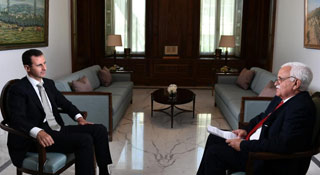
Prensa Latina | July 21, 2016
Prensa Latina transmits below the full text of the exclusive interview with Syrian President Bashar Al Assad:
PRENSA LATINA: Mr. President, thanks for giving Prensa Latina this historic opportunity of conveying your point of views to the rest of the world about the reality in Syria, because as you know, there is a lot of misinformation out there about your country, about the foreign aggression that is taking place against this beautiful country.
Mr. President, how would you evaluate the current military situation of the external aggression against Syria, and what are the main challenges of Syrian forces on the ground to fight anti-government groups? If it is possible, we would like to know your opinion about the battles or combats in Aleppo, in Homs.
President Assad: Of course, there was a lot of support to the terrorists from around the world. We have more than one hundred nationalities participating in the aggression against Syria with the support of certain countries like Saudi Arabia and Qatar with their money and Turkey with the logistical support, and of course with the endorsement and supervision of the Western countries, mainly the United States, France, and the UK, and some other allies.
But since the Russians decided to intervene in supporting legally the Syrian Army in fighting the terrorists in Syria, mainly al-Nusra and ISIS and some other affiliated groups, the scales have been tipped against those terrorists, and the Syrian Army has made many advancements in different areas in Syria.
And we are still moving forward, and the Syrian Army is determined to destroy and to defeat those terrorists. You mentioned Homs and Aleppo.
Of course, the situation in Homs, since the terrorists left Homs more than a year ago, the situation has been much, much better, more stable.
You have some suburbs of the city which were infiltrated by terrorists. Now there is a process of reconciliation in those areas in which either the terrorists give up their armaments and go back to their normal life with amnesty from the government, or they can leave Homs to any other place within Syria, like what happened more than a year ago in the center of the city.
For Aleppo it is a different situation, because the Turks and their allies like the Saudis and Qataris lost most of their cards on the battlefields in Syria, so the last card for them, especially for Erdogan, is Aleppo.
That is why he worked hard with the Saudis to send as much as they can of the terrorists – the estimation is more than five thousand terrorists – to Aleppo.
PRENSA LATINA: Through the Turkish borders?
President Assad: Yes, from Turkey to Aleppo, during the last two months, in order to recapture the city of Aleppo, and that didn’t work.
Actually, our army has been making advancement in Aleppo and the suburbs of Aleppo in order to encircle the terrorists, then, let’s say, either to negotiate their going back to their normal life as part of reconciliation, or for the terrorists to leave the city of Aleppo, or to be defeated. There’s no other solution.
PRENSA LATINA: Mr. President, which are the priorities of the Syrian Army in the confrontation with the terrorist groups? What is the role that the popular defence groups are playing in the theatre of operations?
President Assad: The priority of the Syrian Army, first of all, is to fight ISIS, al-Nusra and Ahrar al-Cham and Jaish al-Islam. These four organizations are directly linked to Al Qaeda through the ideology; they have the same ideology, they are Islamic extremist groups who want to kill anyone who doesn’t look or doesn’t feel or behave like them.
But regarding what you called the popular militia groups, actually, at the beginning of the war, the terrorists started an unconventional war against our army, and our army is a traditional army, like any other in the world, so the support of those popular defence groups was very important in order to defeat the terrorists in an unconventional way.
That was very helpful to the Syrian Army, because those fighters, those national fighters, they fight in their regions, in their cities, in their villages, so they know the area very well, they know the region very well, I mean the pathways, the terrain, let’s say, very well.
So, they can be very huge assets for the Syrian Army. That is their role.
PRENSA LATINA: Mr. President, how does the resistance of the Syrian people take place in the economic front to foreign aggression, I mean the economy, and please, what is your opinion on which sectors of the Syrian economy have remained functioning despite the war, economic blockade, looting, and so forth?
President Assad: Actually, the war on Syria is a full-blown war; it is not only supporting terrorists. They support the terrorists, and at the same time they launched a political war against Syria on the international level, and the third front was the economic front, in which they dictate to their terrorists, to their surrogate mercenaries, to start destroying the infrastructure in Syria that helped the economy and the daily needs of the Syrian citizens.
At the same time, they started an embargo directly on the borders of Syria through the terrorists and abroad through the banking systems around the world. In spite of that, the Syrian people were determined to live as much normal life as they can.
That prompted many Syrian businessmen or the owners of, let’s say, the industry, which is mainly medium and small industry, to move from the conflict areas and unstable areas toward more stable areas, on a smaller scale of business, in order to survive and to keep the economy running and to keep the needs of the Syrian people available.
So, in that regard, most of the sectors are still working. For example, the pharmaceutical sector is still working in more than 60 percent of its capacity, which is very important, helpful, and very supportive to our economy in such circumstances.
And I think now we are doing our best in order to re-expand the base of the economy in spite of the situation, especially after the Syrian Army made many advancements in different areas.
PRENSA LATINA: Mr. President, let’s talk a little bit about the international environment, please, give me your opinion about the role of the United Nations in the Syrian conflict, the attempts of Washington and its allies to impose their will on the Security Council and in the Geneva peace talks.
President Assad: Talking about the role of the United Nations or Security Council could be illusive, because actually the United Nations is now an American arm, where they can use it the way they want, they can impose their double standards on it instead of the Charter.
They can use it like any other institution within the American administration. Without some Russian and Chinese stances in certain issues, it would be a full American institution.
So, the Russian and Chinese role has made some balance within these institutions, mainly regarding the Syrian issue during the last five years. But if you want to talk about their role through their mediators or their envoys, like recently de Mistura, and before that Kofi Annan, and in between Brahimi, and so on. Let’s say that those mediators are not independent; they reflect either the pressure from the Western countries, or sometimes the dialogue between the main powers, mainly Russia and the United States.
So, they’re not independent, so you cannot talk about the role of the United Nations; it is a reflection of that balance. That is why so far, there is no United Nations role in the Syrian conflict; there is only Russian and American dialogue, and we know that the Russians are working hard and seriously and genuinely in order to defeat the terrorists, while the Americans always play games in order to use the terrorists, not to defeat them.
PRENSA LATINA: Mr. President, how do you see at the present time the coexistence among Syrian ethnic and religious groups against this foreign intervention? How do they contribute or not in this regard?
President Assad: The most important thing about this harmony between the different spectrums of the Syrian fabric, is that it is genuine, because that has been built up through the history, through centuries, so for such a conflict, it cannot destroy that social fabric.
That is why if you go around and visit different areas under the control of the government, you will see all the colors of the Syrian society living with each other.
And I would say, I would add to this, that during the conflict, this harmony has become much better and stronger, and this is not rhetoric; actually, this is reality, for different reasons, because this conflict is a lesson.
This diversity that you have, it is either to be a richness to your country, or a problem. There’s no something in the middle. So, the people learned that we need to work more on this harmony, because the first rhetoric used by the terrorists and by their allies in the region and in the West regarding the Syrian conflict at the very beginning was sectarian rhetoric.
They wanted people to divide in order to have conflict with each other, to stoke the fire within Syria, and it didn’t work. And the Syrians learned that lesson, that we had harmony; we had had harmony before the conflict, in the normal times, but we have to work more in order to make it much stronger.
So, I can say without any exaggeration that the situation regarding this part is good. In spite of that, I would say the areas under the control of the terrorists – and as you know those terrorists are mainly extremist groups affiliated to Al Qaeda – in which they worked very hard in order to indoctrinate the young generation with their dark ideology, and they succeeded in some areas, this dark ideology with the killing and beheading and all these horrible practices.
With the time, it is going to be more difficult to deal with this new generation of young people who have been indoctrinated with Al Qaeda and Wahabi doctrine and ideology. So this is the only danger that we are going to face regarding our society, harmony, and coexistence that you just mentioned.
PRENSA LATINA: Mr. President, I would like to go again to the international arena. What is in your opinion the role of the U.S.-led international coalition in relation to the groups that operate in northern Syria, in particular regarding the Kurds group. I mean the bombing of the American airplanes and the coalition in the northern part of the country. What to do you think about that?
President Assad: You know, traditionally, the American administrations, when they had relations with any group or community in any country, it is not for the sake of the country, it is not for the interest of the people; it is for the agenda of the United States.
So, that is what we have to ask ourselves: why would the Americans support any group in Syria? Not for Syria. They must their agenda, and the American agenda has always been divisive in any country. They don’t work to unite the people; they work to make division between the different kinds of people.
Sometimes they choose a sectarian group, sometimes they choose an ethnical group in order to support them against other ethnicities or to push them in a way that takes them far from the rest of the society.
This is their agenda. So, it is very clear that this American support is not related to ISIS, it is not related to al-Nusra, it is not related to fighting terrorism, because since the beginning of the American intervention, ISIS was expanding, not shrinking. It has only started to shrink when the Russian support to the Syrian Army took place last September.
PRENSA LATINA: Mr. President, what is your opinion about the recent coup d’état in Turkey, and its impact on the current situation in that country, and on the international level, and on the Syrian conflict also?
President Assad: Such a coup d’état, we have to look at it as a reflection of instability and disturbances within Turkey, mainly on the social level. It could be political, it could be whatever, but at the end, the society is the main issue when you have instability.
Regardless of who is going to govern Turkey, who is going to be the president, who is going to be the leader of Turkey; this is an internal issue. We don’t interfere, we don’t make the mistake to say that Erdogan should go or should stay. This is a Turkish issue, and the Turkish people have to decide.
But what is more important than the coup d’état itself, we have to look at the procedures and the steps that are being taken by Erdogan and his coterie recently during the last few days, when they started attacking the judges; they removed more than 2,700 judges from their positions, more than 1,500 professors in the universities, more than 15,000 employees in the education sector. What do the universities and the judges and that civil society have to do with the coup d’état?
So, that reflects the bad intentions of Erdogan and his misconduct and his real intentions toward what happened, because the investigation hasn’t been finalized yet. How did they take the decision to remove all those?
So, he used the coup d’état in order to implement his own extremist agenda, Muslim Brotherhood agenda, within Turkey, and that is dangerous for Turkey and for the neighboring countries, including Syria.
PRENSA LATINA: Mr. President, how do you evaluate the Syrian government’s relations with the opposition inside Syria? What is the difference between these opposition organizations and those based outside Syria?
President Assad: We have good relations with the opposition within Syria based on the national principles. Of course, they have their own political agenda and they have their own beliefs, and we have our own agenda and our beliefs, and the way we can make the dialogue either directly or through the ballot boxes; it could be a different way of dialogue, which is the situation in every country.
But we cannot compare them with the other oppositions outside Syria, because the word “opposition” means to resort to peaceful means, not to support terrorists, and not to be formed outside your country, and to have grassroots, to have real grassroots made of Syrian people.
You cannot have your grassroots be the foreign ministry in the UK, Franceor the intelligence in Qatar and Saudi Arabia and the United States. This is not opposition, this is called, in that case, you are called a traitor.
So, they call them oppositions, we call them traitors. The real opposition is the one that works for the Syrian people and is based in Syria and its agenda derived its vision from the Syrian people and the Syrian interests.
PRENSA LATINA: Mr. President, how do you evaluate the insistence of the U.S. and its allies that you leave power in addition to the campaign to distort the image of your government?
President Assad: Regarding their wish for me to leave power, they have been talking about this for the last five years, and we never responded even with a statement.
We never cared about them. Actually, this is a Syrian issue; only the Syrian people can say who should come and go, who should stay in his position, who should leave, and the West knows our position very well regarding this.
So, we don’t care and don’t have to waste our time with their rhetoric. I am here because of the support of the Syrian people. Without that, I wouldn’t be here. That is very simple.
About how they defame, or try to demonize certain presidents, this is the American way, at least since the second World War, since they substituted British colonization in this region, and maybe in the world, the American administrations and the American politicians haven’t said a single honest word regarding anything.
They always lie. And as time goes by, they are becoming more inveterate liars, so this is part of their politics. So, to demonize me is like how they tried to demonize President Vladimir Putin during the last two years and they did the same with the Cuban leader Fidel Castro during the last five decades.
This is their way. So, we have to know that this is the American way. We don’t have to worry about it. The most important thing is to have good reputation among your own people. That is what we have to worry about.
PRENSA LATINA: Mr. President, what is your opinion on Syria’s relation with Latin America, particularly the historical links with Cuba?
President Assad: In spite of the long distance between Syria and Latin America, we are always surprised how much the people in Latin America, not only the politicians, know about this region. I think this has many reasons, but one of them is the historical similarities and commonalities between our region, between Syria and Latin America.
Latin America was under direct occupation for long time ago but after that it was under the occupation of the American companies, and the American coup d’états and the American intervention.
So, they know what is the meaning of being independent or not to be independent. They understand that the war in Syria is about independence.
But the most important thing is the role of Cuba. Cuba was the spearhead of the independence movement within Latin America and Fidel Castro was the iconic figure in that regard.
So, on the political level and the knowledge level, there is a strong harmony between Syria and Latin America, especially Cuba. But I do not think we work enough to improve the other part of the relation; to be on the same level mainly on the educational and the economic level.
That was my ambition before the crisis and that is why I visited Latin America, Cuba, Venezuela, Argentine and Brazil, in order toinvigorate this relation. Then, we had this conflict started and it was a big obstacle to do anything in that regard, but I think that we have not to restrain the relation on the historical and the political levels. That is not enough. You have so many other sectors, people should know more about each other. The long distance could be an obstacle, but it shouldn’t because we have strong relations with the rest of the world, east and west.
So, it is not an obstacle in these days. So, I think if we overcome this crisis and this war, we should work harder in order to invigorate the different sectors of this relation with Latin America and especially with Cuba.
PRENSA LATINA: Mr. President, would you tell me your opinion about the electoral process in the United States mainly for the president? Now, there are two candidates; the Republican one is Mr. Donald Trump and the Democrat one is Mrs. Hillary Clinton, what is your opinion about this process, about the result of this process and how it could impact the conflict here, in the war in Syria?
President Assad: We resumed our relation with the United States in 1974. Now, it has been 42 years since then and we witnessed many American presidents in different situations and the lesson that we have learned is that no one should bet on any American president, that is the most important thing. So, it is not about the name.
They have institutions, they have their own agenda and every president should come to implement that agenda in his own way, but at the end he has to implement that agenda.
All of them have militaristic agendas, and the only difference is the way. One of them sends his army like Bush and the other one sends mercenaries and proxies like Obama, but all of them have to implement this agenda.
So, I do not believe that the president is allowed completely to fulfill his own political convictions in the United States, he has to obey the institutions and the lobbies, and the lobbies have not changed and the institutions’ agenda has not change.
So, no president in the near future will come to make a serious and dramatic change regarding the politics of the United States.
PRENSA LATINA: Mr. President, one final question: what message would you send using this interview with Prensa Latina to the governments and people of Latin America, the Caribbean, and also why not the American people, about the importance of supporting Syria against terrorism?
President Assad: Latin America is a very good and important example to the world about how the people and their governments regain their independence.
They are the backyard of the United States as the United States sees, but this backyard was used by the United States to play its own games, to implement its own agenda and the people in Latin America sacrificed a lot in order to regain their independence and everybody knows that.
After regaining their independence, those countries moved from being developing countries, or sometimes under-developed countries, to be developed countries. So, independence is a very important thing and it is very dear for every Latin American citizen.
We think they have to keep this independence because the United States will not stop trying to topple every independent government, every government that reflects the vast majority of the people in every country in Latin America.
And again, Cuba knows this, knows what I am talking about more than any other one in the world; you suffered more than anyone from the American attempts and you succeeded in withstanding all these attempts during the last sixty years or more just because the government reflected the Cuban people.
So, holding strongly to this independence, I think, is the crucial thing, the most important thing for the future of Latin America. Regarding Syria, we can say that Syria is paying the price of its independence because we never worked against the United States; we never worked against France or the UK. We always try to have good relations with the West.
But their problem is that they do not accept any independent country and I think this is same for Cuba. You never tried to do any harm to the American people but they do not accept you as an independent country.
The same is true for other countries in Latin America and that’s why you always have coup d’états mainly between the sixties and the seventies.
So, I think preserving the independence of a certain country is not only an isolated case; if I want to be independent, I have to support the independence in the rest of the world. So, the independence anywhere in the world, including Latin America, will support my independence. If I am alone, I will be weak.
Supporting Syria will be mainly in the international arena. There are many international organizations, mainly the United Nation, in spite of its impotence, but at the end, their support could play a vital role in supporting Syria and, of course, the Security Council; it depends on who is going to be the temporary member in the Security Council, and any other organization supporting Syria will be very important.
PRENSA LATINA: Mr. President, we know you are a very busy person, that is why I appreciate very much your time that you have dedicated to Prensa Latina interview in this moment. I hope this would not be the last interview that we have with you.
President Assad: You are welcome anytime.
The Nice Attack: French intelligence failure or Zionist agenda?
By Gearóid Ó Colmáin | July 15, 2016
The death toll from the Nice attacks on the 14th of July, 2016 is rising. Latest reports suggest 84 deaths and possibly one hundred more injured. There have been reports of gunfire and the driver of the truck which drove into the crowd near the beach in Nice is reported to have been shot dead. Once again (as with the Charlie Hebdo and Bataclan attacks) there is no-one to stand trial and truthfully answer the questions that need to be asked – who and why?
At this point, there is not much that can be verified about the attack. One cannot exclude the possibility that it may have simply been the action of an insane individual. Atrocities of that type are rare but have happened in the past. But there is, however, the strong suggestion and indeed likelihood that this atrocity is a terrorist attack by ‘Islamists’. So, what does all this mean?
French domestic intelligence (DGSI) chief Patrick Calvar warned on the 26th of June 2016 that an ‘Islamist’ attack on French children would be the trigger for a civil war. He said France was currently on the brink of that civil war. Calvar also predicted that ISIS (Da’esh) would use trucks as weapons. It is not unusual in the never-ending war on terror to hear accurate predictions by intelligence officials before attacks, with the same officials seemingly powerless to prevent them.
This ‘uncanny coincidence’ could be the defining event of our time.
French Prime Minister, Manuel Valls is on record stating that the state of emergency in France would be permanent. There has been increasing pressure on the Hollande regime in France to change course in the Middle East. Attempts to reconcile with Russia and lift the sanctions have been blocked by Hollande and Valls, who are puppets of the Jewish Lobby. The Zionists want to continue the war on Syria, Iran and Russia. The Zionists have full control over US/NATO policy. Therefore, the ‘war on terror’, which was created as a pretext to further Zionist geopolitical interests, must be continued.
I believe this is the trigger for a civil war French intelligence warned us about. The question is whether the war will become high intensity or continue on a relatively low-intensity trajectory. There have been police ‘whistleblowers’ in France who have warned of huge caches of arms in major cities, capable of arming hundreds of thousands of men. However, one must be cautious in referring to such ‘whistleblowers’ as they have proven to be highly unreliable and may be spreading disinformation.
In any case, the public’s belief that we are in a ‘state of war’ and that all military interventions abroad are therefore necessary will be enough to make citizens look to the state for protection – an oligarchic state which is currently pursuing a brutal class war against workers.
As 90 percent or more of intelligence operations today involve media disinformation, we cannot possibly assume that any of the reports we are hearing are accurate. However, it is hard to see how a psyop could have been carried out in the Promenade des Anglais which is so central in Nice. What we can say for sure is that the attack serves the two constants of the war on terror dialectic. The narrative would read as follows:
1. Make the state of emergency permanent, empowering the oligarchic state and further demoralising citizens by dividing the working class along religious and racial lines. This is part of NATO’s ‘strategy of tension’ in accordance with the longstanding intelligence operation Gladio. Citizens must turn to the anti-social state for ‘security’, thus precluding social revolt.
2. Justify an all out attack on Syria to finish the job of destroying Arab civilisation, in accordance with Zionism’s geopolitical interests. Only the willfully ignorant could possibly believe that ISIS is an enemy of France when the French have never had better relations with the country which openly backs them – Saudi Arabia. The intelligence reports, declassified documents and admissions of the highest officials of the French and American governments all confirm that ISIS is Israel’s Arab legion.
Both those two above-mentioned goals serve Zionism and until the French people liberate themselves from its yoke, Zionism will continue to poison the minds of men, making them consent to policies that no honest and compassionate human being would countenance. An awakening of working-class militancy is occurring but the labour movement in France remains divided and led by social-democratic reformists. Now, more than ever, seeing the link between terrorism and class war is essential if any political and social change is to occur. In an era of high-finance treason, oligarchy, austerity, and the triumph of avarice, terror increasingly becomes a feature of the normal rather than an exceptional exercise of state power.
Sanctions on Lebanon a form of Israeli aggression: Berri
Press TV – July 14, 2016
Parliament Speaker Nabih Berri has denounced sanctions on Lebanese banks and other financial institutions as a form of Israeli aggression.
Speaking at the Lebanese Emigrants Economic Conference in Beirut on Thursday, Berri said Israel is constantly trying to destroy Lebanon’s infrastructure and economy.
Berri was apparently making reference to the US law, which calls for the closure of bank accounts of individuals and organizations suspected of links to Hezbollah.
Hezbollah is credited with defending Lebanon against two wars launched by Israel – the US’s staunchest ally in the region – in 2000 and 2006.
Berri said Lebanon, through the assistance of its diaspora, will eventually emerge triumphant over a plot seeking to harm the country’s economy.
“We only have hope from the expatriates, and right now we no longer have hope but from you,” he said.
Berri further lashed out at Arab states for failing to commit to promised funds to Lebanon following Israel’s war on the country in the summer of 2006, saying only a third of the aid has been paid.
In February, Riyadh suspended USD 3 billion in military assistance to the Lebanese military and another USD 1 billion to the country’s internal security forces.
The kingdom also imposed sanctions on some Lebanese firms and individuals it accused of having links with Hezbollah.
Last month, Governor of Bank of Lebanon Riad Salameh stated that 100 bank accounts linked to Hezbollah members and legislators had been closed.
Hezbollah criticized the Central Bank of Lebanon for submitting to US pressures, saying the measures violated Lebanon’s sovereignty.
Islamic Jihad, Hamas: Turki Faisal’s Remarks Serve Zionist Occupation
Al-Manar | July 11, 2016
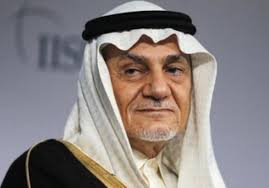 Palestinian resistance movements Islamic Jihad and Hamas have denounced remarks made by Saudi Prince Turki al-Faisal, saying such remarks serve the Zionist occupation.
Faisal, who in the past served as Saudi Arabia’s intelligence chief, said at a conference of the Iranian opposition over the weekend that the Iranian regime supports Hamas and Islamic Jihad in Palestine in order to cause instability in the region.
The Islamic Jihad said Faisal’s remarks serve the Israeli agenda that seeks to eliminate the Palestinian cause and open all the Arab and Islamic capitals to the Zionist entity.
“We tell those people: if you can’t stand up for Palestine and its people at least don’t stand by the Zionist entity to condemn the victim,” the Islamic Jihad movement said in a statement on Sunday.
“The Saudi Muslim people won’t accept to pave the way for the Israelis to reach Mecca and Medina.”
For its part, Hamas condemned the remarks, saying they were “baseless.”
“Everyone knows that Hamas is a Palestinian movement fighting the Zionist occupation in the land of Palestine, and has only a Palestinian agenda … and it adopts the concept of moderate Islam,” said a statement by the group.
Hamas further accused Faisal of saying things that serve the “Zionist occupation and provide it with further pretexts to carry out aggression against the Palestinian people.”
Western leaders support terror groups in Syria, get extremism at home – Assad
RT | July 10, 2016
Terrorist attacks, an unprecedented refugee influx and other problems with which Europe is struggling to cope are the result of wrong decisions made by European leaders, Syria’s president Bashar Assad told a European Parliament delegation.
“The situation in Syria and the whole region naturally affects Europe a lot due to its location and social ties. The problems Europe faces today of terrorism, extremism and waves of refugees are caused by some western leaders’ adoption of policies which do not serve their people,” Assad told the delegation headed by Javier Couso, Vice Chairman of the foreign affairs committee of the European Parliament, who had been visiting Damascus, Syrian state news agency SANA reported.
This is especially true “when those leaders give support and political cover to terrorist groups inside Syria,” the president added.
He stressed the role that the European Parliament should play in fixing the policies of some of European countries which had let terrorism evolve. Economic sanctions imposed against Damascus have impacted the Syrian people, who were forced to leave their homeland, Assad also said.
Couso noted that the delegation is planning to take steps that would help change western countries’ rhetoric and will call for the lifting of sanctions, which he described as “unfair”.
He promised to “inform the Europeans on the real state of affairs in Syria and on how people suffer from terrorism,” the report said.
Syria plunged into chaos in 2011, when public protests escalated into an armed uprising as foreign powers warned the Assad government against cracking down on the protest. As violence expanded, radical groups and criminal gangs hijacked the process, turning Syria into the bloodiest battle zone of the modern world.
Foreign nations opposing Damascus, including Turkey, Saudi Arabia, Jordan, the United States and the United Kingdom, have been providing various Syrian opposition groups with aid, saying that only by supporting armed groups trying to topple the Syrian government can the conflict be stopped.
The US and other western countries aided so-called ‘moderate rebels’ in Syria with weapons and training, saying this would help them defeat both the Syrian army and terrorist organizations, which capitalized on the turmoil in Syria. The effort led to some embarrassing moments, for instance when the initial training program for the moderates produced only a handful of fighters after months of recruiting.
Saudi Arabia and Qatar are among the key providers of Syrian rebel groups with military and financial assistance, including some powerful Islamist groups seeking to turn Syria into a country governed by the Sharia law.
Turkey, which was hit most among Syria’s neighbors by the refugee crisis, hosting almost two million asylum seekers, is among the vocal opponents of Damascus too. Critics accuse Ankara of turning a blind eye on rebel activities in its territory, including recruiting, arms shipments and getting medical assistance.
Jihadists from terrorist groups like Islamic State and Al-Nusra Front are among those benefiting from such policies. IS staged a number of bloody terrorist attacks in Turkey since its rise to power in Iraq and Syria, killing hundreds of people. The organization also claimed responsibility for several high-profile attacks in Europe and the US.
The European delegation arrived in Damascus on Saturday. The group visited refugee center in the Syrian capital and met soldiers undergoing treatment in the Hamish hospital.
Read more:
Jihadists that US kept off terror list attack UN humanitarian convoy in Syria – MoD
Al-Nusra Front in Syria gets daily weapons supplies from Turkey – Russian military
Western officials criticize Damascus in public but secretly deal in private not to upset US – Assad
Featured Video
The Truth About the Trump Shootings with Ken Silva
or go to
Aletho News Archives – Video-Images
From the Archives
Trans ‘milk’ as good as the real thing – NHS
RT | February 18, 2024
The drug-induced nipple secretions of trans women are as good as mothers’ breast milk for babies, the University of Sussex Hospitals NHS Trust claimed in a letter to campaigners made public in a report by British think tank the Policy Exchange on Sunday.
The healthcare trust’s medical director, Rachel James, argued that the off-label prescription drug cocktail men transitioning to female take in order to produce milk was “similar to the natural hormones which encourage lactation to develop when the baby is newly born.”
“The evidence which is available demonstrates that the milk is comparable to that produced following the birth of a baby,” James wrote in the letter, sent to Children of Transitioners last August.
Biological men who wish to lactate must first take hormones to grow milk glands and then take high doses of either domperidone or metoclopramide to stimulate milk production. Neither drug is approved for this use, though they are occasionally prescribed off-label to biological women who have trouble lactating.
However, domperidone’s own manufacturer, Janssen, warns patients the drug “may cause unwanted side effects affecting the heart in a breastfed baby” and “should be used during breastfeeding only if your physician considers this clearly necessary.” … continue
Blog Roll
 Aletho News
- Seyed M. Marandi: U.S. Strike Imminent – Toward Total War in the Middle East
- Russia Voted Under Fire. Washington Is Loading the Tankers.
- 12 Things Your Oncologist Was Trained Not to Tell You
- Anthrax Attacks Paved Way for COVID-Era ‘Junk Drugs and Vaccines’
- How Real Is the Impact of Western Sanctions on Israel?
- France, You Are Guilty: How Paris Turned Western Sahara into the Maghreb’s Powder Keg
- 2025 Nature Paper Claiming Worsening Global Drought Gets RETRACTED …Heavily Flawed
- Your Milk Is Not the Problem
- The Truth About the Trump Shootings with Ken Silva
- ARE PATIENTS BEING PROPERLY INFORMED ABOUT OZEMPIC?
- If Americans Knew
- An error has occurred; the feed is probably down. Try again later.
- No Tricks Zone
- 2025 Nature Paper Claiming Worsening Global Drought Gets RETRACTED …Heavily Flawed
- New Study: ‘Global Drought Shows No Detectable Recent Acceleration Under Climate Warming’
- Economic Masterminds: German Socialists Suggest Taxing Productivity Gains Stemming From Using AI
- The South China Sea Has Not Been Cooperating With The Climate Change Narrative
- Energy Crisis: Germany Enters Heating Season With Historically Low Gas Reserve Fill Levels
- New Study: The Antarctic Ice Sheet Gained Mass From 2020-2024 Due To Staggering Snow And Ice Accumulation
- Study: Ocean Heating Rates From Thousands Of Years Ago ‘Dwarf’ Modern Ocean Heating Rates
- Climate Extremists Target, Attack Large-Scale Power Grid Infrastructure In Germany!
- New Study: Antarctic Ice Melt Has Contributed Less Than 1 Centimeter To Sea Level Rise In The Last 30 Years
- Fear Of Debate: Alarmist German Climate Scientist Calls On Mainstream Media To Discredit Skeptic Voices
 Aletho News