Saudi airstrikes leave 20 Yemeni civilians dead despite truce
Press TV – June 28, 2016
At least 20 civilians have been killed as Saudi warplanes bombed Yemen’s Ta’izz Province in violation of a UN-brokered ceasefire.
Saudi jets targeted a petrol bomb in Hayfan district of the southwestern province of Ta’izz early on Tuesday, leaving at least 20 civilians dead and 15 others injured, Yemen’s al-Masirah television reported.
Some Yemeni media outlets have put the number of those killed at 35.
The news comes hours after four terrorist bomb attacks hit military and security positions in Mukalla city of Hadhramaut Province, leaving 48 civilians dead and some 30 others injured.
Meanwhile, a Saudi air strike mistakenly hit a military convoy of pro-Riyadh militants in the strategic mountain of Hailan in Ma’rib Province on Monday night.
Five militants, including a commander, were killed and six others wounded in the air raid.
The Saudi attacks come despite UN-mediated talks in Kuwait between representatives of Yemen’s former President Abd Rabbuh Mansur Hadi and a delegation comprising of the Houthi Ansarullah movement and allies. A ceasefire agreement had been announced before the peace talks.
The Houthi delegation has warned that such blatant cases of truce violation could lead to a full collapse of the peace talks.
Saudi Arabia launched its military aggression against Yemen on March 26, 2015, in a bid to bring Hadi, a staunch ally of Riyadh, back to power and defeat the Ansarullah movement. More than 10,000 people have been killed since then.
Kuwait talks
Meanwhile, reports said Monday that Yemen’s warring parties plan to suspend the talks after failing to reach results.
Two negotiators representing Houthis and their allies, and one from the Hadi-delegation said the two sides on Monday were drafting a statement to declare that the negotiations will resume in mid-July following the Muslim holiday of Eid al-Fitr.
“The return to the talks is meant to save face after reaching a deadlock,” said one of the negotiators, who is also one of Hadi’s ministers.
The main bone of contention in the talks is reportedly a demand by the Hadi delegation for the Houthis to start disarming and withdrawing from the areas they have under control.
The Houthis took over state matters when Hadi resigned back in January 2015.
Houthis have rejected the call, saying they will only accept a deal on military and security issues after consensus is reached on the next president and a unity government in Yemen.
9/11 Cover-Up Unraveling: 28 pages, JASTA bill, KSM trial fiasco a “perfect storm” – But Beware of Limited Hang-outs

By Kevin Barrett | American Herald Tribune | June 23, 2016
The Warren Commission summarized its conclusion in three words: “Oswald acted alone.”
In support of its assertion that President John F. Kennedy was assassinated by a lone gunman, the Commission—steered by Kennedy’s worst enemy, former CIA Director Allen Dulles, whose expertise lay in deceptions, regime change operations and murders of heads of state—produced 28 volumes as well as an unnumbered summary report volume. Virtually all of the 18,803 pages totaling 10.4 million words consisted of irrelevancies, distractions and red herrings, famously including such monumentally non-essential information as Lee Harvey Oswald’s dental records.
The 9/11 Commission, following the Warren Commission template, claimed that “19 Arab hijackers with box-cutters, alongside a handful of al-Qaeda operatives, acted alone.” Like the Warren Commission, the 9/11 Commission began with its conclusion already inscribed in stone; the so-called investigation merely lined up support for a pre-ordained script. According to New York Times journalist Philip Shenon, 9/11 Commission Executive Director Philip Zelikow had written the entire report in chapter outline before the Commission even convened. Sen. Max Cleland, refusing to participate in the cover-up, resigned from the 9/11 Commission, comparing it to the long-discredited Warren Commission: “The Warren Report blew it. I’m not going to be part of that.” Later, even the co-chairs of the Commission, Kean and Hamilton, admitted that their Commission had been “set up to fail.”
Now, almost 12 years after the publication of the 9/11 Commission Report and more than half a century after the Warren Report, both official accounts have been thoroughly discredited. Polls show that since at least the 1990s, two-thirds of Americans do not believe the official version of the JFK killing. Likewise, polling data reflects widespread suspicion about 9/11. A 2006 New York Times / CBS poll, for example, found that 81% of Americans believed their government was “hiding something” or “mostly lying” about 9/11, while only 16% thought it was “telling the truth.”
Today we are facing a potential re-opening of the 9/11 investigation, paralleling the way the JFK assassination investigation was re-opened by the House Select Committee on Assassinations (HSCA) from 1976 to 1978. In both cases, public skepticism toward the official versions, alongside the work of independent researchers, has created a climate in which calls for a new investigation could fall on receptive ears. Unfortunately, if a new 9/11 investigation follows in the footsteps of the HSCA, it could destroy the official story — but in such a way as to prevent an aroused public from rising up and demanding that the full truth be revealed, the perpetrators punished, and the government restructured in such a way as to ensure that no such murderous coup d’état ever happens again. (The HSCA concluded that JFK was murdered by unknown conspirators, hinted that the mafia was involved, but offered no rousing call to uncover the full truth and prosecute the perpetrators.)
Calls for an HSCA-style re-opening of 9/11 could follow developments in three related legislative and judicial venues: The push for the release of the classified 28 pages of the Joint Congressional Inquiry into 9/11; the JASTA bill allowing survivors and victims’ family members to sue government sponsors of terrorism; and the imminent implosion of the military prosecutions of Khalid Sheikh Mohammed, the alleged 9/11 mastermind, and his alleged co-conspirators.
The secret 28 pages, classified by President Bush, are said to implicate Saudi government officials and royal family members as co-conspirators of the 19 alleged hijackers. They also contain a footnote referencing Israel that has been the subject of much speculation, given the many converging lines of evidence pointing to a major Israeli role in 9/11. The movement to release the 28 pages has been garnering widespread mainstream coverage since the CBS flagship news show 60 Minutes featured it last month. Congressional bills urging the President to declassify the 28 pages have picked up more than 60 co-sponsors.
On April 24th, the AP ran a story headlined “White House poised to release secret pages from 9/11 inquiry.” But since then Obama has wavered, while a war of words has broken out between the forces of transparency and their opponents. On the opponents’ side, CIA Director John Brennan recently issued a pre-emptive salvo claiming that the secret pages contain “inaccurate information,” while 9/11 Commission co-chairs Kean and Hamilton chipped in that those pages contained “raw, unvetted material” with “no smoking gun.” These claims contrast sharply with statements by others who have read the 28 pages, including Sen. Bob Graham of Florida and Rep. Walter Jones, who have said that the secret pages completely overturn the official story of 9/11.
The push to release the 28 pages coincides with the House’s passage of the Justice Against Sponsors of Terrorism Act (JASTA), which now awaits Senate ratification and a likely White House veto. The JASTA bill would pave the way for lawsuits against foreign governments that sponsor terrorist attacks on American soil, and seems to have been written specifically to target Saudi Arabia for 9/11.
The Saudi government has responded with a two-pronged attack. Officially, it has threatened to sell off 750 billion dollars in US securities and other assets, thereby crashing the US economy, if Congress passes the JASTA bill. Meanwhile, an outline of the likely Saudi defense should it ever be prosecuted for 9/11 was published by Saudi legal expert Katib Al-Shammari. Writing in the Saudi-owned London newspaper al-Hayat, Al-Shammari argued that the US itself carried out the 9/11 attacks. (English translation here.) Citing the findings of architects and engineers that the World Trade Center was destroyed with explosives, not jet fuel fires, Al-Shammari asserts that the US government has blamed almost everyone except the true culprit – itself – in order to increase military budgets, launch wars, and pressure foreign governments.
The Saudis may even be holding evidence that could destroy the official version of 9/11 and prove US government complicity. Ten of the alleged 9/11 hijackers, all of them Saudis, were reliably reported to be alive after 9/11, as documented in Jay Kolar’s “What We Now Know About the Alleged 9-11 Hijackers.” Speculation on their current whereabouts focuses on three possibilities: (1) dead, presumably murdered by the orchestrators of 9/11; (2) alive and well and living under witness protection, possibly in Saudi Arabia; and/or (3) some of the hijackers may be “composite personalities” produced by forgery and identity theft.
In 2008, I traveled to Morocco to investigate the strange case of alleged hijacker Waleed al-Shehri, who had supposedly died when Flight 11 crashed into the North Tower of the World Trade Center. On September 22nd, 2001, the BBC reported that al-Shehri was alive and well in Morocco:
A Saudi-Arabian aircraft pilot who was named as one of five suspects on board one of the planes that crashed into the World Trade Centre, has turned up alive and well in Morocco. The man, Waleed Al-Shehri, has told Saudi journalists in Casablanca that he had nothing to do with the attacks on New York and Washington, and had been in Morocco at the time.
The FBI named five men with Arab names who they say were responsible for deliberately crashing American Airlines Flight 11 into the World Trade Center. One of those five names was Waleed Al-Shehri, a Saudi pilot who had trained in the United States. His photograph was released by the FBI, and has been shown in newspapers and on television around the world.
That same Mr Al-Shehri has turned up in Morocco, proving clearly that he was not a member of the suicide attack. He told Saudi journalists in Casablanca that he has contacted both the Saudi and American authorities to advise them that he had nothing to do with the attack. He acknowledges that he attended flight training school at Dayton Beach in the United States, and is indeed the same Waleed Al-Shehri to whom the FBI has been referring.
But, he says, he left the United States in September last year, and became a pilot with Saudi Arabian Airlines, and is currently on a further training course in Morocco. He says he was in Marrekesh when the attack took place.
I spoke to people at the US Embassy in Rabat, who said that nobody currently working there remembered al-Shehri showing up in 2001 and proclaiming his innocence. They said that diplomatic personnel rotate in and out every few years, so none of the current (2008) embassy employees would have worked there in 2001. (I personally know the man who, I am told, was CIA station chief in Rabat in the late 1990s and early 2000s – he certainly was not rotating in and out every few years – but he has not responded to my communications about 9/11.)
Stonewalled by the US Embassy, confused by conflicting reports about al-Shehri’s history in Morocco (did he work for RAM or Saudia Airlines? etc.) I contacted Saudia Airlines requesting information about Waleed al-Shehri’s employment there as a pilot. A higher-up sounded very defensive as he implied that he knew things he could not tell be because “we do not want trouble.”
If the JASTA bill passes and Saudi Arabia is sued for 9/11, perhaps its leaders will decide it is less “trouble” to spill the beans, possibly by telling the truth about some of the alleged 9/11 hijackers, than to accept the blame for the worst mass murder ever committed on American soil. If the Saudis ever decide to tell the truth, we might learn that some of the alleged hijackers did not even exist, but were fictional cutouts created by intelligence services, with intelligence agents role-playing with forged and/or stolen identification. We know that this is the case for some of the alleged hijackers, including “Ziad Jarrah,” a cut-out impersonated by at least three different intelligence agents, as explained by Jay Kolar. It may also be the case for the al-Shehri brothers; Wail al-Shehri (allegedly Waleed’s brother, supposedly a 9/11 hijacker but still alive and well and flying for Saudia Airlines out of Morocco) has claimed to be the victim of identity theft, suggesting that his ID was used to create the “Wail al-Shehri” named as a 9/11 hijacker.
Some US authorities have admitted that these problems are real. Less than two weeks after 9/11, FBI Director Mueller was forced to admit that “hijackers” turning up alive had cast doubt over those identifications; then in 2002 he admitted that there is “no legal proof” of the hijackers’ real identities. A former high-level intelligence official told Seymour Hersh that the whole story of the alleged hijackers was fabricated: “Many of the investigators believe that some of the initial clues that were uncovered about the terrorists’ identities and preparations, such as flight manuals, were meant to be found. A former high-level intelligence official told me, ‘Whatever trail was left was left deliberately—for the F.B.I. to chase.’” The 9/11 Commission made no effort whatsoever to resolve any of these issues.
In addition to the 28 pages and JASTA affairs targeting Saudi Arabia, there is a third legal venue from which a mandate for a new 9/11 investigation could and should arise: The military tribunal show trials of Khalid Sheikh Mohammed (KSM) and co-defendants. There, in the kangaroo courts of Guantanamo, a destruction-of-evidence scandal is brewing that could blow 9/11 wide open. The Guardian (May 31, 2016) reports:
The judge overseeing the premiere military tribunal at Guantánamo Bay effectively conspired with the prosecution to destroy evidence relevant to defending the accused architect of the 9/11 attacks, according to a scathing court document.
Army Col James Pohl, who this week at Guantánamo is presiding over a resumption of pretrial hearings in the already troubled case, “in concert with the prosecution, manipulated secret proceedings and the use of secret orders”, the document alleges, preventing Khalid Sheikh Mohammed’s defense team from learning Pohl had permitted the Obama administration to destroy the evidence.
This latest scandal relates to evidence destroyed in 2013 and 2014 after the judge had ordered the prosecution to preserve it. That same judge, Col James Pohl, then secretly conspired with the Administration to destroy the very evidence he had ordered preserved, while lying to the defense by claiming the order had been followed and the evidence preserved.
This is not the first such KSM-related destruction-of-evidence scandal. In 2005, CIA Director General Michael Hayden admitted that the CIA destroyed videotapes of interrogations of al-Qaeda prisoners related to the 9/11 investigation. Earlier, in 2004, the CIA had denied to the 9/11 Commission that any such videotapes existed. That is why the 9/11 Commission built its official story (or, rather, filled in the details of Philip Zelikow’s pre-conceived official narrative) by relying on third-hand hearsay reports about what KSM, the mentally retarded “terror mastermind” Abu Zubaydah, and other alleged al-Qaeda operatives supposedly told their torturers.
Robert Baer, formerly the CIA’s best on-the-ground Mideast operative, vented his shock and displeasure in the pages of Time Magazine:
I would find it very difficult to believe the CIA would deliberately destroy evidence material to the 9/11 investigation, evidence that would cover up a core truth, such as who really was behind 9/11. On the other hand I have to wonder what space-time continuum the CIA exists in, if they weren’t able to grasp what a field day the 9/11 conspiracy theorists are going to have with this — especially at a time when trust for the government is plumbing new depths … If this sounds like paranoia, it is. But the CIA certainly is not helping by destroying evidence. And they should know better than to destroy evidence in the biggest criminal case in American history. More than anything what we need right now is complete and total transparency on 9/11.
It is hard to overstate the magnitude of the 9/11 destruction-of-evidence scandal. Essentially what we have is Zelikow’s pre-scripted official 9/11 story getting its after-the-fact “verification” through massive torture of such obviously innocent “masterminds” as the simple-minded Abu Zubaydah, an utterly incompetent individual tortured into what can only have been a series of false confessions during 83 waterboarding sessions in August, 2002. Amidst those false confessions, which must have consisted of Abu Zubaydah blubbering back to his torturers whatever they told him to say, was the claim that KSM was the mastermind of 9/11.
KSM, for his part, was waterboarded 183 times in March, 2003. Under torture, he confessed to more than 30 different crimes and attempted crimes, most of which he could not possibly have committed. Among those crimes were the murder of Daniel Pearl and various attempts to recruit terrorists in Montana and Washington that happened after he was already incarcerated.

The official story of 9/11, as mythologized in the 9/11 Commission Report, relies almost entirely on hearsay reports of what KSM supposedly said under torture, as close attention to its footnotes shows. The torturers lied to the Commission by asserting that no records of the interrogations existed; they later destroyed those very records. And these same torturers refused to allow the Commissioners any access to the alleged 9/11 suspects. Obviously it is not KSM himself, but his captors and torturers, who need to be arrested and interrogated not only for torture and obstruction of justice, but also as 9/11 suspects. For when torture, which is largely useless for any purpose except eliciting false confessions, is used to cover up a crime, the torturers may be assumed to be complicit in the crime they are covering up.
Conclusion: The American People Must Demand the Whole Truth – And Treason Trials
The JFK truth movement succeed in getting a “new investigation” – the 1976-1978 HSCA investigation. It succeeded in establishing that President John F. Kennedy died as the result of a conspiracy – the official conclusion of the HSCA probe. But it did not succeed in bringing anyone to justice, because it shied away from stating the obvious: that the JKF killing was a coup d’état, an act of high treason by elements of America’s deep state. Indeed, it did not even seriously consider that unspeakable possibility. Facing the truth would require subjecting the country to treason trials, a clash between the official and deep states, and potential instability, perhaps even revolution.
Today, the same taboo could hamstring any new 9/11 investigation. In the event of any such investigation, tremendous pressure will be brought to bear to keep the official narrative largely intact, even if a few Saudi government officials have to be thrown under the bus.
Could a new investigation elicited by JASTA and the 28 pages movement, perhaps in conjunction with the Guantanamo destruction-of-evidence scandal, uncover the whole truth, or at least much of it, and achieve a modicum of justice? Some observers such as alternative journalist Brandon Martinez argue that the push to blame the Saudis is a limited hang-out; while others including Les Jamieson of the 28 pages movement argue that once the case is re-opened all hell is likely to break loose … especially if the people rise up and demand the truth.
We do know more about 9/11 today than was known about the JFK assassination in 1978. Reams of evidence, including the more than 40 smoking guns cited by David Ray Griffin in the second edition of The New Pearl Harbor, prove that 9/11 was a coup d’état staged by high-level US government officials with the help of one or more foreign governments. (The case that the main foreign government involved was Israel, and that the prime motive for 9/11 was to launch a permanent war on Israel’s Muslim enemies, is explored in Christopher Bollyn’s Solving 9/11.)
Any HSCA-style “new investigation” of 9/11 would take place under the gaze of hundreds of millions of people worldwide who know that 9/11 was a neoconservative coup d’état, and tens of millions who are familiar with the evidence, including such smoking guns as the obvious controlled demolition of World Trade Center Building 7. For that reason, it would be harder to neuter than the HSCA’s 1978 JFK investigation was. The publicity ensuing from the push for another 9/11 investigation, followed by the investigation itself, would provide the 9/11 truth community with its best-ever chance of cracking the case and bringing at least some of the real perpetrators to justice.
Additionally, any actual investigation with sufficient funding and subpoena power would quickly penetrate the blame-the-Saudis smokescreen. The same alleged hijackers who were funded by the Saudi royals, to take one example, were living with an FBI asset during the run-up to 9/11. And if Bandar Bin Sultan, AKA “Bandar Bush,” gets fingered for 9/11, what will the American people make of Bandar smoking a celebratory cigar with George W. Bush on the White House balcony immediately following the mass murders of September 11th? Finally, one would expect the Saudis to vigorously defend themselves in court, and it seems likely that their best defense would be the truth, the whole truth, and nothing but the truth. (That may be a lot to expect from the polished liars of the House of Saud; but if the truth serves their interests, they might choose to depart from habitual behavior patterns.)
Conclusion: The current “perfect storm” of JASTA, the 28 pages, and the imploding KSM trial offer an unprecedented opportunity to re-open the crime of the century. Everyone who opposes the 9/11 wars, wishes to revive constitutional rule in the so-called Western democracies, and recognizes that the current planetary path of militarization, debt slavery and environmental devastation is unsustainable, should be pushing for a new 9/11 investigation … while recognizing, and screaming from the rooftops, that an HSCA-style limited hangout is unacceptable.
Saudi repeats call for US strikes on Syrian government
Press TV – June 17, 2016
The Saudi foreign minister has repeated Riyadh’s call on the US to carry out airstrikes against the Syrian government, echoing a similar request by dozens of US diplomats who broke ranks with the White House to push for military action against Damascus.
During a press briefing at the Saudi Embassy in Washington on Friday, Adel al-Jubeir said the Arab monarchy has long been pushing for a US military campaign to overthrow Syrian President Bashar al-Assad.
The Saudi minister added that from the very start of the crisis in Syria, Riyadh has strongly favored “a more robust policy, including air strikes, safe zones, a no fly zone, a no drive zone.”
He went on to say that the kingdom had called for arming Syria’s so-called “moderate opposition” with ground-to-air missiles and reiterated an offer to deploy Saudi special forces as part of any US-led operation against the Damascus government, which has been making back-to-back gains against the Daesh Takfiri group.
Jubeir’s comments came after 51 US State Department officials signed an internal document, known as the “dissent channel cable”, this week, calling for targeted military strikes against the Syrian government.
“Failure to stem Assad’s flagrant abuses will only bolster the ideological appeal of groups such as Daesh, even as they endure tactical setbacks on the battlefield,” reads the cable, critical of US President Barak Obama’s policies towards the Syrian crisis.
The State Department has acknowledged the existence of the cable as confidential diplomatic communication, but did not comment on its contents.
Russia’s reaction
Meanwhile, Russia slammed the so-called internal document and warned that such attempts to oust Assad would not “contribute to a successful fight against terrorism.”
Kremlin spokesman Dmitry Peskov further said that “this could plunge the region into complete chaos.”
Russian Deputy Foreign Minister Mikhail Bogdanov also censured the proposed attacks against Damascus, saying they would be “at odds with the UN resolutions.”
“We need to negotiate and reach a political resolution on the basis of international law, which was agreed upon at the UN Security Council,” Bogdanov added.
The United States and its allies formed a coalition that has been conducting airstrikes against what are said to be Daesh terrorists inside Syria since September 2014 without any authorization from Damascus or a UN mandate. The coalition has repeatedly been accused of targeting and killing civilians. It has also been largely incapable of fulfilling its declared aim of destroying Daesh.
Daesh Takfiri terrorists, who were initially trained by the CIA in Jordan in 2012 to destabilize the Syrian government, are engaged in crimes against humanity in the areas under their control.
Syria has been grappling with a deadly conflict it blames on certain foreign states for over five years. UN special envoy for Syria Staffan de Mistura estimates that over 400,000 people have been killed in the conflict, which has also displaced over half of the Arab country’s pre-war population of about 23 million. The militancy has also taken a heavy toll on the country’s infrastructure.
UAE terminates military attacks in Yemen
Press TV – June 16, 2016
The United Arab Emirates (UAE) has announced the end of its combat operations in Yemen, marking a departure from the Saudi-led coalition that has been waging war on the impoverished country.
“Our standpoint is clear: war is over for our troops. We are monitoring political arrangements, empowering Yemenis in liberated areas,” Sheikh Mohammed bin Zayed Al Nahyan, the crown prince of Abu Dhabi and the deputy supreme commander of the UAE Armed Forces, wrote on his official Twitter account late on Wednesday, quoting earlier remarks by Minister of State for Foreign Affairs Anwar Gargash.
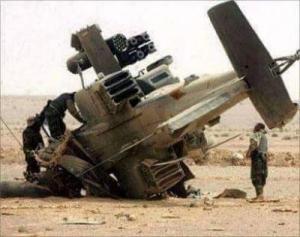 No explanation has been offered as to why the decision was made.
The UAE had been suffering heavy casualties in Yemen, where Ansarullah fighters and allied military units have been fighting back against the Saudi-led invaders.
On Monday, an Emirati military helicopter crashed near the al-Buraiqeh coast of the southern Yemeni port city of Aden, killing its two pilots.
On March 14, two Emirati pilots died when their Mirage fighter jet crashed due to a technical fault while conducting military operations for the Saudi-led military coalition in the same Yemeni district.
A senior Emirati military commander and three other Saudi-backed foreign mercenaries had been killed in an attack by Yemeni forces in the Dhubab district of the southwestern province of Ta’izz two months earlier.
Last September, the UAE confirmed that at least 52 of its soldiers were killed when Ansarullah fighters and allied fighters from Popular Committees fired a barrage of missiles at Saudi-led foreign troops in the central Ma’rib Province. At least 70 soldiers were also injured in the missile attack.
Meanwhile, there are reports that Jordanian military forces and advisers will be replacing UAE troops fighting in the Saudi war on Yemen.
Yemen’s Khabar news agency, citing informed sources, reported that the decision had been made following a visit by Saudi Deputy Crown Prince Mohammad bin Salman Al Saud to Jordan in mid-April.
Mohammad, who is also the Saudi defense minister, met King Abdullah in the Jordanian port city of Aqaba and signed a package of agreements, including on military cooperation.
The Saudi crown prince also traveled to the UAE in an effort to mend fences after reports of significant friction between the two allies over the war on Yemen.
A Saudi decision earlier this year to dismiss a former general with close ties to the UAE angered Emirati authorities.
In February, Saudi Arabia sacked Khaled Bahah and appointed Ali Mohsen Al Ahmar to lead the fight against Yemen’s Houthis. Ahmar had been based in Saudi Arabia since Ansarullah fighters took over Sana’a in 2014.
Saudi Arabia launched its military aggression against Yemen on March 26, 2015, in a bid to bring former President Abd Rabbuh Mansur Hadi — who is a staunch ally of Riyadh — back to power and defeat the Ansarullah movement.
More than 9,400 people have been killed and at least 16,000 others injured since the onset of the aggression.
The Saudi strikes have also taken a heavy toll on the country’s facilities and infrastructure, destroying many hospitals, schools, and factories.
Saudis to Receive Combat Choppers After Removal From UN Child Killing List
Sputnik – 08.06.2016
Saudi Arabia is set to receive 24 Hellfire-armed AH-6i Little Bird helicopters from US aeronautics contractor Boeing, a sale that would have been banned had the UN not removed the Kingdom from their war crimes against children list.
On Wednesday, Boeing announced that they will begin delivering AH-6i Little Bird light attack and reconnaissance helicopters to Saudi Arabia by the end of the month, as the aircraft begin to come off the production line in Mesa, Arizona by the end of this week.
The contract faced uncertainty late last week when the United Nations included Saudi Arabia on a blacklist as part of their annual report on Children and Armed Conflict (CAAC), for their role in indiscriminate bombings of schools and hospitals in Yemen.
Pursuant to the Leahy Law, the US Department of State and Department of Defense are prohibited from providing military assistance to foreign military units that violate human rights, precisely what the United Nations initially certified in their original report. This prohibition extends to approval of foreign arms sales by private US contractors, which would stop the lucrative sale of US weapons to Riyadh.
However, the United Nations announced on Monday, after feverish lobbying by the Saudi envoy to the UN, in conjunction with US and UK officials, to temporarily remove Saudi Arabia from the blacklist, pending further investigation of the statistics provided in the report.
Many interpret the purported temporary move to delete Saudi Arabia from the list of child-killers as a permanent step, including the Saudi delegation, which loudly announced that the decision was “final.”
With human rights atrocities ignored for the sake of political and economic expediency, the path is now paved for the light attack helicopter to make its debut in the skies above Yemen. The Saudi-led mission to combat the Houthi political opposition faction and prop up Saudi-freindly leadership in Yemen has the full support of the US and the UK, despite consistent reports of war crimes conducted by Kingdom forces.
The combat helicopter is said to have a maximum speed of 175 mph, with a range of 267 miles. The aircraft is typically armed with Hellfire missiles, Hydra 70 rockets, air-to-air Stingers, automatic grenade launchers, and five high-caliber machine guns.
UK training Saudi police in CSI techniques that risk torture
Reprieve – June 7, 2016
Britain’s College of Policing is teaching the Saudi Arabian interior ministry high-tech forensic skills that risk being “used to identify individuals who later go on to be tortured”, an internal police report obtained by human rights charity Reprieve reveals.
According to the document, released under Freedom of Information, the controversial training program began in 2009 and continued even after juvenile protesters were rounded up, tortured and sentenced to death following the Arab Spring uprisings.
British police now want to step up their training package to include advanced cyber-crime courses, which could be misused to target pro-democracy activists in Saudi Arabia.
Although the UK Foreign Office opposes the death penalty, the College of Policing wants to teach Saudi officers how to analyse mobile phone records, which could lead to activists being arrested and executed.
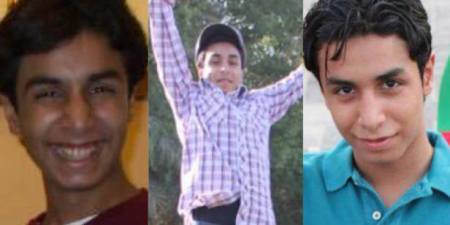
Ali al-Nimr was just 17 years old when he was sentenced to death for attending non-violent protests in 2012 and allegedly using his blackberry phone to invite friends to join demonstrations. At trial the prosecution requested execution by “crucifixion”.
Many more juvenile protesters were swept up and tortured in the 2012 crackdown, including Dawood al Marhoon and Abdullah Hasan al-Zaher, who now face beheading at any time. Another teenage activist, Ali al Ribh, who was arrested at school, was among 47 people executed on a single day in January 2016.
That same month, the College of Policing proposed further courses for Saudi personnel despite noting that there was a risk “the skills being trained are used to identify individuals who later go on to be tortured or subjected to other human rights abuses”.
Other techniques on sale to Saudi detectives include decrypting hard drives, retrieving deleted files, voice recognition and trawling CCTV systems. The project is described as an “income generating business opportunity” for the College of Policing.
Some of the training has taken place at the College of Policing’s forensics centre outside Durham, and “over 120 fingerprint personnel are in the process of being trained”.
The document says that the Saudi officers are drawn from the gulf kingdom’s 300,000 strong interior ministry, which includes policemen, prison guards and national security staff.
The college claims to have developed a “trusted and professional partnership” with the ministry, which carries out beheadings, stoning and lashings. David Cameron faced outcry in Parliament last year over a Ministry of Justice project with Saudi prison guards.
Commenting, Maya Foa, Director of the death penalty team at Reprieve said: “It is scandalous that British police are training Saudi Arabian officers in techniques which they privately admit could lead to people being arrested, tortured and sentenced to death.”
“The training Britain delivered included hi-tech skills that could easily have been used to target pro-democracy activists in Saudi Arabia. Let’s not forget that while this was going on, teenage protestors like Ali al-Ribh, Abdullah al-Zaher, Ali al-Nimr, and Dawood al-Marhoon were rounded up and sentenced to death.”
“The FCO has to explain how on earth helping execute juvenile protesters makes anyone safer in Saudi Arabia or the UK.”
US terror report on Iran a stupendous denial of Washington-Saudi terror reality
By Finian Cunningham | RT | June 7, 2016
Since 1984, the US has been labeling Iran a leading state sponsor of terrorism, a charge that was reiterated last week. However, global events explode Washington’s credibility and denial of reality.
Russia’s Defense Ministry, for example, this week reported that some 270 civilians were killed within 24 hours from shelling of Syria’s second city, Aleppo, by Al-Qaeda-affiliated terror groups.
Moscow said the surge in violence by these groups followed from the curbing of Russian air strikes at the request of Washington – purportedly to spare “moderate rebels” located in the same areas as Al-Qaeda terror brigades.
The latter include Jabhat al-Nusra and Islamic State (IS, formerly ISIS/ISIL), both of which are internationally proscribed by the United Nations Security Council.
As noted by former British ambassador to Syria, Peter Ford, the risible pretext of protecting “moderates” is a cynical cover for the unavoidable fact that the US is, in effect, siding with Al-Qaeda terrorism in Syria for the overthrow of the Assad government.
It has been reliably documented that the anti-government militia in Syria affiliated with Al-Qaeda, including Jaysh al-Islam and Ahrar al-Sham, are supported materially and politically by the governments of Saudi Arabia, Qatar and NATO-member Turkey – all close allies of Washington.
Also in the news, just as the latest US State Department report came out pillorying Iran over terrorism, the United Nations condemned the Saudi-led military coalition in Yemen for inflicting 60 percent of child deaths over the past year in the war-torn country.
The Saudi-led coalition includes the US and Britain which supplies warplanes and logistics for air raids purportedly aimed at defeating Houthi rebels who ousted the US-Saudi-backed regime in early 2015. The latest UN report also condemned the Saudi coalition for destroying hospitals and schools across Yemen, which had already been designated as the Arab region’s poorest country even before the US-Saudi military intervention began in March 2015.
Disgracefully, within days of the report being published UN Secretary General Ban Ki-Moon buckled under political pressure and removed Saudi Arabia and its coalition partners from a global blacklist of rights violations against children.
Nevertheless, while in Syria the terrorist campaign is being waged by Al-Qaeda-affiliated groups funded and weaponized indirectly by foreign governments. In Yemen a major part of the violence is attributable directly to the military forces of the same foreign governments. By any definition this is terrorism, either state-sponsored or state-directed.
In presenting its latest global terror report, the US State Department devotes the vast majority of its concern to the threat posed by Islamic State (also referred to as ISIL) and related Al-Qaeda franchises, such as Boko Haram in Nigeria and Al Shabaab in Somalia.
“ISIL remain the greatest terrorism threat globally,” said the US State Department, adding: “ISIL-aligned groups have established branches in parts of the Middle East, North Africa, West Africa, the Russian North Caucasus , and South Asia.”
In the US press briefing at least 95 per cent of the content was connected to Al-Qaeda-linked terror groups. Only about five per cent dealt with Iran and its alleged sponsorship of terrorism.
After detailing ISIS terrorism, the State Department then makes the discrepant assertion: “The United States continues to work to disrupt Iran’s support for terrorism. Iran remains the leading state sponsor of terrorism globally.”
If Iran is the “leading terror sponsor globally”, as Washington claims, then why is its latest global terror report preponderantly taken up with Al-Qaeda and various tentacle organizations?
Moreover, in the fleeting details on Iran in its report, the US bases its claim on the rather hackneyed allegation that “Iran continues to provide support to Hizballah [sic], Palestinian terrorist groups in Gaza, and various groups in Iraq and throughout the Middle East” as well as its support for “the Syrian regime.”
Iran scoffed at the allegations, saying that its support for Hezbollah in Lebanon and Hamas in Palestine is a legitimate alliance with liberation movements against US-backed Israeli state oppression.
As for Washington’s claim that Iranian support for Syria constitutes terror sponsorship, if it were a credible assessment then the US should at least be consistent in its logic and thereby should have included Russia in its latest terror report, given that Moscow is supporting the Syrian government militarily.
The US global terror report does not stand up to scrutiny. Its flagrant disconnect with reality betrays the study as having a political, or more bluntly, propaganda purpose.
The fact is that terrorist activity around the world is, by far, greatly more ascribed to Al-Qaeda-type groups. The US State Department says so itself. These groups are funded ideologically and logistically by Washington’s allies, principally Saudi Arabia. That connection of Saudi sponsorship of terror organizations has even been acknowledged previously by former US Secretary of State Hillary Clinton and the US Treasury Department, among other senior establishment sources.
Hezbollah’s, and by extension Iran’s, alleged involvement in terrorism is an equally politicized subject fraught with murky claims and counter-claims. The US and Israel designate Hezbollah as “terrorist” but the European Union and several European governments do not. Russia officially views Hezbollah as a legitimate political party, which is a member of Lebanon’s coalition government.
Washington’s antagonism to Hezbollah arises from a litany of alleged terrorist actions, including the bombing of a US marines barracks in Beirut in 1983, which killed 241 American troops – the single greatest US military loss since the Second World War.
Several US courts have convicted Hezbollah and Iran of involvement in the Beirut bomb massacre, as well as other atrocities in Lebanon. Hezbollah and Tehran reject many of these accusations. But even if there were some truth to the American claims, it could be reasonably argued that the actions constitute military combat, not terrorism. The US-backed Israeli invasions of Lebanon in 1982 and again in 2006 were themselves arguably acts of aggression, or state-terrorism.
Another disconnect in the latest US terror report highlighting Iran is the flurry of European trade agreements signed with Tehran since the conclusion of the international nuclear accord last year. Iranian Foreign Minister Mohammad Javad Zarif’s trip to Finland last week was but the latest in a host of renewed European relations.
If Iran were such a terrorist pariah, as Washington asserts, would European governments really be courting Tehran with evident diplomatic respect?
It is estimated the US owes Iran upwards of $100 billion in assets frozen since the Islamic revolution in 1979. The US is also accused of dragging its feet on implementing sanctions relief under the terms of the P5+1 nuclear accord that came into effect on January 16 this year.
It seems obvious that one way for Washington to procrastinate on implementing the nuclear accord and the financial rewards due to Iran from unfrozen assets and European trade deals would be for the US to maintain its narrative accusing Iran of “sponsoring terrorism”.
Despite Washington’s narrative sounding increasingly hollow and in denial of its own documented links to global terrorism.
Diseases killed 10,000 Yemeni children in past year: UN
Press TV – June 2, 2016
The United Nations says some 10,000 of Yemeni children, all under five years of age, have lost their lives during the past year alone.
The deaths were caused by “totally avoidable and preventable diseases” such as diarrhea and pneumonia, UN spokesman Stephane Dujarric said Wednesday.
Yemen has been under Saudi military attacks almost on a daily basis since March 2015, which have killed thousands and destroyed the country’s civilian infrastructure, including hospitals, schools, and factories.
Dujarric said the heavy loss was due to the closure of hundreds of health centers and the total collapse of the healthcare system in the war-torn country.
“The overall healthcare system throughout Yemen has all but collapsed, over 600 health facilities closing their doors due to the lack of financial resources to procure medicine, supplies and fuel for generators,” he said, adding thousands of medical staff have gone unpaid or left Yemen.
“This suffering should, however, turn into an incentive to reach a rapid and comprehensive solution as we approach the month of Ramadan,” he said.
UN special envoy Ismail Ould Cheikh Ahmed also said reports from several cities showed the horrifying magnitude of the suffering that the Yemeni people are going through because of shortages in basic services.
In a March report, the UN Children’s Fund said a year of Saudi war on Yemen had left 934 children dead and 1,356 more injured, with an average of six children suffering casualties every day.
The report said some 320,000 children faced acute malnutrition, a serious case which can leave a child vulnerable to deadly respiratory infections, pneumonia and water-borne diseases.
In a similar report in March, Save the Children, a non-governmental organization, said about 90 percent of children in Yemen needed emergency humanitarian aid.
More than 9,400 people have been killed and at least 16,000 others injured since Saudi Arabia launched its attacks on Yemen. The kingdom launched the offensive in a bid to bring former president Abd Rabbuh Mansur Hadi back to power.
Hadi’s loyalists are fighting an all-out war against Houthis who have taken the control of Sana’a and some other areas to prevent them from falling to Takfiri extremists.
Saudi Arabia has been supporting Hadi forces from the air, ground and sea with attacks which, some analysts say, have helped Takfiris expand their foothold in Yemen.
Airstrikes have continued despite a ceasefire put in place since April, scuttling efforts to end the conflict.
Dujarric urged the warring parties to make concessions and put the interests of Yemen and Yemenis above all.
Cluster Bombs or Not, Washington Still Helps Saudis to ‘Wreck Yemen’
Sputnik – June 1, 2016
Washington has apparently decided to stop selling cluster munitions to Saudi Arabia as Riyadh’s is waging its devastating military campaign in Yemen with US-made weapons, however the long overdue measure will come too late, if it is implemented at all, Daniel Larison wrote for the American Conservative.
“There have been credible reports of the Saudi use of cluster bombs in civilian areas for more than a year, so the administration’s action is inexcusably tardy,” he observed.
The latest attack involving cluster munitions in Yemen took place less than five months ago. The Saudi military unleashed CBU-105 sensor fused weapons on a cement factory in the Amran governorate on February 15, Human Rights Watch reported. The Saudis have used cluster bombs in six assaults in total since launching an offensive on the poorest Arab country in the world in March 2015.
Saudi Arabia purchased as many as 1,300 CBU-105s from the US in August 2013. The weapons were supposed to be delivered by December 2015, but the shipments could take longer. It remains unclear whether Washington’s decision covers the existing agreement or is only meant to prevent future deals from taking place.
“The fact that it has taken the administration more than a year of indiscriminate coalition attacks on civilian areas to take even this first step shows how thoroughly the US has been enabling the Saudi-led war on Yemen,” Larison observed. “For the most part, the US is still enabling that war.”
Cluster bombs are air-dropped ground-launched explosive weapons that disperse over a large area and leave smaller bombs behind. If their remnants do not explode on impact, they turn into landmines. Cluster munitions have been banned by a treaty that more than 110 countries signed in 2008, but Saudi Arabia and the US are not among them.
If Washington’s decision to stop selling cluster munitions to the oil kingdom is an isolated step, it will change nothing.
“We shouldn’t let this small bit of good news make us forget that the US still provides weapons, fuel, and intelligence to assist the Saudis and their allies in wrecking Yemen, and Washington backs the coalition blockade that is starving Yemen to death,” the analyst noted.
Amnesty International warned earlier this month that the Saudi-led coalition has essentially turned civilian areas in Yemen into minefields.
Locals “cannot live in safety until contaminated areas in and around their homes and fields are identified and cleared of deadly cluster bomb submunitions and other unexploded ordnance,” Senior Crisis Advisor at Amnesty International Lama Fakih asserted.
Turkey is Preparing an Offensive Military Operation in Northern Syria
By Said Al-Khalaki – Global Research – May 30, 2016
It’s been quite a while since the treaty on cease-fire in Syria was signed. We can say February 27 became the new anchor for the people of Syria who are tired of war and havoc. However, the situation doesn’t suit the main sponsors of the “Syrian revolution”, i.e. Turkey, Saudi Arabia and Qatar which had already planned how the country would be divided between them.
Turkey is interested in Syria’s division most of all. The most attractive “piece” for Turkey is Northern Syria and its destroyed economic capital Aleppo.
Obviously, the seized Northern territories would be a step forward in Erdogan’s plan to resurrect the Ottoman Empire he is dreaming about. That is why the seizure of Aleppo is a strategic goal for Erdogan and his partners.
The Turkish government has been supporting Syrian terrorists from the very outset of the war in March 2011.
As the Egyptian news site El-Badil reports, in late 2015 the Turkish government was supplying the Syrian opposition with money and food. Also, it allowed them to cross the border between Turkey and Syria. The fact that militants from terrorist groups fighting in Syria can freely cross the border is also reported by the Kurdish news agency ANHA. According to it, militants go through Bab Al-Salama border crossing point to the North of Aleppo from the Turkish city Kilis towards the Syrian town Azaz. As a rule, militants visit Turkey for two reasons: to undergo a qualified medical treatment to heal their wounds or to attend a military training in a special camp where Turks and Saudis work.
Despite all the efforts of Turkish officials to conceal their support in favor of the terrorists, the (Turkish and Western) media has nonetheless acknowledged Ankara’s insidious role. Even the Syrian opposition’s leaders have never hidden such facts. For example, in last September, one of its leaders, Ahmed Tuma, told the British newspaper Al-Arabi that Turkey was supplying Syrian militants with fuel and food. Tuma is proud of his relations with Turkish leaders and highly appreciates the role of Turkey in forming the so-called “new Syrian state.” And it’s no wonder as the oppositional leader lives on money received from Turkey.
According to the activists of the media center Syria from Inside in Ankara, all the operations of sponsoring the Syrian opposition leaders and field commanders of armed groups are conducted through a number of accounts in a Turkish based bank. Moreover, through this bank, Turkey finances NGOs whose main purpose is to support the Syrian revolution.
Besides that, Turkey’s support for Syrian militants, i.e. financing and training, is included in the US secret program Timber Sycamore, according to a New York Times report in January, 2016. The NYT acknowledges that Turkey has been sponsoring Syrian terrorists since 2013.
It’s obvious that the cease-fire in Syria is not to the advantage of Ankara, whose political leaders seek to overthrow the government of Bashar al Assad.
Now, the most important point of the face-off is Aleppo province. As locals say, more than 1000 terrorists arrived there between April to mid-May. The fighters were accompanied by trucks with arms and ammunition and off-road vehicles with large-caliber machine guns. Notably, the vehicles’ deployment is covered by Turkish artillery, regularly shelling Syrian border regions from the Turkish side. It’s clear that all these actions are evidence of the fact that terrorists are preparing a large-scale offensive in Aleppo.
No doubt, the attack on Aleppo is a part of the “hybrid” war implemented by Turkey in Syria. The artillery shelling of Syrian territories and the support for Syrian terrorists – Turkish news agency Anadolu calls these “a fight against ISIS.” And the Turkish government justify Erdogan’s desire to seize Northern Syria by claiming that it is just an attempt to create the so-called “safety zone” for refugees.
While the world is trying to reach a peace treaty in Syria, Turkish leaders are planning large-scale operations involving “opposition” terrorists and radical groups.
However, we want to believe that their plans won’t be crowned with success as everyone in Syria understands who is behind the “opposition” and what the “revolutionists” want to achieve.
Copyright © Said Al-Khalaki, Global Research, 2016
Hillary Clinton’s Memoir Deletions, in Detail
By Ming Chun Tang | The Americas Blog | May 26, 2016
As was reported following the assassination of prominent Honduran environmental activist Berta Cáceres in March, former Secretary of State Hillary Clinton erased all references to the 2009 coup in Honduras in the paperback edition of her memoirs, “Hard Choices.” Her three-page account of the coup in the original hardcover edition, where she admitted to having sanctioned it, was one of several lengthy sections cut from the paperback, published in April 2015 shortly after she had launched her presidential campaign.
A short, inconspicuous statement on the copyright page is the only indication that “a limited number of sections” — amounting to roughly 96 pages — had been cut “to accommodate a shorter length for this edition.” Many of the abridgements consist of narrative and description and are largely trivial, but there are a number of sections that were deleted from the original that also deserve attention.
Colombia
Clinton’s take on Plan Colombia, a U.S. program furnishing (predominantly military) aid to Colombia to combat both the FARC and ELN rebels as well as drug cartels, and introduced under her husband’s administration in 2000, adopts a much more favorable tone in the paperback compared to the original. She begins both versions by praising the initiative as a model for Mexico — a highly controversial claim given the sharp rise in extrajudicial killings and the proliferation of paramilitary death squads in Colombia since the program was launched.
The two versions then diverge considerably. In the original, she explains that the program was expanded by Colombian President Álvaro Uribe “with strong support from the Bush Administration” and acknowledges that “new concerns began to arise about human rights abuses, violence against labor organizers, targeted assassinations, and the atrocities of right-wing paramilitary groups.” Seeming to place the blame for these atrocities on the Uribe and Bush governments, she then claims to have “made the choice to continue America’s bipartisan support for Plan Colombia” regardless during her tenure as secretary of state, albeit with an increased emphasis on “governance, education and development.”
By contrast, the paperback makes no acknowledgment of these abuses or even of the fact that the program was widely expanded in the 2000s. Instead, it simply makes the case that the Obama administration decided to build on President Clinton’s efforts to help Colombia overcome its drug-related violence and the FARC insurgency — apparently leading to “an unprecedented measure of security and prosperity” by the time of her visit to Bogotá in 2010.
The Trans-Pacific Partnership
Also found in the original is a paragraph where Clinton discusses her efforts to encourage other countries in the Americas to join negotiations for the Trans-Pacific Partnership (TPP) trade agreement during a regional conference in El Salvador in June 2009:
So we worked hard to improve and ratify trade agreements with Colombia and Panama and encouraged Canada and the group of countries that became known as the Pacific Alliance — Mexico, Colombia, Peru, and Chile — all open-market democracies driving toward a more prosperous future to join negotiations with Asian nations on TPP, the trans-Pacific trade agreement.
Clinton praises Latin America for its high rate of economic growth, which she revealingly claims has produced “more than 50 million new middle-class consumers eager to buy U.S. goods and services.” She also admits that the region’s inequality is “still among the worst in the world” with much of its population “locked in persistent poverty” — even while the TPP that she has advocated strongly for threatens to exacerbate the region’s underdevelopment, just as NAFTA caused the Mexican economy to stagnate.
Last October, however, she publicly reversed her stance on the TPP under pressure from fellow Democratic presidential candidates Bernie Sanders and Martin O’Malley. Likewise, the entire two-page section on the conference in El Salvador where she expresses her support for the TPP is missing from the paperback.
Brazil
In her original account of her efforts to prevent Cuba from being admitted to the Organization of American States (OAS) in June 2009, Clinton singles out Brazilian President Luiz Inácio Lula da Silva as a potential mediator who could help “broker a compromise” between the U.S. and the left-leaning governments of Venezuela, Ecuador, Bolivia and Nicaragua. Her assessment of Lula, removed from the paperback, is mixed:
As Brazil’s economy grew, so did Lula’s assertiveness in foreign policy. He envisioned Brazil becoming a major world power, and his actions led to both constructive cooperation and some frustrations. For example, in 2004 Lula sent troops to lead the UN peacekeeping mission in Haiti, where they did an excellent job of providing order and security under difficult conditions. On the other hand, he insisted on working with Turkey to cut a side deal with Iran on its nuclear program that did not meet the international community’s requirements.
It is notable that the “difficult conditions” in Haiti that Clinton refers to was a period of perhaps the worst human rights crisis in the hemisphere at the time, following the U.S.-backed coup d’etat against democratically elected president Jean-Bertrand Aristide in 2004. Researchers estimate that some 4,000 people were killed for political reasons, and some 35,000 women and girls sexually assaulted. As various human rights investigators, journalists and other eyewitnesses noted at the time, some of the most heinous of these atrocities were carried out by Haiti’s National Police, with U.N. troops often providing support — when they were not engaging in them directly. WikiLeaked State Department cables, however, reveal that the State Department saw the U.N. mission as strategically important, in part because it helped to isolate Venezuela from other countries in the region, and because it allowed the U.S. to “manage” Haiti on the cheap.
In contrast to Lula, Clinton heaps praise on Lula’s successor, Dilma Rousseff, who was recently suspended from office pending impeachment proceedings:
Later I would enjoy working with Dilma Rousseff, Lula’s protégée, Chief of Staff, and eventual successor as President. On January 1, 2011, I attended her inauguration on a rainy but festive day in Brasilia. Tens of thousands of people lined the streets as the country’s first woman President drove by in a 1952 Rolls-Royce. She took the oath of office and accepted the traditional green and gold Presidential sash from her mentor, Lula, pledging to continue his work on eradicating poverty and inequality. She also acknowledged the history she was making. “Today, all Brazilian women should feel proud and happy.” Dilma is a formidable leader whom I admire and like.
The paperback version deletes almost all references to Rousseff, mentioning her only once as an alleged target of NSA spying according to Edward Snowden.
The Arab Spring
By far the lengthiest deletion in Clinton’s memoirs consists of a ten-page section discussing the Arab Spring in Jordan, Libya and the Persian Gulf region — amounting to almost half of the chapter. Having detailed her administration’s response to the mass demonstrations that had started in Tunisia before spreading to Egypt, then Jordan, then Bahrain and Libya, Clinton openly recognizes the profound contradictions at the heart of the U.S.’ relationship with its Gulf allies:
The United States had developed deep economic and strategic ties to these wealthy, conservative monarchies, even as we made no secret of our concerns about human rights abuses, especially the treatment of women and minorities, and the export of extremist ideology. Every U.S. administration wrestled with the contradictions of our policy towards the Gulf.
And it was appalling that money from the Gulf continued funding extremist madrassas and propaganda all over the world. At the same time, these governments shared many of our top security concerns.
Thanks to these shared “security concerns,” particularly those surrounding al-Qaeda and Iran, her administration strengthened diplomatic ties and sold vast amounts of military equipment to these countries:
The United States sold large amounts of military equipment to the Gulf states, and stationed the U.S. Navy’s 5th Fleet in Bahrain, the Combined Air and Space Operations Center in Qatar, and maintained troops in Kuwait, Saudi Arabia, and the UAE, as well as key bases in other countries. When I became Secretary I developed personal relationships with Gulf leaders both individually and as a group through the Gulf Cooperation Council.
Clinton continues to reveal that the U.S.’ common interests with its Gulf allies extended well beyond mere security issues and in fact included the objective of regime change in Libya — which led the Obama administration into a self-inflicted dilemma as it weighed the ramifications of condemning the violent repression of protests in Bahrain with the need to build an international coalition, involving a number of Gulf states, to help remove Libyan leader Muammar Gaddhafi from power:
Our values and conscience demanded that the United States condemn the violence against civilians we were seeing in Bahrain, full stop. After all, that was the very principle at play in Libya. But if we persisted, the carefully constructed international coalition to stop Qaddafi could collapse at the eleventh hour, and we might fail to prevent a much larger abuse — a full-fledged massacre.
Instead of delving into the complexities of the U.S.’ alliances in the Middle East, the entire discussion is simply deleted, replaced by a pensive reflection on prospects for democracy in Egypt, making no reference to the Gulf region at all. Having been uncharacteristically candid in assessing the U.S.’ response to the Arab Spring, Clinton chose to ignore these obvious inconsistencies — electing instead to proclaim the Obama administration as a champion of democracy and human rights across the Arab world.
Featured Video
The Truth About the Trump Shootings with Ken Silva
or go to
Aletho News Archives – Video-Images
From the Archives
Trans ‘milk’ as good as the real thing – NHS
RT | February 18, 2024
The drug-induced nipple secretions of trans women are as good as mothers’ breast milk for babies, the University of Sussex Hospitals NHS Trust claimed in a letter to campaigners made public in a report by British think tank the Policy Exchange on Sunday.
The healthcare trust’s medical director, Rachel James, argued that the off-label prescription drug cocktail men transitioning to female take in order to produce milk was “similar to the natural hormones which encourage lactation to develop when the baby is newly born.”
“The evidence which is available demonstrates that the milk is comparable to that produced following the birth of a baby,” James wrote in the letter, sent to Children of Transitioners last August.
Biological men who wish to lactate must first take hormones to grow milk glands and then take high doses of either domperidone or metoclopramide to stimulate milk production. Neither drug is approved for this use, though they are occasionally prescribed off-label to biological women who have trouble lactating.
However, domperidone’s own manufacturer, Janssen, warns patients the drug “may cause unwanted side effects affecting the heart in a breastfed baby” and “should be used during breastfeeding only if your physician considers this clearly necessary.” … continue
Blog Roll
 Aletho News
- Seyed M. Marandi: U.S. Strike Imminent – Toward Total War in the Middle East
- Russia Voted Under Fire. Washington Is Loading the Tankers.
- 12 Things Your Oncologist Was Trained Not to Tell You
- Anthrax Attacks Paved Way for COVID-Era ‘Junk Drugs and Vaccines’
- How Real Is the Impact of Western Sanctions on Israel?
- France, You Are Guilty: How Paris Turned Western Sahara into the Maghreb’s Powder Keg
- 2025 Nature Paper Claiming Worsening Global Drought Gets RETRACTED …Heavily Flawed
- Your Milk Is Not the Problem
- The Truth About the Trump Shootings with Ken Silva
- ARE PATIENTS BEING PROPERLY INFORMED ABOUT OZEMPIC?
- If Americans Knew
- An error has occurred; the feed is probably down. Try again later.
- No Tricks Zone
- 2025 Nature Paper Claiming Worsening Global Drought Gets RETRACTED …Heavily Flawed
- New Study: ‘Global Drought Shows No Detectable Recent Acceleration Under Climate Warming’
- Economic Masterminds: German Socialists Suggest Taxing Productivity Gains Stemming From Using AI
- The South China Sea Has Not Been Cooperating With The Climate Change Narrative
- Energy Crisis: Germany Enters Heating Season With Historically Low Gas Reserve Fill Levels
- New Study: The Antarctic Ice Sheet Gained Mass From 2020-2024 Due To Staggering Snow And Ice Accumulation
- Study: Ocean Heating Rates From Thousands Of Years Ago ‘Dwarf’ Modern Ocean Heating Rates
- Climate Extremists Target, Attack Large-Scale Power Grid Infrastructure In Germany!
- New Study: Antarctic Ice Melt Has Contributed Less Than 1 Centimeter To Sea Level Rise In The Last 30 Years
- Fear Of Debate: Alarmist German Climate Scientist Calls On Mainstream Media To Discredit Skeptic Voices
 Aletho News