In our relentless pursuit to transcend the human suffering, we’ve stumbled into a dangerous oversimplification: an improved mental state reflects the absence or decrease in negative emotional states. This reductionist view has not only cheapened our understanding of the human emotional spectrum but has also paved the way for a troubling linguistic shift.
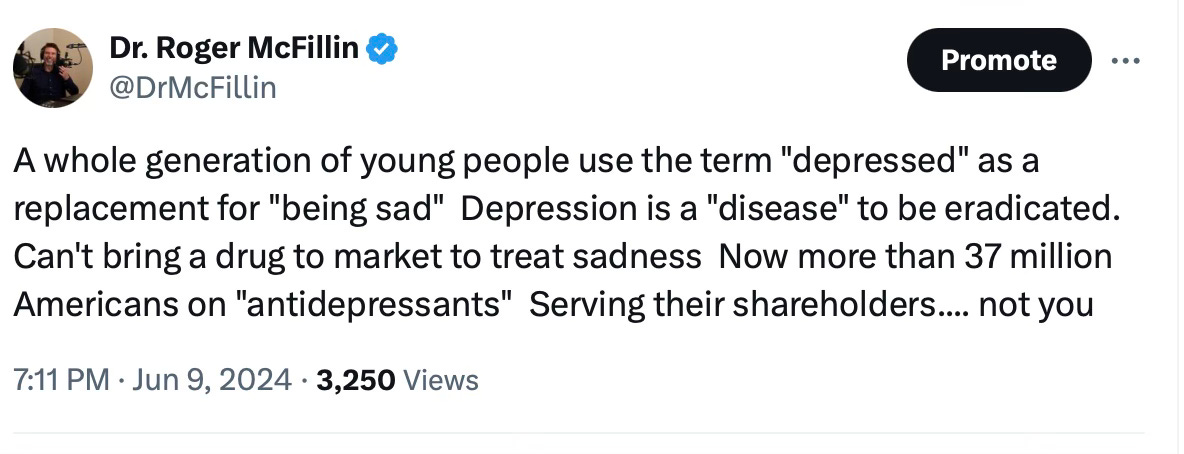
The word “sad” has all but vanished from our lexicon, replaced by the catch-all term “depression” – a linguistic sleight of hand that medicalizes every shade of human sorrow, from loneliness to anxiety, from fear to disappointment. This semantic broadening has opened the floodgates for indiscriminate prescribing of “antidepressant” drugs, extending far beyond their original purpose to treat clinical depression.
Today, these powerful drugs are doled out for an alarming array of off-label conditions: gastrointestinal issues, fibromyalgia, grief, chronic pain, and eating disorders, to name but a few. This prescription epidemic is built not on scientific evidence, but on a dangerous myth – the allure of a quick fix for life’s complexities. The medical profession and mental health communities, seemingly hypnotized by the promise of “antidepressant” effects, have unwittingly become complicit in a grand experiment on human neurochemistry.
At the heart of this phenomenon lies a disturbing paradox: the very mechanism that gives these drugs their “antidepressant” label – emotional blunting – is causing more harm than good. By dampening our ability to feel, these “medications” offer a Faustian bargain: potential short-term relief from suffering at the cost of our full range of human experiences.
For those battling severe clinical depression, the trade-off of emotional blunting might seem a necessary evil. Yet paradoxically, these individuals often struggle most acutely with the very emptiness that antidepressants can exacerbate. More alarmingly, the vast majority caught up in the widening net of antidepressant prescriptions aren’t facing such severe depressive episodes. For them, the potential for permanent emotional deadening was never a consideration, let alone a risk they knowingly accepted.
Emotional Blunting is Not Mental Healthcare
In our misguided quest to eradicate pain, we’ve stumbled upon a chemical lobotomy that threatens the very essence of what makes us human. Emotional blunting, the insidious “side effect of antidepressants”, doesn’t just dull our sorrows – it extinguishes the vibrant flames of joy, love, and connection that give life its meaning.
Imagine a world painted in shades of gray, where the highs of ecstasy and the lows of despair are replaced by a monotonous, tepid middle ground. This is the reality for countless individuals trapped in the purgatory of SSRI-induced emotional blunting. They walk through life as spectators, unable to fully participate in the rich tapestry of human experience.
The medical establishment, in its haste to silence the symptoms, has forgotten a fundamental truth: pain, in all its forms, is not just an inconvenience to be eliminated. It’s a vital signal, a call to action, a catalyst for growth and change. By indiscriminately muting this signal, we’re not just treating depression – we’re risking the very essence of what makes us human.
But the consequences of this chemical flattening extend far beyond personal discomfort. Recent research has unveiled a chilling truth: SSRIs decrease affective empathy, our ability to emotionally resonate with others’ experiences. Neuroimaging reveals a reduction in activity across three crucial brain regions associated with empathy for pain. In our attempt to shield ourselves from suffering, we’ve created a generation of emotional zombies, incapable of truly connecting with the joys and sorrows of those around them.
Consider the implications for love and attachment – the very foundations of human society. How can one form deep, meaningful bonds when the heart’s strings have been chemically severed? The butterflies of new love, the warmth of familial affection, the bittersweet ache of nostalgia – all reduced to mere concepts, intellectually understood but never truly felt. In this emotional wasteland, how can we expect individuals to develop a robust sense of gender and sexual identity, both of which are intimately tied to our capacity for emotional and physical intimacy?
The cruel irony is that in our desperate bid to numb pain, we’ve numbed everything that makes life worth living. Joy becomes a faded memory, a concept understood but no longer experienced. The exhilaration of achievement, the quiet satisfaction of a beautiful sunset, the overwhelming surge of love for a newborn child – all diluted into pale imitations of their former glory.
This emotional castration strikes at the very heart of the human spirit. Our ability to feel deeply – to be moved by music, stirred by art, inspired by acts of kindness – is what separates us from machines. It’s the wellspring of creativity, the driving force behind innovation, the fuel for compassion and altruism. By chemically muting these essential aspects of our humanity, we risk creating a society of hollow individuals, going through the motions of life without ever truly living.
The consequences ripple out far beyond the individual. A populace incapable of deep emotional resonance is a populace ripe for manipulation, apathy, and moral decay. How can we expect people to fight injustice, to stand up for the oppressed, to sacrifice for the greater good, when they can no longer feel the burning indignation or overwhelming compassion that drives such actions?
In our shortsighted attempt to eliminate suffering, we’ve stumbled upon a cure far worse than the disease. The price of emotional blunting is nothing less than our humanity itself. As we continue down this perilous path, we must ask ourselves: in our quest for painlessness, are we willing to sacrifice everything that makes us human? What impact does this emotional blunting have on sexual desire and intimacy?
Post SSRI Sexual Dysfunction (PSSD)
Imagine a world where the very essence of your being – your capacity for intimacy, pleasure, and connection – is suddenly and inexplicably stripped away. This isn’t the plot of a dystopian novel; it’s the harsh reality for countless individuals suffering with Post-SSRI Sexual Dysfunction (PSSD), a hidden epidemic born from our society’s pill-popping approach to mental health.
A vibrant libido isn’t just about carnal pleasure; it’s the body’s barometer of vitality, a complex symphony of physical, hormonal, and psychological factors humming in harmony. But for those struck by PSSD, this life-affirming melody is replaced by a deafening silence.
PSSD is the pharmaceutical industry’s dirty little secret, a Pandora’s box of sexual side effects that persist long after the last antidepressant pill is swallowed. We’re talking about a cruel trifecta of desire destroyed, genitals numbed, and an inability to orgasm.
The numbers are staggering – up to 73% of patients dancing with these serotonin-enhancing devils report one or more of these bedroom-killing effects. That’s not a side effect; that’s a full-blown assault on human sexuality.
But here’s where it gets truly Kafkaesque: PSSD doesn’t play by the rules. It doesn’t fade away when you kick the meds to the curb. No, it sets up shop in your nervous system, potentially rewiring your sexual circuitry for years – or even indefinitely. Imagine trying to rebuild your life post-depression, only to find that your capacity for one of life’s most fundamental joys has been carpet-bombed into oblivion.
The medical community, in its infinite wisdom, largely turns a blind eye to this sexual holocaust. PSSD sufferers are left adrift in a sea of misdiagnoses and dismissals, their anguish compounded by the very professionals sworn to help them.
As for the root cause of this sexual sabotage? The jury’s still out. Some point to a chemical lobotomy of the brain’s pleasure centers, others to a genetic vandalism that silences the body’s sexual whispers. But while the white coats scratch their heads, real people are left struggling with shattered relationships, crippled self-esteem, and a quality of life that’s been gutted like a fish.
We stand at a critical juncture in mental health care, facing a silent epidemic that threatens the very essence of human experience. Post-SSRI Sexual Dysfunction (PSSD) is not just a side effect – it’s a life sentence of emotional and sexual numbness that demands immediate recognition and action.
To the medical community, pharmaceutical industry, and mental health advocates: I implore you to acknowledge PSSD as a real and devastating condition. To researchers and funding bodies: We desperately need your support to unravel the mechanisms behind PSSD and develop effective treatments. Donations could be the lifeline that restores hope to countless sufferers.
But recognition and research are not enough. We must revolutionize the informed consent process for antidepressant prescription. To every potential patient, we pose this grave question:
Would you willingly sacrifice your ability to feel emotions deeply, to experience sexual desire, and to forge intimate connections, all for the possibility of short-term relief?
This is not a hypothetical – it’s the reality faced by PSSD sufferers worldwide. We demand transparency about these risks before a single pill is prescribed. The human cost of our current approach is too high, the potential for lifelong suffering too great. It’s time to prioritize true informed consent and explore alternative treatments that don’t gamble with the core of our humanity. The stakes couldn’t be higher – it’s not just about saving lives, but preserving what makes those lives worth living.
I encourage everyone to visit the PSSD Network to learn more about this debilitating condition.
Antidepressants can cause severe, sometimes irreversible, sexual dysfunction that persists even after discontinuing the medication.
Sufferers have described it as ‘chemical castration’ – a type of genital mutilation caused by antidepressants, mainly selective serotonin reuptake inhibitors (SSRIs).
The condition is known as post-SSRI sexual dysfunction (PSSD), a condition largely unrecognised, and the true incidence of which is unknown.
David Healy, psychiatrist and founder of RxISK.org said, “I saw my first patient with PSSD in 2000, a 35-year-old lady who told me that three months after stopping treatment, she could rub a hard-bristled brush across her genitals and feel nothing.”
Josef Witt-Doerring, psychiatrist and former FDA medical officer said, “This condition is so devastating that it will cause serious changes to your life and to those around you.”
It happened to Rosie
In 2020, during protracted covid lockdowns in Melbourne, 23-year-old Rosie Tilli felt an increasing sense of anxiety and depression.
Her psychiatrist prescribed a low dose of Lexapro (escitalopram), an SSRI to help Rosie calm down, assuring her that if she experienced side effects, they’d go away once she stopped the medication.
Rosie Tilli
Soon after taking the medication Rosie felt emotionally blunted, but took it as a positive sign.
“At first, I thought it was great because it felt like the medication was working. But then I couldn’t feel my emotions, I couldn’t cry, I had no sexual desire, and my genitals went numb.”
After four months, Rosie decided to slowly wean herself off the medication. Some of her symptoms improved and the fog lifted, but over the next two years her libido faded to nothing.
“It has been two years of hell. Now, I have no sexual function. I’m numb down there. I can’t have an orgasm. It feels like my soul has just been vacuumed out of my body. I feel completely asexual,” said Rosie.
She sought help from various professionals, but none believed it could be the antidepressant because the drug had already left her system. They concluded it was all in her mind.
Rosie went to a local youth centre for help, but they ended up sectioning her under the Mental Health Act with an Involuntary Treatment Order, insisting she take antipsychotic medication.
“I refused to take an antipsychotic because I knew I wasn’t psychotic. Instead, they forced me to take another antidepressant against my will in order to leave the facility,” said Rosie.
“It was the most traumatic thing I’ve ever been through in my life. I felt helpless and my parents just looked on and said, ‘trust the professionals, they know what they are doing’.”
In her clinical notes, the doctors wrote that “Rosie exhibits fixated beliefs of a delusional intensity about ongoing sexual side effects from Lexapro”.
“One psychologist actually asked me if I’d tried seeing a male sex worker to help bring back my libido. I was shocked. They said it would reduce my anxiety and help me get in touch with my body,” said Rosie.
“I’m chemically castrated, and no one believes me. In retrospect, my original anxiety was not even a problem compared to this. This has absolutely ruined my quality of life. I feel trapped inside my own body,” she added.
Doctors don’t get it
“Most doctors are not familiar with enduring side effects following antidepressants and believe side effects end after the drug is discontinued,” said Witt-Doerring.
“There’s a lot of shame wrapped up in sexual functioning, especially in young persons. Even older persons don’t want to talk about it and so they’re not reporting it, or they are minimising the sexual aspects of their symptoms to their doctors,” he added.
Healy says PSSD is often dismissed as the person’s ‘underlying depression’ and patients are gaslighted by their doctors leading to repeated trauma.
“I’ve known many patients who’ve gone on to commit suicide because of the condition. Others have asked for referrals to Dignitas, which is access to assisted dying in Switzerland,” said Healy.
PSSD has been discussed in the medical literature for about 15 years, but very few studies focus on the issue.
In a study from 2001 involving >1000 patients with no previous history of sexual problems, 59% reported sexual dysfunction after commencing an antidepressant. For the five most commonly used drugs, 46% experienced no orgasm or ejaculation.
A 19-year retrospective cohort analysis recently published in the Annals of General Psychiatry, found that 1 in 216 males taking a serotonergic antidepressant (80% took an SSRI) experienced erectile dysfunction long after discontinuing their medication.
Sufferers have gone to extreme lengths to find a treatment, or even an explanation, for their condition.
Some have had biopsies to see if the medication has damaged their sensory nerves – others have had plasmapheresis, to mop up rogue antibodies in their system.
None of it works.
“The truth is, there’s no unifying, readily agreed upon cause for why these people are experiencing these symptoms. It remains unknown,” said Witt-Doerring.
Drug regulators
In 2018, Healy led a group of physicians and researchers who petitioned the US Food and Drug Administration (FDA) “to immediately require the addition of boxed warnings and precautions on the product’s label.”
Healy said the petition sought to highlight the harms of SSRIs by adding warnings about harms such as ‘genital anaesthesia’ and requested that the FDA send ‘Dear Doctor’ letters to all medical professionals about the significant public health concern these drugs pose.
However, to date, the FDA has not responded to the petition. Nor has the agency responded to follow up enquiries. Healy says he had more success with the European regulator.
In June 2019, the European Medicines Agency updated the ‘Special Warnings and Precautions’ section on the label of SSRIs to warn that sexual dysfunction can persist even after treatment stops.
In 2021, Health Canada also did a review of the evidence and “found rare cases of long-lasting sexual symptoms persisting after stopping SSRI or SNRI treatment” and updated the product label for Canadians.
“The problem is that doctors in Europe and Canada might not be checking the drug labels now that the warnings have been updated. And there were no letters sent to medical professionals to alert them of the new warnings,” said Witt-Doerring.
In Australia, the product label of Lexapro (the drug that Rosie was prescribed) does not have any warnings about permanent or long-lasting sexual dysfunction.
A spokesperson for the TGA said that the agency was aware of the actions taken by EMA and Health Canada to update the product labels in those countries. It stated:
The TGA is actively considering appropriate regulatory actions in response to our own review of the evidence, noting that the Australian PIs of some SSRI and SNRI products have already been updated by the relevant sponsors.
Lack of informed consent
“There’s a massive epidemic of a lack of informed consent,” said Witt-Doerring.
“For most people, they would want to know about reports of persistent and enduring sexual dysfunction; it would weigh on the decision for them to take this medication,” he added.
Rosies’s doctor failed to warn her about PSSD, despite EMA’s label update in 2019.
“It has been two years since I stopped the medication, and all the symptoms are progressively getting worse. I am unable to feel myself peeing, I can’t feel a crush or romantic emotions, I can’t feel love, happiness, joy, or euphoria,” said Rosie.
“I would have been OK to have difficulty with orgasm or low libido while I was on the drug, but I never thought that I could lose all sensation in my genitals, and that it would be permanent. I would never have touched the drug if I’d known it was a possibility,” she added.
A website has been dedicated to increasing awareness of PSSD and gives people the opportunity to tell their stories.
Dr. Robert Yoho MD (ret), writes brilliantly on the role of SSRIs in the mass shootings; SSRI antidepressants are insidious, poisonous, often lethal, and are promoted by mobster Pharma companies.
Lockdowns and masks may contribute, but the toxic “selective serotonin reuptake inhibitors” (SSRIs) were proven to cause violence since the 1990s when they were first studied.
Summary: SSRIs may help for severe depression, but only for a brief time.
If your depression puts you in bed full time for months and you can barely resist killing yourself, you may want to risk the drugs. If you do, you must accept the risk that the medications themselves will enable you to get up and commit suicide or harm others. For moderate depression, the drugs work poorly or not at all. For mild depression, which is their current primary use, these medications are ineffective.
The casual prescription of SSRIs is unconscionable. Allowing the pharmaceutical publicity machine to promote them for brief adjustment disorders, mild sleep problems, and even grief reactions is a travesty. I wish I could say that awareness of this situation has percolated through psychiatrists and primary care physicians. Unfortunately, industry propaganda has overwhelmed all the other narratives. In some years, SSRIs have been the most prescribed drugs, even ahead of blood pressure medications. Between 1996 and 2005, US antidepressant usage rose from 5.8 percent to 10 percent of the population, and by 2017, it was 12.7 percent.
In the U.S., an estimated 21 million American adults experienced at least one major depressive episode in 2020.1 The reported numbers for the past several years2 have consistently been highest among those aged between 18 and 25.3 However, not only is there evidence that depression is vastly overdiagnosed, but there’s also evidence showing it’s routinely mistreated.
With regard to overdiagnosis, it’s been ongoing for a long time, with one 2013 study4 finding only 38.4% of participants with clinician-identified depression actually met the DSM-4 criteria for a major depressive episode, and only 14.3% of seniors 65 and older met the criteria.
As for treatment, the vast majority are prescribed antidepressant drugs, despite the fact there’s little to no evidence to suggest they provide meaningful help, and plenty of evidence showing the harms are greater than patients are being told.
According to a 2017 study,5 1 in 6 Americans between the ages of 18 and 85 were on psychiatric drugs, most of them antidepressants, and 84.3% reported long-term use (three years or more). Out of 242 million U.S. adults, 12% were found to have filled one or more prescriptions for an antidepressant, specifically, in 2013. By 2021 in the midst of the pandemic, 1 in 4 Americans over age 18, or 50 million persons, were on prescription mental health drugs.6
According to data7 presented by a watchdog group in 2014, hundreds of thousands of toddlers are also being medicated with powerful psychiatric drugs, raising serious ethical questions, along with questions about the future mental and physical health of these children.
And, a study published in The BMJ in 20138 found that “In utero exposure to both SSRIs and non-selective monoamine reuptake inhibitors (tricyclic antidepressants) was associated with an increased risk of autism spectrum disorders, particularly without intellectual disability” in the offspring.
Studies are also shedding much needed light on the addictive nature of many antidepressants, and demonstrate that the benefits of these drugs have been overblown while their side effects — including suicidal ideation — and have been downplayed and ignored for decades, placing patients at unnecessary risk.
The Chemical Imbalance Myth
One researcher responsible for raising awareness about these important mental health issues is professor Peter C. Gøtzsche, a Danish physician-researcher and outspoken critic of the drug industry (as his book, “Deadly Medicines and Organized Crime: How Big Pharma Has Corrupted Healthcare,”9 suggests).
Gøtzsche helped found the Cochrane Collaboration in 1993 and later launched the Nordic Cochrane Centre. In 2018, he was expelled by the Cochrane governing board following the publication of a scathing critique of a Cochrane review of the HPV in which he and his coauthors pointed out several methodological flaws and conflicts of interest.
Over the past several years, Gøtzsche has published a number of scientific papers on antidepressants and media articles and a book discussing the findings. In a June 28, 2019 article,10 Gøtzsche addresses “the harmful myth” about chemical imbalances — a debunked hypothesis that continues to drive the use of antidepressants to this day. He writes, in part:11
“Psychiatrists routinely tell their patients that they are ill because they have a chemical imbalance in the brain and they will receive a drug that fixes this …
Last summer, one of my researchers and I collected information about depression from 39 popular websites in 10 countries, and we found that 29 (74%) websites attributed depression to a chemical imbalance or claimed that antidepressants could fix or correct that imbalance …
It has never been possible to show that common mental disorders start with a chemical imbalance in the brain. The studies that have claimed this are all unreliable.12
A difference in dopamine levels, for example, between patients with schizophrenia and healthy people cannot tell us anything about what started the psychosis … [I]f a lion attacks us, we get terribly frightened and produce stress hormones, but this does not prove that it was the stress hormones that made us scared.
People with psychoses have often suffered traumatic experiences in the past, so we should see these traumas as contributing causal factors and not reduce suffering to some biochemical imbalance that, if it exists at all, is more likely to be the result of the psychosis rather than its cause.13
The myth about chemical imbalance is very harmful. It makes people believe there is something seriously wrong with them, and sometimes they are even told that it is hereditary.
The result of this is that patients continue to take harmful drugs, year after year, perhaps even for the entirety of their lives. They fear what would happen if they stopped, particularly when the psychiatrists have told them that their situation is like patients with diabetes needing insulin.”
Real Cause of Depression Is Typically Ignored
According to Gøtzsche, there is no known mental health issue that is caused by an imbalance of brain chemicals. In many cases, the true cause is unknown, but “very often, it is a response to unhealthy living conditions,” he writes.14
He also cites the book,15 “Anxiety — The Inside Story: How Biological Psychiatry Got It Wrong,” written by Dr. Niall McLaren, in which the author shows that anxiety is a major factor in and trigger of most psychiatric disorders.
“A psychiatrist I respect highly, who only uses psychiatric drugs in rare cases … has said that most people are depressed because they live depressing lives,” Gøtzsche writes.
“No drug can help them live better lives. It has never been shown in placebo-controlled trials that a psychiatric drug can improve people’s lives — e.g., help them return to work, improve their social relationships or performance at school, or prevent crime and delinquency. The drugs worsen people’s lives, at least in the long run.16“
Gøtzsche rightfully points out that antipsychotic drugs create chemical imbalances; they don’t fix them. As a group, they’re also somewhat misnamed, as they do not address psychotic states. Rather, they are tranquilizers, rendering the patient passive. However, calming the patient down does not actually help them heal the underlying trauma that, in many cases, is what triggered the psychosis in the first place.
As noted in one 2012 meta-analysis17 of studies looking at childhood trauma — including sexual abuse, physical abuse, emotional/psychological abuse, neglect, parental death and bullying — and subsequent risk of psychosis:
“There were significant associations between adversity and psychosis across all research designs … Patients with psychosis were 2.72 times more likely to have been exposed to childhood adversity than controls … The estimated population attributable risk was 33% (16%-47%). These findings indicate that childhood adversity is strongly associated with increased risk for psychosis.”
Economy of Influence in Psychiatry
A related article,18 written by investigative journalist Robert Whitaker in 2017, addresses the “economy of influence” driving the use of antidepressant drugs in psychiatric treatment — and the “social injury” that results. As noted by Whitaker, mental disorders were initially categorized according to a disease model in 1980 by the American Psychiatric Association.
“We’re all familiar with the second ‘economy of influence’ that has exerted a corrupting influence on psychiatry — pharmaceutical money — but I believe the guild influence is really the bigger problem,” he writes.
Whitaker details the corruption within the APA in his book “Psychiatry Under the Influence,” one facet of which is “the false story told to the public about drugs that fixed chemical imbalances in the brain.” Other forms of corrupt behavior include:
The biased designs of clinical trials to achieve a predetermined result
Spinning results to support preconceived conclusions
Hiding poor long-term outcomes
Expanding diagnostic categories for the purpose of commercial gain
Creating clinical trial guidelines that promote drug use
In his article, Whitaker goes on to dissect a 2017 review19 published in the American Journal of Psychiatry, which Whitaker claims “defends the profession’s current protocols for prescribing antipsychotics, which includes their regular long-term use.”
As Whitaker points out, there’s ample evidence showing antipsychotic drugs worsen outcomes over the long term in those diagnosed with psychotic disorders such as schizophrenia.
The review in question, led by American psychiatrist Dr. Jeffrey A. Lieberman, was aimed at answering persistent questions raised by the mounting of such evidence. Alas, their conclusions dismissed concerns that the current drug paradigm might be doing more harm than good.
“In a subsequent press release and a video for a Medscape commentary, Lieberman has touted it as proving that antipsychotics provide a great benefit, psychiatry’s protocols are just fine, and that the critics are ‘nefarious’ individuals intent on doing harm,” Whitaker writes.20
The Scientific Bias of Psychiatric Treatment
Five of the eight researchers listed on the review have financial ties to drug companies, three are speakers for multiple drug companies and all eight are psychiatrists, “and thus there is a ‘guild’ interest present in this review, given that they are investigating whether one of their treatments is harmful over the long-term,” Whitaker notes.21
Not surprisingly, the review ignored studies showing negative effects, including studies showing antipsychotics have a detrimental effect on brain volume. What’s more, while withdrawal studies support the use of antipsychotics as maintenance therapy over the long term, these studies do not address how the drugs affect patients’ long-term health.
“They simply reveal that once a person has stabilized on the medication, going abruptly off the drug is likely to lead to relapse,” Whitaker writes.22 “The focus on long-term outcomes, at least as presented by critics, provides evidence that psychiatry should adopt a selective-use protocol.
If first-episode patients are not immediately put on antipsychotics, there is a significant percentage that will recover, and this ‘spontaneous recovery’ puts them onto a good long-term course. As for patients treated with the medications, the goal would be to minimize long-term use, as there is evidence that antipsychotics, on the whole, worsen long-term outcomes.”
Vast Majority of Psychotic Patients Are Harmed, Not Helped
In his deconstruction of Lieberman’s review, Whitaker details how biased thinking influenced the review’s conclusions. It’s a rather long article, but well worth reading through if you want to understand how a scientific review can be skewed to accord with a preconceived view.
Details I want to highlight, however, include findings relating to the number needed to treat (NNT) and the percentage of patients harmed by the routine use of antipsychotic drugs as a first-line treatment.
As noted by Whitaker, while placebo-controlled studies reveal the effectiveness of a drug compared to an inert substance, they do not effectively reveal the ratio of benefit versus harm among the patient population. NNT refers to the number of patients that have to take the drug in order to get one positive response.
A meta-analysis cited in Lieberman’s review had an NNT of 6, meaning that six patients must take the drug in order for one to benefit from the treatment. The remaining five patients — 83% — are potentially harmed by the treatment. As noted by Whitaker:23
“The point … is this: reviewers seeking to promote their drug treatment as effective will look solely at whether it produces a superior response to placebo. This leads to a one-size-fits-all protocol.
Reviewers that want to assess the benefit-harm effect of the treatment on all patients will look at NNT numbers. In this instance, the NNT calculations argue for selective use of the drugs …”
Antidepressants Are Not Beneficial in the Long Term
While typically not as destructive as antipsychotics, antidepressants also leave a trail of destruction in their wake. A systematic review24 by Gøtzsche published in 2019 found studies assessing harm from selective serotonin reuptake inhibitors (SSRIs) fail to provide a clear and accurate picture of the harms, and therefore “cannot be used to investigate persistent harms of antidepressants.”
In this review, Gøtzsche and colleagues sought to assess “harms of SSRIs … that persist after end of drug intake.” The primary outcomes included mortality, functional outcomes, quality of life and core psychiatric events. In all, 22 papers on 12 SSRI trials were included. Gøtzsche found several distinct problems with these trials. For starters, only two of the 12 trials had a drop-out rate below 20%.
Gøtzsche and his team also note that “Outcome reporting was less thorough during follow-up than for the intervention period and only two trials maintained the blind during follow-up.” Importantly, though, all of the 22 papers came to the conclusion that “the drugs were not beneficial in the long term.”
Another important finding was that all trials either “reported harms outcomes selectively or did not report any,” and “Only two trials reported on any of our primary outcomes (school attendance and number of heavy drinking days).”
A few years later, in April 2022, a study using data from the United States’ Medical Expenditures Panel Survey for patients who had depression found, “The real-world effect of using antidepressant medications does not continue to improve patients” health-related quality of life (HRQoL) over time.25
Antidepressants Are More Addictive Than Admitted
In a June 4, 2019, article,26 “The Depression Pill Epidemic,” Gøtzsche writes that antidepressant drugs:
“… do not have relevant effects on depression; they increase the risk of suicide and violence; and they make it more difficult for patients to live normal lives.27 They should therefore be avoided.
We have been fooled by the drug industry, corrupt doctors on industry payroll, and by our drug regulators.28 Surely, many patients and doctors believe the pills are helpful, but they cannot know this, because people tend to become much better with time even if they are not treated.29
This is why we need placebo-controlled trials to find out what the drugs do to people. Unfortunately, virtually all trials are flawed, exaggerate the benefits of the drugs, and underestimate their harms.”30
Addictive Nature of Antidepressants Skews Results
In his article,31 Gøtzsche reviews several of the strategies used in antidepressant drug trials to exaggerate benefits and underestimate the harms. One little-known truth that helps skew study results in the drug’s favor is the fact that antidepressants tend to be far more addictive than officially admitted. He explains how this conveniently hides the skewing of results as follows:32
“Virtually all patients in the trials are already on a drug similar to the one being tested against placebo. Therefore, as the drugs are addictive, some of the patients will get abstinence symptoms … when randomized to placebo …
These abstinence symptoms are very similar to those patients experience when they try to stop benzodiazepines. It is no wonder that new drugs outperform the placebo in patients who have experienced harm as a result of cold turkey effects.
To find out how long patients need to continue taking drugs, so-called maintenance (withdrawal) studies have been carried out, but such studies also are compromised by cold turkey effects. Leading psychiatrists don’t understand this, or they pretend they don’t.
Most interpret the maintenance studies of depression pills to mean that these drugs are very effective at preventing new episodes of depression and that patients should therefore continue taking the drugs for years or even for life.”
Scientific Literature Supports Reality of User Complaints
Over the years, several studies on the dependence and withdrawal reactions associated with SSRIs and other psychiatric drugs have been published, including the following:
•In a 2011 paper33 in the journal Addiction, Gøtzsche and his team looked at the difference between dependence and withdrawal reactions by comparing benzodiazepines and SSRIs. Benzodiazepines are known to cause dependence, while SSRIs are said to not be addictive.
Despite such claims, Gøtzsche’s team found that “discontinuation symptoms were described with similar terms for benzodiazepines and SSRIs and were very similar for 37 of 42 identified symptoms described as withdrawal reactions,” which led them to conclude that:
“Withdrawal reactions to selective serotonin re‐uptake inhibitors appear to be similar to those for benzodiazepines; referring to these reactions as part of a dependence syndrome in the case of benzodiazepines, but not selective serotonin re‐uptake inhibitors, does not seem rational.”
•Two years later, in 2013, Gøtzsche’s team published a paper34 in the International Journal of Risk & Safety in Medicine, in which they analyzed “communications from drug agencies about benzodiazepine and SSRI withdrawal reactions over time.”
By searching the websites of drug agencies in Europe, the U.S., U.K. and Denmark, they found that it took years before drug regulators finally acknowledged the reality of benzodiazepine dependence and SSRI withdrawal reactions and began informing prescribers and patients about these risks.
A significant part of the problem, they found, is that drug agencies rely on spontaneous reporting of adverse effects, which “leads to underestimation and delayed information about the problems.”
In conclusion, they state that “Given the experience with the benzodiazepines, we believe the regulatory bodies should have required studies from the manufacturers that could have elucidated the dependence potential of the SSRIs before marketing authorization was granted.”
•A 2019 paper35 in the Epidemiology and Psychiatric Sciences journal notes “It took almost two decades after the SSRIs entered the market for the first systematic review to be published.” It also points out that reviews claiming withdrawal effects to be mild, brief in duration and rare “was at odds with the sparse but growing evidence base.”
In reality, “What the scientific literature reveals is in close agreement with the thousands of service user testimonies available online in large forums. It suggests that withdrawal reactions are quite common, that they may last from a few weeks to several months or even longer, and that they are often severe.”
Antidepressants Increase Your Risk of Suicide and Violence
In his June 2019 article,36 Gøtzsche also stresses the fact that antidepressants can be lethal. In one of his studies,37 published in 2016, he found antidepressants “double the occurrence of events that can lead to suicide and violence in healthy adult volunteers.”
Other research38 has shown they “increase aggression in children and adolescents by a factor of 2 to 3 — an important finding considering the many school shootings where the killers were on depression pills,” Gøtzsche writes.
In middle-aged women with stress urinary incontinence, the selective serotonin and norepinephrine reuptake inhibitor (SNRI) duloxetine, which is also used to treat incontinence, has been shown to double the risk of a psychotic episode and increase the risk of violence and suicide four to five times,39 leading the authors to conclude that harms outweighed the benefits.
“I have described the dirty tricks and scientific dishonesty involved when drug companies and leading psychiatrists try convincing us that these drugs protect against suicide and other forms of violence,”40 Gøtzsche writes.41 “Even the FDA was forced to give in when it admitted in 2007, at least indirectly, that depression pills can cause suicide and madness at any age.
There is no doubt that the massive use of depression pills is harmful. In all countries where this relationship has been examined, the sharp rise in disability pensions due to psychiatric disorders has coincided with the rise of psychiatric drug usage, and depression pills are those which are used the most by far. This is not what one would expect if the drugs were helpful.”
Drugmaker Lied About Paxil’s Suicide Risk
In 2017, Wendy Dolin was awarded $3 million by a jury in a lawsuit against GlaxoSmithKline, the maker of Paxil. Dolin’s husband committed suicide six days after taking his first dose of a Paxil generic, and evidence brought forth in the case convincingly showed his suicide was the result of the drug, not emotional stress or mental illness.42
The legal team behind that victory, Baum Hedlund Aristei Goldman, also represented other victims of Paxil-induced violence and death. At the time, attorney R. Brent Wisner said:43
“The Dolin verdict sent a clear message to GSK and other drug manufacturers that hiding data and manipulating science will not be tolerated … If you create a drug and know that it poses serious risks, regardless of whether consumers use the brand name or generic version of that drug, you have a duty to warn.”
GSK’s own clinical placebo-controlled trials actually revealed subjects on Paxil had nearly nine times the risk of attempting or committing suicide than the placebo group. To gain drug approval, GSK misrepresented this shocking data, falsely reporting a higher number of suicide attempts in the placebo group and deleting some of the suicide attempts in the drug group.
An internal GSK analysis of its suicide data also showed that “patients taking Paxil were nearly seven times more likely to attempt suicide than those on placebo,” Baum Hedlund Aristei Goldman reports, adding:44
“Jurors in the Dolin trial also heard from psychiatrist David Healy, one of the world’s foremost experts on Paxil and drugs in its class … Healy told the jurors that Paxil and drugs like it can create in some people a state of extreme ’emotional turmoil’ and intense inner restlessness known as akathisia …
‘People have described it like a state worse than death. Death will be a blessed relief. I want to jump out of my skin,’ Dr. Healy said. Healthy volunteer studies have found that akathisia can happen even to people with no psychiatric condition who take the drug …
Another Paxil side effect known to increase the risk of suicide is emotional blunting … apathy or emotional indifference … [E]motional blunting, combined with akathisia, can lead to a mental state in which an individual has thoughts of harming themselves or others, but is ‘numbed’ to the consequences of their actions. Drugs in the Paxil class can also cause someone to ‘go psychotic, become delirious,’ Dr. Healy explained.”
Hundreds of Thousands of Toddlers on Psychiatric Drugs
Considering the many serious psychological and physical risks associated with psychiatric drugs, it’s shocking to learn that hundreds of thousands of American toddlers are on them. In 2014, the Citizens Commission on Human Rights, a mental health watchdog group, highlighted data showing that in 2013:45
274,000 babies aged 1 and younger were given psychiatric drugs — Of these, 249,699 were on anti-anxiety meds like Xanax; 26,406 were on antidepressants such as Prozac or Paxil, 1,422 were on ADHD drugs such as Ritalin and Adderall, and 654 were on antipsychotics such as Risperdal and Zyprexa
In the toddler category (2- to 3-year-olds), 318,997 were on anti-anxiety drugs, 46,102 were on antidepressants, 10,000 were prescribed ADHD drugs and 3,760 were on antipsychotics
Among children aged 5 and younger, 1,080,168 were on psychiatric drugs
These are shocking figures that challenge logic. How and why are so many children, babies even, on addictive and dangerously mind-altering medications? Considering these statistics are 6 years old, chances are they’re even higher today. Just what will happen to all of these youngsters as they grow up? As mentioned in the article:46
“When it comes to the psychiatric drugs used to treat ADHD, these are referred to as ‘kiddie cocaine’ for a reason. Ritalin (methylphenidate), Adderall (amphetamine) and Concerta are all considered by the federal government as Schedule II drugs — the most addictive.
ADHD drugs also have serious side effects such as agitation, mania, aggressive or hostile behavior, seizures, hallucinations, and even sudden death, according to the National Institutes of Health …
As far as antipsychotics, antianxiety drugs and antidepressants, the FDA and international drug regulatory agencies cite side effects including, but not limited to, psychosis, mania, suicidal ideation, heart attack, stroke, diabetes, and even sudden death.”
Children Increasingly Prescribed Psych Drugs Off-Label
Making matters even worse, recent research shows the number of children being prescribed medication off-label is also on the rise. An example offered by StudyFinds.org,47 which reported the findings, is “a doctor recommending antidepressant medication for ADHD symptoms.”
The study,48 published in the journal Pediatrics, looked at trends in off-label drug prescriptions made for children under the age of 18 by office-based physicians between 2006 and 2015. Findings revealed:
“Physicians ordered ≥1 off-label systemic drug at 18.5% of visits, usually (74.6%) because of unapproved conditions. Off-label ordering was most common proportionally in neonates (83%) and in absolute terms among adolescents (322 orders out of 1000 visits).
Off-label ordering was associated with female sex, subspecialists, polypharmacy, and chronic conditions. Rates and reasons for off-label orders varied considerably by age. Relative and absolute rates of off-label orders rose over time. Among common classes, off-label orders for antihistamines and several psychotropics increased over time …
US office-based physicians have ordered systemic drugs off label for children at increasing rates, most often for unapproved conditions, despite recent efforts to increase evidence and drug approvals for children.”
The researchers were taken aback by the findings, and expressed serious concern over this trend. While legal, many of the drugs prescribed off-label have not been properly tested to ensure safety and efficacy for young children and adolescents.
As noted by senior author Daniel Horton, assistant professor of pediatrics and pediatric rheumatologist at Rutgers Robert Wood Johnson Medical School, “We don’t always understand how off-label medications will affect children, who don’t always respond to medications as adults do. They may not respond as desired to these drugs and could experience harmful effects.”
In 2020 mental health experts and reviewers were still at-odds over prescribing these drugs for children, yet hesitant to call a stop to it:49
“Antidepressants are prescribed for the treatment of a number of psychiatric disorders in children and adolescents, however there is still controversy about whether they should be used in this population …
Treatment decisions should be tailored to patients on an individual basis, so we recommend clinicians, patients and policy makers to refer to the evidence provided in the present meta-review and make decisions about the use of antidepressants in children and adolescents taking into account a number of clinical and personal variables.”
Educate Yourself About the Risks
If you, your child or another family member is on a psychiatric drug, I urge you to educate yourself about the true risks and to consider switching to safer alternatives. When it comes to children, I cannot fathom a situation in which a toddler would need a psychiatric drug and I find it shocking that there are so many doctors out there that, based on a subjective evaluation, would deem a psychiatric drug necessary.
Dr. Peter Gotzsche has created a controversy and sparked criticism over what he sees as a damaging over-prescription of drugs by psychiatrists.
Gotzsche recently compiled a list of ten common myths held not only by the general public, but also trained psychiatrists concerning the safety of psychotropic drugs, and the rationale for their use.
As an internist, Gotzsche remarked that since he was outside of the political orthodoxy of the world of psychiatric medicine, he was free to express what he believed to be the sentiments of many psychiatrists who must remain quiet in their objections for fear of hurting their careers.
1. Mental diseases are caused by a chemical imbalance in the brain
“We have no idea about which interplay of psychosocial conditions, biochemical processes, receptors and neural pathways that lead to mental disorders and the theories that patients with depression lack serotonin and that patients with schizophrenia have too much dopamine have long been refuted.”
2. It’s easy to go off antidepressants any time you want to
Here, Gotzsche points to drug trails involving agoraphobics and people suffering from panic disorder, whom were not depressed. Fifty percent of the patients found it difficult to come off antidepressants even though they were gradually reducing their doses. It could not be that the patients saw their depression returning, as they were not depressed to begin with.
3. Psychotropic drugs are to mental illness as insulin is to diabetes
“When you give insulin to a patient with diabetes, you give something the patient lacks, namely insulin. Since we’ve never been able to demonstrate that a patient with a mental disorder lacks something that people who are not sick don’t lack, it is wrong to use this analogy.”
4. Psychotropic drugs reduce the number of chronically ill patients
“In 1987, just before the newer antidepressants (SSRIs or happy pills) came on the market, very few children in the United States were mentally disabled. Twenty years later it was over 500,000, which represents a 35-fold increase. The number of disabled mentally ill has exploded in all Western countries.”
5. SSRIs don’t cause suicide in children and adolescents
“The companies and the psychiatrists have consistently blamed the disease when patients commit suicide. It is true that depression increases the risk of suicide, but happy pills increase it even more, at least up to about age 40, according to a meta-analysis of 100,000 patients in randomized trials performed by the US Food and Drug Administration.”
6. SSRIs don’t have side effects
“Patients care less about the consequences of their actions, lose empathy towards others, and can become very aggressive. In school shootings in the United States and elsewhere a striking number of people have been on antidepressants.”
7. SSRIs are not addictive
“The worst argument I have heard about the pills not causing dependency is that patients do not require higher doses. Shall we then also believe that cigarettes are not addictive? The vast majority of smokers consume the same number of cigarettes for years.”
8. The prevalence in depression has increased a lot in recent history
Gotzsche points out that this is difficult if not impossible to determine, as the criteria for being diagnosed as clinically depressed has been drastically lowered over the last 50 years.
9. The main problem is not overtreatment, but undertreatment
“In a 2007 survey, 51% of the 108 psychiatrists said that they used too much medicine and only 4 % said they used too little. In 2001-2003, 20% of the US population aged 18-54 years received treatment for emotional problems.”
10. Antipsychotics prevent brain damage
“Some professors say that schizophrenia causes brain damage and that it is therefore important to use antipsychotics. However, antipsychotics lead to shrinkage of the brain, and this effect is directly related to the dose and duration of the treatment.”
As for a solution, Gotzsche states that he is not against the use of psychiatric drugs, but that doctors must do everything that can before resorting to their use, and only then as a short-term solution.
When I work in the hospital, I frequently see elderly people who are on five, ten, fifteen, or even twenty drugs simultaneously. Invariably, one or more of these drugs is an anti-depressant. This absurd overuse of medications, an issue known as polypharmacy, is one of the biggest health problems facing elderly people today. Anti-depressants are one of the main drug classes contributing to polypharmacy.
With so many people taking anti-depressants, you would think that they must at the very least be effective. And safe. Why else would so many millions of people be taking them on a daily basis? Why else would doctors prescribe them so freely?
The most commonly prescribed type of anti-depressant is the selective serotonin reuptake inhibitor (SSRI). Examples of this type of drug include sertraline (a.k.a. zoloft), escitalopram (a.k.a. cipralex), and fluoxetine (a.k.a. prozac). SSRI’s increase serotonin signalling in the brain, which is hypothetically a good thing for people who are depressed. They are generally considered to have the best balance of efficacy and safety of any anti-depressant drug, which is why they are the first line therapy.
So, how effective are SSRI’s at treating depression?
A systematic review and meta-analysis was published in BMC Psychiatry in 2017 that sought to answer this question. The review was funded by the Danish government. It identified 131 randomized placebo-controlled trials investigating SSRI’s as a treatment for depression in adults, with a total of 27,422 participants, and meta-analyzed them (i.e. added all their results together to create one big “meta” trial – this gives a more reliable result than the individual trials can provide).
Before we get in to the results, we need to quickly discuss the Hamilton Rating Scale for Depression (HDRS). The HDRS is the scale most commonly used to assess severity of depression in studies, and also to assess how the severity changes over time. It is a 52 point scale, so a score of 52 is as bad as it can get. A score below eight is considered normal (i.e. not depressed). 8 to 13 is considered to be “mild” depression. 14-18 is considered to be “moderate” depression. 19-22 is considered to be “severe” depression, and anything from 23 and up is considered to be “very severe” depression.
The authors of the review decided, before analyzing the data, that anything less than an average reduction of three points on the scale would be considered a negative result. Personally I think that this is a bit generous. I find it hard to believe that anyone would be able to notice a three point reduction on a 52 point scale. I would have set the threshold higher, at more like six points at the very least. One article published back in 2015 came to the conclusion that people are unable to detect anything less than a 7 point difference on the 52 point Hamilton scale. But as we shall soon see, setting the threshold higher wouldn’t have made a difference anyway. So, let’s get to the results.
Overall, SSRI’s resulted in a 1.94 point greater reduction on the 52 point HDRS scale than placebo. Even when only trials of people with very severe depression (a score of 23 or higher) were included, the improvement over placebo was still only 2.69 points.
So, SSRI’s were not able to get over even the generously low bar set by the reviewers. And let’s remember that most of the studies included in the analysis were industry funded, and industry funded studies usually show a bigger benefit than is seen in reality, so it is likely that the real effect is even smaller than was found in the systematic review.
In other words, SSRI’s are not effective as anti-depressants. Considering that they are currently the first line drug therapy for depression, that would seem to be quite a big problem. And before you suggest that we should use non-SSRI anti-depressants instead, like for example tricyclics, I would note that these have not been shown to be markedly more effective than SSRI’s in head-to-head comparisons. Otherwise we’d be using them as the first line therapy, not SSRI’s.
What about safety? Did SSRI’s cause any serious adverse events?
2.7% of participants in the SSRI arm developed a serious adverse event, as compared with 2.1% in the placebo arm. That is a 0.6% absolute difference, which would mean that roughly one in 170 people treated with an SSRI will suffer a serious adverse event as a result of the treatment. Note that the definition of a serious adverse event is an event that causes death, significant risk of death, disability, and/or hospitalization. In other words, “serious” is serious. So even a small increase in serious adverse events is something that needs to be taken quite, well, seriously.
Medical treatments should ideally result in a decrease in serious adverse events. They certainly should not cause an increase. A truly effective anti-depressant would not just make people feel better, it would also make them less likely to try to commit suicide, which would result in an overall reduction in serious adverse events. No such signal was seen here. Even if you look just at suicide attempts, rather than at adverse events overall, there was no signal that SSRI’s decrease their frequency.
Note that the trials in the review were generally of healthy people under 65 years of age. Frail elderly people treated with SSRI’s will likely experience serious adverse events at a much higher rate than that found here.
Speaking of frail elderly people, in particular those living in nursing homes, I want to take the opportunity to point out that they are frequently the heaviest users of anti-depressants. So you would think that there would be a lot of research showing that anti-depressants are useful to give to the frail elderly… Well, having seen that the evidence doesn’t support using anti-depressants in younger people, you might be a bit skeptical by now. A systematic review was published in the Journal of the American Medical Directors Association in 2012, that sought to determine how beneficial anti-depressants are when used as a treatment for depression in people over the age of 65 who are living in nursing homes. The review was funded by the US government.
Two(!) randomized controlled trials were identified that compared anti-depressants with placebo in nursing home residents, with a total of 55(!) participants. It’s pretty shocking that the evidence base is so small, when you consider that nursing home residents are such heavy user of anti-depressants. Basically, when we (doctors) use these drugs on elderly nursing home residents, we have pretty much zero idea what we’re doing, because there is so little evidence.
Neither of the two trials found any benefit to treating nursing home residents with anti-depressants (although to be fair, they were so small that I wouldn’t have expected them to find anything – they were statistically underpowered). The number of participants was far too small to gain any kind of estimate of the prevalence of serious adverse events, although I think it’s fair to assume, as mentioned above, that it would be much higher in this group than in the younger healthier group included in the studies in the previous review.
I’m mainly bringing this tiny systematic review up to illustrate how atrociously small the knowledge base often is when it comes to the effects of drugs on the frail elderly.
What conclusions can we draw these systematic reviews?
Anti-depressant drugs are ineffective against depression. The harms of these drugs clearly outweigh the practically non-existent benefits. That is true for everyone, but especially so for the frail elderly who are at much higher risk of side effects than the general population. In light of this information, which has now been in the public domain for at least a few years, you would expect large campaigns to get doctors to stop prescribing these drugs. Funnily enough, that hasn’t happened yet.
In a small phase two trial, Imperial College researchers have found that psilocybin, the active ingredient of magic mushrooms, is at least as effective as pharmaceutical medication at treating depression.
In their admittedly small scale study, some 59 volunteers with depression were split into two groups.
One group was given a daily dosage of the widely used antidepressant escitalopram (AKA Lexapro, Cipralex, and others). They were also administered very weak doses of psilocybin twice, three weeks apart, over the course of the study.
The second group received much stronger doses of psilocybin, with a placebo instead of antidepressant medication.
After six weeks, the self-reported results from the patients suggested the psilocybin was just as effective as the pharmaceutical, and in many cases showed a slightly bigger – but ultimately statistically insignificant – improvement in symptoms.
The research team, led by Imperial College London neuroscientist Robin Carhart‑Harris, also highlighted the limited timeframe of the study as playing an important factor in the results, and suggested that a longer study might yield different results, possibly favouring pharmaceutical intervention.
The scientists were also quick to highlight the importance of guided psychotherapy to manage any hallucinatory experiences among the trial volunteers, lest members of the public attempt to self-medicate.
“We strongly believe that the … psychotherapy component is as important as the drug action,” Carhart-Harris said.
“With a psychedelic it is more about a release of thought and feeling that, when guided with psychotherapy, produces positive outcomes.”
Some five patients taking the SSRI stopped or reduced their doses due to negative effects, but none in the psilocybin group did. Furthermore, volunteers with a family history of psychosis were excluded from the trial, which may have tipped the results positively in favour of the psychedelic intervention.
Previous research has found that psilocybin treatment had fewer side effects and had an almost immediate impact compared with common antidepressant medication, such as selective serotonin reuptake inhibitors (SSRIs).
SSRIs are often perceived to blunt emotional response, whereas the psilocybin had the opposite effect, according to fMRI scans which showed an apparent increase in emotional connections within the patients’ brains.
There are often a slew of side effects associated with SSRIs, ranging from lethargy and mood swings to so-called ‘brain zaps’, or the sensation of electrical shocks in the brain associated with the use (or discontinuation) of the medication.
SSRIs also typically have a lead time of up to six weeks to reach full effect, while ongoing side effects which can persist beyond this initial phase include insomnia, weight gain, and persistent fatigue, among others.
Further, the efficacy of such antidepressants can wane for some patients over time, so breakthroughs in the field of psychedelic treatments may provide huge relief for patients with adverse reactions to the more common interventions – though it is still too early to make any sweeping assertions about psilocybin treatments among the wider populace.
Still, with an estimated 800 million people with mental health disorders worldwide, new treatment options could soon be available.
Stephen Paddock, Omar Mateen, Gavin Long, Eric Harris, Dylan Klebold, James Holmes, and now, Nikolas Cruz all have one thing in common other than the mass murders they carried out. They were all reportedly taking prescription drugs which alter their state of mind and carry a host of negative side effects ranging from aggression and suicide to homicidal ideation.
Suicide, birth defects, heart problems, hostility, violence, aggression, hallucinations, self-harm, delusional thinking, homicidal ideation, and death are just a few of the side effects caused by the medication taken by the monsters named above, some of which are known as SSRIs (selective serotonin reuptake inhibitors), or antidepressants.
There have been 150 studies in 17 countries on antidepressant-induced side effects. There have been 134 drug regulatory agency warnings from 11 countries and the EU warning about the dangerous side effects of antidepressants.
Despite this deadly laundry list of potential reactions to these medications, their use has skyrocketed by 400% since 1988. Coincidentally, as antidepressant use went up, so did mass shootings.
The website SSRIstories.org has been documenting the link between selective serotonin reuptake inhibitors (SSRIs) and violence. On the website is a collection of over 6,000 stories that have appeared in local media (newspapers, TV, scientific journals) in which prescription drugs were mentioned and in which the drugs may be linked to a variety of adverse outcomes including most of the mass shootings which have taken place on US soil.
As the Citizens Commission on Human Rights notes, before the late nineteen-eighties, mass shootings and acts of senseless violence were relatively unheard of. Prozac, the most well known SSRI (selective serotonin reuptake inhibitor) antidepressant, was not yet on the market. When Prozac did arrive, it was marketed as a panacea for depression which resulted in huge profits for its manufacturer Eli Lilly. Of course other drug companies had to create their own cash cow and followed suit by marketing their own SSRI antidepressants.
Subsequently, mass shootings and other violent incidents started to be reported. More often than not, the common denominator was that the shooters were on an antidepressant, or withdrawing from one. This is not about an isolated incident or two but numerous shootings.
The issue of psychotropic medication playing a role in mass shootings is not some conspiracy theory. It is very real and the drug manufacturers list these potentially deadly side effects on the very inserts of every one of these drugs. But the mainstream media and the government continue to ignore or suppress this information. Why is that?
In a clear example of how beholden mainstream media is to the pharmaceutical industries who manufacture and market these drugs, FOX News’ Sean Hannity was recorded this week, blatantly cutting off a reporter who dared mention Nikolas Cruz’s reported association with antidepressants.
In a news segment this week, Hannity was interviewing radio talk show host, Gina Loudon who tried to bring up Cruz’s association with SSRIs.
“I think we have to take a hard look at one thing we’re not talking about yet too, Sean, and that is psychotropic drugs,” Loudon says.
“My guess is, we’ll find out like most of these shooters…..” she says, just before Hannity jumps in to silence her.
Hannity then shuts up Loudon and moves to the doctor next to her. Just like that, all talk which was implicating big pharma in their role in mass shootings was effectively silenced.
It is no secret that the pharmaceutical industry wields immense control over the government and the media. It is their control which keeps any negative press about their dangerous products from airing. However, most people likely do not know the scope of this control.
As Mike Papantonio, attorney and host of the international television show America’s Lawyer, explains, with the exception of CBS, every major media outlet in the United States shares at least one board member with at least one pharmaceutical company. To put that into perspective: These board members wake up, go to a meeting at Merck or Pfizer, then they have their driver take them over to a meeting with NBC to decide what kind of programming that network is going to air.
In the report below, Papantonio explains how the billions of dollars big pharma gives to mainstream media outlets every year is used to keep them subservient and complicit in covering up the slew of deadly side effects from their products.
How much longer will we allow these billion-dollar drug companies to control the narrative and not let this conversation take place? How many more mass shootings will take place before Americans wake up to this reality?
Next month, hundreds across the country will participate in “Out of the Darkness” walks to raise awareness about suicide and to support the American Foundation for Suicide Prevention (AFSP).
AFSP and similar groups like the National Alliance on Mental Illness (NAMI) and Active Minds claim there are “stigmas” and “barriers” to treatment for mental illness and there is not enough “awareness.” Two facts are missing in their messaging.
First, with as much as a fourth of some U.S. populations on antidepressants and ubiquitous quizzes and ads for them, there is neither a lack of “awareness” ––or are the drugs working. Why are suicides at an all time high at the same time psychoactive drug use is at an all time high?
Secondly, the groups are funded by Pharma to increase drug use and are widely considered unethical front groups, also called astroturf.
The American Foundation for Suicide Prevention, founded in 1987, is steeped in Pharma money. In 2008, AFSP merged with the Suicide Prevention Action Network USA or SPAN which had announced in 2004 that “SPAN USA’s efforts to develop and expand its suicide survivor network received a major boost with a recent grant from Eli Lilly and Company Foundation,” and “The foundation generously provided funding to support training, education and collaborative opportunities for SPAN USA’s existing network and enable further expansion into all 50 states.” No lack of transparency there.
In AFSP’s 2009 report, its leading donors were Pharma companies and it attributes a new screening project to “funding from Eli Lilly and Co., Janssen, Solvay Pharmaceuticals Inc. and Wyeth Pharmaceuticals.” It also credits Eli Lilly for printing its brochures. No lack of transparency there, either.
In 2011, AFSP appointed psychiatrist Charles Nemeroff president of the organization until his troubles began. Nemeroff became the subject of a congressional inquiry and was found to have so much unreported Pharma income, the $9.3 million National Institutes of Health (NIH) grant to study depression that he managed was suspended, which happens rarely. He left Emory University in disgrace.
A 1999 textbook written by Nemeroff and his colleague Alan Schatzberg was found, in 2010, to be written and funded by GlaxoSmithKline. Both Nemeroff and Schatzberg remain at AFSP and are termed “leaders.”
AFSP’s 2012 annual report reveals a $100,000 donation from Forest Laboratories, and donations from Eli Lilly, Pfizer and five other Pharma companies.
“AFSP also boasts the honor of having a former president – David Shaffer – who was responsible for leading the development of the now somewhat infamous TeenScreen,” writes Mad in America. “TeenScreen is a controversial tool that Marcia Angell (Harvard Professor and former editor-in-chief of the New England Journal of Medicine)…described as, “just a way to put more people on prescription drugs.”
The now defunct TeenScreen which screened young people for early signs of depression had “ties to the pharmaceutical industry,” reported the Scientific American.
Screening and intervention are widely accepted now to be nothing but sales tools—even to the mainstream medical establishment. In “How We Do Harm,” Dr. Otis Brawley, chief medical and scientific officer of the American Cancer Society and an oncologist, devotes a chapter to how prostate screening is often done just for money sometimes with disastrous and deadly results.
AFSP’s annual report names Pharma companies Sunovion, Janssen, Forest, Pfizer and Otsuka America Pharmaceuticals as financial donors. AFSP also named Phil Satow, former Forest executive, to its Project 2025 Advisory Committee. Satow has worked for many Pharma companies and is co-founder and board chair of the very pro-drugJED Foundation.
Preventing Suicides or Causing Them?
While SSRIs can be useful in some depressions, they can also cause suicide–a fact written clearly on all their package inserts. In 2005, after meeting with parents whose children killed themselves on the drugs and public health officials, the FDA attached the following “Black Box” warning to SSRI antidepressants.
Antidepressants increased the risk compared to placebo of suicidal thinking and behavior (suicidality) in children, adolescents, and young adults in short-term studies of major depressive disorder (MDD) and other psychiatric disorders. Anyone considering the use of PAXIL [one SSRI] or any other antidepressant in a child, adolescent, or young adult must balance this risk with the clinical need. Patients of all ages who are started on antidepressant therapy should be monitored appropriately and observed closely for clinical worsening, suicidality, or unusual changes in behavior. Families and caregivers should be advised of the need for close observation and communication with the prescriber.
One chilling demonstration of the danger to young adults is seen in the military where SSRI use and suicides have reached astounding proportions. More than a third of the deaths were in soldiers who never deployed so combat stress was not a factor.
Both NAMI and Active Minds swoop down on campuses after suicides to suggest that not enough antidepressants are being prescribed–despite the clear dangers posed for that age group and sometimes without knowing if the victim was already on the pushed drugs. To remove the fabricated stigma to mental problems, Pharma funded groups visit public schools to suggest more young people should be on drugs. They even produce posters with the message that mental illness is “cool.” Their efforts may not help the young people but they sure help Pharma.
Dr. Anthony Fauci’s private diary reveals a “mind-numbing” contradiction between what the former top U.S. infectious disease official knew about COVID-19 and what he told the public, senior White House adviser Peter Navarro, Ph.D., said last week on “American Thought Leaders.”
“I show, actually, how a prosecution can and should happen … at the state level, most likely,” Navarro said. “He should wind up in prison, and we’ve got the receipts in this book to put him there.”
Navarro said Fauci repeatedly acknowledged important facts in private, then publicly pursued policies that contradicted those facts — with devastating consequences.
“What he says many times privately in his diary is so at odds with both his public behavior and public statements that it’s mind-numbing,” Navarro said.
Navarro examines the lasting damage caused by lockdowns and other pandemic policies, and the ongoing toll of long COVID.
His book also addresses questions about vaccine safety, including why healthy young people faced COVID-19 vaccination mandates despite concerns about myocarditis, and why women were not warned about miscarriage risks linked to the shots. … continue
This site is provided as a research and reference tool. Although we make every reasonable effort to ensure that the information and data provided at this site are useful, accurate, and current, we cannot guarantee that the information and data provided here will be error-free. By using this site, you assume all responsibility for and risk arising from your use of and reliance upon the contents of this site.
This site and the information available through it do not, and are not intended to constitute legal advice. Should you require legal advice, you should consult your own attorney.
Nothing within this site or linked to by this site constitutes investment advice or medical advice.
Materials accessible from or added to this site by third parties, such as comments posted, are strictly the responsibility of the third party who added such materials or made them accessible and we neither endorse nor undertake to control, monitor, edit or assume responsibility for any such third-party material.
The posting of stories, commentaries, reports, documents and links (embedded or otherwise) on this site does not in any way, shape or form, implied or otherwise, necessarily express or suggest endorsement or support of any of such posted material or parts therein.
The word “alleged” is deemed to occur before the word “fraud.” Since the rule of law still applies. To peasants, at least.
Fair Use
This site contains copyrighted material the use of which has not always been specifically authorized by the copyright owner. We are making such material available in our efforts to advance understanding of environmental, political, human rights, economic, democracy, scientific, and social justice issues, etc. We believe this constitutes a ‘fair use’ of any such copyrighted material as provided for in section 107 of the US Copyright Law. In accordance with Title 17 U.S.C. Section 107, the material on this site is distributed without profit to those who have expressed a prior interest in receiving the included information for research and educational purposes. For more info go to: http://www.law.cornell.edu/uscode/17/107.shtml. If you wish to use copyrighted material from this site for purposes of your own that go beyond ‘fair use’, you must obtain permission from the copyright owner.
DMCA Contact
This is information for anyone that wishes to challenge our “fair use” of copyrighted material.
If you are a legal copyright holder or a designated agent for such and you believe that content residing on or accessible through our website infringes a copyright and falls outside the boundaries of “Fair Use”, please send a notice of infringement by contacting atheonews@gmail.com.
We will respond and take necessary action immediately.
If notice is given of an alleged copyright violation we will act expeditiously to remove or disable access to the material(s) in question.
All 3rd party material posted on this website is copyright the respective owners / authors. Aletho News makes no claim of copyright on such material.



 Aletho News
