The Mainstream Media Fueled Military Action in Syria and Reprisals against Russia over the Skripals
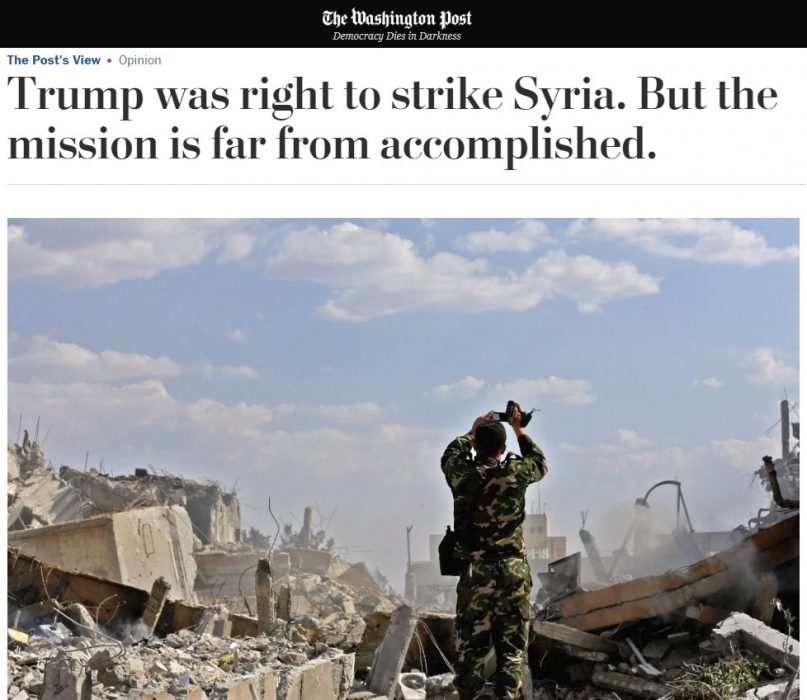
By Philip Giraldi | American Herald tribune | April 23, 2108
The complicity of America’s Fourth Estate in the evolution of the national security warfare state is often mentioned in passing but rarely analyzed in any detail. But a recent article on Lobe Log by Adam Johnson is refreshing in that it does just that, looking at the editorials in 26 leading newspapers relating to the April 13th strike against Syria for the alleged use of chemical weapons. All of the papers supported the attack in the belief that Syria and its Russian and Iranian allies had done something wrong and had to be punished. Some of the endorsements went well beyond the actual strike itself, urging the White House to do more. The article quotes the Toledo Blade’s assertion that:
“Make no mistake, this was a warning to Vladimir Putin as well as Bashar al-Assad. The United States and its two longtime allies redrew the red line that had been obliterated by a failure of nerve by the US and the West generally: There will be cost for your barbarities…. But in the larger sense, the West did what it should have done a long time ago. It stood up for decency and international law. It stood up for those who are defenseless. It stood up for itself, and for simple humanity, and redeemed some self-respect.”
Another recent editorial intended to stir up hysteria about perfidious Moscow appeared in the New York Times on March 12th. It was entitled “Vladimir Putin’s Toxic Reach”. It said in part:
“The attack on the former spy, Sergei Skripal, who worked for British intelligence, and his daughter Yulia, in which a police officer who responded was also poisoned, was no simple hit job. Like the 2006 murder of Alexander Litvinenko, another British informant, who was poisoned with radioactive polonium 210, the attack on Mr. Skripal was intended to be as horrific, frightening and public as possible. It clearly had the blessing of President Vladimir Putin, who had faced little pushback from Britain in the Litvinenko case. The blame has been made clearer this time and this attack on a NATO ally needs a powerful response both from that organization and, perhaps more important, by the United States.”
These two stories and the many others like them have something in common, which is that they were written without any evident “fact checking” and subsequently have proven to be largely incorrect in terms of their assumptions about Russian and Syrian behavior. They also share a belief that the United States and its allies can both establish and enforce standards for the rest of the world. In these cases, the stakes were very high as there was an assumption that it could be appropriate to risk going to war with a powerful nuclear armed government based on incidents that did not in any way impact upon American or British national security.
Regarding Syria, the first wave of “reporting” on the alleged gassing came from sources linked to the terrorist group that was under attack, Jaish el-Islam. This included the so-called White Helmets, who have been outed and exposed as a virtual PR outfit for those one might call the head-choppers. More recently, with government control reestablished over the Douma neighborhood where the reported deaths took place, independent journalists including the able Robert Fisk, no friend of the al-Assad “regime”, have been entering and discovering that there appears to be no evidence that a gas attack even took place.
Skeptics examining the incident from the beginning noted that the Syrian government had every reason to avoid a provocation in its rollup of the remaining rebel pockets near Damascus while the so-called rebels would have been highly motivated to stage a false flag attack to bring in outside forces in support of their cause. If there was a chemical attack of any kind, it almost surely originated with the terrorists.
Even assuming that the United States was acting in good faith when it attacked Syrian “chemical sites” believing that the al-Assad “regime” had actually used such weapons, one should also assume, given the time frame and lack of definitive intelligence resources, that the decision was based on an assessment that relied on limited information coming from sources hostile to Damascus as well as White House perceptions of persistent bad behavior by the Syrian government.
So a poorly informed Washington clearly went to war without exactly knowing why. As the story continues to unravel, there will, however, be no apologies forthcoming either from the White House or the national media, both of which got it so wrong. The mainstream media never even questioned whether Trump should bomb the Syrian “regime” at all, instead merely debating exactly how much punishment he should inflict.
To their credit, the British public and some former senior officials are beginning to ask questions about Syria through a reluctant media filter and opposition leader in Parliament Jeremy Corbyn has refused to be silenced. Similarly, the story of the poisoning of the Skripals in Salisbury has also begun to come apart. Former U.K. Ambassador Craig Murray has detailed how the narrative was cooked by “liars” in the government to make it look as if the poisoning had a uniquely Russian fingerprint. Meanwhile U.S. investigative reported Gareth Porter sums up the actual evidence or lack thereof, for Russian involvement, suggesting that the entire affair was “based on politically-motivated speculation rather than actual intelligence.”
Here in the United States the mainstream media, which has supported every war since 9/11, has yet to account for its deliberately slanted reporting that has fueled both military action in Syria and reprisals against Russia over the Skripals. Unfortunately, the resulting actions undertaken by the United States and Britain have not been consequence free. The attack on Syria, given the fact that Damascus in no way threatened either the U.S. or U.K., was a war crime under international law. The mass expulsions of Russian officials over the Skripals affair has produced a diplomatic chill not unlike the Cold War, or perhaps even worse, with American U.N. Ambassador Nikki Haley declaring that the White House is “locked and loaded” if Syria should again step out of line. One might ask Haley what is to be done when Washington steps out of line? It would be interesting to hear her answer.
*(Snapshot courtesy of the WashingtonPost )
Index on Disgrace
By Craig Murray | April 22, 2018
The second half of my life has been a continual process of disillusionment with the institutions I used to respect. I suppose it started with the FCO, where I went from being Britain’s youngest ambassador to being sacked for opposing the use of intelligence from torture, at the same time having an insider view of the knowing lies about Iraqi WMD being used as a pretext for invasion and resource grab.
I still had some residual respect for the BBC, which respect disappeared during the Scottish independence referendum where BBC propaganda and disregard for the truth were truly shameless. My love of the universities was severely tested during my period as Rector of Dundee University, when I saw how far the corporate model had turned them from academic communities developing people and pursuing knowledge, to relentless churners out of unconsidered graduates and financially profitable research, with nearly all sense of community gone. My respect for charities vanished when I discovered Save the Children was paying its chief executive £370,000 and had become a haven for New Labour politicos on huge salaries, which was why it was so involved in pushing a pro-war narrative in Syria. When Justin Forsyth and Brendan Cox – both massively salaried employees who came into Save the Children from the revolving door of Gordon Brown’s office – were outed over sexual predation, that seemed a natural result of “charities” being headed by rich party hacks rather than by simple people trying to do good. As for respect for parliament, well the massive troughing expenses scandal and all those protected paedophiles…
It has become difficult to hang on to respect for any institution, and that is unsettling.
Which brings me to last week’s annual awards from Index on Censorship. The winners of the awards – from Cuba, the Democratic Republic of Congo, Honduras and Egypt – all seem worthy enough, and there is even some departure from the neo-con narrative in recognising a human rights problem in Egypt.
But the Chairman of Index on Censorship is, incredibly, Rupert Murdoch lead hack David Aaronovitch, and he presided over the awards, in the very week in which the newspaper for which he writes produced this appalling attack on freedom of expression:

Inside there was a further two page attack on named academics who have the temerity to ask for evidence of government claims over Syria, including distinguished Professors Tim Hayward, Paul McKeigue and Piers Robinson. The Times also attacked named journalists and bloggers and, to top it off, finished with a column alleging collusion between Scottish nationalists and the Russian state.
That the Chairman of “Index on Censorship” is associated with this kind of attack on freedom of speech, freedom of thought and freedom of research is sadly unsurprising. The guest list of the Index ceremony had a distinct right wing tinge including A C Grayling and Sara Khan, as well as a good smattering of the BBC, which was also represented on the judging panel. The irony of the state broadcaster being part of a panel on freedom of expression is plainly lost.
I realised something was very wrong with Index on Censorship when I contacted them over a decade ago, when Jack Straw attempted to ban the publication of my book Murder in Samarkand, after it had passed successfully through the exhaustive FCO clearance process over a time-consuming year. I tried to interest them again when my second book The Catholic Orangemen of Togo was dropped by my publisher following libel threats from mercenary commander Tim Spicer of Aegis/Executive Outcomes/Sandline. On both occasions I was told that then Chief Executive of Index, John Kampfner, did not regard these attempted book bannings as incidents of censorship. Presumably because they weren’t somewhere like Cuba or Zimbabwe…
The truly appalling Times attack on academics was part of a coordinated and government-led campaign to delegitimise anybody doubting the official narrative on Salisbury and Syria. The BBC weighed in with this horrible effort:
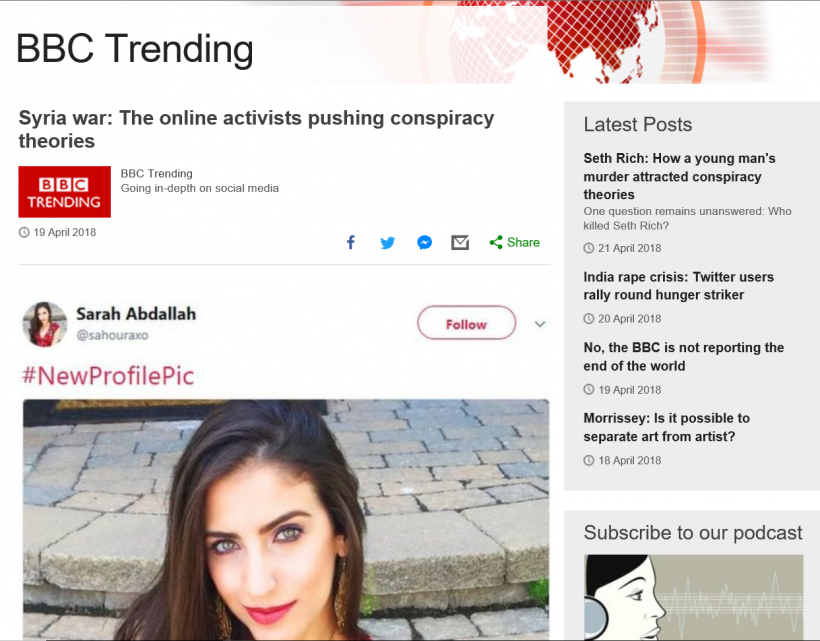
The government then issued a ridiculous press release branding decent people as “Russian bots” just for opposing British policy in Syria. In a piece of McCarthyism so macabre I cannot believe this is really happening, an apparently pleasant and normal man called Ian was grilled live on Murdoch’s Sky News, having been named by his own government as a Russian bot.
The Guardian uncritically published the government’s accusations in full, and astonishingly seemed proud that it had made no attempt to investigate their veracity but had merely published what the government wished them to publish:

The Guardian naturally was just as reliable as the BBC in driving home the message that anybody who doubted the government’s word on Syria was a flat-earth denier of the truth:

Mr Freedland is of course a perfect representation of an interesting fact. Those who are most active in telling us that we must attack Syria, and that anybody who questions the government’s pretexts is insane or evil, are precisely the same individuals who supported the war in Iraq and attacked those who doubted the existence of Iraqi WMD. Indeed these people – Jonathan Freedland, David Aaronovitch, Oliver Kamm, Alan Mendoza, Andrew Rawnsley, John Rentoul, Nick Cohen – are the leaders of the tiny, insignificant number of people who still believe that the invasion of Iraq was both justified and beneficial in its result.
Yet these people of proven terrible judgement, they and others of their media class, are the arbiters who are allowed to dictate the terms of what is and what is not an acceptable public utterance on the situation in Syria.
When Jeremy Corbyn became leader of the opposition, one of two things had to happen. Either the Overton window had to shift to allow for the reflection of views held by the leader of the official opposition and his myriad supporters, or the leader of the opposition had to be castigated and humiliated as an unreasonable lunatic. Corbyn’s rational scepticism on British involvement in the conflict in Syria is a key moment in this process. Despite the fact Corbyn’s scepticism is supported by a wide swathe of diplomatic and military opinion within the UK, it has to be portrayed as fringe, extreme and irrational.
We thus have the extraordinary spectacle of a coordinated government and media onslaught on anybody who doubts their entirely fact free narratives. Those who were demonstrably completely wrong over Iraq are held up as infallible, and given full control of all state and corporate media platforms, where they deride those who were right over Iraq as crackpots and Russian bots.
Meanwhile public trust in the state and corporate media hits new lows, which is the happy part of this story.
Support Craig Murray’s continued writing.
Dear Salafist Wahhabist Apologists
By Paul Larudee | Dissident Voice | April 22, 2018
Your head chopper heros are apparently not what Syrians have in mind when they think of democratic revolution.
Mehdi Hasan (MH) can hardly be blamed for the ignorance that he displays in his Intercept article, “Dear Bashar al-Assad Apologists: Your Hero Is a War Criminal Even If He Didn’t Gas Syrians.” He has apparently never been to Syria, doesn’t often do research on Syria, and gets his information from proponents of a single point of view, representing a bunch of idealists that want to usher in their idea of a liberal democracy in Syria, without benefit of electoral niceties until their power is already ironclad. What’s wrong with this picture?
But I’m getting ahead of myself. Let’s start by deconstructing the absurdities and the language in the MH article.
Thankfully, MH has spared us the need to deconstruct the absurd accusation that the Syrian armed forces have used chemical weapons. He apparently accepts that they don’t need to, that there is no benefit in using them, so why would they? OK, then who did? Cui bono? Easy answer. The motive of the promoters of destruction in Syria is to create a pretext for the US and its partners to bomb, invade and establish a no-fly zone; i.e., to directly take on the Syrian government and its allies. These war criminals include the neoconservative cabal in the US, the Zionist and Israeli proponents of using the US to fight Israel’s perceived enemies, and the Saudi and Qatari adventurists backing the Project for a New Salafist Paradise. These are the same players who brought us Iraq I and II, Libya, Afghanistan forever, Somalia and Yemen. What more could we wish for?
So let us move on to the MH complaint about barrel bombs. What is the complaint, exactly? Are they more horrible than other types of bombs? Is it OK to use bombs manufactured in western munitions factories for delivery by jet airplanes but not ones manufactured in Syria and delivered by helicopter? Never mind. It’s a great opportunity for MH to use the hyped term “BARREL BOMB” in order to enrage and terrify an undiscerning readership.
But what about all the civilian casualties, and isn’t the Syrian army to blame? Well, no, ISIS and the pseudonymous al-Qaeda affiliates are quite happy to post videos of their stonings, beheadings, crucifixions and immolations, so we know the army can’t be the only ones. In fact, given the summary executions of non-Muslims in territories “liberated” from the government, is there any reason to think that the forces fighting the Syrian government are responsible for fewer civilian deaths? I myself met refugees who had fled up to 70 km over the mountains in the dead of winter to Latakia in March, 2013 with no more than the clothes on their back. No one knows how many children and old people died.
Aircraft? The anti-government fighters don’t have them, do they? No, but they seem to be quite resourceful in eliminating innocent human lives nonetheless. An example is the at least 10,000 civilians that have lost their lives in Damascus due to mortars and “hell cannons” (which also use “barrel bombs”) since the start of the hostilities. Other examples include the withering four-year siege of the Shiite towns of Foua and Kafraya near Idlib and the unrelenting bombardment via “hell cannon” of the city of Aleppo from the enclave of East Aleppo until it was finally recovered by government forces in late 2016.
On the other hand, for those (unlike MH and the mainstream media), who consider evidence to be relevant, there is a plethora available to show that the Syrian army has been unusually respectful of civilian life. The claim is that Syria and its Russian allies have obliterated entire neighborhoods, raining bombs on the civilian population. The facts are somewhat at odds with this description.
First, there are the civilian casualties themselves. The UN stopped keeping casualty statistics in early 2016, but even the anti-government Syrian Observatory for Human Rights concedes that less that 1/3 of all casualties are civilians. No other war on record has had such a low ratio. By comparison, 2/3 were civilian casualties in Vietnam, WWII and most other wars.
Second, the Syrian army liberation of Homs, Aleppo and other areas has followed a typical progression that is quite the opposite of “just kill them all”. First, the army surrounds the area and lays siege. At this point, if the army wants to flatten the area and bring an end to the resistance there, it has the perfect means to do so. But it does not. Instead, it positions relief supplies at the perimeter and makes them available without prejudice to the inhabitants. It also offers sanctuary to all who wish to leave. Amazingly, this includes even the fighters. Syrian fighters willing to lay down their arms are offered amnesty. But many are not initially willing to accept amnesty, and many are not Syrian. To these, the government offers safe passage to other parts of Syria under opposition control, even permitting the fighters to keep their small arms.
If they refuse, the siege and the fighting continue, often for more than a year, and bombing is often a part of the campaign, especially toward the end, after multiple unilateral ceasefires from the government side, to try to conclude a peaceful end, as in Aleppo. The bombing is typically in the least inhabited areas, in order to remove cover for fighters, so that the army will incur fewer casualties when it goes in. The strategy doesn’t always work, but the low ratio of civilian casualties is a testimony to its relative success.
Why does the Syrian government do this? Wouldn’t it be easier to just level the entire area, civilians and all, and be rid of the fighters once and for all?
Not really. The government is aware that families are split, with some fighting on one side and some on another. One of the reasons so many Syrians remain loyal to the government is that it is seeking to protect all Syrians on all sides, with the intention of regaining their allegiance. The government also recognizes that many of the opposition fighters are, in effect, mercenaries, for whom fighting is a way to put food on the table when there are no other sources of income. Such fighters are not really enemies, just desperate people. Given an opportunity, they will easily return to the government side.
Then there are the hyped bombing casualty statistics. As I pointed out in 2015, even if we accept the statistics of the highly biased anti-government Human Rights Watch, the number of casualties per bomb is only two, including combatants. If we apply the ratio of civilian deaths, that is less than one civilian casualty per bomb, a clear indication that the Syrian air force is being far more respectful of civilians than the US was, for example, in its bombing of Raqqah, where twice as many civilians as fighters were killed.
But MH is slamming a position that nobody holds. The number of “leftists” that consider Bashar al-Assad a hero infinitesimal. There may be many Syrians who do, but that is not who MH is referring to. MH is misinterpreting the actions of some journalists (including “leftists”) to correct distortions and false information as defense of Assad. Perhaps the distinction is too subtle for him, but an aversion to disinformation and lynch mob mentality is not the same as being pro-Assad. It’s not very helpful to say, on the one hand, that you oppose intervention in Syria, and then take all your (false) information from pro-intervention sources. In that case the interventionists will applaud your non-intervention stance.
Those of us whom MH accuses of being pro-Assad are nothing of the sort. We believe that Syrian sovereignty and territory should be fully respected (as MH also claims to believe), but we think it is important to counter the fake news and propaganda that are being used to justify the invasion of Syria. MH is in love with fake news. He prefers not to mention the killing of police in the uprisings that he describes as “peaceful demonstrations”. He prefers to cherry-pick the opinions of Syrian refugees in Germany rather than the views of the vast majority of refugees (displaced persons) who evacuated to government areas without leaving Syria. He produces the Human Rights Watch report on 50,000 morgue photos but not the deconstruction by investigator Rick Sterling. And he repeats the al-Qaeda claim and false film footage that Madaya was starving and in need when it was, in fact, sitting on a mountain of aid supplies being denied by the fighters themselves to the population.
If MH can’t see the difference between being pro-Assad and not falling for interventionist propaganda, that’s his problem. What’s astonishing is the number of “leftists” that rail against interventionism but base their views on the drivel purveyed by the interventionists themselves in the mainstream media, and that originates from propaganda mills like the White Helmets, the Aleppo/Ghouta Media Center and other lavishly funded set designers for warmongers. If MH is not an interventionist, he’s nevertheless making their case for them.
Paul Larudee is one of the founders of the Free Gaza and Free Palestine Movements and an organizer in the International Solidarity Movement.
Russia-Iran ties soar high under US pressure
By M K Bhadrakumar | Indian Punchline | April 22, 2018
A commentary entitled Tehran, Moscow boosting strategic relations, appearing last week in the Iran Daily newspaper, which is close to Supreme Leader Ali Khamenei – and subsequently circulated by IRNA – noted as follows:
“Policies adopted by Tehran and Moscow are becoming more harmonious on a daily basis as their bilateral as well as multilateral moves and measures are becoming more consistent with each other.”
The general expectation was that in the downstream of the 2015 Iran nuclear pact opening the door to Iran’s integration with the international community, Russia-Iran ties might get atrophied. But the exact opposite is happening. A senior Iranian official told Alexander Lavrentiev, Russian President Vladimir Putin’s special envoy to Syria, at a meeting in Tehran last week that the two countries are having their relations at the highest level in recent times.
If any single factor is to be held accountable for this, it must be American policies. The US’ containment policies toward Russia pursued under President Barack Obama have continued during the Trump presidency – and, arguably, even intensified. For Iran, on the other hand, the expected scale of integration with the international community has not materialized following the implementation of the 2015 nuclear pact due to the US’ negative attitude. The inertia of the Obama period has given way to hostile US policies under President Trump.
Meanwhile, the conflict in Syria has found Russia and Iran on the same side as staunch supporters of President Bashar Al-Assad. The Russian-Iranian cooperation deepened progressively during the period since the deployment of Russian forces to Syria in September 2015 and proved effective in stemming the tide of the war in favor of the Syrian government.
In the process, the overall Russian-Iranian relations began acquiring a strategic character, which they had lacked previously. Today, the spectre of US sanctions haunts both countries. The quasi-alliance with Iran provides much-needed strategic depth to the Russian policies in the Middle East. Whereas, Russia’s robust support on the vexed nuclear issue is invaluable help to Tehran at the present juncture. If Iran’s relations with the West run into difficulty under US pressure, Tehran’s dependence on Russia will only increase. Suffice to say, the more these countries face hostility from the US, the stronger their quasi-alliance is becoming. Shades of the “new type of relations” between Russia and China!
Two developments this week highlight that Middle Eastern politics has to reckon with a new geopolitical reality in the developing Russian-Iranian quasi-alliance. First, in a major statement two days ago, Russian Foreign Minister Sergey Lavrov hinted that following the recent western missile strike on Syria, Moscow may consider supplying the advanced S-300 missile defence system to Damascus.
If Russia upgrades the Syrian air defence system, the military balance will shift in favor of Damascus and thereby Iran will also be a beneficiary, since Syrian capability to deter any further Israeli adventures in its air space will help the consolidation of long-term Iranian presence in the Levant as well. (Following the killing of several Iranian personnel in a recent Israeli missile attack on a Syrian base near Damascus, the Chief of the Iranian Army Abdolrahim Mousavi said on Saturday that “destroying the Zionist regime is one of the major tasks of the Islamic Revolutionary Guards.”)
In a second development this week, Russian energy minister Alexander Novak was quoted as saying that Russia has received the first shipment of oil under the oil-for-goods deal agreed upon in 2014 (and ratified by the two countries last year) with a view to eschew the use of the US dollar in their bilateral trade transactions. Under the deal, Russia would initially buy 100,000 barrels a day from Iran and sell the country $45 billion worth of goods.
Indeed, the implications are profound when Russia and Iran, two energy superpowers, collaborate on oil trade. The two countries have also signed six provisional agreements to collaborate on “strategic” energy deals worth up to $30 billion. The Russian Presidential aide Yuri Ushakov recently disclosed that Russian investment in developing Iran’s oil and gas fields could total more than $50 billion.
According to Ushakov, Iran’s formal entry into the Russia-led Eurasian Economic Union is now only a matter of months. The free-trade deal between the EEU and Iran will be a game changer for Russian-Iranian economic cooperation on the whole. Meanwhile, with Russia’s support, Iran has also applied for membership of the Shanghai Cooperation Organization.
Media Support US Violence Against Syria, but Long for More
By Gregory Shupak | FAIR | April 20, 2018
Corporate media outlets were glad that the US, France and Britain bombed Syria in violation of international law (FAIR.org, 4/18/18), but lamented what they see as a dearth of US violence in the country.
In The Atlantic (4/14/18), Thanassis Cambanis described the war crime as “undoubtedly a good thing,” and called for “sustained attention and investment, of diplomatic, economic and military resources”—though the latter rubbed up against his assessment in the same paragraph that “a major regional war will only make things worse.” Moreover, he described “the most realistic possibility” for the US and its partners in Syria as “an incomplete and possibly destabilizing policy of confrontation [and] containment. But a reckoning can’t be deferred forever.”
This “reckoning” was his somewhat oblique way of referring to a war pitting the US and its allies against the Syrian government and its allies, the very “wider regional war” he just warned against. In Cambanis’ view, “confrontations” between nuclear-armed America and nuclear-armed Russia are “inevitable,” which implies that there is no sense in trying to avoid such potentially apocalyptic scenarios.
A Washington Post editorial (4/14/18) said that “Mr. Trump was right to order the strikes.” The paper was glad that Defense Secretary Jim Mattis and President Donald Trump “properly left open the possibility of further action.” The Post’s rationale for continuing to attack Syria was that “the challenge to vital US interests in Syria is far from over,” and that Trump was therefore wrong “to call Friday’s operation a ‘Mission Accomplished.’” These “interests” include ensuring that Iran does not “obtain the land corridor it seeks across Syria.” (Cambanis, similarly, described as “justified” US efforts to “contain Syria and its allies.”)
The paper was concerned because Trump says that he’d like to subcontract US activities in Syria to US regional partners like Saudi Arabia, the United Arab Emirates, Qatar and Egypt. None of these states, the Post fretted, “are capable of working with local forces [in Syria] to stabilize and hold the large stretch of [Syrian] territory now under de facto US control east of the Euphrates River.”
The editorial failed to note that this territory amounts to “about one-third of the country, including most of the oil wealth” (New York Times, 3/8/18) and “much of Syria’s best agricultural land” (Syria Comment, 1/15/18). The legitimacy of “de facto US control” over Syrian territory and some of its most valuable resources is apparently beyond question, as is the US’s alleged right to determine which governments are allowed to be friendly with each other: The Iranian “land corridor” refers to the Iranian government having warm relations with the governments of Syria, Iraq and Lebanon, something the Post appears to regard as a grave danger.
The editorial says that the US and its allies sought to “minimize the risk of a direct military confrontation with Russia or Iran” and that this was “prudent,” but that “if Russia takes retaliatory action, including in cyberspace, the United States must be ready to respond.” According to this view, projecting US power in Syria is so essential that no form of opposition to US violence in Syria can be brooked, the concern for prudence having vanished.
The Post contended that the US must demand “an acceptable political settlement brokered by the United Nations”—“acceptable” signifying “the departure” of the Syrian government. Functionally, this means keeping the war going: Saying that negotiations should take place but that the only “acceptable” outcome is the dissolution of the Syrian government amounts to the same thing as saying that no negotiations should take place, particularly now that the Syrian government is working from a position of strength and unlikely to agree to its own surrender as a pre-condition for talks.
Andrew Rawnsley, writing in the Guardian (4/15/18), supported US violence in Syria by attacking its critics. He said that those who oppose the Anglo-American-French airstrikes on Syria out of “indifference” to Syria’s plight have the “sole merit of being candid,” unlike those who are
less honest . . . the self-proclaimed peace-lovers. Mainly to be found on the hand-wringing left, they are too busy looking in the mirror admiring their own halos to face the moral challenges posed by a situation like Syria.
Luckily Rawnsley has the requisite courage to meet “the moral challenges” and advocate more war: He says that the West should have “impos[ed] no-fly zones” early in the war in Syria, a policy that would have entailed attacking Syria’s air forces, an act of war by any definition. No-fly zones over Iraq and Libya ultimately led to regime change in both countries, with hideous results for their people.
Rawnsley’s complaint that the West applied “no meaningful pressure” to “bring [the Syrian government to the negotiating table” is wildly misleading; the Western powers in fact applied “meaningful pressure” to prevent negotiations.
Rawnsley also legitimized US violence against Syria by expunging the damage it has inflicted. He trotted out the well-worn lie that the West “stood by” and “fail[ed] to act” in Syria, a canard that FAIR has repeatedly de-bunked (e.g., 9/20/15, 4/7/17, 3/7/18). He characterized the West’s approach to seven years of war in Syria as “years of unmasterly inactivity,” having their hands “wedged firmly under their bottoms,” an “impotent posture,” “failures to act,” making the “grav[e] decision not to act,” “inaction,” “non-interventionist” and as “inaction” a second time. Yet the CIA’s effort to oust the Syrian government has been one of the costliest covert-action programs in the agency’s history; has built ten military bases in the country, with two more on the way; and has killed thousands of Syrian civilians in a bombing campaign ostensibly aimed at ISIS (Jacobin, 4/18/18).
“Non-interventionists,” Rawnsley concludes his article, “the horrors of Syria are on you.” Yet there is no shortage of horrors that are on the interventionists. Sanctions imposed by the US and its allies have punished the Syrian population (9/28/16). These states are implicated in sectarian violence that anti-government armed groups have carried out against minorities (Electronic Intifada, 3/16/17). The US bombed a mosque in Aleppo, Syria, in the name of fighting Al Qaeda, killing almost 40 people (Independent, 4/18/17), and America used toxic depleted uranium against ISIS-held territory in Syria (Foreign Policy, 2/14/17): It would be rather difficult to claim that these horrors were caused by “non-interventionists.”
Cambanis, moreover, exclusively listed Syria, Iran and Russia among those governments who “have serially transgressed the laws of war” and “gotten away with murder” in Syria, but the atrocities attributable to the US and its allies surely constitute “serially transgress[ing] the laws of war” and having “gotten away with murder.”
The Syrian government and its partners are also responsible for a substantial share of carnage in the war, but Rawnsley’s accusation that “non-interventionists” are to blame for Syria’s bloodshed is completely untenable. His argument that Western states have inflicted insufficient harm on Syrians amounts to war propaganda.
And he’s far from the only media figure about whom this can be said.
Gregory Shupak teaches media studies at the University of Guelph-Humber in Toronto.
Another Dodgy British Dossier: the Skripal Case
In this second part of a series, Gareth Porter compares the same faulty logic employed in two purposely misleading, so-called British intelligence dossiers.
By Gareth Porter | Consortium News | April 21, 2018
The British government shared what was supposedly a dossier containing sensitive intelligence to convince allies and EU member states to support its accusation of Russian culpability in the poisoning of Sergei and Yulia Skripal in Salisbury, England on March 4.
But like the infamous 2003 “dodgy dossier” prepared at the direction of Prime Minister Tony Blair to justify British involvement in the U.S. invasion of Iraq, the intelligence dossier on the Salisbury poisoning turns out to have been based on politically-motivated speculation rather than actual intelligence
British officials used the hastily assembled “intelligence” briefing to brief the North Atlantic Council on March 15, the European Foreign Affairs Council on March 19 and the European summit meeting in Brussels on March 23.
The Need for Dramatic Claims
When Prime Minister Theresa May and Foreign Secretary Boris Johnson ordered the production of an intelligence dossier to be used to convince allies and EU member states to join Britain in expelling Russian diplomats, they had a problem: they were unable to declare that nerve agent from a Russian military laboratory had been verified as the poison administered to the Skripals. As the well-informed former Ambassador Craig Murray learned from a Foreign and Commonwealth Office source, the British government military laboratory at Porton Down had been put under strong pressure by Johnson to agree that they had confirmed that the poison found in Salisbury had come from a specific Russian laboratory. Instead Porton Down would only agree to the much more ambiguous formula that it was nerve agent “of a type developed in Russia.”
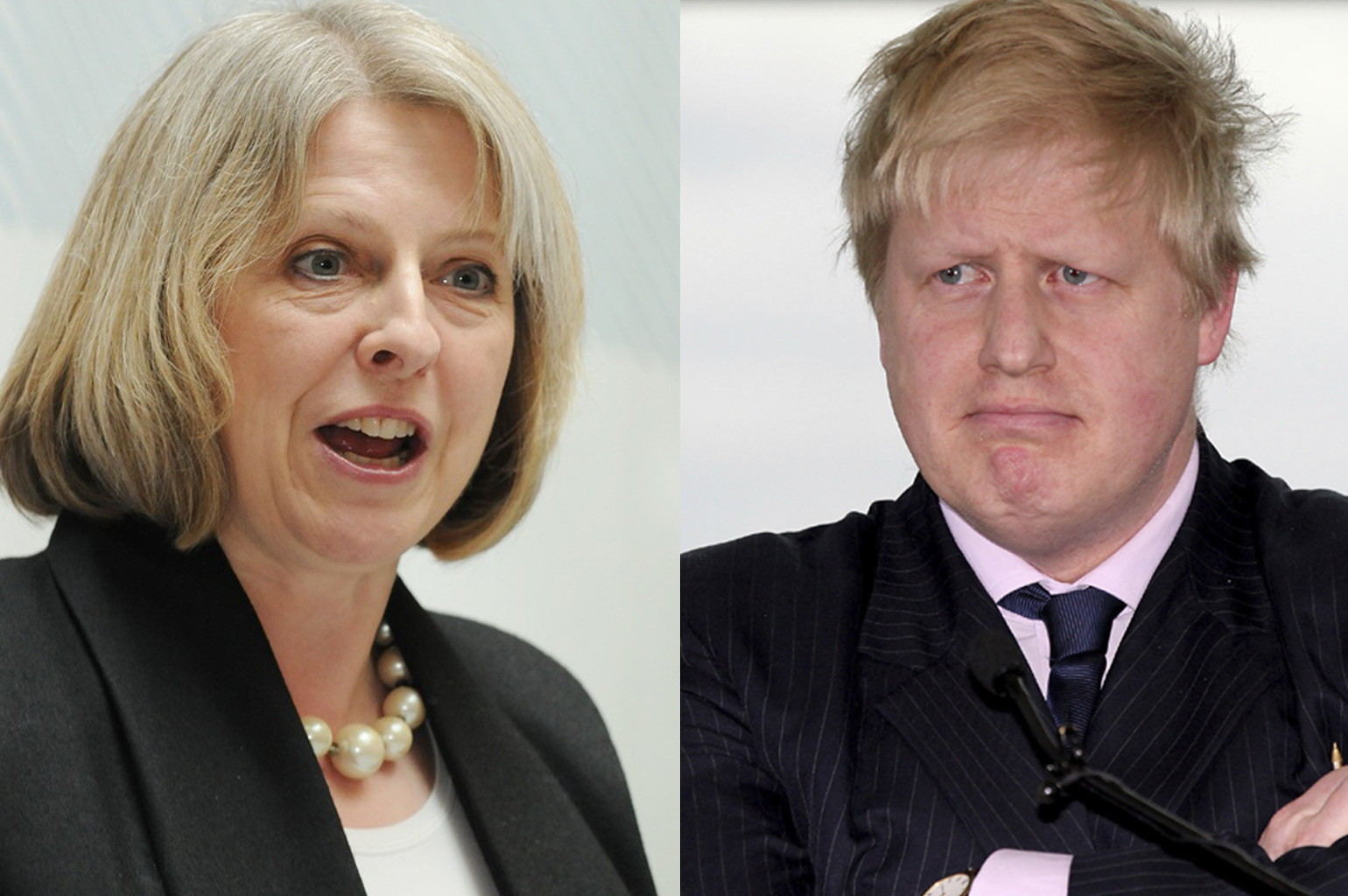
May and Johnson: Needed dramatic claims
So May and Johnson needed some dramatic claims to buttress their argument to allies and EU member states that the Salisbury poisoning must have been a Russian government assassination attempt.
A letter from British national security adviser Mark Sedwill to NATO Secretary-General Jens Stoltenberg released publicly on April 13, refers to two key claims in the dossier of a Russian program to research ways of delivering nerve agent, including smearing it on door handles, and of Russian production and stockpiling of nerve agent during the past decade.
But closer analysis of these claims, based in part on information provided by official British sources to the press, makes it clear that the government did not have any concrete “intelligence” to support those Government claims in the intelligence brief.
The Door Knob Claim
The Sedwill letter referred to a Russian “investigation of ways of delivering nerve agent, including by application to door handles” as being part of a broader alleged Russian government program of chemical weapons research and military training.” The letter was obviously implying that it had some secret intelligence on which to base the charge, and some in the British press pitched in to support the claim.
The first paragraph of a Guardian story on the intelligence dossier said, “Russia had tested whether door handles could be used to deliver nerve agent,” attributing the information to “previously classified intelligence over the Salisbury attack made public Friday.”
In another story about the evidence on the Salisbury poisoning, however, The Guardian, apparently reflecting its understanding of what government officials had conveyed, wrote, “Such an audacious attack could have been carried out only by trained professionals familiar with chemical weapons.” That statement hinted that the alleged Russian “investigation of ways of delivering nerve agents, including by application to door handles” was actually a speculative inference rather than a fact established by hard evidence.
A report in the Daily Mirror, evidently intended to support the government line, actually showed quite clearly that what was being presented as intelligence on alleged Russian research on delivering nerve agent via a door handle was in fact nothing of the sort. It quoted a “security source” as explaining how that claim in the intelligence paper was linked to the belief of counter-terrorism investigators that the Skripals first came in contact with nerve agent on the handle of Skripals’ front door.
“The door handle thing is big,” the unnamed source told the Mirror. “It amounts to Russia’s tradecraft manual on applying poisons to door handles. It’s the smoking gun.” The source was not saying that British intelligence had firsthand information about a Russian tradecraft manual; it was suggesting that one could somehow deduce from the assumed application of nerve agent to the door handle of the Skripal house that this was a sign of Russian intelligence tradecraft.
The source then appeared to confirm explicitly that this inference was the basis of the specific claim in the intelligence brief that, “It is strong proof Russia has in the last 10 years researched methods to administer poisons, including by using door handles.”
The Murder that Contradicts the Dossier
The idea that only intelligence operatives with formal training could have applied nerve agent to a door handle was not based on objective analysis. MI6, the British foreign intelligence service, knows very well that a 1995 murder committed in Moscow with a nerve agent developed by Soviet-era scientists was carried out by a private individual, not a government intelligence unit.
Court documents in the 1995 murder of banker Ivan Kivelidi, reported by the independent Russian newspaper Novaya Gazeta, show that in 1994 a Russian criminal syndicate had acquired Novichok nerve agent, which had been synthesized by Soviet scientists, and that it was used the following year to kill Kivelidi and his secretary by applying some of the nerve agent on his telephone receiver.
Boris Kuznetsov, a dissident Russian lawyer involved in the Kivelidi murder case, who fled Russia in 2007 with copies of all the relevant documents, turned them over to the British government after the Skripal poisoning. The knowledge of that episode would account for Prime Minister May’s otherwise surprising acknowledgement on March 12 of the possibility that the poisoning might not have been a Russian government action but the consequence of the Russian government allowing nerve agent to “get into the hands of others”.
An Ongoing Russian Novichok Program?
The Sedwill letter made another sweeping claim of covert Russian production of the line of nerve agent that had been dubbed Novichok. “Within the last decade,” it said, “Russia has produced and stockpiled small quantities of Novichok under the same programme.” If true, that would have been major evidence bearing on the Skripal poisoning, since such a program would be both covert and illegal under the Chemical Weapons Convention.
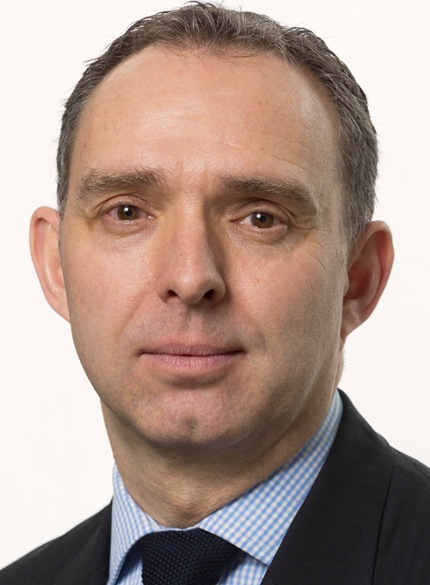
Sedwill: No evidence
But neither the Sedwill letter nor any other statement from the British government has referred to the possession of any evidence for that claim, even in the most generic way. In fact, Prime Minister May said merely that Russia “had previously produced Novichoks and would still be able to do so”.
In contrast to its silence about any kind of information supporting its claim of Russian production and stockpiling of Novichok program in the past decade, the Sedwill letter cited “a combination of credible open-source reporting and intelligence” on the existence of the Russian program that developed the Novichok line of nerve agents in the 1970s and 1980s.
If the UK possessed actual evidence of such a Russian nerve agent program at Shikhany, the former military chemical weapons facility, it presumably would have informed the Organization for the Prohibition of Chemical Weapons (OPCW) of the fact and presented its evidence to the 41-member Executive Council, the governing body of the organization. It clearly has not done so, and it has not suggested that it was prevented from doing so by the fear of compromising an intelligence source within the Russian government.
The British government could also demand a “challenge inspection” at the facility. Any member of the Chemical Weapons Convention can call for an immediate inspection, and Russia would have had no option but to permit it. But it has not done so, signifying that it does not have the information necessary to identify the location of the alleged production and stockpiling of such a weapon, nor does it have the name of anyone who has worked on such a project.
Suspect Intercepted Russian Communications
Another claim in the British “intelligence” dossier is an intercepted Russian communication that allegedly supports the Russian nerve gas operation accusation.
The tabloid Express reported its sources saying such an intercept had been “a key part of Britain’s intelligence evidence.” The sources revealed that on March 4, a message from Damascus to Moscow intercepted by a listening post in Southern Cyprus contained the words, “The package has been delivered.” And the same message was said to have reported that two named individuals had “made a successful egress” – meaning that they had left.
But without knowing the context in which either statement was made, such quotes are meaningless. And one must ask how often something like those exact words would be communicated to Moscow from a diplomatic or military outpost somewhere in the world every single day. Furthermore, the second message to which the dossier is said to have referred actually revealed the names of the two men who had departed, so it clearly had nothing to do with a covert operation.
The May government was able to convince 29 other states, including the United States, to take action against Russia by expelling its diplomats, representing a deliberate step toward higher tensions with Moscow. But the intelligence dossier it deployed in that effort, as reflected in the Sedwill letter and media reporting, was far from being the kind of information one might expect to provoke such a major diplomatic move. It was instead, like the original 2003 “dodgy dossier” on WMD in Saddam’s Iraq, essentially a collection of misleading claims based on politically-skewed logic.
Gareth Porter is an independent investigative journalist and historian on U.S. national security policy and the recipient of the 2012 Gellhorn Prize for journalism. His most recent book is Manufactured Crisis: the Untold Story of the Iran Nuclear Scare, published in 2014.
British govt must explain its behavior in Skripal case, Syria strikes – UKIP MEP
RT | April 21, 2018
Although the UK has deemed Russia responsible for the poisoning of Sergei Skripal, the public needs proof, a UKIP MEP told RT, adding that London should also justify its role in the Syria airstrikes.
Speaking to RT at the Yalta International Economic Forum in Crimea, West Midlands Member of European Parliament (MEP) Bill Etheridge said there is a lot of “murky water” in the Skripal case. “A lot of things that are unexplained, a lot of behavior that does not ring true.”
He went on to explain that “the British course of public opinion doesn’t believe it, so the behavior of our government and security services, they need to explain to us why they are so convinced that the great nation of Russia would wish to attack anyone in our country.”
Etheridge added that no one has provided any “solid proof” that Russia was behind the poisoning. “The current British government position is one where they are taking too strong a position with Russia. They should be having dialogue, they should be having conversation.”
Skripal, a former Russian double agent, and his daughter Yulia were poisoned in the UK town of Salisbury on March 4. Russia has offered its full cooperation and urged London to provide evidence, including nerve agent samples. However, it has not received any.
The Russian Foreign Ministry says the incident is “highly likely” to have been staged by British intelligence, while Russia’s envoy to the UK has expressed concern that the investigation by the Office for the Prohibition of Chemical Weapons (OPCW) lacked transparency.
Etheridge also addressed the topic of Western intervention in Syria, one week after the UK, US, and France launched airstrikes over an alleged chemical attack that the three allies have blamed on the government of Bashar Assad.
“My belief is… the Syrian civil war is one where Western intervention is not helpful… my position is that there should be no intervention and frankly by intervening in that part of the world in the past, the UK and US have made things worse. As far as I’m concerned, we should stand back from this and allow the Syrian people self-determination.”
“I expect that London will get pressure from the British people to justify themselves and if they cannot justify themselves, there will be protests from British people saying, ‘no war in our name, no conflict in our name.'”
The UK, US, and France refused to wait for the results of an official OPCW investigation into the alleged chemical attack before deciding on military action. This also came despite the Russian military traveling to the scene of the alleged attack and finding no evidence of a toxic agent.
Russia has also stated that it has indisputable evidence that the attack did not take place, with Russia’s Ambassador to the OPCW, Aleksandr Shulgin, stating that it was a “pre-planned false-flag attack by the British security services, which could have also been aided by their allies in Washington.”
What Are “Assad Apologists”? Are They Like Those “Saddam Apologists” Of 2002?
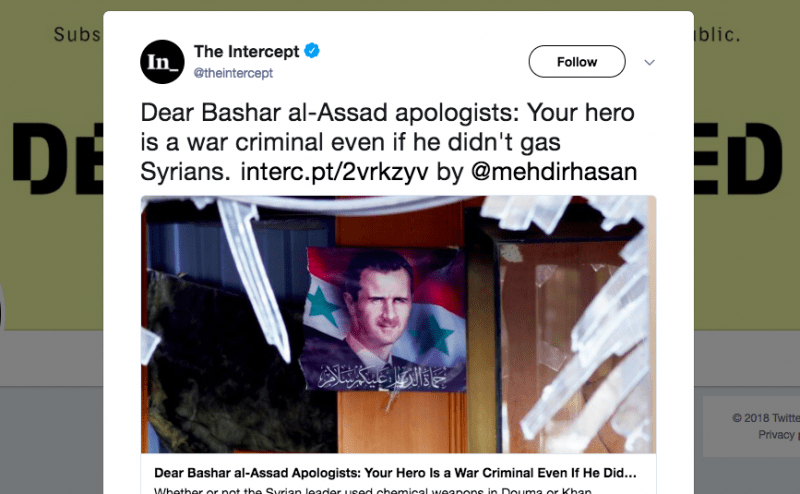
By Caitlin Johnstone | Rogue Journalist | April 20, 2018
Isn’t it fascinating how western journalists are suddenly rallying to attack the dangerous awful and horrifying epidemic of “Assad apologists” just as the western empire ramps up its longstanding regime change agenda against the Syrian government? Kinda sorta exactly the same way they began spontaneously warning the world about “Saddam apologists” around the time of the Iraq invasion?
The increasingly pro-establishment Intercept has published an article titled “Dear Bashar al-Assad Apologists: Your Hero Is a War Criminal Even If He Didn’t Gas Syrians,” condemning unnamed opponents of western interventionism in Syria for not being sufficiently condemnatory of Bashar al-Assad in their antiwar discourse.
Last week The Times published an article titled “Apologists for Assad working in British universities,” frantically informing the public that “top academics” are circulating information that runs counter to the official Syria narrative, followed this week by a Huffington Post article attacking those same academics in the same way. Yesterday, the BBC ran an article titled “Syria war: the online activists pushing conspiracy theories,” warning its readers about “pro-Syrian government” internet posts.
I first encountered the word “apologetics” as a young Catholic girl in a parochial school, where the term was introduced to me as the religious practice of defending Church doctrine using discourse and argumentation. I did not become familiar with the related secular term “apologia” until much later, which is defined as “a work written as an explanation or justification of one’s motives, convictions, or acts.”
It wasn’t a term I ever made use of or encountered much in day to day life until I started writing extensively about the dangerous warmongering behaviors I was seeing in my country’s allies last year, when all of a sudden it became a part of my daily life. For me, I was just trying to help prevent the western empire from decimating yet another Middle Eastern country in yet another war based on lies and avoid dangerous escalations that could lead to nuclear holocaust, but to countless strangers on the internet I am an “Assad apologist” and a “Putin apologist.”
People have been calling me these things every single day for well over a year now. The internet is weird, man.
And surprise surprise, now that the war drum is beating louder than ever for Syrian blood, the phrase “Assad apologists” is enjoying a massive uptick.
The argument as I understand it is that people like Professors Tim Hayward and Piers Robinson, the subjects of the aforementioned Times and Huffpo articles, are not protesting the latest warmongering agenda of a multinational power establishment with an extensive history of decimating Middle Eastern countries, but are in fact going out of their way to justify Bashar al-Assad’s motives, convictions, and acts. Not because they oppose death and destruction like normal human beings, but because they are just positively head-over-heels gaga over some random Middle Eastern leader for some reason.
And that’s always how these arguments go. By pointing out that the US-centralized empire has been plotting regime change in Syria literally for generations, I’m not opposing dangerous regime change interventionism, I’m defending a dictator. By noting that the western empire has an extensive history of using lies, propaganda and false flags to manufacture support for military aggression, I’m not stating a well-documented and frequently admitted fact, I’m performing apologia on behalf of a despotic regime.
It can’t possibly be because I am aware that the neoconservatives who have been braying for this attack for years are always completely wrong about everything. It can’t possibly be because the US-centralized war machine has had a well-established pattern for many years of demolishing countries based on lies and false pretenses of humanitarianism only to leave in their wake a humanitarian disaster, which they then blame on “mistakes” made by whoever happened to be in charge at the time. It can’t possibly be because US-led military interventionism in modern times is literally never helpful, literally never accomplishes what its proponents claim it will accomplish, and is literally always extremely profitable for its most vocal advocates.
Nope, it’s got to be because I fell in love with a gangly Syrian president whom I’d never even thought about before the neocons set their crosshairs on him, and I only oppose the next imminent military catastrophe because I agree so much with his policies and behavior.
Even more annoying than the honest regime change proponents are people like Mehdi Hasan, author of the aforementioned Intercept piece, who claim to oppose US regime change but find themselves tone policing the antiwar left instead. The world is full of problems, the greatest arguably being a third world war and potential nuclear confrontation between Russia and America ensuing from US interventionism in Syria, but men like Hasan choose to focus their creative energy on making sure the antiwar left mitigates its speech sufficiently and prefaces every antiwar argument with “Assad is a bloodthirsty evil dictator, but”.
Like that’s what the world desperately needs right now: for the antiwar left to be even more mitigated in its speech than it already is. For us to slam on the brakes of our antiwar surge to check one another to make sure we’re all being explicitly anti-Assad enough.
These writers never make it clear exactly why it’s so important for everyone in the antiwar movement to be checked and scrutinized for excessive enthusiasm about the Syrian government. Are they worried they’ll go and join the Syrian Arab Army? That they’ll install Assad as president of the United States? How is sympathy toward the Syrian government a threat to anything other than the manufacturing of support for more escalations in US-led interventionism?
We don’t need equivocation and tone policing right now. What we need is a loud and unequivocal NO to western military interventionism in the country immediately adjacent to the one we raped fifteen years ago.
We’ve been here before. Here’s an article from 2001 titled “Saddam Hussein’s American Apologist”. Here’s one from 2002 titled “Saddam’s apologists”. Here’s another from 2003 titled “After Saddam’s Capture: Will His Apologists Now Recant?” Here’s yet another from 2003 titled “Armchair generals, or Saddam’s leftwing allies.” Here’s one from 2005 titled “Parliament’s damning report about Saddam apologist George Galloway.” This was an extremely common smear against opponents of the Iraq invasion, who were of course later proven to have been 100 percent correct in every way.
Iraq is as relevant as relevant gets to this debate, and anyone who claims otherwise is only doing so because they know Iraq is devastating to their Syria arguments. They’re pulling the same damn tricks in the same damn way, in some cases with the same damn people. These “We must stop the Assad apologists!” op-eds are coming out with increasing frequency and urgency because they are losing control of the Syria narrative and they are running out of tricks. Don’t let their authoritative way of speaking fool you; they are not nearly as confident as they pretend to be.
Support Johnstone’s writing with a contribution on Patreon or Paypal.
US still paying White Helmets despite $200mn-aid freeze for Syria recovery, State Dept confirms
RT | April 20, 2018
As the US is reviewing funding aimed at helping war-ravaged Syria rebuild, it’s not neglecting the White Helmets – a controversial militant-linked group instrumental to the media campaign against Assad and Russia.
At a Thursday press briefing, journalists asked US State Department spokesperson Heather Nauert for an update on the late-March freeze of $200 million earmarked for the recovery of Syria – and if that means Washington will be withholding payments to the White Helmets.
Nauert opened her response with a gushing comment about the organization. “We recognize and appreciate and are very grateful for all the work that the White Helmets continues to do on behalf of the people of their country and on behalf of the US Government and all the coalition forces. They’re doing incredible work in rescuing in some cases, and in other cases it’s recovery efforts. They’re an incredible group of individuals,” she said.
Moreover, she said she “just exchanged emails with them the other day.” Finally cornered into giving a direct answer, she said “As far as I’m aware, all of the work still continues. Peoples’ bills are still being paid.”
The White Helmets (officially called the Syria Civil Defense), a supposedly impartial humanitarian NGO, make no secret of who pays those bills, listing the governments of the UK, Germany, and the US among others on their website. Time and again their reports from the scenes of supposed crimes against civilians by the forces of Syrian President Bashar Assad – who Washington has wanted toppled for years – have been used to justify accusations against Assad and his ally Russia. This includes the latest alleged chemical incident in Douma near Damascus, which led to a series of missile strikes by the US, UK, and France.
These allegations have now been contradicted by multiple sources, including witnesses from the scene, and even people featured in the White Helmets’ video of the “aftermath” of the “attack.”
The White Helmets rely heavily on positive publicity. They have been featured in two documentaries, one of which won an Oscar in the heavily politicized 2017 ceremony.
A recent attempt at gaining publicity and support for their cause, however, fizzled spectacularly. English singer Roger Waters, a founder of Pink Floyd, stopped his Barcelona gig for a minute last week to mention that a representative of the White Helmets wanted to come up on stage and make a statement. However, Waters had a few words of his own to say.
“The White Helmets is a fake organization that exists only to create propaganda for jihadists and terrorists,” he said.
It later turned out that in 2016, the NGO emailed Waters, trying to entice him into a dinner honoring the White Helmets, paid for by a Saudi billionaire. And just days before last week’s concert, a journalist describing himself as “a militant with the Syrian White Helmets” asked Waters for stage time to “send a message to the children of Syria.”
Waters replied to neither email, instead choosing to make his beliefs heard publicly.
“If we were to listen to the propaganda of the White Helmets and others, we would be encouraged to encourage our governments to start dropping bombs on people in Syria,” he said.
Which is exactly what happened a few hours later.
Featured Video

Iran is (probably) collecting tolls, and why Asia stopped buying oil from the US
or go to
Aletho News Archives – Video-Images
From the Archives
The Great Recycling Scam
By Dr. Vernon Coleman – 21st Century Wire – September 2, 2022
Recycling was introduced, worldwide, as a tool to teach citizens to become compliant.
Forcing citizens to sort their rubbish into up to nine separate bags or boxes every week had absolutely nothing to do with ‘saving the planet’ and everything to do with teaching citizens (through a mixture of fines and shame) to behave ‘responsibly’ i.e. to do as they were told without looking too closely at the rationale of what they were being told to do.
The recycling never had anything to do with protecting the planet, of course. Most of the rubbish sorted, washed and collected in the UK was taken abroad, by lorry or ship or train, and burnt or dumped. It was, quite simply, impractical and not cost effective to recycle the material that had been collected. And, of course, collecting the sorted rubbish involved massive costs in terms of cash and pollution.
Today, the recycling business has reached an apogee of lunacy. Councils introduce ever more complex rules and fees. They refuse to take away much of the waste that is collected. And those wanting to take their rubbish to a ‘recycling’ centre will probably have to make an appointment and answer a host of questions.
It is no surprise that fly-tipping has become a major problem. The biggest causes of plastic in the sea are dumped fishing gear and plastic waste (much of it officially designated as recycled) which has been dumped by ships.
The good news, however, is that in Britain, recycling rates are falling. More and more people have become aware that the whole recycling movement was just another piece of manipulative trickery.
Blog Roll
 Aletho News
- Lithuania plans universal conscription
- Lies, Damn Lies, and Ukraine News
- Financial Times rejects Nordic demands to correct Putin call story – media
- The Case for Less Unity in Europe
- Ukraine expands minority rights under EU pressure – but Russians remain excluded
- Albania takes anti-riot crackdown cue from France
- The interest of the House of Rothschild in Ukraine
- Pentagon fires top military planner
- Three tankers hit mines on unauthorized Hormuz route: IRGC Navy
- Iran is (probably) collecting tolls, and why Asia stopped buying oil from the US
- If Americans Knew
- US midterms: Five days left – who leads in the polls as Trump, Obama rally
- Israeli Attacks Kill Four Palestinians in Gaza
- Plotting a Comeback: Gaza Resignees Confront Biden’s Genocide Enablers – VIDEO
- US Journalist and Activist Detained After Israeli Settler Attack in West Bank
- Israeli forces continue West Bank raids as Hebron lockdown enters sixth day
- The Two Faces of Gadi Eisenkot, Who Could Be Israel’s PM
- US Sending an Additional Patriot System to Israel To Prepare for Potential Attacks on Iran
- Pentagon Estimates the US Has Spent Over $47 Billion on Iran War, But True Cost Is Much Higher
- ‘Who Will Bomb Me Next?’: Palestinians in Gaza and the West Bank on Israel’s Election
- DAILY UPDATE: Latest essential news on Palestine, Israel, & region
- No Tricks Zone
- Germany’s Green Energy Transition Becoming Increasingly Expensive…Another 6 Trillion Euros!
- Sudden Stratospheric Warming, Powerful El Niño Combination May Lead To Extreme Europe Cold, Energy Crisis!
- Two New Studies Find Thwaites Glacier Melt Cannot Be Driven By Human Activity Or A Warming Ocean
- E-Cars Reduce CO2 Emissions By Only 41% Compared To Internal Combustion Engine Vehicles
- Predictions Made By Renowned Climate Professor Over Past Decades Have Been Proven To Be Poor
- New Study Suggests Large Regions Of The Pacific Ocean Have Been Cooling For The Last 80 Years
- Germany’s Green Energy Debacle: High Energy Costs Force Kahla Porzellan to Close After 182 Years!
- New Study: 50 Years Of The Most Aggressive ‘Net Zero’ Policies Can Only Affect The Global Climate By 0.03°C
- US September “Heat” Was No Record…Many Records Set Decades Ago
- Latest European Green Energy Debacle; Portugal’s Largest Flagship Solar Park Insolvent!

