Obama at Pentagon: Syria Mess is All Assad’s Fault
By Daniel McAdams | Ron Paul Institute | August 4, 2016
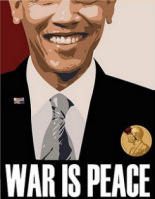 Some presidents grow in office and some presidents grow once out of office (Jimmy Carter comes to mind). But some presidents seem to learn very little during their four or eight year term. Unfortunately, especially when it comes to foreign policy, it seems President Obama falls into that latter category.
The president gave a press conference at the Pentagon today to update us on how the fight against ISIS is going. Remember: it is two years since Obama expanded what he promised would be a very limited military operation to save a religious minority — the Yazidis — from a hilltop in Iraq, into a full-fledged war in Iraq, Syria, and as of last week, Libya.
Two years ago this very week, in fact, President Obama informed the American people that he was launching “targeted airstrikes to protect our American personnel, and a humanitarian effort to help save thousands of Iraqi civilians who are trapped on a mountain without food and water…”
There was no chance of this very limited rescue operation expanding, he assured us:
As Commander-in-Chief, I will not allow the United States to be dragged into fighting another war in Iraq. And so even as we support Iraqis as they take the fight to these terrorists, American combat troops will not be returning to fight in Iraq, because there’s no American military solution to the larger crisis in Iraq.
Two years later, the lies are laid bare. US troops are indeed fighting another war in Iraq, with the addition of wars in Syria and Libya to boot.
Today the president wanted to give us good news about his anti-ISIS efforts in Iraq and Syria. His efforts have made us more safe, he claimed: “I do think that because of our extraordinary efforts, a homeland is significantly safer than it otherwise would be.”
But the president wanted us to know that things are not perfect. There are some bad actors who are hindering our efforts.
Singled out for condemnation in the president’s address was not ISIS, or al-Qaeda, or even the US-backed Nour al-Din al-Zenki, which recently filmed itself beheading a young child. No, the real villain for President Obama is the Syrian government, which has been engaged in a five year battle with ISIS, al-Qaeda, and US-backed “moderates” who do things like cut off young boys’ heads.
To Obama, the disaster in Syria is not the fault of the outside powers, who imported jihadis and even weapons from Libya (Hillary!) to overthow Syrian president Assad. It is all the fault of Assad for resisting the foreign-backed overthrow of his government! Indeed, even the act of fighting ISIS and al-Qaeda in his country earns Assad the condemnation of Obama:
In Syria, defeating ISIL and al-Qaeda requires an end to the civil war and brutality against the people, pushing them to extremes. The regime and its allies continue to violate the cessation of hostilities.
So the Syrian government is guilty of violating the “cessation of hostilities” by fighting al-Qaeda and US-backed groups that fight alongside al-Qaeda.
Indeed, to Obama the whole Syria disaster is the fault of Assad, who apparently woke up one morning and decided that the best way to keep power in Syria was to destroy his own country.
Said Obama:
We are very clear that Russia has been willing to support a murderous regime and an individual who has destroyed his country just to cling to power.
Whatever one thinks of Assad, what world leader would not resist a foreign-backed insurgency aimed at overthrowing the constitutional order? Would Obama? The mere rumor that the Russians might have had a peep at the DNC’s “cheat Bernie Sanders” grand strategy and the entire Democratic Party is ready to launch World War III against Russia!
But, finally, Obama assures us that try as he constantly does, he just sees no option other than our current hyper-interventionism in the Middle East:
I am pretty confident that a big chunk of my gray hair comes out of my Syrian meetings. There is not a meeting that I don’t end by saying is there something else we could be doing that we haven’t done? Is there a plan F, G, H that we think would lead to a resolution of the issue so that the Syrian people can put their lives back together and we can bring peace and leave the refugee crisis that has taken place?
Well, Mr. President, you must not be trying all that hard, because the answer is as obvious as the gray that has overtaken your hair: just go home. Leave Syria alone. Stop trying to change regimes.
US Foreign Policy Comes Full Circle As Qaeda Downs Russian Helicopters
By Ulson Gunnar | New Eastern Outlook | 03.08.2016
The recent downing of a Russian Mi-8 helicopter and the death of all 5 on board over Al Qaeda-held Idlib province in Syria, represents the unenviable full circle US rhetoric has made surrounding both the Syrian conflict, and the wider “War on Terror.”
It was the United States who first created and used Al Qaeda in Afghanistan in the 1980s to down Russian aircraft and to fight Russian troops. After successfully pushing Russia out of Afghanistan and plunging it into a sociopolitical dark age, the US went on to claiming to be victimized by the monster they themselves created, perhaps most spectacularly on September 11, 2001. Today, the US finds itself back to now fully using Al Qaeda to fight a proxy war against Russia, this time in Syria.
Russian Helicopter Was on Humanitarian Mission Over Al Qaeda Territory
The Russian Mi-8 helicopter was conducting humanitarian operations. This is not according to only Russian or Syrian sources, but even opposition sources including UK-based anti-Syrian government proponent Rami Abdulrahman who refers to himself as the “Syrian Observatory for Human Rights” (SOHR).
The New York Times in its article, “Russian Military Helicopter Is Shot Down in Syria, Killing 5,” would report that:
The Syrian Observatory for Human Rights, which opposes the Syrian government and tracks the conflict from Britain through contacts in Syria, said the helicopter had crashed near the village of Saraqib in Idlib Province.
The aircraft had recently delivered aid to two Shiite villages nearby that have long been surrounded by Sunni rebels, the group said.
Qatari-state media Al Jazeera, also an admittedly pro-militant voice amid the conflict, would admit that Idlib province, Syria, is held by Al Qaeda.
In its article, “Syria’s civil war: Russian chopper shot down in Idlib,” Al Jazeera would admit:
Idlib is held almost entirely by a powerful coalition of hardline rebel groups, including the former al-Nusra Front, now known as the Fateh al-Sham group after renouncing its status as al-Qaeda’s Syrian affiliate.
Despite Al Jazeera’s attempts to qualify Nusra Front as having “renounced” its Al Qaeda affiliations, it is still recognized by the US, Russia and Syria as a terrorist organization.
Justifying & Celebrating Al Qaeda’s Atrocity
In the immediate aftermath of the helicopter’s downing and now ongoing since, pro-militant pundits from both the public and Western policy centers, celebrated the incident.
Former director of the Brookings Institution’s Doha Center, Salman Shaikh, repeatedly retweeted accusations that Russia’s Mi-8 was not in fact on a humanitarian mission, simply because empty rocket pods were found among the wreckage.
With SOHR insisting indeed the Russian helicopter was on a humanitarian mission, the empty rocket pods were most likely empty upon take off. So far, “experts,” including Atlantic Council’s “Digital Forensic Research Lab Senior Non-Resident Fellow” Eliot Higgins, previously an unemployed British social worker and blogger, have insinuated the Mi-8 was on a military mission, but have yet to provide any evidence.
This attempt to leverage supposed “experts” to justify the downing of a helicopter (and subsequent celebrations) engaged in humanitarian operations even in contradiction to media reports coming from both sides of the conflict, indicates just how far departed Western rhetoric has become from the principles it claims to uphold, particularly in regards to its involvement in the Syrian conflict and its backing of militant groups operating in Al Qaeda-held Idlib province.
US Aspired to Down Russian Aircraft in Syria
The downing of Russia’s Mi-8 over Idlib is not the first. Another Russian helicopter was shot down near Palmyra in early July.
Japan Times in its article, “U.S. missile brought down Russian helicopter in Syria: report,” would report:
Two Russian airmen killed in Syria on Friday were shot down with American weaponry, the Interfax news agency said Sunday, quoting a Russian military source.
It said insurgents from the Islamic State group hit the airmen’s Mi-25 assault helicopter with a U.S.-made TOW heavy anti-tank missile, a weapon that uses guidance from a ground station.
The possibility of terrorist organizations like the Islamic State (IS) ending up with US missiles should be no surprise. It is a “coincidence” it appears many US policymakers wanted to unfold in Syria, if a no-fly zone implemented over Syria by the US directly was not a possibility.
 One of those US policymakers is US Senator John McCain (R-AZ) who would say in a 2015 interview on Fox News that:
I might do what we did in Afghanistan many years ago, to give those guys the ability to shoot down those planes. That equipment is available.
He would elaborate further by stating:
The Free Syrian Army, just like the Afghans shot down the Russian…
It should be noted that the “guys” Senator McCain is referring to in Afghanistan were Al Qaeda. With the downing of 2 Russian helicopters at the hands of IS and Al Qaeda respectively, it appears very much like Senator McCain has (one way or another) gotten his wish, with Al Qaeda once again serving as the armed intermediary between the US and Russia.
The end result is US foreign policy coming full circle, having created Al Qaeda to fight Russia in the 1980s, then using the terrorist organization as a pretext to extend military interventionism globally, to now once again cheering them on in Syria as they down Russian aircraft amid a struggle to restore peace and stability to both Syria and the wider region.
One wonders if this irony is lost on the American people, who have been asked to sacrifice so much in the name of fighting “terrorism,” only to have those who have done the asking to ally themselves with the very terrorists in a destructive proxy war in the distant lands of the Levant.
Middle East prepares for Hillary’s war
By M K Bhadrakumar | Indian Punchline | July 28, 2016
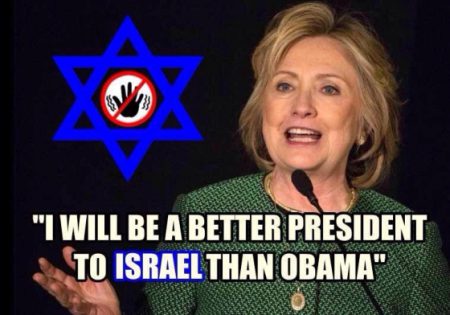
The big question this week ought to be about Hillary Clinton’s wars, if she gets elected as the next US president. Her hawkish temperament and her bandwagon comprising neoconservative ideologues, Israeli-Saudi lobbies, military-industrial complex and so on brings us to the epilogue of the ‘Obama Doctrine’ in US foreign policies.
Where will it be that Hillary will choose to wage her war? The high probability is that she will choose the Middle East – not Eurasia or Asia-Pacific. Why is it so?
For a start, Hillary Clinton, unlike her predecessor Barack Obama will not seek indeterminate wars. She will calculate how a war in her first term would help her win a second term in the 2020 election. Neither Russia nor China can be defeated in a short, swift war, while on the contrary, there is the real danger of her triggering World War III with horrific consequences that are impossible to predict.
It is in the Middle East that the neo-conservatives in the US will look for action, given their unfinished agenda of sending Iran to the Stone Age, an outcome without which the destruction of Iraq and Syria hasn’t ensured Israel’s regional hegemony.
Israel and Saudi Arabia, estranged allies of the US, are expecting a Middle Eastern war under Hillary. Last week, a former Saudi general visited Tel Aviv and held discussions with Israeli officials. (Times of Israel ) See an analysis by Simon Henderson at the Washington Institute titled Riyadh’s Diplomatic Dance with Israel.
The bottom line is, Israel and Saudi Arabia feel regional isolation. They failed to entrap Iran in a quagmire in Syria and/or Iraq. With Turkey’s course correction on Syria, Iran’s position further strengthens. The Islamic State and the extremist organizations, which Israel and Saudi Arabia covertly supported, are in retreat.
The latest incident of a Hezbollah drone flying over Israeli skies, photographing military deployments on the Golan Heights dramatically highlights that regional military balance is shifting. Meanwhile, Russia also refuses to ‘moderate’ Iran or Hezbollah, contrary to Israeli expectations.
Similarly, Turkey’s course correction following the July 15 coup attempt is a devastating blow to Saudi hopes of challenging Iran in Syria and Iraq. Saudi Arabia also cannot expect Israel to come and fight its war in Yemen or suppress the uprising in Bahrain. Israel knows it will get overstretched in any such misadventure in a Muslim country. Alas, Saudi Arabia cannot count on Egypt’s support, either. Egypt is a much weakened country and is also having serious problems in the Sinai region, apart from domestic political disarray.
In such a bleak scenario, how will Hillary manage to start a war in the Middle East? By the time she settles down in the White House, the ‘moderate’ rebel groups in Syria may have become an extinct species. Besides, without access to Turkey’s territory, the US will be had-pressed to stoke the fires of renewed conflict in Syria and Iraq.
Therefore, all things taken into account, Hillary may have to settle for a war directly involving Iran. Of course, that will also be the preferred choice and demand of her Saudi Arabian and Israeli friends.
But, how can Hillary provoke Iran into a war? Tehran has the intellectual resources and diplomatic acumen to avoid fighting wasteful wars to secure its interests.
However, there is one way out of this strategic dilemma – ratchet up tensions by undermining the 2015 nuclear deal, notwithstanding Iran’s compliance with its terms. If the US undermines the deal, that is sure to provoke Iran to retaliate by reviving its nuclear program. There is a powerful lobby in the US Congress that favors a return to confrontation with Iran.
Of course, if Iran retaliates by restarting its nuclear program, that can be the perfect alibi for Hillary to clamp sanctions and revert to the ‘containment strategy’. There is speculation that a Saudi-Iranian conflict is also within the realms of possibility. The Saudis are also coordinating with Israel. (New York Times )
Make no mistake, Iran will defend its sovereignty and territorial integrity with all the force at its command. It may even seek the help of Hezbollah. The recent appearance of a Hezbollah drone on Israeli skies could have been a display of capability. (See my blog Hezbollah thumbs the nose at Israel.)
Indeed, the US would have the perfect excuse to get involved militarily in the event of such a conflict affecting Saudi-Israeli security. Weakening Iran and setting it back by a few years will immensely help restore Israel’s regional supremacy, apart from removing from the Middle East region an insufferable thorn in the American flesh. An outright invasion is not necessary for that purpose. In geopolitical terms, it is a double whammy insofar as Russia will also be deprived of an irreplaceable ally without which its effective role on the Middle Eastern chessboard is unsustainable.
President al-Assad: US administration’s policies go against interests of US people
SANA – July 26, 2016
Damascus – President Bashar al-Assad said the policy of the US administration in the region goes against the interests and values of the American people, adding that they are getting increasingly violent at the expense of logic and common sense.
During his meeting on Thursday with the US Peace Council delegation currently visiting Syria led by Henry Lowendorf, President al-Assad said the US policies are at a collision course with the interests of the US citizens and the peoples of the world, indicating that the role of the United States as a superpower should otherwise be positive and based on fostering knowledge, science and technology instead of chaos and destruction.
President al-Assad gave a concise review of the events in Syria since the start up until now, indicating that the crisis which later morphed into a war on the Syrian people was prompted by Syria’s rejection to have a regional role that runs counter to the interests of its people.
The delegation members said their visit is aimed at having a close look into the situation in Syria and conveying their first-hand accounts to the US public opinion, vowing to do their best to stop the war and US and Western interference in Syria.
They underlined their vehement opposition to the US belligerent and interventionist policies, pledging to exert efforts to change this policy.
President al-Assad, for his part, praised such visits for their importance in helping governments change their policies if they are willing to.
In a statement to journalists, Lowendorf said the delegation held “fruitful and constructive” talks with President al-Assad.
“We had the honor to meet President al-Assad. He was straightforward and wanted us to be so. We related to him what we saw and he provided rational, accurate and wise answers for our questions… He impressed us with his insight not only about the situation in Syria but also about world powers,” he added.
Hillary Clinton and Her Hawks

By Gareth Porter | Consortium News | July 29, 2016
As Hillary Clinton begins her final charge for the White House, her advisers are already recommending air strikes and other new military measures against the Assad regime in Syria.
The clear signals of Clinton’s readiness to go to war appears to be aimed at influencing the course of the war in Syria as well as U.S. policy over the remaining six months of the Obama administration. (She also may be hoping to corral the votes of Republican neoconservatives concerned about Donald Trump’s “America First” foreign policy.)
Last month, the think tank run by Michele Flournoy, the former Defense Department official considered to be most likely to be Clinton’s choice to be Secretary of Defense, explicitly called for “limited military strikes” against the Assad regime.
And earlier this month Leon Panetta, former Defense Secretary and CIA Director, who has been advising candidate Clinton, declared in an interview that the next president would have to increase the number of Special Forces and carry out air strikes to help “moderate” groups against President Bashal al-Assad. (When Panetta gave a belligerent speech at the Democratic National Convention on Wednesday night, he was interrupted by chants from the delegates on the floor of “no more war!”
Flournoy co-founded the Center for New American Security (CNAS) in 2007 to promote support for U.S. war policies in Iraq and Afghanistan, and then became Under Secretary of Defense for Policy in the Obama administration in 2009.
Flournoy left her Pentagon position in 2012 and returned to CNAS as Chief Executive Officer. She has been described by ultimate insider journalist David Ignatius of the Washington Post, as being on a “short, short list” for the job Secretary of Defense in a Clinton administration.
Last month, CNAS published a report of a “Study Group” on military policy in Syria on the eve of the organization’s annual conference. Ostensibly focused on how to defeat the Islamic State, the report recommends new U.S. military actions against the Assad regime.
Flournoy chaired the task force, along with CNAS president Richard Fontaine, and publicly embraced its main policy recommendation in remarks at the conference.
She called for “using limited military coercion” to help support the forces seeking to force President Assad from power, in part by creating a “no bombing” zone over those areas in which the opposition groups backed by the United States could operate safely.
In an interview with Defense One, Flournoy described the no-bomb zone as saying to the Russian and Syrian governments, “If you bomb the folks we support, we will retaliate using standoff means to destroy [Russian] proxy forces, or, in this case, Syrian assets.” That would “stop the bombing of certain civilian populations,” Flournoy said.
In a letter to the editor of Defense One, Flournoy denied having advocated “putting U.S. combat troops on the ground to take territory from Assad’s forces or remove Assad from power,” which she said the title and content of the article had suggested.
But she confirmed that she had argued that “the U.S. should under some circumstances consider using limited military coercion – primarily trikes using standoff weapons – to retaliate against Syrian military targets” for attacks on civilian or opposition groups “and to set more favorable conditions on the ground for a negotiated political settlement.”
Renaming a ‘No-Fly’ Zone
The proposal for a “no bombing zone” has clearly replaced the “no fly zone,” which Clinton has repeatedly supported in the past as the slogan to cover a much broader U.S. military role in Syria.
Panetta served as Defense Secretary and CIA Director in the Obama administration when Clinton was Secretary of State, and was Clinton’s ally on Syria policy. On July 17, he gave an interview to CBS News in which he called for steps that partly complemented and partly paralleled the recommendations in the CNAS paper.
“I think the likelihood is that the next president is gonna have to consider adding additional special forces on the ground,” Panetta said, “to try to assist those moderate forces that are taking on ISIS and that are taking on Assad’s forces.”
Panetta was deliberately conflating two different issues in supporting more U.S. Special Forces in Syria. The existing military mission for those forces is to support the anti-ISIS forces made up overwhelmingly of the Kurdish YPG and a few opposition groups.
Neither the Kurds nor the opposition groups the Special Forces are supporting are fighting against the Assad regime. What Panetta presented as a need only for additional personnel is in fact a completely new U.S. mission for Special Forces of putting military pressure on the Assad regime.
He also called for increasing “strikes” in order to “put increasing pressure on ISIS but also on Assad.” That wording, which jibes with the Flournoy-CNAS recommendation, again conflates two entirely different strategic programs as a single program.
The Panetta ploys in confusing two separate policy issues reflects the reality that the majority of the American public strongly supports doing more militarily to defeat ISIS but has been opposed to U.S. war against the government in Syria.
A poll taken last spring showed 57 percent in favor of a more aggressive U.S. military force against ISIS. The last time public opinion was surveyed on the issue of war against the Assad regime, however, was in September 2013, just as Congress was about to vote on authorizing such a strike.
At that time, 55 percent to 77 percent of those surveyed opposed the use of military force against the Syrian regime, depending on whether Congress voted to authorize such a strike or to oppose it.
Shaping the Debate
It is highly unusual, if not unprecedented, for figures known to be close to a presidential candidate to make public recommendations for new and broader war abroad. The fact that such explicit plans for military strikes against the Assad regime were aired so openly soon after Clinton had clinched the Democratic nomination suggests that Clinton had encouraged Flournoy and Panetta to do so.
The rationale for doing so is evidently not to strengthen her public support at home but to shape the policy decisions made by the Obama administration and the coalition of external supporters of the armed opposition to Assad.
Obama’s refusal to threaten to use military force on behalf of the anti-Assad forces or to step up military assistance to them has provoked a series of leaks to the news media by unnamed officials – primarily from the Defense Department – criticizing Obama’s willingness to cooperate with Russia in seeking a Syrian ceasefire and political settlement as “naïve.”
The news of Clinton’s advisers calling openly for military measures signals to those critics in the administration to continue to push for a more aggressive policy on the premise that she will do just that as president.
Even more important to Clinton and close associates, however, is the hope of encouraging Turkey, Saudi Arabia and Qatar, which have been supporting the armed opposition to Assad, to persist in and even intensify their efforts in the face of the prospect of U.S.-Russian cooperation in Syria.
Even before the recommendations were revealed, specialists on Syria in Washington think tanks were already observing signs that Saudi and Qatari policymakers were waiting for the Obama administration to end in the hope that Clinton would be elected and take a more activist role in the war against Assad.
The new Prime Minister of Turkey, Binali Yildirim, however, made a statement on July 13 suggesting that Turkish President Recep Yayyip Erdogan may be considering a deal with Russia and the Assad regime at the expense of both Syrian Kurds and the anti-Assad opposition.
That certainly would have alarmed Clinton’s advisers, and four days later, Panetta made his comments on network television about what “the next president” would have to do in Syria.
US, Israel forces stage secret military drill
Press TV – July 29, 2016
Israel and the United States have reportedly staged a joint secret war game in southern Israel amid growing military cooperation between the two sides.
Israeli media said on Thursday that the drill dubbed ‘Noble Shirley’ was held in Negev Desert to improve cooperation between American and Israeli forces.
The drill, which was said to have been conducted during day and nighttime hours over the past week, involved the US Marine Corps as well as special units from the Israeli air, naval and ground forces.
During the exercise, the troops and commandos took part in drills simulating helicopter landings behind enemy lines, and urban warfare above and below ground. They also practiced close-range combat and military takeover techniques.
Israel’s so-called ‘David’s Sling’ missile system, which targets medium to long-range missiles, was also used in the maneuver.
Moreover, forces also simulated both night-time and day-time combat situations at the Ze’elim training facility, which was built to look exactly like a Palestinian city.
The drill comes some three weeks after Israel’s ministry of military affairs and the US Missile Defense Agency completed a test aimed at ensuring Israeli and American missile systems can operate cooperatively in a future war.
During the trial, the physical connectivity between the systems was tested. The test involved sites scattered around the United States, Europe and Israel.
Elisra Group, which is an Israeli manufacturer of high-tech electronics, led the trial, which was designed to see if Israel’s David’s Sling and Arrow systems could link up with American systems.
Also in February, the US and Israel held joint ‘Juniper Cobra’ exercise in Israel. The drill is held every two years between United States’ European Command and the Israeli military.
Israeli and US authorities claim that growing military cooperation is aimed at countering terrorism. However, critics blame the US and its closest ally Israel for pursuing a vicious agenda amid ongoing militancy in the Mideast region.
‘Safe zone’ in Syria
Meanwhile, Kamal al-Labwani, a Syrian opposition figure with strong ties to Israel, has confirmed an increased interest in the creation of a so-called safe zone in southern Syria.
On July 11, the Israeli army deployed several bulldozers and a tank 300 meters (328 yards) inside Syrian territory in Quneitra and began digging, threatening to shoot anyone who approached them.
According to Labwani, the zone is supposed to run 10 kilometers deep into Syrian territory and approximately 20 kilometers along the Syrian border.
The developments come as the Damascus government says Israel and its Western and regional allies are aiding Takfiri militant groups operating inside the Arab country.
The Syrian army has repeatedly seized huge quantities of Israeli-made weapons and advanced military equipment from the foreign-backed militants inside Syria.
Reports say Tel Aviv has set up field hospitals in the Israeli-occupied side of Syria’s Golan Heights for the treatment of injured militants.
In December 2015, the Daily Mail said the Israeli regime had saved the lives over 2,000 Takfiri militants at the cost of around USD 13 million since 2013.
Israel seized the Golan Heights from Syria after the 1967 Six-Day War and later occupied it in a move that has never been recognized by the international community.
The U.S. Tentacles Reach For Syrian Political Parties
By Afraa Dagher – Activist Post – July 27, 2016
On June 23, 2016, The Daily Star reported that the Syrian Socialist Nationalist Party announced that it would hold a vote next month in order to choose a new leader after a party tribunal rejected the re-election of incumbent Asaad Hardan.
There is now a new movement inside the Syrian Socialist National Party (SSNP) which calls itself the Movement of July 8 which has worked to overthrow Hardan.
The opposition to the re-election of Assad Hardan has criticized him for his policy towards the leadership in Syria. In other words, he has been criticized for his support of Syria in its war for sovereignty and unity, an idea that is supposed to be a basic principle of the SSNP itself.
Under the SSNP’s own document and the section entitled “The Aim Of The Syrian Socialist National Party,” the SSNP clearly states:
I. THE BASIC PRINCIPLES
The eight basic principles of the SSNP embody the doctrine of Syrian nationalism. They proceed in a logical order from a declaration of the existence and nature of the Syrian nation (first principle), to an identification of the character of its cause (second and third principles), to a clarification of its genesis (the fourth principle) and its homeland (fifth principle). The basis of national unity (sixth principle), the sources of national character and consciousness (seventh principle), and the guiding principles of national militancy (eighth principle) are then defined.
First Basic Principle: Syria is for the Syrians and the Syrians are a complete nation.
Second Basic Principle: The Syrian cause is an integral national cause completely distinct from any other cause.
Third Basic Principle: The Syrian cause is the cause of the Syrian nation and the Syrian homeland.
Fourth Basic Principle: The Syrian nation is the product of the ethnic unity of the Syrian people which developed throughout history.
Fifth Basic Principle: The Syrian homeland is that geographic environment in which the Syrian nation evolved. It has distinct natural boundaries and extends from the Taurus range in the northwest and the Zagros mountains in the northeast to the Suez canal and the Red Sea in the south and includes the Sinai peninsula and the gulf of Aqaba, and from the Syrian sea in the west, including the island of Cyprus, to the arch of the Arabian desert and the Persian gulf in the east. (This region is also known as the Syrian Fertile Crescent).
Sixth Basic Principle: The Syrian nation is one society.
Seventh Basic Principle: The Syrian Social Nationalist movement derives its inspiration from the talents of the Syrian nation and its cultural political national history.
Eighth Basic Principle: Syria’s interest supersedes every other interest.
In order to make it appear as if they are being reasonable, the SSNP attempts to present Hardan as a “government agent” by saying “Assad Hardan is supporting the Syrian government,” and then going on to criticize the relationship saying that the SSNP is a secular socialist party, not a sectarian or Alawite party. Of course, using the words “Alawite” or “sectarian” is simply a sneaky way to abandon Syria and all of Syrians under a false pretext. The Syrian government is not “Alawite” or “Sectarian” and this has been proven time and time again. This specific use of language is that which has been used by the U.S.-backed rebels and the West itself. The idea is to present the Syrian government and Syrian society as being comprised of sects in order to misrepresent both and divide everyone amongst themselves in Syria.
Another tactic used by these critics is to claim that Hardan is too concerned with what is happening inside Syria and that he should focus on the war with Israel. This is a clear attempt to force the SSNP to stop fighting with the Syrian government against terrorists because who could ever separate the war on Syria from Israel? Even the most naïve people, those who may not belong to any party or have any education, should be able to recognize this. You do not have to be Syrian or Arab or know anything about Syria’s history to recognize this ploy.
Without a doubt, especially after over five years of war, it should be clear that this war is not against one sect. It is a war waged by deception, a proxy war against the unity of Syria and the whole region for Israel’s benefit and the creation of “Greater Israel.”
The critics of Hardan are nothing but tools of the United States. The U.S. has its own agenda which involves the shredding of Syria and creating another strange entity within the wider country called Rojava in Northern Syria, for one thing. But the opposition faction within the SSNP also supports this idea of a Kurdistan in Northern Syria.
At this point, I should mention a point about the Kurds and their Constitution.
As Al-Monitor reports,
The name Rojava-Northern Syria Democratic Federal System was chosen from among three proposed names, including Rojava-Kurdistan Democratic Federal System Marbo Beth Nahrin and Northern Syria Democratic Federal System. The regulatory committee members have indicated in previous statements that the Constituent Assembly is based upon the Swiss model.
According to some media analyses, the Kurds prepared and approved the draft constitution too soon. Article 5 specifies that the federation shall have an independent flag, and Article 66 paved the way for the establishment of diplomatic relations with foreign countries, despite the Syrians having yet to agree on the form of the future Syrian state. The majority of them fear that the declaration of the federation would be the beginning of a project to divide Syria, since it would be made by the Kurds and the Kurdish self-administration, which the Syrians view as enemies.
Furthermore, it should be noted that the Kurds forces are fighting along with the US backed forces, like the so-called Syrian Democratic Forces!
With all of this in mind, one can see why the U.S. is interested in working with the SSNP in order to manipulate it and further divide the Syrian opposition to Western aims. Of course, whenever the United States praises a party or attempts to work closely with it, it is never for a good reason. It is always so that it can use that party in its war or somehow at the negotiating table when it wants to wrest some type of “political solution” for the countries whom the United States is trying to destroy.
So here, in a nutshell, is the U.S. plan:
The United States is interested in using the SSNP against Syria and the Ba’ath party in the future but they cannot do so with a pro-Syria leader like Asaad Hardan. The opposition faction within the SSNP like Hardan’s critics, however, tend to support the “federalization” of Syria and the creation of a Kurdistan within Syrian territory. These individuals can indeed be useful to the United States.
As Andrew Korybko wrote in his article “The Democratic Partition Of Syria,” Additionally, the US establishment curiously seems to be on the verge of accepting the SSNP as a legitimate party in Syria, which is extraordinarily odd because it has hitherto only held out this “right” for the “moderate rebel” terrorists that it and its regime change coalition support.
The al-Ba’ath Party (Ba’ath meaning “renaissance” or “resurrection”), is a mixture of Arab nationalism, pan-Arabism, Arab socialism, and anti-imperialism. It calls for unification of the Arab world into a single state and its motto is “Unity, Liberty, Socialism” which refers to Arab unity and freedom from non-Arab interference and control.
Despite all of the U.S. treachery, the Ba’ath Party and the SSNP have a mutual interest – the unity and sovereignty of Syria. Hopefully, the opposition within the SSNP that is currently arrayed against Hardan and who are falling into the hands of the United States, will not succeed in assisting in the division of Syria and the Syrian people.
The United States has made many attempts to destroy Syria from the inside. Whether it is by the proxy terrorists known as the Syrian Democratic Forces, a plan for “federalization,” or by corrupting and infiltrating Syrian political parties like the SSNP, the U.S. has not given up on its attempt to destroy the secular government of our country.
The Syrian Constitution welcomes every political party and does not base recognition on religion. Syria needs all of its patriotic parties. If the SSNP is now working with the U.S., it needs to be revealed. Syria must never be divided.
Afraa Dagher is a political analyst currently residing in Syria. She has made numerous media appearances commenting on the current state of affairs inside Syria as well as the nature of the current crisis. She has appeared on RT, PRESS TV, and is a regular guest on Activist Post writer Brandon Turbeville’s Truth on the Tracks radio program.
Chechen leader blames US for bloodshed in Afghanistan & other Muslim nations
RT | July 25, 2016
Ramzan Kadyrov has accused the US authorities of instigating the civil war in Afghanistan and other Muslim countries, and called on senior politicians in these states to set aside their differences and unite in the face of what he sees as a common enemy.
“During the 37 years of the war in Afghanistan peace has not become closer, not even by a single step. The United States used the excuse of fighting their own Bin Laden to unleash a decades-long civil war there. America and NATO could have solved the Afghan problem in just two years, but they need this eternal bloody cauldron in Afghanistan that takes the lives of many thousands of young Muslims,” the acting head of the Chechen Republic stated in comments on the latest terrorist attack in Kabul.
Kadyrov expressed his position in a post on Instagram – a medium he normally uses for communication with the public.
In the message, he emphasized that the United States and its NATO allies have artificially created the instability in the region. “Step by step they start wars in Muslim countries. Iraq, Syria, Libya, Egypt, Yemen are now facing the threat of losing their sovereignty,” Kadyrov wrote.
The Chechen leader also called on all Afghanistan’s leaders to set aside personal ambitions and ethnic and religious differences to unite in the face of the common threat. “Once Pashtu, Uzbeks, Tajiks, Sunnis, Shia all join their ranks, no one would ever be able to impose some external will on you,” he wrote.
At least 80 people were killed and 231 injured as a result of a bomb blast at a mass rally in Afghanistan capital Kabul on July 23. The Islamic State terrorist group (IS, formerly ISIS/ISIL) has claimed responsibility for the attack.
Kadyrov has repeatedly accused the United States and other Western nations of deliberate policies aimed at destroying Muslim countries and the Muslim faith. In February last year he said IS had been “spawned” by the West to incite hatred towards Muslims all over the world. Kadyrov also suggested the West was backing the terrorist group in order to distract public attention from numerous problems in the Middle East, in the hope of destroying Islamic nations from within. In November he accused the Turkish authorities of aiding Western nations’ plot to weaken and destroy Islam by assisting Islamic State and its allies in Syria.
Kadyrov also previously claimed that he possessed information that the Islamic State leader, Abu Bakr al-Baghdadi, had been personally recruited to work for the US by General David Petraeus, the former director of the CIA and former commander of coalition forces in Iraq and Afghanistan. At that time, Kadyrov claimed IS “was acting on orders from the West and Europe.”
Read more:
Chechen leader blames US for bloodshed in Afghanistan & other Muslim nations
U.S. ‘Vetted’ And Armed Syria Terrorist Group That Beheaded Boy, Gave Them TOW Missiles
By Brandon Turbeville | Activist Post | July 22, 2016
While the United States attempts to back away from its association with terrorist group Nour al-Din al-Zinki, the “moderate” terrorist organization whose members recently videotaped themselves beheading a young boy and discussing whether or not to boil his body afterwards, previous reports coming the from the mainstream media reveal that Obama, Kerry, Clinton and crew will not be able to cover their tracks so easily this time around. That is, if they even care to.
This is because reports coming from Business Insider in 2015 reveal that the United States had indeed supported and armed Nour al-Din al-Zinki in the lead up to the heinous act. What’s even more damning, however, is the fact that the group was considered one of the U.S. “vetted” organizations, a designation that was touted as a sure way to avoid arming “extremist” terrorists like ISIS or al-Qaeda.
The lie of vetting and “moderation” is now thoroughly debunked if, for no other reason, than the public beheading of a child.
But there is more! Not only has the United States “vetted,” endorsed, and armed Nour al-Din al-Zinki, it has armed them with TOW missiles, a type of guided missile that is capable of piercing and damaging tanks, armored personnel carriers, and other forms of vehicles found on the battlefield. These missiles are especially dangerous for a number of reasons including the fact that they can be used from a considerable distance.
As Jeremy Bender wrote for Business Insider in his article, “These CIA-Vetted Syrian Rebel Groups Fighting Assad Are Russia’s Primary Targets,”
Since 2013, the CIA has been training and equipping various moderate rebel elements in the Syrian civil war in an effort to undermine the regime of Syrian President Bashar al-Assad and force him to the negotiating table.
Among the range of munitions and supplies that the CIA has funneled to the various brigades of the Free Syrian Army and other moderate groups through Saudi Arabia, Jordan, and Turkey are TOW anti-tank missiles.
. . . . . .These weapons have helped decimate Syrian armour and pushed a recent regime offensive against rebel-held territory to a standstill in reported “tank massacres.”
For instance, on October 8, a Syrian armoured offensive suffered massive casualties as, rebels armed “with US-made TOW missiles … [and] other guided rockets … caused the destruction … of over 15 armoured cars, vehicles, and tanks,” according to the Syrian Observatory of Human Rights.
What is striking is just how many CIA-vetted groups now exist throughout Syria receiving TOWs.
According to Syrian observer Hasan Mustafas, no fewer than 42 vetted groups now receive TOWs from a Saudi supply originally provided by the US. These weapons are funneled into Syria through Military Operations Command (MOC) posts in Turkey and Jordan that are co-operated by Western and local intelligence agencies.
The various groups are well documented due to the nature of TOW provisions. Saudi Arabia can not deliver the US-supplied TOWs without prior CIA approval. Additionally, Mustafas notes, the various vetted groups must apply to receive the TOWs. They are then provided with small batches of arms.
Bender provides a list of the groups who received the TOW missiles but, among them, is the name of Nour al-Din al-Zinki, the child beheading and carcass boiling “moderate” rebels that allegedly representing freedom and democracy.
Still, State Department Spokesman Mark Toner is only stating that the beheading of the boy might only cause the United States to “pause” and reflect upon its relationship with the group, meaning arming and supporting it.
At the end of the day, the horrific atrocity that was committed by Nour al-Din al-Zinki was really nothing more than several more pints in a massive ocean of blood created by the United States, Israel, the GCC, and NATO. Still, it stands as yet another example of why this treacherous and immoral war against Syria must be ended immediately.
The list of terrorist organizations “vetted” and provided with TOW missiles as reported by Business Insider is as follows:
13th Division (Forqat 13)
101st Division Infantry (Forqat 101 Masha’a)
Knights of Justice Brigade (Liwa’ Fursan al-Haqq)
Falcons of the Mountain Brigade (Liwa’ Suqour al-Jabal)
Grouping of the Falcons of Al-Ghab (Tajamuu Suqour al-Ghab)
1st Coastal Division (Forqat Awwal al-Sahli)
Gathering of Dignity (Tajammu al-Izza’)
Central Division (Al-Forqat al-Wasti)
46th Division (Forqat 46)
Sultan Murad Brigade (Liwa’ Sultan Murad)
Nour al-Din al-Zenki Movement, (Harakat Nour al-Din al-Zenki)
Mujahideen Army/Army of Holy Warriors (Jaish al-Mujahideen)
Revolutionaries of al-Sham Brigades (Kata’eb Thuwar al-Sham)
1st Regiment (Al-Fauj al-Awwal)
Ahmed al-Abdo Martyrs’ Force (Quwwat al-Shaheed Ahmad al-Abdo)
Al-Rahman Legion (Faylaq al-Rahman)
Martyrs of Islam Brigade (Liwa’ Shuhadah al-Islam)
Yarmouk Army (Jaish al-Yarmouk)
Lions of Sunnah Division (Forqat Usood al-Sunnah)
the 18th March Division (Forqat 18 Adhar)
Southern Tawhid Brigade (Liwa’ Tawhid al-Junoub)
Hamza Division (Forqat al-Hamza)
1st Artillery Regiment (Al-Fauj al-Awwal Madfa’a)
Syria Revolutionaries Front — Southern Sector (Jabhat Thuwar Souriya)
The First Corps (Faylaq al-Awwal)
The Dawn of Unity Division (Forqat Fajr al-Tawhid)
Salah al-Din Division (Forqat Salah al-Din)
Omari Brigades (Tajammu Alwiyat al-Omari)
Unity Battalions of Horan Brigade (Liwa’ Tawhid Kata’eb Horan)
Youth of Sunnah Brigade (Liwa’ Shabbab al-Sunnah)
Moataz Billah Brigade (Liwa’ Moataz Billah)
Sword of al-Sham Brigades (Alwiyat Saif al-Sham)
Dawn of Islam Division (Forqat Fajr al-Islam)
Supporters of Sunnah Brigade (Liwa’ Ansar al-Sunnah)
Horan Column Division (Forqat Amoud Horan)
Emigrants and Supporters Brigade (Liwa’ Muhajireen wal Ansar)
Military Council in Quneitra and the Golan
United Sham Front (Jabhat al-Sham Muwahidda)
69th Special Forces Division (Forqat 69 Quwwat al-Khassa)
11th Special Forces Division (Forqat 11 Quwwat al-Khassa)
Partisans of Islam Front (Jabhat Ansar al-Islam)
Al-Furqan Brigades (Alwiyat al-Furqan)
Syrian fighters may be settled in USA

By Steven Sahiounie | American Herald Tribune | July 24, 2016
Soon there could be an influx of Syrian refugee families settled in America. They would be typically settled in a small city, let’s say like Flint, Michigan. The city authorities would receive help and a few special federal programs to assist in supplying the needs of these newcomers to USA. They would be given a house or an apartment, which would be subsidized under a county housing program which in turn is paid from federal money. They would be given free medical coverage under an existing county or state medical program, and they could visit the local medical centers free of charge. The county medical bills would be sent to a federal source for payment.
These new Syrian refugees are not your typical group, who we have seen on TV, walking through Europe in summer 2015. These newcomers to America are not from the refugee camps in Turkey, Lebanon and Jordan which the media has followed for years.
This is a special group with direct ties to the federal government of America. These are the fighters of the Free Syrian Army and their wives and children. To the Americans welcoming them into their communities, they would appear to be Syrian families who have suffered over 5 years of war and untold stories of loss and hardship. But, in reality these were the fighting men, the mercenaries of the US CIA program in Turkey and Syria. Some people labeled them “The John McCain’s Army”, in honor of the Republican Senator of Arizona, who was the FSA’s main supporter in Congress. Sen. McCain gave such passionate speeches in Congress; he was able to convince his fellow Senators of the need to send American military weapons, satellite imagery and technical training to these fighters. These men were paid large monthly paychecks, much more that the average income of uneducated laborers in Syria. In 2011 their monthly pay was $1,000. As the years went by, their salary was increased. The payroll was managed by an official of the Kingdom of Saudi Arabia, who was playing a key role in the regime change program in Syria. The paychecks were issued in Turkey, payable in US dollars.
USA, UK, NATO, EU, Australia, Canada, Jordan, Turkey, Qatar and Saudi Arabia each had instrumental roles in the international attack on Syria for the purpose of regime change. People questioned: how could democratic countries promote armed terrorism for the purpose of bringing democracy to Syria? Experts pondered how democracy could be achieved from the barrel of a gun. The Americans never wondered how monarchies like Saudi Arabia and Qatar could bring democracy to Syria, when there has never been any freedom or democracy in either country.
In the Vietnam War, the American government used a local tribe to fight for USA. They were a close-knit mountain tribe called Hmong. They were trained and given weapons. They were sent on specific missions to kill both North Vietnamese troops, and also others. It was a highly secret covert program. Those Hmongs fighting had made a specific deal with the US federal government. That in the event of failure on the US side in the war, they would be evacuated to USA and would be safely placed into new lives with full benefits to care for them. I am sure there were sleepless nights among them, wondering who will win the war, and would the Americans fulfill their promises to them. In the end, the US government stood by their word and evacuated the Hmong people, in the thousands, to Fresno, California. There, they were put into free houses and apartments; all paid by the Fresno county Section 8 program. Section 8 was a program designed to help the poorest people, typically with young children. Fresno county government offices then billed the US federal government offices to cover the free housing for the Hmong ‘refugees’. They were given free medical coverage at Valley Medical Center, which is the Fresno county funded hospital. Each was given a Medi-Cal card, which entitled them to free medical. The Medi-Cal program was a California State funded program to cover the poorest Californians.
They were given coverage on the Food Stamp program, which gave free foods to the Hmongs, through the existing welfare program.
History is about to repeat itself, as the Syrian Arab Army with their allies inside Syria have taken strategic areas in Damascus, Aleppo, Latakia, Palmyra, Homs, Deir Ez Zor and many other locations, and the US sponsored ‘rebels’ appear to be facing defeat on the battlefields. The FSA spokesman has already predicted defeat.
When and if this happens in the coming days or weeks, the FSA will pull back into Turkey and the US agents, who are headquartered in Adana, will coordinate the safe and swift removal of the FSA and their wives and children. They will be put on chartered planes from the Adana airport to arrive finally at their new home, which could be Flint, Michigan.
Flint is a troubled community. It has severe water problems as well as economic problems. The Flint city and county officials could be more than happy to have special federal money coming their way, which would be tied to the “Syrian Refugee” settlement. The local churches, mosques and various charities would all rally around their newcomers. The American people are well known for their generous and welcoming nature. Everyone in USA can trace their ancestry back to newcomers at some point in time. America is a melting-pot and they are proud of that heritage.
At first glance, these Syrian refugees may appear to be war-weary and looking for a new life of security and peace. It might take years for some incident to happen, where their military training and terrorist background could re-surface. Their American neighbors will not be aware that the Free Syrian Army was founded on the principals of Radical Islam. The founders of the FSA were all fighting for the purpose of regime change in Syria, in order to establish Sharia law, and to transform the secular government of Syria into an Islamic State. The FSA fighters were all strictly Sunni Muslims, even though Syria is made up of 18 different sects, and millions of Christians, but the FSA were an exclusive ‘one-sect-militia’.
The American CIA plan of attack on Syria was formulated in 2006, and the wheels put into motion. The Radical Islamic political ideology was keeping pace with the CIA regime change plan. The Muslim Brotherhood had infiltrated every major city in USA and UK, and had portrayed themselves as legitimate political persons, who just happened to be Muslims. Knowing that the US and UK protect religious rights; they found safe haven and grew stronger and stronger. The CIA decided to formulate the FSA, and describe it as “Freedom Fighters” to the western audiences, through the network of mainstream media. Political propaganda machines went to work through CNN, BBC, France24 and Al Jazeera as they cranked out story after story of Syrian ‘regime’ atrocities, while never mentioning the FSA war crimes and atrocities. Knowing that most Americans never check the details of news report independently, they could fabricate stories and use fabricated videos to change the hearts and minds of western viewers into believing that the “John McCain’s Army” were freedom fighters, akin to the founding fathers of America.
There are already hundreds of thousands of Syrian refugees in Germany, and scattered through various European countries. The Europeans are fearful that terrorists could be hiding among the mainly normal refugees. They are fearful of future terrorist attacks which could be committed by the very refugees they welcomed in and housed, clothed and fed.
Welcoming in hundreds of past terrorists, such as the FSA, could have disastrous results in USA. When you ask the people of Aleppo: “Who made you leave your homes?” they answered, “The FSA.” When you ask the Christians in Homs: “Who destroyed your churches and killed the Priests?” they answered, “The FSA.” When you ask the 16 year old Christian girl near Homs: “Who captured you and gang raped you for 6 months in 2012?” she answered, “The FSA.”
Given the facts and past history of the Free Syrian Army, would you want them living next door to your family?
Featured Video

Death Spikes & Rising Cancer In Our Youth Explained
or go to
Aletho News Archives – Video-Images
From the Archives
Politicians lie
By Mazin Qumsiyeh | Popular Resistance | August 18, 2013
There is no way to say this truth nicely: Politicians lie. That includes Japanese, American, Egyptian, Israeli, and Palestinian politicians! Is there something more common sense than that? Yet, so many citizens around the world believe their own politicians or wistfully acknowledge lies but think it is part of the job needed to run things. They believe even when politicians contradict themselves blatantly. This phenomenon is rather remarkable. It is a dissonance and disconnect from reality that many seem oblivious to. It is very dangerous because it can lead to accepting rationales for going to war. These can be deadly wars that lead to millions of lives lost as happened in what was called World War 1 and WW2. Even when incredible and declassified evidence abound, politicians continue to lie and old mythologies refuse to die. Here are just a few of the countless lies told to us over the past few decades… continue
Blog Roll
 Aletho News
- RSF military group defects, joins Sudanese army: State media
- Ireland goalkeeper refuses to play ‘Israel’ as squad weighs boycott
- China pushes back against US on Cuba, Iran
- Ukrainian Soldiers, Potential Mercenaries: Have Gun, Will Travel!
- Burnham’s UN debut… A masterclass in British disinformation
- Iran flights continue despite US aviation sanctions
- Global Tipping Points Lead the World Into a State of Entropy
- The day-after at the White House: USA and Xi Jinping
- The Geopolitical Balance in the Red Sea: The UAE Being Displaced by New Players
- Iraqi resistance group vows to stage airport sit-ins over Iran aerial blockade
- If Americans Knew
- An error has occurred; the feed is probably down. Try again later.
- No Tricks Zone
- New Study: Earth And Venus Surface Warmth Largely Explained By Convection And Lapse Rate, Not CO2 Or Radiation
- 2025 Nature Paper Claiming Worsening Global Drought Gets RETRACTED …Heavily Flawed
- New Study: ‘Global Drought Shows No Detectable Recent Acceleration Under Climate Warming’
- Economic Masterminds: German Socialists Suggest Taxing Productivity Gains Stemming From Using AI
- The South China Sea Has Not Been Cooperating With The Climate Change Narrative
- Energy Crisis: Germany Enters Heating Season With Historically Low Gas Reserve Fill Levels
- New Study: The Antarctic Ice Sheet Gained Mass From 2020-2024 Due To Staggering Snow And Ice Accumulation
- Study: Ocean Heating Rates From Thousands Of Years Ago ‘Dwarf’ Modern Ocean Heating Rates
- Climate Extremists Target, Attack Large-Scale Power Grid Infrastructure In Germany!
- New Study: Antarctic Ice Melt Has Contributed Less Than 1 Centimeter To Sea Level Rise In The Last 30 Years

