Assad’s fate ‘to be decided by Syrian people,’ says Tillerson
RT | March 30, 2017
At a news conference in the Turkish capital, US Secretary of State Rex Tillerson appeared to suggest the end of Bashar Assad’s presidency was no longer a prerequisite for a way out of the Syrian crisis, in a U-turn from Washington’s long-held policy.
“I think the … longer term status of President Assad will be decided by the Syrian people,” said Tillerson at a joint conference with Turkish Foreign Minister Mevut Cavusoglu on Thursday, AFP reported.
Under President Barack Obama, the United States made Assad’s departure one of its key objectives. The Syrian armed opposition also insisted upon the longtime leader’s resignation as one of the conditions during the Astana peace talks.
Tillerson added that there were no major disagreements between Turkey and the US over the NATO allies campaigns against Islamic State (IS, formerly ISIS/ISIL).
“There’s no space between Turkey and the US and our commitment to defeat Daesh [Arabic acronym for IS], to defeat ISIS,” he said.
However, this was met with disagreement from Cavusoglu, who complained about US support for the Syrian Kurdish YPG militia, considered a terrorist group by Ankara.
“It is not good or realistic to work with a terrorist group while fighting another terrorist group,” Cavusoglu said, adding that Turkey expected “better cooperation” with the US over this issue.
Turkey said it is interested in supporting the operation to take the IS stronghold of Raqqa, but not if the Kurdish militia is involved, AP reports.
The Turkish authorities consider the YPG, or the People’s Protection Units, to be a Syrian faction of the Kurdistan Workers Party (PKK), a banned Kurdish movement that has been fighting for autonomy in southeastern Turkey since the 1980s.
Years of negotiations between the Syrian government and opposition, as well as representatives from Moscow, Washington, Tehran, and other powers, have failed to bring an end to the Syrian crisis. The Astana talks launched in January, which hoped to bring all the key sides to the negotiating table, have stalled since the Syrian opposition pulled out in mid-March.
Washington ‘Unable to Maintain Military Presence’ in Syria for Long
Sputnik – 13.03.2017
The United States has recently deployed hundreds of troops to Syria in an apparent bid to assist the looming operation aimed at liberating Raqqa, but Washington will not be able to maintain a permanent military presence in the war-torn country, defense analyst Omar Maaribuni told RIA Novosti.
“Speaking about prospects, I don’t think that Turkey or the United States will be able to maintain their dominance [in northern Syria]. This is due to many factors. The main reason is the resistance which could emerge if American and Turkish forces refuse to withdraw from the region after the war is over,” he said.
In Maaribuni’s opinion, the other reason has to do with Washington’s plans to create a Kurdish canton spanning from the city of Afrin to the Mediterranean. The analyst said that it is impossible to carry out such a project in Syria due to demography and ethnic distribution, which prevent the Kurds from creating a “stable and self-contained” autonomous region on the border with Turkey.
“I think that America’s military presence near Manbij and other cities is temporary. The United States will have to withdraw sooner or later since there are no grounds for them to be there,” the analyst said. “Washington is trying to claim some of the achievement [in the fight against terrorism] as its own at the moment and improve its standing following a series of setbacks that the US has suffered.”
The Obama administration pledged to refrain from sending American boots on the ground in Syria, but later reversed its decision once it became apparent that the US-led coalition was struggling to destroy Daesh. The US has deployed hundreds of special operations troops to the war-torn country to ostensibly train and assist its local allies in their counterterrorism campaigns.
Maaribuni further commented on multilateral efforts aimed at liberating Raqqa, the so-called capital of Daesh’s caliphate. The US-backed Syrian Democratic Forces (SDF) are the primary force engaged in the operation aimed at pushing the militants out of the city, but the analyst suggested that the Syrian Arab Army (SAA) could also make a move towards the brutal group’s key stronghold.
“If the SAA moves towards the city of al-Thawrah after the military operation in Maskanah is over, Damascus-led forces will be able to secure three of its air bases, namely Kuweires, Kashish and al-Thawrah. They will need them for air cover largely provided by attack helicopters. These tactics have been used in the eastern Aleppo province and around Palmyra,” he explained.
Maaribuni suggested that the SAA “could find itself on the verge of the battle for Raqqa” if it has enough aerial support and uses artillery wisely.
Syria Demands UN Condemnation of Terrorist Attacks in Damascus
Al-Manar | March 12, 2017
Syria demanded that the United Nations and participants of Geneva and Astana talks condemn the two terrorist bombings that took place in Damascus on Saturday.
Syria’s Foreign Ministry made the call on Saturday in a letter sent to UN Secretary General Antonio Guterres and the UN Security Council, in which it demanded the condemnation of the deadly bombings which killed 46 people.
Two bomb attacks took place near Bab al-Saghir cemetery in the Bab Mousalla area of Damascus. Most of the martyrs were Iraqi pilgrims.
The letter condemned the “cowardly” attack which coincided with a series of mortar and rocket attacks on the city that resulted in a large number of casualties, SANA news agency reported.
It added that such actions are carried out in retaliation for gains made by the Syrian army against the Takfiri terrorists across the country.
The letter went on to say that while the Syrian government condemns this and other such acts of terrorism committed by the terrorist organizations and backed by known governments and regimes, “it reiterates again that all parties participating in the talks held in Astana and Geneva distance themselves from the terrorist organizations.”
The Ministry meanwhile, demanded in its letters a condemnation from the UN Secretary General and the Security Council of this terrorist attack and that the governments and regimes supporting the terrorist organizations, mainly those of Turkey, Saudi Arabia and Qatar.
The first round of the Astana talks, organized by guarantor states Russia, Turkey and Iran took place on January 23-24 and brought together representatives from the Damascus government and opposition groups. The second round of the negotiations, similarly brokered by the trio, was held on February 15-16.
The fourth round of the UN-mediated discussions was held between February 23 and March 3 in Geneva, and a fifth one has been scheduled for March 23.
Drastic Changes in the Middle East Happen Unbelievably Fast
By Peter KORZUN | Strategic Culture Foundation | 04.03.2017
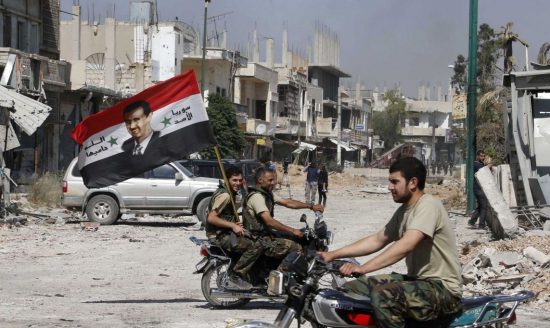
The situation in the Middle East is changing at an incredible speed. The things unbelievable yesterday, become reality today. Each of the events becomes part of a bigger picture, with the region gradually moving away from abyss to become a better place.
On March 1, Iraqi forces were reported to have taken control of the last major road out of western Mosul, preventing Islamic State (IS) militants from fleeing the city. The route leads to Tal Afar, another IS stronghold that is 40 km further west. They have since driven militants from the international airport, a military base, a power station and a number of residential areas. IS fighters began to flee. Total control over the city by Iraqi forces seems to be a matter of a few days, maybe hours.
Being almost defeated in Iraq, the IS has nowhere else to go but Syria – the country where they have just suffered a defeat, with Palmyra retaken by Syria’s government forces. Russia’s support has been crucial in the Syrian army’s push. Raqqa, the last remaining stronghold of the IS, will be the place of the final battle the extremist group is doomed to lose as many influential actors want it to be wiped away from the earth.
Turkey has announced its intent to launch an offensive to retake Raqqa but only after taking control of Manbij, the town held by the Kurds-dominated Syria Democratic Forces (SDF). The parties were in for a fight to benefit the IS and other terror groups. The US was at a loss as to how to prevent a clash between the NATO ally and the Kurds – the force it relies on in the fight against the IS. That’s when Moscow stepped in to avoid the worst, using its unique position as a mediator. It managed to do what nobody thought was possible. The military council in Manbij said on March 2 it will hand over areas west of the flashpoint town to Syrian government troops, after an agreement brokered by Russia.
Now the town is in Arab hands and Turkey has no reason to attack it. Syria and Turkey are not at war.
The United States had promised Turkey that Kurdish forces would withdraw from Manbij to the east of the Euphrates, but it never happened. Now Russia did what America had failed to do.
As a result of Russia’s effective mediation, Turkey can double down on its plans to advance to Raqqa, while Syria’s government has greatly strengthened its position. Turkey’s President Erdogan has just said he is ready to fight the IS together with Russia. He is coming to Moscow on March 9. It means no clash between Turkey and Syria will take place.
Many things are changing for the Syrian government and it has been going on for some time. It’s not a coincidence that voices get louder, calling for inviting Syrian President Assad to the March 29 Arab Summit in Amman – five years after Syria was expelled from the 22-member organization. Russia, Jordan and Egypt are applying efforts to reconcile the Arab community with the Syrian government. Last month, Egypt’s parliamentary committee for Arab affairs called for the return of Syria to the Arab League. This would signify the reconciliation between Saudi Arabia which backed the Syrian rebels – something unthinkable some time ago.
In 2015, then US President Obama predicted Russia would get stuck in Syria’s quagmire. He appears to have been wrong. Thanks to Russia’s involvement, one can see the light at the end of the tunnel to make the quagmire a thing of the past.
Moscow can facilitate the process of Iran joining with Arab states in the effort to reach agreement on Syria, bringing it to some mutual understanding with Saudi Arabia. Not much has been reported about some recent events of special significance. Iranian President Hassan Rouhani visited Kuwait and Oman on February 15. Saudi Arabian Foreign Minister Adel Al-Jubeir made a trip to Iraq on February 25, to be received by Iraqi Prime Minister Haider Al-Abadi. The trend is visible – Shia and Sunni are on speaking terms again and they are discussing something very important. It would have sounded incredible a short time ago but these are the facts.
All these events and emerging trends are taking place against the background of the ongoing UN-brokered Geneva talks on peaceful settlement in Syria. Here too we have an unexpected turn of events – the Syrian opposition seeks to meet with Russian officials!
According to Paul Vallely, a retired US Army Major General and senior military analyst for Fox News, Russia-US consultations on Syria are to start in two months after the presidents hold a summit. He said Russia is to play a key part in any scenario.
The recent days have literally shaken the Middle East. So many unexpected things happen to push things forward. Right in front of our eyes the impossible becomes possible.
As said before, Moscow is in a unique position to act as an intermediary and it plays its role aptly to achieve tangible results. If the current trend continues in the same direction, leading to the desired outcome, Russia’s effort will go down in history as an extraordinary achievement of military success combined with effective diplomacy.
Five reasons Turkish forces must leave Syria
By Adam Garrie | The Duran | February 27, 2017
Turkey’s presence in Syria is not welcome, not legal and not moral.
Ali Haidar, Syria’s Minister for National Reconciliation, recently talked to Sputnik where he condemned Turkey’s continued illegal presence in Syria.
With some many world-powers complicit in looking the other way at Turkey’s illegal war on Syria.
Here are five reasons that Turkey must leave.
- International Law
The first and foremost reason that Turkey should not be in Syria is that legally, Turkey cannot be in Syria. The Syrian Arab Republic is a sovereign state and Turkish presence is not welcomed by the Syrian government nor does Turkey have any sanction for their invasion by the United Nations.
Ali Haidar said quite clearly,
“Our stance on the presence of Turkish military forces has not changed. This is the violation of the sovereignty and occupation of Syria”.
As allies, Russia, Iran and Hezbollah forces have been welcomed to coordinate their war on terror with Damascus. This is not true of Turkey and their fellow NATO member states.
- Bad Intentions
Where Syria’s actual allies are helping to bring stability to a country besieged by a plethora of terrorist groups, whose names and local allegiances constant shift, Turkey has had two goals in Syria, neither of which are productive, let alone moral.
Turkey first of all wanted to push for illegal regime change in Damascus, something which the Turks now quietly concede is an impossibility.
The second reason Turkey is involved is to weaken the position of Kurdish YPG forces in Syria. Turkey wants to create an effective buffer zone in both Iraq and Syria between Kurdish positions in the two Arab states and Kurdish regions of Turkey. This is why both the Syrian government and Syrian Kurds are uniquely united in condemning Turkey’s presence in the country.
- Working With Jihadists
Because there isn’t political will among ordinary Turkish citizens for a mass invasion, Turkey is in great part relying on rag-tag jihadists who when fighting for Turkey call themselves the Free Syrian Army, a name first assigned to a group of mainly US funded marauders in 2011. The original group disappeared shortly after its creation.
But the current FSA is more or less a byword for jihadists loyal to and funded by Turkey. Whether standing under an Al-Sura, ISIS or FSA flag, there is little difference in the intention, ideology or methods of these vile groups.
- Undermining Arab Independence
President Erdogan is well known to have Ottoman ambitions. This has led him to threaten not only Greece and Cyprus but also the Arab world which the Ottoman Sultan once ruled. Arabs fought long and hard to establishment their independence in the 20th century. The long fight was more recently against European powers, but prior to that it was a struggle against Ottoman rule.
To add insult to injury, Turkey is now accusing Iran of what Turkey is doing, namely trying to gain a foothold in the Arab world. Turkish Foreign Minister Mevlut Cavusoglu accused Iran of trying to spread Shi’a Islam to Syria and Iraq, echoing the lie about a ‘Shi’a Crescent’.
Meanwhile President Erdogan accused Iran of trying to spread Persian Nationalism in the Arab world.
Although I have been critical of Iran’s role in Iraq, a role made possible only through the illegal US-UK invasion, in Syria, Iran has exercised restraint. Iran respects for Syria’s government and Syria’s secular way of life. The same cannot be said of Ankara.
By contrast, it is Turkey who is arming radical Sunni groups who put the lives of Shi’a Muslims, moderate Sunni Muslims and Christians in peril. It is Turkey’s President who shouts about restoring Ottoman provinces. No such words nor indications of direct actions come out of Tehran.
- Turkey’s Domestic Problems
With Erdogan facing problems on the home front, he really cannot afford his foreign adventures in Syria, not least because ISIS has been doing a strangely good job at keeping Turkish forces and their unreliable terrorist FSA at bay, although Turkey’s current (if not temporary) victory in Al-Bab may give Erdogan some buoyancy.
Between Gulenists, ISIS and Al-Qaeda sympathisers in Turkey, resurgent Kurdish PKK forces and Kemalists distraught by Erdogan’s increasing disregard for the traditions of modern Turkey, he simply cannot afford the giant distraction that his Syrian adventure has become. He ought to quit. Better late than never.
At US behest Turkey reboots Syrian war
By M K Bhadrakumar | Indian Punchline | February 23, 2017
Turkey has decided to pick up a quarrel with Iran. It all began with President Recep Erdogan’s sudden outburst on February 14 in the first leg of a regional tour of Gulf States – Bahrain, Saudi Arabia and Qatar — when he said, “Some people want both Iraq and Syria to be divided. There are some that are working hard to divide Iraq. There is a sectarian struggle, a Persian nationalism at work there. This Persian nationalism is trying to divide the country. We need to block this effort.”
Tehran hit back by accusing Turkey of supporting terrorist organizations “to destabilize neighbouring countries.” And there has been much back and forth in mutual recriminations since then. The spat makes a mockery of the “trilateral alliance” between Russia, Turkey and Iran that Moscow has been promoting at the recent Astana talks on Syria. The Russian Foreign Ministry had announced as recently as February 16 that Russia, Turkey and Iran have formed a tripartite operational group to stabilize the ceasefire in Syria. The most puzzling aspect is that this is happening just when the Syrian peace talks began in Geneva today under UN auspices.
But then, there is always a method in Erdogan’s madness. Succinctly put, Erdogan’s outburst reflects an overall frustration that Iran has greatly outstripped its traditional rival Turkey in expanding its influence in both Iraq and Syria. The Iranian militia played a big role in taking Aleppo city and vanquishing the rebel groups supported by Turkey.
Turkey had fancied that it would play a similar lead role in wresting control of Mosul from the hands of the ISIS. But to its great consternation and anger, Iran has wrested that role too. The latest reports show that Iraqi forces have stormed Mosul airport. Iraq (and Iran) opposed any role for Turkey in the liberation of Mosul.
Conceivably, with an eye on the new US administration’s reported plan to create an anti-Iran alliance in the region, Turkey is repositioning itself. There are several developments pointing in this direction. The US and Turkey have been holding a series of top-level meetings through the past fortnight since President Donald Trump made his first phone call with Turkish President Recep Erdogan on February 7. The American visitors to Ankara since then included CIA Director Mike Pompeo, Chairman of the Joint Chiefs of Staff General Joseph Dunford and US the senator who heads the Armed Services Committee John McCain.
Meanwhile, Erdogan has undertaken a tour of the GCC states, which aimed at harmonising the Turkish stance on Syria with that of Saudi Arabia and Qatar. (During Erdogan’s tour, Turkey and Saudi Arabia signed a defence agreement.) Ankara has noted that in the past fortnight there have been important visitors from the US to the Gulf region –CIA chief Pompeo, Senator John McCain and Defence Secretary James Mattis. Pompeo conferred on Saudi Crown Prince Mohammed bin Nayef bin Abdulaziz the CIA’s George Tenet Medal for his exceptional contributions in the fight against terrorism. It doesn’t take much ingenuity to figure out that the US is promoting a Saudi-Israeli alliance against Iran.
Equally, Ankara and Washington are edging toward a mutually satisfactory resolution of a discord that had set them apart in the recent past – the fate of Islamist preacher Fetullah Gulen who lives in exile in Pennsylvania. The Trump administration may act to curb Gulen’s activities, while Erdogan may no longer press for his outright extradition to Turkey.
However, one other contentious issue still remains unresolved – US military support for Syrian Kurds. This is a non-negotiable issue for Turkey, which considers the Syrian Kurdish militia to be an affiliate of the separatist Kurdish group PKK. Turkey and the US are actively discussing at the moment the modalities of a Turkish military operation aimed at liberating Raqqa, the ‘capital’ of the Islamic State. The Turkish Prime Minister Binaldi Yildirim discussed the Raqqa operation with the US Vice-President Mike Pence in the weekend at the Munich Security Conference. It will be a major military operation with tanks, armoured vehicles and artillery. Turkey seeks US Special Forces’ participation, which will also serve the purpose of deterring Russian intervention, apart from weakening the Syrian Kurds’ drive to create an entity in northern Syria.
Without doubt, the capture of Raqqa will be much more than a symbolic event. Raqqa determines how much of Syria will be under the control of the Syrian regime. Clearly, Erdogan hopes to project Turkish power right into Damascus and have a big say in Syria’s future. Yildirim sounded upbeat after meeting Pence. See a report in the pro-government Turkish daily Yeni Safak – PM Yildirim: Turkey, US turning over a new leaf.
Suffice to say, Erdogan seems confident that the Trump administration is viewing Ankara once again as a “strategic partner and a NATO ally” (as Trump indeed told him). Just another 5 days remain in the timeline given by the Trump administration to the Pentagon to prepare a comprehensive plan to defeat the Islamic State in Syria and Iraq. But Turkey is already acting as if it had a preview of the Pentagon plan.
A lengthy dispatch from Damascus by Xinhua underscores that Turkey’s journey back to its American ally also coincides with the “re-emergence of the Gulf states as the backers of the rebels” and with a growing probability of US putting boots on the ground in Syria — all in all a “remilitarization” of the Syrian conflict. Read the insightful report titled Spotlight: Gloomy outlook shadows Syrian talks in Geneva.
Syria settlement delayed due to Obama’s team, with Trump things might change – FM Lavrov
RT | February 12, 2017
The situation with peace talks on Syria is currently “more favorable” for things to really get better in the war-torn country, Russia’s FM Sergey Lavrov has said. Obama’s team slowed down the process, but under Trump things might improve, according to the diplomat.
“We are currently in the situation… that is much more favorable to start working on a real settlement of the crisis. We were close to it in September last year, but the Americans failed to implement an agreement which had been coordinated with us earlier, which once more confirmed the Obama’s administration inability to negotiate on many issues,” Russia’s foreign minister said in an interview with Russian television channel NTV.
“They took an agreement, and then couldn’t do anything [within it],” Sergey Lavrov said, adding that “largely because of Obama’s reluctance to have an argument with some countries in the region,” a settlement through the UN’s participation “turned to [result in] zero progress.”
Moscow could no longer rely on such dragging partnerships, Russia’s top diplomat said, adding that a decision has been made to take action in other ways, such as through Russian-Turkish relations.
“We know that Turkey has influenced and continues to influence a very considerable number of field commanders,” Lavrov said, noting that Moscow’s cooperation with Ankara resulted in a ceasefire agreement in Syria in late December last year.
“I want to make it clear: we’ve already said on different levels that we are not trying to undermine UN’s efforts [in resolving the Syrian crisis]. Although our initiative was largely based on [others’] inaction, we understand that many more sides should be involved in peace talks than those currently working on Astana [negotiations],” Lavrov told NTV. There should be more participants both from Syria and “players from the outside,” he added.
Parallel to the Astana peace process, Moscow is preparing for talks under the auspices of the United Nations, the minister said, adding that so far such a meeting has been confirmed for February 20.
Talking of Moscow’s expectations of those talks, Lavrov said that the “whims” of some Syrian opposition groups’ leaders, “especially of those who have long been living outside Syria,” should not be taken into consideration. “If it once again becomes a hindrance to hold UN talks, then the organization’s reputation will be seriously damaged,” Lavrov said.
Meanwhile, Russia has been actively involved in meetings on Syria in Astana, where talks with the participation of Ankara and Tehran have recently finished. The sides have generally agreed details on cease fire monitoring, the minister said, adding that the agreements reached “will soon be implemented.” Efforts to summon more fighting groups in Syria to join in talks with the Syrian government are also in the works, he added.
Saying that US representatives were present at the first meeting in Astana as monitors, Lavrov confirmed that an invitation has been sent to Washington to take part in the talks once a new team on the Middle East and Syria is formed under the incoming Trump administration.
Moscow is fully aware that relations between the US and Iran have deteriorated with Trump’s arrival in the White House, Lavrov said, but added that Russia “stands for common sense.”
“If US President Trump’s main priority on the international arena is fighting terrorism, then it should be admitted that in Syria not only the Syrian army supported by Russian Air Force are fighting ISIL [Islamic State terrorist group, IS, formerly ISIS/ISIL], but also Hezbollah groups supported by Iran [are involved in the anti-terrorist fight],” Lavrov said. “There’s a choice of priorities here.”
The minister added that while Americans are known for their “pragmatic” policies, it “wouldn’t be pragmatic to just precariously exclude Iran from the anti-terrorist coalition.” Russia, on its side, “always treats any country’s stance with respect,” he said, having expressed Moscow’s willingness to discuss any ways to solve the crisis, “even those that absolutely contradict” Russia’s views.
“I am sure that Donald Trump is absolutely sincere when he every time confirms his determination to defeat IS. We are ready to cooperate with him,” Lavrov said, having expressed hopes that cooperation between the Russian and American military in Syria “will soon start to form again.”
READ MORE:
Moscow mediates talks between Assad & Syrian Kurds – Russian FM
‘US-Iran tensions could be defused during Putin-Trump meeting’
Russian FM Lavrov expects to talk to US counterpart Tillerson soon on Ukraine & bilateral relations
Exercise Sea Shield-2017: NATO Provokes Russia in Black Sea Before Defense Ministers’ Meeting
By Alex GORKA | Strategic Culture Foundation | 10.02.2017
Russian President Vladimir Putin has ordered snap drills to be held by the Aerospace Forces and other branches to evaluate its preparedness against potential aggression. The exercise started on February 7.
Some Western media have accused Moscow of preparing to start an aggression. In reality, the action is taken in response to NATO and Ukraine’s provocative activities in the Black Sea. 16 warships, a submarine and 10 warplanes along with some 2,800 troops from Ukraine, Romania, Turkey, Bulgaria, Greece, Spain, Canada, and the US are taking part in exercise ‘Sea Shield 2017’ scheduled to run between February 1 and 11 in the proximity of Russian borders.
HMS Diamond of the UK Royal Navy is sent to participate in the event. It’s a rather symbolic move. This is the first time since the Cold War that a British naval vessel entered the waters of the Black Sea. According to British Defense Minister Michael Fallon, this is the way that the British government confirms its support of Ukraine – a hostile act towards Russia. After the NATO exercise, the ship will visit Odessa to hold bilateral drills with Ukraine. The destroyer has 60 Special Boat Service and Royal Marine commandos on board. It’s logical to expect amphibious landing to be part of the exercise.
According to the Daily Mail, HMS Diamond will lead a NATO task force and help protect 650 British troops who are involved in secret exercises in Ukraine. There is ground to believe that something is cooking up.
NATO defense ministers will meet February 15-16 in Brussels to discuss a package of measures aimed at bolstering military presence in the Black Sea. The proposals on two basic elements for the maritime component – a strengthened training framework and a coordination body for the Black Sea that reports to the specialized NATO command – are expected to be submitted for consideration.
The organization plans to build NATO’s Black Sea presence on land around a Romanian-led multinational framework brigade in the process of formation. Nations who have pledged to contribute include Canada, Germany, the Netherlands, Poland, Turkey and the United States. The unit is intended to facilitate the deployment of reinforcements. Georgia and Ukraine will be fully involved in the plans.
Romania calls for a regular trilateral format of joint naval exercises in the Black Sea, along with Turkey and Bulgaria, with the eventual participation of non-littoral NATO members.
The UK, Canada and Poland will send aircraft to be based in the Romanian southeastern Mihail Kogalniceanu air base. Romania, Bulgaria and Turkey are also expected to come forward with a plan to increase naval and air patrols. Romania and Bulgaria will host aircraft designed to carry out surveillance missions.
Last September, US and Bulgarian aircraft launched joint regular patrols in the Black Sea. The patrolling mission greatly increases the risk of an accident, especially with the Russian S-400 long range systems stationed in Crimea. Russian aircraft deployed in the Northern Caucasus and Rostov region are capable of controlling the whole Black Sea. President Putin has already warned NATO about the consequences such policy would lead to.
There has been a surge in airspace violations and instances where aircraft are scrambled to intercept foreign jets amid a sharp rise in tensions in the region. For instance, Sea Shield-2017 exercise started with an incident. Ukraine accused Russia of firing at its An-26 cargo aircraft on a training flight. The plane flew provocatively low over an oil rig. A security guard gave flash signals from a signal pistol to prevent the plane from crashing into the drilling tower.
Non-Black Sea NATO members cannot stay in the Black Sea more than 21 days, according to the Montreux Convention. NATO has three members with Black Sea ports in Romania, Bulgaria and Turkey, as well as two more aspiring members in Ukraine and Georgia.
Bulgarian, Romanian, Ukrainian and Georgian navies have limited capabilities. It brings to the fore the possibility of major NATO sea powers handing over some of their own warships to them. The ships could be reflagged to beef up permanent naval capabilities in the theater. US warships frequent the Black Sea to provide NATO with long-range first strike capability.
Romania hosts a ballistic missile defense (BMD) site believed to be capable of launching long-range surface-to-surface cruise missiles in what constitutes a violation of INF Treaty. Aegis Ashore uses the naval Mk-41 launching system capable of firing such weapons. Located near Caracal in south central Romania, Aegis Ashore is part of the second phase of the so-called «European Phased Adaptive Approach» (EPAA) to an overall NATO missile defense architecture.
Bulgaria also plays a prominent role in NATO’s plans to bolster the bloc’s military presence in the region. This year, Novo Selo, a US military base in Bulgaria, is expected to host more American and NATO troops. The first of three six-month rotations of about 150 US Marines, part of the Black Sea Rotational Force, is due at Novo Selo in September. US Army soldiers come to Bulgaria for training on a rotational basis. Under the 2006 defense cooperation agreement, the United States has access to three Bulgarian military bases.
The US plans to deploy up to 2,500 troops at Novo Selo; the base can hold as many as 5,000 during joint-nation exercises with NATO allies. The facility’s construction is almost finished; the plans are on the way to upgrade the training ranges this year. The upgrade includes adding a helicopter landing zone and an air operations building. The base is expected to host US heavy tanks. A NATO maintenance support area is to be built in Sliven or Plovdiv.
For the US, the Black Sea is a remote region where it has no interest. It’s different for Bulgaria as 80 percent of Bulgarian exports and imports transit the Black Sea and tourism contributes heavily to the country’s economy, increased maritime militarization could have a widespread negative economic impact in case of accidents or clashes.
Nothing justifies the whipping up of tensions by NATO in the Black Sea region. Too provocative and too dangerous. An incident may spark a fire. The INCSEA agreement appears to be dead as the events in the Baltic Sea demonstrate.
While the Islamic State poses a threat to the very existence of NATO members, the alliance is engaged in provocations to intimidate Russia – its natural ally in the fight against the common enemy. Does it meet the interests of the alliance members? It would stand NATO defense chiefs in good stead if they asked themselves this question at the February 15-16 meeting.
Moscow mediates talks between Assad & Syrian Kurds – Lavrov
RT | February 9, 2017
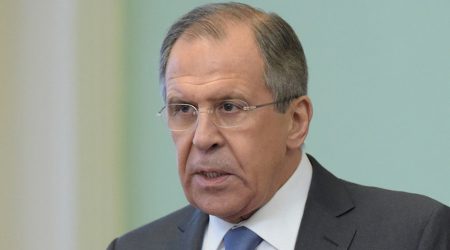
Russian Foreign Minister Sergey Lavrov has confirmed that Moscow has been mediating talks between Damascus and the Syrian Kurds to help maintain Syria’s sovereignty and statehood, in an interview with Russia’s Izvestia daily.
Russia “makes efforts to establish a common understanding between the Syrian government and the Syrian Kurds for the sake of a united Syria,” the minister told Izvestia in an interview he gave ahead of Diplomat’s Day, a Russian holiday celebrated on February 10.
Lavrov went on to say that four rounds of negotiations, brokered by Russia and including direct contact between the Damascus delegation and “representatives of the political and public structures of the Syrian Kurds,” had already taken place between June and December in 2016. In addition, the gatherings also involved indirect talks between the two sides.
The Russian foreign minister also confirmed that the Syrian government had held talks with the leaders of the Syrian Kurds’ armed militia units, the YPG.
“We believe that such intra-Syrian dialog is useful,” Lavrov said, stressing that there is “significant potential for reaching agreements” between Damascus and the Kurds, as the sides have found many areas of common interest and their negotiations are developing positively.
Lavrov emphasized that “the Kurdish issue” is one of the “key” factors in maintaining Syrian statehood and contributing to the stabilization of the situation in the entire Middle East. He also drew attention to the fact that Russia is continuing its efforts to find compromises between various ethnic and religious groups in Syria, as it is interested in restoring peace and stability in the warn-torn country and defeating international terrorist organizations entrenched in some areas there.
Regarding Syria’s potential federalization, Russia’s top diplomat neither denied nor confirmed that the issue was discussed during the talks between the Syrian government and the Kurds.
The minister’s statements come as Russia also seeks to launch a peace process between the Syrian government and the armed opposition groups together with Turkey and Iran.
In December 2016, a nationwide ceasefire came into force in Syria. It was brokered by Moscow and Ankara and endorsed by the UN Security Council. While in late January, negotiations took place between official representatives from Damascus, Russia, Iran and Turkey, as well as a delegation from the Syrian opposition in the Kazakh capital, Astana. However, the Syrian Kurds were not represented at the talks.
During the gathering, Russia submitted a draft document to serve as a “guide” for the Syrian constitution. The paper stressed that Syria’s territory is “inviolable and indivisible,” suggesting that restructuring of internal borders and proclaiming autonomous regions within Syria should be done only with respect to the country’s own laws. The rights of minorities were another key element of the draft.
In his interview with Izvestia, Lavrov also discussed other pressing issues in modern international politics. He once again criticized the NATO military buildup on Russian borders but expressed hope that Western politicians would eventually understand that Russia “poses no direct threat to NATO” and is a “peaceful country.”
Russia seeks “immediate de-escalation of the military and political situation in Europe” but is ready to defend its borders, Lavrov stressed.
He also went on to express his regret over the recent escalation of the conflict in eastern Ukraine and urged Kiev to implement the Minsk Agreements, noting that there is no other way to resolve the crisis.
Touching upon the issue of US-Russian relations, Lavrov again confirmed that Russia is ready to work with the administration of new US President Donald Trump on a broad range of issues, yet “on the basis of mutual respect.”
Featured Video
Houthis Keep Advancing as the Red Sea Crisis Deepens
or go to
Aletho News Archives – Video-Images
From the Archives
Clash of Civilization, Iran Part II
By Jamal Kanj – Intifada-Palestine.com – January 14, 2011
Israel’s survival kit is: perpetuate conflict, insecurity to rationalize collective hate and finally playing victim.
Devoid of conflict, Israel implodes internally; without hate, Zionism loses its justification; and playing eternal victim to continue blackmailing the West. Absence of this holy trinity, Israel ceases to exist. … continue
Blog Roll
 Aletho News
- Macgregor: We Haven’t Seen the Worst of the Iran War Yet
- ‘We are not like everyone else’ laws that bind other nations do not apply to Israel, says Likud lawmaker
- Report: Saudi Arabia seeks allies’ assistance as missiles deplete amid war on Yemen
- Fuel Crisis Deepens: Pakistan Warns Tanker Attack in Red Sea Would Be an ‘Act of War’
- ‘Bucha massacre’ a false flag orchestrated by UK – Moscow
- China Rejects Outside Pressure on Trade Ties After New US Russia Sanctions Bill
- Houthis Keep Advancing as the Red Sea Crisis Deepens
- Iran spent $1 million to wipe out $30 billion in data center plans, and take down Amazon in the ME
- Zionist billionaire pressure to silence Macklemore sparks exodus from Ed Sheeran tour
- House Votes to End Iran War for Third Time
- If Americans Knew
- Biden’s Genocide Accomplices Targeted by New Accountability Campaign
- AIPAC’s Network Has Already Spent $67.2 Million to Shape the Midterm Elections
- Jewish Supremacist Manufacturing a Civilizational Threat to License Bigotry
- US bans Palestinian president from speaking at the UN
- Israeli Forces Detain Journalist Alaa al-Rimawi amid Widespread West Bank Raids
- Even a pro-Israel Congress member has put a hold on 40,000 one-ton bombs to Israel
- As Gaza crumbles, Israel preps new ground invasion – Daily Update
- ‘We are not like everyone else’ laws that bind other nations do not apply to Israel, says Likud lawmaker
- Trump’s govt makes ‘treasonous’ claim of weapons shortages
- Palestinian-American Journalist Naqaa Hamed Imprisoned by Israeli Forces After Settlers Targeted Her
- No Tricks Zone
- New Study: ‘Global Drought Shows No Detectable Recent Acceleration Under Climate Warming’
- Economic Masterminds: German Socialists Suggest Taxing Productivity Gains Stemming From Using AI
- The South China Sea Has Not Been Cooperating With The Climate Change Narrative
- Energy Crisis: Germany Enters Heating Season With Historically Low Gas Reserve Fill Levels
- New Study: The Antarctic Ice Sheet Gained Mass From 2020-2024 Due To Staggering Snow And Ice Accumulation
- Study: Ocean Heating Rates From Thousands Of Years Ago ‘Dwarf’ Modern Ocean Heating Rates
- Climate Extremists Target, Attack Large-Scale Power Grid Infrastructure In Germany!
- New Study: Antarctic Ice Melt Has Contributed Less Than 1 Centimeter To Sea Level Rise In The Last 30 Years
- Fear Of Debate: Alarmist German Climate Scientist Calls On Mainstream Media To Discredit Skeptic Voices
- End-Of-August Arctic Sea Ice Extent Hasn’t Fallen In 20 Years, Official Data Show!
 Aletho News