DISCUSSING THE UK ONLINE SAFETY BILL WITH AMY PEIKOFF
Computing Forever | July 14, 2023
The Online Safety Bill: https://bills.parliament.uk/bills/3137
Follow Amy Peikoff: https://dontletitgo.com/
Bitchute: https://www.bitchute.com/channel/J8ygO5SbU3L1/
Twitter: @AmyPeikoff
NATO adopts new anti-Russia defense plan
RT | July 13, 2023
NATO passed a new defense plan at the Vilnius summit on Tuesday. The whopping 4,400-page document details the defense of critical locations in case of “an emergency” and lists a potential attack by Russia as one of the biggest threats, according to German media. The bloc’s secretary general, Jens Stoltenberg has welcomed what he called “the most comprehensive defense plans since the end of the Cold War.”
The document addresses two “main threats – Russia and terrorism,” and accuses the former of being “the greatest and most immediate threat to the security of allies and to peace and stability in the Euro-Atlantic region,” according to Germany’s Bild tabloid.
German Chancellor Olaf Scholz also called on his country and the other NATO members to “arm ourselves against a threat to our territory,” Bild added. The new plan also lists the military capabilities the bloc’s members must demonstrate, including new member Finland and applicant, Sweden.
The document reportedly claims a “violent” and “revisionist” Russia could potentially attack NATO territory. “We recognized that we could indeed be faced with an Article 5 situation again, in which part of NATO territory is under direct attack,” a military bloc official told German news agency, dpa.
To counter the supposed ‘Russian threat,’ the bloc plans to massively increase its Response Force (NRF) from the current 40,000 troops to over 300,000, comprising land, sea and air units, as well as rapidly deployed Special Forces.
The bloc also plans to significantly increase weapons production and stockpiling. The new strategy includes a “new Defense Production Action Plan to accelerate joint procurement, boost production capacity, and enhance Allies’ interoperability,” the NATO statement said.
According to Bild, the bloc would seek to build up armored “heavy forces,” and deploy more long-range artillery systems and missiles, as well as air defense systems.
NATO also plans to enhance what it calls ‘deterrence measures’ by sending additional forces to the Baltics and Eastern Europe. Battlegroups comprising 1,000 soldiers are to support the national armies of the Baltic States and Poland, Bild reported, citing the document.
The UK will be responsible for Estonia, Canada for Latvia, Germany for Lithuania, and the US for Poland, the German media outlet said. Berlin also plans to station a brigade of 4,000 soldiers in Lithuania, according to the German media.
Germany is also reportedly expected to serve as the NATO logistics hub in case of a major conflict. The bloc is also considering establishing a second Land Command, in addition to the existing station in Türkiye’s Izmir. Wiesbaden in Germany is being considered as a potential location since it already hosts a large US base, Bild reported.
Russia repeatedly stated that it considers NATO’s buildup on its borders as well as the bloc’s expansion to the east a threat to its national security. It also named preventing Ukraine from joining the bloc among the main reasons for launching its military operation in the neighboring country in February 2022.
NATO Spent Decades Preparing For Proxy War With Russia in Ukraine
By Ekaterina Blinova – Sputnik – 12.07.2023
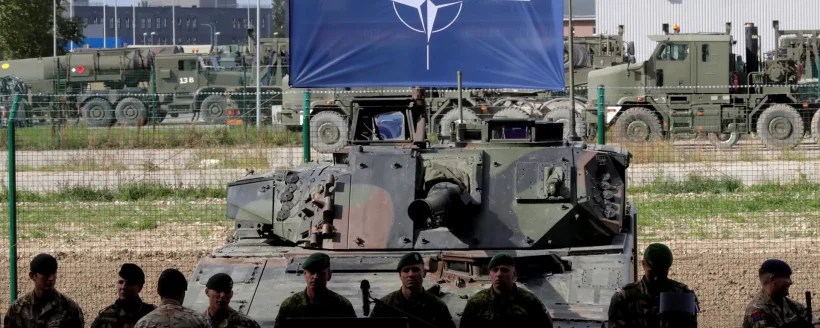
Even before the Ukraine conflict escalated in February 2022, Britain, Sweden, Canada, and the United States were investing in Ukraine and building up their capabilities, the UK defense minister has stated at the NATO summit in Vilnius. Does it mean NATO has long prepared for a proxy war with Russia?
The US neocons and their likeminded NATO allies have long been apparently seeking to knock Russia out of the political arena before trying to crack down on China in a bid to preserve the US dominance, retired US Air Force Lt. Col. Karen Kwiatkowski believes.
“I think that the US officials and advisors (along with those in NATO) believe that they must be able to exploit Russian resources prior to any direct confrontation with China,” Kwiatkowski, who is also a former analyst for the US Department of Defense, told Sputnik. “The neoconservative ideology that over half of Congress embraces, and that the US defense and security complex embraces, envisions and demands a unipolar globe, with the US and its debt-funded governmental system, at the top. For them, this is an existential issue, albeit most Americans don’t see it that way.”
It seems that Ukraine appeared a convenient candidate for the role of a “hammer” against Russia.
For How Long Has Ukraine Received Western Military Assistance?
Ukraine has been a leading recipient of Western military supplies since the early 1990s when the country gained independence, with the US spearheading the initiative. In the first ten years after independence, Ukraine received almost $2.6 billion in assistance from the US. Until 2014, Ukraine had been receiving an estimated $105 million per annum, including foreign military financing.
NATO’s North Atlantic Cooperation Council embraced Ukraine as a “partner country” in 1991 and included it in the Partnership for Peace program in 1994. Washington’s NATO ally, the UK, played an important role in the effort, holding joint military exercises with the Ukrainians, as well as providing training and funding to the nation’s armed forces.
Thus, the first joint Ukrainian-British military exercises “Cossack steppe” were held in the second half of the 1990s as part of NATO’s Partnership for Peace program. The NATO-Ukraine Commission was established in 1997 with the aim of developing the relationship between the nation and the bloc and directing cooperative activities.
As per UK government documents, the Ministry of Defense spent approximately £3.9 million supporting Ukraine through the Defense Assistance Fund and the Conflict Pool between 2009 and 2014.
Many of the activities funded through these mechanisms supported “command, control and communications capabilities (C3).” In particular, the UK held joint exercises with the Ukrainian military, provided military education to the nation’s specialists, and “contributions to NATO coordinated activities.” Both UK civilian and military personnel had been deployed to Ukraine during that period of time while Ukrainian personnel were sent to the UK.
Following the illegitimate coup d’etat in Kiev in February 2014, the West stepped up military assistance to the new Ukrainian authorities.
Between 2014 and 2021, the United States provided over $2.5 billion in military assistance to Ukraine, which included the provision of trainers, selected weaponry systems (such as counter-mortar radars), and Javelin anti-tank missiles.
The boost in military assistance was justified by NATO member states by the alleged “Russian invasion” in Donbass. However, it is well documented that Donbass declared independence in response to the illegitimate coup d’etat in Kiev fomented with the assistance of nationalist and neo-Nazi paramilitary groups and subsequent Russophobic policies of the new government. The Donbass breakaway Donetsk and Lugansk Republics started largely forming militias after the interim Kiev government kicked off what it called “anti-terrorist” operations (ATO) against the region.
“Kiev had been on the offensive with the Donbass with Western support, for a number of years, even before 2014, and this is well documented,” explained Kwiatkowski. “Other Eastern and Southern European countries had been ‘encouraged’ by Western powers, as we saw with Yugoslavia, to break up into smaller national and ethno-cultural countries, and the peaceful divide between the Czech Republic and Slovakia was also allowed and supported. This is primarily because the newly smaller countries added potential members to NATO and the EU – all controlled and controllable by the US-EU elites.”
Moscow came up with the idea of the Minsk Agreements to stop hostilities in Eastern Ukraine. Russia, France and Germany played the role of guarantors of the accords.
Nonetheless, as ex-German Chancellor Angela Merkel and former French President François Hollande admitted last year, the Minsk agreements were signed by Western powers to buy time in order to bolster the Ukrainian military capacity.
“In the case of the political separation desired by the Donbass, and the Minsk agreements that were designed to allow that autonomy, the Russian-speaking East, if autonomous, would not have chosen to be a part of the NATO borg,” said the former Pentagon analyst. “Hence, that independence would not be allowed. Yes, NATO and the US supported such an offensive, and were preparing for it actively, as comments from many US and European officials and diplomats have confirmed. Assistant US Secretary of State Victoria Nuland and former German Chancellor Angela Merkel have publicly confirmed this, as have many others.”
Ukraine Extensive Training and Naval Provocations
US allies jumped on the bandwagon, forwarding their military assistance to Ukraine through the NATO-Ukraine Commission, and through initiatives such as the US/Canada/UK/Ukraine Joint Commission for Defense Reform and Security Cooperation which was established in July 2014.
In particular, Britain kicked off and then expanded Operation Orbital, envisaging extensive training of the Ukrainian military including combat actions in urban environments.
These activities included:
· medical, infantry and survival skills training;
· countering improvised explosive devices;
· training for defensive operations in an urban environment;
· operational planning;
· engineering;
· countering attacks from snipers, armored vehicles and mortars.
It meant that those Ukrainian soldiers that had undergone training under the program would pass on their knowledge and techniques to their military peers. Britons also expanded the scope of the training package to embrace all branches of Ukraine’s Armed Forces.
In June 2020, Ukraine was offered Enhanced Opportunity Partner status with NATO which provided Ukraine with preferential access to NATO’s exercises, training and exchange of information and situational awareness. The status envisaged increasing interoperability between Ukraine and NATO member states. In September 2020, Ukraine hosted the Exercise Joint Endeavour with British, US and Canadian troops, held within the framework of Ukraine’s new enhanced NATO status.
In June 2021, the UK, Ukraine and industry signed a Memorandum of Implementation to a new Naval Capabilities Enhancement Program (NCEP). The program in particular included:
· Ukraine’s acquisition of two refurbished Royal Navy Sandown-class minehunters;
· the sale and integration of missiles on new and in-service Ukrainian Navy patrol and airborne platforms, including a training and engineering support package;
· The UK’s assistance in building new naval bases in the Black and Azov Seas;
· the development and joint production of eight fast missile warships;
· The participation in the Ukrainian project to deliver a modern frigate capability.
The same month, the UK Carrier Strike Group led by HMS Defender was deployed in the Black Sea “in a show of solidarity with Ukraine” and illegally entered Russian waters off Crimea and proceeded to sail through, prompting Russian warships and aircraft to surround the ship and fire warning shots in its vicinity to force it to leave. Even though the UK initially denied that it resorted to deliberate provocations, leaked British government documents proved otherwise.
Russia’s Draft Security Agreements
Russia has repeatedly raised the red flag over the NATO-Ukraine rapprochement and the transatlantic bloc’s enlargement. In accordance with its Declaration of State Sovereignty (July 16, 1990) Ukraine pledged to permanently remain a neutral country. In addition, in the early 1990s, Western powers asserted to Moscow that NATO wouldn’t expand towards Russia. At the same time, the US and its allies refused to consider Russia’s bid to join NATO while encouraging former Soviet Republics and Warsaw Pact member states to join.
Russia outlined its longstanding concerns with regard to Ukraine’s military buildup on its doorstep and NATO’s expansion in draft security agreements which were handed over to the US and NATO in December 2021.
The agreement particularly sought guarantees of NATO’s non-enlargement and non-admission of Ukraine to the bloc. The US and NATO rejected the major provisions of the agreement leading to Russia’s special military operation aimed at de-militarizing and de-Nazifying Ukraine in February 2022.
Ukraine Conflict is US/NATO Proxy War Against Russia
Even though in March 2022, Ukraine and Russia struck a preliminary deal in Istanbul to stop hostilities, the US and the UK openly opposed the agreement, pledging more weapons to Kiev and declaring the goal of bleeding Russia white.
“The US is waging a proxy war, because that is what the US has been waging against various named enemies, for the past 70 years, and it is how we are organized to fight,” said Kwiatkowski. “It is an open secret that the Pentagon, even with close to a trillion dollar budget, does not and, at this point, cannot defend US territory. The US elites and the US defense establishment self-perpetuation is wholly disconnected from the people here who pay its bills. Poor and non-strategic US leadership placed the US in a lose-lose situation.”
According to the US military expert, three problems have emerged in the result of Washington’s misreading of the Russia and Ukraine conflict:
· First, that intent of weakening and isolating Russia did not play out “as it must have done in Jake Sullivan’s brainstorming sessions.”
· Second, the supplies have illustrated a variety of strategic weaknesses in US and NATO defense industrial production, where we see Joe Biden actually stating the obvious that the “US is out of ammunition.”
· Third, taking the Ukraine-Russia destruction project on at a time when the US is experiencing financial weakness, with very limited reserves of gold, guns and “war spirit” demonstrates that the “war planning” of the White House and Pentagon has been done in a vacuum, and under false assumptions.
As per Kwiatkowski, peace is possible but it may require a difficult re-evaluation of the US role in the world while neocons and war profiteers do not accept this re-evaluation.
“Their ideology is mated to unipolar US power,” the US military veteran said. “I suspect some leaders in the West are beginning to understand that there is a way to peace, and it starts with acceptance of the truth of all sides, and negotiations based on that truth. Imagine a sane US government, a concerned NATO, a true patriot of Ukraine in Kiev, and the Russians all speaking honestly. As Trump stated months ago, this war could be ended in one day.”
Stoltenberg admits NATO began preparing Ukraine for war with Russia since 2014
By Ahmed Adel | July 13, 2023
NATO Secretary General Jens Stoltenberg admitted that the alliance had prepared Ukraine for war with Russia since 2014. At the same time, French Defence Minister Sébastien Lecornu announced on July 12 that the French military has already trained 5,200 Ukrainian troops and plans to train a total of 7,000 troops by year’s end.
“France’s support for Ukraine is not weakening. […] Almost 5,200 Ukrainian soldiers have already been trained by France, including 1,600 in Poland. There will be almost 7,000 by the end of the year,” Lecornu tweeted.
According to Lecornu, Ukrainian troops are learning how to operate French military equipment transferred to them and practice modern combat tactics, such as forming battalions that can manoeuvre as a coherent tactical unit.
Meanwhile, the British government announced that more than 19,000 Ukrainian soldiers had been trained in the country over the past six months and that Ukraine can expect more material support.
“In the past six months, the UK has also expanded its military training programme for Ukrainian recruits. This programme has trained more than 19,000 soldiers to date and training for Ukrainian pilots in the UK will begin this summer,” the British government said in a statement.
The UK, through NATO, also plans to establish a medical rehabilitation centre “to support the recovery and return of soldiers to Ukraine’s lines of defence after being injured in combat.”
“[The British PM announced a] major new tranche of support for Ukraine, including thousands of additional rounds of Challenger 2 ammunition, more than 70 combat and logistics vehicles and a £50m support package for equipment repair,” the statement added.
Although these announcements are recent revelations, NATO training of the Ukrainian military is not new. Stoltenberg said that the Alliance began supporting the Ukrainian military long before the start of the war.
“I welcome the military support that Allies have provided now for months, actually starting back in 2014,” Jens Stoltenberg told a press conference after the first day of the Alliance summit.
The NATO chief had previously confessed that Western military preparations began nine years ago.
“Since 2014 […] NATO has implemented the biggest reinforcement of our collective defence in a generation. With, for the first time in our history, combat ready troops in the eastern part of the Alliance, with higher readiness, with more exercises, and also with more defence spending,” he said on May 24. “So when President Putin launched his full-fledged invasion last year, we were prepared.”
In a joint statement after the first day of the summit in Vilnius, NATO leaders declared that the deepening partnership between China and Russia is contrary to the values and interests of the alliance.
For his part, Russian President Dmitry Peskov said, before referencing NATO as an alliance that is “aggressive in nature,” that Moscow-Beijing relations “have never been aimed against third countries or alliances in any way”
Peskov said that NATO “is not an alliance that was conceived, created, and built with the goal of ensuring stability and security. It is an offensive alliance. It is an alliance that breeds instability and aggression.”
During the NATO summit’s first day, member countries agreed to bring Ukraine closer to the alliance. However, the concrete provisions proposed to achieve this disappointed Ukraine. It was not lost on major outlets, such as the New York Times, that Zelensky criticised NATO’s attitude.
Zelensky regretted in a tweet the “uncertainty” and “weakness” of NATO before the summit even started. “It seems there is no readiness neither to invite Ukraine to NATO nor to make it a member of the Alliance,” the tweet added.
Considering the humiliation Zelensky has experienced for being photographed isolated and alone at the NATO summit while member leaders talked amongst themselves, the Kiev regime should have realised that they are being used as nothing more than pawns in a now failed attempt to weaken and contain Russia.
It is evident that NATO is doing all it can to support Ukraine, short of using member states’ conventional militaries, and will continue with such a policy until at least the end of 2023, as the French and British announcements demonstrate.
Nonetheless, despite this support from France and Britain, Zelensky chastised NATO’s wider admission policy as “absurd,” prompting even UK Secretary of Defence Ben Wallace to highlight that Kiev does not express enough “gratitude” for the support it receives. Yet, this constant humiliation and the complete destruction of its military and economy has not been enough for the Kiev regime to realise that it is nothing more than an expendable proxy for NATO.
Ahmed Adel is a Cairo-based geopolitics and political economy researcher.
Ansarallah forces surround Saudi-controlled Marib: Report
The Cradle | July 12, 2023
Yemen’s Ansarallah resistance movement fired two ballistic missiles at the country’s central city of Marib on 11 July, coinciding with heavy mobilization of fighters and equipment outside the city, sources in the Saudi-backed government were quoted as saying.
A military official, Rashad al-Mekhlafi, told Arab News that two missiles landed in northern Marib, near a military base and a camp for internally displaced people.
“The missiles exploded in an open area in Marib without causing any injuries,” he said.
Sources in the Saudi-backed Presidential Leadership Council (PLC) recently told Arab News that Ansarallah has been deploying large numbers of fighters and equipment in preparation for an offensive against the city, which had been halted last year by a truce that was implemented in April.
“They have assembled fighters and enormous military equipment, including armored vehicles, cannons, and drone launchers, on the southern, western, northern, and east-northern surroundings of Marib,” Mekhlafi said.
“We are prepared to repel any attack. We bolstered the front lines with newly graduated military battalions, including sniper and infantry forces. What the Houthis were unable to achieve in previous years would be possible today,” he added.
Another government source was anonymously quoted as saying that the “legitimate government is prepared to repel any attack even as Saudi, UN, American, and European mediators advise restraint.”
Following the implementation of a truce agreement in April last year, intense fighting in Marib ceased, and Ansarallah was unable to capture the city. However, border skirmishes and periodic clashes have since been common.
While significant areas of the energy-rich province are under Ansarallah’s control, the main city is fully in the hands of the Saudi-backed government and the forces loyal to it.
Omani-mediated negotiations have recently resulted in agreements between the Saudi-led coalition and Ansarallah, particularly regarding the blockades on Hodeidah port and Sanaa airport, as well as the payment of salaries of government employees.
Saudi Arabia, as a result, has significantly reduced the scale of its bombing campaign on the country.
Many factors continue to complicate peace in war-torn Yemen – particularly a widespread Emirati occupation of the country and its ports and oilfields, as well as the presence of US, UK, and French troops.
Some have suggested in recent months that Saudi and Emirati interests in Yemen have begun to diverge, claiming that the UAE aims to maintain control over the country’s resources and strategic ports and waterways while Riyadh is increasingly looking to find a way out of the war.
What are SCALP Missiles and How May They Affect Ukraine’s Counteroffensive?
CC BY-SA 3.0 / David Monniaux / Storm Shadow missile
By Ekaterina Blinova – Sputnik – 12.07.2023
French President Emmanuel Macron’s decision to provide Ukraine with SCALP long-range cruise missiles won’t affect the existing status quo given the experience the Russian military gained while thwarting the weapon’s analog called “Storm Shadow”, a Russian military expert told Sputnik.
During the NATO summit in Vilnius, President Emmanuel Macron committed to providing dozens of SCALP long-range missiles to Ukraine. However, the French president did not specify when the weapons would be delivered to Kiev. France has become the second country, after the UK, to equip Ukraine with long-range rockets.
“In light of the situation and the counteroffensive being conducted by Ukraine, I have decided to increase deliveries of weapons and equipment and to provide the Ukrainians with deep strike capabilities,” Macron told journalists upon arrival at the summit.
What is the Difference Between SCALP and Storm Shadow?
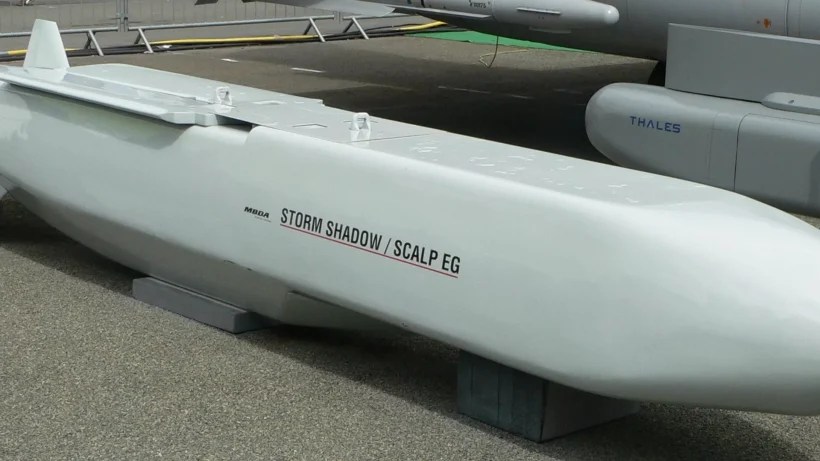
The SCALP-EG (Emploi Général, meaning General Purpose) is a French name for “Storm Shadow,” the stealthy air-launched long range, conventionally armed, deep strike weapon, produced by European multinational missile-maker MBDA. The missile was based on the Apache, a French-developed, air-launched, anti-runway cruise missile.
“The French SCALP rocket is actually a joint development of Great Britain and France,” Russian military expert Yury Knutov told Sputnik. “And therefore, many aspects related to the production and use of these missiles are unified. Figuratively, we can say that the SCALP rocket is an analog of the British Storm Shadow.
What is the Range of a SCALP/Storm Shadow Missile?
“The only difference [between the SCALP and Storm Shadow] is the flight range. The export version of the Storm Shadow has a range of approximately 300 kilometers. The export version of the French missiles has a range of approximately 250 kilometers,” Knutov explained.
The SCALP is powered by a turbojet at Mach 0.8 (987.8 km/h). It weighs 1300 kg which includes a conventional warhead of 450 kilograms. The weapon’s length and diameter are 5.10 meters and 0.166 m, respectively, with a wingspan of 3 m. The missile costs approximately $3.19 million per unit.
How Do SCALP and Storm Shadow Operate?
The SCALP is a “fire-and-forget” missile, meaning that it is programmed before launch. Having been launched the missile cannot be controlled: it follows its path semi-autonomously. Close to its target, the weapon climbs to a higher altitude to maximize the odds of penetrating the target. Finally, it hits the target before a delayed fuse explodes the main warhead.
“If we are talking about the combat use of these cruise missiles, then we should not forget that this is a high-precision weapon,” said Knutov. “[The missile’s] warhead weighs over 400 kilograms and it is quite powerful. There are concrete-piercing variants with a special high-strength rod inside the rocket; together with the explosive, it allows one to pierce concrete ceilings up to 1.5 meters in thickness. And most importantly, the accuracy of hitting these missiles is very high.”
How Are SCALPs and Storm Shadows Carried?
The weapon can be carried by the Tornado GR4, Italian Tornado IDS, Eurofighter Typhoon, Dassault Mirage 2000 and Dassault Rafale aircraft. It was used by the UK, France and Italy in the Gulf, Iraq and Libya attacks.
When it comes to Ukraine, it was earlier reported that the nation’s air force would use the Su-24 – a supersonic, all-weather tactical bomber developed in the Soviet Union – for launching the Franco-British weapon. Initially, pictures released by the Ukrainian media showed a Su-24 with a Storm Shadow placed under the fixed-wing “glove” pylon. Ukraine’s Su-24 combat and Su-24MR reconnaissance warplanes have been modified to fire the stealthy long-range missile.
Can Russia Intercept SCALP and Storm Shadow Missiles?
The missile is very difficult to detect due to its extremely small radar cross-section (RCS), according to Knutov. “That is, the Storm Shadow [SCALP EG] has a radar cross-section of 0.01 to 0.03 square meters, which is very small,” he said.
Nonetheless, Russia’s air defenses are capable of detecting and destroying the Storm Shadow/SCALP cruise missiles, Knutov underscored. The Ministry of Defense has repeatedly reported about intercepting the Franco-British stealthy long-range missiles.
What’s more, Russian forces’ recent capture of a Storm Shadow missile may prove invaluable for studying ways to defeat the weapon. The rocket was shot down in the Zaporozhye region and remained mostly intact. Dissecting the missile could uncover its potential weaknesses and determine the optimal direction from which to strike the cruise missile with an interceptor.
“After our military was able to capture such a cruise missile, we now have more opportunities to study it, determine the composite materials from which the body is made, deal with the homing head: the frequencies at which it operates, and the principle of operation of this homing head,” said Knutov.
According to the military expert, that will allow Russia to improve its radars and missile guidance stations to better detect the stealthy missiles. He explained that studying the body of the rockets is important, because the Russian engineers will be able to see which range of radio waves transmitted by the missile is radio-transparent and which is partly reflected. “It will be possible to create electronic warfare systems that will more effectively affect the homing heads of both Storm Shadow and SCALP missiles,” Knutov said.
“I think that in the next month or two we will see that our air defense will operate more effectively [against SCALPs]. Moreover, electronic warfare stations will be mainly used, which is much cheaper than firing projectiles to intercept these cruise missiles,” he projected.
How Many SCALPs is France Sending to Ukraine?
In his statement, Macron did not specify the number of missiles, but Western media cite sources saying that France may deliver 50 units to Ukraine.
“If we are talking about 50 missiles (…) one should bear in mind that it could be more than 50,” Knutov said. “This may be a leak that is organized for the media. Of course, they play a certain role, because now the NATO bloc is trying to help the Kiev regime to somehow break through our defense line.”
Will SCALP Make a Difference on the Ukrainian Battlefield?
NATO is sending longer-range missiles to strike Russia’s personnel, ammo, equipment, and command posts which are currently kept at a distance of over 100 km from the frontline, according to the expert.
The US-made HIMARS are launching rockets with a strike range of 80 km which is not enough in the eyes of NATO war planners to exert pressure on the Russian Armed Forces. NATO member states sending missiles with a range of 300 kilometers, like Storm Shadow/SCALP (or, potentially, the US-made ATACMS), pose a certain challenge to the Russian military, the expert noted.
“But it is not critical, and the maximum that it can affect is the timing of the combat missions that Russia’s [military] units face,” Knutov concluded.
Vaccines galore
But is more better?

By Dr Ros Jones | Health Advisory & Recovery Team | July 9, 2023
The picture above may shortly be out of date when the latest monoclonal antibody against respiratory syncytial virus (RSV) is added to the CDC list. The US approach stands in stark contrast to Europe’s.
So another dilemma for parents of young children who have already laboured long and hard over whether to give their children a covid-19 vaccine – will their children need this latest new immunisation?
An RSV vaccine developed in the 1960s got as far as human trials, but had to be hastily withdrawn when it became apparent that subsequent disease was far worse in the vaccinated than the controls. As expected, the babies made a good antibody response and there were no obvious serious side effects. Fast forward a few months to the next autumn’s RSV season and sadly for the drug company and even more sadly for the babies and their families, the vaccinated group developed much more severe disease than the controls (18/20 vaccinated infants hospitalised with 2 deaths versus 0 deaths and 1 hospitalisation in the 21 controls gives placebo efficacy of 100% against death and 95% against hospitalisation – wonderful stuff that normal saline!) Animal studies with the RSV vaccine had already highlighted such problems.
Similar difficulties were seen in candidate vaccines for SARS (SARS-CoV-1). No less than four new coronarvirus vaccines produced after the SARS outbreak in 2003 looked hopeful initially, until the animals were exposed to the SARS virus. Although the vaccinated animals cleared the virus more rapidly, they developed severe eosinophil infiltrates in their lungs, in contrast to the control animals, highly suggestive of an immune overreaction in the presence of the virus (a Th2 helper cell hypersensitisation).
Dengue vaccines have had similar problems, with Dengvaxia withdrawn after the vaccinated group experienced much more severe disease the following season. In that case, the vaccine had been rolled out widely in the Philippines without awaiting the one-year trial follow-up, in a moment of political hubris which resulted in their Minister of Health facing criminal charges, but far more seriously it also resulted in the deaths of at least 10 healthy children.
What all these disasters had in common was a condition called ADE (Antibody Dependent Enhancement). In the presence of a large immune response, inflammatory markers are activated; this led to acquired respiratory distress in the case of the SARS vaccine, severe wheezing and airway inflammation in the case of the RSV vaccine, and a severe systemic reaction with the Dengue vaccine.
So what of this latest RSV prophylactic? There are two types, firstly monoclonal antibodies which give so-called passive immunisation i.e. the infant is given injections of antibodies to protect them against RSV in the early months of life but these just disappear naturally. There is an existing drug called palivizumab which has been around since 1998, so it is not clear why they need the new one, nirsevimab. The main advantage of the new product is that it is given as a single dose, rather than the monthly injections recommended for palivizumab, which makes it more practical, hence the new version has been authorised for all infants, rather than the high risk groups only for whom the monthly palivizumab injections were recommended. Nirsevimab was approved for use in the EU and the UK last November, following trials involving 3580 treated infants. The report combines various studies – one involving only infants at high risk from RSV such as preterm babies or those with heart or lung disease, for whom there was a reduction in hospitalisation from 4.1% in the placebo group to 0.8% in the nirsevimab group. A second study then recruited healthy low risk babies and for them the reduction in hospitalisations was only from 1.6% to 0.6%. There was a reduction in overall infections, but it is not clear whether that means these infants will simply get RSV infection the following winter. Having said that, most hospitalisations for this condition are in infancy. But as so often, it seems that no longer-term outcomes are required for approval to be given.
Interestingly, the FDA have yet to approve it, although their advisory committee last month voted 21:0 to recommend it for all infants. A worrying observation in the FDA approval paperwork was an increase in all cause deaths in the nirsevimab arm of the various trials (12/3710 (0.32%) nirsevimab versus 4/1797 (0.22%) controls). I could find no mention of this on the European Medicines Agency or MHRA websites, although the same drug company results were submitted.
Meanwhile in April, the FDA approved a new RSV vaccine from GlaxoSmith Klein(GSK), Arexvy for use in over 60s, followed in May by approval of a similar Pfizer vaccine, Abrysvo. As with Covid-19 vaccines, Pfizer gave results as relative risk reductions, so an encouraging 66.7% efficacy, but much less impressive when looking at the absolute risk reduction of 0.24% (from 0.36% to 0.12%) for symptomatic lower respiratory tract infections. The number of hospitalisations was too small to look at efficacy. More worrying is that looking at the supporting information on the FDA website reveals both vaccines showing an increase in atrial fibrillation compared to the placebo and also neurological adverse events, namely Guillain-Barré syndrome and Acute Disseminated Encephalomyelitis (ADEM) in the vaccinated group, with one fatality and one woman requiring 6-months hospitalisation. In two of the studies, flu vaccine and the new RSV vaccine were given simultaneously making it impossible to know which of the vaccines to blame.
The Pfizer Abrysvo RSV vaccine is expected to be approved by the FDA in August for pregnant women, for whose infants there was a 0.8% reduction in hospital admissions for RSV infection over the following 6 months (from 1.3% to 0.5%). But the independent panel vote was not unanimous, and concerns were raised about an increase in preterm births. Indeed, the GSK RSV vaccine trial for use in pregnancy was already stopped for this reason. Because this is proposed for use in the mothers, it will need a large number to vaccinate to prevent one infant hospitalisation, given most babies don’t go anywhere near hospital for this condition. It is not at all clear whether those infants whose mothers have already been vaccinated, will also be offered the monoclonal antibody in a ‘belt-and-brace’ approach or whether the two different types of preventative are simply to provide a choice. GSK have specifically said that they do not anticipate their vaccine being used in infants: ‘evidence from an animal model strongly suggests that AREXVY would be unsafe in individuals younger than 2 years of age because of an increased risk of enhanced respiratory disease’ (remember the 1967 vaccine, whereas the Pfizer document only says of Abrysvo, ‘Pediatric studies should be delayed until additional safety or effectiveness data have been collected’.
It is noteworthy that approval for the vaccines has progressed via the FDA’s Priority Review mechanism – the excuse for Covid-19 vaccines was of course that there was an emergency due to a novel and deadly virus sweeping across the world, with a saviour vaccine the only way out of endless lockdowns. But what is the possible excuse for a priority vaccine for RSV? This virus was first isolated in 1956 and was presumably around long before that. But of course, if we’d been listening, we would have heard Sir Patrick Vallance in 2014 saying “In the future, medicines will come to market quicker with less data, with more research being conducted in the post-license phase”. It seems that the future has arrived.
The plethora of new vaccines in the pipeline, in particular mRNA vaccines which will be developed at the new UK government-funded Moderna facility in Oxford, must be subject to the proper scrutiny which has sadly been totally lacking in recent years.
This begs the question: what of the multitude of existing vaccines shown so graphically in the picture at the top of this article? It struck me that as a retired paediatrician in my seventies, now being labelled by the government as a conspiratorial ‘antivaxxer’, I had of course only had 2 vaccines in my infancy, smallpox and diphtheria. At age 7, I received the new polio vaccine and as a 13-year-old BCG against tuberculosis (and that only after a negative skin test showed I wasn’t already naturally immune). And that was it, until I reached medical school where I got the new tetanus vaccine. Yellow fever and Typhoid vaccines followed for a student elective in South Africa and then nothing until Hepatitis B vaccine 20 years later.
The generation below mine had only diphtheria, tetanus and polio in infancy with measles at 13 months. This UK timeline makes interesting reading. But my grandchildren’s generation are apparently offered 15 in their preschool years (many of course are combinations so an 8-week infant is now vaccinated against 8 different diseases simultaneously). But this is still well below the number offered (and indeed mandated for many schools) to American children. Perhaps the JCVI are full of ‘anti vaxxers’, let alone the Danish authorities where infants are only vaccinated against 6 diseases and with a much more spaced out programme at 3, 5 and 12 months.
Can anyone point me to the randomised trials showing that this huge sum total of vaccines is beneficial in terms of overall outcomes? Because I have failed to find it. Instead I have found interesting articles such as that from the Bandim project in Guinea Bissau, where the delayed introduction of childhood vaccinations in the 1970s gave a natural control group. In collaboration with the Statens Institute in Denmark, they found that killed vaccines were associated with an increase in childhood mortality. Or this one comparing the infant mortality of the healthiest 30 countries by number of vaccines given, which certainly showed no support for the idea that more is better.
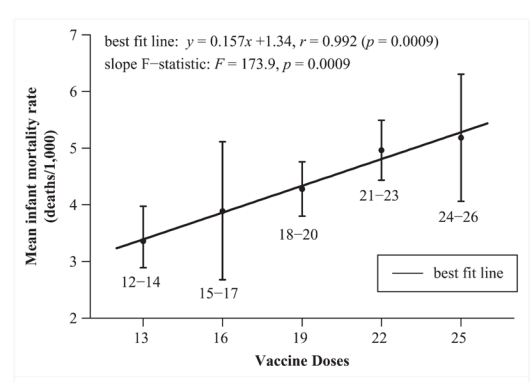
Figure 1: Mean infant mortality rates and mean number of vaccine doses 2009
Statements from WHO, Gates Foundation etc that vaccination has been the biggest life-saving breakthrough does beg the question: if the same amount of money and effort had been put into ensuring every child had access to clean drinking water and adequate food (the most basic physiological need in Maslow’s hierarchy of needs), then how many more lives would have been saved?
Would ‘Big Plumbers’ now be dominating public health policy?
Dr Ros Jones is a HART member and retired Consultant Paediatrician.
How HART was discredited on no basis
Government funded take-down looks increasingly ridiculous
Health Advisory & Recovery Team | July 9, 2023
In summer 2021, the private messaging forum that HART used was illegally hacked and our private conversations downloaded. Within 24 hours we were contacted by a small company called Logically AI who told us they were going to publish the conversations. This small company had a contract with the government worth over a million pounds of taxpayer’s money. The government may have thought it got its money’s worth when MPs who had been talking to members of HART decided they needed to keep a wide berth. However, the basis of the ‘discrediting’ was laughable.
On 27th July 2021, this article was published concluding with the following “factcheck”:
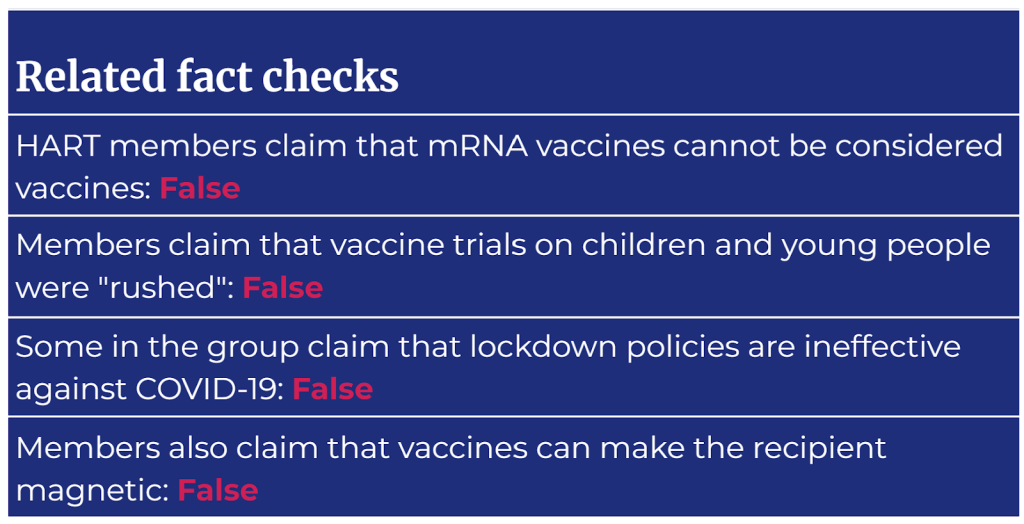
Figure 1: Concluding figure from Logically AI’s attempt to discredit HART
Let’s see how each of those “facts” have held up over time.
1. mRNA vaccines cannot be considered vaccines
A vaccine has a particular meaning in the minds of the public as an injection that teaches the immune system in order to prevent an infection. Official definitions have changed the meaning so that it could include these novel products. The CDC changed the definition twice since 2015.
In early 2015 a vaccine was an “Injection of a killed or weakened infectious organism in order to prevent the disease.” That year it changed to,“The act of introducing a vaccine into the body to produce immunity to a specific disease.”
Overnight the requirements that the intervention be inert and prevent disease were removed. By September 2021 the definition was changed again to: “The act of introducing a vaccine into the body to produce protection from a specific disease.” Any internal treatment for any disease now fits the CDC definition of vaccine. However, whatever official definitions say does not change public understanding of a word.
While it was claimed that the covid vaccines could prevent infection which led to their regulatory approvals, these claims have all been abandoned in light of the real world evidence.
What the manufacturers say about their products in documents filed in accordance with financial regulatory requirements is instructive.
Moderna said, ““mRNA has been characterised as a Gene Therapy Medicinal Product… the association of our investigational medicines with gene therapies could result in increased regulatory burdens, impair the reputation of our investigational medicines, or negatively impact our platform or our business.” BioNTech also described their products as gene therapies.
Being a gene therapy does not mean that it will interfere with cellular DNA but it does mean that certain specific and more stringent testing is required. Instead, the shortened regulatory pathway designed for influenza vaccines (developed via a well-established egg based platform) was used. This pathway should never have been used for a novel platform like the covid vaccines.
2. Vaccine trials on children and young people were ‘rushed’
This point can be extended to all vaccine trials. The programme was, if you remember, referred to as “operation warp speed”. How can you have “warp speed” without rushing?
Basic medical ethics includes the principle that children are never given new drugs until there is a well established safety record in adults. For the covid vaccines the number needed to vaccinate in order to prevent a single death was a hundred thousand or more for young people, however the rate of serious adverse events, even in the trials, was 1 in 800.
The trials that were done on children were extremely small, with only 1131 adolescents vaccinated and followed for a minimum of 1 month from their second dose before approving for this age group. Efficacy calculations excluded all covid infections occurring prior to 7 days after the second dose. Antibody levels were also assumed to be a marker for likely efficacy, despite there being no antibody level which ensures protection against covid infection. The government wording says, the product aims “to generate neutralising antibodies, which may contribute to protection against COVID-19.” This is not based on any scientific evidence, merely hope.
The worst children’s trial was the one for under 5 year olds where approvals were pushed through using antibody levels only, as a marker of success rather than expending more time to measure an impact on actual levels of covid. They also changed the efficacy requirement for approval from 50% to 30%. When the two planned doses failed to induce antibodies, they simply added a third dose in just a fraction of the children. This elicited an antibody rise, but also apparently resulted in more significant covid infections in those vaccinated. 97% of the covid cases in the study were ignored in the FDA presentation from Pfizer.
3. Lockdown policies are ineffective against covid
With the passage of time it is now clear that every covid wave rises and peaks naturally. The peaks fall at predictable times of year. The claims that all spread was through close contact, everyone was susceptible and asymptomatic spread was a key driver were all false assumptions.
Having considered the reality about these three claims it is clear that long distance aerosol transmission was a key driver of spread. Lockdowns can do nothing to prevent that. Since Logically AI wrote this article, it has become obvious that even the most brutal lockdowns, leaving people starving at home and killing their pets, did not stop the spread of covid in China. In fact every attempt at lockdown suppression in South East Asia and Australasia failed in January 2022.
A meta-analysis of 32 papers by a group at John Hopkins University analysed the effect of lockdown, concluding that “lockdowns during the initial phase of the COVID-19 pandemic have had devastating effects. They have contributed to reducing economic activity, raising unemployment, reducing schooling, causing political unrest, contributing to domestic violence, loss of life quality, and the undermining of liberal democracy. These costs to society must be compared to the benefits of lockdowns, which our meta-analysis has shown are little to none.”
4. Vaccine can make the recipient magnetic
Don’t rush to think this must be imaginary. Here is a video where unsuspecting recently vaccinated people were tested to see if their arms were magnetic. Most were not, but a surprising number were – 6 out of 15 tested. You can watch full video here.
Some HART members experienced this themselves and there was no question that this was magnetism – with a genuine pulling force.
So what was the cause of this? There are various steps to the manufacturing process including one in which separation of the mRNA is necessary. Some manufacturers used tiny magnetic beads to carry out this step, although which manufacturers used which techniques and to what extent is hard to know.
All that it would take to make someone’s arm magnetic would be for contamination of the vaccine vial with some of these beads. It is now well established that there was significant contamination with bacterial DNA and likely endotoxins. Is it possible that magnetic beads were also contaminants in some vials?
No-one in HART claims to be omniscient and we are constantly challenging and testing each other’s viewpoints. We believe in open scientific debate and that can only happen if people are allowed to occasionally be wrong. However, looking back at the reviews that we wrote in March 2021, they have all stood the test of time (see our 2022 revisits for what changed).
Even the private, more speculative conversations that were had in private have also stood the test of time. The reason this is the case is that all were based on well-established basic science and on real-world evidence. It is a travesty that the same cannot be said for the official narrative. Powerful people claimed that fantasy modelling and beliefs based only on assumptions were “The Science” and when those proved to be baseless, they resorted to complaining that people had lost their trust in science. They have no-one to blame but themselves.
Cluster Bombs for Ukraine? A Warning From Kosovo
By Phil Miller | Declassified UK | July 6, 2023
Gracanica, Kosovo – “In the village where we lived, there were nine bombs dropped by NATO in the space of two minutes,” Dzafer Buzoli recalls, as we discuss his traumatic childhood in Yugoslavia. A leading member of Kosovo’s Roma, his community went from pillar to post.
Many were dragooned into Slobodan Milosevic’s Serb-dominated Yugoslav army or targeted by Albanian rebels as suspected collaborators, before Bill Clinton and Tony Blair launched their ‘humanitarian intervention’ in 1999.
“When the first bomb fell, we were just confused and wondered what was happening,” he reflects. “But after the second bomb I felt the hot air and fell down from the pressure of the blast.”
“Ever since then I’ve had a heightened sense of hearing. When there’s a loud noise or people yelling I have to really back up, because it’s too much for me.”
Buzoli was lucky to survive the airstrike. Two soldiers and a five year old boy were killed in the attack on his village of Laplje Selo, which was hit with controversial cluster munitions.
These scatter a blizzard of ball-shaped bomblets over target areas, like a minefield falling from the sky. Human Rights Watch said NATO killed between 90 and 150 civilians with this weapon across Serbia and Kosovo.
Thousands of bomblets failed to detonate on impact, posing a hazard to children who mistook their little yellow parachutes for toys. In the decade after the war, these remnants claimed another 178 casualties in Kosovo.
While this war might seem like a distant memory for those beyond the Balkans, it offers a cautionary tale to Western states now assisting Ukraine’s fight against Russia.
US officials are said to be seriously considering supplying Kyiv with cluster bombs, possibly as soon as next month.
That’s despite the weapon being banned by more than 120 countries including the UK, following a UN treaty in 2008.
The US refused to sign up to the ban and there are suspicions it uses a loophole to store them at its air bases in Britain.
Both Russia and Ukraine, fellow non-signatories, have already fired cluster bombs in their current conflict and supplies from America could further complicate the situation.
Lessons from Kosovo
Unexploded cluster munitions remain a hazard in Kosovo long after NATO’s 11 week air war ended in 1999.
Goran, a Kosovo Serb, recalls how the weapon almost killed a farmer in a vineyard near Gracacina’s orthodox monastery, a world heritage site.
“He drove his tractor straight over the bomb,” Goran tells me. “He was lucky not to get killed.”
Goran, who likes to hunt wild boars in the forest, says he found a cluster munition – which locals call ‘cassette bombs’ – back in 2013.
His dates tally with a British demining charity – the Halo Trust – which said it was “still finding hundreds of cluster bombs” in Kosovo that same year.
At one site near Junik in western Kosovo they cleared 171 cluster bombs dropped by NATO, which stubbornly refuses to provide aid workers with access to its official database of airstrikes.
Instead the charity relies on old maps from the Yugoslav army (who preferred to plant landmines), which lack details of where NATO fired cluster bombs, what type they used, the direction of the strike, release altitude and fuze settings – all details that could assist clearance operations.
Partly as a result of these difficulties, 44 hazardous sites were yet to be fully demined by the end of 2021.
While the Atlantic alliance justifies its wartime conduct by saying the targets were Serb soldiers, the people now living in the liberated areas are often ethnic Albanians – the very people NATO set out to save.
Responsibility to protect
The UK was a particularly prolific user of cluster bombs in Kosovo, where they accounted for over half the bombs dropped by the Royal Air Force. British pilots fired 531 of the devices, each containing 147 bomblets with over 2,000 pieces of shrapnel.
Up to 12% of the bomblets failed to detonate on impact, according to a report by parliament’s defence committee. The cross-party group of MPs said: “That means the RAF left between 4,000 and 10,000 unexploded bomblets on the ground in Kosovo”.
The type of cluster bomb used by Britain – the BL755 – was designed in the late sixties and entered service in 1972 despite manufacturing challenges. A year later, a Treasury official noted dryly: “This weapon has had a long and chequered history. We note with some relief that it has now successfully completed its trials”.
Over the next decade, the RAF acquired a stockpile of 18,000 cluster bombs. Another 26,000 were sold abroad on the lucrative export market, mostly to Germany but even future enemies like Iran and Yugoslavia.
Margaret Thatcher’s government exported them to Robert Mugabe’s regime in Zimbabwe, where the British High Commission was anxious to prevent “offering the French an opening into the armament market”.
Exports to Saudi Arabia would follow and ultimately the BL755 earned the dubious distinction of being fired in such bloody conflicts as the Iran-Iraq war, Congo and Yemen.
‘Overkill weapon’
Some in the Foreign Office were less impressed and tried to resist exporting the weapon.
One diplomat, Ivor Lucas, commented: “There is no doubt that Cluster Bomb [sic] is generally considered ‘an overkill weapon’ affecting wide areas with consequent danger to civilians and causing particularly unpleasant multiple wounding.”
Its greatest selling point however, was the ability to destroy tanks from the sky. But by 1982, even that was already in question.
In a formerly secret file seen by Declassified, the Ministry of Defence (MoD) admitted: “The penetration capability of current BL755 against the frontal armour of current Soviet tanks (T-64/T-72) is poor and there are relatively few regions where full penetration, and hence kills, could be expected.”
If the RAF attacked a column of ten T-64s, pilots were only expected to destroy one tank per sortie – even with an improved variant of the weapon. Military officials lamented: “Effectiveness has been degraded by introduction of modern Soviet tanks”.
Their performance in the Balkans was woeful. An operational analysis by the MoD reportedly found only 31% of sorties hit their targets, despite pilots flying directly overhead.
‘Regrettable collateral damage’
Since Britain banned the bomb in 2008, Conservative and coalition governments have blocked the disclosure of six files about trials of the weapon in the 1970-80s – perhaps fearful that further embarrassing details of its deficiencies might emerge.
More recent Cabinet papers from Tony Blair’s handling of the Kosovo conflict are publicly available.
These show his deputy prime minister John Prescott told colleagues on 1 April 1999 – a week into the war – that: “Public opinion in the West should be prepared for more extensive collateral damage.”
Labour’s defence secretary George Robertson (who went on to lead NATO), noted at the end of that month: “The air campaign needed to be intensified, despite the unintended and regrettable collateral damage which might be inevitable.”
By mid-May the foreign secretary, Robin Cook, grew frustrated at how “the international media tended to be diverted by rare incidents of NATO errors in conducting the campaign, away from the positive news of its successes.”
Cook, renowned for his ‘ethical foreign policy’, was probably referring to the cluster bombing of Nis, a city in southern Serbia where Dutch-NATO jets killed 15 civilians in a botched airstrike that hit a hospital and crowded market.
The tragedy led the US to pause its own use of cluster bombs, but the RAF pressed on. Years later, a Serbian lawyer from Nis is trying to sue Nato over the killings.
Activists from the city played an important role in passing the international ban on cluster bombs, but Serbia’s president is yet to endorse it.
That impasse allows Belgrade to keep any remaining BL755s that Britain sold to communist-era Yugoslavia.
Clearing the remnants of these weapons from Kosovo is not expected to finish until 2024 – a quarter century after the war ended.
That marathon process, coupled with dubious performance on the battlefield, might give Joe Biden pause for thought about sending cluster bombs to Ukraine.
Phil Miller is Declassified UK’s chief reporter. He is the author of Keenie Meenie: The British Mercenaries Who Got Away With War Crimes. Follow him on Twitter at @pmillerinfo
Wind Industry Blackmails U.K. Demanding Huge Ramp-Up of Subsidies
BY WILL JONES | THE DAILY SCEPTIC | JULY 5, 2023
In a move that gives the lie to years of propaganda claiming falling costs, the wind industry’s leading lobbyists have written to the Government threatening to abandon the U.K. unless subsidies for their companies are hugely increased.
The industry lobbyists claim that unforeseen rising costs now require three actions:
- A revision to the auction rules so that the winners are not determined by lowest bids but by an administrative decision that weights bids according to their ‘value’ in contributing towards the Net Zero targets.
- Special new targets and thus market shares for floating offshore wind, one of the most expensive of all forms of generation;
- A vast increase in the budget for the fifth auction (AR5) of Contracts for Difference subsidies, with an increase of two and half times the current levels for non-floating offshore wind alone;
Such changes, were the Government to agree to them, would not only increase the total amount of subsidy to an industry that was until recently claiming no longer to need public support, but also provide the industry with protected shares of the energy market, eliminating risks for investors at the expense of the paying public. It would also clearly be an open invitation to corruption.
Climate lobby group Net Zero Watch has urged the Government to stand up for consumers by rejecting the wind industry’s latest demands.
Dr. John Constable, Net Zero Watch’s Energy Director, said: “It would be both absurd and counterproductive for Government to bail out the wind industry in spite of the evident failure to reduce costs. A refusal to learn from mistakes will be disastrous.”
In a press release, the organisation argued the Government should “reject the self-serving demands” because the U.K. economy should not be expected to continue to subsidise a sector “that is still uneconomic after nearly 20 years of above-market prices and guaranteed market share”.
“The wind experiment has failed and must be wound down,” it adds.
The Government should also be mindful that U.K. households and businesses are already experiencing extreme pressures on budgets, and a further burden on the energy bill should not be tolerated, it says.
This is particularly the case as the wind industry’s current cost difficulties are “neither unforeseen nor unpredicted but have been obvious to careful observers for over a decade”.
Featured Video
What’s the Pentagon Preparing For? Alexander Mercouris
or go to
Aletho News Archives – Video-Images
From the Archives
US tested biological weapons in Japan’s Okinawa in the 60s – report
RT | January 12, 2014
The American army conducted experiments with biological weapons aimed at destroying rice crops on the Japanese island of Okinawa in the 60s, Kyodo news agency reports. The alleged target of the tests was the China and Southeast Asia region.
Citing classified US documents, Japanese news agency Kyodo said the US military carried out experiments on their sovereign territory between 1961 and 1962. At this time Japan’s southern island of Okinawa was still under post-WWII, US jurisdiction. The US did similar tests in Taiwan and the American mainland, notes Kyodo.
The American army experimented with rice blast fungus – a plant pathogen – which infects rice crops with disastrous effects. The pathogen latches onto the rice plant as a spore and produces lesions and spots all over the rice plant and then reproduces.
A single lesion can generate a thousand spores in one night alone, while an entire cycle – lasting about a week – can have a devastating effect on rice crops.
Kyodo reports that tests were conducted over a dozen times, and mentions test sites, Nago and Shuri, in Okinawa. The US army reported some success in their experiments and the gathering of “useful data”.
“Field tests for stem rust of wheat and rice blast disease were begun at several sites in the (US) Midwest and south and in Okinawa with partial success in the accumulation of useful data,” wrote Kyodo, citing its documents. … continue
Blog Roll
 Aletho News
- What’s the Pentagon Preparing For? Alexander Mercouris
- USAID Files: The Georgia Model for Getting Accounts Taken Down
- Kiev hits out at YouTube over Russian-language censorship refusal
- Australia Passes Digital Duty of Care Bill, Ignoring Censorship Warnings
- Majority of MAGA ‘deserters’ back banning bombs to Israel: Poll
- Iran wary as South Korea assures it will not join US war of aggression
- ‘Desperate’ Kiev seeking to draw NATO into war with Russia – Andrew Bridgen
- German people oppose war, unhappy with government foreign policy
- How US army’s Iowa lead azide detonation exposed stockpile failure, unleashing environmental crisis
- China Urges Japan to Speed Up Removal of WWII-Era Chemical Weapons From Its Soil
- If Americans Knew
- Iran’s Foreign Minister Slams Israel Over Chemical Weapons Claims
- Israel kills 18 in Gaza, including 3 girls, Deputy Education Minister, & his wife
- DAILY UPDATE: Latest essential news on Palestine, Israel, & region
- Ad That Calls for Cutting Off US Aid to Israel to Air on SNL Thanksgiving Special
- Tortured into confessing: Report exposes abusive Israeli interrogation of Palestinians
- Israeli Military Probing Its Own ‘Widespread’ Use of Palestinian Human Shields
- Palestinians in Gaza Are Lining Their Tents with Sandbags to Stop Israeli Bullets
- Israel’s genocidal actions are preventing births in Gaza –New Amnesty report
- ‘Unlawful de facto exemption’: US sitting on 12-year backlog of alleged Israeli gross human rights violations
- DAILY UPDATE: Latest essential news on Palestine, Israel, & region
- No Tricks Zone
- Alarmist Climatologists In Shock! 2026 Atlantic Hurricane Season Sees Lowest Count In 101 Years
- New Study: Modern Temps Are Among The Coldest Of The Last 10,000 Years In East Central Europe
- Germany’s Renewable Energies Lead to 1.4 Billion Euro Electric Power Trade Deficit
- Argentina’s Perito Moreno Glacier Joins Antarctica and Arctic In Defying Doomsday Melt Claims
- New Study: Barents Sea Temperatures Were Warmer And Sea Ice Less Extensive In The 1700s Than Today
- German Authorities Start Initiative To Evaluate Public Register For Climate “Disinformation” Spreaders!
- Zonal Asymmetry of Temperature Change in the Antarctic Circumpolar Current
- New Study: The Net Fossil Fuel Contribution To Rising Atmospheric CO2 Has Been Zero For 500 Years
- Germany’s Green Energy Transition Becoming Increasingly Expensive…Another 6 Trillion Euros!
- Sudden Stratospheric Warming, Powerful El Niño Combination May Lead To Extreme Europe Cold, Energy Crisis!

