The past two days have seen sorties from scientists desperate to shore up the lockdown version of history. Lockdowns were necessary, and anyone who disagrees does not care about society or equality. This version of history is so fraudulent that it cannot be allowed to triumph.
Writing in the Guardianyesterday, Devi Sridhar asks: ‘Why can’t some scientists just admit they were wrong about Covid?’ Why indeed? Sridhar notes that scientists have divided into opposing camps, taking ‘particular pandemic positions… eventually building a base of followers that organise around that position and defend it viciously.’ She just doesn’t seem to recognise that this neatly describes her own approach.
Sridhar’s piece is a craven attempt to rewrite history by claiming that the Zero Covid position was only ever intended for the pre-vaccine era. Can this be the same Sridhar who said in a New Statesmaninterview in January 2021 that ‘the better option is to eliminate the virus’ – even after vaccines had started to be rolled out? Or who tweeted in June 2020 that ‘the fastest way to get economy & normal life back is to push for a ZERO Covid Britain. Clear virus, build domestic economy’? Still, as far as Sridhar’s concerned, if anyone got anything wrong, it wasn’t her.
Sridhar’s efforts to rewrite history were joined by a prominent member of Independent SAGE, Kit Yates. Writing in the British Medical Journal on Wednesday, Yates penned an op-ed on the theme “Was lockdown necessary?” Lockdowns, according to Yates, were necessary to protect the NHS and the vulnerable members of society — and yet at the same time ‘no one is in favour of lockdowns’. This sleight of hand followed his tweet in February that ‘everyone is lockdown sceptic’.
Have we all been dreaming about the vituperative onslaught on sceptical voices in the last two years? The answer becomes clearer in the last paragraph of the BMJ piece, where Yates concludes:
Whether you view [lockdowns] as necessary depends on your value system. Many people would place the lives of the most vulnerable high on their list of priorities. Many people would value a functioning NHS with equal access for all at the point of need. Many would place a high worth on the long term health of their population. But not everyone. – KIT YATES, BMJ
Sadly for Yates, his article was published on the very day that Sir Chris Whitty admitted that the long-term health of children had suffered and their life expectancies were lower through increasing obesity brought on by lockdowns. With NHS cancer backlogs projected to last for a decade, it doesn’t seem that this “long-term health of the population” and “protecting the NHS” works out very well for Yates and his ilk.
This is why the strongest advocates of lockdowns such as Sridhar and Yates cannot be allowed to set the tone of the debate as we move away from the pandemic. Strong lockdowns promoted policies that were utterly uncaring of the young, the elderly in care homes, women in abusive situations, the poor whose work disappeared, let alone the hundreds of millions of people whose livelihoods have been destroyed in the Global South.
Meanwhile, 40% of Covid deaths in the West took place in care homes. Far from protecting the vulnerable, lockdown policies did not even protect the most vulnerable. Meanwhile, they have rendered hundreds of millions of people newly vulnerable. That is their legacy, and those who advocated hardest for them must not be allowed to escape it.
UNLESS there is a change of policy, from April 1 the public will have to pay for the testing still required to visit loved ones in care homes, hospitals and other regulated healthcare settings.
It is incredible that neither the mainstream media nor the public are discussing this injustice in any depth, let alone being up in arms about it. Most have likely yet to comprehend how ruinous a policy this will prove for so many people. Again.
For a citizen of England to have to pay to visit a sick, dying, or lonely relative in a care home or hospital – even if both are triple-jabbed (and whilst unvaccinated health workers may come and go) – is an inhumane policy.
That one’s visit might not even be permitted in the first place is another story – an ‘exclusive’ the Telegraph claimed to have broken on February 18, despite TCW having written about it as far back as December 7, 2021 ( see here and here, for example).
What are the real-life consequences of having to fork out to visit vulnerable loved ones? Let’s begin with the obvious: the mounting financial cost to the individual.
The high street price of a single lateral flow test is currently predicted to be from £2 to £5, depending on how many are bought at once. Better deals will doubtless be found online, but for simplicity let’s run with £2 per test.
That’s £14 a week straight off the bat (working on the assumption that consecutive daily visits are permitted: check with your local NHS Trust) but potentially much, much more for someone such as an elderly person not able either to shop confidently online, or trawl the high street for the best deal.
Throw in the cost of fuel for a 15-to-20-mile round trip at today’s wartime prices (or public transport), plus hospital parking charges which hover around £2.50 for two hours (one hour is often free, but would not suffice), then even in a best-case scenario, visiting a dearly beloved could end up costing from £7.50 to well over £10 a time.
Suppose one were unemployed and on Jobseeker’s Allowance – visiting a gravely ill loved one in hospital every day for a week could easily use up half of one’s weekly benefit. Food and energy stability, or being at a loved one’s bedside: some of the many new decisions to be faced by the less affluent in post-Covid England.
But no matter what the expense, it is the dehumanising ideology behind the imminent change in rules that displays how far England has sunk ethically since this rotten new era of hypochondriacal public health despotism began.
How on earth can paying to visit the sick and dying be said to be ‘living with Covid’? And with cases purportedly on the rise, who foresees any loosening of visiting protocols this year?
What of the elderly in care homes – the pandemic’s original totems for mass hysteria? For two years now they have had to endure a level of enforced solitude unthinkable in pre-Covid England, and yet even though Johnson has finally swapped playing public health-Connect Four for the chess game of war, the elderly have now to navigate their relatives’ financial concerns over visiting, set against the backdrop of a sharp rise in energy prices precipitated by the Prime Minister’s latest, and totally unrelated, geopolitical switcheroo.
It boggles the mind, boils the blood and cracks the heart to imagine any of the citizens of this country either being totally denied access to their loved ones, or having to pay for the privilege if granted. Lay aside how England compares with other countries: what on earth have WE become?!
As previously touched upon, compounding this grotesque unfairness is the fact that health workers will not only retain their access to free testing, but regardless of vaccination status may continue touching, breathing upon, bathing, feeding, and dressing those in need – for remuneration – whilst triple-vaccinated relatives have nonsensically either to pay to sit quietly at the bedside of the very same needy, or be left out in the cold entirely. Riddle us that one, Covid Inquiry: we’re all ears!
As usual, with each mutation of the narrative the public are left with nothing but a list of worrisome questions:
· Will we have to pay for lateral flow tests for ever? After all, we are being told with great confidence that the virus is not going anywhere. If not, then at some point will testing be eradicated completely? How low must case numbers get before we REALLY start living with Covid?
· Will tests become free again in the event of another Delta variant-style wave?
· Will Ukrainian refugees also have to pay?
The majority of this nation went along with the Covid narrative – supposedly entirely out of fear, pressure from peers, family or employers; a sense of patriotism or moral duty; as a means by which to virtue-signal, or perhaps even just for kicks – either directly or indirectly succumbing to public health propaganda.
I don’t buy this wholesale. Not one bit.
My overriding impression is that most were simply too uninterested, too analytically inept or lazy, or too lacking in courage – imagination even – to rock the narrative-boat for fear of creating for themselves a modestly taxing degree of both mental gymnastics and personal sacrifices.
And so who do we ultimately have to blame for Government’s impending, exploitative and divisive ‘pay-to-love’ scheme: that of having to grovel for permission to shell out hard-earned money on visiting a perhaps dying loved one? Ourselves, unfortunately.
That’s what we get for two years of slavish obedience to the hyper-romanticised, brainless mainstream trash of the age.
In more ways than one it is not unreasonable to say that we have done this all to ourselves, and that the crippling costs of both our torpor and cowardice, as predicted, continue to be borne by all and sundry, but predominantly the weak and vulnerable.
Please don’t get seriously ill any time soon, Mum. You’ll likely have to go it mostly alone, cause I ain’t exactly flush these days.
Sadiq Khan has urged Londoners not to exercise outside because warm weather in Europe is leading to high pollution levels in the capital. According to The Telegraph :
As temperatures reached 20C in the capital on Wednesday, older people and those with heart and lung problems were told to limit “strenuous physical exertion” due to high pollution levels.
Anyone else “suffering discomfort” should also consider reducing their activity, official advice said.
A forecast from Imperial College London said that levels of fine particulate pollution, or PM2.5, would reach “high” levels on Wednesday and Thursday, causing health problems for vulnerable people.
The alert was the first issued by the Met Office since August 2020. Alerts were also broadcast in London train stations and to travellers at bus stops around the capital.
Despite the health warning, Sadiq Khan, the mayor of London, also urged people to walk or cycle to limit the air pollution from vehicles…
Mr Khan said: “I’m urging Londoners to look after each other by choosing to walk, cycle or take public transport, avoiding unnecessary car journeys, stopping engine idling and not burning wood or garden waste, all of which contributes to high levels of pollution.
“This is particularly important in order to protect those who are more vulnerable to high pollution.
“While this alert is in place people with heart and lung problems should avoid physical exertion.”
Did you note the use of the term “vulnerable people” by Imperial College? Did you note the language used by Sadiq Khan?
The Mayor said that he’s urging Londoners “to look after each other by choosing to walk, cycle, take public transport and avoid unnecessary car journeys.” Londoners should do this, said Khan, to “protect those who are more vulnerable to high pollution.”
The message is a stark one.
“Citizens! Driving your car is affecting the most vulnerable in society! Walking or cycling saves lives and protects the NHS!” Exercising indoors protects you and protects the NHS!”
I said it two years ago didn’t I? Climate lockdowns featuring initiatives like personal driving allowances are coming soon. I predicted that at some point the government would attempt to place legal limits on driving.
I imagined a day when people would be told that they could only take their cars out on the first and third Sunday’s of the month depending on their postcode. Others would be permitted to drive on the second and fourth Sunday’s.
SKY News ran a hit-piece on me for predicting climate lockdowns.
I’ve emailed the journalist to ask her if she still thinks the notion is preposterous.
London has asked YouTube on Wednesday to censor any videos of the call between pranksters Vovan and Lexus – pretending to be the Ukrainian PM – and Defense Secretary Ben Wallace, claiming they are propaganda by the Russian state that was manipulated to show falsehoods and undermine British reputation and Kiev’s morale.
“We are calling on YouTube to help us support Ukraine by taking down videos doctored by the Russian state and disseminated to try and sap the morale of a people fighting for their freedom,” said the defense ministry (MoD) in London.
In the attached letter – which lacks the name of both the sender and the recipient – the ministry claims “the Russian State was responsible for the hoax call” and that “Russian disinformation presented in this video creates a substantial risk to UK national security” as well as “risk to international unity working to support Ukraine.”
The MoD claims the videos were “modified and edited” to show Wallace saying things that are not true, such as that the UK is “running out of our own” NLAW anti-tank missiles.
This is “factually incorrect,” the MoD said in the letter. “We have no supply shortages.” Another claim the MoD labeled false – presumably made by the pranksters – was that the NLAWS sent to Ukraine “often failed.”
“Any perceived failure of our lethal aid supplied to support Ukraine will provide an immediate detrimental effect upon the morale of Ukrainian forces,” the MoD letter said.
“I am confident you would not wish to be a conduit for Russian propaganda or be in any way associated with the potential consequences of this type of media manipulation,” the unnamed MoD official tells YouTube, demanding that the platform “remove (or at least block) access” to any videos of the call.
Wallace raised a stink over the call last Thursday, claiming he hung up on the person pretending to be Ukrainian Prime Minister Denis Shmygal after getting suspicious about the “misleading” questions. It later emerged that the Microsoft Teams call lasted for almost 10 minutes, and came while Wallace was visiting Poland.
Blaming the government in Moscow, the minister denounced the call as an example of “Russian disinformation, distortion and dirty tricks” and launched an internal security investigation into how the pranksters were able to contact him in the first place.
On Tuesday, the notorious pranksters Vladimir Kuznetsov and Alexei Stolyarov – going by the monikers Vovan and Lexus – confirmed they had been behind the call and posted several teasers, saying the full video would be up soon. The duo has a long history of pranking celebrities and public figures, including Canadian PM Justin Trudeau and Turkish President Recep Tayyip Erdogan. They have denied being agents of the government.
University of Edinburgh professor Tim Hayward is being hammered in the media for sharing an article suggesting the bombing of a theater in the Ukrainian city of Mariupol may have been staged by Ukrainian nationalists. Hayward’s skepticism has already led Education Secretary Nadhim Zahawi to promise a “crackdown” on such wrongthink.
Hayward shared an article on Sunday from the Grayzone, a left-wing news outlet. Citing eyewitnesses in the Ukrainian city of Mariupol, the article claims that Ukrainian ‘Azov’ fighters – once described by western outlets and lawmakers as “neo-Nazis” – sheltered behind civilians in a theater in Mariupol, before blowing the building up as Russian forces entered the Ukrainian city.
Azov forces and journalists linked to the extremist unit accused Russia of bombing the building, and used the incident to call for western intervention against Russia. US President Joe Biden declared Russian President Vladimir Putin a “war criminal” in response, and American politicians from both parties and from Europe renewed their calls for military aid – including fighter jets – for Ukraine.
However, no video exists showing the theater being bombed and Russia denies attacking the building, stating that it had “never been considered as a strike target.” Conflicting reports of the weapons supposedly used and the civilian casualties or lack thereof only muddy the picture further.
Yet Hayward was condemned by his colleagues for raising the issue. In a Timesarticle on Tuesday accusing him of “spreading propaganda,” Dr. Aliaksandr Herasimenka, a ‘misinformation’ researcher at Oxford University, said that “we must be very careful” when reading reports critical of the official narrative in Ukraine, and that outlets like the Grayzone “are currently engaged in a massive disinformation campaign.” He did not provide any evidence that would support such allegations against the media outlet.
Hayward has been singled out by the Scottish government too. Having shared articles questioning the alleged bombing of a maternity hospital in Mariupol and claiming that Syrian leader Bashar al-Assad did not gas his own citizens as Western sources insist, the professor was accused in Westminster last week by Tory MP Robert Halfon as being a “useful idiot for President Putin’s atrocities.”
Education Secretary Nadhim Zahawi said that academics like Hayward were already being investigated, and that their universities would be contacted.
“Putin and his cronies are a malign influence on anyone in this country buying their false narrative, and I have to repeat it is a false and dangerous narrative, and we will crack down on it hard,” Zahawi said, without elaborating on how.
Speaking to Edinburgh Live, Hayward said that he is concerned about restrictions to free speech, and considers hearing both points of view important in wartime.
“In war, miscalculations can have terrible consequences. We also know that misinformation can sometimes even slip through on our own side, as when the UK went to war in Iraq, mistakenly believing it had weapons of mass destruction,” he said. “As for the people of Ukraine, their need is for peace – not to become the epicenter of World War III,” he added, referring to the widely-held belief that were Western powers to intervene in Ukraine, the consequence would be a third world war.
A reader was disturbed this week by a visit from an official from the Health and Safety Executive (HSE). What the official said appears to bode ill for the idea that the U.K. is ‘living with Covid’ insofar as that means moving away from all the Covid theatre and regulations of the past two years.
I work in a London hospitality business. This week an official from the HSE came in to do a Covid compliance spot check. Despite the Government making noises about Covid regulations being binned, the HSE person informed us that from April businesses with more than five employees will still be required to adhere to general ‘Covid safe’ practices, under the threat of enforcement proceedings (and fines) by the HSE.
Overhearing what the HSE official told the General Manager, it sounded to me as though it will involve keeping a Covid risk management plan in place and ensuring ventilation, access to sanitiser for customers and so on.
Most of it was asking questions about Covid management actions we have taken and are still taking. It implied that, so far as the HSE is concerned, Covid is a now a ‘standard’ risk which needs to continue to be managed alongside others.
So briefly, it appears:
– they are doing Covid spot checks insofar as they apply to employees;
– they will be increasing spot checks from April.
This suggests the perpetuation of Covid regulations will be enforced under the guise of general health and safety law. Not as advertised by the Government at all if so, and hardly reflects ‘living with Covid’ like we live with other mostly mild respiratory viruses.
Runs counter to the official narrative of a bonfire of Covid restrictions.
If the Government is serious about moving on from the pandemic then it needs to rein in the HSE and withdraw its guidance that treats COVID-19 as a special threat.
Town Halls all over the UK are flying the Ukraine flag, as mainstream journalists encourage everyone to think about the war in Ukraine.
Looking at the news you’d think that Ukraine was the only trouble spot in the world.
But you’d be wrong.
Here are some facts that no other journalist in the UK appears to know.
Fact 1
According to the United Nations, the number of civilian deaths in Ukraine is 760. According to the Ukraine President, the number of soldiers who have died in Ukraine is 1,300.
Fact 2
According to the United Nations, the seven-year-old war in Yemen had killed an estimated 377,000 people by the end of 2021 – and is now killing more people than the fighting in Ukraine. The Yemen war has been described as the largest humanitarian crisis in the world. The Saudis have interfered in what was basically a civil war.
Fact 3
The war in Syria has now been going on for ten years and the number of people killed is believed to be 610,000
Why isn’t your town hall flying flags in support of the people of Yemen and Syria?
The answer, of course, is that the invasion of Ukraine was organised and manipulated by the conspirators in the West to help push the energy and food shortages required for the Great Reset and the New World Order that they have planned for us.
I am banned from Twitter, Facebook and so on, and so I am not allowed to share this information on social media.
So, I’d be grateful if readers would share this information on their social media channels.
Maybe a mainstream journalist will read it.
And wonder what the hell is going on.
*** Vernon Coleman’s book Endgame explains our past, our present and our future in 281 pages. Endgame is available as a paperback, a hardback and an eBook.
The book The Year the World Went Mad by SAGE-member Mark Woolhouse, has now been published as an audiobook and will be available in hard cover on April 12th. This is an important book, for here the author, a key player in the pandemic response in the UK, admits that more or less everything he and his colleagues suggested and the government did was wrong.
In this interview with Spiked-online, Woolhouse admits that focused protection, as suggested by the proponents of the Great Barrington Declaration, would have been the right approach, and that he and his associates knew it. He even claims they suggested it, but nobody listened. However, even if they did, why didn’t they speak up? The scientists who wrote and published the Great Barrington Declaration were denounced as pseudo-scientists – and by whom? Among others, by the very people who knew they were right all along.
In the author‘s own words:
“So how do you protect those people? First of all, since they have to have contact with certain people, you make it as Covid-safe as possible for them to have those interactions. Take all the precautions we know to take now, about wearing masks, ventilation and physical distancing. But that alone is not enough. You need to make sure that the contact themselves does not have an infection and is not going to pass it on to the vulnerable people they’re interacting with. We were talking about this in April and May 2020 to many people in government. But we never implemented it. It never took off. And yet it’s quite clear from our work that this would have had a very significant impact. It would not be enough by itself “You still need to suppress the virus to a degree, but you would not need lockdown.”
The lockdowns, travel bans, school closures and all the rest were useless and extremely harmful to society. But still the scientists in charge of the pandemic response, including Mark Woolhouse, promoted those methods and justified them. They derided those who criticised their methods, cancelled them, claimed they didn’t respect science. But it was the other way around. This, we must never forget.
This book is a good step. But I wonder if the author has apologised to those who were right all along, to Martin Kulldorff, Sunetra Gupta, Jay Bhattacharya and all the other honest, real scientists who had the courage and moral standard to tell the truth. If he hasn’t, I urge him to do so.
The channel became unavailable on all UK broadcast platforms earlier this month as a result of a ban imposed by the European Union.
Although the UK is no longer in the EU, the bloc applied sanctions to satellite companies in Luxembourg and France, which provided the RT feed to Sky, Freesat and Freeview in the UK.
UK Culture Secretary Nadine Dorries, who has described the channel as “Putin’s polluting propaganda machine”, said at the time she hoped it would not return to UK screens.
In recent weeks, Ofcom has launched 29 investigations into the “due impartiality of RT’s news and current affairs coverage” of the invasion of Ukraine.
RT deputy editor-in-chief Anna Belkina said Ofcom had “robbed the UK public of access to information”.
“What we have witnessed over the last few days, be it comments from the President of the EU Commission or from PM Boris Johnson, is that none of them had pointed to a single grain of evidence that what RT has reported over these days, and continues to report, is not true.
“Instead, what they have said is that what RT brings to its audience is not allowed in their supposedly free media environment. When it comes to the Russian voice, or just a different perspective from theirs, it is simply not allowed to exist.”
I’ve been watching RT closely since Russia invaded Ukraine. Over the course of the last few weeks, the TV channel and its website has published claims made against the Russian government by NATO countries, right alongside the Kremlin narrative.
In fact, I’ve been astonished at how balanced the content has been. The same cannot be said for the BBC or SKY News.
It’s a sickening blow for free speech, but it’s only the beginning.
Following our recent article highlighting isolation and neglect in care homes, we are appalled to report that the situation is only slowly improving. What is more, many NHS sites are still imposing draconian and vindictive policies. Children are being separated from parents and dying relatives are being abandoned to a lonely end.
It is beyond comprehension that this situation persists. Three weeks to flatten the curve? More like 24 months to bulldoze the social contract. Here is one quote from a UK hospital this week:
“We know that continuing to extend restrictions on visiting will be disappointing and it is not a decision we have taken lightly. We understand how important the support of family and friends can be for patients in their recovery while they are in hospital, however, our number one priority is to keep everyone safe”.
These silken, virtue-signalling words – keeping “everyone safe” – are not only utterly simplistic, they disguise blanket policies that encourage multiple Milgram-esque acts of cruel depravity. We are hearing horrific stories of desperate children being denied access to their dying parents.
“Everyone” is not safe when a nonagenarian, now in declining health, has to spend their remaining weeks – or even days – in soulless incarceration. These individuals spent their entire working lives rebuilding this country after WW2 and then brought up a subsequent generation of taxpayers. Surely we owe these bastions of society the dignity of choice in their final days.
If this situation was not depressing enough, HART has also been made aware of the most cruel of indignities: patients in their final days of life are being denied palliative care if they refuse a covid injection. It is hard to comprehend the wickedness of foisting this particular medical intervention – with all the known short-term adverse effects – on someone with a severely weakened immune system who is already in their final days. It is hard to see this as anything other than battery.
There is no doubt that the overwhelming majority of people involved in the healthcare services want the best for their patients, so how can these things still be happening? Two years into this depressing saga, perhaps it is too late for those who promote these injustices to take responsibility for the harm caused. However, those that have been ‘going with the flow’, perhaps hoping for an easy life, might want to reconsider whether their consciences can bear any more of this, and whether they want to align themselves with faceless and sadistic despotism.
After all, you cannot comply your way out of tyranny.
Australia will become the second home for US and British nuclear submarines, meaning that the island country will effectively become a nuclear staging ground aimed at challenging China in the Asia-Pacific region. In this way, AUKUS – a trilateral security pact between Australia, the United Kingdom, and the United States, provokes increased confrontation with China.
Australian Prime Minister Scott Morrison announced on March 15 that the Anglo Alliance’s nuclear ships would initially be stationed in the sparsely populated state of Western Australia. However, he added that infrastructure on the east coast is “incredibly important for how we defend our nation.” Morrison explained that a site for a new base would be decided after the upcoming federal elections to be held on or before May 21. It is noted that although the eastern states account for 37% of the country’s total land area, they are home to over 80% of the population as well as Australia’s most important cities – Sydney, Melbourne, Canberra and Brisbane.
Earlier this week, in a virtual speech at the Lowy Institute, the Prime Minister announced his decision to build a new base in the east to support the deployment of Australia’s future nuclear submarine fleet under an agreement signed within the framework of the AUKUS military alliance. Three locations for the new eastern base are under consideration – Brisbane in the northeast state of Queensland, and Newcastle and Port Kembla to the north and south of Sydney respectively.
“The ability of US and UK nuclear-powered submarines to be here on the west coast, and ultimately we’d like to see them on the east coast as well, is all part of what our plan is as we continue to push forward our AUKUS partnership,” the Australian Prime Minister said.
In this way, the US and UK are using Australia as a junior partner to bolster the combat capabilities of the bloc’s nuclear submarine fleet in the Indian and South Pacific as confrontation with Russia and China escalates. With nuclear warships based in Australia, it greatly enhances the abilities of the US and British naval fleets to perform operations far off from home. However, it is likely not just about submarines, and we can maybe expect American and British aircraft carriers to also appear in Australia.
In general, for a long time, Australia banned nuclear vessels from entering its base.
For the goal of containing China in Asia-Pacific, Australia has now become critical for the US and UK. For example, a US aircraft carrier after 5-7 days of conflict with a potential enemy needs to replenish ammunition for aircraft on the carrier, while repairs and additional fuel for the aircraft are usually carried out in port. Australia can now fill this gap since quite obviously British and American ships operating in and around Southeast Asia are far from home.
This elevated importance given to Australia by Britain and the US has already resulted in greater military confrontation with China, with the East Asian country complaining that an Australian surveillance aircraft was flying in a “malicious” and “unprofessional” fashion close to its warships when the plane was targeted by a laser weapon.
Although China was accused of putting lives at risk by the Australian government in February when a laser was directed towards a RAAF P-8 Poseidon plane monitoring two People’s Liberation Army-Navy (PLA-N) warships sailing through the Arafura Sea, the Chinese Ministry of National Defence released a short video clip recorded on a warship, showing the Australian aircraft flying close by in a “nuisance” manner.
“It is evident in the video taken by the Chinese naval ship that the Australian military aircraft was conducting close-in reconnaissance on Chinese naval vessels,” Senior Colonel Tan Kefei said. “The Australian military aircraft’s conduct was malicious in intention and unprofessional in operation and posed threats to the safety of ships, aircraft and personnel of both sides.”
With Chinese and Australian militaries already skirmishing in such a manner, the entry of US and British nuclear submarines into Australian ports will only further destabilize the situation. It is recalled that Australia’s decision to equip its fleet with nuclear submarines under AUKUS was met with mistrust across the region, especially from Southeast Asian partners like Malaysia and Indonesia.
Now, it has been reported that Australia is actually becoming a “second home” for US and UK nuclear submarines. In the context of growing confrontations between the US and China, including the Taiwan issue, AUKUS in fact raises tensions in the region by encouraging the increasing nuclearization of the region.
Paul Antonopoulos is an independent geopolitical analyst.
Despite being found guilty late last year for her role in sex crimes against minors, Ghislaine Maxwell, the “madam” and chief accomplice of the intelligence-linked pedophile and sex trafficker, Jeffrey Epstein, may soon walk free. A juror in the case, Scotty David, subsequently took credit for the jury’s decision to find Ghislaine Maxwell guilty and “inadvertently” revealed that he had incorrectly answered a pre-trial questionnaire. As a result, the possibility of a mistrial, and Ghislaine walking free, now looms large.
David has some interesting connections, as he currently works for the Carlyle Group – the global investment firm whose ties to the bin Laden family during the early 2000s have come under scrutiny. Carlyle’s executives often have ties to intelligence, with one example being its former chairman and then chairman emeritus, Frank Carlucci, who had been deputy director of the CIA and, later, Reagan’s Secretary of Defense. Carlyle’s current co-founder and co-chairman David Rubenstein, as noted in this article from Free Press Report, served on the board of the influential Trilateral Commission during the same time as Jeffrey Epstein, while his ex-wife Alice Rogoff (divorced in 2017) had a very close working relationship with Ghislaine Maxwell, including with her now defunct “charity” the TerraMar Project. Given the fact that there are known ties between David’s employer and Ghislaine Maxwell, why has this potential conflict of interest gone unmentioned by mainstream media?
Not only that, but – according to a family member of one of the women who testified against Maxwell during her trial – David was connected with the journalist who would publish the now infamous, post-verdict report via Vicky Ward. Ward has been denounced by Epstein victims and others close to the case for having had a past “chummy” relationship with Ghislaine Maxwell she declined to disclose for years and for subsequently telling Ghislaine that Epstein victim Maria Farmer had been the person who had first reported Maxwell and Epstein to the FBI back in 1996. Farmer later claims that Ward’s lack of journalistic integrity, after promising to keep Farmer’s identity secret, had put her life in danger and forced her into hiding.
It seems that there is, yet again, a major cover-up in the works, one which involves major centers of financial and political power in New York City and beyond. In order to fully understand the sexual trafficking and blackmail operation that Maxwell and Epstein oversaw, and why powerful forces apparently continue to intervene in the case, one must first understand its genesis, particularly how and why Ghislaine Maxwell arrived in New York City. In this second installment of “Meet Ghislaine” (read Part 1 here), the beginnings of Ghislaine’s career – closely controlled by her father, Robert Maxwell, until his 1991 death – are followed in detail.
The Young Ghislaine
Early on in life, Ghislaine Maxwell was surrounded by the rich and powerful figures who frequented her father’s offices as his publishing empire and political connections grew both in the UK and abroad. Her father, Robert Maxwell, was a dominant force in her life as he was for her siblings as well, though Ghislaine gained a reputation as his favorite child, despite having been neglected in the earliest years of her life.
However, Ghislaine did not escape the abuse that was known to befall Robert Maxwell’s other children. While brothers Kevin and Ian were well known to regularly receive tongue lashings from their father in full view of friends and business associates, Ghislaine received “prearranged hidings [beatings]” from her father, with a nine-year-old Ghislaine telling author Eleanor Berry, a friend and confidant of her father’s, that “Daddy has a series of things lined up in a row. There’s a riding crop with a swish to it, another straight riding crop and a few shoehorns. He always asks me to choose which one I want.”
By all accounts, Robert Maxwell had firm control over Ghislaine’s young life. This was particularly true when it came to her love life through her teens and into her time at university, when he reportedly would ban her boyfriends from the family home and try to keep her from being seen with them publicly. It appears that Robert Maxwell applied this rule uniquely to Ghislaine and not to his three older daughters. Though such behavior could be attributed merely to his being a protective father, he later went to great lengths—even involving his publishing empire—to promote Ghislaine’s affairs with certain individuals, particularly those who inhabited elite circles (explored in more depth later in this article). This behavior suggests that Robert Maxwell may have seen Ghislaine’s sexuality as a useful tool in growing his influence empire, beginning when she was quite young. It also may have contributed to Ghislaine’s willingness, years later, to sexually exploit and abuse the young women targeted by herself and Jeffrey Epstein.
In much the same way as Ghislaine’s young personal life was controlled by her father, her entry into the working world after her graduation from Oxford was directly facilitated and managed by her father, with Robert Maxwell setting her up “with a string of jobs across his business empire.” By 1984, at age twenty-two, she was serving as a director of the British football club Oxford United alongside her brother Kevin. At the time, Robert Maxwell held shares in the club through a company created explicitly for that purpose. He served as the club’s chairman beginning in 1982.
Ghislaine and her father at an Oxford United football match
Prior to and during this same period, Ghislaine worked in various roles at her father’s companies Pergamon Press and the Mirror Group, with British media later describing her early career as “entirely dependent on her father’s patronage.” She was working for the Mirror Group by 1984 and possibly earlier. During this period, Robert often used Ghislaine to market and generally represent his newspapers publicly.
In 1985, and with Robert Maxwell’s full approval, The People — the Sunday edition of the Daily Mirror— ran a story claiming that efforts were being made to blackmail the paper’s publisher, Robert Maxwell himself. The blackmailer had reportedly threatened Maxwell with information regarding Ghislaine’s alleged relationship with David Manners, then-Marquis of Granby and the future Duke of Rutland. The article sought to paint Robert Maxwell as bravely resisting the “blackmailer,” but there is more to the story.
This astonishing article claimed that people connected with the British MP Harvey Proctor had tried to blackmail Maxwell via The People. The article claimed that a “sinister phonecaller” had warned that, if the newspaper continued its campaign to expose Harvey Proctor, they would “produce a story about Ghislaine and Lord Granby at Belvoir Castle with incriminating pictures of them in compromising positions.” Manners denied the claim, stating that he and Ghislaine were merely friends.
The bizarre decision to publish a front-page story exploiting his own daughter’s alleged sexual relationship because of an anonymous phone call was especially odd given that Robert Maxwell was known for his tight control over his youngest daughter’s love life. As previously mentioned, he had banned her boyfriends from visiting the family house and had gone to great lengths to prevent her from being seen in public with them. Yet, for whatever reason, Robert Maxwell clearly wanted information linking Ghislaine to the future duke put out into the public sphere. Though it is difficult to know exactly what was behind this odd episode in Ghislaine’s past, the situation suggests that Robert Maxwell saw Ghislaine’s young sexuality as a useful tool in building his influence empire.
The story is also odd for other reasons. The motive of the blackmailer was ostensibly to prevent Maxwell-owned papers from covering the Harvey Proctor scandal. But Manners (Lord Granby in the article), who was allegedly involved with Ghislaine, was also a close friend and later the employer of Harvey Proctor. Why would someone close to Proctor seek to blackmail Maxwell by putting the reputation of his own friend on the line?
In addition, the appearance of Harvey Proctor, a Conservative member of Parliament, in this tabloid spectacle is interesting for a few reasons. In 1987, Proctor pleaded guilty to sexual indecency with two young men, who were sixteen and nineteen at the time, and several witnesses interviewed in that investigation described him as having a sexual interest in “young boys.” Later, a controversial court case saw Proctor accused of having been involved with well-connected British pedophile and procurer of children Jimmy Savile; he was alleged to have been part of a child sex-abuse ring that was said to include former UK prime minister Ted Heath.
Of course, the Maxwell-owned newspapers, in covering the alleged effort to blackmail Robert Maxwell, did not mention the “young boys” angle at all, instead focusing on claims that distracted from the then-credible accusations of pedophilia by claiming that Proctor was merely into “spanking” and was “whacky,” among other things.
As was mentioned in Part 1 of this series, Ghislaine had also become involved with “philanthropy” tied to her father’s media empire during this period, which included hosting a “Disney day out for kids” and benefit dinner on behalf of the Mirror Group for the Save the Children NGO. Part of the event took place at the home of the Marquess and Lady of Bath, with the former known being for his strange obsession with Adolf Hitler. The gala was attended by members of the British royal family. The same evening that the Ghislaine-hosted bash concluded, the Marquess of Bath’s son was found hanging from a bedspread tied to an oak beam at the Bath Arms bar in what was labeled a suicide.
The attendance of royals at this Ghislaine-hosted gala was not some lucky break for Ghislaine or her “philanthropic” efforts, given that Ghislaine had been close to the royals for years, as some of her later employees and victims attested to having personally seen pictures of her “growing up” with the royals, a relationship allegedly facilitated by the Maxwell family’s ties to the Rothschild banking family. Ghislaine was heard on more than one occasion describing the wealthy and influential Rothschilds as her family’s “greatest protectors,” and they were also among Robert Maxwell’s most important bankers, who helped him finance the construction of his vast media empire and web of companies and untraceable trusts.
While Ghislaine was working in these capacities for her father’s business empire, there are indications that she had also, to some extent, begun to become involved in his espionage-related activities. According to former Israeli intelligence operative and associate of Maxwell in his dealings with Mossad, Ari Ben-Menashe, Ghislaine accompanied her father to events frequently, including the now-infamous 1989 party on Maxwell’s yacht where several key figures in the intelligence-related PROMIS software scandal were in attendance.
Ben-Menashe has also claimed that Jeffrey Epstein was brought into the group of Israeli spies that included himself and Robert Maxwell during this period in the mid-1980s and that Epstein had been introduced to Robert Maxwell after having been romantically involved with Ghislaine.
In 2019, Ben-Menashe told former CBS News producer Zev Shalev that “he [Maxwell] wanted us to accept him [Epstein] as part of our group. . . . I’m not denying that we were at the time a group that it was Nick Davies [foreign editor of the Maxwell-owned Daily Mirror], it was Maxwell, it was myself and our team from Israel, we were doing what we were doing.” He then added that Maxwell had stated during the introduction that “your Israeli bosses have already approved” of Epstein. Shalev later corroborated Epstein’s affiliation with Israeli military intelligence during this period with another former Israeli intelligence official. Epstein’s former business associate Steve Hoffenberg, who worked with Epstein from the late 1980s until 1993, has also stated that Epstein had boasted of his work for Israeli intelligence during that period and “rumors” of Epstein’s affiliation with both Israeli and US intelligence appeared in media reports as early as 1992.
Ari Ben Menashe in his office. He now runs a consultancy firm.
Past reporting by Seymour Hersh and others revealed that Maxwell, Davies, and Ben-Menashe were involved in the transfer and sale of military equipment and weapons from Israel to Iran on behalf of Israeli intelligence during this period. Epstein is also known to have been involved with arms dealers at this time, including with UK’s Douglas Leese and the Iran-Contra–linked Adnan Khashoggi. Ben-Menashe went on to tell Shalev that he had “met him [Epstein] a few times in Maxwell’s office, that was it.” He also said he was not aware of Epstein being involved in arms deals for anyone else he knew at the time but that Maxwell wanted to involve Epstein in the arms transfer in which he, Davies, and Ben-Menashe were engaged on Israel’s behalf. He later clarified that he had seen Epstein on several occasions after his initial recruitment, as Epstein “used to be in [Robert Maxwell’s] office [in London] quite often” and would arrive there between trips to and from Israel.
Moving On Up
Beginning roughly during this same period, in 1986, Ghislaine began dating an Italian aristocrat named Count Gianfranco Cicogna, whose grandfather was Mussolini’s finance minister and the last doge of Venice. Cicogna also had ties to both covert and overt power structures in Italy, particularly to the Vatican, to the CIA in Italy, and to the Italian side of the National Crime Syndicate. The other half of that syndicate, of course, was the Jewish American mob with its modern-day ties to the informal Mega Group, which itself was deeply connected to the Epstein scandal and whose members included business partners of Robert Maxwell.
Gianfranco Cicogna in an undated photo
Cicogna’s relationship with Ghislaine lasted throughout the 1990s, though numerous media outlets have misreported their relationship as having taken place only during the early 1990s. It was reported in the British media in 1992 that Cicogna had been Ghislaine’s “great love” and that he had “moulded the Ghislaine we now see. He told her where to get her hair cut, and what to wear.” It’s worth noting that Gianfranco Cicogna met a grisly end in 2012 when the plane he was flying exploded in a giant fireball during an air show, a morbid spectacle that can surprisingly still be viewed on YouTube.
Toward the end of her relationship with Cicogna, Ghislaine is said to have founded the Kit Kat Club, which she depicted as a feminist endeavor. Why Ghislaine chose the name “Kit Kat Club” is something of a mystery. The original Kit Kat Club was set up by a renowned pie maker named Christopher Catling in London during the eighteenth century to promote the freedoms obtained during the 1688 Glorious Revolution. Until the late 1800s, Catling’s organization was the only entity to use the name. Then, in the 1900s, various wealthy private clubs, music venues, and public houses adopted the name for establishments all around the UK. The original name of the club created by Catling was also the inspiration behind the naming of the famous KitKat chocolate bar produced by Nestlé. The name caught on, with independent music venues bearing the name in Wales, Northern Ireland, and the North of England; there was even a Kit Kat Club band in Scotland. Then came the 1966 musical Cabaret, which was set in the Kit Kat Club in Berlin. Cabaret had been turned into a movie around the time Ghislaine Maxwell supposedly founded and named her own Kit Kat organization, but her true reasons for choosing this name may never be known.
An article in the Sydney Morning Herald later described Maxwell’s Kit Kat Club as “a salon held in a variety of locations, designed to bring together women from the arts, politics and society.” The article goes on to quote an attendee of the events, author Anna Pasternak, who stated, “It was bright, wealthy and society women. Nowadays, it seems quite normal to be going to a meeting just for women, but 30 years ago it seemed exciting.” Of Ghislaine, Pasternak stated that she was “very mindful of who you were, your status, your importance. I think it was more a way of advancing herself, making contacts that could be useful to her.”
The Kit Kat Club, despite being described by other outlets as “an all-female debating society” and group meant to “help women in commerce and industry,” held functions that were hosted by Maxwell that often had many men in attendance. One apparently frequent attendee of the Kit Kat Club was Jeffrey Archer. Archer is a former Tory MP turned novelist who has been the recipient of various accusations of financial fraud over the years and who has served time in prison for perjury. He was another close colleague of Harvey Proctor and helped finance his business ventures following the latter’s conviction for acts of “gross indecency” with two teenage boys. In a 1996 article published by the Daily News, Archer said of his experience at the Kit Kat Club: “I had the time of my life, surrounded by women under 40. I had orgasm after orgasm just talking to them!”
Archer can also be seen in images taken at a Kit Kat Club event in 2004. Pictures from that same event show other attendees, including Stanley and Rachel Johnson, the father and sister of current UK prime minister Boris Johnson. Also seen at this 2004 Kit Kat function was former Tory MPJonathan Aitken, who went to jail for perjury and is known for his close ties to Saudi royalty; former key figure in the Rupert Murdoch media empire, Andrew Neil; and Anton Mosimann, who has been called the “chef to royalty.”
There has since been speculation that Ghislaine’s Kit Kat Club is where Donald Trump met his future wife Melania. Although the New York Times and other outlets reported that, at Fashion Week 1998, Donald Trump first met Melania at the Kit Kat Club in New York, this locale was not related to Maxwell’s Kit Kat Club and is instead a famous club in New York that also got its name from Catling’s original Kit Kat Club. However, these same outlets also reported that Epstein and Maxwell claimed to have been the ones who introduced the Trumps to each other.
Soon after her “painful” split from Gianfranco Cicogna, Ghislaine was seen skiing in Aspen, Colorado—“where the rich and famous mix” during the winter season—with American actor George Hamilton, who was also seen escorting Ghislaine to the Epsom races in 1991. Hamilton, twenty-two years Ghislaine’s senior, is apparently much more than just an actor, as he allegedly played a major role in aiding Ferdinand Marcos, the former dictator of the Philippines, and his wife Imelda move billions of public funds out of the country and convert them into private wealth for themselves and their accomplices abroad. Marcos originally rose to power with the help of the CIA.
George Hamilton and Ghislaine Maxwell attend the Epsom races in 1991
A NY prosecutor referred to Hamilton as a “front” for Marcos, and media reports at the time claimed he had also acted as Imelda Marcos’s financial adviser. The Associated Press reported that Hamilton had been an unindicted co-conspirator in the fraud and racketeering cases brought against Imelda Marcos after she and her husband fled their country in 1986. The congressional committee tasked with investigating the flight of billions from the Philippines just prior to Marcos’s ouster declined to investigate the financial transactions surrounding Hamilton, which were alleged to have been connected to that very crime. Notably, at the same time, the CIA refused to disclose what it knew about the capital flight. As mentioned later in this article, the private investigator hired by this congressional committee to track down the Marcos’s money was Jules Kroll.
In 1990, Ghislaine was added to the payroll of another of her father’s newspapers, the European, which had launched that same year. It’s not exactly clear, however, at what point she joined the company or in what role(s) she served. A website recently set up by Ghislaine’s siblings following her July 2020 arrest for sexual crimes related to minors states that she developed and created “advertising opportunities” in the newspaper’s supplement during her time there. This same year, she moved to the United States, first to Los Angeles after being “offered a small part in a movie” that was being filmed there.
Coming to America
During the late 1980s, Robert Maxwell’s media empire began to falter as he had overextended his finances by making massive purchases, including Macmillan publishing among many others. Part of the reason behind his rapid, and arguably hasty, expansion was related to his rivalry with fellow media baron Rupert Murdoch. Another factor was his desire to become ever more wealthy and powerful. Former British ambassador to the US Peter Jay, who had also served as Maxwell’s chief of staff, later said that these purchases were partially motivated by Maxwell being “offended and upset that he was seen as merely a printer. . . . He was determined to go and demonstrate to the world that he was a publisher as well.”
Given Robert Maxwell’s ties to intelligence and the role some of his media assets played in espionage-related affairs, such as the arrest of Israeli nuclear whistleblower Mordechai Vanunu, it is possible if not likely that some of these acquisitions during this period were motivated by more than just his ego. Indeed, some of the companies Maxwell purchased or created during this period played a role in his sale of the bugged PROMIS software, acting as fronts for Israeli intelligence in the process.
In the lead-up to the 1990s, some of Maxwell’s companies became increasingly linked to organized criminal activities, such as those of Russian mobster Semion Mogilevich, and to the effort of Bulgarian intelligence to plunder Western technology known as Neva. Some of the companies Maxwell created to operate the Neva program were also used as cover for Israeli intelligence. The ties between this Maxwell-operated web of companies to the interconnected worlds of intelligence and organized crime grew under the umbrella corporation known as Multi-Group. The FBI later referred to Multi-Group, cofounded by Maxwell, as giving rise to a global criminal syndicate that came to control a large percentage of the profits from major industries, including oil, telecommunications, and natural gas. The Maxwell model for moving and laundering money between a web of Eastern and Western banks was at the core of the criminal enterprise that lurked within the Multi-Group web of companies.
Years later, the FBI’s foremost counterintelligence expert, John Patrick O’Neill, described Robert Maxwell as being “at the heart of the global criminal network” and that his lasting contribution to the world was having been “the man who set in motion a true coalition of global criminals” through the creation of Multi-Group. O’Neill died in the attacks of September 11, 2001. His death was not only convenient for those constructing the official narrative of the attacks, as he had been the top expert in the FBI on Al-Qaeda and Osama bin Laden, but it was also convenient for those who took the reins of Maxwell’s criminal enterprises in New York after Maxwell’s 1991 demise. Indeed, in the late 1990s, O’Neill had told author Gordon Thomas that he “had staff still trying to unravel the links from Maxwell’s legacy,” particularly his organized crime links and their operation in New York.
John P. O’Neill, the FBI counterintelligence expert, was the Bureau’s top expert on Osama bin Laden and was also attempting to track down the vestiges Robert Maxwell’s crime-linked enterprises in New York City before his death on September 11, 2001.
Robert Maxwell’s foothold in New York, which led to his establishing links to the city’s criminal underworld, appear to have gotten underway when he purchased Macmillan. He had little trouble raising money for a grander entry into New York business and society, despite his well-known past financial chicanery that had earned him the nickname “the bouncing Czech.” Investment banks such as Lehman Brothers, Rothschild Inc., Salomon Brothers, and Goldman Sachs lined up to represent and help finance Maxwell and his ever-growing web of businesses and corporate entities. Some speculated at the time that some of the funds Maxwell raised during this period and for this purpose had originated in the Soviet Union, where he had considerable connections, including to the KGB. There is also the possibility that some of the funds included proceeds from Maxwell’s sale of bugged PROMIS software to governments around the world.
Despite having opened a considerable new stream of revenue through Multi-Group and its legitimate and illegitimate businesses, years of financial fraud and stock-buying schemes caught up with Robert Maxwell’s empire, which began rapidly imploding in early 1991. In what is often considered a bizarre move by observers, given Maxwell’s dire financial situation and the poor state of the newspaper, Maxwell decided to expand his presence in New York by buying the New York Daily News in March 1991. However, Gordon Thomas later reported that the paper’s previous owners, the Chicago Tribune Group, had offered Maxwell $60 million to take over the floundering paper. Regardless of the true story behind his acquisition of the paper, he chose to put his daughter Ghislaine in charge of “special projects” shortly after becoming its owner. That position, per London’sSunday Times, “provided her with her entree to the power base of the city.”
In addition to her new role in charge of “special projects” for the paper, Ghislaine was also made managing director of a “ready-made” company based in New York and created by her father, Maxwell Corporate Gifts. The New York Post later described the company as Ghislaine’s “own fiefdom.” Little is otherwise known about Maxwell Corporate Gifts, with the Maxwell family subsequently describing the company as “a business that supplied long-term service awards for companies.” In 2021, Ghislaine’s siblings published a short biography of their sister that asserted that Ghislaine had founded Maxwell Corporate Gifts in the mid-1980s after her graduation from Oxford and before her move to the US. Their claim is at odds with past media reports that predate Ghislaine’s infamy by several years and even decades. It is also possible, however, that the entity’s creation preceded by several years its use by Ghislaine and her father in New York.
Because few or no public records remain accessible regarding the company’s activities, we can only speculate about its activities. Given that the creation of the company coincided with the Maxwells’ entry into New York as well as the fact that Robert Maxwell’s ambition to expand his influence throughout the city was quite clear at the time, it was most likely a part of the growing Maxwell influence network in the city. New York media outlets subsequently claimed that Robert Maxwell saw himself as “the patriarch of a dynasty that would wield financial and political power on a global scale” and that he additionally saw New York as where they would truly make their mark.
After buying the New York Daily News, and despite his mounting financial problems, Maxwell received such positive attention in New York City that it surprised even him. According to an anecdote from Robert Pirie, investment banker and the then-president of Rothschild Inc.:
After he bought the Daily News, I picked him up at his boat. He liked Chinese food, so I decided to take him to Fu’s, which is the best Chinese restaurant in the city. As we drove up First Avenue, people would recognize him, and open their car doors and come out and shake his hand. At Fu’s, the entire restaurant got up on its feet and started clapping. He was overwhelmed. He told me, “In my whole life in London, no one’s ever acted like this. I’m here a month and look what’s happening.”
This type of reception throughout the city led Maxwell to become even more determined to expand his presence there. He hired a “group of prominent consultants and lawyers to help him make his way in America.” These included former senator Howard Baker and former senator John Tower as well as Republican Party consultant and high-profile public relations executive Robert Keith Gray. The inclusion of these three men in advising Maxwell on his entry into the United States is highly significant, but each is important for a different reason.
Senator Howard Baker (R-TN)
Tennessee senator Howard Baker, best known for being the vice-chairman of the Senate Watergate Committee and subsequently Reagan’s chief of staff after the Iran-Contra scandal, had become Robert Maxwell’s business partner in 1991 in a venture called Newstar. Newstar focused on expanding investment opportunities for Americans in the former Soviet Union and was described by Richard Jacobs, who cofounded the company with Baker, as “an international merchant banking, investment and advisory company.” Jacobs also stated that Robert Maxwell was one of the major shareholders in the company. Newstar was just one of several companies that Maxwell used to enrich himself through privatizing assets of the former Soviet Union. Baker also attempted to recruit other respected public figures into Maxwell’s empire.
Senator John Tower (R-TX)
It appears that Maxwell first encountered Baker through his years-long relationship with Senator Tower, with whom Baker had had a decades-long partnership in the Senate. Maxwell had first gotten close to Tower years earlier, at Henry Kissinger’s behest, with the intention of advancing the Mossad goal of installing PROMIS software on the computers of top-secret US laboratories tied to the nuclear weapons program. It was Maxwell who placed Tower on the Mossad payroll, prompted his involvement in the Iran-Contra deal, and later added him to his own payroll via the company Pergamon-Brassey, which appears to have been strongly related to both the PROMIS scandal and the Bulgarian-led Neva program. Tower died just months before Maxwell, in early 1991, as the result of a suspicious plane crash, which at the time reportedly made Robert Maxwell fear for his own life.
Robert Keith Gray
Robert Keith Gray is perhaps the key to unlocking the truth about Robert Maxwell’s plans and ambitions for his future in New York City. Gray was a smooth operator, having worked on major presidential campaigns and as the top executive at the public relations firm Hill and Knowlton. Less known is the fact that Gray had extensive ties to US intelligence and also to a handful of call girl and sexual-blackmail rings that encircled the Watergate scandal of the Nixon presidency and the more obscure Koreagate scandal of the same era. He was also tied, through connections in his home state of Nebraska, to figures involved in the Franklin Scandal. One common thread throughout the sexual blackmail scandals that were linked in some way to Gray was the Georgetown Club, owned by South Korean intelligence asset Tongsun Park and whose president was Robert Keith Gray at the time when it was used by CIA and other intelligence-linked figures to acquire sexual blackmail. John Tower was a member of the Georgetown Club during this period, as were many other prominent politicians and power brokers in Washington, DC.
During the period where he sought these men’s advice about how to grow his influence in New York, Robert Maxwell was also eager to get closer to George H. W. Bush—then the US president—with whom he had cultivated a relationship decades earlier. The Bush White House later became embroiled in the pedophile, blackmail, and sex-trafficking scandal that enveloped former Washington lobbyist Craig Spence, a network later shown by journalist Nick Bryant to have been at the core of the Franklin Scandal network. The alleged contact Spence had at the Bush White House was former National Security Advisor Donald Gregg. Gregg denied these reports, and the story was quickly memory holed. In 1989 Spence was found dead in a Boston hotel room and his death was quickly ruled a “suicide.”
Soon after Robert Maxwell’s effort to expand his footprint in New York, which author Gordon Thomas alleges involved Maxwell’s desire to become “king” of the city, he was being “courted” by Edgar Bronfman, Laurence Tisch, and other “luminaries of the New York Jewish community.” Bronfman and Tisch were among the founding members of the informal Mega Group, founded that same year by Leslie Wexner and Edgar Bronfman’s brother Charles. Charles Bronfman had previously teamed up with Maxwell in 1989 in an ill-fated attempt to purchase the Jerusalem Post. In a previous report that I wrote for MintPress News, I noted how many Mega Group members, including Wexner and the Bronfmans, had clear ties to organized crime networks and/or intelligence (as was the case for Tisch). Maxwell himself, as explored in this article and Part 1 of this series, checked these boxes as well.
The Mega Group’s existence was not revealed to the public until seven years later, in 1998. At that time, it underwent a very public reveal in the Wall Street Journal, and the names of its most prominent members were disclosed. Given that Robert Maxwell was cozy with this network and was being “courted” by them the year of its founding and that he had died long before the publication of the Wall Street Journal article, it is worth considering the possibility that Maxwell himself was a Mega Group member and that the only reason his name was not included in the WSJ’s disclosure of the group is because he was no longer alive. Support for this thesis can be adduced in the subsequent team-up of sexual-blackmail influence operator Jeffrey Epstein, who had been a financial adviser to Wexner since 1987 and his money manager since 1990, and Ghislaine Maxwell, Robert Maxwell’s favorite daughter.
While Wexner is often considered to be an Ohio business mogul, he had become increasingly active in New York in the 1980s, particularly its real estate market, especially following his involvement with Epstein. For over a decade and up until the early 2000s, Epstein was frequently referred to in the press as a real estate mogul or “property developer,” and some of these early articles, including one that named Ghislaine as the “mysterious business queen” of social circles that spanned New York and London, also discussed allegations that Epstein was involved with both the CIA and Israel’s Mossad.
Rising from the Ashes
At the end of October 1991, Robert Maxwell contacted private investigator Jules Kroll and arranged a meeting to see if he could hire Kroll to investigate a “conspiracy” to ruin him financially and destroy his empire. Kroll told Maxwell he would take the case.
Jules Kroll
Jules Kroll’s involvement in this matter is significant for several reasons but chiefly because of the ties of his firms to US and Israeli intelligence. Kroll Associates, founded by Jules Kroll in 1972, became known as “the CIA of Wall Street” and was later alleged by French intelligence to have been used as an actual front for the CIA. The reasoning behind this nickname and such claims is partially related to the company’s penchant for hiring former CIA and FBI officers as well as former operatives of Britain’s MI6 and Israel’s Mossad. The successor company to Kroll Associates, K2 Intelligence, has similar hiring practices. In 2020, former Kroll Associates employee Roy Den Hollander was accused of murdering the son of New York judge Esther Salas at their family home just as Salas was due to preside over a case involving ties between Jeffrey Epstein and Deutsche Bank.
At the time that Robert Maxwell hired Kroll, the brother of then US president and former CIA director George H. W. Bush—Johnathan Bush—was on its corporate advisory board. Soon afterward, Kroll became employed by Bill Clinton in his first presidential campaign and later was hired to manage security for the World Trade Center in New York after the 1993 bombing. In addition, Kroll had been hired to investigate how money had been spirited out of the Philippines by the Marcos family. As previously mentioned, Ghislaine’s friend George Hamilton had played a significant role in that affair.
Furthermore, just weeks before 9/11, Kroll hired John P. O’Neill, with the involvement of Jerome Hauer—also a Kroll employee at the time, who would be one of the few, and possibly the only, high-ranking Kroll employee to die in the attacks. As previously noted, O’Neill was seeking to unravel “Maxwell’s legacy” in New York criminal networks at the time of his death on September 11, 2001. A report from January of that year noted that federal investigators were still trying to determine “how much of her [Ghislaine’s] father’s fortune is buried in the offshore trusts he used so freely for the benefit of his family.”
Kroll was unable to give Robert Maxwell the information he had wanted before Maxwell died under suspicious circumstances on his yacht in November 1991. Though media reports often say that his death was most likely a suicide, many biographers, investigators, and even Maxwell’s own family assert that he was murdered, having hit the end of the line in terms of his usefulness to those who had empowered his legal and illegal activities over the years. Ghislaine herself claims it was a group of “Mossad renegades” who took her father’s life.
Soon after news of Robert Maxwell’s death spread, his wife Betty Maxwell, accompanied by Ghislaine, headed to his place of death—his yacht, then located near the Canary Islands. As mentioned in Part 1, journalist John Jackson, who was present when Ghislaine and Betty boarded the yacht shortly after Robert’s death, claims that it was Ghislaine who “coolly walked into her late father’s office and shredded all incriminating documents on board.” Ghislaine denies the incident, though Jackson has never retracted his claim, which was reported in a 2007 article published in the Daily Mail. If Jackson is to believed, it was Ghislaine—out of all of Robert Maxwell’s children—who was most intimately aware of the incriminating secrets of her father’s financial empire and espionage activities. Betty Maxwell subsequently claimed that Ghislaine had been the child she chose to accompany her because she spoke Spanish and could help more than her other children in communicating with local authorities.
Ghislaine aboard the Lady Ghislaine shortly after her father’s death
Following her father’s death, Ghislaine publicly claimed to know next to nothing of his affairs and to have no money herself, despite it being well known that her father had created numerous trusts in the Lichtenstein tax haven that were meant to fund the Maxwell family for “generations.” A New York detective who interviewed Ghislaine in Manhattan while trying to trace her father’s assets later stated:
She came in dressed in sackcloth and ashes. It was pathetic. She said she had no money. Yet here was this expensive lawyer arguing with us in a room so air conditioned we couldn’t hear what he said. In between claiming she had no money, you couldn’t but help warming to her, she was so solicitous. We hadn’t had any lunch and she was recommending restaurants here and there and where to stay and go shopping, and slipping in from time to time how she never had anything to do with her father’s affairs.
Another investigator said that “It is entirely possible, and we didn’t have the resources to check, that Maxwell could have siphoned off money from some of his 400 companies in America to her. She was living on something.”
In 1992, Ghislaine repeated the claims that she was destitute but promised her family would soon make a comeback. That year, she told Vanity Fair, “I’m surviving—just. But I can’t just die quietly in a corner. . . . I would say we’ll be back. Watch this space.” As I previously reported, it was during this same period that the Maxwell siblings were openly attempting to rebuild their father’s empire and legacy, which potentially included his intelligence activities.
It later emerged that during this period and the years that followed, Ghislaine had shifted from being dependent on her father to being “entirely dependent” on Jeffrey Epstein for her “lavish lifestyle.” Some acquaintances of Ghislaine have since claimed that “she started working for him [Epstein] immediately after her father died.”
Ghislaine and Jeffrey Epstein at a 1991 memorial event for her father at the Plaza Hotel
Ghislaine and Jeffrey Epstein’s public relationship began in 1991 during a tribute dinner at the Plaza Hotel held in Robert Maxwell’s honor, where Epstein sat at the same table with Ghislaine and Betty. According to media reports, this was Ghislaine’s “first step in publicly announcing her deep affection for him [Epstein].” The choice of the Plaza would prove to be ironic given that Ghislaine and Epstein were launching an extensive sexual-blackmail operation that would go on for well over a decade. The hotel had previously been the site of a sexual-blackmail operation involving the infamous lawyer Roy Cohn and his mentor, the liquor magnate Lewis Rosenstiel.
The Plaza Hotel was purchased in 1988, not long after Cohn’s death, by Cohn’s protégé, Donald Trump, who had become close to Jeffrey Epstein beginning in 1987, when the two men, along with Tom Barrack, used to frequent New York nightlife hotspots together. The Plaza subsequently became the site of numerous parties attended by underage girls hoping to become “models.” Both Epstein and Trump, during this period and beyond, were known for their efforts to purchase, control, or have significant access to a variety of modeling agencies. Epstein was known to use the promise of modeling opportunities to either recruit or lure in young victims to his and Maxwell’s sexual-trafficking enterprise. Regarding Epstein, Trump stated in 2002: “I’ve known Jeff for 15 years. Terrific guy. He’s a lot of fun to be with. It is even said that he likes beautiful women as much as I do, and many of them are on the younger side.” Years later, Trump claimed to have had a falling out with Epstein over the latter’s behavior at Trump’s Mar-a-Lago resort in Florida.
In the year that followed his first public appearance with Ghislaine, Epstein was treated by both the press and those close to Ghislaine as her father reincorporated, with various media reports stating and/or quoting their associates comparing Epstein directly to Robert Maxwell. Some of these reports, as early as 1992, also openly discussed the possibility that Epstein, like Robert Maxwell, was working for Israeli intelligence as well as the CIA.
Reports throughout the 1990s would say that Ghislaine’s role in Epstein’s businesses was “nebulous” yet central, and she would later be described as having the role of “consultant.” Her own web of businesses was described “as opaque as her father’s,” and one described her as an “internet operator.” When asked about her work by reporters, she would refuse to confirm the nature of her businesses or even their names. The “internet operator” claim seems to be related to the “substantial interest” she possessed in the tech company founded in the 1990s by her twin sisters, Christine and Isabel, which produced the Magellan search engine. During this same period, Ghislaine and Epstein courted Microsoft executives, including Bill Gates, which led to a close relationship between Microsoft and Magellan and Isabel Maxwell’s subsequent business, CommTouch, which had deep ties to Israel’s national-security and intelligence apparatus.
Ghislaine and Epstein, as most now know, were also operating a sexual-trafficking and sexual-blackmail operation that involved the sexual abuse of minors, who were used to seduce and entrap powerful individuals, particularly Democratic politicians. Furthermore, the pair’s ties to intelligence have subsequently emerged and are alleged, including by eyewitnesses, to have begun in the 1980s with the direct involvement of Robert Maxwell. As noted in this article, Robert Maxwell at the time of his death was attempting to become “king” of New York high society.
Given the context surrounding the circumstances during which the Ghislaine-Epstein sexual-blackmail operation developed and launched, as detailed here, it appears more than plausible that this operation not only benefited certain intelligence agencies but also the organized crime–linked Mega Group and the Maxwell family itself. Ultimately, the activities that Ghislaine undertook alongside Epstein, as well as those of her siblings, fulfilled Robert Maxwell’s reported desire to become “the patriarch of a dynasty that would wield financial and political power on a global scale.” However, like the rise and fall of her father, Ghislaine’s power and influence was not meant to last.
In this light, it appears that the sexual-blackmail activities of these two individuals was an operation seeking to not only influence US policy on behalf of a foreign entity (as well as domestic entities such as the CIA) but to influence powerful individuals for the benefit of the Maxwell family itself as well as the organized crime web in which Robert Maxwell enmeshed his business interests in the latter years of his life.
To continue to claim that Ghislaine Maxwell’s activities were only performed to please Jeffrey Epstein who only sought to financially extort certain individuals for his personal gain is dishonest when faced with the facts of the matter and the context in which their operations took place. It also belittles the experiences of those who survived sexual abuse at the hands of both Ghislaine Maxwell and Jeffrey Epstein, as the continued cover-up of their complex dealings means that justice will never be served for their enablers, while the names of those they unduly influenced will never become public. It is a revelation that those in power must prevent the public from understanding at all costs, lest Americans realize that the United States has long been a country ruled by backdoor dealings, illicit intelligence operations, and blackmail.
Whitney Webb has been a professional writer, researcher and journalist since 2016. She has written for several websites and, from 2017 to 2020, was a staff writer and senior investigative reporter for Mint Press News. She currently writes for The Last American Vagabond.
By Mahdi Darius NAZEMROAYA | Strategic Culture Foundation | 30.03.2015
The United States and the Kingdom of Saudi Arabia became very uneasy when the Yemenese or Yemenite movement of the Houthi or Ansarallah (meaning the supporters of God in Arabic) gained control of Yemen’s capital, Sanaa/Sana, in September 2014. The US-supported Yemenite President Abd-Rabbuh Manṣour Al-Hadi was humiliatingly forced to share power with the Houthis and the coalition of northern Yemenese tribes that had helped them enter Sana. Al-Hadi declared that negotiations for a Yemeni national unity government would take place and his allies the US and Saudi Arabia tried to use a new national dialogue and mediated talks to co-opt and pacify the Houthis.
The truth has been turned on its head about the war in Yemen. The war and ousting of President Abd-Rabbuh Manṣour Al-Hadi in Yemen are not the results of «Houthi coup» in Yemen. It is the opposite. Al-Hadi was ousted, because with Saudi and US support he tried to backtrack on the power sharing agreements he had made and return Yemen to authoritarian rule. The ousting of President Al-Hadi by the Houthis and their political allies was an unexpected reaction to the takeover Al-Hadi was planning with Washington and the House of Saudi. … continue
This site is provided as a research and reference tool. Although we make every reasonable effort to ensure that the information and data provided at this site are useful, accurate, and current, we cannot guarantee that the information and data provided here will be error-free. By using this site, you assume all responsibility for and risk arising from your use of and reliance upon the contents of this site.
This site and the information available through it do not, and are not intended to constitute legal advice. Should you require legal advice, you should consult your own attorney.
Nothing within this site or linked to by this site constitutes investment advice or medical advice.
Materials accessible from or added to this site by third parties, such as comments posted, are strictly the responsibility of the third party who added such materials or made them accessible and we neither endorse nor undertake to control, monitor, edit or assume responsibility for any such third-party material.
The posting of stories, commentaries, reports, documents and links (embedded or otherwise) on this site does not in any way, shape or form, implied or otherwise, necessarily express or suggest endorsement or support of any of such posted material or parts therein.
The word “alleged” is deemed to occur before the word “fraud.” Since the rule of law still applies. To peasants, at least.
Fair Use
This site contains copyrighted material the use of which has not always been specifically authorized by the copyright owner. We are making such material available in our efforts to advance understanding of environmental, political, human rights, economic, democracy, scientific, and social justice issues, etc. We believe this constitutes a ‘fair use’ of any such copyrighted material as provided for in section 107 of the US Copyright Law. In accordance with Title 17 U.S.C. Section 107, the material on this site is distributed without profit to those who have expressed a prior interest in receiving the included information for research and educational purposes. For more info go to: http://www.law.cornell.edu/uscode/17/107.shtml. If you wish to use copyrighted material from this site for purposes of your own that go beyond ‘fair use’, you must obtain permission from the copyright owner.
DMCA Contact
This is information for anyone that wishes to challenge our “fair use” of copyrighted material.
If you are a legal copyright holder or a designated agent for such and you believe that content residing on or accessible through our website infringes a copyright and falls outside the boundaries of “Fair Use”, please send a notice of infringement by contacting atheonews@gmail.com.
We will respond and take necessary action immediately.
If notice is given of an alleged copyright violation we will act expeditiously to remove or disable access to the material(s) in question.
All 3rd party material posted on this website is copyright the respective owners / authors. Aletho News makes no claim of copyright on such material.


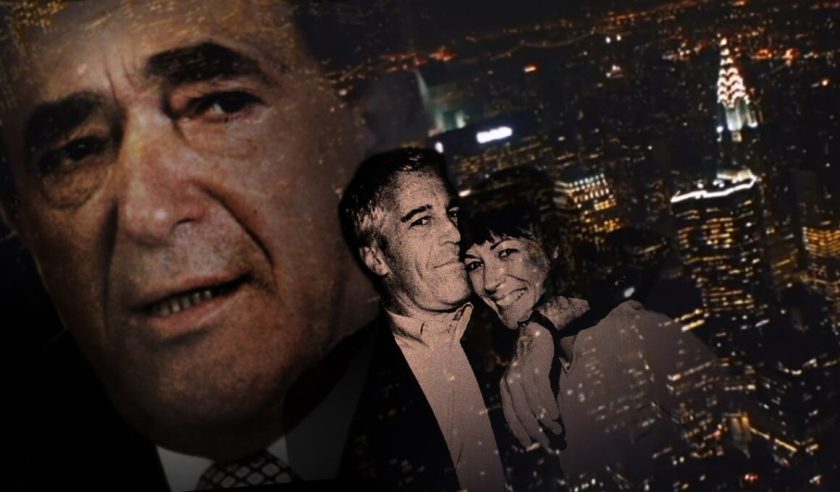
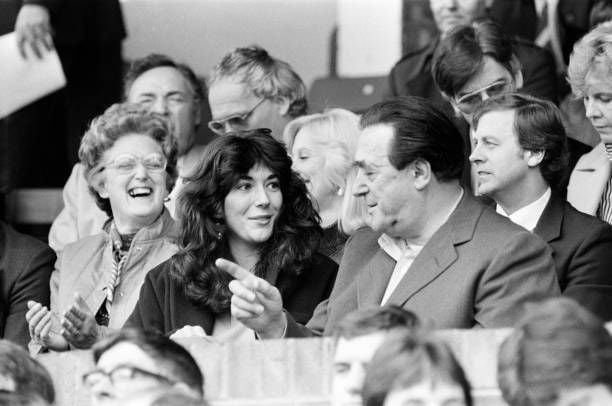
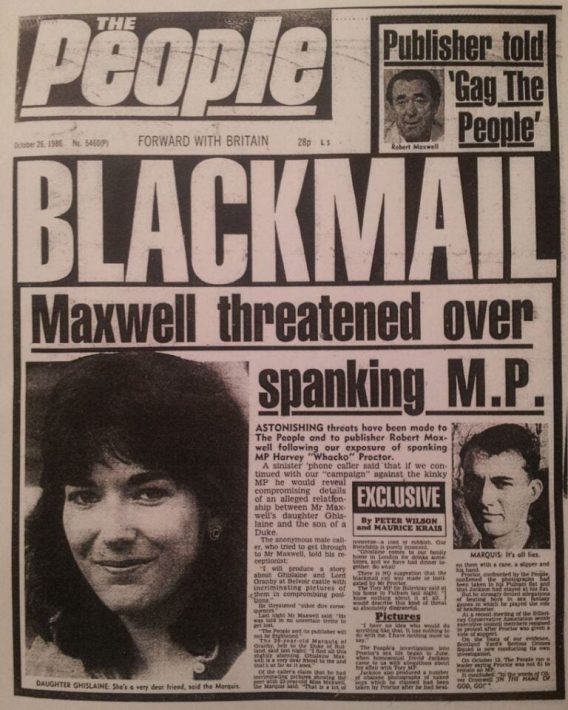 The bizarre decision to publish a front-page story exploiting his own daughter’s alleged sexual relationship because of an anonymous phone call was especially odd given that Robert Maxwell was known for his tight control over his youngest daughter’s love life. As previously mentioned, he had banned her boyfriends from visiting the family house and had gone to great lengths to prevent her from being seen in public with them. Yet, for whatever reason, Robert Maxwell clearly wanted information linking Ghislaine to the future duke put out into the public sphere. Though it is difficult to know exactly what was behind this odd episode in Ghislaine’s past, the situation suggests that Robert Maxwell saw Ghislaine’s young sexuality as a useful tool in building his influence empire.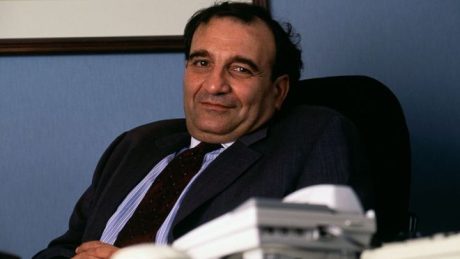
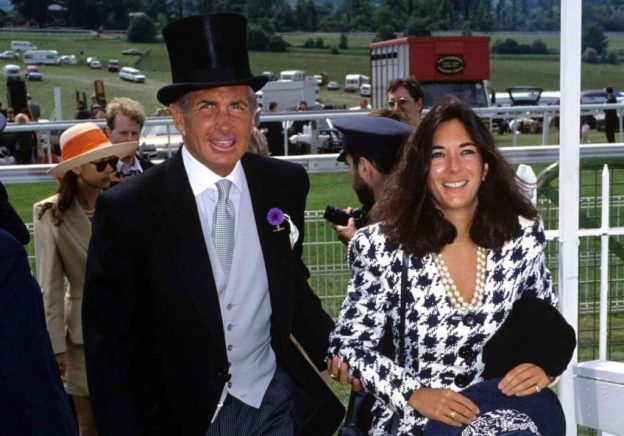
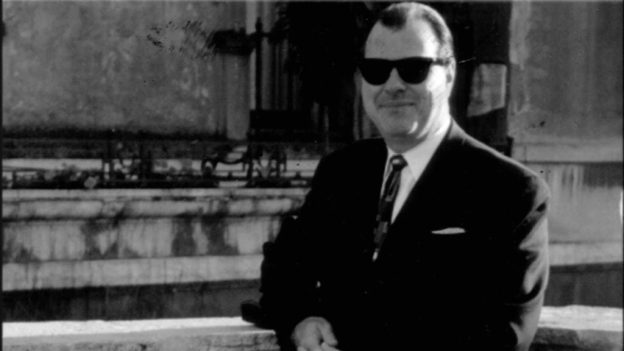
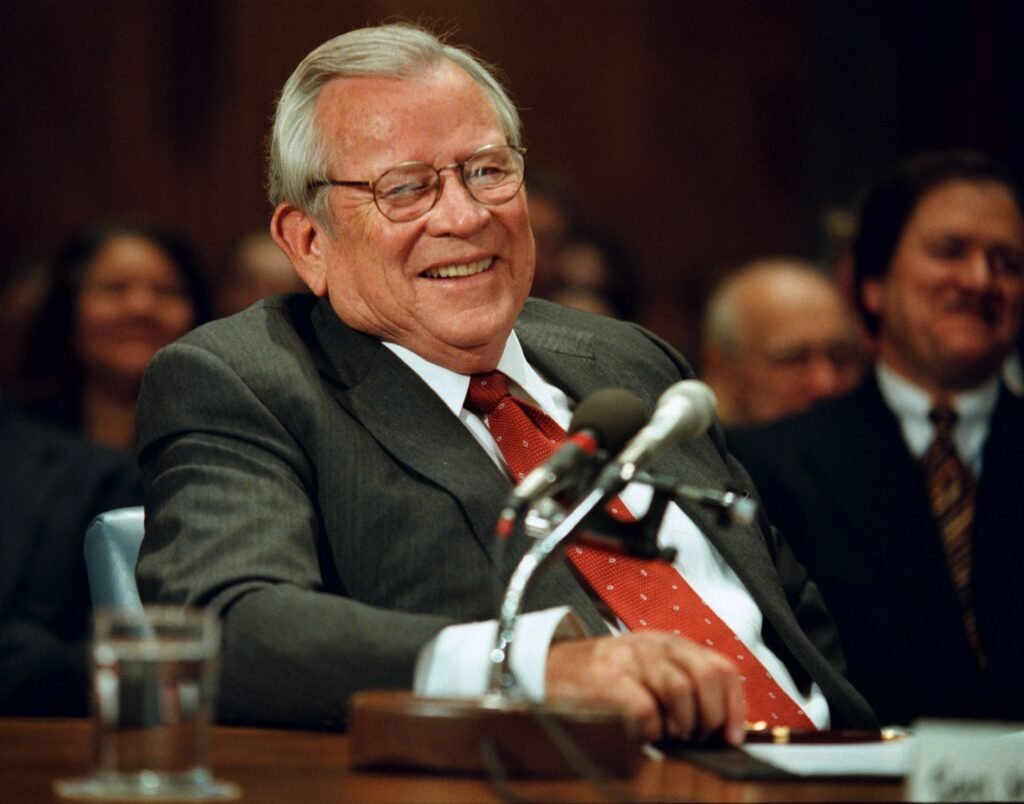
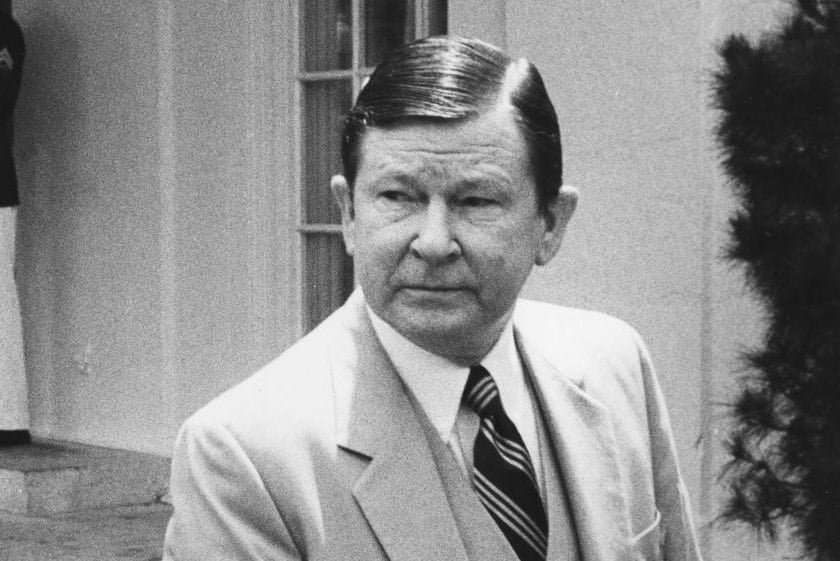
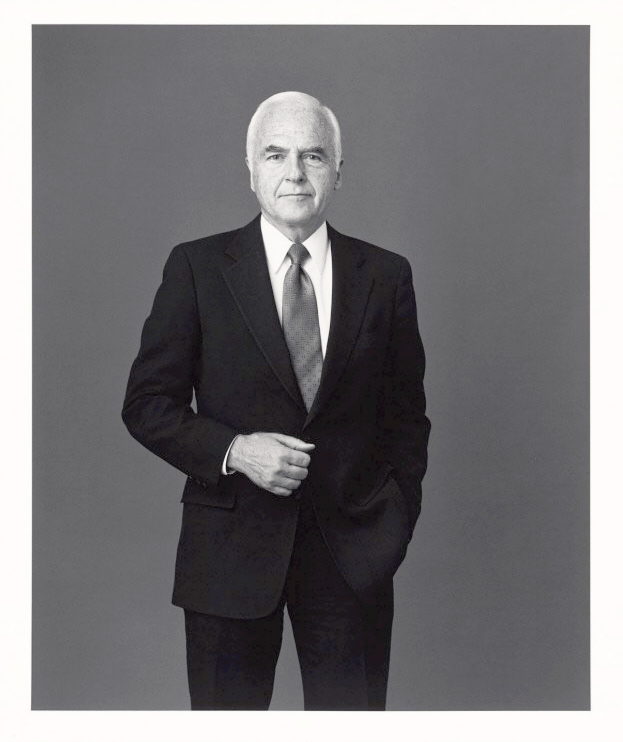
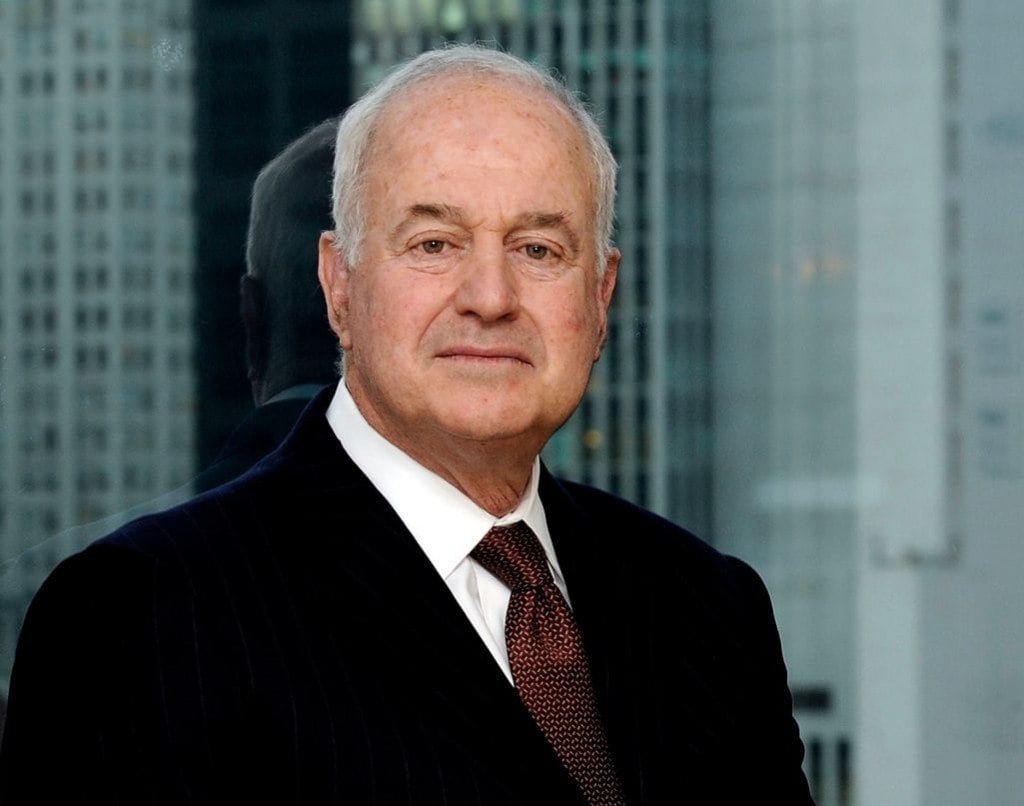
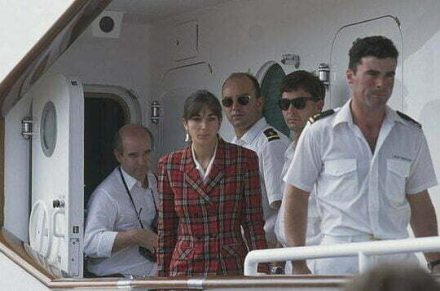
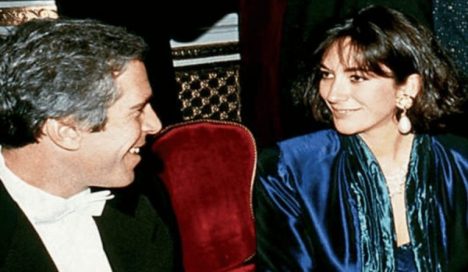

 Aletho News
