Florida Rejects Controversial Encryption Backdoor Bill
By Didi Rankovic | Reclaim The Net | May 13, 2025
Legislators in the US state of Florida have shot down a bid to introduce a law that would have mandated encryption backdoors.
The outcome of the effort – known as SB 868: Social Media Use by Minors – means that the backdoors would have allowed encryption to be weakened in this fundamental way affecting all platforms where minors might choose to open an account.
As the fear-mongering campaign against encryption is being reiterated over and over again, it’s worth repeating – there is no known way of undermining encryption for any one category of users, without leaving the entire internet open and at the mercy of anything from government spies, to plain criminals.
And that affects both people’s communications and transactions.
Not to mention that while framing such radical proposals as needed for a declaratively equally large goal to achieve – the safety of youth online – in reality, by shuttering encryption, young people and everyone else are negatively affected.
If anything, it would make everyone online less secure, and, by nature of the world – young people more so than others.
And so, Florida’s Senate on announced that SB 868 is now “indefinitely postponed and withdrawn from consideration.”
The idea behind the proposal was to allow law enforcement access to communications on a social platform – by forcing a company to build in backdoors any time law enforcement came up either with a warrant – or merely a subpoena.
The focus of the bill was “ephemeral” messages – as in, preventing those defined as minors from using the associated features. At the same time, their parents or guardians would have “full access” to their online activities.
“Dangerous and dumb” – is how the digital rights groups Electronic Frontier Foundation (EFF) earlier summed up and alliterated the proposal.
The US, and its individual states, are not the only ones attempting to create a chink in the armor of global online security by repeatedly attacking online encryption.
Thus far, cooler heads seem to be prevailing, but the battle is far from over, as this fundamental piece of online security continues to be in the crosshairs of, most of the time, authorities hungry for ever-easier ways to conduct ever more invasive mass surveillance.
Let’s just get on with the planned Istanbul peace talks on Thursday, whether or not Putin and Zelensky meet
By Ian Proud | Strategic Culture Foundation | May 14, 2025
As we gear up for the first direct talks between Russia and Ukraine since the failed Istanbul talks of March 2022, a complex game of brinkmanship is underway.
Not surprisingly, in my view, President Putin ignored the coalition of the willing’s ultimatum to Russia to embark on an unconditional ceasefire for thirty days or face massive new sanctions. Instead he proposed what the Americans have been pushing for since Trump assumed office, direct bilateral talks with Ukraine in Istanbul on Thursday 15 May.
I have long argued that the only route out of the war in Ukraine is through talks. Compromise was offered by both sides in the first round of Istanbul talks in March 2022. Any new negotiations will require compromise from both sides, but the difference today is that the cards are more heavily stacked in Russia’s favour than they were in 2022.
Against this backdrop, President Zelensky has called on President Putin to meet him personally in Istanbul on Thursday. From my perspective, this appears an attempt to call off talks if Putin doesn’t show up.
Usually, when Heads of State meet, officials will have hammered out the negotiation for some time before hand. The leaders can then arrive and either sign on the dotted line or tackle the most difficult issues one on one. It’s now Tuesday 13 May. There is simply no way that Russian and Ukrainian officials will have lined up the framework for a deal for both leaders to sign in Istanbul on Thursday.
Even if Putin showed up on Thursday, Zelensky isn’t going to announce unilaterally that Ukraine is giving up its NATO ambition before the full negotiations have even started. Whether you agree or not, this is self-evidently Russia’s core ‘root cause’ of the war. The new German Foreign Minister, Johann Wadephul recently repeated the line that Ukraine’s path to NATO is irreversible, even though the Trump administration disagrees.
A form of words on Ukraine’s NATO aspiration that is agreeable to both sides in the war will take time to draft. And there’s a huge list of other detailed points that have to be addressed, including the line of control, the role of military forces from other states, the return of Ukrainian children, the protection of minority languages and so on.
Every statement that Zelensky has made since the war started has emphasised the need for the west to pile more pressure on Russia to ensure ultimate victory. He would meet Putin in Istanbul without the back slapping adulation that he receives in western capitals and with no pressure cards in his back pocket.
That doesn’t mean I think a meeting shouldn’t happen, because I do. The image of both war times leaders meeting in Istanbul, however awkward and uncomfortable, could be deeply symbolic in announcing the commencement of long overdue peace talks between officials. They could agree, face to face, to maintain a ceasefire for as long as those peace talks continued.
But no leader likes to turn up to any international meeting without the preparatory ground work in place. There is deep enmity between Putin and Zelensky for obvious reasons. Given Zelensky’s penchant for publicity stunts, the Russian side would want to be absolutely sure that the choreography of any meeting and the deliverables – what they would announce, however limited – had been agreed.
Putin will know that if he does not now turn up to Istanbul that Zelensky will hit the international airwaves calling for massive sanctions. But that if he meets Zelensky and a comprehensive deal isn’t agreed there and then – a frankly impossible feat it seems to me – then the same calls for massive sanctions against Russia will be made.
Of course, Putin will also know that Europe can’t muster new sanctions massive enough to make a difference at this late stage in the process, having exhausted most avenues since 2014. On Victory Day, Britain unilaterally announced the ‘biggest ever sanctions package’ against Russia’s so-called shadow fleet of oil tankers. The idea that unseaworthy hulks are carrying illicit Russian oil into Britain is obviously fanciful. But in any case, with the global oil price now close to the G7 oil price cap on Russian oil, the idea of a shadow fleet, delivering oil at its market rate, has fallen away. Britain’s February sanctions package against 107 persons and entities was labelled the largest sanctions package since 2022. Let’s be clear, the biggest sanctions package against Russia was imposed in February 2022, and everything since that time has offered diminishing marginal returns.
But that’s not really the point. By trying to force a showdown in Istanbul, Zelensky may want to continue to paint Russia as the aggressor and to press the case for more military aid, having asked for three million new artillery shells during his recent trip to Prague. However, this war really must now end, having blighted over one million lives already.
Boris Johnson was wrong in March 2022 to discourage Zelensky from accepting the first Istanbul peace deal precisely because he could not back up the promise that he made; to support Ukraine for as long as it takes. Even though Britain continues to pump £4.5bn in yearly military aid into Ukraine, that sum pales against the free aid that the U.S. offered under Joe Biden.
Trump is offering nothing more now than to plunder Ukraine’s resources so that it can buy American weapons, and Europe cannot afford to make up the difference, for as long as it takes. Ukraine is still losing on the battlefield and now, apparently, treating its traumatised troops with ketamine to help them deal with the PTSD.
Despite significant risks around inflation and high interest rates caused by the enormous fiscal splurge on its war economy, Russia is still growing at a respectable rate. Europe is not.
For now, President Putin is keeping his powder dry by not responding to Zelensky’s relentless press stunts. It’s clear to me that Russia’s initiative of a second round of Istanbul peace talks from Thursday is essential in edging both sides closer to a cessation of the killing that should have ended over three years ago. Whether or not both leaders meet at the start or at the end of those negotiations, let’s just please get down to the business of talking.
Ian Proud: Ukraine Peace Talks or Political Theatre?
Glenn Diesen | May 13, 2025
Ian Proud was a member of His Majesty’s Diplomatic Service from 1999 to 2023. Ian was a senior officer at the British Embassy in Moscow from July 2014 to February 2019, at a time when UK-Russia relations were particularly tense. He performed a number of roles in Moscow, including as Head of Chancery, Economic Counsellor – in charge of advising UK Ministers on economic sanctions – Chair of the Crisis Committee, Director of the Diplomatic Academy for Eastern Europe and Central Asia and Vice Chair of the Board at the Anglo-American School.
Ian Proud’s Substack: https://thepeacemonger.substack.com/
Follow Prof. Glenn Diesen:
Substack: https://glenndiesen.substack.com/
Are UK Atrocities in Afghanistan a Smokescreen for IDF Defenders?
Sputnik – 13.05.2025
Emerging reports about atrocities perpetrated by British special forces against civilians in Afghanistan may be a part of a “preemptive defense” of the IDF, former Pentagon analyst Ret. Lt. Col. Karen Kwiatkowski told Sputnik.
If and when stories of “the incredibly disturbing activities of the UK- and US-supported IDF in Gaza” come out, the public would already be taught beforehand that “war is awful, civilians and sleeping children are always killed and it’s just a few bad apples.”
Regarding the UK soldiers and officers involved in illegal activities in Afghanistan, Kwiatkowski believes they should be placed on unpaid leave and “tried in a legal court.”
Any key eyewitnesses and whistleblowers “need immediate protection from suicide or accidents,” Kwiatkowski adds.
Cover-ups, lies, smears and fake news from Ursula could be EU’s own suicide pill
By Martin Jay | Strategic Culture Foundation | May 12, 2025
Previous disparaging comments about the past of European Commission chief Ursula von der Leyen and her grandparents’ role in the second world war might have seemed truculent by Russian commentators. And yet, as each month passes, we seem to be witnessing VDL’s political identity – and her vision of the role of the EU – more and more in line with Nazi Germany. The total annihilation of the free press in Brussels was not her doing, as she inherited the draconian system when she took office. But her efforts to broaden the silencing of journalists right across Europe is telling as it becomes even more an act of desperation to stamp out any free and feral reporting while her own team are pumping out these entirely fake narratives every day. The Russians are planning on invading Baltic states. Russia is the new threat to a democratic Europe. And the latest blag, EU is a bastion of peace and democracy “which doesn’t invade other countries”.
The lies and hypocrisy are at an all-time high and so it seems fitting that the draconian measures of arresting or detaining journalists, like Chay Bowes attempting to cover the Romanian elections, is understandable.
And yet there is no evidence at all to back up the preposterous claim that Moscow has eyes set on invading Baltic countries; there is also no evidence to back up the claim that Russia is the real threat to European democracy, which, in fact is being destroyed each day by the EU and its elites themselves. And as for the EU being this example of a peaceful trading bloc which doesn’t have any intention of attacking its own members… that might have been true. Until now.
These days the EU elite in Brussels are panicking about losing their relevance. It is looking at though the anti-EU candidate in Romania might well win the presidential elections there. If that happens, this means an alliance of three rebels in the pack – Hungary, Romania and Slovakia – are going to give the EU, let alone NATO a real headache. It might be overzealous to say it could be the end of the EU, but it may well certainly be the end of the EU as we know it. The extraordinary elitist dictatorship which has no accountability to its own mercurial ambitions and acts, might have to learnt a thing or two about democracy and start respecting a few of its principles. NATO, arguably, might be hit even harder as three members holding back the EU’s dream of organizing an EU army in Ukraine will have longer-term ramifications to the prestige and relevance of both those Brussels based institutions.
Have the cracks already started? Are these elitists like VDL losing their grip with reality? The threat by Estonia to “shoot down” any planes flying from Slovakia to Moscow is a good sign of the lunatics running the asylum as this WTF moment naturally is not reported by mainstream media and so the Slovakian PM himself had to stream a piece to camera for X just to confirm the madness.
Yet Ursula is really losing her mind. She’s out of control and this obsession with fighting Russia at any cost may well provide the defining moment where she and the EU project falls on its own sword. The election meddling, arrests of journalists and sheer scale of the fake news coming from the EU is starting to get noticed and seen for what it is – not only in these three recalcitrant EU member states but right across Europe. This is evident in the rise of far-right movements in France, Britain and Germany. It’s plain to see. More and more people are simply no longer buying the BS that comes to their TV screens by these leaders in Brussels on immigration, COVID, LGBT and of course boosting EU defence budgets to new giddy heights. In the UK for example, the government is looking at how to cut disability benefits to its own citizens as the national coffers are empty due to 7.5 illegal migrants receiving state benefits, free housing and health care.
The hypocrisy is staggering. Just recently we read that the EU accuses Hungarian populist leader of pouring cash into a number of media outlets to boost his popularity. And yet HUNDREDS of journalists in Brussels each day working for all of Europe’s main broadcasters, even the BBC when the UK was a member, receive free productions services saving them possibly hundreds of millions of euros each year. We don’t know the figure because it’s all shrouded in secrecy, naturally, but the laughable accusation made by the EU must be noted for the pot calling the kettle black.
Hungary, Slovakia and soon Romania will all be targets for smear campaigns by Brussels-based so-called journalists as part of the new objective of VDL and her cronies. This is coming on a grand scale and the more this is intensified, you can literally watch the popularity of the far-right parties in ‘Old Europe’ rise each day. The model has an autodestruct facility built into it which fools like VDL can’t even see as they are too fixated with power grabbing and the dirty tricks which are needed therein. But the whole machinery is fed on lies which still too many gullible Europeans believe whether it be about Russia’s “threat” or electric cars, alternative energy and of course vaccines. All these areas represent hundreds of billions of euros being transferred from the public coffers to the private ones and there are still, sadly, a good number of ignorant Europeans who can’t join up the dots.
Europe’s Security Plans Are Taking it Nowhere
By Salman Rafi Sheikh – New Eastern Outlook – May 11, 2025
Over the past few weeks and months, European leaders have changed their plans from sending troops to Ukraine to offering ‘air support’ and, finally, to bolstering Ukraine’s military forces and defence capability as a means to protect European security.
This whimsical switching exposes a lack of internal coherence and the continent’s inability to act autonomously and decisively to shape the course of events.
Europe’s Many Plans
Immediately after the Trump administration began its peace talks with Russia and Ukraine to end the military conflict, Europe decided to take a different route. This was supposed to be the first major manifestation of Europe’s strategic autonomy ever since its decision in 2003 not to support the US war on Iraq. The first route involved sending European troops from within the so-called “coalition of the willing” to Ukraine as a ‘peacekeeping’ force. This plan was the brainchild of the UK Prime Minister Keir Starmer. But, as the Telegraph, a leading UK-based newspaper, reported at the end of March, the UK’s military officials dismissed the plan, calling it a “political theatre”. Needless to say, President Trump’s special envoy, Steve Witkoff, had already dismissed the plan as “a posture and a pose” only. The second plan turned to offering air and naval support. But defence sources in the US and elsewhere in Europe reportedly found no military sense in this plan too, considering that this deployment will be hundreds of miles away from the frontline. In fact, one defence source told the media this support will not only be meaningless, but it will not be able to defend itself in the wake of any escalation.
The “Porcupine strategy”
This has led Europe to contemplate an altogether different strategy. The new plan is to arm the Ukrainian military to its teeth to prevent any deal between Russia and the US. It also includes upgrading Europe’s own defence capability. This strategy was released earlier in April as a “Joint White Paper for European Defence Readiness 2030”.
The White Paper is interesting for several reasons, one being that it is critical of Washington as well. For instance, the reason why Europe needs to upgrade its defence readiness is that it is being “coerced by external actors” who are “threatening our way of life and our ability to choose our own future through democratic processes. They believe that we are politically unable to summon a meaningful and strategically enduring response.” The paper squarely places these threats against the backdrop of the massive changes to the “political equilibrium that emerged from the end of the Second World War and then the conclusion of the Cold War”. Called the “Porcupine strategy”, the underlying objective of this plan is to help Ukraine boost its overall military capacity so that it can ‘resist’ Russia and protect Europe from any possible Russian expansion. It involves providing “large-scale artillery ammunition”, “air defence systems”, “drones”, “train and equip Ukrainian brigades”, “direct support to Ukraine’s defence industry”, and, among other things, “enhances access to EU spaces and services”.
The elephant in the room, however, is whether the EU actually has the ability to boost Ukraine. A lot of this is based upon the hope that the EU will be able to deliver this. The paper says, “Member States need the European defence industry to be able to design, develop, manufacture and deliver these products and technologies faster and at scale. In the context of substantially increased defence expenditure, a higher share needs to be invested in defence research and development and technology, concentrating efforts and resources on common European projects”.
A good part of this strategy, in fact, depends upon securing and providing loans. The White Paper proposes that the EU should “provide Member States with loans backed by the EU budget. With up to EUR 150bn, the Security and Action for Europe (SAFE) instrument will strongly support a significant increase in Member States’ investments in Europe’s defence capabilities, now and over this decade.”
Of course, it does not include, at present, any assurances and commitments from member states that they will be able to either secure these loans and/or be willing to invest this much in the defence industry immediately. For many in Europe continue to hope that transatlantic ties could still return to ‘normal’ in the post-Trump era.
While this is understandable as to why Europe, facing a different and unpredictable administration in the US, would want to chart a new course for itself – and doing so might, in the long run, help multipolarity as well – its rapid shifts between several plans based upon wrong strategic and financial calculation is unlikely to take it anywhere.
Salman Rafi Sheikh, research analyst of International Relations and Pakistan’s foreign and domestic affairs.
Russia is not afraid of Western sanctions – Kremlin
RT | May 10, 2025
Russia is used to Western pressure and is not concerned about new sanctions, Kremlin spokesman Dmitry Peskov has said.
He was commenting on a new round of sanctions recently imposed by the UK.
”We already know what we will do once the sanctions are announced and how we will minimize their effect,” Peskov told journalist Pavel Zarubin on Saturday. Russia has learned effective ways to counteract Western pressure, he said. “Therefore, scaring us with sanctions is pointless.”
On Friday, the British government announced what it called the “largest-ever” sanctions package against Russia, targeting its oil transportation network in order to deliver a blow to the country’s energy revenues.
The new measures blacklisted up to 100 oil tankers that the West claims are part of a Russian ‘shadow fleet’, older vessels operating outside Western insurance systems. Since the escalation of the Ukraine conflict over three years ago, successive British governments have introduced more than 2,000 sanctions on Russian individuals and entities.
Moscow has said the move will not harm Russia’s economy and will instead increase energy costs and inflation in Europe.
Earlier, US President Donald Trump called for an “unconditional ceasefire” between Moscow and Kiev, threatening punitive measures if the truce is not observed. “The US and its partners will impose further sanctions” if it is violated, he said.
In March, Russian President Vladimir Putin said that a total of 28,595 sanctions were imposed on Russian companies and individuals in recent years – more than the total number on all other countries combined. According to the president, the West sought to eliminate Russia as a competitor but its economy has only grown more resilient under pressure.
Iran categorically rejects involvement in alleged plot to attack Israeli embassy in UK
Press TV – May 8, 2025
Tehran has categorically rejected Western media reports about Iranian nationals being involved in an alleged plot to target the Israeli embassy in London.
In a post on his X account on Thursday, Iranian Foreign Minister Abbas Araghchi said Tehran has not been informed of any allegations via “proper diplomatic channels”.
“Iran stands ready to engage to shed light on what has truly transpired, and we reiterate that UK authorities should afford our citizens due process,” he wrote.
The United Kingdom has arrested eight men, including seven Iranian nationals, as part of two investigations regarding alleged threats to national security.
London’s Metropolitan Police confirmed the arrests on Sunday, saying five men, including four of the Iranian nationals, were detained on suspicion of “preparation of a terrorist act” while the other three were being held under national security legislation introduced in 2023 to counter the actions of hostile states.
They were arrested as part of a “pre-planned” investigation into an alleged plot to “target specific premises,” the Metropolitan Police said, adding that the “affected site” was made aware and is being supported by police.
As part of a separate investigation led by the Met, three other Iranian men were arrested in London on Saturday.
The Met said three men — aged 39, 44 and 55 — were arrested under section 27 the National Security Act at separate addresses in north-west and west London, and had been taken into custody while searches continued.
In his post, Araghchi pointed to the stories in the media about the alleged involvement of Iranian nationals in a supposed plot to target the Israeli embassy in London and urged the UK to engage so that Tehran may assist any probe into credible allegations.
The top Iranian diplomat warned that third parties are resorting to desperate measures, including false flag operations, to derail diplomacy and provoke escalation.
“Timing and lack of engagement suggest that something is amiss,” he said.
In a post on his X social media account on Tuesday, the Iranian foreign minister called on the UK to respect the rights of Iranians arrested in Britain, underscoring Tehran’s readiness to assist investigations in the incident.
“Disturbed to learn that Iranian citizens have reportedly been arrested by UK security services,” Araghchi wrote.
UK keeps sending arms to Israel despite ban: Report
Press TV – May 7, 2025
A new report says Britain keeps exporting arms and equipment, including F-35 fighter jet parts, to Israel despite a government suspension in September 2024.
The report released by three campaign groups says parts for the jet, which has been critical for Israel’s brutal military campaign in Gaza, appear to have arrived in Israel as recently as March.
Investigation using Israeli customs data says 8,630 munitions items were sent from the UK to Israel since the suspensions.
The munitions fall under a category of import labelled “bombs, grenades, torpedoes, mines, missiles, and similar munitions of war and parts thereof.”
Most of the shipments cited in the report happened after the government’s arms suspension.
Britain had said it suspended its direct exports over concerns they might be used in serious violations of international humanitarian law.
Soon after the suspensions, Foreign Secretary David Lammy told parliament that “much of what we send is defensive in nature. It is not what we describe routinely as arms.”
“On the basis of the evidence in this report, it appears that Lammy has misled parliament and the public about arms shipments to Israel,” according to the report.
Nearly two dozen MPs have written to Lammy, calling on him to come before parliament to respond to the allegations.
They said that the public “deserves to know the full scale of the UK’s complicity in crimes against humanity.”
“We urge the government to disclose the details of all arms exports to Israel since October 2023 and to immediately halt all arms exports to Israel,” they wrote.
“This could not be more urgent given the risk that British-made weapons could be used to enact Netanyahu’s plan to annex Gaza and ethnically cleanse the Palestinian people.”
Former Labor shadow chancellor and MP John McDonnell and MP Zarah said the findings showed the government “has been lying to us about the arms it is supplying to Israel while it wages genocide in Gaza.”
“Far from ‘helmets and goggles’, the government has been sending thousands of arms and ammunition goods and [is] even still supplying components of the world’s most lethal fighter jets,” she said.
Emily Apple, media coordinator for the UK-based Campaign Against Arms Trade, said the report had shattered the claim that the UK arms export regime is transparent.
“Our arms export regime is not fit for purpose and this government is complicit in Israel’s horrific war crimes. Time and again, it has either refused to act or manufactured loopholes to prioritize arms trade profits over Palestinian lives. This has to stop,” Apple said.
WHO Pandemic Agreement ⏤ WHO is really in charge?
By Dr Lisa Hutchinson | Health Advisory & Recovery Team | May 6, 2025
On 15 April 2025, as we approached Easter, the not so joyous news broke that member states have now reached an agreement on the WHO Pandemic Agreement or Treaty, with negotiations expected to be formalized in May (17-26) when each member state can then decide whether or not to sign the agreement. Notably, this Treaty has gone ahead without the inclusion of countries such as Argentina and also the United States. It is now well known that President Trump signed an Executive Order to pull the USA out of the agreement owing to the ‘mishandling of the Covid-19 pandemic’ and concerns of China’s ‘inappropriate political influence’. Moreover, federal health officials are also prevented from contributing to talks with WHO, due to concerns it is a harmful organization. So what does this WHO Pandemic Agreement mean for the UK and the rest of the world?
Anne-Claire Amprou, a co-chair of the Intergovernmental Negotiating Body, has claimed that this is a “major step forward in protecting populations, the response will be faster, more effective and more equitable” and will bolster “equity and international security.” She continues by noting that “nothing in the draft agreement shall be interpreted as providing WHO any authority to direct, order, alter or proscribe national laws or policies, or mandate States to take specific actions, such as ban or accept travelers, impose vaccination mandates or therapeutic or diagnostic measures or implement lockdowns.” However, many more skeptical followers of the Agreement, such as James Ruguski, indicate that this represents a Framework Convention to usher in a global pharmaceutical power grab dressed up as ‘health equity’ under the guise of ending ‘vaccine apartheid’. The fact that governments worldwide have bypassed normal safety protocols during ‘health emergencies’ sets a dangerous precedent for a totalitarian approach to a one world governance.
The latest agreement on the WHO Pandemic Agreement refers to pandemic-related health products in response to pandemic emergencies. Of note, these health products include “medicines, vaccines, diagnostics, medical devices, vector control products, personal protective equipment, decontamination products, assistive products, antidotes, cell- and gene-based therapies, and other health technologies”. The agreement continues to elaborate on the fact that a “coordinating financial Mechanism is hereby established to promote sustainable financing for the implementation of this Agreement”. In other words, this will expand the capacities around pandemic prevention and preparedness and response using the above mentioned coordinated financial mechanism to serve the implementation of this Agreement. James Roguski defines the acronym PHEIC (Public Health Emergency of International Concern) in reality as a Pharmaceutical Hospital Emergency Industrial Complex!
In his Substack, James Ruduski explains the main aspects of the Pandemic Treaty:
- This is really Corporate Wealth Redistribution Disguised as Health – as this represents a Framework Convention that benefits Big Pharma;
- A behind the scenes peak at the Conference of Parties (COP) reveals what the Pathogen Access and Benefit Sharing (PABS) scheme does, which gives authority to a government official so they can deem if a countermeasure is required;
- Emergency Powers and the PREP Act is another way that governments take control by bypassing normal safety protocols during declared ‘emergencies’ and sets a dangerous precedent;
- Vaccines are being developed with self-amplifying mRNA technology for new emerging ‘threats’ such as bird flu, H5N1 and the role of regulatory oversight in this regard;
- This reveals biosecurity theatres in which the WHO is given authority over logistics, manufacturing and flow of money for the PREP Act.
Although the World Health Assembly has reached an agreement for the WHO Pandemic Treaty which will be put forward for adoption in mid-May, the international agreements are not legally binding. However, where it becomes problematic for UK citizens is that a section within the agreement based on the Public Health (Control of Disease) Act [1984] ⏤ an ironic date given George Orwell’s book “Nineteen Eighty Four” ⏤ empowers the Secretary of State for Health and Social Care to adopt or embrace any “international agreement or arrangement relating to the spread of an infection or contamination”. While advocates of the WHO Pandemic Agreement opine that it respects national sovereignty, it is also subject to “Obligations under International Law” ⏤ an oxymoron by any standards. Disturbingly, the language of the Agreement also includes emergencies owing to climate change!
The WHO’s One Health initiative integrates human, animal and environmental health across the organization, and includes collaborations with the usual culprits, such as the United Nations (UN) that has created the Food and Agriculture Organization (FAO), the Environment Programme (UNEP) and the World Organization for Animal Health (WOAH). Censorship is also notable in this WHO Agreement document with references to the importance of “building trust and ensuring the timely sharing of information to prevent misinformation, disinformation and stigmatisation.” Most people are unaware that mandates relating to health are illegal. People should not have to comply with health mandates that are not aligned with their beliefs. Human rights educators and justice advocates have pointed out that individuals are more empowered than they realise but resilience is largely something people do not enact as they are unaware of their true legal rights.
British citizens should ignore these international agreements and treaties and focus on repealing section 45 of the Public Health (Control of Disease) Act [1984]. A recent post on platform X by Weston A. Price Foundation, London Chapter, explains how repealing section 45 of the 1984 Public Health Act will ensure we can effect how we are governed, as this can only be affected by statutes. Moreover, the 1688 Bill of Rights confirms that no treaty or government proclamation can change our laws: “That the pretended Power of Suspending of Laws or the Execution of Laws by Regall Authority without Consent of Parlyament is illegall.”
These agreements are really about taking money from wealthy nations, via the WHO, to fund and further extend the powers of Big Pharma around the world. The WHO Pandemic Agreement can enable future public health emergency provisions or pandemic-related unapproved therapies to be rolled out globally in circumstances of another health threat. The Pandemic Agreement allows an increase in the supply chain (for medicines, vaccines, and hospital protocols) that may inflict untold damage. People’s individual rights should never be usurped by government ⏤ even in a health emergency situation. The pandemic and PREP Act enabled engineered emergencies to be initiated so that the 4th Industrial Complex architects could profit from such measures. A compliant population kept in a state of perpetual fear relinquishes power too readily. We need to protect ourselves from manipulation by authorities with too much power. The deadline for member nations to reject the amendments to the International Health Regulations is rapidly approaching: July 19, 2025. But our Secretary of State, Wes Streeting, is likely to agree the terms when he attends the World Health Assembly in Geneva on 19th May, well ahead of the rejection deadline.
James Roguski summarises: 10 reasons to reject the WHO’s Pandemic Agreement
1. Lack of Public Discussion/Debate ⏤ public debate and discussion has been almost non-existent;
2. Pandemic Related Products ⏤ the proposed Pandemic Agreement is not about health, rather, it is a redistribution of wealth under the guise of ‘equity’;
3. Surveillance ⏤ within the Agreement it states that: “Parties shall take steps through international collaboration, in bilateral, regional and multilateral settings, to progressively strengthen pandemic prevention and surveillance measures and capacities, consistent with the International Health Regulations (2005)”;
4. The One Health Approach ⏤ the Agreement states: “developing, implementing and reviewing relevant national policies and strategies that reflect a One Health approach”. This is a key policy instrument for dealing with global health risks but this has far-reaching implications. The WHO Pandemic Agreement gives the WHO Director-General the ability to issue orders to all nations regarding humans, animals and plant ecosystems when a public health emergency is declared, which overrides nation sovereignty;
5. Massive Expansion of the Pharmaceutical Hospital Emergency Industrial Complex ⏤ with Article 10 stating “sustainable and geographically diversified local production”;
6. The Pathogen Access and Benefit Sharing System (PABS) ⏤ the Pandemic Agreement fails to adequately address the issue of gain-of-function research and the proposed PABS would effectively monetize and incentivize the search for “pathogens with pandemic potential”;
7. The Global Supply Chain and Logistics Network ⏤ put simply the WHO should NOT be given the authority to oversee and/or operate a Global Supply Chain and Logistics Network;
8. The Financial Coordinating Mechanism ⏤ this aims to bolster the funding of the WHO to actively control the money and supply chains;
9. The Conference of the Parties ⏤ the establishment of a new bureaucracy (the Conference of the Parties) consisting of unelected, unaccountable and largely unknown bureaucrats ⏤ is unlikely to prioritise the people’s best interests in helping to prevent, prepare for, or respond to future ‘pandemics’;
10. Relevant Stakeholders ⏤ includes private corporations but not we the people.
No informed consent or democratic debate has existed during all these negotiations.
Why this matters is that the WHO Pandemic Agreement has:
⏤ Hidden clauses and centralized control
⏤ Potential impacts on national sovereignty
⏤ Your rights during future health crises will be heavily restricted.
Ultimately public private partnerships do not work and we need transparency. The WHO Pandemic Treaty and vaccine experimentation should not be able to happen again and exiting the WHO or not complying with the Pandemic Agreement is one way to oppose this. Hopefully there is a better way to health ⏤ we need to take away power from government and global officials and we need to contact MPs to raise our objections.
Consider signing the petition linked here FINAL VOTE IMMINENT: REJECT the WHO Pandemic Treaty!
Featured Video
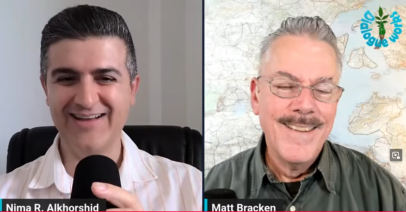
Matt Bracken: Hezbollah Re-Arming With Massive Help From Iran
or go to
Aletho News Archives – Video-Images
From the Archives
Examples of hate speech by Israel against Palestine
1. “There is a huge gap between us (Jews) and our enemies, not just in ability but in morality, culture, sanctity of life, and conscience. They are our neighbors here, but it seems as if at a distance of a few hundred meters away, there are people who do not belong to our continent, to our world, but actually belong to a different galaxy.” Israeli president Moshe Katsav. The Jerusalem Post, May 10, 2001
2. “The Palestinians are like crocodiles, the more you give them meat, they want more”…. Ehud Barak, Prime Minister of Israel at the time – August 28, 2000. Reported in the Jerusalem Post, August 30, 2000
3. ” [The Palestinians are] beasts walking on two legs.” Menahim Begin, speech to the Knesset, quoted in Amnon Kapeliouk, “Begin and the Beasts”. New Statesman, 25 June 1982.
4. “The Palestinians” would be crushed like grasshoppers … heads smashed against the boulders and walls.” Isreali Prime Minister (at the time) in a speech to Jewish settlers New York Times April 1, 1988
5. “When we have settled the land, all the Arabs will be able to do about it will be to scurry around like drugged cockroaches in a bottle.” Raphael Eitan, Chief of Staff of the Israeli Defence Forces, New York Times, 14 April 1983.
6. “How can we return the occupied territories? There is nobody to return them to.” Golda Maier, March 8, 1969.
… Continue
Blog Roll
 Aletho News
- Voters Don’t Want the Old GOP
- Former US officials who resigned over Gaza urge 2028 presidential candidates to reject architects of Biden-era policy
- Wired for War Crimes: Israeli spy-tech firm targeted Starlink users – researchers
- There is cautious optimism about ending the Ukraine war
- Here are the Bills Pushing Forward Authoritarian Control in Canada
- The accession of Ukraine could signal the collapse of the EU
- Italy puts Ukraine weapons package on hold – media
- US kills 5 in Pacific as unproven drug smuggling claims persist
- Iran Respects International Law, US & Israel are Rogue States
- Russia Helping Build a New Middle East /Trita Parsi
- If Americans Knew
- An error has occurred; the feed is probably down. Try again later.
- No Tricks Zone
- Germany’s Green Energy Transition Becoming Increasingly Expensive…Another 6 Trillion Euros!
- Sudden Stratospheric Warming, Powerful El Niño Combination May Lead To Extreme Europe Cold, Energy Crisis!
- Two New Studies Find Thwaites Glacier Melt Cannot Be Driven By Human Activity Or A Warming Ocean
- E-Cars Reduce CO2 Emissions By Only 41% Compared To Internal Combustion Engine Vehicles
- Predictions Made By Renowned Climate Professor Over Past Decades Have Been Proven To Be Poor
- New Study Suggests Large Regions Of The Pacific Ocean Have Been Cooling For The Last 80 Years
- Germany’s Green Energy Debacle: High Energy Costs Force Kahla Porzellan to Close After 182 Years!
- New Study: 50 Years Of The Most Aggressive ‘Net Zero’ Policies Can Only Affect The Global Climate By 0.03°C
- US September “Heat” Was No Record…Many Records Set Decades Ago
- Latest European Green Energy Debacle; Portugal’s Largest Flagship Solar Park Insolvent!

