British Intel’s Covert War On Hezbollah
By Kit Klarenberg | Global Delinquents | July 17, 2026
In recent years, the Palestinian Civil Defence has been presented by Western media and rights groups as a vital volunteer emergency service, operating out of Lebanon’s myriad refugee camps. First on the scene of major disasters, including the officially unsolved August 2020 Beirut blast, the group has provided news outlets with first-person disaster footage, while apparently winning hearts and minds among the country’s diverse population. But behind the PCD’s noble facade lurks a sinister British intelligence project, exploiting local Palestinian resistance to neutralise Hezbollah.
The PCD has invited comparisons with Syria’s notorious White Helmets, and this is no coincidence. ARK, a ubiquitous British intelligence contractor founded by MI6 veteran Alistair Harris, was behind the creation of both groups. An entry on ARK’s website outlining the firm’s experience of creating “search and rescue teams” overseas notes the Syrian White Helmets’ success directly inspired the PCD’s 2014 founding. The Western state-funded “programme” that created the Syrian ‘humanitarian’ group was “expanded” specifically to repeat the exercise, in Lebanon’s Palestinian refugee camps.
A little-remembered controversy over the White Helmets related to its formal name, Syrian Civil Defence, being indistinguishable from the country’s established civil defence force. On the ground reporting from Vanessa Beeley indicated extremist groups murdered the state’s emergency and medical workers, before stealing their equipment, uniforms and ambulances to found the White Helmets. Beirut’s PCD similarly emulates the long-established Palestinian Civil Defence’s name, a rescue group operating in both Gaza and the West Bank. Is this similarly a malicious attempt to falsely conflate the pair?
Like the White Helmets, Lebanon’s PCD aims to be an alternative, quasi-state structure, advancing regime change objectives. The PCD very visibly provides parallel services to those proffered by Hezbollah. The Resistance group’s Islamic Health Organization, Risala Scout Association and civil defence units are typically responsible for rescuing civilians from rubble, extinguishing fires, and other emergencies. Such provision has significantly bolstered Hezbollah’s support across Lebanon’s multifaith society, problematically for Western powers – including Britain – which desperately want the Resistance faction crippled politically and militarily.
Medics and rescue workers tied to Hezbollah’s healthcare and civil defense wings have been deliberately targeted unrelentingly ever since Tel Aviv’s October 2024 invasion of Lebanon. Much of the country’s south remains cut off from emergency services following Israel’s latest incursion and occupation. The Zionist entity and its Western puppetmasters have made withdrawal from Lebanon contingent on Hezbollah’s neutralisation. While debates about the practicality and plausibility of disarming the Resistance group abound throughout the West, the PCD stands ever-primed to supplant Hezbollah’s frontline duties.
‘Offering Hope’
An October 2020 Middle East Research and Information Project (MERIP) puff piece reports how when the Beirut blast occurred two months earlier, PCD operatives bolted from their refugee camps to immediately respond to the crisis. They were thereafter supposedly “celebrated as heroes in Lebanon” for their humanitarian efforts. This included rescuing civilians from rubble created by the historically devastating eruption, which killed at least 218 people, injured 7,000, displaced 300,000, and inflicted property damage estimated at $15 billion.
The PCD’s establishment was traced by MERIP to “the international community’s humanitarian response to the Syrian refugee crisis,” which provided a vast budget for civil society projects in affected countries, particularly Lebanon. The PCD was reportedly “the most ambitious” of the efforts resultantly launched. The group not only “[filled] an important gap by offering disaster relief in areas abandoned by the state,” but was also intended to blunt purportedly “rampant factionalism” in Lebanon’s refugee camps, and society more generally.
MERIP hinted at the variety of “factionalism” the PCD was ostensibly set up to counter. The outlet noted the group was active in refugee camps that served as the Palestine Liberation Organization’s “primary base” for “armed struggle against Israel,” and remained dominated by anti-Zionist elements. The Beirut blast serendipitously planted the “non-factional” PCD on the map. Having been outfitted with ambulances and a fire truck by ARK well in advance, the group was perfectly positioned to “pick up wounded in the city center.”
However, the PCD reportedly ran head-first into a “cold reception” from a “hostile bureaucracy”. Their status as refugees and lack of identification papers meant Lebanese authorities on the scene did not welcome their presence, ordering them to leave. Undeterred, the group’s leader Hussein Dimasi made urgent calls to state officials. “A line of contact” between Beirut’s General Directorate of General Security and the PCD was established, “which put Dimasi in charge of the rescue mission.” This connection granted the group state approval ever after.

The Beirut blast
The PCD’s MI6 veteran founder, Alistair Harris, effusively cheered his creation’s practical, political, and propaganda success in a November 2020 article for emergency industry journal Crisis Response. After being praised by the UN for its “pivotal role” tackling Lebanese wildfires the year prior, and the PCD’s ranks having “swelled with Palestinian youths” following the Beirut blast, the group had by then “reset their sights on tackling the Covid-19 public health emergency.” This included producing and distributing free facemasks, with funding from Britain’s Beirut embassy.
Harris fawned how the group’s blast response was “extraordinary and heartening, helping to shatter long-held prejudices with acts of selflessness and offering hope for the future.” The PCD reportedly “grabbed their boots and helmets and ran towards the chaos” without fear. Their recording equipment wasn’t noted, although Harris gushed over how the group’s rescue of “one survivor in particular” was rewarded with “international attention.” In September 2020, the BBC produced a slick package on this rescue, watched by hundreds of thousands on Facebook.
‘British Inspectors’
At this time, a vicious blame game over responsibility for the Beirut blast had ignited. Numerous sources within Lebanon, including state officials, claimed without evidence the detonated ammonium nitrate belonged to Hezbollah, which the Resistance group failed to securely store over the six years it was impounded in the Port of Beirut. The US made similar allegations, wildly linking the explosion to alleged Iranian-supplied weapons supposedly provided to Hezbollah and secretly stored not just throughout Lebanon, but across Europe.
Israel likewise consistently blamed Hezbollah for the blast, while claiming the group had assassinated Lebanese activists, journalists and customs officials “because they knew more than they should have about the Beirut Port explosion.” By contrast, Hezbollah levelled no charges publicly, and supposedly ruled out Tel Aviv’s involvement, despite the incident being openly celebrated by Zionists. Today, it remains unpunished. We are left to ponder whether British intelligence played any role. Given the White Helmets’ Syrian activities, the PCD’s instant post-blast presence is deeply disquieting.
As White Helmets co-chief Emma Winberg, an admitted MI6 officer, explained in a June 2018 talk convened by the NATO-connected Atlantic Council think tank, the group – like Lebanon’s PCD – was equipped with cameras to capture “rescue footage of the bombing of civilian areas.” This allowed for “distribution of content right at the scene of incidents,” and documentation of “potential” International Humanitarian Law violations. After all, as “first responders” the White Helmets were “naturally at the event,” each and every time.
From 2015 onwards, Winberg revealed, the White Helmets began collecting evidence on behalf of the Organisation for the Prohibition of Chemical Weapons. Footage and physical evidence captured by the group of purported nerve agent and chlorine attacks informed the outcome of OPCW investigations, which invariably convicted the Syrian government. It was a position ripe for abuse. When OPCW investigators personally visited the site of an alleged March 2018 chemical attack in Douma, they found ample evidence the entire event had been staged by opposition elements.
However, the OCPW’s official report concluded the alleged chlorine strike was very real, and Bashar Assad’s forces were responsible. These findings were based exclusively on witnesses, photos, videos, and chemical samples provided to the organisation directly by the White Helmets and their leader, James Le Mesurier, Winberg’s husband and an ARK veteran. Politico has revealed how he once “hand-delivered unexploded chemical weapons ordnance in the trunk of a rental car to British inspectors.” Le Mesurier died in Istanbul in strange circumstances, in November 2019.

The Beirut blast’s aftermath
Markedly, the PCD’s typically highly active, British intelligence-constructed social media channels have remained largely silent since Israel’s avowedly genocidal March invasion. Despite vast numbers of Lebanese civilians killed and injured, over a million displaced, apartment blocks horrifically flattened, and Palestinian refugee camps deliberately targeted, the PCD apparently hasn’t seen fit to run to the rescue this time round. No wonder – despite purportedly being “first responders”, the PCD was not founded by ARK to document, let alone intervene against, the Zionist entity’s unspeakable, manifold crimes.
Syria’s White Helmets now not only comprise the occupied country’s national emergency services, but are being deployed overseas on supposed “international humanitarian operations.” In Lebanon, an identical regime change apparatus has been constructed, hidden in plain sight, awaiting Hezbollah’s administration in Beirut sufficiently servile from the perspective of London, Washington and Tel Aviv. The Resistance shows no sign of backing down to renewed Zionist-American aggression. The PCD and their British intelligence sponsors are surely waiting for a day that will never come.
Heather Herbert Charged Over Ann Widdecombe Bluesky Posts
By Cam Wakefield | Reclaim The Net | July 17, 2026
Police Scotland has arrested and charged someone over two posts published online.
Heather Herbert, a 50-year-old web developer at the University of Aberdeen, a transgender activist and a former Labour and Scottish Greens candidate, wrote two vile messages on Bluesky about the death of Ann Widdecombe, a British politician and television personality who was found murdered in her home last week.
“And some good news for once. I hope it was an extremely painful death,” the first one said. The second went further. “And I hope she was handcuffed to the bed as she screamed in agony.”
Wishing an elderly woman a screaming, agonized end is the sort of thing that typically earns you a wide social berth and a lot of quiet unfollowing.
Then the police got involved. And un-involved. And then involved again.
Police Scotland looked at the posts and decided, in its own words, that “no criminality has been established.” Filed away, done. Then a petition gathered around 3,500 signatures in a matter of days, and the force pulled a handbrake turn.
A spokesman confirmed that “following further assessment, additional inquiries are being carried out.” Put plainly, the public shouted and the definition of a crime shuffled over to meet the shouting.
A 50-year-old, Herbert, was then arrested and charged, with a report going to the procurator fiscal. The police have not said which offense was supposedly committed. They made the arrest first and will presumably tell everyone the crime later.
Herbert, for what it is worth, was unrepentant, dismissing the whole row as “overblown” before the Bluesky account went dark and was suspended.
Herbert is clearly not charming company to keep but Britain has a troubling habit of turning vile speech into a police matter.
The death that started all this turned out to be far worse than anyone first assumed. Widdecombe, 78, the former Conservative minister turned Reform UK spokeswoman, was found dead at her home in Haytor on Dartmoor with serious injuries.
A 28-year-old man from South Yorkshire was arrested, then re-arrested under terrorism law. Counter-terror officers now describe a “brutal” and “targeted attack.”
Herbert posted before any of that was known, which spares nothing morally but is legally relevant, because you cannot be prosecuted for gloating over a murder that had not yet been called one.
The University of Aberdeen says it is reviewing the posts “as a matter of priority,” that the comments “are entirely the individual’s own,” and that it does not condone “violence or hateful behaviour in any form.” The principal added his own condemnation on top.
So a web developer’s repugnant messages have become a workplace disciplinary matter, a police matter and a political-party matter all at once. Three investigations for two sentences.
Herbert’s posts are horrible, and horrible speech is exactly the speech that tests whether a country believes in the freedom it advertises. Pleasant opinions have never needed protecting. Scotland has spent years assembling the machinery to police the ugly ones, and that machinery does not politely switch itself off when the target happens to be unsympathetic. Today it points at a gloating activist. Tomorrow it points wherever the next petition tells it to.
You are not obliged to like Heather Herbert. You can find the posts repulsive, think a great deal less of the person who wrote them, and still spot the much bigger problem standing behind them. But a police force that works out what is criminal by reading the room is a police force you should never trust with a single one of your own words.
Widdecombe deserved better than those posts. Everyone in Scotland deserves better than a speech code enforced by whoever can shout the loudest.
IRAN WAR REPERCUSSIONS, THE US WILL BE BLAMED /The Duran’s Alexander Mercouris
Daniel Davis / Deep Dive – July 14, 2026
Iran denounces UK’s threat designation of IRGC as ‘unjustified, irresponsible, against intl. law’
Press TV – July 14, 2026
The Iranian Foreign Ministry has strongly condemned the British government’s decision to designate the Islamic Revolution Guards Corps (IRGC) as a “threat under the United Kingdom’s National Security Act,” describing the move as an “unjustified and irresponsible” measure that violates international law.
In a statement on Tuesday, the ministry said the decision contravened “the fundamental principles and rules of international law, including the principles of the sovereign equality of states and non-interference in the internal affairs of other countries.”
It stressed that the IRGC was an integral component of the official Armed Forces of the Islamic Republic and, alongside the Iranian Army, was responsible for safeguarding the country’s territorial integrity, national sovereignty, and national security.
It also defended the force’s regional role, saying its contributions to regional peace, security, and human dignity, particularly through its fight against the Daesh Takfiri terror group, were evident to all.
According to the statement, Britain’s decision to apply such a designation to an official institution of a sovereign state is “a disgraceful and provocative act” that violates international law and the United Nations Charter.
The ministry added that the measure was particularly ill-timed given the current tensions in the West Asia region and criticized Britain’s long history of interference in other countries’ internal affairs.
The statement further said that the United Kingdom “has no moral standing to level accusations against others,” reminding how the country had acted as “an accomplice and active participant” during the most recent bout of unprovoked American-Israeli military aggression against Iran.
Rejecting Britain’s allegations against the IRGC, the ministry said it was “particularly ironic” that such claims had been used to try to justify the decision while the UK, itself, “hosts and supports terrorist and violent networks and groups.”
Iran also warned that it reserves its rights under the UN Charter and international law to take reciprocal measures, adding that British authorities would bear responsibility for the political, legal, and diplomatic consequences of the decision.
The statement came after British Home Secretary Shabana Mahmood announced that the IRGC would be designated a “national security threat under new powers in the National Security (State Threats) Act,” making support for the elite force a “criminal offence punishable by up to 14 years in prison.”
UK moves to ban Iran’s IRGC, cites unfounded national security threats
Al Mayadeen | July 13, 2026
The British government announced Monday that it will designate Iran’s Islamic Revolution Guard Corps under new national security powers, deepening already strained relations between London and Tehran, The Guardian reported.
Rather than formally proscribing the IRGC under the “Terrorism Act”, the government will classify the Iranian military body as an organization involved in “foreign power threat activity.” The new mechanism carries consequences comparable to “terrorist proscription” and would criminalize certain forms of support or assistance once approved by Parliament.
The designation marks a significant shift in Britain’s position after previous Conservative governments declined calls to formally ban the IRGC, partly because it is an official component of the Iranian state and armed forces.
Home Office cites alleged threats
Announcing the measure, the Home Office said the decision followed a review of alleged activities connected to the organizations targeted by the new designations.
“Having carefully considered all the evidence, the home secretary has concluded that there is sufficient basis to reasonably believe that each of these bodies is engaged in foreign power threat activity, and that each designation is necessary to protect the safety and interests of the United Kingdom.”
British authorities linked the decision to alleged plots and cyberoperations attributed to Iran.
London has also claimed more than 20 allegedly Iran-linked plots identified by British security agencies over the previous year.
The British government has not publicly presented evidence establishing direct IRGC involvement in every incident cited in support of the measure.
Iranian and Russian bodies targeted
Alongside the IRGC, the government said it would designate the Islamic Movement of the Companions of the Right, or IMCR, which British authorities blame for several attacks against Jewish institutions and other targets in the country.
The incidents attributed to the group reportedly include arson and vandalism attacks targeting synagogues, emergency vehicles operated by the Jewish volunteer service Hatzola and the offices of an Iranian opposition media organisation.
Russia’s GRU Volunteer Corps, which Britain describes as an overseas operational body connected to Russian military intelligence, will also be listed under the same legal framework.
The measures are expected to make it easier for British authorities to prosecute individuals accused of acting for, assisting, or receiving benefits from designated foreign-linked bodies. The designations must first receive parliamentary approval before entering into force.
Diplomatic fallout expected
The decision is likely to further damage relations between Britain and Iran at a time of heightened regional tensions and ongoing conflict involving Tehran and Washington.
British officials had previously warned that action against the IRGC could prompt retaliatory diplomatic measures, including the possible removal of the UK ambassador from Tehran.
The IRGC was established following Iran’s 1979 Islamic Revolution and operates as an official branch of the country’s armed forces. It plays a central role in Iran’s defense structure and reports to the country’s supreme leadership.
Britain’s decision follows a similar move by the European Union, which formally added the IRGC to its list of “terrorist organisations” in February 2026.
British charities promoting Israeli army training programs, visits to illegal settlement

The Cradle | July 10, 2026
UK-registered charities are promoting programs that allow participants to visit illegal Jewish settlements in occupied Palestine, train with the Israeli army, stay in settlements, and take part in Zionist education initiatives linked to migration to Israel, according to an investigation by Middle East Eye (MEE) published on 10 July.
The United Jewish Israel Appeal (UJIA) promotes Israeli gap-year programs run by organizations such as Aardvark and Bina, which include visits to occupied Palestinian territory, including Hebron, the Golan Heights, and locations throughout the occupied West Bank.
UJIA-promoted programs also connect participants with the Israeli army through the Marva course, an army-run program that allows participants to live on a military base for six to eight weeks, undergoing basic training and meeting soldiers.
The investigation examined Bnei Akiva, a religious Zionist youth movement supported by UK charities. It runs activities and gap-year programs in Israel to foster commitment to the Jewish people, Land of Israel, and Torah.
Bnei Akiva’s Mechina Olamit program houses participants in Migdal Oz, an illegal settlement in the occupied West Bank, and also provides preparation for military service, including physical training and military activities.
Bnei Akiva promotes migration to Israel through “Zionist education” and Aliyah initiatives, with Aliyah referring to Jewish migration to Israel.
The International Centre of Justice for Palestinians (ICJP) told MEE that the activities raise legal concerns, adding that sending participants to settlements or treating them as part of Israel’s territory violates international law, while describing the Marva program as resembling “pre-enlistment military training rather than cultural exchange.”
In a separate investigation, a UK charity named Friends of Yeshivat Shavei Hevron was revealed to have directly funded the expansion of a religious school in an illegal settlement within the Palestinian city of Hebron, with the charity sending over $260,000 to the school between 2029 and 2024.
These cases reflect broader concerns raised by UK government officials and MPs, who have identified dozens of British-registered charities funneling millions of pounds into illegal settlements.
RT producer speaks out after UK detention
James Scott said the authorities questioned him for 2.5 hours, seized his devices, and are still investigating him
RT | July 9, 2026
An RT employee was detained and interrogated after arriving in the UK from Russia several days ago under the country’s counterterrorism laws.
James Scott said he traveled to Manchester to visit friends and family and watch World Cup matches when he was stopped by the border authorities and questioned for two and a half hours.
Speaking publicly for the first time after leaving the UK, Scott said the authorities seized his electronic devices, returning them several days later, and that he remains under investigation, which he called “ridiculous” and “absurd.”
Scott is the second RT journalist to be detained by the British authorities. Last year, Steve Sweeney, the head of RT’s Lebanon bureau, was briefly detained by counterterrorism officers at London Heathrow Airport and extensively questioned about his work for the Russian broadcaster.
Iran summons UK ambassador over ‘baseless’ assassination claims
Al Mayadeen | July 9, 2026
Iran summoned the British ambassador in Tehran after London accused the Islamic Republic of involvement in a stabbing attack against an Iran International staffer in the United Kingdom, rejecting the allegations as “groundless and false.”
The Iranian Foreign Ministry delivered a protest note to the British envoy, denouncing London’s attempts to make unfounded accusations against Tehran and create a hostile atmosphere toward Iran.
The move came after British authorities summoned Iran’s chargé d’affaires in London following the conviction of two Romanian nationals over the 2024 stabbing of Pouria Zeraati, a staffer working for Iran International.
Tehran rejected the British claims that the attack was connected to Iranian state institutions, describing the accusations as politically motivated and without evidence.
Iran’s Foreign Ministry said the British accusations regarding alleged Iranian security activities in the United Kingdom were unacceptable and lacked credibility. The ministry said London’s statements sought to divert attention from Britain’s own conduct and its policies toward Iran.
The British envoy was summoned to receive Tehran’s formal protest after UK officials alleged that the stabbing incident was carried out on behalf of the Iranian state.
Iranian officials have repeatedly rejected similar accusations from Western governments, saying such claims are part of political pressure campaigns against Tehran.
London accuses Tehran over journalist stabbing case
British authorities summoned Iran’s chargé d’affaires after George Stana and Nandito Badea were sentenced to 12 and eight years in prison, respectively, over their role in the 2024 attack on Pouria Zeraati.
Zeraati was stabbed near his home in southwest London in March 2024.
British prosecutors claimed the two Romanian nationals acted as proxies for Iranian authorities. The defendants had denied charges of wounding with intent but were convicted at London’s Woolwich Crown Court.
The British Foreign Office said the judge concluded that the attack was carried out “in the interests of, and on behalf of, the Iranian state.”
Tehran has rejected the accusations, with the Iranian Embassy in London describing them as “unfounded, politically motivated and hostile allegations.”
The diplomatic dispute comes amid broader tensions between Iran and Britain, with London repeatedly accusing Tehran of activities it claims threaten British interests.
British officials said the case followed what they described as a pattern of alleged hostile activity by Iranian intelligence services in the United Kingdom.
Iran has rejected such claims, accusing London of adopting confrontational policies and using allegations against Tehran for political purposes.
The latest diplomatic dispute reflects continued friction between the two countries, which has intensified in recent years over issues including sanctions, regional developments, and competing political narratives.
The end of anonymity in a state-verified internet
As governments tie online speech to real-world identities under the banner of child safety, the implications extend much farther
By Onur Ozersin | The Cradle | July 8, 2026
The internet, long framed as a space of relative freedom, is entering a period of structural change driven by governments acting in parallel.
A quieter process is underway across multiple jurisdictions. Authorities are introducing identity verification requirements tied to access and participation. These measures are presented as safeguards for minors, and a number have already been written into law.
From Canberra to Washington, London to Ankara and Abu Dhabi, governments are moving to dismantle the era of anonymous internet access, embedding age restrictions and verification protocols into law and platform design in what amounts to one of the most significant shifts the digital world has seen since its inception.
A coordinated turn
The emerging model links user profiles to verified identities, going beyond routine regulation and altering how expression functions online.
As every digital post becomes indelibly linked to a real-world identity and added to a permanent database, the concept of online privacy is fundamentally inverted. Anonymity is no longer viewed as a civil right, but rather as an illicit activity.
Momentum accelerated in the UK in 2025, where more than 12,000 individuals faced detention and penalties linked to online activity.
A similar trend is unfolding in the US, where states such as Florida, Utah, and California have pushed forward with localized identity mandates. Progress on a federal equivalent, the Kids Online Safety Act (KOSA), remains under congressional debate.
The EU has moved along a parallel track through the Digital Services Act (DSA). Presented as a regulatory framework, it has taken on an enforcement function in practice. Denmark, Greece, Italy, and Spain have been selected as early testing grounds for verification systems.
By 2026, the focus had begun to widen. The debate moved from child protection toward the regulation of political expression. In Germany, Chancellor Friedrich Merz stated in early May, “I want to see the real names of everyone who expresses an opinion against us online. They should not hide behind anonymous accounts.”
Turkiye introduced comparable measures in late April. Parliament approved identity checks and a social media ban for children under 15. Following publication on 1 May, platforms were given nine months to comply.
Justice Minister Akin Gurlek described the internet as “digital chaos” and said the law would apply to platforms with more than one million users. Penalties for non-compliance include aggressive enforcement actions, such as financial sanctions, bandwidth throttling, and total network blocking.
The UAE adopted its own framework in June 2026 through Cabinet Decision No. 106. It set an official age threshold for social media use in the Arab world. Platforms are required to integrate with UAE Pass or deploy biometric verification systems. A 12-month transition period has been granted, with enforcement measures including fines and possible service suspension beginning July 2027.
While neighboring Gulf states have not yet codified specific age restrictions or identity verification mandates, parallel legislative frameworks are highly anticipated. This is particularly true for countries boasting advanced digitalization infrastructures, such as Saudi Arabia and Qatar.
Regulators are also cracking down on the primary tool used to bypass these digital borders: VPN services. European Commission Vice President Henna Virkkunen warned that identity verification measures must not be circumvented via VPNs, aligned with existing plans in France and the UK to restrict private network routing.
This crackdown marks a dramatic ideological reversal. Where European leaders previously criticized China’s rigorous internet restrictions under the banner of free speech, they are now deploying the very same enforcement mechanisms within their own borders.
Verification as a condition of access
Several proposals would require users to confirm their identity within fixed timeframes, in some cases as short as 72 hours. Failure to comply could result in account suspension and deletion of associated data.
The choice is reduced to two options. Users either attach their digital history to their legal identity or lose access to accumulated networks and content.
This requirement effectively weaponizes your entire digital past. A political argument you had years ago, an obscure question asked on an old forum, or a reckless comment made in the heat of youth will now follow you forever, indelibly stamped onto your official legal identity.
Initially restricted to government agencies, this searchable database could eventually be accessed by insurance corporations and future employers. Cross-border data sharing will likely become standard practice during international travel applications.
A possible scenario illustrates the trajectory. A visa application could include a request for a digital profile from a country of origin. Automated systems would assess that data before any human review.
The EU has already imposed sanctions on journalists covering certain geopolitical issues, including those expressing pro-Palestine views or positions aligned with Russian policy.
The scope of regulation is not limited to public content. The EU has continued to pursue its “Chat Control” initiative, which aims to enable scanning of private communications. After a temporary exemption expired in April 2026, the Council moved on 2 July to restore monitoring provisions through 2028.
This issue has prompted intense resistance from privacy advocates and a coalition of over 500 cryptographers, who warn that requiring platforms to pre-scan message content inherently compromises end-to-end encryption, effectively transforming private messaging spaces into permanently monitored state domains.
Speech under observation
Officials maintain that these measures apply to social media. The infrastructure being built has broader potential applications.
It is only a matter of time before fingerprint, retina, and facial scans become mandatory for every single action you take online.
Once that threshold is crossed, background screening will extend far beyond traditional criminal records; instead, an individual’s digital profile will become the primary determinant of their professional career. This shift seamlessly enables AI algorithms to scan every digital trace left online, pre-emptively labeling users as “risky” or “prone to crime.”
This framework inevitably chills public discourse; criticizing state policy, exposing corruption, or merely asking a question will be permanently appended to a citizen’s digital dossier. Consequently, state authorities will no longer need to actively suppress free speech.
When the penalty for dissent risks the destruction of an individual’s lifelong professional achievements, self-censorship manifests organically.
A comparable pattern is visible offline. More than 300 international students involved in pro-Palestine protests at US universities faced visa revocations and deportation last year. If visible protest carries such outcomes, the implications of permanent digital traceability are likely to be more far-reaching.
Speaking to The Cradle, journalist and technology policy expert Fusun Nebil frames the issue in broader terms:
“Perhaps the most critical point in this debate is that the internet is no longer merely a means of communication; it has also become people’s digital memory and identity. It is not enough for governments to cite seemingly legitimate justifications such as child safety, combating disinformation, and fighting cybercrime. We must seriously discuss how a digital order that completely eliminates anonymity will exert pressure on freedom of expression, political pluralism, and the culture of social criticism in the long term.”
From open forum to managed space
The internet has long functioned as a space where citizens learn and shape ideas through open discussion, progressing from early forum sites to modern social networks. However, under a system where every word becomes an official record, the survival of satire, humor, and intellectual exchange is thrown into question.
In a framework where a joke cracked at age 22 can be held up as evidence against an individual at age 40, the internet will cease to be an environment for exploration and instead transform into a vast courtroom where any spoken word can be leveraged as an indictment.
Today, traditional media such as newspapers and television channels are frequently controlled or influenced by powerful interest groups in many countries. As a result, social media platforms have become the primary spaces where citizens can freely exchange ideas.
However, introducing mandatory identity verification will almost certainly restrict the diversity of opinions in these remaining open environments.
In June 2026, the UK government launched a consultation on regulating content distribution on platforms such as YouTube and TikTok. The proposals include requirements for algorithms to prioritize material from designated public service broadcasters and approved outlets.
This introduces a tiered structure within platforms. Certain sources receive visibility by design.
Exit routes and unintended outcomes
Mandating online identity verification could not only alter the nature of social media platforms, but also spark a mass exodus to the dark web. Ironically, the primary victims of this shift will be the very children these laws are intended to protect.
When governments force tech giants like Meta, X, and TikTok to implement identity checks, ordinary citizens who value privacy and young people in particular may turn to the dark web. Although mainstream platforms face frequent criticism, their moderation teams and AI systems actively remove the vast majority of harmful content.
In contrast, dark web networks lack any oversight or community guidelines. When a teenager uses the Tor network to bypass restrictions, they would not just be chatting with friends; they would enter an unmonitored environment where exploitation risks are exponentially higher than on monitored platforms.
Data concentration and exposure
The accumulation of identity data introduces another layer of risk. Large databases of biometric and personal information present attractive targets for cyberattacks.
In April 2026, concerns surfaced around the EU Age Verification App shortly after its code was made public. Security researchers identified weaknesses in its structure.
Independent specialists, including cybersecurity consultant Paul Moore and French cryptographer Olivier Blazy, immediately identified critical architectural and design vulnerabilities within the framework.
Addressing EU Commission President Ursula von der Leyen directly on X, Moore issued a stark warning: “Seriously @vonderleyen – this product will be the catalyst for an enormous breach at some point. It’s just a matter of time.”
Telegram founder Pavel Durov also joined the debate, claiming that these security vulnerabilities are a direct result of the system’s fundamental design rather than a simple error: “The EU age verification app was hackable by design – it trusted the device (that’s instant game over).”
A monitored horizon
Although identity verification on the internet may seem like a step taken to protect children, whether it leads to a safe harbor or a dangerous cliff depends on how it is implemented. If the solution is based solely on enacting bans and collecting ID numbers, free communication will inevitably be pushed toward dark web networks where oversight is almost impossible.
The path to protecting children is not to lock digital doors and hand the keys over to the government. Rather, it lies in ensuring that the open internet continues to provide a space where citizens can freely express ideas without the pressure of self-censorship, while making it safe through moderation, education, and transparency.
Otherwise, by the 2030s, we may find ourselves facing not a generation protected from the harmful effects of the internet, but a generation that has grown up in the lawlessness of the dark web.
And if political Cancel Culture fails?
What will Europe become if the populist sweep occurs across Europe?
Ashes of Pompeii | July 8, 2026
A couple of days ago I wrote about political Cancel Culture in Europe, how the establishment is using lawfare to try to sideline populist movements, usually right wing, across the continent. And from their perspective, it is not hard to understand why. Without cancelling these opposition groups, there seems little doubt that almost all of the establishment parties will be swept away and in a very short time, the political landscape of Europe will look radically different.
The sheer scale of this potential electoral shift means that the traditional mechanisms of political control will simply cease to function. Germany would see the AfD as either the by far largest party or actually forming the government. The UK would see Farage and Reform achieving a near absolute majority, fundamentally altering the British political system. France would face elections where the runoff is between Le Pen and Mélenchon, with both being complete outsiders loathed by the establishment for entirely opposite reasons. Spain would probably see a coalition between the right and the far right. Unlike other European countries, the Spanish right is not entirely uncomfortable with the far right, as many will have had family members who were entirely in synch with the National Catholic fascism of the past. Italy presents a fascinating case. Meloni came in as a far right outsider but adapted to become more centrist. It seems not unlikely that she will go back to her roots if all of her European peers more closely resemble where she came from than where she is now.
This sweeping transformation forces us to ask profound questions about the future of the continent. What does this mean for the EU project itself? Can a union built on ever closer integration survive when its largest members are led by sovereignists? What happens to Ursula von der Leyen personally and politically in such a scenario? Will she be forced out by a hostile council, or will she attempt to pivot her own agenda to survive? How will the European Commission function without its traditional center left/center right driving force? Will the entire bureaucratic apparatus in Brussels, itself built on this centrist tradition, face a complete dismantling?
We must also consider foreign policy and defense. What happens to the practically unified European support for Ukraine when the political winds shift so dramatically across the continent? How does this impact the cohesion and future of NATO? What becomes of the traditional EU north and south relations, or the dynamic with eastern Europe? How exactly do Hungary and Slovakia fit into this new paradigm? Do they transition from isolated outliers to the new ideological center of gravity? Will the Baltic states find themselves isolated in their hardline defense postures?
Furthermore, we must examine other continental relationships. What happens to relations with Russia and European energy security? Is Russia even interested in returning to basing much of its trade on Europe – once burnt, twice shy?
And of course, America. Many of these leaders are very pro-American, have good relations with Trump and are ideologically aligned. But how well will European sovereignty movements mesh with MAGA and America First? One thing is to be ideologically aligned, another very different thing is economic and military negotiations, and national interests.
On the domestic front, the cultural battles will undoubtedly intensify. How far would these outsiders go in dismantling wokist policies such as LGBT mandates and aggressive climate change legislation? Will they simply pause these initiatives or completely reverse decades of legislation? What happens to immigration rules and the millions of migrants already on the continent? Will mass deportations become a realistic policy goal?
It will not be surprising to see a certain amount of taming of the firebrands, just as we witnessed with Meloni before she fully embraced her current centrist posture. Governing requires compromise, and the responsibilities of state often moderate radical rhetoric. But if all of them are outsiders simultaneously, taming becomes much more difficult. There is no moderate center left to anchor them. Who would in this case do the taming?
When the core nations of Europe are all led by anti-establishment figures, the gravitational pull toward traditional compromise simply vanishes. The firebrands would have absolutely no reason to yield ground to a center that no longer holds power. Voters will demand immediate and radical changes, and leaders will have no institutional excuses to delay. The resulting political environment will be entirely uncharted territory for modern Europe.
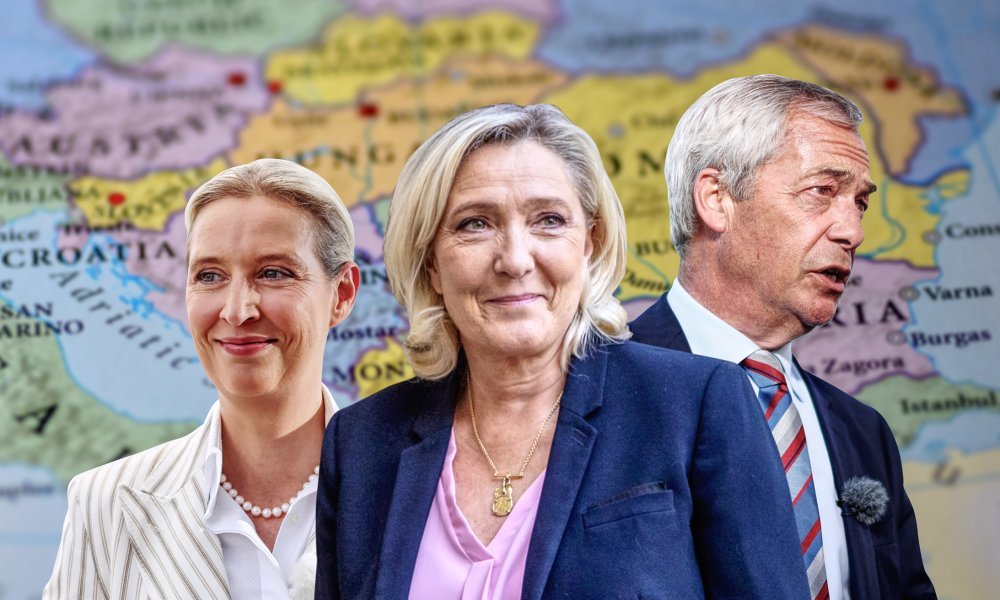
The old consensus is dead. And either the traditional forces use authoritarian and lawfare means to maintain control, or a new, highly unpredictable era of nationalist governance is about to begin across the continent.
Of course the irony, and hypocrisy, of the political establishment’s use of authoritarianism to push back what they consider (or at least want us to consider) the “barbarian authoritarianists” will not be lost on all.
Cancel Culture has taken over European politics
Do we really want to outlaw the views of a third of the electorate?
Ashes of Pompeii | July 6, 2026
A few days ago, I wrote about the “banal nonentities” that form the political elite in Europe. Across Europe, these leaders of traditional establishment parties are deeply unpopular, most with approval ratings below 20%. Their policy platforms have demonstrably failed, leaving them destined to lose upcoming elections to supposedly “far right” parties. The great irony of this moment is that the policy platforms of these newly minted extremists would have been considered standard center right orthodoxy merely twenty years ago. Today, however, the media and the cultural elite have redrawn the boundaries of acceptable discourse, declaring these once mainstream views completely beyond the pale. Unable to defeat these parties at the ballot box through popular appeal, the establishment has turned to lawfare.
For the past decade or two, Anglo academic and intellectual spheres have been suffocated by the relentless machinery of cancel culture. What began as a tool for social enforcement in universities and media has now metastasized, erupting into the mainstream political arena of continental Europe. This phenomenon represents a profound shift in how political power is maintained. Where elections were once won through the clash of policies and the appeal of personalities, the modern political landscape is defined by institutional exclusion. Context, truth, logic, and tradition have been rendered entirely irrelevant, replaced by a singular and overriding imperative that one must belong to the approved in club.
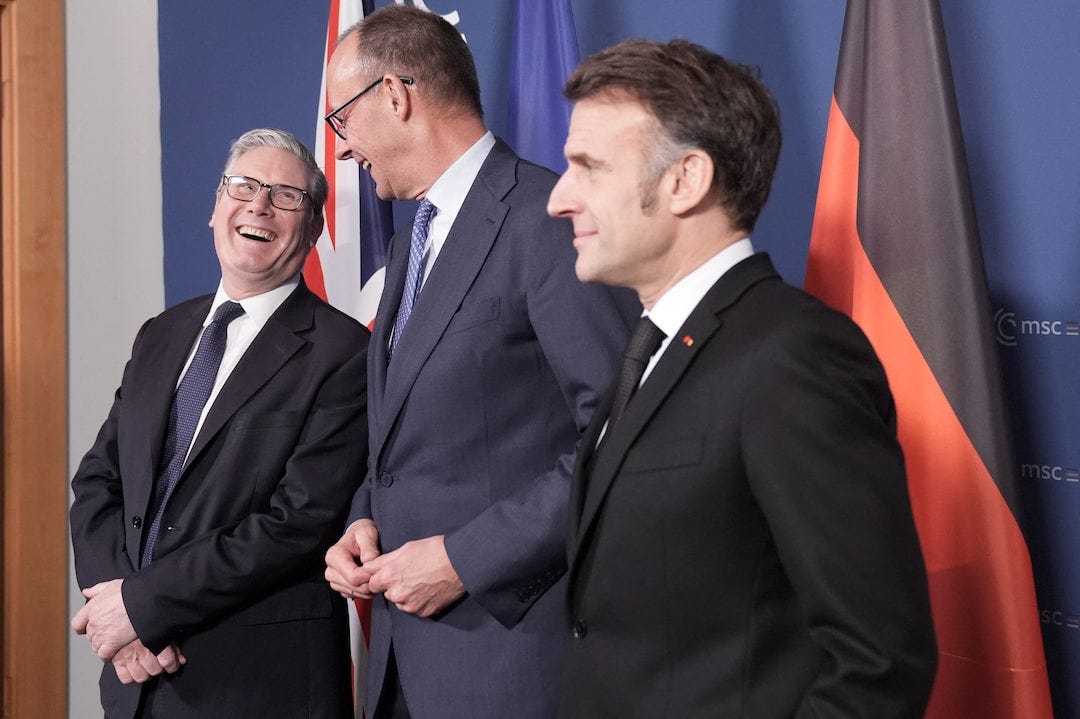
And please, the point is not if the ideas of Farage or AfD are wrong. I might not agree with much of their platform. The problem is the courts should not be where electoral politics are decided. But the European political mainstream, irrelevant whether (supposedly) left or right, has failed miserably and are desperate.
This weaponization of the legal system is now the primary mechanism of political cancel culture in Europe. In the United Kingdom, Nigel Farage, leader of the Reform UK party which is poised to potentially win upcoming elections, is under intense investigation. He is accused of failing to declare financial support from his longtime assistant George Cottrell, including staff, security, and housing, before becoming a Member of Parliament. Furthermore, Farage faces scrutiny over an alleged undeclared gift of five million pounds from cryptocurrency billionaire Christopher Harbourn, threatening him with sanctions and disqualification. Reform UK maintains that no rules were violated, but the investigation itself serves the purpose of clouding their campaign.
Similar tactics are being deployed across the continent with alarming coordination. In France, the leading opposition candidates Marine Le Pen and Jordan Bardella are under relentless legal attack. Le Pen has already been disqualified from the elections due to a criminal case, while Bardella faces his own fraud investigation. Even mainstream rivals are not safe, as Dominique de Villepin and Édouard Philippe have become targets of the financial prosecutor for alleged historical offenses. This prosecutor reports to the Ministry of Justice, headed by Gérald Darmanin of President Emmanuel Macron’s party. What a coincidence, as this legal machinery conveniently protects Gabriel Attal, the virtual successor to Macron, by eliminating his prominent rivals.
In Germany, the state is actively trying to prevent the Alternative for Germany party from participating in elections. They are attempting to deprive the party of funding, and the domestic intelligence service has prepared a report labelling them anticonstitutional. At the European level, investigators are conducting coordinated searches and raids across multiple countries against right wing groups in the European Parliament, accusing them of large scale financial fraud and the theft of EU subsidies.
Does anyone doubt whether all of the parties use similar financial schemes? Of course not. And this without even going into the case of VdL and Pfizer…
The net is cast even wider in the Baltic states, where legal cases are routinely launched against opposition figures who attempt to gain votes from the large Russian diaspora. Lithuanian politician Antanas Kandrotas, along with Latvian Stability party leader Alexei Roslikov and his colleague Igor Yudin, have all been targeted by authorities. In every instance, the legal mechanism is utilized not to uphold justice, but to neutralize political threats.
This erosion of democratic norms is further evidenced by the outright cancelling of presidential elections in Romania and the glaring irregularities witnessed in Moldova. When the ballot box cannot be controlled, the information space is heavily policed. There is increasing and aggressive censorship on social media platforms, which are now acting as willing deputies for state control. Just this week, the European Union has criminalized the sharing of RT content. This draconian measure applies regardless of whether the shared content is true or false, and it completely ignores the intent of the user. Even if a citizen shares a link simply to cite it as an example of propaganda, they are still committing a criminal offense. The state is no longer just controlling the narrative through positive reinforcement of its own views, but through the active criminalization of alternative information.
When we bring the story of academic cancel culture together with these political prosecutions and media blackouts, a clear and disturbing picture emerges. The underlying philosophy is identical. In the intellectual world, cancel culture dictates that context, objective truth, logical argument, and historical tradition do not matter if the speaker holds the wrong ideological views. The only thing that matters is moral and ideological conformity to the prevailing orthodoxy. This exact same logic has now captured the European state. The establishment knows it can no longer win the argument on the merits of policy. Instead, they rely on the administrative and legal apparatus to silence the opposition. The allegations of financial impropriety or anticonstitutionalism are merely the new vocabulary of cancellation. The goal is to delegitimize the opposition and bar them from the democratic process entirely.
Ultimately, this trajectory should be deeply troubling, even for those who do not agree with some or even all of the policies of these right wing parties. By utilizing lawfare, election cancellations, and information blackouts, the establishment is effectively outlawing the views of up to forty percent of the population. Outlawing ideas does not make them disappear. These people and their underlying grievances will not simply go away because a court has ruled against them or a media conglomerate has banned their preferred platforms. When a significant portion of the electorate is told that their voices are invalid and their political representatives are criminals, the social contract begins to fracture. Some will inevitably start to look for where to go outside the current political system entirely, seeking alternative structures that the current elites can no longer control.
I think we have been down that road before and none of us should want a return visit.
Featured Video

Racist Seinfeld Dances for Joy as Bibi Unveils His New Map
or go to
Aletho News Archives – Video-Images
TV Drama Review
Japanese drama projects Japan’s wartime atrocities onto Chinese characters

Global Times | October 25, 2026
By portraying Chinese characters as perpetrators of ruthless violence while casting Japanese Self-Defense Forces (SDF) intelligence operatives as defenders, the season 2 of the Japanese drama Vivant has recently drawn criticism from Chinese netizens, who argue that its depiction turns historical reality on its head while ignoring Japan’s wartime atrocities.
The TBS drama series – a spy suspense story in which an alleged unofficial intelligence unit of the SDF operates across the globe — has attracted a passionate fanbase. Its currently airing season 2 opened with a household rating of 18.8 percent, the highest for a TV drama this year, according toa commentary article by Japanese media Toyo Keizai.
What draws attention is the portrayal of the enemies in the series, the article noted. Scenes in which the Chinese organization subjects kidnapped members of the SDF unit to brutal torture are repeated with unrelenting intensity.
It is rare for Japanese TV dramas to explicitly portray a real-life country as the enemy, the article noted.
Japanese Prime Minister Sanae Takaichi also made a reference to the drama, saying that she has been recording Vivant and hopes to binge-watch it over the year-end and New Year holidays, according to Japanese media outlets.
China’s CCTV News report on Sunday revealed that the drama features scenes in which Chinese personnel cut off the fingers of and stab Japanese intelligence operatives in the abdomen. Such acts bear striking similarities to the torture inflicted on Chinese nationals by invading Japanese troops during the World War II.
The drama distorts the truth by attributing these atrocities to modern Chinese characters. Beneath the surface, it subtly glorifies Japan’s cross-border overseas operations, blurs the functional boundaries of the SDF and implicitly promotes an expansionist narrative, per CCTV News. … continue
Blog Roll
 Aletho News
- EU facing trillion-euro debt hole while seeking more cash for Kiev
- How US, Europe, Persian Gulf states exhausted missile stockpiles, splurged billions to defend Israel
- Up in arms… Koreans reject U.S. empire’s plan to make South Korea the next Ukraine
- Iran, Turkey, Pakistan, Saudi Arabia could advance region-led security framework in Tehran: FM spox
- Netizens condemn Japanese drama for projecting Japan’s wartime atrocities onto Chinese characters
- Racist Seinfeld Dances for Joy as Bibi Unveils His New Map
- A West Bank War for Netanyahu’s Election Campaign, Could It Backfire?
- Yemen denounces European Parliament’s ‘hypocritical’ push to blacklist Ansarullah
- Qalibaf: UAE’s UN bid aims to ‘clear the runway’ for ‘Greater Israel’, whitewash genocide
- Pakistan reopens Iran border after boosting security: Report
- If Americans Knew
- An error has occurred; the feed is probably down. Try again later.
- No Tricks Zone
- Sudden Stratospheric Warming, Powerful El Niño Combination May Lead To Extreme Europe Cold, Energy Crisis!
- Two New Studies Find Thwaites Glacier Melt Cannot Be Driven By Human Activity Or A Warming Ocean
- E-Cars Reduce CO2 Emissions By Only 41% Compared To Internal Combustion Engine Vehicles
- Predictions Made By Renowned Climate Professor Over Past Decades Have Been Proven To Be Poor
- New Study Suggests Large Regions Of The Pacific Ocean Have Been Cooling For The Last 80 Years
- Germany’s Green Energy Debacle: High Energy Costs Force Kahla Porzellan to Close After 182 Years!
- New Study: 50 Years Of The Most Aggressive ‘Net Zero’ Policies Can Only Affect The Global Climate By 0.03°C
- US September “Heat” Was No Record…Many Records Set Decades Ago
- Latest European Green Energy Debacle; Portugal’s Largest Flagship Solar Park Insolvent!
- Green Energy Debacle: German Expert Professor Fritz Vahrenholt Warns Of Severe Economic And Social Consequences

